Introduction
Overview
Most of the prophets proclaim a similar three-part message of repentance, judgment, and restoration directed primarily at Israel/Judah. Obadiah, by contrast, is quite different. He does not preach directly to Israel or Judah but instead addresses the nation of Edom. Obadiah is short—only one brief chapter—and his message is that judgment is coming to Edom because of its sin.
Because the nation of Edom had betrayed Judah and assisted in plundering her, Obadiah prophesies the destruction of Edom. The prophets often declare judgment on the various nations, but usually those same nations are also mentioned in the prophetic picture of future restoration, when the Gentiles are included as part of the people of God. The situation for Edom, however, appears to be different. Obadiah, along with several of the other prophets, proclaims the end of Edom. That is, Edom will be destroyed and will never be restored. Obadiah then proclaims that Israel, by contrast, will be restored in the future and will actually rule over the region once controlled by Edom (vv. 17–21).
Obadiah the Prophet
This shortest book of the OT is ascribed to Obadiah the prophet (v. 1). His name means “Servant (or Worshiper) of Yahweh” and is one of the more common biblical names (cf. 1 Kg 18:3–16; 1 Ch 3:21; 7:3; 8:38; 9:44; 12:9; 27:19; 2 Ch 17:7; 34:12; Ezr 8:9; Neh 10:5; 12:25). Aside from an unfounded tradition of the Babylonian Talmud (Sanhedrin 39b) that identifies Obadiah with Ahab’s steward, a devout believer in the Lord (1 Kg 18:3–16), personal information about Obadiah is completely wanting.
Date
Obadiah’s oracle has been dated variously to time periods ranging from 850 to 400 BC. The date of the prophecy can be ascertained only by assuming that verses 11–14 refer to a specific episode in the history of Israel. The two most likely referents are the attack of Jerusalem by the Philistines and Arabs (ca. 844 BC; cf. 2 Kg 8:20; 2 Ch 21:16–17) during the reign of Jehoram (853–841 BC) and the destruction of Jerusalem by the Babylonians in 587 BC (2 Kg 25:1–12; cf. Ps 137:7–9; Ezk 25:1–3, 12–14). Dating Obadiah shortly after the fall of Jerusalem seems to be the more likely option, since the total conquest of the city described in verse 11 is best accounted for by Nebuchadnezzar’s invasion, siege, and sack of the Judean capital.
Historical Context
The eponymous patriarchs of Edom and Israel were Esau and Jacob, respectively (Gn 25:19–34; 27:1–28:9; 32:1–33:20). Edom was located on the southeastern edge of the Dead Sea, from the Zered Valley to the Gulf of Aqaba. Edom was well established as a nation by the time of Israel’s exodus from Egypt, as they denied Israel passage during the exodus and threatened them militarily (Nm 20:14–21; 21:4). Edom and Israel coexisted peacefully until Saul’s reign (1 Sm 14:47); David defeated the Edomites (2 Sm 8:13–14), and Judah controlled Edom until the time of Jehoram (2 Kg 8:20–22; cf. 1 Kg 11:14–25; 22:47). Later Judean victories (2 Kg 14:7, 22) were localized and temporary.
As early as 597 BC, Babylon wrested the Negev from Judah (cf. 2 Kg 24:8–17), and Edomites moved into the area. Edom assisted Babylon in sacking Jerusalem and occupying Judean villages and continued to live in them into the Persian period (cf. 1 Esdras 4:50). The date and circumstances of Edom’s collapse are uncertain. By the time of Malachi (ca. 460 BC) Edom was in ruins (Mal 1:2–4).
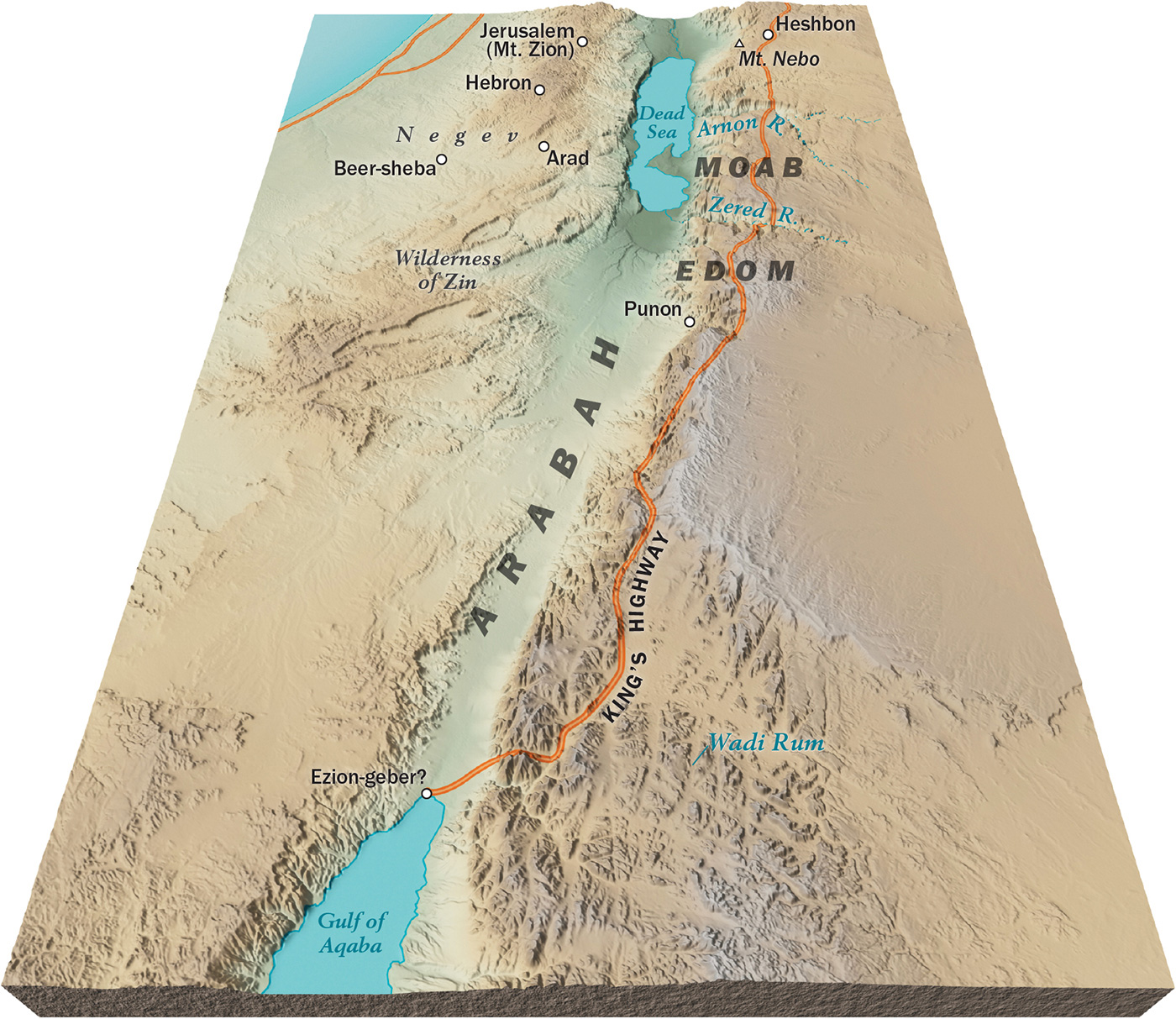
Edom at the Time of Obadiah
Literary Features
The book of Obadiah is one of several oracles against Edom (Is 21:11–12; 34:5–17; Jr 49:7–22; Ezk 25:12–14; 35:1–15; Am 1:11–12), and its literary form is generally identified as a national oracle, much like Nahum’s prophecy against Assyria (cf. also the national oracles in Is 13:1–23:18; Jr 46:1–51:64; Ezk 25:1–32:32; Am 1:3–2:16; Zph 2:4–15). This anti-Edomite polemic can be traced through the OT, from the mixed blessing Isaac pronounces on Esau (Gn 27:39–40) to the exilic imprecation of Edom for its part in the overthrow of Jerusalem (Ps 137:7) right through Malachi’s affirmation of Edom’s obliteration (1:2–4).
Obadiah’s oracle, like those of Isaiah (1:1), Daniel (8:1), and Nahum (1:1), is a “vision” or revelation. In its broader sense the word signifies a divine communication to God’s prophet or spokesperson, and it connotes the authority and authenticity of the prophetic message. More specifically, the word is a technical term associated with the seeing of a vision. Its use in the OT is restricted almost exclusively to the preexilic prophets and often occurs in the context of impending judgment. That Obadiah’s oracle is a “vision” helps account for the terseness of language, the vivid imagery, and the certain realization of the event seen in advance as the prophet makes known God’s word.
Obadiah 1b–6 repeats practically verbatim the words of Jr 49:14–16 and 49:9–10. Naturally this raises the question of priority. Three views have emerged in the scholarly literature, one defending Obadiah’s priority, one positing Jeremiah as the original source with Obadiah drawing from it, and one arguing for a no-longer-extant source common to both prophets. A common anti-Edomite source is the most likely explanation for the similarities between the two prophecies, with Jeremiah drawing more loosely from it and Obadiah adhering more carefully to the received tradition.
Although the literary unity of Obadiah has been challenged by some biblical scholars, there is a basic strophic pattern in the prophecy evidencing an overarching design. The repetition of “LORD” at the beginning and end of verses 1–4 and 15–21 marks out clear literary units. The formulas “this is the LORD’S declaration” (vv. 4, 8) and “the Lord has spoken” (v. 18) are additional indicators of a deliberate structure.
The classic elements in Hebrew prophetic literature (i.e., charges against specific sins, pronouncement of divine judgment, call to repentance, promises of restoration to the remnant) are evident in Obadiah, minus the call to repentance (characteristic of the anti-Edomite oracles). This basic theology is underscored by the recurrent themes of the day of the Lord, Esau/Edom, Edom’s sin in relation to Judah, and the eventual reversal of the divinely appointed roles for each.
Theological Themes
Obadiah, as God’s envoy, proclaims a tripartite message to the nations. First, he condemns the pride and cruelty of the Edomites in their mistreatment of Judah during the sack of Jerusalem. This gross misconduct will not go unpunished, and Edom’s doom is certain (vv. 2–9).
Second, the prophet addresses the remnant of Israel, assuring them of the ultimate triumph of the Lord and righteousness over the wickedness of all the nations in the day of the Lord (vv. 15–16). That day brings the promise of deliverance and restoration for the people of God, a theme common to the prophets.
Finally, implicit throughout this brief prophecy is God’s dominion over the nations. He is the sovereign Lord (v. 1) who logs the iniquities of the peoples (vv. 10–14), administers divine justice (vv. 4, 8, 15), and controls the destinies of the nations.
Obadiah’s oracle of divine retribution against Edom for assisting in and gloating over Judah’s day of misfortune clearly teaches God’s sovereignty over the nations of the earth and his justice in punishing the guilty. It also serves as a warning to the nations that they too are in jeopardy of having their deeds returned on them as the day of God’s wrath approaches (vv. 15–16).
More important for Israel, this prophetic statement of God’s activity in history was designed to call to mind his covenant love for his people, thus bringing a word of encouragement for the present and a promise of hope for the future (cf. Ps 111:2–9; Lm 3:21–28).
Outline
1. Superscription (1a)
2. The Lord’s Message against Edom (1b–14)
A. Edom’s Judgment Pronounced and Reaffirmed (1b–9)
B. Indictments (10–14)
3. The Day of the Lord (15–21)
A. Universal Judgment (15–16)
B. Zion Delivered (17–18)
C. The Lord’s Kingdom Established (19–21)