Introduction
Overview
Ephesians was not written to solve a major problem or deal with any particular emergency. Instead, it is a general (yet majestic) letter to help its recipients stay strong in their faith. Paul wanted believers to have a deeper understanding and experience of three realities: (1) the new life we have in Christ; (2) the new community we are connected to in Christ; and (3) the new walk our community is called to by Christ.
In this letter Paul focuses on Jesus Christ (new life). The expression “in Christ Jesus” (and parallel phrases like “in the Lord” or “in him”) are found almost forty times in Ephesians. God will unite and restore all of creation under one Lord: Christ (1:10). Paul also stresses unity (new community) through words like “unity,” “one,” and “with / together with” and concepts such as church, body, temple, and bride. When we are connected to Christ, we are also connected to a new community. This new community is maintained and preserved as we live in a way that pleases Christ (new walk). This new lifestyle is characterized by love for God and love for people. [The City of Ephesus]
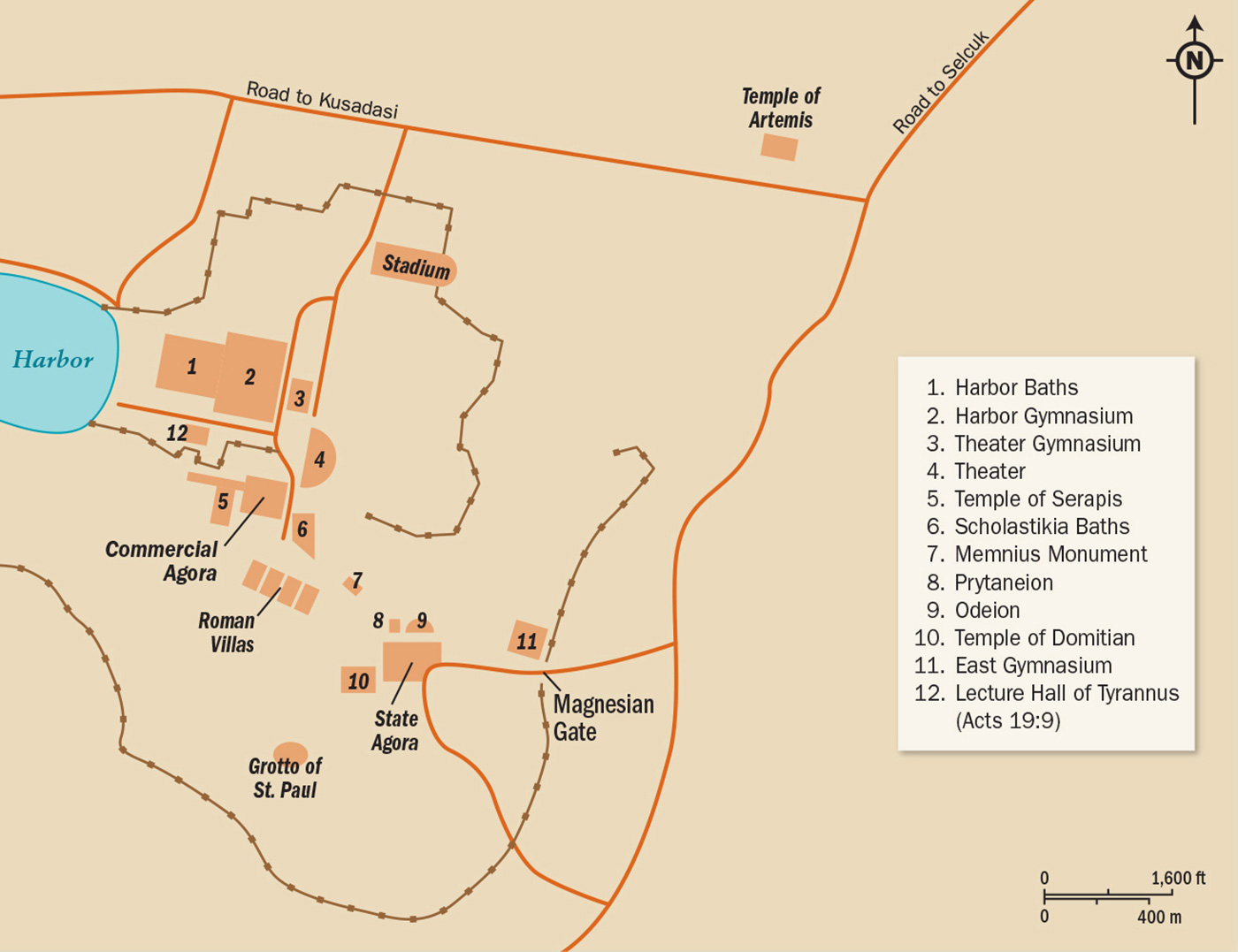
Ephesus
Authorship and Audience
Ephesians claims unambiguously to come from Paul’s hand, both in the very first word of the letter and in various other personal references. Yet doubts about this have arisen for several reasons. The author’s apparent limited acquaintance with his readers (1:15; 3:2) is highly puzzling if Paul is writing to his friends in Ephesus, where he spent nearly three years. Likewise, the literary relationship between Ephesians and Colossians shows that if the same person did not write both letters at the same time, then one was modeled on the other. But the letters differ markedly in vocabulary and style. Furthermore, the teaching of Ephesians appears in some cases to reflect situations in the early church that postdate Paul’s death by several decades (see references to “apostles and prophets” in 2:20; 3:5). These factors open up the possibility that Paul did not write Ephesians. Some object that authorship by anyone other than Paul would amount to an “inspired lie” perpetrated by another author’s calling himself “Paul,” but others counter that pseudepigraphy may have functioned in the first century like footnoting does today. We may then with good conscience treat Ephesians either as written by Paul or as written by one of his associates. For simplicity’s sake, we can refer to the author as Paul.
If Paul did write Ephesians, references to chains and imprisonment would place composition in the early 60s, probably at Rome. But to whom was it written? Certain important and early Greek manuscripts lack the words “at Ephesus” (1:1), suggesting that the document was meant not for that congregation but for some other or others. Perhaps it was a circular letter sent to several churches in Roman Asia, including Ephesus. At any rate, the real destination (if not Ephesus) and the origin of the insertion “at Ephesus” remain conjectural.
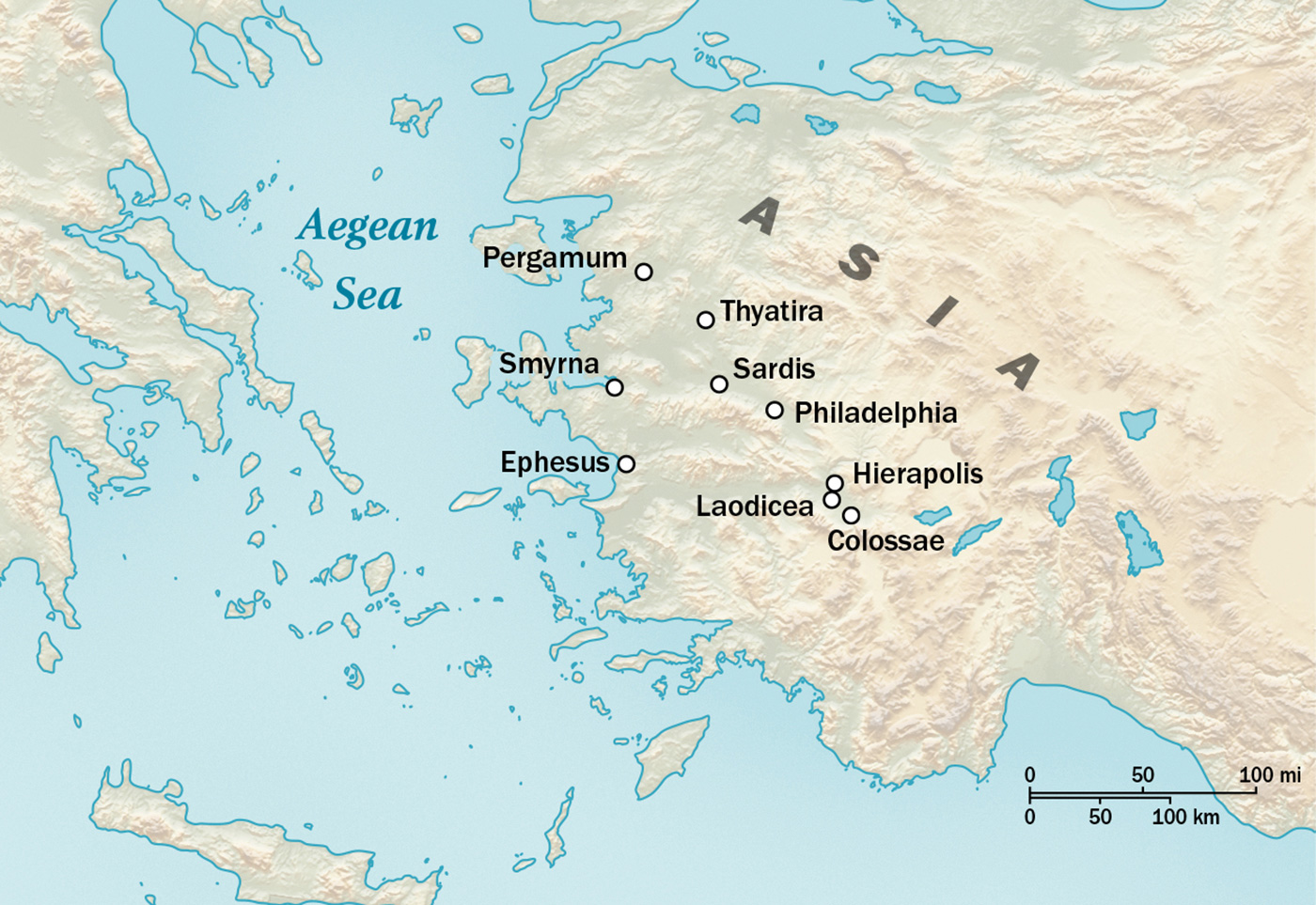
The Location of Ephesus
Content
Central to the message of Ephesians is God’s re-creation of the human family according to his originally intended design. This new creation shatters the Jewish community’s long-standing opinion that God accepts Jews and rejects non-Jews. The traditional criterion of distinction between the Jew and the non-Jew is obedience to the law, but this criterion, fostering pride and exclusivism, was abolished in Christ’s sacrificial death. Consequently, nothing hinders reuniting all humanity as the people of God, with Christ as the head. This reunification is not yet fully in effect, but its presence marks the advance arrival of the new age of God’s rule. Even now God endows his new family with the power of the Spirit, enabling them to live out here and now their future new life. Thus Ephesians focuses on God’s people united in Christ through the power of the Spirit.
Outline
1. Opening and Greetings (1:1–2)
2. Re-creating the Human Family: What God Has Done (1:3–3:21)
A. The Mystery of God’s Will and God’s Threefold Blessing (1:3–14)
B. Prayer for Enlightenment (1:15–23)
C. Redemption: Clearing the Ground (2:1–10)
D. Adoption: Removing the Barriers (2:11–22)
E. Digression: Paul, Outsiders, and God’s Glory (3:1–13)
F. Empowerment: Realizing the Future (3:14–19)
G. Doxology (3:20–21)
3. Re-creating the Human Family: What God Is Doing (4:1–6:20)
A. Therefore Live in Unity (4:1–16)
B. Therefore Live in Newness (4:17–32)
C. Therefore Live in Love (5:1–6)
D. Therefore Live as Light (5:7–14)
E. Therefore Live in Wisdom (5:15–21)
F. Wisdom as Mutual Submission (5:22–6:9)
G. Holy War: Fighting Right the Right Fight (6:10–20)
4. Closing Remarks (6:21–24)