Title
The book derives its title from the author, whose name means “The LORD is salvation,” and is similar to the names Joshua, Elisha, and Jesus. Isaiah is quoted directly in the NT over sixty-five times, far more than any other OT prophet, and mentioned by name over twenty times.
Author and Date
Isaiah, the son of Amoz, ministered in and around Jerusalem as a prophet to Judah during the reigns of four kings of Judah: Uzziah (called “Azariah” in 2 Kin.), Jotham, Ahaz, and Hezekiah (1:1), from c. 739–686 B.C. He evidently came from a family of some rank, because he had easy access to the king (7:3). He was married and had two sons who bore symbolic names: Shear-jashub (“a remnant shall return,” 7:3) and Maher-shalal-hash-baz (“hasting to the spoil, hurrying to the prey,” 8:3). When called by God to prophesy in the year of King Uzziah’s death (c. 739 B.C.), he responded with a cheerful readiness, though he knew from the beginning that his ministry would be one of fruitless warning and exhortation (6:9–13). Having been reared in Jerusalem, he was an appropriate choice as a political and religious counselor to the nation.
Isaiah was a contemporary of Hosea and Micah. His writing style has no rival in its versatility of expression, brilliance of imagery, and richness of vocabulary. The early church father Jerome likened him to Demosthenes, the legendary Greek orator. His writing features a range of 2,186 different words, compared to 1,535 in Ezekiel, 1,653 in Jeremiah, and 2,170 in the Psalms. Second Chronicles 32:32 records that he wrote a biography of King Hezekiah also. The prophet lived until at least 681 B.C. when he penned the account of Sennacherib’s death (cf. 37:38). Tradition has it that he met his death under King Manasseh (c. 695–642 B.C.) by being cut in two with a wooden saw (cf. Heb. 11:37).
Background and Setting
During Uzziah’s prosperous fifty-two year reign (c. 790–739 B.C.), Judah developed into a strong commercial and military state with a port for commerce on the Red Sea and the construction of walls, towers, and fortifications (2 Chr. 26:3–5, 8–10, 13–15). Yet, the period witnessed a decline in Judah’s spiritual purity. Uzziah’s downfall resulted from his attempt to assume the privileges of a priest and burn incense on the altar (2 Kin. 15:3, 4; 2 Chr. 26:16–19). He was judged with leprosy, from which he never recovered (2 Kin. 15:5; 2 Chr. 26:20, 21).
Uzziah’s son Jotham (c. 750–731 B.C.) had to take over the duties of king before his father’s death. Assyria began to emerge as a new international power under Tiglath-Pileser (c. 745–727 B.C.) while Jotham was king (2 Kin. 15:19). Judah also began to incur opposition from Israel and Syria to the north during his reign (2 Kin. 15:37). Jotham was a builder and a fighter like his father, but spiritual corruption still existed in the land (2 Kin. 15:34, 35; 2 Chr. 27:1, 2).
Ahaz was twenty-five when he began to reign in Judah and he reigned until age forty-one (2 Chr. 28:1, 8; c. 735–715 B.C.). Israel and Syria formed an alliance to combat the rising Assyrian threat from the east, but Ahaz refused to bring Judah into the alliance (2 Kin. 16:5; Is. 7:6). For this, the northern neighbors threatened to dethrone him, and war resulted (734 B.C.). In panic, Ahaz solicited the Assyrian king for help (2 Kin. 16:7) and the Assyrian king gladly responded, sacking Gaza, carrying all of Galilee and Gilead into captivity, and finally capturing Damascus (732 B.C.). Ahaz’s alliance with Assyria led to his introduction of a pagan altar, which he set up in Solomon’s temple (2 Kin. 16:10–16; 2 Chr. 28:3). During his reign (722 B.C.), Assyria captured Samaria, capital of the northern kingdom, and carried many of Israel’s most capable people into captivity (2 Kin. 17:6, 24).
Hezekiah began his reign over Judah in 715 B.C. and continued for twenty-nine years to c. 686 B.C. (2 Kin. 18:1, 2). Reformation was a priority when he became king (2 Kin. 18:4, 22; 2 Chr. 30:1). The threat of an Assyrian invasion forced Judah to promise heavy tribute to that eastern power. In 701 B.C., Hezekiah became ill with a life-threatening disease. But he prayed, and God graciously extended his life for fifteen years (2 Kin. 20; Is. 38) until 686 B.C. The ruler of Babylon used the opportunity of his illness and recovery to send congratulations to him, probably seeking to form an alliance with Judah against Assyria at the same time (2 Kin. 20:12 ff.; Is. 39). When Assyria became weak through internal strife, Hezekiah refused to pay any further tribute to that power (2 Kin. 18:7).
So in 701 B.C., Sennacherib, the Assyrian king, invaded the coastal areas of Israel, marching toward Egypt on Israel’s southern flank. In the process, he frequently overran Judean towns, looting and carrying many people back to Assyria. While besieging Lachish, he sent a contingent of forces to surround Jerusalem (2 Kin 18:17–19:8; Is. 36:2–37:8). This side expedition failed, however. In a second attempt, he sent messengers to Jerusalem, demanding an immediate surrender of the city (2 Kin. 19:9ff.; Is. 37:9ff.). With Isaiah’s encouragement, Hezekiah refused to surrender; and when Sen-nacherib’s army fell prey to a sudden disaster, he returned to Nineveh and never threatened Judah again.
Historical and Theological Themes
Isaiah prophesied during the period of the divided kingdom, directing the major thrust of his message to the southern kingdom of Judah. He condemned the empty ritualism of his day (e.g., 1:10–15) and the idolatry into which so many of the people had fallen (e.g., 40:18–20). He foresaw the coming Babylonian captivity of Judah because of Judah’s departure from the Lord (39:6, 7).
Fulfillment of some of Isaiah’s prophecies in his own lifetime provided his credentials for the prophetic office. Sennacherib’s effort to take Jerusalem failed, just as Isaiah had said it would (37:6, 7, 36–38). The Lord healed Hezekiah’s critical illness, as Isaiah had predicted (38:5; 2 Kin. 20:7). Long before Cyrus, king of Persia, appeared on the scene, Isaiah named him as Judah’s deliverer from the Babylonian captivity (44:28; 45:1). Fulfillment of his prophecies concerning Christ’s first coming have given Isaiah further vindication (e.g., 7:14). The literal-fulfillment pattern of his already-fulfilled prophecies gives assurance that prophecies of Christ’s Second Coming will also see literal fulfillment.
Isaiah provides data on the future Day of the Lord and the time following. He details numerous aspects of Israel’s future kingdom on earth not found elsewhere in the OT or NT, including changes in nature, the animal world, Jerusalem’s status among the nations, and the Suffering Servant’s leadership.
Through a literary device called “prophetic foreshortening,” Isaiah predicted future events without delineating exact sequences of the events or time intervals separating them. For example, nothing in Isaiah reveals the extended period separating the two comings of the Messiah (cf. Is. 61:1, 2; Luke 4:17–22). Also, he does not provide as clear a distinction between the future temporal kingdom and the eternal kingdom as John does in Revelation 20:1–10; 21:1–22:5. In God’s program of progressive revelation, details of these relationships awaited a prophetic spokesman in a later time.
Also known as the “evangelical prophet,” Isaiah spoke much about the grace of God toward Israel, particularly in his last twenty-seven chapters. The centerpiece is Isaiah’s unrivaled chapter 53, portraying Christ as the slain Lamb of God.
Interpretive Challenges
Interpretive challenges in a long and significant book such as Isaiah are numerous. The most critical of them focuses on whether Isaiah’s prophecies will receive literal fulfillment or not, and on whether the Lord, in His program of the ages, has abandoned national Israel and permanently replaced the nation with the church, so that there is no future for national Israel.
On the latter issue, numerous portions of Isaiah support the position that God has not replaced ethnic Israel with an alleged “new Israel.” Isaiah has too much to say about God’s faithfulness to Israel, that He would not reject the people whom He has created and chosen (43:1). The nation is on the palms of His hands, and Jerusalem’s walls are ever before His eyes (49:16). He is bound by His own Word to fulfill the promises He has made to bring them back to Himself and bless them in that future day (55:10–12; cf. Jer. 31:35–37; 33:19–22, 25, 26).
On the former issue, literal fulfillment of many of Isaiah’s prophecies has already occurred, as illustrated in Introduction: Historical and Theological Themes. To contend that those yet unfulfilled will see non-literal fulfillment is biblically groundless. This fact disqualifies the case for proposing that the church receives many of the promises made originally to Israel. The kingdom promised to David belongs to Israel, not the church. The future exaltation of Jerusalem will be on earth, not in heaven. Christ will reign personally on this present earth, as well as in the future new heavens and new earth (Rev. 22:1, 3).
A. Prophecies Concerning Judah and Jerusalem (1:1–12:6)
1. Judah’s social sins (1:1–6:13)
1:1 See Introduction: Title; Author and Date.
1:2–9 This is a courtroom scene in which the Lord is the plaintiff and the nation of Israel is the defendant. Instead of responding to God’s ultimate care and provision for them, these people have failed to give Him the loving obedience that is His due.
1:2 heavens . . . earth. God intended Israel to be a channel of blessing to the nations (19:24, 25; 42:6; Gen. 12:2, 3), but instead He must call the nations to look on Israel’s shame. children. The physical descendants of Abraham are God’s chosen people, in spite of their disobedience (cf. Gen. 18:18, 19).
1:3 ox . . . donkey. Animals appear to have more powers of reason than God’s people who break fellowship with Him.
1:4 The Holy One of Israel. This is Isaiah’s special title for God, found twenty-five times in this book (1:4; 5:19, 24; 10:1, 20; 12:6; 17:7; 29:19; 30:11, 12, 15; 31:1; 37:23; 41:14, 16, 20; 43:3, 14; 45:11; 47:4; 48:17; 49:7; 54:5; 55:5; 60:9, 14), but only six times in the rest of the OT (2 Kin. 19:22; Pss. 71:22; 78:41; 89:18; Jer. 50:29; 51:5). Isaiah also uses Holy One as a title four times (10:1; 40:25; 43:15; 49:7) and Holy One of Jacob once (29:23). In many contexts, the name contrasts the holiness of God with the sinfulness of Israel.
1:5 Why . . . stricken again? Already in ruins because of rebellion against God (vv. 7, 8), the nation behaved irrationally by continuing their rebellion.
1:8 daughter of Zion. The phrase occurs twenty-eight times in the OT, six of which are in Isaiah (1:8; 10:32; 16:1; 37:22; 52:2; 62:11). It is a personification of Jerusalem, standing here for all of Judah.
1:9 LORD of hosts. Isaiah used this title or the similar LORD God of hosts sixty times. It pictured God as a mighty warrior, a leader of armies, capable of conquering all of Israel’s enemies and providing for her survival. remnant. Sometimes rendered survivors, this term designated the faithful among the Israelites. Paul cited this verse to prove the ongoing existence of faithful Israelites, even in his day (Rom. 9:29). Such a remnant will constitute the nucleus of returning Israelites in the nation’s regathering when the Messiah returns to earth. See 10:20, 22; Hosea 1:10, 11. Sodom . . . Gomorrah. In destroying them, God rained brimstone and fire on these two Canaanite cities because of their aggravated sinfulness (Gen. 18:20; 19:24, 25, 28). The two cities, thereby, became a proverbial expression for the ultimate in God’s temporal judgment against any people (e.g., 13:19; Deut. 29:23; Jer. 23:14; 49:18; 50:40; Amos 4:11; Zeph. 2:9; Matt. 10:15; 2 Pet. 2:6; Jude 7). Had God’s grace not intervened, He would have judged Israel in the same way.
1:10–17 The prophet applied the names of the sinful cities, Sodom and Gomorrah, to Judah and Jerusalem in decrying their empty formalism in worship. God found their activities repulsive when they engaged in the rituals prescribed by Moses, because when doing so they persisted in iniquity.
1:11 I have had enough . . . I do not delight. Cf. 1 Samuel 15:22, 23. God found all sacrifices meaningless and even abhorrent if the offerer failed in obedience to His laws. Rebellion is equated to the sin of witchcraft and stubbornness to iniquity and idolatry.
1:13, 14 The New Moons, the Sabbaths, and the calling of assemblies . . . appointed feasts. These were all occasions prescribed by the law of Moses (cf. Ex. 12:16; Lev. 23; Num. 10:10; 28:11–29:40; Deut. 16:1–17).
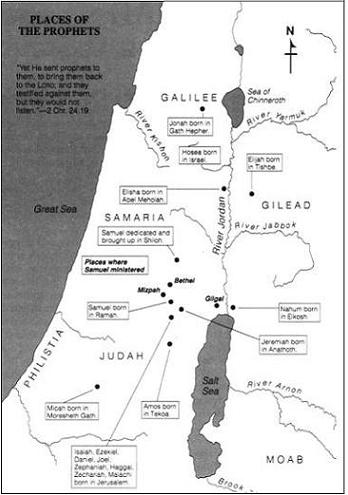
Nelson’s Complete Book of Bible Maps & Charts (Nashville: Thomas Nelson Publishers, 1996) 203. © 1993 by Thomas Nelson, Inc.
1:14 My soul hates. It is impossible to doubt the Lord’s total aversion toward hypocritical religion. Other practices God hates include robbery for burnt offering (61:8), serving other gods (Jer. 44:4), harboring evil against a neighbor and love for a false oath (Zech. 8:16), divorce (Mal. 2:16), and the person who loves violence (Ps. 11:5).
1:16, 17 Put away the evil . . . Seek justice. The outward evidence of the emptiness of Jerusalem’s ritualism was the presence of evil works and the absence of good works.
1:17 the fatherless . . . the widow. Illustrative of good works are deeds done on behalf of those in need (v. 23; Deut. 10:17, 18; 14:29; 24:17, 19, 20, 21; 26:12, 13; 27:19; James 1:27).
1:18–20 In developing His call for cleanliness in verse 16, the Lord pardoned the guilty who desire forgiveness and obedience. This section previews the last twenty-seven chapters of Isaiah, which focus more on grace and forgiveness than on judgment.
1:18 scarlet . . . crimson. The two colors speak of the guilt of those whose hands were “full of blood” (v. 15). Fullness of blood speaks of extreme iniquity and perversity (cf. 59:3; Ezek. 9:9, 10; 23:37, 45). white as snow . . . as wool. Snow and wool are substances that are naturally white and, therefore, portray what is clean, the blood guilt (v. 15) having been removed (cf. Ps. 51:7). While Isaiah was a prophet of grace, forgiveness is not unconditional. It comes through repentance, as verse 19 indicates.
1:19, 20 willing and obedient . . . refuse and rebel. The prophet offered his readers the same choice God gave Moses in Deuteronomy 28, i.e., a choice between a blessing and a curse. They may choose repentance and obedience in order to reap the benefits of the land or refuse to do so and become victims of foreign oppressors. eat . . . be devoured. To accentuate the opposite outcomes, the Lord used the same Hebrew word to depict both destinies. On one hand, they may eat the fruit of the land; on the other, they may be eaten by conquering powers.
1:21–31 Verses 21–23 recount Jerusalem’s current disobedience, with an account of God’s actions to purge her in verses 24–31.
1:21 harlot. Often in the OT, spiritual harlotry pictured the idolatry of God’s people (e.g., Jer. 2:20; 3:1; Hos 2:2; 3:1; Ezek. 16:22–37). In this instance, however, Jerusalem’s unfaithfulness incorporated a wider range of wrongs, including murders and general corruption (vv. 21, 23). justice; righteousness. As Isaiah prophesied, ethical depravity had replaced the city’s former virtues.
1:24 the Lord . . . the LORD of hosts, the Mighty One of Israel. The threefold title of God emphasized His role as the rightful Judge of His sinful people. The Mighty One of Israel occurs only here in the Bible, though the Mighty One of Jacob appears five times (49:26; 60:16; Gen. 49:24; Ps. 132:2, 5).
1:25, 26 I will . . . thoroughly purge . . . I will restore. God’s judgment of His people has future restoration as its goal. They were subsequently restored from the Babylonian captivity (Jer. 29:10), but this promise has in view a greater and more lasting restoration. It anticipates a complete and permanent restoration, which will make Jerusalem supreme among the nations (Jer. 3:17; Ezek. 5:5; Mic. 4:2; Zech. 8:22; 14:16). The only such purging and restoration in Scripture is that spoken of in conjunction with the yet-future “time of Jacob’s trouble” (Jer. 30:6, 7; i.e., Daniel’s seventieth week, cf. Dan. 9:24–27) followed by the Second Advent of the Messiah (Zech. 14:4).
1:27 Zion. Originally a designation for the hill Ophel, this name became a synonym for the entire city of Jerusalem. Isaiah always uses it that way. be redeemed . . . penitents. That remnant of the city who repented of their sins would find redemption in conjunction with God’s future restoration of Israel’s prosperity (cf. 59:20).
1:28 transgressors . . . sinners . . . those who forsake. Concurrent with the future blessing of the faithful remnant, the Lord will relegate the unrepentant to destruction. This is the only way Zion can become pure.
1:29 terebinth trees . . . gardens. These were settings where Israel practiced idolatrous worship. It is ironic that the Lord had chosen Israel while some citizens of Jerusalem have chosen the gardens. When God calls them to account for their rebellious choice, they will be ashamed and embarrassed.
1:31 will burn . . . no one shall quench. Both the rebel and his works will perish. This is final judgment, not merely another captivity.
2:1–5:30 Chapters 2–5 comprise a single connected discourse.
2:1–5 This is the first of three pictures of Zion (Jerusalem) in this discourse that depicts her future exaltation (cf. 2:6–4:1; 4:2–6).
2:2–4 The Book of Micah contains this portion of Isaiah’s prophecy almost word for word (Mic. 4:1–3), indicating that the younger contemporary of Isaiah may have obtained the words from him. Both passages present a prophetic picture of Zion in the future, messianic kingdom when all people will recognize Jerusalem as the capital of the world.
2:2 in the latter days. The latter (or last) days is a time designation looking forward to the messianic era (Ezek. 38:16; Hos. 3:5; Mic. 4:1). The NT applied the expression to the period beginning with the First Advent of Jesus Christ (Acts 2:17; 2 Tim. 3:1; Heb. 1:2; James 5:3; 2 Pet. 3:3). Old Testament prophets, being without a clear word regarding the time between the Messiah’s two advents, linked the expression to the Messiah’s return to establish His earthly kingdom, i.e., the millennial kingdom spoken about in Revelation 20:1–10. the mountain of the LORD’s house. The reference is to Mt. Zion, the location of the temple in Jerusalem. The expression occurs two other times in the OT (2 Chr. 33:15; Mic. 4:1).
2:3 mountain of the LORD. Isaiah frequently calls Mt. Zion the “holy mountain” (11:9; 27:13; 56:7; 57:13; 65:11, 25; 66:20).
2:4 swords into plowshares . . . spears into pruning hooks. With the Messiah on His throne in Jerusalem, the world will enjoy uninterrupted peaceful conditions. Warfare will continue to characterize human history until the Prince of Peace (9:6) returns to earth to put an end to it.
2:6–4:1 After a glimpse of Judah’s glorious future (2:1–5), the prophet returned to the present (second picture of Jerusalem) for a scathing rebuke of her idolatry and the judgment of God it evokes (cf. 4:2–6).
2:6–9 Isaiah stated the Lord’s formal charge against the people of Jerusalem.
2:6 eastern ways. Through caravans from the east, an influx of religious superstitions had filled Jerusalem and its environs.
2:8 full of idols. Jotham and Ahaz, two of the kings under whom Isaiah prophesied, failed to remove the idolatrous high places from the land (2 Kin. 15:35; 16:4).
2:10–22 This section pictures conditions during the future Day of the Lord. Though some elements of the description could fit what Judah experienced in the Babylonian captivity, the intensity of judgment predicted here could not have found fulfillment at that time. The Tribulation period before Christ’s return will be the time for these judgmental horrors.
2:12 the day of the LORD. The uncontested phrase “Day of the LORD” appears nineteen times in the OT (Obad. 15; Joel 1:15; 2:1, 11, 31; 3:14; Amos 5:18, 20; Is. 2:12; 13:6, 9; Zeph. 1:7, 14; Ezek. 13:5; 30:3; Zech. 14:1; Mal. 4:5) and four times in the NT (Acts 2:20; 1 Thess. 5:2; 2 Thess. 2:2; 2 Pet. 3:10) to express the time of God’s extreme wrath. The Day of the Lord can refer to a near, future judgment (Ezek. 13:5; 30:3) or a far, future judgment (Zech. 14:1; 2 Thess. 2:2). Two Day of the Lord expressions yet remain to be fulfilled: (1) at the end of Daniel’s seventieth week (see Joel 3:14; Mal. 4:5; 1 Thess. 5:2) and (2) at the end of the Millennium (see 2 Pet. 3:10). The Day of the Lord can occur through providential means (Ezek. 30:3) or directly at the hand of God (2 Pet. 3:10). At times, the near fulfillment (Joel 1:15) prefigures the far fulfillment (Joel 3:14); on other occasions, both kinds of fulfillment are included in one passage (13:6, 9; Zeph 1:7, 14). Here, Isaiah looks to the far fulfillment at the end of the time of Jacob’s trouble (Jer. 30:7). See notes on Joel 1:15; 1 Thessalonians 5:2.
2:13 cedars of Lebanon . . . oaks of Bashan. The cedars and oaks were objects of great admiration to people of OT times (Pss. 92:12; 104:16; Ezek. 27:6; 31:3). Yet, even these impressive created objects would face destruction because of human rebellion.
2:19 holes of the rocks . . . caves of the earth. Revelation 6:12, 15, 16 uses this passage and 2:21 to describe man’s flight from the terrors of Tribulation during the period before Christ’s personal return to earth. This shows that the final fulfillment of this prophecy will be during Daniel’s seventieth week.
2:22 Sever yourselves. This calls readers to stop depending on other humans and to trust only in God, who alone is worthy.
3:1–4:1 The Lord’s indictment against and judgment of Jerusalem and Judah continued.
3:1 the Lord, the LORD of hosts. Emphasizing His ultimate authority, God refers to Himself by the title Adonai (“the Lord”), the sovereign Lord of all, and by the mighty and warlike “LORD of hosts.”
3:1–3 Takes away . . . expert enchanter. God’s judgment was to include a removal of the people’s leadership.
3:4, 5 children . . . honorable. Inexperience in government was to lead to degeneration and irresponsibility at every level of national life.
3:6, 7 let these ruins . . . ruler of the people. Conditions of anarchy were to be so bad that no one would accept a position of authority over the people.
3:8 Jerusalem . . . Judah. The fall of Jerusalem in 586 B.C. was only a partial fulfillment of this prophecy. The final fulfillment awaits the times just prior to Christ’s Second Coming. against the LORD. The root of Zion’s problem surfaces—overt rebellion against the Lord. The people sinned shamelessly; they made no effort to conceal it (3:9).
3:12 children . . . women. Children and women were considered ill-suited for governmental leadership, so they figuratively depicted the incompetent rulers.
3:14 vineyard. The spoiling of the vineyard by the leaders amounts to their inequities in ruling the nation. Isaiah gave a more detailed comparison of God’s people to a vineyard in 5:1–7.
3:16 daughters of Zion. When women cultivate beauty for beauty’s sake, they thereby reflect the moral decay of the nations and detract from the glory of God. Rather than emphasizing outward apparel and activities (vv. 16–24), women should cultivate the beauty of the inner person (1 Tim. 2:9, 10; 1 Pet. 3:3, 4). mincing as they go. Ornamental chains about the ankles necessitated shorter steps and produced tinkling sounds to attract attention.
4:1 seven women . . . one man. In the day of the Lord (see note on 2:12 ), He will judge wicked women indirectly by allowing a slaughtering of males, thereby producing a shortage of husbands.
4:2–6 The third picture of Zion resembles the first (2:1–5): an eventual purification and prosperity in the land.
4:2 Branch. This messianic title occurs also in Jeremiah 23:5; 33:15; Zechariah 3:8; 6:12. The thought behind the title relates to 2 Samuel 23:5, that of growth. The life of the Branch will bear spiritual fruit (cf. John 15:4, 5).
4:3 he who is left . . . holy. Holy or “set apart” is another way of describing the remnant who will inherit God’s prosperity in that day (cf. 1:9, 27; 3:10).
4:4 spirit of burning. For other instances of purging by burning, see 1:25; 6:6, 7.
4:5, 6 covering . . . tabernacle. The future inhabitants of Jerusalem will enjoy the Lord’s protective covering over the glory on Mt. Zion. This recalls Ezekiel’s prophecy of the return of the Shekinah to the temple (Ezek. 43:2–5).
5:1–30 The conclusion of the extended discourse, begun at 2:1, comes by way of a comparison of God’s people to a vineyard which He cultivated, but which did not bear fruit.
5:1 Well-beloved. The Lord is the friend who is well-beloved by Isaiah. The vineyard belongs to Him (5:7).
5:2 good grapes . . . wild grapes. The owner made every conceivable provision for the vine’s productivity and protection, illustrating the Lord’s purely gracious choice of Israel. Justifiably, He expected a good yield from His investment, but the vine’s produce was “sour berries,” inedible and fit only for dumping.
5:5 burned . . . trampled down. As punishment for her unfruitfulness, Israel became desolate and accessible to any nation wishing to invade her, such as happened in the Babylonian invasion of 586 B.C., and will happen repeatedly until her national repentance at the Second Coming of the Messiah.
5:7 justice . . . oppression . . . righteousness . . . a cry. The English words equity . . .iniquity . . . right . . . riot illustrate the effective play on words in the underlying Hebrew behind verse 7.
5:8–23 The prophet pronounced six woes (judgments) against the unresponsive people of Israel.
5:8–10 The first woe was against real estate owners because of their greedy materialism.
5:8 house to house . . . field to field. God gave the land to the Israelites with the intention that the original allocation remain with each family (Lev. 25:23–25). By Isaiah’s time, land speculators had begun putting together huge estates (Mic. 2:2, 9), and the powerful rich used legal processes to deprive the poor of what was rightfully theirs (Amos 2:6, 7).
5:10 one bath . . . one ephah. God judged the greedy rich by reducing the productivity of their land to a small fraction of what it would have been normally. One bath was roughly equivalent to six gallons. About one-half bushel would be produced from about six bushels of planted seed. Such amounts indicate famine conditions.
5:11, 12 The second woe addressed the drunkards for their neglect of the Lord’s work of judgment and redemption, and their devotion to pleasure.
5:14 Sheol. This term, in this context, pictures death as a great monster with wide-open jaws, ready to receive its victims. Such was to be the fate of those who perish in the captivity that God will send to punish the people’s sinfulness.
5:18, 19 The third woe was against those who defied the Lord and ridiculed His prophet.
5:19 Let Him make speed. The taunting unbelievers said in effect, “Where is the judgment of which you have spoken, Isaiah? Bring it on. We will believe it when we see it.” This challenge for God to hasten His judgment represented their disbelief that the Holy One of Israel would judge the people. See Isaiah’s response in the naming of his son: “Speed the Spoil, Hasten the Booty” (8:1; cf. 5:26).
5:20 evil good, and good evil. The fourth woe condemned the reversal of morality which dominated the nation. They utterly confused all moral distinctions.
5:21 wise in their own eyes. The object of the fifth woe was the people’s arrogance. “Pride goes before destruction” (Prov. 16:18).
5:22, 23 justify the wicked. The sixth woe pointed to the unjust sentences passed by drunken and bribed judges.
5:24–30 The conclusion of the discourse announced God’s action in sending a mighty army against Judah to conquer and leave the land in darkness and distress.
5:26 nations from afar. Principal among the nations that God would bring against Israel were: (1) Assyria, which conquered the northern kingdom in 722 B.C., and (2) Babylon, which completed its invasion of Jerusalem in 586 B.C. and destroyed the temple.
5:30 darkness. God’s wrath against the people was intended to eliminate light (8:22; 42:7), but His promised deliverance of the remnant will ultimately turn that darkness into light at the coming of the Messiah (9:2; 42:16; 58:10; 60:2).
6:1–5 In preparation for calling Isaiah to be the prophet who would proclaim the coming judgment, God gave him a vision of His majestic holiness so overwhelming that it devastated him and made him realize his own sinfulness.
6:1 King Uzziah died. After fifty-two years of reigning, leprosy caused the death of Uzziah in 739 B.C. (cf. 2 Chr. 26:16–23), and Isaiah began his prophetic ministry that year. He received the prophecies of the first five chapters after his call but, at 6:1, he returns to authenticate what he has already written by describing how he was called. I saw. The prophet became unconscious of the outside world and with his inner eye saw what God revealed to him. This experience recalls the experience of John’s prophetic vision in Revelation 4:1–11. high and lifted up. The throne was greatly elevated, emphasizing the Most High God. train. This refers to the hem or fringe of the Lord’s glorious robe that filled the temple. temple. Though Isaiah may have been at the earthly temple, this describes a vision which transcends the earthly. The throne of God is in the heavenly temple (Rev. 4:1–6; 5:1–7; 11:19; 15:5–8).
6:2 seraphim. The seraphim are an order of angelic creatures who bear a similarity to the four living creatures of Revelation 4:6, which in turn resemble the cherubim of Ezekiel 10:1ff. six wings. Two wings covered the faces of the seraphim because they dared not gaze directly at God’s glory. Two covered their feet, acknowledging their lowliness, even though engaged in divine service. With two, they flew in serving the One on the. throne. Thus, four wings related to worship, emphasizing the priority of praise.
6:3 one cried to another. The seraphim were speaking to each other in antiphonal praise. Holy, holy, holy. The primary thrust of the threefold repetition of God’s holiness (called the trihagion ) is to emphasize God’s separateness from and independence of His fallen creation, though it implies secondarily that God is three persons. See Revelation 4:8, where the four living creatures utter the trihagion. full of His glory. The earth is the worldwide display case for His immeasurable glory, perfections, and attributes as seen in creation (see Rom. 1:20). Fallen man has nevertheless refused to glorify Him as God (Rom. 1:23).
6:4 shaken . . . smoke. The shaking and smoke symbolize God’s holiness as it relates to His wrath and judgment (cf. Ex. 19:16–20; Rev. 15:8).
6:5 unclean lips. If the lips are unclean, so is the heart. This vision of God’s holiness vividly reminded the prophet of his own unworthiness which deserved judgment. Job (Job 42:6) and Peter (Luke 5:8) came to the same realization about themselves when confronted with the presence of the Lord (cf. Ezek. 1:28–2:7; Rev. 1:17).
6:6–13 Isaiah’s vision has made him painfully aware of his sin and has broken him (cf. 66:2, 5); in this way, God has prepared him for his cleansing and his commission.
6:6 coal . . . altar. The hot coal taken from the altar of incense in heaven (cf. Rev. 8:3–5) is emblematic of God’s purifying work. Repentance is painful.
6:7 taken away . . . purged. Spiritual cleansing for special service to the Lord, not salvation, is in view.
6:8 Us. This plural pronoun does not explicitly prove the doctrine of the Trinity, but it does strongly imply it (see Gen. 1:26). Here am I! Send me. This response evidenced the humble readiness of complete trust. Though profoundly aware of his sin, Isaiah was available.
6:9, 10 do not understand . . . do not perceive. Isaiah’s message was to be God’s instrument for hiding the truth from an unreceptive people. Centuries later, Jesus’ parables were to do the same (Matt. 13:14, 15; Mark 4:12; Luke 8:10; cf. 29:9, 10; 42:18; 43:8; Deut. 29:4; John 12:40; Acts 28:26, 27; Rom. 11:8).
6:11, 12 how long? Because of such rejection from his people, the prophet asked how long he should preach this message of divine judgment. God replied that it must continue until the cities are desolate (v. 11) and the people have gone into exile (v. 12).
6:13 a tenth . . . will return. Though most will reject God, the tenth, also called “stumps” and “holy seed,” represents the faithful remnant in Israel who will be the nucleus who hear and believe.
| 1:9 | Rom. 9:29 |
| 6:9 | Luke 8:10 |
| 6:9, 10 | Matt. 13:14, 15 Mark 4:12 Acts 28:26, 27 |
| 6:10 | John 12:40 |
| 7:14 | Matt. 1:23 |
| 8:8, 10 | Matt. 1:23 |
| 8:14 | Rom. 9:33 1 Pet. 2:8 |
| 8:17 | Heb. 2:13 |
| 8:18 | Heb. 2:13 |
| 9:1, 2 | Matt. 4:15, 16 |
| 10:22, 23 | Rom. 9:27, 28 |
| 11:10 | Rom. 15:12 |
| 22:13 | 1 Cor. 15:32 |
| 25:8 | 1 Cor. 15:54 |
| 27:9 | Rom. 11:27b |
| 28:11, 12 | 1 Cor. 14:21 |
| 28:16 | Rom. 9:33 Rom. 10:11 1 Pet. 2:6 |
| 29:10 | Rom. 11:8 |
| 29:13 | Matt. 15:8, 9 Mark 7:6, 7 |
| 29:14 | 1 Cor. 1:19 |
| 40:3-5 | Luke 3:4-6 |
| 40:3 | Matt. 3:3 Mark 1:3 John 1:23 |
| 40:6-8 | 1 Pet. 1:24, 25 |
| 40:13 | Rom. 11:34 1 Cor. 2:16 |
| 42:1-3 | Matt. 12:18-20 |
| 42:4 | Matt. 12:21 |
| 43:20 | 1 Pet. 2:9 |
| 43:21 | 1 Pet. 2:9 |
| 45:21 | Mark 12:32 |
| 45:23 | Rom. 14:11 |
| 49:6 | Acts 13:47 |
| 49:8 | 2 Cor. 6:2 |
| 49:18 | Rom. 14:11 |
| 52:5 | Rom. 2:24 |
| 52:7 | Rom. 10:15 |
| 52:11 | 2 Cor. 6:17 |
| 52:15 | Rom. 15:21 |
| 53:1 | John 12:38 Rom. 10:16 |
| 53:4 | Matt. 8:17 |
| 53:7, 8 | Acts 8:32, 33 |
| 53:9 1 | Pet. 2:22 |
| 53:12 | Luke 22:37 |
| 54:1 | Gal. 4:27 |
| 54:13 | John 6:45 |
| 55:3 | Acts 13:34 |
| 56:7 | Matt. 21:13 Mark 11:17 Luke 19:46 |
| 59:7, 8 | Rom. 3:15-17 |
| 59:20, 21 | Rom. 11:26, 27 |
| 61:1, 2 | Luke 4:18, 19 |
| 62:11 | Matt. 21:5 |
| 64:4 | 1 Cor. 2:9 |
| 65:1 | Rom. 10:20 |
| 65:2 | Rom. 10:21 |
| 66:1, 2 | Acts 7:49, 50 |
2. Judah’s political entanglements (7:1–12:6)
7:1, 2 An unsuccessful invasion of Judah by Syria and Israel (i.e., the ten northern tribes) led to a continued presence of King Tiglath-Pileser’s Assyrian forces in Israel. Shortly after Ahaz assumed the throne (c. 735 B.C.), this threat to Judah’s security brought great fear to the king and the people of Judah. See 2 Chronicles 28:5–8, 17–19.
7:2 house of David. This expression refers to the Davidic dynasty, personified in the current king, Ahaz.
7:3 Shear-Jashub. The name means “a remnant shall return.” The presence of Isaiah’s son is an object lesson of God’s faithfulness to believers among the people.
7:4 do not fear. Isaiah’s message to Ahaz is one of reassurance. The two invading kings will not prevail.
7:8 Ephraim will be broken. This tribe represented the ten northern tribes. The prophet predicted the coming demise because of idolatry (cf. Hos. 4:17). In sixty-five years, they would cease to be a people, first through the captivity of most of them in 722 B.C. (2 Kin. 17:6) and, then, with the importation of foreign settlers into the land in c. 670 B.C. (2 Kin. 17:24; 2 Chr. 33:11; Ezra 4:2).
7:9 not believe . . . not be established. The choice belonged to Ahaz. He could trust the Lord’s word or fall into the enemy’s hands or, even worse, experience a final hardening of his heart (6:9, 10).
7:11 a sign. To encourage his faith, the Lord offered Ahaz a sign, but Ahaz feigned humility in refusing the sign (v. 10).
7:13 house of David. Upon hearing Ahaz’s refusal, the prophet broadened his audience beyond Ahaz (see v. 2) to include the whole faithless house of David. The nation was guilty of wearying God (1:14).
7:14 sign. Since Ahaz refused to choose a sign (vv. 11, 12), the Lord chose His own sign, whose implementation would occur far beyond Ahaz’s lifetime. the virgin. This prophecy reached forward to the virgin birth of the Messiah, as the NT notes (Matt. 1:23). The Hebrew word refers to an unmarried woman and means “virgin” (Gen. 24:43; Prov 30:19; Song 1:3; 6:8), so the birth of Isaiah’s own son (8:3) could not have fully satisified the prophecy. Cf. Genesis 3:15. Immanuel. The title, applied to Jesus in Matthew 1:23, means “God with us.”
7:15 Curds and honey. Curds result from coagulated milk, something like cottage cheese. This diet indicated the scarcity of provisions which characterized the period after foreign invaders had decimated the land.
7:16 refuse the evil. Before the promised son of Isaiah was old enough to make moral choices, the kings of Syria and Ephraim were to meet their doom at the hands of the Assyrians.
7:17 bring the king of Assyria upon you. Not only did the Lord use the Assyrians to judge the northern kingdom; He also used them to invade Ahaz’s domain of Judah. This coming of the Assyrian king was the beginning of the end for the nation, and it eventually led to her captivity in Babylon.
7:18–25 The desolation prophesied in this section began in the days of Ahaz and reached its climax when the Babylonians conquered Judah. Its results continue to the time when the Messiah will return to deliver Israel and establish His kingdom on earth.
7:18 fly . . . bee. Egypt was full of flies, and Assyria was a country noted for beekeeping. These insects represented the armies from the powerful countries which the Lord would summon to overrun Judah and take the people into exile.
7:19 desolate valleys . . . clefts of the rocks. Not even inaccessible areas of the land were free from the invading armies.
7:20 hired razor. The Assyrians were the Lord’s hired blade to shave and disgrace the entire body of Judah (cf. 1:6).
7:21, 22 young cow and two sheep. The foreign invasion would cause a change from an agricultural economy to a pastoral one. Not enough people would remain in the land to farm. It was to be a time of great poverty.
7:23–25 briers and thorns. The presence of these uncultivated plants was a sign of desolation, as in 5:6.
8:1 large scroll. Isaiah was to prepare a large placard for public display. Maher-Shalel-Hash-Baz. The phrase Maher-Shalal told the Assyrian invaders to “speed to the spoil,” with no doubt as to who was to win the battle. Hash-Baz invited them to “hasten the booty,” i.e., to reap the benefits of the conquered land quickly (5:26). That placard reiterated, from another perspective, the prophecies just concluded in 7:18–25.
8:2 faithful witnesses. After the prophecy’s fulfillment, the respected leaders Uriah and Zechariah verified to the people that Isaiah had spoken it on a given date before the Assyrian invasion. This verification accredited the Lord’s word and upheld His honor (Deut. 18:21, 22; Jer. 28:9).
8:3 prophetess. Isaiah’s wife was called a prophetess because the son to whom she gave birth was prophetic of the Assyrian conquest.
8:4 before the child. The time before the plunder of Syria and the northern kingdom of Israel began was very short. The Assyrians initiated their invasion before Isaiah’s child learned to talk. That prophetic limit resembled the one set in 7:16, but there the prophecy was more far-reaching. Fulfillment of the closer prophecy verified the one relating to the distant future.
8:6 these people. Lit. “this people” (the Hebrew is singular). These were the people of Judah (cf. 6:9) but, perhaps, secondarily the whole nation of Israel. Ahaz had called on Assyria for help rather than relying on the Lord. waters of Shiloah. This was the stream from the Gihon Spring outside Jerusalem’s city wall flowing to the Pool of Siloam inside the city which supplied the city’s water (see 7:3). It symbolized the city’s dependence on the Lord and His defense of the city, if they were to survive. First, the ten northern tribes refused that dependence; later, King Ahaz of Judah in the south did the same.
8:7 waters of the River. In place of the waters of Shiloah, the waters of the River Euphrates were to overflow its banks and flood all the way to and including Judah. In other words, the King of Assyria was to sweep through the land with his devastating destruction. Though outwardly Ahaz’s submission to the Assyrians brought peace to Judah (2 Kin. 16:7–18), Isaiah saw the reality that David’s throne was merely a hollow sham.
8:8 O Immanuel. Because of the Assyrian onslaught, the land of Immanuel (7:14) was to be stripped of all its earthly glory. He who owns and will someday possess the land must see it in such a devastated condition.
8:9 be broken in pieces! Lest Assyria and other foreign powers think they conquered in their own strength, the prophet reminded them that they were only instruments for the Lord’s use and would eventually come to nothing.
8:10 God is with us. The Hebrew is Immanuel. The name of the virgin’s child (7:14) guaranteed the eventual triumph of the faithful remnant of Israel.
8:11 with a strong hand. God inspired Isaiah with compelling power to speak a message that by its nature distanced him from the people he ministered to.
8:12 conspiracy. Many people in Israel considered Isaiah, Jeremiah, and other prophets to be servants of the enemy when they advocated a policy of nonreliance on foreign powers and dependence on the Lord alone (see Jer. 37:13–15).
8:14 sanctuary . . . stone of stumbling. Isaiah found encouragement in the Lord as his holy place of protection from his accusers. The NT applies this verse to corporate Israel in her ongoing rejection of Jesus as Messiah (Luke 2:34; Rom. 9:32, 33; 1 Pet. 2:8). both the houses of Israel. They will collapse until the return of the Messiah to the earth restores them.
8:15 many . . . shall stumble. This is another prediction anticipating the stumbling of Israel, which included her rejection of her Messiah at His First Advent (Luke 20:18; Rom. 9:32; cf. 28:16).
8:16 my disciples. These were God’s faithful remnant and, hence, disciples of Isaiah in a secondary sense. They had the responsibility of maintaining written records of his prophecies so they could become public after the prophesied Assyrian invasion (see 8:2).
8:17 wait on . . . hope. The speaker is Isaiah whose disposition was to await the Lord’s deliverance, the national salvation promised to the faithful remnant (40:31; 49:23). See note on Hebrews 2:13.
8:18 I and the children. In their historical setting, the words refer to Isaiah and his two sons, whose names had prophetic significance (i.e., as “signs and wonders”). See note on Hebrews 2:13.
8:19 seek the dead. People of Isaiah’s day were using spiritualists to communicate with the dead as King Saul did through the medium at En Dor (1 Sam. 28:8–19). The law strictly forbade such consultations (Lev. 19:26; Deut. 18:10, 11).
8:20 law . . . testimony. See 8:16. Light came through the prophecies of God’s spokesman, Isaiah.
8:21, 22 This is a dismal picture of those who were frustrated, desperate, and angry even to the point of cursing God, all because they refused to accept the truthfulness of what Isaiah had predicted about the nation’s future hardships.
9:1 Zebulun . . . Naphtali . . . Galilee. Zebulun and Naphtali on the northern border in northeast Galilee, west of the Jordan River, were the first to suffer from the invasion by the Assyrian king (2 Kin. 15:29), marking the beginning of dark days for Israel. more heavily oppressed her. A better translation is “will glorify her.” “At first” the days were to be full of gloom, but “afterward” God would transform that gloom into honor. The NT applies this prophecy of Galilee’s honor to the time of Jesus Christ’s First Advent (Matt. 4:12–16). Matthew 4:15, 16 quotes Isaiah 9:1, 2 directly. Ultimately, its fulfillment will come at His Second Advent when the area is freed from the yoke of foreign invaders.
9:2 a great light . . . light. The coming of the Messiah is synonymous with the coming of light to remove the darkness of captivity (42:16; 49:6; 58:8; 60:1, 19, 20).
9:3 multiplied the nation. Once again, the Lord confirmed His covenant with Abraham to multiply his physical descendants as the sands of the seashore (Gen. 22:17).
9:4 broken the yoke. Eventually, the Lord will free national Israel from bondage to Assyria, Babylon, and every other foreign power that has oppressed her.
9:5 burning and fuel of fire. The world will no longer need the accessories of warfare because a time of universal peace will follow the return of Christ.
9:6 Child . . . Son. These terms elaborate further on Immanuel, the child to be born to the virgin (7:14). The virgin’s child will also be the royal Son of David, with rights to the Davidic throne (9:7; cf. Matt. 1:21; Luke 1:31–33; 2:7, 11). government. In fulfillment of this verse and Psalm 2:9, the Son will rule the nations of the world (Rev. 2:27; 19:15). Wonderful, Counselor. The remaining three titles each consist of two words, so the intention was probably that each pair of words indicate one title. Here, the title would be “Wonderful Counselor.” In contrast to Ahaz, this King will implement supernatural wisdom in discharging His office (cf. 2 Sam. 16:23; 1 Kin. 3:28). Mighty God. As a powerful warrior, the Messiah will accomplish the military exploits mentioned in 9:3–5 (cf. 10:21; Deut. 10:17; Neh. 9:32). Everlasting Father. The Messiah will be a Father to His people eternally. As Davidic King, He will compassionately care for and discipline them (40:11; 63:16; 64:8; Pss. 68:5, 6; 103:13; Prov. 3:12). Prince of Peace. The government of Immanuel will procure and perpetuate peace among the nations of the world (2:4; 11:6–9; Mic. 4:3).
9:7 throne of David. The virgin’s Son will be the rightful heir to David’s throne and will inherit the promises of the Davidic covenant (2 Sam. 7:12–16; cf. Ps. 89:1–37; Matt. 1:1).
9:8–10:4 This poem tells of great, warning calamities sent by the Lord that have gone unheeded by Israel. The same refrain recurs four times (9:12, 17, 21; 10:4), dividing it into four strophes.
9:9 pride and arrogance. Israel’s downfall involved her feeling of self-sufficiency whereby she thought she could handle any eventuality (v. 10).
9:11 adversaries of Rezin. The Syrian king’s enemies were the Assyrians.
9:12 His hand is stretched out still. The outstretched hand will punish (cf. 5:25) beyond what the people had already experienced.
9:16 leaders . . . those who are led. The aggravated wickedness of Israel extended to all classes, even the fatherless and widows (v. 17) who often were the objects of special mercy (1:17).
9:19 No man . . . his brother. God’s wrath allowed wickedness to cause the society to self-destruct. A senseless, mutual exploitation resulted in anarchy and confusion (v. 20).
9:21 Manasseh . . . Ephraim . . . Judah. Descendants of Joseph’s two sons (Manasseh and Ephraim) had engaged in civil war with one another before (see Judg. 12:4) and unite only in their opposition to Judah.
10:1, 2 unrighteous decrees . . . rob the needy. The prophet returned to assign reasons for God’s wrath again: (1) inequities in administering the laws, and (2) harsh treatment of those in need.
10:2 widows . . . fatherless. See 1:17.
10:3 day of punishment. The Assyrians were the first to invade, then Babylon and other foreign powers followed.
10:5 rod of My anger. God used Assyria as His instrument of judgment against Israel and Judah. He did the same with Babylon against Judah later on (Hab. 1:6).
10:6 an ungodly nation. “My people” (v. 2) are the people of Israel and Judah.
10:7 he does not mean so. Assyria did not realize that she was the Lord’s instrument, but thought her conquests were the result of her own power.
10:9 Calno . . . Damascus. These cities and territories all capitulated to the Assyrian invaders.
10:10, 11 Shall I not do also. Proud Assyria warned Jerusalem that she would overcome that city just as she had been the instrument used by God against other nations.
| 1. Mic. 5:2 | Messiah would be born in Bethlehem (Matt. 2:6) |
| 2. Is. 7:14 | Messiah would be born of a virgin (Matt. 1:23). |
| 3. Is. 7:14 | Messiah would be named Immanuel, meaning “God with us” (Matt. 1:23). |
| 4. Is. 9:6 | Messiah would be God in human flesh (John 1:1). |
| 5. Is. 9:6 | Messiah would be born to bring peace on earth (Luke 2:14) |
| 6. Is. 9:6, 7 | Messiah would be born to rule on David’s throne (Matt. 1:1). |
| Noah and family in the Flood | Gen. 7:1 |
| Joseph in Egypt during the famine | Gen. 45:7 |
| Israel to their homeland | Deut. 4:27-31 |
| 7,000 who had not worshiped Baal | 1 Kin. 19:18 |
| Portion of Judah | Is. 10:20-22 |
| Remnant to Zion | Mic. 2:12, 13 |
10:12 punish . . . the king of Assyria. The Lord expressed His intention of punishing proud Assyria after He had finished using that nation to punish Jerusalem.
10:13, 14 The prophet proved the Assyrian king’s pride by reiterating his boast (cf. vv. 8–11).
10:15 ax . . . saw . . . rod . . . staff. Nothing more than an instrument of the Lord (vv. 5, 24), Assyria had no power or wisdom of her own.
10:16–19 burning . . . burning . . . fire . . . flame . . . burn . . . consume. When He had finished using Assyria as His instrument, the Lord terminated the kingdom’s existence (see v. 12).
10:20 the remnant of Israel. Cf. 1:9. A small nucleus of God’s people, preserved by His sovereign grace, form this righteous remnant in the midst of national apostasy. There were always the obedient few who preserved, obeyed, and passed on God’s Law. There will always be a remnant because God will never forsake the Abrahamic covenant (cf. Mic. 2:12, 13; Rom. 9:27; 11:5).
10:22 sand of the sea. Cf. Genesis 22:17.
10:23 a determined end. They must face the wrath of God. See Paul’s use of this verse in Romans 9:28.
10:25 the indignation. The indignation covers the entire period of Israel’s Exile (26:20; Dan. 11:36). Here is the promise that it will end with the return of the Messiah (11:1–16).
10:26 Midian . . . Egypt. Isaiah selected two examples from the past to illustrate the Lord’s future deliverance of Israel: (1) Gideon’s victory over the Midianites (Judg. 7:25), and (2) the slaughter of the Egyptians who pursued the Israelites through the Red Sea (Ex. 14:16, 26, 27).
10:27 burden . . . yoke. The removal of this yoke speaks of the future freeing of Israel from compulsion to render service to foreign oppressors.
10:28–32 Isaiah visualized the Assyrian army approaching Jerusalem from the north. The place names grew closer to Jerusalem as his vision progressed.
10:33 lop off . . . hewn down . . . humbled. Though the Assyrian army reached the walls of Jerusalem, the sovereign Lord, the Lord of hosts, intervened and sent them away in defeat. Later, Isaiah recorded the literal fulfillment of this prophecy (37:24, 36–38; cf. 2 Kin. 19:35–37; 2 Chr. 32:21).
10:34 Lebanon. The OT equates Assyria with Lebanon (Ezek. 31:3; cf. 2:13; 37:24).
11:1 stem . . . roots. With the Babylonian captivity of 586 B.C., the Davidic dynasty appeared as decimated as the Assyrian army. The major difference between the two was the life remaining in the stump and roots of the Davidic line. That life was to manifest itself in new growth in the form of the Rod and Branch. Jesse. Jesse was David’s father, through whose line the messianic king was to come (Ruth 4:22; 1 Sam. 16:1, 12, 13). Branch. This is a title for the Messiah (see 4:2).
11:2 The Spirit of the LORD. As the Spirit of the Lord came upon David when he was anointed king (1 Sam. 16:13; Ps. 51:11), so He will rest upon David’s descendant, Christ, who will rule the world. Spirit . . . the LORD . . . Him. This verse refers to the three persons of the holy Trinity (see 6:3). wisdom and understanding . . . counsel and might . . . knowledge and . . . fear of the LORD. These are Spirit-imparted qualifications that will enable the Messiah to rule justly and effectively. Compare the sevenfold Spirit in Revelation 1:4.
11:3 the sight of His eyes . . . the hearing of His ears. These are ordinary avenues for a king to obtain information needed to govern; but, the future King will have supernatural perception beyond these usual sources.
11:4 poor . . . meek. The Messiah will reverse Israel’s earlier dealings with the underprivileged (3:14, 15; 10:2). rod of His mouth. The Branch’s rule over the nations will be forceful. The NT uses equivalent terminology to describe the Warrior-King at His triumphant return to earth (Rev. 19:15; cf. 49:2; Ps. 2:9). breath of His lips. This is another speech figure for the Messiah’s means of inflicting physical harm. Paul draws upon this to tell of the destruction of the man of lawlessness at Christ’s Second Advent (2 Thess. 2:8).
11:5 belt . . . belt. The belt, which gathered the loose garments together, is figurative of the Messiah’s readiness for conflict. Righteousness and faithfulness are His preparation. Cf. Ephesians 6:14.
11:6–9 Conditions of peace will prevail to the extent that all enmity among men, among animals—rapacious or otherwise—and between men and animals, will disappear. Such will characterize the future millennial kingdom in which the Prince of Peace (9:6) will reign.
11:9 full of the knowledge of the LORD. Everyone will know the Lord when He returns to fulfill His New Covenant with Israel (Jer. 31:34).
11:10 in that day. The time of universal peace will come in the future reign of the Lord. Gentiles shall seek Him. The Root of Jesse will also attract non-Jews who inhabit the future kingdom (49:6; 52:10; 60:3; 66:18). Paul saw God’s ministry to Gentiles during the church age as an additional implication of this verse (Rom. 15:12).
11:11 second time. The first return of Israel to her land was from Egyptian captivity (Ex. 14:26–29). The second will be from her worldwide dispersion (51:9–11; see note on 10:20 ).
11:12 four corners of the earth. This figurative expression depicts the whole world (Rev. 20:8). The faithful remnant of Israel will return from a worldwide dispersion to their land.
11:13 Ephraim . . . Judah. These were the two major divisions of Israel after the schism under Jeroboam (1 Kin. 12:16–20). Ephraim was the name representing the ten northern tribes, and Judah the two southern tribes. When the Messiah returns, they will reunite in a lasting peace.
11:14 west . . . East. In that day, Israel will be free from all foreign oppression and will be the dominant political force.
11:15 the River. Just as He dried up the Red Sea in the deliverance from Egypt, the Lord will, in the future, dry up the Euphrates River in connection with the final deliverance of His people. See note on Revelation 16:12.
11:16 highway. Isaiah has much to say about a way for the remnant returning to Jerusalem (35:8, 9; 42:16; 43:19; 48:21; 49:11; 57:14; 62:10).
12:1–6 These are two brief songs of praise (vv. 1–3, 4–6) which redeemed Israel will sing at the beginning of the millennial kingdom. They are the earthly counterpart to the heavenly doxology in Revelation 19:6, 7.
12:1 Your anger is turned away. For the future remnant who will recognize the substitutionary death of Christ for their sins, Christ bore God’s anger in their place. Otherwise, that anger against them would remain.
12:2 God is my salvation. God will deliver the faithful of Israel from both their political opponents and the spiritual consequences of their sins. YAH, the LORD. Rendered “the LORD JEHOVAH” in the original KJV, the doubling of the personal name of God serves to emphasize His role as the covenant-keeping One. my strength and song . . . my salvation. Moses and the Israelites sang a similar song to celebrate their deliverance from the Egyptians (Ex. 15:2; cf. Ps. 118:14).
12:3 water . . . wells. Isaiah’s readers doubtless thought of how God satisfied the physical thirst of their ancestors in the Wilderness of Sin (Ex. 17:1–7). The same provision will apply for their descendants when the Messiah comes to deliver the nation (41:17, 18; cf. 30:25; 35:6, 7; 43:19; Ps. 107:35). The NT amplifies this provision to include the supply of spiritual water for the thirsty soul (John 4:10, 14; 7:37; Rev. 7:16, 17; 21:6; 22:17).
12:4, 5 among the peoples . . . in all the earth. Following the future Day of the Lord, Israel will testify to the rest of the world about His greatness and majesty. This was His purpose for His earthly people from the beginning.
12:6 O inhabitant of Zion. The Hebrew of this verse personifies Zion as a woman by commanding her to “cry out and shout” in celebration of the Lord’s greatness.
B. Oracle of Judgment and Salvation (13:1–23:18)
13:1–23:18 These eleven chapters group together prophecies against foreign nations, much the same as those in Jeremiah 46–51 and Ezekiel 25–32.
1. Babylon and Assyria (13:1–14:27)
13:1–14:27 The section 13:1–14:24 deals specifically with Babylon and 14:25–27 with Assyria, though Babylon was not yet a world power at the time of this prophecy. Isaiah foresaw a time when Babylon would overthrow the current dominant nation Assyria and be an international force.
13:1 burden. This word is used in the sense of Isaiah’s having a heavy responsibility to deliver the message. It is used fifteen other times in the OT in superscriptions like this (14:28; 15:1; 17:1; 19:1; 21:1, 11, 13; 22:1; 23:1; Lam. 2:14; Nah. 1:1; Hab. 1:1; Zech. 9:1; 12:1; Mal. 1:1). Babylon . . . Isaiah . . . saw. This chapter foretold the city’s destruction. Even during the Assyrian Empire, the city of Babylon was formidable and stood at the head in the list of Israel’s enemies to be conquered.
13:2 Lift up a banner. As in 5:26, the Lord summoned foreign armies to conquer Babylon in all her greatness.
13:3 I have commanded . . . called. The Lord told of His gathering of armies to overcome Babylon. My anger. God’s anger had turned away from Israel (12:1) and toward this oppressive foreign power.
13:4 The LORD of hosts musters the army. Lit. “the LORD of armies musters the army.” See note at 1:9. This anticipated the end-time coming of the Lord to crush the final Babylon and to dash His enemies in pieces and establish a kingdom over all nations (Rev. 19:11–16).
13:5 From the end of heaven. The fall of Babylon to the Medes was merely a short-term glimpse of the ultimate fall of Babylon at the hands of the universal forces of God (Rev. 18:2).
13:6 the day of the LORD is at hand. Cf. verse 9. The prophecy looked beyond the more immediate conquest of the city by the Medes to a greater day of the Lord and anticipated the final destruction of Babylon by the personal intervention of the Messiah. See note on 2:12.
13:7 heart will melt. Courage was to vanish (19:1; Ezek. 21:7; Nah. 2:10).
13:8 in pain as a woman in childbirth. The comparison of labor pains is often a figure to describe human sufferings in the period just before the final deliverance of Israel (21:3; 26:17, 18; 66:7ff.; Jer. 4:31; 13:21; 22:23; Hos. 13:13; Mic. 4:10; 5:2, 3; Matt. 24:8; 1 Thess. 5:3). Usually, it was the suffering of Israel, but here it pictured the misery of Babylon.
13:9 day of the Lord. Cf. verse 6; 2:12. See Introduction to Joel: Historical and Theological Themes. destroy its sinners. This occurs when Messiah returns in judgment of all living on earth. In this case the prophet moves forward to the Babylon which is the final evil world city to be destroyed with all its inhabitants (see Rev. 17; 18).
13:10 stars . . . sun . . . moon. Scripture frequently associates cosmic upheavals with the period of tribulation just before Christ’s return (24:23; Ezek. 32:7, 8; Joel 2:10, 30, 31; Amos 8:9; Matt. 24:29; Mark 13:24, 25; Luke 21:25; Rev. 6:12–14).
13:11 arrogance. The same sin of pride that led to Israel’s judgment (5:21; 9:9) will cause Babylon’s downfall (47:5, 7, 8; Rev. 18:7).
13:12 more rare. Because of this visitation, human mortality will be extremely high, but not total. God will spare a faithful remnant.
13:13 shake the heavens . . . earth will move. These upheavals are associated with the ones in verse 10 (Joel 2:10; Hag. 2:6; Rev. 6:12–14; cf. 2:19, 21; 24:1, 19, 20; 34:4; 51:6).
13:14 gazelle . . . sheep. Humans are frightening to the shy gazelle, but indispensable to the helpless sheep. The Babylonians will find the Lord as their enemy and lose Him as their shepherd. All they can do is flee the land.
13:15, 16 thrust through . . . captured . . . dashed to pieces… plundered . . . ravished. The prophet, for the moment, returned to the immediate future when the Medes committed all those cruel atrocities in captured Babylon. For more brutal acts, see verse 18.
13:17 Medes. This people from an area southwest of the Caspian Sea, north of Persia, east of Assyria, and northeast of Babylon later allied themselves with the Babylonians to conquer Assyria c. 610 B.C. and later with the Persians to cause the fall of Babylon (539 B.C.).
13:19–22 From the near future, Isaiah returned to the distant future. The ultimate fulfillment of these prophecies of Babylon’s desolation will come in conjunction with Babylon’s rebuilding and utter destruction when Christ returns (Rev. 14:8; 18:2). Obviously, Isaiah was unable to see the many centuries that separated Babylon’s fall to the Medes from the destruction of the final Babylon by God (see Rev. 17, 18).
13:19 Sodom and Gomorrah. God will overthrow rebuilt Babylon in the same supernatural way He did these two ancient cities (Gen. 19:24; Rev. 18:8).
13:20 never be inhabited. Though nothing like its glorious past, the site of Babylon has never been void of inhabitants. A city or town of one type or another has always existed there, so this prophecy must point toward a yet future desolation.
13:21, 22 wild beasts . . . jackals. This is the utter devastation referred to in 21:9 and further described in Revelation 18:2 (cf. 34:11–17; Jer. 51:37).
13:22 near to come. As already noted in verse 6, once Babylon becomes great, her days are numbered.
14:1–3 While having some reference to the release from Babylonian captivity, the primary view in this chapter is identified in these opening verses. The prophet looked at the final Babylon at the end of the tribulation. The language is that which characterizes conditions during the millennial kingdom after the judgment of the final Babylon. The destruction of future Babylon is integrally connected with the deliverance of Israel from bondage. Babylon must perish so that the Lord may exalt His people. God’s compassion for physical Israel receives fuller development in chapters. 40–46.
14:1 The strangers. These are Jewish proselytes who join themselves to the nation in the final earthly kingdom of Christ.
14:2 take them captive whose captives they were. Here is the great role reversal. Instead of their miserable state of captivity, endured in the tribulation under Antichrist, the Israelites will be the rulers of those nations that once dominated them.
14:3 rest. The future earthly kingdom of Messiah is in view. Cf. Acts 3:19–21.
14:4 you will take up this proverb. The prophet instructed the delivered nation to sing the song of verses 4–21, celebrating the downfall of the king of Babylon. the king of Babylon. This could refer to the final Antichrist, who will rule Babylon, which will rule the earth (cf. Rev. 17:17, 18) oppressor has ceased. The nation that made life bitter for God’s people disappeared.
14:6 struck the people . . . ruled the nations. These picture the tyranny of the Babylonian king.
14:7 The whole earth . . . at rest and quiet. With the tyrant off the throne, the whole world will have peace. This has to represent millennial conditions.
14:9–11 Hell . . . Sheol. The two English words represent the same Hebrew word. Those kings of the nations already in the place of the dead stage a welcome party for the arriving king of Babylon.
14:10 Have you become like us? The kings mock the king of Babylon, reminding him that human distinctions are meaningless among the dead.
14:11 maggot. Human pride vanishes for a rotting corpse covered with worms.
14:12–14 fallen from heaven . . . be like the Most High. Jesus’ use of verse 12 to describe Satan’s fall (Luke 10:18; cf. Rev. 12:8–10) has led many to see more than a reference to the king of Babylon. Just as the Lord addressed Satan in His words to the serpent (Gen. 3:14, 15), this inspired dirge speaks to the king of Babylon and to the devil who energized him. See Ezekiel 28:12–17 for similar language to the king of Tyre and Satan behind him.
14:12 heaven. The scene suddenly shifts from the underworld to heaven to emphasize the unbridled pride of the king and Satan energizing him. Lucifer, son of the morning. Lucifer literally means “shining one,” but translators have often rendered it “morning star.” The tradition of that time saw the stars as representing gods battling among themselves for places of preeminence.
14:13, 14 I will. Five “I wills” emphasize the arrogance of the king of Babylon and of Satan, from whom he takes his cue.
14:13 mount of the congregation. This was a mountain in northern Syria, according to local tradition, where the Canaanite gods assembled. The human king aspired to kingship over those gods.
14:15 Sheol . . . the Pit. Death awaits those who try to be like God (cf. vv. 9, 11; Gen. 3:5, 22).
14:16–21 The final section of the dirge elaborates on the disgrace of the king, on display before all as an unburied corpse.
14:16 Is this the man? The complete role reversal from the most powerful to utter humiliation will provoke universal amazement.
14:18 All the kings . . . sleep in glory. The king of Babylon is the sole exception. The rest of the kings received honorable burials.
14:19 corpse trodden underfoot. Among the ancients, this was the deepest degradation. See note on Ecclesiastes 6:3–6.
14:20 never be named. Because the king of Babylon was an evildoer, he had no monument or posterity to keep his memory alive.
14:22 cut off. Israel will have a remnant, but not Babylon, according to the Lord’s promise in verses 22, 23. Cf. Revelation 18:2, 21.
14:26 purpose that is purposed. The scope of this judgment against the whole earth represents His final wrath against the ungodly in Israel (5:25; 9:17) and the nations (23:11).
14:28 Ahaz died. The year of Ahaz’s death is uncertain. It came when Hezekiah began his reign, either 727 B.C. (2 Kin. 18:1, 9, 10) or 716/15 B.C. (2 Kin. 18:13).
14:29 Philistia. Israel need not think an alliance with the Philistines would save them from the Assyrians, since Assyria would conquer this neighbor of Israel too. rod . . . broken. The prophet pictured the Assyrian weakness, their conquest of Philistia notwithstanding.
14:30–32 poor. The poor of Judah who depend on the Lord are to find Him to be a refuge, but the Philistine oppressors are to meet their doom.
14:32 messengers. These were the Philistine envoys who sought an alliance with Israel. Isaiah’s answer saw the Lord as Zion’s only security.
15:1–16:14. The demise of Moab taught Israel not to depend on that nation any more than others, but to depend on the Lord.
15:1 Ar . . . Kir. These were the two major cities of Moab. Moab. Moab was a country about thirty miles square, east of the Dead Sea, south of the Arnon River, and north of the Zered River.
15:2 Dibon. Moab chose the temple of the Moabite god Chemosh—three miles north of the Arnon—as the place of weeping because that god had failed to deliver the nation. Nebo . . . Medeba. Nebo is the mountain at the north end of the Dead Sea, east of the Jordan River, where the Lord took Moses to view the Promised Land (Deut. 34:1). Medeba is five miles southeast of Nebo. baldness . . . every beard. Shaving heads and beards expressed disgrace and humiliation (22:12; Lev. 21:5; Jer. 41:5; 48:37).
15:3 sackcloth. Wearing of sackcloth occurs forty-six times in the Bible as a sign of mourning.
15:4 Heshbon . . . Elealeh . . . Jahaz. The city of Heshbon was just under twenty miles east of the northern end of the Dead Sea in a territory claimed by both Israel and Moab (Deut. 2:32, 33). Elealeh was about one mile away from Heshbon. The location of Jahaz was over ten miles south of Heshbon.
15:5 My heart will cry out. The prophecy expresses much greater sympathy for Moab’s plight than for the other nations to be judged, even allowing for a surviving remnant (16:11, 14). a three-year-old heifer. This phrase should not be translated, but rather is the proper name of Eglath-shelishiyah, a city of unknown location. Luhith . . . Horonaim. These are two more cities whose locations are unknown.
15:6 Nimrim. This is possibly the Wadi Numeira, the drying up of whose waters, along with the dead grass, pictures widespread devastation in Moab.
15:7 Brook of the Willows. This probably refers to the Zered River; the refugees from Moab had to cross this river into Edom to escape their invaders.
15:8 Eglaim . . . Beer Elim. The shouts of the fugitives reached all the way from the northern part of Edom (Eglaim) to its southern extremity (Beer Elim).
15:9 Dimon. Perhaps another spelling of Dibon (cf. v. 2), this religious center of paganism is appropriate as a closing representation of the whole land of Moab. Lions. Flight from invading armies would not bring security but new dangers from the beasts of the wilderness.
16:1 Send the lamb. This was an action showing submission to an overlord, as Mesha did to Omri, king of Israel (2 Kin. 3:4). Sela. This was a place in Edom, not far from Petra (2 Kin. 14:7), from which fugitives of Moab were to send to Judah for help. mount of the daughter of Zion. This speaks figuratively of Jerusalem and her inhabitants.
16:2 fords of the Arnon. The fugitives fled to the south to escape the Assyrians entering Moab from the north.
16:3 night in the middle of the day. Moab asked Judah for shade from the wilting noonday sun, i.e., from their invaders.
16:4 My outcasts. These were likely the Moabites, the speaker being a personification of Moab. “Moab” identifies the outcasts. Be a shelter. Moab continued its plea to Judah for refuge. Devastation ceases. The prophet anticipated the day when the oppression by the Assyrians would be no more.
16:5 throne . . . tabernacle of David. The Davidic king will some day sit on His throne in Zion (Amos 9:11, 12), ending all injustices such as those committed by the Assyrians.
16:6 pride of Moab . . . very proud. Though a small nation, Moab’s pride was well known (25:10, 11; Jer. 48:29, 42).
16:7 Kir Hareseth. This is probably the same city called Kir in 15:1.
16:8 Sibmah. Sibmah was a suburb of Heshbon (cf. Jer. 48:32). Jazer . . . sea. Moab’s vines, rather than being on stakes, ran along the ground to Moab’s extreme northern border, stretching from the desert on the east to the Dead Sea on the west. This perhaps signified the export of raisins and wine to Judah.
16:9 I will bewail. Isaiah displayed genuine emotion over the destruction of so rich an agricultural resource. This reflected the Lord’s response, too.
16:10 Gladness . . . joy. The normal celebration at harvest time is not to take place.
16:11 my heart . . . my inner being. The prophet and the Lord reflected deeply-felt sorrow over this necessary judgment of Moab.
16:12 weary on the high place. Moab’s religion had utterly failed. Rather than deliverance, the nation found weariness in their repeated rituals to their national god.
16:14 Within three years. Moab had three more years of “glory,” perhaps till c. 715 B.C., when the Assyrian king, Sargon, overran the country. the remnant. Assyria was not to obliterate Moab. Babylon received no such promise.
17:1 Damascus. This city served as the capital of Syria (sometimes called Aram). Its location northeast of Mt. Hermon on the main land route between Mesopotamia and Egypt made it very influential. Its destruction by the Assyrians in 732 B.C. is the subject of this chapter.
17:2 Aroer. Syria’s domain extended as far south as Aroer, east of the Dead Sea, on the Arnon River (2 Kin. 10:32, 33).
17:3 Ephraim. The northern ten tribes, also known as Israel, joined with Syria as objects of this oracle. They formed an alliance with Syria to combat the Assyrians, but many of their cites fell victim to the campaign in which Syria fell (see v. 1). remnant of Syria. Syria was to have a remnant, but not a kingdom, left after the Assyrian onslaught.
17:4 glory of Jacob. The waning of this glory pictured the judgment of God against the ten northern tribes, descendants of Jacob.
17:5 Valley of Rephaim. As harvesters stripped bare that fertile valley west of Jerusalem, so God’s judgment would leave nothing fruitful in the northern kingdom.
17:6 Two or three . . . Four or five. God’s judgment against Ephraim was to leave only sparse pieces of her original abundance of olives.
17:7 look to his Maker. In the future, severe judgments are to awaken a remnant of Ephraim to their failure to depend on the Lord. Then they will repent.
17:8 work of his hands. Repentance is to lead to the forsaking of idolatry, which for so long beset the nation (see 2:6–22; 44:9–18).
17:10 forgotten the God of your salvation. Failure to remember God had left Israel unprotected.
17:11 make your plant to grow. The prophet reminded his readers of the futility of trying to meet their needs without the Lord’s help.
17:12 multitude of many people. The prophet turned his attention to the coming armies of Judah’s enemies and pronounced a “woe” upon them.
17:13 God will rebuke them. God’s rebuke put those enemies to flight.
17:14 he is no more. When morning came, the invading force had disappeared. God protects His people.
18:1 buzzing wings. These may speak of Ethiopia’s strong armada of ships. Ethiopia. Cush renders literally the Hebrew word for Ethiopia. The country was south of Egypt, including territory belonging to modern Ethiopia.
18:2 sea . . . waters . . . rivers. These all apparently refer to the Nile River and its tributaries.
18:3 All inhabitants . . . and dwellers. The prophet calls upon the entire human race to be alert for the signals that God is at work in the world.
18:4 I will take My rest. The Lord will wait patiently, until the appropriate time, to intervene in human affairs, until sunshine and dew have built to an opportune, climactic moment.
18:5 cut off . . . take away and cut down. As an all-wise farmer, God’s pruning activity (i.e., His direct intervention) will be neither too early nor too late.
18:6 birds of prey. Dropping his metaphorical language, Isaiah describes in grotesque language the fallen carcasses of the victims of God’s judgment.
18:7 place of the name of the LORD of hosts. Jerusalem was and remains the location on earth where the Lord has chosen to dwell (Deut. 12:5). Isaiah’s prediction here extends to the future bringing of tribute to Jerusalem in the Messiah’s kingdom.
19:1–4 Disunity and internal strife because of idolatry are to spell the end of Egypt’s greatness.
19:1 rides on a swift cloud. Clouds are figurative vehicles for the Lord’s coming to execute judgment elsewhere (Pss. 18:10, 11; 104:3; Dan. 7:13).
19:2 Egyptians against Egyptians. Noted for its internal strife through the centuries, the nation will experience even worse under God’s judgment.
19:3 mediums . . . sorcerers. Internal strife will lead to disorientation and depression. With nowhere else to turn, the Egyptians will consult spiritualists. Israelites of Isaiah’s day did the same (8:19).
19:4 fierce king. Egypt was subject to foreign rule, beginning with the Assyrian conquest of the middle-seventh century B.C.
19:5–10 A disruption of the Nile River will wreak havoc in Egypt.
19:5, 6 wasted and dried up . . . dried up. God will act to take away the country’s only water resource, the Nile and its tributaries.
19:7 sown by the River. The alluvial deposits left by the flooding of the Nile yielded rich agricultural crops, permitting Egypt to export grain to the rest of the world.
19:8 cast hooks . . . spread nets. The loss of the Nile’s important fishing business would mean a great loss to Egypt’s population.
19:9 fine flax . . . fine fabric. Egypt was famous for its production of linen from flax. Both the growth of the plant and the manufacture of the cloth depended on water.
19:10 foundations. God was to remove the “pillars” on which the working class depended. The word generally refers either to the economic structure of the society or specifically to the upper class which organized the businesses of the land.
19:11–15 God’s judgment was to confound Egypt’s famed wisdom (cf. 1 Kin. 4:30).
19:11 Zoan. This major city of northern Egypt, east of the Nile delta region, was the first large city a Semite would encounter in traveling toward the Nile. Tanis was also a name of this city that was a capital of northern Egypt at one point when the country split into two parts.
19:11, 12 foolish counsel. Whatever wisdom Egypt’s experts may have had formerly, they were helpless to deal with the crisis because they were ignorant of the Lord’s judgment against the land.
19:13 Noph. This is another name for Memphis, the capital of northern Egypt at one time. This city had leaders who were in a state of confusion about a true perspective on Egypt’s crisis. mainstay of its tribes. If the cornerstones of a society suffer from delusion, they can do nothing else than delude the people they lead.
19:14, 15 The LORD has mingled. The Lord had caused dizziness that resulted in a complete loss of productivity when the invaders came.
19:16–24 Turning from Egypt’s destitution just described in verses 1–15, the prophet proceeds to describe Egypt’s eventual turning to the true God, “in that day” (v. 16), referring to the time of the millennial rule of Christ. These features have not been true of Egypt yet.
19:16 women . . . be afraid and fear. God’s judgment will immobilize mighty Egypt to the point that the nation realizes it is defenseless and helpless.
19:17 Judah . . . a terror to Egypt. Instead of Judah fearing Egypt, the reverse will be true. God’s great power on behalf of Israel will cause this to happen (cf. Ex. 10:7; 12:33). Such will occur at Christ’s Second Advent.
19:18 five cities. Humanly speaking, the chances of even one Egyptian city turning to the Lord were remote, but, divinely speaking, there will be five times that many. language of Canaan. Egypt is to speak the language of Judah. Not only are they to fear Judah (v. 17); they are also to convert to Judah’s form of worship. swear by the LORD of hosts. Egypt will “in that day” turn to God in a dramatic way. This prophecy anticipates the personal reign of the Davidic King on earth. City of Destruction. More probably, this was the “City of the Sun,” i.e., Heliopolis, which was the home of the Egyptian sun god (see “Beth Shemesh,” Jer. 43:12, 13).
19:19 altar . . . pillar. These speak figuratively of Egypt’s conversion to the Lord “in that day” of the Messiah’s reign on earth (cf. Gen. 28:22).
19:20 Savior. God is to act on behalf of Egypt as He did earlier in delivering Israel (Judg. 2:18; 3:9, 15; 6:7–9; 10:11, 12).
19:21 know the LORD in that day. The future kingdom will be a time when everyone will know the Lord, because the New Covenant will dominate (Jer. 31:31–34: Heb. 8:11; cf. 11:9; Hab. 2:14).
19:22 strike and heal. Just as a parent disciplines a child for purposes of improvement, so the Lord had dealt and would deal with Egypt (cf. Hos. 6:1).
19:23 a highway from Egypt to Assyria. The two great warring nations of Isaiah’s time are to reach a lasting peace with each other during “that day” of Christ’s reign (27:13; cf. 2:2–4).
19:24 a blessing in the midst of the land. Israel “in that day” will become what God intended her to be—a blessing to the rest of the world (Gen. 12:3; 42:6; contrast 1:2).
19:25 My people . . . the work of My hands. Elsewhere, Scripture uses these epithets to speak only of Israel (10:24; 29:23; 43:6, 7; 45:11; 60:21; 64:8; Pss. 100:3; 110:3; 138:8; Jer. 11:4; Hos. 1:10; 2:23). In the future kingdom, Israel is to be God’s instrument for drawing other nations into His fold.
20:1 Tartan. The Hebrew term is probably not a proper name, but a title designating a commander in the Assyrian army. Ashdod . . . Sargon. Ashdod was one of the five largest Philistine cities, all located southwest of Jerusalem. Sargon, mentioned only here in the Bible, was Sargon II, king of Assyria from c. 722–705 B.C. took it. The Assyrians captured Ashdod in 711 B.C., and so frightened the Egyptians that they backed away, thus teaching Judah the folly of reliance on a foreign power such as Egypt for protection.
20:2 at the same time. Isaiah began his object lesson three years (v. 3) before his speech in verses 3–6, which came just prior to the Assyrian attack in 711 B.C. sackcloth. This apparel may denote Isaiah’s mourning (Gen. 37:34; 2 Kin. 6:30) or it may signify his prophetic office (2 Kin. 1:8; Matt. 3:4). naked and barefoot. The Lord commanded stripping off all of his outer garments as an act denoting disgrace and humiliation.
20:3 My servant. This designation places Isaiah among a select group: Others include: Abraham (Gen. 26:24); Moses (Num. 12:7, 8; Josh. 1:2, 7; 2 Kin. 21:8; Mal. 4:4); Caleb (Num. 14:24); David (2 Sam. 3:18; 7:5, 8; 1 Kin. 11:32, 34, 36, 38; 14:8; 2 Kin. 19:34; 20:6; 1 Chr. 17:4, 7; Ps. 89:3; Is. 37:35; Jer. 33:21, 22, 26; Ezek. 34:23, 24; 37:24, 25); Job (Job 1:8; 2:3; 42:7, 8); Eliakim (22:20); the Servant of the Lord (42:1; 49:5, 6, 7; 52:13; 53:11; Zech. 3:8; Matt. 12:18); Israel (41:8, 9; 42:19; 43:10; 44:1, 2, 21, 26; 44:21; 45:4; 48:20; 50:10; Jer. 30:10; 46:27, 28; Ezek. 28:25; 37:25); Nebuchadnezzar (Jer. 25:9; 27:6; 43:10); Zerubbabel (Hag. 2:23); and Christ’s follower (John 12:26). sign . . . wonder. Isaiah’s nakedness and bare feet symbolized the coming desolation and shame of Egypt and Ethiopia at the hands of the Assyrians (cf. 19:4).
20:4 prisoners . . . captives. Esarhaddon, king of Assyria, fulfilled this prophecy in 671 B.C. (cf. 37:38; 2 Kin. 19:37; Ezra 4:2). Far from being a suitable object of Judah’s trust, mighty Egypt will go off in shame.
20:6 how shall we escape? We refers to the people of Judah. Trust in Egypt has proven itself misplaced.
7. Babylon continued (21:1–10)
21:1 Wilderness of the Sea. The prophet referred to an area of southern Babylon, near the Persian Gulf, known for its fertility. As whirlwinds in the South. The simile drew from the suddenness with which storm winds come from the Negev and sweep through the land of Israel. So sudden is to be Babylon’s overthrow.
21:2 Elam . . . Media. The Elamites and Medes were part of the Persian army that defeated Babylon in 539 B.C.
21:3, 4 pain . . . pangs . . . fearfulness . . . fear. The severity of the violence about which Isaiah must prophesy caused him extreme agitation.
21:5 eat and drink . . . anoint the shield! This part of the oracle recalled Belshazzar’s feast in Daniel 5 when, amid the celebration, a call came to fight the attacking enemy invading the city.
21:6 set a watchman. Isaiah stationed a watchman on the city walls.
21:7 chariot . . . chariot . . . chariot. Isaiah heard the watchman warn of an approaching military force.
21:8 he cried, “A lion, my Lord.” The Dead Sea Scrolls correctly read, “the watchman cried, my LORD.” The watchman whom Isaiah had stationed (v. 6) continued his report.
21:9 Babylon is fallen, is fallen! The watchman proclaimed the tragic end of mighty Babylon, which initially fell to the Assyrians in 689 B.C. and again to the Persians in 539 B.C. Yet, Isaiah’s prediction looked forward to the ultimate fall of the great enemy of God, as verified by John’s citation of this verse in Revelation 14:8; 18:2 (cf. Jer. 50:2; 51:8, 49).
21:10 my threshing and the grain of my floor! The violent threshing of grain portrayed Babylon’s oppression of Israel, and the resultant grain was Israel’s deliverance by God. The concise saying offered God’s people hope.
21:11 Dumah. This oasis in northern Arabia stood at the intersection of two important routes, one east-west from the Persian Gulf to Petra and the other north-south between the Red Sea and Tadmor. It was about three hundred miles south of Jeru-salem. Seir. Another name for Edom—located south of the Dead Sea and the home of Esau’s descendants. This is the source of an inquiry directed to Isaiah. what of the night? How long was the Assyrian oppression to last?
21:12 morning . . . night. The prophet promises a short-lived deliverance from Assyrian oppression, but quickly added the threat of Babylonian domination to follow soon.
21:13 forest. “Thicket,” referring to scrub brush, is a better rendering since Arabia has few or no forests. Dedanites. Dedan was on the route to the Red Sea about 290 miles southeast of Dumah, in the northwestern part of the Arabian desert.
21:14 Tema. Tema was on the Red Sea route about two hundred miles southeast of Dumah, in the northwestern part of the Arabian desert. water . . . bread. The prophet indicated that those fleeing the Assyrian army will need supplies.
21:15 they fled. The interior area of Arabia was a place of refuge for fugitives fleeing from the sophisticated armament of the Assyrians.
21:16 glory of Kedar will fail. This prophecy anticipated the conquest of the region in the northwestern part of the Arabian desert by Nebuchadnezzar, king of Babylon (Jer. 49:28).
22:1 Valley of Vision. This referred to Israel, since God often revealed Himself to Jerusalem in visions. However, the unrepentant inhabitants displayed a marked lack of vision in their oblivion to the destruction that awaited them. What ails you? The prophet reproached the people for celebrating with wild parties when they should have been in deep repentance because of their sins. Apparently, he anticipated a condition that arose in conjunction with Jerusalem’s fall to the Babylonians in 586 B.C. But similar incursions by the Assyrians in either 711 or 701 B.C., from which the Lord delivered the city, had prompted the revelry among the people.
22:2 sword . . . battle. Death came through starvation or disease as the Babylonians besieged the city.
22:3 rulers have fled. Rather than defend the city the way they ought, the leaders fled to save their own necks and, in doing so, were captured (2 Kin. 25:4–7).
22:4 weep bitterly. Isaiah’s pain was deep. He could not participate in the revelry because he saw the reality of the spiritual issues.
22:5 day . . . Lord GOD of hosts. On a former occasion when the city was about to fall, terror had reigned among the citizens. It was to occur again, leaving no room for merriment.
22:6 Elam . . . Kir. These lands had representatives in the Assyrian army that besieged Jerusalem.
22:7 choicest valleys. Valleys lying both in and around Jerusalem are to be full of enemy troops.
22:8 House of the Forest. Constructed by Solomon out of cedars (1 Kin. 7:2–6), the structure housed weaponry (1 Kin. 10:17) and other valuables (2 Chr. 9:20; Is. 39:2).
22:9 city of David. Jerusalem bore this name (2 Sam. 5:6, 7, 9). See note on 29:1.lower pool. The pool of Siloam furnished the city’s water supply. Hezekiah’s lengthy underground conduit fed the pool from the Gihon Spring.
22:10 fortify the wall. Hezekiah rebuilt the damaged wall (2 Chr. 32:5), but did so while trusting God. His faith contrasts with that of the people Isaiah currently addresses (v. 11b).
22:11 old pool. This refers to the Gihon Spring, which the prophet sometimes referred to as the “upper pool” (7:3; 36:2; cf. 2 Kin. 18:17). did not look to its Maker. Preparations for the city’s defense were purely external. The people gave no thought to the Creator of the city, the pool, or the present crisis (cf. 31:1), against whom their physical defenses were useless.
22:12, 13 sackcloth . . . joy and gladness. In the face of a crisis that required genuine repentance, the people responded with hilarity and self-indulgence. This spirit contrasts with the legitimate joy and gladness of God’s people in 35:10; 51:11.
22:13 Let us eat and drink, for tomorrow we die! Paul cites the same philosophy (1 Cor. 15:32): If there is no resurrection, enjoyment in this life is all that matters. This worldview utterly disregards God’s eternal values.
22:14 no atonement. The Lord’s prediction about the outcome of Isaiah’s ministry (6:9, 10) found fulfillment.
22:15 Shebna, who is over the house. Possibly of Egyptian extraction, this man was second in authority only to the king. Other OT references to Shebna refer to him as a “scribe” (36:22; 37:2; 2 Kin. 18:37; 19:2), his position after his demotion from steward as prophesied by Isaiah (see v. 19).
22:16 hewn a sepulcher. Shebna arranged construction of a tomb fit for a king as a memorial for himself, when he should have been attending to the spiritual affairs of Judah. The prophet condemns his arrogance.
22:17 mighty man. Isaiah referred to Shebna’s glorious estimate of himself.
22:18 large country . . . die . . . shame. Far from receiving a luxurious burial in Jerusalem, Shebna died a shameful death in a foreign country.
22:19 drive you out of your office. Arrogance caused Shebna’s demotion from steward to scribe some time later in Hezekiah’s reign, but before 701 B.C. (36:1, 2).
22:20 My servant Eliakim. Eliakim, who replaced Shebna as steward or prime minister, was highly honored in being called My servant (see note on 20:3 ).
22:21 father . . . Judah. The steward had supreme authority under the king’s oversight.
22:22 key of the house of David. This authority to admit or refuse admittance into the king’s presence evidenced the king’s great confidence in Eliakim. Jesus applied this terminology to Himself as one who could determine who would enter His future Davidic kingdom (Rev. 3:7).
22:23 a glorious throne. The throne symbolized the honor Eliakim was to bring to his family.
22:24 hang on him. Returning to the figure of a peg (v. 23), Isaiah noted how Eliakim’s posterity will use him to gain glory for themselves.
22:25 peg . . . removed. After a time of faithful service, Eliakim faltered and fell, and all “hanging” on him fell as well.
23:1 Tyre. A Phoenician seaport on the Mediterranean Sea, located about thirty-five miles north of Mt. Carmel and twenty-eight miles west of Mt. Hermon, Tyre supplied lumber for King Solomon’s temple (1 Kin. 5:1, 7–12) and sailors for his navy (1 Kin. 9:26, 27). See note on Ezekiel 26:3, 4.ships of Tarshish. Tarshish was most likely in Spain, so “ships of Tarshish” were large, trading vessels capable of making distant voyages on the open sea all the way to the port of Tyre. The OT refers to them frequently (2:16; 60:9; 1 Kin. 10:22; 22:48; Ps. 48:7; Ezek. 27:25; Jon. 1:3). laid waste. Tyre was under siege five times between this prophecy and 332 B.C. Only the last of these attacks (in 332 B.C., by Alexander the Great) completely leveled and subdued the city. Ezekiel prophesied this destruction in Ezekiel 26:3–27:36. no house, no harbor. Weary from their long, difficult journey, sailors would find no customary haven of rest upon arrival at their destination, Tyre. Cyprus. Upon reaching this island in the eastern Mediterranean, the seamen would learn of Tyre’s overthrow.
23:2 Sidon. Sidon was the other important Phoenician seaport, along with Tyre. Here, it represented the rest of Phoenicia as reflecting the country’s response to Tyre’s overthrow.
23:3 Shihor . . . the River. Phoenicians carried much grain grown in Egypt—represented by Shihor—aboard their ships. They also bought and sold much of the commodity.
23:4 labor . . . bring forth children. Isaiah spoke of barrenness, labor, and childbirth frequently (7:14; 8:3; 9:6; 26:16–18; 37:3; 44:3–5; 45:10, 11; 47:8; 49:21; 54:1–3; 66:9). Here, the figure described Tyre, “the strength of the sea,” bemoaning her desolate condition.
23:6, 7 Tarshish . . . far off to dwell. Tyre’s refugees had traveled throughout the Mediterranean world (see v. 1). They, too, lamented the city’s fall.
23:7 from ancient days. Tyre was a very old city, dating from about two millennia before Christ.
23:8 crowning city . . . princes . . . honorable. Tyre had very high international prestige.
23:9 the pride of all glory. This furnished the reason the Lord of Hosts brought the overthrow of Tyre—their foolish arrogance stemming from the city’s prestige.
23:10 no more strength. The oracle invited the colonies of Tyre to exercise their freedom in taking advantage of the city’s fall.
23:11 the LORD has given a commandment against Canaan. The Lord had caused the downfall of the territory of Canaan, which included Tyre and Sidon.
23:12 virgin daughter of Sidon. A city once noted for its freshness and revelry (cf. v. 7) will become like a used-up old woman, piecing together what is left. God used the Assyrians to crush her (contrast the virgin daughter of Zion in 37:22).
23:13 Chaldeans . . . Assyria. The example of the Chaldeans, another name for the Babylonians, reminded Tyre of their hopelessness against Assyria, who ravaged Babylon in 689 B.C.
23:15 seventy years. The devastation of Tyre was not permanent. A little village remains on the site of the ancient city to the present day. The time frame of the seventy years is obscure, possibly c. 700–630 B.C. Alexander the Great (332 B.C.) would destroy Tyre (see notes on Ezek. 26–28 ).
23:15, 16 song of the harlot . . . forgotten . . . remembered. Harlots sang to draw attention to themselves, attention not so hard to obtain in ancient days. Like those harlots, the people of Tyre were invited to sing songs drawing attention to their earlier prosperity.
23:17 the LORD will deal. With God’s help, the city was to return.
23:18 set apart for the LORD. Even Tyre’s sinful gain was to support Judah as her colonies once supported her.
C. Redemption of Israel through World Judgment (24:1–27:13)
24:1–27:13 These four chapters give praise to God for His future victory over all enemies and the final deliverance of Israel in the Day of the Lord. The judgments in this chapter (24) look forward to the Tribulation as described in Revelation 6ff.
1. God’s devastation of the earth (24:1–23)
24:1 empty . . . waste, distorts . . . scatters. The prophet generalized and broadened the destruction about which he had written more specifically in chapters 13–23. The Lord is to deal with the whole earth more severely than He did at the Tower of Babel or through the Noahic flood.
24:2 people . . . priest . . . creditor . . . debtor. Neither rank, wealth, nor power were able to deliver from God’s judgment.
24:3 the LORD has spoken. Isaiah used this expression or one comparable nine other times to emphasize the certainty of his predictions (1:20; 21:17; 22:25; 25:8; 37:22; 38:7; 38:15; 40:5; 58:14).
24:4 haughty people. The prophet again called attention to pride as the reason for God’s judgment (cf. 23:9). Cf. Proverbs 16:5.
24:5 everlasting covenant. Likely, this referred to the Abrahamic covenant, frequently spoken of as “everlasting” (cf. Gen. 17:7, 13, 19; 1 Chr. 16:15, 17; Pss. 105:8, 10; 111:5, 9), which contained devotion to God’s moral law and salvation by faith in Him.
24:6 few men are left. This Gentile remnant differed from that of Israel. Presumably, they will join in support of Israel when the Messiah returns.
24:7–9 merry-hearted sigh. The future day of judgment will terminate all merriment derived from natural sources. Cf. Revelation 18:22.
24:10 Every house. Houses normally provided security from outside harm, but they became inaccessible.
24:13 shaking of an olive tree. The same figure spoke of leanness in the judgment against Ephraim in 17:6.
24:14 lift up their voice . . . sing. The songs of the godly remnant (cf. v. 6), celebrating God’s righteous judgment, replace the drunken music (cf. v. 9).
24:15 glorify the LORD. This call summoned all people worldwide to attribute to the Lord what was due Him.
24:16 Glory to the righteous! “Righteous” refers to God. But I. Isaiah could not yet join in the celebration of God’s glory because he pondered the grief and corruption in the world before that final celebration of God’s victory.
24:17, 18 pit . . . snare. The figure of an animal caught in a trap set by humans frequently symbolized the principle that life is a series of inescapable traps (2 Sam. 22:6; Job 18:8–10; 22:10; Pss. 18:5; 64:5; 106:36; 124:7; Jer. 48:43, 44; Lam. 3:47; Amos 5:19).
24:18 windows from on high. In Noah’s day, God judged with a flood (Gen. 7:11). He will judge again from heaven, but not with a flood. Cf. Revelation 6:13, 14; 8:3–13; 16:1–21. foundations of the earth. Unparalleled earthquakes will mark the future visitation, during and after the fulfillment of Daniel’s seventieth-week prophecy (see note on 13:13; cf. Matt. 24:7; Rev. 6:12, 14; 8:5; 11:19; 16:18).
24:20 drunkard . . . hut. Two more comparisons picture the ultimate collapse of the presumably strong and dependable planet earth: a staggering drunkard and a flimsy lean-to hut.
24:21 the host of exalted ones . . . kings. In the climactic phase of the Day of the Lord, He will strike against rebelling forces, both angelic (Eph. 6:12) and human. See note on 2:12.
24:22 shut up in the prison. The NT teaches more about the imprisonment of fallen angels before their final assignment to the lake of fire (2 Pet. 2:4; Jude 6; Rev. 9:2, 3, 11; 11:7; 17:8; 20:1–10). It does the same regarding unbelieving humans (Luke 16:19–31; Rev. 20:11–15).
24:23 moon . . . disgraced . . . sun ashamed. In the eternal state after Christ’s millennial reign, the glory of God and of the Lamb will replace the sun and moon as sources of light (Rev. 21:23). reign . . . in Jerusalem. In Revelation 11:15–17; 19:6, 16 (cf. Luke 1:31–33), John confirmed this clear prophecy of Messiah’s future earthly reign in Jerusalem.
2. First song of thanksgiving for redemption (25:1–12)
25:1 wonderful things; Your counsels of old. Isaiah responded to God’s final judgment of the world (ch. 24) with praise to Him for planning His actions long before their implementation.
25:2 a city a ruin . . . never be rebuilt. The prophet did not stipulate which city, but a prophecy of Babylon’s final destruction is in keeping with the context (21:9; cf. Jer. 51:37; Rev. 18).
25:3 strong people . . . terrible nations. When Christ reigns on earth, nations from the whole world will glorify and fear Him (see 24:14–16).
25:4 poor . . . needy. Another indicator of God’s worthiness to be glorified is His upholding of the oppressed (cf. 11:4; 14:32).
25:4, 5 storm . . . heat. Two weather extremes of Judah’s climate illustrate how God will harbor the poor and needy: the sudden thunderstorm and the relentless heat.
25:6 this mountain. In the kingdom, the Lord will host His great banquet on Mt. Zion for the faithful remnant (see notes on 1:27; 2:2 ).
25:7 covering . . . veil. God will remove the death shrouds from those in attendance at His banquet.
25:8 swallow up death. God will swallow up death, which itself functions as a swallower of human beings (5:14; Prov. 1:12). Paul notes the fulfillment of this promise in the resurrection of believers (1 Cor. 15:54). wipe away tears. The Lord God will remove the sorrow associated with death (cf. 65:19). Revelation alludes to the tender action of this verse twice—once in 7:17 to describe the bliss of the redeemed in heaven, and once in 21:4 to describe ideal conditions in the New Jerusalem. rebuke . . . He will take away. Israel will be the head of the nations and no longer the tail (Deut. 28:13).
25:9 waited for Him. To wait for God entails an ultimate trust in Him, not becoming impatient when His timetable for final salvation differs from one’s expectations (cf. 26:8; 33:2; 40:31).
25:10 Moab. Moab represented the rest of the nations as does Edom elsewhere (34:5–15; 63:1–6; Obad. 1–9).
25:12 fortress . . . high fort . . . walls. Moabite cities had highly fortified and elevated walls. Even these will not withstand God’s judgment.
3. Second song of thanksgiving for redemption (26:1–19)
26:1–4 The redeemed remnant will sing praise to God over their impregnable city, Jerusalem.
26:1 strong city. In contrast to the typical city of confusion (24:10; 25:2; 26:5) that was doomed, God has a future city of prominence, the millennial Jerusalem (Zech. 14:11).
26:2 Open the gates. Isaiah envisions the future Jerusalem, where only righteous Israel may enter. The redeemed remnant from other nations will come periodically to worship (Zech. 14:16–19).
26:3 perfect peace . . . trusts in You. A fixed disposition of trust in the Lord brings a peace that the wicked can never know (48:22; 57:21). Such reliance precludes doublemindedness (James 1:6–8) and serving two masters (Matt. 6:24).
26:4 everlasting strength. Lit. the expression is “Rock of Ages,” a rocky cliff where the trusting person may find shelter from attackers (cf. 12:2).
26:5, 6 those who dwell on high . . . poor. The arrogant inhabit the lofty city during its overthrow; the humble inhabit the strong city (v. 1) in its exaltation (cf. James 1:9, 10; 1 Pet. 5:5).
26:7 uprightness . . . weigh. The Hebrew for “uprightness” means “straight,” and the meaning of “weigh” is “make level.” In a land of hilly, twisting roads, the prophet spoke of a straight and level path for the feet of the poor and needy (cf. 40:3, 4; 42:16; 45:13).
26:8 waited for You. The future remnant divulges the key to its redemption—their dependence on the Lord, not humanly devised schemes.
26:9 in the night . . . early. The pious long for God at all times. judgments . . . learn righteousness. God’s punishing hand benefits sinners in leading them to repentance.
26:10 not learn righteousness. God shows His love and mercy toward other wicked people, but they turn their back on it.
26:11 they will not see . . . they will see. The wicked, who are blind to God’s authority and imminent judgment on them, will be conscious of His compassion for His people Israel, to their own shame.
26:12 will establish peace. Though Israel’s immediate future looks bleak, Isaiah expresses strong confidence that the nation will ultimately prosper.
26:13 masters besides You. Israel’s history was replete with periods of foreign domination by the likes of Egypt and Assyria.
26:14 they will not rise. These foreign overlords are to be a thing of the past; they are not to appear again on the earthly scene.
26:15 have increased the nation. With prophetic certainty from the perspective of Israel’s future restoration, Isaiah saw the expansion of Israel’s borders as an accomplished fact.
26:16 trouble . . . chastening. The hard experiences of Israel’s history drove her to call on God.
26:17, 18 woman with child. Israel’s tumultuous history is compared to a pregnant woman in labor.
26:18 not accomplished any deliverance. All the nation’s effort was to no avail because they did not depend on the Lord.
26:19 dead shall live. This speaks of the raising of corporate Israel to participate in the great future banquet (cf. Ezek. 37). Daniel 12:2 speaks of the resurrection of individual OT saints.
4. Israel’s chastisements and final prosperity (26:20–27:13)
26:20 for a little moment. Israel’s final restoration was not immediately at hand. Hence, she had to continue praying in solitude for that restoration until the time of God’s indignation would pass.
26:21 disclose her blood. The innocent killed by their oppressors are to come to life (cf. v. 19) and testify against their murderers.
27:1 Leviathan. See note on Job 41:1.
27:2–6 This vineyard of the Lord contrasts sharply with the one in 5:1–7. Far from a disappointment to the vinekeeper, this one bore abundant fruit (v. 6).
27:2 vineyard. Verse 6 identifies this vineyard as Israel.
27:3 I keep it night and day. God’s future provisions for restored Israel will be complete.
27:4 Fury is not in Me. The time for Israel’s punishment by God will pass. briers and thorns . . . burn them. I.e., the enemies of His people.
27:5 make peace with Me. The enemies of Israel may make peace with God.
27:6 fill the face of the world. In the future kingdom of the Messiah, restored Israel will rule with Him and fill the earth with the fruit of righteousness and peace.
27:7 struck Israel as He struck. God has tempered His dealings with Israel, but not so with those He used to punish Israel. His compassion for the other nations has come to an end.
27:8 sending it away. The Lord sent Judah into captivity to awaken the nation to trust in Him.
27:9 iniquity . . . covered. Jacob atoned for his iniquity by undergoing punishment from God.
27:10 fortified city. The city symbolized Judah’s oppressors (cf. 24:10; 25:2; 26:5).
27:11 will not have mercy on them. In contrast with His dealings with Israel, the Creator will deal a fatal blow to her enemies.
27:12 gathered one by one. After the judgment of her enemies at the end of Daniel’s seventieth week, the faithful remnant of Israelites will return to their land (Matt. 24:31).
27:13 worship the LORD . . . at Jerusalem. The prophet reiterates one of his great themes: future worship of regathered Israel on Mount Zion (24:23; 25:6, 7, 10).
D. Warning Against Alliance with Egypt (28:1–35:10)
1. Woe to drunken politicians (28:1–29)
28:1 Woe. The prominent thought in this word is impending disaster. crown. The walls of Samaria were the crown of a beautiful hill overlooking a lush valley, leading toward the Mediterranean coast. Ephraim. The northern kingdom of Israel had fallen to the Assyrians, leaving a lesson for Jerusalem under similar circumstances to learn about foreign alliances. overcome with wine. Licentious living prevailed in Ephraim before her fall (vv. 3, 7; Amos 4:1; 6:1, 6).
28:2 a flood of mighty waters. Isaiah drew on forceful figures of speech to wake his readers from their lethargy in the face of an impending Assyrian invasion.
28:4 first fruit before the summer. Figs ripened before the end-of-summer harvest were devoured immediately. The Assyrian conquest of Ephraim would be just as rapid.
28:5 crown of glory. The true crown will replace the fraudulent “crown of pride” (v. 1). remnant of His people. Isaiah again sounded the note of a faithful remnant in the Day of the Lord (cf. 10:20–22; 11:11, 16; 37:31, 32; 46:3).
28:6 spirit of justice. In that day of Messiah’s reign, the empowering Spirit will prevail in bringing justice to the world (cf. 11:2).
28:7 priest . . . prophet . . . err. Drunkenness had infected even the religious leadership of the nation, resulting in false spiritual guidance of the people.
28:8 no place is clean. When leaders wallowed in filth, the nation had no hope.
28:9 weaned from milk. The drunken leaders resented it when Isaiah and other true prophets treated them as toddlers, by reminding them of elementary truths of right and wrong.
28:10 precept upon precept . . . there a little. This is the drunkard’s sarcastically mocking response to corrective advice from the prophet. The Hebrew monosyllables imitate a young child’s babbling ridicule of Isaiah’s preaching.
28:11 another tongue. Since the drunkards would not listen to God’s prophet, he responded to them by predicting their subservience to Assyrian taskmasters, who would give them instructions in a foreign language. The NT divulges an additional meaning of this verse that anticipates God’s use of the miraculous gift of tongues as a credential of His NT messengers (see notes on 1 Corinthians 14:21, 22; cf. Deut. 28:49; Jer. 5:15; 1 Cor. 14:12).
28:12 the rest . . . the refreshing . . . not hear. In simple language they could understand, God offered them relief from their oppressors, but they would not listen.
28:13 Precept upon precept . . . there a little. In light of their rejection, the Lord imitated the mockery of the drunkards in jabber they could not understand (see v. 10).
28:14 Therefore. In light of the tragedies that had befallen Ephraim (vv. 1–13), the scornful leaders in Jerusalem needed to steer a course different from relying on foreign powers for deliverance.
28:15 covenant with death. Scornful leaders in Jerusalem had made an agreement with Egypt to help defend themselves against the Assyrians. overflowing scourge. Combining images of an overflowing river and a whip, the people bragged about their invincibility to foreign invasion. lies . . . falsehood. Jerusalem’s leaders yielded to expediency for the sake of security. Without directly admitting it, they had taken refuge in deceit and falsehood.
28:16 stone for a foundation . . . a sure foundation. The Lord God contrasted the only sure refuge with the false refuge of relying on foreigners (v. 15). This directly prophesied the coming of the Messiah (Matt. 21:42; Mark 12:10; Luke 20:17; Acts 4:11; Rom. 9:33; Eph. 2:20; 1 Pet. 2:6–8; cf. 8:14, 15; Ps. 118:22). will not act hastily. The Greek OT interprets this Hebrew verb for hurry in the sense of “put to shame,” furnishing the basis of the NT citations of this verse (Rom. 9:33; 10:11; 1 Pet. 2:6).
28:17 justice the measuring line. When the Messiah rules His kingdom, the system of justice will contrast strongly with the refuge of lies in which Jerusalem’s leaders engaged (see v. 15).
28:18 covenant with death . . . will not stand. Trusting in foreign deliverers will utterly fail (see. v. 15).
28:19 morning by morning. The Assyrians repeatedly plundered the area around Jerusalem, provoking great terror among the city’s inhabitants.
28:20 bed is too short . . . the covering so narrow. A proverbial expression about short beds and narrow sheets, telling Jerusalem that foreign alliances are inadequate preparations for the defense of the city.
28:21 Mount Perazim . . . Valley of Gibeon. Just as the Lord defeated the Philistines at Mt. Perazim (2 Sam. 5:19, 20; 1 Chr. 14:10, 11) and the Canaanites in the Valley of Gibeon (Josh. 10:6–11), He will do so against any who mock Him, even Jerusalemites.
28:22 destruction determined. God had decreed something unusual (v. 21), i.e., the destruction of His own wicked people. Yet, they could escape if they repented.
28:23 Give ear. The parable of a farmer underlined the lessons of judgment threats in verses 18–22. As the farmer does his different tasks, each in the right season and proportion, so God adopts His measures to His purposes: now mercy, then judgment; punishing sooner, then later. His purpose was not to destroy His people, any more than the farmer’s object in his threshing or plowing is to destroy his crop.
28:24 keep plowing . . . keep turning. No ordinary farmer plows and turns the soil endlessly. He sows also in accord with what is proper.
28:25 sow . . . scatter . . . plant. After preparing the soil, the farmer carefully plants the seed.
28:26 God teaches him. Farming intelligently is a God-given instinct.
28:27, 28 God-given understanding prevails in the threshing of various types of grain.
28:29 excellent in guidance. Since God’s way in the physical realm of farming is best, His way is also best in spiritual matters.
2. Woe to religious formalists (29:1–14)
29:1 Ariel. The word means “lion of God,” referring to the city’s strength, and perhaps “hearth of God,” referring to the place where the altar of God always burns. Verses 7 and 8 show this to be a name for Jerusalem, and the chapter looks to the invasion of Jerusalem because of unbelief. where David dwelt. David named Jerusalem “the city of David” (22:9; 2 Sam. 5:7, 9; cf. 2 Sam. 6:10, 12, 16; 1 Kin. 2:10; 3:1; 8:1; 9:24; 14:31; 15:8; 2 Kin. 8:24; 9:28; 12:21; 14:20; 15:7, 38; 16:20; 1 Chr. 11:5, 7; 13:13; 15:1, 29; 2 Chr. 5:2; 8:11; 12:16; 14:1; 16:14; 21:1, 20; 24:16, 25; 27:9; 32:5, 30; 33:14; Neh. 3:15; 12:37; Luke 2:4, 11). feasts. Jerusalem’s cycle of religious ceremonies was meaningless to God.
29:3 lay siege. God encamped against Jerusalem through His instruments, first the Assyrians (701 B.C.) and then the Babylonians (586 B.C.).
29:4 out of the ground . . . out of the dust. Jerusalem will be like a captive, humbled in the dust. Her voice will come from the earth like that of a medium spirit, like the voice of the dead was supposed to be. This would be fitting for her sins of necromancy.
29:5–8 In God’s time, after Jerusalem’s punishment, those who fought against the city will themselves come under God’s judgment.
29:5 in an instant, suddenly. God’s demolition of Israel’s enemies will be very abrupt, as was the repulsion of the Assyrians from Jerusalem in 701 B.C.
29:6 thunder and earthquake and great noise. This terminology points to the storm theophany, marking the termination of the seals, trumpets, and bowls in Revelation (Rev. 8:5; 11:19; 16:18).
29:7 dream. All the threat to the city from enemy nations will fade like a bad dream when one awakens.
29:8 empty . . . faint. Jerusalem’s attackers will frustrate themselves, as a dreamer who has the illusion that he eats and drinks, but awakens to find himself still hungry and thirsty.
29:9–14 The prophet returned to the theme of the blindness of mechanical religion.
29:9 blind . . . drunk. The blindness and drunkenness came from the people’s inability to comprehend Isaiah’s message about trusting God instead of Egypt.
29:10 spirit of deep sleep. Because Israel refused to hear her true prophets initially, their ability to hear has been impaired. God gave them up judicially to their own hardness of heart. Paul applied this verse specifically to the general condition of Israel’s blindness during the age of the church (Rom. 11:8). prophets . . . seers. False prophets and seers have blinded their listeners with their false prophecies.
29:11 one who is literate. Those with ability to read could not do so because they had surrendered their spiritual sensitivity (cf. 6:9, 10; Matt. 13:10–17).
29:12 one who is illiterate. The uneducated had two reasons for not knowing the book’s contents: (1) the book was sealed, and (2) he could not read it, even if it were not. It is deplorable when no one is capable of receiving God’s rich revelation.
29:13 hearts far from Me. Empty ritualism does not bring closeness to God. Jesus used this verse to describe the Judaism of His day (Matt. 15:7–9; Mark 7:6, 7).
29:14 wisdom . . . perish . . . understanding . . . hidden. The principle of resorting to human wisdom rather than divine wisdom was the spiritual plague of Jerusalem. The same principle was the downfall of the Greek world in Paul’s day (1 Cor. 1:19).
3. Woe to those who hide plans from God (29:15–24)
29:15 hide . . . from the LORD. The prophet probably referred to a secret plan of the leaders to join with Egypt and combat the Assyrians. The Lord had counseled otherwise, so they hid their strategy from Him.
29:16 He did not make me. For man to make plans on his own without God is a rejection of God as Creator. Paul reasoned that it is also a questioning of the sovereignty of God (Rom. 9:19–21). The clay is not equal with the divine potter!
29:17 fruitful field . . . a forest. In the future, a reversal of roles between the mighty and the weak will transpire, when God intervenes to bless Jerusalem. The moral change in the Jewish nation will be as great as if the usually forested Lebanon were turned into a field and vice versa.
29:18 deaf shall hear . . . blind shall see. The spiritual blindness of Israel will no longer exist. Jesus gives the words an additional meaning, applying it to His ministry of physical healing for the deaf and blind (Matt. 11:5; cf. 35:5).
29:19, 20 increase their joy . . . cut off. The future, messianic age will bring a reversal of status. Rejoicing will replace the hardships of the oppressed; the oppressors’ dominance will end.
29:21 make a man an offender . . . turn aside the just. Those with political and judicial authority are no longer to misuse their power to oppress.
29:22 redeemed Abraham. God delivered Abraham from his pagan background when He brought him from beyond the Euphrates River into the land of Canaan (Josh. 24:2, 3). Paul elaborates on this theme in Romans 4:1–22. not now be ashamed. Israel, in her history, had frequently suffered disgrace, but the personal presence of the Messiah is to change that (45:17; 49:23; 50:7; 54:4). After the salvation of Israel in the end time, the children of Jacob will no longer cause their forefathers to blush over their wickedness.
29:23 hallow . . . hallow . . . fear. Jacob’s descendants will marvel at the strong deliverance of the Lord and set Him apart as the only one worthy of utmost respect. God will cleanse Israel (cf. 54:13, 14).
29:24 erred . . . complained. With their newfound respect for God, the formerly wayward ones were to gain the capacity for spiritual perception.
4. Woe to the pro-Egyptian party (30:1–33)
30:1 not of Me . . . not of My Spirit. Hezekiah’s advisers urged him to turn to the Egyptians, not to God, for help against the invading Assyrians. Isaiah denounced this reliance on Egypt rather than God, who had forbidden such alliances.
30:2 not asked My advice. They had failed to consult God’s prophet. Egypt . . . Pharaoh . . . Egypt. The Lord had warned Israel against returning to Egypt (Deut. 17:16). Now, He warns them against an alliance with Egypt (31:1). Note the similar advice from the Assyrian Rabshakeh, while laying siege to Jerusalem (36:9).
30:3 shame . . . humiliation. The Assyrians had already defeated the Egyptian army only one hundred miles from the Egyptian border.
30:4 Zoan . . . Hanes. Judah’s emissaries had penetrated from Zoan in the northeast of Egypt to Hanes fifty miles south of Memphis.
30:6 land of trouble and anguish . . . humps of camels. Isaiah pictured a rich caravan, trudging slowly through rugged territory fraught with dangers, on its way to Egypt to purchase assistance.
30:7 help in vain . . . Rahab-Hem-Shebeth. Egypt was unwilling to help, so the prophet calls the powerful Egypt Rahab, meaning “strength,” or “sitting idle” (Hebrew). Rahab is used of Egypt in Psalms 87:4; 89:10.
30:8 for time to come. The Lord’s instruction to Isaiah was to make a permanent, written record so future generations could learn Israel’s folly of trusting in Egypt instead of in the Lord.
30:9 rebellious people, lying children. The people’s unwillingness to obey the Lord necessitated the keeping of a permanent record of their misdeeds.
30:10, 11 prophesy deceits . . . turn aside from the path. Isaiah’s listeners tired of hearing counsel that was contrary to the path they desired to follow and wanted him to change his message to accommodate them.
30:12–14 Since the people opted not to hear the word of the Lord’s prophet, they will hear from the Lord’s judgment.
30:12 this word. The reference is to the instruction of the Lord through Isaiah.
30:13, 14 high wall . . . potter’s vessel. Two comparisons portrayed the coming sudden disaster to befall the rebels: (1) a high wall that collapses suddenly and (2) a clay jug that shatters into many pieces when dropped.
30:15 rest . . . confidence. The Israelite rebels refused the true avenue of salvation and strength, i.e., resting and confidence in the Lord.
30:16 horses . . . swift horses. The people put their trust in Egypt’s horses instead of the Lord. No horse could deliver them from their God-appointed oppressors (cf. Deut. 17:16; Pss. 33:17; 147:10).
30:17 One thousand . . . one. Similar figures elsewhere describe Israel’s victories (Lev. 26:36; Josh. 23:10) and defeats (Deut. 32:30).
30:18 the LORD will wait. Since Judah would not wait on the Lord to deliver (25:9; 26:8; 33:2; cf. 30:15), He must wait to be gracious to the nation.
30:19 dwell in Zion at Jerusalem. The prophet emphatically pointed to a result of God’s grace toward Israel—the survival of the city of Jerusalem as the center of her domain (65:9; Ezek. 37:25, 28).
30:20 eyes shall see. After their period of judgment because of disobedience, God is to open Israel’s eyes to the soundness of the message of His prophets (29:24).
30:21 a word behind you. The teachers will be near and the pupils sensitive to the Lord’s prophets, in strong contrast to the callousness formerly manifest (29:10, 11).
30:22 throw them away. The Babylonian captivity rid Israel of her idolatry in fulfillment of this prophecy.
30:23–25 In the messianic kingdom of that future day, agriculture, cattle raising, food production, and water resources will prosper. The prophet predicted the redemption of nature (cf. Rom. 8:19–21).
30:25 towers fall. Powerful nations that oppress Israel will come to an end (contrast 29:17).
30:26 light of the moon . . . light of the sun. The benefits from the natural bodies of light will be much greater. Increase in the intensity of their light will work to people’s advantage (60:19, 20), not to their detriment as in Revelation 16:8, 9.
30:27–33 Isaiah followed the promise of Judah’s redemption (vv. 19–26) with a promise of Assyria’s destruction.
30:27 the name of the LORD. His name focuses particularly on His revealed character as Sovereign and Savior (Deut. 12:5).
30:27, 28 comes from afar . . . overflowing stream. The Lord will come suddenly upon His enemies as a great storm with its accompanying flood, to overwhelm them.
30:29 song . . . holy festival. While God’s judgment devastated the Assyrians, the people of Jerusalem conducted a time of joyful celebration as at one of their feasts, perhaps a Passover.
30:30, 31 Assyria . . . beaten down. Assyria in particular, but in the long range, any enemy of God’s people, will fall victim to divine storm and flood (vv. 27, 28).
30:32 staff of punishment . . . tambourines and harps. With each blow of punishment against the Assyrians will come joyful celebration in Jerusalem.
30:33 Tophet. Lit. a place of abomination. Idolatrous Israel had burned to death human victims in this valley just south of Jerusalem, an area sometimes called the Valley of Hinnom (2 Kin. 23:10; see note on Jer. 19:6 ). Later, it became known as Gehenna, the place of refuse for the city, with constantly burning fires, symbolizing hell. The defeat was to be so complete that the fire burns continually.
5. Woe to those who trust in horses and chariots (31:1–32:20)
31:1 horses . . . chariots. Egypt’s horses and chariots were numerous (1 Kin. 10:28, 29). Its flat topography was well suited for chariotry. They would be useful to Israel against the Assyrian cavalry. Nor seek the LORD. What made Israel’s turning to Egypt most despicable was her accompanying turning away from the Lord.
31:2 He also is wise. Sarcastically, Isaiah countered the unwise royal counselors who had advised dependence on Egypt. will not call back His words. The implied exception is, of course, when the sinful nation repented, as in the case of Nineveh (Jon. 3:5–10).
31:3 flesh . . . spirit. For example, Hezekiah wisely chose to rely on the Lord, not on the arm of flesh (2 Chr. 32:8).
31:4 not be afraid . . . nor be disturbed. In His defense of Jerusalem, the Lord is to be like a strong and determined lion, unafraid of shepherds summoned against him.
31:5 birds flying about. The Lord is like a hovering mother bird with a strong attachment to her little ones and a willingness to do whatever is necessary for their safety.
31:6 Return to Him. The prophet called rebellious Israel to repent in light of God’s gracious dealings with them (vv. 4, 5; cf. 30:18, 19).
31:7 throw away his idols. The obvious helplessness of the idols to deliver rendered them completely useless.
31:8 Assyria shall fall. The defeat of Assyria by other-than-human means matched this prophecy well (see 37:36, 37), but other such foreign oppressors meet the same fate in the distant future of Israel, during the time of Jacob’s trouble (cf. Jer. 30:7).
31:9 fire is in Zion . . . furnace is in Jerusalem. Both in Isaiah’s near future and in the distant future, Jerusalem will be God’s headquarters for bringing judgment on foreign nations. God Himself is the fire, waiting for all the enemies who attack Jerusalem.
32:1 a king . . . princes. In contrast to bad leaders already discussed (e.g., 28:14, 15; 29:15), the prophet turned to the messianic king and His governmental assistants during the future day of righteousness. These will be the apostles (Luke 22:30) and the saints (1 Cor. 6:2; 2 Tim. 2:12; Rev. 2:26, 27; 3:21).
32:2 shadow . . . land. During the millennial reign of Christ, leaders will provide protection like “the shadow of a mighty rock within a weary land,” instead of posing threats to the people’s well-being.
32:3 eyes . . . not . . . dim . . . ears . . . listen. A future generation of Israelites will experience a reversal of receptivity compared to Isaiah’s generation (6:9, 10; cf. 29:18, 24; 30:20).
32:4 stammerers. The stammerers were former drunkards who uttered nonsense in their drunken stupor (28:7, 8; 29:9).
32:5 foolish person . . . generous . . . miser . . . bountiful. In the future earthly kingdom envisioned by Isaiah, false appraisals of leadership qualities will be impossible, because everyone will see and speak clearly.
32:6–8 foolish person . . . generous man. An unwillingness to care for the needy reflects the character of a fool, but the generous person in dependence on God provides for the poor. These qualities will be evident to everyone in the age to come.
32:9–14 The prophet warns the women of Judah against complacency (cf. 3:16–4:1). God’s eventual blessing on their nation gave no excuse for business as usual, i.e., dependence on Egypt instead of God.
32:9 at ease . . . complacent. At ease translates the word rendered “quiet” and “complacent,” the word rendered “secure” in verse 18. The difference between the bad senses here and the good senses in verse 18 is the object of trust, Egypt or God. Quiet and security in God are proper.
32:10 year and some days. Perhaps specifying a time when the Assyrian army came and pillaged the land, the prophet warned of how God’s coming judgment was to spoil agricultural production.
32:11, 12 Tremble . . . mourn. Present satisfaction with the status quo shortly gave way to an entirely different set of emotions.
32:13 thorns . . . briers. Without God’s blessing for obedience, the land of God’s people became just as desolate as any other forsaken territory (1:7; 5:6; 7:23).
32:14 bustling city. Jerusalem, too, was to become desolate through the Lord’s purging judgments of the nation (Luke 21:24).
32:15–20 The promised kingdom was to eventually come to Israel with its accompanying fruitfulness, peace, and security.
32:15 the Spirit is poured upon us. The infusion of God’s Spirit was to transform the land into productive fruitfulness (Joel 2:28–3:1).
32:16 justice . . . righteousness. Noble spiritual values were to thrive in the future messianic reign.
32:18 My people . . . peaceful . . . secure . . . quiet. The people of Israel will enjoy lasting security with the Messiah personally present to ensure peace.
32:19 city is brought low. Jerusalem must learn humility before the prophesied, ideal conditions can become reality.
32:20 Blessed. As with the Beatitudes of Christ (Matt. 5:3–12), Isaiah pronounced the blessedness of those who participate in the future glory of Christ’s kingdom.
6. Woe to the Assyrian destroyer (33:1–24)
33:1 you who plunder. Though the immediate reference is to Assyria (2 Kin. 18:13–16; 19:32–37), the prophecy looks beyond Assyria to any power that sets itself against Israel.
33:2 We have waited for You. Israel refused to do this earlier (30:15; 31:6), but had repented (25:9; 26:8; 33:2).
33:3, 4 Just as Sennacherib took flight suddenly (cf. 37:37; 2 Chr. 32:21), so the nations will scatter before the Lord, leaving their spoils behind.
33:6 fear of the LORD. The same Spirit-imparted qualification possessed by the Messiah (11:2) will belong to His people when He returns.
33:7–9 From the vision of future glory, Isaiah returns to the disastrous present. Jerusalem’s situation was hopeless when, in 701 B.C., the Assyrian army had the city surrounded and was ready to move in.
33:7 valiant ones . . . ambassadors. Both men of war and diplomats had failed in their attempts to thwart the invaders.
33:8 highways lie waste. The enemy surrounding the city had cut off all travel and trade with the outside world.
33:9 Lebanon . . . Sharon . . . Bashan . . . Carmel. The enemy had spoiled places renowned for their lush fertility.
33:10 Now I will rise. When the oppressor’s power had reached its zenith, the time had arrived for the Lord to assert Himself in judging the plunderer; in Isaiah’s case, it was the Assyrian troops.
33:11 chaff . . . stubble. References to Assyria reaffirm that the plunderer is to be plundered (v. 1).
33:12 lime . . . thorns. Burned limestone became dust; thorn bushes burned rapidly.
33:13 afar off . . . near. When God puts down the final enemies of Israel, He will receive worldwide acknowledgment of His might.
33:14 afraid; fearfulness. When sinners (false professors among the elect) comprehend the might of God, fear takes hold of their lives (Acts 5:11; Heb. 12:29).
33:15 righteously . . . uprightly. The only survivors in the presence of mighty God will be the righteous (Pss. 15:1–5; 24:3, 4).
33:16 place of defense . . . bread . . . water. Those who are right with God will enjoy perfect security and ample provisions (32:15, 17, 18).
33:17 King in His beauty. The prophecy moves beyond Hezekiah in his sackcloth, oppressed by his enemy, to Messiah in His beauty. Seeing Him in glory is another reward of the righteous. The near-future deliverance from Sennacherib anticipates a more distant wonder when the Messiah will sit on His throne.
33:18, 19 In that future day, God’s people will remember past hardships under foreign domination.
33:20 tabernacle . . . not be taken down. God’s presence is to permanently inhabit restored Jerusalem in the millennial kingdom.
33:21 broad rivers and streams. God is to restore wide rivers and streams as a means of defending the city.
33:22 He will save us. God, not the surrounding nations, is to deliver Israel in His roles as Judge, Lawgiver, and King.
33:23 tackle is loosed. In her own strength, Jerusalem is as helpless to defend herself as a ship, deprived of its ropes and pulleys, that cannot sail. lame take the prey. The weak city defeats the invaders with the Lord’s enablement.
33:24 not say, “I am sick” . . . forgiven their iniquity. When Christ returns to rule, Jerusalem will be free of physical and spiritual problems.
7. A cry for justice against the nations, particularly Edom (34:1–35:10)
34:1 Come near. Isaiah invited the nations to approach and hear God’s sentence of judgment against them.
34:3 Their stench. Prolonged exposure of corpses is repulsive and disgraceful (see 14:19).
34:4 heavens . . . scroll. Not even the heavens are to escape the effects of God’s wrath. Revelation 6:14 affirms the future fulfillment of this prophecy during Daniel’s seventieth week (see 2:19; 13:10).
34:5 Edom. The prophet selects Edom as a representative of the rest of the nations (cf. 63:1; Gen. 25:23; Num. 20:14–21; Ezek. 35:1–15; Obad. 1–14; Mal. 1:2, 3; cf. 25:10). people of My curse. Lit. “devoted people.” The expression’s negative connotation stems from their involuntary devotion to God.
34:6, 7 lambs and goats . . . rams . . . wild oxen . . . bulls. Since the nations had not repented and obeyed God’s way of sacrifice for sins, they became the sacrificial penalty for their own sins.
34:6 Bozrah. A chief city of Edom located about twenty miles southeast of the southern end of the Dead Sea.
34:8 day of the LORD’s vengeance. See note on 2:10–22. God’s day of vengeance on Edom (63:4) will be the same as on the rest of the nations (59:17, 18; 61:2).
34:9, 10 God’s judgment is to reduce the nations to a state of perpetual, volcanic waste.
34:9 brimstone . . . burning pitch. Genesis 19:24, 28 describes Sodom in similar terms (cf. 30:33; Deut. 29:23; Ps. 11:6; Jer. 49:18; Ezek. 38:22).
34:10 smoke shall ascend forever. Revelation forecasts this destiny for final Babylon, the great end-time, world empire (Rev. 14:10, 11; 18:18; 19:3).
34:11–15 Various forms of animal and bird life symbolize the depopulated condition into which the nations will fall after God’s judgment on them (13:21, 22; 14:23).
34:11, 13 pelican . . . owl . . . raven . . . ostriches. The presence of unclean birds was a sign of desolation and wilderness. Similar symbolism portrays the final state of Babylon in the future (Rev. 18:2; cf. 13:21; Jer. 50:39; Zeph. 2:13, 14).
34:16 My mouth has commanded. The prophecies against the nation in verses 1–15 were just as certain as God’s sovereign command through His prophet.
34:17 divided it . . . with a measuring line. God had partitioned off Edom, just as He once did Canaan (Num. 26:55, 56; Josh. 18:4–6), and allotted it to the wild animals listed in verses 11–15.
35:1–4 In contrast to luxuriant Edom that is to become a desert (34:1–17) and during Messiah’s reign on earth, the whole world is to become a flourishing garden and, thus, will offer encouragement to the weak.
35:1 desert . . . as the rose. Dramatic changes in the land are to come during the messianic age (see 30:23–25; 32:15–20).
35:2 Lebanon . . . Carmel and Sharon. Areas near the sea noted for their agricultural fertility. They shall see. Israel is to recognize the earth’s newfound fruitfulness as coming from the Lord and attribute to Him the appropriate credit.
35:3 weak hands . . . feeble knees. The future change in Israel’s international role is designed to encourage the discouraged among the people. The writer of Hebrews gave an additional application of this verse to strengthen endurance among Christians suffering persecution for their faith (Heb. 12:12).
35:4 vengeance . . . save you. The vengeance of God (34:8) is to furnish the means to redeem His long-oppressed people of Israel.
35:5 eyes . . . opened . . . ears . . . unstopped. This is to reverse the spiritual condition of the immediate objects of Isaiah’s ministry (see 29:18; 32:3).
35:6 lame . . . sing. God’s restoration in the millennial age will include physical restoration to the afflicted. Jesus’ First Coming gave a foretaste of that Future Day (Matt. 11:5; 12:22; Mark 7:37; Luke 7:21; Acts 3:8).
35:6, 7 streams in the desert . . . springs of water. Water was and is a precious commodity in Israel (41:18). In the Millennium, there will be no scarcity.
35:7 habitation of jackals. The rocky crags normally inhabited by jackals (34:13) are to become splashy meadows.
35:8 Highway of Holiness. This refers to the way leading the redeemed back to Jerusalem, the throne of Messiah, literally and spiritually. Christ Himself is to be the leader on that way, called in 40:3 the “way of the LORD.”
35:9 lion . . . ravenous beast. No ferocious beasts are to threaten the safety of those traveling the Highway of Holiness. the redeemed. This theme is mentioned only rarely in chapters 1–39 (1:27; 29:22), whose theme is judgment; terms for redemption occur frequently in chapters 40–66.
35:10 the ransomed . . . flee away. See 51:11 where the words occur again. Gladness is to replace sadness in the day of Israel’s restoration.
II. HISTORICAL INTERLUDE (36:1–39:8)
36:1–39:8 These four chapters duplicate, almost verbatim, 2 Kings 18:13–20:19 (cf. 2 Chr. 32:1–23). See notes on 2 Kings for amplification. Isaiah added this material to make the references to Assyria more understandable. It is most probable that Isaiah is the author of this section, since 2 Chronicles 32:32 says Isaiah also wrote the acts of Hezekiah. Isaiah’s record was incorporated into 2 Kings by the author of that record. These chapters form the transition that closes the first division of Isaiah’s prophecy. Chapters 36 and 37 are the historical consummation of chapters 1–35—Jerusalem’s deliverance from Assyria—and chapters 38 and 39 the historical basis for chapters 40–66—a preview of the Babylonian captivity.