Title
The prophecy bears the name of its author. Because his name means “festal one,” it is suggested that Haggai was born on a feast day. Haggai is the second shortest book in the OT (Obadiah is shorter) and is quoted by the NT once (cf. Heb. 12:26).
Author and Date
Little is known about Haggai apart from this short prophecy. He is mentioned briefly in Ezra 5:1 and 6:14, on both occasions in conjunction with the prophet Zechariah. The lists of refugees in Ezra mention nothing of Haggai; there are no indications of his parentage or tribal ancestry. Nor does history provide any record of his occupation. He is the only person in the OT with this name, although similar names occur (cf. Gen. 46:16; Num. 26:15; 2 Sam. 3:4; 1 Chr. 6:30). Furthermore, Haggai 2:3 may suggest that he had seen the glory of Solomon’s temple before it was destroyed, making him at least seventy years of age when writing his prophecy.
There is no ambiguity or controversy about the date of the prophecy. The occasion of each of his four prophecies is clearly specified (1:1; 2:1; 2:10; 2:20), occurring within a four-month span of time in the second year (c. 520 B.C.) of the Persian king Darius Hystaspes (c. 521–486 B.C.). Haggai most likely had returned to Jerusalem from Babylon with Zerubbabel eighteen years earlier in 538 B.C.
Background and Setting
In 538 B.C., as a result of the proclamation of Cyrus the Persian (cf. Ezra 1:1–4), Israel was allowed to return from Babylon to her homeland under the civil leadership of Zerubbabel and the spiritual guidance of Joshua the high priest (cf. Ezra 3:2). About fifty thousand Jews returned. In 536 B.C., they began to rebuild the temple (cf. Ezra 3:1–4:5), but opposition from neighbors and indifference by the Jews caused the work to be abandoned (cf. Ezra 4:1–24). Sixteen years later Haggai and Zechariah were commissioned by the Lord to stir up the people to (1) not only rebuild the temple, but also to (2) reorder their spiritual priorities (cf. Ezra 5:1–6:22). As a result, the temple was completed four years later (c. 516 B.C.; cf. Ezra 6:15).
Historical and Theological Themes
The primary theme is the rebuilding of God’s temple, which had been lying in ruins since its destruction by Nebuchadnezzar in 586 B.C. By means of five messages from the Lord, Haggai exhorted the people to renew their efforts to build the house of the Lord. He motivated them by noting that the drought and crop failures were caused by misplaced spiritual priorities (1:9–11).
But to Haggai, the rebuilding of the temple was not an end in itself. The temple represented God’s dwelling place, His manifest presence with His chosen people. The destruction of the temple by Nebuchadnezzar followed the departure of God’s glory (cf. Ezek. 8–11); to the prophet, the rebuilding of the temple invited the return of God’s presence to their midst. Using the historical situation as a springboard, Haggai reveled in the supreme glory of the ultimate messianic temple yet to come (2:7), encouraging them with the promise of even greater peace (2:9), prosperity (2:19), divine rulership (2:21, 22), and national blessing (2:23) during the Millennium.
Interpretive Challenges
The most prominent interpretive ambiguity within the prophecy is the phrase “the Desire of All Nations” (2:7). Although many translations exist, there are essentially only two interpretations. Pointing to “the silver is Mine, and the gold is Mine” (2:8), as well as to Isaiah 60:5 and Zechariah 14:14, some contend that it refers to Jerusalem, to which the wealth of other nations will be brought during the Millennium (cf. Is. 60:11; 61:6). It seems preferable, however, to see a reference here to the Messiah, a deliverer for whom all the nations ultimately long. Not only is this interpretation supported by the ancient rabbis and the early church, but also the mention of “glory” in the latter part of the verse suggests a personal reference to the Messiah (cf. Is. 40:5; 60:1; Luke 2:32).
| Year | Month | Day | |||
| I. | Rebuke for Disobedience | 1:1–11 | 2 | 6 | 1 |
| II. | Remnant Responds and Rebuilds | 1:12–15 | 2 | 6 | 24 |
| III. | Return of God’s Glory | 2:1–9 | 2 | 7 | 21 |
| IV. | Religious Questions | 2:10–19 | 2 | 9 | 24 |
| V. | Reign of the Lord | 2:20–23 | 2 | 9 | 24 |
I. REBUKE FOR DISOBEDIENCE (1:1–11)
1:1–11 Discouraged by the opposition of her neighbors (Ezra 4:1–5, 24), the people had wrongly concluded that it was not yet time for them to rebuild the temple (v. 2). With a biting query, the Lord reminded them that it was not right for them to live in paneled houses while the temple lay in ruins (v. 4) and urged them to consider carefully the consequences of their indifference (vv. 5–11).
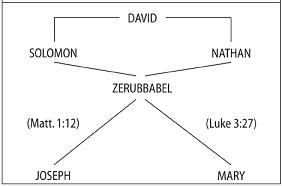
1:1 second year of King Darius. Not to be confused with Darius the Mede (cf. Dan. 5:31), Darius I (Hystaspes) became king of Persia in 521 B.C., having ascended to the throne after the death of Cambyses. As an officer of Cambyses and the great-grandson of Cyrus the Great’s brother, Darius retained the loyalty of the Persian army and thereby defeated other contenders for the throne. He reigned until his death in 486 B.C. sixth month . . . first day. The first day of the month of Elul corresponds to August 29, 520 B.C. Zerubbabel. Zerubbabel was the grandson of King Jehoiachin (Jeconiah in Matt. 1:12; cf. 1 Chr. 3:17, 19) and, thus, he was in the Davidic line. Though he is not to be identified with Sheshbazzar (Ezra 1:8, 11; 5:14, 16), his role as civil leader (Ezra 2:2) and overseer of the temple rebuilding project (Zech. 4:6–10) is certain. He reestablished the Davidic throne, even though it will not again be occupied until the time of Messiah (cf. Pss. 2;110). Joshua . . . the high priest. Spelled Jeshua in Ezra 3:2, Joshua was a descendant of Zadok (1 Chr. 6:15) and the religious leader of the exilic community that returned to Jerusalem. He reestablished the high-priestly line of Aaron though Eleazar. Jehozadak. One of Nebuchadnezzar’s captives (cf. 1 Chr. 6:15)
1:2 This people says. Haggai begins his message by quoting a popular expression of the people, saying it was not time to build the temple. Though propelled by the hostile opposition of their neighbors (Ezra 4:1–5, 24) and the lack of economic prosperity (cf. vv. 9–11), the roots of their reluctance lay ultimately in their selfish indifference to the Lord. God’s displeasure is noted in His reference to them as “This people” and not “My people.” They wanted their wealth for themselves, not a temple.
1:4 temple . . . ruins. Cf. Ezra 3:1–13 for the start of the second temple. Selfish indulgence, revealed by the prophet’s rhetorical query, demonstrated their hypocrisy and misplaced priorities. Walls and ceilings overlaid with cedar were common in wealthy residences (cf. 1 Kin. 7:3, 7; Jer. 22:14).
1:6 Using five pairs of poetic contrasts, each concluding essentially the same thing, Haggai painted a vivid picture of their economic and social distress. Their selfish lack of concern for God’s house had only caused them more hardship (cf. Matt. 6:33). This was Solomon’s message in Ecclesiastes—“all is vanity”—restated.
1:8 Go up . . . bring wood . . . build. Three imperatives give the remedy for their trouble. The long captivity of seventy years had let the forests grow, so there was ample wood. They were to use it to rebuild the house of the Lord and, therein, He would be glorified. By putting God first, He would then be honored in their worship and they would be blessed in the secondary matters of life. Compare this pitiful project (Ezra 3:12; Hag. 2:3) to the opulence of Solomon’s first temple (cf. 1 Chr. 28, 29; 2 Chr. 2–6).
The MacArthur Study Bible, by John MacArthur (Nashville: Word Publishing, 1997) 1334. © 1993 by Thomas Nelson, Inc.
1:9 runs to his own house. Because the Jews were zealous to pursue their own interests, the prophet drew a contrast between the one who eagerly ran to care for “his own house,” while disregarding God’s house (“My house”).
1:10, 11 Economic catastrophe, resulting from God’s withholding of the summer dew, was the price for their disobedience (cf. Deut. 7:13). Grain, wine, and oil were the primary crops of the land. The cattle also languished because of the absence of spiritual health (cf. Joel 1:18–20).
II. REMNANT RESPONDS AND REBUILDS (1:12–15)
1:12–15 Haggai’s second message came twenty-three days after the first one (v. 15), around September 21, 520 B.C. The Lord’s call to “consider your ways” (vv. 5, 7) caused the people to respond in repentance and obedience (v. 12). This new message, “I am with you,” further stirred the Jews to action (vv. 13, 14).
1:12, 14 the remnant of the people. The exiles who returned from Persia took the message to heart. Realizing that the words of the prophet were from the Lord, they “obeyed” and “feared,” knowing that God was present.
1:13 I am with you. Oppressed by hostilities from without and famine from within, the Lord responded to their genuine repentance and obedience, assuring them of His presence with them. This should have evoked a memory of God’s Word to Joshua and the returning people centuries before (cf. Josh. 1:5).
1:14 stirred up the spirit. The Lord energized the leaders and the people through His Word to carry on the work of rebuilding the temple. God had sovereignly moved in the heart of Cyrus sixteen years earlier (cf. 2 Chr. 36:22, 23; Ezra 1:1–3). The people’s response of repentance and obedience allowed God’s Spirit to energize them for the task.
III. RETURN OF GOD’S GLORY (2:1–9)
2:1–9 With building operations in full swing, the Lord gave a strong message of encouragement, especially to the elderly among them who had seen Solomon’s temple. Though the temple of Solomon was of greater magnificence, the Lord urged the people to be courageous, assuring them of His presence (v. 4), His faithfulness to His covenant promises (v. 5), and promises of a greater, more glorious temple in the future (vv. 6–9).
2:1 seventh month . . . twenty-first. This day in the month of Tishri corresponds to October 17, 520 B.C. Leviticus 23:39–44 indicates that this was the final day of the Feast of Tabernacles, a feast to celebrate God’s provision for Israel during her forty years of wilderness wanderings and give thanks for a bountiful harvest. On this occasion, the Lord gave Haggai the third message.
2:2 The first message was directed toward the leaders, Zerubbabel and Joshua (see notes on 1:1 ). Here the prophet includes the remainder of the exiles who returned from Babylon.
2:3 you who saw. Some remained, perhaps even Haggai, who had seen the temple of Solomon before its destruction (cf. Ezra 3:12, 13). With three rhetorical questions, the Lord through His prophet Haggai drew attention to the fact that this temple was inferior to Solomon’s temple (cf. Ezra 3:8–13), which caused many to be discouraged by its lack of splendor.
2:4 be strong. To counteract the discouragement, the Lord repeated the commands to “be strong” and to “work,” assuring them of God’s presence. This was the second reminder from the Lord, “I am with you” (cf. 1:13).
2:5 Spoken at the close of the feast commemorating God’s provision during the wilderness wanderings, His covenant commitment and the promise that His Spirit would be with them as “when you came out of Egypt” would have been most reassuring (c. 1445 B.C.). God had not forgotten the people over the last nine centuries (Ex. 33:14). My Spirit. The third person of the triune Godhead (cf. Num. 11:16, 17).
2:6, 7 I will shake. The shaking of the cosmic bodies and the nations goes beyond the historical removal of kingdoms and the establishment of others, such as the defeat of Persia by Greece (Dan. 7). Rather, the text looks to the cataclysm in the universe described in Revelation 6–19, the subjugation of the nations by the Messiah, and the setting up of His kingdom which will never be destroyed (cf. Dan. 2:44; 7:27; Zech. 14:16–21; Matt. 25:32; Luke 21:26; Heb. 12:26; Rev. 19:19–21).
2:7 Desire of All Nations. See Introduction: Interpretive Challenges. While some view the phrase as referring to Jerusalem (e.g., Ezra 6:3–9), it seems preferable to see a reference here to the Messiah, the deliverer for whom all the nations ultimately long. I will fill this temple with glory. There is no Scripture to indicate that God’s glory ever did come to Zerubbabel’s temple, as the first temple was filled with the Shekinah glory (cf. 1 Kin. 8:10, 11; 2 Chr. 5:13, 14). However, His glory will fill the millennial temple (Ezek. 43:5). This glorification cannot refer to Christ’s physical presence in Herod’s temple, because the events of verses 6–9 cannot be accounted for historically. The context speaks of the establishment of His earthly, Davidic, millennial kingdom and His presence in the temple during that kingdom.
2:8 silver . . . gold. Economically destitute, the people were reassured that He is the possessor of all things (cf. Ps. 50:12).
2:9 this latter temple. The Jews viewed the temple in Jerusalem as one temple existing in different forms at different times. The rebuilt temple was considered a continuation of Solomon’s temple (cf. v. 3). However, the eschatological glory of the millennial temple, i.e., the latter temple, will far surpass even the grandeur of Solomon’s temple (the former temple). Cf. Ezekiel 40–48 for the detailed description of the millennial temple. I will give peace. This peace is not limited to that peace which He gives to believers (e.g., Rom. 5:1), but looks ahead to that ultimate peace when He returns to rule as the Prince of Peace upon the throne of David in Jerusalem (Is. 9:6, 7; Zech. 6:13; Acts 2:30).
IV. RELIGIOUS QUESTIONS (2:10–19)
2:10–19 The fourth message of Haggai occurred two months after the third, on the twenty-fourth day of the month of Chislev, corresponding to December 18, 520 B.C. Only one month earlier, Zechariah began his prophetic ministry (Zech. 1:1). The message sought to demonstrate that, while their disobedience caused God’s blessings to be withheld, their obedience would cause His blessings to be released.
2:11–14 To provide an analogy or object lesson for the people, two questions were asked of the priests relative to ceremonial law. The first question was intended to show that ceremonial cleanness cannot be transferred (v. 12), while the second question showed that ceremonial uncleanness can be transferred (v. 13). Haggai then applied the lesson (v. 14). Even though the people had been bringing their offerings while neglecting the rebuilding of the temple, their offerings had not been acceptable. Their sin had caused their sacrifices to be contaminated and ineffectual. And their good works, their offerings, could not transmit cleanness. In other words, sin is contagious, righteousness is not (cf. 1 Sam. 15:22; Hos. 6:6).
| Identification | Date | Description | References |
| The Tabemacle (mobile Temple) | about 1444 B.C. | Detailed plan received by Moses from the Load Constructed by divinely appointed artisans Desecrated by Nadab and Abihi | Ex. 25-30; 35:30-40:38; Lev. 10:1-7 |
| Solomon's Temple | 966-586 B.C | Planned by David Constructed by Soloman Destroyed by Nebuchadenzzar | 2 Sam. 7:1-29; 1 Kin. 8:1-66; Jer. 32:28-44 |
| Zerubbabel's Temple | 516-169 B.C. | Envisioned by Zerubbabel Constructed by Zerubbabel and the elders of the Jews Desecrated by Antiochus Epiphanes | Ezra 3:1-8; 4:1-14; 6:1-22 |
| Herod's Temple | 19 B.C -A.D. 70 | Zerubbabel's temple restored by Herod the Great Destroyed by the Romans | Mark 13:2, 14-23; Luke 1:11-20; 2:22-38; 2:42-51; 4:21-24; Acts 21:27-33 |
| The Present Table | Present Age | Found in the heart of the believer The body of the believer is the Lord's only temple until the Messiah returns | 1 Cor. 6:19, 20; 2 Cor. 6:16-18 |
| The Temple Revelation 11 | Tibulation Period | To be constructed during the Tribulation by the Antichrist To be descreated and destroyeed | Dan. 9:2; Matt. 24:15; 2 Thess 2:4; Rev. 17:18 |
| Ezekiel's (Millennial) Temple | Millenium | Envisioned by the prophet Ezekiel To be built by the Messiah during His millennial reign | Ezek. 40:1–42:20; Zech. 6:12, 13 |
| The Eternal Temple of His Presence | The Eternal Kingdom | The greatest temple of all (“The Lord God Almighty and the Lamb are its temple”) A spiritual temple | Rev. 21:22, 22:1-21 |
The temple (Gr. hieron ) is a place of worship, a sacred or holy space built primarily for the national worship of God. © 1993 by Thomas Nelson, Inc.
The MacArthur Study Bible, by John MacArthur (Nashville: Word Publishing, 1997) 1335. © 1993 by Thomas Nelson, Inc.
2:15–18 The Lord called the people again to consider their situation prior to the resumption of the temple building. In those days, the farmer found less than expected (cf. 1:6, 9–11).
2:16 ephahs . . . baths. Four to six gallons, respectively. Between fifty to sixty percent of the expected harvest had been lost.
2:19 But from this day I will bless you. As a result of their obedience, God promised to bless them from that day forth (cf. v. 10).
V. REIGN OF THE LORD (2:20–23)
2:20–23 The fifth message to Zerubbabel the governor of Judah (v. 20) came on the same day as the fourth; he returned to the theme of verses 6–9 and the millennial reign of the Messiah. Once again, it depicted the overthrow of the kingdoms of the world and the establishment of the messianic kingdom (cf. Dan. 2:44; 7:27). As the events predicted did not transpire historically, the promise pertains to the royal line through whom the Messiah would come. It looked to the ultimate day when Messiah reigns on earth (cf. Ps. 2; Rev. 19, 20).
2:23 In that day. The day of Messiah’s triumph (cf. Zech. 12–14). My servant. A distinctly Davidic and messianic title (cf. 2 Sam. 3:18; 1 Kin.11:34; Is. 42:1–9; Ezek. 37:24, 25). signet ring. The signet ring was a symbol of honor, authority, and power (cf. Song 8:6). It corresponded to a king’s scepter which was used to seal letters and decrees (cf. 1 Kin. 21:8; Esth. 8:8; Dan. 6:17). Zerubbabel, as God’s signet ring, stands as the official representative of the Davidic dynasty and represents the resumption of the messianic line interrupted by the Exile. Just as Pharaoh gave Joseph his signet ring and made him second in the kingdom (Gen. 41:41–43), so God will do for the Davidic line of kings. The pre-exilic signet of Jehoiachin was removed by God (Jer. 22:24) and renewed here in his grandson, Zerubbabel, who reestablished the Davidic line of kings, which would culminate in the millennial reign of Christ. See note on Ezra 2:2.
Further Study
Feinberg, Charles L. The Minor Prophets. Chicago: Moody, 1980.
Kaiser, Walter C., Jr. The Book of Haggai, in vol. 23 of The Preacher’s Commentary. Nashville: Thomas Nelson, 1992.