THE KAIGE TEXT OF
REIGNS
TO THE READER
EDITION OF THE GREEK TEXT
The NETS translation of the two Kaige sections in Reigns, 2 Rgns 11.2–3 Rgns 2.11 (=  ) and 3 Rgns 22.1–4 Rgns 25.30 (=
  ), is based on the preliminary critical edition by Alfred Rahlfs, Septuaginta. Id est Vetus Testamentum graece iuxta LXX interpretes, 2 vols.(Stuttgart: Württembergische Bibelanstalt, 1935).
In a few places I have disagreed with Rahlfs’ edition. For example, he was correct to adopt  in 2 Rgns 24.1 and
  in 4 Rgns 21.11. Both readings show that the translator rendered
  by an uninflected transcription
  instead of the inflected form
  . Inner-Greek copyists preferred
  , which accounts for Rahlfs’ readings in 2 Rgns 11.11; 20.5; 4 Rgns 8.19; 9.29; 14.10, 12; 17.19; 21.16; 23.27; 25.21.
KAIGE AS COMPOSITE TEXT
Most Septuagint scholars today agree that Rahlfs’ edition of and (Thackeray’s labels for the two sections) is a reasonable approximation (as a work in progress) to the text presupposed by extant Hexaplaric readings and a counterweight to the text of the so-called Lucianic manuscripts. A growing consensus further suggests that Rahlfs’ text most likely represents a composite text, consisting of an underlying Old Greek (OG) translation (second century BCE) interspersed with “Kaige” revisions (latter part of the first century BCE, perhaps by a Jewish Palestinian school of translators), with the aim of bringing the OG into closer agreement with a proto-Masoretic text. This composite text is commonly referred to as “Kaige-Theodotion” or simply “Kaige.” For further details about scholarly theories on the OG and Kaige in 1–4 Reigns, see, “The Old Greek Text of REIGNS” (pp. 244–248).
TWO SECTIONS OF KAIGE
Shared Features in and
Several translation equivalents and techniques are shared by and , in contrast to the OG sections of 1–4 Reigns. (1)  was typically rendered by
  (c. 26x and 17x respectively: e.g., 2 Rgns 11.12, 17, 21, 24; 3 Rgns 22.22; 4 Rgns 2.5; 8.1) in distinction from
  in OG (c. 72x). One can therefore infer that a Kaige translator/reviser was intent on contrasting
  with . I have tried to flag this contrast by glossing with “and indeed/indeed.” (2)
  and
and  were distinguished, even when
  was followed by a finite verb, e.g.,
  “I am–I anointed you to be king over Israel” (2 Rgns 12.7[2x] and cf. 11.5; 13.28; 15.28; 18.12; 20.17; 24.12, 17; 3 Rgns 2.2). Though is less consistent than , there too one finds
  plus a finite verb (cf. 4 Rgns 4.13; 10.9; 22.20), a barbarism absent from the OG sections of 1–4 Reigns. (3) Though
  “a ram’s horn” is translated by
  “a (metal) trumpet” in the OG (and Lucianic manuscripts within and ), in Kaige it is rendered by
  “a horn” (e.g., contrast 1 Rgns 13.3 with 2 Rgns 18.16 and 4 Rgns 9.13). (4) The historic present tense, found over 220 times in the OG sections, is used fewer than 10 times in Kaige. (5)
  “from” is rendered by
  “from upon,” rather than by
  “from” as in OG (e.g., 2 Rgns 11.21; 13.9; 24.25; 3 Rgns 2.4; 4 Rgns 2.3, 5, 13, 14; 10.31; 17.21, 23; 25.5, 21, 28). These shared features set and apart from the OG sections in 1–4 Reigns.
Isomorphic Translation of Hebrew
Another distinctive Kaige feature, ubiquitous in and , is what may be called “rigid isomorphism” or “extreme literalism.” Each constitutive element in the source text (apparently proto-Masoretic) is translated sequentially morpheme-for-morpheme or word-for-word, with the result that the Greek is often unidiomatic. Although this feature is not absent from the OG sections, it is more strictly adhered to in and (which is not to say that “normal” Greek does not occur). A few examples are in order:
2 Rgns 12.5  , “for the man who did this is a son of death.”
2 Rgns 12.16  , “and David fasted a fast.”
2 Rgns 13.15  “And Amnon hated her with very great hatred.”
See further 2 Rgns 14.28; 3 Rgns 2.4; 4 Rgns 5.3; 8.20, 22; 10.30; 11.11; 14.21.
Overworked pairings are  “see/behold” (c. 45x in , 60x in ) and
  “saying” (c. 40x in , 60x in ). The infinitive absolute plus finite verb was translated awkwardly by finite verb plus cognate participle/cognate dative, e.g.,
  “provokingly you provoked . . . [he] shall die by death” (2 Rgns 12.14; cf. 14.14; 15.8; 17.10–11; 18.2–3; 23.7; 24.24; 3 Rgns 22.28; 4 Rgns 1.4, 6, 16; 2.11; 8.10, 14; 14.10; 18.30, 33). Oath formulae were rendered word-for-word, to the point where the standard default
  “if” failed to pick up on the emphatic negative component of
  when it occurs in an oath, which resulted in an unstated protasis or apodosis, e.g.,
  “The Lord lives, if a hair of your son shall fall on the ground!” (2 Rgns 14.11; cf. 11.11; 14.19; 15.21; 19.8; 3 Rgns 2.8; 4 Rgns 2.2, 4, 6; 3.14; 4.30; 5.16). Throughout and clauses were not subordinated but simply strung together according to the equation
  .
.
Stereotypes
Stereotyping in and sometimes results in negative semantic interference from the Hebrew source text. So, for example, the third instance of 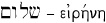 in 2 Rgns 11.7 gives rise to an oxymoron: “and Dauid inquired after the peace of Ioab and after the peace of the people and after the peace of the war.” In 4 Rgns 1.7
  has the sense “kind/sort/manner”: “What sort of man was he who came to meet you?” However, the translator’s stereotyped equation
  results in an unusual inquiry: “What was the judgment <Or means of judging> of the man who went up to meet you,” whereupon Eliou is described as a hairy man wearing a leather belt.
Isolates
Etymologizing translations can produce isolates. In , for example, Hebrew  was rendered as
  in the clause “and there went out after him a burden/portion? from the king” (2 Rgns 11.8).
  was derived from
  , which usually corresponds to
  “to raise,” which in turn produced
  , a word that is a poor contextual fit here. Another example is
  “his hearings/reports” for
  “his bodyguard” in 2 Rgns 23.23 via the equation
  “to hear.”
has numerous isolate translations, for example:  “he too” –
  (4 Rgns 2.14);
  “a short distance” –
  “for debratha of the land” (4 Rgns 5.19);
  “to the citadel” –
  “into the darkness <Perhaps secret place>” (4 Rgns 5.24) where the translator may have misconstrued the Hebrew noun to be
  “a present” –
  (4 Rgns 8.8, 9; 17.3, 4; 20.12);
  “then” –
  (4 Rgns 10.10);
  “to the keeper of the wardrobe” –
  “to the man over the house of mesthaal <Or Mesthaal>” (4 Rgns 10.22);
  “the thornbush” –
  (4 Rgns 14.9[2x]);
  “the Chaldean officials” –
  “a passing <Possibly incursion> of the Chaldeans” (4 Rgns 25.24) although the translator may have misread
  . Isolate translations further illustrate the translator’s rigid isomorphism in both sections of Kaige.
Transcriptions
The translator’s isomorphic approach is further underscored by numerous transcriptions of typically difficult or unknown Hebrew words. For example, in one finds: “araboth of the wilderness” (2 Rgns 15.28), “dried araphoth on it” (17.19), and “saphphoth from cows” (17.29). In a great number of transcriptions occur (c. 26), not including person or place names (cf. 4 Rgns 3.4; 4.39; 8.15; 9.13; 11.8, 12; 12.6, 10; 15.5; 16.17; 17.6; 19.23; 20.12–13; 22.14; 23.4, 5, 7, 11, 24; 25.12, 14, 17). Some of these may be technical terms and thus unknown to the translator, while some may have been institutionalized.
Neologisms
Apparent neologisms in include  “to put aside” (2 Rgns 12.13; 24.10);
  “to roll
  (i.e., rolls)” (13.6, 8);
  “belt” (18.11);
  “to hang in the sun (i.e., as a form of torture)” (21.6, 9, 13);
  “a support” (22.19);
  “a lightly armed (man)” (22.30; also in 4 Rgns 5.2; 6.23; 13.20, 21; 24.2; Iob 29.25); and
  “a going out, way out” (2 Rgns 15.20). The translator of the section apparently coined one neologism,
  “bend or turn about” (4 Rgns 4.34). In the very next verse, he translates the same Hebrew verb with
  “bend together,” well attested in ancient Greek.
also uses a few words not found (thus far) in pre-LXX:  “whirlwind/earthquake” (4 Rgns 2.1, 11; already in OG in 3 Rgns 19.11, 12);
  “in great pain” (4 Rgns 4.27; cf. 1 Rgns 1.10; 22.2; 30.6); and
  “a barbed lance” (4 Rgns 11.10; cf. Num 25.7; 3 Rgns 18.28; Ioel 4.10).
Calques
Occasionally the translator(s) of and made use of calques or loan words from Semitic, some of which, however, pre-date the LXX. For example:  “tunic” (2 Rgns 13.18, 19; 15.32);
 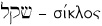 “shekel” (2 Rgns 14.26; 18.12; 21.16; 24.24; 4 Rgns 6.25; 7.1, 16, 18; 15.20);
  “covenant” (2 Rgns 15.24; 23.5; 4 Rgns 11.4, 17; 13.23; 17.35, 38; 18.12; 23.2, 3, 21);
  unit of measure (4 Rgns 6.25); and
  “the number-three man” (4 Rgns 7.2, 17, 19; 9.25; 10.25; 15.25).
DISTINCTIVE FEATURES IN AND VIS-À-VIS THE MT
and share many translation features, resulting from strict adherence to the Hebrew source text and Kaige revision, which set them apart for the OG sections in 1–4 Reigns. At the same time, both and reflect hundreds of small semantic variants from MT. A comparison of NETS with NRSV will spot many of these. These variants may be quantitative, ranging in length from a single word to several verses, or qualitative, i.e., the source text was interpreted differently. In either case, the composite Kaige text in both and reflects only partial revision towards a proto-Masoretic text.
The fact that semantic variations exist between MT and the Kaige text in both and gd, means that each section has its own distinctive features or translation profile vis-à-vis MT. Naturally, such features are conditioned by the way the translator (or were there two translators?) handled the details in the various narratives recounted in each section. Here I do not intend to make a detailed comparison between and that would argue for or against the existence of two translators for these two sections. Such a project awaits future study. My more limited aim is to alert the reader to the kind of quantitative and qualitative variants visible in both and .
Distinctive Features in vis-à-vis MT
Many quantitative differences in are probably due to a source text slightly different from proto-MT. In these instances the unwary reader of NETS (side by side with NRSV) might incorrectly conclude that Kaige is a free translation of the corresponding Hebrew. However, close comparison of MT with Kaige, along with new insights from 4QSama (first century BCE), show that many variants in the Greek are best attributed to a Hebrew source different from proto-MT or to changes that occurred in proto-MT after the Hebrew had been translated into Greek (e.g., editorial changes or errors in transmitting the Hebrew). One may note quantitative variants in: 2 Rgns 11.22; 12.16, 30; 13.21, 27, 34, 39; 14.27, 30; 15.18, 20, 34; 17.3, 8, 28; 18.3, 14, 18; 19.8, 10, 11, 19, 44; 20.18; 21.1, 5, 11, 22; 23.1, 3, 8, 9, 15; 24.25; 3 Rgns 1.47, 48 (for discussion see Barthélemy, Driver, McCarter, and McLean).
Other differences are likely due to the translator/reviser. I count some 100 light interpretive touches. Consistent with the translator’s usual mode of translating, these variants are typically limited to one or two words in a given sentence.
Semantic leveling occurs. So for example, while MT distinguishes between  “commander” (10x, e.g., 2 Rgns 18.5; 19.7) and
  “chief” (2 Rgns 23.8, 18), the translator uses but one,
  “commander.” At other times, the translator differentiated where the Hebrew did not. For example,
  “slave/servant/minister/adviser/official” was rendered by
  “servant” or
  “slave,” the latter typically in a deferential context (e.g., 2 Rgns 11.24; 13.24; 14.6; 3 Rgns 1.13, 17). Similarly, Hebrew
  “sword” becomes either
  “dagger” or
  a large broad “sword” or “scimitar.” (The last two examples of differentiation occur in also.) In numerous instances the translator made a grammatical subject or object explicit. Sometimes the subject was altered in Greek (e.g., 2 Rgns 20.22; 21.13).
As instances of interpretation in from MT to Kaige (i.e., MT > Kaige) one may cite: “fourfold” > “sevenfold” (2 Rgns 12.6); “desolate woman” > “widow” (13.20); “the king” > “his father” (15.7); “turn [it] into foolishness” > “scatter abroad” (15.31); “playing on pipes” > “dancing in choruses” (3 Rgns 1.40). In 2 Rgns 18.21, 22, 23, 31, 32 an anonymous “Cushite” has been turned into Dauid’s wise friend “Chousi” (cf. 2 Rgns 15.32, 37; 16.16–18; 17.5–8, 14, 15).
A few translational variants are of a theological nature, for example:  “(the) God” >
  “the Strong One” (2 Rgns 22.31, 33, 48; 23.5);
  “my rock” >
  “my keeper” (22.3);
  “my shield” >
  “my protector” (22.3);
  “my stronghold” >
  “my supporter” (22.3);
  “the cords of Sheol” >
  “pangs of death” (22.6, contrast 3 Rgns 2.6, 9).
Distinctive Features in vis-à-vis MT
In general, the Hebrew source text behind appears to have been in better shape than that behind bg. Nevertheless, one observes many pluses and minuses in vis-à-vis MT. Two of the longest variants involve doublets. (1) Greek text missing at 3 Rgns 22.47–50 (= 1 Kings 22.46–49 in NRSV) actually appears in the OG section at 3 Rgns 16.28d–g. This doublet concerns the reign of Iosaphat, cf. 3 Rgns 16.28a–h; 22.41–46, 51. (2) contains a lengthy plus at 4 Rgns 1.18a–d concerning Ioram’s reign, which reappears with slight differences in the doublet at 4 Rgns 3.1–3.
Other quantitative variants are typically only a word or a few words in length. Minuses in (i.e., pluses in MT) occur in or in between such verses as: 3 Rgns 22.47–50; 4 Rgns 1.17; 3.13; 4.20; 5.21; 6.21, 31; 9.28, 29, 32; 10.14; 13.1, 13, 16; 15.14, 19; 16.11–12; 17.14–15, 27; 18.34; 19.6, 10, 15, 25, 34; 20.11; 21.7, 12; 23.17; 24.2; 25.10. Pluses in occur in: e.g., 3 Rgns 22.7, 53; 4 Rgns 1.18a–d (cf. 3.1–3); 2.6, 16; 4.36; 6.16; 9.16, 29, 32; 10.16, 21, 34; 15.25; 16.2; 17.32; 19.20; 20.21; 22.3; 23.16, 29. Given the relatively good shape of the Hebrew text, many of the pluses here and elsewhere in may have been added intentionally by the translator to clarify the identity of a speaker, to avoid points of misunderstanding, to highlight certain items, or for other unknown reasons. In one case, 4 Rgns 17.32–34, Kaige reflects a doublet and several minuses whose overall effect, whether or not they stem from the translator, is to paint the Samaritans and their syncretistic practices in a harsher way than in MT. Sometimes the translator might have misread the Hebrew, for example in 4 Rgns 5.24; 6.25; 7.10, 17; 11.10, 14; 19.25.
Variations between the Hebrew and Greek texts, however the differences arose, also have a bearing on the complicated chronological problems that surface in and elsewhere in 1–4 Reigns. For example, in 4 Rgns 8.25–29 Kaige does not distinguish as clearly as MT between kings Joram and Jehoram. In 8.17 Rahlfs adopted the reading “eight years” (= MT) for the length of Jehoram’s reign; yet another well attested reading in Greek has “forty years.” Ambiguity in 4 Rgns 3 over the identities of the kings of Israel and Iouda also adds to the complex problem of variant chronologies in MT and the Greek texts in Reigns.1
As in , so in one also observes hundreds of light interpretive touches, probably due to the translator (or a later reviser), which in effect have set the Kaige text apart from MT, sometimes in significant and fascinating ways. (Some examples cited below may be regarded as the necessary consequences of the translator’s isomorphic mode of translating.)
Again, one finds instances of semantic leveling. In 4 Rgns 13.12  and
and  were leveled to
  (NETS “did” and “exercised” allows for better English grammar). In 4 Rgns 24.6, 8, 12, 15; 25.27 Kaige fails to distinguish between father Jehoiakim and his son Jehoiakin and names them both “Ioakim.” This leads to further confusion in 4 Rgns 24.17 where there is another variant concerning the relationship between Ioakim and Sedekias.
Occasionally Kaige exhibits semantic differentiation. In 4 Rgns 2.2, 4, 6 Elisaie declares three times that he will not “leave” or “abandon” Eliou, a small change from MT’s “leave.” In 4 Rgns 10.27 men “pulled down  the steles of Baal and tore down
  the house of Baal,” while MT uses the same verb
  “demolish.” In 4 Rgns 11.9 Kaige describes Iodae not only as “the priest” (2x in MT) but also as
  “the wise,” perhaps picking up on the semantic component
  in his Hebrew name
  “Jehoiada.”
On numerous occasions in the translator interpreted the Hebrew in a different way from what we see in MT (glossed here as, MT > Kaige). For example: “Elijah ascended in a whirlwind into heaven” > “Eliou was taken up in a whirlwind as into heaven” (4 Rgns 2.11); “mantle/cloak” > “sheepskin” (4 Rgns 2.8, 13, 14; in LXX  is used solely to designate Eliou’s sheepskin, cf. previously in the OG in 3 Rgns 19.13, 19); “eighty shekels” > “fifty shekels” (4 Rgns 6.25); “arrows” > “bows” (4 Rgns 13.18); “king of Assyria” > “king of the Assyrians” (c. 48x, e.g., 4 Rgns 15.19, 20, 29); “they did wicked things” > “and they made partners and engraved <Perhaps engraved steles>“ (4 Rgns 17.11); “he prospered” > “he understood” (4 Rgns 18.7); “one hundred talents of silver and a talent of gold” > “one hundred talents of silver and one hundred talents of gold” (4 Rgns 23.33); “the captain of the bodyguard” > “the chief cook” (4 Rgns 25.8, 10–12, 15, 18, 20). In 4 Rgns 11.4, 19 MT refers to captains of “the Carites”
  and “the guards”
  , while Kaige interpreted these as two commanders named “Chorri”
  and “Rasim”
  . In 4 Rgns 2.12 the translator interpreted the expression “Father, father! The chariots of Israel and its horsemen!” (MT) as “Father, father! Chariot of Israel and its horseman!” (), apparently a designation for the prophet Eliou himself, not a description of other elements in the vision (similarly in 13.14 where Elisaie is given the same epithet). In 4 Rgns 8.1, 5, Elisaie is said to have vividly “sparked to life”
 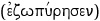 the Soumanite woman’s dead son (MT reads Hiphil forms of
  “restored”; contrast 5.7 where the verb
  “to make alive” was used).
Some semantic variants in pertain to foreign gods or goddesses. (1) The translator consistently rendered  “Asherah” or the Asherah pole that represented this foreign goddess by
  “a sacred grove” (4 Rgns 13.6; 17.10, 16; 18.4; 21.3, 7; 23.4, 6, 7, 14, 15 and cf. the precedent for this in Ex 34.13; Deut 7.5). (2) In 4 Rgns 1.2, 3, 6, 16 (and cf. 21.3) the translator interpreted “Baal” in an intriguing manner:
  “of Baal-zebub [i.e., Baal of flies] the god of Ekron” –
  “by the goddess Baal, fly god of Akkaron.” Oddly, the translator refers to this Baal using both feminine and masculine articulation (e.g., 1.2
  where NETS supplies “goddess” and
  “through him”). Previously, in 3 Rgns 22.54, the translator rendered
  “Baal” –
  “the Baalim” using a transcription (
 usually marks the plural form
  , e.g., 1 Rgns 7.4; 12.10; 3 Rgns 18.18). Thus the translator perceived Baal in a variety of ways.
Finally, some of the translator’s interpretations touch on matters of a theological nature. (1) Where MT frequently reads “man of God” in reference to Elisha, for some reason Kaige preferred “Elisaie” (cf. 4 Rgns 4.16, 25, 27; 5.8, 14, 15, 20; 6.9, 10, 15; 7.2, 18, 19; 8.2). One might suppose the translator did this to avoid being vague or confusing Elisaie with others called a “man of God” (e.g., Eliou, cf. 3 Rgns 17.18, 24; 4 Rgns 1.9–13). However, in many other verses pertaining to Elisha as a “man of God,” Kaige did translate the expression word-for-word (e.g., 4.7, 9, 21, 22, 25, 40, 42; 7.17; 8.4, 7, 8, 11; 13.19). (2) If the variation in 4 Rgns 20.17 is not attributed to a different Hebrew Vorlage, then the translator has shown theological interest in underscoring the point that every word of the Lord shall be fulfilled: 
 “nothing shall be left, says the LORD” –
  “and no word which the Lord said shall fail.”
In summary
There are numerous shared features in the so-called “Kaige” text of and that distinguish these two sections from the OG sections found elsewhere in 1–4 Reigns. The Kaige text itself is most likely a composite text which consists of an underlying layer of OG along with a scattering of subsequent partial revisions towards a proto-Masoretic text. In both and the Kaige text reflects a typically isomorphic word-for-word rendering of the Hebrew source text, to the point where one finds examples in almost every sentence of linguistic features native to Hebrew that have been translated quite mechanically into Greek. The longer pluses or minuses found in these Kaige chapters, vis-à-vis the traditional Hebrew text in MT, were probably not the work of a free creative translator but indications in certain contexts of a different Hebrew Vorlage. This is especially true for the section, where MT appears to have suffered many instances of haplography during transmission.
In the Kaige text in both and one also finds numerous translational variants, vis-à-vis MT, which resulted from: semantic leveling, semantic differentiation, specifying the Hebrew in a different way in Greek, small interpretive touches for various contextual reasons, and some theological interpretations, all of which have affected the Greek narrative in slightly different ways from the Hebrew story.
THE NETS TRANSLATION OF KAIGE IN AND
Throughout my translation of Kaige in sections and gd, I have tried to adhere strictly to the guidelines outlined in the introduction, “TO THE READER OF NETS.” In particular, in order to represent the predominantly isomorphic and stilted nature of the Greek text, I have intentionally used an isomorphic or wooden style of English, when demanded by the Greek. Even in verses where the Hebrew and Greek texts are semantically equivalent, the reader will observe that NETS (correctly) has the same essential meaning as NRSV, though the style of the NETS translation may be laborious English. In other words, in translating the Greek text, I have often altered the wording of NRSV in such a way that NETS reproduces unidiomatic Greek features using unidiomatic yet grammatical English.
EDITORIAL DETAIL
In matters of punctuation I have followed NRSV as much as possible. To assist the reader in making sense of Kaige’s awkward rendering of  plus a finite verb, I have used an em dash (e.g., 3 Rgns 2.8). An ellipsis indicates the unstated protasis or apodosis in an oath (e.g., 2 Rgns 11.11). Versification follows Rahlfs’ Greek text with NRSV’s verse numbers in parentheses where applicable (cf. 2 Rgns 19.1–44; 3 Rgns 22.44–54; 4 Rgns 1.18a–d; 12.1–22).
BIBLIOGRAPHICAL NOTE
The standard Greek and Hebrew lexicons and grammars were indispensable throughout the preparation of this NETS translation. I have also made careful use of textual databases and searching functions in BibleWorks™ for Windows (version 5.0 © 1992–2002 BibleWorks, L.L.C.). The following books and articles were also very helpful: Dominique Barthélemy, ed., Critique textuelle de l’Ancien Testament. 1. Josué, Juges, Ruth, Samuel, Rois, Chroniques, Esdras, Néhémie, Esther (Orbis Biblicus et Orientalis 50/1; Göttingen: Vandenhoeck & Ruprecht, 1982); Dominique Barthélemy, Les Devanciers d’Aquila (VTSup 10; Leiden: E. J. Brill, 1963); Alan E. Brooke, Norman McLean and Henry St. John Thackeray, eds., The Old Testament in Greek: According to the Text of Codex Vaticanus, Supplemented from other Uncial Manuscripts, with a Critical Apparatus Containing the Variants of the Chief Ancient Authorities for the Text of the Septuagint. Vol. II. The Later Historical Books. Part 1. I and II Samuel. Part 2. I and II Kings (Cambridge: Cambridge University Press, 1927; 1930) [= the Larger Cambridge Septuagint]; C. F. Burney, Notes on the Hebrew Text of the Books of Kings with an Introduction and Appendix (Oxford: Clarendon Press, 1903); S. R. Driver, Notes on the Hebrew Text and the Topography of the Books of Samuel with an Introduction on Hebrew Palaeography and the Ancient Versions (2nd ed.; Oxford: Oxford University Press, 1912; reprinted, Winona Lake, Ind.: Alpha Publications, 1984); Edward D. Herbert, Reconstructing Biblical Dead Sea Scrolls: A New Method Applied to the Reconstruction of 4QSama (STDJ 22; Leiden: Brill, 1997); P. Kyle McCarter, II Samuel: A New Translation with Introduction, Notes and Commentary (AB 9; New York: Doubleday, 1984); Paul D. McLean, The Greek Kaige Version of 2 Reigns 11:1 – 3 Reigns 2:11. A Study of its Constituent Translation Technique and Semantic Variations from its Hebrew Vorlage, Using the Interlinear Paradigm for A New English Translation of the Septuagint (NETS) (unpublished Th.D. dissertation, Knox College and the University of Toronto, 2004); J. A. Montgomery, A Critical and Exegetical Commentary on the Book of Kings (H. S. Gehman, ed.; ICC; Edinburgh: T&T Clark, 1951, 1960); T. Muraoka, “The Greek Texts of Samuel-Kings: Incomplete Translations or Recensional Activity?” in 1972 Proceedings IOSCS Pseudepigrapha, Los Angeles 4 Sept. 1972 (R. A. Kraft, ed.; SBLSCS 2; Missoula, Mont.: Society of Biblical Literature, 1972) 90–107; H. B. Swete, The Old Testament in Greek: According to the Septuagint (4th ed.; Cambridge: Cambridge University Press, 1909) [= Swete’s manual edition of the Larger Cambridge Septuagint]; E. Tov, The Text-Critical Use of the Septuagint in Biblical Research (2nd ed.; Jerusalem Biblical Studies 8; Jerusalem: Simor, 1997); John W. Wevers, “The Interpretative Character and Significance of the Septuagint Version” in Hebrew Bible/Old Testament: The History of Its Interpretation (Magne Sæbø, ed.; vol. 1; Göttingen: Vandenhoeck & Ruprecht, 1996) 84–107; John W. Wevers, “Principles of Interpretation Guiding the Fourth Translator of the Book of the Kingdoms (3 K. 22:1–4 K. 25:30)” CBQ 14 (1952) 40–56; John W. Wevers, “A Study in the Exegetical Principles Underlying the Greek Text of 2 Sm 11:2–1 Kings 2:11” CBQ 15 (1953) 30–45.
My heartfelt appreciation goes to my teacher and friend, Albert Pietersma, co-editor of NETS and the director of my doctoral thesis. Al has provided me with expert guidance, sage advice and warm encouragement throughout the translation and analysis of both Kaige sections in 1–4 Reigns.
PAUL D. MCLEAN
______________________________________________________________________
(OLD GREEK)
1 And it happened, after Saoul died, that Dauid returned from smiting Amalek, and Dauid settled two days in Sekelak. 2And it happened on the third day, and behold, a man came from the camp of Saoul’s people, and his clothes were torn, and earth was on his head. And it happened, when he came in to Dauid, that he fell to the ground and did obeisance to him. 3And Dauid said to him, “Where have you come from?” And he said to him, “I have come safe from the camp of Israel.” 4And Dauid said to him, “What is this word? Tell me!” And he said, “The people fled from the battle, and many of the people have fallen and died, and Saoul died, and his son Ionathan died.” 5And Dauid said to the lad who was telling him, “How do you know that Saoul and his son Ionathan died?” 6And the lad who was telling him said, “By accident I had an encounter on Mount Gelboue, and behold, Saoul was propped up on his spear, and behold, the chariots and the horse captains drew close to him. 7And he looked on the things behind him and saw me and called me, and I said, ‘Behold, here am I.’ 8And he said to me, ‘Who are you?’ And I said ‘I am an Amalekite.’ 9And he said to me, ‘Do stand over me, and put me to death, for a terrible darkness has laid hold of me, for all my life is in me.’ 10And I stood over him and put him to death, for I knew that he could not live after he had fallen, and I took the crown that was on his head and the armlet that was on his arm, and I have brought them here to my lord.”
11 And Dauid took hold of his clothes and tore them, and all the men who were with him tore their clothes. 12And they beat themselves and wept and fasted until evening for Saoul and for his son Ionathan and for the people of Ioudas and for the house of Israel, because they were smitten with a sword. 13And Dauid said to the lad who had told him, “Where are you from?” And he said, “I am son of a man, a resident alien, an Amalekite.” 14And Dauid said to him, “How did you not fear to bring your hand to destroy the Lord’s anointed?” 15And Dauid called one of his lads and said, “Drawing near, fall upon him,” and he struck him down, and he died. 16And Dauid said to him, “Your blood be on your head, for your mouth answered against you, saying, ‘I put to death the Lord’s anointed.’ ”
17 And Dauid lamented this lamentation over Saoul and over his son Ionathan 18and said to teach the sons of Ioudas—behold, it is written in a book of the upright—
19 Set up a monument, O Israel, for the
wounded that have died upon your
heights! How the mighty have fallen!
20 Tell it not in Geth,
and proclaim it not in the exits of
Ascalon,
lest daughters of allophyles rejoice,
lest daughters of the uncircumcised
exult.
21 You mountains that are in Gelboue,
let no dew descend,
and let there be no rain upon you
or fields of first fruits!
For there the shield of the mighty was
treated with vexation;
Saoul’s shield was not anointed with oil.
22 From the blood of wounded,
from the fat of mighty ones,
Ionathan’s bow did not return empty to the
rear,
and Saoul’s sword did not turn back
empty.
23 Saoul and Ionathan, the beloved and lovely,
not divided;
comely in their life and in their death
they were not divided;
swift beyond eagles they were,
and they had strength beyond lions.
24 O daughters of Israel, weep over Saoul,
who clothed you with scarlet with your
ornament,
who brought gold ornament to your
apparel.
25 How the mighty have fallen amidst the
battle!
Ionathan, a casualty upon your heights.
26 I grieve for you, my brother Ionathan;
you were made very beautiful to me;
your love to me was wonderful,
beyond women’s love.
27 How the mighty have fallen,
and the weapons of war perished!
2 And it happened after these things that Dauid inquired by the Lord, saying, “Shall I go up into one of the cities of Ioudas?” And the Lord said to him, “Go up.” And Dauid said, “Where shall I go up?” And he said, “To Chebron.” 2And Dauid went up there to Chebron, and both his wives, Achinoom the Iezraelite and Abigaia, the wife of Nabal the Carmelite, 3and the men who were with him, each and his household, and they were dwelling in the towns of Chebron. 4And the men of Judea came, and there they anointed Dauid to reign over the house of Ioudas.
And they told Dauid, saying, “The men of Iabis of Galaaditis buried Saoul.” 5And Dauid sent messengers to the leaders of Iabis of Galaaditis and said to them, “You are blessed to the Lord, because you have done this mercy to your lord, to Saoul the anointed of the Lord, and buried him and Ionathan his son! 6And now may the Lord do mercy and truth with you! And indeed I will do these good things with you, because you have done this thing, 7and now let your hands be strong, and become mighty sons, for Saoul your lord is dead, and indeed the house of Ioudas has anointed me king over themselves.”
8 And Abenner son of Ner, commander-in-chief for Saoul, took Iebosthe son of Saoul and brought him out of the camp to Manaem 9and made him king over Galaaditis and over Thasiri and over Iezrael and over Ephraim and over Beniamin and over all Israel. 10Iebosthe, Saoul’s son, was forty years old when he began to reign over Israel, and he reigned two years, except over the house of Ioudas who were behind Dauid. 11And the days that Dauid was king in Chebron over the house of Ioudas were seven years and six months.
12 And Abenner son of Ner went out, and the servants of Iebosthe son of Saoul, from Manaem to Gabaon, 13and Ioab son of Sarouia and the servants of Dauid went out from Chebron and met them at the well of Gabaon at the same place and they sat, thesea at the well of Gabaon here and thesea at the well there. 14And Abenner said to Ioab, “Do let the lads arise and have a game before us,” and Ioab said, “Let them arise.” 15And they arose and passed by, to the number of twelve of the servants of Beniamin, those of Iebosthe son of Saoul, and twelve of the servants of Dauid. 16And they held each his hand upon the head of his fellow, and his dagger to the side of his fellow, and they fell down together, and the name of that place was called the Portion of the Plotters, which is at Gabaon. 17And the battle was extremely hard in that day, and Abenner stumbled, and the men of Israel, before the servants of Dauid.
18 And three sons of Sarouia were there, Ioab and Abessa and Asael, and Asael was as swift on his feet as one gazelle in a field. 19And Asael pursued after Abenner and did not turn to go to the right or to the left after Abenner. 20And Abenner looked behind him and said, “Are you Asael himself?” And he answered, “I am.” 21And Abenner said to him, “Turn to the right or to the left, and seize for yourself one of the lads, and take for yourself his armor,” and Asael did not want to turn aside from behind him. 22And Abenner added again, saying to Asael, “Withdraw from me, lest I strike you to the ground, and how then could I lift up my face to Ioab? And where are these things leading? Return to your brother Ioab.” 23But he was not willing to withdraw. And Abenner struck him in the loins with the butt of his spear, and the spear went out behind him, and he fell there and died under him. And it happened, each one who came to the place, there where Asael fell and died—and he stood still.
24 And Ioab and Abessa pursued after Abenner, and the sun was going down, and they came to the hill of Amman, which is before Gai on the way to the wilderness of Gabaon. 25And the sons of Beniamin who were behind Abenner gathered themselves together and formed one band, and they stood on the top of one hill. 26And Abenner called Ioab and said, “The sword will not devour unto victory, will it? Do you not know that in the end it will be bitter? And how long will you not say to the people to turn from after our brothers?” 27And Ioab said, “The Lord lives, for if you had not spoken, wherefore, then the people from early morning would have gone up, each after his brother.” 28And Ioab trumpeted with the trumpet, and all the people departed, and they did not pursue after Israel, and they did not add to fight any longer.
29 And Abenner and his men returned westward that whole night and crossed the Jordan and went the whole bstretch of time aheadb and came to the camp. 30And Ioab returned from after Abenner and gathered all the people together, and nineteen men and Asael of Dauid’s servants were notedc. 31And the servants of Dauid smote of the sons of Beniamin three hundred sixty men, belonging to him. 32And they took up Asael and buried him in the tomb of his father at Baithleem. And Ioab went, and the men who were with him, the whole night, and the day broke upon them at Chebron.
3 And the war was for a long time between the house of Saoul and between the house of Dauid, and the house of Dauid was going and strengthening, and the house of Saoul was going and weakening.
2 And sons were born to Dauid at Chebron, and his firstborn was Amnon by Achinoom the Iezraelite, 3and his second Dalouia by Abigaia the Carmelite, and the third Abessalom son of Maacha daughter of King Tholmi of Gesir, 4and the fourth Ornia son of Pheggith, and the fifth Sabatia by Abital, 5and the sixth Ietheraam by Dauid’s wife Aigald; these were born to Dauid in Chebron.
6 And it happened, while there was war between the house of Saoul and between the house of Dauid, that Abenner was prevailing over the house of Saoul. 7And Saoul had a concubine Respha daughter of Ial, and Memphibosthe son of Saoul said to Abenner, “Why is it that you went in to my father’s concubine?” 8And Abenner was very angry concerning the word of Memphibosthe, and Abenner said to him, “Am I a dog’s head? Today I did mercy with the house of your father Saoul both concerning brothers and acquaintances, and I did not desert to the house of Dauid, and do you question me today concerning an injustice of a woman? 9This is what God may do to Abenner, and this is what he may add to it, for just what the Lord has sworn to Dauid, for thus will I do for him in this day, 10to take the kingdom from the house of Saoul and set up the throne of Dauid over Israel and over Ioudas, from Dan to Bersabee.” 11And Memphibosthe was no longer able to answer Abenner a word, from his being afraid of him.
12 And Abenner sent messengers to Dauid at Thailam, where he was, immediately, saying, “Make your covenant with me, and behold my hand is with you to return all the house of Israel to you.” 13And Dauid said, “Well, I will make a covenant with you, but one thing I ask of you, saying: ‘You shall never see my face unless you bring Saoul’s daughter Melchol when you come to see my face.’ ” 14And Dauid sent messengers to Saoul’s son Memphibosthe, saying, “Give me back my wife Melchol whom I took for a hundred foreskins of allophyles.” 15And Memphibosthe sent and took her from her husband, from Phaltiel son of Selles. 16And her husband went with her, weeping behind her until Barakim, and Abenner said to him, “Go, return,” and he returned.
17 And Abenner said to the elders of Israel, saying, “Yesterday and the third day you were seeking Dauid to rule over you, 18and now act, for the Lord spoke concerning Dauid, saying: ‘By the hand of my slave Dauid I will save Israel from the hand of allophyles and from the hand of all their enemies.’ ” 19And Abenner spoke in the ears of Beniamin. And Abenner went to speak in the ears of Dauid at Chebron all that seemed pleasing in the eyes of Israel and in the eyes of all the house of Beniamin.
20 And Abenner came to Dauid at Chebron and with him twenty men. And Dauid made a feast for Abenner and the men who were with him. 21And Abenner said to Dauid, “Indeed I will arise and go and will gather all Israel to my lord the king, and I will make a covenant with you, and you will reign over all that your soul desires.” And Dauid sent away Abenner, and he went in peace.
22 And behold, the servants of Dauid and Ioab arrived from the raid, and they brought much spoil with them, and Abenner was not with Dauid at Chebron, for he had sent him away, and he had gone in peace. 23And Ioab and all his army came, and it was told Ioab, saying, “Abenner son of Ner has come to Dauid, and he has dismissed him, and he went away in peace.” 24And Ioab went in to the king and said, “What is this you have done? Behold, Abenner came to you, and why have you sent him off, and he has gone away in peace? 25Do you not know the wickedness of Abenner son of Ner, that he came to deceive you and to learn your coming and your going and to learn all that you are doing?”
26 And Ioab returned from Dauid and sent messengers after Abenner, and they brought him back from the cistern of Seiram, and Dauid did not know. 27And he brought Abenner back to Chebron, and Ioab took him aside beside the gate to speak to him, ambushing him, and there he stabbed him in the loins, and he died by the blood of Asael, Ioab’s brother. 28And after these things Dauid heard and said, “I am guiltless, and my kingdom, forever from the Lord for the blood of Abenner son of Ner; 29let it fall on the head of Ioab and on all his father’s house, and may the house of Ioab never be without one who has a discharge or who is leprous or who holds a cudgel or who falls by the sword or who lacks food!” 30But Ioab and his brother Abessa lay in wait for Abenner, because he had put to death their brother Asael in the battle at Gabaon.
31 And Dauid said to Ioab and to all the people who were with him, “Tear your clothes, and put on sackcloth, and beat yourselves before Abenner.” And King Dauid walked behind the bier. 32And they buried Abenner at Chebron, and the king lifted up his voice and wept at his grave, and all the people wept for Abenner. 33And the king lamented for Abenner and said,
“Shall Abenner die according to the death of
Nabal?
34 Your hands were not bound;
your feet were not in fetters;
he did not bring, like Nabal;
before sons of injustice you fell.”
And all the people gathered to weep over him. 35And all the people came to make Dauid eat a funeral meal with bread while it was still day, and Dauid swore, saying, “This is what God may do, and this may he add, because, if the sun does not set, I will not taste of bread, or from anything!” 36And all the people knew, and everything that the king did before the people was pleasing before them. 37And all the people and all Israel knew in that day that it was not from the king to put Abenner son of Ner to death. 38And the king said to his servants, “Do you not know that a great leader has fallen in this day in Israel 39and that today I am a Kinsman and one appointed by a king? But these men, sons of Sarouia, are too cruel for me; the Lord pay back the one who does evil in accordance with his wickedness!”
4 And Saoul’s son Memphibosthe heard that Abenner had died at Chebron, and his hands were weakened, and all the men of Israel grew faint. 2And Saoul’s son Memphibosthe had two men, captains of bands, the name of the one was Baana, and the name of the second, Rechab, sons of Remmon the Berothite of the sons of Beniamin; for Beroth is reckoned to the sons of Beniamin, 3and the Berothites escaped to Geththaim and were living there as resident aliens to this day.
4 And Saoul’s son Ionathan had a son injured in the feet; he was a son of five years when the news about Saoul and his son Ionathan came from Iezrael, and his nurse picked him up and fled, and it happened, when she hastened and withdrew, that he fell and became lame, and his name was Memphibosthe.
5 And sons of Remmon the Berothite, Rekcha and Baana, went, and about the heat of the day they entered into the house of Memphibosthe, and he was sleeping on the bed at noonday, 6and behold, the doorkeeper of the house was cleaning wheat, and she became drowsy and slept, and Rekcha and Baana, the brothers, escaped notice 7and entered into the house, and Memphibosthe was asleep on his couch in his bedchamber, and they attacked him and put him to death and beheaded him and took his head and returned by the western road the whole night. 8And they brought the head of Memphibosthe to Dauid at Chebron and said to the king, “Behold, the head of Memphibosthe son of Saoul your enemy, who used to seek your life, and the Lord gave the lord king vengeance on his enemies, as this day, on Saoul your enemy and on his offspring.”
9 And Dauid answered Rekcha and his brother Baana sons of Remmon the Berothite and said to them, “The Lord lives, who redeemed my life out of every adversity, 10for the one who told me that Saoul had died—and he was as one bringing good news before me—and I seized and killed him at Sekelak, to whom I oughta to have given a reward for good tidings. 11And now wicked men have killed a righteous man on his bed in his own house! And now I shall require his blood at your hand and destroy you from the earth.” 12And Dauid commanded his lads, and they killed them and docked their hands and their feet and hung them at the well at Chebron, and the head of Memphibosthe they buried in the tomb of Abenner son of Ner.
5 And all the tribes of Israel came to Dauid at Chebron and said to him, “Behold, we are your bone and your flesh, 2and yesterday and the third day, while Saoul was king over us, it was you who led out and brought in Israel, and the Lord said to you: It is you who shall shepherd my people Israel, and it is you who shall become a ruler over Israel.” 3And all the elders of Israel came to the king at Chebron, and King Dauid made a covenant with them at Chebron before the Lord, and they anointed Dauid king over all Israel. 4Dauid was a son of thirty years when he began to reign, and he reigned forty years, 5seven years and six months he reigned at Chebron over Ioudas, and thirty-three years he reigned over all Israel and Ioudas at Ierousalem.
6 And Dauid departed, and his men, to Ierousalem against the Iebousite who inhabited the land. And it was said to Dauid, “You will not come in here,” for the blind and the lame resisted, saying, “Dauid shall not come in here.” 7And Dauid took the stronghold Sion (this is the city of Dauid). 8And Dauid said on that day, “Everyone who strikes down the Iebousite, let him attack with a dirk both the lame and the blind, and those who hate the soul of Dauid”; therefore they shall say, “The blind and the lame shall not come into the house of the Lord.” 9And Dauid settled in the stronghold, and this was called the city of Dauid, and he built the city all around from the citadel and his house. 10And Dauid would go, going and increasing, and the Lord Almighty was with him.
11 And King Chiram of Tyre sent messengers to Dauid and cedar wood and craftsmen of wood and craftsmen of stones, and they built Dauid a house. 12And Dauid perceived that the Lord had prepared him to be king over Israel and that his kingdom was exalted for the sake of his people Israel.
13 And Dauid took yet wives and concubines out of Ierousalem after he came from Chebron, and Dauid yet had sons and daughters. 14And these are the names of those who were born to him in Ierousalem: Sammous and Sobab and Nathan and Salomon 15and Ebear and Elisous and Naphek and Iephies 16and Elisama and Elidae and Eliphalath, Samae, Iessibath, Nathan, Galamaan, Iebaar, Theesous, Elphalat, Naged, Naphek, Ianatha, Leasamys, Baalimath, Eliphalath.
17 And allophyles heard that Dauid had been anointed king over Israel, and all the allophyles went up to seek Dauid, and Dauid heard and went down to the stronghold. 18And the allophyles came and converged on the valley of the Titans. 19And Dauid inquired through the Lord, saying, “Shall I go up against the allophyles, and will you give them into my hands?” And the Lord said to Dauid, “Go up, for giving I will give the allophyles into your hands.” 20And Dauid came from the upper breaches and smote the allophyles there, and Dauid said, “The Lord has breached my enemies the allophyles before me, like water is breached”; therefore the name of that place was called the Upper Breaches. 21And they abandoned their gods there, and Dauid and those who were with him took them.
22 And allophyles added still to come up and converged in the valley of the Titans. 23And Dauid inquired through the Lord, and the Lord said, “You shall not go up to meet them; return from them, and you shall meet them near the Wailing. 24And it will be when you hear the sound of the confinement of the grove of the Wailing, then you shall go down to them, because then the Lord will go out before you, to strike down in the battle of the allophyles.” 25And Dauid did just as the Lord had commanded him and struck down the allophyles from Gabaon to the land of Gazera.
6 And Dauid again gathered every young man of Israel, about seventy thousand. 2And he arose and went, Dauid and all the people with him, from the rulers of Ioudas on an ascent, to bring up from there the ark of God on which the name of the Lord of hosts who is seated on the cheroubin upon it is called. 3And he loaded the ark of the Lord on a new cart and brought it out of the house of Aminadab which was on the hill, and Oza and his brothers, sons of Aminadab, were leading the cart 4with the ark, and his brothers were going in front of the ark. 5And Dauid and the sons of Israel were sporting before the Lord with tuned instruments, with strength and with songs and with cinyrasb and with nablasc and with drums and with cymbals and with flutes.
6 And they came to the threshing floor of Nodab, and Oza reached out his hand to the ark of God to steady it and took hold of it, for the bull calf caused it to swerve, to steady it. 7And the Lord was angry with Oza, and God struck him there, and he died there beside the ark of the Lord before God. 8And Dauid was disheartened because the Lord breached a breach upon Oza, and that place was called the Breach of Oza until this day. 9And Dauid was afraid of the Lord in that day, saying, “How will the ark of the Lord come to me?” 10And Dauid did not want to turn aside the ark of the covenant of the Lord to him in the city of Dauid, and Dauid turned it aside into the house of Abeddara the Geththite. 11And the ark of the Lord sat in the house of Abeddara the Geththite three months, and the Lord blessed the whole house of Abeddara and all that belonged to him.
12 And it was told King Dauid, saying, “The Lord has blessed the house of Abeddara and all that belongs to him because of the ark of God.” And Dauid went and brought up the ark of the Lord from the house of Abeddara to the city of Dauid with rejoicing. 13And there were with them seven bands carrying the ark and a sacrifice: calf and lamb. 14And Dauid struck upon tuned instruments before the Lord, and Dauid was girded with a distinguishing garment. 15And Dauid and all the house of Israel brought up the ark of the Lord with shouting and with sound of trumpet.
16 And it happened, as the ark of the Lord was entering the city of Dauid, that Melchol the daughter of Saoul was peeking through the window and saw King Dauid dancing and striking up before the Lord, and she despised him in her heart.
17 And they brought the ark of the Lord and set it in its place into the midst of the tent that Dauid pitched for it, and Dauid offered whole burnt offerings and peace offerings before the Lord. 18And Dauid finished offering up the whole burnt offerings and the peace offerings and blessed the people in the name of the Lord of hosts 19and distributed to all the people, to all the host of Israel from Dan to Bersabee, from man until woman, to each a small loaf of bread and a portion of roasted bread and a cake from a frying-pan, and all the people went back, each to his home.
20 And Dauid returned to bless his household, and Melchol the daughter of Saoul came out to meet Dauid and blessed him and said, “How the king of Israel has honored himself today, who was uncovered today in the eyes of his own slaves’ maids, as one of the disrobed dancers uncovers himself!” 21And Dauid said to Melchol, “I will dance before the Lord; blessed be the Lord who chose me over your father and over all his house to appoint me as leader for his people, for Israel, and I will play and dance before the Lord, 22and I will again be uncovered thus, and I will be worthless in your eyes and with the maids with whom you said I am held in honor.” 23And to Melchol daughter of Saoul there was no child to the day of her death.
7 And it happened, when the king sat in his house and the Lord had given him an inheritance round about from all his enemies who were round about him, 2that the king said to the prophet Nathan, “Behold, indeed I am living in a house of cedar, and the ark of God stays in the midst of the tent.” 3And Nathan said to the king, “Go, and do all that is in your heart; for the Lord is with you.”
4 And it happened on that night that a word of the Lord came to Nathan, saying: 5Go, and say to my slave Dauid: This is what the Lord says: You shall not build me a house for me to live in; 6for I have not lived in a house from the day I brought up the sons of Israel from Egypt to this day, and I was moving about in a temporary abode and in a tent. 7In all places to which I have moved about among all Israel, speaking did I speak with one tribe of Israel whom I commanded to shepherd my people Israel, saying, “Why is it that you have not built me a house of cedar?” 8And now this is what you shall say to my slave Dauid: This is what the Lord Almighty says: I took you from the sheepfold for you to be leader for my people, for Israel 9and was with you in all to which you went and destroyed all your enemies from before you and made you renowned like the name of the great ones who are upon the earth. 10And I will appoint a place for my people Israel and will plant them, and they will encamp by themselves, and they will be distressed no more, and a son of injustice shall not add to afflict them as formerly 11from the days that I appointed judges over my people Israel, and I will give you rest from all your enemies, and the Lord will tell you that you will make a house for him. 12And it will be if your days are fulfilled and you lie down with your fathers, that I will raise up your offspring after you who shall be from your belly, and I will prepare his kingdom; 13he shall build me a house for my name, and I will restore his throne forever. 14I will be a father to him, and he shall be a son to me, and if his injustice comes, then I will punish him with a rod of men and with attacks of sons of men, 15but I will not remove my mercy from him, as I removed it from those whom I removed from before me. 16And his house and his kingdom shall be made sure forever before me, and his throne shall be restored forever. 17According to all these words and according to all this vision, thus Nathan spoke to Dauid.
18 And King Dauid went in and sat before the Lord and said, “Who am I, my Lord, O Lord, and what is my house, that you have loved me until these? 19And it was very small before you, my Lord, O Lord, and you spoke of your slave’s house at length, but this is the law for the person, my Lord, O Lord! 20And what more shall Dauid add to say to you? And now you know your slave, my Lord, O Lord! 21On account of your slavea you have acted and according to your own heart you did all this greatness to make known to your slave, 22for the sake of magnifying you, my Lord, O Lord, for there is no one like you and there is no god besides you in all that we have heard with our ears. 23And who is like your people Israel—another nation in the earth? How God guided them to redeem a people for him to make you a name to do greatness and manifestation that you should cast out nations and coverts from before your people whom you redeemed for yourself out of Egypt! 24And you prepared your people Israel for yourself, a people forever, and you, O Lord, became a god to them. 25And now, my Lord, O Lord, the word that you spoke concerning your slave and his house, confirm it forever, O Lord Almighty, O God of Israel, and now as you said, 26may your name be magnified forever. 27O Lord Almighty, God of
Israel, you uncovered the ear of your slave, saying, ‘I will build you a house’; therefore your slave found his own heart to pray this prayer to you. 28And now, my Lord, O Lord, you are God, and your words will be true, and you spoke these good things concerning your slave, 29and now begin, and bless the house of your slave, that it may exist forever before you, for you exist, my Lord, O Lord; you have spoken, and from your blessing shall the house of your slave be blessed forever.”
8 And it happened after these things that Dauid smote the allophyles and put them to flight, and Dauid took what had been marked off out of the hand of the allophyles.
2 And Dauid smote Moab and measured them off with ropes, putting them to sleep on the ground, and there were the two portions for putting to death, and the two portions he kept alive, and Moab became slaves to Dauid bearing giftsa.
3 Dauid also smote Hadraazar son of Raab, king of Souba, as he went to establish his hand to the river Euphrates. 4And Dauid pre-empted a thousand of his chariots and seven thousand cavalrymen and twenty thousand men on foot, and Dauid disabled all the chariots and left remaining from them a hundred chariots. 5And Syria of Damascus came to help Hadraazar, king of Souba, and Dauid smote among the Syrian twenty-two thousand men. 6And Dauid put a garrison in Syria, which was at Damascus, and the Syrian became slaves to Dauid bringing giftsa. And the Lord preserved Dauid in all to which he would go. 7And Dauid took the gold bracelets that were on the servants of Hadraazar, king of Souba, and brought themb to Ierousalem, and Sousakim, king of Egypt, took themb when he went up to Ierousalem in the days of Roboam son of Solomon. 8And from Masbak from the choice towns of Hadraazar, King Dauid took very much bronze; with it Salomon made the bronze sea and the pillars and the washbasins and all the vessels.
9 And Thoou, the king of Hemath, heard that Dauid smote the whole force of Hadraazar, 10and Thoou sent his son Ieddouran to King Dauid, to ask him matters of peace and to salute him because he had fought against Hadraazar and smote him, for he was an adversary to Hadraazar, and in his hands were silver vessels and gold vessels and bronze vessels. 11And these King Dauid dedicated to the Lord with the silver and with the gold that he dedicated from all the cities that he got control of, 12from Idumea and from the land of Moab and from the sons of Ammon and from the allophyles and from Amalek and from the spoils of Hadraazar son of Raab, king of Souba.
13 And Dauid made a name, and when he returned he smote Idumea, eighteen thousand in Gaimele. 14And he put a garrison in Idumea, throughout all Idumea, and all the Idumeans became the king’s slaves. And the Lord preserved Dauid in all to which he went.
15 And Dauid reigned over Israel, and Dauid was administering judgment and justice for all his people. 16And Ioab son of Sarouia was over the army, and Iosaphat son of Achia was over the records, 17and Saddouk son of Achitob and Achimelech son of Abiathar were priests, and Asa was the secretary, 18and Banaias son of Iodae was counselor—and Cheleththi and Pheletti, and Dauid’s sons were chiefs of the court.
9 And Dauid said, “Is there still anyone left of the house of Saoul, and I will do mercy with him for Ionathan’s sake,” 2and there was a servant from the house of Saoul, and his name was Siba, and they called him to Dauid. And the king said to him, “Are you Siba?” And he said, “I am your slave.” 3And the king said, “Is there still a man remaining from the house of Saoul, and I will do with him divine mercy,” and Siba said to the king, “There is still a son of Ionathan injured in the feet.” 4And the king said, “Where is he?” And Siba said to the king, “Behold, in the house of Machir son of Amiel from Ladabar.” 5And King Dauid sent and took him from the house of Machir son of Amiel from Ladabar. 6And Memphibosthe son of Ionathan son of Saoul came to King Dauid and fell on his face and did obeisance to him. And Dauid said to him, “Memphibosthe,” and he said, “Behold, your slave.” 7And Dauid said to him, “Do not be afraid, for doing I will do mercy with you on account of your father Ionathan, and I will restore to you every field of Saoul, father of your father, and you shall eat bread at my table always.” 8And Memphibosthe did obeisance and said, “Who am I, your slave, that you looked upon a dead dog like me?”
9 And the king called Saoul’s lad Siba and said to him, “All that belongs to Saoul and to his whole house I have given to your master’s son, 10and you shall till the land for him, you and your sons and your slaves, and you shall bring in food to your master’s son, and he shall eat it, and your master’s son Memphibosthe shall always eat bread at my table.” (And Siba had fifteen sons and twenty slaves.) 11And Siba said to the king, “According to all that my lord the king has commanded his slave, so your slave will do.” And Memphibosthe used to eat at Dauid’s table like one of the king’s sons. 12And Memphibosthe had a young son and his name was Micha. And all the household of Siba’s house became Memphibosthe’s slaves. 13And Memphibosthe was living in Ierousalem, for he always used to eat at the king’s table, and he was lame in both his feet.
10 And it happened after these things that the king of the sons of Ammon died, and his son Hannon reigned in his stead. 2And Dauid said, “I will do mercy with Hannon son of Naas, just as his father did mercy with me,” and Dauid sent by the hand of his slaves to comfort him concerning his father. And Dauid’s servants came into the land of the sons of Ammon, 3and the rulers of the sons of Ammon said to their lord Hannon, “Was it from Dauid’s glorifying your father before you, that he sent comforters to you? But has not Dauid sent his servants to you to search the city and to spy it out and in order to survey it?” 4And Hannon took Dauid’s servants and shaved their beards and cut their woolen cloaks in half up to their hips and sent them away. 5And they told Dauid about the men, and he sent for a meeting with them, for the men were very insulted, and the king said, “Settle at Iericho until your beards grow, and you shall return.”
6 And the sons of Ammon saw that the people of Dauid were put to shame, and the sons of Ammon sent and hired Syria of Baithroob, twenty thousand foot soldiers, and the king of Maacha, one thousand men, and Istob, twelve thousand men. 7And Dauid heard and sent Ioab and the entire force, the mighty ones. 8And the sons of Ammon came out and prepared for battle near the door of the gate, and Syria of Souba and Roob and Istob and Maacha were by themselves in open country.
9 And Ioab saw that there was a front of the battle against him both in front and in the rear, and he chose from the young men of Israel and arrayed them opposite Syria. 10And the rest of the people he put in the hand of his brother Abessa, and he arrayed them opposite the sons of Ammon. 11And he said, “If Syria is too strong for me, then you shall be a deliverance to me, and if the sons of Ammon are too strong for you, then we will be to save you; 12be valiant, and let us be strong for the sake of our people and for the cities of our God, and the Lord will do what is good in his eyes.” 13And Ioab and his people with him moved forward into battle against Syria, and they fled from before him. 14And the sons of Ammon saw that Syria fled, and they fled from before Abessa and entered into the city. And Ioab returned from the sons of Ammon and came to Ierousalem.
15 And Syria saw that they fell before Israel, and they gathered themselves together. 16And Hadraazar sent and gathered Syria who was from beyond the river Chalamak, and they came, Hailam and Sobak, the ruler of the army of Hadaazar, in front of them. 17And it was told Dauid, and he gathered all Israel together and crossed the Jordan and came to Hailam, and Syria arrayed itself against Dauid and fought with him. 18And Syria fled from before Israel, and Dauid destroyed of Syria seven hundred chariots and forty thousand horsemen and smote Sobak the commander of their force, and he died there. 19And all the kings who were slaves of Hadraazar saw that they stumbled before Israel, and they deserted to Israel and became subject to them. And Syria was afraid to save the sons of Ammon again.
11 And it happened after the year had turned, at the time of the going out of kings, Dauid also sent Ioab and his servants with him and all Israel, and they destroyed the sons of Ammon and took up position against Rabbath, and Dauid sat in Ierousalem.
(KAIGE)
11 2And it happened towards evening, that Dauid rose from his bed and was walking about on the roof of the house of the king, and he saw a woman bathing from the roof, and the woman was very beautiful in appearance. 3And Dauid sent and inquired into the woman. And he said, “Is this not Bersabee daughter of Eliab, wife of Ourias the Chettite?” 4And Dauid sent messengers and took her, and she went in to him, and he lay with her. (And she was purifying herself from her uncleanness.) And she returned to her house. 5And the woman conceived. And when she sent, she told Dauid and said, “I am—I am pregnant!”
6 And Dauid sent to Ioab, saying, “Send me Ourias the Chettite.” And Ioab sent Ourias to Dauid. 7And Ourias came and went in to him, and Dauid inquired after the peace of Ioab and after the peace of the people and after the peace of the war. 8And Dauid said to Ourias, “Go down to your house, and wash your feet.” And Ourias went out of the king’s house, and there went out after him a burdena from the king. 9And Ourias slept beside the door of the king with the slaves of his lord and did not go down to his house. 10And they told Dauid, saying, “Ourias did not go down to his house.” And Dauid said to Ourias, “Are you not coming from a journey? Why is it that you did not go down to your house?” 11And Ourias said to Dauid, “The ark and Israel and Ioudab dwell in tents, and my lord Ioab and the slaves of my lord are camping on the field, and shall I enter into my house, to eat and to drink and to lie with my wife? How can I? Your soul lives, if I will do this thing!” 12And Dauid said to Ourias, “Stay here indeed today, and tomorrow I will send you off.” And Ourias stayed in Ierousalem in that day and the next. 13And Dauid invited him, and he ate in his presence and drank, and he made him drunk, and in the evening he went out to lie on his bed with the slaves of his lord, but he did not go down to his house.
14 And it happened in the morning that Dauid wrote a document to Ioab and sent it by the hand of Ourias. 15And he wrote in the document, saying, “Lead Ourias opposite the hardest fighting, and youc shall draw back from behind him, and he will be struck and will die.” 16And it happened, as Ioab was keeping watch on the city, that he assigned Ourias to the place where he knew that men of power were there. 17And the men of the city came out and were fighting with Ioab, and some of the people of the slaves of Dauid fell. And indeed Ourias the Chettite died. 18And Ioab sent and told Dauidd all the news of the fighting, 19and he commanded the messenger, saying, “When you have finished telling the king all the news of the fighting, 20and it shall be, if the anger of the king rises and he says to you, ‘Why is it that you went so near the city to fight? Did you not know that they would shoot from the top of the wall? 21Who struck Abimelech son of Ierobaal? Did not a woman throw a piece of millstone on him from the top of the wall, and he died at Thamasi? Why did you draw so near the wall?’ and you shall say, ‘And indeed Ourias your slave, the Chettite, died.’ ”
22 And the messenger of Ioab went to the king in Ierousalem and came and told Dauid all that Ioab had told him, all the news of the fighting. And Dauid was angry with Ioab and said to the messenger, “Why did you draw so near the city to fight? Did you not know that you would be struck from the wall? Who struck Abimelech son of Ierobaal? Did not a woman throw a piece of millstone on him from the wall, and he died at Thamasi? Why did you draw so near the wall?” 23And the messenger said to Dauid, “Because the men prevailed against us and came out against us in the field, and we were upon them to the entrance of the gate. 24And the archers shot at your servants from the top of the wall, and some of the servants of the king died, and indeed your slave Ourias the Chettite died.” 25And Dauid said to the messenger, “This is what you shall say to Ioab, ‘Do not let this thing be evil in your sight, for the dagger devours now one way then another way; strengthen your fight against the city, and pull it down.’ And strengthen him.”
26 And the wife of Ourias heard that Ourias her husband had died, and she made lamentation for her husband. 27And the mourning passed, and Dauid sent and brought her to his house, and she became his wife and bore him a son.
And the thing that Dauid had done appeared evil in the Lord’s sight.
12 And the Lord sent Nathan the prophet to Dauid. And he went in to him and said to him, “There were two men in one city, one rich and one poor. 2And the rich man had very many flocks and herds, 3and the poor man had nothing but one little ewe lamb, which he had bought. And he preserved and reared it, and it grew up with him and with his sons together; it used to eat from his bread and drink from his cup and sleep in his bosom, and it was like a daughter to him. 4And there came a traveler to the rich man, and he refrained from taking anything from his flocks and from his herds to prepare for the stranger, since he had come to him as a wayfarer, and he took the ewe lamb of the poor man and prepared it for the man who had come to him.” 5And Dauid was greatly inflamed with anger at the man. And Dauid said to Nathan, “The Lord lives, for the man who did this is a son of death, 6and he shall restore the ewe lamb sevenfold, because he did this thing, and because he did not refrain.”
7 And Nathan said to Dauid, “You are the man who did this! This is what the Lord, the God of Israel, says: I am—I anointed you to be king over Israel, and I am—I rescued you from the hand of Saoul, 8and I gave you the house of your master and the wives of your master into your bosom, and I gave you the house of Israel and of Iouda, and if it is too little, I will add to you in accordance with these. 9Why is it that you trivialized the word of the Lord, to do what is evil in his sight? You struck Ourias the Chettite with a sword and took his wife for yourself for a wife and killed him with a sword of the sons of Ammon. 10And now, a sword shall never depart from your house, because you counted me as nothing and took the wife of Ourias the Chettite to be your wife. 11This is what the Lord says: Behold, I am raising up trouble against you out of your own house, and I will take your wives before your eyes and give them to your neighbor, and he shall lie with your wives before this sun. 12For you did it secretly, and I will do this thing before all Israel and before this sun.” 13And Dauid said to Nathan, “I have sinned against the Lord.” And Nathan said to Dauid, “Indeed, the Lord put aside your sin; you shall not die. 14Yet, because provokingly you provoked the enemies of the Lord by this thing, indeed your son who was born to you shall die by death.” 15And Nathan went away to his house.
And the Lord weakened the child that the wife of Ourias bore to Dauid, and it became ill. 16And Dauid sought God concerning the child, and Dauid fasted a fast and went in and lodged in sackcloth on the ground. 17And the elders of his house stood by him to raise him from the ground, but he was unwilling, and he did not eat bread together with them. 18And it happened in the seventh day that the child died. And the slaves of Dauid were afraid to tell him that the child was dead; for they said, “Behold, while the child was still alive, we spoke to him, and he did not listen to our voice, and how can we tell him that the child is dead? Indeed, he shall do harm.” 19And Dauid noticed that his servants were whispering, and Dauid perceived that the child was dead, and Dauid said to his servants, “Is the child dead?” And they said, “He is dead.”
20 And Dauid rose from the ground and washed and anointed himself and changed his clothes. And he entered into the house of God and did obeisance to him, and he entered into his house, and he asked for bread to eat, and they set bread before him, and he ate. 21And his servants said to him, “What is this thing that you did? For the sake of the child, while it was still alive, you were fasting and weeping and keeping watch, and when the child died, you rose and ate bread, and you have taken a drink.” 22And Dauid said, “While the child was still alive, I fasted and wept, for I said, ‘Who knows whether the Lord will have pity on me and the child will live?’ 23But now he is dead. Why is this, that I fast? I will not be able to bring it back again, will I? I will go to him, but he shall not return to me.”
24 And Dauid consoled Bersabee his wife and went in to her and lay with her, and she conceived and bore a son and called his name Salomon. And the Lord loved him. 25And he sent by the hand of Nathan the prophet, and he called his name Idedi, on account of the Lord.
26 And Ioab made war on Rabbath of the sons of Ammon and seized the royal city. 27And Ioab sent messengers to Dauid, and said, “I made war on Rabbath and seized for myself the city of the waters. 28And now gather the rest of the people together, and encamp against the city, and seize it in advance for yourself so that I myself might not seize the city in advance for myself, and my name be called over it.” 29And Dauid gathered all the people together and went to Rabbath and made war on it and seized it for himself. 30And he took the crown of Melchol, their king, from his head, and the weight of it was a talent of gold and of precious stone, and it was on the head of Dauid. And he brought forth very many spoils of the city. 31And he brought out the people who were in it and set them at the saw and at the iron threshing machines and conducted them through the brick-works. And thus he did to all the cities of the sons of Ammon. And Dauid and all the people returned to Ierousalem.
13 And it happened after this that Abessalom son of Dauid had a sister very beautiful in appearance, and her name was Themar, and Amnon son of Dauid loved her. 2And Amnon was tormented so as to be ill because of Themar his sister, for she was a virgin, and it was excessive in Amnon’s sight to do anything to her. 3And Amnon had a companion, and his name was Ionadab son of Samaa the brother of Dauid, and Ionadab was a very crafty man. 4And he said to him, “What’s with you that you are so haggard, O son of the king, morning by morning? Will you not tell me?” And Amnon said to him, “I love Themar, the sister of Abessalom my brother.” 5And Ionadab said to him, “Lie down on your bed and act weak, and your father will come in to see you, and you shall say to him, ‘Do let Themar my sister come and feed me some morsels, and let her prepare food in my sight so that I may see and eat from her hands.’ ” 6And Amnon lay down and became ill, and the king came in to see him, and Amnon said to the king, “Do let Themar my sister come to me and roll two rolls in my sight, and I will eat from her hand.”
7 And Dauid sent to Themar, to the house, saying, “Do go to the house of Amnon your brother, and prepare food for him.” 8And Themar went to the house of Amnon her brother, and he was lying down. And she took the dough and kneaded it and rolled rolls in his sight and boiled the rolls. 9And she took the frying-pan and emptied it out before him, but he did not want to eat. And Amnon said, “Lead out every man from upon me.” And they led out every man from upon him. 10And Amnon said to Themar, “Bring the food into the chamber, and I will eat from your hand.” And Themar took the rolls that she had prepared and brought them to Amnon her brother, into the bedroom. 11And she brought them to him to eat, and he took hold of her and said to her “Come on, lie with me, my sister!” 12And she said to him, “No, my brother, do not humiliate me; for it shall not be done in this way in Israel; do not do this folly! 13And I, where will I carry away my shame? And you, you shall be as one of the fools in Israel. And now, do speak to the king; for surely he shall not withhold me from you.” 14But Amnon did not want to listen to her voice, and he prevailed over her and humiliated her and lay with her.
15 And Amnon hated her with very great hatred; for the hatred with which he hated her was greater than the love with which he had loved her. And Amnon said to her, “Get up, and get out!” 16And Themar said to him, “No, brother, for greater is the last wrong than the first which you did with me, to send me away.” But Amnon did not want to listen to her voice. 17And he called his lad who was in charge of his house, and he said to him, “Now send this woman away from me, outside, and bar up the door after her.” 18(And on her was a tunic to the wrists, for so the daughters of the king who were virgins were clothed in their outer garments.) And his attendant led her outside and barred up the door after her. 19And Themar took ashes and put them on her head and tore the tunic to the wrists that was on her, and she put her hands on her head and went away, walking and crying aloud.
20 And Abessalom her brother said to her, “Amnon your brother wasn’t with you, was he? And now, my sister, be quiet, for he is your brother; do not set your heart to speak about this thing.” And Themar stayed as a widow in her brother Abessalom’s house. 21And King Dauid heard all these words and was very angry, but he did not grieve the spirit of Amnon his son, for he kept loving him, for he was his firstborn. 22And Abessalom did not speak with Amnon, from evil to good, for Abessalom kept hating Amnon on account of which he had humiliated Themar his sister.
23 And it happened in a two-year span of days that they were shearing for Abessalom at Belasor, which borders Ephraim, and Abessalom invited all the sons of the king. 24And Abessalom came to the king and said, “Behold now, they are shearing for your slave; do let the king and his servants go with your slave.” 25And the king said to Abessalom, “Surely not my son, let us not all go, and we will not be a burden on you.” And he pressed him, but he did not want to go, and he blessed him. 26And Abessalom said, “And if not, do let Amnon my brother go with us.” And the king said to him, “Why should he go with you?” 27And Abessalom pressed him, and he sent with him Amnon and all the sons of the king. And Abessalom made a feast according to the feast of the king. 28And Abessalom commanded his lads, saying, “Watch, when the heart of Amnon is made good with wine, and I say to you, ‘Strike Amnon, and put him to death.’ Don’t be afraid, for I am—I am commanding you, am I not? Act like men and be sons of power.” 29And the lads of Abessalom did to Amnon just as Abessalom had commanded them. And all the sons of the king rose, and they sat, a man upon his mule, and fled.
30 And it happened, while they were on the way, that the report came to Dauid, saying, “Abessalom struck all the sons of the king, and none of them was left, not even one.” 31And the king rose and tore his garments and lay on the ground, and all his servants who were standing around him tore their garments. 32And Ionadab, son of Samaa brother of Dauid, answered and said, “Let not my lord the king say that ahe put to death all the lads, the sons of the kinga, for only Amnon alone has died, for it was determined by the mouth of Abessalom from the day when he humiliated Themar his sister. 33And now, let not my lord the king set a thing on his heart, saying, ‘All the sons of the king have died,’ but only Amnon alone has died.”
34 And Abessalom ran away. And the lad, the lookout, raised his eyes and saw, and behold, many people were coming on the road behind him from the side of the mountain in the descent, and the lookout came and told the king and said, “I have seen men from the road of Oronen from the region of the mountain.” 35And Ionadab said to the king, “Behold, the sons of the king are nearby; according to the word of your slave, so it happened.” 36And it happened, when he finished speaking, that behold, the sons of the king came and raised up their voice and wept, and indeed the king and all his servants wept with a very great weeping.
37 And Abessalom fled and went to Tholmai son of Emioud, king of Gedsour, to the land of Machad. And King Dauid mourned for his son all the days. 38And Abessalom ran away and went to Gedsour and was there three years. 39And the spirit of the king ceased to go out after Abessalom, for he was consoled over Amnon, thatb he had died.
14 And Ioab son of Sarouia perceived that the heart of the king was on Abessalom. 2And Ioab sent to Thekoe and took from there a wise woman and said to her, “Do mourn, and put on mourning garments, and do not anoint yourself with oil, and you shall be as a woman mourning over one who has been dead here many days, 3and you shall go to the king and speak to him according to this matter.” And Ioab put the words into her mouth.
4 And the Thekoite woman went in to the king, and she fell on her face to the ground and did obeisance to him and said, “Save, O king, save!” 5And the king said to her, “What is it with you?” And she said, “And certainly I am a widow woman, and my husband has died. 6And indeed your slave had two sons, and they both struggled in the field, and there was no one to part them, and the one struck his brother and put him to death. 7And behold, the whole paternal family rose up against your slave, and they said, ‘Give up the one who struck his brother, and we will put him to death for the life of his brother whom he killed, and we will remove indeed yourc heir.’ And they will quench my ember that is left, so as not to establish for my husband remnant and name on the face of the earth.”
8 And the king said, “Proceed to your house in good health, and I will give command concerning you.” 9And the Thekoite woman said to the king, “On me, my lord O king, be the lawlessness, and on the house of my father, and the king and his throne be guiltless.” 10And the king said, “Who was speaking to you? You shall also bring him to me, and he shall not any longer touch him.” 11And she said, “Do let the king keep the Lord, his God, in mind, that a next of kin of blood succeed in destroying him, and they shall not remove my son.” And he said, “The Lord lives, if a hair of your son shall fall on the ground!”
12 And the woman said, “Do let your slave speak a word to my lord the king.” And he said, “Speak.” 13And the woman said, “Why did you calculate such a thing against God’s people? Is this word out of the king’s mouth like an error, inasmuch as the king did not bring back his own banished one? 14For by death we shall die and be as water that is spilled on the ground, which shall not be gathered up. And God shall take a life, even as he calculates to banish a banished one from him. 15And now, what I came to say to the king my lord is this word, because the people will see me, and your slave will say, ‘Do let one speak to the king, if somehow the king will enact the word of his slave; 16for the king will hear, and so to deliver his slave from the hand of the man who seeks to remove me and my son from a divine heritage.’ ” 17And the woman said, “May the word of my lord the king indeed be as an offering, for as a divine angel, so is my lord the king, to hear the good and the evil, and the Lord your God shall be with you!”
18 And the king answered and said to the woman, “Do not hide from me a thing that I ask you.” And the woman said, “Do let my lord the king speak.” 19And the king said, “The hand of Ioab is not in all this with you, is it?” And the woman said to the king, “Your soul lives, my lord O king, if there is to the right or to the left from anything that my lord the king said! For your slave Ioab himself commanded me, and he himself put all these words in the mouth of your slave. 20In order to get around the façade of this thing, your slave Ioab made up this tale. And my lord is wise like the wisdom of an angel of God, to know all things that are in the earth.”
21 And the king said to Ioab, “Behold now, I acted for you according to this your word; go, bring back the lad Abessalom.” 22And Ioab fell on his face on the ground and did obeisance and blessed the king, and Ioab said, “Today your slave realized that I found favor in your sight, my lord O king, for my lord the king enacted the word of his slave.” 23And Ioab set off and went to Gedsour and brought Abessalom to Ierousalem. 24And the king said, “Let him return to his house and not see my face.” And Abessalom returned to his house and did not see the face of the king.
25 And in all Israel there was no man quite so praiseworthy as Abessalom; from the sole of his foot even to the crown of his head there was no blemish in him. 26And when he cropped his head (and it happened afrom a beginning of days to daysa, when he would crop, that it weighed down on him), and after he cropped it, he weighed the hair of his head, two hundred shekels by the royal shekel. 27And there were born to Abessalom three sons and one daughter, and her name was Themar; she was a very beautiful woman, and she became wife to Roboam son of Salomon, and she bore him Abia.
28 And Abessalom stayed in Ierousalem two years of days and did not see the face of the king. 29And Abessalom sent to Ioab to send him to the king, but he did not want to come to him. And he sent a second time to him, but he did not want to come. 30And Abessalom said to his servants, “Look, the portion in Ioab’s field is next to mine, and he has barley there; go, and burn it with fire.” And the servants of Abessalom set themb on fire. And the slaves of Ioab came to him with their clothes torn and said, “The slaves of Abessalom burned your portion with fire.” 31And Ioab set off and came to Abessalom into his house and said to him, “Why did your servants burn my portion with fire?” 32And Abessalom said to Ioab, “Behold, I sent to you, saying: Come here, and I will send you to the king, saying, ‘Why did I come from Ged-sour? It were good for me to be there still. And now, behold, I have not seen the face of the king, but if there is injustice in me, just put me to death!’ ” 33And Ioab went in to the king and told him, and he summoned Abessalom. And he went in to the king and did obeisance to him and fell on his face on the ground in front of the king, and the king kissed Abessalom.
15 And it happened after this that Abessalom got himself chariots and horses and fifty men to run along before him. 2And Abessalom woke up at dawn and stood close by the road of the gate, and it happened: every man who had a judgment came to the king for judgment, and Abessalom called out to him and would say to him, “From what city are you?” And the man said, “Your slave is from one of the tribes of Israel.” 3And Abessalom said to him, “Behold, your claims are good and easy, and there is no one from the king to hear you.” 4And Abessalom said, “Who will make me a judge in the land? And every man who may have a dispute and a judgment will come to me, and I will give him justice.” 5And it happened, when a man came near to do obeisance to him, that he would stretch out his hand and take hold of him, and he kissed him. 6And Abessalom did according to this thing to all Israel, to those who came to the king for judgment, and Abessalom made the heart of the men of Israel his own.
7 And it happened at the end of forty years, that Abessalom said to his father, “I will go now and pay my vows that I vowed to the Lord, in Chebron. 8For your slave vowed a vow when I lived in Gedsour in Syria, saying, ‘If by returning the Lord should return me to Ierousalem, then I will serve the Lord.’ ” 9And the king said to him, “Proceed in peace.” And getting up, he went to Chebron. 10And Abessalom sent spies among all the tribes of Israel, saying, “When you hear the sound of the horn, then you will say, ‘Abessalom has been crowned king in Chebron!’ ” 11And two hundred men from Ierousalem went with Abessalom, invited and going in their simplicity, and they did not know anything. 12And Abessalom sent and summoned Achitophel the Gelmonite, the counselor of Dauid, from his city, from Gola, when he was offering sacrifices. And the conspiracy became strong, and the people, going and in great number, were with Abessalom.
13 And the messenger came to Dauid, saying, “The heart of the men of Israel has gone after Abessalom.” 14And Dauid said to all his servants who were with him in Ierousalem, “Get up, and let us flee, for there is no deliverance for us from before Abessalom. Be quick to go so that he might not be quick and overtake us and thrust out evil upon us and strike the city with a dagger’s edge.” 15And the servants of the king said to the king, “According to everything which our lord the king chooses, behold, your servants.” 16And the king went out, and all his house on their feet, and the king left ten women of his concubines to keep the house. 17And the king went out and all his servants on foot, and they stopped at the far house. 18And all his servants were passing close by him, and every Chetti and every Pheletthi, and they stood by the olive tree in the wilderness. And all the people were passing by near him, and all those about him and all the prominent men and all the warriors, six hundred men, and they were passing by at his hand, and every Chereththi and every Pheleththi and all the Geththites, six hundred men, who came on their feet from Geth, going in front of the king.
19 And the king said to Eththi the Geththite, “Why are you also going with us? Turn back, and live with the king, because you are a stranger and because you have changed your abode from your place. 20If you had come yesterday, shall I even today move you with us, and indeed will you evade your place? Yesterday was your cgoing outc, and today shall I remove you to go with us? And I will go wherever I go. Turn back, and turn back your brothers with you, and the Lord will do mercy and truth with you.” 21And Eththi answered the king and said, “The Lord lives, and my lord the king lives, for in the place wherever my lord may be, both if it be for death and if it be for life, for there your slave will be.” 22And the king said to Eththi, “Come on and cross over with me.” And Eththi the Geththite went past, and all his servants and all the throng that was with him. 23And the whole country was weeping with a loud voice. And all the people were passing by at the Wadi Kedron, and the king crossed the Wadi Kedron, and all the people and the king were passing by the wilderness on the road surface.
24 And behold, and indeed Sadok and all the Leuites were with him carrying the ark of the covenant of the Lord from Baithar, and they set down the ark of God, and Abiathar went up until all the people ceased to pass out of the city. 25And the king said to Sadok, “Return the ark of God to the city. If I find favor in the eyes of the Lord, then he will bring me back and show me it and its beauty. 26And if he says thus, ‘I have no want in you,’ behold, here I am, let him do to me according to what is good in his eyes.” 27And the king said to Sadok the priest, “Look, you are turning back to the city in peace, and Achimaas your son and Ionathan the son of Abiathar, your two sons with you. 28Look, I am—I am at arms in arabotha of the wilderness until word comes from you to inform me.” 29And Sadok and Abiathar returned the ark to Ierousalem, and it sat there.
30 And Dauid was ascending by the ascent of the olive groves, ascending and weeping and his head covered, and he went barefoot, and all the people who were with him—a man covered his head, and they were ascending, ascending and weeping. 31And it was told Dauid, saying, “Even Achitophel is among the conspirators with Abessalom.” And Dauid said, “Do scatter abroad the counsel of Achitophel, O Lord my God.”
32 And Dauid was coming to the Roos, there where he did obeisance to God, and behold, there was Chousi the bArchi, a companionb of Dauid, to meet with him, with his tunic torn and earth on his head. 33And Dauid said to him, “If you cross over with me, then you will be for a burden on me. 34And if you return to the city and will say to Abessalom, ‘Your brothers have passed through, and your father the king has passed through behind me, and now I am your servant, O king, permit me to live; I was a servant of your father in the past and recently, and now I am a slave of yours,’ then you will scatter abroad for me the counsel of Achitophel. 35And behold, Sadok and Abiathar the priests are with you there, and it shall be that every word which you might hear from the king’s house, you shall also tell it to Sadok and Abiathar the priests. 36Behold, their two sons are there with them, Achimaas son of Sadok and Ionathan son of Abiathar, and by their hand you shall send to me every word which you might hear.” 37And Chousi, the companion of Dauid, entered into the city, and Abessalom was going into Ierousalem.
16 And Dauid passed some little way from the Roos, and behold, there was Siba, the lad of Memphibosthe, to meet him, and a couple of donkeys fully laden and upon them two hundred loaves of bread and one hundred raisins and one hundred dates and a nebelc of wine. 2And the king said to Siba, “Why do you have these things?” And Siba said, “The draft animals are for the household of the king to sit upon, and the loaves of bread and the dates for food for the lads, and the wine for those who are faint in the wilderness to drink.” 3And the king said, “And where is the son of your master?” And Siba said to the king, “Behold, he sits in Ierousalem, for he said, ‘Today the house of Israel will return to me the kingdom of my father.’ ” 4And the king said to Siba, “Behold, everything is yours that belongs to Memphibosthe.” And doing obeisance Siba said, “May I find favor in your sight, my lord O king.”
5 And King Dauid came to Baourim, and behold, a man from the kinsfolk of the house of Saoul went out from there, and his name was Semei son of Gera; he came out, going out and cursing 6and stoning with stones Dauid and all the servants of King Dauid, and there were all the people, and all the powerful men were on the right and on the left of the king. 7And thus Semei kept saying while he cursed, “Get out, get out, man of blood and lawless man! 8The Lord returned on you all the blood of the house of Saoul, for you became king in his stead, and the Lord gave the kingdom into the hand of Abessalom your son. And behold, you are in your bad state, for you are a man of blood.”
9 And Abessa son of Sarouia said to the king, “Why does this dead dog curse my lord the king? I will surely walk over and take off his head.” 10And the king said, “What have I to do with you, O sons of Sarouia? Leave him alone, and so let him curse, because the Lord told him to curse Dauid, and who shall say, ‘To what end did you do so?’ ” 11And Dauid said to Abessa and to all his servants, “Behold, my son who came out of my belly seeks my life, and now besides, the son of the Iemini! Leave him alone to curse, because the Lord told him. 12If somehow the Lord may look on my humiliation, then he will return to me good things in place of his curse this day.” 13And Dauid and his men went on the road, and Semei was going by the side of the mountain next to him, going and cursing and stoning with stones from his flanks and sprinkling with dirt. 14And the king came, and all his people, exhausted, and they recovered there.
15 And Abessalom and every man of Israel entered into Ierousalem, and Achitophel was with him. 16And it happened when Chousi the bArchi, a companionb of Dauid, came to Abessalom, that Chousi said to Abessalom, “Let the king live!” 17And Abessalom said to Chousi, “Is this your mercy with your companion? Why did you not go away with your companion?” 18And Chousi said to Abessalom, “No, but hereafter he whom the Lord and this people and every man of Israel have chosen, his I will be, and with him I will sit. 19And secondly, to whom will I be subject? Is it not in the presence of his son? Just as I was subject in the presence of your father, so I will be in your presence.”
20 And Abessalom said to Achitophel, “Bring forth counsel among yourselves, what we should do.” 21And Achitophel said to Abessalom, “Go in to the concubines of your father, whom he left behind to keep his house, and all Israel will hear that you put your father to shame, and the hands of all who are with you will be strengthened.” 22And they pitched the tent for Abessalom upon the roof, and Abessalom went in to the concubines of his father in the sight of all Israel. 23And the counsel of Achitophel, which he counseled in the former days, was as if one were to inquire by a word of God; so was all the counsel of Achitophel, and indeed to Dauid and indeed to Abessalom.
17 And Achitophel said to Abessalom, “I will now choose for myself twelve thousand men, and I will set out and pursue closely after Dauid tonight. 2And I will come suddenly upon him, and he will be weary and faint in hands, and I will aastound hima, and all the people who are with him shall flee, and I will strike only the king all alone, 3and I will turn all the people back to you, as a bride turns back to her husband. You seek only the life of one man, and there will be peace for all the people.” 4And the saying was right in the sight of Abessalom and in the sight of all the elders of Israel.
5 And Abessalom said, “Do call indeed Chousi the Arachi, and let us hear what is in his mouth, indeed his.” 6And Chousi went in to Abessalom, and Abessalom said to him, saying, “According to this word Achitophel spoke. Shall we act according to his saying? But if not, you speak.” 7And Chousi said to Abessalom, “This counsel, that Achitophel counseled this one time, is not good.” 8And Chousi said, “You know your father and his men, that they are very powerful and downright bitter in their spirit, as a bear robbed of her young in a field and as a savage sow in the plain. And your father is a man of war, and he shall not blodge withb the people. 9For behold, he himself is now hidden in one of the hills or in one of the places. And it shall be, when he falls upon them at first, and if the hearerc hears and says, ‘There has been a slaughter among the people who are behind Abessalom,’ 10and indeed a son of power himself, whose heart is like the heart of a lion—melting itd shall melt away, for all Israel knows that your father is powerful, and those who are with him are sons of power. 11For in advising I so advised, that all Israel being gathered, shall be gathered together to you, from Dan even to Bersabee, as the sand by the sea for multitude, and your face going in their midst. 12And we shall come to him in one of the places where we may find him there, and we shall encamp against him, as the dew falls on the ground, and we shall not leave behind among him and the men who are with him indeed one. 13And if he is gathered into a city, then all Israel will take ropes to that city, and we shall drag it as far as to the wadi in order that not even a stone may be left behind there.” 14And Abessalom, and every man of Israel said, “The counsel of Chousi the Arachi is better than the counsel of Achitophel.” And the Lord commanded to scatter abroad the good counsel of Achitophel so that the Lord might bring all evil upon Abessalom.
15 And Chousi the son of the Arachi said to Sadok and Abiathar the priests, “Thus and so Achitophel advised Abessalom and the elders of Israel, and thus and so I advised. 16And now send quickly and tell Dauid, saying, ‘Do not lodge tonight in arabothe of the wilderness, and indeed hasten crossing over, lest one swallow up the king and all the people who are with him.’ ” 17And Ionathan and Achimaas stood by the spring of Rogel, and the servant-girl went and told them, and they would go and tell King Dauid, for they could not be seen to enter into the city. 18And a lad saw them and told Abessalom, and the two went quickly and entered into the house of a man in Baourim, and he had a cistern in his courtyard, and they went down there. 19And the wife took and spread out the covering over the face of the cistern and dried araphothf on it, and not a thing was known. 20And the servants of Abessalom came to the woman into the house, and they said, “Where are Achimaas and Ionathan?” And the woman said to them, “They passed by a little way from the water.” And they searched and did not find, and they returned to Ierousalem.
21 And it happened, after they departed, that they came up out of the cistern and went and told King Dauid. And they said to Dauid, “Set out, and cross the water quickly, for thus Achitophel counseled about you.” 22And Dauid set out, and all the people who were with him, and they crossed the Jordan until the morning light; not even one went unnoticed who did not pass through the Jordan.
23 And Achitophel saw that his counsel did not come to pass, and he saddled his donkey and set out and departed to his house into his city. And he commanded his household and hanged himself, and he died and was buried in the tomb of his father.
24 And Dauid passed through to Manaim, and Abessalom crossed the Jordan, he and every man of Israel with him. 25And Abessalom set Amessai instead of Ioab over the force. And Amessai was the son of a man, and his name was Iothor the Israelite; he it was who went in to Abigaia daughter of Naas, sister of Sarouia mother of Ioab. 26And all Israel and Abessalom encamped in the land of Galaad.
27 And it happened, when Dauid came to Manaim, Ouesbi son of Naas from Rabbath of the sons of Ammon and Machir son of Amiel from Lodabar and Berzelli the Galaadite from Rogellim 28brought ten beds and double-sided rugs and ten cauldrons and earthen vessels and wheat and barley and wheat meal and barley meal and beans and lentils 29and honey and butter and sheep and saphphothg from cows, and they brought them to Dauid and the people with him, to eat, for they said, “The people are hungry and faint and thirsty in the wilderness.”
18 And Dauid inspected the people who were with him and set over them officers of thousands and officers of hundreds. 2And Dauid sent out the people, one-third by the hand of Ioab and one-third by the hand of Abessa son of Sarouia, brother of Ioab, and one-third by the hand of Eththi the Geththite. And Dauid said to the people, “Going out I will go out, and indeed I with you.” 3And they said, “You shall not go out. For if in flight we should flee, they will not set heart upon us. And if we should die, even half of us, they will not set heart upon us; for you are as we are, ten thousand, and now it is good that you will be a help for us in the city to help.” 4And the king said to them, “Whatever pleases in your sight I will do.” And the king stood close by the gate, and all the people were going out in hundreds and in thousands. 5And the king commanded Ioab and Abessa and Eththi, saying, “Spare for my sake the lad Abessalom.” And all the people heard awhen the king commandeda all the commanders concerning Abessalom.
6 And all the people went out into the forest opposite Israel, and the battle took place in the forest of Ephraim. 7And the people of Israel fell there before the servants of Dauid, and the slaughter was great in that day, twenty thousand men. 8And the battle took place there, spread about over the face of all the country, and the forest exceeded in devouring of the people more than those whom the dagger devoured among the people in that day.
9 And Abessalom met face to face in front of the servants of Dauid. And Abessalom was mounted on his mule, and the mule entered under the thick branches of the great oak. And his head was hung in the oak, and he was hung between heaven and between earth, and the mule under him passed on. 10And one man saw and told Ioab, and said, “Behold, I have seen Abessalom hanging in the oak.” 11And Ioab said to the man who told, “And behold, you have seen! Why is it that you did not strike him to the ground? And I would have given you ten pieces of silver and one belt.” 12But the man said to Ioab, “Even I am—should I weigh on my hands a thousand shekels of silver, I would never lay my hand upon the son of the king; for in our ears the king commanded you and Abessa and Eththi, saying, ‘Protect for my sake the lad Abessalom, 13to do no wrong to his life.’ And bno word from the king will escape noticeb; even you shall stand opposed.” 14And Ioab said, “I will begin this; I will not wait thus in your sight.” And Ioab took three spears in his hand and planted them in the heart of Abessalom, while he was still alive in the heart of the oak. 15And ten lads bearing the weapons of Ioab surrounded and struck Abessalom and put him to death.
16 And Ioab trumpeted with a horn, and the people turned back in order not to pursue after Israel, for Ioab was sparing the people. 17And he took Abessalom and threw him into a great chasm in the forest, into the great pit, and set up as a stele over him, a very great heap of stones. And all Israel fled, a man to his covert. 18And Abessalom, while still alive also set up for himself the stele cby which he was taken and set it up as a stele to takec, the stele that is in the valley of the king, for he said, “He has no son for the sake of remembering his name,” and he called the stele Hand of Abessalom, until this day.
19 And Achimaas son of Sadok said, “Do let me run, and I will carry good tidings to the king, that the Lord has vindicated him from the hand of his enemies.” 20And Ioab said to him, “You are not a man of good tidings in this day, and you shall carry good tidings in another day, but in this day you shall not carry good tidings, because the son of the king has died.” 21And Ioab said to Chousi, “Proceed, tell the king what you saw.” And Chousi did obeisance to Ioab and went out. 22And Achimaas son of Sadok continued further and said to Ioab, “And let it be that I may run, and indeed I after Chousi.” And Ioab said, “Why is this that you run, my son? Come on; by going you have no good tidings for gain.” 23And he said, “So what if I will run?” And Ioab said to him, “Run.” And Achimaas ran the way of the Kechar and went beyond Chousi.
24 And Dauid was sitting between the two gates. And the lookout went to the roof of the gate at the wall and lifted up his eyes and looked, and behold, a man running alone before him. 25And the lookout shouted and told the king. And the king said, “If he is alone, there are good tidings in his mouth.” And he kept going, going and drawing near. 26And the lookout saw another man running, and the lookout shouted to the gate and said, “Behold, another man running alone!” And the king said, “And indeed he is bringing good tidings.” 27And the lookout said, “I see the running of the first one as the running of Achimaas son of Sadok.” And the king said, “He is a good man, and indeed he will come for the purpose of beneficial good tidings.”
28 And Achimaas shouted and said to the king, “Peace!” And he did obeisance to the king on his face on the ground and said, “Blessed be the Lord your God, who shut up the men who hate, their hand against my lord the king.” 29And the king said, “Is there peace for the lad Abessalom?” And Achimaas said, “I saw the great multitude, so that Ioab sent off the slave of the king, evend your slave, but I knew not what was there.” 30And the king said, “Turn aside, ebe set up as a stelee here.” And he turned aside and stood.
31 And behold, Chousi came and said to the king, “Let my lord the king receive good tidings! For the Lord has vindicated you today from the hand of all who were stirred up against you.” 32And the king said to Chousi, “Is there peace for the lad Abessalom?” And Chousi said, “May the enemies of my lord the king, and all who rose up against him for evil, be like the lad.”
19 (18.33)And the king was troubled and went up to the upper chamber of the gate and wept, and thus he said, as he went, “O my son Abessalom, my son, my son Abessalom! Who would give my death instead of you, I instead of you? O Abessalom, my son, my son!”
2(19.1) And it was told Ioab, saying, “Behold, the king is weeping and mourning for Abessalom.” 3(2)And the deliverance in that day turned into mourning for all the people, for the people heard in that day, saying, “The king is grieving for his son.” 4(3)And the people kept stealing away in that day to enter into the city, as people steal away who are ashamed when they flee in battle. 5(4)And the king covered his face, and the king cried with a loud voice, saying, “O my son Abessalom, O Abessalom, my son!” 6(5)And Ioab went in to the king into the house and said, “Today you covered with shame the face of all your slaves who delivered you today, and the life of your sons and your daughters and the life of your wives and your concubines, 7(6)to love those who hate you and to hate those who love you. And you proclaimed today that neither your commanders nor servants exist, for I have perceived today that if Abessalom were alive, all of us would be dead today, that then it would have been the right thing in your sight. 8(7)And now arise, go out, and speak to the heart of your slaves; for I swore by the Lord, that unless you shall go out today—if a man shall lodge with you this night—and observe for yourself, this will be evil for you, even beyond all the evil that has come upon you from your youth until now.” 9(8)And the king got up and took his seat in the gate. And all the people proclaimed, saying, “Behold, the king is sitting in the gate,” and all the people entered in front of the king.
And Israel fled, a man to his coverts. 10(9)And all the people were disputing among all the tribes of Israel, saying, “King Dauid rescued us from all our enemies, and he delivered us from the hand of allophyles, and now he has fled from the land and from his kingdom, from Abessalom. 11(10)And Abessalom, whom we anointed over us, died in the battle. And now why are you quiet about bringing the king back?” And the word of all Israel came to the king.
12(11) And King Dauid sent to Sadok and to Abiathar the priests, saying, “Speak to the elders of Iouda, saying, ‘Why are you the last to bring the king back to his house? And the talk of all Israel came to the king. 13(12)You are my brothers, you are my bones and my flesh, and why are you the last to bring the king back to his house?’ 14(13)And you shall say to Amessai, ‘Are you not my bone and my flesh? And now, this is what God may do to me, and this is what he may add, if you shall not be commander of the force before me all my days instead of Ioab.’ ” 15(14)And he inclined the heart of every man of Iouda as one man, and they sent to the king, saying, “Return, you and all your slaves.” 16(15)And the king returned and came as far as the Jordan, and men of Iouda came to Galgala to go to meet the king, to bring the king over the Jordan.
17(16) And Semei son of Gera son of the Iemeni, from Baourim, hurried and went down with a man of Iouda to meet King Dauid, 18(17)and a thousand men were with him from Beniamin and Siba, the lad of the house of Saoul, and his fifteen sons with him and his twenty slaves with him, and they made straight towards the Jordan before the king 19(18)and ministered the ministry to bring over the king, and the crossinga crossed over to raise up the household of the king and to do what was right in his sight.
And Semei son of Gera fell on his face before the king, as he crossed over the Jordan, 20(19)and said to the king, “Let my lord not consider my lawlessness, and do not remember how much your servant did wrong in the day when my lord the king was going out from Ierousalem so that the king put it in his heart. 21(20)For your slave knew that I sinned, and behold, I came today, first of all the house of Ioseph to go down to meet my lord the king.” 22(21)And Abessa son of Sarouia answered and said, “Shall not Semei be put to death for this, because he cursed the Lord’s anointed?” 23(22)And Dauid said, “What have I to do with you, O sons of Sarouia, that you become treacherous to me today? Today no man from Israel shall be put to death, for I do not know whether I am king today over Israel.” 24(23)And the king said to Semei, “You shall not die.” And the king swore to him.
25(24) And Memphibosthe son of Ionathan son of Saoul went down to meet the king, and he did not take care of his feet nor pare his nails nor make his moustache, and he did not wash his clothes, from the day when the king departed until the day when he arrived in peace. 26(25)And it happened, when he entered into Ierousalem to meet the king, that the king said to him, “Why is it that you did not go with me, Memphibosthe?” 27(26)And Memphibosthe said to him, “My lord O king, my slave deceived me; for your servant said to him, ‘Saddle the donkey for me, and I will mount up on it and go with the king.’ For your slave is lame. 28(27)And he played a trick on your slave against my lord the king. And my lord the king is like an angel of God, and do what is good in your sight. 29(28)For all the house of my father were nothing but men of death to my lord the king, and you set your slave among those who eat your table. And what right have I any longer even to cry any longer to the king?” 30(29)And the king said to him, “Why do you speak any longer of your affairs? I said, You and Siba shall divide the field for yourselves.” 31(30)And Memphibosthe said to the king, “And let him take indeed all, after my lord the king comes in peace to his house.”
32(31) And Berzelli the Galaadite came down from Rogellim and crossed over the Jordan with the king, to send him out at the Jordan. 33(32)And Berzelli was a very elderly man, a son of eighty years, and he supported the king while he lived in Manaim, for he was a very great man. 34(33)And the king said to Berzelli, “You shall cross over with me, and I will support your old age with me in Ierousalem.” 35(34)And Berzelli said to the king, “How many are the days of the years of my life, that I shall go up with the king to Ierousalem? 36(35)Today I am a son of eighty years; I shall not discern between good and evil, shall I? Or will your slave taste any longer what I shall eat or drink? Or shall I hear any longer the voice of singing men and singing women? Why will your slave be a burden any longer on my lord the king? 37(36)Your slave will cross over the Jordan a little with the king. And why does the king recompense me this reward? 38(37)Do let your slave stay put, and I shall die in my city, near the tomb of my father and my mother. And behold, your slave Chamaam will cross over with my lord the king. And do for him what is good in your sight.” 39(38)And the king said, “Let Chamaam cross over with me, and I will do for him what is good in your sight, and all that you shall choose in my power, I will do for you.” 40(39)And all the people crossed over the Jordan, and the king crossed over, and the king kissed Berzelli and blessed him, and he returned to his own place. 41(40)And the king crossed over to Galgala, and Chamaam crossed over with him, and all the people of Iouda were crossing over with the king, and indeed half of the people of Israel.
42(41) And behold, every man of Israel came to the king, and they said to the king, “Why is it that our brothers, mana of Iouda, stole you away and brought the king and his household over the Jordan, and all Dauid’s men with him?” 43(42)And every man of Iouda answered a man of Israel and said, “Because the king is near to me. And why were you thus angry concerning this matter? In eating, we did not eat from the king, did we? Or did he give us a gift or lift a burdenb for us?” 44(43)And a man of Israel answered the man of Iouda and said, “I have ten hands in the king, and I am firstborn rather than you, and indeed in Dauid I am over you. And why is this that you despised me? And was my word not reckoned first to me, to bring the king back to me?” And the word of the man of Iouda grew harder than the word of the man of Israel.
20 And one nicknamed a lawless son was there, and his name was Sabee son of Bochori, the Iemeni man, and he trumpeted with the horn and said,
“We have no portion in Dauid,
and we have no inheritance in the son of
Iessai!
A man to your coverts, O Israel!”
2And every man of Israel went up from behind Dauid after Sabee son of Bochori, and manc of Iouda adhered to their king from the Jordan even to Ierousalem.
3 And Dauid entered into his house in Ierousalem, and the king took the ten women, his concubines, whom he left to keep the house, and gave them over into a house under guard and supported them but did not go in to them. And they were shut up until the day of their death, living as widows.
4 And the king said to Amessai, “Call cthe manc of Iouda to me for three days, and stand here yourself.” 5And Amessai went to call Ioudad, and he delayed beyond the set time that Dauid appointed for him. 6And Dauid said to Abessa, “Now Sabee son of Bochori will do us more harm than Abessalom, and now, take with yourself the servants of your lord, and pursue closely after him, lest he find strong cities for himself and will overshadow our eyes.” 7And there went out after him the men of Ioab and Chereththi and Pheleththi and all the powerful men, and they went out from Ierousalem to pursue after Sabee son of Bochori. 8And they were beside the great stone that is in Gabaon, and Amessai went in before them. And Ioab was wearing a woolen cloak as his garment, and over it he was wearing a dagger fastened at his waist in its sheath, and the dagger came out and fell. 9And Ioab said to Amessai, “Are you in good health, brother?” And the right hand of Ioab took hold of the beard of Amessai to kiss him. 10And Amessai did not guard himself against the dagger that was in the hand of Ioab, and Ioab struck him with it in the muscles of the loins, and his entrails poured out on the ground, and he did not do it to him a second time, and he died.
And Ioab and Abessa his brother pursued after Sabee son of Bochori. 11And a man from the lads of Ioab stood over hime and said, “Who is it that likes Ioab, and who belongs to Dauid after Ioab!” 12And Amessai was drenched in his blood in the middle of the path. And the man saw that all the people had stopped, and he turned Amessai away from the path into a field and threw a garment over him, inasmuch as he saw all who came by him standing still. 13And when he preceded off the path, every man of Israel passed on after Ioab to pursue after Sabee son of Bochori.
14 And hef passed through among all the tribes of Israel to Abel and to Baithmacha, and all in Charri both assembled and came behind himf. 15And theyg came near and kept laying siege against himf in Abel and Baithmacha, and they poured out a mound against the city, and it stood within the outer fortification, and all the people who were with Ioab were intending to throw down the wall. 16And a wise woman shouted from the wall and said, “Listen! Listen! Do say to Ioab, ‘Come over here,’ and I will speak to him.” 17And he came near to her, and the woman said, “Are you Ioab?” And he said, “I am.” And she said to him, “Listen to the words of your slave.” And Ioab said, “I am listening—I am.” 18And she said, saying, “A saying they spoke hat firsth, saying, ‘When inquired of, one was inquired of in Abel,’ and in Dan if they had abandoned what the faithful of Israel had established. ‘When inquiring, they shall inquire in Abel,’ and likewise if they had abandoned it. 19I am a peaceful one of the supports of Israel, but you seek to put to death a city and a mother city in Israel; why do you drown the Lord’s inheritance?” 20And Ioab answered and said, “Be gracious to me; be gracious to me, if I shall drown and if I shall destroy! 21This is not the reason! For there is a man from mount Ephraim—Sabee son of Bochori is his name—and he lifted up his hand against King Dauid; give him alone up to me, and I will depart from upon the city.” And the woman said to Ioab, “Behold, his head shall be thrown to you through the wall.” 22And the woman went in to all the people and spoke to all the city in her wisdom. And she removed the head of Sabee son of Bochori and threw it to Ioab. And he trumpeted with a horn, and they were dispersed from the city, a man to his coverts, and Ioab returned to Ierousalem to the king.
23 And Ioab was engaged with the entire force of Israel, and Banaias son of Iodae was over Chereththi and over Pheleththi, 24and Adoniram was over the tribute, and Iosaphat son of Achilouth was doing the recording, 25and Sousa was secretary, and Sadok and Abiathar were priests, 26and indeed Iras the Iarin was Dauid’s priest.
21 And there was a famine in the days of Dauid for three years, year next to year, and Dauid sought the face of the Lord. And the Lord said, “There is an injustice upon Saoul and upon his house, because he aput to deatha byb a death of blood, on account of which he put to death the Gabaonites.” 2And King Dauid called the Gabaonites and spoke to them. (And the Gabaonites are not sons of Israel, but only from the remnant of the Amorrite, and the sons of Israel swore to them, and Saoul sought to strike them, when he was zealous for the sons of Israel and Iouda.) 3And Dauid said to the Gabaonites, “What shall I do for you? And in what way shall I make atonement, and you will bless the inheritance of the Lord?” 4And the Gabaonites said to him, “For us it is not silver and gold with Saoul and with his house, and for us there is no man to put to death in Israel.” And he said, “What are you saying, and I will do it for you?” 5And they said to the king, “The man brought an end upon us, and he who deceived in order to utterly destroy us persecuted us; let us do away with him, so he has no stand within any boundary of Israel. 6Let one hand over to us seven men from his sons, and let us hang them in the sun for the Lord in Gabaon of Saoul, elect ones of the Lord.” And the king said, “I will hand them over.”
7 And the king spared Memphibosthe son of Ionathan son of Saoul, because of the oath of the Lord that was between them, between Dauid and between Ionathan son of Saoul. 8And the king took the two sons of Respha daughter of Aia, whom she bore to Saoul, Ermoni and Memphibosthe, and the five sons of Michol daughter of Saoul, whom she bore to Esriel the Mooulathi, son of Berzelli, 9and he gave them into the hand of the Gabaonites, and they hung them in the sun on the mountain before the Lord. And the seven themselves fell together. And also they were put to death in the days of harvest at the first, at the beginning of barley harvest.
10 And Respha daughter of Aia took the sackcloth and fixed it for herself to the rock at the beginning of barley harvest until water dripped upon them from the sky, and she did not grant the birds of the sky to rest on them by day, or the beasts of the field by night. 11And it was told Dauid what Respha daughter of Aia, concubine of Saoul, had done, and they were released, and Dan son of Ioa from the descendants of the giants took them down. 12And Dauid went and took the bones of Saoul and the bones of Ionathan his son from the men, sons of Iabis Galaad, who stole them from the avenue of Baithsan, for the allophyles set them there, in the day when the allophyles struck Saoul in Gelboue. 13And he brought up from there the bones of Saoul and the bones of Ionathan his son and gathered the bones of those who were hung in the sun. 14And they buried the bones of Saoul and the bones of Ionathan his son and of those who were hung in the sun, in the land of Beniamin, in the sidec, in the tomb of Kis his father, and they did all that the king commanded. And after this, God listened to the land.
15 And the allophyles still had war with Israel. And Dauid went down, and his servants with him, and they fought with the allophyles, and Dauid was faint. 16And Iesbi, who was among the descendants of Rapha—and the weight of his spear was the weight of three hundred shekels of bronze, and he was fitted with a mace—he also intended to strike Dauid. 17But Abessa son of Sarouia came to his aid and struck the allophyle and put him to death. Then the men of Dauid swore, saying, “You shall no longer go out with us to battle, and you shall not quench the lamp of Israel.”
18 And after this there was still a battle in Geth with the allophyles; then Sebocha the Hastatothi struck Seph, who was among the descendants of Rapha. 19And the battle was in Gob with the allophyles. And Eleanan son of Ariorgim, the Baithleemite, struck Goliath the Geththite, and the shaft of his spear was like a beam of weavers. 20And there was still war in Geth. And there was a man of Madon, and the fingers of his hands and the toes of his foot were six and six, twenty-four in number, and indeed he was born to Rapha. 21And he reproached Israel, and Ionathan son of Semei brother of Dauid struck him. 22These four were born as descendants of the giants in Geth, to Rapha, as a household, and they fell by the hand of Dauid and by the hand of his slaves.
22 And Dauid spoke to the Lord the words of this ode in which day the Lord delivered him from the hand of all his enemies and from the hand of Saoul. 2And he said:
O Lord, my rock and my fortress,
and for me one who delivers me;
3 my God shall be my keeper;
I will be reliant on him,
my protector and horn of my salvation,
my supporter and my refuge for my
salvation, you shall save me from wrong.
4 I will call upon the Lord for he is
praiseworthy,
and I shall be saved from my enemies.
5 For afflictions of death encompassed me;
wadis of lawlessness astounded me;
6 pangs of death surrounded me;
rigidities of death outran me.
7 When I am afflicted I will call upon the Lord,
and to my God I will shout,
and from his shrine he shall heed my voice,
and my cry shall be in his ears.
8 And the earth was stirred up and quaked,
and the foundations of the sky were
confounded and torn apart,
because the Lord was angry with them.
9 Smoke went up in his wrath,
and fire from his mouth shall devour;
coals flamed forth from him.
10 And he bent the heavens and came down,
and thick darkness was under his feet.
11 And he sat on cheroubin and flew,
and he was seen upon wings of wind.
12 And he made darkness his hideaway around
him;
his tent was a darkness of waters;
ait thickeneda with clouds of air.
13 From the splendor before him
coals of fire flamed forth.
14 The Lord thundered from heaven,
and the Most High gave his voice.
15 And he sent forth arrows and scattered
them—
lightning, and astounded them.
16 And bemissions of seab were seen,
and foundations of the world were laid
bare
by the rebuke of the Lord,
at the blast of the breath of his anger.
17 He sent from on high, and he took me;
he drew me out of many waters.
18 He rescued me from my enemies of strength,
from those who hate me,
for they were too strong for me.
19 They outran me in the day of my affliction,
and the Lord was my support.
20 And he brought me out into spaciousness,
and he delivered me, because he
delighted in me.
21 And the Lord rewarded me according to my
righteousness;
according to the cleanness of my hands
he rewarded me.
22 For I kept ways of the Lord
and did not impiously depart from my
God.
23 For all his judgments were in front of me,
and his statutes, I did not depart from
them.
24 And I shall be blameless to him,
and I shall keep myself from my
lawlessness.
25 And the Lord will pay me back according to
my righteousness
and according to the cleanness of my
hands in his sight.
26 With the devout you will be deemed devout,
and with a perfect man you will be
deemed perfect,
27 and with the selectc you will be selectc,
and with the crooked you will be deemed
crooked.
28 And you will save the poor people,
and you will lowerd your eyes on the
haughty.
29 For you are my lamp, O Lord,
and the Lord will illumine my darkness
for me.
30 For in you I shall run as a lightly armed man,
and in my God I shall scale a wall.
31 The Strong One—his way is blameless;
the word of the Lord is strong, etried by
firee;
he is a protector for all who rely on him.
32 Who is strong except the Lord?
And who will be a creator except ourc
God?
33 It was the Strong One who strengthened me
with power
and shook my way blameless,
34 making my feet like the feet of deer
and setting me secure on the heights,
35 training my hands for war
and breaking a bronze bow with my arm.
36 And you gave me protection for my
salvation,
and your answer made me increase
37 into spaciousness for my steps under me,
and my legs did not totter.
38 I will pursue my enemies and destroy them,
and I will not turn back until I will bring
them to an end.
39 And I will crush them, and they shall not
rise,
and they shall fall under my feet.
40 And you will strengthen me with power for
battle;
you will make those who rise up against
me bow down under me.
41 And you gave me my enemies in the back;
those who hated me, you even put them
to death.
42 They will shout, and there is no helper;
to the Lord, but he did not answer them.
43 And I ground them down like dust of the
earth;
like mire of exits I beat them fine.
44 And you will rescue me from battle with
peoples;
you will guard me to be head of nations;
a people whom I did not know was
subject to me.
45 Foreign sons lied to me;
at the hearing of the ear they heard me.
46 Foreign sons shall be cast away
and shall stumble out of their enclosures.
47 The Lord lives! And blessed be my keeper!
And my God, the keeper of my salvation,
shall be exalted!
48 The Lord who gives me vengeance is strong,
disciplining peoples underneath me
49 and bringing me out from my enemies.
And you will exalt me from those who
are stirred up against me;
you will rescue me from a man of
wrongs.
50 Therefore I will acknowledge you, O Lord,
among the nations,
and make music in your name,
51 magnifying aacts of deliverancea of his king
and doing mercy to his anointed,
to Dauid and his offspring forever.
23 And these are the last words of Dauid:
Faithful is Dauid, son of Iessai,
and faithful the man whom the Lord
raised up
to be the anointed of Iakob’s God,
and fitting are Israel’s melodies.
2 The Lord’s spirit spoke by me,
and his word was upon my tongue.
3 The God of Israel speaks;
Israel’s keeper spoke to me: Speak a
parable.
How might youb strengthen fear of God cby
a humanc?
4 And by God may the sun rise at the light of
dawn;
the morning did not pass from splendor,
and it was as if from rain for tender grass
from the earth.
5 For is my house not so with dSomeone
Strongd?
For he made with me an everlasting
covenant,
ready in every season, kept safe;
for my whole salvation and total will is that
the lawless shall not sprout.
6 They are all like a thorny plant, thrust out,
for not by hand shall they be taken,
7 and a man shall not grow weary among
them—
and full of iron also is a shaft of a
spear—
and with fire, with burning, they shall be
burned by their shame.
8 These are the names of the powerful men of Dauid: Iebosthe the Chananite is commander of the Third—Adinon the Asonite—he drew his sword against eight hundred casualties at once.
9 And after him was Eleazar, son of his father’s brother, son of Sousitese, among the three powerful men. He was with Dauid in Serran, and when fhe reproachedf among the allophyles, they gathered there for battle, and they went up, a man of Israel. 10He stood up and struck among the allophyles until his hand grew weary and his hand stuck to the dagger, and the Lord brought about a great deliverance in that day. And the people were encamped behind him—only to despoil.
11 And after him was Samaia son of Asa, the Harouchite. And the allophyles gathered together at Wild Beasts, and there was there a portion of the field full of lentil, and the people fled from before allophyles. 12And he gwas made a steleg in the middle of the portion and delivered it and struck the allophyles, and the Lord brought about a great deliverance.
13 And three of the Thirty went down and came into Kason to Dauid into the cave of Odollam, and a unit of the allophyles encamped in the valley of Raphaim. 14And Dauid was then in the enclosure, and the support of the allophyles was then in Baithleem. 15And Dauid longed and said, “Who will give me water to drink from the cistern that is in Baithleem, that is by the gate?” But the corps of the allophyles was then in Baithleem. 16And the three powerful men broke through into the camp of the allophyles and drew water from the cistern that was in Baithleem that was by the gate and took it and came to Dauid. But he did not want to drink it, and he poured it out as a libation to the Lord 17and said, “Be gracious to me, O Lord, for doing this. Shall I drink the blood of the men who went byh their lives?” And he did not want to drink it. The three powerful men did these things.
18 And Abessa, brother of Ioab son of Sarouia, he was commander among the Three. And he awakened his spear against three hundred casualties and had a name among the Three. 19Of those Three he was highly esteemed and became a commander for them, but he did not attain to the Three.
20 And Banaias son of Iodae, he was a man great in deeds, from Kabeseel, and he struck the two sons of Ariel of Moab. He also went down and struck the lion in the middle of the pit in the day of the snowfall. 21He struck the Egyptian man, a man to be seen. Now in the hand of the Egyptian was a spear, like the upright of a ladder, and he went down to him with a rod and snatched the spear out of the hand of the Egyptian and killed him with his own spear. 22These things did Banaias son of Iodae, and he had a name among the three powerful men. 23Of the Three he was highly esteemed, but he did not attain to the Three. And Dauid appointed him for his hearingsa.
24 And these are the names of the powerful men of King Dauid: Asael, brother of Ioab (he was among the Thirty), Eleanan son of Doudi his father’s brother in Baithleem, 25Samai the Haroudite, Elika the Harodite, 26Helles the Phelothi, Iras son of Ekkas the Thekoite, 27Abiezer the Anathothite of the sons of the Hasothite, 28Selmon the Aoite, Moore the Netophathite, 29Hela son of Baana the Netophathite, Eththi son of Riba of Gabaeth son of Beniamin, 30Banaias the Pharathonite, Houri of Nachaligaias, 31Abiel son of the Arabothite, Azmoth the Barsamite, 32Eliasou the Salabonite, sons of Iasan, Ionathan, 33Samma the Harodite, Achian son of Sarad the Araourite, 34Aliphaleth son of the Hasbite son of the Maachati, Eliab son of Achitophel the Gelonite, 35Hasarai the Carmelite, Pharai the Erchi, 36Igaal son of Nathan from power, son of Gaddi, 37Elie the Ammanite, Gelorai the Berothite, carrier of the weapons of Ioab son of Sarouia, 38Iras the Iethirite, Gareb the Iethirite, 39Ourias the Chettite—thirty-seven in all.
24 And anger of the Lord added to blaze out against Israel, and he incited Dauid against them, saying, “Go, count Israel and Iouda.” 2And the king said to Ioab commander of the force, who was with him, “Go now through all the tribes of Israel, from Dan and as far as Bersabee, and inspect the people, and I will know the number of the people.” 3And Ioab said to the king, “And may the Lord your God add to the people, just as they are, even a hundred times, just as they are, even while the eyes of my lord the king see! And my lord the king, why is he desirous in this matter?” 4And the word of the king prevailed against Ioab and against the commanders of the force. And Ioab and the commanders of the force went out before the king to inspect the people of Israel. 5And they crossed the Jordan and encamped in Aroer on the right side of the city that is in the middle of the ravine of Gad and Eliezer. 6And they came to Galaad and to the land of Thabason, which is Hadasai, and they drew near to Danidan and Oudan and circled round to Sidon 7and came to Mapsar of Tyre and all the cities of the Heuite and the Chananite, and they came down south of Iouda to Bersabee. 8And they went round in all the land, and they drew near to Ierousalem at the end of nine months and twenty days. 9And Ioab gave the number of the inspection of the people to the king: and Israel was eight hundred thousand men of power capable of drawing a sword, and manb of Iouda was five hundred thousand warrior men.
10 And Dauid’s heart struck him after he had numbered the people, and Dauid said to the Lord, “I sinned greatly in what I did. Now, O Lord, do put aside the lawlessness of your slave, for I have been very foolish.” 11And Dauid rose in the morning, and a word of the Lord came to Gad the prophet, the seer of Dauid, saying, 12“Go, and speak to Dauid, saying: This is what the Lord says: Three things I am—I am taking up against you, and choose for yourself one of them, and I will do it to you.” 13And Gad went in to Dauid and told him, and said to him, “Choose for yourself what shall happen: whether famine shall come to you for three years in your land or that you flee for three months before your enemies, and they will be pursuing you, or that there be death for three days in your land. Now then, decide, and see what word I shall answer to the one who sent me.” 14And Dauid said to Gad, “It is very narrow for me on every side; I shall fall now into the hand of the Lord, for his mercies are very many, but into human hands I will not fall.” And Dauid chose for himself death.
15 And there were days of wheat harvest, and the Lord gave death in Israel from morning till lunchtime, and the destruction began among the people, and seventy thousand of the men died out of the people, from Dan and as far as Bersabee. 16And the angel of God stretched out his hand toward Ierousalem to destroy it, and the Lord was consoled over the evil and said to the angel who was destroying among the people, “It is much now; relax your hand.” And the angel of the Lord was by the threshing floor of Orna the Iebousite. 17And Dauid spoke to the Lord when he saw the angel hitting among the people and said, “Behold, I am—I did wrong, and I am the shepherd—I did evil, and these are the sheep; what did they do? Now let your hand be against me and against the house of my father.”
18 And Gad came to Dauid in that day and said to him, “Go up, and erect an altar to the Lord on the threshing floor of Orna the Iebousite.” 19And Dauid went up according to the word of Gad, according as the Lord commanded him. 20And Orna looked out and saw the king and his servants passing by upon him, and Orna went out and did obeisance to the king on his face on the ground. 21And Orna said, “Why is it that my lord the king came to his slave?” And Dauid said, “To buy the threshing floor from you in order to build an altar to the Lord, and the destruction may be stopped over the people.” 22And Orna said to Dauid, “Let my lord the king take and offer up to the Lord what is good in his sight; behold, the oxen for a whole burnt offering, and the wheels and the gear of the oxen for wood.” 23Orna gave everything to the king, and Orna said to the king, “May the Lord your God bless you.”
24 And the king said to Orna, “No, on the contrary, buying I will buy from you at a price, and I will not offer up a whole burnt offering to the Lord, my God, without payment.” And Dauid bought the threshing floor and the oxen in silver of fifty shekels. 25And Dauid built there an altar to the Lord and offered up whole burnt offerings and those for peace. And Salomon added onto the altar in the end, for it was little at first. And the Lord listened to the land, and the destruction was stopped from upon Israel.