Original Meaning
The Nature of the Test (7:1–16)
THE CONTEXT OF THE test (7:1–2a). Deuteronomy 7 opens with series of temporal clauses that set the stage for the presentation of the test of Israel’s love for Yahweh (v. 2b). The policy of ḥērem is to be implemented when (1) Yahweh has brought the Israelites into the Promised Land, (2) he has cleared away the opposition, (3) he has delivered the Canaanites into the hands of the Israelites, and (4) the Israelites have defeated them. As in 6:10, the test of Israel’s love for Yahweh will come when God’s promises have been fulfilled.
Moses describes the anticipated hostilities from the perspectives of both divine and human protagonists. Yahweh’s role will be to “drive out”10 the inhabitants of the land and “deliver” them into the hands of the Israelites. As for the Israelites, they must defeat (nākâ, lit., “strike”) and utterly destroy (heḥerîm)11 the Canaanites. These four statements represent the pillars on which Israelite war policy regarding the Canaanites rested. While acknowledging that this is Yahweh’s war,12 Moses also insists that the Israelites must enter the fray and attack the enemy themselves.
Moses’ introduction of the antagonists makes it clear that the challenges a previous generation of Israelites faced have not diminished in the intervening thirty-eight years (1:28). He highlights the strength of the enemy with five expressions: (1) the nations are many; (2) they are the same nations that had faced their ancestors;13 (3) they are seven nations (a literary figure representing the totality of the population); (4) they are more numerous; (5) and they are stronger than Israel. This is a frank assessment of the challenge facing his people (cf. v. 17).
The elements of the test (7:2b–5). The emphatic construction haḥārēm taḥârîm, rendered “you must destroy them totally,” signals the principal element of the test and reinforces the sacred nature of the agenda. The noun ḥērem and its cognate verb heḥerîm (“to commit to ḥērem”) combine military (3:6) and sacred nuances (13:15–17[16–18]). The root itself belongs to the same semantic field as qdš, which means “to consecrate” for divine service. While many argue that ḥrm means “to reserve” for divine service,14 the nuance of consecration was also involved. Based on a recently published Hittite text describing the ritual, the emphatic verbal expression haḥarēm taḥarîm (“to destroy totally”) seems to serve as shorthand for a complex series of actions: (1) defeating the military forces of a city; (2) slaughtering the population; (3) burning the town; (4) sowing it with salt (Judg. 9:45); (5) pronouncing a curse on it (Josh. 6:26); (6) consecrating it to Yahweh.15 Most of these elements are featured in Deuteronomy 13:15–16[16–17], which provides the fullest description of the policy.
In the remainder of verses 2b–5 Moses’ explains how this policy should work. (1) The Israelites may not under any circumstances enter into agreements or treaties with the peoples of the land. (2) They may not show any mercy toward the Canaanites; sentimentality must not interfere with the pursuit of the divine agenda. (3) The Israelites may not intermarry with Canaanites. Moses’ concern here is obviously not to safeguard Israel’s ethnic purity (cf. Gen 34:16), but the danger intermarriage poses for fidelity to Yahweh. Foreign spouses will turn the people’s hearts away from Yahweh to serve other gods, thereby violating the Supreme Command and annulling commitments as declared in the Shema (cf. 6:10–14).16 The consequences of compromise on the issue of ḥērem described in the last clause of verse 4 reflects the seriousness of this policy: to adopt the lifestyle and the religious commitments of a Canaanite is to render oneself a Canaanite and thus provoke the ire of Yahweh.
Having specified prohibited actions and dispositions within Israel’s ḥērem policy, in verse 5 Moses outlines the actions the policy demands. He lists four, all directed against the Canaanites’ cultic installations:17 (1) Tear down their altars, (2) smash their pillars, (3) chop down their Asherim, and (4) burn the images of their divinities in fire. Altars were viewed as the tables of the gods,18 on which worshipers presented offerings of food and beverage.19 In pagan cultic contexts, “pillars” (maṣṣēbôt) were upright stones often engraved with religious symbols, symbolic of the male deity. Asherah poles were wooden symbols representing the female principle in the Canaanite fertility religion.20 They were probably carved in the form of a woman with exaggerated sexual features. Pesîlîm is a generic term for carved images, though sacred images were often plated with gold or silver.
At one level the demolition of sacred objects was intended to eradicate evidence of the pagan practices of the Canaanites within the land. However, at a deeper level, it represented a polemic against idolatry. The lesson for Israel should have been obvious: If idols cannot defend themselves, of what use are they to their worshipers (cf. Judg 6:31–32)?21
The basis of the test (7:6–8). Moses’ discussion of Israel’s version of the ḥērem policy reaches a climax in verses 6–8, where he specifies its grounds. If the Shema and the Supreme Command had addressed the first element of the covenant formula (“I will be your God”), then this statement addresses the second part (“You will be my people”), for here Moses reflects on Israel’s awesome privilege as Yahweh’s covenant partner. In the Hebrew text, Moses’ assertion of Israel’s privileged position consists of six sentences (two per verse) arranged in three pairs. The first pair declares Israel’s special status before Yahweh (v. 6), and the last two declare the divine actions by which that status was achieved/demonstrated (vv. 7, 8).
In the first couplet (v. 6), Moses refers to the Israelites’ status with two special expressions: they are “a people holy to the LORD” and “his treasured possession” (cf. 14:2; 26:18–19). Although obviously inspired by Yahweh’s own words in Exodus 19:4–5, Moses substitutes the cold political term gôy (“nation”) with the warm relational term ʿam (“people”)22 and views Israel’s status as his “holy people” to be the grounds of their actions against the Canaanites and their pagan installations, rather than the result of covenant obedience. In effect, he contrasts persons and objects “devoted to destruction” (ḥrm) with those devoted to God for a sacred relationship.23 The reference to Israel as Yahweh’s segullâ (“treasured possession”) involves a rare word that occurs only eight times in the Old Testament. While six of these use it metaphorically of Israel,24 the key to understanding the concept is found 1 Chronicles 29:3 and Ecclesiastes 2:8, where the word denotes valued possessions, specifically the treasure of kings.25
But how did Israel become “a people holy to the LORD” and “his treasured possession”? In verses 7–8 Moses highlights four divine actions behind Israel’s holy status. (1) Israel is the beneficiary of Yahweh’s affectionate grace (v. 7a).
(2) Israel is the beneficiary of Yahweh’s electing grace. Out of all people groups, he has chosen her that she might be his treasured possession.26 In verse 7a Moses insists that Yahweh’s election of Israel for covenant relationship with himself had nothing to do with their personal qualifications, for they are the least significant of the peoples.
(3) Israel is the beneficiary of Yahweh’s saving grace (v. 8a). Lest the Israelites claim merit as a basis for their privileged position, Moses declares that Yahweh was the one who brought them out of Egypt.
(4) Israel was the beneficiary of Yahweh’s redemptive grace (v. 8b). For the first time in the book Moses employs the word pādâ (“to redeem”).27 This word seems more formal than the kinship term gāʾal.28 Whereas the latter speaks of the intervention of a close relative when persons are in distress and helpless to save themselves,29 pâdâ is associated with rescuing a slave through the payment of a ransom. Used metaphorically in Deuteronomy, the word speaks of Yahweh’s ransoming Israel from the slave house of Egypt and from the strong hand of Pharaoh. Although these statements all focus on God, Israel’s redemption was not simply an act of divine machismo; it was driven by his love (ʾâhab) for this people and his fidelity to his oath to their ancestors.
In verses 6–8 Moses contemplates the question, “Why does God love Israel?” He does not actually answer the question, except to suggest that God loves Israel because God loves Israel. Driven by fidelity to his promise to the forefathers and his covenant commitment to their descendants, through a miraculous act of grace, Yahweh secured Israel’s freedom and called this nation from the kingdom of darkness into the kingdom of his marvelous light (cf. 1 Peter 2:9).
The importance of the test (7:9–15). Thematically, verses 11–12 function as the fulcrum of this passage: Moses renews his charge to the people to keep the Supreme Command (cf. 5:31; 6:1) and the detailed stipulations of the covenant (“decrees and laws”) that he is issuing this day “to follow them.” According to the logic of this paragraph, knowledge of the character of Yahweh and his fidelity to the covenant, whose terms include both blessings and curses (vv. 9–10), is the precondition to scrupulous conformity to his will (v. 11). At the same time, scrupulous conformity to Yahweh’s will (v. 12a) is the precondition to experiencing the blessings rather than the curses (vv. 12b–13a). Moses’ thinking flows as follows:
Knowledge → Obedience → Blessing
Because Moses’ rhetorical goal here is to secure the first element, he begins with the pseudo-imperative, “Know therefore,” as if one can be commanded to know something. The body of knowledge is cast in semicatechetical form (cf. 4:35, 39). To the affirmation that Yahweh is “the [one and only] God,” he adds, “He is the faithful El” (pers. trans.). The adjective “faithful” (from the same root as our “Amen”) means “to be true, trustworthy, reliable.” In the patriarchal narratives of Genesis, God frequently introduces himself as El.30 As El Shadday he made the covenant with Abram/Abraham (Gen. 17:1–8), but as Yahweh he proved to be faithful, fulfilling these promises and confirming the covenant (Ex. 6:2–8).31
The remainder of verses 9–10 spells the meaning of this confessional statement for Israel. As “the faithful El,” Yahweh keeps his “covenant of love” (lit., “his covenant and his ḥesed”). The last word speaks of that quality that moves a person to act for the benefit of another without respect to the advantage it might bring to the one who expresses it.32 However, here and in verse 12, together “the covenant” and “the ḥesed” mean “the gracious covenant.”33 Borrowing language directly from the first principle of the Decalogue (5:10), Moses identifies the objects of Yahweh’s faithful covenant love as those who “keep his covenant of love to a thousand generations of those who love him and keep his commands.” But verse 10 departs significantly from the Decalogic statement. In place of the vague God as one who “punishes” sin (6:9), Moses declares him as one who “repays . . . by destruction”; in place of the corporate application of the punishment to “the children,” Moses declares the judgment to be direct and personal, “to their face” (twice); and in place of “to the third and fourth generation,” Moses declares that Yahweh will not hesitate to repay the guilty person. Memory of God’s grace and knowledge of his character should motivate his people to do anything he asks (vv. 11–12a).
In verses 12b–16 Moses elaborates on the blessings promised to those who respond to grace with obedience. He begins with a statement of principle: Yahweh, the God of Israel, keeps the gracious covenant (cf. on v. 9) that he made on oath to the fathers. While many assume he is speaking of the covenant with the patriarchs, the blessings listed in verses 13–15 actually summarize the blessings of the covenant made at Horeb (cf. Ex. 23:25–26; Lev. 26:1–13), a conclusion reinforced by Moses’ references to “a covenant . . . with an oath” in his last address (29:12, 14, 21[11, 13, 20]). Moses tries to motivate fidelity by following up with three promises, each expressed with a single word. If the Israelites will be faithful, Yahweh will demonstrate his covenant commitment (NIV “love”) to them, bless them, and multiply them.34 Whereas the size of Israel’s population had nothing to do with their election (v. 7), in the future an increase in their numbers will be their reward for obedience.
In verses 13b–15 Moses elaborates on the promises made in verse 13a. The blessing involves positive promises of fertility (vv. 13b–14a) on the one hand, and the removal of threats to multiplication (vv. 14b–15) on the other. He begins by cataloguing those areas of life on which people are most dependent for their security. Whereas “the fruit of your womb” and “the crops [lit., ‘fruit’] of your land” are shorthand expressions for all areas of life and agricultural activities on which humans are reliant, the remaining terms seem deliberately chosen to challenge the claims of the idolatrous system that governed the lives of Canaanites.
All the expressions in verse 13b are linked with the Canaanite pantheon. Dāgān (“grain”) recalls Dagon, later the primary god of the Philistines (Judg. 16:23; 1 Sam. 5:2–7), though worship of this deity was widespread among the Canaanites.35 For “wine,” Moses substitutes the common word yayin (cf. 14:26) with tîrôš, which is cognate to the name of the god Tirshu/Tirash, attested in the El-Amarna letters and in Ugaritic texts.36 For olive “oil,” Moses substitutes the common word šemen (cf. 8:8) with yiṣhār, from a root meaning “shiny.” Some speculate that Yiṣhar is the name of the god of olive oil.37 The rare expression for “calves of your herds” (lit., “the increase of your cattle”) occurs elsewhere only in 28:4, 18, 51, and in Ex. 13:12. Replacing the more common ʿēgel (cf. 9:16, 21), šgr seems to be linked to the name of the deity Shaggar/Sheger, whose veneration has been attested in Ugaritic, Emar, Deir ʿAlla, and Punic texts.38
However, the mythological connection is most transparent in the designation for “lambs of your flocks” (ʿašterôt ṣōʾnekā), which substitutes for the more common kebeś (cf. Ex. 29:39) or keśeb (Deut. 14:4). The veneration of Ishtar/Astarte, the goddess of fertility, was among the most widespread of any divinity in the ancient Near East.39 Moses’ preference for these rare expressions seems a deliberate stab at the jugular of Canaanite religion. In the land that Yahweh promised on oath to the ancestors, he alone guarantees the fertility of crops and herds.40 The pastor of Israel ends this promise of blessing in verse 14a with a final comprehensive promise: Israel will be blessed more than all the peoples.41
The remainder of verses 14 and 15 clarify what Moses had meant by “he will . . . increase your numbers” at the beginning of verse 13. In ancient times people recognized two primary inhibitors to well-being: the curse of barrenness (cf. Gen. 30:1) and the curse of premature death. Now Moses promises that if Israel will be faithful to Yahweh, neither will be a problem either for the human population or the livestock. At the other end of the life cycle, Yahweh will remove all sickness and hold off all the “horrible diseases” they knew from their time in Egypt.42 This statement seems to be based on Exodus 15:26, which uses similar vocabulary for the covenant requirements to link obedience and health.
The concluding call for obedience (7:16). Verse 16 is transitional, bringing the preceding conversation to a conclusion with a plea for decisive action against the Canaanites and setting the stage for the response expressed in verse 17. Employing vocabulary different from verses 1–5, Moses calls on his people to destroy (ʾākal, lit., “to consume, eat”) all the peoples whom Yahweh delivers into their hands. Again he warns against letting sentimentality interfere with the grim resolve to execute the divine mandate: “your eyes shall not pity them” (pers. trans.).43 The concluding command, “do not serve their gods,” recognizes the seductive pull of the entire system of fertility worship, which promises life but will deliver death (cf. 12:30).44
Bridging Contexts
THEOLOGY OF WARFARE. ALONG with chapter 20, Deuteronomy 7 is critical for understanding the theology of warfare in the Old Testament. As we noted in our comments on the battles against Sihon and Og,53 the policy of ḥērem was intended to secure for the Israelites a clean land, where they could develop and grow as a nation, not for their own sakes, but for the glory of God and to testify to his grace to the nations.54 Yahweh was handing the land over to them as a gift, to complete the covenantal deity–nation–land triangle.
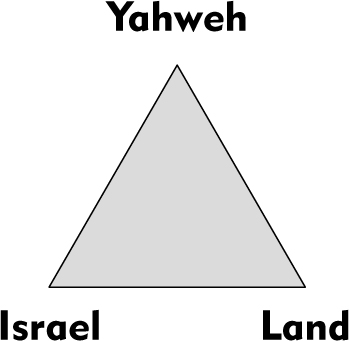
In Israel the policy of ḥērem was not driven by fundamental antipathy to outsiders, but by the need to eliminate all rivals to God, who is at the top apex of this triangle. Deuteronomy 7:4–11 excludes any room for compromise in respect to the Supreme Command and the Shema.
It is remarkable how the accounts of the battles of conquest mute this factor. The only references to alien gods in Joshua occur in the leader’s speeches at the end. While it is clear that Achan’s sin involved a violation of this ordinance (esp. vv. 25–26), a link with Canaanite religion depends on familiarity with Deuteronomy 7. Achan’s crime is characterized as being unfaithful (Josh. 7:1), sinning (7:11, 20), violating Yahweh’s covenant (7:11, 15), stealing (7:11), lying (7:11), a disgraceful thing (7:15), coveting (7:21; cf. Deut. 7:25), and especially a violation of the ḥērem ordinance.55 However, the account contains no explicit reference to idolatry or idolatrous objects or installations. Although the clause “they have been made liable for destruction” is true insofar as certain objects subject to the ḥērem law were not destroyed (Josh. 7:12) and thus clearly echoes “it is to set apart for destruction” (Deut. 7:26), the narrator presents Achan’s crime as an act of personal covetousness without overt reference to its religious significance.
While the narratives of Joshua are relatively silent on Joshua’s disposition toward pagan cult objects, they are explicit in highlighting Yahweh’s fulfillment of the promise to deliver the land into the Israelites’ hands (Deut. 7:1). After the initial conquests of Jericho and Ai, the focus seems to be particularly on the kings of the land,56 in fulfillment of Deuteronomy 7:24. Even so, the center of gravity in the book of Joshua as a whole is on the distribution of the territorial spoils of the war among the tribes (Josh. 13:1–21:45). Not until Joshua’s speeches at the end do we hear clear allusions to the religious ideology of the war as laid out in Deuteronomy 7.
Intermarriage. In his farewell address Joshua expressly warns the Israelites not to intermarry57 with the Canaanites, because Yahweh will use them as a “snare” (Josh. 23:13; cf. Deut. 7:16), and they will perish from the good land Yahweh is giving them. Beginning with the accounts in the book of Judges, the history of Israel is a story of compromise with pagan ideologies, and in the end the nation is destroyed because of the seductive power of idolatry. Later royal sponsorship of idolatry makes matters worse. Among the kings of Israel, the principal exception is Josiah, who is said to have turned to Yahweh “with all his heart/mind, being, and resources” (pers. trans. of 2 Kings 23:25), and who literally fulfills Moses’ instructions regarding pagan cult installations by demolishing the altars, sacred pillars, Asherim, and high places throughout the land (2 Kings 23:12–15).
Behind the firm boundaries that Moses draws between the kingdom of God and the kingdoms of this world is the conviction of the special status of the people of God. As noted above, that blessed status is reflected in five expressions in verses 7–8: Israel is a holy people belonging to Yahweh, the object of his gracious election, his treasured people, the object of his affection, and the beneficiary of his covenant love. This privileged status is awarded Israel as a free gift of God—unmerited, undeserved, and unsought. While the rest of the Old Testament tends to highlight the holiness of God, in Deuteronomy this notion surfaces only in 32:51. Furthermore, whereas the holiness of the people of God is rarely mentioned elsewhere,58 this notion is fundamental to the theology of Deuteronomy (7:6; 14:2, 21; 26:19; 28:9).59
The degenerating effect of intermarriage with pagans is a common theme in the Old Testament. The link between intermarriage and spiritual recidivism is explicitly declared in Judges 3:5–8a:
The Israelites lived among the Canaanites, Hittites, Amorites, Perizzites, Hivites and Jebusites. They took their daughters in marriage and gave their own daughters to their sons, and served their gods.
The Israelites did [the] evil in the eyes of the LORD; they forgot the LORD their God and served the Baals and the Asherahs. The anger of the LORD burned against Israel.
For all his wisdom, Solomon turns out to be the ultimate fool. He loved many foreign women, who turned his heart away from Yahweh to go after other gods. Departing from the commitment of his father David, his heart was not fully devoted to Yahweh, he went after foreign gods, and he did evil in the sight of Yahweh (1 Kings 11:1–8). Whereas in the days of the judges the problem seems to have involved the general population, with Solomon for the first time idolatry was sponsored by the court. Just as Moses had predicted, loving foreign women led to loving foreign gods. Because of Israel’s persistent spiritual rebellion, eventually first the northern kingdom (2 Kings 17:1–18) and then the kingdom of Judah (2 Kings 24–25) were declared abominable in the sight of Yahweh and suffered the fate of the Canaanites.
Although the exile seems to have weaned the nation as a whole of idolatry, at the personal level the problem persisted until the closing days of Israel’s recorded history. Malachi notes the symptoms of the absence of fear of Yahweh among the postexilic community of the fourth century BC, including intermarriage with pagans. They profaned the covenant of their fathers with treacherous actions against each other and against God, behaving abominably, and desecrating the sanctuary “by marrying the daughter of a foreign god” (Mal. 2:10–11). In accordance with Deuteronomy 7:24–25, on these the prophet invokes a curse: “As for the man who does this, whoever he may be, may the LORD cut him off from the tents of Jacob—even though he brings offerings to the LORD Almighty” (Mal. 2:12).
Echoes of this passage reverberate through the New Testament. Paul undoubtedly had this text in mind when he opens his letter to the Ephesian Christians by celebrating their privileged status in Christ (Eph. 1:1–14). Like Israel of old, those who are faithful in Christ Jesus are chosen so that they should be holy. In love God has adopted as his children to the praise of the glory of his grace, the objects of his redemption and the recipients of his inheritance, “in order that we, who were the first to hope in Christ, might be for the praise of his glory” (1:12; cf. Col. 3:12). While the opening of 1 Peter 2:9–12 has its roots in Exodus 19:6, the commentary that follows is Deuteronomic:
But you are a chosen people, a royal priesthood, a holy nation, a people belonging to God, that you may declare the praises of him who called you out of darkness into his wonderful light. Once you were not a people, but now you are the people of God; once you had not received mercy, but now you have received mercy.
Dear friends, I urge you, as aliens and strangers in the world, to abstain from sinful desires, which war against your soul. Live such good lives among the pagans that, though they accuse you of doing wrong, they may see your good deeds and glorify God on the day he visits us.
Contemporary Significance
DIVINE WAR POLICY. FOR many readers today Deuteronomy 7 raises serious ethical questions. How could a God who claims to be gracious and merciful command the extermination of whole populations? And how could human beings accept these instructions as part of their official war policy? We have dealt with some of the ethical implications of this text earlier in the context of our discussion of the extermination of the Amorites east of the Jordan.60 Unfortunately, the history of the church is severely tarnished by unwarranted extension of these policies “in the name of Christ” to any who oppose Christians. It has been too easy to assume innocence, to declare one’s own agenda to be the agenda of the kingdom of God, and to brand those who stand in our way as infidels deserving of the sentence called for here—whether the enemy be Muslims, Jews, Franks and Goths, “pagan” aboriginal peoples, communists, and even other Christians. We forget the distinctive circumstances addressed in Deuteronomy 7 and displace love and compassion as the primary marks of God’s people with aggressiveness and violence.
This is not to say that the boundaries between the kingdom of God and the kingdoms of this world should be blurred. The relevance of this text for contemporary Christians is obvious. Like Israel, we are called to fight against the kingdom of darkness. Admittedly “our struggle is not against flesh and blood, but against the rulers, against the authorities, against the powers of this dark world and against the spiritual forces of evil in the heavenly realms” (Eph. 6:12); but this demands the same vigilance and the same reliance on divine resources as were required of the Israelites. In this battle, alliances with the kingdom of darkness remain a particular problem. In our culture the intermarriage of believers with unbelievers is widespread. Paul’s response to such alliances in 2 Corinthians 6:14–16, particularly his rooting of his instructions in our status as the holy covenant people of God, sounds remarkably Mosaic:
Do not be yoked together with unbelievers. For what do righteousness and wickedness have in common? Or what fellowship can light have with darkness? What harmony is there between Christ and Belial? What does a believer have in common with an unbeliever? What agreement is there between the temple of God and idols? For we are the temple of the living God. As God has said: “I will live with them and walk among them, and I will be their God, and they will be my people.”
The problem represented by intermarriage begins much earlier in the dating patterns of young people. Even if 97 percent of young people say that the religious preferences of the other person plays no role in whom they date, for Christians this is intolerable. Until and unless Christians recover a sense of the incredible privilege of being a holy people belonging to God, the objects of his gracious election, his treasured people, and targets of his affection, and until they recover the missional significance of this calling, the Western church will remain pathetic and powerless in the face of the challenges of our age.
The last verse of Deuteronomy 7 serves as a stern reminder to us not to limit the recognition of Yahweh as our God to creedal affirmations and luxuriating in one’s sense of privilege. Spiritual commitment must be expressed in actions that accord with the will of God, who has so graciously revealed himself to his people. To be governed by that which is right in one’s own eyes rather than what is right in the sight of Yahweh is to prove oneself in effect a Canaanite and to bring on oneself the judgment to which the Canaanites were sentenced.
Struggling with sin. For the everyday struggles with sin and the pressures posed by the kingdom of darkness, Deuteronomy 7:17–24 is particularly relevant. This paragraph presents three indispensable keys to a victorious Christian life. (1) Recognize God’s past grace in salvation. Just as Moses could argue from greater to lesser, so we may encourage each other by observing that if God could deliver us from death to life in the first place (Eph. 2:1–5), he is surely able to defeat the enemy in everyday skirmishes.
(2) Recognize his power in the present. In 1 John 4:4 the beloved apostle declares, “The one who is in you is greater than the one who is in the world.”
(3) Recognize our own responsibility to engage the enemy by keeping ourselves unspotted from the world. The trappings of pagan cultures may be attractive to those who claim to be God’s holy people, but they are seductive and drag people down, so that in the end they are condemned along with those responsible for devising these ungodly notions.
Original Meaning
The Response to the External Test of Covenant Commitment (7:17–26)
AS IN 6:10–25, Moses follows up his exhortation to covenantal fidelity by imagining a hypothetical though realistic reaction to the charge, to which he then gives a response. This text divides into two parts: the question (v. 17) and the answer (vv. 18–26).
The question (7:17). The question posed reflects the original rhetorical situation. Whereas in 6:20 the imaginary respondent is a descendant of a person in his audience, here the hypothetical person is someone in the gathering before Moses. We may readily imagine that as Moses lays the challenge of verses 1–16 before the people, he picks up nonverbal signals of incredulity or despair from some in the crowd. Perhaps with the response of the previous generation at Kadesh Barnea still in mind (cf. 1:26–28), he expresses out loud what the people are thinking (“you say in your heart/mind” [pers. trans.]) but apparently do not have the nerve to ask. Picking up on a word he used to describe the seven nations (v. 2), his hypothetical interlocutor raises a problem: the obvious numerical superiority of the nations the Israelites are about to face. Speaking for all Israel in first person, he asks (lit.), “How can I dispossess them?”
Moses’ answer (7:18–26). Moses’ response divides into a promise (vv. 18–24) and a warning (vv. 25–26). His pastoral heart and rhetorical skill are both evident in the former as he appeals to the power of positive thinking in carefully crafting the response. His word of promise divides into two parts, in Hebrew each being introduced by a three-word admonition: “Do not be afraid of them” (v. 18a); and “Do not be terrified by them” (v. 21). Exhibiting remarkable proportion, the words of encouragement that follow these exhortations are virtually identical in length: the first consists of forty-five words, the second of forty-seven.
In verses 18b–20 Moses encourages his audience with two principal points: remember what Yahweh has done for you in the past (vv. 18b–19), and recognize that Yahweh is with you in the present (v. 20). In reminding the Israelites of Yahweh’s past actions, Moses echoes what we have heard before in 4:34 and 6:22.45 Now, adopting a method of argument that would be widely used in later Judaism, qal wahomer (“from the heavy to the light”), Moses does not minimize the power of the seven Canaanite nations, who do indeed pose a formidable foe. His point is that if Yahweh was able to rescue them from the Egyptians, then these petty kingdoms, which have for some time been subject states to the pharaohs, are nothing at all to him.
And for those in his audience who might think the weapons Yahweh had used against the Egyptians (as listed in v. 19) might be insufficient or ineffective, in verse 20 Moses adds one more. Literally the word ṣirʿâ denotes a species of wasp/hornet whose sting may be fatal, especially if one is attacked by an entire swarm. Moses has precisely this image in mind when he changes the identity of the hornets’ targets from the Canaanite tribes in Exodus 23:28 to “the survivors who hide from you.” When Yahweh commissions the swarm of insects to attack the Canaanites, they will pursue them relentlessly into every cave and bush to which they flee, and will sustain that attack until all perish, as had been the case with peoples of Sihon and Og.46
In the second half of this word of promise (vv. 21–24), Moses’ attention shifts from the invincible power of Yahweh to his awesome presence. Like the statement concerning the presence of Yahweh in 6:15, the declaration in verse 21 is semicatechetical: the Israelites shall not dread the enemy, “for the LORD your God, who is among you, is a great and awesome God [El].” In the face of threats from rival deities, it is Yahweh’s passion/jealousy that is aroused; when other nations threaten his people, it is his transcendent and awesome strength. As in verse 9, Moses equates Yahweh, the God of Israel, with El. But unlike the senile and otiose El of Canaanite mythology, Yahweh is supremely great and terrifying to all who stand in his way.47
In verses 22–24 Moses explains how this awesome God will pursue his campaign of conquest. As the supreme Commander of Israel’s forces and the divine Warrior who fights for them, his strategy is clear: He will clear away the nations of Canaan before the Israelites (v. 22); he will hand them over to the Israelites (v. 23); he will throw them into great confusion48 until they are destroyed (v. 23; cf. v. 2); and he will deliver the kings of Canaan into the Israelites’ hands (v. 24). With these promises, Moses challenges his people to trust in Yahweh. This is his war, not theirs. His awesome presence will create pandemonium among the enemies’ forces, and he will deliver their leaders into Israel’s hands.
However, to prevent his hearers from imagining that all they need to do is stand passively by and watch (Ex. 14–15), Moses adds a series of caveats to his promises of divine involvement. (1) Although Yahweh will clear away the Canaanites, he will not do so in a single moment, but “little by little” (v. 22). He recognizes that the Israelites presently lack both the resources to eliminate them quickly and the population to occupy all the land that has been promised (cf. Ex. 23:30). The elimination of the population all at once would create a vacuum leading to a dangerous increase in the number of wild animals—presumably involving both scavenging creatures like jackals and more aggressive wolves and lions that actually threaten the Israelites (cf. 2 Kings 17:24–26).
(2) In verse 24b Moses declares that Yahweh will deliver the kings into the Israelites’ hands so they may obliterate their names from under the heavens (cf. 4:32). Since the ancients thought that people lived on in their children, the worst fate one could experience was to have his seed cut off and his name destroyed from his father’s household.49 The battle reports in the book of Joshua name several kings who opposed the Israelites, but the absence of royal names in the catalogue of defeated kings in Joshua 12:7–24 seems intentional.
(3) The concluding clause in verse 24, “you will destroy them,” summarizes the Israelites’ obligation in the conquest. Moses’ use of the same verb for “destroy” in verses 23 and 24 (hišmîd) reflects the synergy of divine and human involvement.
Shifting from promise to warning in verses 25–26, Moses’ mood changes significantly. He now returns to the issues with which he had begun the chapter, especially verse 5. The NIV correctly captures the emphatic structure of the first sentence with its inversion of the normal word order—object, subject, verb. The directive to burn the images of the Canaanites’ gods summarizes the four commands concerning pagan cult installations in verse 5. But now the significance of the images has changed. Instead of focusing on the images as problematic theological symbols that seduce the Israelites and deflect their allegiance away from Yahweh, Moses’ interest is in the material of which the images were made.
Borrowing a verb from the ninth command, he warns against “coveting” the silver and gold used in the manufacture of images.50 He hereby forecloses the temptation to rationalize salvaging and recycling the precious metals when carrying out the policy of ḥērem against enemy establishments. The fact that images have been demolished does not mean the metals used to decorate them have lost their spiritual significance. No, the materials take on the character of the images themselves. Because idols are abominable to Yahweh, the God of Israel, the materials of which they are made pose exactly the same threat to the Israelites as the gods represented by those images: they will ensnare the people of Yahweh.51
The word tôʿēbâ (“abomination”; NIV “detestable”) occurs in verses 25 and 26 for the first time in the book52 and serves as Moses’ favorite expression for the abhorrent nature of idolatry (cf. 12:31; 13:14[15]; 17:4; 32:16). In verse 26 he identifies the root of the problem. Idolatry is not only seductive (“a snare”) and an abomination to Yahweh; the “abomination” is contagious. Contact with abominable objects neutralizes the Israelites’ status as a holy people and reduces them to being simply one among the nations, but it also renders the Israelites absolutely defiled and fundamentally degraded. There is only one solution for anything or anyone declared to be tôʿēbâ: the rigorous application of the policy of ḥērem.
Bridging Contexts
THEOLOGY OF WARFARE. ALONG with chapter 20, Deuteronomy 7 is critical for understanding the theology of warfare in the Old Testament. As we noted in our comments on the battles against Sihon and Og,53 the policy of ḥērem was intended to secure for the Israelites a clean land, where they could develop and grow as a nation, not for their own sakes, but for the glory of God and to testify to his grace to the nations.54 Yahweh was handing the land over to them as a gift, to complete the covenantal deity–nation–land triangle.
In Israel the policy of ḥērem was not driven by fundamental antipathy to outsiders, but by the need to eliminate all rivals to God, who is at the top apex of this triangle. Deuteronomy 7:4–11 excludes any room for compromise in respect to the Supreme Command and the Shema.
It is remarkable how the accounts of the battles of conquest mute this factor. The only references to alien gods in Joshua occur in the leader’s speeches at the end. While it is clear that Achan’s sin involved a violation of this ordinance (esp. vv. 25–26), a link with Canaanite religion depends on familiarity with Deuteronomy 7. Achan’s crime is characterized as being unfaithful (Josh. 7:1), sinning (7:11, 20), violating Yahweh’s covenant (7:11, 15), stealing (7:11), lying (7:11), a disgraceful thing (7:15), coveting (7:21; cf. Deut. 7:25), and especially a violation of the ḥērem ordinance.55 However, the account contains no explicit reference to idolatry or idolatrous objects or installations. Although the clause “they have been made liable for destruction” is true insofar as certain objects subject to the ḥērem law were not destroyed (Josh. 7:12) and thus clearly echoes “it is to set apart for destruction” (Deut. 7:26), the narrator presents Achan’s crime as an act of personal covetousness without overt reference to its religious significance.
While the narratives of Joshua are relatively silent on Joshua’s disposition toward pagan cult objects, they are explicit in highlighting Yahweh’s fulfillment of the promise to deliver the land into the Israelites’ hands (Deut. 7:1). After the initial conquests of Jericho and Ai, the focus seems to be particularly on the kings of the land,56 in fulfillment of Deuteronomy 7:24. Even so, the center of gravity in the book of Joshua as a whole is on the distribution of the territorial spoils of the war among the tribes (Josh. 13:1–21:45). Not until Joshua’s speeches at the end do we hear clear allusions to the religious ideology of the war as laid out in Deuteronomy 7.
Intermarriage. In his farewell address Joshua expressly warns the Israelites not to intermarry57 with the Canaanites, because Yahweh will use them as a “snare” (Josh. 23:13; cf. Deut. 7:16), and they will perish from the good land Yahweh is giving them. Beginning with the accounts in the book of Judges, the history of Israel is a story of compromise with pagan ideologies, and in the end the nation is destroyed because of the seductive power of idolatry. Later royal sponsorship of idolatry makes matters worse. Among the kings of Israel, the principal exception is Josiah, who is said to have turned to Yahweh “with all his heart/mind, being, and resources” (pers. trans. of 2 Kings 23:25), and who literally fulfills Moses’ instructions regarding pagan cult installations by demolishing the altars, sacred pillars, Asherim, and high places throughout the land (2 Kings 23:12–15).
Behind the firm boundaries that Moses draws between the kingdom of God and the kingdoms of this world is the conviction of the special status of the people of God. As noted above, that blessed status is reflected in five expressions in verses 7–8: Israel is a holy people belonging to Yahweh, the object of his gracious election, his treasured people, the object of his affection, and the beneficiary of his covenant love. This privileged status is awarded Israel as a free gift of God—unmerited, undeserved, and unsought. While the rest of the Old Testament tends to highlight the holiness of God, in Deuteronomy this notion surfaces only in 32:51. Furthermore, whereas the holiness of the people of God is rarely mentioned elsewhere,58 this notion is fundamental to the theology of Deuteronomy (7:6; 14:2, 21; 26:19; 28:9).59
The degenerating effect of intermarriage with pagans is a common theme in the Old Testament. The link between intermarriage and spiritual recidivism is explicitly declared in Judges 3:5–8a:
The Israelites lived among the Canaanites, Hittites, Amorites, Perizzites, Hivites and Jebusites. They took their daughters in marriage and gave their own daughters to their sons, and served their gods.
The Israelites did [the] evil in the eyes of the LORD; they forgot the LORD their God and served the Baals and the Asherahs. The anger of the LORD burned against Israel.
For all his wisdom, Solomon turns out to be the ultimate fool. He loved many foreign women, who turned his heart away from Yahweh to go after other gods. Departing from the commitment of his father David, his heart was not fully devoted to Yahweh, he went after foreign gods, and he did evil in the sight of Yahweh (1 Kings 11:1–8). Whereas in the days of the judges the problem seems to have involved the general population, with Solomon for the first time idolatry was sponsored by the court. Just as Moses had predicted, loving foreign women led to loving foreign gods. Because of Israel’s persistent spiritual rebellion, eventually first the northern kingdom (2 Kings 17:1–18) and then the kingdom of Judah (2 Kings 24–25) were declared abominable in the sight of Yahweh and suffered the fate of the Canaanites.
Although the exile seems to have weaned the nation as a whole of idolatry, at the personal level the problem persisted until the closing days of Israel’s recorded history. Malachi notes the symptoms of the absence of fear of Yahweh among the postexilic community of the fourth century BC, including intermarriage with pagans. They profaned the covenant of their fathers with treacherous actions against each other and against God, behaving abominably, and desecrating the sanctuary “by marrying the daughter of a foreign god” (Mal. 2:10–11). In accordance with Deuteronomy 7:24–25, on these the prophet invokes a curse: “As for the man who does this, whoever he may be, may the LORD cut him off from the tents of Jacob—even though he brings offerings to the LORD Almighty” (Mal. 2:12).
Echoes of this passage reverberate through the New Testament. Paul undoubtedly had this text in mind when he opens his letter to the Ephesian Christians by celebrating their privileged status in Christ (Eph. 1:1–14). Like Israel of old, those who are faithful in Christ Jesus are chosen so that they should be holy. In love God has adopted as his children to the praise of the glory of his grace, the objects of his redemption and the recipients of his inheritance, “in order that we, who were the first to hope in Christ, might be for the praise of his glory” (1:12; cf. Col. 3:12). While the opening of 1 Peter 2:9–12 has its roots in Exodus 19:6, the commentary that follows is Deuteronomic:
But you are a chosen people, a royal priesthood, a holy nation, a people belonging to God, that you may declare the praises of him who called you out of darkness into his wonderful light. Once you were not a people, but now you are the people of God; once you had not received mercy, but now you have received mercy.
Dear friends, I urge you, as aliens and strangers in the world, to abstain from sinful desires, which war against your soul. Live such good lives among the pagans that, though they accuse you of doing wrong, they may see your good deeds and glorify God on the day he visits us.
Contemporary Significance
DIVINE WAR POLICY. FOR many readers today Deuteronomy 7 raises serious ethical questions. How could a God who claims to be gracious and merciful command the extermination of whole populations? And how could human beings accept these instructions as part of their official war policy? We have dealt with some of the ethical implications of this text earlier in the context of our discussion of the extermination of the Amorites east of the Jordan.60 Unfortunately, the history of the church is severely tarnished by unwarranted extension of these policies “in the name of Christ” to any who oppose Christians. It has been too easy to assume innocence, to declare one’s own agenda to be the agenda of the kingdom of God, and to brand those who stand in our way as infidels deserving of the sentence called for here—whether the enemy be Muslims, Jews, Franks and Goths, “pagan” aboriginal peoples, communists, and even other Christians. We forget the distinctive circumstances addressed in Deuteronomy 7 and displace love and compassion as the primary marks of God’s people with aggressiveness and violence.
This is not to say that the boundaries between the kingdom of God and the kingdoms of this world should be blurred. The relevance of this text for contemporary Christians is obvious. Like Israel, we are called to fight against the kingdom of darkness. Admittedly “our struggle is not against flesh and blood, but against the rulers, against the authorities, against the powers of this dark world and against the spiritual forces of evil in the heavenly realms” (Eph. 6:12); but this demands the same vigilance and the same reliance on divine resources as were required of the Israelites. In this battle, alliances with the kingdom of darkness remain a particular problem. In our culture the intermarriage of believers with unbelievers is widespread. Paul’s response to such alliances in 2 Corinthians 6:14–16, particularly his rooting of his instructions in our status as the holy covenant people of God, sounds remarkably Mosaic:
Do not be yoked together with unbelievers. For what do righteousness and wickedness have in common? Or what fellowship can light have with darkness? What harmony is there between Christ and Belial? What does a believer have in common with an unbeliever? What agreement is there between the temple of God and idols? For we are the temple of the living God. As God has said: “I will live with them and walk among them, and I will be their God, and they will be my people.”
The problem represented by intermarriage begins much earlier in the dating patterns of young people. Even if 97 percent of young people say that the religious preferences of the other person plays no role in whom they date, for Christians this is intolerable. Until and unless Christians recover a sense of the incredible privilege of being a holy people belonging to God, the objects of his gracious election, his treasured people, and targets of his affection, and until they recover the missional significance of this calling, the Western church will remain pathetic and powerless in the face of the challenges of our age.
The last verse of Deuteronomy 7 serves as a stern reminder to us not to limit the recognition of Yahweh as our God to creedal affirmations and luxuriating in one’s sense of privilege. Spiritual commitment must be expressed in actions that accord with the will of God, who has so graciously revealed himself to his people. To be governed by that which is right in one’s own eyes rather than what is right in the sight of Yahweh is to prove oneself in effect a Canaanite and to bring on oneself the judgment to which the Canaanites were sentenced.
Struggling with sin. For the everyday struggles with sin and the pressures posed by the kingdom of darkness, Deuteronomy 7:17–24 is particularly relevant. This paragraph presents three indispensable keys to a victorious Christian life. (1) Recognize God’s past grace in salvation. Just as Moses could argue from greater to lesser, so we may encourage each other by observing that if God could deliver us from death to life in the first place (Eph. 2:1–5), he is surely able to defeat the enemy in everyday skirmishes.
(2) Recognize his power in the present. In 1 John 4:4 the beloved apostle declares, “The one who is in you is greater than the one who is in the world.”
(3) Recognize our own responsibility to engage the enemy by keeping ourselves unspotted from the world. The trappings of pagan cultures may be attractive to those who claim to be God’s holy people, but they are seductive and drag people down, so that in the end they are condemned along with those responsible for devising these ungodly notions.