Original Meaning
A Determined Song (101:1–2)
I WILL SING OF YOUR LOVE AND JUSTICE. Following the simple form of the Davidic title, Psalm 101 begins with a voice of determination to sing and to follow. The psalmist will sing of God’s “love and justice” (v. 1). These twin ideas of love and justice (hesed umishpat) are commonly associated with the covenantal relationship between God and his people or, as here, between God and his chosen servant—the king. The first two verses set the tone for the rest of the psalm in expressing the poet-king’s determination to live in accordance with God’s standards—his “justice”—and the psalmist expresses this determination in an attitude of praise. Although Psalm 101 appears in a different sub-group of poems, verse 1 firmly grounds this psalm in the theology of the Yahweh malak (“Yahweh reigns”) collection (Pss 93–100).2
The theological point of these opening verses seems to be that the poet-king will reflect the ways of Yahweh’s rule in his own human and political kingship.3
The king responds to God’s love and justice in praise and with a determination to follow Yahweh’s royal model in his own rule.
I will be careful to lead a blameless life. The tone of determination continues in verse 2. There is a “come what may” sense of purpose to these opening verses in which the poet boldly and frankly states how he will live his life regardless of the standards of the world around him. More literally, the opening statement of this verse could be read as, “I will consider the way of integrity.” The first line of verse 2 gives a strong sense of deliberate intent to choose a lifestyle that is pleasing to God. As Kirkpatrick comments helpfully, the psalmist “make[s] whole-hearted devotion to God and perfect uprightness towards men the rule of [his] conduct.”4
When will you come to me? This plea seems to be a somewhat strange insertion into the flow of the psalm, as the poet’s determined statements of intent (“I will”) both precede and follow the question. In all likelihood this plea is simply an interjection, an appeal for God’s presence and help as the king undertakes to rule in accordance with God’s standards.5
The poet knows that he cannot accomplish such a standard of rule by his own power. To reflect God’s ways in the world requires God’s help, hence the appeal for the presence of God as his Aide.
I will conduct the affairs of my house with a blameless heart. The idea of “conducting the affairs of my house” is probably a reference to the royal palace and its associated kingly rule. In the ancient Near East, the ruler’s palace was often a place of excess on every level—excess that was shrouded from the people by the secrecy of the temple precinct.6
Here the poet-king declares that even the secret matters of his “house” and his “heart” will be marked by the same integrity that is evident in his public exercise of power.
Bridging Contexts
THE KING AS DIVINE REPRESENTATIVE. Some of the language in this psalm is quite alien to the modern mindset. We might be happy enough with the rejection of actions and behaviors as in verse 3 (“I hate what faithless people do”), but we are less comfortable with the rejection of people because of their behaviors that we read in verse 8 (“I will put to silence all the wicked in the land”). Normally such acts of judgment are divine acts. For example, we read in Psalm 73:27 that “Those who are far from you will perish; you destroy all who are unfaithful to you” (emphasis added).14
It is unusual for the human king to be described as working out such judgment; however, here we read of God’s punishment implemented through the agency of his king.
The law of the king is outlined in Deuteronomy 17:14–20, and the only positive responsibility laid upon the Israelite king is to take the law of the Lord from the Levites, write a copy of it for himself, and then reflect upon and revere the law all the days of his life. The king, in that sense, is “under the law.” His rule is to be shaped by his reflection on God’s instruction, and that meditation leads inevitably to a keen desire to see the maintenance of social justice in the land under his rule. A desire to see the torah worked out in reality in the land must lead a righteous ruler to oppose evil as well as to promote good. Any other type of rule would be a spiritualized fantasy that bears little relevance to the real world. Psalm 101 emphasizes the king’s present responsibility to work for justice on a societal level in real terms.
Psalm 101 in the New Testament. There is no direct citation from Psalm 101 in the New Testament, but the text resonates strongly with the theology of the Lord’s Prayer as presented in the Gospels. “Your kingdom come, your will be done on earth as it is in heaven” (Matt 6:10) is a prayer for radical renewal in the social sphere. Jesus teaches his disciples to pray for the radical transformation of the world they inhabited. In Psalm 101 the psalmist-king declares his determination to exercise his rule toward just such an end.
Contemporary Significance
WHEN DOING GOOD IS NOT ENOUGH. The dual themes of Psalm 101 encompass the leader’s determination to do good in accordance with God’s revealed will and purpose (v. 2) and also his determination to oppose evil (vv. 3–5, 7–8). If we believe that the kingdom of God is inaugurated in a radically new way from the incarnation of Christ onward, then we have a real responsibility not only to do good in this world in which we live but also proactively to oppose evil and its impact on the world around us.
Obviously, Christian believers must exercise great caution in terms of how we oppose evil, but oppose evil we must. Zenger is helpful here:
It may be that the directness of the challenge to God and the certainty it expresses that God must be at work in history and society form the real provocation of these psalms for a Christianity whose belief in God has exhausted its historical potential in soteriology or postponed it to an afterlife by a privatist and spiritualizing attitude. Here the shrill tones of the psalms of enmity can serve to shock Christianity out of the well-regulated slumber of its structural amnesia about God.15
It strikes me that part of the “well-regulated slumber” of the contemporary Western church is an unnatural focus on “being nice.” We see being non-controversial as an essential part of our witness. Yet our emphasis on “niceness” can lead to the absolute denial of the church’s awkward, angular, prophetic office that is so clearly outlined both in the prophets and the teaching of Jesus in the Gospels. Psalm 101 reminds the community of faith of our responsibility to embody the teaching of God’s word both as exemplars of a good and godly lifestyle and as active opponents of evil and injustice.
Faced with the present reality of fascism in his homeland, Dietrich Bohoeffer came to ethical conclusions that resonate strongly with Psalm 101. Douglas Huff writes of Bonhoeffer:
For Bonhoeffer, the foundation of ethical behavior lay in how the reality of the world and the reality of God were reconciled in the reality of Christ. Both in his thinking and in his life, ethics were centered on the demand for action by responsible men and women in the face of evil. He was sharply critical of ethical theory and of academic concerns with ethical systems precisely because of their failure to confront evil directly. Evil, he asserted, was concrete and specific, and it could be combated only by the specific actions of responsible people in the world. The uncompromising position Bonhoeffer took in his seminal work Ethics was directly reflected in his stance against Nazism.16
Although its source is actually uncertain, a quote often attributed to Bonhoeffer echoes this theology of Psalm 101: “Silence in the face of evil is itself evil: God will not hold us guiltless. Not to speak is to speak. Not to act is to act.”17
Original Meaning
Turning Toward by Turning Away (101:3–8)
I WILL NOT LOOK WITH APPROVAL ON ANYTHING THAT IS vile. The remainder of the psalm is an expression of the king’s devotion to Yahweh stated largely in terms of the things he will not do and the characteristics that will not mark his rule. This imagery is, of course, familiar to the reader of the book of Psalms from its introduction. Psalm 1 describes the “blessed” person first in terms of what he or she is not like before it goes on to describe this person in positive terms. Although this form of negative expression is perhaps uncommon in the modern world, the significance of the characteristics rejected by the poet-king is quite powerful in the context of the Psalms and the Old Testament more broadly. Effectively, what we see in these verses is the declaration of the king that he will not fall foul of the weaknesses of his predecessors that led to the fall of Jerusalem and the demise of the Davidic line.7
The psalmist-king will not be like the kings before the exile. This king in David’s line has learned the lessons of his predecessors’ moral failures, and he declares his determination to reject the things that his forebears should have rejected but did not. In order to succeed in this intent, he knows he needs the Lord’s help (v. 2b).
Anything that is vile. This expression is a general reference to that which is evil, empty, and worthless.8
The Hebrew word for “thing” (dabar) may refer either to an object or, more conceptually, to matters, ideas, schemes, and perspectives. If taken as an object here, it may be a reference to idols and the associated false worship. But the latter meaning as referring to a wicked and empty lifestyle seems to be more likely in the context of the psalm. Adherence to a lifestyle of integrity (v. 2) necessarily implies the rejection of worthless, wicked, and empty ways of life.
I hate what faithless people do. Echoing the previous line, the poet-king pronounces rejection of the behavioral consequences of a wicked worldview. Surely the wrong attitude of heart will ultimately lead to wrong moral actions. The psalmist rejects these attitudes (v. 3a) and the concomitant behaviors (v. 3b). Wicked deeds literally “do not cling to me,” the psalmist says. The poet’s devotion to Yahweh and his justice has a Teflon effect—the unrighteousness of others just slides right off him because his heart is so captivated by God that he will not consider the ways of the wicked.
The perverse of heart shall be far from me. The rejection of wrong attitudes and actions is, however, insufficient in itself. The king also declares his abhorrence of evil by rejecting the people who represent such waywardness. The implication is clear: keeping wrong company will shape the individual, so the psalmist removes himself from their presence in order to protect himself from their influence.
It is, of course, possible to read the Hebrew here as referring to the general attitude of having a perverse heart as opposed to people of perverse heart.9
But given the immediate context, which refers to the actions of people (“what faithless people do” [v. 3b] and “whoever slanders their neighbor” [v. 5a]), it seems more likely that the poet here refers to his rejection of people rather than his refusal to adopt a certain attitude. “In the context the supplicant is not declaring a commitment to avoid having a crooked heart; this would in any case be an odd way to say that. Rather the supplicant insists on pushing away people who have a crooked heart (the expression involves synecdoche).”10
Whoever slanders their neighbor in secret. Verse 5 voices the psalmist’s rejection of those who exhibit two key character failings according to the Hebrew mindset: false testimony and arrogance. Anyone practicing such behaviors is given short shrift by the king. Slander is met with destruction (probably a better rendering of the Hebrew than the NIV’s “put to silence”) and arrogance will not be tolerated. Slander was, of course, a grave sin because false accusation could ultimately lead to the judicial killing of an innocent person. Arrogance of speech and attitude are often associated with the original sin of Adam, so pride is seen to be a root sin that leads to other immoral behaviors. Perhaps in a way that connection is not made by modern readers, but the original readers of Psalm 101 would have seen these acts as heinous. What is more, both actions are practiced in secret, so it is possible for perpetrators to maintain an outward appearance of moral integrity that masks their iniquity. As we have seen already in this psalm, such duality of practice is abhorrent to the poet-king (v. 2b).
My eyes will be on the faithful in the land. Just as the king rejects those who reject the ways of Yahweh, so also he delights in those who delight in the ways of their God. In contrast to the language of distancing, destruction, and removal in the preceding verses, here with regard to the faithful we see the language of dwelling and ministry, implying closeness and proximity. Just as the poet-king rejects the company of the faithless, here we see that he surrounds himself with the company of the faithful. As we read in Psalm 1, discipleship inevitably involves the rejection of certain behaviors and the regular practice of others. Here in Psalm 101, we see that discipleship is also intimately linked with the rejection of certain groups of people and close communion with others.
For the Old Testament reader the idea of those whose “walk is blameless” automatically resonates with the characters of Abraham (Gen 17:1) and Job (Job 1:1). Blamelessness does not imply sinless perfection in any way, shape, or form—both Abraham and Job confess their sins; rather, the concept implies an integrity of lifestyle that genuinely seeks to put God first in all things. In many ways Psalm 101 is reminiscent of the theology of Psalm 15, where we are also told that it is the blameless and righteous who, because they speak the truth without slander, can approach the sanctuary of the Lord. Psalm 15:4 summarizes Psalm 101:3–8: “[He] who despises a vile person but honors those who fear the LORD . . . will never be shaken.”
No one who practices deceit will dwell in my house. The contrast of the previous verses continues here. The faithful dwell with the king, but those who practice deceit will not be allowed to do so. The blameless minister to the king serves him in his royal court, but those who speak falsehood disqualify themselves from taking a privileged place there. It is godliness of character that marks out the noble advisor, not his or her skill set or political ability. Here there is an obvious line of application for people in leadership of every type: character is key, both with regard to one’s own behavior and also in terms of choosing one’s advisors.
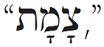
Every morning I will put to silence all the wicked in the land. This statement probably refers to the king in his judicial role. Typically in the ancient world, the monarch would also embody the court of highest instance. Matters that could not be decided satisfactorily in local and lesser courts were brought before the king for final judgment. The psalmist-king sees his judicial role as echoing the priorities of Yahweh himself. He delights in God’s “love and justice” (v. 1) and seeks to apply that justice in his legal office. The verb used in verse 8a is better translated “destroy,”11
and, as Hossfeld points out, “Only in Psalm 18:40 and twice in Psalm 101 does a human being assume the role of the superior hero, Yahweh” in this most extreme act of judgment.12
The psalmist’s clear desire is to protect justice in the land and city of God (v. 8). These places were chosen by the Lord for the working out of his purposes, so the people dwelling within them are expected to live their lives by the values ingrained by God into his created order.13
Bridging Contexts
THE KING AS DIVINE REPRESENTATIVE. Some of the language in this psalm is quite alien to the modern mindset. We might be happy enough with the rejection of actions and behaviors as in verse 3 (“I hate what faithless people do”), but we are less comfortable with the rejection of people because of their behaviors that we read in verse 8 (“I will put to silence all the wicked in the land”). Normally such acts of judgment are divine acts. For example, we read in Psalm 73:27 that “Those who are far from you will perish; you destroy all who are unfaithful to you” (emphasis added).14
It is unusual for the human king to be described as working out such judgment; however, here we read of God’s punishment implemented through the agency of his king.
The law of the king is outlined in Deuteronomy 17:14–20, and the only positive responsibility laid upon the Israelite king is to take the law of the Lord from the Levites, write a copy of it for himself, and then reflect upon and revere the law all the days of his life. The king, in that sense, is “under the law.” His rule is to be shaped by his reflection on God’s instruction, and that meditation leads inevitably to a keen desire to see the maintenance of social justice in the land under his rule. A desire to see the torah worked out in reality in the land must lead a righteous ruler to oppose evil as well as to promote good. Any other type of rule would be a spiritualized fantasy that bears little relevance to the real world. Psalm 101 emphasizes the king’s present responsibility to work for justice on a societal level in real terms.
Psalm 101 in the New Testament. There is no direct citation from Psalm 101 in the New Testament, but the text resonates strongly with the theology of the Lord’s Prayer as presented in the Gospels. “Your kingdom come, your will be done on earth as it is in heaven” (Matt 6:10) is a prayer for radical renewal in the social sphere. Jesus teaches his disciples to pray for the radical transformation of the world they inhabited. In Psalm 101 the psalmist-king declares his determination to exercise his rule toward just such an end.
Contemporary Significance
WHEN DOING GOOD IS NOT ENOUGH. The dual themes of Psalm 101 encompass the leader’s determination to do good in accordance with God’s revealed will and purpose (v. 2) and also his determination to oppose evil (vv. 3–5, 7–8). If we believe that the kingdom of God is inaugurated in a radically new way from the incarnation of Christ onward, then we have a real responsibility not only to do good in this world in which we live but also proactively to oppose evil and its impact on the world around us.
Obviously, Christian believers must exercise great caution in terms of how we oppose evil, but oppose evil we must. Zenger is helpful here:
It may be that the directness of the challenge to God and the certainty it expresses that God must be at work in history and society form the real provocation of these psalms for a Christianity whose belief in God has exhausted its historical potential in soteriology or postponed it to an afterlife by a privatist and spiritualizing attitude. Here the shrill tones of the psalms of enmity can serve to shock Christianity out of the well-regulated slumber of its structural amnesia about God.15
It strikes me that part of the “well-regulated slumber” of the contemporary Western church is an unnatural focus on “being nice.” We see being non-controversial as an essential part of our witness. Yet our emphasis on “niceness” can lead to the absolute denial of the church’s awkward, angular, prophetic office that is so clearly outlined both in the prophets and the teaching of Jesus in the Gospels. Psalm 101 reminds the community of faith of our responsibility to embody the teaching of God’s word both as exemplars of a good and godly lifestyle and as active opponents of evil and injustice.
Faced with the present reality of fascism in his homeland, Dietrich Bohoeffer came to ethical conclusions that resonate strongly with Psalm 101. Douglas Huff writes of Bonhoeffer:
For Bonhoeffer, the foundation of ethical behavior lay in how the reality of the world and the reality of God were reconciled in the reality of Christ. Both in his thinking and in his life, ethics were centered on the demand for action by responsible men and women in the face of evil. He was sharply critical of ethical theory and of academic concerns with ethical systems precisely because of their failure to confront evil directly. Evil, he asserted, was concrete and specific, and it could be combated only by the specific actions of responsible people in the world. The uncompromising position Bonhoeffer took in his seminal work Ethics was directly reflected in his stance against Nazism.16
Although its source is actually uncertain, a quote often attributed to Bonhoeffer echoes this theology of Psalm 101: “Silence in the face of evil is itself evil: God will not hold us guiltless. Not to speak is to speak. Not to act is to act.”17

 HALOT 2:1035–6.