Psalm 119
 Aleph
Aleph
1 Blessed are those whose ways are blameless,
who walk according to the law of the LORD.
2 Blessed are those who keep his statutes
and seek him with all their heart—
3 they do no wrong
but follow his ways.
4 You have laid down precepts
that are to be fully obeyed.
5 Oh, that my ways were steadfast
in obeying your decrees!
6 Then I would not be put to shame
when I consider all your commands.
7 I will praise you with an upright heart
as I learn your righteous laws.
8 I will obey your decrees;
do not utterly forsake me.
 Beth
Beth
9 How can a young person stay on the path of purity?
By living according to your word.
10 I seek you with all my heart;
do not let me stray from your commands.
11 I have hidden your word in my heart
that I might not sin against you.
12 Praise be to you, LORD;
teach me your decrees.
13 With my lips I recount
all the laws that come from your mouth.
14 I rejoice in following your statutes
as one rejoices in great riches.
15 I meditate on your precepts
and consider your ways.
16 I delight in your decrees;
I will not neglect your word.
 Gimel
Gimel
17 Be good to your servant while I live,
that I may obey your word.
18 Open my eyes that I may see
wonderful things in your law.
19 I am a stranger on earth;
do not hide your commands from me.
20 My soul is consumed with longing
for your laws at all times.
21 You rebuke the arrogant, who are accursed,
those who stray from your commands.
22 Remove from me their scorn and contempt,
for I keep your statutes.
23 Though rulers sit together and slander me,
your servant will meditate on your decrees.
24 Your statutes are my delight;
they are my counselors.
 Daleth
25 I am laid low in the dust;
preserve my life according to your word.
26 I gave an account of my ways and you answered me;
teach me your decrees.
27 Cause me to understand the way of your precepts,
that I may meditate on your wonderful deeds.
28 My soul is weary with sorrow;
strengthen me according to your word.
29 Keep me from deceitful ways;
be gracious to me and teach me your law.
30 I have chosen the way of faithfulness;
I have set my heart on your laws.
31 I hold fast to your statutes, LORD;
do not let me be put to shame.
32 I run in the path of your commands,
for you have broadened my understanding.
 He
He
33 Teach me, LORD, the way of your decrees,
that I may follow it to the end.
34 Give me understanding, so that I may keep your law
and obey it with all my heart.
35 Direct me in the path of your commands,
for there I find delight.
36 Turn my heart toward your statutes
and not toward selfish gain.
37 Turn my eyes away from worthless things;
preserve my life according to your word.
38 Fulfill your promise to your servant,
so that you may be feared.
39 Take away the disgrace I dread,
for your laws are good.
40 How I long for your precepts!
In your righteousness preserve my life.
 Waw
Waw
41 May your unfailing love come to me, LORD,
your salvation, according to your promise;
42 then I can answer anyone who taunts me,
for I trust in your word.
43 Never take your word of truth from my mouth,
for I have put my hope in your laws.
44 I will always obey your law,
for ever and ever.
45 I will walk about in freedom,
for I have sought out your precepts.
46 I will speak of your statutes before kings
and will not be put to shame,
47 for I delight in your commands
because I love them.
48 I reach out for your commands, which I love,
that I may meditate on your decrees.
 Zayin
Zayin
49 Remember your word to your servant,
for you have given me hope.
50 My comfort in my suffering is this:
Your promise preserves my life.
51 The arrogant mock me unmercifully,
but I do not turn from your law.
52 I remember, LORD, your ancient laws,
and I find comfort in them.
53 Indignation grips me because of the wicked,
who have forsaken your law.
54 Your decrees are the theme of my song
wherever I lodge.
55 In the night, LORD, I remember your name,
that I may keep your law.
56 This has been my practice:
I obey your precepts.
 Heth
Heth
57 You are my portion, LORD;
I have promised to obey your words.
58 I have sought your face with all my heart;
be gracious to me according to your promise.
59 I have considered my ways
and have turned my steps to your statutes.
60 I will hasten and not delay
to obey your commands.
61 Though the wicked bind me with ropes,
I will not forget your law.
62 At midnight I rise to give you thanks
for your righteous laws.
63 I am a friend to all who fear you,
to all who follow your precepts.
64 The earth is filled with your love, LORD;
teach me your decrees.
 Teth
Teth
65 Do good to your servant
according to your word, LORD.
66 Teach me knowledge and good judgment,
for I trust your commands.
67 Before I was afflicted I went astray,
but now I obey your word.
68 You are good, and what you do is good;
teach me your decrees.
69 Though the arrogant have smeared me with lies,
I keep your precepts with all my heart.
70 Their hearts are callous and unfeeling,
but I delight in your law.
71 It was good for me to be afflicted
so that I might learn your decrees.
72 The law from your mouth is more precious to me
than thousands of pieces of silver and gold.
 Yodh
Yodh
73 Your hands made me and formed me;
give me understanding to learn your commands.
74 May those who fear you rejoice when they see me,
for I have put my hope in your word.
75 I know, LORD, that your laws are righteous,
and that in faithfulness you have afflicted me.
76 May your unfailing love be my comfort,
according to your promise to your servant.
77 Let your compassion come to me that I may live,
for your law is my delight.
78 May the arrogant be put to shame for wronging me without cause;
but I will meditate on your precepts.
79 May those who fear you turn to me,
those who understand your statutes.
80 May I wholeheartedly follow your decrees,
that I may not be put to shame.
 Kaph
Kaph
81 My soul faints with longing for your salvation,
but I have put my hope in your word.
82 My eyes fail, looking for your promise;
I say, “When will you comfort me?”
83 Though I am like a wineskin in the smoke,
I do not forget your decrees.
84 How long must your servant wait?
When will you punish my persecutors?
85 The arrogant dig pits to trap me,
contrary to your law.
86 All your commands are trustworthy;
help me, for I am being persecuted without cause.
87 They almost wiped me from the earth,
but I have not forsaken your precepts.
88 In your unfailing love preserve my life,
that I may obey the statutes of your mouth.
 Lamedh
89 Your word, LORD, is eternal;
it stands firm in the heavens.
90 Your faithfulness continues through all generations;
you established the earth, and it endures.
91 Your laws endure to this day,
for all things serve you.
92 If your law had not been my delight,
I would have perished in my affliction.
93 I will never forget your precepts,
for by them you have preserved my life.
94 Save me, for I am yours;
I have sought out your precepts.
95 The wicked are waiting to destroy me,
but I will ponder your statutes.
96 To all perfection I see a limit,
but your commands are boundless.
 Mem
Mem
97 Oh, how I love your law!
I meditate on it all day long.
98 Your commands are always with me
and make me wiser than my enemies.
99 I have more insight than all my teachers,
for I meditate on your statutes.
100 I have more understanding than the elders,
for I obey your precepts.
101 I have kept my feet from every evil path
so that I might obey your word.
102 I have not departed from your laws,
for you yourself have taught me.
103 How sweet are your words to my taste,
sweeter than honey to my mouth!
104 I gain understanding from your precepts;
therefore I hate every wrong path.
 Nun
Nun
105 Your word is a lamp for my feet,
a light on my path.
106 I have taken an oath and confirmed it,
that I will follow your righteous laws.
107 I have suffered much;
preserve my life, LORD, according to your word.
108 Accept, LORD, the willing praise of my mouth,
and teach me your laws.
109 Though I constantly take my life in my hands,
I will not forget your law.
110 The wicked have set a snare for me,
but I have not strayed from your precepts.
111 Your statutes are my heritage forever;
they are the joy of my heart.
112 My heart is set on keeping your decrees
to the very end.
 Samekh
113 I hate double-minded people,
but I love your law.
114 You are my refuge and my shield;
I have put my hope in your word.
115 Away from me, you evildoers,
that I may keep the commands of my God!
116 Sustain me, my God, according to your promise, and I will live;
do not let my hopes be dashed.
117 Uphold me, and I will be delivered;
I will always have regard for your decrees.
118 You reject all who stray from your decrees,
for their delusions come to nothing.
119 All the wicked of the earth you discard like dross;
therefore I love your statutes.
120 My flesh trembles in fear of you;
I stand in awe of your laws.
 Ayin
Ayin
121 I have done what is righteous and just;
do not leave me to my oppressors.
122 Ensure your servant’s well-being;
do not let the arrogant oppress me.
123 My eyes fail, looking for your salvation,
looking for your righteous promise.
124 Deal with your servant according to your love
and teach me your decrees.
125 I am your servant; give me discernment
that I may understand your statutes.
126 It is time for you to act, LORD;
your law is being broken.
127 Because I love your commands
more than gold, more than pure gold,
128 and because I consider all your precepts right,
I hate every wrong path.
 Pe
Pe
129 Your statutes are wonderful;
therefore I obey them.
130 The unfolding of your words gives light;
it gives understanding to the simple.
131 I open my mouth and pant,
longing for your commands.
132 Turn to me and have mercy on me,
as you always do to those who love your name.
133 Direct my footsteps according to your word;
let no sin rule over me.
134 Redeem me from human oppression,
that I may obey your precepts.
135 Make your face shine on your servant
and teach me your decrees.
136 Streams of tears flow from my eyes,
for your law is not obeyed.
 Tsadhe
137 You are righteous, LORD,
and your laws are right.
138 The statutes you have laid down are righteous;
they are fully trustworthy.
139 My zeal wears me out,
for my enemies ignore your words.
140 Your promises have been thoroughly tested,
and your servant loves them.
141 Though I am lowly and despised,
I do not forget your precepts.
142 Your righteousness is everlasting
and your law is true.
143 Trouble and distress have come upon me,
but your commands give me delight.
144 Your statutes are always righteous;
give me understanding that I may live.
 Qoph
Qoph
145 I call with all my heart; answer me, LORD,
and I will obey your decrees.
146 I call out to you; save me
and I will keep your statutes.
147 I rise before dawn and cry for help;
I have put my hope in your word.
148 My eyes stay open through the watches of the night,
that I may meditate on your promises.
149 Hear my voice in accordance with your love;
preserve my life, LORD, according to your laws.
150 Those who devise wicked schemes are near,
but they are far from your law.
151 Yet you are near, LORD,
and all your commands are true.
152 Long ago I learned from your statutes
that you established them to last forever.
 Resh
Resh
153 Look on my suffering and deliver me,
for I have not forgotten your law.
154 Defend my cause and redeem me;
preserve my life according to your promise.
155 Salvation is far from the wicked,
for they do not seek out your decrees.
156 Your compassion, LORD, is great;
preserve my life according to your laws.
157 Many are the foes who persecute me,
but I have not turned from your statutes.
158 I look on the faithless with loathing,
for they do not obey your word.
159 See how I love your precepts;
preserve my life, LORD, in accordance with your love.
160 All your words are true;
all your righteous laws are eternal.
 Sin and Shin
161 Rulers persecute me without cause,
but my heart trembles at your word.
162 I rejoice in your promise
like one who finds great spoil.
163 I hate and detest falsehood
but I love your law.
164 Seven times a day I praise you
for your righteous laws.
165 Great peace have those who love your law,
and nothing can make them stumble.
166 I wait for your salvation, LORD,
and I follow your commands.
167 I obey your statutes,
for I love them greatly.
168 I obey your precepts and your statutes,
for all my ways are known to you.
 Taw
Taw
169 May my cry come before you, LORD;
give me understanding according to your word.
170 May my supplication come before you;
deliver me according to your promise.
171 May my lips overflow with praise,
for you teach me your decrees.
172 May my tongue sing of your word,
for all your commands are righteous.
173 May your hand be ready to help me,
for I have chosen your precepts.
174 I long for your salvation, LORD,
and your law gives me delight.
175 Let me live that I may praise you, and may your laws sustain me.
176 I have strayed like a lost sheep.
Seek your servant,
for I have not forgotten your commands.
Original Meaning
Aleph (119:1–8)
PSALM 119 BEGINS WITH THE SAME WORD that begins Psalm 1: ’ashre, “blessed.” The term also appears in the first verse of Psalm 112. As explained in the comments on that psalm, the term ’ashre appears with considerable regularity in the wisdom literature of the Old Testament to identify conduct and attitudes the faithful of God should embody.17
These actions and attitudes, however, are not arbitrary commitments but ones that signal that our lives are congruent with the larger purposes of God. In Psalm 119 the poet acknowledges that the ways of the “blessed” are blameless because they walk in the ways of the torah of Yahweh and seek instruction with their heart. In this instance the psalmist holds up the “blessed” one as a person who takes seriously God’s torah. Whenever the psalmist refers to the torah, it never stands alone (i.e., the torah); rather, the term appears as either the “torah of the LORD” or as “your torah,” thus once more stressing the importance of the covenantal relationship. In the first half of the strophe (vv. 1–4) the psalmist describes the blessed life as one rooted in the torah of Yahweh. In the second half of the strophe he refers to the tumultuous circumstances that appear to threaten him. The psalmist worries about being put to shame (v. 6) and left forsaken (v. 8). Thus, the opening strophe holds in tandem the desire to live a blessed life that is rooted in the torah of Yahweh and the reality of a threatened existence. The psalmist eschews trite platitudes that suggest that faithfulness to the torah of Yahweh rids one of challenging circumstances. To the contrary, Psalm 119 reminds the reader of the need to root one’s life in the instruction of God amid such challenging circumstances in life.
Bridging Contexts
DUE TO THE SHEER LENGTH of Psalm 119, theological analysis of the poem can prove daunting. Any attempt at a synthetic analysis will likely fall short due to the richness of the language and its comprehensive scope. Despite that disclaimer, the observant reader will discern a number of key themes that prove instructive for the life of faith.
The torah and life with God. In his work The Message of the Psalms, Walter Brueggemann suggests that the “torah becomes an entry point for exploring the whole range of interactions with Yahweh.”36
Because Psalm 119 is labeled a “torah psalm,” some may mistakenly assume that the poem is simply “torah-centric” and meant to call people to rigorous obedience to torah instruction. Upon closer examination, however, such an assessment of the psalm falls short. Although the concept of torah is central to the psalm, it is not torah-centric. According to the psalmist, obedience to the torah is never the telos, or ultimate goal, of the faithful person; rather, obedience to the torah is the point of departure for a faithful life lived in relationship with God. In other words, the psalm is not torah centric—it is, like the rest of the Old Testament, properly theo-centric. As with nearly all the psalms, this psalm includes second-person pronouns; it is a prayer to God about life with God. In the Beth strophe, for example, the words “you” or “your” appear in every verse, with several verses including the pronoun in both lines (vv. 10, 11, 12, 15, 16). Further, in that same strophe (Beth) the psalmist declares, “I seek you with all my heart” (v. 10). Terms from the torah word field appear nine times in that strophe, but they serve as the avenue to finding God and enjoying his presence. The psalmist pledges to recount the laws of God, rejoice in his statutes, meditate on his precepts, and delight in his decrees. He concludes with the promise not to neglect God’s word. He acts thus because he seeks God (v. 10). Because he remains faithful in his torah obedience, he confesses certain claims about God: “You are my portion, LORD” (v. 57), “You are righteous, LORD” (v. 137), and “You are near, LORD,” (v. 151). Adherence to the torah of God invites one into life with God, and in that fellowship one discovers the fullness of his presence.
Torah as preserver of life. Throughout Psalm 119 the verb hayah (“to live”) occurs with considerable regularity; it appears sixteen times in the psalm.37
The verbal form repeatedly occurs in the piel stem. Historically that stem has been defined in elementary Hebrew grammars as the “intensive” stem, but that explanation has been replaced by a more nuanced understanding of the piel in recent grammars.38
Grammarians have suggested that the piel form is associated with causation, and more particularly with causing a state of existence.39
Thus in the case of the verb hayah, the qal means simply “to live” (e.g., “Do this and you will live, for I fear God” [Gen 42:18]), but the piel means “to cause to be alive” (e.g., “Preserve my life according to your promise” [Ps 119:154]). Throughout Psalm 119 hayah appears in connection with the various terms associated with the torah word field. The meaning of that association is twofold. As illustrated above in Psalm 119:154, the psalmist believes that God’s torah contains promises that include God’s commitment to preserve the life of his servant. When the psalmist senses his life is ebbing away, he calls on Yahweh and reminds him of his promises, which include “causing [the psalmist] to be alive” (v. 25). The second implication is more straightforward than the first. In the first instance, the promises of God include a commitment to preserving the psalmist’s life. In the second instance, faithfulness to the torah itself yields life. In associating terms from the torah word field with the piel form of hayah, the psalmist is declaring that obedience to God’s torah “causes one to be alive.” In short, God’s instruction ushers one into the life that God intended.
Torah obedience amid a hostile world. Psalm 119 jettisons any Pollyanna notion that whoever declares fidelity to the ways of God and continuously gives attention to his torah should experience a “blessed life,” one absent the threat of a hostile world. Instead, the psalmist refers to his affliction and laments the shame, scorn, and even persecution wrought upon him by the enemy.40
He refers to these enemies as the “arrogant” (vv. 21, 51, 69, 78, 85, 122), “the rulers” (vv. 23, 161), “the wicked” (vv. 53, 61, 95, 110, 119, 155), and even the “oppressors” (vv. 121, 122, 134). At times he feels as though they are the hunters and he is their prey (cf. vv. 61, 110). Those who classify Psalm 119 as a lament psalm have good reason—it is filled with types of complaints and petitions found in other, shorter lament psalms.
Despite the presence of the enemies, the psalmist does not dispense with torah obedience. Instead, trusting that God will “preserve [his] life according to [his] word” (v. 25), the poet redoubles his commitment to being a faithful servant of Yahweh. In Psalm 119 this trust is manifested in hope. Although the world remains hostile, the psalmist “waits” and “hopes” for the intervention of Yahweh (vv. 49, 81, 84, 114, 147, 166). Clinton McCann contends that, ultimately, “the perspective of Psalm 119 is eschatological. Life is entrusted to the sovereign God in circumstances that seem to belie God’s sovereignty.”41
While the psalmist waits and hopes, he chooses to align his life with the ways of God, thereby redefining both the parameters and content of the blessed life (vv. 1–2). For the psalmist, torah obedience does not nullify the presence of a hostile world; rather, it provides him the means with which to navigate through that world as the faithful servant of the Living God.
Contemporary Significance
CHRISTIANS TEND TO HEAR or read the word “law” or torah through a decidedly Pauline lens. When one calls to mind Paul’s words from the book of Galatians, “by the works of the law no one will be justified” (Gal 2:16), or his comments later in that letter that we were “held in custody” under the law and “locked up,” one understandably develops a negative association with the word “law.” As a result, a person experiences some cognitive dissonance when she or he comes to Psalm 119, a psalm that lauds the torah and torah observance. How can people overcome that perceived dissonance as they read Psalm 119?
Reading Psalm 119 and the Beatitudes intertextually, or in conversation, may offer some hermeneutical clues for overcoming that dissonance and appropriating Psalm 119. Although some New Testament scholars have suggested that the Beatitudes were entrance requirements or ethical demands that one must adopt and exhibit prior to entrance into the kingdom of heaven (per the Matthean account), others understand the Beatitudes as promises of eschatological blessings on those “who have responded positively to God’s saving initiative in Jesus.”42
In the Beatitudes Jesus called his disciples to adopt a particular way of living, a certain posture of piety—a posture rooted in the eschatological vision of God and his kingdom. Similarly, the focus on torah observance in Psalm 119 is not to pass an “entrance test” or gain divine approval but, instead, a reflection of a particular posture of piety adopted by a servant in response to his lord (Lord).
Both the Matthean beatitudes and Psalm 119 reflect the perilous circumstances faced by followers of God. In both texts the faithful encounter persecution (Ps 119:86, 157, 161; Matt 5:10, 11), and in both texts they experience the derisive insults of the ungodly (Ps 119:23; Matt 5:11). Yet each of the Matthean beatitudes begins with “Blessed,” even as Psalm 119:1–2 opens with “Blessed.” The “blessed life” stands front and center, although in a nuance far richer than expected. The blessed life is possible when understood in the light of the proleptic reign of God. Both texts describe the life of the faithful as they await the fullness of God’s work in the world. Waiting and hoping involves living in and living into the ways of God in the here and now. But even more, these texts remind us that our work is that of faithfulness; his work is that of deliverance (Ps 119:173–76). And so we wait—in abiding faithfulness and with much hope, we wait.
Original Meaning
Beth (119:9–16)
THE SECOND STROPHE BEGINS with the question, “How can a young person stay on the path of purity?” In the Aleph strophe the psalmist mentions his “ways” (derek), but in this strophe the image shifts to that of a “path” (’arah), a term that refers metaphorically to one’s way or journey in life. The response to this question involves the repetition of the word dabar in this strophe. In verse 9b the psalmist explains that a person must live according to God’s word (dabar). The term itself can refer either to the written revelation of God, as in the case of the “Ten Words [debarim]” mentioned in Exodus 34:28 and Deuteronomy 4:13 and 10:4, or it can refer to God’s direct communication to his people (cf. Jer 1:4; Ezek 1:3). The entire strophe is bracketed by the term “word” (dabar). In the strophe’s opening verse (v. 9b) the psalmist announces that the pure path is reached by choosing to live according to God’s word, and in the final verse the psalmist pledges not to forget God’s dabar. In verse 11 the poet declares that he has “hidden your word” in his heart so that he might not sin against God. The word “hidden” (tsapan) in this instance means “to store up” rather than simply “to hide.” As a result, the heart of the blessed person becomes a storehouse of God’s words; they too help him pursue the path of purity. In the final line of the Beth strophe the psalmist declares, “I will not neglect [lit., ‘forget’] your word [dabar].”
Bridging Contexts
DUE TO THE SHEER LENGTH of Psalm 119, theological analysis of the poem can prove daunting. Any attempt at a synthetic analysis will likely fall short due to the richness of the language and its comprehensive scope. Despite that disclaimer, the observant reader will discern a number of key themes that prove instructive for the life of faith.
The torah and life with God. In his work The Message of the Psalms, Walter Brueggemann suggests that the “torah becomes an entry point for exploring the whole range of interactions with Yahweh.”36
Because Psalm 119 is labeled a “torah psalm,” some may mistakenly assume that the poem is simply “torah-centric” and meant to call people to rigorous obedience to torah instruction. Upon closer examination, however, such an assessment of the psalm falls short. Although the concept of torah is central to the psalm, it is not torah-centric. According to the psalmist, obedience to the torah is never the telos, or ultimate goal, of the faithful person; rather, obedience to the torah is the point of departure for a faithful life lived in relationship with God. In other words, the psalm is not torah centric—it is, like the rest of the Old Testament, properly theo-centric. As with nearly all the psalms, this psalm includes second-person pronouns; it is a prayer to God about life with God. In the Beth strophe, for example, the words “you” or “your” appear in every verse, with several verses including the pronoun in both lines (vv. 10, 11, 12, 15, 16). Further, in that same strophe (Beth) the psalmist declares, “I seek you with all my heart” (v. 10). Terms from the torah word field appear nine times in that strophe, but they serve as the avenue to finding God and enjoying his presence. The psalmist pledges to recount the laws of God, rejoice in his statutes, meditate on his precepts, and delight in his decrees. He concludes with the promise not to neglect God’s word. He acts thus because he seeks God (v. 10). Because he remains faithful in his torah obedience, he confesses certain claims about God: “You are my portion, LORD” (v. 57), “You are righteous, LORD” (v. 137), and “You are near, LORD,” (v. 151). Adherence to the torah of God invites one into life with God, and in that fellowship one discovers the fullness of his presence.
Torah as preserver of life. Throughout Psalm 119 the verb hayah (“to live”) occurs with considerable regularity; it appears sixteen times in the psalm.37
The verbal form repeatedly occurs in the piel stem. Historically that stem has been defined in elementary Hebrew grammars as the “intensive” stem, but that explanation has been replaced by a more nuanced understanding of the piel in recent grammars.38
Grammarians have suggested that the piel form is associated with causation, and more particularly with causing a state of existence.39
Thus in the case of the verb hayah, the qal means simply “to live” (e.g., “Do this and you will live, for I fear God” [Gen 42:18]), but the piel means “to cause to be alive” (e.g., “Preserve my life according to your promise” [Ps 119:154]). Throughout Psalm 119 hayah appears in connection with the various terms associated with the torah word field. The meaning of that association is twofold. As illustrated above in Psalm 119:154, the psalmist believes that God’s torah contains promises that include God’s commitment to preserve the life of his servant. When the psalmist senses his life is ebbing away, he calls on Yahweh and reminds him of his promises, which include “causing [the psalmist] to be alive” (v. 25). The second implication is more straightforward than the first. In the first instance, the promises of God include a commitment to preserving the psalmist’s life. In the second instance, faithfulness to the torah itself yields life. In associating terms from the torah word field with the piel form of hayah, the psalmist is declaring that obedience to God’s torah “causes one to be alive.” In short, God’s instruction ushers one into the life that God intended.
Torah obedience amid a hostile world. Psalm 119 jettisons any Pollyanna notion that whoever declares fidelity to the ways of God and continuously gives attention to his torah should experience a “blessed life,” one absent the threat of a hostile world. Instead, the psalmist refers to his affliction and laments the shame, scorn, and even persecution wrought upon him by the enemy.40
He refers to these enemies as the “arrogant” (vv. 21, 51, 69, 78, 85, 122), “the rulers” (vv. 23, 161), “the wicked” (vv. 53, 61, 95, 110, 119, 155), and even the “oppressors” (vv. 121, 122, 134). At times he feels as though they are the hunters and he is their prey (cf. vv. 61, 110). Those who classify Psalm 119 as a lament psalm have good reason—it is filled with types of complaints and petitions found in other, shorter lament psalms.
Despite the presence of the enemies, the psalmist does not dispense with torah obedience. Instead, trusting that God will “preserve [his] life according to [his] word” (v. 25), the poet redoubles his commitment to being a faithful servant of Yahweh. In Psalm 119 this trust is manifested in hope. Although the world remains hostile, the psalmist “waits” and “hopes” for the intervention of Yahweh (vv. 49, 81, 84, 114, 147, 166). Clinton McCann contends that, ultimately, “the perspective of Psalm 119 is eschatological. Life is entrusted to the sovereign God in circumstances that seem to belie God’s sovereignty.”41
While the psalmist waits and hopes, he chooses to align his life with the ways of God, thereby redefining both the parameters and content of the blessed life (vv. 1–2). For the psalmist, torah obedience does not nullify the presence of a hostile world; rather, it provides him the means with which to navigate through that world as the faithful servant of the Living God.
Contemporary Significance
CHRISTIANS TEND TO HEAR or read the word “law” or torah through a decidedly Pauline lens. When one calls to mind Paul’s words from the book of Galatians, “by the works of the law no one will be justified” (Gal 2:16), or his comments later in that letter that we were “held in custody” under the law and “locked up,” one understandably develops a negative association with the word “law.” As a result, a person experiences some cognitive dissonance when she or he comes to Psalm 119, a psalm that lauds the torah and torah observance. How can people overcome that perceived dissonance as they read Psalm 119?
Reading Psalm 119 and the Beatitudes intertextually, or in conversation, may offer some hermeneutical clues for overcoming that dissonance and appropriating Psalm 119. Although some New Testament scholars have suggested that the Beatitudes were entrance requirements or ethical demands that one must adopt and exhibit prior to entrance into the kingdom of heaven (per the Matthean account), others understand the Beatitudes as promises of eschatological blessings on those “who have responded positively to God’s saving initiative in Jesus.”42
In the Beatitudes Jesus called his disciples to adopt a particular way of living, a certain posture of piety—a posture rooted in the eschatological vision of God and his kingdom. Similarly, the focus on torah observance in Psalm 119 is not to pass an “entrance test” or gain divine approval but, instead, a reflection of a particular posture of piety adopted by a servant in response to his lord (Lord).
Both the Matthean beatitudes and Psalm 119 reflect the perilous circumstances faced by followers of God. In both texts the faithful encounter persecution (Ps 119:86, 157, 161; Matt 5:10, 11), and in both texts they experience the derisive insults of the ungodly (Ps 119:23; Matt 5:11). Yet each of the Matthean beatitudes begins with “Blessed,” even as Psalm 119:1–2 opens with “Blessed.” The “blessed life” stands front and center, although in a nuance far richer than expected. The blessed life is possible when understood in the light of the proleptic reign of God. Both texts describe the life of the faithful as they await the fullness of God’s work in the world. Waiting and hoping involves living in and living into the ways of God in the here and now. But even more, these texts remind us that our work is that of faithfulness; his work is that of deliverance (Ps 119:173–76). And so we wait—in abiding faithfulness and with much hope, we wait.
Original Meaning
Gimel (119:17–24)
IN THE OPENING (ALEPH) STROPHE of Psalm 119 the psalmist alluded to the difficult circumstances he faces (v. 6). The Gimel strophe makes clear the impact this threat has had upon him. In the second half of the strophe the psalmist refers to those who are plaguing him—the “arrogant,” “the accursed,” and the rulers. Together they slander the psalmist and rain down on him scorn and contempt. He explicitly defines them in verse 21 as “those who stray from your commands.” The threat has become so significant that the psalmist declares, “I am a stranger on earth” (v. 19, NIV). In the NIV’s rendering, this verse seems to make a cosmic claim (i.e., that psalmist no longer feels at home on the earth). The verse would be better rendered, “I am a stranger [or ‘sojourner’] in the land.” The word ’erets can indeed be translated as “earth,” but in the light of the psalmist’s declaration that he is a sojourner, the word seems best understood as reference to the land where he dwells. The very place that should feel like home indeed does not.18
Over against the threatening group, the psalmist self-identifies as “your servant” in verses 17 and 23. In the first instance he is the servant who obeys God’s word (dabar), and in the latter, he is the one who will meditate on God’s decrees (hoq). The verb “to meditate” recalls the Psalter’s opening psalm, in which the poet declares that the blessed person meditates on the torah of Yahweh day and night.19
Although the psalmist feels pressure from his enemies, he longs for God’s laws (v. 20), for they are his counselors (v. 24); they provide the needed and necessary guidance amid the challenges he confronts.
Bridging Contexts
DUE TO THE SHEER LENGTH of Psalm 119, theological analysis of the poem can prove daunting. Any attempt at a synthetic analysis will likely fall short due to the richness of the language and its comprehensive scope. Despite that disclaimer, the observant reader will discern a number of key themes that prove instructive for the life of faith.
The torah and life with God. In his work The Message of the Psalms, Walter Brueggemann suggests that the “torah becomes an entry point for exploring the whole range of interactions with Yahweh.”36
Because Psalm 119 is labeled a “torah psalm,” some may mistakenly assume that the poem is simply “torah-centric” and meant to call people to rigorous obedience to torah instruction. Upon closer examination, however, such an assessment of the psalm falls short. Although the concept of torah is central to the psalm, it is not torah-centric. According to the psalmist, obedience to the torah is never the telos, or ultimate goal, of the faithful person; rather, obedience to the torah is the point of departure for a faithful life lived in relationship with God. In other words, the psalm is not torah centric—it is, like the rest of the Old Testament, properly theo-centric. As with nearly all the psalms, this psalm includes second-person pronouns; it is a prayer to God about life with God. In the Beth strophe, for example, the words “you” or “your” appear in every verse, with several verses including the pronoun in both lines (vv. 10, 11, 12, 15, 16). Further, in that same strophe (Beth) the psalmist declares, “I seek you with all my heart” (v. 10). Terms from the torah word field appear nine times in that strophe, but they serve as the avenue to finding God and enjoying his presence. The psalmist pledges to recount the laws of God, rejoice in his statutes, meditate on his precepts, and delight in his decrees. He concludes with the promise not to neglect God’s word. He acts thus because he seeks God (v. 10). Because he remains faithful in his torah obedience, he confesses certain claims about God: “You are my portion, LORD” (v. 57), “You are righteous, LORD” (v. 137), and “You are near, LORD,” (v. 151). Adherence to the torah of God invites one into life with God, and in that fellowship one discovers the fullness of his presence.
Torah as preserver of life. Throughout Psalm 119 the verb hayah (“to live”) occurs with considerable regularity; it appears sixteen times in the psalm.37
The verbal form repeatedly occurs in the piel stem. Historically that stem has been defined in elementary Hebrew grammars as the “intensive” stem, but that explanation has been replaced by a more nuanced understanding of the piel in recent grammars.38
Grammarians have suggested that the piel form is associated with causation, and more particularly with causing a state of existence.39
Thus in the case of the verb hayah, the qal means simply “to live” (e.g., “Do this and you will live, for I fear God” [Gen 42:18]), but the piel means “to cause to be alive” (e.g., “Preserve my life according to your promise” [Ps 119:154]). Throughout Psalm 119 hayah appears in connection with the various terms associated with the torah word field. The meaning of that association is twofold. As illustrated above in Psalm 119:154, the psalmist believes that God’s torah contains promises that include God’s commitment to preserve the life of his servant. When the psalmist senses his life is ebbing away, he calls on Yahweh and reminds him of his promises, which include “causing [the psalmist] to be alive” (v. 25). The second implication is more straightforward than the first. In the first instance, the promises of God include a commitment to preserving the psalmist’s life. In the second instance, faithfulness to the torah itself yields life. In associating terms from the torah word field with the piel form of hayah, the psalmist is declaring that obedience to God’s torah “causes one to be alive.” In short, God’s instruction ushers one into the life that God intended.
Torah obedience amid a hostile world. Psalm 119 jettisons any Pollyanna notion that whoever declares fidelity to the ways of God and continuously gives attention to his torah should experience a “blessed life,” one absent the threat of a hostile world. Instead, the psalmist refers to his affliction and laments the shame, scorn, and even persecution wrought upon him by the enemy.40
He refers to these enemies as the “arrogant” (vv. 21, 51, 69, 78, 85, 122), “the rulers” (vv. 23, 161), “the wicked” (vv. 53, 61, 95, 110, 119, 155), and even the “oppressors” (vv. 121, 122, 134). At times he feels as though they are the hunters and he is their prey (cf. vv. 61, 110). Those who classify Psalm 119 as a lament psalm have good reason—it is filled with types of complaints and petitions found in other, shorter lament psalms.
Despite the presence of the enemies, the psalmist does not dispense with torah obedience. Instead, trusting that God will “preserve [his] life according to [his] word” (v. 25), the poet redoubles his commitment to being a faithful servant of Yahweh. In Psalm 119 this trust is manifested in hope. Although the world remains hostile, the psalmist “waits” and “hopes” for the intervention of Yahweh (vv. 49, 81, 84, 114, 147, 166). Clinton McCann contends that, ultimately, “the perspective of Psalm 119 is eschatological. Life is entrusted to the sovereign God in circumstances that seem to belie God’s sovereignty.”41
While the psalmist waits and hopes, he chooses to align his life with the ways of God, thereby redefining both the parameters and content of the blessed life (vv. 1–2). For the psalmist, torah obedience does not nullify the presence of a hostile world; rather, it provides him the means with which to navigate through that world as the faithful servant of the Living God.
Contemporary Significance
CHRISTIANS TEND TO HEAR or read the word “law” or torah through a decidedly Pauline lens. When one calls to mind Paul’s words from the book of Galatians, “by the works of the law no one will be justified” (Gal 2:16), or his comments later in that letter that we were “held in custody” under the law and “locked up,” one understandably develops a negative association with the word “law.” As a result, a person experiences some cognitive dissonance when she or he comes to Psalm 119, a psalm that lauds the torah and torah observance. How can people overcome that perceived dissonance as they read Psalm 119?
Reading Psalm 119 and the Beatitudes intertextually, or in conversation, may offer some hermeneutical clues for overcoming that dissonance and appropriating Psalm 119. Although some New Testament scholars have suggested that the Beatitudes were entrance requirements or ethical demands that one must adopt and exhibit prior to entrance into the kingdom of heaven (per the Matthean account), others understand the Beatitudes as promises of eschatological blessings on those “who have responded positively to God’s saving initiative in Jesus.”42
In the Beatitudes Jesus called his disciples to adopt a particular way of living, a certain posture of piety—a posture rooted in the eschatological vision of God and his kingdom. Similarly, the focus on torah observance in Psalm 119 is not to pass an “entrance test” or gain divine approval but, instead, a reflection of a particular posture of piety adopted by a servant in response to his lord (Lord).
Both the Matthean beatitudes and Psalm 119 reflect the perilous circumstances faced by followers of God. In both texts the faithful encounter persecution (Ps 119:86, 157, 161; Matt 5:10, 11), and in both texts they experience the derisive insults of the ungodly (Ps 119:23; Matt 5:11). Yet each of the Matthean beatitudes begins with “Blessed,” even as Psalm 119:1–2 opens with “Blessed.” The “blessed life” stands front and center, although in a nuance far richer than expected. The blessed life is possible when understood in the light of the proleptic reign of God. Both texts describe the life of the faithful as they await the fullness of God’s work in the world. Waiting and hoping involves living in and living into the ways of God in the here and now. But even more, these texts remind us that our work is that of faithfulness; his work is that of deliverance (Ps 119:173–76). And so we wait—in abiding faithfulness and with much hope, we wait.
Original Meaning
Daleth (119:25–32)
THE LAMENT UTTERED IN THE GIMEL STROPHE continues in this strophe. The opening line indicates the depths of the psalmist’s complaint: “I am laid low in the dust.” In other psalms the word “dust” can refer to death or Sheol (Pss 7:5; 22:15; 44:26). While the NIV’s translation makes sense, a more literal rendering of the Hebrew offers an instructive mental picture. In verse 25a, the verb dabaq means “to cling to something,” in this case, the dust. The subject of the verb is nepesh, that equivocal term which can be rendered “soul,” “life,” or even simply used as a replacement for the pronoun “I.” Thus the psalmist describes his plight by saying, “my life clings to the dust.” This plight is juxtaposed with his confession in verse 31: “I hold fast [dabaq] to your statutes, LORD.” Although his life is “laid low [clings] in the dust” (v. 25), he confesses that he clings to the statutes of God (v. 31). Repeatedly in this strophe the psalmist implores Yahweh to guide him through instruction: “preserve my life according to your word” (v. 25b); “teach me your decrees” (v. 26b); “cause me to understand the way of your precepts” (v. 27a); and “strengthen me according to your word” (v. 28b). As a result of Yahweh’s instructing the psalmist, he can exclaim, “you have broadened my understanding” (v. 32). Frequently, distress or trouble conveys the spatial image of a tight or confined space (see the comments on Pss 116 and 140). Just as trouble is imagined as being in a tight spot, so deliverance is imagined as being in an open space (rahaq). Thus, the final verse in the Daleth strophe functions metaphorically in two different directions. On the one hand, the psalmist suggests that by following the paths of Yahweh’s instruction, his understanding will be enlarged. On the other hand, the reference to paths and open spaces in this verse suggests deliverance.
Bridging Contexts
DUE TO THE SHEER LENGTH of Psalm 119, theological analysis of the poem can prove daunting. Any attempt at a synthetic analysis will likely fall short due to the richness of the language and its comprehensive scope. Despite that disclaimer, the observant reader will discern a number of key themes that prove instructive for the life of faith.
The torah and life with God. In his work The Message of the Psalms, Walter Brueggemann suggests that the “torah becomes an entry point for exploring the whole range of interactions with Yahweh.”36
Because Psalm 119 is labeled a “torah psalm,” some may mistakenly assume that the poem is simply “torah-centric” and meant to call people to rigorous obedience to torah instruction. Upon closer examination, however, such an assessment of the psalm falls short. Although the concept of torah is central to the psalm, it is not torah-centric. According to the psalmist, obedience to the torah is never the telos, or ultimate goal, of the faithful person; rather, obedience to the torah is the point of departure for a faithful life lived in relationship with God. In other words, the psalm is not torah centric—it is, like the rest of the Old Testament, properly theo-centric. As with nearly all the psalms, this psalm includes second-person pronouns; it is a prayer to God about life with God. In the Beth strophe, for example, the words “you” or “your” appear in every verse, with several verses including the pronoun in both lines (vv. 10, 11, 12, 15, 16). Further, in that same strophe (Beth) the psalmist declares, “I seek you with all my heart” (v. 10). Terms from the torah word field appear nine times in that strophe, but they serve as the avenue to finding God and enjoying his presence. The psalmist pledges to recount the laws of God, rejoice in his statutes, meditate on his precepts, and delight in his decrees. He concludes with the promise not to neglect God’s word. He acts thus because he seeks God (v. 10). Because he remains faithful in his torah obedience, he confesses certain claims about God: “You are my portion, LORD” (v. 57), “You are righteous, LORD” (v. 137), and “You are near, LORD,” (v. 151). Adherence to the torah of God invites one into life with God, and in that fellowship one discovers the fullness of his presence.
Torah as preserver of life. Throughout Psalm 119 the verb hayah (“to live”) occurs with considerable regularity; it appears sixteen times in the psalm.37
The verbal form repeatedly occurs in the piel stem. Historically that stem has been defined in elementary Hebrew grammars as the “intensive” stem, but that explanation has been replaced by a more nuanced understanding of the piel in recent grammars.38
Grammarians have suggested that the piel form is associated with causation, and more particularly with causing a state of existence.39
Thus in the case of the verb hayah, the qal means simply “to live” (e.g., “Do this and you will live, for I fear God” [Gen 42:18]), but the piel means “to cause to be alive” (e.g., “Preserve my life according to your promise” [Ps 119:154]). Throughout Psalm 119 hayah appears in connection with the various terms associated with the torah word field. The meaning of that association is twofold. As illustrated above in Psalm 119:154, the psalmist believes that God’s torah contains promises that include God’s commitment to preserve the life of his servant. When the psalmist senses his life is ebbing away, he calls on Yahweh and reminds him of his promises, which include “causing [the psalmist] to be alive” (v. 25). The second implication is more straightforward than the first. In the first instance, the promises of God include a commitment to preserving the psalmist’s life. In the second instance, faithfulness to the torah itself yields life. In associating terms from the torah word field with the piel form of hayah, the psalmist is declaring that obedience to God’s torah “causes one to be alive.” In short, God’s instruction ushers one into the life that God intended.
Torah obedience amid a hostile world. Psalm 119 jettisons any Pollyanna notion that whoever declares fidelity to the ways of God and continuously gives attention to his torah should experience a “blessed life,” one absent the threat of a hostile world. Instead, the psalmist refers to his affliction and laments the shame, scorn, and even persecution wrought upon him by the enemy.40
He refers to these enemies as the “arrogant” (vv. 21, 51, 69, 78, 85, 122), “the rulers” (vv. 23, 161), “the wicked” (vv. 53, 61, 95, 110, 119, 155), and even the “oppressors” (vv. 121, 122, 134). At times he feels as though they are the hunters and he is their prey (cf. vv. 61, 110). Those who classify Psalm 119 as a lament psalm have good reason—it is filled with types of complaints and petitions found in other, shorter lament psalms.
Despite the presence of the enemies, the psalmist does not dispense with torah obedience. Instead, trusting that God will “preserve [his] life according to [his] word” (v. 25), the poet redoubles his commitment to being a faithful servant of Yahweh. In Psalm 119 this trust is manifested in hope. Although the world remains hostile, the psalmist “waits” and “hopes” for the intervention of Yahweh (vv. 49, 81, 84, 114, 147, 166). Clinton McCann contends that, ultimately, “the perspective of Psalm 119 is eschatological. Life is entrusted to the sovereign God in circumstances that seem to belie God’s sovereignty.”41
While the psalmist waits and hopes, he chooses to align his life with the ways of God, thereby redefining both the parameters and content of the blessed life (vv. 1–2). For the psalmist, torah obedience does not nullify the presence of a hostile world; rather, it provides him the means with which to navigate through that world as the faithful servant of the Living God.
Contemporary Significance
CHRISTIANS TEND TO HEAR or read the word “law” or torah through a decidedly Pauline lens. When one calls to mind Paul’s words from the book of Galatians, “by the works of the law no one will be justified” (Gal 2:16), or his comments later in that letter that we were “held in custody” under the law and “locked up,” one understandably develops a negative association with the word “law.” As a result, a person experiences some cognitive dissonance when she or he comes to Psalm 119, a psalm that lauds the torah and torah observance. How can people overcome that perceived dissonance as they read Psalm 119?
Reading Psalm 119 and the Beatitudes intertextually, or in conversation, may offer some hermeneutical clues for overcoming that dissonance and appropriating Psalm 119. Although some New Testament scholars have suggested that the Beatitudes were entrance requirements or ethical demands that one must adopt and exhibit prior to entrance into the kingdom of heaven (per the Matthean account), others understand the Beatitudes as promises of eschatological blessings on those “who have responded positively to God’s saving initiative in Jesus.”42
In the Beatitudes Jesus called his disciples to adopt a particular way of living, a certain posture of piety—a posture rooted in the eschatological vision of God and his kingdom. Similarly, the focus on torah observance in Psalm 119 is not to pass an “entrance test” or gain divine approval but, instead, a reflection of a particular posture of piety adopted by a servant in response to his lord (Lord).
Both the Matthean beatitudes and Psalm 119 reflect the perilous circumstances faced by followers of God. In both texts the faithful encounter persecution (Ps 119:86, 157, 161; Matt 5:10, 11), and in both texts they experience the derisive insults of the ungodly (Ps 119:23; Matt 5:11). Yet each of the Matthean beatitudes begins with “Blessed,” even as Psalm 119:1–2 opens with “Blessed.” The “blessed life” stands front and center, although in a nuance far richer than expected. The blessed life is possible when understood in the light of the proleptic reign of God. Both texts describe the life of the faithful as they await the fullness of God’s work in the world. Waiting and hoping involves living in and living into the ways of God in the here and now. But even more, these texts remind us that our work is that of faithfulness; his work is that of deliverance (Ps 119:173–76). And so we wait—in abiding faithfulness and with much hope, we wait.
Original Meaning
He (119:33–40)
THE PREVIOUS STROPHES INDICATED the threats experienced by the psalmist. The He strophe shifts the focus to petition. Every line in this strophe begins with an imperative addressed to Yahweh. The symmetry is further extended in the first seven lines with each verb appearing in the hiphil form (based upon the guiding letter for the strophe, he). Even more deliberately than in previous strophes, Yahweh is depicted as the teacher for his pupil, the psalmist. In the two middle verses, the psalmist asks God to remove those things that can prove distracting: “selfish gain” (v. 36) and “worthless things” (v. 37). Both terms are meant to suggest that the value of Yahweh’s torah surpasses all things. In verse 38 the psalmist refers to the covenantal relationship that defines his life with Yahweh. As similarly seen in verses 17 and 23, the psalmist self-describes as “your servant.” On the covenantal imagery present with this image, see the comments on Psalm 123.
Bridging Contexts
DUE TO THE SHEER LENGTH of Psalm 119, theological analysis of the poem can prove daunting. Any attempt at a synthetic analysis will likely fall short due to the richness of the language and its comprehensive scope. Despite that disclaimer, the observant reader will discern a number of key themes that prove instructive for the life of faith.
The torah and life with God. In his work The Message of the Psalms, Walter Brueggemann suggests that the “torah becomes an entry point for exploring the whole range of interactions with Yahweh.”36
Because Psalm 119 is labeled a “torah psalm,” some may mistakenly assume that the poem is simply “torah-centric” and meant to call people to rigorous obedience to torah instruction. Upon closer examination, however, such an assessment of the psalm falls short. Although the concept of torah is central to the psalm, it is not torah-centric. According to the psalmist, obedience to the torah is never the telos, or ultimate goal, of the faithful person; rather, obedience to the torah is the point of departure for a faithful life lived in relationship with God. In other words, the psalm is not torah centric—it is, like the rest of the Old Testament, properly theo-centric. As with nearly all the psalms, this psalm includes second-person pronouns; it is a prayer to God about life with God. In the Beth strophe, for example, the words “you” or “your” appear in every verse, with several verses including the pronoun in both lines (vv. 10, 11, 12, 15, 16). Further, in that same strophe (Beth) the psalmist declares, “I seek you with all my heart” (v. 10). Terms from the torah word field appear nine times in that strophe, but they serve as the avenue to finding God and enjoying his presence. The psalmist pledges to recount the laws of God, rejoice in his statutes, meditate on his precepts, and delight in his decrees. He concludes with the promise not to neglect God’s word. He acts thus because he seeks God (v. 10). Because he remains faithful in his torah obedience, he confesses certain claims about God: “You are my portion, LORD” (v. 57), “You are righteous, LORD” (v. 137), and “You are near, LORD,” (v. 151). Adherence to the torah of God invites one into life with God, and in that fellowship one discovers the fullness of his presence.
Torah as preserver of life. Throughout Psalm 119 the verb hayah (“to live”) occurs with considerable regularity; it appears sixteen times in the psalm.37
The verbal form repeatedly occurs in the piel stem. Historically that stem has been defined in elementary Hebrew grammars as the “intensive” stem, but that explanation has been replaced by a more nuanced understanding of the piel in recent grammars.38
Grammarians have suggested that the piel form is associated with causation, and more particularly with causing a state of existence.39
Thus in the case of the verb hayah, the qal means simply “to live” (e.g., “Do this and you will live, for I fear God” [Gen 42:18]), but the piel means “to cause to be alive” (e.g., “Preserve my life according to your promise” [Ps 119:154]). Throughout Psalm 119 hayah appears in connection with the various terms associated with the torah word field. The meaning of that association is twofold. As illustrated above in Psalm 119:154, the psalmist believes that God’s torah contains promises that include God’s commitment to preserve the life of his servant. When the psalmist senses his life is ebbing away, he calls on Yahweh and reminds him of his promises, which include “causing [the psalmist] to be alive” (v. 25). The second implication is more straightforward than the first. In the first instance, the promises of God include a commitment to preserving the psalmist’s life. In the second instance, faithfulness to the torah itself yields life. In associating terms from the torah word field with the piel form of hayah, the psalmist is declaring that obedience to God’s torah “causes one to be alive.” In short, God’s instruction ushers one into the life that God intended.
Torah obedience amid a hostile world. Psalm 119 jettisons any Pollyanna notion that whoever declares fidelity to the ways of God and continuously gives attention to his torah should experience a “blessed life,” one absent the threat of a hostile world. Instead, the psalmist refers to his affliction and laments the shame, scorn, and even persecution wrought upon him by the enemy.40
He refers to these enemies as the “arrogant” (vv. 21, 51, 69, 78, 85, 122), “the rulers” (vv. 23, 161), “the wicked” (vv. 53, 61, 95, 110, 119, 155), and even the “oppressors” (vv. 121, 122, 134). At times he feels as though they are the hunters and he is their prey (cf. vv. 61, 110). Those who classify Psalm 119 as a lament psalm have good reason—it is filled with types of complaints and petitions found in other, shorter lament psalms.
Despite the presence of the enemies, the psalmist does not dispense with torah obedience. Instead, trusting that God will “preserve [his] life according to [his] word” (v. 25), the poet redoubles his commitment to being a faithful servant of Yahweh. In Psalm 119 this trust is manifested in hope. Although the world remains hostile, the psalmist “waits” and “hopes” for the intervention of Yahweh (vv. 49, 81, 84, 114, 147, 166). Clinton McCann contends that, ultimately, “the perspective of Psalm 119 is eschatological. Life is entrusted to the sovereign God in circumstances that seem to belie God’s sovereignty.”41
While the psalmist waits and hopes, he chooses to align his life with the ways of God, thereby redefining both the parameters and content of the blessed life (vv. 1–2). For the psalmist, torah obedience does not nullify the presence of a hostile world; rather, it provides him the means with which to navigate through that world as the faithful servant of the Living God.
Contemporary Significance
CHRISTIANS TEND TO HEAR or read the word “law” or torah through a decidedly Pauline lens. When one calls to mind Paul’s words from the book of Galatians, “by the works of the law no one will be justified” (Gal 2:16), or his comments later in that letter that we were “held in custody” under the law and “locked up,” one understandably develops a negative association with the word “law.” As a result, a person experiences some cognitive dissonance when she or he comes to Psalm 119, a psalm that lauds the torah and torah observance. How can people overcome that perceived dissonance as they read Psalm 119?
Reading Psalm 119 and the Beatitudes intertextually, or in conversation, may offer some hermeneutical clues for overcoming that dissonance and appropriating Psalm 119. Although some New Testament scholars have suggested that the Beatitudes were entrance requirements or ethical demands that one must adopt and exhibit prior to entrance into the kingdom of heaven (per the Matthean account), others understand the Beatitudes as promises of eschatological blessings on those “who have responded positively to God’s saving initiative in Jesus.”42
In the Beatitudes Jesus called his disciples to adopt a particular way of living, a certain posture of piety—a posture rooted in the eschatological vision of God and his kingdom. Similarly, the focus on torah observance in Psalm 119 is not to pass an “entrance test” or gain divine approval but, instead, a reflection of a particular posture of piety adopted by a servant in response to his lord (Lord).
Both the Matthean beatitudes and Psalm 119 reflect the perilous circumstances faced by followers of God. In both texts the faithful encounter persecution (Ps 119:86, 157, 161; Matt 5:10, 11), and in both texts they experience the derisive insults of the ungodly (Ps 119:23; Matt 5:11). Yet each of the Matthean beatitudes begins with “Blessed,” even as Psalm 119:1–2 opens with “Blessed.” The “blessed life” stands front and center, although in a nuance far richer than expected. The blessed life is possible when understood in the light of the proleptic reign of God. Both texts describe the life of the faithful as they await the fullness of God’s work in the world. Waiting and hoping involves living in and living into the ways of God in the here and now. But even more, these texts remind us that our work is that of faithfulness; his work is that of deliverance (Ps 119:173–76). And so we wait—in abiding faithfulness and with much hope, we wait.
Original Meaning
Waw (119:41–48)
THE OPENING VERSE OF THE WAW STROPHE binds it with the previous strophe. That strophe (He) contains a number of imperatives directed at Yahweh; the Waw strophe opens with another petition directed at Yahweh but uses a jussive rather than an imperative. In this initial petition the psalmist requests that Yahweh’s “unfailing love” (hesed) and salvation (teshu‘ah) come to him. The taunting of the enemies has prompted this plea (v. 42). Throughout the Psalter the enemies have asked mockingly, “Where is your God?” (e.g., Pss 42:4, 11; 115:2), and this kind of taunting ridicule appears to stand in the background of the petition (cf. Ps 3:3). The coming of Yahweh’s hesed would signal God’s covenantal loyalty to the psalmist and, further, would rebut the claim of the enemy that the psalmist has been abandoned. Moreover, the arrival of Yahweh’s salvation (teshu‘ah) or deliverance would signal that Yahweh has demonstrated his loyalty through action. The psalmist declares that he will trust and hope in God’s torah; he will remain faithful to it “forever and ever.” Because the psalmist trusts in God’s word (dabar), he declares that he can “walk about in freedom [rehabah].” The adjective rehabah functions substantively and refers to a wide, open space. (The verbal form of the word appears in Ps 119:32.) He is no longer under the mocking taunts of the enemies. So certain is the psalmist of God’s promises (’imrah [v. 41]) that he pledges to speak of Yahweh’s statutes (‘edut) in the presence of kings. They will not be able to put him to shame (v. 46b) when they hear what the psalmist has declared, presumably because they will acknowledge who Yahweh is. On the worship of Yahweh by the kings of the nations see Psalms 72:11 and 138:4–6. The strophe closes with the psalmist’s professing his “love” (’ahab) for the commands of Yahweh (vv. 47–48), a clear demonstration of his loyalty to Yahweh.20
In the opening verse of the strophe the psalmist asks for God’s hesed, his unfailing love, to come to him. The strophe draws to a close with the psalmist’s confessing his loyal love to the ways of Yahweh.
Bridging Contexts
DUE TO THE SHEER LENGTH of Psalm 119, theological analysis of the poem can prove daunting. Any attempt at a synthetic analysis will likely fall short due to the richness of the language and its comprehensive scope. Despite that disclaimer, the observant reader will discern a number of key themes that prove instructive for the life of faith.
The torah and life with God. In his work The Message of the Psalms, Walter Brueggemann suggests that the “torah becomes an entry point for exploring the whole range of interactions with Yahweh.”36
Because Psalm 119 is labeled a “torah psalm,” some may mistakenly assume that the poem is simply “torah-centric” and meant to call people to rigorous obedience to torah instruction. Upon closer examination, however, such an assessment of the psalm falls short. Although the concept of torah is central to the psalm, it is not torah-centric. According to the psalmist, obedience to the torah is never the telos, or ultimate goal, of the faithful person; rather, obedience to the torah is the point of departure for a faithful life lived in relationship with God. In other words, the psalm is not torah centric—it is, like the rest of the Old Testament, properly theo-centric. As with nearly all the psalms, this psalm includes second-person pronouns; it is a prayer to God about life with God. In the Beth strophe, for example, the words “you” or “your” appear in every verse, with several verses including the pronoun in both lines (vv. 10, 11, 12, 15, 16). Further, in that same strophe (Beth) the psalmist declares, “I seek you with all my heart” (v. 10). Terms from the torah word field appear nine times in that strophe, but they serve as the avenue to finding God and enjoying his presence. The psalmist pledges to recount the laws of God, rejoice in his statutes, meditate on his precepts, and delight in his decrees. He concludes with the promise not to neglect God’s word. He acts thus because he seeks God (v. 10). Because he remains faithful in his torah obedience, he confesses certain claims about God: “You are my portion, LORD” (v. 57), “You are righteous, LORD” (v. 137), and “You are near, LORD,” (v. 151). Adherence to the torah of God invites one into life with God, and in that fellowship one discovers the fullness of his presence.
Torah as preserver of life. Throughout Psalm 119 the verb hayah (“to live”) occurs with considerable regularity; it appears sixteen times in the psalm.37
The verbal form repeatedly occurs in the piel stem. Historically that stem has been defined in elementary Hebrew grammars as the “intensive” stem, but that explanation has been replaced by a more nuanced understanding of the piel in recent grammars.38
Grammarians have suggested that the piel form is associated with causation, and more particularly with causing a state of existence.39
Thus in the case of the verb hayah, the qal means simply “to live” (e.g., “Do this and you will live, for I fear God” [Gen 42:18]), but the piel means “to cause to be alive” (e.g., “Preserve my life according to your promise” [Ps 119:154]). Throughout Psalm 119 hayah appears in connection with the various terms associated with the torah word field. The meaning of that association is twofold. As illustrated above in Psalm 119:154, the psalmist believes that God’s torah contains promises that include God’s commitment to preserve the life of his servant. When the psalmist senses his life is ebbing away, he calls on Yahweh and reminds him of his promises, which include “causing [the psalmist] to be alive” (v. 25). The second implication is more straightforward than the first. In the first instance, the promises of God include a commitment to preserving the psalmist’s life. In the second instance, faithfulness to the torah itself yields life. In associating terms from the torah word field with the piel form of hayah, the psalmist is declaring that obedience to God’s torah “causes one to be alive.” In short, God’s instruction ushers one into the life that God intended.
Torah obedience amid a hostile world. Psalm 119 jettisons any Pollyanna notion that whoever declares fidelity to the ways of God and continuously gives attention to his torah should experience a “blessed life,” one absent the threat of a hostile world. Instead, the psalmist refers to his affliction and laments the shame, scorn, and even persecution wrought upon him by the enemy.40
He refers to these enemies as the “arrogant” (vv. 21, 51, 69, 78, 85, 122), “the rulers” (vv. 23, 161), “the wicked” (vv. 53, 61, 95, 110, 119, 155), and even the “oppressors” (vv. 121, 122, 134). At times he feels as though they are the hunters and he is their prey (cf. vv. 61, 110). Those who classify Psalm 119 as a lament psalm have good reason—it is filled with types of complaints and petitions found in other, shorter lament psalms.
Despite the presence of the enemies, the psalmist does not dispense with torah obedience. Instead, trusting that God will “preserve [his] life according to [his] word” (v. 25), the poet redoubles his commitment to being a faithful servant of Yahweh. In Psalm 119 this trust is manifested in hope. Although the world remains hostile, the psalmist “waits” and “hopes” for the intervention of Yahweh (vv. 49, 81, 84, 114, 147, 166). Clinton McCann contends that, ultimately, “the perspective of Psalm 119 is eschatological. Life is entrusted to the sovereign God in circumstances that seem to belie God’s sovereignty.”41
While the psalmist waits and hopes, he chooses to align his life with the ways of God, thereby redefining both the parameters and content of the blessed life (vv. 1–2). For the psalmist, torah obedience does not nullify the presence of a hostile world; rather, it provides him the means with which to navigate through that world as the faithful servant of the Living God.
Contemporary Significance
CHRISTIANS TEND TO HEAR or read the word “law” or torah through a decidedly Pauline lens. When one calls to mind Paul’s words from the book of Galatians, “by the works of the law no one will be justified” (Gal 2:16), or his comments later in that letter that we were “held in custody” under the law and “locked up,” one understandably develops a negative association with the word “law.” As a result, a person experiences some cognitive dissonance when she or he comes to Psalm 119, a psalm that lauds the torah and torah observance. How can people overcome that perceived dissonance as they read Psalm 119?
Reading Psalm 119 and the Beatitudes intertextually, or in conversation, may offer some hermeneutical clues for overcoming that dissonance and appropriating Psalm 119. Although some New Testament scholars have suggested that the Beatitudes were entrance requirements or ethical demands that one must adopt and exhibit prior to entrance into the kingdom of heaven (per the Matthean account), others understand the Beatitudes as promises of eschatological blessings on those “who have responded positively to God’s saving initiative in Jesus.”42
In the Beatitudes Jesus called his disciples to adopt a particular way of living, a certain posture of piety—a posture rooted in the eschatological vision of God and his kingdom. Similarly, the focus on torah observance in Psalm 119 is not to pass an “entrance test” or gain divine approval but, instead, a reflection of a particular posture of piety adopted by a servant in response to his lord (Lord).
Both the Matthean beatitudes and Psalm 119 reflect the perilous circumstances faced by followers of God. In both texts the faithful encounter persecution (Ps 119:86, 157, 161; Matt 5:10, 11), and in both texts they experience the derisive insults of the ungodly (Ps 119:23; Matt 5:11). Yet each of the Matthean beatitudes begins with “Blessed,” even as Psalm 119:1–2 opens with “Blessed.” The “blessed life” stands front and center, although in a nuance far richer than expected. The blessed life is possible when understood in the light of the proleptic reign of God. Both texts describe the life of the faithful as they await the fullness of God’s work in the world. Waiting and hoping involves living in and living into the ways of God in the here and now. But even more, these texts remind us that our work is that of faithfulness; his work is that of deliverance (Ps 119:173–76). And so we wait—in abiding faithfulness and with much hope, we wait.
Original Meaning
Zayin (119:49–56)
THE FOCUS OF THE ZAYIN STROPHE is the thrice repeated word zakar, “to remember.” In verse 49 the psalmist implores Yahweh to remember his word (dabar) to his servant (cf. vv. 17, 23) in the midst of the arrogant and mocking throng. In this context the psalmist declares that he “remembers” Yahweh’s ancient laws (v. 52). The instruction of Yahweh provides comfort (vv. 50a and 52b) to him and preserves his life (v. 50). The nature of his plight is also evident later in the strophe. In verse 54 the Hebrew literally says, “Your decrees [hoq] have been my songs in the house of my sojourning.” Earlier in the psalm (v. 19) the poet self-described as a sojourner (gur)—a theme to which the psalmist returns in this strophe. Despite the sense of being “without a land,” the psalmist confesses that the decrees of Yahweh have been a comfort and a source of joy. They have been his song (Exod 15:2; Ps 118:14). In the midst of his sense of dislocation, the psalmist confesses that at night he “remembers” the name of Yahweh (Ps 119:55). Although the Zayin strophe recalls the plight faced by the psalmist, the strophe concludes by affirming his regular practice of obeying the precepts (piqqud) of Yahweh. As with previous strophes, the psalmist holds in tension the reality of his world with his tenacious commitment to the torah of Yahweh.
Bridging Contexts
DUE TO THE SHEER LENGTH of Psalm 119, theological analysis of the poem can prove daunting. Any attempt at a synthetic analysis will likely fall short due to the richness of the language and its comprehensive scope. Despite that disclaimer, the observant reader will discern a number of key themes that prove instructive for the life of faith.
The torah and life with God. In his work The Message of the Psalms, Walter Brueggemann suggests that the “torah becomes an entry point for exploring the whole range of interactions with Yahweh.”36
Because Psalm 119 is labeled a “torah psalm,” some may mistakenly assume that the poem is simply “torah-centric” and meant to call people to rigorous obedience to torah instruction. Upon closer examination, however, such an assessment of the psalm falls short. Although the concept of torah is central to the psalm, it is not torah-centric. According to the psalmist, obedience to the torah is never the telos, or ultimate goal, of the faithful person; rather, obedience to the torah is the point of departure for a faithful life lived in relationship with God. In other words, the psalm is not torah centric—it is, like the rest of the Old Testament, properly theo-centric. As with nearly all the psalms, this psalm includes second-person pronouns; it is a prayer to God about life with God. In the Beth strophe, for example, the words “you” or “your” appear in every verse, with several verses including the pronoun in both lines (vv. 10, 11, 12, 15, 16). Further, in that same strophe (Beth) the psalmist declares, “I seek you with all my heart” (v. 10). Terms from the torah word field appear nine times in that strophe, but they serve as the avenue to finding God and enjoying his presence. The psalmist pledges to recount the laws of God, rejoice in his statutes, meditate on his precepts, and delight in his decrees. He concludes with the promise not to neglect God’s word. He acts thus because he seeks God (v. 10). Because he remains faithful in his torah obedience, he confesses certain claims about God: “You are my portion, LORD” (v. 57), “You are righteous, LORD” (v. 137), and “You are near, LORD,” (v. 151). Adherence to the torah of God invites one into life with God, and in that fellowship one discovers the fullness of his presence.
Torah as preserver of life. Throughout Psalm 119 the verb hayah (“to live”) occurs with considerable regularity; it appears sixteen times in the psalm.37
The verbal form repeatedly occurs in the piel stem. Historically that stem has been defined in elementary Hebrew grammars as the “intensive” stem, but that explanation has been replaced by a more nuanced understanding of the piel in recent grammars.38
Grammarians have suggested that the piel form is associated with causation, and more particularly with causing a state of existence.39
Thus in the case of the verb hayah, the qal means simply “to live” (e.g., “Do this and you will live, for I fear God” [Gen 42:18]), but the piel means “to cause to be alive” (e.g., “Preserve my life according to your promise” [Ps 119:154]). Throughout Psalm 119 hayah appears in connection with the various terms associated with the torah word field. The meaning of that association is twofold. As illustrated above in Psalm 119:154, the psalmist believes that God’s torah contains promises that include God’s commitment to preserve the life of his servant. When the psalmist senses his life is ebbing away, he calls on Yahweh and reminds him of his promises, which include “causing [the psalmist] to be alive” (v. 25). The second implication is more straightforward than the first. In the first instance, the promises of God include a commitment to preserving the psalmist’s life. In the second instance, faithfulness to the torah itself yields life. In associating terms from the torah word field with the piel form of hayah, the psalmist is declaring that obedience to God’s torah “causes one to be alive.” In short, God’s instruction ushers one into the life that God intended.
Torah obedience amid a hostile world. Psalm 119 jettisons any Pollyanna notion that whoever declares fidelity to the ways of God and continuously gives attention to his torah should experience a “blessed life,” one absent the threat of a hostile world. Instead, the psalmist refers to his affliction and laments the shame, scorn, and even persecution wrought upon him by the enemy.40
He refers to these enemies as the “arrogant” (vv. 21, 51, 69, 78, 85, 122), “the rulers” (vv. 23, 161), “the wicked” (vv. 53, 61, 95, 110, 119, 155), and even the “oppressors” (vv. 121, 122, 134). At times he feels as though they are the hunters and he is their prey (cf. vv. 61, 110). Those who classify Psalm 119 as a lament psalm have good reason—it is filled with types of complaints and petitions found in other, shorter lament psalms.
Despite the presence of the enemies, the psalmist does not dispense with torah obedience. Instead, trusting that God will “preserve [his] life according to [his] word” (v. 25), the poet redoubles his commitment to being a faithful servant of Yahweh. In Psalm 119 this trust is manifested in hope. Although the world remains hostile, the psalmist “waits” and “hopes” for the intervention of Yahweh (vv. 49, 81, 84, 114, 147, 166). Clinton McCann contends that, ultimately, “the perspective of Psalm 119 is eschatological. Life is entrusted to the sovereign God in circumstances that seem to belie God’s sovereignty.”41
While the psalmist waits and hopes, he chooses to align his life with the ways of God, thereby redefining both the parameters and content of the blessed life (vv. 1–2). For the psalmist, torah obedience does not nullify the presence of a hostile world; rather, it provides him the means with which to navigate through that world as the faithful servant of the Living God.
Contemporary Significance
CHRISTIANS TEND TO HEAR or read the word “law” or torah through a decidedly Pauline lens. When one calls to mind Paul’s words from the book of Galatians, “by the works of the law no one will be justified” (Gal 2:16), or his comments later in that letter that we were “held in custody” under the law and “locked up,” one understandably develops a negative association with the word “law.” As a result, a person experiences some cognitive dissonance when she or he comes to Psalm 119, a psalm that lauds the torah and torah observance. How can people overcome that perceived dissonance as they read Psalm 119?
Reading Psalm 119 and the Beatitudes intertextually, or in conversation, may offer some hermeneutical clues for overcoming that dissonance and appropriating Psalm 119. Although some New Testament scholars have suggested that the Beatitudes were entrance requirements or ethical demands that one must adopt and exhibit prior to entrance into the kingdom of heaven (per the Matthean account), others understand the Beatitudes as promises of eschatological blessings on those “who have responded positively to God’s saving initiative in Jesus.”42
In the Beatitudes Jesus called his disciples to adopt a particular way of living, a certain posture of piety—a posture rooted in the eschatological vision of God and his kingdom. Similarly, the focus on torah observance in Psalm 119 is not to pass an “entrance test” or gain divine approval but, instead, a reflection of a particular posture of piety adopted by a servant in response to his lord (Lord).
Both the Matthean beatitudes and Psalm 119 reflect the perilous circumstances faced by followers of God. In both texts the faithful encounter persecution (Ps 119:86, 157, 161; Matt 5:10, 11), and in both texts they experience the derisive insults of the ungodly (Ps 119:23; Matt 5:11). Yet each of the Matthean beatitudes begins with “Blessed,” even as Psalm 119:1–2 opens with “Blessed.” The “blessed life” stands front and center, although in a nuance far richer than expected. The blessed life is possible when understood in the light of the proleptic reign of God. Both texts describe the life of the faithful as they await the fullness of God’s work in the world. Waiting and hoping involves living in and living into the ways of God in the here and now. But even more, these texts remind us that our work is that of faithfulness; his work is that of deliverance (Ps 119:173–76). And so we wait—in abiding faithfulness and with much hope, we wait.
Original Meaning
Heth (119:57–64)
IN THE PREVIOUS STROPHE (v. 54) and the Gimel strophe (v. 19), the psalmist declares that he is a sojourner, a person without a land. In response to that assessment of his condition, the psalmist opens the Heth strophe by describing Yahweh as his “portion” (heleq). Elsewhere the word “portion” (heleq) refers to the division or apportionment of land.21
The book of Joshua explains that all Israelites are to receive a “portion” (heleq) when they enter the land (Josh 15:13; 18:7; 19:9). The psalmist shifts that imagery by suggesting that, while he feels like an alien, he is not without a home. Yahweh will be his portion. The psalmist confesses that he has not only a home but also a community (Ps 119:63). Until this point in the psalm the image has been that of the lone, faithful psalmist against his godless enemies; but in the Heth strophe the image shifts. The wicked remain a present danger (v. 61), but that threat is not faced in isolation.
Bridging Contexts
DUE TO THE SHEER LENGTH of Psalm 119, theological analysis of the poem can prove daunting. Any attempt at a synthetic analysis will likely fall short due to the richness of the language and its comprehensive scope. Despite that disclaimer, the observant reader will discern a number of key themes that prove instructive for the life of faith.
The torah and life with God. In his work The Message of the Psalms, Walter Brueggemann suggests that the “torah becomes an entry point for exploring the whole range of interactions with Yahweh.”36
Because Psalm 119 is labeled a “torah psalm,” some may mistakenly assume that the poem is simply “torah-centric” and meant to call people to rigorous obedience to torah instruction. Upon closer examination, however, such an assessment of the psalm falls short. Although the concept of torah is central to the psalm, it is not torah-centric. According to the psalmist, obedience to the torah is never the telos, or ultimate goal, of the faithful person; rather, obedience to the torah is the point of departure for a faithful life lived in relationship with God. In other words, the psalm is not torah centric—it is, like the rest of the Old Testament, properly theo-centric. As with nearly all the psalms, this psalm includes second-person pronouns; it is a prayer to God about life with God. In the Beth strophe, for example, the words “you” or “your” appear in every verse, with several verses including the pronoun in both lines (vv. 10, 11, 12, 15, 16). Further, in that same strophe (Beth) the psalmist declares, “I seek you with all my heart” (v. 10). Terms from the torah word field appear nine times in that strophe, but they serve as the avenue to finding God and enjoying his presence. The psalmist pledges to recount the laws of God, rejoice in his statutes, meditate on his precepts, and delight in his decrees. He concludes with the promise not to neglect God’s word. He acts thus because he seeks God (v. 10). Because he remains faithful in his torah obedience, he confesses certain claims about God: “You are my portion, LORD” (v. 57), “You are righteous, LORD” (v. 137), and “You are near, LORD,” (v. 151). Adherence to the torah of God invites one into life with God, and in that fellowship one discovers the fullness of his presence.
Torah as preserver of life. Throughout Psalm 119 the verb hayah (“to live”) occurs with considerable regularity; it appears sixteen times in the psalm.37
The verbal form repeatedly occurs in the piel stem. Historically that stem has been defined in elementary Hebrew grammars as the “intensive” stem, but that explanation has been replaced by a more nuanced understanding of the piel in recent grammars.38
Grammarians have suggested that the piel form is associated with causation, and more particularly with causing a state of existence.39
Thus in the case of the verb hayah, the qal means simply “to live” (e.g., “Do this and you will live, for I fear God” [Gen 42:18]), but the piel means “to cause to be alive” (e.g., “Preserve my life according to your promise” [Ps 119:154]). Throughout Psalm 119 hayah appears in connection with the various terms associated with the torah word field. The meaning of that association is twofold. As illustrated above in Psalm 119:154, the psalmist believes that God’s torah contains promises that include God’s commitment to preserve the life of his servant. When the psalmist senses his life is ebbing away, he calls on Yahweh and reminds him of his promises, which include “causing [the psalmist] to be alive” (v. 25). The second implication is more straightforward than the first. In the first instance, the promises of God include a commitment to preserving the psalmist’s life. In the second instance, faithfulness to the torah itself yields life. In associating terms from the torah word field with the piel form of hayah, the psalmist is declaring that obedience to God’s torah “causes one to be alive.” In short, God’s instruction ushers one into the life that God intended.
Torah obedience amid a hostile world. Psalm 119 jettisons any Pollyanna notion that whoever declares fidelity to the ways of God and continuously gives attention to his torah should experience a “blessed life,” one absent the threat of a hostile world. Instead, the psalmist refers to his affliction and laments the shame, scorn, and even persecution wrought upon him by the enemy.40
He refers to these enemies as the “arrogant” (vv. 21, 51, 69, 78, 85, 122), “the rulers” (vv. 23, 161), “the wicked” (vv. 53, 61, 95, 110, 119, 155), and even the “oppressors” (vv. 121, 122, 134). At times he feels as though they are the hunters and he is their prey (cf. vv. 61, 110). Those who classify Psalm 119 as a lament psalm have good reason—it is filled with types of complaints and petitions found in other, shorter lament psalms.
Despite the presence of the enemies, the psalmist does not dispense with torah obedience. Instead, trusting that God will “preserve [his] life according to [his] word” (v. 25), the poet redoubles his commitment to being a faithful servant of Yahweh. In Psalm 119 this trust is manifested in hope. Although the world remains hostile, the psalmist “waits” and “hopes” for the intervention of Yahweh (vv. 49, 81, 84, 114, 147, 166). Clinton McCann contends that, ultimately, “the perspective of Psalm 119 is eschatological. Life is entrusted to the sovereign God in circumstances that seem to belie God’s sovereignty.”41
While the psalmist waits and hopes, he chooses to align his life with the ways of God, thereby redefining both the parameters and content of the blessed life (vv. 1–2). For the psalmist, torah obedience does not nullify the presence of a hostile world; rather, it provides him the means with which to navigate through that world as the faithful servant of the Living God.
Contemporary Significance
CHRISTIANS TEND TO HEAR or read the word “law” or torah through a decidedly Pauline lens. When one calls to mind Paul’s words from the book of Galatians, “by the works of the law no one will be justified” (Gal 2:16), or his comments later in that letter that we were “held in custody” under the law and “locked up,” one understandably develops a negative association with the word “law.” As a result, a person experiences some cognitive dissonance when she or he comes to Psalm 119, a psalm that lauds the torah and torah observance. How can people overcome that perceived dissonance as they read Psalm 119?
Reading Psalm 119 and the Beatitudes intertextually, or in conversation, may offer some hermeneutical clues for overcoming that dissonance and appropriating Psalm 119. Although some New Testament scholars have suggested that the Beatitudes were entrance requirements or ethical demands that one must adopt and exhibit prior to entrance into the kingdom of heaven (per the Matthean account), others understand the Beatitudes as promises of eschatological blessings on those “who have responded positively to God’s saving initiative in Jesus.”42
In the Beatitudes Jesus called his disciples to adopt a particular way of living, a certain posture of piety—a posture rooted in the eschatological vision of God and his kingdom. Similarly, the focus on torah observance in Psalm 119 is not to pass an “entrance test” or gain divine approval but, instead, a reflection of a particular posture of piety adopted by a servant in response to his lord (Lord).
Both the Matthean beatitudes and Psalm 119 reflect the perilous circumstances faced by followers of God. In both texts the faithful encounter persecution (Ps 119:86, 157, 161; Matt 5:10, 11), and in both texts they experience the derisive insults of the ungodly (Ps 119:23; Matt 5:11). Yet each of the Matthean beatitudes begins with “Blessed,” even as Psalm 119:1–2 opens with “Blessed.” The “blessed life” stands front and center, although in a nuance far richer than expected. The blessed life is possible when understood in the light of the proleptic reign of God. Both texts describe the life of the faithful as they await the fullness of God’s work in the world. Waiting and hoping involves living in and living into the ways of God in the here and now. But even more, these texts remind us that our work is that of faithfulness; his work is that of deliverance (Ps 119:173–76). And so we wait—in abiding faithfulness and with much hope, we wait.
Original Meaning
Teth (119:65–72)
IN THE TETH STROPHE the operative word is “good” (tov). The word begins the first two verses of the strophe and, likewise, is the first word in the last two verses, thus serving as a framing device. Beyond these four uses the word tov begins verse 68, and the verbal form of the term appears later in the verse. In the book of Deuteronomy tov represents the life-sustaining gifts or blessings of Yahweh, particularly as related to Israel’s faithfulness to the covenant (cf. Deut 10:13). In Psalm 119 the poet explains in verses 67 and 71 that, like the enemies, he too had gone astray, but his affliction “brought him back to an understanding of Torah and a corresponding life.”22
What he learned from his affliction is that Yahweh is “good” (tov) and that he brings about good (v. 68). Rather than continuing to go astray, the psalmist has become obedient to Yahweh’s word (v. 67) and even delights in it (v. 70). The arrogant, however, have not changed. They continue to malign the psalmist because their hearts have become callous to the ways of God. Whatever gain he may have achieved by following the ways of the arrogant, the psalmist now concludes that the only source of value is the law (torah) that proceeds from God’s mouth (v. 72).
Bridging Contexts
DUE TO THE SHEER LENGTH of Psalm 119, theological analysis of the poem can prove daunting. Any attempt at a synthetic analysis will likely fall short due to the richness of the language and its comprehensive scope. Despite that disclaimer, the observant reader will discern a number of key themes that prove instructive for the life of faith.
The torah and life with God. In his work The Message of the Psalms, Walter Brueggemann suggests that the “torah becomes an entry point for exploring the whole range of interactions with Yahweh.”36
Because Psalm 119 is labeled a “torah psalm,” some may mistakenly assume that the poem is simply “torah-centric” and meant to call people to rigorous obedience to torah instruction. Upon closer examination, however, such an assessment of the psalm falls short. Although the concept of torah is central to the psalm, it is not torah-centric. According to the psalmist, obedience to the torah is never the telos, or ultimate goal, of the faithful person; rather, obedience to the torah is the point of departure for a faithful life lived in relationship with God. In other words, the psalm is not torah centric—it is, like the rest of the Old Testament, properly theo-centric. As with nearly all the psalms, this psalm includes second-person pronouns; it is a prayer to God about life with God. In the Beth strophe, for example, the words “you” or “your” appear in every verse, with several verses including the pronoun in both lines (vv. 10, 11, 12, 15, 16). Further, in that same strophe (Beth) the psalmist declares, “I seek you with all my heart” (v. 10). Terms from the torah word field appear nine times in that strophe, but they serve as the avenue to finding God and enjoying his presence. The psalmist pledges to recount the laws of God, rejoice in his statutes, meditate on his precepts, and delight in his decrees. He concludes with the promise not to neglect God’s word. He acts thus because he seeks God (v. 10). Because he remains faithful in his torah obedience, he confesses certain claims about God: “You are my portion, LORD” (v. 57), “You are righteous, LORD” (v. 137), and “You are near, LORD,” (v. 151). Adherence to the torah of God invites one into life with God, and in that fellowship one discovers the fullness of his presence.
Torah as preserver of life. Throughout Psalm 119 the verb hayah (“to live”) occurs with considerable regularity; it appears sixteen times in the psalm.37
The verbal form repeatedly occurs in the piel stem. Historically that stem has been defined in elementary Hebrew grammars as the “intensive” stem, but that explanation has been replaced by a more nuanced understanding of the piel in recent grammars.38
Grammarians have suggested that the piel form is associated with causation, and more particularly with causing a state of existence.39
Thus in the case of the verb hayah, the qal means simply “to live” (e.g., “Do this and you will live, for I fear God” [Gen 42:18]), but the piel means “to cause to be alive” (e.g., “Preserve my life according to your promise” [Ps 119:154]). Throughout Psalm 119 hayah appears in connection with the various terms associated with the torah word field. The meaning of that association is twofold. As illustrated above in Psalm 119:154, the psalmist believes that God’s torah contains promises that include God’s commitment to preserve the life of his servant. When the psalmist senses his life is ebbing away, he calls on Yahweh and reminds him of his promises, which include “causing [the psalmist] to be alive” (v. 25). The second implication is more straightforward than the first. In the first instance, the promises of God include a commitment to preserving the psalmist’s life. In the second instance, faithfulness to the torah itself yields life. In associating terms from the torah word field with the piel form of hayah, the psalmist is declaring that obedience to God’s torah “causes one to be alive.” In short, God’s instruction ushers one into the life that God intended.
Torah obedience amid a hostile world. Psalm 119 jettisons any Pollyanna notion that whoever declares fidelity to the ways of God and continuously gives attention to his torah should experience a “blessed life,” one absent the threat of a hostile world. Instead, the psalmist refers to his affliction and laments the shame, scorn, and even persecution wrought upon him by the enemy.40
He refers to these enemies as the “arrogant” (vv. 21, 51, 69, 78, 85, 122), “the rulers” (vv. 23, 161), “the wicked” (vv. 53, 61, 95, 110, 119, 155), and even the “oppressors” (vv. 121, 122, 134). At times he feels as though they are the hunters and he is their prey (cf. vv. 61, 110). Those who classify Psalm 119 as a lament psalm have good reason—it is filled with types of complaints and petitions found in other, shorter lament psalms.
Despite the presence of the enemies, the psalmist does not dispense with torah obedience. Instead, trusting that God will “preserve [his] life according to [his] word” (v. 25), the poet redoubles his commitment to being a faithful servant of Yahweh. In Psalm 119 this trust is manifested in hope. Although the world remains hostile, the psalmist “waits” and “hopes” for the intervention of Yahweh (vv. 49, 81, 84, 114, 147, 166). Clinton McCann contends that, ultimately, “the perspective of Psalm 119 is eschatological. Life is entrusted to the sovereign God in circumstances that seem to belie God’s sovereignty.”41
While the psalmist waits and hopes, he chooses to align his life with the ways of God, thereby redefining both the parameters and content of the blessed life (vv. 1–2). For the psalmist, torah obedience does not nullify the presence of a hostile world; rather, it provides him the means with which to navigate through that world as the faithful servant of the Living God.
Contemporary Significance
CHRISTIANS TEND TO HEAR or read the word “law” or torah through a decidedly Pauline lens. When one calls to mind Paul’s words from the book of Galatians, “by the works of the law no one will be justified” (Gal 2:16), or his comments later in that letter that we were “held in custody” under the law and “locked up,” one understandably develops a negative association with the word “law.” As a result, a person experiences some cognitive dissonance when she or he comes to Psalm 119, a psalm that lauds the torah and torah observance. How can people overcome that perceived dissonance as they read Psalm 119?
Reading Psalm 119 and the Beatitudes intertextually, or in conversation, may offer some hermeneutical clues for overcoming that dissonance and appropriating Psalm 119. Although some New Testament scholars have suggested that the Beatitudes were entrance requirements or ethical demands that one must adopt and exhibit prior to entrance into the kingdom of heaven (per the Matthean account), others understand the Beatitudes as promises of eschatological blessings on those “who have responded positively to God’s saving initiative in Jesus.”42
In the Beatitudes Jesus called his disciples to adopt a particular way of living, a certain posture of piety—a posture rooted in the eschatological vision of God and his kingdom. Similarly, the focus on torah observance in Psalm 119 is not to pass an “entrance test” or gain divine approval but, instead, a reflection of a particular posture of piety adopted by a servant in response to his lord (Lord).
Both the Matthean beatitudes and Psalm 119 reflect the perilous circumstances faced by followers of God. In both texts the faithful encounter persecution (Ps 119:86, 157, 161; Matt 5:10, 11), and in both texts they experience the derisive insults of the ungodly (Ps 119:23; Matt 5:11). Yet each of the Matthean beatitudes begins with “Blessed,” even as Psalm 119:1–2 opens with “Blessed.” The “blessed life” stands front and center, although in a nuance far richer than expected. The blessed life is possible when understood in the light of the proleptic reign of God. Both texts describe the life of the faithful as they await the fullness of God’s work in the world. Waiting and hoping involves living in and living into the ways of God in the here and now. But even more, these texts remind us that our work is that of faithfulness; his work is that of deliverance (Ps 119:173–76). And so we wait—in abiding faithfulness and with much hope, we wait.
Original Meaning
Yodh (119:73–80)
THE OPENING LINE OF THE YODH STROPHE refers to human creation, thus leading Robert Davidson to suggest that perhaps the psalmist had Genesis 1–3 in view when he penned this strophe.23
Whether the psalmist is alluding specifically to that text or to the creation motif more generally is difficult to determine. What is not difficult to discern is the rationale for invoking creation language. The psalmist declares that he was fashioned by God and, consequently, designed to live out God’s commandments. Human life and faithful obedience are intertwined in this strophe with the larger truth that true life, as fashioned by God, includes faithfulness to God’s instruction. The psalmist indicates that it is God’s hesed (“unfailing love”) and mercy that provide comfort to him so that he may live (Ps 119:77). Yahweh is not only the creator of human life, but by his very nature (Exod 34:6) he is also the sustainer of those who delight in his law (Ps 119:77a).24
Bridging Contexts
DUE TO THE SHEER LENGTH of Psalm 119, theological analysis of the poem can prove daunting. Any attempt at a synthetic analysis will likely fall short due to the richness of the language and its comprehensive scope. Despite that disclaimer, the observant reader will discern a number of key themes that prove instructive for the life of faith.
The torah and life with God. In his work The Message of the Psalms, Walter Brueggemann suggests that the “torah becomes an entry point for exploring the whole range of interactions with Yahweh.”36
Because Psalm 119 is labeled a “torah psalm,” some may mistakenly assume that the poem is simply “torah-centric” and meant to call people to rigorous obedience to torah instruction. Upon closer examination, however, such an assessment of the psalm falls short. Although the concept of torah is central to the psalm, it is not torah-centric. According to the psalmist, obedience to the torah is never the telos, or ultimate goal, of the faithful person; rather, obedience to the torah is the point of departure for a faithful life lived in relationship with God. In other words, the psalm is not torah centric—it is, like the rest of the Old Testament, properly theo-centric. As with nearly all the psalms, this psalm includes second-person pronouns; it is a prayer to God about life with God. In the Beth strophe, for example, the words “you” or “your” appear in every verse, with several verses including the pronoun in both lines (vv. 10, 11, 12, 15, 16). Further, in that same strophe (Beth) the psalmist declares, “I seek you with all my heart” (v. 10). Terms from the torah word field appear nine times in that strophe, but they serve as the avenue to finding God and enjoying his presence. The psalmist pledges to recount the laws of God, rejoice in his statutes, meditate on his precepts, and delight in his decrees. He concludes with the promise not to neglect God’s word. He acts thus because he seeks God (v. 10). Because he remains faithful in his torah obedience, he confesses certain claims about God: “You are my portion, LORD” (v. 57), “You are righteous, LORD” (v. 137), and “You are near, LORD,” (v. 151). Adherence to the torah of God invites one into life with God, and in that fellowship one discovers the fullness of his presence.
Torah as preserver of life. Throughout Psalm 119 the verb hayah (“to live”) occurs with considerable regularity; it appears sixteen times in the psalm.37
The verbal form repeatedly occurs in the piel stem. Historically that stem has been defined in elementary Hebrew grammars as the “intensive” stem, but that explanation has been replaced by a more nuanced understanding of the piel in recent grammars.38
Grammarians have suggested that the piel form is associated with causation, and more particularly with causing a state of existence.39
Thus in the case of the verb hayah, the qal means simply “to live” (e.g., “Do this and you will live, for I fear God” [Gen 42:18]), but the piel means “to cause to be alive” (e.g., “Preserve my life according to your promise” [Ps 119:154]). Throughout Psalm 119 hayah appears in connection with the various terms associated with the torah word field. The meaning of that association is twofold. As illustrated above in Psalm 119:154, the psalmist believes that God’s torah contains promises that include God’s commitment to preserve the life of his servant. When the psalmist senses his life is ebbing away, he calls on Yahweh and reminds him of his promises, which include “causing [the psalmist] to be alive” (v. 25). The second implication is more straightforward than the first. In the first instance, the promises of God include a commitment to preserving the psalmist’s life. In the second instance, faithfulness to the torah itself yields life. In associating terms from the torah word field with the piel form of hayah, the psalmist is declaring that obedience to God’s torah “causes one to be alive.” In short, God’s instruction ushers one into the life that God intended.
Torah obedience amid a hostile world. Psalm 119 jettisons any Pollyanna notion that whoever declares fidelity to the ways of God and continuously gives attention to his torah should experience a “blessed life,” one absent the threat of a hostile world. Instead, the psalmist refers to his affliction and laments the shame, scorn, and even persecution wrought upon him by the enemy.40
He refers to these enemies as the “arrogant” (vv. 21, 51, 69, 78, 85, 122), “the rulers” (vv. 23, 161), “the wicked” (vv. 53, 61, 95, 110, 119, 155), and even the “oppressors” (vv. 121, 122, 134). At times he feels as though they are the hunters and he is their prey (cf. vv. 61, 110). Those who classify Psalm 119 as a lament psalm have good reason—it is filled with types of complaints and petitions found in other, shorter lament psalms.
Despite the presence of the enemies, the psalmist does not dispense with torah obedience. Instead, trusting that God will “preserve [his] life according to [his] word” (v. 25), the poet redoubles his commitment to being a faithful servant of Yahweh. In Psalm 119 this trust is manifested in hope. Although the world remains hostile, the psalmist “waits” and “hopes” for the intervention of Yahweh (vv. 49, 81, 84, 114, 147, 166). Clinton McCann contends that, ultimately, “the perspective of Psalm 119 is eschatological. Life is entrusted to the sovereign God in circumstances that seem to belie God’s sovereignty.”41
While the psalmist waits and hopes, he chooses to align his life with the ways of God, thereby redefining both the parameters and content of the blessed life (vv. 1–2). For the psalmist, torah obedience does not nullify the presence of a hostile world; rather, it provides him the means with which to navigate through that world as the faithful servant of the Living God.
Contemporary Significance
CHRISTIANS TEND TO HEAR or read the word “law” or torah through a decidedly Pauline lens. When one calls to mind Paul’s words from the book of Galatians, “by the works of the law no one will be justified” (Gal 2:16), or his comments later in that letter that we were “held in custody” under the law and “locked up,” one understandably develops a negative association with the word “law.” As a result, a person experiences some cognitive dissonance when she or he comes to Psalm 119, a psalm that lauds the torah and torah observance. How can people overcome that perceived dissonance as they read Psalm 119?
Reading Psalm 119 and the Beatitudes intertextually, or in conversation, may offer some hermeneutical clues for overcoming that dissonance and appropriating Psalm 119. Although some New Testament scholars have suggested that the Beatitudes were entrance requirements or ethical demands that one must adopt and exhibit prior to entrance into the kingdom of heaven (per the Matthean account), others understand the Beatitudes as promises of eschatological blessings on those “who have responded positively to God’s saving initiative in Jesus.”42
In the Beatitudes Jesus called his disciples to adopt a particular way of living, a certain posture of piety—a posture rooted in the eschatological vision of God and his kingdom. Similarly, the focus on torah observance in Psalm 119 is not to pass an “entrance test” or gain divine approval but, instead, a reflection of a particular posture of piety adopted by a servant in response to his lord (Lord).
Both the Matthean beatitudes and Psalm 119 reflect the perilous circumstances faced by followers of God. In both texts the faithful encounter persecution (Ps 119:86, 157, 161; Matt 5:10, 11), and in both texts they experience the derisive insults of the ungodly (Ps 119:23; Matt 5:11). Yet each of the Matthean beatitudes begins with “Blessed,” even as Psalm 119:1–2 opens with “Blessed.” The “blessed life” stands front and center, although in a nuance far richer than expected. The blessed life is possible when understood in the light of the proleptic reign of God. Both texts describe the life of the faithful as they await the fullness of God’s work in the world. Waiting and hoping involves living in and living into the ways of God in the here and now. But even more, these texts remind us that our work is that of faithfulness; his work is that of deliverance (Ps 119:173–76). And so we wait—in abiding faithfulness and with much hope, we wait.
Original Meaning
Kaph (119:81–88)
THE KAPH STROPHE AND THE STROPHE to follow (Lamed) function as the center of Psalm 119, both literally and figuratively. The Kaph strophe provides the most explicit account of the psalmist’s plight and serves to anchor the lament element of the psalm. Hossfeld and Zenger have suggested that the strophe has a chiastic structure.25
The verb “to finish” or “to complete” (kalah) occurs three times (vv. 81, 82, 87) in the psalm and serves to frame the poem. In all three instances the psalmist laments that he is nearly “finished” because of all that has occurred. In the intervening verses, the psalmist acknowledges his need (vv. 83–84; 85–86). Each pair of verses contains a metaphor, followed by a reference to the persecution (radap) being experienced by the psalmist. In the Teth strophe the psalmist indicated that he had been afflicted in the past because he had gone astray (v. 67). In this strophe, however, he confesses that everything happening now is “without cause” (v. 86). Consequently, he can do nothing other than to petition Yahweh for help (v. 86b). The strophe concludes with the psalmist’s citing Yahweh’s hesed, “loyal love.” The NIV translates the verse, “In your unfailing love preserve my life.” The preposition attached to hesed is a kaph, which can be translated as “according to.” Thus, the psalmist is asking that Yahweh preserve his life “according to [his] hesed,” or “based upon [his] hesed.” With his life preserved, the psalmist explains, he will be able to obey the words of Yahweh’s mouth (v. 86; cf. v. 72).
Bridging Contexts
DUE TO THE SHEER LENGTH of Psalm 119, theological analysis of the poem can prove daunting. Any attempt at a synthetic analysis will likely fall short due to the richness of the language and its comprehensive scope. Despite that disclaimer, the observant reader will discern a number of key themes that prove instructive for the life of faith.
The torah and life with God. In his work The Message of the Psalms, Walter Brueggemann suggests that the “torah becomes an entry point for exploring the whole range of interactions with Yahweh.”36
Because Psalm 119 is labeled a “torah psalm,” some may mistakenly assume that the poem is simply “torah-centric” and meant to call people to rigorous obedience to torah instruction. Upon closer examination, however, such an assessment of the psalm falls short. Although the concept of torah is central to the psalm, it is not torah-centric. According to the psalmist, obedience to the torah is never the telos, or ultimate goal, of the faithful person; rather, obedience to the torah is the point of departure for a faithful life lived in relationship with God. In other words, the psalm is not torah centric—it is, like the rest of the Old Testament, properly theo-centric. As with nearly all the psalms, this psalm includes second-person pronouns; it is a prayer to God about life with God. In the Beth strophe, for example, the words “you” or “your” appear in every verse, with several verses including the pronoun in both lines (vv. 10, 11, 12, 15, 16). Further, in that same strophe (Beth) the psalmist declares, “I seek you with all my heart” (v. 10). Terms from the torah word field appear nine times in that strophe, but they serve as the avenue to finding God and enjoying his presence. The psalmist pledges to recount the laws of God, rejoice in his statutes, meditate on his precepts, and delight in his decrees. He concludes with the promise not to neglect God’s word. He acts thus because he seeks God (v. 10). Because he remains faithful in his torah obedience, he confesses certain claims about God: “You are my portion, LORD” (v. 57), “You are righteous, LORD” (v. 137), and “You are near, LORD,” (v. 151). Adherence to the torah of God invites one into life with God, and in that fellowship one discovers the fullness of his presence.
Torah as preserver of life. Throughout Psalm 119 the verb hayah (“to live”) occurs with considerable regularity; it appears sixteen times in the psalm.37
The verbal form repeatedly occurs in the piel stem. Historically that stem has been defined in elementary Hebrew grammars as the “intensive” stem, but that explanation has been replaced by a more nuanced understanding of the piel in recent grammars.38
Grammarians have suggested that the piel form is associated with causation, and more particularly with causing a state of existence.39
Thus in the case of the verb hayah, the qal means simply “to live” (e.g., “Do this and you will live, for I fear God” [Gen 42:18]), but the piel means “to cause to be alive” (e.g., “Preserve my life according to your promise” [Ps 119:154]). Throughout Psalm 119 hayah appears in connection with the various terms associated with the torah word field. The meaning of that association is twofold. As illustrated above in Psalm 119:154, the psalmist believes that God’s torah contains promises that include God’s commitment to preserve the life of his servant. When the psalmist senses his life is ebbing away, he calls on Yahweh and reminds him of his promises, which include “causing [the psalmist] to be alive” (v. 25). The second implication is more straightforward than the first. In the first instance, the promises of God include a commitment to preserving the psalmist’s life. In the second instance, faithfulness to the torah itself yields life. In associating terms from the torah word field with the piel form of hayah, the psalmist is declaring that obedience to God’s torah “causes one to be alive.” In short, God’s instruction ushers one into the life that God intended.
Torah obedience amid a hostile world. Psalm 119 jettisons any Pollyanna notion that whoever declares fidelity to the ways of God and continuously gives attention to his torah should experience a “blessed life,” one absent the threat of a hostile world. Instead, the psalmist refers to his affliction and laments the shame, scorn, and even persecution wrought upon him by the enemy.40
He refers to these enemies as the “arrogant” (vv. 21, 51, 69, 78, 85, 122), “the rulers” (vv. 23, 161), “the wicked” (vv. 53, 61, 95, 110, 119, 155), and even the “oppressors” (vv. 121, 122, 134). At times he feels as though they are the hunters and he is their prey (cf. vv. 61, 110). Those who classify Psalm 119 as a lament psalm have good reason—it is filled with types of complaints and petitions found in other, shorter lament psalms.
Despite the presence of the enemies, the psalmist does not dispense with torah obedience. Instead, trusting that God will “preserve [his] life according to [his] word” (v. 25), the poet redoubles his commitment to being a faithful servant of Yahweh. In Psalm 119 this trust is manifested in hope. Although the world remains hostile, the psalmist “waits” and “hopes” for the intervention of Yahweh (vv. 49, 81, 84, 114, 147, 166). Clinton McCann contends that, ultimately, “the perspective of Psalm 119 is eschatological. Life is entrusted to the sovereign God in circumstances that seem to belie God’s sovereignty.”41
While the psalmist waits and hopes, he chooses to align his life with the ways of God, thereby redefining both the parameters and content of the blessed life (vv. 1–2). For the psalmist, torah obedience does not nullify the presence of a hostile world; rather, it provides him the means with which to navigate through that world as the faithful servant of the Living God.
Contemporary Significance
CHRISTIANS TEND TO HEAR or read the word “law” or torah through a decidedly Pauline lens. When one calls to mind Paul’s words from the book of Galatians, “by the works of the law no one will be justified” (Gal 2:16), or his comments later in that letter that we were “held in custody” under the law and “locked up,” one understandably develops a negative association with the word “law.” As a result, a person experiences some cognitive dissonance when she or he comes to Psalm 119, a psalm that lauds the torah and torah observance. How can people overcome that perceived dissonance as they read Psalm 119?
Reading Psalm 119 and the Beatitudes intertextually, or in conversation, may offer some hermeneutical clues for overcoming that dissonance and appropriating Psalm 119. Although some New Testament scholars have suggested that the Beatitudes were entrance requirements or ethical demands that one must adopt and exhibit prior to entrance into the kingdom of heaven (per the Matthean account), others understand the Beatitudes as promises of eschatological blessings on those “who have responded positively to God’s saving initiative in Jesus.”42
In the Beatitudes Jesus called his disciples to adopt a particular way of living, a certain posture of piety—a posture rooted in the eschatological vision of God and his kingdom. Similarly, the focus on torah observance in Psalm 119 is not to pass an “entrance test” or gain divine approval but, instead, a reflection of a particular posture of piety adopted by a servant in response to his lord (Lord).
Both the Matthean beatitudes and Psalm 119 reflect the perilous circumstances faced by followers of God. In both texts the faithful encounter persecution (Ps 119:86, 157, 161; Matt 5:10, 11), and in both texts they experience the derisive insults of the ungodly (Ps 119:23; Matt 5:11). Yet each of the Matthean beatitudes begins with “Blessed,” even as Psalm 119:1–2 opens with “Blessed.” The “blessed life” stands front and center, although in a nuance far richer than expected. The blessed life is possible when understood in the light of the proleptic reign of God. Both texts describe the life of the faithful as they await the fullness of God’s work in the world. Waiting and hoping involves living in and living into the ways of God in the here and now. But even more, these texts remind us that our work is that of faithfulness; his work is that of deliverance (Ps 119:173–76). And so we wait—in abiding faithfulness and with much hope, we wait.
Original Meaning
Lamed (119:89–96)
THE KAPH STROPHE HIGHLIGHTED the conditions that prompt the psalmist’s lament; the Lamed strophe emphasizes the psalmist’s cause for hope, namely, the faithfulness of Yahweh and the enduring strength of his torah. Throughout Book 5 of the Psalter God is depicted as being in the heavens or above the heavens.26
Yahweh’s enthronement in the heavens secures his rightful place as the cosmic king over all creation. Similarly, the psalmist contends that Yahweh’s word stands firm in the heavens. Whatever political and social machinations may occur on earth, they do not undermine the authoritative power of Yahweh’s word or his faithfulness; it “endure[s] to this day.” According to verse 93b, the enduring power of God’s word has preserved the life of the psalmist thus far, and it is because of that enduring power that in verse 94 the psalmist confesses, “I am yours.” With this declaration the psalmist recognizes God as his patron and seeks the deliverance that only he can bring.27
Bridging Contexts
DUE TO THE SHEER LENGTH of Psalm 119, theological analysis of the poem can prove daunting. Any attempt at a synthetic analysis will likely fall short due to the richness of the language and its comprehensive scope. Despite that disclaimer, the observant reader will discern a number of key themes that prove instructive for the life of faith.
The torah and life with God. In his work The Message of the Psalms, Walter Brueggemann suggests that the “torah becomes an entry point for exploring the whole range of interactions with Yahweh.”36
Because Psalm 119 is labeled a “torah psalm,” some may mistakenly assume that the poem is simply “torah-centric” and meant to call people to rigorous obedience to torah instruction. Upon closer examination, however, such an assessment of the psalm falls short. Although the concept of torah is central to the psalm, it is not torah-centric. According to the psalmist, obedience to the torah is never the telos, or ultimate goal, of the faithful person; rather, obedience to the torah is the point of departure for a faithful life lived in relationship with God. In other words, the psalm is not torah centric—it is, like the rest of the Old Testament, properly theo-centric. As with nearly all the psalms, this psalm includes second-person pronouns; it is a prayer to God about life with God. In the Beth strophe, for example, the words “you” or “your” appear in every verse, with several verses including the pronoun in both lines (vv. 10, 11, 12, 15, 16). Further, in that same strophe (Beth) the psalmist declares, “I seek you with all my heart” (v. 10). Terms from the torah word field appear nine times in that strophe, but they serve as the avenue to finding God and enjoying his presence. The psalmist pledges to recount the laws of God, rejoice in his statutes, meditate on his precepts, and delight in his decrees. He concludes with the promise not to neglect God’s word. He acts thus because he seeks God (v. 10). Because he remains faithful in his torah obedience, he confesses certain claims about God: “You are my portion, LORD” (v. 57), “You are righteous, LORD” (v. 137), and “You are near, LORD,” (v. 151). Adherence to the torah of God invites one into life with God, and in that fellowship one discovers the fullness of his presence.
Torah as preserver of life. Throughout Psalm 119 the verb hayah (“to live”) occurs with considerable regularity; it appears sixteen times in the psalm.37
The verbal form repeatedly occurs in the piel stem. Historically that stem has been defined in elementary Hebrew grammars as the “intensive” stem, but that explanation has been replaced by a more nuanced understanding of the piel in recent grammars.38
Grammarians have suggested that the piel form is associated with causation, and more particularly with causing a state of existence.39
Thus in the case of the verb hayah, the qal means simply “to live” (e.g., “Do this and you will live, for I fear God” [Gen 42:18]), but the piel means “to cause to be alive” (e.g., “Preserve my life according to your promise” [Ps 119:154]). Throughout Psalm 119 hayah appears in connection with the various terms associated with the torah word field. The meaning of that association is twofold. As illustrated above in Psalm 119:154, the psalmist believes that God’s torah contains promises that include God’s commitment to preserve the life of his servant. When the psalmist senses his life is ebbing away, he calls on Yahweh and reminds him of his promises, which include “causing [the psalmist] to be alive” (v. 25). The second implication is more straightforward than the first. In the first instance, the promises of God include a commitment to preserving the psalmist’s life. In the second instance, faithfulness to the torah itself yields life. In associating terms from the torah word field with the piel form of hayah, the psalmist is declaring that obedience to God’s torah “causes one to be alive.” In short, God’s instruction ushers one into the life that God intended.
Torah obedience amid a hostile world. Psalm 119 jettisons any Pollyanna notion that whoever declares fidelity to the ways of God and continuously gives attention to his torah should experience a “blessed life,” one absent the threat of a hostile world. Instead, the psalmist refers to his affliction and laments the shame, scorn, and even persecution wrought upon him by the enemy.40
He refers to these enemies as the “arrogant” (vv. 21, 51, 69, 78, 85, 122), “the rulers” (vv. 23, 161), “the wicked” (vv. 53, 61, 95, 110, 119, 155), and even the “oppressors” (vv. 121, 122, 134). At times he feels as though they are the hunters and he is their prey (cf. vv. 61, 110). Those who classify Psalm 119 as a lament psalm have good reason—it is filled with types of complaints and petitions found in other, shorter lament psalms.
Despite the presence of the enemies, the psalmist does not dispense with torah obedience. Instead, trusting that God will “preserve [his] life according to [his] word” (v. 25), the poet redoubles his commitment to being a faithful servant of Yahweh. In Psalm 119 this trust is manifested in hope. Although the world remains hostile, the psalmist “waits” and “hopes” for the intervention of Yahweh (vv. 49, 81, 84, 114, 147, 166). Clinton McCann contends that, ultimately, “the perspective of Psalm 119 is eschatological. Life is entrusted to the sovereign God in circumstances that seem to belie God’s sovereignty.”41
While the psalmist waits and hopes, he chooses to align his life with the ways of God, thereby redefining both the parameters and content of the blessed life (vv. 1–2). For the psalmist, torah obedience does not nullify the presence of a hostile world; rather, it provides him the means with which to navigate through that world as the faithful servant of the Living God.
Contemporary Significance
CHRISTIANS TEND TO HEAR or read the word “law” or torah through a decidedly Pauline lens. When one calls to mind Paul’s words from the book of Galatians, “by the works of the law no one will be justified” (Gal 2:16), or his comments later in that letter that we were “held in custody” under the law and “locked up,” one understandably develops a negative association with the word “law.” As a result, a person experiences some cognitive dissonance when she or he comes to Psalm 119, a psalm that lauds the torah and torah observance. How can people overcome that perceived dissonance as they read Psalm 119?
Reading Psalm 119 and the Beatitudes intertextually, or in conversation, may offer some hermeneutical clues for overcoming that dissonance and appropriating Psalm 119. Although some New Testament scholars have suggested that the Beatitudes were entrance requirements or ethical demands that one must adopt and exhibit prior to entrance into the kingdom of heaven (per the Matthean account), others understand the Beatitudes as promises of eschatological blessings on those “who have responded positively to God’s saving initiative in Jesus.”42
In the Beatitudes Jesus called his disciples to adopt a particular way of living, a certain posture of piety—a posture rooted in the eschatological vision of God and his kingdom. Similarly, the focus on torah observance in Psalm 119 is not to pass an “entrance test” or gain divine approval but, instead, a reflection of a particular posture of piety adopted by a servant in response to his lord (Lord).
Both the Matthean beatitudes and Psalm 119 reflect the perilous circumstances faced by followers of God. In both texts the faithful encounter persecution (Ps 119:86, 157, 161; Matt 5:10, 11), and in both texts they experience the derisive insults of the ungodly (Ps 119:23; Matt 5:11). Yet each of the Matthean beatitudes begins with “Blessed,” even as Psalm 119:1–2 opens with “Blessed.” The “blessed life” stands front and center, although in a nuance far richer than expected. The blessed life is possible when understood in the light of the proleptic reign of God. Both texts describe the life of the faithful as they await the fullness of God’s work in the world. Waiting and hoping involves living in and living into the ways of God in the here and now. But even more, these texts remind us that our work is that of faithfulness; his work is that of deliverance (Ps 119:173–76). And so we wait—in abiding faithfulness and with much hope, we wait.
Original Meaning
Mem (119:97–104)
THE MEM STROPHE CONTINUES the praise of Yahweh’s torah. As with the author of Psalm 1:2, the writer of Psalm 119 confesses that he meditates on Yahweh’s laws all day long. In Psalm 1:2, the verb “to meditate” is hagah, but in Psalm 119:97 it is siah. Although the terms differ, they are synonymous. In Psalm 1:2 the psalmist employs a merismus (“day and night”) to capture the sense of continual meditation on God’s word. In Psalm 119:97a the poet confesses that he meditates “all day long,” thus conveying a similar meaning. In the first half of the strophe (vv. 97–100), the psalmist employs three terms associated with Israel’s wisdom tradition: “wiser” (v. 98); “insight” (v. 99); and “understanding” (v. 100). Even though he has teachers and elders who teach him (vv. 99–100), he confesses that he is the recipient of this wisdom because he has received instruction from Yahweh himself (v. 102). On Yahweh as the teacher of the psalmist, see verses 26, 27, 33, 66, and 68. Twice the psalmist acknowledges that the torah of Yahweh has allowed him to keep his feet from walking on evil paths (’orah [vv. 101, 104]), thus implying that the instruction of Yahweh has kept him walking in the ways of God. Like honey, Yahweh’s instruction has been life giving and life sustaining (v. 103). It is because of all these things that the psalmist begins the strophe with his declaration, “Oh how I love your law!”
Bridging Contexts
DUE TO THE SHEER LENGTH of Psalm 119, theological analysis of the poem can prove daunting. Any attempt at a synthetic analysis will likely fall short due to the richness of the language and its comprehensive scope. Despite that disclaimer, the observant reader will discern a number of key themes that prove instructive for the life of faith.
The torah and life with God. In his work The Message of the Psalms, Walter Brueggemann suggests that the “torah becomes an entry point for exploring the whole range of interactions with Yahweh.”36
Because Psalm 119 is labeled a “torah psalm,” some may mistakenly assume that the poem is simply “torah-centric” and meant to call people to rigorous obedience to torah instruction. Upon closer examination, however, such an assessment of the psalm falls short. Although the concept of torah is central to the psalm, it is not torah-centric. According to the psalmist, obedience to the torah is never the telos, or ultimate goal, of the faithful person; rather, obedience to the torah is the point of departure for a faithful life lived in relationship with God. In other words, the psalm is not torah centric—it is, like the rest of the Old Testament, properly theo-centric. As with nearly all the psalms, this psalm includes second-person pronouns; it is a prayer to God about life with God. In the Beth strophe, for example, the words “you” or “your” appear in every verse, with several verses including the pronoun in both lines (vv. 10, 11, 12, 15, 16). Further, in that same strophe (Beth) the psalmist declares, “I seek you with all my heart” (v. 10). Terms from the torah word field appear nine times in that strophe, but they serve as the avenue to finding God and enjoying his presence. The psalmist pledges to recount the laws of God, rejoice in his statutes, meditate on his precepts, and delight in his decrees. He concludes with the promise not to neglect God’s word. He acts thus because he seeks God (v. 10). Because he remains faithful in his torah obedience, he confesses certain claims about God: “You are my portion, LORD” (v. 57), “You are righteous, LORD” (v. 137), and “You are near, LORD,” (v. 151). Adherence to the torah of God invites one into life with God, and in that fellowship one discovers the fullness of his presence.
Torah as preserver of life. Throughout Psalm 119 the verb hayah (“to live”) occurs with considerable regularity; it appears sixteen times in the psalm.37
The verbal form repeatedly occurs in the piel stem. Historically that stem has been defined in elementary Hebrew grammars as the “intensive” stem, but that explanation has been replaced by a more nuanced understanding of the piel in recent grammars.38
Grammarians have suggested that the piel form is associated with causation, and more particularly with causing a state of existence.39
Thus in the case of the verb hayah, the qal means simply “to live” (e.g., “Do this and you will live, for I fear God” [Gen 42:18]), but the piel means “to cause to be alive” (e.g., “Preserve my life according to your promise” [Ps 119:154]). Throughout Psalm 119 hayah appears in connection with the various terms associated with the torah word field. The meaning of that association is twofold. As illustrated above in Psalm 119:154, the psalmist believes that God’s torah contains promises that include God’s commitment to preserve the life of his servant. When the psalmist senses his life is ebbing away, he calls on Yahweh and reminds him of his promises, which include “causing [the psalmist] to be alive” (v. 25). The second implication is more straightforward than the first. In the first instance, the promises of God include a commitment to preserving the psalmist’s life. In the second instance, faithfulness to the torah itself yields life. In associating terms from the torah word field with the piel form of hayah, the psalmist is declaring that obedience to God’s torah “causes one to be alive.” In short, God’s instruction ushers one into the life that God intended.
Torah obedience amid a hostile world. Psalm 119 jettisons any Pollyanna notion that whoever declares fidelity to the ways of God and continuously gives attention to his torah should experience a “blessed life,” one absent the threat of a hostile world. Instead, the psalmist refers to his affliction and laments the shame, scorn, and even persecution wrought upon him by the enemy.40
He refers to these enemies as the “arrogant” (vv. 21, 51, 69, 78, 85, 122), “the rulers” (vv. 23, 161), “the wicked” (vv. 53, 61, 95, 110, 119, 155), and even the “oppressors” (vv. 121, 122, 134). At times he feels as though they are the hunters and he is their prey (cf. vv. 61, 110). Those who classify Psalm 119 as a lament psalm have good reason—it is filled with types of complaints and petitions found in other, shorter lament psalms.
Despite the presence of the enemies, the psalmist does not dispense with torah obedience. Instead, trusting that God will “preserve [his] life according to [his] word” (v. 25), the poet redoubles his commitment to being a faithful servant of Yahweh. In Psalm 119 this trust is manifested in hope. Although the world remains hostile, the psalmist “waits” and “hopes” for the intervention of Yahweh (vv. 49, 81, 84, 114, 147, 166). Clinton McCann contends that, ultimately, “the perspective of Psalm 119 is eschatological. Life is entrusted to the sovereign God in circumstances that seem to belie God’s sovereignty.”41
While the psalmist waits and hopes, he chooses to align his life with the ways of God, thereby redefining both the parameters and content of the blessed life (vv. 1–2). For the psalmist, torah obedience does not nullify the presence of a hostile world; rather, it provides him the means with which to navigate through that world as the faithful servant of the Living God.
Contemporary Significance
CHRISTIANS TEND TO HEAR or read the word “law” or torah through a decidedly Pauline lens. When one calls to mind Paul’s words from the book of Galatians, “by the works of the law no one will be justified” (Gal 2:16), or his comments later in that letter that we were “held in custody” under the law and “locked up,” one understandably develops a negative association with the word “law.” As a result, a person experiences some cognitive dissonance when she or he comes to Psalm 119, a psalm that lauds the torah and torah observance. How can people overcome that perceived dissonance as they read Psalm 119?
Reading Psalm 119 and the Beatitudes intertextually, or in conversation, may offer some hermeneutical clues for overcoming that dissonance and appropriating Psalm 119. Although some New Testament scholars have suggested that the Beatitudes were entrance requirements or ethical demands that one must adopt and exhibit prior to entrance into the kingdom of heaven (per the Matthean account), others understand the Beatitudes as promises of eschatological blessings on those “who have responded positively to God’s saving initiative in Jesus.”42
In the Beatitudes Jesus called his disciples to adopt a particular way of living, a certain posture of piety—a posture rooted in the eschatological vision of God and his kingdom. Similarly, the focus on torah observance in Psalm 119 is not to pass an “entrance test” or gain divine approval but, instead, a reflection of a particular posture of piety adopted by a servant in response to his lord (Lord).
Both the Matthean beatitudes and Psalm 119 reflect the perilous circumstances faced by followers of God. In both texts the faithful encounter persecution (Ps 119:86, 157, 161; Matt 5:10, 11), and in both texts they experience the derisive insults of the ungodly (Ps 119:23; Matt 5:11). Yet each of the Matthean beatitudes begins with “Blessed,” even as Psalm 119:1–2 opens with “Blessed.” The “blessed life” stands front and center, although in a nuance far richer than expected. The blessed life is possible when understood in the light of the proleptic reign of God. Both texts describe the life of the faithful as they await the fullness of God’s work in the world. Waiting and hoping involves living in and living into the ways of God in the here and now. But even more, these texts remind us that our work is that of faithfulness; his work is that of deliverance (Ps 119:173–76). And so we wait—in abiding faithfulness and with much hope, we wait.
Original Meaning
Nun (119:105–12)
THE NUN STROPHE OPENS WITH WHAT may arguably be the most well-known verse in Psalm 119. More popularly, this verse is applied to a broader understanding of Scripture, but it actually serves to bind the Mem and Nun strophes together around the idea of “path.” In the previous strophe the psalmist referred to evil paths by using the Hebrew ’orah (vv. 101, 104), but in the Nun strophe the psalmist opts for the Hebrew word netibah. Both terms have a similar meaning, with the latter likely having been chosen primarily because of its first letter (nun).28
The psalmist needs a lamp to light his way because of the darkness that threatens the path. This darkness is the result of the affliction he is enduring (v. 107) and the traps being set by the wicked to snare him (v. 110). While traps are often set along the well-worn paths, the light of God’s word (v. 105) will enable to the psalmist to see such snares and avoid them altogether. He feels his existence is so tenuous that he concludes, “I constantly take my life in my hands” (v. 109). Yet the psalmist does not allow those elements of his life to define his existence, nor does he allow them to take him off the path determined by God. Instead, he confesses that his life is focused on keeping the decrees of Yahweh.
Bridging Contexts
DUE TO THE SHEER LENGTH of Psalm 119, theological analysis of the poem can prove daunting. Any attempt at a synthetic analysis will likely fall short due to the richness of the language and its comprehensive scope. Despite that disclaimer, the observant reader will discern a number of key themes that prove instructive for the life of faith.
The torah and life with God. In his work The Message of the Psalms, Walter Brueggemann suggests that the “torah becomes an entry point for exploring the whole range of interactions with Yahweh.”36
Because Psalm 119 is labeled a “torah psalm,” some may mistakenly assume that the poem is simply “torah-centric” and meant to call people to rigorous obedience to torah instruction. Upon closer examination, however, such an assessment of the psalm falls short. Although the concept of torah is central to the psalm, it is not torah-centric. According to the psalmist, obedience to the torah is never the telos, or ultimate goal, of the faithful person; rather, obedience to the torah is the point of departure for a faithful life lived in relationship with God. In other words, the psalm is not torah centric—it is, like the rest of the Old Testament, properly theo-centric. As with nearly all the psalms, this psalm includes second-person pronouns; it is a prayer to God about life with God. In the Beth strophe, for example, the words “you” or “your” appear in every verse, with several verses including the pronoun in both lines (vv. 10, 11, 12, 15, 16). Further, in that same strophe (Beth) the psalmist declares, “I seek you with all my heart” (v. 10). Terms from the torah word field appear nine times in that strophe, but they serve as the avenue to finding God and enjoying his presence. The psalmist pledges to recount the laws of God, rejoice in his statutes, meditate on his precepts, and delight in his decrees. He concludes with the promise not to neglect God’s word. He acts thus because he seeks God (v. 10). Because he remains faithful in his torah obedience, he confesses certain claims about God: “You are my portion, LORD” (v. 57), “You are righteous, LORD” (v. 137), and “You are near, LORD,” (v. 151). Adherence to the torah of God invites one into life with God, and in that fellowship one discovers the fullness of his presence.
Torah as preserver of life. Throughout Psalm 119 the verb hayah (“to live”) occurs with considerable regularity; it appears sixteen times in the psalm.37
The verbal form repeatedly occurs in the piel stem. Historically that stem has been defined in elementary Hebrew grammars as the “intensive” stem, but that explanation has been replaced by a more nuanced understanding of the piel in recent grammars.38
Grammarians have suggested that the piel form is associated with causation, and more particularly with causing a state of existence.39
Thus in the case of the verb hayah, the qal means simply “to live” (e.g., “Do this and you will live, for I fear God” [Gen 42:18]), but the piel means “to cause to be alive” (e.g., “Preserve my life according to your promise” [Ps 119:154]). Throughout Psalm 119 hayah appears in connection with the various terms associated with the torah word field. The meaning of that association is twofold. As illustrated above in Psalm 119:154, the psalmist believes that God’s torah contains promises that include God’s commitment to preserve the life of his servant. When the psalmist senses his life is ebbing away, he calls on Yahweh and reminds him of his promises, which include “causing [the psalmist] to be alive” (v. 25). The second implication is more straightforward than the first. In the first instance, the promises of God include a commitment to preserving the psalmist’s life. In the second instance, faithfulness to the torah itself yields life. In associating terms from the torah word field with the piel form of hayah, the psalmist is declaring that obedience to God’s torah “causes one to be alive.” In short, God’s instruction ushers one into the life that God intended.
Torah obedience amid a hostile world. Psalm 119 jettisons any Pollyanna notion that whoever declares fidelity to the ways of God and continuously gives attention to his torah should experience a “blessed life,” one absent the threat of a hostile world. Instead, the psalmist refers to his affliction and laments the shame, scorn, and even persecution wrought upon him by the enemy.40
He refers to these enemies as the “arrogant” (vv. 21, 51, 69, 78, 85, 122), “the rulers” (vv. 23, 161), “the wicked” (vv. 53, 61, 95, 110, 119, 155), and even the “oppressors” (vv. 121, 122, 134). At times he feels as though they are the hunters and he is their prey (cf. vv. 61, 110). Those who classify Psalm 119 as a lament psalm have good reason—it is filled with types of complaints and petitions found in other, shorter lament psalms.
Despite the presence of the enemies, the psalmist does not dispense with torah obedience. Instead, trusting that God will “preserve [his] life according to [his] word” (v. 25), the poet redoubles his commitment to being a faithful servant of Yahweh. In Psalm 119 this trust is manifested in hope. Although the world remains hostile, the psalmist “waits” and “hopes” for the intervention of Yahweh (vv. 49, 81, 84, 114, 147, 166). Clinton McCann contends that, ultimately, “the perspective of Psalm 119 is eschatological. Life is entrusted to the sovereign God in circumstances that seem to belie God’s sovereignty.”41
While the psalmist waits and hopes, he chooses to align his life with the ways of God, thereby redefining both the parameters and content of the blessed life (vv. 1–2). For the psalmist, torah obedience does not nullify the presence of a hostile world; rather, it provides him the means with which to navigate through that world as the faithful servant of the Living God.
Contemporary Significance
CHRISTIANS TEND TO HEAR or read the word “law” or torah through a decidedly Pauline lens. When one calls to mind Paul’s words from the book of Galatians, “by the works of the law no one will be justified” (Gal 2:16), or his comments later in that letter that we were “held in custody” under the law and “locked up,” one understandably develops a negative association with the word “law.” As a result, a person experiences some cognitive dissonance when she or he comes to Psalm 119, a psalm that lauds the torah and torah observance. How can people overcome that perceived dissonance as they read Psalm 119?
Reading Psalm 119 and the Beatitudes intertextually, or in conversation, may offer some hermeneutical clues for overcoming that dissonance and appropriating Psalm 119. Although some New Testament scholars have suggested that the Beatitudes were entrance requirements or ethical demands that one must adopt and exhibit prior to entrance into the kingdom of heaven (per the Matthean account), others understand the Beatitudes as promises of eschatological blessings on those “who have responded positively to God’s saving initiative in Jesus.”42
In the Beatitudes Jesus called his disciples to adopt a particular way of living, a certain posture of piety—a posture rooted in the eschatological vision of God and his kingdom. Similarly, the focus on torah observance in Psalm 119 is not to pass an “entrance test” or gain divine approval but, instead, a reflection of a particular posture of piety adopted by a servant in response to his lord (Lord).
Both the Matthean beatitudes and Psalm 119 reflect the perilous circumstances faced by followers of God. In both texts the faithful encounter persecution (Ps 119:86, 157, 161; Matt 5:10, 11), and in both texts they experience the derisive insults of the ungodly (Ps 119:23; Matt 5:11). Yet each of the Matthean beatitudes begins with “Blessed,” even as Psalm 119:1–2 opens with “Blessed.” The “blessed life” stands front and center, although in a nuance far richer than expected. The blessed life is possible when understood in the light of the proleptic reign of God. Both texts describe the life of the faithful as they await the fullness of God’s work in the world. Waiting and hoping involves living in and living into the ways of God in the here and now. But even more, these texts remind us that our work is that of faithfulness; his work is that of deliverance (Ps 119:173–76). And so we wait—in abiding faithfulness and with much hope, we wait.
Original Meaning
Samekh (119:113–20)
THE STROPHE OPENS WITH THE PSALMIST’S announcement of his antipathy for “double-minded” people. The word se‘ep occurs only here in the Old Testament and means “divided,” referring in this instance to people with divided commitments. Throughout the Samekh strophe the psalmist signals that he remains single-minded in his commitment to Yahweh: “I love your law” (v.115b); “I may keep the commands of my God” (v. 113b); and “I love your statutes” (v. 119b). Those who remain double-minded and stray from God’s instruction, however, will be rejected by Yahweh (v. 118a) and ultimately cast aside like dross. The final verse in the strophe reiterates his posture of piety before Yahweh. In verse 120a the Hebrew reads literally, “My flesh trembles because I fear you,” and the verse concludes with his confession that he stands “in awe of your laws.”
Bridging Contexts
DUE TO THE SHEER LENGTH of Psalm 119, theological analysis of the poem can prove daunting. Any attempt at a synthetic analysis will likely fall short due to the richness of the language and its comprehensive scope. Despite that disclaimer, the observant reader will discern a number of key themes that prove instructive for the life of faith.
The torah and life with God. In his work The Message of the Psalms, Walter Brueggemann suggests that the “torah becomes an entry point for exploring the whole range of interactions with Yahweh.”36
Because Psalm 119 is labeled a “torah psalm,” some may mistakenly assume that the poem is simply “torah-centric” and meant to call people to rigorous obedience to torah instruction. Upon closer examination, however, such an assessment of the psalm falls short. Although the concept of torah is central to the psalm, it is not torah-centric. According to the psalmist, obedience to the torah is never the telos, or ultimate goal, of the faithful person; rather, obedience to the torah is the point of departure for a faithful life lived in relationship with God. In other words, the psalm is not torah centric—it is, like the rest of the Old Testament, properly theo-centric. As with nearly all the psalms, this psalm includes second-person pronouns; it is a prayer to God about life with God. In the Beth strophe, for example, the words “you” or “your” appear in every verse, with several verses including the pronoun in both lines (vv. 10, 11, 12, 15, 16). Further, in that same strophe (Beth) the psalmist declares, “I seek you with all my heart” (v. 10). Terms from the torah word field appear nine times in that strophe, but they serve as the avenue to finding God and enjoying his presence. The psalmist pledges to recount the laws of God, rejoice in his statutes, meditate on his precepts, and delight in his decrees. He concludes with the promise not to neglect God’s word. He acts thus because he seeks God (v. 10). Because he remains faithful in his torah obedience, he confesses certain claims about God: “You are my portion, LORD” (v. 57), “You are righteous, LORD” (v. 137), and “You are near, LORD,” (v. 151). Adherence to the torah of God invites one into life with God, and in that fellowship one discovers the fullness of his presence.
Torah as preserver of life. Throughout Psalm 119 the verb hayah (“to live”) occurs with considerable regularity; it appears sixteen times in the psalm.37
The verbal form repeatedly occurs in the piel stem. Historically that stem has been defined in elementary Hebrew grammars as the “intensive” stem, but that explanation has been replaced by a more nuanced understanding of the piel in recent grammars.38
Grammarians have suggested that the piel form is associated with causation, and more particularly with causing a state of existence.39
Thus in the case of the verb hayah, the qal means simply “to live” (e.g., “Do this and you will live, for I fear God” [Gen 42:18]), but the piel means “to cause to be alive” (e.g., “Preserve my life according to your promise” [Ps 119:154]). Throughout Psalm 119 hayah appears in connection with the various terms associated with the torah word field. The meaning of that association is twofold. As illustrated above in Psalm 119:154, the psalmist believes that God’s torah contains promises that include God’s commitment to preserve the life of his servant. When the psalmist senses his life is ebbing away, he calls on Yahweh and reminds him of his promises, which include “causing [the psalmist] to be alive” (v. 25). The second implication is more straightforward than the first. In the first instance, the promises of God include a commitment to preserving the psalmist’s life. In the second instance, faithfulness to the torah itself yields life. In associating terms from the torah word field with the piel form of hayah, the psalmist is declaring that obedience to God’s torah “causes one to be alive.” In short, God’s instruction ushers one into the life that God intended.
Torah obedience amid a hostile world. Psalm 119 jettisons any Pollyanna notion that whoever declares fidelity to the ways of God and continuously gives attention to his torah should experience a “blessed life,” one absent the threat of a hostile world. Instead, the psalmist refers to his affliction and laments the shame, scorn, and even persecution wrought upon him by the enemy.40
He refers to these enemies as the “arrogant” (vv. 21, 51, 69, 78, 85, 122), “the rulers” (vv. 23, 161), “the wicked” (vv. 53, 61, 95, 110, 119, 155), and even the “oppressors” (vv. 121, 122, 134). At times he feels as though they are the hunters and he is their prey (cf. vv. 61, 110). Those who classify Psalm 119 as a lament psalm have good reason—it is filled with types of complaints and petitions found in other, shorter lament psalms.
Despite the presence of the enemies, the psalmist does not dispense with torah obedience. Instead, trusting that God will “preserve [his] life according to [his] word” (v. 25), the poet redoubles his commitment to being a faithful servant of Yahweh. In Psalm 119 this trust is manifested in hope. Although the world remains hostile, the psalmist “waits” and “hopes” for the intervention of Yahweh (vv. 49, 81, 84, 114, 147, 166). Clinton McCann contends that, ultimately, “the perspective of Psalm 119 is eschatological. Life is entrusted to the sovereign God in circumstances that seem to belie God’s sovereignty.”41
While the psalmist waits and hopes, he chooses to align his life with the ways of God, thereby redefining both the parameters and content of the blessed life (vv. 1–2). For the psalmist, torah obedience does not nullify the presence of a hostile world; rather, it provides him the means with which to navigate through that world as the faithful servant of the Living God.
Contemporary Significance
CHRISTIANS TEND TO HEAR or read the word “law” or torah through a decidedly Pauline lens. When one calls to mind Paul’s words from the book of Galatians, “by the works of the law no one will be justified” (Gal 2:16), or his comments later in that letter that we were “held in custody” under the law and “locked up,” one understandably develops a negative association with the word “law.” As a result, a person experiences some cognitive dissonance when she or he comes to Psalm 119, a psalm that lauds the torah and torah observance. How can people overcome that perceived dissonance as they read Psalm 119?
Reading Psalm 119 and the Beatitudes intertextually, or in conversation, may offer some hermeneutical clues for overcoming that dissonance and appropriating Psalm 119. Although some New Testament scholars have suggested that the Beatitudes were entrance requirements or ethical demands that one must adopt and exhibit prior to entrance into the kingdom of heaven (per the Matthean account), others understand the Beatitudes as promises of eschatological blessings on those “who have responded positively to God’s saving initiative in Jesus.”42
In the Beatitudes Jesus called his disciples to adopt a particular way of living, a certain posture of piety—a posture rooted in the eschatological vision of God and his kingdom. Similarly, the focus on torah observance in Psalm 119 is not to pass an “entrance test” or gain divine approval but, instead, a reflection of a particular posture of piety adopted by a servant in response to his lord (Lord).
Both the Matthean beatitudes and Psalm 119 reflect the perilous circumstances faced by followers of God. In both texts the faithful encounter persecution (Ps 119:86, 157, 161; Matt 5:10, 11), and in both texts they experience the derisive insults of the ungodly (Ps 119:23; Matt 5:11). Yet each of the Matthean beatitudes begins with “Blessed,” even as Psalm 119:1–2 opens with “Blessed.” The “blessed life” stands front and center, although in a nuance far richer than expected. The blessed life is possible when understood in the light of the proleptic reign of God. Both texts describe the life of the faithful as they await the fullness of God’s work in the world. Waiting and hoping involves living in and living into the ways of God in the here and now. But even more, these texts remind us that our work is that of faithfulness; his work is that of deliverance (Ps 119:173–76). And so we wait—in abiding faithfulness and with much hope, we wait.
Original Meaning
Ayin (119:121–28)
IN THE AYIN STROPHE THE PSALMIST stresses the urgency of his situation. The first two verses (vv. 121–22) refer to the oppression he is experiencing at the hands of the arrogant (cf. vv. 21, 51, 69, 78, 85)—an oppression so great that his eyes have started to fail and grow weary in watching for deliverance (v. 123). In the final verse of the strophe the psalmist acknowledges the reality of the wrong paths that exist, but he remains firm in his resolve to reject those paths despite his weariness. The entire situation leads the psalmist to register his formal complaint in verse 126a: “your law is being broken [hepar].” The word hepar occurs regularly in texts that report the breaking of the covenant, but in this instance it is the torah of Yahweh that has been abrogated.29
The actions of the arrogant reflect their wanton disregard for Yahweh’s torah—a choice that has had a deleterious effect on the psalmist. As a result, the poet announces, “It is time for you to act, LORD” (v. 126). The psalmist can make such a demanding claim on Yahweh because already in this strophe he has declared himself “your servant” three times (vv. 122, 124, 125). Yahweh is the master/patron and the psalmist, his servant. Based on this relational arrangement, the psalmist appeals to his patron to act in behalf of his servant. The psalmist affirms that he has done what is “righteous and just” (v. 121); he has honored his commitments to Yahweh. In return, the psalmist requests that God respond.
Bridging Contexts
DUE TO THE SHEER LENGTH of Psalm 119, theological analysis of the poem can prove daunting. Any attempt at a synthetic analysis will likely fall short due to the richness of the language and its comprehensive scope. Despite that disclaimer, the observant reader will discern a number of key themes that prove instructive for the life of faith.
The torah and life with God. In his work The Message of the Psalms, Walter Brueggemann suggests that the “torah becomes an entry point for exploring the whole range of interactions with Yahweh.”36
Because Psalm 119 is labeled a “torah psalm,” some may mistakenly assume that the poem is simply “torah-centric” and meant to call people to rigorous obedience to torah instruction. Upon closer examination, however, such an assessment of the psalm falls short. Although the concept of torah is central to the psalm, it is not torah-centric. According to the psalmist, obedience to the torah is never the telos, or ultimate goal, of the faithful person; rather, obedience to the torah is the point of departure for a faithful life lived in relationship with God. In other words, the psalm is not torah centric—it is, like the rest of the Old Testament, properly theo-centric. As with nearly all the psalms, this psalm includes second-person pronouns; it is a prayer to God about life with God. In the Beth strophe, for example, the words “you” or “your” appear in every verse, with several verses including the pronoun in both lines (vv. 10, 11, 12, 15, 16). Further, in that same strophe (Beth) the psalmist declares, “I seek you with all my heart” (v. 10). Terms from the torah word field appear nine times in that strophe, but they serve as the avenue to finding God and enjoying his presence. The psalmist pledges to recount the laws of God, rejoice in his statutes, meditate on his precepts, and delight in his decrees. He concludes with the promise not to neglect God’s word. He acts thus because he seeks God (v. 10). Because he remains faithful in his torah obedience, he confesses certain claims about God: “You are my portion, LORD” (v. 57), “You are righteous, LORD” (v. 137), and “You are near, LORD,” (v. 151). Adherence to the torah of God invites one into life with God, and in that fellowship one discovers the fullness of his presence.
Torah as preserver of life. Throughout Psalm 119 the verb hayah (“to live”) occurs with considerable regularity; it appears sixteen times in the psalm.37
The verbal form repeatedly occurs in the piel stem. Historically that stem has been defined in elementary Hebrew grammars as the “intensive” stem, but that explanation has been replaced by a more nuanced understanding of the piel in recent grammars.38
Grammarians have suggested that the piel form is associated with causation, and more particularly with causing a state of existence.39
Thus in the case of the verb hayah, the qal means simply “to live” (e.g., “Do this and you will live, for I fear God” [Gen 42:18]), but the piel means “to cause to be alive” (e.g., “Preserve my life according to your promise” [Ps 119:154]). Throughout Psalm 119 hayah appears in connection with the various terms associated with the torah word field. The meaning of that association is twofold. As illustrated above in Psalm 119:154, the psalmist believes that God’s torah contains promises that include God’s commitment to preserve the life of his servant. When the psalmist senses his life is ebbing away, he calls on Yahweh and reminds him of his promises, which include “causing [the psalmist] to be alive” (v. 25). The second implication is more straightforward than the first. In the first instance, the promises of God include a commitment to preserving the psalmist’s life. In the second instance, faithfulness to the torah itself yields life. In associating terms from the torah word field with the piel form of hayah, the psalmist is declaring that obedience to God’s torah “causes one to be alive.” In short, God’s instruction ushers one into the life that God intended.
Torah obedience amid a hostile world. Psalm 119 jettisons any Pollyanna notion that whoever declares fidelity to the ways of God and continuously gives attention to his torah should experience a “blessed life,” one absent the threat of a hostile world. Instead, the psalmist refers to his affliction and laments the shame, scorn, and even persecution wrought upon him by the enemy.40
He refers to these enemies as the “arrogant” (vv. 21, 51, 69, 78, 85, 122), “the rulers” (vv. 23, 161), “the wicked” (vv. 53, 61, 95, 110, 119, 155), and even the “oppressors” (vv. 121, 122, 134). At times he feels as though they are the hunters and he is their prey (cf. vv. 61, 110). Those who classify Psalm 119 as a lament psalm have good reason—it is filled with types of complaints and petitions found in other, shorter lament psalms.
Despite the presence of the enemies, the psalmist does not dispense with torah obedience. Instead, trusting that God will “preserve [his] life according to [his] word” (v. 25), the poet redoubles his commitment to being a faithful servant of Yahweh. In Psalm 119 this trust is manifested in hope. Although the world remains hostile, the psalmist “waits” and “hopes” for the intervention of Yahweh (vv. 49, 81, 84, 114, 147, 166). Clinton McCann contends that, ultimately, “the perspective of Psalm 119 is eschatological. Life is entrusted to the sovereign God in circumstances that seem to belie God’s sovereignty.”41
While the psalmist waits and hopes, he chooses to align his life with the ways of God, thereby redefining both the parameters and content of the blessed life (vv. 1–2). For the psalmist, torah obedience does not nullify the presence of a hostile world; rather, it provides him the means with which to navigate through that world as the faithful servant of the Living God.
Contemporary Significance
CHRISTIANS TEND TO HEAR or read the word “law” or torah through a decidedly Pauline lens. When one calls to mind Paul’s words from the book of Galatians, “by the works of the law no one will be justified” (Gal 2:16), or his comments later in that letter that we were “held in custody” under the law and “locked up,” one understandably develops a negative association with the word “law.” As a result, a person experiences some cognitive dissonance when she or he comes to Psalm 119, a psalm that lauds the torah and torah observance. How can people overcome that perceived dissonance as they read Psalm 119?
Reading Psalm 119 and the Beatitudes intertextually, or in conversation, may offer some hermeneutical clues for overcoming that dissonance and appropriating Psalm 119. Although some New Testament scholars have suggested that the Beatitudes were entrance requirements or ethical demands that one must adopt and exhibit prior to entrance into the kingdom of heaven (per the Matthean account), others understand the Beatitudes as promises of eschatological blessings on those “who have responded positively to God’s saving initiative in Jesus.”42
In the Beatitudes Jesus called his disciples to adopt a particular way of living, a certain posture of piety—a posture rooted in the eschatological vision of God and his kingdom. Similarly, the focus on torah observance in Psalm 119 is not to pass an “entrance test” or gain divine approval but, instead, a reflection of a particular posture of piety adopted by a servant in response to his lord (Lord).
Both the Matthean beatitudes and Psalm 119 reflect the perilous circumstances faced by followers of God. In both texts the faithful encounter persecution (Ps 119:86, 157, 161; Matt 5:10, 11), and in both texts they experience the derisive insults of the ungodly (Ps 119:23; Matt 5:11). Yet each of the Matthean beatitudes begins with “Blessed,” even as Psalm 119:1–2 opens with “Blessed.” The “blessed life” stands front and center, although in a nuance far richer than expected. The blessed life is possible when understood in the light of the proleptic reign of God. Both texts describe the life of the faithful as they await the fullness of God’s work in the world. Waiting and hoping involves living in and living into the ways of God in the here and now. But even more, these texts remind us that our work is that of faithfulness; his work is that of deliverance (Ps 119:173–76). And so we wait—in abiding faithfulness and with much hope, we wait.
Original Meaning
Pe (119:129–36)
IN THE PREVIOUS STROPHE THE PSALMIST insisted that it was time for Yahweh to act (v. 126). In the opening line of the Pe strophe, the psalmist refers to Yahweh’s statutes as “wonderful” (pele’), a term used in connection with the exodus events (i.e., “wonderful works”; cf. Exod 15:11). This strophe highlights the “wonder-working” power of the torah.30
In the light of the language of the opening verse, Hossfeld and Zenger suggest that the entire strophe is shaped by the ideas and concepts associated with Israel’s salvation history.31
For example, Yahweh’s instruction provides light in the darkness (Ps 119:130), satisfies the thirsty (v. 131), and directs the paths of God’s people (v. 133). While the allusions are indirect, they arguably point to events associated with the wilderness wandering, as does the request that Yahweh make his face shine upon his servant (cf. Num 6:25). The psalmist also pleads with Yahweh to turn to him (v. 132) and, even more, to redeem (padah) him from human oppression. The verb padah, “to redeem,” appears in the book of Deuteronomy in reference to Israel’s deliverance from oppression in Egypt (e.g., Deut 7:8; 13:5; 15:15; 24:18). In the concluding verse of the Pe strophe the psalmist weeps, not because of his own dilemma but because of the rampant disobedience that characterizes his society.
Bridging Contexts
DUE TO THE SHEER LENGTH of Psalm 119, theological analysis of the poem can prove daunting. Any attempt at a synthetic analysis will likely fall short due to the richness of the language and its comprehensive scope. Despite that disclaimer, the observant reader will discern a number of key themes that prove instructive for the life of faith.
The torah and life with God. In his work The Message of the Psalms, Walter Brueggemann suggests that the “torah becomes an entry point for exploring the whole range of interactions with Yahweh.”36
Because Psalm 119 is labeled a “torah psalm,” some may mistakenly assume that the poem is simply “torah-centric” and meant to call people to rigorous obedience to torah instruction. Upon closer examination, however, such an assessment of the psalm falls short. Although the concept of torah is central to the psalm, it is not torah-centric. According to the psalmist, obedience to the torah is never the telos, or ultimate goal, of the faithful person; rather, obedience to the torah is the point of departure for a faithful life lived in relationship with God. In other words, the psalm is not torah centric—it is, like the rest of the Old Testament, properly theo-centric. As with nearly all the psalms, this psalm includes second-person pronouns; it is a prayer to God about life with God. In the Beth strophe, for example, the words “you” or “your” appear in every verse, with several verses including the pronoun in both lines (vv. 10, 11, 12, 15, 16). Further, in that same strophe (Beth) the psalmist declares, “I seek you with all my heart” (v. 10). Terms from the torah word field appear nine times in that strophe, but they serve as the avenue to finding God and enjoying his presence. The psalmist pledges to recount the laws of God, rejoice in his statutes, meditate on his precepts, and delight in his decrees. He concludes with the promise not to neglect God’s word. He acts thus because he seeks God (v. 10). Because he remains faithful in his torah obedience, he confesses certain claims about God: “You are my portion, LORD” (v. 57), “You are righteous, LORD” (v. 137), and “You are near, LORD,” (v. 151). Adherence to the torah of God invites one into life with God, and in that fellowship one discovers the fullness of his presence.
Torah as preserver of life. Throughout Psalm 119 the verb hayah (“to live”) occurs with considerable regularity; it appears sixteen times in the psalm.37
The verbal form repeatedly occurs in the piel stem. Historically that stem has been defined in elementary Hebrew grammars as the “intensive” stem, but that explanation has been replaced by a more nuanced understanding of the piel in recent grammars.38
Grammarians have suggested that the piel form is associated with causation, and more particularly with causing a state of existence.39
Thus in the case of the verb hayah, the qal means simply “to live” (e.g., “Do this and you will live, for I fear God” [Gen 42:18]), but the piel means “to cause to be alive” (e.g., “Preserve my life according to your promise” [Ps 119:154]). Throughout Psalm 119 hayah appears in connection with the various terms associated with the torah word field. The meaning of that association is twofold. As illustrated above in Psalm 119:154, the psalmist believes that God’s torah contains promises that include God’s commitment to preserve the life of his servant. When the psalmist senses his life is ebbing away, he calls on Yahweh and reminds him of his promises, which include “causing [the psalmist] to be alive” (v. 25). The second implication is more straightforward than the first. In the first instance, the promises of God include a commitment to preserving the psalmist’s life. In the second instance, faithfulness to the torah itself yields life. In associating terms from the torah word field with the piel form of hayah, the psalmist is declaring that obedience to God’s torah “causes one to be alive.” In short, God’s instruction ushers one into the life that God intended.
Torah obedience amid a hostile world. Psalm 119 jettisons any Pollyanna notion that whoever declares fidelity to the ways of God and continuously gives attention to his torah should experience a “blessed life,” one absent the threat of a hostile world. Instead, the psalmist refers to his affliction and laments the shame, scorn, and even persecution wrought upon him by the enemy.40
He refers to these enemies as the “arrogant” (vv. 21, 51, 69, 78, 85, 122), “the rulers” (vv. 23, 161), “the wicked” (vv. 53, 61, 95, 110, 119, 155), and even the “oppressors” (vv. 121, 122, 134). At times he feels as though they are the hunters and he is their prey (cf. vv. 61, 110). Those who classify Psalm 119 as a lament psalm have good reason—it is filled with types of complaints and petitions found in other, shorter lament psalms.
Despite the presence of the enemies, the psalmist does not dispense with torah obedience. Instead, trusting that God will “preserve [his] life according to [his] word” (v. 25), the poet redoubles his commitment to being a faithful servant of Yahweh. In Psalm 119 this trust is manifested in hope. Although the world remains hostile, the psalmist “waits” and “hopes” for the intervention of Yahweh (vv. 49, 81, 84, 114, 147, 166). Clinton McCann contends that, ultimately, “the perspective of Psalm 119 is eschatological. Life is entrusted to the sovereign God in circumstances that seem to belie God’s sovereignty.”41
While the psalmist waits and hopes, he chooses to align his life with the ways of God, thereby redefining both the parameters and content of the blessed life (vv. 1–2). For the psalmist, torah obedience does not nullify the presence of a hostile world; rather, it provides him the means with which to navigate through that world as the faithful servant of the Living God.
Contemporary Significance
CHRISTIANS TEND TO HEAR or read the word “law” or torah through a decidedly Pauline lens. When one calls to mind Paul’s words from the book of Galatians, “by the works of the law no one will be justified” (Gal 2:16), or his comments later in that letter that we were “held in custody” under the law and “locked up,” one understandably develops a negative association with the word “law.” As a result, a person experiences some cognitive dissonance when she or he comes to Psalm 119, a psalm that lauds the torah and torah observance. How can people overcome that perceived dissonance as they read Psalm 119?
Reading Psalm 119 and the Beatitudes intertextually, or in conversation, may offer some hermeneutical clues for overcoming that dissonance and appropriating Psalm 119. Although some New Testament scholars have suggested that the Beatitudes were entrance requirements or ethical demands that one must adopt and exhibit prior to entrance into the kingdom of heaven (per the Matthean account), others understand the Beatitudes as promises of eschatological blessings on those “who have responded positively to God’s saving initiative in Jesus.”42
In the Beatitudes Jesus called his disciples to adopt a particular way of living, a certain posture of piety—a posture rooted in the eschatological vision of God and his kingdom. Similarly, the focus on torah observance in Psalm 119 is not to pass an “entrance test” or gain divine approval but, instead, a reflection of a particular posture of piety adopted by a servant in response to his lord (Lord).
Both the Matthean beatitudes and Psalm 119 reflect the perilous circumstances faced by followers of God. In both texts the faithful encounter persecution (Ps 119:86, 157, 161; Matt 5:10, 11), and in both texts they experience the derisive insults of the ungodly (Ps 119:23; Matt 5:11). Yet each of the Matthean beatitudes begins with “Blessed,” even as Psalm 119:1–2 opens with “Blessed.” The “blessed life” stands front and center, although in a nuance far richer than expected. The blessed life is possible when understood in the light of the proleptic reign of God. Both texts describe the life of the faithful as they await the fullness of God’s work in the world. Waiting and hoping involves living in and living into the ways of God in the here and now. But even more, these texts remind us that our work is that of faithfulness; his work is that of deliverance (Ps 119:173–76). And so we wait—in abiding faithfulness and with much hope, we wait.
Original Meaning
Tsadhe (119:137–44)
THE RECCURRING ROOT IN THE TSADHE STROPHE is tsdq, “righteous(ness),” which appears five times in these verses (vv. 137, 138, 142 [2x], 144).32
Broadly speaking the root tsdq refers to “the policy that God wills and enacts as ruler of the universe.”33
The psalm opens with the declaration that God is righteous (tsaddiq) and then repeatedly contends that Yahweh’s instruction is righteous (vv. 138, 142, 144). Although the enemies ignore God’s words (v. 139), the psalmist confesses his love for those words (v. 140). He also acknowledges the reality of his plight: he is lowly and despised, and his life is marked by trouble and distress (v. 143). The strophe concludes by declaring God’s statutes as “righteous.” They are the psalmist’s source of life.
Bridging Contexts
DUE TO THE SHEER LENGTH of Psalm 119, theological analysis of the poem can prove daunting. Any attempt at a synthetic analysis will likely fall short due to the richness of the language and its comprehensive scope. Despite that disclaimer, the observant reader will discern a number of key themes that prove instructive for the life of faith.
The torah and life with God. In his work The Message of the Psalms, Walter Brueggemann suggests that the “torah becomes an entry point for exploring the whole range of interactions with Yahweh.”36
Because Psalm 119 is labeled a “torah psalm,” some may mistakenly assume that the poem is simply “torah-centric” and meant to call people to rigorous obedience to torah instruction. Upon closer examination, however, such an assessment of the psalm falls short. Although the concept of torah is central to the psalm, it is not torah-centric. According to the psalmist, obedience to the torah is never the telos, or ultimate goal, of the faithful person; rather, obedience to the torah is the point of departure for a faithful life lived in relationship with God. In other words, the psalm is not torah centric—it is, like the rest of the Old Testament, properly theo-centric. As with nearly all the psalms, this psalm includes second-person pronouns; it is a prayer to God about life with God. In the Beth strophe, for example, the words “you” or “your” appear in every verse, with several verses including the pronoun in both lines (vv. 10, 11, 12, 15, 16). Further, in that same strophe (Beth) the psalmist declares, “I seek you with all my heart” (v. 10). Terms from the torah word field appear nine times in that strophe, but they serve as the avenue to finding God and enjoying his presence. The psalmist pledges to recount the laws of God, rejoice in his statutes, meditate on his precepts, and delight in his decrees. He concludes with the promise not to neglect God’s word. He acts thus because he seeks God (v. 10). Because he remains faithful in his torah obedience, he confesses certain claims about God: “You are my portion, LORD” (v. 57), “You are righteous, LORD” (v. 137), and “You are near, LORD,” (v. 151). Adherence to the torah of God invites one into life with God, and in that fellowship one discovers the fullness of his presence.
Torah as preserver of life. Throughout Psalm 119 the verb hayah (“to live”) occurs with considerable regularity; it appears sixteen times in the psalm.37
The verbal form repeatedly occurs in the piel stem. Historically that stem has been defined in elementary Hebrew grammars as the “intensive” stem, but that explanation has been replaced by a more nuanced understanding of the piel in recent grammars.38
Grammarians have suggested that the piel form is associated with causation, and more particularly with causing a state of existence.39
Thus in the case of the verb hayah, the qal means simply “to live” (e.g., “Do this and you will live, for I fear God” [Gen 42:18]), but the piel means “to cause to be alive” (e.g., “Preserve my life according to your promise” [Ps 119:154]). Throughout Psalm 119 hayah appears in connection with the various terms associated with the torah word field. The meaning of that association is twofold. As illustrated above in Psalm 119:154, the psalmist believes that God’s torah contains promises that include God’s commitment to preserve the life of his servant. When the psalmist senses his life is ebbing away, he calls on Yahweh and reminds him of his promises, which include “causing [the psalmist] to be alive” (v. 25). The second implication is more straightforward than the first. In the first instance, the promises of God include a commitment to preserving the psalmist’s life. In the second instance, faithfulness to the torah itself yields life. In associating terms from the torah word field with the piel form of hayah, the psalmist is declaring that obedience to God’s torah “causes one to be alive.” In short, God’s instruction ushers one into the life that God intended.
Torah obedience amid a hostile world. Psalm 119 jettisons any Pollyanna notion that whoever declares fidelity to the ways of God and continuously gives attention to his torah should experience a “blessed life,” one absent the threat of a hostile world. Instead, the psalmist refers to his affliction and laments the shame, scorn, and even persecution wrought upon him by the enemy.40
He refers to these enemies as the “arrogant” (vv. 21, 51, 69, 78, 85, 122), “the rulers” (vv. 23, 161), “the wicked” (vv. 53, 61, 95, 110, 119, 155), and even the “oppressors” (vv. 121, 122, 134). At times he feels as though they are the hunters and he is their prey (cf. vv. 61, 110). Those who classify Psalm 119 as a lament psalm have good reason—it is filled with types of complaints and petitions found in other, shorter lament psalms.
Despite the presence of the enemies, the psalmist does not dispense with torah obedience. Instead, trusting that God will “preserve [his] life according to [his] word” (v. 25), the poet redoubles his commitment to being a faithful servant of Yahweh. In Psalm 119 this trust is manifested in hope. Although the world remains hostile, the psalmist “waits” and “hopes” for the intervention of Yahweh (vv. 49, 81, 84, 114, 147, 166). Clinton McCann contends that, ultimately, “the perspective of Psalm 119 is eschatological. Life is entrusted to the sovereign God in circumstances that seem to belie God’s sovereignty.”41
While the psalmist waits and hopes, he chooses to align his life with the ways of God, thereby redefining both the parameters and content of the blessed life (vv. 1–2). For the psalmist, torah obedience does not nullify the presence of a hostile world; rather, it provides him the means with which to navigate through that world as the faithful servant of the Living God.
Contemporary Significance
CHRISTIANS TEND TO HEAR or read the word “law” or torah through a decidedly Pauline lens. When one calls to mind Paul’s words from the book of Galatians, “by the works of the law no one will be justified” (Gal 2:16), or his comments later in that letter that we were “held in custody” under the law and “locked up,” one understandably develops a negative association with the word “law.” As a result, a person experiences some cognitive dissonance when she or he comes to Psalm 119, a psalm that lauds the torah and torah observance. How can people overcome that perceived dissonance as they read Psalm 119?
Reading Psalm 119 and the Beatitudes intertextually, or in conversation, may offer some hermeneutical clues for overcoming that dissonance and appropriating Psalm 119. Although some New Testament scholars have suggested that the Beatitudes were entrance requirements or ethical demands that one must adopt and exhibit prior to entrance into the kingdom of heaven (per the Matthean account), others understand the Beatitudes as promises of eschatological blessings on those “who have responded positively to God’s saving initiative in Jesus.”42
In the Beatitudes Jesus called his disciples to adopt a particular way of living, a certain posture of piety—a posture rooted in the eschatological vision of God and his kingdom. Similarly, the focus on torah observance in Psalm 119 is not to pass an “entrance test” or gain divine approval but, instead, a reflection of a particular posture of piety adopted by a servant in response to his lord (Lord).
Both the Matthean beatitudes and Psalm 119 reflect the perilous circumstances faced by followers of God. In both texts the faithful encounter persecution (Ps 119:86, 157, 161; Matt 5:10, 11), and in both texts they experience the derisive insults of the ungodly (Ps 119:23; Matt 5:11). Yet each of the Matthean beatitudes begins with “Blessed,” even as Psalm 119:1–2 opens with “Blessed.” The “blessed life” stands front and center, although in a nuance far richer than expected. The blessed life is possible when understood in the light of the proleptic reign of God. Both texts describe the life of the faithful as they await the fullness of God’s work in the world. Waiting and hoping involves living in and living into the ways of God in the here and now. But even more, these texts remind us that our work is that of faithfulness; his work is that of deliverance (Ps 119:173–76). And so we wait—in abiding faithfulness and with much hope, we wait.
Original Meaning
Qoph (119:145–52)
IN THE PREVIOUS STROPHE THE PSALMIST referred to the trouble and distress that threaten him (v. 143). In the Qoph strophe he uses language typical of a lament psalm: “I call out,” “answer me,” “save me,” and “hear my voice.” The psalmist longs for the coming deliverance of Yahweh. In verse 148 he declares that through the watches of night he meditates on God’s promises, perhaps in anticipation of the morning. On the association between morning (dawn) and God’s deliverance, see Psalm 130:6. Verses 150 and 151 of Psalm 119 both begin with the root qrb, “to be near.” The psalmist declares that, although the godless who devise evil schemes remain near, “you are near, LORD” (v. 151). While in the present moment the psalmist is harangued by the enemy, he takes heart that the justice of God has been from “long ago” and is meant to “last forever” (‘olam). The nearness of the enemy is momentary, but the enduring justice of God, as evident in his torah, remains the psalmist’s hope.
Bridging Contexts
DUE TO THE SHEER LENGTH of Psalm 119, theological analysis of the poem can prove daunting. Any attempt at a synthetic analysis will likely fall short due to the richness of the language and its comprehensive scope. Despite that disclaimer, the observant reader will discern a number of key themes that prove instructive for the life of faith.
The torah and life with God. In his work The Message of the Psalms, Walter Brueggemann suggests that the “torah becomes an entry point for exploring the whole range of interactions with Yahweh.”36
Because Psalm 119 is labeled a “torah psalm,” some may mistakenly assume that the poem is simply “torah-centric” and meant to call people to rigorous obedience to torah instruction. Upon closer examination, however, such an assessment of the psalm falls short. Although the concept of torah is central to the psalm, it is not torah-centric. According to the psalmist, obedience to the torah is never the telos, or ultimate goal, of the faithful person; rather, obedience to the torah is the point of departure for a faithful life lived in relationship with God. In other words, the psalm is not torah centric—it is, like the rest of the Old Testament, properly theo-centric. As with nearly all the psalms, this psalm includes second-person pronouns; it is a prayer to God about life with God. In the Beth strophe, for example, the words “you” or “your” appear in every verse, with several verses including the pronoun in both lines (vv. 10, 11, 12, 15, 16). Further, in that same strophe (Beth) the psalmist declares, “I seek you with all my heart” (v. 10). Terms from the torah word field appear nine times in that strophe, but they serve as the avenue to finding God and enjoying his presence. The psalmist pledges to recount the laws of God, rejoice in his statutes, meditate on his precepts, and delight in his decrees. He concludes with the promise not to neglect God’s word. He acts thus because he seeks God (v. 10). Because he remains faithful in his torah obedience, he confesses certain claims about God: “You are my portion, LORD” (v. 57), “You are righteous, LORD” (v. 137), and “You are near, LORD,” (v. 151). Adherence to the torah of God invites one into life with God, and in that fellowship one discovers the fullness of his presence.
Torah as preserver of life. Throughout Psalm 119 the verb hayah (“to live”) occurs with considerable regularity; it appears sixteen times in the psalm.37
The verbal form repeatedly occurs in the piel stem. Historically that stem has been defined in elementary Hebrew grammars as the “intensive” stem, but that explanation has been replaced by a more nuanced understanding of the piel in recent grammars.38
Grammarians have suggested that the piel form is associated with causation, and more particularly with causing a state of existence.39
Thus in the case of the verb hayah, the qal means simply “to live” (e.g., “Do this and you will live, for I fear God” [Gen 42:18]), but the piel means “to cause to be alive” (e.g., “Preserve my life according to your promise” [Ps 119:154]). Throughout Psalm 119 hayah appears in connection with the various terms associated with the torah word field. The meaning of that association is twofold. As illustrated above in Psalm 119:154, the psalmist believes that God’s torah contains promises that include God’s commitment to preserve the life of his servant. When the psalmist senses his life is ebbing away, he calls on Yahweh and reminds him of his promises, which include “causing [the psalmist] to be alive” (v. 25). The second implication is more straightforward than the first. In the first instance, the promises of God include a commitment to preserving the psalmist’s life. In the second instance, faithfulness to the torah itself yields life. In associating terms from the torah word field with the piel form of hayah, the psalmist is declaring that obedience to God’s torah “causes one to be alive.” In short, God’s instruction ushers one into the life that God intended.
Torah obedience amid a hostile world. Psalm 119 jettisons any Pollyanna notion that whoever declares fidelity to the ways of God and continuously gives attention to his torah should experience a “blessed life,” one absent the threat of a hostile world. Instead, the psalmist refers to his affliction and laments the shame, scorn, and even persecution wrought upon him by the enemy.40
He refers to these enemies as the “arrogant” (vv. 21, 51, 69, 78, 85, 122), “the rulers” (vv. 23, 161), “the wicked” (vv. 53, 61, 95, 110, 119, 155), and even the “oppressors” (vv. 121, 122, 134). At times he feels as though they are the hunters and he is their prey (cf. vv. 61, 110). Those who classify Psalm 119 as a lament psalm have good reason—it is filled with types of complaints and petitions found in other, shorter lament psalms.
Despite the presence of the enemies, the psalmist does not dispense with torah obedience. Instead, trusting that God will “preserve [his] life according to [his] word” (v. 25), the poet redoubles his commitment to being a faithful servant of Yahweh. In Psalm 119 this trust is manifested in hope. Although the world remains hostile, the psalmist “waits” and “hopes” for the intervention of Yahweh (vv. 49, 81, 84, 114, 147, 166). Clinton McCann contends that, ultimately, “the perspective of Psalm 119 is eschatological. Life is entrusted to the sovereign God in circumstances that seem to belie God’s sovereignty.”41
While the psalmist waits and hopes, he chooses to align his life with the ways of God, thereby redefining both the parameters and content of the blessed life (vv. 1–2). For the psalmist, torah obedience does not nullify the presence of a hostile world; rather, it provides him the means with which to navigate through that world as the faithful servant of the Living God.
Contemporary Significance
CHRISTIANS TEND TO HEAR or read the word “law” or torah through a decidedly Pauline lens. When one calls to mind Paul’s words from the book of Galatians, “by the works of the law no one will be justified” (Gal 2:16), or his comments later in that letter that we were “held in custody” under the law and “locked up,” one understandably develops a negative association with the word “law.” As a result, a person experiences some cognitive dissonance when she or he comes to Psalm 119, a psalm that lauds the torah and torah observance. How can people overcome that perceived dissonance as they read Psalm 119?
Reading Psalm 119 and the Beatitudes intertextually, or in conversation, may offer some hermeneutical clues for overcoming that dissonance and appropriating Psalm 119. Although some New Testament scholars have suggested that the Beatitudes were entrance requirements or ethical demands that one must adopt and exhibit prior to entrance into the kingdom of heaven (per the Matthean account), others understand the Beatitudes as promises of eschatological blessings on those “who have responded positively to God’s saving initiative in Jesus.”42
In the Beatitudes Jesus called his disciples to adopt a particular way of living, a certain posture of piety—a posture rooted in the eschatological vision of God and his kingdom. Similarly, the focus on torah observance in Psalm 119 is not to pass an “entrance test” or gain divine approval but, instead, a reflection of a particular posture of piety adopted by a servant in response to his lord (Lord).
Both the Matthean beatitudes and Psalm 119 reflect the perilous circumstances faced by followers of God. In both texts the faithful encounter persecution (Ps 119:86, 157, 161; Matt 5:10, 11), and in both texts they experience the derisive insults of the ungodly (Ps 119:23; Matt 5:11). Yet each of the Matthean beatitudes begins with “Blessed,” even as Psalm 119:1–2 opens with “Blessed.” The “blessed life” stands front and center, although in a nuance far richer than expected. The blessed life is possible when understood in the light of the proleptic reign of God. Both texts describe the life of the faithful as they await the fullness of God’s work in the world. Waiting and hoping involves living in and living into the ways of God in the here and now. But even more, these texts remind us that our work is that of faithfulness; his work is that of deliverance (Ps 119:173–76). And so we wait—in abiding faithfulness and with much hope, we wait.
Original Meaning
Resh (119:153–60)
THE LANGUAGE OF COMPLAINT in the previous strophe continues in the first two lines of the Resh strophe: “look on my suffering,” deliver me,” “defend my cause,” and “redeem me.” Three times the psalmist recounts his faithfulness to God’s law (torah [vv. 153a, 157b, 159a]), and twice the psalmist observes the insolence of the enemies against it (vv. 155b, 158b). Matching the three times the psalmist confesses his commitment to God’s instruction, three times (vv. 154, 156, 159) he asks for Yahweh to “preserve his life” (NIV) or “give me life” (NRSV). The psalmist’s faithfulness and his claim to deliverance are linked. His desire for deliverance is not wishful thinking; rather, it is rooted in God’s “promise” (v. 154), God’s “compassion” (v. 156), and God’s “love” (hesed).
Bridging Contexts
DUE TO THE SHEER LENGTH of Psalm 119, theological analysis of the poem can prove daunting. Any attempt at a synthetic analysis will likely fall short due to the richness of the language and its comprehensive scope. Despite that disclaimer, the observant reader will discern a number of key themes that prove instructive for the life of faith.
The torah and life with God. In his work The Message of the Psalms, Walter Brueggemann suggests that the “torah becomes an entry point for exploring the whole range of interactions with Yahweh.”36
Because Psalm 119 is labeled a “torah psalm,” some may mistakenly assume that the poem is simply “torah-centric” and meant to call people to rigorous obedience to torah instruction. Upon closer examination, however, such an assessment of the psalm falls short. Although the concept of torah is central to the psalm, it is not torah-centric. According to the psalmist, obedience to the torah is never the telos, or ultimate goal, of the faithful person; rather, obedience to the torah is the point of departure for a faithful life lived in relationship with God. In other words, the psalm is not torah centric—it is, like the rest of the Old Testament, properly theo-centric. As with nearly all the psalms, this psalm includes second-person pronouns; it is a prayer to God about life with God. In the Beth strophe, for example, the words “you” or “your” appear in every verse, with several verses including the pronoun in both lines (vv. 10, 11, 12, 15, 16). Further, in that same strophe (Beth) the psalmist declares, “I seek you with all my heart” (v. 10). Terms from the torah word field appear nine times in that strophe, but they serve as the avenue to finding God and enjoying his presence. The psalmist pledges to recount the laws of God, rejoice in his statutes, meditate on his precepts, and delight in his decrees. He concludes with the promise not to neglect God’s word. He acts thus because he seeks God (v. 10). Because he remains faithful in his torah obedience, he confesses certain claims about God: “You are my portion, LORD” (v. 57), “You are righteous, LORD” (v. 137), and “You are near, LORD,” (v. 151). Adherence to the torah of God invites one into life with God, and in that fellowship one discovers the fullness of his presence.
Torah as preserver of life. Throughout Psalm 119 the verb hayah (“to live”) occurs with considerable regularity; it appears sixteen times in the psalm.37
The verbal form repeatedly occurs in the piel stem. Historically that stem has been defined in elementary Hebrew grammars as the “intensive” stem, but that explanation has been replaced by a more nuanced understanding of the piel in recent grammars.38
Grammarians have suggested that the piel form is associated with causation, and more particularly with causing a state of existence.39
Thus in the case of the verb hayah, the qal means simply “to live” (e.g., “Do this and you will live, for I fear God” [Gen 42:18]), but the piel means “to cause to be alive” (e.g., “Preserve my life according to your promise” [Ps 119:154]). Throughout Psalm 119 hayah appears in connection with the various terms associated with the torah word field. The meaning of that association is twofold. As illustrated above in Psalm 119:154, the psalmist believes that God’s torah contains promises that include God’s commitment to preserve the life of his servant. When the psalmist senses his life is ebbing away, he calls on Yahweh and reminds him of his promises, which include “causing [the psalmist] to be alive” (v. 25). The second implication is more straightforward than the first. In the first instance, the promises of God include a commitment to preserving the psalmist’s life. In the second instance, faithfulness to the torah itself yields life. In associating terms from the torah word field with the piel form of hayah, the psalmist is declaring that obedience to God’s torah “causes one to be alive.” In short, God’s instruction ushers one into the life that God intended.
Torah obedience amid a hostile world. Psalm 119 jettisons any Pollyanna notion that whoever declares fidelity to the ways of God and continuously gives attention to his torah should experience a “blessed life,” one absent the threat of a hostile world. Instead, the psalmist refers to his affliction and laments the shame, scorn, and even persecution wrought upon him by the enemy.40
He refers to these enemies as the “arrogant” (vv. 21, 51, 69, 78, 85, 122), “the rulers” (vv. 23, 161), “the wicked” (vv. 53, 61, 95, 110, 119, 155), and even the “oppressors” (vv. 121, 122, 134). At times he feels as though they are the hunters and he is their prey (cf. vv. 61, 110). Those who classify Psalm 119 as a lament psalm have good reason—it is filled with types of complaints and petitions found in other, shorter lament psalms.
Despite the presence of the enemies, the psalmist does not dispense with torah obedience. Instead, trusting that God will “preserve [his] life according to [his] word” (v. 25), the poet redoubles his commitment to being a faithful servant of Yahweh. In Psalm 119 this trust is manifested in hope. Although the world remains hostile, the psalmist “waits” and “hopes” for the intervention of Yahweh (vv. 49, 81, 84, 114, 147, 166). Clinton McCann contends that, ultimately, “the perspective of Psalm 119 is eschatological. Life is entrusted to the sovereign God in circumstances that seem to belie God’s sovereignty.”41
While the psalmist waits and hopes, he chooses to align his life with the ways of God, thereby redefining both the parameters and content of the blessed life (vv. 1–2). For the psalmist, torah obedience does not nullify the presence of a hostile world; rather, it provides him the means with which to navigate through that world as the faithful servant of the Living God.
Contemporary Significance
CHRISTIANS TEND TO HEAR or read the word “law” or torah through a decidedly Pauline lens. When one calls to mind Paul’s words from the book of Galatians, “by the works of the law no one will be justified” (Gal 2:16), or his comments later in that letter that we were “held in custody” under the law and “locked up,” one understandably develops a negative association with the word “law.” As a result, a person experiences some cognitive dissonance when she or he comes to Psalm 119, a psalm that lauds the torah and torah observance. How can people overcome that perceived dissonance as they read Psalm 119?
Reading Psalm 119 and the Beatitudes intertextually, or in conversation, may offer some hermeneutical clues for overcoming that dissonance and appropriating Psalm 119. Although some New Testament scholars have suggested that the Beatitudes were entrance requirements or ethical demands that one must adopt and exhibit prior to entrance into the kingdom of heaven (per the Matthean account), others understand the Beatitudes as promises of eschatological blessings on those “who have responded positively to God’s saving initiative in Jesus.”42
In the Beatitudes Jesus called his disciples to adopt a particular way of living, a certain posture of piety—a posture rooted in the eschatological vision of God and his kingdom. Similarly, the focus on torah observance in Psalm 119 is not to pass an “entrance test” or gain divine approval but, instead, a reflection of a particular posture of piety adopted by a servant in response to his lord (Lord).
Both the Matthean beatitudes and Psalm 119 reflect the perilous circumstances faced by followers of God. In both texts the faithful encounter persecution (Ps 119:86, 157, 161; Matt 5:10, 11), and in both texts they experience the derisive insults of the ungodly (Ps 119:23; Matt 5:11). Yet each of the Matthean beatitudes begins with “Blessed,” even as Psalm 119:1–2 opens with “Blessed.” The “blessed life” stands front and center, although in a nuance far richer than expected. The blessed life is possible when understood in the light of the proleptic reign of God. Both texts describe the life of the faithful as they await the fullness of God’s work in the world. Waiting and hoping involves living in and living into the ways of God in the here and now. But even more, these texts remind us that our work is that of faithfulness; his work is that of deliverance (Ps 119:173–76). And so we wait—in abiding faithfulness and with much hope, we wait.
Original Meaning
Sin and Shin (119:161–68)
THIS STROPHE INITIALLY ECHOES the complaint of previous strophes but then quickly turns to claims of joy and declarations of faithfulness. The strophe opens with a reference to the “rulers” or “princes” (sarim) who persecute the psalmist—a complaint uttered earlier in the Gimel strophe (v. 23). And while one should shudder or be in fear (pahud) of such worldly powers, the psalmist confesses that his heart trembles before the word of Yahweh. The military metaphor appears elsewhere in the strophe. While military victors may collect the “spoils of war” following a successful battle, the psalmist declares that he has found a “great spoil” in the instruction of God (v. 162). Those who are victorious in battle may find “great peace” (v. 165), but the psalmist announces that “great peace” awaits those who love the law (torah) of God. The poet refers to loving (’ahab) two additional times, thus making the threefold repetition of this claim a central motif in the strophe (vv. 163, 165, 167). His love of the law is so great, in fact, that he praises God seven times a day (v. 164). Here the psalmist’s metaphorical speech indicates that his life is one of continuous praise of God because of God’s “righteous laws.”34
Bridging Contexts
DUE TO THE SHEER LENGTH of Psalm 119, theological analysis of the poem can prove daunting. Any attempt at a synthetic analysis will likely fall short due to the richness of the language and its comprehensive scope. Despite that disclaimer, the observant reader will discern a number of key themes that prove instructive for the life of faith.
The torah and life with God. In his work The Message of the Psalms, Walter Brueggemann suggests that the “torah becomes an entry point for exploring the whole range of interactions with Yahweh.”36
Because Psalm 119 is labeled a “torah psalm,” some may mistakenly assume that the poem is simply “torah-centric” and meant to call people to rigorous obedience to torah instruction. Upon closer examination, however, such an assessment of the psalm falls short. Although the concept of torah is central to the psalm, it is not torah-centric. According to the psalmist, obedience to the torah is never the telos, or ultimate goal, of the faithful person; rather, obedience to the torah is the point of departure for a faithful life lived in relationship with God. In other words, the psalm is not torah centric—it is, like the rest of the Old Testament, properly theo-centric. As with nearly all the psalms, this psalm includes second-person pronouns; it is a prayer to God about life with God. In the Beth strophe, for example, the words “you” or “your” appear in every verse, with several verses including the pronoun in both lines (vv. 10, 11, 12, 15, 16). Further, in that same strophe (Beth) the psalmist declares, “I seek you with all my heart” (v. 10). Terms from the torah word field appear nine times in that strophe, but they serve as the avenue to finding God and enjoying his presence. The psalmist pledges to recount the laws of God, rejoice in his statutes, meditate on his precepts, and delight in his decrees. He concludes with the promise not to neglect God’s word. He acts thus because he seeks God (v. 10). Because he remains faithful in his torah obedience, he confesses certain claims about God: “You are my portion, LORD” (v. 57), “You are righteous, LORD” (v. 137), and “You are near, LORD,” (v. 151). Adherence to the torah of God invites one into life with God, and in that fellowship one discovers the fullness of his presence.
Torah as preserver of life. Throughout Psalm 119 the verb hayah (“to live”) occurs with considerable regularity; it appears sixteen times in the psalm.37
The verbal form repeatedly occurs in the piel stem. Historically that stem has been defined in elementary Hebrew grammars as the “intensive” stem, but that explanation has been replaced by a more nuanced understanding of the piel in recent grammars.38
Grammarians have suggested that the piel form is associated with causation, and more particularly with causing a state of existence.39
Thus in the case of the verb hayah, the qal means simply “to live” (e.g., “Do this and you will live, for I fear God” [Gen 42:18]), but the piel means “to cause to be alive” (e.g., “Preserve my life according to your promise” [Ps 119:154]). Throughout Psalm 119 hayah appears in connection with the various terms associated with the torah word field. The meaning of that association is twofold. As illustrated above in Psalm 119:154, the psalmist believes that God’s torah contains promises that include God’s commitment to preserve the life of his servant. When the psalmist senses his life is ebbing away, he calls on Yahweh and reminds him of his promises, which include “causing [the psalmist] to be alive” (v. 25). The second implication is more straightforward than the first. In the first instance, the promises of God include a commitment to preserving the psalmist’s life. In the second instance, faithfulness to the torah itself yields life. In associating terms from the torah word field with the piel form of hayah, the psalmist is declaring that obedience to God’s torah “causes one to be alive.” In short, God’s instruction ushers one into the life that God intended.
Torah obedience amid a hostile world. Psalm 119 jettisons any Pollyanna notion that whoever declares fidelity to the ways of God and continuously gives attention to his torah should experience a “blessed life,” one absent the threat of a hostile world. Instead, the psalmist refers to his affliction and laments the shame, scorn, and even persecution wrought upon him by the enemy.40
He refers to these enemies as the “arrogant” (vv. 21, 51, 69, 78, 85, 122), “the rulers” (vv. 23, 161), “the wicked” (vv. 53, 61, 95, 110, 119, 155), and even the “oppressors” (vv. 121, 122, 134). At times he feels as though they are the hunters and he is their prey (cf. vv. 61, 110). Those who classify Psalm 119 as a lament psalm have good reason—it is filled with types of complaints and petitions found in other, shorter lament psalms.
Despite the presence of the enemies, the psalmist does not dispense with torah obedience. Instead, trusting that God will “preserve [his] life according to [his] word” (v. 25), the poet redoubles his commitment to being a faithful servant of Yahweh. In Psalm 119 this trust is manifested in hope. Although the world remains hostile, the psalmist “waits” and “hopes” for the intervention of Yahweh (vv. 49, 81, 84, 114, 147, 166). Clinton McCann contends that, ultimately, “the perspective of Psalm 119 is eschatological. Life is entrusted to the sovereign God in circumstances that seem to belie God’s sovereignty.”41
While the psalmist waits and hopes, he chooses to align his life with the ways of God, thereby redefining both the parameters and content of the blessed life (vv. 1–2). For the psalmist, torah obedience does not nullify the presence of a hostile world; rather, it provides him the means with which to navigate through that world as the faithful servant of the Living God.
Contemporary Significance
CHRISTIANS TEND TO HEAR or read the word “law” or torah through a decidedly Pauline lens. When one calls to mind Paul’s words from the book of Galatians, “by the works of the law no one will be justified” (Gal 2:16), or his comments later in that letter that we were “held in custody” under the law and “locked up,” one understandably develops a negative association with the word “law.” As a result, a person experiences some cognitive dissonance when she or he comes to Psalm 119, a psalm that lauds the torah and torah observance. How can people overcome that perceived dissonance as they read Psalm 119?
Reading Psalm 119 and the Beatitudes intertextually, or in conversation, may offer some hermeneutical clues for overcoming that dissonance and appropriating Psalm 119. Although some New Testament scholars have suggested that the Beatitudes were entrance requirements or ethical demands that one must adopt and exhibit prior to entrance into the kingdom of heaven (per the Matthean account), others understand the Beatitudes as promises of eschatological blessings on those “who have responded positively to God’s saving initiative in Jesus.”42
In the Beatitudes Jesus called his disciples to adopt a particular way of living, a certain posture of piety—a posture rooted in the eschatological vision of God and his kingdom. Similarly, the focus on torah observance in Psalm 119 is not to pass an “entrance test” or gain divine approval but, instead, a reflection of a particular posture of piety adopted by a servant in response to his lord (Lord).
Both the Matthean beatitudes and Psalm 119 reflect the perilous circumstances faced by followers of God. In both texts the faithful encounter persecution (Ps 119:86, 157, 161; Matt 5:10, 11), and in both texts they experience the derisive insults of the ungodly (Ps 119:23; Matt 5:11). Yet each of the Matthean beatitudes begins with “Blessed,” even as Psalm 119:1–2 opens with “Blessed.” The “blessed life” stands front and center, although in a nuance far richer than expected. The blessed life is possible when understood in the light of the proleptic reign of God. Both texts describe the life of the faithful as they await the fullness of God’s work in the world. Waiting and hoping involves living in and living into the ways of God in the here and now. But even more, these texts remind us that our work is that of faithfulness; his work is that of deliverance (Ps 119:173–76). And so we wait—in abiding faithfulness and with much hope, we wait.
Original Meaning
Taw (119:169–76)
THE FINAL STROPHE IN THE PSALM opens with a series of four petitions, including language associated with lament (vv. 169, 170) and concluding with language of praise and thanksgiving (vv. 171, 172). In the second half of the strophe the psalmist turns to the actions requested of God (vv. 173–75). What binds both sections of this strophe together, however, is the relationship between faithfulness to the torah of Yahweh and the sheer gift of life that it brings. Rather than viewing the torah as onerous or burdensome, the psalmist concludes this majestic work of poetry by stressing that the torah is an extension of Yahweh’s life-giving work among his people. Given the poet’s resolve throughout this psalm to follow the torah of Yahweh, verse 176 may seem incongruent with the poem as a whole. In this final verse, the psalmist declares that he “has strayed like a lost [’abad] sheep.” The verb ’abad appears in Psalm 1 in reference to the wicked (“the way of the wicked will perish”). Throughout the entirety of Psalm 119 the psalmist acknowledges that his hope rests with the work and word of God. Even though the psalmist remains faithful to God’s word and leans into its promises, the psalmist remains in need of God’s work of redemption from the travails of life. He concludes the psalm by confessing that, while he has not forgotten the commandments of God, he is a frail creature of dust, a “lost sheep” who stands in need of the mercy of God. Robert Davidson aptly notes, “Always it is those who are closest to God who are most aware of their own need for confession.”35
The psalmist remains committed to God until the end in the certainty that the same can be said of God’s commitment to him, and even more.
Bridging Contexts
DUE TO THE SHEER LENGTH of Psalm 119, theological analysis of the poem can prove daunting. Any attempt at a synthetic analysis will likely fall short due to the richness of the language and its comprehensive scope. Despite that disclaimer, the observant reader will discern a number of key themes that prove instructive for the life of faith.
The torah and life with God. In his work The Message of the Psalms, Walter Brueggemann suggests that the “torah becomes an entry point for exploring the whole range of interactions with Yahweh.”36
Because Psalm 119 is labeled a “torah psalm,” some may mistakenly assume that the poem is simply “torah-centric” and meant to call people to rigorous obedience to torah instruction. Upon closer examination, however, such an assessment of the psalm falls short. Although the concept of torah is central to the psalm, it is not torah-centric. According to the psalmist, obedience to the torah is never the telos, or ultimate goal, of the faithful person; rather, obedience to the torah is the point of departure for a faithful life lived in relationship with God. In other words, the psalm is not torah centric—it is, like the rest of the Old Testament, properly theo-centric. As with nearly all the psalms, this psalm includes second-person pronouns; it is a prayer to God about life with God. In the Beth strophe, for example, the words “you” or “your” appear in every verse, with several verses including the pronoun in both lines (vv. 10, 11, 12, 15, 16). Further, in that same strophe (Beth) the psalmist declares, “I seek you with all my heart” (v. 10). Terms from the torah word field appear nine times in that strophe, but they serve as the avenue to finding God and enjoying his presence. The psalmist pledges to recount the laws of God, rejoice in his statutes, meditate on his precepts, and delight in his decrees. He concludes with the promise not to neglect God’s word. He acts thus because he seeks God (v. 10). Because he remains faithful in his torah obedience, he confesses certain claims about God: “You are my portion, LORD” (v. 57), “You are righteous, LORD” (v. 137), and “You are near, LORD,” (v. 151). Adherence to the torah of God invites one into life with God, and in that fellowship one discovers the fullness of his presence.
Torah as preserver of life. Throughout Psalm 119 the verb hayah (“to live”) occurs with considerable regularity; it appears sixteen times in the psalm.37
The verbal form repeatedly occurs in the piel stem. Historically that stem has been defined in elementary Hebrew grammars as the “intensive” stem, but that explanation has been replaced by a more nuanced understanding of the piel in recent grammars.38
Grammarians have suggested that the piel form is associated with causation, and more particularly with causing a state of existence.39
Thus in the case of the verb hayah, the qal means simply “to live” (e.g., “Do this and you will live, for I fear God” [Gen 42:18]), but the piel means “to cause to be alive” (e.g., “Preserve my life according to your promise” [Ps 119:154]). Throughout Psalm 119 hayah appears in connection with the various terms associated with the torah word field. The meaning of that association is twofold. As illustrated above in Psalm 119:154, the psalmist believes that God’s torah contains promises that include God’s commitment to preserve the life of his servant. When the psalmist senses his life is ebbing away, he calls on Yahweh and reminds him of his promises, which include “causing [the psalmist] to be alive” (v. 25). The second implication is more straightforward than the first. In the first instance, the promises of God include a commitment to preserving the psalmist’s life. In the second instance, faithfulness to the torah itself yields life. In associating terms from the torah word field with the piel form of hayah, the psalmist is declaring that obedience to God’s torah “causes one to be alive.” In short, God’s instruction ushers one into the life that God intended.
Torah obedience amid a hostile world. Psalm 119 jettisons any Pollyanna notion that whoever declares fidelity to the ways of God and continuously gives attention to his torah should experience a “blessed life,” one absent the threat of a hostile world. Instead, the psalmist refers to his affliction and laments the shame, scorn, and even persecution wrought upon him by the enemy.40
He refers to these enemies as the “arrogant” (vv. 21, 51, 69, 78, 85, 122), “the rulers” (vv. 23, 161), “the wicked” (vv. 53, 61, 95, 110, 119, 155), and even the “oppressors” (vv. 121, 122, 134). At times he feels as though they are the hunters and he is their prey (cf. vv. 61, 110). Those who classify Psalm 119 as a lament psalm have good reason—it is filled with types of complaints and petitions found in other, shorter lament psalms.
Despite the presence of the enemies, the psalmist does not dispense with torah obedience. Instead, trusting that God will “preserve [his] life according to [his] word” (v. 25), the poet redoubles his commitment to being a faithful servant of Yahweh. In Psalm 119 this trust is manifested in hope. Although the world remains hostile, the psalmist “waits” and “hopes” for the intervention of Yahweh (vv. 49, 81, 84, 114, 147, 166). Clinton McCann contends that, ultimately, “the perspective of Psalm 119 is eschatological. Life is entrusted to the sovereign God in circumstances that seem to belie God’s sovereignty.”41
While the psalmist waits and hopes, he chooses to align his life with the ways of God, thereby redefining both the parameters and content of the blessed life (vv. 1–2). For the psalmist, torah obedience does not nullify the presence of a hostile world; rather, it provides him the means with which to navigate through that world as the faithful servant of the Living God.
Contemporary Significance
CHRISTIANS TEND TO HEAR or read the word “law” or torah through a decidedly Pauline lens. When one calls to mind Paul’s words from the book of Galatians, “by the works of the law no one will be justified” (Gal 2:16), or his comments later in that letter that we were “held in custody” under the law and “locked up,” one understandably develops a negative association with the word “law.” As a result, a person experiences some cognitive dissonance when she or he comes to Psalm 119, a psalm that lauds the torah and torah observance. How can people overcome that perceived dissonance as they read Psalm 119?
Reading Psalm 119 and the Beatitudes intertextually, or in conversation, may offer some hermeneutical clues for overcoming that dissonance and appropriating Psalm 119. Although some New Testament scholars have suggested that the Beatitudes were entrance requirements or ethical demands that one must adopt and exhibit prior to entrance into the kingdom of heaven (per the Matthean account), others understand the Beatitudes as promises of eschatological blessings on those “who have responded positively to God’s saving initiative in Jesus.”42
In the Beatitudes Jesus called his disciples to adopt a particular way of living, a certain posture of piety—a posture rooted in the eschatological vision of God and his kingdom. Similarly, the focus on torah observance in Psalm 119 is not to pass an “entrance test” or gain divine approval but, instead, a reflection of a particular posture of piety adopted by a servant in response to his lord (Lord).
Both the Matthean beatitudes and Psalm 119 reflect the perilous circumstances faced by followers of God. In both texts the faithful encounter persecution (Ps 119:86, 157, 161; Matt 5:10, 11), and in both texts they experience the derisive insults of the ungodly (Ps 119:23; Matt 5:11). Yet each of the Matthean beatitudes begins with “Blessed,” even as Psalm 119:1–2 opens with “Blessed.” The “blessed life” stands front and center, although in a nuance far richer than expected. The blessed life is possible when understood in the light of the proleptic reign of God. Both texts describe the life of the faithful as they await the fullness of God’s work in the world. Waiting and hoping involves living in and living into the ways of God in the here and now. But even more, these texts remind us that our work is that of faithfulness; his work is that of deliverance (Ps 119:173–76). And so we wait—in abiding faithfulness and with much hope, we wait.

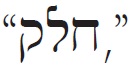 NIDOTTE 2:162–63.