Original Meaning
Expression of Trust (123:1–2)
THE PSALM BEGINS WITH A STRONG expression of trust. Embedded within this expression are two images. The first metaphor serves to justify the psalmist’s trust and the second to illustrate the posture of trust.
I lift up my eyes to you. The NIV has rearranged the Hebrew word order in an effort to create a translation that reflects a more traditional English word order: “I lift up my eyes to you.” The Hebrew structure is worth considering, however. The Hebrew text begins “to you,” referring to Yahweh. Psalm 120 also opens the psalm with a similar prepositional phrase, “to Yahweh.” As noted in that psalm, by moving the indirect object to the beginning of the verse, the psalmist has fronted important information in the poetic line.4
Typically, fronting signals that the object mentioned is the focus of the utterance. In other words, by structuring the psalm in this manner the psalmist is confessing that the focus of this poelm is on the one “who sit[s] enthroned in heaven.”
Beyond its similarity to Psalm 120, Psalm 123 also takes up the opening line in Psalm 121:1: “I lift up my eyes to you.” The vocabulary is identical in both psalms—“to lift” (nasa’) and “eyes” (‘enim). As mentioned in the commentary on Psalm 121, the action of “lifting the eyes,” both in Hebrew and in Akkadian, implies looking at something longingly or with desire.5
Such is the case in Psalm 123, even though the necessity or rationale for the glance heavenward to Yahweh is not fully revealed until the latter half of the poem (vv. 3–4). The act of lifting the eyes to Yahweh is interpreted metaphorically in verse 2 (see below) via the relationship between the male and female slaves and their master. On the attribution “you who sit enthroned in heaven” and its theological significance, see Bridging Contexts below.
The eyes of slaves look to the hand of their master. The language of “lifting the eyes” first mentioned in verse 1 appears in the extended metaphor in verse 2. Phil Botha notes that verse 2 includes one of the poem’s most striking features, “delayed identification.”6
The metaphorical comparison extends across three poetic lines and delays the concluding force of the comparison until the very end of verse:
As the eyes of slaves look to the hand of their master,
as the eyes of a female slave look to the hand of her mistress,
So our eyes look to the LORD our God,
till he shows us his mercy.
Botha opines that the delay “is probably done to emphasize the prolonged suffering of Yahweh’s people and to heighten the focus on the expected intervention which is (linguistically) reached in the last words of the strophe.”7
Whether Botha is correct in the first part of his analysis (i.e., that the delay has to do with suffering) is debatable, but he is undoubtedly correct in the second part of his assessment. Just as fronting “to you” in verse 1 draws attention to Yahweh, so the delayed identification in the extended metaphor “heightens the focus” on Yahweh.
In this extended metaphor the psalmist mentions male slaves and a female slave and their relationship with their respective masters. The term shiphah can be understood as “slave girl,” or “female slave,” and likely would have represented the lowest position in the household, while ‘abadim can be rendered “servants.” Given the larger context in verse 2, however, the term is better understood as “male slave.” Hossfeld and Zenger explain that “the petitioners compare themselves to slaves—those with no real power and no capacity to protect themselves, much less defend themselves. They are literally at the mercy of their masters.”8
This image of the petitioner as a powerless slave comports well with the imagery that appears earlier in the psalm—that of Yahweh as the Divine King enthroned in the heavens. Kings in the ancient Near East had the responsibility of caring for the weak in society. For example, in the opening line of the Code of Hammurabi the king refers to himself as “the pious prince” whose job it is “to make justice prevail in the land, to abolish the wicked and the evil, and to prevent the strong from oppressing the weak.”9
Thus the relationship between slave and master anticipates the lament that follows in verses 2b–4. The psalmists stretch out their hands to the Divine King in a time of great travail, much as slaves do to their mistresses or masters.
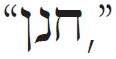
The poem does not initially indicate what it means to “look to the hand” of a master or mistress, the psalmist explains in the final line of verse 2 that they are waiting for the Lord to show mercy. The term hanan is often translated as “mercy” as the NIV, NRSV, and other translations, and it often appears in texts in which one party pleads for favor in the face of great adversity. Put differently, hanan “expresses the disposition and action of a superior to be for those who are related as dependants.”10
Thus in the context of this psalm, even as the slave would wait for any signal from the hand of the master, those who were enduring hardship were looking to the hand of Yahweh in the face of their current plight.11
Bridging Contexts
THE GOD OF THE HEAVENS. In Psalm 123:1b the poet refers to Yahweh as the one “who sit[s] enthroned in heaven.” The phrase might easily be overlooked in reflecting on the larger psalm, but this metaphorical reference anchors the remainder of the poem. During the postexilic period, in particular, Yahweh was frequently described in relation to the heavens.16
The destruction of the temple and subsequent exile created acute theological tensions. If the house of God had been destroyed, what more could they say about God? Rather than conceding any weakness on the part of God, the Jewish community affirmed that in fact their God was not just a god who was known in Jerusalem but in fact the God who stands over all creation. As the God of the heavens, he was sovereign over all.
The metaphorical depictions of God in relation to the heavens varied to some degree. Konrad Schmid has identified the different models employed in the Old Testament to depict the one enthroned in the heavens. Two are worth mentioning in relation to Psalm 123.17
One model, labeled the “cosmos-theistic” concept, can be found in other texts, such as Amos 9, Deuteronomy 3, and Isaiah 66, but within the Psalter the clearest example is found in Psalm 104. God is praised for being “clothed with splendor and majesty” (v. 1), and then in verses 2–3 the psalmist explains that
The LORD wraps himself in light as with a garment;
he stretches out the heavens like a tent
and lays the beams of his upper chambers on their waters.
He makes the clouds his chariot
and rides on the wings of the wind.
Clearly, the entire cosmos is associated with the throne room of Yahweh, but interestingly, even the elements found within the cosmos play a role in his royal rule. This view does not associate Yahweh with creation, as in some kind of panentheism, but instead attempts to recognize the “otherness” of Israel’s God. As Schmid explains, “the cosmos corresponds to the heart of the sanctuary, namely its throne and footstool.”18
Even though the temple in Jerusalem was destroyed, the throne of God in the cosmos was not—God remains God over all.
Beyond the cosmos-theistic concept, Schmid identifies another model, the “heavenly [Uranisierende] concept.” In this model, the biblical writer locates the dwelling of God in the heavens, or even above the heavens. In Psalm 113, for example, the psalmist explains that the glory of God is “above the heavens” (v. 4) and that from that position, he “stoops down to look on the heavens and the earth” (v. 6). Yahweh’s kingship is also associated with the “heavens” in Psalm 115. In this model, the heavens, or “above the heavens,” serve as the location for God’s dwelling place, but unlike in the cosmos model, in the heavenly model elements of creation are usually not part of God’s royal retinue.
As noted above, in the postexilic period Yahweh was frequently depicted as the one enthroned in the heavens. At first glance this affirmation regarding Yahweh’s location may imply that a great chasm existed between Yahweh and his people, particularly following the destruction of the temple. To the contrary, just the opposite should be inferred. Schmid explains that the heavenly enthronement of Yahweh stressed the reign of Yahweh over the universal kingdom of God and should be understood soteriologically. Because he is the ruler of the world, “unchallengable and in a constant state of readiness for his own,” he is always prepared to intervene in behalf of his people.19
In Psalm 121 the eyes of the psalmist were turned to the hills of Zion in the hope of finding deliverance, but in Psalm 123 the psalmist’s gaze has turned heavenward to the one enthroned on high. The ridicule and contempt being experienced by the psalmist and his community could no longer be endured; they needed the king on high to “stoop down” from his royal throne and bring deliverance to his people.20
The household metaphor. A number of the Songs of Ascent contain imagery associated with the family or a small community. For example, Psalms 127 and 128 refer to the rearing of children, and Psalm 131 employs the metaphor of a weaned child. Other familial or communal references include such activities as farming (Ps 129:3–4) and house construction (Ps 127:1). Both Psalm 123 and Psalm 130 refer to the relationship between household slaves and their master or mistress, thus again suggesting a household context. Even the motif of the “house of the LORD” mentioned in the opening and closing verses of Psalm 122 appears to take on a slightly different nuance given the repeated references to family and community life throughout the collection.21
These references and allusions to family and communal life are subsumed under the greater theme of the household of God.
The psalmist holds these two metaphors in tension. The God we serve is the God enthroned in the heavens, but the God of the heavens also invites us into his household. While the language of domestication in Psalm 123 signals the closeness between the two parties, it functions more importantly as a reminder of the obligations incumbent upon the “master of the house.” Hossfeld and Zenger note that because the petitioners perceive themselves to be part of the household of God, any shame or scorn that comes on them ultimately falls on the master of the house. This potential provides additional incentive for the one enthroned in the heavens to hear the request and respond.22
The use of household imagery to describe the relationship between God and his people is not unique to the Old Testament. Paul makes frequent references to familial imagery. In Galatians 4:1–7, for example, the apostle uses inheritance language to describe redemption. He reminds those at Galatia that they are heirs in the household of God, but as heirs they are still minors. This reminder must be understood in the light of the Roman legal view of minors. As minors, the Galatians are really no better off than household slaves (Gal 4:1). Both they and the property they will inherit remain under the oversight of the father until the appropriate day, when the inheritance will be distributed. Paul says that day came “when the set time had fully come” when the Son of God was born to a woman (Gal 4:4). He extends the imagery with another household metaphor (that of adoption) to emphasize what has happened through redemption. Under Roman law, children who were adopted received the same legal status and inheritance rights as biological children—upon adoption, the status of the child was changed. According to Paul, our status has been changed because of the work of Jesus Christ. Rather than assuming only some were adopted, Paul appears to conclude that we are all adopted children (Gal 4:5–6), thus leading us to cry out to God, “Abba! Father!” Because we are in the household of God, we “are no longer a slave, but God’s child; and since you are his child, God has made you also an heir” (Gal 4:7).23
Contemporary Significance
DESPITE ITS BREVITY PSALM 123 offers a great word of hope to those who “have endured no end of contempt.” Although the psalm appears to refer to verbal assaults levied against the psalmist and the larger community, its applicability extends well beyond images of verbal sparring or insults, beyond the kinds of exchanges one might imagine on a playground or in a boardroom. The real issue is shame. The experience of shame for the ancients in Israel, however, is vastly different from contemporary notions of embarrassment. Shame “leads to the fear of psychological or physical rejection, abandonment, expulsion, or loss of social position.24
Shame of this sort does result in blushing cheeks and the downward glancing of the eyes, but even more, this kind of shame makes one feel powerless in the face of the other.
The community grieves over the contempt (Ps 123:3b, 4c) and ridicule (v. 4b) that has come to define their reality—they have grown weary of their own sense of powerlessness. If we translate verse 4 literally, it reads, “our throats [nepesh] have been filled to no end.” The image here is similar to that in Numbers 11:30, where those in the wilderness are told that quail will come out of their noses. In Psalm 123 the problem is that shame has become so acute and pervasive that they are “filled to the brim” with shame, and it has left them devastated. What makes matters more troubling is that such shame does not appear to be the doing of the psalmist or the community. In other psalms, the community is not averse to establishing a causal relationship between their shame and their failures. In Psalm 79, for example, the community laments the destruction of the temple (Ps 79:1), and they bemoan that they have become objects of shame, contempt, and derision (v. 4). Yet they understand that their present plight is tied to “the sins of past generations” (v. 8). Such is not the case in Psalm 123, however. The community does not perceive itself to be the cause—shame has come upon them and powerlessness has overtaken them in ways that have overwhelmed them and threatened to choke out their very lives.
There are people we serve and to whom we minister who know something of this kind of shame. They too feel rejected and abandoned and know something of the bitter taste of losing social position. It used to be, at least, that when small boys wrestled one another, they would keep at it till one of them yelled “uncle.” It was a sign of having had enough. There are many people who are at the point of screaming “uncle” due to the vicissitudes of life that have befallen them. The community in Psalm 123 has yelled “uncle”; they have had enough of their shame (vv. 3–4). As a result, they turn to God as the only one who can redeem them from such a desperate plight. The psalmist’s hope is our hope. We are called to turn to God and plead, “Have mercy on us, LORD, have mercy.” As noted above, the word for “mercy” is hanan. We may readily conceive of this term in an emotional sense, that is, that God looks on people “sympathetically”; but in many places in the Old Testament the plea for mercy extends well beyond a “spiritual matter” and refers to God’s addressing, or better yet, God’s redressing of all areas of life.25
Like the community in Psalm 123 we must turn to God as dependents—not for his sympathy but for his active intervention in our lives.
The two metaphors mentioned in verses 1–2 (and discussed in Bridging Contexts) provide the rationale for why we can cry out to God for mercy. The God we serve is the one enthroned in the heavens, the Sovereign King over all. Because he is the king and we are his servants, we lift our eyes and look to his hand for a sign of deliverance. And because of who he is (Exod 34:6–7), we wait with anticipation and certainty that the King over all will stoop down and pick us up from the ash heap (Ps 113:7).
Original Meaning
Petition for Mercy (123:3–4)
IN THE FINAL TWO VERSES THE PSALMIST shifts from the metaphorically rich language employed in verses 1–2 and addresses the issue that necessitates this prayer. The poet makes a petition for mercy (v. 3a) and gives the rationale for the petition in verses 3b–4. Verse 3 begins with hanan, the same verb that concludes verse 2. The language employed in these two verses remains general, thus precluding any easy idenfication of the social context. Given that the pronouns are plural, the references could signify a small group of the faithful who have been shamed, or the “we” group could signify “Israel,” scorned and humiliated by its conquerers (Ps 44:13–16). The next Song of Ascents (Ps 124) also includes plural pronouns and leaves little doubt that all Israel is in view. While not determinative, the references in Psalm 124 are suggestive for how to read Psalm 123.
Psalm 123:3b introduces the basis for this request with a ki clause (“for we have endured no end of contempt”). Ki clauses usually begin with the English word “for” and follow a main clause; they serve to provide the rationale for the earlier request (v. 3a). Verse 3b connects with verse 4a through the repetition of the word saba‘, which means “to be full” or “satiated.” Literally, the community is confessing that they have had their fill of shame and contempt, or more precisely they have had more than their fill of shame and contempt.12
In verse 4a the psalmist adds nepesh with a pronominal suffix, “our”; the result could be rendered as “our throat” or “our life,” thus leading to verse 4a’s translation as “our lives have had more than their fill”; or nepesh could be translated literally as “throat” in an effort to create another metaphor (i.e., eating): “Too long has our throat been sated.”13
As mentioned in the comments on Psalm 122, however, the pronominal suffix attached to nepesh more nearly functions as an independent personal pronoun in most contexts (i.e., in this instance, “we”), thus making any such metaphorical imagery only secondary at best.
In the final two verses the psalmist invokes language from the “shame” word field.14
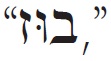
The term buz, “contempt,” frequently reflects the derisive attitude of rich people or those in power toward the needy and unfortunate.15
In verse 4b the term la‘ag, “ridicule,” functions as a synonym of buz. The terms buz and la‘ag, along with the verbal form of la‘ag, occur in Nehemiah 4. In that context Sanballet, Tobiah, and Geshem all mock and deride the people of God; those in power mock the weak and needy. Although the context of Psalm 123 cannot be determined, its references to “ridicule” and “contempt” suggest that verbal threats were levied against the community, thereby creating a context that necessitated a communal lament. The mention of verbal threats in Psalm 123 also recalls the cause of vexation in the opening psalm in the Songs of Ascent, namely, the cries for war (Ps 120:3–4, 7). As a result, Psalm 123 extends the motif of “living in a hostile world”—a motif that appears throughout the Songs of Ascent collection.
Bridging Contexts
THE GOD OF THE HEAVENS. In Psalm 123:1b the poet refers to Yahweh as the one “who sit[s] enthroned in heaven.” The phrase might easily be overlooked in reflecting on the larger psalm, but this metaphorical reference anchors the remainder of the poem. During the postexilic period, in particular, Yahweh was frequently described in relation to the heavens.16
The destruction of the temple and subsequent exile created acute theological tensions. If the house of God had been destroyed, what more could they say about God? Rather than conceding any weakness on the part of God, the Jewish community affirmed that in fact their God was not just a god who was known in Jerusalem but in fact the God who stands over all creation. As the God of the heavens, he was sovereign over all.
The metaphorical depictions of God in relation to the heavens varied to some degree. Konrad Schmid has identified the different models employed in the Old Testament to depict the one enthroned in the heavens. Two are worth mentioning in relation to Psalm 123.17
One model, labeled the “cosmos-theistic” concept, can be found in other texts, such as Amos 9, Deuteronomy 3, and Isaiah 66, but within the Psalter the clearest example is found in Psalm 104. God is praised for being “clothed with splendor and majesty” (v. 1), and then in verses 2–3 the psalmist explains that
The LORD wraps himself in light as with a garment;
he stretches out the heavens like a tent
and lays the beams of his upper chambers on their waters.
He makes the clouds his chariot
and rides on the wings of the wind.
Clearly, the entire cosmos is associated with the throne room of Yahweh, but interestingly, even the elements found within the cosmos play a role in his royal rule. This view does not associate Yahweh with creation, as in some kind of panentheism, but instead attempts to recognize the “otherness” of Israel’s God. As Schmid explains, “the cosmos corresponds to the heart of the sanctuary, namely its throne and footstool.”18
Even though the temple in Jerusalem was destroyed, the throne of God in the cosmos was not—God remains God over all.
Beyond the cosmos-theistic concept, Schmid identifies another model, the “heavenly [Uranisierende] concept.” In this model, the biblical writer locates the dwelling of God in the heavens, or even above the heavens. In Psalm 113, for example, the psalmist explains that the glory of God is “above the heavens” (v. 4) and that from that position, he “stoops down to look on the heavens and the earth” (v. 6). Yahweh’s kingship is also associated with the “heavens” in Psalm 115. In this model, the heavens, or “above the heavens,” serve as the location for God’s dwelling place, but unlike in the cosmos model, in the heavenly model elements of creation are usually not part of God’s royal retinue.
As noted above, in the postexilic period Yahweh was frequently depicted as the one enthroned in the heavens. At first glance this affirmation regarding Yahweh’s location may imply that a great chasm existed between Yahweh and his people, particularly following the destruction of the temple. To the contrary, just the opposite should be inferred. Schmid explains that the heavenly enthronement of Yahweh stressed the reign of Yahweh over the universal kingdom of God and should be understood soteriologically. Because he is the ruler of the world, “unchallengable and in a constant state of readiness for his own,” he is always prepared to intervene in behalf of his people.19
In Psalm 121 the eyes of the psalmist were turned to the hills of Zion in the hope of finding deliverance, but in Psalm 123 the psalmist’s gaze has turned heavenward to the one enthroned on high. The ridicule and contempt being experienced by the psalmist and his community could no longer be endured; they needed the king on high to “stoop down” from his royal throne and bring deliverance to his people.20
The household metaphor. A number of the Songs of Ascent contain imagery associated with the family or a small community. For example, Psalms 127 and 128 refer to the rearing of children, and Psalm 131 employs the metaphor of a weaned child. Other familial or communal references include such activities as farming (Ps 129:3–4) and house construction (Ps 127:1). Both Psalm 123 and Psalm 130 refer to the relationship between household slaves and their master or mistress, thus again suggesting a household context. Even the motif of the “house of the LORD” mentioned in the opening and closing verses of Psalm 122 appears to take on a slightly different nuance given the repeated references to family and community life throughout the collection.21
These references and allusions to family and communal life are subsumed under the greater theme of the household of God.
The psalmist holds these two metaphors in tension. The God we serve is the God enthroned in the heavens, but the God of the heavens also invites us into his household. While the language of domestication in Psalm 123 signals the closeness between the two parties, it functions more importantly as a reminder of the obligations incumbent upon the “master of the house.” Hossfeld and Zenger note that because the petitioners perceive themselves to be part of the household of God, any shame or scorn that comes on them ultimately falls on the master of the house. This potential provides additional incentive for the one enthroned in the heavens to hear the request and respond.22
The use of household imagery to describe the relationship between God and his people is not unique to the Old Testament. Paul makes frequent references to familial imagery. In Galatians 4:1–7, for example, the apostle uses inheritance language to describe redemption. He reminds those at Galatia that they are heirs in the household of God, but as heirs they are still minors. This reminder must be understood in the light of the Roman legal view of minors. As minors, the Galatians are really no better off than household slaves (Gal 4:1). Both they and the property they will inherit remain under the oversight of the father until the appropriate day, when the inheritance will be distributed. Paul says that day came “when the set time had fully come” when the Son of God was born to a woman (Gal 4:4). He extends the imagery with another household metaphor (that of adoption) to emphasize what has happened through redemption. Under Roman law, children who were adopted received the same legal status and inheritance rights as biological children—upon adoption, the status of the child was changed. According to Paul, our status has been changed because of the work of Jesus Christ. Rather than assuming only some were adopted, Paul appears to conclude that we are all adopted children (Gal 4:5–6), thus leading us to cry out to God, “Abba! Father!” Because we are in the household of God, we “are no longer a slave, but God’s child; and since you are his child, God has made you also an heir” (Gal 4:7).23
Contemporary Significance
DESPITE ITS BREVITY PSALM 123 offers a great word of hope to those who “have endured no end of contempt.” Although the psalm appears to refer to verbal assaults levied against the psalmist and the larger community, its applicability extends well beyond images of verbal sparring or insults, beyond the kinds of exchanges one might imagine on a playground or in a boardroom. The real issue is shame. The experience of shame for the ancients in Israel, however, is vastly different from contemporary notions of embarrassment. Shame “leads to the fear of psychological or physical rejection, abandonment, expulsion, or loss of social position.24
Shame of this sort does result in blushing cheeks and the downward glancing of the eyes, but even more, this kind of shame makes one feel powerless in the face of the other.
The community grieves over the contempt (Ps 123:3b, 4c) and ridicule (v. 4b) that has come to define their reality—they have grown weary of their own sense of powerlessness. If we translate verse 4 literally, it reads, “our throats [nepesh] have been filled to no end.” The image here is similar to that in Numbers 11:30, where those in the wilderness are told that quail will come out of their noses. In Psalm 123 the problem is that shame has become so acute and pervasive that they are “filled to the brim” with shame, and it has left them devastated. What makes matters more troubling is that such shame does not appear to be the doing of the psalmist or the community. In other psalms, the community is not averse to establishing a causal relationship between their shame and their failures. In Psalm 79, for example, the community laments the destruction of the temple (Ps 79:1), and they bemoan that they have become objects of shame, contempt, and derision (v. 4). Yet they understand that their present plight is tied to “the sins of past generations” (v. 8). Such is not the case in Psalm 123, however. The community does not perceive itself to be the cause—shame has come upon them and powerlessness has overtaken them in ways that have overwhelmed them and threatened to choke out their very lives.
There are people we serve and to whom we minister who know something of this kind of shame. They too feel rejected and abandoned and know something of the bitter taste of losing social position. It used to be, at least, that when small boys wrestled one another, they would keep at it till one of them yelled “uncle.” It was a sign of having had enough. There are many people who are at the point of screaming “uncle” due to the vicissitudes of life that have befallen them. The community in Psalm 123 has yelled “uncle”; they have had enough of their shame (vv. 3–4). As a result, they turn to God as the only one who can redeem them from such a desperate plight. The psalmist’s hope is our hope. We are called to turn to God and plead, “Have mercy on us, LORD, have mercy.” As noted above, the word for “mercy” is hanan. We may readily conceive of this term in an emotional sense, that is, that God looks on people “sympathetically”; but in many places in the Old Testament the plea for mercy extends well beyond a “spiritual matter” and refers to God’s addressing, or better yet, God’s redressing of all areas of life.25
Like the community in Psalm 123 we must turn to God as dependents—not for his sympathy but for his active intervention in our lives.
The two metaphors mentioned in verses 1–2 (and discussed in Bridging Contexts) provide the rationale for why we can cry out to God for mercy. The God we serve is the one enthroned in the heavens, the Sovereign King over all. Because he is the king and we are his servants, we lift our eyes and look to his hand for a sign of deliverance. And because of who he is (Exod 34:6–7), we wait with anticipation and certainty that the King over all will stoop down and pick us up from the ash heap (Ps 113:7).

 NIDOTTE 1:618.
 NIDOTTE 2:203–206.