Original Meaning
David Vows to God (132:1–5)
THE STROPHE OPENS WITH A PETITION for Yahweh to remember David. The oath that David made to Yahweh (vv. 3–5) anchors the first strophe by providing a rationale for God’s remembrance.
LORD
, remember David. The opening strophe highlights David’s role as the founder of the Jerusalem temple. The psalm begins with a request or a petition for God to remember David because of his “self-denial” or “hardships.”3
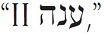
Although the Hebrew root for “self-denial,” ‘nh II, means “to be afflicted” or “to suffer” in the qal stem, in the pual stem the verb refers to being degraded or humiliated, or in this case, deprived.4
The deprivation was not externally imposed; rather, it was the result of David’s earnest desire to build a sanctuary for Yahweh. David spared no effort in ensuring that there were proper resources available for the construction of Yahweh’s temple. He assembled workers, stonecutters, masons, and carpenters to ensure the completion of the project (1 Chr 22:15) and to ensure that it was properly funded he collected “one hundred thousand talents of gold, one million talents of silver,” and quantities of bronze and iron that were “too great to be weighed.”
In 1 Chronicles 22:14 David declares, “I have taken great pains [‘onyi] to provide for the temple.” Terms associated with the root ‘nh are applied to David only in Psalm 132:1 and 1 Chronicles 22:14. Because Chronicles was written after Psalm 132, the Chronicler was likely familiar with, and perhaps even dependent upon, the psalm. While the additional details provided in 1 Chronicles 22 do not appear in Psalm 132, they do serve to explain and amplify the claim made in Psalm 132:1.
He swore an oath. In addition to remembering David’s extensive preparation for the rebuilding of the temple, the speaker also recalls the vow David made to “the Mighty One of Jacob,” a title used of Yahweh only in this psalm (vv. 2, 5), Genesis 49:24, and Isaiah 49:26; 60:16. The title recalls the scene in Israel’s early history when Jacob blessed his twelve sons. In referencing this title, those praying the psalm emphasize that David swore an oath with the God who had been with the nation, the entire nation, from its very beginning. David’s zeal to build a house for Yahweh alludes to another scene in the Jacob cycle, namely, Jacob’s sworn oath to Yahweh in Genesis 28:10–20. Upon waking from his dream, Jacob makes a vow to Yahweh declaring that the stone he erected will be “God’s house.”5
Both Jacob and David, the founder of the nation and the founder of the temple, make oaths regarding the dwelling place of God among his people.
While the vow placed on the lips of David in Psalm 132:3–5 does not appear in the narrative accounts in 2 Samuel 6–7, it does reflect the zeal expressed by David in 2 Samuel 7:1–2.6
In that account, the narrative explains that after “the king was settled in his palace” (v. 1) he spoke to Nathan, “Here I am, living in a house of cedar, while the ark of God remains in a tent” (2 Sam 7:2). David’s realization is followed by a vision that came to Nathan, which the prophet subsequently relayed to David—a vision concerning the building of a “house” in which Yahweh would dwell. David’s comparison between his own “house of cedar” and Yahweh’s tent reflects not only David’s awareness but also his resolve. This resolve is manifested in Psalm 132 with the emphasis on David’s self-denial and deprivation. David’s commitment to “self-denial” and deprivation, mentioned first in verse 1, continues in verses 3–5 with his refusal to return home or sleep until he finds a “place” (maqom) and “dwelling” (mishkan) for Yahweh (v. 5). Both terms, maqom and mishkan, also refer to the temple elsewhere (e.g., Deut 12:5, 11; Pss 24:3; 26:8; 43:3; 84:1), thereby merging elements of the ark narrative with those of the temple tradition. The account in 2 Samuel 6 recalls David’s bringing the ark to Jerusalem, the site of his newly conquered capital, with the primary intent of finding a resting place for the ark. While that narrative stands in the background of Psalm 132, the focus in this psalm shifts entirely to Zion and the temple, as is evident in verses 11–18.
Bridging Contexts
FROM BEGINNING TO END, Psalm 132 remains focused on two topics: Zion and David. Both themes are intertwined and carefully laced together in this psalm, even as they are throughout the Old Testament. In the lengthy historical Psalm 78, for example, the psalmist recounts Israel’s history from its inception but concludes with Yahweh’s choice of Mount Zion and selection of David, his servant. In Psalm 78 these two events represent the zenith in Israel’s history. God’s selection of a king and choice of a sanctuary bear witness to God’s desire to be present with Israel in palpable ways. Psalm 132 returns to these intertwined and interlaced themes to celebrate once more God’s presence among his people.
Zion. In the first two collections in the Songs of Ascent (Pss 120–24; 125–29), the community repeatedly confesses the conditions that plague them. They live among people who seek to stoke the fires of unrest (Pss 120; 122). They endure contempt and ridicule and remain in need of God’s watchful care (Pss 121; 123). Wicked rulers lord it over and threaten them (Pss 125; 129). The people whose existence has been filled with tears and weeping (Ps 126) long to sing for joy.
The final collection in the Psalms of Ascents responds to these crises by articulating Israel’s hope. Psalms 130 and 131 call on Israel to “put your hope in the LORD” (Pss 130:7; 131:3). Psalm 132 provides the most explicit articulation of that hope—one grounded in Yahweh’s faithful presence in Zion and evident in his faithful promise to the dynasty of David. Psalm 132 explains through remembrance and confession why Zion is the telos of their pilgrimage.
This psalm also highlights the intertwining and interlacing of the human and the divine in the establishment of God’s living and active presence in the world. Perhaps surprisingly, the poem begins with David’s initiative to create a home for God. There is no thunderous clap from the heavens with a deity demanding his human pawns to construct a majestic temple for the divine; rather, illustrating his commitment to God and moved by covenantal faithfulness, David declares his desire to build a dwelling place for his God. And God, out of his commitment to his people and his covenantal faithfulness, chooses Zion and desires to make it the place of his enthronement. This intertwining of the human and the divine continues in the discussion of the Davidic dynasty. Yahweh promises to continue the dynasty of David provided that the members of the dynastic line remain faithful to Yahweh’s covenantal statutes. To suggest that the relationship between God and his people, or between God and the Davidic dynasty, has devolved into some form of quid pro quo (“this for that”) is gravely to misunderstand the true nature of covenant. John Goldingay equates these kinds of covenantal relationships with the relationship of marriage or an abiding friendship, such as with Jonathan and David. Goldingay suggests that when we say relationships are covenantal, “those relationships presuppose a mutual commitment, but they are not exactly conditional or unconditional or contractual. They are more personal than such categories imply.”13
As pilgrims made their way to Jerusalem, with their eyes lifted to the mountains, they were making their way to the place where God has chosen to dwell among his people. And, as his people, they were choosing to abide there also, if only for a season of life. In making their way to Zion, they were confessing that their lives remained intertwined with the life of God and that, together, the living and active presence of God in the world will be realized.
David. As noted above, the name of David opens and closes each major section of the psalm (vv. 1, 10, 11, 17). It is David’s oath to Yahweh that initiates the action of the psalm, and it is Yahweh’s oath to David (vv. 17–18) that consummates the hope of the psalm. If Psalm 132 is about the intertwining of the human and the divine, it is most clearly expressed in Yahweh’s commitment to David. Yet the depiction of David throughout the poem advances two particular themes. Verse 1 acknowledges David’s “self-denial” or, as suggested above, his humiliation and deprivation. Throughout the Psalter the image of David suggests one who is humble, persecuted, and in great need. The thirteen historical superscriptions spread across the Psalter depict David not as the glorious king of a bygone gilded age but as one desperate for God’s intervention (e.g., Pss 51; 142).14
A similar image of kingship appears in Psalm 132. In the poem’s latter half, it is Yahweh who acts. Yahweh the Divine King, not the human king, promises to care for the poor and ensure that there are provisions for Jerusalem (v. 15a). Even in the final strophe, in his promise to the line of David, Yahweh declares that it will be he who clothes the enemy with shame and not the human king. The decisive action by Yahweh over against the humble spirit of the human king does not mean the king is without task, however. The second theme in Psalm 132 concerns the relationship between torah and kingship.15
According to Deuteronomy 17:14–20, torah obedience was central to the life of an Israelite king. He was meant to be the “paradigmatic Israelite believer” by embodying the fullness of God’s ways in the world.16
In Psalm 132 David is the paradigmatic servant who makes Yahweh the central focus of his reign, as is evident in his oath (vv. 3–5). Yahweh’s oath to David’s dynastic line concerns their capacity to live as paradigmatic Israelite believers by integrating kingship and torah faithfulness (v. 12).
Even as Zion is the embodiment of Yahweh’s presence on earth, the king is the embodiment of Yahweh’s design for the world. Psalm 132 declares that God’s faithfulness to both—Zion and David—endures. The threats rehearsed earlier in the Songs of Ascent do not detract from the reality of God’s faithfulness or the certainty of his promises.
Contemporary Significance
THE PSALMS OF ASCENTS call people to a journey. This journey is rooted in the past but points to the future. Those living in Jerusalem and the outlying areas of Yehud were well aware of the bitter taste of disappointment—the kind of disappointment that might lead to despair. “Why make another pilgrimage to Jerusalem?” they may have wondered. “Why go yet again?” Despite the disappointment, those first pilgrims in Yehud leaned into hope. To do so, they moved effortlessly between the past and the future while jettisoning romantic notions of the past and opting instead for remembrances that secured their hope for the future. They were not pessimists, nor were they optimists; they were Yahwists who believed in the God who chose to dwell among them and who provided a royal line to embody the ways of God in the world. Jürgen Moltmann asks, “what is more primal and more profound, joy or pain, life or death? And we reply: existence is more primal than nonexistence, life is more than death: first of all comes love, then grief, and hope runs ahead of despair.”17
Psalm 132 reminds those first pilgrims, and us, that indeed “hope runs ahead of despair.” Grief and loss dot our existence often with a frequency we struggle to bear, yet grief and loss are countered by love and hope.
Hebrews living in the postexilic period continued to return to Zion, festival after festival, certain that grief and loss would soon be shouted down by love and hope (v. 16b). To be clear, such faith is not rooted in foolish naiveté that closes its eyes to the world about us; rather, such faith “cultivates our memory and nurtures our hope.”18
Psalm 132 invites us to think more deliberately about how we cultivate that memory, how we nurture that hope. Pilgrimages do not happen by accident, nor do cultivated memory and nurtured hope, but they are necessary. They are necessary for those who seek to walk in the Way (Mark 8:27; 9:33–34; 10:17).
Original Meaning
Allusion to the Ark Story (132:6–10)
THE SECOND STROPHE OF PSALM 132 recounts the movement of the ark from Kiriath-Jearim to Jerusalem, as well as the words uttered by those who accompanied the ark into Jerusalem. Rather than using the third person to speak of those involved, as though merely recounting history objectively, the community uses the first-person plural, “we,” and in doing so they place themselves within the story. As Goldingay has suggested, “it is as if they were themselves involved when their ancestors undertook this action with David.”7
What occurred in the past continues to shape the present.
We heard it in Ephrathah. Verse 6 presents two interpretive questions. The first one concerns the pronoun “it,” used twice in the verse: “We heard it in Ephrathah, we came upon it in the field of Jaar.” To whom or to what does “it” refer? Normally, pronouns refer to something mentioned previously in a text (an anaphoric reference). In this instance, however, the pronoun is cataphoric, referring to another word later in the text. Because the pronoun is feminine singular, the likely referent appears in verse 8: “ark” (’aron). Although ’aron is typically masculine, it does appear as a feminine noun in several texts (e.g., 1 Sam 4:17; 1 Chr 13:6).8
The second question concerns the locations mentioned in the verse. Ephrathah is traditionally associated with the area around Bethlehem in the Old Testament (Ruth 4:11; Mic 5:2), but the region is not mentioned by name in either of the Samuel narratives devoted to the ark (1 Sam 4–6; 2 Sam 6). The second location, Jaar, is likely a poetically shortened reference to Kiriath-Jearim, the place where the ark rested prior to its eventual relocation in Jerusalem (2 Sam 6:2; 1 Chr 13:6). Taking both interpretive questions together, the community in Psalm 132 is confessing that those in the region of Ephrathah heard that the ark of God was in Kiriath-Jearim, and that upon arriving in Kiriath-Jearim they found “it” (i.e., the ark). Although Ephrathah is not mentioned by name in other texts, the Chronicler does indicate that David assembled “all Israel” to go retrieve the ark from Kiriath-Jearim (1 Chr 13:5). Given the prominence of David in Psalm 132, the assumption that the region of Ephrathah, a region associated with David, would have been instrumental in this effort seems logical.
Let us go to his dwelling place. Having heard about the ark while in Ephrathah and having found it in Kiriath-Jearim, in verse 7 they approach “his footstool” to bow down in worship. The phrase “his footstool” (hadom raglayw) also appears in Psalm 99:5 and 1 Chronicles 28:2, both times in reference to the ark. The worshipers appear before the ark and offer up their petitions in Psalm 132:8–10. As rendered in both the NIV and NRSV, the first petition appears to be a request for God to come and meet them at his “resting place” above the ark, yet the Hebrew does not contain the word “come.” The rhetorical force of the petition might be better understood by rendering the Hebrew as “Rise up, O LORD [qumah YHWH], for the sake of your resting place.”9
This petition echoes the story of the ark in the book of Numbers. Whenever the ark set out, Moses would cry, “Rise up, LORD” (qumah YHWH), and petition Yahweh to scatter all the enemies of Israel (Num 10:35). In similar fashion to the request uttered in the wilderness, the petitioners in Psalm 132 seek the protective presence of Yahweh, thus likely explaining the reference in verse 7b to the “ark of your might.” The second petition concerns the priests and the “faithful ones.” They request that God establish righteousness, or a rightly ordered world, for his priests; the establishment of such a world will result in singing or shouting for joy by all the people of God (v. 9).10
Do not reject your anointed one. The mention of David in verse 10 recalls verse 1 and his mention there. Together the two verses create an inclusio around the first half of the psalm. Verse 10a provides the rationale for the request by the “we” group. The request made, however, is not for David but for “your anointed one.” Some have cited the democratization of the Davidic covenant in Isaiah 55:3–5 and suggested that the “anointed one” in Psalm 132 must likewise be a reference to the nation as a whole, not a specific member of the Davidic line. Although other texts, even within the Psalter, appear to apply Davidic ideology to the nation (e.g., Ps 149:5–9), Psalm 132 seems to retain its focus on the Davidic line. The emphasis on future progeny in verses 11–12 suggests that the psalmist has David and his line in view. In other texts that appear to collectivize or democratize the Davidic tradition, the issue of progeny is not referenced. Further, as noted above, Chronicles makes use of Psalm 132. In the closing of Solomon’s dedicatory prayer for the temple, 2 Chronicles 6:41–42 quotes Psalm 132:9–10 specifically. Clearly, the Chronicler had David’s progeny in view in his use of this psalm.
Bridging Contexts
FROM BEGINNING TO END, Psalm 132 remains focused on two topics: Zion and David. Both themes are intertwined and carefully laced together in this psalm, even as they are throughout the Old Testament. In the lengthy historical Psalm 78, for example, the psalmist recounts Israel’s history from its inception but concludes with Yahweh’s choice of Mount Zion and selection of David, his servant. In Psalm 78 these two events represent the zenith in Israel’s history. God’s selection of a king and choice of a sanctuary bear witness to God’s desire to be present with Israel in palpable ways. Psalm 132 returns to these intertwined and interlaced themes to celebrate once more God’s presence among his people.
Zion. In the first two collections in the Songs of Ascent (Pss 120–24; 125–29), the community repeatedly confesses the conditions that plague them. They live among people who seek to stoke the fires of unrest (Pss 120; 122). They endure contempt and ridicule and remain in need of God’s watchful care (Pss 121; 123). Wicked rulers lord it over and threaten them (Pss 125; 129). The people whose existence has been filled with tears and weeping (Ps 126) long to sing for joy.
The final collection in the Psalms of Ascents responds to these crises by articulating Israel’s hope. Psalms 130 and 131 call on Israel to “put your hope in the LORD” (Pss 130:7; 131:3). Psalm 132 provides the most explicit articulation of that hope—one grounded in Yahweh’s faithful presence in Zion and evident in his faithful promise to the dynasty of David. Psalm 132 explains through remembrance and confession why Zion is the telos of their pilgrimage.
This psalm also highlights the intertwining and interlacing of the human and the divine in the establishment of God’s living and active presence in the world. Perhaps surprisingly, the poem begins with David’s initiative to create a home for God. There is no thunderous clap from the heavens with a deity demanding his human pawns to construct a majestic temple for the divine; rather, illustrating his commitment to God and moved by covenantal faithfulness, David declares his desire to build a dwelling place for his God. And God, out of his commitment to his people and his covenantal faithfulness, chooses Zion and desires to make it the place of his enthronement. This intertwining of the human and the divine continues in the discussion of the Davidic dynasty. Yahweh promises to continue the dynasty of David provided that the members of the dynastic line remain faithful to Yahweh’s covenantal statutes. To suggest that the relationship between God and his people, or between God and the Davidic dynasty, has devolved into some form of quid pro quo (“this for that”) is gravely to misunderstand the true nature of covenant. John Goldingay equates these kinds of covenantal relationships with the relationship of marriage or an abiding friendship, such as with Jonathan and David. Goldingay suggests that when we say relationships are covenantal, “those relationships presuppose a mutual commitment, but they are not exactly conditional or unconditional or contractual. They are more personal than such categories imply.”13
As pilgrims made their way to Jerusalem, with their eyes lifted to the mountains, they were making their way to the place where God has chosen to dwell among his people. And, as his people, they were choosing to abide there also, if only for a season of life. In making their way to Zion, they were confessing that their lives remained intertwined with the life of God and that, together, the living and active presence of God in the world will be realized.
David. As noted above, the name of David opens and closes each major section of the psalm (vv. 1, 10, 11, 17). It is David’s oath to Yahweh that initiates the action of the psalm, and it is Yahweh’s oath to David (vv. 17–18) that consummates the hope of the psalm. If Psalm 132 is about the intertwining of the human and the divine, it is most clearly expressed in Yahweh’s commitment to David. Yet the depiction of David throughout the poem advances two particular themes. Verse 1 acknowledges David’s “self-denial” or, as suggested above, his humiliation and deprivation. Throughout the Psalter the image of David suggests one who is humble, persecuted, and in great need. The thirteen historical superscriptions spread across the Psalter depict David not as the glorious king of a bygone gilded age but as one desperate for God’s intervention (e.g., Pss 51; 142).14
A similar image of kingship appears in Psalm 132. In the poem’s latter half, it is Yahweh who acts. Yahweh the Divine King, not the human king, promises to care for the poor and ensure that there are provisions for Jerusalem (v. 15a). Even in the final strophe, in his promise to the line of David, Yahweh declares that it will be he who clothes the enemy with shame and not the human king. The decisive action by Yahweh over against the humble spirit of the human king does not mean the king is without task, however. The second theme in Psalm 132 concerns the relationship between torah and kingship.15
According to Deuteronomy 17:14–20, torah obedience was central to the life of an Israelite king. He was meant to be the “paradigmatic Israelite believer” by embodying the fullness of God’s ways in the world.16
In Psalm 132 David is the paradigmatic servant who makes Yahweh the central focus of his reign, as is evident in his oath (vv. 3–5). Yahweh’s oath to David’s dynastic line concerns their capacity to live as paradigmatic Israelite believers by integrating kingship and torah faithfulness (v. 12).
Even as Zion is the embodiment of Yahweh’s presence on earth, the king is the embodiment of Yahweh’s design for the world. Psalm 132 declares that God’s faithfulness to both—Zion and David—endures. The threats rehearsed earlier in the Songs of Ascent do not detract from the reality of God’s faithfulness or the certainty of his promises.
Contemporary Significance
THE PSALMS OF ASCENTS call people to a journey. This journey is rooted in the past but points to the future. Those living in Jerusalem and the outlying areas of Yehud were well aware of the bitter taste of disappointment—the kind of disappointment that might lead to despair. “Why make another pilgrimage to Jerusalem?” they may have wondered. “Why go yet again?” Despite the disappointment, those first pilgrims in Yehud leaned into hope. To do so, they moved effortlessly between the past and the future while jettisoning romantic notions of the past and opting instead for remembrances that secured their hope for the future. They were not pessimists, nor were they optimists; they were Yahwists who believed in the God who chose to dwell among them and who provided a royal line to embody the ways of God in the world. Jürgen Moltmann asks, “what is more primal and more profound, joy or pain, life or death? And we reply: existence is more primal than nonexistence, life is more than death: first of all comes love, then grief, and hope runs ahead of despair.”17
Psalm 132 reminds those first pilgrims, and us, that indeed “hope runs ahead of despair.” Grief and loss dot our existence often with a frequency we struggle to bear, yet grief and loss are countered by love and hope.
Hebrews living in the postexilic period continued to return to Zion, festival after festival, certain that grief and loss would soon be shouted down by love and hope (v. 16b). To be clear, such faith is not rooted in foolish naiveté that closes its eyes to the world about us; rather, such faith “cultivates our memory and nurtures our hope.”18
Psalm 132 invites us to think more deliberately about how we cultivate that memory, how we nurture that hope. Pilgrimages do not happen by accident, nor do cultivated memory and nurtured hope, but they are necessary. They are necessary for those who seek to walk in the Way (Mark 8:27; 9:33–34; 10:17).
Original Meaning
God’s Vow to David (132:11–12)
JUST AS THE NAME “DAVID” PROVIDED an inclusio in the first half of the psalm (vv. 1, 10), so too does it in the poem’s second half. References to David appear in the first strophe and final strophe (vv. 11, 17). David’s name functions as a “bookend” of sorts. The second half of the psalm places the focus on Yahweh’s fidelity both to the Davidic dynasty and to Zion, the place of Yahweh’s dwelling (v. 13).
The LORD swore an oath. David’s oath to God in verses 2–5 is matched by Yahweh’s oath to David in verses 11–12. Both swear or pledge an oath (nishba) to one another. Other vocabulary terms link this opening strophe in the second half of the psalm with previous lines in the first half. Most notably, in the final line of the first section the petitioners ask of Yahweh, “do not reject [shub] your anointed one” (v. 10b). Their concern is addressed in verse 11b with the statement, “a sure oath he will not revoke [shub].” The verb shub means to “to turn”—in this case to turn away from either a person or a promise. The culminating concern in the first half of the psalm is whether Yahweh will literally “turn away the face of his anointed.” The second half of the psalm counters by declaring that Yahweh will not “turn [shub] away from it [the oath].” The remainder of the psalm serves to illustrate Yahweh’s fidelity to the oath.
If your sons keep my covenant. The oath made to David in 2 Samuel 7:14–16 does not contain the type of condition uttered in Psalm 132:12. According to 2 Samuel 7, kings who do wrong will be punished by human hands. In Psalm 132, however, the connection between covenantal faithfulness and the promise of a Davidic dynasty is made much more explicit. To ensure that David’s progeny remain faithful to Yahweh’s statutes and covenantal expectations, Yahweh declares that he himself will teach them (cf. Ps 119:2). So long as they remain obedient, David’s sons will remain on the throne. The statement assumes, conversely, that disobedience will result in the end of the monarchy in Jerusalem. If Psalm 132 was written or collected in the postexilic period, then the conditional statement in verse 12 serves to explain the fall of Jerusalem in 586 BCE and the exile of the Judean king (2 Kgs 25).11
Yet, as Psalm 132:11b affirmed, Yahweh’s commitment to David and his progeny remains “sure” or “certain” (’emet). This pledge is explicated in the final strophe of the psalm (vv. 17–18).
The LORD has chosen Zion. In the background tradition for this text (2 Sam 6–7), it is David who chooses Zion. From Hebron (2 Sam 5) David and his men march into Jerusalem, attack the Jebusites, and establish the city as his new capital, “The City of David.” Beginning with Solomon, however, the language shifted to introduce the claim that it was not David but Yahweh who actually chose (bahar) Zion.12
Psalm 132 reflects the latter tradition of Yahweh’s choosing Zion. This point is reinforced in verses 13b and 14b with the use of the word “desired” (’iwwah).
The traditional Zion psalms describe the city in cosmic terms by referring to the paradisiacal river that pulses through the city (Ps 46:4) and its inspiring height, which rivals that of Mount Zaphon (Ps 48:2), perhaps thus offering a rationale for God’s choice of this city. Psalm 132 explains simply that Zion is the place he deeply desires to be. The “we” group testifies to this desire in verse 13b, and Yahweh himself declares it in verse 14b. For those in the postexilic community wondering about God’s presence with his people, these verses affirm his desire, his deepest desire, to make Jerusalem his dwelling place, where he will sit enthroned as the Divine King (v. 14b).
I will bless her. In verses 8–10 the people uttered several petitions. God answered the first one by declaring Jerusalem to be his resting place (vv. 8a, 14a). The second petition expressed their desire to see God bless the priests and his “faithful people” (v. 9), as promised in verse 16. In verse 15 he promises to satisfy the poor (’ebyon) with food. Although the poor were not mentioned in the oath uttered by the “we” group in verses 8–10, their mention here is important to note. In verse 14b Yahweh announces that he will sit enthroned in Zion as the Divine King. As King, he is under obligation to see to the well-being of the poor, and with his oath he affirms his commitment to fulfilling that role. In addition, the mention of the poor signals that the entire society—the priests, the laity, and even the poor—are the beneficiaries of Yahweh’s blessings from Zion.
Bridging Contexts
FROM BEGINNING TO END, Psalm 132 remains focused on two topics: Zion and David. Both themes are intertwined and carefully laced together in this psalm, even as they are throughout the Old Testament. In the lengthy historical Psalm 78, for example, the psalmist recounts Israel’s history from its inception but concludes with Yahweh’s choice of Mount Zion and selection of David, his servant. In Psalm 78 these two events represent the zenith in Israel’s history. God’s selection of a king and choice of a sanctuary bear witness to God’s desire to be present with Israel in palpable ways. Psalm 132 returns to these intertwined and interlaced themes to celebrate once more God’s presence among his people.
Zion. In the first two collections in the Songs of Ascent (Pss 120–24; 125–29), the community repeatedly confesses the conditions that plague them. They live among people who seek to stoke the fires of unrest (Pss 120; 122). They endure contempt and ridicule and remain in need of God’s watchful care (Pss 121; 123). Wicked rulers lord it over and threaten them (Pss 125; 129). The people whose existence has been filled with tears and weeping (Ps 126) long to sing for joy.
The final collection in the Psalms of Ascents responds to these crises by articulating Israel’s hope. Psalms 130 and 131 call on Israel to “put your hope in the LORD” (Pss 130:7; 131:3). Psalm 132 provides the most explicit articulation of that hope—one grounded in Yahweh’s faithful presence in Zion and evident in his faithful promise to the dynasty of David. Psalm 132 explains through remembrance and confession why Zion is the telos of their pilgrimage.
This psalm also highlights the intertwining and interlacing of the human and the divine in the establishment of God’s living and active presence in the world. Perhaps surprisingly, the poem begins with David’s initiative to create a home for God. There is no thunderous clap from the heavens with a deity demanding his human pawns to construct a majestic temple for the divine; rather, illustrating his commitment to God and moved by covenantal faithfulness, David declares his desire to build a dwelling place for his God. And God, out of his commitment to his people and his covenantal faithfulness, chooses Zion and desires to make it the place of his enthronement. This intertwining of the human and the divine continues in the discussion of the Davidic dynasty. Yahweh promises to continue the dynasty of David provided that the members of the dynastic line remain faithful to Yahweh’s covenantal statutes. To suggest that the relationship between God and his people, or between God and the Davidic dynasty, has devolved into some form of quid pro quo (“this for that”) is gravely to misunderstand the true nature of covenant. John Goldingay equates these kinds of covenantal relationships with the relationship of marriage or an abiding friendship, such as with Jonathan and David. Goldingay suggests that when we say relationships are covenantal, “those relationships presuppose a mutual commitment, but they are not exactly conditional or unconditional or contractual. They are more personal than such categories imply.”13
As pilgrims made their way to Jerusalem, with their eyes lifted to the mountains, they were making their way to the place where God has chosen to dwell among his people. And, as his people, they were choosing to abide there also, if only for a season of life. In making their way to Zion, they were confessing that their lives remained intertwined with the life of God and that, together, the living and active presence of God in the world will be realized.
David. As noted above, the name of David opens and closes each major section of the psalm (vv. 1, 10, 11, 17). It is David’s oath to Yahweh that initiates the action of the psalm, and it is Yahweh’s oath to David (vv. 17–18) that consummates the hope of the psalm. If Psalm 132 is about the intertwining of the human and the divine, it is most clearly expressed in Yahweh’s commitment to David. Yet the depiction of David throughout the poem advances two particular themes. Verse 1 acknowledges David’s “self-denial” or, as suggested above, his humiliation and deprivation. Throughout the Psalter the image of David suggests one who is humble, persecuted, and in great need. The thirteen historical superscriptions spread across the Psalter depict David not as the glorious king of a bygone gilded age but as one desperate for God’s intervention (e.g., Pss 51; 142).14
A similar image of kingship appears in Psalm 132. In the poem’s latter half, it is Yahweh who acts. Yahweh the Divine King, not the human king, promises to care for the poor and ensure that there are provisions for Jerusalem (v. 15a). Even in the final strophe, in his promise to the line of David, Yahweh declares that it will be he who clothes the enemy with shame and not the human king. The decisive action by Yahweh over against the humble spirit of the human king does not mean the king is without task, however. The second theme in Psalm 132 concerns the relationship between torah and kingship.15
According to Deuteronomy 17:14–20, torah obedience was central to the life of an Israelite king. He was meant to be the “paradigmatic Israelite believer” by embodying the fullness of God’s ways in the world.16
In Psalm 132 David is the paradigmatic servant who makes Yahweh the central focus of his reign, as is evident in his oath (vv. 3–5). Yahweh’s oath to David’s dynastic line concerns their capacity to live as paradigmatic Israelite believers by integrating kingship and torah faithfulness (v. 12).
Even as Zion is the embodiment of Yahweh’s presence on earth, the king is the embodiment of Yahweh’s design for the world. Psalm 132 declares that God’s faithfulness to both—Zion and David—endures. The threats rehearsed earlier in the Songs of Ascent do not detract from the reality of God’s faithfulness or the certainty of his promises.
Contemporary Significance
THE PSALMS OF ASCENTS call people to a journey. This journey is rooted in the past but points to the future. Those living in Jerusalem and the outlying areas of Yehud were well aware of the bitter taste of disappointment—the kind of disappointment that might lead to despair. “Why make another pilgrimage to Jerusalem?” they may have wondered. “Why go yet again?” Despite the disappointment, those first pilgrims in Yehud leaned into hope. To do so, they moved effortlessly between the past and the future while jettisoning romantic notions of the past and opting instead for remembrances that secured their hope for the future. They were not pessimists, nor were they optimists; they were Yahwists who believed in the God who chose to dwell among them and who provided a royal line to embody the ways of God in the world. Jürgen Moltmann asks, “what is more primal and more profound, joy or pain, life or death? And we reply: existence is more primal than nonexistence, life is more than death: first of all comes love, then grief, and hope runs ahead of despair.”17
Psalm 132 reminds those first pilgrims, and us, that indeed “hope runs ahead of despair.” Grief and loss dot our existence often with a frequency we struggle to bear, yet grief and loss are countered by love and hope.
Hebrews living in the postexilic period continued to return to Zion, festival after festival, certain that grief and loss would soon be shouted down by love and hope (v. 16b). To be clear, such faith is not rooted in foolish naiveté that closes its eyes to the world about us; rather, such faith “cultivates our memory and nurtures our hope.”18
Psalm 132 invites us to think more deliberately about how we cultivate that memory, how we nurture that hope. Pilgrimages do not happen by accident, nor do cultivated memory and nurtured hope, but they are necessary. They are necessary for those who seek to walk in the Way (Mark 8:27; 9:33–34; 10:17).
Original Meaning
Yahweh’s Blessing upon David (132:17–18)
THE FINAL PETITION IN THE FIRST HALF of the psalm urged Yahweh not to turn from or reject the anointed one (v. 10). The final strophe in the psalm answers this petition by confirming Yahweh’s faithfulness to the line of David. Despite the failure of previous kings to “keep my covenant and . . . statutes,” the dynasty has not reached its full and final end. Just as Yahweh will bless the priests, the laity, and the poor, Yahweh will bless “David” and his progeny; he will make a “horn” grow for David. The horn symbolizes royal power (1 Sam 2:11; Pss 18:3; 89:18) and suggests that, while the dynastic line may appear to have diminished during the postexilic period, it will “grow,” or “sprout up” (tsamah) yet again. Several exilic and postexilic texts associate the verb tsamah with the restoration of Davidic rule (Jer 23:5; 33:15; Zech 3:8; Isa 11:1), thus demonstrating a use of the word similar to that in Psalm 132.
In verse 17b Yahweh also promises to set up a lamp for the anointed one. The metaphor of the lamp refers to the oracle of Ahijah in 1 Kings 11:36. There the prophet announces that while Jeroboam will take ten tribes and form a new kingdom (i.e., the Northern Kingdom), Yahweh will “give one tribe to [Solomon’s] son so that David my servant may always have a lamp before me in Jerusalem.” The oracle of Ahijah links the presence of Yahweh in Jerusalem with the promised continuation of the Davidic dynasty. A similar move is made in Psalm 132. According to verse 14, Yahweh chooses and desires to dwell in Zion; this choice is a harbinger of good things to come for the line of David. Once more the head of the anointed one will be adorned with a crown (v. 18b). The Hebrew literally reads, “Upon him, I will yatsits his crown.” The root of yatsits can refer to something that gleams, such as the plate crafted by Moses in Exodus 28:36, but the term more often means “to blossom” or “to flourish” (Ps 103:15–17). Thus, the final strophe begins and ends with images that signal hope concerning the future of the Davidic line: the sprouting up of royal power and the blossoming or flourishing of the anointed one.
Bridging Contexts
FROM BEGINNING TO END, Psalm 132 remains focused on two topics: Zion and David. Both themes are intertwined and carefully laced together in this psalm, even as they are throughout the Old Testament. In the lengthy historical Psalm 78, for example, the psalmist recounts Israel’s history from its inception but concludes with Yahweh’s choice of Mount Zion and selection of David, his servant. In Psalm 78 these two events represent the zenith in Israel’s history. God’s selection of a king and choice of a sanctuary bear witness to God’s desire to be present with Israel in palpable ways. Psalm 132 returns to these intertwined and interlaced themes to celebrate once more God’s presence among his people.
Zion. In the first two collections in the Songs of Ascent (Pss 120–24; 125–29), the community repeatedly confesses the conditions that plague them. They live among people who seek to stoke the fires of unrest (Pss 120; 122). They endure contempt and ridicule and remain in need of God’s watchful care (Pss 121; 123). Wicked rulers lord it over and threaten them (Pss 125; 129). The people whose existence has been filled with tears and weeping (Ps 126) long to sing for joy.
The final collection in the Psalms of Ascents responds to these crises by articulating Israel’s hope. Psalms 130 and 131 call on Israel to “put your hope in the LORD” (Pss 130:7; 131:3). Psalm 132 provides the most explicit articulation of that hope—one grounded in Yahweh’s faithful presence in Zion and evident in his faithful promise to the dynasty of David. Psalm 132 explains through remembrance and confession why Zion is the telos of their pilgrimage.
This psalm also highlights the intertwining and interlacing of the human and the divine in the establishment of God’s living and active presence in the world. Perhaps surprisingly, the poem begins with David’s initiative to create a home for God. There is no thunderous clap from the heavens with a deity demanding his human pawns to construct a majestic temple for the divine; rather, illustrating his commitment to God and moved by covenantal faithfulness, David declares his desire to build a dwelling place for his God. And God, out of his commitment to his people and his covenantal faithfulness, chooses Zion and desires to make it the place of his enthronement. This intertwining of the human and the divine continues in the discussion of the Davidic dynasty. Yahweh promises to continue the dynasty of David provided that the members of the dynastic line remain faithful to Yahweh’s covenantal statutes. To suggest that the relationship between God and his people, or between God and the Davidic dynasty, has devolved into some form of quid pro quo (“this for that”) is gravely to misunderstand the true nature of covenant. John Goldingay equates these kinds of covenantal relationships with the relationship of marriage or an abiding friendship, such as with Jonathan and David. Goldingay suggests that when we say relationships are covenantal, “those relationships presuppose a mutual commitment, but they are not exactly conditional or unconditional or contractual. They are more personal than such categories imply.”13
As pilgrims made their way to Jerusalem, with their eyes lifted to the mountains, they were making their way to the place where God has chosen to dwell among his people. And, as his people, they were choosing to abide there also, if only for a season of life. In making their way to Zion, they were confessing that their lives remained intertwined with the life of God and that, together, the living and active presence of God in the world will be realized.
David. As noted above, the name of David opens and closes each major section of the psalm (vv. 1, 10, 11, 17). It is David’s oath to Yahweh that initiates the action of the psalm, and it is Yahweh’s oath to David (vv. 17–18) that consummates the hope of the psalm. If Psalm 132 is about the intertwining of the human and the divine, it is most clearly expressed in Yahweh’s commitment to David. Yet the depiction of David throughout the poem advances two particular themes. Verse 1 acknowledges David’s “self-denial” or, as suggested above, his humiliation and deprivation. Throughout the Psalter the image of David suggests one who is humble, persecuted, and in great need. The thirteen historical superscriptions spread across the Psalter depict David not as the glorious king of a bygone gilded age but as one desperate for God’s intervention (e.g., Pss 51; 142).14
A similar image of kingship appears in Psalm 132. In the poem’s latter half, it is Yahweh who acts. Yahweh the Divine King, not the human king, promises to care for the poor and ensure that there are provisions for Jerusalem (v. 15a). Even in the final strophe, in his promise to the line of David, Yahweh declares that it will be he who clothes the enemy with shame and not the human king. The decisive action by Yahweh over against the humble spirit of the human king does not mean the king is without task, however. The second theme in Psalm 132 concerns the relationship between torah and kingship.15
According to Deuteronomy 17:14–20, torah obedience was central to the life of an Israelite king. He was meant to be the “paradigmatic Israelite believer” by embodying the fullness of God’s ways in the world.16
In Psalm 132 David is the paradigmatic servant who makes Yahweh the central focus of his reign, as is evident in his oath (vv. 3–5). Yahweh’s oath to David’s dynastic line concerns their capacity to live as paradigmatic Israelite believers by integrating kingship and torah faithfulness (v. 12).
Even as Zion is the embodiment of Yahweh’s presence on earth, the king is the embodiment of Yahweh’s design for the world. Psalm 132 declares that God’s faithfulness to both—Zion and David—endures. The threats rehearsed earlier in the Songs of Ascent do not detract from the reality of God’s faithfulness or the certainty of his promises.
Contemporary Significance
THE PSALMS OF ASCENTS call people to a journey. This journey is rooted in the past but points to the future. Those living in Jerusalem and the outlying areas of Yehud were well aware of the bitter taste of disappointment—the kind of disappointment that might lead to despair. “Why make another pilgrimage to Jerusalem?” they may have wondered. “Why go yet again?” Despite the disappointment, those first pilgrims in Yehud leaned into hope. To do so, they moved effortlessly between the past and the future while jettisoning romantic notions of the past and opting instead for remembrances that secured their hope for the future. They were not pessimists, nor were they optimists; they were Yahwists who believed in the God who chose to dwell among them and who provided a royal line to embody the ways of God in the world. Jürgen Moltmann asks, “what is more primal and more profound, joy or pain, life or death? And we reply: existence is more primal than nonexistence, life is more than death: first of all comes love, then grief, and hope runs ahead of despair.”17
Psalm 132 reminds those first pilgrims, and us, that indeed “hope runs ahead of despair.” Grief and loss dot our existence often with a frequency we struggle to bear, yet grief and loss are countered by love and hope.
Hebrews living in the postexilic period continued to return to Zion, festival after festival, certain that grief and loss would soon be shouted down by love and hope (v. 16b). To be clear, such faith is not rooted in foolish naiveté that closes its eyes to the world about us; rather, such faith “cultivates our memory and nurtures our hope.”18
Psalm 132 invites us to think more deliberately about how we cultivate that memory, how we nurture that hope. Pilgrimages do not happen by accident, nor do cultivated memory and nurtured hope, but they are necessary. They are necessary for those who seek to walk in the Way (Mark 8:27; 9:33–34; 10:17).

 HALOT 1:852–4.