Original Meaning
Heading (141:0)
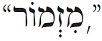
THE SUPERSCRIPTION IN EACH OF THE PSALMS in this collection (Pss 138–45) includes the phrase “Of David” (ledawid). There are three other “David” collections in the Psalter. Its Books 1 and 2 contain two large collections that include David in the superscription (Pss 3–41; 51–72) and culminate with a reference to the “prayers of David” in 72:20. The third “David” collection is comprised of Psalms 108–10. Similar to the other psalms in this final Davidic collection, this psalm includes the superscription “Of David” (ledawid). On the figure of David in the final Davidic collection see Psalm 138, “Heading.” The superscription also includes the term mizmor, “a psalm,” which refers to a song meant to be sung with instrumental accompaniment.5
In Book 5 the title is assigned to Psalms 108–10, the first Davidic collection therein, as well as to Psalms 139–41 and 143 in the final Davidic collection.
Bridging Contexts
IN HIS BOOK
SEEING THE PSALMS
, William Brown argues that the two defining metaphors of the Psalter are those of “refuge” and “pathway.”15
Both metaphorical images possess a didactic function meant to assist the petitioner in negotiating life amid a complex world. Brown notes that the image of “pathway” is frequently linked with that of torah, thus suggesting to the observant reader that Israel’s way in the world (i.e., the people’s moral conduct) and God’s ways (i.e., torah) are inextricably linked (e.g., Pss 119:29, 105).16
Yet as the psalms testify, to walk faithfully as the people of God is never easy in a world fraught with danger. The lament psalms give voice to this challenge. Brown explains that the metaphor of the pathway
lends itself to conveying the struggles the prayer faces within a world ravaged by chaos in all its manifestations as he or she seeks a way through, as well as a way out, a way to preserve one’s dignity, hope, sanity and even one’s life amid demoralizing and debilitating forces.17
Living in the way (torah) of God is complicated by what one encounters on the way. In Psalm 141 the psalmist stresses his desire to live in the way of God while also acknowledging those matters which bedevil that pursuit. In verses 3–5 the psalmist confesses that the temptation is great, very great, to turn from the way of God and “take part in wicked deeds.” The temptation to “eat their delicacies” is rich indeed. The psalmist needs the instructive care of God (v. 4) and his covenant community (v. 5) to turn aside from such temptations.
These temptations, however, stem not from apathy or simple distraction but from the vagaries of life that threaten to destabilize one’s perception of reality. Clearly the psalmist perceives that the wicked ones and evildoers have power. They clutter the paths with traps and snares (v. 9) that threaten to capture the psalmist or the community. Moreover, as the ones with power they have brought the community dangerously close to death and Sheol (v. 7).
So how does a person stay on the way amid such complicated and complicating factors? As suggested above, the metaphors of pathway and refuge are inextricably linked in the Psalter, but they are not interchangeable; rather, as Brown has explained, “the direction of the ‘pathway’ is set resolutely toward ‘refuge,’ the locus of divine protection.”18
In verse 8 the psalmist turns his eyes upon God and declares, “in you I take refuge.” One resists the temptations to turn from the pathway by acknowledging the refuge offered by the God of the covenant. One perseveres amid the obstructions on the pathway by recognizing that her or his hope rests in the protective care found only in God’s refuge.
Contemporary Significance
AS IN THE PSALTER, the image of the way plays a central role in the writings of the New Testament, particularly the Gospels. From the opening lines of the Gospel of Mark, the image of the “way” weaves throughout the remainder of the book. In Mark 1:2–3 the writer quotes Isaiah twice in reference to John the Baptist’s preparing the “way for the Lord.” In the center of the book (chs. 8–10) the writer recounts stories of Jesus and the disciples “on the way” (en tē hodon), thus suggesting that the way of Jesus and the way of his disciples are to be inextricably linked.19
This connection between the way of Jesus and the way of discipleship was not lost on the early church. Six times in the book of Acts the followers of Jesus are referred to as the people of “the Way” (Acts 9:2; 19:8, 23; 22:4; 24:14, 22). The church understood well that our way is his way, or perhaps framed differently, his way is meant to become our way.
In the Gospel of John, Jesus refers to himself as the “Way” in the sixth of his seven “I Am” declarations. Eugene Peterson opines that this statement “is among his most memorable and frequently quoted statements.” To that rather optimistic assessment Peterson responds, “it is also among the most frequently dismissed in the present-day culture of North America.”20
How can both evaluations be true—that Jesus’ statement is both the most memorable and the most dismissed? If we know Jesus is the Way, then why does his way not become our way?
Perhaps in the twenty-first century we are not so different from the psalmist in Psalm 141. The challenge to walk in the way of God remains before us; this challenge is so great that at times the choice to enter the wide gate seems preferable to negotiating our way through the narrow one (Matt 7:13–14). Like the psalmist, on any given day we may perceive there is a chasm that exists between God and us; the vagaries of life have overwhelmed us, and we feel as though God stands at a distance. We feel lost and awash in uncertainty. And so we wonder. We wonder whether the wide gate really does “lead to destruction,” and we ponder whether it is all that necessary to choose the narrow gate to find life.
In those moments we would do well to reflect on Psalm 141. For the psalmist, temptation and despair have mingled to create a perfect storm. In those stormy moments, the choice to “take part in wicked deeds” (v. 4) and choose the wayward path seems almost intuitive. Yet the psalmist chooses otherwise. Although his pathway is littered with traps and snares, temptations and despair, he fixes his eyes upon God and musters the courage to declare, “in you I take refuge” (v. 8).
For those of us who truly desire for his way to become our way, we must do likewise. We must forsake the wide gate by setting aside the temptations and despair that threaten to overwhelm us and set our eyes upon God.
Original Meaning
Petition to be Heard (141:1–2)
IN THE OPENING STROPHE THE PSALMIST uses standard petitionary language. The request in verse 1b for Yahweh to “hear me” (literally, “give ear to me”) frequently stands in the opening line of psalms (e.g., Pss 5:1; 17:1; 55:1; 78:1; 80:1). The opening phrase “I call to you” (first-person singular form of qara’) occurs in a number of texts in the Psalter but almost never in the opening line of a psalm (e.g., Pss 17:6; 31:17; 86:7; 88:9). The only place where this exact same form of the verb (first-person singular form of qara’) appears in a psalm’s opening line is in Psalm 130:1, another psalm in which the psalmist is concerned about matters “within.”
In Psalm 141:1 the psalmist asks that Yahweh “come quickly to me.” The verb hus means “to hasten” or “to hurry,” and in the Psalter this verb often appears together with ‘ezrah (“help”) plus the first-person singular suffix. Thus, the phrase typically reads, “Come quickly to help me” (cf. Pss 22:19; 38:22; 40:13; 70:1; 71:12). In Psalm 141, however, the noun ‘ezrah, “help,” is absent. The psalmist simply pleads, “Come quickly to me.” Psalm 140 concluded with the confession that the upright will (eventually) live in God’s presence (v. 14). In Psalm 141 the psalmist acknowledges the challenges that remain, including the sense that he remains apart from the presence of God. The call to God and the request that God “give ear” to the psalmist, coupled with his plea for Yahweh to “come quickly” to him, suggests that the psalmist perceives a spatial distance, a chasm between himself and God. To overcome that perceived chasm “the transcendent God is asked to become a God of presence.”6
Bridging Contexts
IN HIS BOOK
SEEING THE PSALMS
, William Brown argues that the two defining metaphors of the Psalter are those of “refuge” and “pathway.”15
Both metaphorical images possess a didactic function meant to assist the petitioner in negotiating life amid a complex world. Brown notes that the image of “pathway” is frequently linked with that of torah, thus suggesting to the observant reader that Israel’s way in the world (i.e., the people’s moral conduct) and God’s ways (i.e., torah) are inextricably linked (e.g., Pss 119:29, 105).16
Yet as the psalms testify, to walk faithfully as the people of God is never easy in a world fraught with danger. The lament psalms give voice to this challenge. Brown explains that the metaphor of the pathway
lends itself to conveying the struggles the prayer faces within a world ravaged by chaos in all its manifestations as he or she seeks a way through, as well as a way out, a way to preserve one’s dignity, hope, sanity and even one’s life amid demoralizing and debilitating forces.17
Living in the way (torah) of God is complicated by what one encounters on the way. In Psalm 141 the psalmist stresses his desire to live in the way of God while also acknowledging those matters which bedevil that pursuit. In verses 3–5 the psalmist confesses that the temptation is great, very great, to turn from the way of God and “take part in wicked deeds.” The temptation to “eat their delicacies” is rich indeed. The psalmist needs the instructive care of God (v. 4) and his covenant community (v. 5) to turn aside from such temptations.
These temptations, however, stem not from apathy or simple distraction but from the vagaries of life that threaten to destabilize one’s perception of reality. Clearly the psalmist perceives that the wicked ones and evildoers have power. They clutter the paths with traps and snares (v. 9) that threaten to capture the psalmist or the community. Moreover, as the ones with power they have brought the community dangerously close to death and Sheol (v. 7).
So how does a person stay on the way amid such complicated and complicating factors? As suggested above, the metaphors of pathway and refuge are inextricably linked in the Psalter, but they are not interchangeable; rather, as Brown has explained, “the direction of the ‘pathway’ is set resolutely toward ‘refuge,’ the locus of divine protection.”18
In verse 8 the psalmist turns his eyes upon God and declares, “in you I take refuge.” One resists the temptations to turn from the pathway by acknowledging the refuge offered by the God of the covenant. One perseveres amid the obstructions on the pathway by recognizing that her or his hope rests in the protective care found only in God’s refuge.
Contemporary Significance
AS IN THE PSALTER, the image of the way plays a central role in the writings of the New Testament, particularly the Gospels. From the opening lines of the Gospel of Mark, the image of the “way” weaves throughout the remainder of the book. In Mark 1:2–3 the writer quotes Isaiah twice in reference to John the Baptist’s preparing the “way for the Lord.” In the center of the book (chs. 8–10) the writer recounts stories of Jesus and the disciples “on the way” (en tē hodon), thus suggesting that the way of Jesus and the way of his disciples are to be inextricably linked.19
This connection between the way of Jesus and the way of discipleship was not lost on the early church. Six times in the book of Acts the followers of Jesus are referred to as the people of “the Way” (Acts 9:2; 19:8, 23; 22:4; 24:14, 22). The church understood well that our way is his way, or perhaps framed differently, his way is meant to become our way.
In the Gospel of John, Jesus refers to himself as the “Way” in the sixth of his seven “I Am” declarations. Eugene Peterson opines that this statement “is among his most memorable and frequently quoted statements.” To that rather optimistic assessment Peterson responds, “it is also among the most frequently dismissed in the present-day culture of North America.”20
How can both evaluations be true—that Jesus’ statement is both the most memorable and the most dismissed? If we know Jesus is the Way, then why does his way not become our way?
Perhaps in the twenty-first century we are not so different from the psalmist in Psalm 141. The challenge to walk in the way of God remains before us; this challenge is so great that at times the choice to enter the wide gate seems preferable to negotiating our way through the narrow one (Matt 7:13–14). Like the psalmist, on any given day we may perceive there is a chasm that exists between God and us; the vagaries of life have overwhelmed us, and we feel as though God stands at a distance. We feel lost and awash in uncertainty. And so we wonder. We wonder whether the wide gate really does “lead to destruction,” and we ponder whether it is all that necessary to choose the narrow gate to find life.
In those moments we would do well to reflect on Psalm 141. For the psalmist, temptation and despair have mingled to create a perfect storm. In those stormy moments, the choice to “take part in wicked deeds” (v. 4) and choose the wayward path seems almost intuitive. Yet the psalmist chooses otherwise. Although his pathway is littered with traps and snares, temptations and despair, he fixes his eyes upon God and musters the courage to declare, “in you I take refuge” (v. 8).
For those of us who truly desire for his way to become our way, we must do likewise. We must forsake the wide gate by setting aside the temptations and despair that threaten to overwhelm us and set our eyes upon God.
Original Meaning
Request for Aid in Resisting Temptation (141:3–6)
IN THIS STROPHE THE PSALMIST REQUESTS three things—two provided by God, and a third by a fellow community member. The poet’s request consists in the divine guarding of his mouth and keeping of his heart from following evil so that he will not act accordingly. Then in verse 5a–b he asks that someone correct his paths. The section concludes with the affirmation that the ways of the wicked shall be met with God’s just judgment (v. 6).
Set a guard over my mouth. The language of Psalm 141:3 echoes the language found in Psalm 140. In Psalm 140:4 the psalmist asks God to keep watch (shamar) over him and to protect (natsar) him from the “hands” of the wicked. In Psalm 141:3 the poet uses both verbs once more, but this time the action is directed toward the psalmist himself. He asks God to keep him from falling under the influence of those around him (i.e., the evildoers [v. 4c]). In verse 3b the psalmist refers to the “door” (dal) of his lips.7
The use of dal in this verse, however, may serve two functions. According to HALOT, dal I means “door,” but dal II means “poor” or “helpless,” with dal II being one of the primary terms in the “poor” word field.8
Thus dal I and dal II are homophones but with vastly different meanings; yet here, as Buysch has suggested, both meanings may be in view.9
Clearly the psalmist is referring to his lips as the “door” to his mouth, as inferred from the parallel claim in verse 3a, but the reference to dal in verse 3 also serves to establish a connection with the theological claims made in Psalm 140:12—claims associated with a theology of the poor.10
Do not let my heart be drawn to what is evil. In Psalm 140:2 the psalmist lamented how the wicked devise evil plans in their hearts and stir up war every day. In Psalm 141:4 the poet petitions Yahweh to keep his heart from being drawn to participation in wicked deeds with the evildoers even though the temptation is great. In verse 4d the writer mentions their “delicacies” (i.e., fine food). The “evildoers” seem to have the persuasive power to beckon others to join them in evil deeds; their fine foods and luxurious living are evidence of their social privilege. The psalmist implores Yahweh to aid him in resisting such alluring circumstances. Goldingay suggests that the language in verses 3 and 4 “point[s] to a strong understanding of the way Yhwh is involved in our moral life.”11
From planning in his heart to speaking with his mouth and, finally, to carrying out his actions, the psalmist requests that God be at work to guide him in the right way.
Let a righteous man strike me. In verse 5a–b the psalmist extends his wish for correction and guidance but shifts his focus to the community as a source of corrective wisdom. The “righteous man” (tsaddiq) is a collective noun referring to any righteous person from the community who can provide instruction. Repeatedly in the wisdom literature the sage recommends that the naïve and puerile be struck with sticks as a corrective measure (e.g., Prov 10:13; 13:24; 26:3). In Proverbs 19:25 the sage suggests that the scoffer deserves a lash in order to learn prudence, while the discerning should receive a rebuke. (The same word is used in Ps 141:5b.) While such actions appear shockingly severe to the modern reader, they do illustrate the seriousness with which the community took wise living.
Their rulers will be thrown down from the cliffs. Here the psalmist refers to the leaders of the evildoers and suggests that their waywardness shall be judged. The word “thrown down” (shamat) means to “let loose” or “fall” in the qal stem; the niphal form occurs only here in the Old Testament. While the niphal is commonly rendered as a passive, it can be used to communicate a causative-reflexive sense (e.g., Exod 6:3; Ruth 3:3).12
In these instances the subject causes the action to happen to himself. For example, Isaiah 19:21 reads, “So the LORD will make himself known.” Thus Psalm 141:6a might be better rendered literally, “Their rulers will make themselves fall into the hands of the rock [sela‘].” In the Psalter the term sela‘, “rock,” typically functions as a metaphor for God (cf. Pss 18:2; 31:3; 42:9; 71:3).13
Thus Psalm 141:6a may actually resemble a wisdom saying: “their rulers will make themselves fall into the hands of the Rock [i.e., God].” The foolish actions of the rulers, that is the evildoers and the wicked (v. 4), will lead them into the hands of God for judgment. Verse 6b suggests that, as a result, they will learn that God’s words are true: “the wicked will not stand in the judgment” before God (Ps 1:5). The closing verse of the psalm appears to confirm this reading (a causative-reflexive sense) as well.
Bridging Contexts
IN HIS BOOK
SEEING THE PSALMS
, William Brown argues that the two defining metaphors of the Psalter are those of “refuge” and “pathway.”15
Both metaphorical images possess a didactic function meant to assist the petitioner in negotiating life amid a complex world. Brown notes that the image of “pathway” is frequently linked with that of torah, thus suggesting to the observant reader that Israel’s way in the world (i.e., the people’s moral conduct) and God’s ways (i.e., torah) are inextricably linked (e.g., Pss 119:29, 105).16
Yet as the psalms testify, to walk faithfully as the people of God is never easy in a world fraught with danger. The lament psalms give voice to this challenge. Brown explains that the metaphor of the pathway
lends itself to conveying the struggles the prayer faces within a world ravaged by chaos in all its manifestations as he or she seeks a way through, as well as a way out, a way to preserve one’s dignity, hope, sanity and even one’s life amid demoralizing and debilitating forces.17
Living in the way (torah) of God is complicated by what one encounters on the way. In Psalm 141 the psalmist stresses his desire to live in the way of God while also acknowledging those matters which bedevil that pursuit. In verses 3–5 the psalmist confesses that the temptation is great, very great, to turn from the way of God and “take part in wicked deeds.” The temptation to “eat their delicacies” is rich indeed. The psalmist needs the instructive care of God (v. 4) and his covenant community (v. 5) to turn aside from such temptations.
These temptations, however, stem not from apathy or simple distraction but from the vagaries of life that threaten to destabilize one’s perception of reality. Clearly the psalmist perceives that the wicked ones and evildoers have power. They clutter the paths with traps and snares (v. 9) that threaten to capture the psalmist or the community. Moreover, as the ones with power they have brought the community dangerously close to death and Sheol (v. 7).
So how does a person stay on the way amid such complicated and complicating factors? As suggested above, the metaphors of pathway and refuge are inextricably linked in the Psalter, but they are not interchangeable; rather, as Brown has explained, “the direction of the ‘pathway’ is set resolutely toward ‘refuge,’ the locus of divine protection.”18
In verse 8 the psalmist turns his eyes upon God and declares, “in you I take refuge.” One resists the temptations to turn from the pathway by acknowledging the refuge offered by the God of the covenant. One perseveres amid the obstructions on the pathway by recognizing that her or his hope rests in the protective care found only in God’s refuge.
Contemporary Significance
AS IN THE PSALTER, the image of the way plays a central role in the writings of the New Testament, particularly the Gospels. From the opening lines of the Gospel of Mark, the image of the “way” weaves throughout the remainder of the book. In Mark 1:2–3 the writer quotes Isaiah twice in reference to John the Baptist’s preparing the “way for the Lord.” In the center of the book (chs. 8–10) the writer recounts stories of Jesus and the disciples “on the way” (en tē hodon), thus suggesting that the way of Jesus and the way of his disciples are to be inextricably linked.19
This connection between the way of Jesus and the way of discipleship was not lost on the early church. Six times in the book of Acts the followers of Jesus are referred to as the people of “the Way” (Acts 9:2; 19:8, 23; 22:4; 24:14, 22). The church understood well that our way is his way, or perhaps framed differently, his way is meant to become our way.
In the Gospel of John, Jesus refers to himself as the “Way” in the sixth of his seven “I Am” declarations. Eugene Peterson opines that this statement “is among his most memorable and frequently quoted statements.” To that rather optimistic assessment Peterson responds, “it is also among the most frequently dismissed in the present-day culture of North America.”20
How can both evaluations be true—that Jesus’ statement is both the most memorable and the most dismissed? If we know Jesus is the Way, then why does his way not become our way?
Perhaps in the twenty-first century we are not so different from the psalmist in Psalm 141. The challenge to walk in the way of God remains before us; this challenge is so great that at times the choice to enter the wide gate seems preferable to negotiating our way through the narrow one (Matt 7:13–14). Like the psalmist, on any given day we may perceive there is a chasm that exists between God and us; the vagaries of life have overwhelmed us, and we feel as though God stands at a distance. We feel lost and awash in uncertainty. And so we wonder. We wonder whether the wide gate really does “lead to destruction,” and we ponder whether it is all that necessary to choose the narrow gate to find life.
In those moments we would do well to reflect on Psalm 141. For the psalmist, temptation and despair have mingled to create a perfect storm. In those stormy moments, the choice to “take part in wicked deeds” (v. 4) and choose the wayward path seems almost intuitive. Yet the psalmist chooses otherwise. Although his pathway is littered with traps and snares, temptations and despair, he fixes his eyes upon God and musters the courage to declare, “in you I take refuge” (v. 8).
For those of us who truly desire for his way to become our way, we must do likewise. We must forsake the wide gate by setting aside the temptations and despair that threaten to overwhelm us and set our eyes upon God.
Original Meaning
Plea for Deliverance (141:7–10)
IN THE FINAL STROPHE THE PSALMIST acknowledges the desperate plight of the faithful while confessing that their hope rests solely with God.
As one plows and breaks up the earth. The NIV adds “they will say” at the beginning of verse 7, presumably to suggest that the verse represents the words of the “rulers” mentioned in verse 6. The Hebrew does not include these words, and their insertion actually confuses the flow of the psalm rather than resolving it. Typically, when a psalm moves from singular first-person pronouns (“I,” “my”) to plural forms (“we,” “our”), the move signals a shift in referent from the individual to the community. Rather than interpreting verse 7 as a statement by the rulers, the verse should be understood as coming from the community as they recount the torment experienced at the hands of the wicked. The community laments that, like freshly plowed soil that has clods scattered about, so too have the bones of the righteous been scattered “at the mouth of the grave.” Goldingay notes the image constructed in verse 7: “it is as if the people have been swallowed up by Death, who has then spat out their bare bones and left them.”14
The dire circumstances require the intervention of one greater than the psalmist—or even the community.
But my eyes are fixed on you. In the midst of these bleak circumstances, the psalmist confesses that his eyes are on Yahweh ’adonay, “Sovereign LORD.” In Psalm 123 the poet made a similar confession in referring to God as ’adonay. As there, so here in Psalm 141 the term ’adonay invokes covenantal language. Rather than siding with the community of evildoers, the psalmist has opted to side with God. The psalm opened with his request for God to “come quickly,” and it concludes with the poet’s affirmation that his eyes are fixed on the God who has come near. Because the God of the covenant has come near, the psalmist can take “refuge” in him.
In verse 8b the NIV reads, “do not give me over to death.” The verb ‘arah means “to expose,” and as similarly in English usage, “expose” can refer to “nakedness,” or the term can allude to being “laid bare” or “poured out,” with both referring to death. The latter seems to be the intent of the image in Psalm 141; the psalmist pleads with Yahweh for deliverance so that he would not die from exposure. Because the God of the covenant is his “refuge,” the psalmist has hope. Yahweh ’adonay, the “Sovereign LORD,” will provide his shelter against those who assail him.
Keep me safe. In the final two verses the psalmist invokes the language associated with the hunt metaphor by referring to the traps, snares, and nets also mentioned in Psalm 140:4–5. (On the terms and images associated with the hunt metaphor see the comments on those verses.) Although the opening strophe of the psalm refers to danger “within” (i.e., succumbing to the ways of the wicked), the final strophe highlights the danger “without” (vv. 7, 9).
Let the wicked fall into their own nets. As suggested above, verse 6a can be read, “their rulers will make themselves fall into the hands of the Rock.” Verse 10 expands that reading with the request that the wicked fall into their own nets. The notion of an enemy or wicked person’s falling into a pit or trap laid by that person himself is not unique to Psalm 141 (cf. Ps 9:15). While the wicked writhe in their nets, the psalmist asks to pass by safely.
Bridging Contexts
IN HIS BOOK
SEEING THE PSALMS
, William Brown argues that the two defining metaphors of the Psalter are those of “refuge” and “pathway.”15
Both metaphorical images possess a didactic function meant to assist the petitioner in negotiating life amid a complex world. Brown notes that the image of “pathway” is frequently linked with that of torah, thus suggesting to the observant reader that Israel’s way in the world (i.e., the people’s moral conduct) and God’s ways (i.e., torah) are inextricably linked (e.g., Pss 119:29, 105).16
Yet as the psalms testify, to walk faithfully as the people of God is never easy in a world fraught with danger. The lament psalms give voice to this challenge. Brown explains that the metaphor of the pathway
lends itself to conveying the struggles the prayer faces within a world ravaged by chaos in all its manifestations as he or she seeks a way through, as well as a way out, a way to preserve one’s dignity, hope, sanity and even one’s life amid demoralizing and debilitating forces.17
Living in the way (torah) of God is complicated by what one encounters on the way. In Psalm 141 the psalmist stresses his desire to live in the way of God while also acknowledging those matters which bedevil that pursuit. In verses 3–5 the psalmist confesses that the temptation is great, very great, to turn from the way of God and “take part in wicked deeds.” The temptation to “eat their delicacies” is rich indeed. The psalmist needs the instructive care of God (v. 4) and his covenant community (v. 5) to turn aside from such temptations.
These temptations, however, stem not from apathy or simple distraction but from the vagaries of life that threaten to destabilize one’s perception of reality. Clearly the psalmist perceives that the wicked ones and evildoers have power. They clutter the paths with traps and snares (v. 9) that threaten to capture the psalmist or the community. Moreover, as the ones with power they have brought the community dangerously close to death and Sheol (v. 7).
So how does a person stay on the way amid such complicated and complicating factors? As suggested above, the metaphors of pathway and refuge are inextricably linked in the Psalter, but they are not interchangeable; rather, as Brown has explained, “the direction of the ‘pathway’ is set resolutely toward ‘refuge,’ the locus of divine protection.”18
In verse 8 the psalmist turns his eyes upon God and declares, “in you I take refuge.” One resists the temptations to turn from the pathway by acknowledging the refuge offered by the God of the covenant. One perseveres amid the obstructions on the pathway by recognizing that her or his hope rests in the protective care found only in God’s refuge.
Contemporary Significance
AS IN THE PSALTER, the image of the way plays a central role in the writings of the New Testament, particularly the Gospels. From the opening lines of the Gospel of Mark, the image of the “way” weaves throughout the remainder of the book. In Mark 1:2–3 the writer quotes Isaiah twice in reference to John the Baptist’s preparing the “way for the Lord.” In the center of the book (chs. 8–10) the writer recounts stories of Jesus and the disciples “on the way” (en tē hodon), thus suggesting that the way of Jesus and the way of his disciples are to be inextricably linked.19
This connection between the way of Jesus and the way of discipleship was not lost on the early church. Six times in the book of Acts the followers of Jesus are referred to as the people of “the Way” (Acts 9:2; 19:8, 23; 22:4; 24:14, 22). The church understood well that our way is his way, or perhaps framed differently, his way is meant to become our way.
In the Gospel of John, Jesus refers to himself as the “Way” in the sixth of his seven “I Am” declarations. Eugene Peterson opines that this statement “is among his most memorable and frequently quoted statements.” To that rather optimistic assessment Peterson responds, “it is also among the most frequently dismissed in the present-day culture of North America.”20
How can both evaluations be true—that Jesus’ statement is both the most memorable and the most dismissed? If we know Jesus is the Way, then why does his way not become our way?
Perhaps in the twenty-first century we are not so different from the psalmist in Psalm 141. The challenge to walk in the way of God remains before us; this challenge is so great that at times the choice to enter the wide gate seems preferable to negotiating our way through the narrow one (Matt 7:13–14). Like the psalmist, on any given day we may perceive there is a chasm that exists between God and us; the vagaries of life have overwhelmed us, and we feel as though God stands at a distance. We feel lost and awash in uncertainty. And so we wonder. We wonder whether the wide gate really does “lead to destruction,” and we ponder whether it is all that necessary to choose the narrow gate to find life.
In those moments we would do well to reflect on Psalm 141. For the psalmist, temptation and despair have mingled to create a perfect storm. In those stormy moments, the choice to “take part in wicked deeds” (v. 4) and choose the wayward path seems almost intuitive. Yet the psalmist chooses otherwise. Although his pathway is littered with traps and snares, temptations and despair, he fixes his eyes upon God and musters the courage to declare, “in you I take refuge” (v. 8).
For those of us who truly desire for his way to become our way, we must do likewise. We must forsake the wide gate by setting aside the temptations and despair that threaten to overwhelm us and set our eyes upon God.

 HALOT 1:566.