Original Meaning
Heading (143:0)
THE SUPERSCRIPTION IN EACH of the psalms in this collection (Pss 138–45) includes the phrase “Of David” (ledawid). There are three other Davidic collections in the Psalter. Books 1 and 2 contain two large collections that include “David” in the superscription (Pss 3–41; 51–72) and culminate with a reference to the “prayers of David” in Ps 72:20. The third Davidic collection appears in Psalms 108–10. On the figure of David in the final Davidic collection see Psalm 138, “Heading.” The superscription also includes the term mizmor, “a psalm.” The term refers to a song meant to be sung with instrumental accompaniment. Within Book 5 the title is assigned to Psalms 108–10, the first Davidic collection in Book 5, as well as to Psalms 139–41 and 143 in the final David collection.
Bridging Contexts
COVENANTAL FAITHFULNESS. Psalm 143 begins and concludes with references to God’s covenantal faithfulness, a faithfulness that is manifestly active in the world. In the opening verse the psalmist petitions Yahweh to answer him “in your faithfulness” and “righteousness.” Both phrases begin with the preposition be, often translated in a locative sense (e.g., “I have heard that there is grain in Egypt,” Gen 42:2). Were the preposition understood similarly in Psalm 143:1, God would be “depicted as clothed, dwelling or subsisting in faithfulness and righteousness”19
Rather than a locative sense, the preposition should be understood instrumentally. God demonstrates his covenantal commitment by or through his faithfulness and righteousness. These terms are not merely static characteristics or traits—they are commitments borne out in action. It is for this reason that the psalmist remembers “the days of long ago” (v. 5a); they are filled with the works of God, the very evidence of his covenantal faithfulness.
The ending of Psalm 143 mirrors its beginning with two prepositional phrases, both also beginning with be. The first phrase repeats verse 1c, “by your righteousness,” and the second phrase incorporates the explicitly covenantal term hesed, “by your unfailing love.” As similarly in the opening of the psalm, both prepositional phrases are associated with God’s action. In verse 11b the psalmist petitions to be brought out of trouble, and in the second he petitions God to silence his enemies. All four prepositional phrases (vv. 1, 11, 12) suggest that the psalmist does not envision covenantal faithfulness in terms of passive acknowledgment but instead in terms of active presence.
As mentioned in the Original Meaning section, two additional phrases—or more precisely, confessions—reinforce the significance of covenantal faithfulness in this psalm. The poem concludes with the psalmist confessing, “I am your servant,” and that confession is matched by his earlier confession in verse 10b, “you are my God.” Although the poet is likely writing in the postexilic period, his confessions echo those made throughout Israel’s history. In Exodus 6:7 Yahweh declares that he will take Israel as his people and he will be their God. The more formulaic confession, “I will be your God and you will be my people,” appears repeatedly in the Old Testament, but particularly in the writings of the exilic prophets (Jer 7:23; 11:4; 24:7; 30:22; 31:1; 31:33; 32:38; Ezek 11:20; 14:11; 34:30; 36:27–28; 37:23, 37). In the face of perilous circumstances, the need for such a confession became particularly acute. Whether being carried off to exile in shackles or being crushed to the ground (Ps 143:3), such moments render one utterly powerless. Yet the covenantal God renders such dispair null and void. By invoking this covenantal confession and calling on Yahweh to act in righteousness, the psalmist leans forward in hope and in the belief that Yahweh will act once more to redeem his people from the pit (v. 7).
Human sinfulness. Psalm 143:2b makes a declarative statement concerning human sinfulness: “no one living is righteous before you.” The statement is striking on two fronts: the reference to individual judgment and the sweeping assessment of human sinfulness. Generally speaking, judgment in the Old Testament tends to be corporate, whether issued on a household (Josh 7), a tribe (Judg 20), the nation of Israel (2 Kgs 21), or greater still, the foreign nations. There are only a few Old Testament texts in which God judges an individual (Job 9:32; 14:3; 22:4), with the closest parallel text occurring in Eccl 11:19, “know that for all these things God will bring you into judgment” (cf. 12:14).
Second, Psalm 143:2 clearly implies that not one person can be considered righteous before God. A nearly identical claim occurs in Psalm 130:3–4. In that psalm the poet asks, “If you, LORD, kept a record of sins, LORD, who could stand?” Both texts refer to the pervasive nature of human sinfulness. Later Jewish writings appear to allude to this notion as well, particularly as formulated in Psalm 143. In 1 Enoch 81:5 the seven holy ones command Enoch to explain to his children that “no flesh is righteous before the Lord,” and among the Dead Sea Scrolls the Hymns offer a similar assessment of the human condition.20
In addition to its use in the earlier literature in the Second Temple period, Psalm 143:2b also appears in the New Testament. Paul makes significant use of the psalm in his letter to the church at Rome. Following a lengthy catena of Old Testament texts alluding to human sinfulness (Rom 3:10–18), Paul offers this summary conclusion in verse 20: “Therefore no one will be declared righteous in God’s sight.” Paul’s paraphrase of Psalm 143:2b serves to reinforce his claim concerning human sinfulness, a claim central to his theological argument in the book of Romans.
The reference to human sinfulness in Psalm 143:2b must be heard in the light of the emphasis on covenantal faithfulness mentioned above. The psalmist does not make this confession simply to acknowledge the waywardness of humanity; instead, he declares that because “no one living is righteous before” God, humans cannot make demands on God to act in their behalf. Were humans carefully scrutinized before God, they would be found wanting as covenantal partners and certainly not in a position to make demands. Whatever action God chooses to take is the result of his mercy carried out through his faithfulness and righteousness (v. 1).
Thankfully, human sinfulness does not have the final word for the psalmist or for Paul. For the psalmist, not all hope is lost. Although righteousness proves impossible apart from God, for those faithful to the covenant, there is always the promise of mercy.21
Neither is hope lost for Paul. He boldly proclaims that righteousness is impossible apart from God—but it is “given through faith in Jesus Christ to all who believe” (Rom 3:22).22
Contemporary Significance
ALTHOUGH PSALM 143 uses language traditionally associated with a lament (e.g., “hear,” “cry,” “answer me”), the psalm also employs two images worth considering, namely, those of confinement and open spaces. Each year research firms will release surveys and statistics explaining why people no longer choose to go to church or participate in a faith tradition. Among the many responses reported, some will express people’s frustration over the church’s “rules” and complain that “religion” is too confining or restricting for them. They want to be free to do as they choose.
Interestingly in Psalm 143, confinement comes not from the demands of God but rather from the crushing demands of the world that cause our spirits to faint. Regardless of the source, these kinds of experiences can leave our hearts “dismayed” (v. 4b) and our lives in darkness (v. 3c). The psalmist is clear that the desire to be “free” can only be realized in relationship to God. Those who live fully into that relationship with God (v. 10b) will be led onto “level ground.” While the notion of level ground signals the absence of hills and rugged terrain, it also conjurs up images of wide open spaces. A person does not know this kind of freedom apart from God.
The very environment that we think frees us actually confines us, while our only hope for true freedom is found in our willingness to enter into a relationship with God—a relationship initiated and sustained by God. It is in this relationship that we discover a hopeful word for our lamenting cries. It is in this relationship that we replace a vision of life in the pit with that of a pathway on level ground. Ultimately, it is in this relationship that we experience both mercy and freedom. As Paul confesses, “It is for freedom that Christ has set us free” (Gal 5:1).
Original Meaning
Opening Petitions (143:1–2)
THE PSALM OPENS IN VERSE 1 with three petitions meant to move Yahweh to action in the poet’s behalf. By contrast, verse 2 calls Yahweh to inaction. The petitions both for action and inaction reflect the psalmist’s longing for the mercy of God.
LORD, hear my prayer. The first two verbs, “hear” (shama‘) and “listen,” or literally, “give ear” (’azan), are common terms in the language of lament. One and sometimes both terms frequently appear in the opening lines of a psalm (Pss 4:1; 28:2; 40:1; 61:1; 64:1; 65:2; 102:1); in several texts the two terms stand together (Pss 4:1; 17:1; 49:1; 54:2). The third petition asks that Yahweh answer (‘anah) the psalmist (Ps 143:1d). In making this request, the poet does more than seek a verbal response from God—he petitions Yahweh to act. In Psalm 65:5 the connection between “asking” and “acting” is even more explicit: “You answer us with awesome and righteous deeds.”
Cry for mercy. In verse 1b the psalmist asks that God give ear to his cry for mercy. The word “mercy” comes from the verbal root hanan and plays an important role in petitionary texts. (More than half the occurrences of the verb appear in the book of Psalms.) The term itself implies granting favor or being gracious, hence the translation “mercy” in the NIV. In Exodus 34:6 Yahweh self-describes as compassionate (rahum) and gracious/merciful (hannun). This “graciousness formula” in Exodus 34 testifies that God’s nature “is such that he is disposed to respond in merciful ways to the world.”3
In short, hannun
is part of God’s identity. Thus, the psalmist’s cry for mercy in Psalm 143:1 is much more than a desperate plea for help—it is a request for God to be God.
Do not bring your servant into judgment. Some lament psalms include a protestation of innocence (e.g., Ps 7), but in Psalm 143 the poet attempts no such argument. He acknowledges human sinfulness. While other psalms refer to sin, its context seems localized in referring to the actions of the particular psalmist (Pss 25:7; 51:6–7). In contrast, Psalm 143 appears to be talking about human sinfulness writ large: “no one living is righteous before you.” The psalmist understands that he, like all humans, has done nothing to garner God’s aid, only God’s judgment. Nonetheless, he implores Yahweh to withhold his judgment and instead deliver him from his enemies (vv. 3–4). The request for Yahweh’s aid and his withholding of judgment points back to the psalmist’s initial cry in verse 1b for the mercy of God.
Bridging Contexts
COVENANTAL FAITHFULNESS. Psalm 143 begins and concludes with references to God’s covenantal faithfulness, a faithfulness that is manifestly active in the world. In the opening verse the psalmist petitions Yahweh to answer him “in your faithfulness” and “righteousness.” Both phrases begin with the preposition be, often translated in a locative sense (e.g., “I have heard that there is grain in Egypt,” Gen 42:2). Were the preposition understood similarly in Psalm 143:1, God would be “depicted as clothed, dwelling or subsisting in faithfulness and righteousness”19
Rather than a locative sense, the preposition should be understood instrumentally. God demonstrates his covenantal commitment by or through his faithfulness and righteousness. These terms are not merely static characteristics or traits—they are commitments borne out in action. It is for this reason that the psalmist remembers “the days of long ago” (v. 5a); they are filled with the works of God, the very evidence of his covenantal faithfulness.
The ending of Psalm 143 mirrors its beginning with two prepositional phrases, both also beginning with be. The first phrase repeats verse 1c, “by your righteousness,” and the second phrase incorporates the explicitly covenantal term hesed, “by your unfailing love.” As similarly in the opening of the psalm, both prepositional phrases are associated with God’s action. In verse 11b the psalmist petitions to be brought out of trouble, and in the second he petitions God to silence his enemies. All four prepositional phrases (vv. 1, 11, 12) suggest that the psalmist does not envision covenantal faithfulness in terms of passive acknowledgment but instead in terms of active presence.
As mentioned in the Original Meaning section, two additional phrases—or more precisely, confessions—reinforce the significance of covenantal faithfulness in this psalm. The poem concludes with the psalmist confessing, “I am your servant,” and that confession is matched by his earlier confession in verse 10b, “you are my God.” Although the poet is likely writing in the postexilic period, his confessions echo those made throughout Israel’s history. In Exodus 6:7 Yahweh declares that he will take Israel as his people and he will be their God. The more formulaic confession, “I will be your God and you will be my people,” appears repeatedly in the Old Testament, but particularly in the writings of the exilic prophets (Jer 7:23; 11:4; 24:7; 30:22; 31:1; 31:33; 32:38; Ezek 11:20; 14:11; 34:30; 36:27–28; 37:23, 37). In the face of perilous circumstances, the need for such a confession became particularly acute. Whether being carried off to exile in shackles or being crushed to the ground (Ps 143:3), such moments render one utterly powerless. Yet the covenantal God renders such dispair null and void. By invoking this covenantal confession and calling on Yahweh to act in righteousness, the psalmist leans forward in hope and in the belief that Yahweh will act once more to redeem his people from the pit (v. 7).
Human sinfulness. Psalm 143:2b makes a declarative statement concerning human sinfulness: “no one living is righteous before you.” The statement is striking on two fronts: the reference to individual judgment and the sweeping assessment of human sinfulness. Generally speaking, judgment in the Old Testament tends to be corporate, whether issued on a household (Josh 7), a tribe (Judg 20), the nation of Israel (2 Kgs 21), or greater still, the foreign nations. There are only a few Old Testament texts in which God judges an individual (Job 9:32; 14:3; 22:4), with the closest parallel text occurring in Eccl 11:19, “know that for all these things God will bring you into judgment” (cf. 12:14).
Second, Psalm 143:2 clearly implies that not one person can be considered righteous before God. A nearly identical claim occurs in Psalm 130:3–4. In that psalm the poet asks, “If you, LORD, kept a record of sins, LORD, who could stand?” Both texts refer to the pervasive nature of human sinfulness. Later Jewish writings appear to allude to this notion as well, particularly as formulated in Psalm 143. In 1 Enoch 81:5 the seven holy ones command Enoch to explain to his children that “no flesh is righteous before the Lord,” and among the Dead Sea Scrolls the Hymns offer a similar assessment of the human condition.20
In addition to its use in the earlier literature in the Second Temple period, Psalm 143:2b also appears in the New Testament. Paul makes significant use of the psalm in his letter to the church at Rome. Following a lengthy catena of Old Testament texts alluding to human sinfulness (Rom 3:10–18), Paul offers this summary conclusion in verse 20: “Therefore no one will be declared righteous in God’s sight.” Paul’s paraphrase of Psalm 143:2b serves to reinforce his claim concerning human sinfulness, a claim central to his theological argument in the book of Romans.
The reference to human sinfulness in Psalm 143:2b must be heard in the light of the emphasis on covenantal faithfulness mentioned above. The psalmist does not make this confession simply to acknowledge the waywardness of humanity; instead, he declares that because “no one living is righteous before” God, humans cannot make demands on God to act in their behalf. Were humans carefully scrutinized before God, they would be found wanting as covenantal partners and certainly not in a position to make demands. Whatever action God chooses to take is the result of his mercy carried out through his faithfulness and righteousness (v. 1).
Thankfully, human sinfulness does not have the final word for the psalmist or for Paul. For the psalmist, not all hope is lost. Although righteousness proves impossible apart from God, for those faithful to the covenant, there is always the promise of mercy.21
Neither is hope lost for Paul. He boldly proclaims that righteousness is impossible apart from God—but it is “given through faith in Jesus Christ to all who believe” (Rom 3:22).22
Contemporary Significance
ALTHOUGH PSALM 143 uses language traditionally associated with a lament (e.g., “hear,” “cry,” “answer me”), the psalm also employs two images worth considering, namely, those of confinement and open spaces. Each year research firms will release surveys and statistics explaining why people no longer choose to go to church or participate in a faith tradition. Among the many responses reported, some will express people’s frustration over the church’s “rules” and complain that “religion” is too confining or restricting for them. They want to be free to do as they choose.
Interestingly in Psalm 143, confinement comes not from the demands of God but rather from the crushing demands of the world that cause our spirits to faint. Regardless of the source, these kinds of experiences can leave our hearts “dismayed” (v. 4b) and our lives in darkness (v. 3c). The psalmist is clear that the desire to be “free” can only be realized in relationship to God. Those who live fully into that relationship with God (v. 10b) will be led onto “level ground.” While the notion of level ground signals the absence of hills and rugged terrain, it also conjurs up images of wide open spaces. A person does not know this kind of freedom apart from God.
The very environment that we think frees us actually confines us, while our only hope for true freedom is found in our willingness to enter into a relationship with God—a relationship initiated and sustained by God. It is in this relationship that we discover a hopeful word for our lamenting cries. It is in this relationship that we replace a vision of life in the pit with that of a pathway on level ground. Ultimately, it is in this relationship that we experience both mercy and freedom. As Paul confesses, “It is for freedom that Christ has set us free” (Gal 5:1).
Original Meaning
Formal Complaint (143:3–6)
FOLLOWING THE PETITIONS IN VERSES 1–2, the psalmist outlines the threats that currently plague him. The language of threat involves metaphors and imagery associated with death (vv. 3–4), thus indicating the perceived gravity of the situation. The rehearsal of the threats is followed by a recollection of the past (v. 5) and then a brief description of the psalmist’s posture of prayer in the present (v. 6).
The enemy pursues . . . crushes. By making explicit use of the “grave” metaphor in verse 3, the psalmist signals the severity of the threat. In verse 3a he laments that the enemies have pursued him (radap). His use of radap recalls the same word used in reference to the enemies in Psalm 142:6b. This verbal parallel between the two psalms further connects the two texts and their emphasis on powerlessness and death. The second line in Psalm 143:3 reinforces the nature of the threat with the use of the verb “to crush” (daka’). Kathrin Liess has argued that the verb refers to the “crushing power” of the enemy and serves as a typical image of death in other contexts (e.g., Ps 94:5; Job 4:19; 5:4; Lam 3:34).4
The clearest references to death occur in verse 3c–d of Psalm 143 with the mention of darkness (mahashakkim) and the dead (metim). In this verse the word “darkness” occurs in the plural form, a form that typically implies a reference “to the realm of the dead . . . as a place of darkness.”5
The reference to the “dead” at the end of verse 3 further confirms the association of “darkness” with death. The image in verse 3 is clear: the psalmist is being pursued, crushed to the ground, and relegated to the confines of the dead. Verse 3c–d appears verbatim in Lamentations 3:6, another context associated with death and destruction.
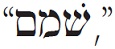
My spirit grows faint within me. Understandably, the circumstances explained in verse 3 have caused the spirit of the psalmist to grow faint (‘atap) and become exceedingly weak, a confession similarly made in Psalms 77:4 and 142:3. The psalmist explains in verse 4b that his heart is “dismayed.” The verb translated as “dismay” (shamam) actually has a much stronger connotation. In the English language “dismay” typically refers to being shocked or surprised, or more narrowly to being concerned or distressed. In Hebrew, shamam can refer to being “horrified” or “appalled.”6
The oppressive nature of the enemies has done far more than leave the psalmist feeling faint and dismayed; the psalmist feels weak and powerless (‘atap) and utterly horrified (shamam) at his present state. This helplessness stands as a backdrop to the psalmist’s posture of prayer in verse 6 and the petitions that comprise the entirety of the second strophe.
I remember the days of long ago. The language in verse 5 echoes the language in Psalm 77:5–6, 12–13. In both psalms (Pss 77 and 143) the poet recalls the past and takes solace in it. He mentions the “works” (po‘al) of God, a reference to the exodus event, as well as the “deeds” (ma‘aseh) of his hands, a reference to God’s creative work. These remembrances of the past do more than simply recall a glorious time—they also inform the present and anticipate the future.7
God’s work in the past prefigures the salvific work yet to come in behalf of the psalmist. This act of remembering has a certain durative sense; it is not confined to a singular moment. Thus, in verse 5b the psalmist indicates that he will meditate (hagah) on God’s work. The same verb, hagah, also appears in Psalm 1, in which the blessed person “meditates on his law day and night.” In that spirit, the writer of Psalm 143 continually reflects on God’s past works.
I spread out my hands to you. The spreading out of the hands is mentioned in the Psalter as an appropriate posture for praying (Pss 28:2; 77:2; 88:9; 141:2). Although the lifting of hands in contemporary settings often implies joy and celebration, the same act in the Psalter signals the psalmist’s deep desire for God’s intervention. The metaphorical image of a thirsty person in a parched land (Ps 143:6b) intensifies the nature of the psalmist’s desperation (cf. Isa 63:2).
Bridging Contexts
COVENANTAL FAITHFULNESS. Psalm 143 begins and concludes with references to God’s covenantal faithfulness, a faithfulness that is manifestly active in the world. In the opening verse the psalmist petitions Yahweh to answer him “in your faithfulness” and “righteousness.” Both phrases begin with the preposition be, often translated in a locative sense (e.g., “I have heard that there is grain in Egypt,” Gen 42:2). Were the preposition understood similarly in Psalm 143:1, God would be “depicted as clothed, dwelling or subsisting in faithfulness and righteousness”19
Rather than a locative sense, the preposition should be understood instrumentally. God demonstrates his covenantal commitment by or through his faithfulness and righteousness. These terms are not merely static characteristics or traits—they are commitments borne out in action. It is for this reason that the psalmist remembers “the days of long ago” (v. 5a); they are filled with the works of God, the very evidence of his covenantal faithfulness.
The ending of Psalm 143 mirrors its beginning with two prepositional phrases, both also beginning with be. The first phrase repeats verse 1c, “by your righteousness,” and the second phrase incorporates the explicitly covenantal term hesed, “by your unfailing love.” As similarly in the opening of the psalm, both prepositional phrases are associated with God’s action. In verse 11b the psalmist petitions to be brought out of trouble, and in the second he petitions God to silence his enemies. All four prepositional phrases (vv. 1, 11, 12) suggest that the psalmist does not envision covenantal faithfulness in terms of passive acknowledgment but instead in terms of active presence.
As mentioned in the Original Meaning section, two additional phrases—or more precisely, confessions—reinforce the significance of covenantal faithfulness in this psalm. The poem concludes with the psalmist confessing, “I am your servant,” and that confession is matched by his earlier confession in verse 10b, “you are my God.” Although the poet is likely writing in the postexilic period, his confessions echo those made throughout Israel’s history. In Exodus 6:7 Yahweh declares that he will take Israel as his people and he will be their God. The more formulaic confession, “I will be your God and you will be my people,” appears repeatedly in the Old Testament, but particularly in the writings of the exilic prophets (Jer 7:23; 11:4; 24:7; 30:22; 31:1; 31:33; 32:38; Ezek 11:20; 14:11; 34:30; 36:27–28; 37:23, 37). In the face of perilous circumstances, the need for such a confession became particularly acute. Whether being carried off to exile in shackles or being crushed to the ground (Ps 143:3), such moments render one utterly powerless. Yet the covenantal God renders such dispair null and void. By invoking this covenantal confession and calling on Yahweh to act in righteousness, the psalmist leans forward in hope and in the belief that Yahweh will act once more to redeem his people from the pit (v. 7).
Human sinfulness. Psalm 143:2b makes a declarative statement concerning human sinfulness: “no one living is righteous before you.” The statement is striking on two fronts: the reference to individual judgment and the sweeping assessment of human sinfulness. Generally speaking, judgment in the Old Testament tends to be corporate, whether issued on a household (Josh 7), a tribe (Judg 20), the nation of Israel (2 Kgs 21), or greater still, the foreign nations. There are only a few Old Testament texts in which God judges an individual (Job 9:32; 14:3; 22:4), with the closest parallel text occurring in Eccl 11:19, “know that for all these things God will bring you into judgment” (cf. 12:14).
Second, Psalm 143:2 clearly implies that not one person can be considered righteous before God. A nearly identical claim occurs in Psalm 130:3–4. In that psalm the poet asks, “If you, LORD, kept a record of sins, LORD, who could stand?” Both texts refer to the pervasive nature of human sinfulness. Later Jewish writings appear to allude to this notion as well, particularly as formulated in Psalm 143. In 1 Enoch 81:5 the seven holy ones command Enoch to explain to his children that “no flesh is righteous before the Lord,” and among the Dead Sea Scrolls the Hymns offer a similar assessment of the human condition.20
In addition to its use in the earlier literature in the Second Temple period, Psalm 143:2b also appears in the New Testament. Paul makes significant use of the psalm in his letter to the church at Rome. Following a lengthy catena of Old Testament texts alluding to human sinfulness (Rom 3:10–18), Paul offers this summary conclusion in verse 20: “Therefore no one will be declared righteous in God’s sight.” Paul’s paraphrase of Psalm 143:2b serves to reinforce his claim concerning human sinfulness, a claim central to his theological argument in the book of Romans.
The reference to human sinfulness in Psalm 143:2b must be heard in the light of the emphasis on covenantal faithfulness mentioned above. The psalmist does not make this confession simply to acknowledge the waywardness of humanity; instead, he declares that because “no one living is righteous before” God, humans cannot make demands on God to act in their behalf. Were humans carefully scrutinized before God, they would be found wanting as covenantal partners and certainly not in a position to make demands. Whatever action God chooses to take is the result of his mercy carried out through his faithfulness and righteousness (v. 1).
Thankfully, human sinfulness does not have the final word for the psalmist or for Paul. For the psalmist, not all hope is lost. Although righteousness proves impossible apart from God, for those faithful to the covenant, there is always the promise of mercy.21
Neither is hope lost for Paul. He boldly proclaims that righteousness is impossible apart from God—but it is “given through faith in Jesus Christ to all who believe” (Rom 3:22).22
Contemporary Significance
ALTHOUGH PSALM 143 uses language traditionally associated with a lament (e.g., “hear,” “cry,” “answer me”), the psalm also employs two images worth considering, namely, those of confinement and open spaces. Each year research firms will release surveys and statistics explaining why people no longer choose to go to church or participate in a faith tradition. Among the many responses reported, some will express people’s frustration over the church’s “rules” and complain that “religion” is too confining or restricting for them. They want to be free to do as they choose.
Interestingly in Psalm 143, confinement comes not from the demands of God but rather from the crushing demands of the world that cause our spirits to faint. Regardless of the source, these kinds of experiences can leave our hearts “dismayed” (v. 4b) and our lives in darkness (v. 3c). The psalmist is clear that the desire to be “free” can only be realized in relationship to God. Those who live fully into that relationship with God (v. 10b) will be led onto “level ground.” While the notion of level ground signals the absence of hills and rugged terrain, it also conjurs up images of wide open spaces. A person does not know this kind of freedom apart from God.
The very environment that we think frees us actually confines us, while our only hope for true freedom is found in our willingness to enter into a relationship with God—a relationship initiated and sustained by God. It is in this relationship that we discover a hopeful word for our lamenting cries. It is in this relationship that we replace a vision of life in the pit with that of a pathway on level ground. Ultimately, it is in this relationship that we experience both mercy and freedom. As Paul confesses, “It is for freedom that Christ has set us free” (Gal 5:1).
Original Meaning
Petitions (143:7–12)
THE SECOND STROPHE IN THE PSALM contains what Leslie Allen labels an “urgent, breathless series of appeals.”8
Verses 7–10 contain a series of seven imperatives and jussives, with each calling on Yahweh to act in particular ways in behalf of the psalmist. The final two verses contain the volitional use of the imperfect verb (yiqtol). Although the form is an imperfect, the volitional use approximates the force an imperative verb. As the use of an imperative would similarly communicate, the speaker “imposes an obligation on the subject addressed” (i.e., God in Ps 143).9
Answer me quickly. The opening lines in the second strophe repeat vocabulary from the first strophe, thus highlighting the desperate plight of the psalmist. With the request to “answer me,” the psalmist implores Yahweh to act with haste. As suggested above (cf. v. 1), when the psalmist calls for Yahweh to “to answer” (‘anah) him, he expresses his desire to see God act. As further evidence of the psalmist’s sense of despair, he implores God not to hide his face from him (v. 7c). In the Old Testament, when God turns his face toward someone the act implies blessing and life. This implication is seen mostly clearly in the priestly blessing found in Num 6:25–26: “the LORD make his face to shine on you and be gracious to you; the LORD turn his face toward you and give you peace [shalom].” The converse was assumed as well. If God “hid” his face from the psalmist, then his life would remain under threat, potentially leading to death, as inferred in Psalm 143:7d. In the final line of verse 7 the psalmist explains that unless God turns his face toward him, he will “be like those who go down to the pit.” In the Old Testament, the “pit” (bor) functions as a frequent metaphor meant to conjure up images of confinement and death. Hermann Gunkel noted that surprisingly “the sinister word for ‘sheol’ is avoided” in the individual laments, and instead the psalmists opts for “suggestive images for sheol: the grave, the pit, the cistern.”10
Although the word “pit” (bor) can be used as a hunting metaphor, its association with Sheol is clearly in view in verse 7. The psalmist asks for God to answer him quickly and make his face shine upon him so that he may not taste death.
Let the morning bring me word of your unfailing love. Previous interpreters argued that the psalm was uttered by someone unjustly imprisoned (as suggested above) and that the reference to morning points to the time at which the psalmist would receive an oracle concerning his fate. Supporting this line of argumentation, Michael Goulder explains that “trials often took place at dawn in the ancient world to allow time for execution.”11
While this interpretation is possible, the reference to the morning need not be restricted to such a narrow explanation; the psalmist is likely alluding to a broader theme. In the ancient Near East, the night was considered a dangerous place, one fraught with numerous mythological threats (e.g., demons). The Old Testament adopts this notion but replaces the mythological threats with historical threats (i.e., the wicked). According to the broader ancient Near Eastern worldview, the arrival of the morning signaled the end of darkness and the dangers associated with it. The clearest appropriation of this motif occurs in Job 38:13, in which the wicked are associated with the darkness. When the sun rises the wicked are scattered. In Psalm 143 the psalmist longs for the morning out of certainty that it will bring God’s “unfailing love,” his hesed love, and in turn it will bring the psalmist’s deliverance from the pit. The motif of God’s attentive care in the morning appears repeatedly in the Psalter (e.g., Pss 5:3; 30:6; 59:16) and serves as a cause for both hope and celebration.
I hide myself in you. In Psalm 143:9 the psalmist petitions Yahweh to rescue him from the enemies mentioned in verse 3. As evidence of his trust in Yahweh the poet confesses, “I hide [kasah] myself in you.” The Hebrew word translated “hide” in the NIV is typically translated “to cover” elsewhere. The Hebrew line reads literally, “to you I covered (myself).”12
Because of the awkwardness of that line, the critical apparatus in the BHS suggests that we follow the Septuagint and other manuscripts in reading the verb as nasti, “to flee,” rather than kissti, “to hide.”13
Several translations have followed the suggested emendation (NRSV, HCSB, NET). The NIV, however, has correctly retained the Hebrew text despite its unusual formulation. The psalmist appears to create a juxtaposition between verses 3 and 9. In the former he laments that his dwelling place is with the dead, but in the latter he confesses that his only hope is to be covered by Yahweh. The covering of darkness has been replaced by the covering of Yahweh; death has been replaced by life.
Teach me to do your will. In verse 8 the psalmist asks Yahweh “to show me the way I should go,” and in verse 10 he returns to this theme, “Teach me to do your will.” Both verses contain vocabulary associated with the wisdom tradition, especially “way” (derek [v. 8]) and “teach” (lamad [v. 10]). The request for Yahweh to “teach me” occurs eight times in Psalm 119 (vv. 12, 26, 66, 68, 108, 124, 135, 171), and in every case but one the psalmist implores Yahweh to teach him “his decrees,” a synonym for torah. By referencing the “way” in Psalm 143:8 and “your will” in verse 10, the psalmist is making a similar request. The ways and will of God are found in his decrees. The psalmist seeks this instruction because, as explained in Psalm 143:2, humans are fallible and remain in need of God’s instruction.
The request for instruction must also be understood within a covenantal context. Twice the psalmist confesses that he is the servant of God (vv. 2a; 12c), and in verse 10b he announces, “you are my God.” Both comments suggest that the psalmist perceives his relationship with God within a covenantal framework. As with all such arrangements, there are expectations and obligations inherent to the relationship. Both parties obligate themselves to each other and agree to certain expectations. As Goldingay notes, “the fact that I am Yhwh’s servant means Yhwh has accepted an obligation to me; the fact that Yhwh is my God means I have accepted an obligation to Yhwh.”14
Psalm 143 places this covenantal framework within the context of petitionary language.
For your name’s sake, LORD, preserve my life. The final set of petitions is predicated on two claims: the name of Yahweh (shem [v. 11a]) and his righteousness (v. 11b).15
Rather than appealing to his own righteousness, which he has already confessed is inadequate (v. 2), the psalmist appeals to a concern for Yahweh’s reputation. As Walter Brueggemann and William Bellinger explain, “YHWH gains ‘points’ in the presence of the nations and the other gods for committing a powerful act of rescue.”16
Throughout the book of Ezekiel the concern for God’s honor, particularly given the devastation of the exile, remains paramount. Repeatedly Yahweh announces that he will act “for his name’s sake” before the nations (Ezek 20:9, 44; 36:22, 32). Although the book of Ezekiel is dealing with corporate loss and disaster and the writer of Psalm 143 is presumably dealing with loss on the individual level, the concern for God’s honor in both passages is similar. In Psalm 143 the poet argues that Yahweh should indeed act in his behalf because, in doing so, God’s name will be honored.
Bring me out of trouble. In verse 11b the psalmist asks Yahweh to bring him out of his trouble (tsarah). Søren Holst, drawing from work in cognitive linguistics, argues convincingly for a metaphorical motif in the Hebrew Bible that connects the idea of being in a tight place or being confined with that of being weak, powerless, and in great need.17
The word tsarah (“trouble”) is certainly included in that word field. The verbal root tsrr means in the intransitive sense “to be narrow” and in the transitive, “to tie up.” The nominative forms, tsar in the masculine and tsarah in the feminine, suggest narrowness and constriction, quite often idiomatically rendered as “distress.” The connection is rather apparent: the person is in distress because of his confining circumstances. The psalmist petitions for Yahweh to bring him out of the “tight spot” in which he finds himself.
Lest one assume the psalmist’s use of “trouble” (tsarah) merely implies that the poet has fallen on hard times, he clarifies his situation in verse 12: “in your unfailing love [hesed], silence my enemies; destroy all my foes [tsorarim].” While the words “trouble” (tsarah) and “foes” (tsorarim) come from different roots, together they participate in the larger conceptual domain mentioned above (i.e., “confinement”). Rather than viewing the two terms as altogether different, Holst contends that “enemies on the one hand, and suffering and distress on the other, are not concepts which are all that different.”18
Circumstances of suffering and distress are often caused by enemies, and correspondingly, the presence of enemies typically portends the possibility of suffering and distress.
In the face of “trouble” (tsarah) and mounting threats from “foes” (tsorarim), the psalmist leans into his covenantal relationship with Yahweh by asking God to act in his behalf based on Yahweh’s “unfailing love” (hesed). In the final line (v. 12c) the poet declares himself the servant of God and so reinforces the rationale for divine action: coventantal faithfulness.
Bridging Contexts
COVENANTAL FAITHFULNESS. Psalm 143 begins and concludes with references to God’s covenantal faithfulness, a faithfulness that is manifestly active in the world. In the opening verse the psalmist petitions Yahweh to answer him “in your faithfulness” and “righteousness.” Both phrases begin with the preposition be, often translated in a locative sense (e.g., “I have heard that there is grain in Egypt,” Gen 42:2). Were the preposition understood similarly in Psalm 143:1, God would be “depicted as clothed, dwelling or subsisting in faithfulness and righteousness”19
Rather than a locative sense, the preposition should be understood instrumentally. God demonstrates his covenantal commitment by or through his faithfulness and righteousness. These terms are not merely static characteristics or traits—they are commitments borne out in action. It is for this reason that the psalmist remembers “the days of long ago” (v. 5a); they are filled with the works of God, the very evidence of his covenantal faithfulness.
The ending of Psalm 143 mirrors its beginning with two prepositional phrases, both also beginning with be. The first phrase repeats verse 1c, “by your righteousness,” and the second phrase incorporates the explicitly covenantal term hesed, “by your unfailing love.” As similarly in the opening of the psalm, both prepositional phrases are associated with God’s action. In verse 11b the psalmist petitions to be brought out of trouble, and in the second he petitions God to silence his enemies. All four prepositional phrases (vv. 1, 11, 12) suggest that the psalmist does not envision covenantal faithfulness in terms of passive acknowledgment but instead in terms of active presence.
As mentioned in the Original Meaning section, two additional phrases—or more precisely, confessions—reinforce the significance of covenantal faithfulness in this psalm. The poem concludes with the psalmist confessing, “I am your servant,” and that confession is matched by his earlier confession in verse 10b, “you are my God.” Although the poet is likely writing in the postexilic period, his confessions echo those made throughout Israel’s history. In Exodus 6:7 Yahweh declares that he will take Israel as his people and he will be their God. The more formulaic confession, “I will be your God and you will be my people,” appears repeatedly in the Old Testament, but particularly in the writings of the exilic prophets (Jer 7:23; 11:4; 24:7; 30:22; 31:1; 31:33; 32:38; Ezek 11:20; 14:11; 34:30; 36:27–28; 37:23, 37). In the face of perilous circumstances, the need for such a confession became particularly acute. Whether being carried off to exile in shackles or being crushed to the ground (Ps 143:3), such moments render one utterly powerless. Yet the covenantal God renders such dispair null and void. By invoking this covenantal confession and calling on Yahweh to act in righteousness, the psalmist leans forward in hope and in the belief that Yahweh will act once more to redeem his people from the pit (v. 7).
Human sinfulness. Psalm 143:2b makes a declarative statement concerning human sinfulness: “no one living is righteous before you.” The statement is striking on two fronts: the reference to individual judgment and the sweeping assessment of human sinfulness. Generally speaking, judgment in the Old Testament tends to be corporate, whether issued on a household (Josh 7), a tribe (Judg 20), the nation of Israel (2 Kgs 21), or greater still, the foreign nations. There are only a few Old Testament texts in which God judges an individual (Job 9:32; 14:3; 22:4), with the closest parallel text occurring in Eccl 11:19, “know that for all these things God will bring you into judgment” (cf. 12:14).
Second, Psalm 143:2 clearly implies that not one person can be considered righteous before God. A nearly identical claim occurs in Psalm 130:3–4. In that psalm the poet asks, “If you, LORD, kept a record of sins, LORD, who could stand?” Both texts refer to the pervasive nature of human sinfulness. Later Jewish writings appear to allude to this notion as well, particularly as formulated in Psalm 143. In 1 Enoch 81:5 the seven holy ones command Enoch to explain to his children that “no flesh is righteous before the Lord,” and among the Dead Sea Scrolls the Hymns offer a similar assessment of the human condition.20
In addition to its use in the earlier literature in the Second Temple period, Psalm 143:2b also appears in the New Testament. Paul makes significant use of the psalm in his letter to the church at Rome. Following a lengthy catena of Old Testament texts alluding to human sinfulness (Rom 3:10–18), Paul offers this summary conclusion in verse 20: “Therefore no one will be declared righteous in God’s sight.” Paul’s paraphrase of Psalm 143:2b serves to reinforce his claim concerning human sinfulness, a claim central to his theological argument in the book of Romans.
The reference to human sinfulness in Psalm 143:2b must be heard in the light of the emphasis on covenantal faithfulness mentioned above. The psalmist does not make this confession simply to acknowledge the waywardness of humanity; instead, he declares that because “no one living is righteous before” God, humans cannot make demands on God to act in their behalf. Were humans carefully scrutinized before God, they would be found wanting as covenantal partners and certainly not in a position to make demands. Whatever action God chooses to take is the result of his mercy carried out through his faithfulness and righteousness (v. 1).
Thankfully, human sinfulness does not have the final word for the psalmist or for Paul. For the psalmist, not all hope is lost. Although righteousness proves impossible apart from God, for those faithful to the covenant, there is always the promise of mercy.21
Neither is hope lost for Paul. He boldly proclaims that righteousness is impossible apart from God—but it is “given through faith in Jesus Christ to all who believe” (Rom 3:22).22
Contemporary Significance
ALTHOUGH PSALM 143 uses language traditionally associated with a lament (e.g., “hear,” “cry,” “answer me”), the psalm also employs two images worth considering, namely, those of confinement and open spaces. Each year research firms will release surveys and statistics explaining why people no longer choose to go to church or participate in a faith tradition. Among the many responses reported, some will express people’s frustration over the church’s “rules” and complain that “religion” is too confining or restricting for them. They want to be free to do as they choose.
Interestingly in Psalm 143, confinement comes not from the demands of God but rather from the crushing demands of the world that cause our spirits to faint. Regardless of the source, these kinds of experiences can leave our hearts “dismayed” (v. 4b) and our lives in darkness (v. 3c). The psalmist is clear that the desire to be “free” can only be realized in relationship to God. Those who live fully into that relationship with God (v. 10b) will be led onto “level ground.” While the notion of level ground signals the absence of hills and rugged terrain, it also conjurs up images of wide open spaces. A person does not know this kind of freedom apart from God.
The very environment that we think frees us actually confines us, while our only hope for true freedom is found in our willingness to enter into a relationship with God—a relationship initiated and sustained by God. It is in this relationship that we discover a hopeful word for our lamenting cries. It is in this relationship that we replace a vision of life in the pit with that of a pathway on level ground. Ultimately, it is in this relationship that we experience both mercy and freedom. As Paul confesses, “It is for freedom that Christ has set us free” (Gal 5:1).

 NIDOTTE 2:204.
 HALOT 2:1563. For a similar use of the hithpolel form of shamam, see Isa 59:16; 63:5.
 ) and kaph (
 ), were often confused.