Psalm 148
1 Praise the LORD.
Praise the LORD from the heavens;
praise him in the heights above.
2 Praise him, all his angels;
praise him, all his heavenly hosts.
3 Praise him, sun and moon;
praise him, all you shining stars.
4 Praise him, you highest heavens
and you waters above the skies.
5 Let them praise the name of the LORD,
for at his command they were created,
6 and he established them for ever and ever—
he issued a decree that will never pass away.
7 Praise the LORD from the earth,
you great sea creatures and all ocean depths,
8 lightning and hail, snow and clouds,
stormy winds that do his bidding,
9 you mountains and all hills,
fruit trees and all cedars,
10 wild animals and all cattle,
small creatures and flying birds,
11 kings of the earth and all nations,
you princes and all rulers on earth,
12 young men and women,
old men and children.
13 Let them praise the name of the LORD,
for his name alone is exalted;
his splendor is above the earth and the heavens.
14 And he has raised up for his people a horn,
the praise of all his faithful servants,
of Israel, the people close to his heart.
Praise the LORD.
Original Meaning
Exhortation for the Heavens to Praise Yahweh (148:1–6)
THE PSALM OPENS WITH AN EXHORTATION to “Praise the LORD” (halelu yah) in verse 1a, an exhortation that repeats at the close of the psalm in verse 14. The two together create an inclusio around the entire psalm. Verses 1b–5a call on the heavens and all that inhabit them to praise Yahweh. The strophe concludes with a threefold acknowledgment of the creative power of Yahweh’s spoken word (vv. 5b–6).
Praise the LORD from the heavens. In the Old Testament, the relationship between God and the heavens is construed principally through three different models.4
The first model (“the heavenly model”) depicts the heavens, or “heaven of heavens,” as the very dwelling place of Yahweh (Pss 115:3; 136:26), and it is from there that Yahweh sits enthroned (Ps 123:1) and from there that he looks down upon creation. His sovereignty over all creation, including other gods and earthly powers, is accentuated in this model. In other texts a different model is suggested. God is depicted as enthroned in the heavens while remaining closely bound to his creation (“the cosmos model”). The language frequently invoked in the Old Testament for this model is that of a throne and footstool. The biblical writer contends that all creation serves as the very sanctuary of the Divine King, the one enthroned in the heavens but fully present in his creation (cf. Isa 6). The third model understands God as entirely separate or completely distinct from all creation. As envisioned in Psalm 148, God is not in the heavens or even in the heavens of heavens; rather, he is over all parts of creation, the heavens included. All creation, from the highest heavens to the ocean depths and everything between those realms, are called upon to participate in the rightful worship of the one true God. More specifically, the psalmist invites the beings (“angels” and “heavenly hosts”) that inhabit the heavenly realm to lift their voices in praise of God. In addition to these beings, the inanimate objects in the heavens (e.g., sun, moon, stars) are invited to do likewise. In other ancient Near Eastern traditions these objects are divinized and associated with particular deities (i.e., Shamash the sun god or Sin the moon god), but the writers of the Old Testament explicitly reject this interpretation of reality.5
In Genesis 1 these objects in the heavens are not deities themselves, but rather creations of the one true God. And in Psalm 148 these created objects are not worthy of worship themselves, but instead, like all creation, are called upon to join in the chorus of praises offered to Yahweh.
At his command they were created. Verses 1b–5a call upon all inhabitants of the heavenly sphere to praise God. The rationale for this comprehensive call to praise occurs in verses 5b–6. The particle ki (“for” or “because”) is the first word in verse 5 and signals that the rationale is to follow. Psalms 147 and 148 both refer to the “word” of God in the world. In Psalm 147 the psalmist celebrated the power of God’s word both to create life (v. 4) and sustain it (vv. 15–18), while in Psalm 148 the poet celebrates the generative power of God’s command. God spoke, and they were created (bara’)—the same word used in Genesis 1. The emphasis is not simply on God’s “potent” speech that can bring things to life; it is much greater. God’s capacity to bring things to life through his word signals his sovereignty over all he created. In other ancient Near Eastern religions the structure and order of creation is established through theomachy—a battle between the gods for supremacy.6
Generally speaking, Ancient Israel jettisoned any notion of a divine battle and declared instead that Yahweh, and Yahweh alone, remains responsible for all that inhabits the created order. And by his decrees, that which he has established “will never pass away” (v. 6). No power on earth or in the heavens can thwart what Yahweh has created and established.
Bridging Contexts
CREATOR AND KING. Psalm 148 stands at the center of the Final Hallel, with two psalms coming before and two after it. In addition to its literary placement at the center of the collection, Psalm 148 functions as the theological center of the collection as well. Although creation language and imagery permeate the entirety of Psalm 148, the fundamental theological claim that undergirds this text is that of the kingship of Yahweh. Yahweh, the covenantal God of Israel, is presented as the Creator King. To substantiate this claim, the psalmist takes great pains to establish the nature of the “Creator-creation” relationship. In Psalm 148 Yahweh is not embedded within creation but, instead, is differentiated from creation. The Creator stands apart from his creation because he stands over it as the Divine King (v. 13c).
This tradition of Yahweh as the Creator King is not limited to Psalm 148 but can be found in other texts that carefully weave together the concept of kingship with that of creator. This interweaving is most clearly on display in Psalms 93 and 95–99, poems that announce the reign of God. Psalm 95 declares that Yahweh is the “great King” (v. 3b) and then invites all worshipers to “kneel before the LORD our Maker” (v. 6). Other psalms in the same collection declare Yahweh’s kingship but then recount creation’s participation in praising the Creator King. Psalm 96 explains that the heavens and the earth, the sea, the fields, and all that are in them will rejoice and sing for joy, and in Ps 98:8 even the rivers will “clap their hands” at the coming of the Divine King. All creation, humans and nature alike, create what Clinton McCann terms “a symbiosis of praise.”11
Together they testify to the work of the Creator King in the world.
The Old Testament confesses that the work of the Creator King is not limited to a singular act of creation. While some biblical texts certainly allude to creatio prima, God’s initial act of creation in the world (Gen 1; Ps 104:5–9), others refer to creatio continua, God’s ongoing creative power in the world (Pss 93:1; 96:10b; 104:10–30). It is the power exhibited in the former that grounds Israel’s belief in the latter.
Humanity’s place within creation. Given humanity’s capacity to create so much on our own, we sometimes fall prey to misguided thoughts concerning our sense of place within the created order. At times we speak as though God and humanity together stand differentiated from the rest of creation. We speak as though in some way we too stand with God over and apart from all creation. Psalm 148, however, redirects and refashions our thoughts. Like the sun, moon, and stars—all elements of the created order—we too are called to the act of praise. We stand alongside the wild animals, cattle, small creatures, and birds as we confess that “his name alone is exalted; his splendor is above the earth and the heavens” (v. 13). And despite the considerable diversity found in the human race itself, Psalm 148 reminds us that the call to praise flattens out such differences. In fact, “Praise makes myths of all our rationalizations and distinctions. Our shared humanity is never so evident as it is when we lower our heads, bow our knees, and praise the Lord.”12
Psalm 148 reminds us that regardless of our station in life, our gender, age, or ethnicity, we are part of the heavens and the earth that are meant to praise God.
In similar fashion, Psalm 100 calls for “all the earth” to shout for joy to the Lord. In addition to worshiping him, this psalmist calls us to “Know that the LORD is God. It is he who has made us, and we are his” (v. 3). Rather than lamenting our “creatureliness,” the psalmists in both Psalms 100 and 148 invite us to embrace our place within the created order—we are part of the creation that praises its Creator King. By accepting our place within the created order, we announce that God is God and we are not, and because God is God and we are not, we are compelled to sing for joy and praise God. Bernd Janowski reminds us that “the praise of God is a fundamental expression of theology, and is, according the Old Testament, even the reason for human existence.”13
In other words, we are most human when we are praising the only true God, the Creator King.14
Contemporary Significance
FROM BEGINNING TO END Psalm 148 calls us to praise God. To praise God rightly, however, requires that we understand God rightly, and to understand God rightly means that we deny all other claims that mar our understanding of God and his way in the world. In trying to make sense of ourselves and the world around us we often fall prey to idols, both those that we construct and those that have been constructed for us. Question 95 in the Heidelberg Catechism (1563) inquires, “What is idolatry?” to which the catechism responds, idolatry is “having or inventing something in which one trusts in place of or alongside of the only true God.”15
Frequently our mind (and our preaching) associates idols with money and power, among myriad other objects that occupy our thoughts and sometimes guide our living. Yet beyond these things, a far more subtle and perhaps more damaging form of idolatry is that of “false or distorted concepts about God.”16
Using the language of faith, we construct images of God that stand at odds with the biblical witness. We fashion God after ourselves so that his values match ours—his ways, our ways.
In the call to praise God in Psalm 148, the psalmist is doing much more than asking all creation to sing a song—he is asking us to declare what is true and right about the Creator King. John Witvliet explains, “The world loves to worship the stuff it has made, but the church proclaims a God who made us. The world lives to worship the ideas it has thought up, but the church points to a vision of God far greater than we can ever imagine on our own.”17
Psalm 148 invites us to reorient our worship and our words, and yes, even our very lives. We are asked to dispense with our own idolatrous constructs about the nature of God, and even ourselves, and instead we are called to find our rightful place in a chorus comprised of all creation as we lift our voices to the one true God who indeed stands over the entirety of earth and heaven.
Original Meaning
Exhortation for the Earth to Praise Yahweh (148:7–14)
IN THE FIRST HALF OF PSALM 148 the poet called upon the heavens and its inhabitants to praise Yahweh. In the second half he turns his attention to the inhabitants of the earth and calls on them to do the same. As similarly in the first strophe, references to Genesis 1 and traditions associated with Israel’s creation theology inform these verses.
Praise the LORD . . . you great sea creatures and all ocean depths. Psalm 148:7b begins the second strophe with a reference to the waters of the earth. Genesis 1:7 explains that Yahweh created the firmament and separated the waters above from the waters below. In the first strophe of Psalm 148, the last element of the heavens referenced was the “waters above the skies” or, better yet, “above the heavens” (shamayim); in verse 7 the psalmist continues his treatment of creation by referencing that which inhabits the “waters under.” Contained within the waters of the earth are the “sea creatures” (tanninim) and the “ocean depths” (tehomot). In the larger conceptual world of the ancient Near East, these objects appeared alongside other mythical monsters such as the Leviathan, Rahab, the mythical crocodile, Tanninim, and the Behemoth. These creatures inhabited the primeval chaotic waters and sought to disrupt the ordered world of the gods. Within the literature of ancient Israel, vestiges of the larger cultural tradition remain present. For example, the Leviathan as a source of chaos is mentioned in Psalm 74:14 and Job 41:1–34, and Rahab the dragon (tanninim) is mentioned in Isaiah 51:9 and Psalm 89:10. The Behemoth, as a menacing threat, appears in Job 40:15–24. Yet in Psalm 148 the roles of the “sea creatures” (tanninim) and the “ocean depths” (tehomot) have been altered considerably. The psalm not only “deprives the monsters of chaos and the primeval floods of their menace but on the contrary exhorts them, through their praise of Yahweh, to make a constructive contribution to the world of Yahweh’s creation.”7
The objects of chaos have been stripped of their alleged power and have been set alongside the snow and the clouds, the mountains and hills, as parts of creation exhorted to raise their voices in praise to the one God over all.
Lightning and hail, snow and clouds. These four meteorological phenomena, along with the reference to the wind in verse 8b, recall similar imagery in Psalm 147:15–18. At first glance these phenomena might appear better suited for the first strophe, with its emphasis on the heavens. Yet, in one form or another, all these phenomena refer to precipitation, with the chief beneficiary being the earth. The psalmist declares that the winds that blow and the storms that rise up are the results of “his bidding” (Ps 148:8c). Even as Yahweh called the objects of heaven into existence (v. 5), so too are these objects called into being and tasked by the Creator God.
Nature and animals. Verses 7b–8a include three pairs of objects: sea creatures and ocean depths; lightning and hail; snow and clouds. Verses 9–12a continue the pairing of terms, beginning with nature. The “mountains and all hills” refer to earth and its rugged features, and the fruit trees and cedars represent the vegetation that fills those domains. Although in the Ugaritic texts the mountains are understood as the home of the gods, the psalmist demythologizes that terrain and declares that it too will sing of Yahweh. “Fruit trees” likely refers to the cultivated vegetation, pruned and preserved by humans, while the reference to “cedars” invokes images of the wild cedars (Cedrus libani) that tower some 130 feet over the landscape in Lebanon. Together they are meant to represent all vegetational life.
The taxonomy of creatures, both wild and tame, that participate in the praise of God continues in verse 10: “wild animals” (hayyah) and “cattle” (behemah); “small creatures” (remes) and “flying birds” (tsippor). This same sequence of terms (wild animals, cattle, small creatures, and flying birds) occurs in Genesis 7:14 in reference to the animals to be preserved within the ark. In Genesis 7 these labels represent animal life in its totality, both wild and domesticated. The poet employs the same terms in Psalm 148:10 with a similar meaning in view.
Humans. Thus far in Psalm 148 the psalmist has called upon the highest heavens (v. 4a), the earth (v. 7a), the ocean depths (v. 7b), and every created object that inhabits those spheres to join in the chorus of praise to Yahweh. Humans are not mentioned, however, until verses 11–12. As similarly in the structure of Genesis 1, Psalm 148 mentions humans last (cf. Gen 1:28). And as with the other pairings, these pairings encompass the totality of creation invited to praise God. The reference to kings, nations, judges, and rulers in verse 11 has a geopolitical connotation referring to those in power and those with power, both near and far; even they are called upon to praise the God of Israel. Verse 12 extends the comprehensive sweep of humanity invited to praise God. Verse 12a focuses on gender, both male and female, or better yet, all men and women. The NIV translates the second line in verse 12 as “old men and children,” but this reading suggests that “old women” are not referenced. In verse 12b the Hebrew text includes the adjective “old” (zaqen) with a masculine plural suffix, thus the rendering “old men.” In this instance, because the masculine plural ending likely functions collectively, a better translation of the term would be the “elderly,” inclusive of both genders. The emphasis is not on “old men” and young children but on every human being, from the elderly to the young.
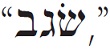
Praise the name of the LORD. The second section of Psalm 148 concludes as the first section did, that is, with a jussive verb calling the people to praise the name of Yahweh, followed by a rationale meant to justify the call to praise. As with verse 5b, so also does verse 13b begin with the particle ki (“for” or “because”), which signals the rationale is to follow. Whereas verses 5b–6 explain that God’s power to call things into existence merits his praise, verse 13b–c focuses entirely upon the kingship of Yahweh. Yahweh is to be praised because he is “above the earth and the heavens.” The word “exalted” (v. 13b) comes from the root shgb, which means in the qal stem “to be fortified” or “to be inaccessibly high.”8
In Psalm 148:13 the verb appears in the niphal and is often translated as to be “high” or “exalted,” but even in that rendering, the sense of being fortified or inaccessibly high is not far beneath the surface of the meaning. Rather than making a simple “spatial statement” affirming that God’s name is lifted high or exalted, the psalmist makes a much stronger claim, namely, that Yahweh himself is lifted high—he is unassailable and impregnable to the forces of creation because he is the Divine King.
The royal motif continues in verse 13c with the word “splendor” or “majesty” (hod). The term appears elsewhere in describing the majesty of human kingship (Ps 21:5) as well as divine kingship (Ps 145:5). In this instance “splendor” (hod) is a figure of speech known as a metonymy. Rather than declaring Yahweh a king, the psalmist opts to use a closely related term to communicate that thought; Yahweh’s “splendor” signals his kingship. To suggest that Yahweh’s “splendor” or majesty is “above the earth and the heavens” is in fact to declare that Yahweh reigns from on high as king.
He has raised up for his people a horn. The psalm opened with directives aimed first at the heavens, followed by the earth and all that inhabit it. Among those that inhabit the earth is humanity, from the most powerful to the least (Ps 148:11–12). The final verse of the psalm narrows the anthropological focus further by referencing Israel. The psalmist declares that Israel should praise God because “he raised up [rum] for his people a horn [qeren].” In the broader cultural context of the Old Testament, the horn (qeren) refers to strength and might (e.g., Pss 74:4; 75:10; 89:17). Although the term could be applied to kings and nations as emblematic of their military and political might (1 Kgs 22:11; Jer 48:25), its usage in Psalm 148 appears to have the covenant community in view.9
Israel, God’s faithful servants (v. 14b), has reason to praise God because he has endowed his people with the strength necessary to endure the trying events of the exile and the subsequent challenges associated with restoration to the promised land in the postexilic period.10
Bridging Contexts
CREATOR AND KING. Psalm 148 stands at the center of the Final Hallel, with two psalms coming before and two after it. In addition to its literary placement at the center of the collection, Psalm 148 functions as the theological center of the collection as well. Although creation language and imagery permeate the entirety of Psalm 148, the fundamental theological claim that undergirds this text is that of the kingship of Yahweh. Yahweh, the covenantal God of Israel, is presented as the Creator King. To substantiate this claim, the psalmist takes great pains to establish the nature of the “Creator-creation” relationship. In Psalm 148 Yahweh is not embedded within creation but, instead, is differentiated from creation. The Creator stands apart from his creation because he stands over it as the Divine King (v. 13c).
This tradition of Yahweh as the Creator King is not limited to Psalm 148 but can be found in other texts that carefully weave together the concept of kingship with that of creator. This interweaving is most clearly on display in Psalms 93 and 95–99, poems that announce the reign of God. Psalm 95 declares that Yahweh is the “great King” (v. 3b) and then invites all worshipers to “kneel before the LORD our Maker” (v. 6). Other psalms in the same collection declare Yahweh’s kingship but then recount creation’s participation in praising the Creator King. Psalm 96 explains that the heavens and the earth, the sea, the fields, and all that are in them will rejoice and sing for joy, and in Ps 98:8 even the rivers will “clap their hands” at the coming of the Divine King. All creation, humans and nature alike, create what Clinton McCann terms “a symbiosis of praise.”11
Together they testify to the work of the Creator King in the world.
The Old Testament confesses that the work of the Creator King is not limited to a singular act of creation. While some biblical texts certainly allude to creatio prima, God’s initial act of creation in the world (Gen 1; Ps 104:5–9), others refer to creatio continua, God’s ongoing creative power in the world (Pss 93:1; 96:10b; 104:10–30). It is the power exhibited in the former that grounds Israel’s belief in the latter.
Humanity’s place within creation. Given humanity’s capacity to create so much on our own, we sometimes fall prey to misguided thoughts concerning our sense of place within the created order. At times we speak as though God and humanity together stand differentiated from the rest of creation. We speak as though in some way we too stand with God over and apart from all creation. Psalm 148, however, redirects and refashions our thoughts. Like the sun, moon, and stars—all elements of the created order—we too are called to the act of praise. We stand alongside the wild animals, cattle, small creatures, and birds as we confess that “his name alone is exalted; his splendor is above the earth and the heavens” (v. 13). And despite the considerable diversity found in the human race itself, Psalm 148 reminds us that the call to praise flattens out such differences. In fact, “Praise makes myths of all our rationalizations and distinctions. Our shared humanity is never so evident as it is when we lower our heads, bow our knees, and praise the Lord.”12
Psalm 148 reminds us that regardless of our station in life, our gender, age, or ethnicity, we are part of the heavens and the earth that are meant to praise God.
In similar fashion, Psalm 100 calls for “all the earth” to shout for joy to the Lord. In addition to worshiping him, this psalmist calls us to “Know that the LORD is God. It is he who has made us, and we are his” (v. 3). Rather than lamenting our “creatureliness,” the psalmists in both Psalms 100 and 148 invite us to embrace our place within the created order—we are part of the creation that praises its Creator King. By accepting our place within the created order, we announce that God is God and we are not, and because God is God and we are not, we are compelled to sing for joy and praise God. Bernd Janowski reminds us that “the praise of God is a fundamental expression of theology, and is, according the Old Testament, even the reason for human existence.”13
In other words, we are most human when we are praising the only true God, the Creator King.14
Contemporary Significance
FROM BEGINNING TO END Psalm 148 calls us to praise God. To praise God rightly, however, requires that we understand God rightly, and to understand God rightly means that we deny all other claims that mar our understanding of God and his way in the world. In trying to make sense of ourselves and the world around us we often fall prey to idols, both those that we construct and those that have been constructed for us. Question 95 in the Heidelberg Catechism (1563) inquires, “What is idolatry?” to which the catechism responds, idolatry is “having or inventing something in which one trusts in place of or alongside of the only true God.”15
Frequently our mind (and our preaching) associates idols with money and power, among myriad other objects that occupy our thoughts and sometimes guide our living. Yet beyond these things, a far more subtle and perhaps more damaging form of idolatry is that of “false or distorted concepts about God.”16
Using the language of faith, we construct images of God that stand at odds with the biblical witness. We fashion God after ourselves so that his values match ours—his ways, our ways.
In the call to praise God in Psalm 148, the psalmist is doing much more than asking all creation to sing a song—he is asking us to declare what is true and right about the Creator King. John Witvliet explains, “The world loves to worship the stuff it has made, but the church proclaims a God who made us. The world lives to worship the ideas it has thought up, but the church points to a vision of God far greater than we can ever imagine on our own.”17
Psalm 148 invites us to reorient our worship and our words, and yes, even our very lives. We are asked to dispense with our own idolatrous constructs about the nature of God, and even ourselves, and instead we are called to find our rightful place in a chorus comprised of all creation as we lift our voices to the one true God who indeed stands over the entirety of earth and heaven.

 NIDOTTE 3:1216.