Original Meaning
Yahweh Reigns (93:1a)
THE LORD REIGNS. Although Psalm 93 bears no official heading or a title, the opening words of the composition are probably meant to be seen as a thematic statement for this psalm and the collection that follows.3
This opening declaration, therefore, functions effectively as a title not only for Psalm 93 but also for Psalms 94–100. While there is much debate about how to translate this phrase (and we will return to this question below), these two Hebrew words comprise a powerful focus statement for all readers of the Psalms. Yahweh malak, “Yahweh reigns!” This simple proclamation makes a declaration that would have spoken powerfully to the original readers of Psalm 93, just as it speaks powerfully to modern readers. Yahweh rules! These words summarize the key theme of Book 4, and Book 4 is key to our understanding of the whole Psalter.4
As James Mays puts it, “The declaration Yahweh malak involves a vision of reality that is the theological center of the Psalter.”5
The author of this psalm and the editors who gathered the individual poems into a book had a clear aim, namely, to influence the way God’s people viewed their present reality. The aim was one of worldview formation—to shape the way the covenant community viewed their own historical circumstances and present reality.6
The formative message was as simple as it was powerful:”No matter how chaotic things may appear, Yahweh is in control! He reigns!”
There has been much discussion as to how the phrase Yahweh malak should be translated. For many years scholars, following Mowinckel, suggested that the most appropriate translation was “Yahweh has become king.” Their argument was twofold. First, the type of verb used to define God’s rule may point to a specific act rather than a general fact. Second, some scholars associated this psalm with the hypothetical autumn festival, which, it was argued, celebrated annually the enthronement of Yahweh.7
While this translation is grammatically possible given the type of verb used, there is certainly nothing in the verb itself to give preference to this rendering. Also, there is no strong reason to translate the verb in the past tense (“has become king”). Should one decide to translate the verb malak with reference to the office of king rather than the activity of ruling, then the most natural translation would be simply, “the LORD
is King.” Conceptually, such a translation is not far removed from the preferred option, “the LORD reigns.” But perhaps the best argument for translating the words Yahweh malak as “the LORD reigns” is found in the literary context of verse 1. This psalm, and the succeeding compositions, focus on the activity of God’s rule and reign—as Creator, Judge, and King—throughout all the created order, at all times, and forever! This collection of psalms does not focus on a particular act of divine enthronement but rather concentrates the minds of its readers on the ongoing and universal rule of Yahweh. From a literary perspective, the NIV’s translation, “the LORD reigns,” better represents the tone and content of this psalm and its neighbors than does the alternative suggestion.
Bridging Contexts
THE SECURITY OF SOVEREIGNTY. While some of the imagery of Psalm 93 might not be immediately obvious to the modern reader, the message of the poem remains timely for believers in this generation. We may not be familiar with the idea of kings regaled in finery that declares their high office. (Apart from very formal state occasions, the constitutional monarchs of today are disappointingly “normal” in their appearance!) Nor do we think of powers of chaos, symbolized by the sea, as striving on a daily basis to overcome the natural order. These images are rooted in the thought world of the psalm’s original hearers. The metaphors are appropriate to the original readers, but the point made by the psalmist is applicable in all generations of believers: God is in control regardless of how it may appear.
The turmoil experienced by the original hearers of Psalm 93 may not be the turmoil of the twenty-first century, but the specific circumstances are not the point. The universal and eternal reign of God is the point the psalmist makes. The author does not need to specify the source of the apparent chaos because the details do not matter. The covenantal God is sovereign and in control, whatever the particular challenge may be.
This is the message of the whole of Scripture. Yahweh rules in and over all things. From the creation accounts of Genesis 1–2 onward we read of a God whose mere speaking makes everything jump to attention. He declares light and matter into being because he is King over all such things. We see that rule in the ordering of the events of human history for the fulfillment of his purposes. Yahweh promises Abraham a line of descendants, which will become a nation, which in turn will be a blessing to all the families of the earth (Gen 12:1–3). The rest of the Bible, in one sense, is the story of how Yahweh orders all the events of human history toward the specific end of fulfilling that promise. He is in control when challenges confront the promise (e.g., the barrenness of Sarah, Rebekah, and Rachel). He is in control when the stupidity of his chosen instruments puts the promise at risk (e.g., Abraham’s passing Sarah off as his sister, Jacob’s stealing a blessing, and Israel’s constantly worshiping other gods). He is in control even when the main players on the stage of human history openly oppose the ends of that promise (e.g., Pharaoh’s attempts to destroy the line of Israel and to oppress God’s people, and Herod’s attempts to kill Israel’s true King while he was still a child). Yahweh is in control of all the events of human history; he orders them to fulfill that promise made to Abraham and his declared purpose of bringing blessing to all the families of the earth.
The voice of the Bible is universally the same: Yahweh is always in control, regardless of how it may appear from our human perspective. He reigns! This message is plain and simple and without qualification of any kind. So speaks Psalm 93, and in so doing it joins in the consistent chorus of the rest of Scripture.
As well as being an unmistakable theme throughout the Bible as a whole, the reign of Yahweh is perhaps the single most significant theme found in the Psalter. The Yahweh malak psalms (Pss 93–100) repeat the same idea with a variety of specific foci. The royal psalms (e.g., Pss 2, 20–21, 72, and 110) all celebrate Yahweh’s universal rule over all the earth through his king. The Zion psalms (e.g., Pss 46 and 48) proclaim God’s kingship over all the earth as a result of his presence on the earth. The many cries and prayers of the anonymous psalmists that God would hear their prayers and respond (e.g., Ps 22) only make sense when such pleas are offered to One who is able to change and order their circumstances. The message of Psalm 93 is consistent with the dominant voice of the Psalter—Yahweh reigns. This fact is unchangeable. The point of poems such as Psalm 93 is to remind God’s people of that absolute fact.
The security of Scripture. The dominant imagery of Psalm 93 is based on metaphors pointing to God’s rule. But the psalmist also reminds the people that Yahweh is not simply a God of raw power. He is also a God who has revealed himself to his people—one whose character we know through his word, and that character is good! So, the psalmist points to reliability in two ways. First, readers can trust in God because he rules over everything imaginable. Second, we can also trust in his word because it stands firm—it is fully dependable and absolutely trustworthy for life. The same term is used to describe the divine revelation in Psalm 19:7, “The statutes [‘edut] of the LORD are trustworthy, making wise the simple” (emphasis added). The psalmist there implies that we can rely completely upon God’s word as a rule for life. The “simple” of this verse are not people of weak mind or mental incapacity; rather, this word refers to the youth who lacks the wisdom to live well—wisdom that comes from experience.22
God’s teaching in his word equips those willing to learn by enabling them to make right choices in life. Just as God orders the universe, so his revealed word provides a secure path through life. That path is designed to reflect the character of God himself, a character marked by holiness.
The two dominant images found in Psalm 93—security based on God’s sovereignty and security based on God’s word—serve as reminders for the readers of this psalm throughout all generations. They encourage trust in God’s control in the (often) chaotic events of life. They encourage trust in the Scriptures as an accurate guide for life in all its complexity. Much goes on in the world that is beyond our comprehension, but we can still trust that God is in control. But belief that “in all things God works for the good of those who love him” (Rom 8:28) does not in itself equip us to live life well in the midst of such confusion. So the author reminds us that we can also trust in God’s word as a reliable guide by which to live. The people of God know how they should live, regardless of the vicissitudes of life around them. Following in the ways of his instruction offers a security that remedies life’s complexities, a sure path through the quagmires of human folly that often surround us. Psalm 93 speaks of this double security for the community of God’s people.
Psalm 93 in the New Testament. While there are no direct citations of Psalm 93 in the New Testament, the psalm resonates with the New Testament in at least a couple of ways. First, of course, Jesus’ calming of the storm (Matt 8:23–27; Luke 8:22–25) is an action that reflects his true nature. Yahweh alone is mightier than the seas, and the obedience of the wind and the waves in response to Jesus’ rebuke testifies to his divine nature. Second, we noted above the similarities between the sea imagery in Psalm 93 and the book of Revelation.23
The final word regarding the sea in Revelation, however, also points to the complete sovereignty of God. John’s vision tells us, “Then I saw ‘a new heaven and a new earth,’ for the first heaven and the first earth had passed away, and there was no longer any sea” (Rev 21:1, emphasis added). God’s ultimate victory over chaos is finally established in the complete removal of chaos in the new created order.
Bridging Contexts
BELIEVING IN A STRONG GOD. Anyone who has seen the film The Perfect Storm will have been struck by the iconic image that served as the film’s poster. A small fishing trawler looks as though it is about to be swamped by a massive wave. The New England fishing boat is not large but is sturdy, with a strong, sea-going motor. It is trying to make its way back to port through the storm of the century. The crewmembers are making progress back to their home base when all of a sudden they are confronted by a massive, freak wave that towers high above the boat. Left with no other choice, they try to ride out the wave. The boat climbs higher and higher toward the crest of the giant wave and . . . it is here that the poster image pictures. Will they make it? Can they do it? They have gone so far—can they survive this greatest of challenges? I will not spoil the film for those who have not seen it!
saber rattling, of which we read in verse 4. The seas raise themselves up, but Yahweh simply is on high. The rebellious forces of chaos are intimidating to us, but they are small and insignificant to God. He is above them all. From the divine perspective there is no Kampf in the Chaoskampf. There is no struggle. There is no breach in the order he has ordained. From the divine perspective there is only order. The truth of the matter is that our God, the God of the covenant, is mightier than the greatest difficulties of our lives.
The advertising picture from The Perfect Storm reflects the reality of what many people feel on a day-to-day basis. Many live life with the feeling that they are just about to be swamped. The wave—like the seas in Psalm 93—may represent any one of many things—debt, sickness, unemployment, family troubles, bereavement, a bullying boss, a failing marriage. For Christians in some parts of the world, that “wave” may be persecution. Just as the seas are undefined in Psalm 93, so too may there be many different types of challenge that seem as though they are about to take us under in today’s world. The ambiguity is deliberate. The psalmist does not wish to limit applicability to a certain sphere of reality because he wants the reader to remember the absolute sovereignty and control of God over every circumstance. The particular definition of the rebellious sea is in one sense irrelevant because there is absolutely nothing within the created order that represents a real challenge to the power of the Creator God!
We may feel out of our depth or that life is beyond our control. The wave is about to engulf us. The reality is that we are often out of our depth, and many things in life are entirely beyond our control. That is why the psalmist reminds us not only of the power of God but also of his character. “Holiness adorns [his] house.” He is in control, and he will always do what is right! Yahweh’s good character directs the exercise of his power. We may not see the grand plan or design, but God always leads us toward the end of developing the family likeness (Rom 8:29). He is holy, and his desire is for his people to reflect that holiness. The wave may be huge, but the question we should ask is not, “Why is this massive wave in my face?”—rather, we should ask, “How can this wave make me more like Christ?” “Both the one who makes people holy and those who are made holy are of the same family. So Jesus is not ashamed to call them brothers and sisters” (Heb 2:11).
Inevitably a storm seems like chaos to us. The trials of life represent our own personal Chaoskampf. But the imagery of God’s might and power in Psalm 93 reminds us to view things from a different perspective—the divine perspective. Verse 3 presents the seas and waves as lifting up in rebellion. They attempt to rise up. They attempt to flex their muscles and exercise their power. But there is irony in the psalmist’s response to this
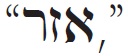
This reminder is not a passive act. The strength (‘oz) of Yahweh in which he is robed (v. 1) is a strength that he makes available to his people. “The LORD is my strength [‘oz] and my defense; he has become my salvation. He is my God, and I will praise him, my father’s God, and I will exalt him” (Exod 15:2). God’s strength and God’s rule are never simply abstract facts—they make a difference to God’s people.
“A cry means something only in a created universe. If there is no creator, what is the good of calling attention to yourself?” . . . Psalm 13 is a cry at the center of which is a plea: “Notice me! Answer me!” (v. 3). The plea is addressed to the LORD, the creator of heaven and earth and of Israel. The psalm is language in which the desperate loneliness of human life is offered to God, who is its ultimate source and only final help. It is a prayer in which mortals in anxiety and anguish speak of themselves to God and in doing so speak about God to those of us who read the prayer as scripture.24
The psalmists pray in their psalms because they believe that there is one who hears their prayers and that he is powerful to change their reality in response to those prayers. The God of whom we are reminded in Psalm 93 is not just any god—he is our God. His rule is not an abstract fact but a present reality that affects the life of the reader and is accessed through offering prayers of the type the psalmists offer. This God makes his strength available to his people by responding to their prayers.
The people of Israel living in the postexilic period had to remind themselves of a greater reality. The Davidic king was gone. Jerusalem had been devastated. The temple was rebuilt, but it was just not the same as Solomon’s temple. Israel was a puppet state under the control of a succession of foreign powers, some of whom exercised their power with much brutality. God’s people needed to be reminded that the LORD
on high is mighty! As James Mays points out above, Psalm 93 is an act of imagination. Refocusing on the powerful, sovereign rule of our God has given and gives believers throughout all generations courage to face an uncertain world.
Original Meaning
Yahweh: Mightier than the Seas (93:3–4)
THE SEAS HAVE LIFTED UP, LORD. These two powerfully poetic verses paint a picture of Yahweh, exalted on high, mightier than the amazing force of the seas. Again, the meaning of the metaphor is clear: the sea is a mighty power, but Yahweh is more powerful! The discussion of the seas in these verses was probably meant to be ambiguous for the original readers. First, as contemporary readers readily understand, the sea represents a natural force of great power that is much to be feared. The devastation caused by the tsunami that struck the Asian subcontinent on Boxing Day 2004 is only one of many instances that illustrate the terrible power of the sea. In the ancient world also, readers were only too well aware of the raw power of the seas. In fact, their awareness was probably greater because of the comparatively insubstantial nature of their boats and also because relatively few people in those days could swim. Second, the “waters” of the Old Testament sometimes symbolized the opposition of the nations against Israel. Just as the waters of the sea seek to break the boundaries of the land and pour over it, so the nations are sometimes pictured as wild waters seeking to pour over Israel’s national boundaries (see Isa 8:7;17:12).13
Third, the “waters” could be a metaphoric reference to the creation traditions of Israel’s neighbors. All the nations of the ancient world had their own cosmogonies—traditions regarding how the world began. Although each national account differs in detail, often the core ideas were quite similar. Normally in these stories the creation of the earth is the byproduct of a conflict among the gods, and one of the parties to that conflict (the bad guy or girl) is represented by the sea as the ultimate force of chaos. In the Babylonian tradition, the high god, Marduk, is victorious in battle with the goddess, Tiamat, who rules over the primordial deep. Marduk then creates the heavens and the earth from her body. Similarly, in the Canaanite tradition we read of a great celestial conflict between Baal, the storm god, and Yam, the god of the sea.14
In these traditions we see a conflict between the high god and the forces of chaos that ultimately results in the formation of the universe. These stories are known as Chaoskampf myths. They recount the struggle with chaos, which must be defeated for order (creation) to appear, and these forces of chaos are typically represented by the sea.15
So the sea imagery of Psalm 93 could be “a culturally relevant way of saying that Yahweh, not Baal, is king over all cosmic forces.”16
Each of these three readings is possible, given that the psalms seldom make concrete reference to the specific background of their writings—in that sense they are without context.17
So the ambiguity of the seas in Psalm 93 is probably deliberate. The seas of verses 3–4 could refer more literally to the naturally destructive power of the sea or, more metaphorically, either to the surrounding nations that oppose Israel or to the mythical forces of chaos that are constant threats to the order of creation. Whichever the specific referent, the psalmist makes use of this imagery to emphasize his point further—Yahweh is greater than the seas! Whatever power the sea imagery might represent, Israel’s God is more powerful!
Lifted up. In the Old Testament the idea of lifting up, found in verses 3–4, is commonly associated with rebellion (see Ps 75). The seas are pictured as being in rebellion against Yahweh, but their rebellion is futile because he made everything and rules over all things. “These would-be kings rose up to do battle, proud waters that reared and dashed with thunderous voices. But the outcome proved that it was to Yahweh, high above them, that true majesty belonged.”18
The LORD on high is mighty. The threefold lifting up of verse 3 is met by a threefold mightier than in the next verse! The seas lift themselves up, with their voice and their waves in rebellion. In beautiful poetic symmetry, Yahweh is presented in verse 4 as being mightier than the “thunder of the great waters” (the “voice” of v. 3), mightier than the “breakers” (the “pounding waves” of v. 3), and then, simply stated, Yahweh is declared to be both “on high” and “mighty” (therefore, mightier than the “sea” of v. 3). Both of these words (bamarom and ’adir) portray images of rule. Height reflected rule in the ancient world, and though the seas may have rebelled, their rebellion is futile, for Yahweh is the truly Mighty One.
Bridging Contexts
THE SECURITY OF SOVEREIGNTY. While some of the imagery of Psalm 93 might not be immediately obvious to the modern reader, the message of the poem remains timely for believers in this generation. We may not be familiar with the idea of kings regaled in finery that declares their high office. (Apart from very formal state occasions, the constitutional monarchs of today are disappointingly “normal” in their appearance!) Nor do we think of powers of chaos, symbolized by the sea, as striving on a daily basis to overcome the natural order. These images are rooted in the thought world of the psalm’s original hearers. The metaphors are appropriate to the original readers, but the point made by the psalmist is applicable in all generations of believers: God is in control regardless of how it may appear.
The turmoil experienced by the original hearers of Psalm 93 may not be the turmoil of the twenty-first century, but the specific circumstances are not the point. The universal and eternal reign of God is the point the psalmist makes. The author does not need to specify the source of the apparent chaos because the details do not matter. The covenantal God is sovereign and in control, whatever the particular challenge may be.
This is the message of the whole of Scripture. Yahweh rules in and over all things. From the creation accounts of Genesis 1–2 onward we read of a God whose mere speaking makes everything jump to attention. He declares light and matter into being because he is King over all such things. We see that rule in the ordering of the events of human history for the fulfillment of his purposes. Yahweh promises Abraham a line of descendants, which will become a nation, which in turn will be a blessing to all the families of the earth (Gen 12:1–3). The rest of the Bible, in one sense, is the story of how Yahweh orders all the events of human history toward the specific end of fulfilling that promise. He is in control when challenges confront the promise (e.g., the barrenness of Sarah, Rebekah, and Rachel). He is in control when the stupidity of his chosen instruments puts the promise at risk (e.g., Abraham’s passing Sarah off as his sister, Jacob’s stealing a blessing, and Israel’s constantly worshiping other gods). He is in control even when the main players on the stage of human history openly oppose the ends of that promise (e.g., Pharaoh’s attempts to destroy the line of Israel and to oppress God’s people, and Herod’s attempts to kill Israel’s true King while he was still a child). Yahweh is in control of all the events of human history; he orders them to fulfill that promise made to Abraham and his declared purpose of bringing blessing to all the families of the earth.
The voice of the Bible is universally the same: Yahweh is always in control, regardless of how it may appear from our human perspective. He reigns! This message is plain and simple and without qualification of any kind. So speaks Psalm 93, and in so doing it joins in the consistent chorus of the rest of Scripture.
As well as being an unmistakable theme throughout the Bible as a whole, the reign of Yahweh is perhaps the single most significant theme found in the Psalter. The Yahweh malak psalms (Pss 93–100) repeat the same idea with a variety of specific foci. The royal psalms (e.g., Pss 2, 20–21, 72, and 110) all celebrate Yahweh’s universal rule over all the earth through his king. The Zion psalms (e.g., Pss 46 and 48) proclaim God’s kingship over all the earth as a result of his presence on the earth. The many cries and prayers of the anonymous psalmists that God would hear their prayers and respond (e.g., Ps 22) only make sense when such pleas are offered to One who is able to change and order their circumstances. The message of Psalm 93 is consistent with the dominant voice of the Psalter—Yahweh reigns. This fact is unchangeable. The point of poems such as Psalm 93 is to remind God’s people of that absolute fact.
The security of Scripture. The dominant imagery of Psalm 93 is based on metaphors pointing to God’s rule. But the psalmist also reminds the people that Yahweh is not simply a God of raw power. He is also a God who has revealed himself to his people—one whose character we know through his word, and that character is good! So, the psalmist points to reliability in two ways. First, readers can trust in God because he rules over everything imaginable. Second, we can also trust in his word because it stands firm—it is fully dependable and absolutely trustworthy for life. The same term is used to describe the divine revelation in Psalm 19:7, “The statutes [‘edut] of the LORD are trustworthy, making wise the simple” (emphasis added). The psalmist there implies that we can rely completely upon God’s word as a rule for life. The “simple” of this verse are not people of weak mind or mental incapacity; rather, this word refers to the youth who lacks the wisdom to live well—wisdom that comes from experience.22
God’s teaching in his word equips those willing to learn by enabling them to make right choices in life. Just as God orders the universe, so his revealed word provides a secure path through life. That path is designed to reflect the character of God himself, a character marked by holiness.
The two dominant images found in Psalm 93—security based on God’s sovereignty and security based on God’s word—serve as reminders for the readers of this psalm throughout all generations. They encourage trust in God’s control in the (often) chaotic events of life. They encourage trust in the Scriptures as an accurate guide for life in all its complexity. Much goes on in the world that is beyond our comprehension, but we can still trust that God is in control. But belief that “in all things God works for the good of those who love him” (Rom 8:28) does not in itself equip us to live life well in the midst of such confusion. So the author reminds us that we can also trust in God’s word as a reliable guide by which to live. The people of God know how they should live, regardless of the vicissitudes of life around them. Following in the ways of his instruction offers a security that remedies life’s complexities, a sure path through the quagmires of human folly that often surround us. Psalm 93 speaks of this double security for the community of God’s people.
Psalm 93 in the New Testament. While there are no direct citations of Psalm 93 in the New Testament, the psalm resonates with the New Testament in at least a couple of ways. First, of course, Jesus’ calming of the storm (Matt 8:23–27; Luke 8:22–25) is an action that reflects his true nature. Yahweh alone is mightier than the seas, and the obedience of the wind and the waves in response to Jesus’ rebuke testifies to his divine nature. Second, we noted above the similarities between the sea imagery in Psalm 93 and the book of Revelation.23
The final word regarding the sea in Revelation, however, also points to the complete sovereignty of God. John’s vision tells us, “Then I saw ‘a new heaven and a new earth,’ for the first heaven and the first earth had passed away, and there was no longer any sea” (Rev 21:1, emphasis added). God’s ultimate victory over chaos is finally established in the complete removal of chaos in the new created order.
Bridging Contexts
BELIEVING IN A STRONG GOD. Anyone who has seen the film The Perfect Storm will have been struck by the iconic image that served as the film’s poster. A small fishing trawler looks as though it is about to be swamped by a massive wave. The New England fishing boat is not large but is sturdy, with a strong, sea-going motor. It is trying to make its way back to port through the storm of the century. The crewmembers are making progress back to their home base when all of a sudden they are confronted by a massive, freak wave that towers high above the boat. Left with no other choice, they try to ride out the wave. The boat climbs higher and higher toward the crest of the giant wave and . . . it is here that the poster image pictures. Will they make it? Can they do it? They have gone so far—can they survive this greatest of challenges? I will not spoil the film for those who have not seen it!
saber rattling, of which we read in verse 4. The seas raise themselves up, but Yahweh simply is on high. The rebellious forces of chaos are intimidating to us, but they are small and insignificant to God. He is above them all. From the divine perspective there is no Kampf in the Chaoskampf. There is no struggle. There is no breach in the order he has ordained. From the divine perspective there is only order. The truth of the matter is that our God, the God of the covenant, is mightier than the greatest difficulties of our lives.
The advertising picture from The Perfect Storm reflects the reality of what many people feel on a day-to-day basis. Many live life with the feeling that they are just about to be swamped. The wave—like the seas in Psalm 93—may represent any one of many things—debt, sickness, unemployment, family troubles, bereavement, a bullying boss, a failing marriage. For Christians in some parts of the world, that “wave” may be persecution. Just as the seas are undefined in Psalm 93, so too may there be many different types of challenge that seem as though they are about to take us under in today’s world. The ambiguity is deliberate. The psalmist does not wish to limit applicability to a certain sphere of reality because he wants the reader to remember the absolute sovereignty and control of God over every circumstance. The particular definition of the rebellious sea is in one sense irrelevant because there is absolutely nothing within the created order that represents a real challenge to the power of the Creator God!
We may feel out of our depth or that life is beyond our control. The wave is about to engulf us. The reality is that we are often out of our depth, and many things in life are entirely beyond our control. That is why the psalmist reminds us not only of the power of God but also of his character. “Holiness adorns [his] house.” He is in control, and he will always do what is right! Yahweh’s good character directs the exercise of his power. We may not see the grand plan or design, but God always leads us toward the end of developing the family likeness (Rom 8:29). He is holy, and his desire is for his people to reflect that holiness. The wave may be huge, but the question we should ask is not, “Why is this massive wave in my face?”—rather, we should ask, “How can this wave make me more like Christ?” “Both the one who makes people holy and those who are made holy are of the same family. So Jesus is not ashamed to call them brothers and sisters” (Heb 2:11).
Inevitably a storm seems like chaos to us. The trials of life represent our own personal Chaoskampf. But the imagery of God’s might and power in Psalm 93 reminds us to view things from a different perspective—the divine perspective. Verse 3 presents the seas and waves as lifting up in rebellion. They attempt to rise up. They attempt to flex their muscles and exercise their power. But there is irony in the psalmist’s response to this
This reminder is not a passive act. The strength (‘oz) of Yahweh in which he is robed (v. 1) is a strength that he makes available to his people. “The LORD is my strength [‘oz] and my defense; he has become my salvation. He is my God, and I will praise him, my father’s God, and I will exalt him” (Exod 15:2). God’s strength and God’s rule are never simply abstract facts—they make a difference to God’s people.
“A cry means something only in a created universe. If there is no creator, what is the good of calling attention to yourself?” . . . Psalm 13 is a cry at the center of which is a plea: “Notice me! Answer me!” (v. 3). The plea is addressed to the LORD, the creator of heaven and earth and of Israel. The psalm is language in which the desperate loneliness of human life is offered to God, who is its ultimate source and only final help. It is a prayer in which mortals in anxiety and anguish speak of themselves to God and in doing so speak about God to those of us who read the prayer as scripture.24
The psalmists pray in their psalms because they believe that there is one who hears their prayers and that he is powerful to change their reality in response to those prayers. The God of whom we are reminded in Psalm 93 is not just any god—he is our God. His rule is not an abstract fact but a present reality that affects the life of the reader and is accessed through offering prayers of the type the psalmists offer. This God makes his strength available to his people by responding to their prayers.
The people of Israel living in the postexilic period had to remind themselves of a greater reality. The Davidic king was gone. Jerusalem had been devastated. The temple was rebuilt, but it was just not the same as Solomon’s temple. Israel was a puppet state under the control of a succession of foreign powers, some of whom exercised their power with much brutality. God’s people needed to be reminded that the LORD
on high is mighty! As James Mays points out above, Psalm 93 is an act of imagination. Refocusing on the powerful, sovereign rule of our God has given and gives believers throughout all generations courage to face an uncertain world.
Original Meaning
Stability and Decoration (93:5)
THE FINAL IMAGE OF PSALM 93 adds a slightly surprising note to the images of rule that have dominated the poem to this point. Verse 5 focuses attention on the stability of God’s word and the holiness of his dwelling. In the psalmist’s mind, there is no doubt as to God’s power. Equally, his character is beyond question.
Your statutes, LORD, stand firm. Echoing the establishment of the earth based on the establishment of God’s throne (vv. 1d–2), the statutes of Yahweh are presented as standing firm. Although a different verb is used (’aman here, as opposed to kun) the idea is the same, and in the mind of the poet the establishment of the created order and moral order are inseparable. God’s revelation is 100 percent dependable because he is who he is. Just as the earth is secure because of God’s inherent rule, so also God’s word is sure because of his intrinsic character. He governs the world because of his authority as Creator and Sovereign. He also orders the reality of his people through his word. Just as there is a divine rule that holds together the universe, so too there is a divine rule for life within that universe. Both “rules” are unshakable because of Yahweh’s nature and intrinsic authority. The sea must obey the High King . . . so too must his people!
In our view of the world, there is no direct continuity between creation and society. What we call natural laws and moral laws seem quite different things. But, in the view of the psalmist, the commandments that order human life are the decrees of the sovereign of the universe. The ordering of the world and the ordering of society are expressions of one and the same rule.19
The word “statutes” represents the Hebrew word ‘edut, which in earlier periods has traditionally been translated “testimonies.” But the NIV’S translation (“statutes”) adds some of the force implied by the original Hebrew. ‘Edut are not just general observations that we can accept or ignore as we please. In courtrooms worldwide, jurors accept or reject the testimony of witnesses as they choose. The ‘edut of the Old Testament is, however, used basically to refer to God’s revealed instruction. Sometimes the word refers to the tablets of the Ten Commandments (Exod 31:18; 32:15), and in the Psalter this word tends to represent the torah in general (Ps 19:7; 78:5).20
So the psalmist is reminding his readers that the entirety of the revelation they read—the psalms and the whole canon—is completely trustworthy as a guide for life. The implication is clear: Yahweh rules as sovereign over everything, so his word can be trusted and must be obeyed as a pattern for life.
Holiness adorns your house. The final thought of Psalm 93 brings us back to the clothing imagery of verse 1. Just as majesty and strength are Yahweh’s robes, so also “holiness” is the decoration of his dwelling place. Holiness as a concept dominates the presentation of the real presence of God throughout the Old Testament. The fall of humanity in Eden caused separation from a holy God. Yahweh’s presence is always marked by holiness. Adam and Eve had to leave Eden because sin meant that they could no longer dwell in his real presence (Gen 3). Moses had to remove his sandals in the real presence of God at the burning bush because it was holy ground (Exod 3). The presence of God in the most holy place in the tabernacle had to be shrouded from a sinful people (Exod 26:30–37), and so on. God’s presence is always a holy presence. So, it is no surprise that God’s house is decorated in holiness just as he himself is robed in majesty and strength. The “house” referred to here could be Yahweh’s heavenly dwelling, but it may also refer to the restored temple in the postexilic period. Wherever Yahweh dwells, holiness adorns that place, and this circumstance is true throughout all eternity (“for endless days”).
The psalmist ends with this thought for good reason. He celebrates the absolute power of Yahweh throughout Psalm 93. But absolute power is also a fearful thing, since it is abundantly open to abuse. The psalmist tells the reader that she need not fear, for God’s absolute power is matched only by his perfection of character! “Holiness is not defined but it clearly determines the fundamental character of God as King! Awe is based on veracity, and the sanctity of the shrine is due not to its geographic location but to the rectitude of God and his worshippers.”21
The holiness of God means that his power can ever only be used in accordance with the right standards that are natural to his being. His power always corresponds with his goodness and righteousness.
His rule is ultimately without challenge. His words are entirely trustworthy. His character is matchlessly perfect. Power in this context breeds a willing respect and submission from all who “see” this reality—not a submission drawn from absolute terror before a capricious god but a willing submission to the God who is all-powerful and all-good. Psalm 93 is, indeed, an act of imagining. “Imagine God,” the psalmist says, “Perfect in power, ruling over all things regardless of appearances. He speaks in a way that we can trust and is characterized always by sublime moral perfection.” Such a picture surely breeds celebration . . . especially when the reader comes to realize that this God is his or her God!
Bridging Contexts
THE SECURITY OF SOVEREIGNTY. While some of the imagery of Psalm 93 might not be immediately obvious to the modern reader, the message of the poem remains timely for believers in this generation. We may not be familiar with the idea of kings regaled in finery that declares their high office. (Apart from very formal state occasions, the constitutional monarchs of today are disappointingly “normal” in their appearance!) Nor do we think of powers of chaos, symbolized by the sea, as striving on a daily basis to overcome the natural order. These images are rooted in the thought world of the psalm’s original hearers. The metaphors are appropriate to the original readers, but the point made by the psalmist is applicable in all generations of believers: God is in control regardless of how it may appear.
The turmoil experienced by the original hearers of Psalm 93 may not be the turmoil of the twenty-first century, but the specific circumstances are not the point. The universal and eternal reign of God is the point the psalmist makes. The author does not need to specify the source of the apparent chaos because the details do not matter. The covenantal God is sovereign and in control, whatever the particular challenge may be.
This is the message of the whole of Scripture. Yahweh rules in and over all things. From the creation accounts of Genesis 1–2 onward we read of a God whose mere speaking makes everything jump to attention. He declares light and matter into being because he is King over all such things. We see that rule in the ordering of the events of human history for the fulfillment of his purposes. Yahweh promises Abraham a line of descendants, which will become a nation, which in turn will be a blessing to all the families of the earth (Gen 12:1–3). The rest of the Bible, in one sense, is the story of how Yahweh orders all the events of human history toward the specific end of fulfilling that promise. He is in control when challenges confront the promise (e.g., the barrenness of Sarah, Rebekah, and Rachel). He is in control when the stupidity of his chosen instruments puts the promise at risk (e.g., Abraham’s passing Sarah off as his sister, Jacob’s stealing a blessing, and Israel’s constantly worshiping other gods). He is in control even when the main players on the stage of human history openly oppose the ends of that promise (e.g., Pharaoh’s attempts to destroy the line of Israel and to oppress God’s people, and Herod’s attempts to kill Israel’s true King while he was still a child). Yahweh is in control of all the events of human history; he orders them to fulfill that promise made to Abraham and his declared purpose of bringing blessing to all the families of the earth.
The voice of the Bible is universally the same: Yahweh is always in control, regardless of how it may appear from our human perspective. He reigns! This message is plain and simple and without qualification of any kind. So speaks Psalm 93, and in so doing it joins in the consistent chorus of the rest of Scripture.
As well as being an unmistakable theme throughout the Bible as a whole, the reign of Yahweh is perhaps the single most significant theme found in the Psalter. The Yahweh malak psalms (Pss 93–100) repeat the same idea with a variety of specific foci. The royal psalms (e.g., Pss 2, 20–21, 72, and 110) all celebrate Yahweh’s universal rule over all the earth through his king. The Zion psalms (e.g., Pss 46 and 48) proclaim God’s kingship over all the earth as a result of his presence on the earth. The many cries and prayers of the anonymous psalmists that God would hear their prayers and respond (e.g., Ps 22) only make sense when such pleas are offered to One who is able to change and order their circumstances. The message of Psalm 93 is consistent with the dominant voice of the Psalter—Yahweh reigns. This fact is unchangeable. The point of poems such as Psalm 93 is to remind God’s people of that absolute fact.
The security of Scripture. The dominant imagery of Psalm 93 is based on metaphors pointing to God’s rule. But the psalmist also reminds the people that Yahweh is not simply a God of raw power. He is also a God who has revealed himself to his people—one whose character we know through his word, and that character is good! So, the psalmist points to reliability in two ways. First, readers can trust in God because he rules over everything imaginable. Second, we can also trust in his word because it stands firm—it is fully dependable and absolutely trustworthy for life. The same term is used to describe the divine revelation in Psalm 19:7, “The statutes [‘edut] of the LORD are trustworthy, making wise the simple” (emphasis added). The psalmist there implies that we can rely completely upon God’s word as a rule for life. The “simple” of this verse are not people of weak mind or mental incapacity; rather, this word refers to the youth who lacks the wisdom to live well—wisdom that comes from experience.22
God’s teaching in his word equips those willing to learn by enabling them to make right choices in life. Just as God orders the universe, so his revealed word provides a secure path through life. That path is designed to reflect the character of God himself, a character marked by holiness.
The two dominant images found in Psalm 93—security based on God’s sovereignty and security based on God’s word—serve as reminders for the readers of this psalm throughout all generations. They encourage trust in God’s control in the (often) chaotic events of life. They encourage trust in the Scriptures as an accurate guide for life in all its complexity. Much goes on in the world that is beyond our comprehension, but we can still trust that God is in control. But belief that “in all things God works for the good of those who love him” (Rom 8:28) does not in itself equip us to live life well in the midst of such confusion. So the author reminds us that we can also trust in God’s word as a reliable guide by which to live. The people of God know how they should live, regardless of the vicissitudes of life around them. Following in the ways of his instruction offers a security that remedies life’s complexities, a sure path through the quagmires of human folly that often surround us. Psalm 93 speaks of this double security for the community of God’s people.
Psalm 93 in the New Testament. While there are no direct citations of Psalm 93 in the New Testament, the psalm resonates with the New Testament in at least a couple of ways. First, of course, Jesus’ calming of the storm (Matt 8:23–27; Luke 8:22–25) is an action that reflects his true nature. Yahweh alone is mightier than the seas, and the obedience of the wind and the waves in response to Jesus’ rebuke testifies to his divine nature. Second, we noted above the similarities between the sea imagery in Psalm 93 and the book of Revelation.23
The final word regarding the sea in Revelation, however, also points to the complete sovereignty of God. John’s vision tells us, “Then I saw ‘a new heaven and a new earth,’ for the first heaven and the first earth had passed away, and there was no longer any sea” (Rev 21:1, emphasis added). God’s ultimate victory over chaos is finally established in the complete removal of chaos in the new created order.
Bridging Contexts
BELIEVING IN A STRONG GOD. Anyone who has seen the film The Perfect Storm will have been struck by the iconic image that served as the film’s poster. A small fishing trawler looks as though it is about to be swamped by a massive wave. The New England fishing boat is not large but is sturdy, with a strong, sea-going motor. It is trying to make its way back to port through the storm of the century. The crewmembers are making progress back to their home base when all of a sudden they are confronted by a massive, freak wave that towers high above the boat. Left with no other choice, they try to ride out the wave. The boat climbs higher and higher toward the crest of the giant wave and . . . it is here that the poster image pictures. Will they make it? Can they do it? They have gone so far—can they survive this greatest of challenges? I will not spoil the film for those who have not seen it!
saber rattling, of which we read in verse 4. The seas raise themselves up, but Yahweh simply is on high. The rebellious forces of chaos are intimidating to us, but they are small and insignificant to God. He is above them all. From the divine perspective there is no Kampf in the Chaoskampf. There is no struggle. There is no breach in the order he has ordained. From the divine perspective there is only order. The truth of the matter is that our God, the God of the covenant, is mightier than the greatest difficulties of our lives.
The advertising picture from The Perfect Storm reflects the reality of what many people feel on a day-to-day basis. Many live life with the feeling that they are just about to be swamped. The wave—like the seas in Psalm 93—may represent any one of many things—debt, sickness, unemployment, family troubles, bereavement, a bullying boss, a failing marriage. For Christians in some parts of the world, that “wave” may be persecution. Just as the seas are undefined in Psalm 93, so too may there be many different types of challenge that seem as though they are about to take us under in today’s world. The ambiguity is deliberate. The psalmist does not wish to limit applicability to a certain sphere of reality because he wants the reader to remember the absolute sovereignty and control of God over every circumstance. The particular definition of the rebellious sea is in one sense irrelevant because there is absolutely nothing within the created order that represents a real challenge to the power of the Creator God!
We may feel out of our depth or that life is beyond our control. The wave is about to engulf us. The reality is that we are often out of our depth, and many things in life are entirely beyond our control. That is why the psalmist reminds us not only of the power of God but also of his character. “Holiness adorns [his] house.” He is in control, and he will always do what is right! Yahweh’s good character directs the exercise of his power. We may not see the grand plan or design, but God always leads us toward the end of developing the family likeness (Rom 8:29). He is holy, and his desire is for his people to reflect that holiness. The wave may be huge, but the question we should ask is not, “Why is this massive wave in my face?”—rather, we should ask, “How can this wave make me more like Christ?” “Both the one who makes people holy and those who are made holy are of the same family. So Jesus is not ashamed to call them brothers and sisters” (Heb 2:11).
Inevitably a storm seems like chaos to us. The trials of life represent our own personal Chaoskampf. But the imagery of God’s might and power in Psalm 93 reminds us to view things from a different perspective—the divine perspective. Verse 3 presents the seas and waves as lifting up in rebellion. They attempt to rise up. They attempt to flex their muscles and exercise their power. But there is irony in the psalmist’s response to this
This reminder is not a passive act. The strength (‘oz) of Yahweh in which he is robed (v. 1) is a strength that he makes available to his people. “The LORD is my strength [‘oz] and my defense; he has become my salvation. He is my God, and I will praise him, my father’s God, and I will exalt him” (Exod 15:2). God’s strength and God’s rule are never simply abstract facts—they make a difference to God’s people.
“A cry means something only in a created universe. If there is no creator, what is the good of calling attention to yourself?” . . . Psalm 13 is a cry at the center of which is a plea: “Notice me! Answer me!” (v. 3). The plea is addressed to the LORD, the creator of heaven and earth and of Israel. The psalm is language in which the desperate loneliness of human life is offered to God, who is its ultimate source and only final help. It is a prayer in which mortals in anxiety and anguish speak of themselves to God and in doing so speak about God to those of us who read the prayer as scripture.24
The psalmists pray in their psalms because they believe that there is one who hears their prayers and that he is powerful to change their reality in response to those prayers. The God of whom we are reminded in Psalm 93 is not just any god—he is our God. His rule is not an abstract fact but a present reality that affects the life of the reader and is accessed through offering prayers of the type the psalmists offer. This God makes his strength available to his people by responding to their prayers.
The people of Israel living in the postexilic period had to remind themselves of a greater reality. The Davidic king was gone. Jerusalem had been devastated. The temple was rebuilt, but it was just not the same as Solomon’s temple. Israel was a puppet state under the control of a succession of foreign powers, some of whom exercised their power with much brutality. God’s people needed to be reminded that the LORD
on high is mighty! As James Mays points out above, Psalm 93 is an act of imagination. Refocusing on the powerful, sovereign rule of our God has given and gives believers throughout all generations courage to face an uncertain world.

 HALOT 1:28.
 HALOT 1:989.