Original Meaning
Come and Worship the Creator God (95:1–5)
COME, LET US SING FOR JOY TO THE LORD. Psalm 95 begins with an exhortation to very vocal praise of Yahweh. The exhortation to draw near is plural, thus addressing the whole community of God’s people, and the verbs call for noisy worship.2
Our English renderings (“sing,” “shout aloud,” and “extol”) are perhaps somewhat weak compared to the Hebrew, which uses the same verb in verses 1b and 2b. The emphasis of the Hebrew is very much on the “shouting aloud” in praise to Yahweh. This language is often associated with Old Testament festival worship, for which the people came together to declare publicly and vocally their praise of God.3
The Rock of our salvation. The description of God as the “Rock of our salvation” resonates both with Psalm 18 and Deuteronomy 32,4
but this description of God is also found in laments such as Psalms 88 and 89. As discussed above,5
remembering God as the “Rock of our salvation” points to a God who is actively involved in our daily realities and difficulties. The rock imagery refers to God as fortress or protective crag, and the idea of salvation in the Old Testament is not a spiritualized concept of belief and its effects—rather, it is the understanding that this God, who is our protective rock, intervenes to help his people in the here and now. As Schaefer points out, the idea of a God who is “our salvation” resonates with exodus imagery, and, of all the events of Israel’s history, perhaps it is the exodus that points most powerfully to God’s practical and physical intervention in behalf of his people.6
For the LORD is the great God. The ensuing verses (Ps 95:3–5) provide the rationale that lies behind the call to worship. Why should the people worship Yahweh as opposed to any other God? Because he is the “great God” and “great King” (v. 3). This greatness is evidenced by his ultimate power, expressed in his creation of the universe (vv. 4–5). He alone made the earth in all its amazing mystery and thereby has proven himself to be the “great God” and “great King.” These verses include two merisms that show the full extent of God’s creative power. The “depths of the earth” and the “mountain peaks” both belong to God as Creator, and the “sea” and “dry land” were both formed by him.7
Of course, there is symbolism attached to the terminology chosen by the psalmist: the “depths of the earth” would often be associated with the underworld, which was seen as the domain of shadowy powers, and the “mountain peaks” were thought to be the dwelling places of the gods. But the poet asserts, quite simply, that these extremes belong to him as Maker, and in turn his ownership of them implies his absolute power in every realm.8
Equally, Yahweh made the sea and dry land, and as Progenitor he is also Ruler.9
Bridging Contexts
COVENANT IN THE OLD TESTAMENT. Psalm 95 revolves around the important theological concepts of covenant and covenantal faithfulness. The language used is the language of covenant in the Old Testament, and the challenge presented by the psalmist to the people is the challenge of being faithful to the covenant. The essence of covenant is relational. It is about God’s relationship with his people and about their response to him. As Patrick Miller illustrates:
The close relationship between deity and tribe . . . expressed itself in covenantal forms, at the heart of which was the binding together of the people in a sociopolitical relationship with the deity that recognized the involvement of Yahweh in the guiding and protecting of the people and that obligated them to maintain allegiance to him.14
The heart of covenant is the divine promise of presence, protection, and blessing. The people’s response to that promise is one of fealty—obedience to the ways of God. This promissory relationship, while fundamentally religious and worship-based at heart, follows social and political patterns that were well known in the ancient Near East. Miller again comments:
In its simplest form . . . that covenantal bond rested in the reciprocal claim and promise of Yahweh, “You are my people,” and of Israel, “You are my God” (Hos. 2:25[23]). In its more complex form, the covenant bond has been compared to the international political treaties of the first and second millennium that spelled out the way in which a great king (in this case, Yahweh) has dealt beneficially with a vassal (in this case, Israel), set forth stipulations that such benevolence places upon the vassal, and built in provisions for sanctions, witnesses safekeeping of the treaty document, and its regular reading by the vassal.15
Basically, the covenantal forms that we see in the Bible, especially as represented in the book of Deuteronomy, seem to reflect the patterns of the suzerain-vassal treaties of the ancient Near East.16
The implications of this known background for the biblical concept of covenant are quite profound. Clearly, a suzerain-vassal treaty encompasses more than just religious practice, and so it is in terms of the biblical concept of covenant. While Psalm 95 clearly encompasses the legitimate religious expression of covenant—worshiping Yahweh and him alone—the implications of Yahweh’s being both “great King” (v. 3) and “Maker” (v. 6) point to a type of allegiance that goes beyond our worship practice. Ancient Near Eastern covenants would stipulate in great detail acceptable behavior on the part of the vassal. In the same way, covenantal allegiance to God affected not only Israel’s worship practice but also the political, social, familial, trade, and other practices of the nation.
The type of covenant implied in Psalm 95 is based on worship but goes far beyond it, as is evidenced by the Deuteronomic language used in the composition. The failures of the exodus generation highlighted in verses 7d–11 stress the fact that true covenantal loyalty will influence every area of life and practice. As the ultimate suzerain, God lays a holistic claim over every aspect of the people’s lives. They are to follow his ways (v. 10) in every aspect of their life and practice. The covenantal relationship affects every aspect of society and if in practice it does not do so, then serious questions are to be asked about whether the people are truly being faithful to the covenant.
Psalm 95 in the New Testament. Psalm 95 is used powerfully in Heb 3:1–4:13 as part of the author’s rhetorical challenge to the first generation of Christians to remain faithful to Christ. Effectively, the author of Hebrews exegetes this passage as part of his warning against turning away from Christianity and back, presumably, to Judaism.17
The essence of the argument in Hebrews 4:1–13 is that failure to obey robs the believer of the reward God wants to bring. Challenges will occur. There will be real and trying difficulties we have to face. But turning away from God in times of trial is not the right option. Obedience by clinging to Christ leads to the rest and blessing of the promised land. The use of Psalm 95 in the book of Hebrews runs with the grain of the text. The poem was meant to be heard as a challenge to remain faithful to God, and the author of Hebrews uses it in precisely the same way regarding the Christian community’s relationship with Christ. The unfaithfulness of the exodus generation is used as a foil for discussion in both cases: “Let us, therefore, make every effort to enter that rest, so that no one will perish by following their example of disobedience” (Heb 4:11).
Second, the imagery of being “the people of his pasture, the flock under his care” also resonates strongly with Jesus’ self-description as the good shepherd in John 10. Just as in Psalm 95 Yahweh fulfills the function of caring Shepherd-King, so also Jesus echoes that role in John 10. The full expression of that divine pastoral keeping of his people becomes apparent in the New Testament where Jesus describes the self-sacrificial nature of God’s loving oversight of the covenant community: “The good shepherd lays down his life for the sheep” (John 10:11, emphasis added). God’s people have always lived under his care. That guardianship is not without cost to God. Psalm 95 explains how Yahweh continued to look after his flock despite their rebellion. John 10 shows just how much the Trinitarian God was prepared to sacrifice out of love for his people.
Contemporary Significance
IDENTITY AND BELONGING. One of the greatest needs in contemporary society is the need to belong. In Abraham Maslow’s much-discussed hierarchy of needs, “love and belonging” comprise the third most important need after basic physical needs, such as food, rest, and a sense of safety and security.18
How many movies have we watched or books have we read that revolve around the central character’s quest for a sense of identity or communal belonging?
Psalm 95, with its strong sense of covenantal theology, speaks clearly to the issue of identity and belonging. The psalm celebrates the community’s relationship with Yahweh the Maker (“people of his pasture,” “flock under his care” [v. 7]). The people know to whom they belong, and the implication of this psalm is that life is better because of that knowledge. The need for identity is properly basic to human existence, so Israel responds in joyous worship because they know to whom they belong. There is a sense of inevitability about this joyful response. The logic of covenant is quite inescapable. If Yahweh is God and created humanity for relationship with him, then, inevitably, humanity can only find true fulfillment in that covenantal bond.
This message of belonging is clearly proclaimed in Psalm 95. The declaratory nature of the psalm is not just for the purpose of worship but also serves as proclamation to the nations. As we will see in our discussion of Psalm 96, the Yahweh malak psalms proclaim God’s true nature to the nations. So, while Psalm 95 serves as a reminder to Israel to be faithful to God, the first part of the psalm also declares God’s sovereign rule as Creator of the universe. The declaratory purpose of Psalm 95 reminds us, as it reminded the original hearers, that we have a message to proclaim to all those outside the covenant community, namely, a message of belonging and identity. In a world that is crying out for a sense of purpose, we have a message that speaks of community, identity, and direction in life. The gospel, of course, proclaims a message of redemption and forgiveness, but we have to remember that the good news of Christ is holistic in nature. Redemption is not just about the forgiveness of sins; it is also about the renewal of humanity in its every aspect—spiritual, communal, environmental, and so on. Christ’s purpose was to renew relationship with God the Father, and that renewal encompasses much more than just religion. We proclaim a message of community, a message of identity, and a message of holistic future hope. It is important that we never limit our proclamation of God’s story to the forgiveness of sins alone. The gospel gives an entirely new sense of belonging and a powerfully renewed sense of human identity. These senses, too, are part of the message that our generation needs to hear and to see modeled in our churches.
Importance of reading church history. This emphasis may seem like a strange area of application to draw from Psalm 95, but the main teaching point of the second part of the psalm (vv. 7d–11) is that we should learn from the mistakes of previous generations. Obviously, we can learn from the errors of God’s people that are outlined for us in the Scriptures, but we also have two thousand years of church history at our disposal that can inform our awareness today. The vast majority of theological controversies and questionable practices we presently face in the Christian church have been played out many times in past generations. Reading church history can give us a helpful starting point for addressing such challenges. For example, as I write, the issue of universal salvation or universal reconciliation has been much to the fore following the publication of Rob Bell’s book Love Wins.19
Reading from church history shows us that this question has been debated a great deal throughout the life of the church. Origen’s contention that all would be saved—though it must be said that his argument was slightly different from Bell’s proposals—was rejected by an ecumenical council in Constantinople in 543 CE. Richard Bauckham is able to write on the subject:
Until the nineteenth century almost all Christian theologians taught the reality of eternal torment in hell. Here and there, outside the theological mainstream, were some who believed that the wicked would be finally annihilated (in its commonest form, this is the doctrine of “conditional immortality”). Even fewer were the advocates of universal salvation, though these few included some major theologians of the early church. Eternal punishment was firmly asserted in official creeds and confessions of the churches.20
History helps to frame discussions regarding theology and practice. Looking back, we can see the threads of arguments running through the life of the church. We see why arguments were made, how their implications were worked out, and why they were accepted or rejected. Learning from church history gives us a good grounding to process those discussions that are problematic or controversial in our day. Of course, the church is constantly learning and growing, so we are not bound absolutely by the lessons of previous generations, but there is much wisdom to be found in the lives and debates of our predecessors in the faith. There are many popular-level, readable histories of the church and biographies of significant figures available to us, so let us take seriously Psalm 95’s challenge to learn from the past, both from the errors and the examples of those who have gone before us in the faith.
Original Meaning
Come and Worship the God of the Covenant (95:6–7c)
COME, LET US BOW DOWN IN WORSHIP. The worship imagery of the second stanza moves from the vocalizing of worship (vv. 1–2) to deference and obedience in worship (v. 6). As a community, the worshipers celebrate their God loudly because he is Creator, but they also bow before him because he is King. The language used in these verses (especially in v. 7) is the language of covenant, and the position adopted in worship (“bow down”) is the appropriate response as one approaches the greatest Suzerain (see Bridging Contexts). He is the high King and, as such, is entirely worthy of deference and respect.
For he is our God and we are the people of his pasture. Verse 7 echoes the covenantal formulas seen throughout the Old Testament but particularly in Deuteronomy (e.g., Deut 26:17–19) and the Deuteronomic literature (e.g., Jer 23:1–4). The phrase “he is our God” is often associated with strong declarations of loyalty to Yahweh, Israel’s God, over and above all other gods (e.g., see Josh 24:16–18). This association makes sense in the international and pluralistic context in which we find Ps 95. “The Lord reigns” psalms of this collection (Pss 93–100) are voiced in the literary presence of the watching world. They call all the nations to worship (see comments on Ps 96) and declare Israel’s God to be sovereign over all nations and superior to all gods. So, this declaration that Yahweh is both Maker (Ps 95:6) and Owner (v. 7) of his people is also a proclamation of his supremacy over everything else that claims any sense of rule, divinity, or power. This God—the indisputably sovereign God of the universe—is Israel’s God. He alone, and no other. So, there is a strong sense of communal identification with the absolute Ruler of the universe, but this identification works two ways, for Israel is also Yahweh’s possession, his flock. Israel declares its affiliation with Yahweh, and Yahweh claims Israel is his people in a special sense of belonging. The need to experience a sense of identity and belonging is something of fundamental importance to human experience, and Psalm 95 speaks profoundly about that basic need (see Contemporary Significance).
Bridging Contexts
COVENANT IN THE OLD TESTAMENT. Psalm 95 revolves around the important theological concepts of covenant and covenantal faithfulness. The language used is the language of covenant in the Old Testament, and the challenge presented by the psalmist to the people is the challenge of being faithful to the covenant. The essence of covenant is relational. It is about God’s relationship with his people and about their response to him. As Patrick Miller illustrates:
The close relationship between deity and tribe . . . expressed itself in covenantal forms, at the heart of which was the binding together of the people in a sociopolitical relationship with the deity that recognized the involvement of Yahweh in the guiding and protecting of the people and that obligated them to maintain allegiance to him.14
The heart of covenant is the divine promise of presence, protection, and blessing. The people’s response to that promise is one of fealty—obedience to the ways of God. This promissory relationship, while fundamentally religious and worship-based at heart, follows social and political patterns that were well known in the ancient Near East. Miller again comments:
In its simplest form . . . that covenantal bond rested in the reciprocal claim and promise of Yahweh, “You are my people,” and of Israel, “You are my God” (Hos. 2:25[23]). In its more complex form, the covenant bond has been compared to the international political treaties of the first and second millennium that spelled out the way in which a great king (in this case, Yahweh) has dealt beneficially with a vassal (in this case, Israel), set forth stipulations that such benevolence places upon the vassal, and built in provisions for sanctions, witnesses safekeeping of the treaty document, and its regular reading by the vassal.15
Basically, the covenantal forms that we see in the Bible, especially as represented in the book of Deuteronomy, seem to reflect the patterns of the suzerain-vassal treaties of the ancient Near East.16
The implications of this known background for the biblical concept of covenant are quite profound. Clearly, a suzerain-vassal treaty encompasses more than just religious practice, and so it is in terms of the biblical concept of covenant. While Psalm 95 clearly encompasses the legitimate religious expression of covenant—worshiping Yahweh and him alone—the implications of Yahweh’s being both “great King” (v. 3) and “Maker” (v. 6) point to a type of allegiance that goes beyond our worship practice. Ancient Near Eastern covenants would stipulate in great detail acceptable behavior on the part of the vassal. In the same way, covenantal allegiance to God affected not only Israel’s worship practice but also the political, social, familial, trade, and other practices of the nation.
The type of covenant implied in Psalm 95 is based on worship but goes far beyond it, as is evidenced by the Deuteronomic language used in the composition. The failures of the exodus generation highlighted in verses 7d–11 stress the fact that true covenantal loyalty will influence every area of life and practice. As the ultimate suzerain, God lays a holistic claim over every aspect of the people’s lives. They are to follow his ways (v. 10) in every aspect of their life and practice. The covenantal relationship affects every aspect of society and if in practice it does not do so, then serious questions are to be asked about whether the people are truly being faithful to the covenant.
Psalm 95 in the New Testament. Psalm 95 is used powerfully in Heb 3:1–4:13 as part of the author’s rhetorical challenge to the first generation of Christians to remain faithful to Christ. Effectively, the author of Hebrews exegetes this passage as part of his warning against turning away from Christianity and back, presumably, to Judaism.17
The essence of the argument in Hebrews 4:1–13 is that failure to obey robs the believer of the reward God wants to bring. Challenges will occur. There will be real and trying difficulties we have to face. But turning away from God in times of trial is not the right option. Obedience by clinging to Christ leads to the rest and blessing of the promised land. The use of Psalm 95 in the book of Hebrews runs with the grain of the text. The poem was meant to be heard as a challenge to remain faithful to God, and the author of Hebrews uses it in precisely the same way regarding the Christian community’s relationship with Christ. The unfaithfulness of the exodus generation is used as a foil for discussion in both cases: “Let us, therefore, make every effort to enter that rest, so that no one will perish by following their example of disobedience” (Heb 4:11).
Second, the imagery of being “the people of his pasture, the flock under his care” also resonates strongly with Jesus’ self-description as the good shepherd in John 10. Just as in Psalm 95 Yahweh fulfills the function of caring Shepherd-King, so also Jesus echoes that role in John 10. The full expression of that divine pastoral keeping of his people becomes apparent in the New Testament where Jesus describes the self-sacrificial nature of God’s loving oversight of the covenant community: “The good shepherd lays down his life for the sheep” (John 10:11, emphasis added). God’s people have always lived under his care. That guardianship is not without cost to God. Psalm 95 explains how Yahweh continued to look after his flock despite their rebellion. John 10 shows just how much the Trinitarian God was prepared to sacrifice out of love for his people.
Contemporary Significance
IDENTITY AND BELONGING. One of the greatest needs in contemporary society is the need to belong. In Abraham Maslow’s much-discussed hierarchy of needs, “love and belonging” comprise the third most important need after basic physical needs, such as food, rest, and a sense of safety and security.18
How many movies have we watched or books have we read that revolve around the central character’s quest for a sense of identity or communal belonging?
Psalm 95, with its strong sense of covenantal theology, speaks clearly to the issue of identity and belonging. The psalm celebrates the community’s relationship with Yahweh the Maker (“people of his pasture,” “flock under his care” [v. 7]). The people know to whom they belong, and the implication of this psalm is that life is better because of that knowledge. The need for identity is properly basic to human existence, so Israel responds in joyous worship because they know to whom they belong. There is a sense of inevitability about this joyful response. The logic of covenant is quite inescapable. If Yahweh is God and created humanity for relationship with him, then, inevitably, humanity can only find true fulfillment in that covenantal bond.
This message of belonging is clearly proclaimed in Psalm 95. The declaratory nature of the psalm is not just for the purpose of worship but also serves as proclamation to the nations. As we will see in our discussion of Psalm 96, the Yahweh malak psalms proclaim God’s true nature to the nations. So, while Psalm 95 serves as a reminder to Israel to be faithful to God, the first part of the psalm also declares God’s sovereign rule as Creator of the universe. The declaratory purpose of Psalm 95 reminds us, as it reminded the original hearers, that we have a message to proclaim to all those outside the covenant community, namely, a message of belonging and identity. In a world that is crying out for a sense of purpose, we have a message that speaks of community, identity, and direction in life. The gospel, of course, proclaims a message of redemption and forgiveness, but we have to remember that the good news of Christ is holistic in nature. Redemption is not just about the forgiveness of sins; it is also about the renewal of humanity in its every aspect—spiritual, communal, environmental, and so on. Christ’s purpose was to renew relationship with God the Father, and that renewal encompasses much more than just religion. We proclaim a message of community, a message of identity, and a message of holistic future hope. It is important that we never limit our proclamation of God’s story to the forgiveness of sins alone. The gospel gives an entirely new sense of belonging and a powerfully renewed sense of human identity. These senses, too, are part of the message that our generation needs to hear and to see modeled in our churches.
Importance of reading church history. This emphasis may seem like a strange area of application to draw from Psalm 95, but the main teaching point of the second part of the psalm (vv. 7d–11) is that we should learn from the mistakes of previous generations. Obviously, we can learn from the errors of God’s people that are outlined for us in the Scriptures, but we also have two thousand years of church history at our disposal that can inform our awareness today. The vast majority of theological controversies and questionable practices we presently face in the Christian church have been played out many times in past generations. Reading church history can give us a helpful starting point for addressing such challenges. For example, as I write, the issue of universal salvation or universal reconciliation has been much to the fore following the publication of Rob Bell’s book Love Wins.19
Reading from church history shows us that this question has been debated a great deal throughout the life of the church. Origen’s contention that all would be saved—though it must be said that his argument was slightly different from Bell’s proposals—was rejected by an ecumenical council in Constantinople in 543 CE. Richard Bauckham is able to write on the subject:
Until the nineteenth century almost all Christian theologians taught the reality of eternal torment in hell. Here and there, outside the theological mainstream, were some who believed that the wicked would be finally annihilated (in its commonest form, this is the doctrine of “conditional immortality”). Even fewer were the advocates of universal salvation, though these few included some major theologians of the early church. Eternal punishment was firmly asserted in official creeds and confessions of the churches.20
History helps to frame discussions regarding theology and practice. Looking back, we can see the threads of arguments running through the life of the church. We see why arguments were made, how their implications were worked out, and why they were accepted or rejected. Learning from church history gives us a good grounding to process those discussions that are problematic or controversial in our day. Of course, the church is constantly learning and growing, so we are not bound absolutely by the lessons of previous generations, but there is much wisdom to be found in the lives and debates of our predecessors in the faith. There are many popular-level, readable histories of the church and biographies of significant figures available to us, so let us take seriously Psalm 95’s challenge to learn from the past, both from the errors and the examples of those who have gone before us in the faith.
Original Meaning
Come and Worship the God of the Covenant (95:6–7c)
COME, LET US BOW DOWN IN WORSHIP. The worship imagery of the second stanza moves from the vocalizing of worship (vv. 1–2) to deference and obedience in worship (v. 6). As a community, the worshipers celebrate their God loudly because he is Creator, but they also bow before him because he is King. The language used in these verses (especially in v. 7) is the language of covenant, and the position adopted in worship (“bow down”) is the appropriate response as one approaches the greatest Suzerain (see Bridging Contexts). He is the high King and, as such, is entirely worthy of deference and respect.
For he is our God and we are the people of his pasture. Verse 7 echoes the covenantal formulas seen throughout the Old Testament but particularly in Deuteronomy (e.g., Deut 26:17–19) and the Deuteronomic literature (e.g., Jer 23:1–4). The phrase “he is our God” is often associated with strong declarations of loyalty to Yahweh, Israel’s God, over and above all other gods (e.g., see Josh 24:16–18). This association makes sense in the international and pluralistic context in which we find Ps 95. “The Lord reigns” psalms of this collection (Pss 93–100) are voiced in the literary presence of the watching world. They call all the nations to worship (see comments on Ps 96) and declare Israel’s God to be sovereign over all nations and superior to all gods. So, this declaration that Yahweh is both Maker (Ps 95:6) and Owner (v. 7) of his people is also a proclamation of his supremacy over everything else that claims any sense of rule, divinity, or power. This God—the indisputably sovereign God of the universe—is Israel’s God. He alone, and no other. So, there is a strong sense of communal identification with the absolute Ruler of the universe, but this identification works two ways, for Israel is also Yahweh’s possession, his flock. Israel declares its affiliation with Yahweh, and Yahweh claims Israel is his people in a special sense of belonging. The need to experience a sense of identity and belonging is something of fundamental importance to human experience, and Psalm 95 speaks profoundly about that basic need (see Contemporary Significance).
Bridging Contexts
COVENANT IN THE OLD TESTAMENT. Psalm 95 revolves around the important theological concepts of covenant and covenantal faithfulness. The language used is the language of covenant in the Old Testament, and the challenge presented by the psalmist to the people is the challenge of being faithful to the covenant. The essence of covenant is relational. It is about God’s relationship with his people and about their response to him. As Patrick Miller illustrates:
The close relationship between deity and tribe . . . expressed itself in covenantal forms, at the heart of which was the binding together of the people in a sociopolitical relationship with the deity that recognized the involvement of Yahweh in the guiding and protecting of the people and that obligated them to maintain allegiance to him.14
The heart of covenant is the divine promise of presence, protection, and blessing. The people’s response to that promise is one of fealty—obedience to the ways of God. This promissory relationship, while fundamentally religious and worship-based at heart, follows social and political patterns that were well known in the ancient Near East. Miller again comments:
In its simplest form . . . that covenantal bond rested in the reciprocal claim and promise of Yahweh, “You are my people,” and of Israel, “You are my God” (Hos. 2:25[23]). In its more complex form, the covenant bond has been compared to the international political treaties of the first and second millennium that spelled out the way in which a great king (in this case, Yahweh) has dealt beneficially with a vassal (in this case, Israel), set forth stipulations that such benevolence places upon the vassal, and built in provisions for sanctions, witnesses safekeeping of the treaty document, and its regular reading by the vassal.15
Basically, the covenantal forms that we see in the Bible, especially as represented in the book of Deuteronomy, seem to reflect the patterns of the suzerain-vassal treaties of the ancient Near East.16
The implications of this known background for the biblical concept of covenant are quite profound. Clearly, a suzerain-vassal treaty encompasses more than just religious practice, and so it is in terms of the biblical concept of covenant. While Psalm 95 clearly encompasses the legitimate religious expression of covenant—worshiping Yahweh and him alone—the implications of Yahweh’s being both “great King” (v. 3) and “Maker” (v. 6) point to a type of allegiance that goes beyond our worship practice. Ancient Near Eastern covenants would stipulate in great detail acceptable behavior on the part of the vassal. In the same way, covenantal allegiance to God affected not only Israel’s worship practice but also the political, social, familial, trade, and other practices of the nation.
The type of covenant implied in Psalm 95 is based on worship but goes far beyond it, as is evidenced by the Deuteronomic language used in the composition. The failures of the exodus generation highlighted in verses 7d–11 stress the fact that true covenantal loyalty will influence every area of life and practice. As the ultimate suzerain, God lays a holistic claim over every aspect of the people’s lives. They are to follow his ways (v. 10) in every aspect of their life and practice. The covenantal relationship affects every aspect of society and if in practice it does not do so, then serious questions are to be asked about whether the people are truly being faithful to the covenant.
Psalm 95 in the New Testament. Psalm 95 is used powerfully in Heb 3:1–4:13 as part of the author’s rhetorical challenge to the first generation of Christians to remain faithful to Christ. Effectively, the author of Hebrews exegetes this passage as part of his warning against turning away from Christianity and back, presumably, to Judaism.17
The essence of the argument in Hebrews 4:1–13 is that failure to obey robs the believer of the reward God wants to bring. Challenges will occur. There will be real and trying difficulties we have to face. But turning away from God in times of trial is not the right option. Obedience by clinging to Christ leads to the rest and blessing of the promised land. The use of Psalm 95 in the book of Hebrews runs with the grain of the text. The poem was meant to be heard as a challenge to remain faithful to God, and the author of Hebrews uses it in precisely the same way regarding the Christian community’s relationship with Christ. The unfaithfulness of the exodus generation is used as a foil for discussion in both cases: “Let us, therefore, make every effort to enter that rest, so that no one will perish by following their example of disobedience” (Heb 4:11).
Second, the imagery of being “the people of his pasture, the flock under his care” also resonates strongly with Jesus’ self-description as the good shepherd in John 10. Just as in Psalm 95 Yahweh fulfills the function of caring Shepherd-King, so also Jesus echoes that role in John 10. The full expression of that divine pastoral keeping of his people becomes apparent in the New Testament where Jesus describes the self-sacrificial nature of God’s loving oversight of the covenant community: “The good shepherd lays down his life for the sheep” (John 10:11, emphasis added). God’s people have always lived under his care. That guardianship is not without cost to God. Psalm 95 explains how Yahweh continued to look after his flock despite their rebellion. John 10 shows just how much the Trinitarian God was prepared to sacrifice out of love for his people.
Contemporary Significance
IDENTITY AND BELONGING. One of the greatest needs in contemporary society is the need to belong. In Abraham Maslow’s much-discussed hierarchy of needs, “love and belonging” comprise the third most important need after basic physical needs, such as food, rest, and a sense of safety and security.18
How many movies have we watched or books have we read that revolve around the central character’s quest for a sense of identity or communal belonging?
Psalm 95, with its strong sense of covenantal theology, speaks clearly to the issue of identity and belonging. The psalm celebrates the community’s relationship with Yahweh the Maker (“people of his pasture,” “flock under his care” [v. 7]). The people know to whom they belong, and the implication of this psalm is that life is better because of that knowledge. The need for identity is properly basic to human existence, so Israel responds in joyous worship because they know to whom they belong. There is a sense of inevitability about this joyful response. The logic of covenant is quite inescapable. If Yahweh is God and created humanity for relationship with him, then, inevitably, humanity can only find true fulfillment in that covenantal bond.
This message of belonging is clearly proclaimed in Psalm 95. The declaratory nature of the psalm is not just for the purpose of worship but also serves as proclamation to the nations. As we will see in our discussion of Psalm 96, the Yahweh malak psalms proclaim God’s true nature to the nations. So, while Psalm 95 serves as a reminder to Israel to be faithful to God, the first part of the psalm also declares God’s sovereign rule as Creator of the universe. The declaratory purpose of Psalm 95 reminds us, as it reminded the original hearers, that we have a message to proclaim to all those outside the covenant community, namely, a message of belonging and identity. In a world that is crying out for a sense of purpose, we have a message that speaks of community, identity, and direction in life. The gospel, of course, proclaims a message of redemption and forgiveness, but we have to remember that the good news of Christ is holistic in nature. Redemption is not just about the forgiveness of sins; it is also about the renewal of humanity in its every aspect—spiritual, communal, environmental, and so on. Christ’s purpose was to renew relationship with God the Father, and that renewal encompasses much more than just religion. We proclaim a message of community, a message of identity, and a message of holistic future hope. It is important that we never limit our proclamation of God’s story to the forgiveness of sins alone. The gospel gives an entirely new sense of belonging and a powerfully renewed sense of human identity. These senses, too, are part of the message that our generation needs to hear and to see modeled in our churches.
Importance of reading church history. This emphasis may seem like a strange area of application to draw from Psalm 95, but the main teaching point of the second part of the psalm (vv. 7d–11) is that we should learn from the mistakes of previous generations. Obviously, we can learn from the errors of God’s people that are outlined for us in the Scriptures, but we also have two thousand years of church history at our disposal that can inform our awareness today. The vast majority of theological controversies and questionable practices we presently face in the Christian church have been played out many times in past generations. Reading church history can give us a helpful starting point for addressing such challenges. For example, as I write, the issue of universal salvation or universal reconciliation has been much to the fore following the publication of Rob Bell’s book Love Wins.19
Reading from church history shows us that this question has been debated a great deal throughout the life of the church. Origen’s contention that all would be saved—though it must be said that his argument was slightly different from Bell’s proposals—was rejected by an ecumenical council in Constantinople in 543 CE. Richard Bauckham is able to write on the subject:
Until the nineteenth century almost all Christian theologians taught the reality of eternal torment in hell. Here and there, outside the theological mainstream, were some who believed that the wicked would be finally annihilated (in its commonest form, this is the doctrine of “conditional immortality”). Even fewer were the advocates of universal salvation, though these few included some major theologians of the early church. Eternal punishment was firmly asserted in official creeds and confessions of the churches.20
History helps to frame discussions regarding theology and practice. Looking back, we can see the threads of arguments running through the life of the church. We see why arguments were made, how their implications were worked out, and why they were accepted or rejected. Learning from church history gives us a good grounding to process those discussions that are problematic or controversial in our day. Of course, the church is constantly learning and growing, so we are not bound absolutely by the lessons of previous generations, but there is much wisdom to be found in the lives and debates of our predecessors in the faith. There are many popular-level, readable histories of the church and biographies of significant figures available to us, so let us take seriously Psalm 95’s challenge to learn from the past, both from the errors and the examples of those who have gone before us in the faith.

 HALOT 1:413–14 and
  HALOT 1:384–5; Goldingay, Psalms 3, 92).
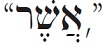 HALOT 1:98–99).