Deuteronomy
1. Moses’s First Sermon: “Look What God Has Done” (1:1–4:43)
B. His Command to Go into the Land (1:6–8)
C. Learning from the Sins of the Past (1:9–46)
D. Warning Not to Fight Brethren (2:1–23)
E. Witnessing First Fruits of the Coming Campaign (2:24–3:11)
F. Warning against a Premature Conclusion (3:12–22)
G. Denying Entrance to a Failed Leader (3:23–29)
H. Seeking God with All Our Hearts (4:1–43)
2. Moses’s Second Sermon: “Applying the Decalogue” (4:44–28:68)
A. Focusing on the Core of God’s Guidance (4:44–5:33)
B. Loving God with All Our Might (6:1–25)
C. Defending the Faith (7:1–26)
D. Remembering Not to Forget All God Has Done (8:1–20)
E. Resisting Pride and Self-Righteousness (9:1–10:11)
F. Knowing What the Lord Requires of Us (10:12–22)
G. Keeping the Faith Vital (11:1–32)
H. Honoring God in Our Worship (12:1–31)
I. Extolling the Excellencies of God’s Word (12:32–13:18)
J. Living as People of the Name (14:1–16:17)
K. Appointing Leaders to Lead (16:18–18:22)
L. Upholding the Sanctity of Life (19:1–21:23)
M. Showing Respect for All Forms of Life (22:1–12)
N. Respecting Marriage and Sexual Relationships (22:13–30)
O. Portraying a Caring Community of God (23:1–25:19)
P. Taking Time to Celebrate God’s Goodness (26:1–19)
Q. Renewing the Covenant with Our God (27:1–26)
R. Distinguishing between the Blessings and Curses (28:1–68)
3. Moses’s Third Sermon: “Realizing We Too Were There at Sinai” (29:1–30:20)
A. Hearing the Things Revealed to Them and Their Children (29:1–29)
B. Anticipating the Future for Israel (30:1–20)
A. Parting Words for the New Leader (31:1–8)
B. Renewing the Covenant in the Seventh Year (31:9–13)
C. Installing the New Leader (31:14–18)
D. Singing Moses’s Swan Song (31:19–32:47)
E. Preparing to Die (32:48–52)
F. Moses’s Final Blessing (33:1–29)
Introduction
For all too many, this book sounds to them like “Duty-onomy.” But how could that be, when Deuteronomy has been praised as the heartbeat and the most influential book of the Old Testament? If we add the testimony of Jesus, Paul, and the early church, Deuteronomy may well be the most significant book in the whole canon of Scripture. In fact, there are some 103 allusions or references to Deuteronomy in the Gospel of John alone. While it represents the climax of the five books of Moses, it is also a prophetic book; Moses was among the first and the greatest of Israel’s prophets.
Title
The English title for this book comes from the Greek translation of Deuteronomy 17:18, which speaks of the king having “a copy of the law.” The Greek Septuagint inaccurately rendered this verse as deuteronomion, meaning “second law.” However, this book is not a second law but a renewal of the covenant Moses made at Mount Sinai, which site is also called Mount Horeb.
Rather than giving a title for each book, the Hebrew Bible follows the ancient custom of naming a book by its opening line. In Hebrew, Deuteronomy starts with, “these are the words”; therefore it was simply called Debarim, “The Words.”
Structure
There are at least three different ways this book can be examined: (1) as the three great speeches of Moses, (2) as a text exhibiting the form of the vassal treaties of the great kings of the second millennium BC, or (3) as an expanded exposition on the Decalogue, the Ten Commandments.
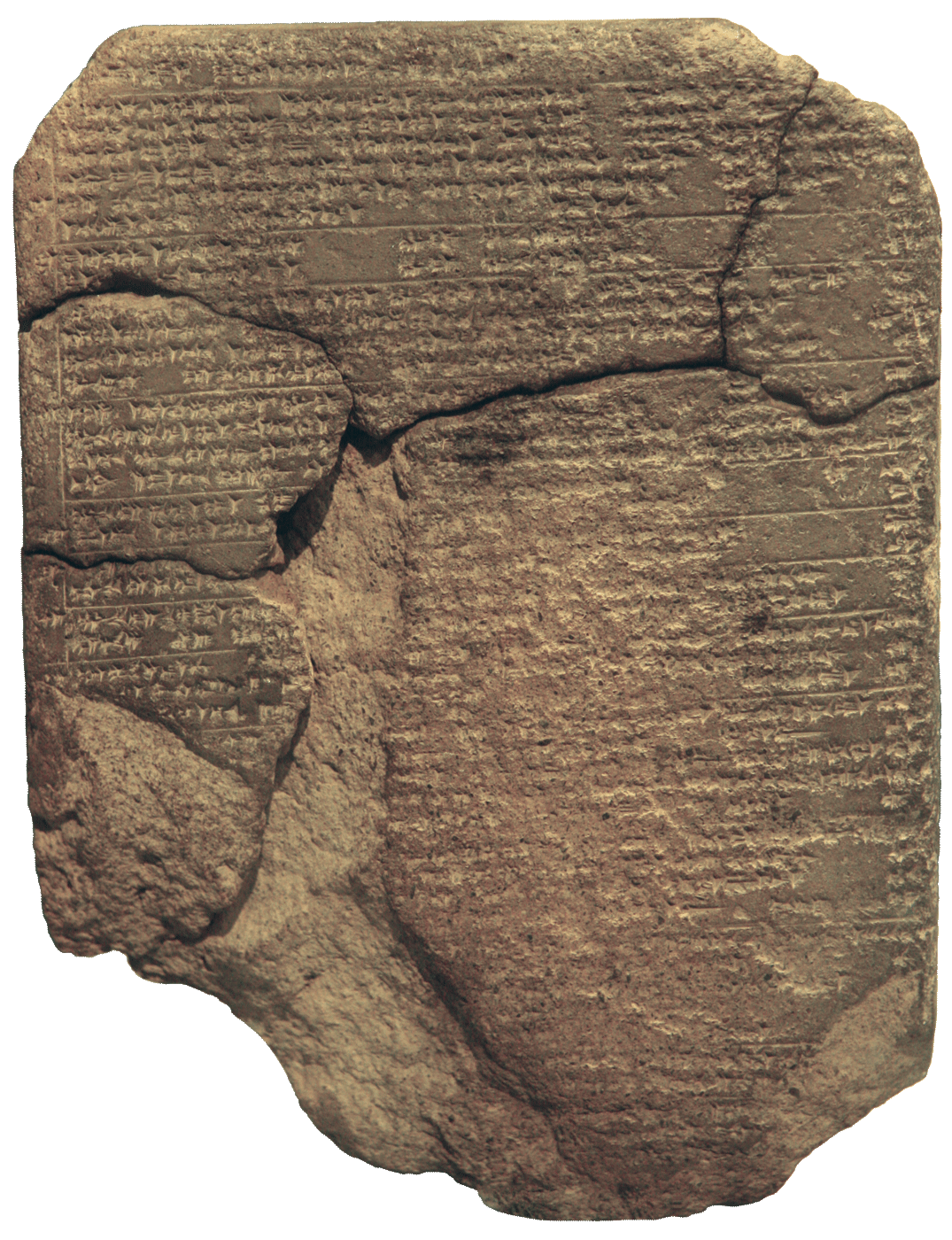
Vassal treaty between the Hittite king Mursili II and Talmi-sharruma of Aleppo (c. 1300 BC)
Using the repeated rhetorical markers of “These are the words” (1:1), “This is the law” (4:44), and “These are the terms” (29:1), it is possible to detect the three key speeches/sermons of Moses, each with a distinct focus: learning from history (1:1–4:43), explaining the law of God (4:44–28:68), and renewing the covenant (29:1–30:20).
The archaeological discovery of some fifty to sixty extrabiblical treaties of sovereign kings with their vassal kings from around 1400 BC has provided us with echoes of a similar structure for Deuteronomy. Especially significant have been the Hittite treaties from the second millennium BC, whose patterns are paralleled section for section in the same order as those in Deuteronomy.
| Hittite Treaty | Deuteronomy |
|---|---|
| A Preamble—The King Who Makes the Treaty | 1:1–5 |
| An Historical Prologue—Events Leading Up to the Treaty | 1:6–4:49 |
| The Stipulations—Allegiance Required to the Covenant | 5:1–26:19 |
| The Blessings and Curses | 27:1–28:68 |
| The Witnesses | 30:19; 31:19, 26 |
| Arrangements for Succession and Preservation | 29:1–31:30 |
The third structure proposed for Deuteronomy finds the Decalogue governing the central section of this book (see Kaufmann and Braulik). One way of viewing this development is to notice how the commandments are explained in order:
| Commandment | Deuteronomy |
|---|---|
| 1 | 6:1–11:32 |
| 2 | 12:1–13:18 |
| 3 | 14:1–29 |
| 4 | 15:1–16:17 |
| 5 | 16:18–18:22 |
| 6 | 19:1–22:8 |
| 7 | 22:9–23:14 |
| 8 | 23:15–24:7 |
| 9 | 24:8–25:4 |
| 10 | 25:5–26:19 |
Thus Deuteronomy is the most complete exposition of the Ten Commandments as they are set forth in Exodus 20 and Deuteronomy 5 (apart from their explanation, in part, in the book of the covenant [Exodus 21–23]).
Date and Authorship
Both Jewish and Christian writers have generally affirmed Moses’s authorship of the entire Pentateuch over the centuries. For example, Sirach 24:23 assumes this, as do Philo, Josephus, and several New Testament sources (e.g., Matt. 19:8; Mark 12:26; John 7:19, 23; Acts 15:5; 1 Cor. 9:9; Heb. 9:19; 10:28).
Despite this almost universal testimony, there is an alternative view that associates Deuteronomy with the reform conducted by King Josiah in 621 BC. This view appeared as early as the fourth century AD in Athanasius, John Chrysostom, and Jerome. But no systematic treatment of this opinion appeared until AD 1805, when the German scholar Wilhelm de Wette proposed that Deuteronomy was written just before Josiah’s time as a law book for the religious reforms he would lead. Later, at the turn of the nineteenth century, Julius Wellhausen put this theory into its classic form, supposing that this book in part, or the whole, was the so-called D document, which became the main plank in the literary and source criticism of the JEDP theory for the origin of the Pentateuch.
More recently, however, some scholars have reinstated Moses as the author of the first five books, called the Torah, because of the work of Kenneth Kitchen and Meredith G. Kline. Instead of the book exhibiting the end product of a series of redactions reaching its final form (Deuteronomy as a whole) in the seventh century BC, the book follows the same structural unity and integrity as the second-millennium (i.e., around 1400 BC) ancient Near Eastern vassal treaties. If the book had been written in the first millennium, as the King Josiah thesis would argue, Deuteronomy would generally lack the historical prologue (1:6–4:49). While one seventh-century-BC treaty with a historical prologue has been found recently, the above argument is still strong when viewed in light of the preponderance of the evidence. Add to this the fact that the prophets exhibit a good number of passages that are reminiscent of Deuteronomy (such as the law on the boundary mark in Deut. 19:14 and Hos. 5:10; the use of a double standard in Deut. 25:13–14 and Amos 8:5; the triennial tithe in Deut. 14:28 and Amos 4:4; and the authority of the priest in Deut. 17:12; 24:6 and Hos. 4:4–5), and it makes a good case for a date around 1400 BC, or thereabouts.
Theological Themes
Some twenty-five times Deuteronomy stresses that the land of Canaan was a gift from Yahweh to Israel. The land is not that nation’s own possession by any natural right or effort; it belongs to the Lord. It is theirs only because the Lord has sworn on an oath to give it to the patriarchs: Abraham, Isaac, and Jacob. This concept of the “land” is the fourth most frequent noun in the Old Testament, appearing 2,504 times.
The main purpose for writing this book can be found in the love God continued to pour out on Israel. Over and over again God proclaims: “The Lord did not set his affection on you and choose you because you were more numerous than other peoples, for you were the fewest of all peoples. But it was because the Lord loved you and kept the oath he swore to your ancestors that he brought you out with a mighty hand and redeemed you from the land of slavery, from the power of Pharaoh king of Egypt” (Deut. 7:7–8; cf. 4:37; 14:1–2; 26:18–19).
Some sixteen times in this book, Israel is also called on to “remember” what God has done for them, especially in their redemption from Egypt. But such recollections serve them well for the present and project into the future in the final acts of God in history. The act of remembering is not a purely cognitive one; it also presumes and includes action based on that memory.
Commentary
1. Moses’s First Sermon: “Look What God Has Done” (1:1–4:43)
A. Introduction (1:1–5). In what will be the style of the prophets of Israel, the book begins with, “These are the words Moses spoke” (1:1; cf. Jer. 1:1; Hos. 1:1). Moses is to “proclaim . . . all that the Lord had commanded,” and to “expound [make clear] this law,” thus Deuteronomy is “preached law,” the torah of God explained with divine authority and clarity, showing its sufficiency for those times and ours (1:3, 5).
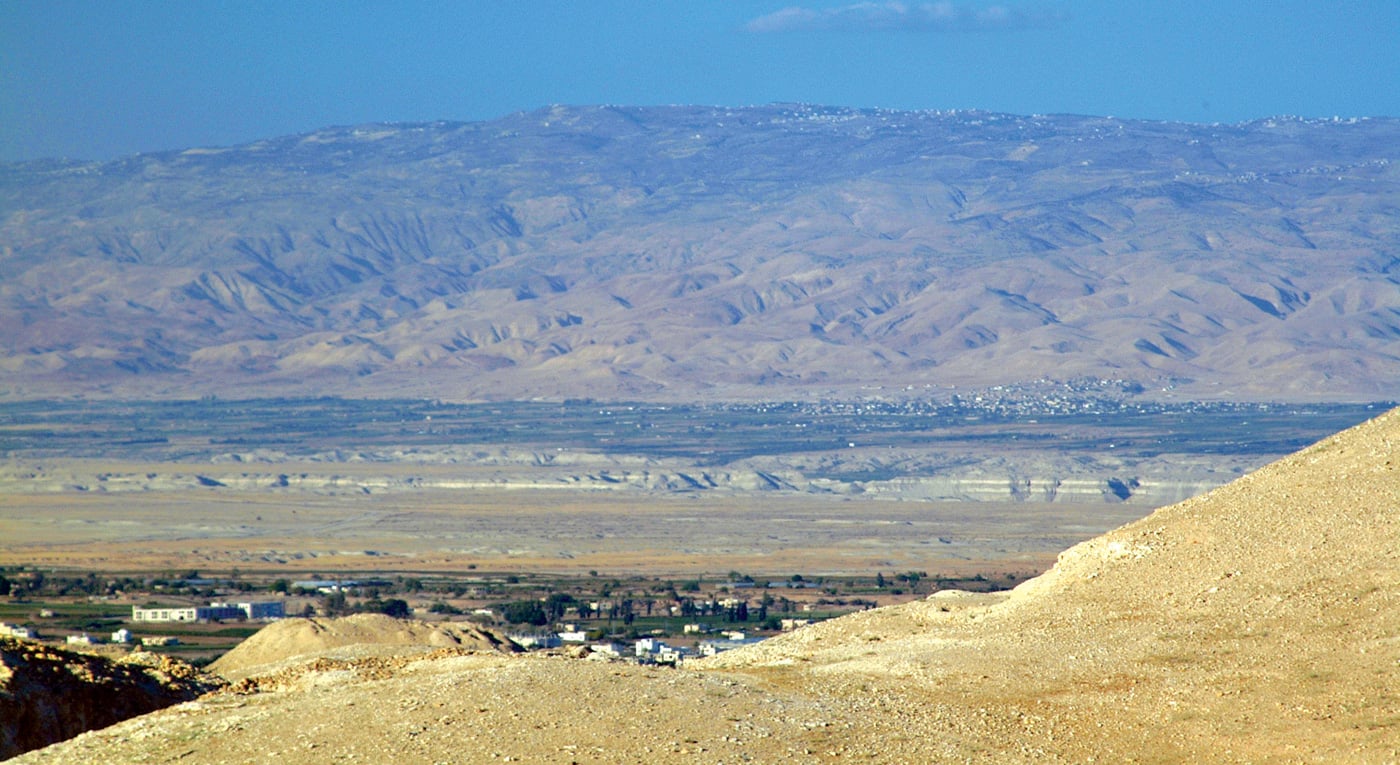
Most of the place names cannot be identified, but the location certainly is north of the Dead Sea on the east side of the Jordan River. Moses’s first sermon takes place in “the fortieth year, on the first day of the eleventh month” (1:3). Miriam has died already in the first month (Num. 20:1), and Aaron too died on the first day of the fifth month (Num. 33:38) of that same year, soon to be followed by Moses. Israel will cross over the Jordan without Moses on the tenth day of the first month of the forty-first year (Josh. 4:19). Almost incidentally we are told that it is a mere “eleven days” from Horeb/Sinai to Kadesh Barnea (1:2), but Israel has managed to turn eleven days into almost forty years!
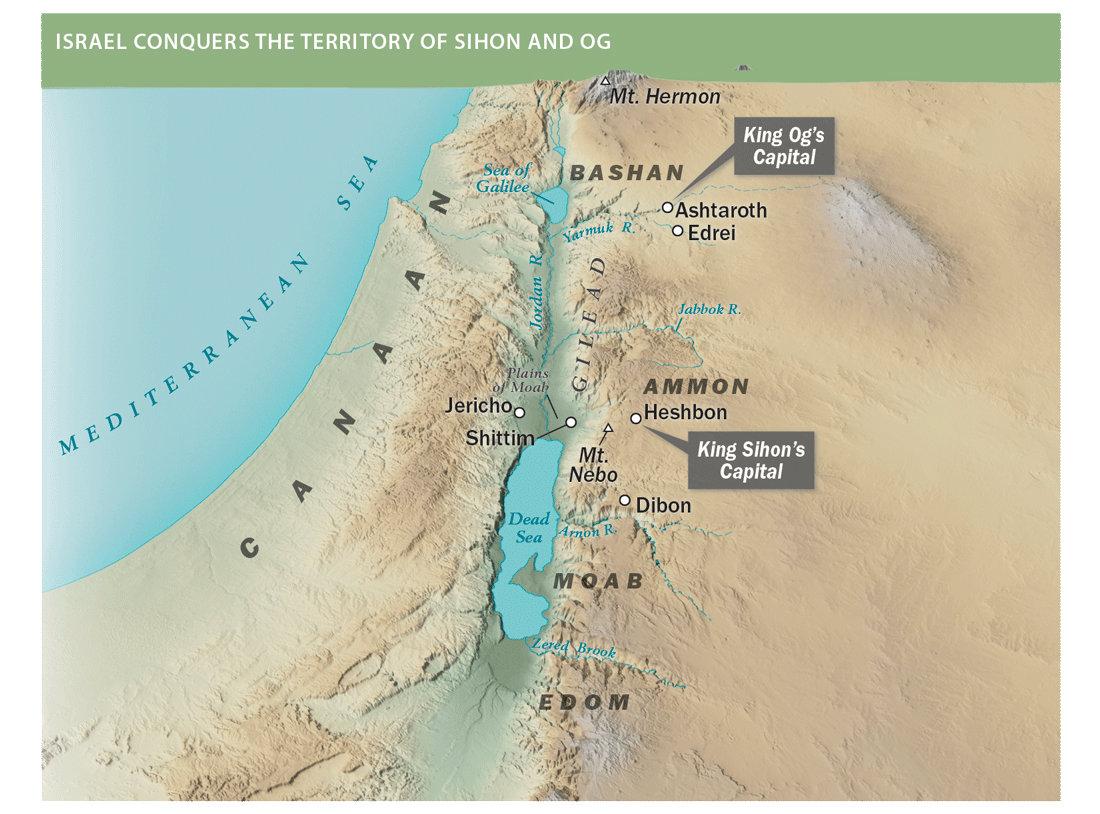
The defeats of Sihon and Og are both a prelude to what God will do across the Jordan and visible evidence that the Lord will continue to fulfill his promises to his people. These two kings were among the Amorites, a people group known as far back as 1900 BC in the Egyptian Execration texts. They were defeated by the Israelites, as also described in Numbers 21:21–35, prior to Israel’s crossing the Jordan.
B. His command to go into the land (1:6–8). Moses’s story begins at Mount Horeb, which name Deuteronomy prefers for Mount Sinai (except in 33:2). Most scholars locate Horeb in the southern part of the Sinai Peninsula and not at Jebel Halal, about twenty-two miles west of Kadesh Barnea. The Lord their God gave the order at Horeb to move out; they had “stayed long enough at [that] mountain” (1:6). Israel was instructed to enter the Amorite territory from the south and go directly into the hill country, then to attack the Jordan Valley (“the Arabah”), next the western low country of the Shephelah, and then the territory in the Negev around Beersheba, and then to head toward Lebanon and as far as the Euphrates River to the northeast (1:7). Right from the beginning of this book, the theme of the land takes a dominant role, as God has promised it to Abraham’s descendants in Genesis 15. God was reminding them, and Moses is reminding them now, that all this land has been promised to the patriarchs (1:8), as indeed it has (Gen. 12:7; 15:18–21; 17:8; 26:3; 28:13–14; 35:12).
C. Learning from the sins of the past (1:9–46). Moses goes on: prior to God’s supplying the law on Sinai, Moses’s father-in-law, Jethro, advised Moses to decentralize the legal process so that he would have assistance from appointed leaders and judges. Otherwise, the burden of this people would be too heavy for him to carry alone (1:9, 12; cf. Exod. 18:13–26). This advice he followed with God’s approval.
Now, having left Horeb, as Israel was poised to enter the Amorite territory from the south they proposed that spies first be sent out to reconnoiter the land, which proposal Moses and the Lord approved (Num. 13:1–3). The promise of God was clear: twice over Moses declared on the authority of God that he had given them the hill country and the land (1:20–21). Therefore it was incumbent upon Israel to go up and to possess what had been promised to them rather than to be afraid or discouraged.
The spies returned with the report that the land indeed was good and brought along some fruit (“cluster of grapes,” Num. 13:23) from the Valley of Eshkol (1:25). Nevertheless, the people decided to “rebel” (a technical term for breach of covenant terms) against the command of God because of the report by ten of the twelve spies that advised the land was unassailable. Only Joshua and Caleb thought the land could be conquered despite the presence of the Anakim giants (cf. Num. 13:26–33). Caleb and Joshua, unlike the other ten, feared God, not the obstacles (Num. 14:7–9, 24). Fear of the giants and the obstacles robbed the people of the victory that was as sure as God’s promise was. The lesson was: rebellion against our God does not pay. They had turned their backs on God and his way.
But, Moses continues, another lesson followed just as quickly (1:27–40): willful unbelief against our God does not pay either. Rather than esteeming the name (Mal. 3:16) and the power of God greater than any force they had uncovered in their espionage, they “grumbled in [their] tents” and announced, “The Lord hates us” (1:27). What a warped view of God’s nature and the obstacles or difficulties they faced! In their view, God’s love—seen in all his miraculous works on their behalf—was exceeded by the strength and height of the enemy and the walls of the Canaanite cities (1:28).
Worst of all, the Israelites had a warped theology of disbelieving God and a warped sense of safety and security for their children (1:29–33; 37–40). The battle was not theirs but God’s. However, no amount of reassurance would replace their adamant belief that the ten spies were correct. In fact, the “little ones,” who they worried would be taken captive, would be the only ones who would enter the land (1:39) along with Caleb and Joshua as the sole representatives of that older generation. It was the people’s constant griping that also cost Moses his opportunity to finish the job and to lead them into the promised land (1:37; Num. 20:1–13; Ps. 106:32–33). Trouble came to him because of them.
A third and final lesson from this episode, Moses tells the people, is this: arrogant presumption against God does not pay either (1:41–46), for the people of that generation took matters into their own hands when they learned that their disobedience would cost them thirty-nine more years of wandering and denial of their entrance into the promised land (1:41–45).
The principle is that God’s people cannot accomplish spiritual things through the energy of the flesh. Without the presence of God, defeat on the battlefield is inevitable—and that is what happened. The beaten people came back and wept before the Lord (1:45).
D. Warning not to fight brethren (2:1–23). In this chapter Moses recounts, for a change, a number of times Israel obeyed. They began by turning away from the promised land and traveling “around the hill country of Seir” (2:1). Then they turned north (2:2). Israel was not to provoke the descendants of Esau to war, for God had already given this hill country to Edom (2:5); instead, Israel was to purchase food and water from them for silver (2:6). God had already so blessed Israel that they “lacked nothing” (2:7 KJV, RSV).
Likewise, Israel was not to harass Moab (2:9), for just as God had dispossessed the Horites (also called Hurrians) of their land and had given it to Edom (2:12), so he had driven the Emites out of the other land he had now given to Moab (2:10). The name Anak was also known in the early Egyptian Execration texts. The Anakim were remembered by the name Rephaim as well, listed earlier as original inhabitants of the promised land, who were defeated by the invader Kedorlaomer (Gen. 14:5).

Silver coils. To purchase something for silver, as the Israelites were instructed to do in Seir (Deut. 2:6), one would cut off the correct weight from the coil.
Israel crossed the brook Zered, the southern boundary of Moab, after thirty-eight years had gone by since they left Kadesh Barnea (2:14)—enough time for an entire generation of fighting men to have perished. All that time, it should be noticed, the hand of the Lord had been against them (2:15).
Now that that generation had expired, they were forbidden once again to harass the Ammonites, for God had also given these descendants of Lot their territory, replacing the Zamzummites (called Zuzites in Gen. 14:5). Despite the fact that the Zamzummites too were as strong and powerful as the Anakites, the Lord destroyed them to make room for the Ammonites. He is Lord of history—yes, of all nations!
A similar dispossession had occurred in the coastal region of the Gaza Strip, where the Avvites once lived. But the Caphtorites came from Caphtor, which is probably the island of Crete, and destroyed the Avvites (2:23). The Caphtorites were also known as the Philistines, who played such a large role in the land that their name was given by the Romans to the land of Palestine in the second century AD, after the Bar Kokhba rebellion.
E. Witnessing first fruits of the coming campaign (2:24–3:11). The battle for the Transjordan would now begin. Sihon the Amorite, king of Heshbon, was among those who had been under God’s watchful eye as he waited for the sin of the Amorites to fill up the cup of iniquity (Gen. 15:16). Their sin had now flowed over the top of that cup; therefore, God would put the Amorites in the power of Israel.
Even though God’s judgment was sure, God had Moses send messengers seeking peaceful passage through Sihon’s territory. Sihon ruled over the area east of the Jordan and the Dead Sea from the Arnon River in the south to the Jabbok River in the north. Heshbon may have been his capital, located some fifteen miles east of the northern end of the Dead Sea. Moses’s messengers promised to “stay on the main road” (2:27) and to consume only what they purchased, as they had done in Edom and Moab. Sihon, however, firmly refused since, as Moses says, the Lord had “made his spirit stubborn and his heart obstinate in order to give him into your hands” (2:30).
The same battle recorded in Numbers 21:23–26 is lengthened here as the battle of Jahaz (2:32). This site is known in Jeremiah 48:34, Isaiah 15:4, and in lines 18–20 of the archaeological find called the Mesha Stone. The battle was a disaster for Sihon, his army, and their whole country. Sihon is the first to suffer the judgment of “total destruction,” referred to in Hebrew as herem, as the entire land was put under the ban and “devoted” or “dedicated” to destruction (2:34; the term occurs five other times in Deuteronomy: 3:6 [twice]; 7:2; 13:16; 20:17). This concept of herem, except for its single occurrence outside the Bible on the Mesha Stone, is found only in the Bible. As the act of dedicating the cities and peoples of Canaan to God for destruction demonstrated, Canaan belonged exclusively to the Lord. Therefore, what was not killed or burned, such as silver, gold, or iron, was to be placed in the sanctuary of the Lord. This is not the ordinary ethic of the Bible with respect to the treatment of people groups, but an extraordinary one. It was the prerogative of the original Israelite inhabitants of Canaan, thereafter only to be realized in the future in the final destruction of all evil.
In like manner, the Lord gave Og, king of Bashan, into Israel’s hands (3:1–11). His territory, far to the north and east of the Sea of Galilee, was known for its plush pastures and remarkable cattle (Amos 4:1; Mic. 7:14). This Rephaite giant, Og, famous for his thirteen-foot-long and six-foot-wide king-sized bed (some commentators incorrectly say it was a basalt sarcophagus), fell before the troops of God as easily as had Sihon (also reported in Num. 21:32–35). No obstacle proved invincible to Israel.
F. Warning against a premature conclusion (3:12–22). Moses then tells of the distribution of the land in the newly won Transjordanian territory to two and a half tribes (3:12–17; fully described in Num. 32:1–42). Deuteronomy makes no reference to the conflict that arose over this decision. Reuben was given the territory from the Arnon north to the hill country of Gilead, with half of that area (the land previously held by Sihon) given to Gad. Og’s territory, which was the other part of Gilead and all of Bashan, was given to the half tribe of Manasseh; the other half of the tribe would need to wait until Joshua made the distribution on the west side of the Jordan, which is recorded in Joshua 17:7–11. One of Manasseh’s descendants, Jair, “took” the whole of the Argob up to the borders of two small states of Maakah (around the Jordan just south of Mount Hermon) and Geshur (located east of the Sea of Galilee). The Geshurites and the Maakathites appear never to have been dispossessed of their lands, but seem to have survived as small, partially independent states for centuries (Josh. 13:13; 2 Sam. 3:3; 13:37; 15:8). Jair renamed his territory Havvoth Jair; the word Havvoth could come from a Hebrew word meaning “settlements” or the plural for the word meaning “life” (just as German Leben, “life,” is seen in Eisleben, Germany, for example).
Even though many take the expression “to this day” to mean a later hand added this note, the same expression is used in Moses’s reference to the victory over Egypt in the Hebrew text of Deuteronomy 11:4 (not rendered in the NIV) and in Joshua 9:27 about what happened to the Gibeonites. This expression, then, may well mean something like “and so it remained” or it was “irrevocable” (Harman, 51).
While some of the tribes worried that this early distribution would excuse these two and a half tribes from the battle for Canaan on the west side of Jordan, that was a premature conclusion; in 3:18 Moses tells that he directed all able-bodied men in these two and a half tribes to cross over “ahead of the other Israelites” and to stay until the job was done.
Finally, Moses points out that what God has done to Sihon and Og is to serve as a lesson to Joshua that the Lord will do the same to all the kingdoms in the west (3:21). Joshua is not to be afraid: “the Lord your God himself will fight for you” (3:22).
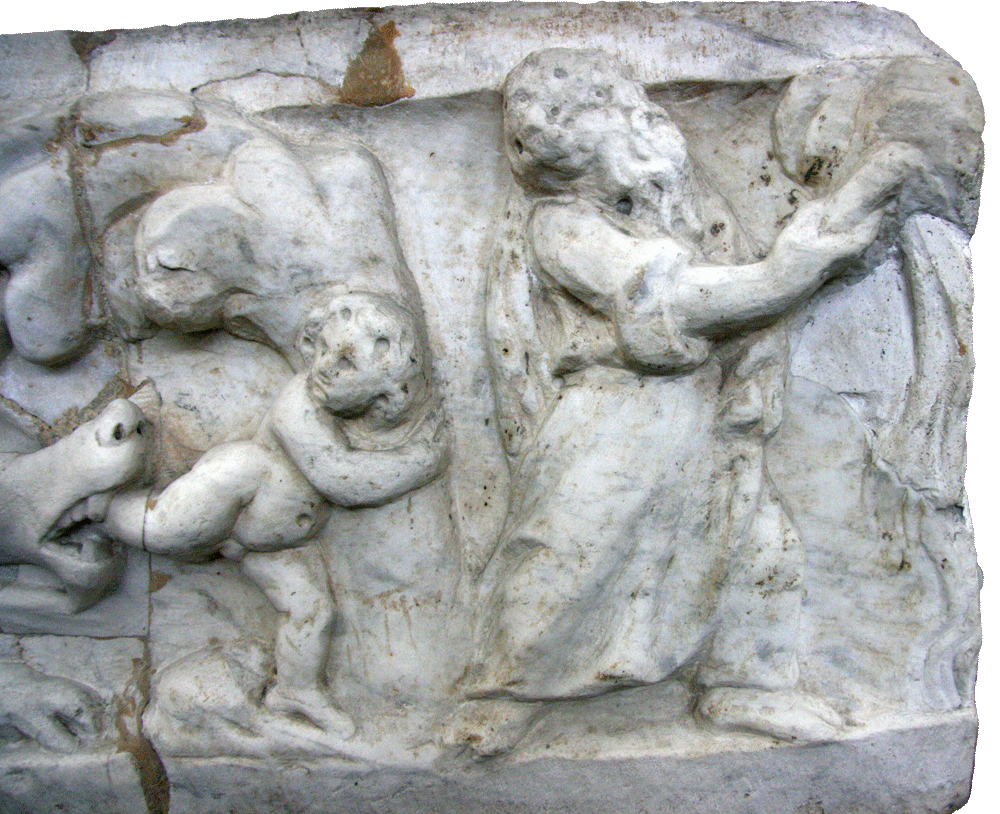
A carving on a fourth-century-AD sarcophagus lid showing Moses striking the rock
G. Denying entrance to a failed leader (3:23–29). Moses tells how he pleaded with God, whom he addressed as “Sovereign Lord” (in Hebrew the compound name is yhwh [Yahweh] in combination with adonay, each typically translated as “Lord”; 3:24), a form distinctively used in the Abrahamic and Davidic covenants. Moses appealed, “Let me go over and see the good land beyond the Jordan” (3:25). After all, he argued, God’s anger had come on him because the people had made him angry. The incident was when he struck the rock instead of merely speaking to the rock (Num. 20:1–13). God seems to have agreed that Moses was indeed provoked by the people in doing this rash act (Ps. 106:32–33), but God determined that Moses had failed publicly in the act of leadership, therefore he would not be allowed to continue leading God’s people. Despite Moses’s repeated request for God’s overruling his judgment against his role as leader (Deut. 1:27; 3:26; 4:21; cf. 31:2; 32:48–52; 34:4), God would not relent. Moses surely was forgiven, but the consequences of his act as a leader still remained.
H. Seeking God with all our hearts (4:1–43). Chapter 4 is one of the great sermons of the Bible. This sermon finds its focus and heart in verse 29, “But if . . . you seek the Lord your God, you will find him if you seek him with all your heart and with all your soul.” Years later the prophet Jeremiah will appeal to this text in his letter to the Hebrew exiles in Babylonia (Jer. 29:13).
Based on the preceding historical review, Moses here transitions to exhorting Israel as he calls them to follow God’s instruction. The reason or purpose for observing God’s guidance in his laws is “so that you may live” (4:1). Few phrases are repeated more frequently in this book (e.g., 5:33; 6:2; 11:21; 25:15; 30:6), climaxing in 30:15–20 as a call to life as God means it to be lived. This life is found only by belief and trust in the word of God, which is inviolable, with no lessening (subtracting from) or increasing (adding to) that word (4:2). Israel’s wisdom and understanding of these laws will be a witness to the nations (4:5–8).
Moreover, the only way anyone is going to be able to find God is by not forgetting these teachings or letting them slip from his or her life (4:9). Even though none of the Israelites see any form of God (4:12, 15), they still hear God speak directly from heaven (4:10). Since God has no form, Israel must not make any image or assumed likeness to him, for this would defame God’s majesty (4:16–19). The Living God will brook no rivals, for zeal for his own character would consume all pretenders (4:24).
Heaven and earth are called as witnesses (4:26; cf. 30:19; 32:1; Isa. 1:2; Jer. 2:12; Mic. 6:1–2) against all who worship foreign gods and who have become corrupt (4:25). The threat of scattering the Israelites among the nations and of a pending exile is predicted even before they enter the land (4:27–28; cf. Lev. 26:33; Deut. 28:64–68). But when the distress of those “later days” finally hits, if they will “return” (4:30) both spiritually and physically back to God and come back to the land, God will once again be found by them, for he is a “merciful God” and “he will not abandon or destroy [them] or forget the covenant with [their] ancestors” (4:31). God’s character is indeed the foundation of all his promised plans for Israel and all who will later believe.
There is one more reason why all must seek the Lord with all their being: there is no one else like the Lord himself. Three questions (4:32–34) ask whether anyone has ever encountered anything like what Israel has experienced: Has anyone ever heard God speaking out of the fire and lived? Or seen such miraculous signs and wonders? Or seen what God did for Israel in Egypt? It is all impressive evidence of God’s “love” and “Presence” (4:37).
The Lord God has no rivals; therefore, all believers must live in accordance with God’s law. How else will the other nations come to experience the uniqueness of Yahweh unless they also see the ethical distinctiveness of God’s obedient people (4:39–43)? That is why three cities of refuge are set up for those who kill unintentionally to have a place of safety (4:41–43)—Israel’s ethic is distinctive.
2. Moses’s Second Sermon: “Applying the Decalogue” (4:44–28:68)
A. Focusing on the core of God’s guidance (4:44–5:33). 4:44–49. As in Deuteronomy 1:1 and 29:1, so 4:44 introduces the next sermon with the similar rhetorical expression: “This is the law.” It begins with a summary of the story already rehearsed in chapters 1–3, a use of repetition that is not uncommon in other ancient Near Eastern narrative texts.
5:1–33. Before reiterating the law, originally given at Sinai, here in the plains of Moab, Moses emphasizes the importance of the “ear” as the organ for listening and responding—“Hear, Israel” (5:1). But Moses also gives three important principles prior to giving the Ten Commandments.
First, Moses declares the continuity of the covenant: “not with our ancestors . . . but with us” (5:3). This has the force of “not simply with them alone,” but also refers to all who later will hear and obey. Therefore, even though the original proclamation of the Decalogue, the ten words, was given to the fathers of this generation, it is nonetheless given to the present generation as much as if they too had been present. Since God is a living God, each succeeding generation is simultaneously addressed and called to the same degree of obedience.
Second, while Moses speaks metaphorically of the Lord addressing the father’s generation “face to face” (5:4–5), it is no less a direct speaking to later generations as well. This is no impersonal encounter or an abstract duty, but a personal relationship with the Lawgiver himself.
Third, the environment of the law is God’s redemptive grace (5:6), for he has brought them up out of Egypt. These laws are not given so that persons can gain salvation by works but because God has already redeemed them; they now want to do what he has said. These ten words are the Magna Carta, a covenant of grace, anchored in God’s first step toward us: redemption.
Commandment 1 (5:7). We are to have no other gods before the Lord. Therefore, we must have a God (versus atheism); we must have Yahweh as our God (versus idolatry); we must have the Lord alone (versus polytheism); and we must love, fear, and serve this Lord with all our heart and soul (versus ritualism).
Commandment 2 (5:8–10). We are not to make for ourselves an idol in the form of anything anywhere. Hebrew has fourteen words for idols or images, so prevalent was this pagan practice of false worship. Forms of idolatry, however, can be material and external as well as spiritual and internal.
The penalty or sanction for this commandment comes with the magisterial reminder that God is a jealous, zealous God who demands exclusive worship (5:9). His anger is roused by all that opposes the good, right, fair, and just, rather than by envy or a spirit of getting even; it is an emotion roused by evil and sin to take up the cause of righteousness. Often children repeat the sins of the parents going on into the third or fourth generation, but in no way must either the fathers or the children stand responsible for the sins of the other (Deut. 24:16).
Commandment 3 (5:11). The prohibition against using God’s name in vain includes more than just the misuse of the name by which God is known. It also refers to his nature (Ps. 20:1), his teaching or doctrine (Ps. 22:22; John 17:6, 26), or his ethical directions (Mic. 4:5). It forbids not only using his name to curse but also all trite or purposeless and frivolous uses of this name.
Commandment 4 (5:12–15). The call to observe the Sabbath is not intended to be a word of bondage but one of liberation and cessation of work, leading to genuine rest. The nature of this command is mixed: it is moral, mandating that God has a right to a portion of our time in worship, service, and rest. But it is also ceremonial in that it spells out the seventh day, the Jewish Sabbath, as that rest day. However, the same law that points to the seventh day also forecasts that the eighth day, on certain feast days, is to be holy to the Lord and a day in which no normal work is to be done (Lev. 23:16, 21, 24, 35, 36, 39). This points to the coming work of Christ and anticipates Sunday worship in honor of the resurrection of Jesus.
Commandment 5 (5:16). The sanctity of the family calls for esteeming and prizing highly parents and all those in authority over us as we defer to them with respect and honor. When this command also enjoins our obedience to parents and those over us, it is qualified as “in the Lord” (Eph. 6:1). Parents, governors, magistrates, teachers, and pastors are to be shown respect, but nowhere are their wills or wishes to be substituted for the will of God. The promise of long life with this commandment is unique, though all the commandments have the promise of life standing over them (Deut. 4:1; 8:1; 16:20; 30:15–16).
Commandment 6 (5:17). The sanctity of life is affirmed with the use of one of seven Hebrew words that refer exclusively to taking life by malice and forethought or premeditation. This prohibition does not include accidental homicide, self-defense, just war, or the like, for which other Hebrew words are used. So sacred is life that no “substitute/ransom” can be accepted for premeditated murder (Num. 35:31), whereas other capital crimes presumably could be atoned for with substitutes.
Commandment 7 (5:18). The sanctity of marriage carries out the case made for monogamous relationships in Genesis 2:23–24. Adultery is not just the violation of a pledge made to another person, but it also violates the covenant made with God (Prov. 2:17; Mal. 2:14). It is a sin against God as well as against one’s partner (Gen. 29:9).
Commandment 8 (5:19). The sanctity of property calls for a recognition that God owns everything (Ps. 24:1; 115:16). Therefore, stealing is an act of putting possessions ahead of God when goods and wealth are voluntarily to be shared with all.
Commandment 9 (5:20). The sanctity of truth is based on the fact that flouting the truth is an act of despising God, whose very being and nature is truth. Lying is always wrong, for God commands truth-telling (Ps. 27:12; 35:11; Prov. 6:19; 14:15).
Commandment 10 (5:21). The sanctity of motive includes all thoughts, desires, and inner instincts that lead to the above nine actions. This command seeks a state of contentment for God’s men and women, for “godliness with contentment is great gain” (1 Tim. 6:6).
God announced these commandments, Moses says, in a “loud voice” (5:22) as the mountain was ablaze (5:23). Instead of continuing to hear God’s voice directly, the people urged Moses to go up to God on their behalf and tell them what God had said (5:26). However, all that God would say, they promised, “We will listen [to it] and [we will] obey” (5:27). This pleased God: “Everything they said was good” (5:28). The Lord just wished that this would always be true of them.
B. Loving God with all our might (6:1–25). Here begins the detailed explanation of the commandments, as some of their implications are spelled out more fully. This instruction will be given so that all may “fear the Lord” (6:2). Few expressions in the Old Testament embrace more what it is to listen, love, and serve God than to “fear God.”
These verses do not suggest any type of entitlement, as if the promise is that if we always fear and obey God we will always receive anything we want. We do not trade in spiritual capital for material prosperity in some kind of name-it-and-claim-it economy. Instead, it is our privilege to honor so great a Lord.
The famous Shema passage of verse 4 (in Hebrew, shema, “hear,” is the first word in the verse) is one that is on the lips of orthodox Jews morning and night, and one they wish to be on their lips when they die. To this verse, Jewish practice dictates that they also add Deuteronomy 15:13–21 and Numbers 15:37–41. Twice over, the covenantal name Yahweh appears in this verse. But the emphasis is on the Hebrew ehad, meaning “one” (if it is an adjective) or “alone” (if it is an adverb). Either way, the point is that our God is unique, with no rivals. To worship other gods is to chase after nothingness.
Since God is the one and only God, verse 5 commands us to “love” him (one of fourteen times in Deuteronomy). We are to love him with “all [our] heart,” which in this case refers to our mind and intellect (Jer. 5:21; Hos. 7:11), and with “all [our] soul,” which refers to our total being, life, and vitality.

A modern-day phylactery
Parents in Israel are to make sure that conversation about such things is a daily part of their children’s lives. There is to be no excuse for neglecting their children’s spiritual welfare. As families eat together, they are to talk around the table about the Lord. Later on many Jewish families will take verses 8–9 literally, making small boxes with these verses inside strapped to their foreheads, called phylacteries, and attaching similar boxes to their doorposts, called mezuzas. However, these words are meant to be taken metaphorically, for they echo similar words in Exodus 13:9, 16 regarding the consecration of the firstborn. Moreover, Moses directs that these words are to be “on your hearts” (6:6) and that much more is meant by “these commandments” than merely the words of verses 4–9—it encompasses all the commandments.
But with the blessing of God to come as they enter the land of Canaan and receive his gracious gifts, they must “be careful that [they] do not forget the Lord” (6:12). Forgetting what God has done would seriously impoverish Israel’s spirituality, for pride takes over as they begin to think that it all happened by their own strength.
Fearing God is one of the best ways to express our love and devotion to him (6:13). Moses contrasts slavery in Egypt (6:21) to service to God (6:13). Israel’s deliverance from bondage is to set her free to confess and serve a wonderful Lord. Idolatry, which is a form of covetousness, must be avoided, for God is a jealous God (see commentary on 5:9). Rejected are all forms of worthless service, which include hedonism (the god of enjoyment), social approval (the god of how I am regarded), overweaning ambition (the god of what I must achieve), and materialism (the god of all that I can get).
Since the Israelites have received all these demonstrations of the Lord’s favor and power, they must not force the Lord for still more miracles (6:16). They did that at Massah (Exod. 17:7; Deut. 9:22), but their faith must be as simple as the child’s question (reminiscent of Exod. 13:14) of verse 20, “What is the meaning of the stipulations, decrees and laws?” The answer is always to tell the story all over again of God’s mighty acts in the exodus. Because of God’s grace, obedience is as natural as for any grateful person who has been snatched from death’s door. God is to be confessed and honored before all mortals, without casualness, overfamiliarity, or triteness. Recalling God’s fulfilled promises is a mandatory feature of being part of the family of God, for if we forget, we will experience the consequences and certainly come to grief.
C. Defending the faith (7:1–26). Destroying the Canaanites will really be the work of the Lord, for he will “drive [them] out” (7:1). The same Hebrew verb is also used for “loosening” or “taking off” a sandal (Exod. 3:5; Josh. 5:15); thus the Lord will free Israel from these seven nations just as one loosens a sandal from the foot. Elsewhere Canaan is listed as having eleven nations (Gen. 10:15–18), or ten (Gen. 15:19–21), six (Exod. 3:8; 33:2), or three (Exod. 23:28).
Israel is to “destroy them totally” (Hebrew haram, a verb meaning “to devote to the ban” or “to dedicate to destruction”). All the spoil belongs to the Lord and is banned from any human use. This principle is best illustrated in the Achan story (Josh. 7:1–26). This type of dedication is an involuntary dedication (the opposite of Rom. 12:1–2, which is a voluntary offering of ourselves up to God).
Since the territory will not all be available immediately (7:22), Israel is to beware of intermarriage (7:3), the foreign cult apparatuses of sacred stones (7:5), the fertility pole of Asherah (7:5), and foreign altars. This whole chapter is very similar to Exodus 23:20–33.
Israel is called to be a “holy people,” a “treasured possession” (7:6; the Hebrew term for “treasured possession” means a moveable asset, like jewels; cf. Exod. 19:5; Deut. 14:2; 26:18; Mal. 3:17).
Though Israel is the smallest of all peoples, the only explanation for God’s choice of them is that he “loved” them (7:7–8)—an unmerited love. In verse 8 a new term appears, “redeemed you,” which in Hebrew means “set you free” or, as used in the sacrifices, refers to “a ransom that delivers by the use of a substitute.” Two other important terms show up in verse 9: “know,” a technical expression of the covenant, like “choose” (cf. Amos 3:2), and “covenant of love,” which has the word “covenant” standing alongside of Hebrew hesed, “faithful love” (appearing 248 times in the Old Testament), one of the most beautiful terms, and equated very closely to “grace.”
Over against those enjoying God’s faithful love are those who “hate him” (7:10), as shown by their disobedience and rejection of God’s word. It is either “love God” or “hate him”; there are no middle alternatives.
For those who love the Lord, there are innumerable blessings (7:12–15), but Israel must destroy those the Lord gives over to them (7:16–26). God will send “hornets” (7:20) among their enemies, which some interpret metaphorically as leprosy, but which others more convincingly link to the invasion of the Egyptians over the years prior to Israel’s conquest of the land, since Egyptian pharaohs had a type of hornet in their insignia. Another divine promise is a panic sent by God on these enemies (7:23). No one will be able to stand against Israel, for they will be standing against God himself!
D. Remembering not to forget all God has done (8:1–20). This chapter is bracketed in verses 2 and 18 by “remember,” thus reminding the people of the danger of letting slip from memory all God has done for them. In Hebrew, “to remember” is not purely cognitive but also implies an action resulting from our calling it to mind. As the Lord “remembered” Hannah, she became pregnant (1 Sam. 1:19). As the great Puritan preacher Stephen Charnock advised, “Oh if we did remember [God’s] former goodness, we should not be so ready to doubt of his future care” (Charnock, 1:114).
Verse 3 contrasts self-dependence with dependence on God and his word. That is why God fed the Israelites with manna in the wilderness, “to teach [them] that man does not live on bread alone, but on every word that comes from the mouth of the Lord” (used by Jesus in his temptation by the devil in Matt. 4:4). The use or nonuse of God’s word will gauge the attitude and direction of the people. Even the hard experiences (8:5) are meant to be educational, just as a father’s discipline of his own son.
The vivid portrayal of the land with all its richness (8:7–9) is repeated in very similar terms in the Egyptian story of Sinuhe from 1800 BC. But this extravagance is accompanied with a warning that they must “be careful . . . not [to] forget” the Lord or all that he has commanded them. Forgetting the Lord and disobeying his commandments seem to be tied together in practice (8:10–14), for both lead to disaster. The gifts must not replace the Giver, for often widespread prosperity leads to gross ingratitude.
The desert experience (8:15–16) was most unpleasant when Israel encountered venomous snakes (Num. 21:4–9) and lack of water (Num. 20:1–13). But even there God provided food (Exod. 17:1–7) and water (Num. 20:13). Nevertheless, God “confirms his covenant” (8:18), which is a reaffirmation of his long-standing promise. But if forgetfulness prevails, then that generation too will be destroyed (8:19–20; cf. Mal. 4:6).
E. Resisting pride and self-righteousness (9:1–10:11). The victory Israel is about to achieve will be the Lord’s doing, not Israel’s. It will be an expression of God’s grace and not of this nation’s prowess. Once again Israel is summoned to listen (9:1), as in Deuteronomy 6:4–9. They will face the giants (Anakim), of whom they were previously terrified (Deut. 1:28), but the emphatic thrice-repeated “he” in the Hebrew of verse 3 reminds them of the initial words of the Ten Commandments, “I am the Lord your God”:
“He [is the one] who goes over before you as a consuming fire” (ESV; cf. 4:24);
“He will destroy them”;
“He will subdue them before you.”
But God’s intervention on their behalf is not to be credited to their “righteousness” or their “integrity” (9:5–6), for they are a stiff-necked people (9:6). Moses easily illustrates the evidence for Israel’s disobedience and stubbornness (9:7–29): at Sinai with the golden calf (9:8–21; cf. Exod. 32:1–34:35), at Massah (9:22; cf. Exod. 17:1–7), at Taberah (Num. 11:1–3), at Kibroth Hattaavah (Num. 11:31–34), and at Kadesh Barnea (9:23; Num. 13:1–14:45). So far was Israel from God that he told Moses they were “your people” (9:12)—God was ready to “blot out their name” (9:14) and make a new nation out of Moses. But the God who had prepared Moses to also intercede on their behalf was the same God who was merciful and gracious to all who would turn and repent. Moses, however, “lay prostrate before the Lord” for “forty days and forty nights because the Lord had said he would destroy [them]” (9:25). Moses also prayed for Aaron (9:20)—even the high priest needed forgiveness.
Moses tells the people that he made three requests of God (9:26–27): (1) that God would not destroy his inheritance; (2) that God would remember his ancient promise to the patriarchs: Abraham, Isaac, and Jacob; and (3) that God would overlook Israel’s stubbornness and sin.
So God told Moses that new tablets were to be chiseled out of stone (10:1), and Moses was to come back up the mountain once again as God personally rewrote the same words that were on the first set of tablets that Moses had smashed in disgust at the people’s sin. Unlike other commands, which God gave through the mediation of Moses, these came directly from the Lord, hence their importance and significance. These stone tablets were to be put into a “chest” or “ark” (10:2–3). This probably was not the same permanent receptacle made by Bezalel (Exod. 37:1) but was a temporary box.
Verses 6–9 seem intrusive, but the end of verse 5 leads naturally into the Levites, who are charged with the moving and keeping of the ark (10:8–9). The Levites’ work, Moses says, is threefold: (1) they are responsible for carrying the ark of God; (2) they are to stand and minister before the Lord; and (3) they are to pronounce blessings in the name of the Lord, meaning they are to bring the people into a relationship with the Lord by proclaiming his salvation and by instructing the people in the law (33:10; Mal. 2:4–5). As a consequence (10:9), the Lord is the Levites’ inheritance even though they did not receive one among their fellow Israelites.
The outcome of Moses’s prayers and fasting is noted in verses 10–11. The Lord again shows mercy to the people and restates his promise.
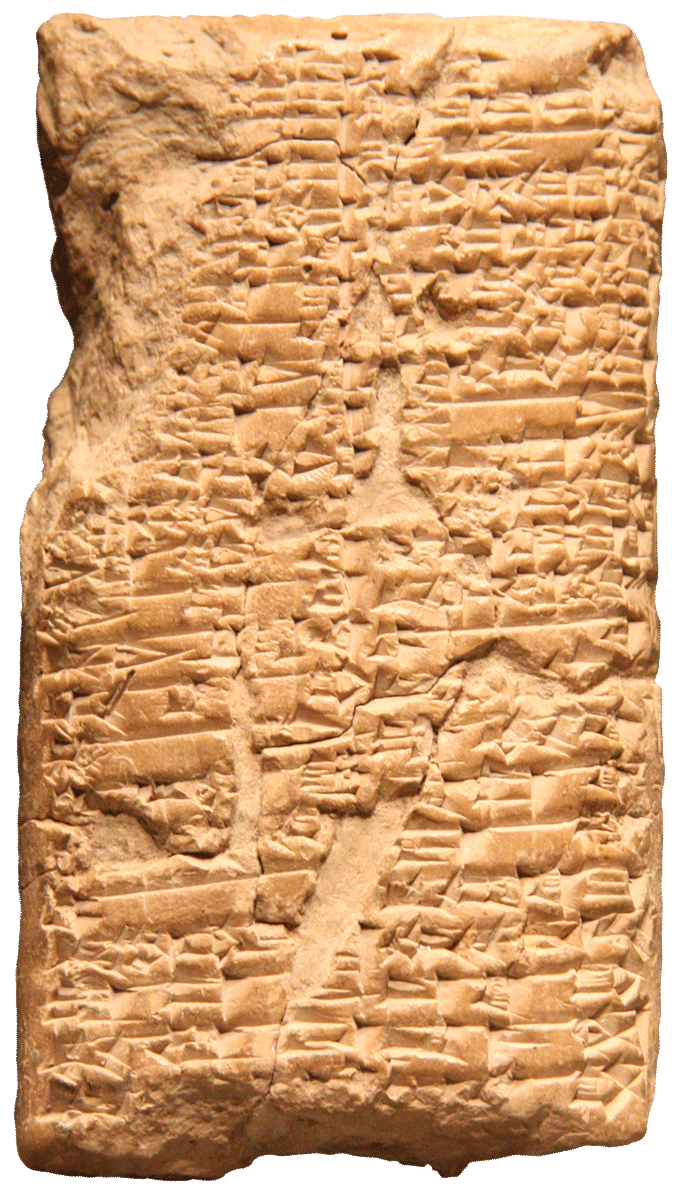
A tablet containing the legal sayings of Lipit-Ishtar (Mesopotamia, ca. 1930 BC). This collection is concerned with issues of justice, similar to those in Deuteronomy 10:17–18.
F. Knowing what the Lord requires of us (10:12–22). Moses’s style changes in 10:12, as marked by the words, “And now.” The interrogative “What does the Lord your God ask of you” is echoed in Micah 6:8. Moses gives five answers to this rhetorical question: (1) “to fear the Lord,” (2) “to walk in obedience to him,” (3) “to love him,” (4) “to serve the Lord your God with all your heart and with all your soul,” and (5) “to observe the Lord’s commands and decrees . . . for your own good” (10:12–13). But this is no call to formalism, for the people must spiritually “circumcise [their] hearts” (10:16), a concept repeated in Deuteronomy 30:6; Jeremiah 4:4; 9:26; Ezekiel 44:7, 9; in Paul’s call for obedience from the heart (Rom. 2:28–29); and in Stephen’s speech (Acts 7:51).
This leads into a description of the incomparability of God, emphasized by three adjectives: “great . . . , mighty and awesome” (10:17). Furthermore, this awesome God “shows no partiality,” “accepts no bribes,” “defends the cause of the fatherless and the widow,” and “loves the foreigner,” “giving [the foreigner] food and clothing” (10:17–18). No wonder, then, that “he is [our] praise” (10:21 KJV, RSV).
G. Keeping the faith vital (11:1–32). Chapter 11 brings to a close the section that began with the Ten Commandments in chapter 5 and its exposition of the central principle of the ten words before he gives the exposition of these commandments in chapters 12–26. The fundamental commandment is to “Love the Lord your God” (11:1), with “commandment” appearing in the singular form (cf. Deut. 6:5). They are to keep his “charge” or “requirements,” this word used uniquely here in Deuteronomy.
Even though those in the new generation are not the eyewitnesses of God’s mighty acts in the past or of his “discipline” (the Hebrew term has not just the idea of punishment, but his “chastening instruction”), nevertheless many others did witness the exodus (11:4) and the revolt of Dathan, Abiram, and the sons of Eliab (11:6; cf. Num. 16:1–50). No mention is made of Korah’s role in this revolt; he died in it, but his children did not (Num. 26:9–11; cf. Ps. 106:17–18, which mentions only Dathan and Abiram).
For the second time in this chapter the Israelites are called to “observe therefore all the commands” (in Hebrew, “commandment” is singular here, indicating the wholeness of the law) God is giving to them (11:8), setting the stage for future life in the land (11:8–17). For example, whereas Egypt was a land with scarce rainfall, necessitating hard work in the irrigation of the land by foot pedals to lift the water, Canaan is a land that “drinks rain from heaven” (11:11). Thus, there is theology in meteorology, as faithfulness to God is correlated with the amount of water in the rain gauges (11:13–15; cf. Lev. 26:3–4).
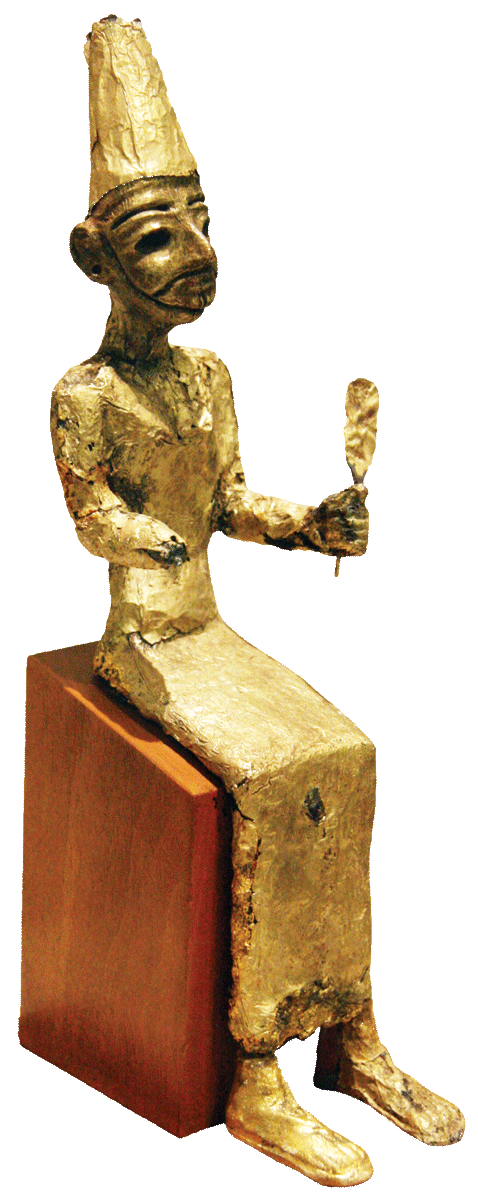
Figurine of El, head of the Canaanite gods, which the Israelites were warned not to worship (Deut. 11:16)
Israel must be careful not to be enticed into thinking that Baal—the Canaanite god of rain, fertility, and agricultural fecundity—is responsible for the fertility of Canaan. While we are not taught that prosperity always proves obedience to God, neither can we prove that suffering necessarily implies personal guilt. Nevertheless, God does remain in control of even the climate, fertility, and all that affects human life (11:16–17).
Verses 18–32 conclude this section of chapters 5–11 and draw the major themes of this section together. Moses’s teaching is to be impressed on their hearts and souls, which calls for a total commitment, as noted in the great Shema (“Hear, O Israel”) of chapter 6. The promise of military success is given once again (11:22–25), repeating Deuteronomy 7:12–24.
This leaves Israel with a present and future choice: “a blessing and a curse.” There are no bases for any apathy or mediating alternatives (11:26–28). Moses arranges that when they enter Canaan, a symbolic ceremony is to take place on either side of Shechem, on Mount Gerizim and Mount Ebal. A fuller description of this ceremony appears in Deuteronomy 27:1–26, while its actual occurrence takes place in Joshua 8:30–35. The blessings are to be recited (apparently antiphonally) on Mount Gerizim (the mountain to the south) and the curses from the other half of the congregation on Mount Ebal (to the north). This ceremony is to be conducted at the heart of the foreign religious territory as the true word of God will come into conflict with Canaanite pagan falsehood.
H. Honoring God in our worship (12:1–31). In the middle of Moses’s second speech (which began at 5:1), a fresh heading in 12:1 begins the central section of the book (12:1–26:19), which elaborates on commandments 2–10. This, then, is the “preached law,” where Moses applies the law he gave forty years earlier. However, this division must not be made too sharply, for all the laws in 12:12–26 are given in response to the principles laid down in 12:1–5.
Chapter 12 calls for honoring God exclusively in our worship, which fills out what is meant by the second commandment and its prohibition “no other gods.” The warning in 12:4 (cf. 12:30–31), “You must not worship the Lord your God in [your own] way” (emphasis mine), repeats the concern of Leviticus 18:3, “You must not do as they do.” Canaanite religion included both male and female prostitution, which the Lord “hates” (12:31) and finds “detestable” (Deut. 18:9). Canaanite worship is completely unacceptable (12:1–4).
Israel is to gather together at the place of worship God will describe. No specific case is made for “Jerusalem” at this point, as many scholars incorrectly infer. At this place of worship seven distinct offerings are to be brought (12:6): (1) burnt offerings, (2) sacrifices, (3) tithes, (4) heave offerings (literally, what is lifted up in your hand), (5) vowed offerings, (6) freewill offerings, and (7) firstlings. All syncretistic types of worship or joint services with the pagans are off-limits to the people of God.
Even before they enter Canaan some are already worshiping as they see fit (12:8). The choice of a central place to worship is in God’s hands, not theirs (12:11).
Whereas verses 1–12 use the second person plural, verses 13–28 use the second person singular, personalizing the instructions in anticipation of an eventual centralized worship center. In the new land where they are going, some of the people will now be scattered as far away as two or three days’ journey from the sanctuary. Therefore, when they prepare meat for eating, it will not be necessary to bring the animals to the central sanctuary. However, care must be taken not to eat the blood, for it represents life (12:16, 23; Lev. 17:11). Verses 30–31 warn of certain religious traps: idle inquiry about other gods and the drive not to stand out among others as strange. The danger is that, if they are too curious or want to fit in, God’s people will imitate what they see other people doing and therefore will do things that displease God.
I. Extolling the excellencies of God’s word (12:32–13:18). The word God gives to Moses is not to be added to or have anything taken away from it (12:32; cf. Rev. 22:18–19). God will confirm his true prophets with accompanying “miraculous signs or wonders” (13:1 NIV 1984). The message of these prophets must also be in accord with what God has previously revealed (13:2–5). In the last days false prophets will come who can produce miraculous signs, but their teaching will not be in harmony with what God has previously taught (Matt. 24:23–24; Gal. 1:7–8; 2 Thess. 2:8–9; 1 John 4:1).
God’s word is more to be preferred than human relationships (13:6–11), for our commitment to the Lord comes before loyalty to our families. Even the tenderest of human ties must not keep us from avoiding all perversions of the word of God (cf. Jesus on loving father or mother more than him; Matt. 10:37). False teaching about Scripture is to theology what cancer is to the body; it must be “cut out.”
Israel must never automatically assume that rumors about people violating God’s word are true; they must (1) “inquire,” (2) “probe,” and (3) “investigate it thoroughly” (13:14). If the rumor of error is confirmed, those “troublemakers” (Hebrew “sons of Belial” = “worthless, good-for-nothing dudes”) must be “put under the ban” (Hebrew haram; cf. 4:24). Likewise, believers are called to act just as decisively in 2 John 7–11. But if there is obedience to God’s commands, then he will show mercy and compassion (13:17).
J. Living as people of the name (14:1–16:17). 14:1–29. Chapter 14 is an exposition on the third commandment. It involves matters not only of speech but of living as well. If Israel is God’s “firstborn,” his “son” (Exod. 4:22–23), then they are called to bear the image and character of the living God in their persons and in their lifestyles (Exod. 19:6; see Harman, 155–63).
For example, in the face of death, they are not to lacerate or mutilate their bodies, as if that would keep them in contact with the dead, or to cut off locks of their hair (14:1–2; v. 2 is a verbal repetition of 7:6). Ugaritic tablets from Ras Shamra, Syria, suggest such practices were part of the cult of the dead and fertility rituals.
The creatures listed in verses 4–21 are categorized as they are in Leviticus 11:1–23—in the order of their primary habitat, just as they appear in the creation account: land (14:4–8), water (14:9–10), and air (14:11–20). The basis for dividing these creatures up into clean and unclean is not immediately apparent, but it may involve hygienic reasons, avoidance of heathen religions, and the fact that those who ate unclean flesh were producers of death. Surely the use of the word “detestable” (14:3) or “abominable” is linked with offensive Canaanite practices not tolerated by God (Deut. 7:25–26; 12:31; 13:14).
Eating the bodies of creatures already dead is also prohibited (14:21), but the reason is not hygienic, for they can be given to a foreigner to eat; the distinction is in the fact that Israel is to be holy to the Lord, which calls for a separation in their actions.
Cooking a kid in its mother’s milk is likewise forbidden (14:21; cf. Exod. 23:19; 34:26) because it seems that it replicated the pagan practices seen in a broken Ras Shamra text, which says, “cook the kid in milk, the lamb in butter.” This law, however, has nothing to do with keeping meat and milk products and dishes separate.
Finally, the third commandment also involves the matter of tithing (14:14–29), as mentioned earlier (Deut. 12:6, 11, 17). The tithe expresses the joy the tither feels in acknowledging that God has provided all he or she has. It includes one-tenth of all the Israelites’ produce (cf. Gen. 28:22) and the “firstborn” of their herds (14:23). The tithe is also another way to deny that any Canaanite fertility rites or practices have brought this increase. It is another way of refusing to take God’s name and work in vain.
A triennial tithe is to be collected for the care of the Levites, foreigners, fatherless, and widows who live in their towns (14:28–29). Failure to offer any of the tithes both dishonors God and robs him of what is due him (Mal. 3:6–12).
15:1–16:17. Deuteronomy 15:1 transitions to an exposition of the fourth commandment, with its concern for the Sabbath and the use of time. In this connection, two topics are raised: cancellation of debts (15:1–11) and the release of slaves (15:12–18).
Every seventh year there is to be a release (Hebrew shemittah, from the root meaning “to let fall”); as in Exodus 23:11, the land is to be left fallow, but here the debts also are to be remitted. This year of release is part of the symbolism of the Jubilee year, wherein personal freedom is restored and alienated property is recovered. The only exception is the foreigner’s debt: it remains (15:3).
Despite the ideal that “there need be no poor people among you” (15:4), the existence of the poor (15:7, 11) shows there is an incomplete obedience to God’s rule or remission of debts. Jesus’s words at his anointing in Bethany (Matt. 26:11; Mark 14:7) are probably taken from Deuteronomy 15:11.
The seventh year is also a year of emancipation of indentured Hebrew slaves (15:12–18). Israelites could indenture themselves for a maximum of six years (their land could not be used as collateral on debts since God owned the land). Since the whole nation has once been slaves in Egypt, but were redeemed by the Lord, they too must act accordingly (15:15). Some versions, such as the KJV and NIV, translate in verse 18 “double” or “twice,” but here (and in Jer. 16:18) the Hebrew word means “an equivalent,” since the slave has saved the master six years of wages.
The topic of the firstborn, which was raised in 14:23, is now reasserted, as it concerns bringing them to the central sanctuary as offerings (15:19–23). As is the practice in Deuteronomy, the principle is first stated in the opening verse (15:19)—all of life belongs to God as the Giver and Source of life. However, the animal must be without defect.
The first of the feasts is Passover (16:1–8), which is to take place in the month of Aviv (our late March–early April). The name Passover probably comes from the verb “to pass over,” as when God had the death angel “leap/pass over” the houses of the Israelites in Egypt just before the tenth plague of the death of the firstborn in Egypt (Exod. 12:29–31). It is also the time of the barley harvest and the seven additional days of eating unleavened bread (16:3), since they needed to leave Egypt in “haste” (the Hebrew term, meaning to move in a hurry along with fear and trepidation, is used only in Exod. 12:11, here, and in Isa. 52:12).
This sacrifice is to begin at the “place” (16:2, 6, 7) that God will choose for his name to dwell, thus replacing the sites of Exodus 12:3. It is to be eaten with unleavened bread (symbolizing haste) and “the bread of affliction” (16:3; to remind them of their hard labor in Egypt).
On the day following the seven weeks after Passover comes the Feast of Weeks (16:9–12)—hence “the Fiftieth [Day]” (based on the Greek Septuagint of Lev. 23:16) or “Pentecost” (cf. Acts 2; it is also known as the Feast of the Harvest [Exod. 23:16] or the Feast of Firstfruits [Num. 28:26])—which arrives sometime in our May or early June, during the wheat harvest. All are to give voluntarily and proportionately as God has blessed them. A common meal with the whole family is to be eaten in the “place” where God will set his name and shared with the Levites, foreigners, orphans, and widows to recall the years of their slavery in Egypt and God’s kindness to them.
The Feast of Tabernacles (16:13–15; also called the Feast of Ingathering [Exod. 23:16], the feast to the Lord [Lev. 23:39], or the feast [Ezek. 45:25; John 7–8]) celebrates the end of the agricultural activities (our September to October) in a communal thanksgiving celebration. Once again, the emphasis is on the “place” (16:15) the Lord will choose for his name to dwell. At each of these three feasts every man in Israel is to come to the central sanctuary, but they are to bring their gifts, for none is to appear “empty-handed” (16:16; cf. Exod. 23:15). This is the only feast the prophets make reference to as they describe the final ingathering into God’s kingdom (Zech. 14:16–19).
K. Appointing leaders to lead (16:18–18:22). The teaching now moves to discussing what the fifth commandment means, for more is intended than simply honor and respect to one’s parents—it involves respect for all whom God has placed in authority over his people.
First, “judges and officials” (16:18–20) are to rule “fairly,” without “pervert[ing] justice,” “show[ing] partiality,” or “accept[ing] a bribe.” Failure to exercise absolute fairness will result in their failure to live and possess the land (16:20) that God is giving to them.
Israel’s source of authority must not be replaced by an idol such as an Asherah pole or a sacred stone (16:21–22), nor should any defective sacrifice be accepted in legal matters; the same rule that is in force for worship is in force here too (17:1).
Three rules of evidence are given in 17:2–7. Justice demands that (1) a thorough investigation be conducted (17:4), (2) the evidence must be supported by two or three witnesses (17:6), and (3) the accusers must face the accused (17:7). The purpose of these safeguards is to “purge the evil from among [them]” (17:7).
As was true in the wilderness, where the difficult cases came to Moses (Exod. 18:13–27), so now as Israel settles into the land there is to be a supreme tribunal, which meets at the central sanctuary, for cases that are too difficult for local judges (but it does not serve as an appellate court; 17:8–13). The law will teach them how to act (17:11). Anyone who shows “contempt” (17:12–13) for the judgment rendered is to be put to death so evil will be purged from the nation.
When the time comes when Israel will desire a king (17:14–20), this desire must not be to replace the theocracy with an autocratic or tyrannical rule. A king for the nation has been envisaged as far back as the time of the patriarchs (Gen. 17:6, 16; 35:11; 49:10). In the days of Samuel, the people will desire a king, but the objectionable point to their demand is that they want a king “such as all the other nations have” (1 Sam. 8:5; cf. 8:19–20). But contrary to that copycat standard, God imposes four conditions on the king: (1) he must be the one the Lord chooses (17:15); (2) he must not multiply horses, which is where other nations put their trust for military prowess (17:16); (3) he must not acquire many wives in a harem or great riches (17:17); and (4) he must make a copy of his own scroll of the law to have with him and to read all the days of his life (17:19–20). This observance of the law will keep the king on the straight path and prevent him from getting arrogant.
Verses 1–8, on respect and honor for priests and Levites, cover the ground more fully traced in Numbers 18 (see already Deut. 12:12, 19; 14:27–29). The priests come from the Levites, but not all Levites are priests. The Levites are not to receive a tribal allotment, for the Lord is their inheritance (18:2). They are to receive the first fruits of the land (18:4) and to minister in the Lord’s name (18:5). If a Levite desires to move to the “place” of the central sanctuary, he is not to be discriminated against (18:6–8).
The prophets in Israel make up the final category (18:9–22). Three classes of false Canaanite fortune-telling are warned against in nine verbs in verses 9–11. The first three pagan practices pretend to foretell the future: (1) making one’s son or daughter pass through fire, (2) divination, and (3) sorcery. Another class of three false practices claims to influence or change the future: (4) interpreting omens, (5) engaging in witchcraft, and (6) casting spells. The third class of false prophecy pretends to communicate with the dead or spirits: (7) serving as a medium, (8) consulting with familiar spirits, and (9) working as a necromancer, which means contacting the dead.
There are three reasons why God’s people are not to try to get supernatural information or divine revelation by going any of these nine routes: (1) it is an abomination to the Lord (18:12); (2) God’s people should be blameless before him (18:13); and (3) God will send his prophet to relay the true knowledge of God (18:15–22).
There are five tests for a true prophet of God: (1) the prophet must be Hebrew (18:15, 18), (2) the prophet must speak in the name of the Lord (18:18, 22), (3) what the prophet says must come to pass (18:22), (4) the prophet may perform confirming signs and wonders (13:1), and (5) what the prophet says must conform to previous revelation from God (13:2).
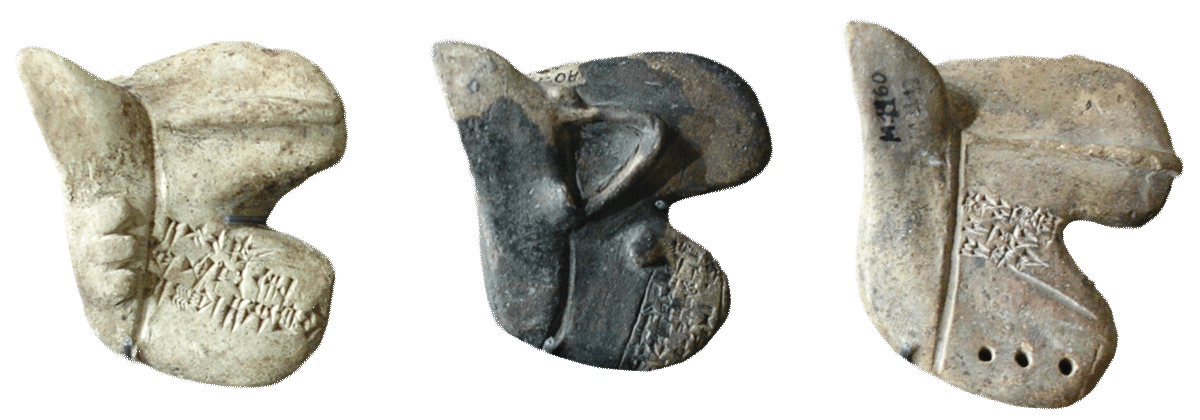
Clay models of livers, which were used for divination, a practice forbidden to the Israelites (Deut. 18:10, 14)
L. Upholding the sanctity of life (19:1–21:23). The application of the sixth commandment has broader implications than simply prohibiting murder. First, a provision is made for a humanitarian zone (19:1–13), called “cities of refuge” in Numbers 35:6–32. Thus, the right of asylum is provided for at three evenly distributed cities in Canaan, just as three cities of refuge have been provided in the Transjordan. In Joshua 20:1–9 we learn these added cities are Kedesh, Shechem, and Kirjath Arba (Hebron). These places of refuge are not for murderers but for those who unintentionally cause someone’s death. The illustration of an ax flying off the handle and killing a victim while the two are chopping wood (19:5) shows that although such a case still involves a killing, the offender can be protected in one of these cities, for it was “without malice aforethought” (19:6; cf. Num. 35:22–28). Provision is also made for an additional three cities to come later, making a total of nine, if Israel ever enlarges its territory (19:8–9), but there is no evidence Israel ever raised the number to nine.
In cases where there is a predetermined plot to murder someone, the elders of the offender’s city can extradite the murderer from the city of refuge (19:11–13) so that justice will be served. The death of the murderer will bring cleansing to the land (19:13).
Neither is removing a neighbor’s boundary stone to be permitted, for it is God who distributed the land and set the boundaries (19:14; cf. Prov. 22:28; 23:10; Hos. 5:10).
A person cannot be convicted on the testimony of one witness (19:15) or by a false and malicious witness (19:16). The disputants are required to “stand in the presence of the Lord” (19:17), and if the priests and judges find one to be a liar, then the false witness has to suffer the penalty he hoped the one he defamed would get (19:19). The lex talionis is invoked—“eye for eye, tooth for tooth” (19:21)—which does not mean individual personal vengeance is available to the one falsely accused but instead is a stereotypical formula for the judges that says in effect: “Make the punishment fit the crime.”
Also included under the topic of killing are the wars of the Lord (20:1–20). Israel differs widely from her neighbors in that she is never allowed to expand her territories by conquest of surrounding nations, for going into battle is solely the Lord’s decision. Israel has no need to prove her greatness by her military strength, power, or possessions, for her greatness is to be found in who her Lord is. Her wars are not “holy wars” but “Yahweh wars” (20:1–4). She has nothing to prove by conquering others.
Rather than chapter 20 being a militaristic chapter, it comes off as being antimilitaristic, as it calls for a reduction in the size of the army and the release of some who are probably the youngest and most fit soldiers. Four groups are exempted and qualify for immediate release from this nonstanding army: (1) those who have just built a new house (20:5), (2) those who have planted a new vineyard and not yet seen its fruit (a five-year period; 20:6), (3) those who are engaged to be married, but have not done so as yet (20:7; plus a one-year reprieve after being married [24:5]), and (4) those who are psychologically spooked about going into battle, lest discouragement spread among the troops (20:8).
Cities outside of Canaan are to be offered terms of peace (20:10, 15) first of all, but those in Canaan are to be destroyed because of their accumulated wickedness and the threat of religious syncretism in Israel (Deut. 7:1–6, 25–26). Idolatry must not creep into the land via the back door.
These wars are to be ecologically sensitive as well: fruit trees are not to be cut down or destroyed (20:19–20). Moreover, a captive woman is to be treated mercifully, for if she is later married to an Israelite, she must never be sold or treated as a slave. Without a Geneva Convention, the rules for the conduct of war in this chapter are most humane.
Special provisions are made for a murder committed by an unknown assailant (21:1–9) with no witnesses. The whole community must take responsibility as the elders and the judges measure to find out what town is closest to the murder. That town is to take a young heifer and make atonement for this killing; only then can the guilt on the nation be expiated.
Four subject areas are considered that either resulted from warfare or from the required death penalty: (1) marrying a prisoner of war (21:10–14); (2) establishing the rights of the firstborn, especially in loss of life that brought some families into a polygamous situation (21:15–17); (3) reinforcing the penalty for a rebellious son (21:18–21); and (4) limiting the time a person accursed by God can be impaled on a tree (21:22–23).
Since war brides are people and not chattel or slaves, husbands of those brides are limited in their authority after the potential wives meet four conditions (21:12–13) and are married. Even in this case life is precious to God and is to be treated as such by all.
Neither can favoritism be shown in a polygamous family to the son of the wife the husband loves. The rights of the firstborn son who is son of the unloved wife are not to be reallocated to the son of the loved wife (21:16–17). The firstborn son is to receive a “double share” (21:17; cf. 2 Kings 2:9).
For a son who is blatantly rebellious, the parents are not to take the law into their own hands but to take him to the elders in the gate of the city, and on the elders’ judgment, the son is to be stoned (21:20–21). Likewise, a man hung on a tree must not be left there overnight (21:22–23), for as a criminal he is under God’s curse; thus his body left there would desecrate the land.
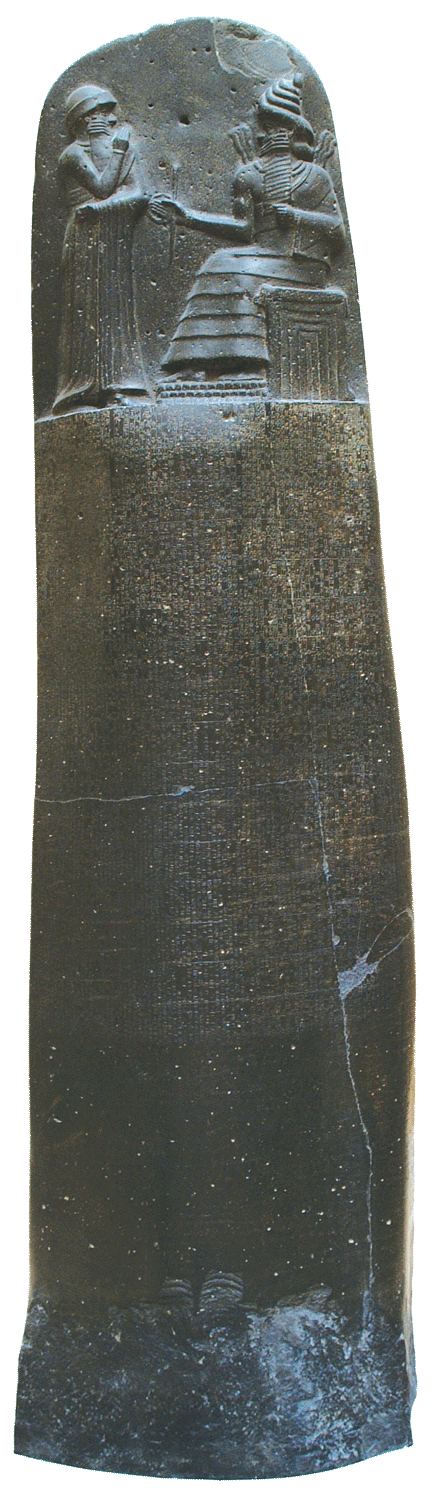
A stele containing the Code of Hammurabi
M. Showing respect for all forms of life (22:1–12). Nine laws conclude this section on the value of life. To begin, a straying ox or sheep is not to be ignored but is to be restored to its owner (22:1–4). Assistance must be given, for this “fellow Israelite” (Exod. 23:4–5 reads “enemy” in this place) is a person in need (cf. Luke 10:30–37, where Jesus identifies a person in need as our “neighbor”). The same obligation applies to helping the fallen beast of an enemy get to its feet (22:4).
The interchange of clothing between men and women (22:5), which seems harmless enough on the face of it, is read as an attempt to blur basic sexual differences. Lucian of Samosata and Eusebius describe the practice of masquerading in garments of the opposite sex in the worship of the goddess Astarte. The New Testament declaration (Gal. 3:28) that there is neither male nor female refers to one’s status in God’s sight and not to matters of dress.
Divine care and concern extend beyond domestic animals (22:6–7), for one is not to take the mother bird along with the young bird(s); the respect for the provision of life coming in the future, and for motherhood, are both evident in these verses.
In a world of flat roofs there was always the danger someone might fall, and guilt for that person’s life might follow (22:8). Therefore, a parapet or fence must be built to prevent this eventuality, just as the Code of Hammurabi (ca. 1700 BC) stipulates in laws 229–40; modern backyard fences around a swimming pool to prevent accidental drowning exemplify the same principle.
Three laws deal with mixing dissimilar things (22:9–11). The mixing of two kinds of seed violates the purity of the seed for next year’s crop. Hybrids may be fine where seed companies exist to supply next year’s seed; but it is tragic for those who want to preserve part of their own crop for next year’s seed. Likewise plowing with an ox and donkey yoked together is unnatural, for the strength of the two is not equal. The mixing of material in one’s clothing may again be the difference in the strength of the two different fibers, but since the word for “mixture” or “woven together” in verse 11 is thought to be Egyptian, it may have pagan connotations that are now lost to us.
The law of the tassels (22:12) on the four corners of one’s garment gives Israel a distinctive dress. The symbolic meaning of the tassels is explained in Numbers 15:37–41.
N. Respecting marriage and sexual relationships (22:13–30). Even though the only reference to adultery in this whole section, which extends to 23:14, is in 22:22, the focus is nevertheless on expanding the implications of the seventh commandment. The sin of adultery was called the “great sin” in Genesis 20:9 (KJV) and in the ancient Near East. The rest of chapter 22 in Deuteronomy is concerned with six cases of those betrothed or married and the question of chastity.
The first case concerns the virginity of a betrothed woman when her new husband makes a false accusation against her and thus comes to dislike (in Hebrew, “hate”) her (22:13–17). He is accusing her either of not being a virgin at the time of their marriage or of already being pregnant when he married her. Since the elders are involved, the offenses are against society as a whole and not just personal and against individuals. A false accusation (22:18–19) requires a fine of one hundred shekels of silver to be paid to the woman’s father (cf. the fifty shekels David pays for the purchase of Araunah’s threshing floor [2 Sam. 24:24]). However, if the accusations prove correct, she has done an “outrageous thing” (22:21; in Hebrew, a “foolish” or “immoral act,” from the root for “fool” or “folly”); therefore she must be stoned to death.
When a man commits adultery with a married woman (22:22), it is destructive to the social order and the family. Both the man and the woman must die, as in the Code of Hammurabi 129, though Proverbs 6:26–35 suggests the death penalty could have a substitute.
Two other cases of seduction are now considered (22:23–27). In one case, the seduction takes place in the city and consent is assumed, for the woman could have called out for help in town. In the other case, the seduction occurs in the country; a rape is presumed since no one could have heard her call for help. If the woman is not betrothed (22:28–29), the man is to pay the equivalent of a bride-price (but in Exod. 22:16–18 the woman’s father can refuse to give her in marriage).
The final situation (22:30) is a man married to his father’s wife (his mother or stepmother), where presumably his father has died. The literal Hebrew expression for “dishonoring the father’s bed” is the euphemism “to uncover his father’s skirt.” Incestuous marriages were found among the Hittites and some African societies where the son married the wives of his dead father—but not in Israel.
O. Portraying a caring community of God (23:1–25:19). 23:1–14. Deuteronomy uses for the first time the full expression “the congregation/assembly of the Lord.” Those who are excluded from this congregation are self-inflicted eunuchs (23:1), bastards (23:2), and Ammonites or Moabites up to the tenth generation (23:3–6); however, Edomites and Egyptians can enter that congregation after the third generation (23:7–8).
Since castration was imposed on some of the personnel of the Canaanite sites of worship (23:17–18), Israel is forbidden to do the same. However, eunuchs who are faithful to God are included in the family of God (Isa. 56:3–5; cf. Acts 8:27, 38). Illegitimate children are also excluded. Whether these are children of mixed-racial marriages with non-Israelites or those who come from incestuous relations, it is not possible to say. The Ammonites and Moabites refused Israel passage through their land, and they also hired Balaam to curse Israel (Numbers 22–24), whereas Edom is Israel’s brother (Esau) and Israel had for a time been shown kindness in the land of Egypt.
Verses 9–14 express concern for cleanliness in the camp of Israel. First, “everything impure” is addressed (23:9), followed by rules for a “nocturnal [seminal] emission” (23:10–11). All defecation is to be done outside the camp (23:12–13), by using a special tool to dig the hole and to cover it. If Israel wants God’s presence to deliver them in battle, the camp has to be kept clean and holy (23:14) since God is present in the camp.
23:15–24:7. With 23:15 we enter into a discussion of the implications of the eighth commandment, relating to theft. Five laws (23:15–25) are given in the second-person singular, perhaps highlighting the importance of individual responsibility within the covenant community. Even the rules on divorce (24:1–4) and kidnapping (24:7) represent a metaphorical and real theft of life.
Other ancient Near Eastern countries required the extradition of runaway slaves, but Israel did not, for it would imply a covenant relationship with that foreign country and the slave was not to be oppressed but helped (23:15–16). Male and female prostitution are forbidden. The Hebrew terminology for such prostitution comes from the root meaning “holy” or “set apart.” In this one word, “holy,” the sacred and the secular come into mortal conflict.
Neither is “interest” to be charged to a poor Israelite (23:19–20), whereas it can be charged to a foreigner, since the foreigner does not stand in the same relationship to the people of God. Moreover, one is not obligated to make vows, but once they have been made voluntarily, they must be kept (23:21–23). As evidence of Near Eastern hospitality to passersby, travelers can slake their hunger as they journey along by helping themselves to the fruit or grain that grows along the roadway, but they are not to gather additional amounts to put into a basket (23:24–25); the same principle applied to Jesus’s disciples as they journeyed along the wayside (Matt. 12:1–8).
Contrary to traditional thought, Deuteronomy 24:1–4 does not make divorce mandatory; rather, it deals only with remarriage to the same partner after a divorce has occurred. The circumstances are described in verses 1–3 with the consequences coming in verse 4; some translations incorrectly make the consequence come in the second part of verse 1. The ground for the divorce (24:1), “something indecent,” is not adultery (for which capital punishment is appropriate) or trivial (as in rabbinical writings), but something shameful probably connected with sexual relations. The provision of a “certificate of divorce” is to protect the woman, who otherwise never knew where she stood depending on the whims of her husband. Even if the second marriage fails, there is to be no return to the first marriage, for the woman will have become “detestable” in God’s sight (24:4). Care has to be exercised in maintaining the purity of marriage lest sin and defilement be brought on the land.
Further examples of theft can be seen in (1) not exempting from army service for one year a man recently married (24:5), (2) removing a household’s pair of millstones for security when they are needed each day to grind the daily food (24:6), and (3) stealing a person by force and treating him or her as a slave (24:7). This last example is a capital offense.
24:8–25:4. The implications of the ninth commandment begin in 24:8; they concern the refusal to give false testimony against one’s neighbor by thinking and acting fairly toward the possessions and persons of others.
The first illustration comes from Miriam’s case of leprosy (a disease that may include anything from a skin disease all the way to Hansen’s disease; 24:8–9) as a result of her libel against Moses (Num. 12:10–15). That was no way for Miriam to act or think! Similarly, though loans to fellow Israelites are not forbidden, use of some kind of security is permitted (24:10–13). However, the rights of the debtor are to be respected by not entering a person’s house to select what could be put up as security and by not taking a person’s cloak beyond sunset since it is needed to keep warm at night. A third illustration (24:14–15) concerns paying workers each day before sunset for their work, since they have no resources otherwise to get food and the necessities of life for that day. In the case of individual sins, children are not to bear the brunt for their father’s sins nor vice versa. King Amaziah will show how this works when he executes those who have killed his father but spares their children, citing this verse (24:16; cf. 2 Kings 14:5–6).
Special neighborly care is to be shown in giving justice to the foreigner, the orphan, and the widow (24:17–18). They are also to be remembered by leaving some of the gleanings in the harvest fields, the olive harvests, and the grape pickings for their subsistence (24:19–22), as Ruth 2 illustrates. The Israelites are to recall that all of them once were slaves in Egypt as well (24:22).
Neighborly love dictates that when corporal punishment for a crime is required, it should not exceed the limits of human dignity (25:1–3). Forty lashes is the limit, later restricted to thirty-nine to make sure the limit will not be exceeded. That same care for others is seen in farmers removing the muzzle from the ox that is drawing a threshing wedge of sharp stones round and round over the grain so that the ox can feed as it works. Not only are love and kindness to be shown to God’s creatures (cf. Deut. 22:6–7; Prov. 12:10), but in an a fortiori argument—that is, deducing the greater from the lesser—it has application to the farmers who thereby themselves are made more gentle and kind as they show the same kindness and generosity to their animals. That is why the apostle Paul, in 1 Corinthians 9:9 and 1 Timothy 5:18, can make the same application to showing kindness to those who teach the word of God. His point is the same: pay your pastors or you will become rough and without kindness and gentleness in your personality, like the miserly farmers who muzzle their oxen.
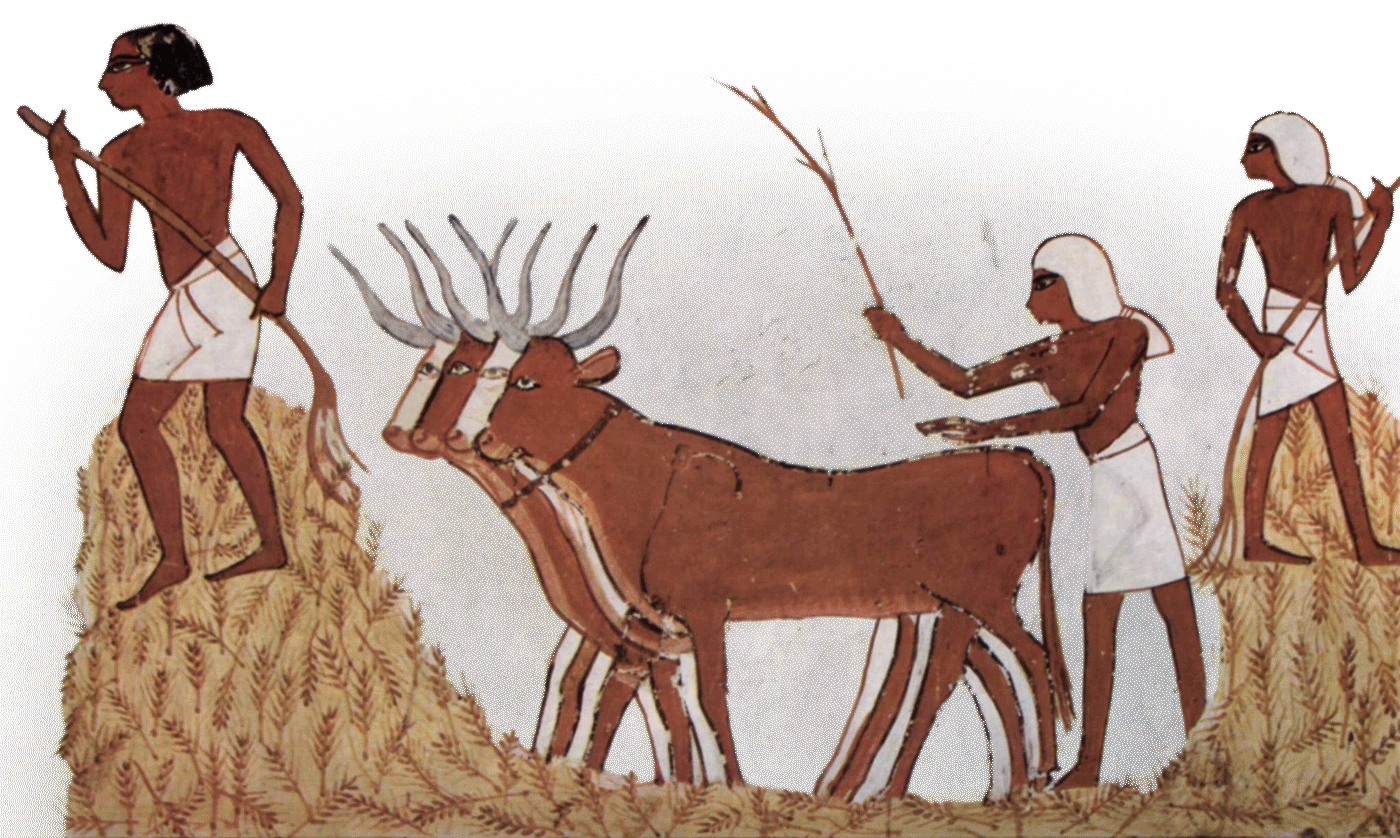
Deuteronomy 25:4 says not to muzzle oxen while they tread grain, as they are seen doing in this Egyptian wall painting.
25:5–19. The tenth and last commandment, about not coveting, is applied in 25:5–16. Thus, all acts beginning even with the thoughts of coveting and all mental processes leading up to it are forbidden here.
The opposite of coveting is set forth first in the case of levirate (from Latin levir, meaning “a husband’s brother”) marriage (25:5–10). In this case, the brothers live together and one of them dies. The widow is not to marry outside the family, because the brother-in-law, apparently even if already married, is to marry her and see that an heir is raised up for his deceased brother (25:5). If the brother-in-law objects and refuses to fulfill his obligation, his renunciation must be accompanied by a symbolic act. The widow of the man’s brother must remove his sandal and spit in his face, saying, “This is what is done to the man who will not build up his brother’s family line” (25:9; cf. Gen. 38:1–10; Ruth 4:7–8). That man’s house will forever be known as “The Family of the Unsandaled” (25:10).
In another case, a woman is not allowed to stop an attacker of her husband by seizing the attacker’s private parts (25:11–12), for besides questions of modesty, there is the threat of preventing the man from having any future descendants.
Another case deals with the use and the possession of dishonest weights (25:13–16). Some disregarded this teaching, as Amos 8:5 shows, but this is but another evidence of coveting what is not theirs.
The concluding instructions regarding the treatment of the Amalekites (25:17–19) may be an appendix to the legislation concerning the treatment of foreigners given previously in Deuteronomy 23:3–6 or a transitional paragraph bridging the discussion of the future addressed in chapter 26. Given the shameless way the Amalekites acted in attacking the rear line of march—the sick, the young, and the stragglers (Num. 14:39–45; Deut. 1:42–44)—Israel is to blot the Amalekites out after Israel has been given rest after conquering Canaan.
P. Taking time to celebrate God’s goodness (26:1–19). Chapter 26 concludes the long exposition of the Ten Commandments that began in chapter 6. The emphasis is still on the land God has given the Israelites. Verses 1–11 describe a ceremony involving a sample of the fruit of the land that is to be placed in a basket and brought to the “place” God’s name will dwell. The man bringing the basket will declare before the priest that he has come to the land God has pledged to give Israel. The priest will then take the basket, place it in front of the altar, and confess what almost amounts to a creed (see von Rad, 1–76). Their “father” is Jacob, the “wandering Aramean,” who while not actually being an “Aramean” yet married Aramean wives (Leah and Rachel) and lived in Aram Naharaim for twenty-one years. Eventually he went down to Egypt, with only seventy persons, yet they became a great and powerful nation. But when the Egyptians enslaved them, they cried out to God and the Lord delivered them from Egypt miraculously and brought them to this place, a land flowing with milk and honey (26:5–10). While there is no reference to Sinai, it is incorrect to assume as von Rad does that this was not an ancient part of the story. Verse 11 emphasizes that it is Yahweh, not Baal, the fertility god of the Canaanites, who gives these gifts and therefore is to be worshiped and given praise for “all the good things.”
A second ceremony will come in the third year of their occupying the land at the central sanctuary: the giving of the tithes (26:12–15) for the needy. Once again there is a formal declaration along with a prayer for Yahweh’s blessing. The individuals offering the tithe then declare that they are not ritually unclean nor have they entered into any pagan rituals such as “mourning” (cf. Hos. 9:4) or offered anything to the dead.
Now that the heart of the covenant law has been heard, in its broad principles and its exemplary specifics (5:1–25:15), a fresh commitment to the covenant on the plains of Moab is appropriate (26:16–19), as took place following the reading of the book of the covenant at Sinai (Exod. 24:7). No formal ceremony is mentioned, but the words echo language used elsewhere of just such an event. Israel promises they will fully obey all God has said, for they are his “treasured possession” (26:18; cf. Exod. 19:5–6; Deut. 7:6; 14:2). Israel will be given “praise, fame and honor high above all the nations” (26:19) if they will so live in obedience.
Q. Renewing the covenant with our God (27:1–26). Israel is to conduct a reaffirmation of the covenant after she enters the land (27:1–8). The people are to set up large stones coated with plaster, as was done in Egypt, on which the law is written (cf. Josh. 24:26–27). Moses is now referred to in the third person, which has not happened since 5:1. An altar is to be erected on Mount Ebal, where the curses are to be recited and which is chosen as the place of sacrifice for both burnt offerings and peace/fellowship offerings. Ebal may have been chosen to show that even in the place of cursing God can remove sin and restore mortals once again to fellowship.
The conclusion to the ceremony (27:9–10) brings the announcement that “you have now become the people of the Lord your God.” The people are then exhorted, “Be silent”—a common climax to such solemn events (cf. Neh. 8:11; Hab. 2:20; Zeph. 1:7; Zech. 2:13).
The nation is then divided evenly into six tribes each on Mount Gerizim and Mount Ebal, facing each other (27:11–26). Those on Mount Gerizim are to recite the blessings of the covenant; those on Mount Ebal are to recite twelve curses from the law (corresponding to the number of tribes). The Levites in each group pronounce the blessings and curses antiphonally, to which the people respond by saying, “Amen” (27:15–26). The core of these blessings and curses comes from the commandments, and the purpose of the ceremony is to bind both people and land to God’s law.
R. Distinguishing between the blessings and curses (28:1–68). After describing the renewal of the covenant for the time when Israel enters Canaan, the text returns to the plains of Moab, where Moses one more time reminds Israel of the blessings and curses. In 28:3–6, six successive phrases begin in Hebrew with “blessed.” In verses 16–19, there are six corresponding curses (though the third and fourth are interchanged). Again, in their total the blessings and curses match the number of the tribes, but the curses give the reversal of the very things promised in the blessings.
The exposition of blessings is given in a chiastic pattern in verses 7–14, ranging from foreign relations (28:7, 12b–13) to domestic affairs (28:8, 11–12a) to the central matter, the covenant of the Lord (28:9–10; see Harman, 237). The main reason for the curses is that the people will forsake their God (28:20–26); thus they will suffer the same defeat their enemies would have suffered had Israel obeyed. The curses are also in a chiastic pattern: incurable disease (28:27, 35), madness (28:28, 34), continual oppression (28:29, 33), and frustration (28:30–32; see Harman, 242).
To a disobedient and idolatrous nation, God will bring a nation from afar to lay siege and take them into exile (28:49–57). The high fortified cities will not be a deterrent to the enemy. So severe will be the siege that cannibalism and fights over the afterbirth will ensue among the besieged Israelites.
Unimaginable terrors await Israel if she rebels (28:58–63). The result will be a reversal of the patriarchal promises. Moreover, the Lord will scatter the Israelites among the nations of the world (28:64–68), where they will find no resting place. Life itself will be a drudgery as they once again sell themselves as slaves, as happened in Egypt.
3. Moses’s Third Sermon: “Realizing We Too Were There at Sinai” (29:1–30:20)
A. Hearing the things revealed to them and their children (29:1–29). Moses opens his final sermon with words very similar to 1:1. Once again, Moses draws on recounting God’s works in the past (29:1–8) as the basis for the exhortation that follows (29:9–15). Though Moses begins by speaking of God in the third person (29:2, 4), in verse 5 the Lord speaks in the first person, thereby showing how the words of Moses and those of God blend into each other almost imperceptibly. As the people stand in God’s presence to renew their allegiance to him, all are included: wives, children, servants, and anyone with any type of authority. Thus all Israel enters into a binding covenant with the Lord.
This is followed by stern warnings against apostasy, hypocrisy, or rebellion (29:16–29). Care is to be taken that their hearts do not turn from the Lord. Seeds of sedition and rebellion would be as devastating in their outcome as an insidious root that gives poisonous fruit (29:18). For those who nominally confess their commitment to the Lord, disaster awaits them, for physical circumcision depends for its reality on spiritual circumcision (Jer. 9:25–26; Rom. 2:29).
Even curious speculation into God’s will is no substitute for obeying what is known of God’s will (29:29). Israel is not held accountable for the “secret things belong[ing] to the Lord”; they and their children have enough to do, based on what has been revealed to them through Moses.
B. Anticipating the future for Israel (30:1–20). The future for Israel is carried even beyond the exile, for with a future change of heart on the part of Israel, God will restore this banished people to their land once again (30:1–10). God will once more “restore your fortunes” (30:3)—that is, bring the people back from captivity (cf. Ps. 126:1; Jer. 29:14; Ezek. 29:25). The Lord will circumcise their hearts, “so that [Israel] may love him with all [their] heart and with all [their] soul, and live” (30:6). Now the curses will revert to Israel’s enemies (30:7).
For the third time in Deuteronomy (11:26–28; 28:1–3; 30:11–20) God sets before them a choice of either life or death (30:15). God’s word has not been concealed or hidden from them; no, it is right there in their mouths and in their hearts (30:14). This is the same word of faith that Paul preaches in Romans 10:6–8. God’s righteousness is not accessed by any works of the law; in both testaments it is gained by believing and confessing the same Lord who has given his man of promise, the Messiah.
God has set “life and prosperity” as well as “death and destruction” before them (30:15). “Prosperity” is the Hebrew term tob, “good”; it is also a covenantal term (Deut. 12:28; Ps. 23:6). Therefore, love and obedience to God will bring life and the covenantal blessings.
The last part of the covenant renewal is an appeal to heaven and earth to witness all the blessings and curses that have been fairly set before the people (30:19–20). Often in the prophets, God calls on his creation to verify what he has done and said as third-party witnesses. The words to Israel that linger as the ceremony comes to an end are “choose life” (30:19). Only in choosing life will this or any other generation enjoy what God has promised to Abraham, Isaac, and Jacob (30:20).
A. Parting words for the new leader (31:1–8). At the age of 120 years, Moses knows he is no longer able to lead this nation, nor will he cross over the Jordan River with them: “The Lord your God himself will cross over ahead of you” (31:3). God will do to those Canaanites what he has done to Sihon and Og, the Amorite kings in the Transjordan (31:4–5). People and leader alike are to “be strong and courageous” (31:6), for God is not about to forsake his people.
Moses summons Joshua, the man who has served for years under Moses’s mentoring (Exod. 17:9) and to whom has been given a good measure of authority (Num. 27:18–23; Deut. 1:38). Joshua is given a commission to exhibit God’s strength and courage as he now will lead Israel into the land of promise (31:7–8).
B. Renewing the covenant in the seventh year (31:9–13). Moses writes down the law and gives it to the priests, who carry the ark of the covenant, for deposit there. This law is to be read publicly every seventh year, in the year of “canceling debts” (Hebrew shenat shemittah, “year of release,” a sabbatical year; 31:9–13; cf. 15:1). At the Feast of Tabernacles, during the harvest time, in that sabbatical year, the people will be reminded to consecrate themselves afresh to the Lord.
C. Installing the new leader (31:14–18). Moses and Joshua are to appear at the entrance to the tabernacle so all the people can witness that it is God who is commissioning Joshua and not Moses alone (31:14–18). The glory of the Lord, which has been their guide throughout the wilderness journey (31:15; Exod. 13:21; 33:9–11; Num. 9:15–23), appears at Joshua’s installation. One more time God uses the occasion to warn Israel of the dreaded curses that will come upon them if they stray from what his law teaches.
D. Singing Moses’s swan song (31:19–32:47). So that later generations can have a witness, Moses and Aaron are given a song, which they are to teach to the Israelites and have them sing (31:19). This song will serve as a testimony against them when they turn away from God (31:21).
When Moses has finished writing in a book the words of the law (31:24), he orders the Levites to put it into the ark of the covenant. It too will serve as a witness against the lawlessness of God’s people, for they have been instructed and guided in the way they ought to go. Now that all is ready, the priests are to assemble Israel to hear Moses’s song (31:28–29). Then Moses recites the words of the song from the beginning to the end as the people listen (31:30). This will be one of three songs Moses composes: Exodus 15:1–18, Psalm 90:1–17, and this one, Deuteronomy 31:30–32:44.
Usually the greatness of God is seen through his actions, but in this song a strong emphasis is placed on a series of metaphors and similes. For example, five times God is described as the “Rock” (32:4, 15, 18, 30–31), which was an ancient name for God (Gen. 49:24; Ps. 18:2). “Rock” has the idea of stability and dependability, along with being a place of refuge (Ps. 19:14; 31:3–4; 71:3). Jesus likewise uses a rock as an illustration of his own word in the story of the house that is built on a rock (Matt. 7:24–27). Another metaphor is “Father” (32:6, 7), which speaks of God’s close relationship to his children in this world. Again God is “Creator” (32:6) and is “like an eagle” (32:11). God the “eagle” will “hover over” his believers as he did over creation itself (Gen. 1:2) to catch those who have not yet learned to fly. This is because the Lord regards his children as “the apple of his eye” (32:10), another metaphor expressing the centrality and significance of mortals to God.
Israel is called “Jeshurun” (32:15; 33:5, 26; and one other time in the Bible, Isa. 44:2), which comes from Hebrew yashar, “upright, straight” (some scholars think it implies a diminutive ending of -un, meaning “little upright one,” but this diminutive meaning is unattested). The irony, however, is that Israel is the very one who rejects her Creator, her Rock, her Eagle. She kicks and grows fat and bloated with food and then abandons her God. Israel even sacrifices to “demons” (NIV 1984; NIV “false gods”; this Hebrew word is used only in 32:17 and Ps. 106:37), or idols, which are not gods at all.
Israel is not to omit singing the fourth stanza of this hymn (32:15–43), for God’s word should cause shivers to run up and down the spines of his people who turn away from him. God will abandon Israel during that generation and hide his face from them as he kindles his anger against them and scatters them (32:19–26). However, for all those in any of the nations who renounce their apostasy, they along with Israel will eventually rejoice as God takes vengeance on his enemies and makes atonement for his land and for his people (32:43). So, “See now that I myself am he!” says the Lord (32:39). If God be for them and for the nations that believe, who can be against Israel or all who believe?
Moses and Joshua (here called by his older name, “Hoshea,” meaning “salvation”; cf. Num. 13:8, 16) finish teaching this song to Israel (32:44–47). The words of this song will be “life” to them if they obey God’s teaching.
E. Preparing to die (32:48–52). On the same day that Moses and Joshua finish teaching this song to the people, Moses is told to ascend Mount Nebo in Moab (32:48), where he is to die. He has received advance warnings of this in Numbers 27:12–14, because he and Aaron were guilty of hitting the rock when God wanted them only to speak to the rock (Num. 20:2–13; cf. Deut. 32:51) and to show the power of his word. From a distance Moses sees Canaan, the land God has promised for some six hundred years.
F. Moses’s final blessing (33:1–29). Before Moses dies, he gives his blessing to the tribes of Israel, just as Isaac (Gen. 27:27) and Jacob (Gen. 49:1–28) have done. Here for the first time he is called “the man of God,” thus linking him with the prophets of whom this same title is used later on (1 Sam. 9:6, 10). These deathbed blessings played a key role in the Near East and were valid in a court of law even though they were given orally and often were in a poetic form, which makes their interpretation and translation quite difficult (cf. the various Bible versions for somewhat different translations of this chapter).
Moses begins by likening the coming of God on Mount Sinai to a glorious sunrise (33:2), attended by myriads from his heavenly armies. Just as the Song of Moses (32:1–43) pictures a bleak future, this chapter promises prosperity and glory.
Moses’s blessing begins with the eldest son, Reuben (33:6), whose tribe is not to become extinct, despite the rebellion of Dathan and Abiram (Num. 16:1–30). The tribe of Judah (33:7), which seems to have assimilated the tribe of Simeon (Josh. 19:1–9), is to have great success against all its enemies. The tribe of Levi (33:8–11) is given unique ministry tasks because of its faithfulness in responding to God’s word, especially when others did not. The tribe of Benjamin (33:12) is specially loved by the Lord, as Jacob loved Benjamin. The tribes of Joseph’s two sons, Ephraim and Manasseh (33:13–17), are promised the best gifts from the land and great military success. The tribes of Leah’s sons Zebulun and Issachar (33:18–19) are given commercial success in the future, whether on the seas or on the sands (of the beaches or deserts?). The tribes of Bilhah’s sons, Dan and Naphtali (33:22–23), are promised northern territories: Dan at the foot of Mount Hermon in the city of Dan, and Naphtali, the northern territory extending down to the Sea of Chinnereth (Sea of Galilee) on the west side of the Jordan River. Finally, the tribe of Asher (33:24–25) is given oil in which to bathe their feet and solid protection against their enemies, for “[his] strength will equal [his] days” (33:25).
Moses concludes his blessings by praising Israel’s God, to whom no one can compare (33:26). Because Israel has such an awesome God, “Who is like you [Israel], a people saved by the Lord?” (33:29). Eventually even Israel’s enemies will “cower before [them]” (33:29) because of Israel’s God.
G. Moses’s death (34:1–12). Moses climbs to the top of Mount Nebo, apparently alone, from which vantage point God allows him a panoramic view of the promised land, from the north in Gilead all the way south into Judah and the Arabah.
There Moses dies at the age of 120, and the Lord buries him in Moab in an unmarked grave, unidentified to this day (34:6). Israel mourns for him thirty days (34:8).
Because Moses has laid his hands on him, Joshua is “filled with the spirit of wisdom” (34:9). However, no prophet like Moses has ever risen since his day (34:10), one to whom God spoke directly. Nor have any other mortals seen or performed the miracles Moses did in plain view of all Israel (34:12).
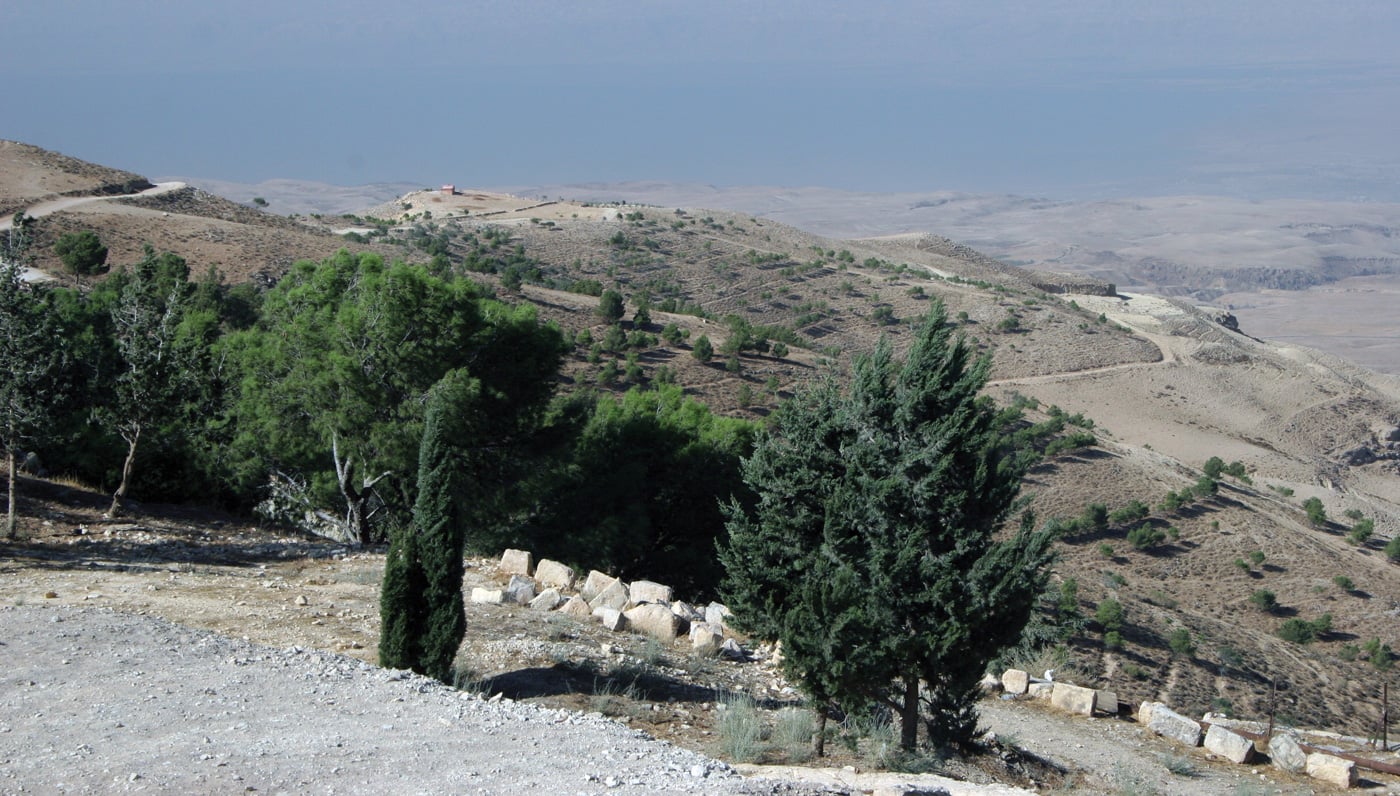
A view from the top of Mount Nebo, looking across the Dead Sea to the land of Israel. From this mountain, Moses had his final view of the promised land (Deut. 34:1–4).
Select Bibliography
Barker, Paul A. The Triumph of Grace in Deuteronomy: Faithless Israel, Faithful Yahweh in Deuteronomy. Carlisle, UK: Paternoster, 2004.
Block, Daniel I. Deuteronomy. NIV Application Commentary. Grand Rapids: Zondervan, 2008.
Braulik, G. “The Sequence of the Laws in Deuteronomy 12–26 and in the Decalogue.” In A Song of Power and the Power of Song: Essays on the Book of Deuteronomy. Edited by Duane L. Christensen. Winona Lake, IN: Eisenbrauns, 1993.
Charnock, Stephen. The Complete Works of Stephen Charnock. 5 vols. Edinburgh: James Nichol, 1864.
Craigie, Peter C. The Book of Deuteronomy. New International Commentary on the Old Testament. Grand Rapids: Eerdmans, 1976.
Harman, Allan. Deuteronomy: The Commands of a Covenant God. Ross-shire, UK: Christian Focus, 2001.
Kaufmann, Stephen A. “The Structure of the Deuteronomic Law.” Maarav 1 (1978–79): 105–58.
Kline, Meredith G. The Treaty of the Great King. Grand Rapids: Eerdmans, 1963.
McConville, J. Gordon. Grace in the End: A Study in Deuteronomic Theology. Grand Rapids: Zondervan, 1993.
Merrill, Eugene H. The Book of Deuteronomy. New American Commentary. Nashville: Broadman & Holman, 1994.
Millar, J. Gary. Now Choose Life: Theology and Ethics in Deuteronomy. Downers Grove, IL: InterVarsity, 1998.
Thompson, J. A. Deuteronomy. Tyndale Old Testament Commentaries. Grand Rapids: Eerdmans, 1974.
Von Rad, Gerhard. The Problem of the Hexateuch and Other Essays. Translated by E. W. Trueman Dicken. New York: McGraw-Hill, 1966.
Wright, Christopher. Deuteronomy. New International Biblical Commentary. Peabody, MA: Hendrickson, 1996.