Lamentations
1. Lamenting a City in Shambles (1:1–22)
B. Enemies Mock and Gloat (1:7–11)
C. In Search of Comforters (1:12–17)
D. Distressed and Vengeful (1:18–22)
2. An Angry God and an Awful Tragedy (2:1–22)
A. God’s Anger Unleashed (2:1–9)
C. A Prayer of Anguish (2:18–22)
B. Confidence in God (3:19–42)
C. Beset with Problems (3:43–54)
4. Jerusalem’s Humiliation (4:1–22)
A. Jerusalem’s Faded Glory (4:1–10)
B. Jerusalem’s Dire Plight (4:11–20)
5. A Summarizing Prayer (5:1–22)
A. Refugees in One’s Homeland (5:1–9)
B. “Our Hearts Are Faint” (5:10–18)
Introduction
The circumstance that colors the book of Lamentations is the fall of Jerusalem in 597–587 BC. The prophet Jeremiah had foretold an invasion by an enemy from the north. The invaders would cause devastation; they were God’s agents to punish Judah for its sin of breaking the covenant.
By the turn of the century (ca. 600 BC) the Babylonians (Jeremiah’s enemy from the north) were in the region, and the power balance was decidedly shifting. In 597 BC they attacked Jerusalem, and Judah became a vassal state to the Babylonians. When the vassal king Zedekiah rebelled against Nebuchadnezzar, his Babylonian overlord, reprisal was immediate. Though the city maintained itself during an eighteen-month siege, Nebuchadnezzar’s victory brought the burning of the city, including the Solomonic temple. The catastrophe—loss of temple, city, leadership, freedom, and land—was shocking. Many had become convinced that such a thing could never happen because Jerusalem and the temple were indestructible. This book laments the tragic collapse of a 350-year nation-state and the end of an era.
The poet wrestles in anguish with the contrast between Judah’s status as God’s covenant partner and her present collapse. Why had it all happened? Had God turned in anger against his people? How was one to deal with this traumatic experience? What interpretation was to be put on events of such inexpressible horror? The book is about suffering. It can be compared to some of the psalms and parts of Isaiah 40–55.
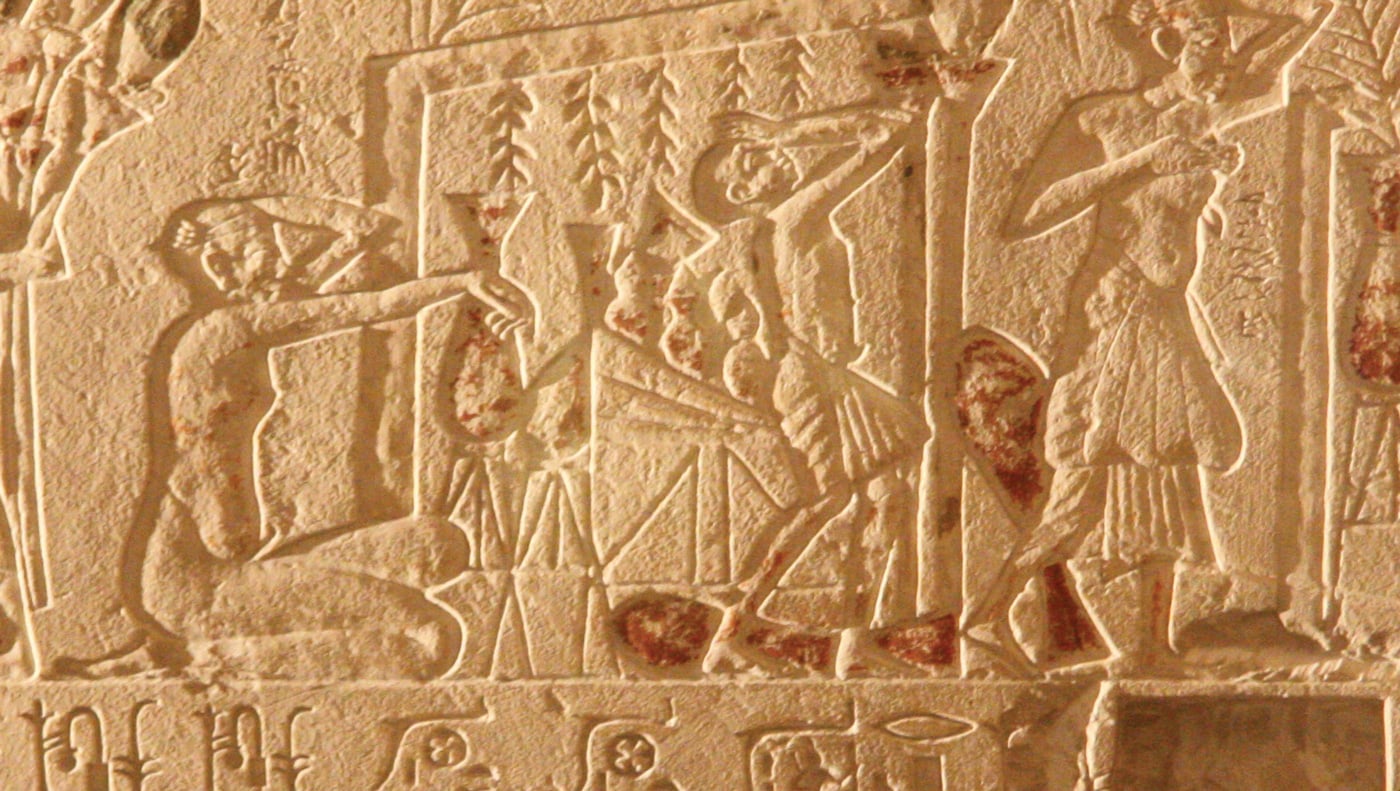
Literary Features
The book, totally in poetry, is distinguished by three characteristics. First, much of the poetry is in the qinah meter, a rhythmic accent in a 3–2 pattern (the Hebrew word for “lament” is qinah). Poetic lines often consist of five words with a thought break after the third word. This 3–2 pattern, while not limited to use in lament literature, is characteristic of funeral dirges, for it gives the effect of a statement that, interrupted by a sob, is concluded with a shortened phrase. Characteristically, laments begin with “how” (1:1; Jer. 48:17). Often they contrast an earlier glory with present disarray.
A classic lament is David’s song of grief upon the death of Jonathan (2 Sam. 1:19–27). The prophets effectively used laments or funeral dirges in order to portray coming disaster. Two kinds of laments are found in Lamentations: the individual lament (chap. 3) and the communal lament (chaps. 1–2, 4). The individual lament has an address to God, a complaint, a statement of confidence, a petition, and a word of praise. The communal lament has more flexibility and is designed for group use, usually in a worship setting (e.g., Psalms 44; 60; 74). It describes the distress and includes an appeal to God for help.
A second formal characteristic of the book is the acrostic pattern in which four of the five chapters are cast. In an acrostic, poetic lines or stanzas begin with the successive letters of the alphabet. In the first two chapters, each stanza of three couplets begins with the appropriate letter of the twenty-two-letter Hebrew alphabet—hence twenty-two verses. In the third poem (chap. 3) three successive lines each begin with the same alphabetical letter, the next three with the next letter, and so on, for a total of sixty-six verses. In chapter 4 the twenty-two stanzas consist of two couplets each; each stanza is in acrostic formation. The final poem is not an acrostic, but, like the Hebrew alphabet, has twenty-two lines.
The best-known acrostic in the Bible is Psalm 119, with eight verses to each of the Hebrew letters. Thirteen other acrostics have been identified.
Why follow an acrostic form when preparing a lament? It has been noted that a formal structure acts as a restraint on statements of grief, which would otherwise lack orderliness. Certainly it is a demanding task to pour emotion-filled material into a recipe-like form. A further reason for an acrostic would be its help in memorization. Finally, the acrostic by its form says what is to be said about suffering from a to z.
A third characteristic, formally speaking, is that of balance. The center poem is the longest. On either side of it are two poems, each with twenty-two stanzas, though of differing length. Moreover, as has been noted, the book itself is in qinah (3–2) pattern: three longer poems are followed by two shorter ones. Further, chapters 1 and 5 have a similar emphasis, an extended description of the tragic situation. Chapters 2 and 4 both deal with suffering, enemies, and God’s wrath. This leaves chapter 3, an individual lament that concentrates on giving an explanation for the suffering. The effect is that the first two chapters lead up to the central chapter; more rapidly the final chapters lead away from the climax of chapter 3.
The tone of the book is one of sadness and deep sorrow. Essentially the book processes a community’s grief. The poet tries to come to terms with the disaster. The writer does not give as a reason that the Babylonians were militarily superior. The Babylonians are not even mentioned by name. Nor does the poet consider that the gods of Babylon were stronger than the God of Israel.
Theological Themes
Specifically, the book leaves no doubt that the people’s sin accounts for the tragic fall of Jerusalem. Each of the five poems makes clear that the event must be seen as God’s punishment for sin. The book’s message, therefore, is in keeping with what the earlier prophets proclaimed: sin will bring judgment. Such a message is also in keeping with the covenant terms, which listed destruction, loss of land, and dispersion as among the covenant curses (Deut. 28:15–64).
The fuller explanation, therefore, beyond the people’s sin, is that God implemented the covenant curses—but not mechanically. The poem, especially in chapter 2, elaborates on God’s wrath. It was God’s anger against his people that precipitated such a horrendous event. That wrath is not capricious but is expressed in the context of God’s righteousness. The tension of a good God even permitting such affliction is perhaps not resolvable, but chapter 3 is a wide-ranging attempt to respond to this tension.
The book is instructive in grief processing. First, a difficult situation is not denied or minimized. The poet’s voice is heard pouring out grief and facing the ugliness of a crushed city and ruined dreams. Second, there is catharsis in explicitly stating the situation. The grimness of the event is not denied; rather, it is presented in detail. Sin is confessed. Third, the author wrestles over the assertion that God has brought on the disaster but that comfort and help can be only in him. The book is an illustration that in times of calamity one need not sink into despair. Fourth, for consolation the poet seizes on what is known of God, his goodness and his faithfulness (3:20–23). Fifth, in prayer the entire situation is rolled over on God himself.
Authorship
The author is not named but is popularly thought to be Jeremiah. Evidence for such a belief relies on Jewish and Christian tradition. Jeremiah is said to have composed complaints (2 Chron. 35:25), though these need not be the book of Lamentations. The Greek version of the Old Testament adds to the title of the book that it is by Jeremiah. While these are important considerations, other observations lead to a different conclusion: (1) there is nothing in the book of Jeremiah that suggests any leaning to acrostic forms; (2) the assertion that they looked for help from allies (4:17) is altogether out of character for Jeremiah, who counseled submission to Babylon and objected to Israel’s alliances with foreign powers (2:18); (3) the book has about it the mood of perplexity, whereas Jeremiah was certain about the reality of the coming disaster and its reason. The author was most likely a man, but may have been a woman. If the author was not Jeremiah, he (or she) was nevertheless an eyewitness of the events and wrote soon after 586 BC, probably before 570 BC.
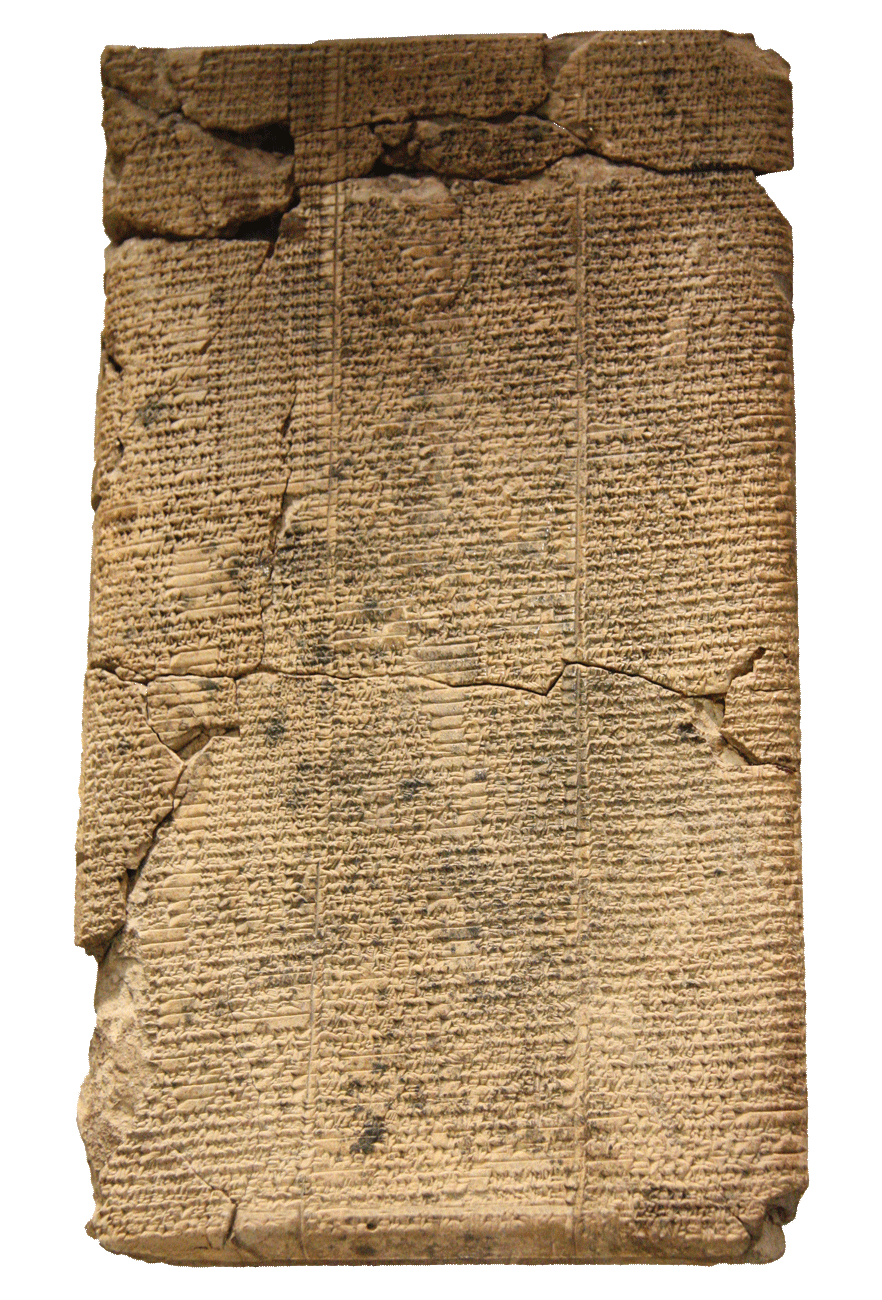
This tablet contains a poetic lament over the destruction of the city of Ur composed during the early second millennium BC.
Structure
The acrostic form plus the symmetrical and balanced arrangement nevertheless argue for a single author. Chapter 5, once claimed by scholars to be a later addition, is more and more thought to belong integrally to the whole. While we may not know the poet’s name, we are the richer for the writer’s frank statement of personal grief and faithful proclamation of the goodness of God.
Modern Application
Orthodox Jews read this book on the ninth of Ab to commemorate the destruction of both Solomon’s temple (587 BC) and Herod’s temple (AD 70). The Roman Catholic liturgy calls for a reading of the book during Holy Week. Persons and nations who fall into disastrous circumstances find a kinship here; together with the anonymous poet they can struggle through to commitment, even if not always to full clarity.
Commentary
1. Lamenting a City in Shambles (1:1–22)
The city is Jerusalem. The date is after either 597 BC or 587 BC. In 598, provoked by Jehoiakim (609–598), Nebuchadnezzar of Babylon attacked Jerusalem, the capital of Judah. Less than ten years later Zedekiah rebelled against his overlord, Nebuchadnezzar. The Babylonian king laid siege to, captured, and burned the city. The acrostic poem depicts the result, notes the enemies’ triumph, and acknowledges that God brought about the disaster because of Judah’s sin. The absence of a comforter is a repeated note.
A. A lost splendor (1:1–6). “How” is a literary feature of a lament or dirge (cf. 2:1; 4:1–2; Jer. 48:17). The tone is at once affectionate and sympathetic, like a pastor coming to the bereaved. The city, once prestigious, has been reduced to slave status. Jerusalem’s greatness under Solomon was world-renowned (1 Kings 10). Once this city was the hub of activity; now she is a “feeder” into the Babylonian system. Her lovers, namely her allies, such as Egypt or Moab, have deserted her.
The roads to Zion are without the pilgrims who would normally come to the worship feasts in Jerusalem. Religious, economic, and social life is nonexistent. The chief foe is Babylon, though ultimately the affliction is from the Lord. Jerusalem’s collapse has come for moral reasons, the result of a breach of covenant (Deut. 28:15–68), rather than chiefly because of political misjudgment or military inadequacy. Nor is it the enemies’ god who has triumphed. The city is bereft of its dignity, its status, its leaders, and its allies.
B. Enemies mock and gloat (1:7–11). Now away from their home city, the citizens remember the wealth of the city—a wealth that included the temple and its prized furnishings. These the enemy, the Babylonians, have taken away (Jer. 27:19–22; 52:17–23). Contrary to God’s law, which forbids foreigners to enter the temple (Ezek. 44:9), the Babylonians, a pagan people, have defiled the temple by entering it.
The enemies taunt Jerusalem by saying that her God is unable to defend her. The city is personified. Her nakedness, the depopulation of the city, is a disgrace; her “filthiness,” menstrual uncleanness, is a telltale evil (1:9). She lives for the moment and does not consider her future.
C. In search of comforters (1:12–17). From a lament about Jerusalem by some onlooker, attention shifts to a lament by Jerusalem herself. Hurting people feel their hurt accentuated when others carry on as usual. She acknowledges the Lord’s role in her affliction. Anger, like fire, consumes, and here consumes completely (“into my bones”). That God, like a hunter, has become Israel’s adversary, is an additional disgrace. The winepress is figurative for judgment. In a trough hewn out of stone, grapes would be trampled to release the juice. Judah’s dire plight is compounded by the lack of comforters.
D. Distressed and vengeful (1:18–22). In contrast to laments in other cultures, the righteousness of God is the setting for confession and lament here. Verses 18–20 review the main themes: Israel’s sin, suffering, exile, worthless allies, and famine. Attention turns to the enemies, upon whom the poet calls down divine vengeance (1:21–22). Implicit is the argument that if God punishes sin, let him punish the enemy’s excesses. Such a response at least takes seriously the verse, “Vengeance is mine, I [God] will repay” (Rom. 12:19 KJV, RSV; cf. Deut. 32:35).
2. An Angry God and an Awful Tragedy (2:1–22)
In the second poem, an acrostic like the first, the unprecedented tragedy of Jerusalem’s destruction is explained as resulting from God’s anger let loose against it. The tragedy is depicted; the mournful prayer of the victims is recorded.
A. God’s anger unleashed (2:1–9). Once a cloud of glory filled the temple as a sign of God’s favor (1 Kings 8:10). Now God’s displeasure, like a dark cloud, stands over Jerusalem. God’s strength is expressed anthropomorphically by the “right hand” (2:3, 4), his anger by the “hot nose” (NIV “fierce anger,” 2:3). Of the five different words for “anger” here, several have to do with heat and fire; they denote an intense emotional disturbance. God’s anger may be viewed as the expression of his justice, for here is not an impulsive emotional outburst, but a follow-through on a threat. By his anger God protects what he loves: justice. God’s anger is against evil.
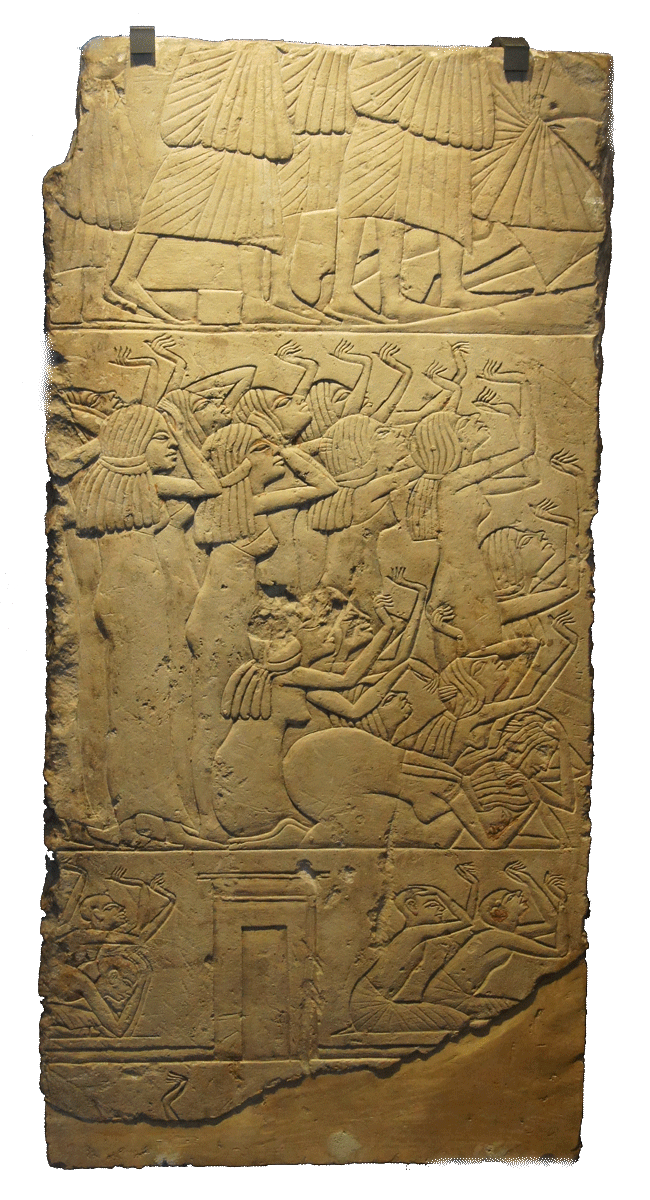
An Egyptian relief showing women mourning (tomb of Horemheb, Saqqara, ca. 1330 BC). Some of the women are bowing down, similar to the description of mourning in Lamentations 2:10: “The young women of Jerusalem have bowed their heads to the ground.”
The effects of God’s wrathful action are pictured in different ways. Overall, Israel has toppled from the splendor of her election. The ark of the covenant and even the temple are no longer important to God. Fields and fortresses, the land and its leaders, have been affected by God’s anger. God’s destroying action has taken the lives of the choice soldiers. Not only has God removed all outside resources, but worse, he has withdrawn his own offer for help. Even worse, he has, like an enemy, turned against Israel.
Jerusalem is in view in verse 6—first the temple, then the city. With the temple, God’s dwelling and the place of meeting, destroyed, the festivals are no longer feasible. Specifically, God has rejected the altar. The altar of burnt offering stood in the courtyard; the altar of incense was inside the temple. Access to the temple is no longer monitored; the pagan Babylonians raise shouts of victory where pious Jews once raised shouts of praise to God. God directs the destruction of the city’s fortifications. Finally, the leadership stratum—king, lawgiver, prophet—is annihilated. Tragedy occurs where there is no word from the Lord.
B. Widespread ruin (2:10–17). The remaining verses of the poem (2:10–22) depict the human reaction to God’s destructive wrath, adding further details about the ruin. Dust and sackcloth were cultural expressions of grief, as was bowing to the ground, which denoted mourning and repentance. Multiple age ranges are represented: elders, maidens, mothers, children, and infants who cry their hearts out. The collective group speaks in verse 10; but in verse 11 an individual, an inside observer who is deeply moved, speaks. Both questions of verse 13 suggest speechlessness. “Your wound is as deep as the sea” (2:13) conveys the notion not only that things could not be worse but that the catastrophe has no parallel.
Prophets, had they been true prophets, might have averted the disaster, or if not, could now be comforters. But false prophets are disqualified. A true prophet’s function is to expose evil in society. Jeremiah reprimanded false prophets and those who listened to them (Jer. 14:14; 23:13; 27:9–10). Neither the prophets nor the “outsiders” can be comforters. Nor can God, who is the agent of the disaster. After the description of disaster (2:11–16) comes the interpretation (2:17). The word decreed long ago was God’s warning that such disaster would come should Judah fail to follow God (Lev. 26:14–39; Deut. 28:15–68).
C. A prayer of anguish (2:18–22). The poet encourages Judah to meet her frustration and grief in the presence of the Lord and to pray on behalf of the children. The encouragement is addressed to the city walls, which are personified (2:18). The metaphor is apt in view of night watches maintained on the walls. In verses 20–22 the people offer prayer, or the poet prays on their behalf.
The appeal to the Lord is made on the basis of lack of precedent (whom have you ever treated like this?) and compassion. A report of starved women resorting to cannibalism is found in 2 Kings 6:25–29. The statement may be literal, of course, but since covenant curses projected such a situation (Deut. 28:53), reference to it could be a way of saying, “The worst has happened.” Casualties of war are in the street, a war in which the Lord is the aggressor.
The form of chapter 3, while still an acrostic, is an individual lament (at least 3:1–20) and so differs from the communal laments that precede and follow it. Chapter 3 is the middle poem, with 3:1 exactly at the center of the book. In concept and intensity the first two chapters lead up to chapter 3, and the last two lead from it. As an individual lament it has the customary components of complaint, statement of confidence, and prayer. Although the summons to praise is absent, this individual lament can be compared with a similar genre in the psalms (e.g., Psalm 13) and Jeremiah 15:15–21. Yet the individual fades out; a group speaks in verses 40–47. Perhaps the poem was used as a responsive reading in worship. The individual lament becomes a prism through which to elaborate on the communal experience. Or the “I” may from the outset be understood as a collective pronoun.
A. Afflicted by God (3:1–18). One characteristic of a lament is the graphic depiction of the difficulty that called it forth. The ugliness of this scenario is God-caused. He (3:1 and throughout this section), though not named until 3:18, is the Lord. The speaker is the victim of the Lord’s assaults. Verse 4 suggests that the problem is illness. To physical ailment is added psychological and spiritual isolation. Access to God has been stonewalled, blocked with huge boulders.
Other images follow to make graphic the individual’s plight: wild animals mauling their victims (3:10–11); a hunter in target practice (3:12–13); a dietician administering bitterness (literally “poison”) (3:15). Like Jeremiah, the individual is the object of ridicule. A Western idiom corresponding to 3:16 would be: “He made me eat dirt.” The tension is severe. God, who might have been his hope, has become his adversary.
B. Confidence in God (3:19–42). Verses 19–20 provide a transition from the description of distress, of which God is the cause, to a statement of confidence, wherein God is the hope. Hope is implied by the lament as such; it looks for an answer from God. Hope in individual laments is usually made explicit in the “certainty of hearing,” or confidence, statements.
The Lord’s great love (3:22) follows through on covenant obligations. God’s compassion cannot be exhausted. His faithfulness to his covenant is unfailing. Whereas the poet has earlier given up hope (3:18), he now determines that God will be his hope. Verses 21–26 have been called the theological high point of the book.
One of the poet’s answers to suffering is to affirm God’s goodness. For this reason the afflicted do well to wait even in silence. There is approval for turning over the yoke (responsibility?) to the younger generation (3:27). However, the context supports the view that yoke deals with suffering (cf. 3:1); the lesson of trust in God, when learned early, is orientation for the remainder of one’s life.
Verses 28–30 once more picture the afflicted person in order to set the stage for verses 31–33. Despite the perception that the Lord brought on the affliction, faith affirms that it is not really in God’s nature to afflict. More than that, his compassion and his unfailing love override whenever God does afflict. The poet is responding to an age-old problem: how can one reconcile belief in a God of goodness and power with the reality of suffering?
Verses 34–36 are further assertions of confidence by a victim of evil. A God of justice is obligated to redress evil. The Lord’s power means that limits are enforced. God as the source of good and bad echoes Job 2:10. Suffering may be the result of sin (Deut. 28:15–68). It is not, however, the only reason for suffering. Still, ruthless honesty is necessary (3:40). Genuine repentance admits wrongdoing.
C. Beset with problems (3:43–54). The poet returns to complaints, but these are now of a communal nature. The complaint involves God, enemies, and personal suffering. Former themes are incorporated: covering with a cloud of anger (3:43–45; cf. 2:1), killing without mercy (3:43; cf. 2:17), inaccessibility (3:44; cf. 3:8), and humiliation (3:45; cf. 1:1, 6). Arguments for the Lord to pay attention to the situation arise from the humiliation of God’s people, the suffering, and the threat of annihilation.
D. Calling on God (3:55–66). Prayers and report of prayers close the poem. The poet invokes previous experiences as reason for God to hear. Or, in a more likely interpretation, so sure is the poet of God’s help, that talk proceeds in the past tense. Legal court language pervades verses 58–59. The enemies, in their glowering mood, though unidentified, will prompt the Lord to action. The prayer for vengeance (3:64), while in keeping with the Old Testament admonition to turn over all vengeance to God, falls far short of the New Testament exhortation to love one’s enemies (Matt. 5:44).
4. Jerusalem’s Humiliation (4:1–22)
Like the three preceding poems, this poem is an acrostic. Like chapter 2, it tells of Jerusalem’s faded glory and reiterates the Lord’s part, though not as sharply, in bringing about the disaster. One feature of the lament is the contrast between “then,” a time of glory, and “now,” a time of humiliation.
A. Jerusalem’s faded glory (4:1–10). “How” is the recognizable introduction to a lament (1:1). Not Jerusalem only but the country’s suffering populace is the subject. Jerusalem the golden has become very tarnished. Its pride, the sanctuary, is dismantled, and its stones are scattered about in the streets. However, with verse 2 as a clue, “gold” and “gems” may refer to the best of its citizens. The sons of Zion, either Jerusalem’s citizenry generally or the temple functionaries, like currency, have become sharply devalued.
A new and ugly ethos prevails. People have become hardened, even heartless. Ostriches lay their eggs in the sand, thus putting the future of their young in jeopardy. Besides, they treat their young harshly. The rich have become poverty-stricken.
Sodom and Gomorrah are the classic symbols of catastrophe (Gen. 19:24–25, 29; Jer. 20:16; 23:14). Instead of “princes” (4:7), the Hebrew text reads “Nazirites.” The Nazirites were a group that vowed self-discipline and devotion to the Lord’s service (Num. 6:1–21). Perhaps the term suggests “the elite,” who are described as the picture of health but because of famine have become scrawny and unrecognizable.
Sudden death seems preferable to slow death by famine. The reference to cannibalism, practiced by the sensitive women, may be a way of saying that the covenant curses have been implemented (Deut. 28:53). Still, famine drives people to bizarre actions, and the description may well be literal (2 Kings 6:25–29).
B. Jerusalem’s dire plight (4:11–20). The Lord’s anger is the theme of chapter 2. The doctrine of Zion and the temple as invincible had some theological support but was misleading in Judah’s circumstance. As a fortification, Jerusalem was strategically placed, with valleys on three of her sides. Her fall was due to inside weaknesses. The sins of God’s people as a reason for the disaster are noted in each of the four acrostic poems (Lam. 1:8; 2:14; 3:42; 4:13) and in the final chapter (5:7).
In a profound sense, the leaders’ failure to be true spokespersons for God brought on the siege that resulted in the death of the “righteous” folk. These former leaders are now among the rejected. Those once honored are not shown respect.
As Sodom in its crisis had no helpers, so Judah is without assistance. Verse 17 is often cited as proof that Jeremiah is probably not the author of Lamentations. He counseled against seeking foreign aid. Verse 19, it is almost certain, describes Zedekiah’s attempt to escape (2 Kings 25:4–6; Jer. 39:4–7). Hopes were pinned on the king as the Lord’s anointed. But he was captured.
C. A strange irony (4:21–22). “The cup” (4:21) is metaphorical language for the “wine” of God’s judgment. Nations drinking this wine go into a stupor, stagger, and fall (Jer. 25:15–28). To be stripped naked is to be disgraced. Edom took advantage of the chaos after Babylon sacked Jerusalem; Judah was left without defenses. Edom then occupied parts of Judah, a circumstance that further fueled long-standing hostility.
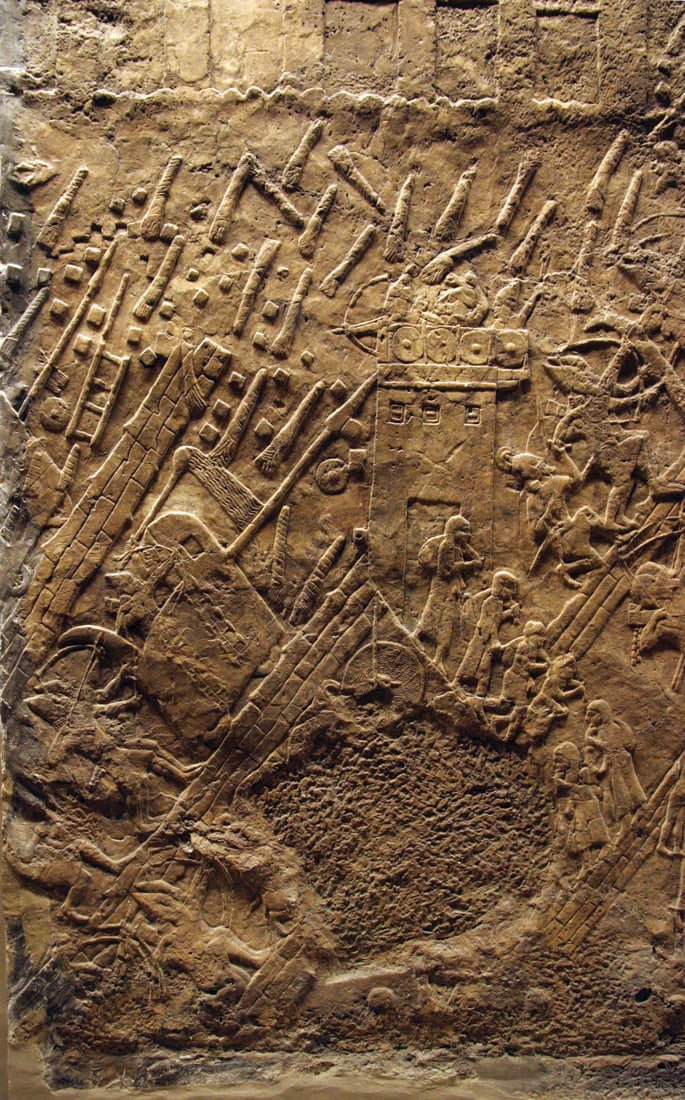
This scene portraying the siege of Lachish (Assyria, 700–692 BC), as the city is under attack and its citizens go into exile, is reminiscent of the fate of Jerusalem.
5. A Summarizing Prayer (5:1–22)
This poem, unlike the four before it, is not an acrostic, though it has twenty-two lines, the number of letters in the Hebrew alphabet. The prayer reviews the distressing circumstances subsequent to the fall of Jerusalem and pleads for the Lord to grant restoration. In form the poem is a communal lament with an address to God, the listing of reasons for the lament, and a request to God for help.
A. Refugees in one’s homeland (5:1–9). Jerusalem has been sacked and there is chaos. A large part of the tragedy is the loss of her land, her inheritance. The land was a keystone in her covenant relationship with God. Verse 3 may refer to a sense of abandonment by God, though the literal also holds true because of war casualties.
In the days of Jehoiakim (609–597 BC), Judah was a vassal to Pharaoh Necho of Egypt. In the early decades of the sixth century she was a vassal to Assyria. Marauding bandits were a hazard after Babylon’s victory.
B. “Our hearts are faint” (5:10–18). Famine, sexual abuse, and violence make for very hard times. Life has taken a turn for the worse. Youth are put to hard labor. The collapse of society marks a reversal from what things have been.
C. “Restore us” (5:19–22). The communal prayer concludes by repeating a foundation of the faith: God’s everlasting rule. The plaintive questions are rhetorical (5:20). The prayer for restoration is like Ephraim’s prayer (Jer. 31:18–19). The poet accepts the fact that God punishes sin. Although the total case has been turned over to God, the closing note is sobering indeed (cf. Mal. 4:6).
Select Bibliography
Dobbs-Alsopp, F. W. Lamentations. Interpretation. Louisville: Westminster John Knox, 2002.
Gottwald, Norman K. Studies in the Book of Lamentations. Rev. ed. London: SCM, 1962.
Huey, F. B., Jr. Jeremiah/Lamentations. New American Commentary. Nashville: Broadman & Holman, 1993.
Martens, Elmer A. “Jeremiah and Lamentations.” In Cornerstone Biblical Commentary. Edited by Philip W. Comfort. Vol. 8. Wheaton: Tyndale, 2005.
O’Connor, Kathleen. “Lamentations.” In The New Interpreter’s Bible. Edited by Leander E. Keck. Vol. 6. Nashville: Abingdon, 2001.
Provan, Iain W. Lamentations. New Century Bible Commentary. Grand Rapids: Eerdmans, 1991.