Psalms
1. BOOK 1 (1:1–41:13)
Psalm 1. This psalm forces readers to make a choice: serve God and succeed, or follow the world and lose. Yet the author of this psalm and those of the remaining psalms know that life is not so simple. The righteous do not always get ahead; the ungodly do not always fail. This psalm describes how life ideally should play out on earth and how it ultimately will turn out in eternity. It establishes a key theme traced throughout the Psalms: the righteous (those committed to God) contrasted to the wicked (those with little interest in God).
1:1–3. To experience true happiness, believers reject the ways of those who do not serve God and embrace God’s truth, considering the implications of truth for all aspects of life (1:1–2). Doing so brings stability, refreshment, and fruitfulness to life (1:3).
1:4–6. Following the world makes one as stable as dust in a windstorm, whether on earth or in eternal judgment (1:4–5). God gives absolute success to those with whom he has an intimate relationship (1:6).
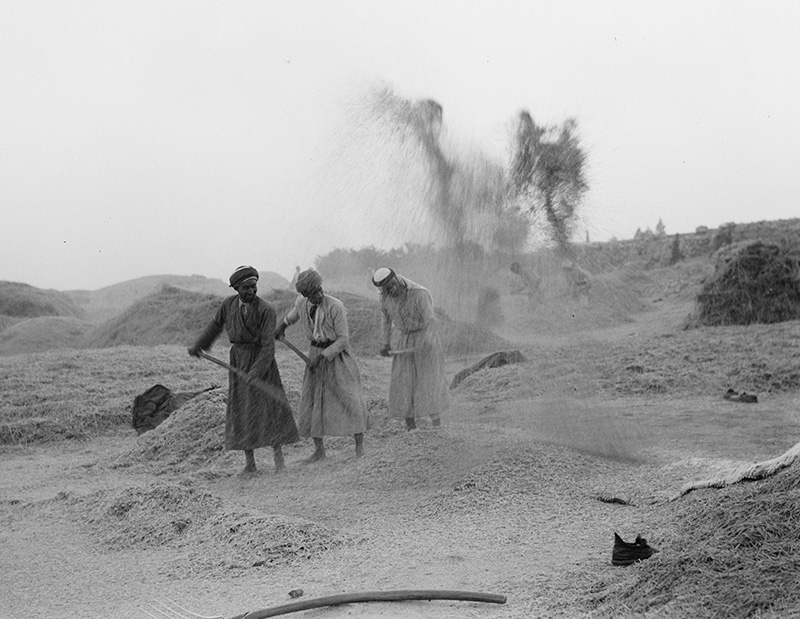
Psalm 1 compares the wicked to chaff that is blown away by the wind. These Middle Eastern farmers are using the traditional method of winnowing grain (1940).
© Library of Congress Prints & Photographs Division, [reproduction number, LC-DIG-matpc-20316].
Psalm 2. 2:1–5. Whereas in 1:2 the righteous meditate on God’s truth, in 2:1–2, the wicked “plot” (literally “meditate”) God’s destruction and that of the Messiah (the Anointed One). Psalm 2 inaugurates the second major theme of the Psalms: the Messiah as final resolver of the problems believers encounter.[The Psalms and the Messiah]
The nations rage at God, seeking their own way, but God laughs at their folly, countering with his own fury that shakes them to their core (2:3–5).
2:6–12. The psalmist reveals the relationship between God and his appointed king (Father and Son—2:6–7). This king will reign over the earth with absolute power (2:8–9). All people are urged to yield themselves joyfully to the Lord and to his Son (2:10–12). Verse 12 echoes Ps 1—rejecting God’s Son brings ultimate destruction (1:6); embracing him brings blessing (1:1–2). [Scepter]
Psalm 3. Building on the introductory psalms, Ps 3 sets the tone for book 1—the righteous under attack, emboldened by the divine protector to face difficulties with confidence. The superscription places David in a crisis that rips his kingdom and family apart (cf. 2 Sm 15–19: Absalom deposing David; God reestablishing David’s kingship).
This psalm exhibits a four-part structure: (1) enemies in overwhelming numbers declare that God will not give the psalmist victory (3:1–2); (2) God responds to the psalmist’s cries for help, giving protection and success (the lifting of one’s head indicates the achievement of victory, not the overcoming of discouragement; cf. 27:6; 110:7) (3:3–4); (3) God from his “holy mountain” (3:4; cf. 2:6) gives the psalmist peace in the midst of crisis (3:5–6); and (4) the psalmist (despite enemy dissuasion, 3:1–2) confidently seeks God’s help for his people (3:7–8).
Psalm 4. Facing different challenges in Ps 4 than in Ps 3, the psalmist resolves them using similar methods and experiences similar results. In Ps 3, David encounters physical assault (3:1); here, he is grieved by people’s ungodly lives (4:2, 6). In both psalms, he calls to God for help, certain that God will respond positively (3:4; 4:1, 3, 7) and provide security despite the chaos (3:5; 4:8). His adversaries, however, do not recognize God as the true source of help (3:2; 4:6).
David issues seven commands to the ungodly (4:3–5): “know” that God favors the righteous (not those who dishonor him); “tremble” because of encountering God (see the CSB footnote; cf. 18:7; 77:16, 18; 99:1); “do not sin”; “reflect” in your hearts at night (cf. the peaceful sleep of the righteous, 4:8); “be still” (in God’s presence); “offer” true sacrifices (unlike those you offer to idols, 4:2); and “trust” in the Lord. By contrast (4:7–8), those who please God receive superabundant joy, peace (i.e., wholeness, things as they should be), and security.
The psalmist’s appeal to the Lord to “let the light of your face shine on us” (Ps 4:6) echoes the priestly blessing in Nm 6:24–26 (cf. Ps 4:1). Similar echoes occur in Pss 67:1; 80:7, 19; and 119:135 (see also 29:11).
Psalm 5. David presents the stark contrast between the righteous and the wicked (cf. Ps 1). The righteous seek God, and God blesses them. The wicked, however, have no access to God because God abhors their acts.
5:1–8. David (one of the righteous) opens with a personal plea to God for help yet does not detail the specifics of his problem (5:1–3). Next David unveils God’s feelings toward the wicked, either through his own reactions or through their acts (5:4–6). David then declares his desire to worship God and seeks his guidance in the face of his enemies (5:7–8).
5:9–12. By contrast, David pleads to God to not even hear the words of the wicked but to condemn the wicked because they cannot be trusted (5:9–10). God, however, should welcome the righteous because they place their hope and love in him; he is, moreover, the one who envelops them with his kindness (5:11–12).
Psalm 6. Suffering physically and emotionally (6:2–3)—totally exhausted (6:6–7)—David seeks relief from God’s discipline (6:1–4) and from the pressure of his enemies (6:7–8, 10).
6:1–5. David pleads for God to show mercy rather than the heat of his rage (6:1–2a). No longer able to stand the torment, David cries to God for deliverance. He appeals via three lines of argumentation: (1) his own interminable suffering (6:2b–3), (2) God’s undying love (6:4), and (3) his own desire to praise God while still alive (6:5).
6:6–10. David denounces his enemies as the cause of his misery (6:6–7). His tears that his enemies rejoice over are the same tears that move God to terrify and shame those same enemies (6:8–10).
The psalmists understand the reality of the afterlife. They know they will praise God even in death (e.g., 44:8; 52:9; 145:1). In 6:5, David highlights the silence of the tomb—that no one buried there can be heard on earth to praise God.
Psalm 7. God is a righteous judge who battles daily those deserving judgment, whether they are his people or his people’s enemies (7:6, 8, 11–13). Yet the psalmist does not run from that judge; instead, he seeks refuge in, deliverance by, and justice from him (7:1, 6, 8). The psalmist—fully confident of his innocence of charges against him—even risks allowing God to judge him, either by his enemies or by himself, knowing that such judgment might result in his death (7:4–5, 8).
Although the psalmist seeks protection from his all-too-powerful enemies (7:1–2), he knows that God will ultimately judge them (7:11–13) or their own actions will crash down on them (7:14–16). The psalmist, who seeks God as a powerful protector who overthrows his enemies (7:6, 8), praises God most for his righteousness (7:17). [Shiggaion]
Psalm 8. David interweaves two contrasting themes: significance and seeming insignificance.
Significance—God’s greatness (8:1); seeming insignificance—helpless infants (8:2—cf. Mt 21:16); significance—God’s use of infants to defeat his enemies (8:2).
Significance—God’s expansive creation (8:3); seeming insignificance—comparatively tiny human beings (8:4); significance—God takes an interest in humans (8:4).
Seeming insignificance (?)—God makes humans lower than angels (8:5); significance—God makes humans to rule over his creation (8:6–8).
Significance—God’s greatness (8:9).
David assumes that God is the Creator of heaven and earth, which are not themselves self-existing or self-sustaining. God empowers humans to conquer against overwhelming odds (8:2) and to manage what is beyond their ability to comprehend (8:6–8). David surrounds the psalm with an inclusio of praise regarding God’s majesty (8:1, 9).
Psalm 9. Psalm 9:1–2 echoes 7:17 via a high degree of repetition of Hebrew words. David declares that he will sing praise to God’s name, telling of his wonders (quite probably the wonders in Ps 8).
Other connections exist between Psalms 7 and 9. Two different verbs related to judgment and the noun translated “righteousness” in 7:8 also all appear in 9:8 (cf. 9:4 and Pr 31:9). In addition, 9:15–16 links back to 7:14–16, describing the truism that those who sin stumble over their sins to their own detriment.
The remainder of chapter 9 reveals God’s protection of those who trust and serve him in righteousness (9:9–10, 12–13) and his destruction of those who oppose him (9:3, 5–6). God’s people are to praise him and declare his great works to the world (9:11). [Higgaion]
A partially hidden acrostic, beginning in Ps 9 and concluding in Ps 10, suggests a linkage between the two psalms.
Psalm 10. Whereas Ps 9 announces that God at times protects and delivers his people from the afflictions that bring them close to death, Ps 10 indicates that God may not necessarily enact that deliverance quickly; he may allow the enemies of his people to inflict terrifying suffering on them over long periods of time.
10:1–13. The psalmist begins with a question: Where are you, God, when I need you most? (10:1). The enemy is boastful and self-absorbed, rejoicing in greed and rejecting God (10:2–4). This foul-mouthed enemy sneers at God’s people, destroying the helpless—seemingly never experiencing tragedy, only success (10:5–10), and somehow escaping God’s judgment (10:11–13).
10:14–18. Despite describing two divergent pathways of life, the psalmist(s) of Pss 9 and 10 draw(s) the same conclusion: God rules over the wicked and the righteous alike. He deeply cares about the suffering of his people and ultimately mercifully overcomes their problems (10:14, 16–18; cf. 9:9–10, 12, 16–18).
Psalm 11. If David flees for his life, seeking protection from earthly things rather than from God, he will be deserting the foundational truths of his life (11:1–3). David knows that God, who is firmly fixed on his heavenly throne, understands the thoughts of the righteous and the wicked and executes a very different judgment on the two groups (11:4–7).
The two judgments anticipated in 11:6–7 may depict eternal judgment (suffering the fire of hell or enjoying the face of God in heaven; cf. 11:4), or they may be metaphoric representations of God’s censure of unbelievers and gracious reward of believers on earth.
Psalm 12. This is a psalm about words—the deceitful, destructive words of the godless (12:2–4) and the true, unfailing word of the Lord (12:5–6). The beginning and the ending of the psalm present God’s enemies as dominant in a world where the righteous are few in number (12:1–2, 8).
Although the psalmist knows that he is not the sole believer in God on earth (see “us” in 12:7), he feels overwhelmed by a world filled with self-centered, self-aggrandizing oppressors. He seeks God’s help, knowing that God will do what he promises (12:1, 3, 5–7). Yet, even though God one day will rise and conquer on behalf of his people (12:5), he has not yet done so, and the world remains the playground of those who rejoice in evil (12:8).
Psalm 13. 13:1–2. Manifested in a fourfold cry to the Lord—“how long?”—David’s emotional stress exposes four agonized concerns: (1) that he may have become “invisible” to God, that is, that God will no longer act on his behalf; (2) that God is angry with him, intentionally turning away from him; (3) that his frustrations and personal suffering may never end; and (4) that he will not find relief from enemy oppression.
13:3–6. David pleads for answers—his life and happiness depend on what God does or does not do (13:3). If God does not help him, the enemy wins and rejoices over him (13:4). If God helps him, he triumphs and rejoices in God’s deliverance (13:5–6).
Psalm 14. The world is filled with those who take little interest in God, living in ways displeasing to him (e.g., corruptness, vileness, destroying God’s people, taking advantage of the helpless) (14:1–4, 6). God, however, lives with his people, protecting them (14:5–6).
Note that Ps 53 essentially replicates Ps 14, except for 14:5–6 (see 53:5). Psalm 14:5–6 fits particularly well the flow from Pss 13 to 15. In 14:5–6, David focuses primarily on God’s relation to those who are special to him (i.e., the righteous and the poor/afflicted). Those verses, together with the remainder of the psalm, address David’s concerns (Ps 13) and set the stage for his discussion (Ps 15) regarding those whom God allows to be close to him.
Psalm 14 ends much like Ps 13: God’s people will rejoice individually (13:5–6) or corporately (14:7) when he delivers them from their problems.
Psalm 15. Psalm 15 advances the concept of the ideal person (cf. Ps 1), showing how the godly person pleases God and successfully handles life’s challenges (described in later psalms). Based on the questions asked and the answers given in Ps 15, some argue that Pss 15 and 24 form part of the ancient liturgy sung upon entrance to worship at the temple.
With whom does God like to keep company (15:1)? David answers: those who live with integrity (15:2); who avoid harming others, by words or actions (15:3); who act as God acts toward the wicked (despising them) and toward the upright (honoring them) (15:4); and who are willing to suffer righteously, not taking advantage of a helpless person, even to their own detriment (15:4–5).
Psalm 16. 16:1–7. True goodness is found only in God and in those who are his followers (16:1–4). David finds delight in the holy ones who serve God (16:3) but not in those who turn to other gods—not even being willing to raise a glass in their honor at their death (16:4). He knows that God gives him a good life and guides him through it (16:5–7).
16:8–11. David concludes the psalm with several enigmatic statements: always being guided by God (16:8a), God being at his right hand (16:8b), resting secure that the grave will not be the end (16:9–10), and having eternal delight at God’s right hand (16:11). [Miktam]
The NT indicates that in Ps 16:8–11 David is writing not about himself but about the coming Messiah, Jesus (Ac 2:25–31; 13:35–37). Thus one thousand years in advance, David announces the resurrection of Jesus the Messiah.
Psalm 17. In five of the twelve direct commands/entreaties in this psalm (17:1, 6), David asks God to hear his prayers. In the remaining seven (17:7–8, 13–14), he desires God’s protection and support. In the three indirect commands, David seeks God’s favorable assessment regarding his attitudes and actions (17:2) and desires that God would satisfy him with his presence (17:15).
David portrays his enemies as violent, hard-hearted, arrogant people who, like wild animals, steal what they can and circle ever closer to him, determined to devour him mercilessly (17:4, 9–12). While pleading for help, David expresses gratitude for God’s unyielding compassion toward those whom he loves (17:14–15).
Psalm 18. David fully believes that God controls his enemies (18:3, 17, 40, 43, 48), death (18:4–5), nature (e.g., mountains, hail, lightning, rain clouds, water, sea; 18:6–15), angels (18:10), and darkness (18:11, 28). David also has complete confidence that he has a relationship with that all-powerful God. Not only is the Lord David’s God (18:2, 6, 21, 28–29), but he is also David’s rock, fortress, shield, support, and savior (18:1–2, 18, 46). [Horn]
God gives David a remarkable victory over his enemies—empowering him to fight, honoring him after the battle, and causing the defeated nations to tremble before him (18:31–45). God does all this because he delights in David, and David remains faithfully obedient to him by living humbly and blamelessly, with God as his refuge (18:20–30). David praises his God and determines to praise him throughout the nations. God’s kindness to David extends through all generations (18:46–50).
Psalm 19. 19:1–6. God’s heavenly creation sings forth his message nonstop (19:1–2). Throughout the earth, the sun daily blazes God’s truth for all to see (19:3–6). [Revelation of God]
19:7–10. God’s written word is also a faithful proclaimer of God’s message. Utilizing synonymous parallelism (19:7–9), David cites six names by which God’s word is known: “instruction,” “testimony,” “precepts,” “command,” “fear,” and “ordinances.” Five of these six names are commonly recognized; the sixth, “the fear of the LORD,” is not. David clearly wants his readers to recognize God’s word as an awesome terror to be reckoned with. David also highlights numerous benefits of knowing and applying God’s word.
19:11–14. David concludes by expressing his desire that God’s word and ways would reign in his heart and that God would be pleased with all that he thinks and does.
Psalm 20. 20:1–6. In 20:1–5, reflecting David’s prayer in Ps 19, the people of Israel express to the king their desire that God would help him, would accept his sacrifices, would give him the longings of his heart, and would deliver him. The king responds, declaring that God delivers his anointed (i.e., King David himself) by his great strength (20:6).
20:7–9. Concurring with David’s acknowledgment of God as the sole source of his victory, the people announce their intention to put their total confidence in God. To do anything less—such as to trust in military might—would be to court disaster (20:7–8). The people then seek God’s deliverance for themselves (20:9).
Psalm 21. As does Ps 1, Ps 21 reveals that God has very divergent destinies for the righteous and the wicked, both in this world and in eternity.
In an inclusio of praise to God for his strength, David and his people delight in their God (21:1, 13). Between those two declarations, David reveals God’s exercise of strength toward his servant (21:2–7) and against his enemies (21:8–12). God responds to the desires of the king’s heart, overwhelming him with riches, long life, military success, and eternal blessings (21:2–6). God, moreover, makes the king immovable, because the king trusts in him (21:7). In 21:8–12, David depicts God as controlling, consuming, and conquering his foes—foes who are unable to withstand the onslaught of God’s strength.
Psalm 22. New Testament authors clearly portray Ps 22 as messianic; they do so either by citing it directly, as in 22:1 (Mt 27:46; Mk 15:34); 22:18 (Jn 19:24); 22:22 (Heb 2:12), or by referring to it, as in 22:7 (Mk 15:29); 22:8 (Mt 27:43); 22:15 (Jn 19:28); and 22:16 (Jn 20:25).
Jesus quotes from Ps 22:1 while on the cross, just prior to his death (Mt 27:46; Mk 15:34).
Psalm 22 begins with deep anguish, a sense of being deserted by God, who does not answer the sufferer’s prayers (22:1–2). The inner portion of the psalm acknowledges God’s worthiness to be praised for delivering those who trust him (22:3–5). Yet, feeling as though he has been deserted both by God and by humans (22:6–18), the speaker cries out to God for deliverance from those ravenous beings who hold his life in the balance (22:19–21). The psalm concludes both with praise to God for responding favorably to the pleas of the helpless and with a declaration that God’s message is a message for the ages (22:22–31). [Bashan]
Psalm 23. God brings comfort to the terrified psalmist, who, like the speaker in Ps 22, is on the edge of death (23:4). The speaker in Ps 22 anguishes over the horrific acts inflicted on him and over God’s apparent desertion in the time of his greatest need. In stark contrast, in Ps 23 the psalmist joyfully and fully drinks in God’s comfort (23:2–3).
Whereas in Ps 22, the speaker maintains confidence in the Lord despite not being delivered from death by him, in Ps 23 the author expresses full confidence in the Lord because God provides for his needs in times of weakness (23:1–3), guides and protects him in near-death experiences (23:4), and honors him abundantly in the midst of immediate danger (23:5). David concludes by announcing that God aggressively pursues (not simply follows) him in this life and ensures that he will dwell with him in the next (23:6). [Staff]
Psalm 24. In Ps 23 David suggests that God’s pursuit (23:6) is the basis by which he has eternal fellowship with God, but he fails to indicate what role he plays in securing that fellowship. Here in 24:4–6 David provides an answer: he is committed to the true God and to no other, and God has vindicated him, that is, declared him righteous. (That he has “clean hands” and a “pure heart” does not imply a sinless life; otherwise God would have no need to vindicate him.)
David also declares that God, the Creator and owner of the world (24:1–2), allows those who seek his face, faithfully serving him, to join him in his holy place (24:3–6). (Some believe Ps 24 to be a component of the “entrance-to-worship” liturgy [cf. Ps 15].) Furthermore, the time has come (God’s people need to be prepared) for this all-powerful king of glory to return to his rightful place to reign among his people (24:7–10). [Stewardship]
Psalm 25. Has David (cf. 24:4–6) lived a completely godly life? Psalm 25:7, 11, 18 clearly says no. David confesses his sin and seeks God’s help. Yet, despite being a sinner, he is strongly committed to the Lord (25:1–2, 5, 15, 20–21). Near the beginning and the ending of this psalm, David declares that his hope is in God (25:5, 21) and prays that God would never allow him to be shamed by his enemies (25:2, 20; though, as David says, no one who trusts in God is ever truly put to shame, 25:3). Throughout this acrostic psalm, David shifts back and forth from a desire for God’s guidance along the right path (25:4–5, 8–9, 12–14) to a plea for God’s mercy because he and his people have followed the wrong path (25:6–7, 10–11, 15–22).
Psalm 26. Once more (cf. 24:4), David boldly proclaims what appears to be a belief that he is without sin . . . or does he? With confidence, David declares himself to be blameless (26:1, 11), willing to be tested by God (26:2), faithful to God’s word (26:3), an avoider of sin and sinners (26:4–5), and a man of worship in the midst of a godless society (26:5–12). But does he believe that he is perfect, without sin?
Though sounding much like the Pharisee in Jesus’s parable (cf. Lk 18:9–14) who conceitedly announces his “spiritual greatness,” David speaks truth about his actual godliness and, like the tax collector in that parable, recognizes his need for God’s mercy (26:11). David trusts God fully; he does not waiver in his belief in the true God of Israel (26:1).
Psalm 27. Confidence in the Lord permeates David’s thought (27:1, 3, 5, 10). He places his trust in the Lord and urges himself to increase that commitment (27:4, 8, 14).
The words of Ps 27 recall Moses’s commission to Joshua in Dt 31:7–8: “Be strong and courageous. . . . [The LORD] will be with you; he will not leave you or abandon you. Do not be afraid or discouraged” (see Ps 27:1, 3, 9, 14; cf. Jos 1:5–9).
The description of David’s dedication here parallels that found in Pss 23–26. Psalm 27, however, emphasizes potential or real enemies and problems far more than those other psalms (27:3–6, 10–12). Yet, despite facing such dangers, David declares that he is not afraid, because God is his light, salvation, stronghold, protector, helper, and displayer of good (27:1, 5, 9, 13). As a consequence, David pleads with God never to turn him away but to allow him to remain in his presence always (27:4, 7, 9, 11–12).
Psalm 28. David’s problems in Ps 28 are more intense than in recent psalms. Yet his thoughts here parallel those in Ps 27: a desire for God to hear his cry for mercy (27:7; 28:2), a plea to God not to treat him as he treats the wicked (27:12; 28:3), and an appeal to God not to desert him (27:9; 28:1).
David fears God’s silence. He needs God’s positive response for help; otherwise he would be like those who have died (28:1–2). Likewise, he fears experiencing God’s negative response of judgment—like that deserved by God’s enemies. They need God’s judgment; he needs God’s mercy (28:2–5). David, however, realizes that God does deal with him in mercy, as his protector, deliverer, and shepherd (28:6–9). David’s fears are unfounded, for he experiences the joy of the Lord (28:1–2, 6–7).
Psalm 29. In this powerful psalm of repetition, David over and over again proclaims the greatness of God—a greatness that extends over the forces of nature and overwhelms his heavenly host and his awed people.
David combines repetition with metaphoric language to drive forward his message about the power of God. Furthermore, he concludes each repetitive section with a different focus: angels (mighty ones) are to worship God “in the splendor of his holiness” (29:2); God’s majesty makes this world’s glory seem as if it were nothing (29:5–6); and humans are to worship God, proclaiming, “Glory!” (29:9). Glory to God, who rules over the forces of the earth, who reigns forever, and who empowers his people and gives them peace (29:10–11). The ending is unexpected: God’s terrifying power brings peace. [Baal]
Psalm 30. God delivers David from a near-death encounter with his enemies (30:1–3); as a result, David praises God (30:4–5). God then establishes David, making his life secure (30:6–7a). But God seemingly deserts David; so, in anguish, David cries out to him for mercy, for life, and for the ability to praise his faithfulness (30:7b–10). God once more turns David’s mourning into rejoicing (30:11–12).
Psalm 30 is the finale of a four-act play that reveals how David’s hopes and concerns in Pss 27–29 play out in the drama of his life. David firmly believes that if God were to establish him in his tabernacle, then he would be lifted up above his enemies (27:5–6); so he pleads to God for mercy—to preserve him from his enemies (27:7, 12; 28:2–3; 30:8–10). God answers David’s prayer; he also keeps David from death (30:1–3). David then praises God for delivering him and for sparing his life (28:1–2, 6; 30:2–3, 9). Throughout these difficult times, David’s confidence in the Lord never waivers (27:3; 30:6). He fears, though, that God might hide himself from him (27:9)—something that God apparently does (30:7); in the end, however, God transforms David’s sorrow into joy (30:11–12). David, like other believers overwhelmed by God’s majesty (29:1–11), declares that he will praise his God (30:12).
Psalm 31. 31:1–22. In all three major stanzas of this psalm (31:1–8, 9–13, 14–22), David expresses strong confidence in God, even in the face of godless enemies who seek to ruin his life. David’s focus in the first and third stanzas (31:1–8, 14–22) is on God—how God is a refuge, a protector, and a deliverer from the snares set by David’s enemies. David cries out to the righteous and true God to act with unceasing love to deliver him from his enemies’ lies and deceit, so that their contempt may never put him to shame. God, David declares, is good, sheltering him from his enemies. In the middle stanza (31:9–13), David draws attention to the negative impact that his enemies have had on his life. Their contemptuous acts have worn him down, leaving him a broken man with no friends but God to help.
31:23–24. Despite David’s exhaustion and feeling that “terror is on every side” (31:13), he knows he has experienced God’s marvelous grace. He concludes this psalm by encouraging those who follow the Lord: Love and serve God faithfully—he will sustain you; he will judge your enemies.
Psalm 32. This psalm is the first of three sequential psalms that offer God’s blessings (cf. 32:1–2; 33:12; 34:8; cf. 1:1; 2:12). [Maskil]
32:1–7. In 32:1–2, David introduces two blessings that point to God’s forgiveness, and he extends the second to encompass those who conceal no sin. Experientially, David knows these blessings to be true. After he attempted to hide his sin but discovered that God relentlessly ripped joy from his life (32:3–4), David’s confession and God’s forgiveness ensure God’s blessing. David, acknowledging God as a refuge and encourager, urges others to pray before their troubles arise (32:6–7).
32:8–11. Before concluding, David interjects words of encouragement and challenge from God (32:8–9). He plays off God’s words by challenging his readers to willingly trust God, whose love envelops them, and to praise him (32:10–11).
Psalm 33. 33:1–15. Psalm 33 begins with a series of commands to praise God with joyful music (33:1–3), because he is a God of perfection who loves what is best for humans (33:4–5). He is also the Creator, whose commands brought creation into existence (33:6–9). Intimately involved in his creation, he oversees it to accomplish his plans (33:10–15). [Breath]
33:16–22. God alone—not governments, military might, or individual power—is able to deliver safely from trouble those who trust him (33:16–19). God’s people rely on him for protection; he, whose unceasing love they crave, is their reason for rejoicing (33:20–22; cf. 33:1–3).
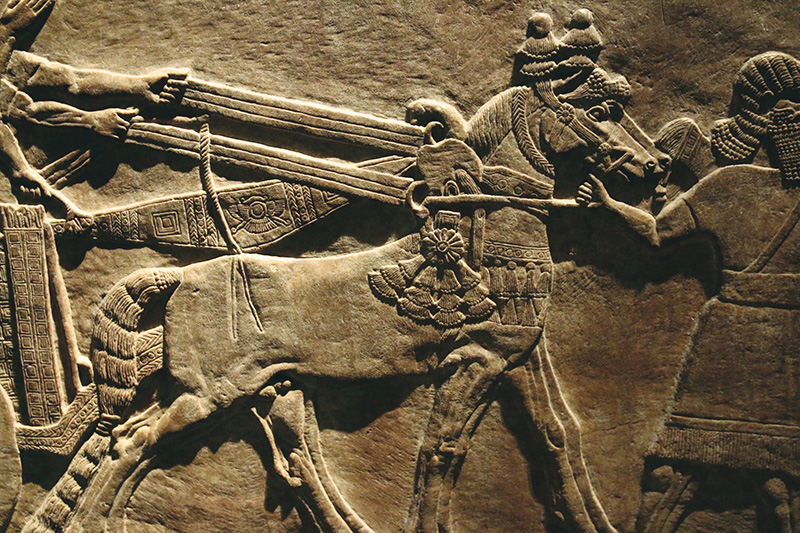
Horses were used to pull chariots, as is shown on this relief from the eighth century BC. Chariots gave a strategic advantage in battle, and Israel is often cautioned not to trust in military might, symbolized by the horse in Ps 33:17, and to instead trust in the Lord.
© Baker Publishing Group and Dr. James C. Martin. Courtesy of the British Museum, London, England.
Psalm 34. Continuing the upbeat mood of Ps 33, Ps 34 presents almost no suggestion of deep anguish. David’s attitude is curious in light of the superscription, which highlights a troubled time in his life (cf. 1 Sm 21:10–15; Abimelech = Achish).
David speaks of trials in generic terms, dwelling not on the heartache but on God’s good work toward those facing difficulties (34:4–6, 18–19). David portrays God as paying special attention to the righteous, hearing their cry for help, delivering them (immediately?), and condemning their enemies (cutting off from the earth all memory of them) (34:4, 15, 17, 19, 21). God redeems all who take refuge in him (34:22). [Goodness]
In this psalm, confidence outweighs trepidation. Of the five occurrences of words translated “fear(s),” only one conveys the negative sense of terror (34:4); the others (34:7, 9 [2×], 11) speak of the affirmative “fear of the LORD.”
Psalm 35. David describes the dark side of life, where his enemies pursue him, set traps for him, and rejoice when he falls. His enemies dominate the “headlines”—God being far less prominent in Ps 35 than he is in Ps 34. Every imperative in Ps 35, however, is directed toward God, with David imploring God to defend him, defeat his enemies, or rescue him (contrast Ps 34). Yet, despite their differences, Pss 34 and 35 conclude that God delivers the upright.
Throughout Ps 35, David seeks God’s help (35:1–3, 17, 22–25), desiring his enemies to falter because of the misery they have caused him (35:4–8, 11–16, 19–21, 26). He also declares his intent to praise God when God overcomes those enemies (35:9–10, 18, 28). Psalm 35:27 is a rarity in the Psalms—David indicates that some people apparently support him. He urges them to praise God for watching over him.
Psalm 36. Psalm 36 is a proverbial psalm; essentially every verse describes either the wicked and how they act (36:1–4, 11–12) or God and the godly and how they act (36:5–10). Only rarely does David reveal his presence (36:1, 9, 11).
36:1–4. Being self-absorbed and intentionally destructive of others, the wicked care nothing about God (36:1–2, 4). They enjoy that which is sinful and harmful rather than that which is good (36:3–4).
36:5–12. God, however, displays a rich love toward all people regardless of their status (36:5–7, 10). He deals with them justly, protecting and delivering them (36:6–7). Thus the godly recognize him as the source of life and light, in whom is bountiful pleasure (36:8–9).
David wants to avoid the attacks of the wicked and their destiny—when they fall, they are unable to rise again (36:11–12).
Psalm 37. Psalm 37 is a psalm of promise for those who seek the Lord—a psalm of disaster for those who fail to do so. Time is short for the wicked (37:1–2, 9–10). Their day of success is only for the present, and their success is due, in part, to their taking advantage of the helpless and powerless (37:12–14, 35–36).
In sharp contrast, David highlights God’s abundant provision for all who turn to him (37:6, 19). God meets their present needs and deepest desires, offering the righteous a wonderful future (37:4, 18, 37). He is their helper, upholder, protector, and deliverer who never deserts them (37:23–25, 39–40). They are therefore exhorted to enjoy him, follow him, and rely on him always (37:3–5).
Thus God’s people should never be troubled by or envious of the success of the ungodly (37:7–8). God’s followers should give and give abundantly, even though they may have very little of this world’s goods (37:16, 26).
Jesus refers to Ps 37:11 in the Sermon on the Mount: “Blessed are the humble, for they will inherit the earth” (Mt 5:5).
Psalm 38. Despite the advice David gives in Ps 37, he does not always follow God’s way. Psalm 38 shows David grieving over his personal sin and over the intense judgment that God is enacting against him (38:1–8; cf. 38:18). At times, he recognizes his judgment in the way that others treat him (38:9–12). Having no solution to his problems other than to rely on God’s deliverance from his sin and his enemies (38:13–20), David pleads to God for a quick resolution of his problems (38:21–22).
Although confession of sins, regret for having committed sins, and fear of subsequent judgment do occur elsewhere in book 1 (cf. 6:1–3; 32:1–5), they are rare, making Ps 38 unique up to this point in the Psalter (cf. Pss 44; 51; 78; 95; 106).
Psalm 39. Psalm 39 blends well with Ps 38: life seems all too short and the misery of life all too real. Running from the world or from God may seem like the best way to deal with problems but in reality is not. Rediscovering the joy of life requires a relationship with God—having him both close (in his compassion) and far away (in his discipline).
David declares that life is frustratingly short (39:4–6; cf. Jb 7:7; Ps 14:4). Sin makes life miserable and senseless (39:6, 12; cf. Ps 89:47; Ec 1:2); God’s judgment increases the agony of that short and miserable life (39:9–11; cf. Ps 38:18; Jr 30:14–15; Heb 12:11). Any attempt to hide personal frustrations (to maintain a “good testimony” for the sake of others) only intensifies the heartache (39:1–3; cf. Jb 9:24–29). David then cries out to the one who can make some sense out of the vapor of life, but God does not unravel the enigmas of his life (39:7–8, 12–13; cf. Dt 29:29). [Jeduthun]
Psalm 40. 40:1–3. At the end of Ps 39 (v. 12), David anxiously pleads to God to respond to his needs. In 40:1, he makes an intense effort to wait for God’s answer to his “cry for help” (a term rarely occurring in Scripture, but appearing in both 39:12 and 40:1). God transforms David’s situation from one of misery to one of praise that others can observe and respond to (40:2–3).
40:4–10. Interestingly, in Ps 39, David indicates that he has been silent before both God and unbelievers (39:1–2, 9) because of his feeling that life is both short and meaningless (39:4–5, 10–11). But in 40:9–10, David openly proclaims God’s love and truth. What makes a discouraged David a joyful David is the truth about the coming sacrificial death of the Messiah (40:5–8; cf. Heb 10:1–10).
40:11–17. Life and death now make sense to David. He still has problems beyond number (40:12), but he knows that the one who has plans beyond number for his people (40:5) gives abundant joy to all who trust him (40:16). Previously David agonizingly waited for God to resolve his concerns (40:1); now he hopes that God will not take as long to handle his many other problems (40:17).
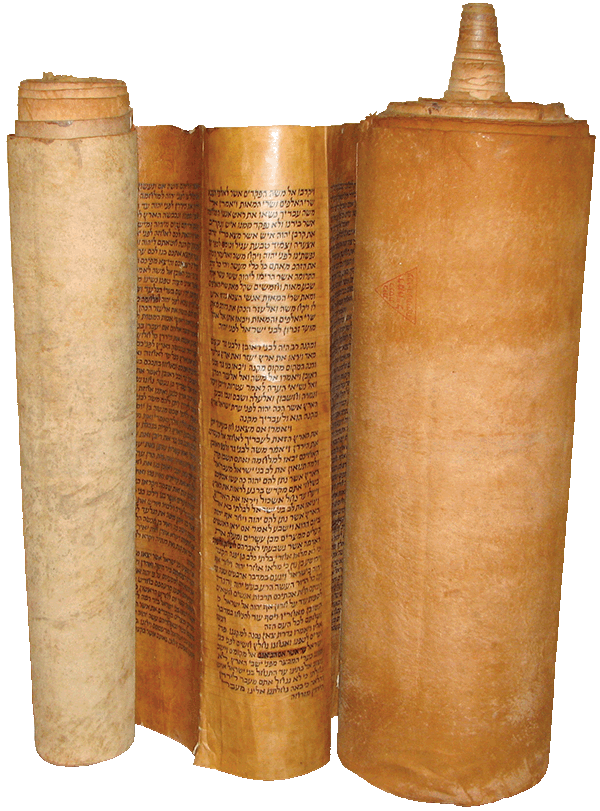
A handwritten Torah scroll. “In the scroll it is written about me” (Ps 40:7).
© Ijon / Wikimedia Commons, CC-by-sa-3.0.
Psalm 41. 41:1–3. In 40:17, David states that he is “oppressed and needy.” Now, at the beginning of Ps 41, he declares that God takes a special interest in those who help the weak, blessing them when they encounter enemies, disease, or other difficulties.
41:4–10. The mood of this psalm changes quickly. David seeks forgiveness for having wronged God (41:4); he also seeks God’s help to get revenge on his enemies who have been scheming against him (41:5–10). Some have been quietly spreading rumors about him, others openly slandering his good name, and still others praying for his death. Even a very good friend has betrayed him (41:9 has messianic implications; cf. Jn 13:18).
41:11–13. David concludes much like he begins, with a focus on his helplessness. In 41:1–3, he pronounces a blessing on those who help the weak. In 41:11–13, he blesses God, who helps him in his weakness.
2. BOOK 2 (42:1–72:20)
Psalm 42. Psalm 42 sets the tone for book 2—though enemies overcome the psalmist, God does not vanquish them quickly. The author uses repetition to convey this sense of discouragement. Twice the naysayers mock: “Where is your God?” (42:3, 10). Three times the psalmist bemoans that he is “dejected” or “depressed” (42:5–6, 11; cf. 43:5), twice that he is “in such turmoil” (42:5, 11). Even when he records statements suggesting hope, he immediately dismisses them as not being a reality in his life. When his heartache continues “day and night” despite God’s presence with him, he wonders whether God has forgotten about him completely (42:3, 8–9).
Despite being physically apart from his normal places of worship (42:1–2, 4), the psalmist does not abandon his God, who appears less and less responsive. Just the opposite, he consistently declares his fervent desire to be with and to live for his God (42:1–2, 4, 5–6, 11). [Korahites]
Psalm 43. Psalm 43:2 parallels 42:9, and 43:5 essentially duplicates 42:5, 11; however, Ps 43 is not simply a smaller version of Ps 42. Psalm 43 explodes with greater emotional intensity than does Ps 42—there are more commands and entreaties (significantly more considering the relative sizes of the two psalms). In the parallel verses (43:2 and 42:9, respectively), “refuge” (i.e., “fortress”) evokes more forceful imagery than does “rock,” and “rejected” is more actively intentional than “forgotten.” Even the word “go,” in “Why must I go about in sorrow,” suggests a pacing back and forth, an agitation, rather than mere motion.
In Ps 43, the psalmist implores God to defend him in the world court—to free him from the grasp of the godless (43:1). Convinced that God has abandoned him to his oppressors (43:2), he begs God to return him to Jerusalem, where he can worship God (43:3–4). Yet, seeing little hope, all he can do is to fortify his courage and maintain his confidence in God (43:5).
Psalm 44. The psalmist here presents four key ideas: (1) God has the power to deliver his people from their enemies, having done so in the past (44:1–8). (2) God has rejected the present generation of Israel, delivering them into their enemy’s hands (44:9–16). (3) God has rejected them despite their faithfulness to him (44:17–22). (4) Although God has rejected them, they plead to him for deliverance, because he alone is their Redeemer (44:23–26).
God alone has the power to deliver his people to freedom or to bondage. Apart from his will, neither human efforts nor weapons are able to effect any form of deliverance (44:3, 5–7, 9–14). Furthermore, God does what he wants to do, whether or not doing so makes any sense to his people (44:9–14, 17–22). The psalmist concludes by appealing to God for help solely on the basis of God’s unfailing love (44:26; cf. 44:3).
In Rm 8, Paul asks whether “affliction or distress or persecution or famine or nakedness or danger or sword” can separate us from the love of Christ. As an example of this persecution, he quotes Ps 44:22. But then he replies triumphantly, “No, in all these things we are more than conquerors through him who loved us”—for nothing can separate us from the love of God in Christ Jesus our Lord (Rm 8:35–38).
Psalm 45. The psalmist depicts the king as a man eternally blessed by God (45:2)—a mighty warrior of excellent character, more powerful than the nations (45:3–5). This king is none other than God (45:6–7; cf. Heb 1:8–9). His very garments exude fragrance; he is admired and honored from far and wide (45:8–9). The king, the author declares, is to be married to a non-Israelite woman of royal birth who is to “bow down to” (a verb typically describing worship) him (45:10–11). Others will honor this royal union (45:12–17).
Although the psalmist may have used imagery from a royal wedding, his words indicate this wedding to be that of the Messiah. Who then is the royal bride so beautifully dressed? Combining Rv 19:7–8 with Heb 1:8–9 produces one conclusion only: the church.
Psalm 46. Psalm 46 flows naturally from the picture of the royal wedding in Ps 45, in which the psalmist calls out to God, as king, to prepare for war and to ride victoriously (45:3–4). He overcomes his enemies and rules forever (45:5–6). Psalm 46 carries forward that theme: God overthrows the nations, desolating them, destroying their weaponry, and receiving their honor (46:6–10). Thus God is the strong protector of his people in whatever crisis they may face (46:1, 7, 11).
God’s people are with their God; he is with them (46:1, 5, 7, 11). He overcomes their troubles, whether those troubles arise from nations or nature (46:2–3, 6, 8–9). The Most High is a refuge and fortress—the Lord of heavenly armies and the God of his people (46:1, 4, 7, 11). In his presence, all are to keep silent and honor him (46:10). He is the God to end all wars (46:8–9).
Psalm 47. Once more, the psalms speak of God as a conquering king (cf. Pss 44–46). Here the author declares: God is to be praised and feared as the vanquisher of nations and as King of kings (47:2–3, 7–9).
The psalmist favors words of praise that are relatively rare in the Psalter. The particular words used to say, “clap . . . hands,” appear only here in the Psalms, as does the combination of words that forms the concept of “shout . . . with a jubilant cry” (47:1). A different word for “shouts of joy” (47:5) surfaces in the Psalter only four other times. The remaining word of praise in this psalm, rendered “sing praise” (47:6 [4×]) or “sing” (47:7), does enjoy a moderate frequency of usage in the Psalter. That the psalmist chooses less frequently occurring words of praise makes Ps 47 somewhat unusual in its style.
Psalm 48. This psalm highlights the grandeur, power, and victories of Jerusalem and gives even greater praise to the God who dwells there. Psalm 48 speaks of Jerusalem (Zion) more than any other psalm in Scripture.
The psalmist begins and ends with God (48:1, 14) and specifically references God in seven other verses (48:2–3, 7–11). He presents God as the possessor and ruler of Jerusalem and as its righteous warrior, defender, and judge. As a consequence, in the midst of Jerusalem’s beauty is Jerusalem’s true strength (48:3).
Within Jerusalem, God’s people are secure and joyful, for he guides them always (48:8, 11, 14). They take great comfort in living there, being free to meditate on God’s unending love and to declare his praise (48:8–11).
Psalm 49. Psalm 48 closes with a reminder of death (48:14; see the CSB footnote). Psalm 49, a wisdom psalm, delves deeper into that topic, answering the question: how can one be secure in the afterlife?
The psalmist warns against fearing or envying the rich (49:5–6, 16); their wealth is insufficient to buy eternal redemption for others or for themselves (49:7–13) and does not even follow them in their deaths (49:17–20). Death is the great equalizer—all humans die (49:10, 12); but after death God redeems the righteous to rule with him (49:14–15).
David established “music guilds,” with Asaph (Pss 50; 73–83) being a leader of one of those guilds. The guilds led temple worship (praying, praising, and preaching, as well as composing, directing, and playing the music) (1 Ch 15:16–19; 16:4–7; 25:1–6; Ezr 3:10; Neh 11:22; 12:46).
Psalm 50. In Scripture, only here (50:1) and in Jos 22:22 does the appellation “the Mighty One, God, the LORD” appear—an appropriate introduction to a psalm about the power, majesty, and judgment of God.
Asaph discusses how to please such a terrifying God, who reigns among his people (50:2–3; cf. 48:4–8). He observes that God’s judgment categorizes people into two groups (cf. Ps 49): true worshipers and those who are not (despite their religiosity). True worship is not based on a (God-created) sacrificial system—God does not need sacrifices (50:9–13), and he despises hypocritical worship (50:16–21). True worship flows from a heart of thanksgiving (50:14, 23). Only true followers of God will experience from God both deliverance from trouble (50:15) and ultimate salvation (50:23).
Psalm 51. David’s sin (i.e., adultery with Bathsheba; cf. 2 Sm 11:1–12:14) and the thought of its horrific offense to God devastate him. He labels his adultery as transgression, iniquity, evil, and sin (Ps 51 has a higher concentration of these terms than any other psalm in the Psalter). [Sin in the Bible]
51:1–15. In every section of the psalm, David pleads for God to do a transforming work in him (51:1–2, 9–10, 12, 14). He desires a newness of spirit within him that will allow him to delight freely in God (51:7–10, 12). He also pleads that God would not remove him from his position as king (as he has done with Saul; 1 Sm 15:28; 16:14) by taking the Holy Spirit from him (51:11—he is not afraid of losing his salvation; cf. 51:12).
51:16–19. The conclusion of Ps 51 echoes key ideas from Ps 50: Jerusalem as a place that God blesses (51:18; cf. 50:2), and God’s desires regarding true sacrifice—that is, a humbled, repentant heart that pours out thanks to God (51:16–17, 19; cf. 50:5, 8–14, 23).
Psalm 52. David expresses outrage at one who could act so treacherously as to slaughter the priests and people at Nob (see the superscription; 1 Sm 21:7–19) and enjoy doing so (52:1–4). Such an individual epitomizes the self-centered person who takes pride in plotting and carrying out evil. Together, Pss 51 and 52 show the difference between those who are broken by their sin and those who embrace their sin, and the diametrically opposite end states of each (52:5–9).
Psalm 53. Appropriately placed between two psalms in which David scathingly denounces heinous plots and acts against God’s people, Ps 53 deplores the character and dealings of those who reject God, and it applauds God’s righteous judgment of such people.
Psalm 53 essentially replicates Ps 14. Like other psalms in book 2, Ps 53 favors the use of Elohim (“God”) over Yahweh (“LORD”); wherever the name Yahweh appears in Ps 14, Ps 53 either does not include it or records Elohim instead (53:2, 4, 6). Furthermore, 53:5 combines portions of 14:5–6 and offers encouragement to God’s people (rather than denunciations to the wicked)—encouragement much needed by those under attack from the likes of Doeg (Ps 52) and the Ziphites (Ps 54).
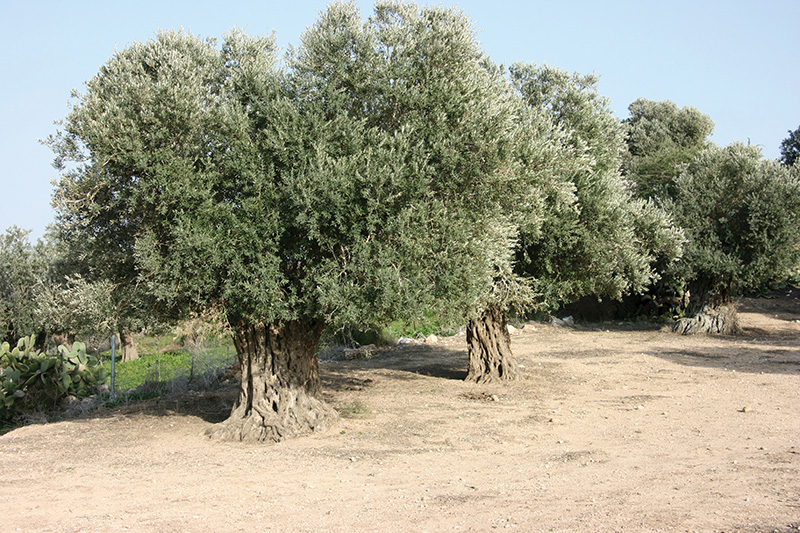
David compares himself to a flourishing olive tree (Ps 52:8), one of the most valuable plants in the Middle East.
Psalm 54. Recording the actions of those who have no interest in God, David cries to God for help (54:1–2), presenting his reasons for needing help (54:3), his confidence in God (54:4–5), and his commitment to praise God for helping him (54:6–7).
David does not focus primarily on those chasing him but on God, who can deliver him. He relies on God’s character, power, and integrity to keep his word (54:1, 5). He presents a crucial difference between himself and his enemies: he turns to God; they do not (54:2–3; cf. 53:1, 4). God is David’s deliverer, vindicator, protector, and sustainer (54:1, 4, 7). Being rescued from near destruction, David determines to offer a sacrifice of thanksgiving to God (54:6; cf. 50:23; 51:16–17, 19; 52:9).
Psalm 55. Unable to handle his enemies and the emotional strain they cause him, David seeks God’s help (55:1–8, 16–19). His enemies are relentless in their destructive work, terrorizing not only him but also the people of the city (55:9–11). Unexpectedly, despite facing a multitude of enemies, David zeroes in on one unnamed individual—a friend who has become a traitor to him (55:12–14, 20–21; cf. 41:9, cited by Jesus [Jn 13:18] regarding his betrayer). This betrayal disturbs David more than the havoc caused by all his other enemies.
Once again (cf. 52:7; 53:1–4; 54:3), David identifies the wicked as those who do not care about God (55:19). Such people face God’s wrath; God’s people, however, find him to be a place of security (55:22–23).
Psalm 56. The psalmist’s enemies continue to mount their vicious, debilitating attacks. In Pss 52 and 53, they attack God’s people. In Pss 54 and 55 and here in 56, they target David. David describes these personal attacks as relentless: all day long they trample him down (56:1–2), twist his words (56:5a), and plot to ruin him (56:5b–6).
In the midst of those dangers, David trusts God and is emboldened to face his enemies without fear (56:3–4). He seeks both God’s intervention against his enemies (56:7, 9) and God’s involvement in his own life and sufferings (56:8–9). David once again proclaims his trust in God, who has kept him from faltering (56:10–11, 13).
Psalm 57. David pleads to God for mercy (or grace) (57:1 [2×]; cf. 56:1). Although David speaks about his problems (57:1, 3–4, 6), his greater interest is in his relationship to God (57:1–2, 7–9) and in God Most High, who is intimately involved in the psalmist’s concerns (57:2–3) and yet is far beyond the heavens (57:5, 10–11). Psalm 57 forms a major component of Ps 108, with 57:7–11 being essentially the same as 108:1–5.
Several psalms in Pss 51–63 include superscriptions with historical notes that connect to specific events or periods in the life of David. While these range throughout his life and reign, several relate to his early years, while he was fleeing from Saul (see 1 Sm 19 [Ps 59]; 1 Sm 21–22 [Pss 52; 56; 57]; 1 Sm 23 [Ps 54]; 1 Sm 24 [Ps 57]; 1 Sm 25 [Ps 63]; 1 Sm 26 [Ps 54]; 1 Sm 27–28 [Ps 56]).
Psalm 58. 58:1–5. David’s frustration escalates. The wicked do not merely fail to judge rightly; they aggressively seek ways to act unjustly—with a vengeance (58:1–2). These people are not novices to sin; they are skilled practitioners of it, honing their sinful ways from before birth (58:3). Interestingly, David earlier (51:5) noted his own sinfulness from birth. The difference between David and the wicked of this passage is that whereas he confesses his sin and desires to live uprightly before God, they become increasingly like out-of-control cobras, striking to kill whenever and whomever they can (58:4–5).
58:6–11. David’s frustration explodes in an imprecatory prayer. Outraged at the unrestrained wickedness surrounding him, he calls for God’s unrestrained judgment to fall hard on them (58:6–9): smash their teeth; rip out their teeth; destroy them before they can live full or meaningful lives.
The righteous, David declares, will rejoice in this slaughter of the wicked and will recognize their God as a powerful and just God (58:10–11). David uses the final verse of the psalm to loop back to the first to reveal the stark contrast between the unjust judges who practice injustice and the just Judge, who destroys injustice.
Psalm 59. 59:1–13. About to be unjustly attacked, David pleads to God to rescue him (59:1–5). David’s enemies, like packs of wild dogs, show no fear of David or of God (59:6–7), but God mocks their idiocy (59:8–10). Perhaps for the only time in the Psalter, David seeks God’s mercy for his enemies, but only so that they might be object lessons for his people (59:11). Then, after the lesson is learned, David hopes that God will destroy these prideful sinners (59:12–13).
59:14–17. David’s enemies howl through the night (59:14–15), whereas David, whom God preserves through the night, praises God for his unfailing love (59:16–17). Thus David, who at the beginning of the psalm seeks deliverance, now at the end of the psalm pours out gratitude to God for having delivered him.
Psalm 60. The region of the Salt Valley (see the superscription) is linked to several battles, in each of which David’s army slaughters ten thousand or more people. Although this battle is a success, David writes as though he were under attack, perplexed that God might have deserted Israel. Yet, even if that were true (60:1–3, 10), David announces that he has not abandoned God (60:11–12).
In the first (60:1–5) and last (60:10–12) sections, David reveals his fears that God is fighting against Israel. In the first section, he prays that God would rescue his people from the dangers of the battle; in the last section, he seeks God’s help against his enemies. The middle section (60:6–9) divulges the extent of the battle.
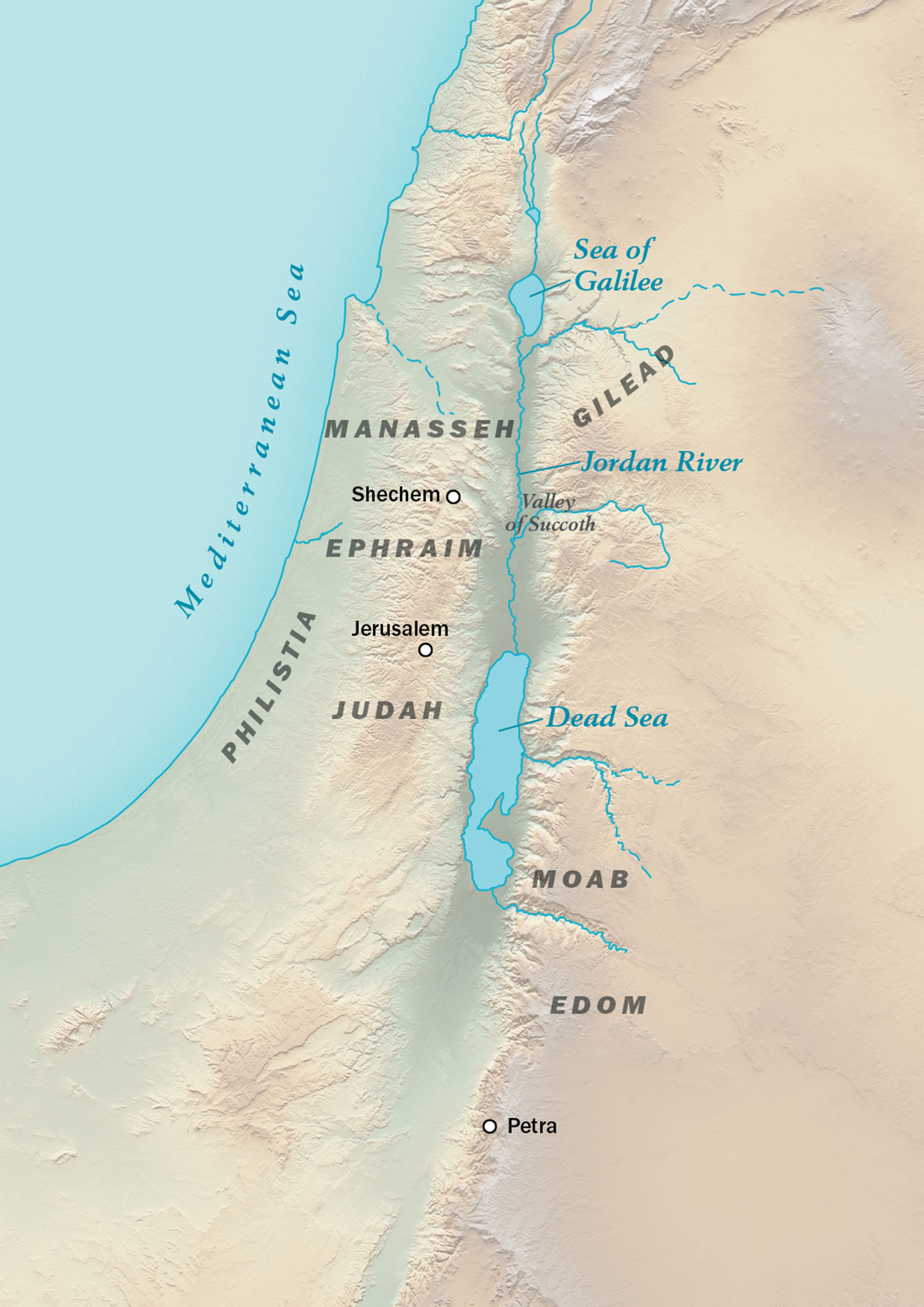
Locations in Psalm 60
With only minor variations, 60:5–12 appears intact as Ps 108:6–13.
Psalm 61. David longs always to be under God’s protective care (61:1–4) and to live long so that he may daily serve God (61:5–8). Being far from home and feeling a tremendous need for God’s protection, David expresses his desperation through several rare phrases—three that appear only here in Scripture: “heart is without strength,” “rock . . . high above me,” and “shelter [secret place] of your wings” (61:2–4). David believes that God will allow him to dwell near God because God has accepted David’s vows and given David an eternal inheritance with the faithful (61:5–8).
Psalm 62. The near repetition of 62:1–2 in 62:5–6 conveys David’s ability to remain confident despite experiencing danger (62:3–4) and provides the foundation for his charge to God’s people to rely on God as their powerful protector (62:7–8). David concludes (62:9–12) by reinforcing his already-stated views: the world system, being transitory, cannot be relied on; it is God alone, being powerful and loving, who can and must be relied on.
Psalm 63. The third of three consecutive psalms in which David expresses no anguish and few problems, Ps 63 emphasizes David’s yearning for and complete reliance on his glorious God.
Throughout much of David’s life, his spiritual nature trumps his physical nature. In Ps 62, he prefers God to the powers of this world and to his own desires (62:9–10). Here (63:1–6), he declares that God is more precious to him than the physical needs of life—or even life itself. God is his protector and sustainer (63:7–8); his enemies will no longer live to spread deception, but he and all who worship God will sing God’s praise (63:9–11).
Psalm 64. The wicked do not fear God but believe they are invincible. They expend much effort enacting evil plans, but God acts quickly against them. Their evil structures collapse; they themselves are destroyed. The evil they intended to do (64:2–6), God does to them (64:7–8a).
There is no cliff-hanger at the end of this psalm. God acts decisively (64:7–8a); all people will be overwhelmed by his amazing work (64:8b–9)—they then are to draw near to him and praise him (64:10).
Psalm 65. Psalm 64:10 exhorts people to praise God; Ps 65 describes that praise which begins in Jerusalem (65:1), is echoed by all peoples (65:2, 5, 8), and is proclaimed throughout the earth by creation itself (65:9–13).
God resolves humanity’s deepest needs: forgiving people, drawing them to him, blessing them (65:3–4). Those overwhelmed by their own sin God overwhelms by demonstrating his righteous power in creation (65:3, 5–7), using creation to provide abundantly for the world (65:9–13).
Psalm 66. All people (friend and foe alike) must praise God (66:1–4), whether he accomplishes awe-inspiring works in creation (66:5–7), disciplines people (66:8–15), or answers prayers (66:16–20). God’s greatness, moreover, overshadows any fears that the psalmist might have about his enemies (66:3, 7).
Although the psalmist does not assume that God will answer his prayers (whether he is serving God or sinning against him, 66:17–19), he determines to keep the vow to God he made when he was in trouble (66:13–14). God may do as he likes (66:8–15), but humans are to serve and praise him (66:2, 4, 8, 16, 20).
Psalm 67. The psalmist utilizes a chiastic structure to emphasize that all people should praise God, who rules with uprightness. He begins (A, 67:1–2) and ends (Aʹ, 67:6–7) by focusing on God’s blessing his people and the nations (i.e., those needing to be saved and to fear God). He builds the second stages of the structure with two identical declarations (B, 67:3; Bʹ, 67:5): “Let the peoples praise you, God; let all the peoples praise you.” Then, in the central point of the psalm (C, 67:4), the psalmist focuses on the reason why the world should praise God—he is the righteous judge who directs all nations.
Psalm 68. God, who goes forth conquering (68:1–4), provides for the helpless (68:5–14), delivers his people (68:15–23), and returns to receive justly deserved praise (68:24–35).
68:1–14. When God enters into battle, the wicked crumble (68:2); the righteous rejoice and praise God (68:3–4). In victory, God’s compassion reaches to those whom society often forgets: the orphans, the widows, the lonely, the poor, and the women who remain at home during the battle (68:5–14). By contrast, God covers the ground with his enemies like fallen snow (68:14).
68:15–35. The defeated nations, represented by the peaks of Bashan, envy Jerusalem because God dwells there (68:15–16). After ascending to heaven, taking the defeated with him (for judgment?), God returns to receive tribute from the defeated nations (68:18; cf. Eph 4:8), to execute judgment on his enemies, and to help the righteous (68:19–23).
The psalm concludes with God’s triumphal entry into his temple, with all of his people in grand array (68:24–27), the nations worshiping the glorious king (68:28–35).
Psalm 69. Writing a psalm with messianic implications (69:9, 21; cf. Mt 27:34, 48; Jn 2:12–17; 19:28–29), David unleashes his emotions. David faces overwhelming and unjustified attacks, yet God, who knows David’s problems, does not respond (69:1–5, 19). David suffers because of his stand for God and fears that others may falter in their faith because of him (69:6–12). He desires that they instead take courage (69:30–32).
David continues sinking; God remains hidden (69:13–21). David’s enemies openly ridicule him (yet no believers come to his rescue) (69:19–21). No longer able to control his emotions, David spews out vitriolic imprecation against his enemies, calling down God’s unhindered destruction on them (69:22–28). Having vented his rage, David again seeks God’s help, declaring his confidence that God will accomplish great things for his people (69:29–36). [Vinegar]
David reminds his readers about two important matters: God desires heartfelt gratitude more than animal sacrifice (69:30–31; cf. 40:6; 50:8–13; 51:16–19), and God cares deeply about the needy and the helpless (69:32–33; cf. 68:5–6, 10; 70:5; 72:4, 12–13).
The “book of life” (Ps 69:28), an image of heavenly record keeping (Lk 10:20), is a book containing the names of all who have lived. If one fails to be included among the righteous (Is 4:3; Php 4:3), one’s name is then erased (cf. Rv 3:5). In the final judgment depicted in Revelation, the book of life is opened and read (Rv 20:12); those written in the Lamb’s book of life enter the new Jerusalem (Rv 21:27), but those whose names are not found in the book are thrown into the lake of fire (Rv 20:15).
Psalm 70. David extensively uses repetition of both words and ideas in Ps 70 to emphasize his key points: (1) being “oppressed” and “needy,” David desperately needs help; (2) his enemies rejoice in having the upper hand over him; and (3) God alone can resolve David’s problems, after which he (and others) will be able to rejoice in God.
Psalm 70:1 and 70:5 form an inclusio around the psalm to highlight David’s plea that God respond immediately. David’s use of the word “seek” in 70:2 and 70:4 sets up a contrast between those who seek David (i.e., to kill him) and those who seek God (i.e., to serve him)—the former are to experience distress, the latter joy.
Psalm 71. The author presents his ideas in Ps 71 in a stair-step fashion: (A) God is good to the psalmist even though he has not yet rescued the psalmist from the troubles his enemies are causing him (71:1–13); (B) the psalmist has full confidence in God and will praise him (71:14–16); (Aʹ) God is good to the psalmist even though he has not yet rescued the psalmist from the troubles he is causing him (71:17–21); (Bʹ) the psalmist has full confidence in God and will praise him, for he has begun his deliverance (71:22–24).
Several ideas occurring in Ps 71 carry on the thoughts of previous psalms: God is hidden from the psalmist (71:12; cf. 69:17); God is urged to hurry his work of deliverance (71:12; cf. 70:1, 5); the enemies scorn the psalmist—the psalmist desires them to be scorned, and they are (71:1, 13, 24; cf. 69:7, 10, 19–20; 70:2–3); and the enemies openly rejoice over the tribulations of the psalmist (71:10–11; cf. 70:3).
Psalm 72. 72:1–17. The parallel structure of 72:1–2 reveals that Solomon (the king who is also the royal son [of David]) desires God to give him both justice and righteousness so that he might judge God’s people with righteousness and justice. When Solomon rules in that manner, the nation (represented by “mountains” and “hills”) will prosper, and he will deliver the helpless (72:3–4). This king is a blessing both to his people and to the nations, who in turn will acknowledge his greatness and serve him (72:5–17). [Lebanon]
72:18–20. Solomon recognizes that God deserves the credit for his success. God, the giver of justice and righteousness (72:1–2), is the performer of all the great works highlighted in this chapter, and he is the truly glorious one (72:18–19).
3. BOOK 3 (73:1–89:52)
Psalm 73. In a moment of earthly realism and spiritual insanity, Asaph believes that the wicked always succeed; the righteous never get ahead—Ps 1 turned upside down.
73:1–16. The wicked have wealth, health, and no worries (73:2–7). Claiming divine and human authority, they debase others (73:8–9) and live the good life (73:10). Having no fear of God, they believe that he has no idea what they are doing (73:11).
Regretting living a godly life because it brings him only misery, Asaph encapsulates the lives of the wicked in two words: prosperity and peace (73:12–14). His theology and his reality are in conflict (73:15–16).
73:17–28. Asaph, a worship leader at the temple, gains a new perspective on reality: there is a different destiny for the wicked than for the righteous (73:17–20, 23–24, 27). Regretting his bitterness and foolishness (73:21–22) and remembering God’s faithfulness (73:26), Asaph declares that he will proclaim God’s truth (73:28).
Psalm 74. Beginning with national discouragement and ending essentially where it begins, Ps 74 leaves Israel’s problems unresolved.
Enemies, like rampaging barbarians, have desecrated and destroyed the temple, hacking to pieces its delicate engravings (cf. 1 Kg 6:29–36) and burning it to the ground, yet God does nothing except retain his anger at his people (74:1–3). Using five arguments, Asaph appeals to God to act: (1) your dwelling place has been desecrated (74:2–3); (2) your enemies have acted with power and arrogance (74:4–8); (3) you are a God of infinite power, who controls creation (74:12–17); (4) you have a covenant with your people, and your people are oppressed and needy (74:19–21); and (5) your enemies mock you (74:10, 18, 22–23). Despite Asaph’s appeal, God remains unmoved.
Psalm 75. Asaph alternates between his own words (75:1, 6–9) and God’s words (75:2–5, 10). Speaking on behalf of God’s people, Asaph offers thanksgiving to God for his marvelous works (75:1). He then proclaims God’s warning against a self-absorbed world (75:2–5). God declares to the world that he is a righteous judge who holds the world together (while people are shaken by earthquakes) (75:2–3). God directs his judgment toward those who think they are greater than he (75:4–5). Asaph concurs that God is a judge who honors some (75:6–7) and pours out his wrath on others (75:8). Asaph concludes by praising God (75:9; cf. 75:1). God, not Asaph, is the speaker of the final verses, since God alone possesses the power to fulfill those words (cf. 75:6–8).
Psalm 76. God stands glorious—a victorious conqueror (76:1–2, 4); his enemies lie strewn across the battlefield—their war machine a shambles (76:3, 5–6). He silences their bravado. Their kings encounter God’s power and wrath, and they fear him (76:5, 7–8, 12).
God brings judgment to some, deliverance to others (76:8–9). The defeated, no longer boastful, are to present gifts of homage to the eternal King (76:11; cf. Ps 68:29; Is 18:7). At the beginning of this psalm, God’s people know him; at the end, the world knows and fears him (76:1–2, 12).
Salem (Ps 76:2) is an early name for Jerusalem. In Gn 14:18–20 (cf. Heb 7:1–2) Abram is blessed by Melchizedek, the king of Salem and priest of God Most High (cf. Ps 110:4).
Psalm 77. 77:1–9. Discouraged with life’s problems, Asaph turns to God in extended prayer but finds no resolution to his troubles (77:1–2). Thinking about God seems to exacerbate his problems, causing him to lose sleep (77:3–4). Pondering the past brings no comfort, only questions: has God given up on his people (77:7)? Has God’s eternal character faltered (77:8)? Does God no longer care about Israel (77:9)?
77:10–20. Still discouraged, Asaph determines to think specifically about God’s mighty works toward Israel and his power over nature. Asaph gains a correct perspective on God and praises him (even though his problems remain).
Asaph records his transformation through various grammatical tactics. He uses first-person singular verbs to introduce his grief (77:1–6) and the reversal of his attitudes (77:10–12). He highlights God’s power through language taken from nature (e.g., water, lightning, whirlwind), setting 77:16–19 off by an inclusio consisting of the names of famous Israelites who experienced God’s power (77:15, 20). [Shepherd]
Psalm 78. Psalm 78 begins in hope (with Israel’s forefathers transmitting God’s word from generation to generation; 78:1–7) and ends in hope (with God establishing his dwelling place among his people and choosing his servant David to shepherd his people; 78:65–72). In between, Asaph records God’s miraculous works on Israel’s behalf (78:12–16, 23–29, 42–55, 65–66), Israel’s trivializing of those miracles and rejection of God’s word (78:8–11, 17–20, 22, 32, 36–37, 40–42, 56–58), God’s merciful but powerful judgment against his people (78:21, 30–31, 33, 38–39, 59–64), and Israel’s repentance, short-lived as it was (78:34–35).
In typical Hebrew style, Asaph does not always write in strict chronological order; he writes to convey truth in whatever order best makes his point. Asaph also includes information not previously known: for example, plagues of grasshoppers, frost, and lightning (78:46–48; cf. Ex 7–12) and a band of angels that leads the way for the Lord’s destruction of the firstborn of Egypt (78:49).
Psalm 79. Asaph portrays a gruesome picture of Jerusalem’s destruction (by Babylon?): the temple and the city ruined; bodies strewn about unburied, food for wild animals (79:1–4). Asaph issues the plaintive cry—“How long, LORD?”—a cry concerned about not how long Israel’s enemies will dominate them but how long God will be angry with his own people (79:5). Immediately thereafter, and to the end of the psalm, Asaph alternates between his desire for God to act with vengeance against Israel’s enemies (79:6–7, 10, 12) and his plea for God to show mercy toward his people—and that God’s people, in turn, would honor him (79:8–9, 11, 13).
Psalm 80. Psalms 77–80 use shepherding metaphors to depict God as Israel’s shepherd or as the one who establishes Israel’s shepherd. God shepherded his people from slavery in Egypt to freedom in the promised land (77:20; 78:52–55). He then chose David, a literal shepherd, to shepherd his people (78:70–72). As shepherd, God guided his people during their exile in Babylon and (if the psalmist’s prayers are answered) will lead them out of Babylon (79:13). In 80:1, Asaph appeals to God in his role as shepherd for that deliverance.
Asaph weaves this psalm around four refrains, three obvious (80:3, 7, 19) and one obscure (80:14). In the parallel refrains, Asaph builds the name of God, from “God” (80:3) to “God of Armies” (80:7) to “LORD, the God of Armies” (80:19), as though his pleading were growing increasingly intense.
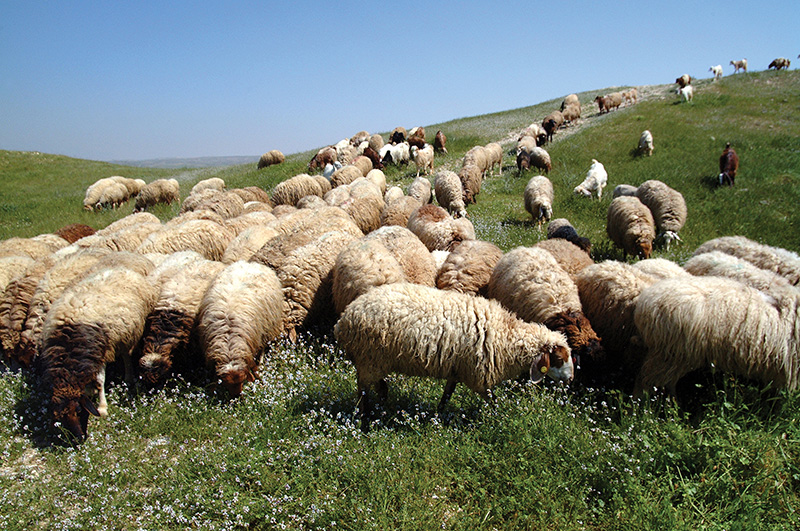
Psalm 80:1 refers to God as the “Shepherd of Israel, who leads Joseph like a flock.”
Immediately preceding each refrain, Asaph fleshes out Israel’s need for restoration. In 80:1–2, Israel needs deliverance, but God is not acting on Israel’s behalf. In 80:4–6, God is actually judging Israel. In the final two sections (80:8–13, 15–18), God has brought about his wrath on Israel. Asaph then asks God to specially care for (empower) the (Davidic) king (a possible reference to the messianic king who sits at the right hand of the Father) (80:17).
Psalm 81. In 80:4–6, God’s people complain that he does not answer their prayers but allows their enemies to triumph over them, forcing them to eat bitterness. In Ps 81, God responds: despite my delivering you from slavery (81:5–6, 10) and guiding you through the wilderness (81:7), you serve other gods—you do not obey me. Turn to me, and I will resolve your problems (81:14–16).
In Pss 77–81, the references to Joseph (or to Ephraim and Manasseh) indicate that God still cares about the northern kingdom, which had previously gone into captivity (2 Kg 17). God’s plan is to restore all his people, both south and north.
Psalm 82. The question “how long?” in the form found in 82:2 appears five other times in the Psalter, always directed toward God (6:3; 74:10; 80:4; 90:13; 94:3). This passage is the exception. In 80:4, God’s people challenge him with the words “how long”—How long will you fail to respond to us? In 81:13–16, God answers them in generic terms: “Listen to me . . . follow my ways.” Now, in 82:1–2, God gives them specifics. He redirects their question back to them: “How long” will you, O Israel, contradict all that I have taught you, by supporting the wicked and forsaking the helpless? Defend the defenseless; rescue those dominated by the world (82:3–4).
In 82:1 and 82:6, God refers to his people as “gods” (cf. Jn 10:22–39). He uses that term metaphorically to describe those who are in a position to receive God’s word and to live it out before others (particularly, before the helpless; see the CSB footnote). No true, believing Israelite would ever claim to be a “god” to be worshiped and obeyed (as is the sole right of the Lord; Dt 6:4). Most certainly, in Ps 82 God does not mean that his people are “gods” as he is God.
Psalm 83. This is an imprecatory psalm—God, destroy your enemies and ours! Asaph, however, does not describe in detail how he wants God to slaughter Israel’s enemies; the imprecation, therefore, is relatively mild.
83:1–8. Asaph seeks God’s help (83:1) because their mutual enemies have one terrifying purpose: to annihilate Israel (83:2–5). Their enemy is formidable, consisting of Israel’s neighbors to the east, south, and west—with Assyria covering the northern flank (83:6–8).
83:9–18. Asaph cites two decisive victories that God achieved over Midian—the first during Deborah’s judgeship (83:9–10), the second during Gideon’s (83:11–12). In both battles, Israel was at a great disadvantage. Asaph wants God, like wind, fire, and storm, to shame Israel’s enemies (83:13–16a, 17), so that the world, seeing that destruction, will recognize God’s greatness (83:16b–18; cf. 82:8).
Psalm 84. 84:1–8. Away from Jerusalem, perhaps in battle, the psalmist longs to be at God’s temple. He is jealous of the birds that live there, because they are close to God in his special dwelling place (84:1–4). The psalmist also envies those who take pilgrimages to the temple. They gain strength and joy as they approach it; God even makes it into a place of blessing (84:5–8).
84:9–12. A way for the psalmist to return to the temple soon is for God to grant Israel’s king (“shield,” “anointed one”) victory over his enemies; so the psalmist prays to that end (84:9). (The “shield” metaphor and the four-times-mentioned name “LORD of Armies” suggest a battle.)
Even better than victory (“liv[ing] in the tents of wicked people”) is being at the temple. Yet God can still wonderfully bless those who are not so privileged, if they serve God faithfully (84:10–12).
Psalm 85. 85:1–6. After judging his people for their sins, God forgives them fully and brings them back from their captivity (85:1–3). Yet God remains grieved by what they have done and has not removed all of the negative consequences of their sins (85:4–6).
85:7–13. Israel has the hope of God’s salvation of peace—perhaps even for the current generation, if they trust him fully (85:7–9). Even though all is not well in Israel, God still blesses his people in many different ways (85:10–13).
Psalm 86. 86:1–13. An inclusio of hearing and answering prayer (86:1, 7) surrounds David’s requests to the pardoning and compassionate God for protection and deliverance (86:2–6). David then declares that the world should praise God for his great works (86:8–10). Similarly, David announces that, because God has worked wonderfully on his behalf, he wants to know God better and praise him forever (86:11–13).
86:14–17. David begins the final section by describing the sinfulness of his enemies and the greatness of his God (86:14–15). He concludes the section, in reverse order, by speaking well of God (seeking God’s help) and then desiring the downfall of his enemies, because God has been good to him (86:16–17).
Psalm 87. Zion, that is, Jerusalem—God’s holy mountain, God’s chosen dwelling place, the perfection of beauty from where its Maker shines, a city loved by the Lord, the place from where God judges (bringing joy to its people) (2:6; 9:11; 50:2; 78:68; 97:8; 132:13)—that city of God forms the focus of Ps 87.
Five heathen nations will one day know the true God (87:4; cf. 68:31–32; Zph 3:9–10): Egypt (“Rahab”; cf. Is 30:7) and Babylon, powerful enemies that took God’s people into exile; Philistia, perennial harasser and subjugator of God’s people; Tyre, commercial powerhouse that exploited Israel; Cush, composed of Ethiopia, Sudan, and Somalia, an empire that, at one time (together with Egypt), was the object of Israel’s misplaced hope (cf. Is 20:5). These five nations will one day find their hope and joy in Zion and be proud to have God’s people in their midst.
Saint Augustine, an influential church father from the fourth century AD, took the title for his famous book The City of God from Ps 87:3, “Glorious things are said about you, city of God!”
Psalm 88. Compared to Ps 23, another psalm about near-death experiences, Ps 88 shows considerably greater despair. Psalm 23 reflects the upbeat nature of book 1, Ps 88 the agony of book 3. [Heman]
Facing death, the psalmist multiplies prayers, but they go unanswered (88:2, 9, 13). Misery sets in; hopelessness runs rampant; his theology of an afterlife is bludgeoned (88:10–12; cf. 44:8; 45:2; 49:15). When the psalmist is down, God forces him even deeper in the flood of his terror, into the darkness of sorrow and death (88:14–18).
Psalm 88 ends with hopeless depression. No one comforts the psalmist except darkness, his closest friend. God has thrust his loved ones into the eternal pit and has pushed the psalmist to the edge of that pit, making him an abomination even to the dead (88:3–8, 18).
Psalm 89. This psalm presents a stark contrast from the previous psalm of despair—or does it? From the outset, this psalm explodes with praise to God (89:1–37). Yet, were it not for the “added” verse of praise to end book 3 (89:52), this psalm would end much like Ps 88 does, with the psalmist bearing the brunt of God’s wrath (89:38–49)—plus the extra burden of his enemies’ scorn (89:50–51). Psalm 89:1–37 and 89:38–51 are seemingly diametrically opposed, yet both sets of verses proclaim truth.
The psalmist’s words are shocking. He almost portrays God as a liar who promises wonderful things but reneges on his promises. Were this psalm not the final psalm of book 3, the reader might assume that the author intended for the final verse of blessing (editorially added; see the introduction to Psalms) to be read sarcastically: “Blessed be the Lord forever” . . . who casts aside his anointed one, exalts his enemies, and allows them to revile him (89:38–45, 50–51).
4. BOOK 4 (90:1–106:48)
Psalm 90. Moses contributes to the ongoing conversation about death (cf. 88:3–6, 11, 15; 89:47–48) the concepts of returning to dust (90:3), being transitory like grass (90:5–6), and having a short life span with great sorrow (90:9–10).
With this discussion about death, Moses interweaves praise to God (90:1–2), acknowledgment of Israel’s sin as the reason for God’s anger (90:7–11), and hope that God will allow them to live meaningful lives (90:12–17). [Infinite]
Psalm 91. Psalm 91 is a psalm of encouragement: God is a great protector, who surrounds the believer (and the chapter: 91:1–4, 14–16); those who seek him fully have nothing to fear (91:5–13).
91:1–10. God does not promise the psalmist that he will not see danger, sickness, or terror; rather, God will protect him from the tragedies of life (91:3–10). The psalmist uses shadow, feathers, and wings to depict God’s protective care (91:1, 4).
91:11–16. Psalm 91:11–12 has messianic implications, with Satan referencing these verses in his temptation of Christ (Mt 4:6–7; Lk 4:10–11). God’s protection and presence accompany those who love the Lord as their God; God meets their needs (91:14–16).
Psalm 92. Psalm 92 begins and ends with praise to God (92:1–5, 15). In between, the wicked flourish but are quickly defeated (92:6–9). The righteous also flourish but (unlike the wicked) remain productive throughout their lives (92:10–14). [Strings]
In 91:5–6, the righteous fear nothing at night / in the darkness or by day / at noon; here (92:2), they praise God in the morning and at night. Thus dedicated believers, who have nothing to fear at any time, should offer praise at all times.
Psalm 92:8–10 uniquely spans the contrast between the wicked and the righteous. These verses present an inclusio of exaltation—first directed toward God (92:8) and last toward God’s servant (92:10). Psalm 92:9 declares the destruction of those who are at odds with God—a destruction that the righteous see (92:11; cf. 91:8).
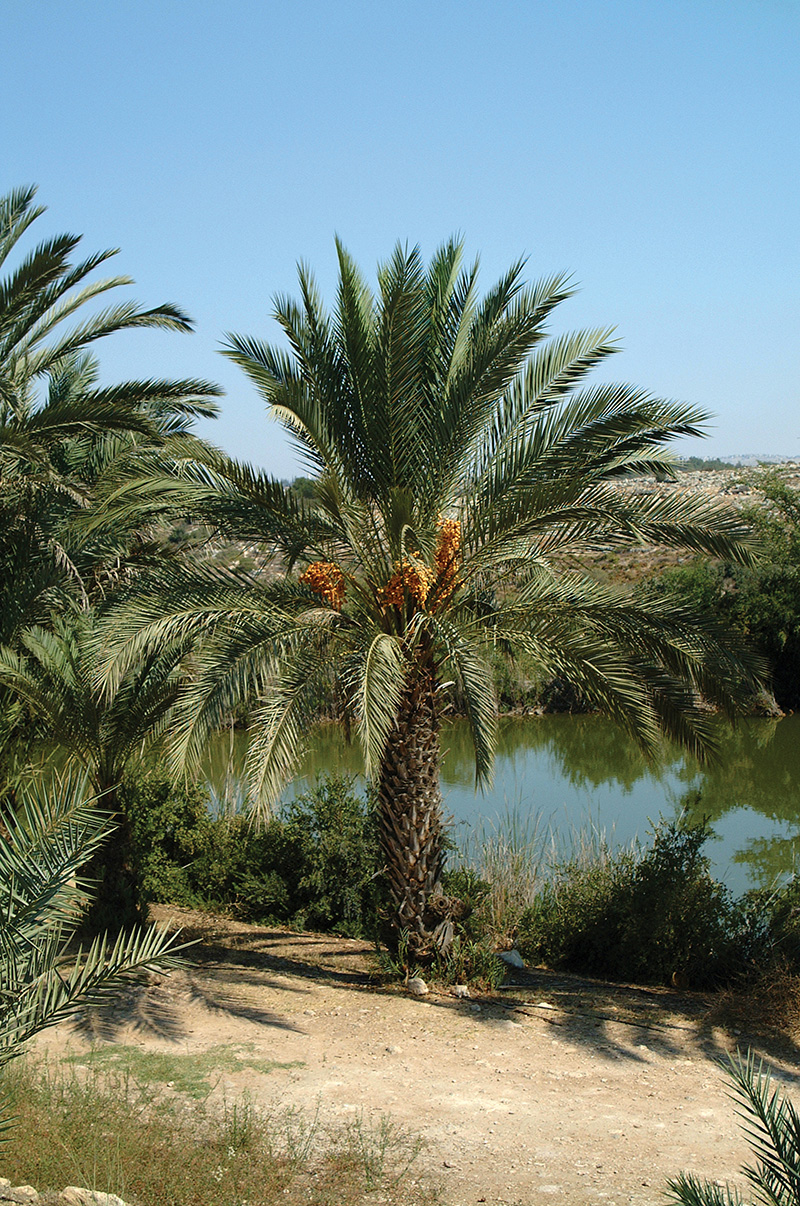
“The righteous thrive like a palm tree” (Ps 92:12).
Psalm 93. This psalm flows almost as the waves of the sea, beginning small, building to its crest, then starting over again. Each line is important in its own right; each subsequent line adds impact to what has gone before.
93:1–2. This wave building begins in 93:1a. The next wave, rising in 93:1b, expresses its full force in 93:2, conveying the theme of an immovable foundation. The author describes first the established world, next God’s eternally established throne, then finally God himself, who is eternal.
93:3–5. Verses 3 and 4 have their own internal waves, 93:3 emphasizing the powerful roar of the waves lifting up their voice (to proclaim God’s power to the world?) and 93:4 continuing the mightiness of the water imagery, concluding that God is even more powerful than his awesome and fearsome creation.
Psalm 93:5 seems to defy the wave pattern—there is no crescendo within it, no completion of any previously identified wave. But closer inspection reveals that 93:5 is perhaps the convergence of all the previous waves: the king’s words are unshakable; his house is eternally majestic.
Psalm 94. 94:1–11. The psalmist cries out to the avenger God to judge the wicked because of their attacks on God’s people, particularly on the helpless (e.g., widows, foreigners, and the fatherless) (94:1–6). The wicked arrogantly assume that God has no idea what they are doing (94:7). Yet their beliefs about God are illogical; for the one who created the ability to hear, see, and think most certainly knows all about their sinful actions (94:8–11).
94:12–23. This all-knowing, compassionate God justly disciplines his people so that they might follow his truth (94:12–16). Likewise, he deals with his enemies in justice, issuing a judgment that results in their destruction (94:20–21, 23). God, however, protects his people (94:17–19, 22).
Psalm 95. The psalmist again introduces his ideas using a stair-step structure: (A) call to praise God (95:1–2); (B) reasons for praising God (95:3–5); (Aʹ) call to praise God (95:6); (Bʹ) reasons for praising God (95:7a). He then alters his structure to challenge his readers to live godly lives (95:7b–11).
95:1–7a. In 95:1–2, the psalmist encourages Israel to praise God (in words and music) as their faithful deliverer, because (95:3–5) he is greater than both the idols of human creation and creation itself. Completing the stair-step structure, the psalmist (95:6) urges people to praise God as our Creator. In 95:7a, he declares that God is praiseworthy because he is our God (i.e., we have a relationship with him) and our shepherd.
95:7b–11. In 95:7b–8, the shift is abrupt: a temporal adverb (“today”), a conditional clause (“if”), and a prohibition (“do not harden your hearts”). In typical Hebrew fashion, the psalmist pronounces his contemporaries guilty of sinning together with their forefathers (cf. Heb 3:15). That earlier generation failed to receive God’s blessing; this generation must make sure that it does not do the same (95:9–11). [Massah]
Psalm 96. The author uses fourteen imperatives (commands) from ten different verbs to encourage people to praise God. The author records those imperatives in 96:1–3 and 96:7–10a, ending each cluster with a command to proclaim God’s greatness before the nations, because he is greater than the nations’ gods (96:4–5), and he rules as the nations’ judge (96:10b–13).
Psalm 97. Psalm 97 is the third of six psalms in sequence that focus on God’s greatness. Psalms 97 and 99 are the only psalms in that group that do not call for singing or shouting for joy to the Lord. Both begin by declaring that “the LORD reigns,” that he is beyond human comprehension (shrouded in darkness, 97:2; above the angels, 99:1), and that his throne is unlike any human throne. Both then provide their own reasons why God is to be praised.
In 1 Ch 16:8–36, David offers a psalm of thanks that appears, with a few variations, in Ps 96:1–13a (1 Ch 16:23–33); Ps 105:1–15 (1 Ch 16:8–22); and Ps 106:47–48 (1 Ch 16:35–36).
Psalm 97 depicts the raw power of God by which he destroys his enemies (97:3), shakes the earth’s foundations (97:4–5), and amazes the heavens (97:8). The forces of evil are no match for him and are in fact subject to him (97:7). Thus, God’s people delight in him because he is greater than any other power this world knows or serves (97:8–9). The psalmist then commands God’s people to reject the world’s ways and to joyfully embrace God, who protects them against that world (97:10–12).
Psalm 98. Whereas Pss 95–97 speak about God being greater than idols, Pss 98–100 make no mention of idols whatsoever. Nevertheless, these two groupings contain many common themes.
Psalm 98 focuses on praising God. Psalm 98:1–3 encourages praise because, in his strength, God delivers his people, thereby demonstrating that he is a righteous God who loves his people and never forsakes them. Psalm 98:4–6 commands that joyful praise be made to God in song and music. Psalm 98:7–9 urges praise because God is coming to judge the world with correct and evenhanded decisions.
Psalm 99. Concluding each of his calls to worship by proclaiming that God is holy (99:3, 5, 9), the psalmist uses those calls as refrains for the psalm’s three sections (99:1–3, 4–5, 6–9).
99:1–3. Psalm 99:1–2 presents God as ruler over all peoples (Jews and Gentiles). The refrain (99:3) calls everyone to acknowledge God’s holiness.
99:4–5. Psalm 99:4 depicts God as an upright judge who dispenses evenhanded justice in Israel (cf. 96:10; 98:9). The refrain (99:5) seeks obedience to God—the holy, ruling arbiter over their lives.
99:6–9. The final section pictures God responding to Israel’s needs, lifting the burden of their sins and yet disciplining them for those sins. The final holiness refrain (99:9, more detailed than the other two) issues another call for God’s people to worship him. [Pillar of Fire and Cloud]
Psalm 100. An invitation for all to praise God joyfully, Ps 100 creates an atmosphere of thanksgiving (without concern about enemies, without seeking anything from God) in which essentially every word declares God’s marvelous goodness or urges God’s people to exhibit grateful hearts to their Maker and shepherd.
Psalm 100 reflects the thoughts of numerous other psalms: shouting joyfully to God (100:1; cf. 98:4); worshiping (serving) him (100:2; cf. 2:11); acknowledging him as our Maker (cf. 95:6) and recognizing him as our shepherd (100:3; cf. 79:13); rejoicing in his courts (cf. 96:8) and blessing his name (100:4; cf. 145:1); and understanding that he is good (cf. 34:8), his love endures forever (cf. 106:1), and his faithfulness never ends (100:5; cf. 119:90).
Psalm 101. Following the introductory verse of praise in Ps 101, David shifts immediately to the two-front war being waged between righteousness and wickedness, in the human soul and in the world. He presents that war in a stair-step fashion, declaring that he (A) will live in righteousness, maintaining integrity of heart (101:2); (B) will not put up with the unrighteous, shunning evil in the world (101:3–5); (Aʹ) will live with the righteous, bringing them into his business (101:6); and (Bʹ) will not put up with the unrighteous, expunging them from his house and kingdom (101:7–8). David is determined to live a holy life and to make Israel a place where holiness flourishes.
Psalm 102. God’s unresponsiveness plus the psalmist’s anguish and lonely suffering form the foundation of this psalm (102:1–7, 9–10). The psalmist senses that his battles with life are hopeless (102:8, 11)—life is short, and God seems to be shortening it even more (102:23). Yet God is his only hope, so he pleads with him for mercy (102:12–17, 24) on the basis of his eternality and creation’s temporality (102:24–28). He hopes that future generations will be able to praise God because God showed him mercy (102:18–22).
Psalm 103. 103:1–8. In nearly every verse of this psalm, David expresses adoration toward God for his character or acts. In 103:1–5, he remembers God’s goodness to him: forgiving him, healing him, preserving his life, meeting his needs. David notes that God also demonstrates his care for others (103:6–8).
103:9–22. God is not a machine, automatically condemning us, as he well could (103:9). Likewise, he is not always fair to us—sometimes he shows mercy when we deserve punishment (103:10). Furthermore, God acts compassionately toward those who serve him, eradicating their sins, which have brought about the terrible shortness of life (103:11–18). This God, who rules over creation, deserves praise from his creation (103:19–22).
Psalm 104. Another psalm of praise, Ps 104 announces God’s greatness primarily in relation to creation. The heavens and the earth, the sun and the moon, seas and rivers, mountains and valleys, animals, birds, fish, vegetation—all reveal God’s handiwork. [Hyrax]
God is worthy of praise! So, for the first time in the Hebrew Scriptures (104:35), the command “Hallelujah” (Hebrew for “Praise the LORD”) appears. In the Psalter, this command occurs only in books 4 and 5. A similar command—“Bless the LORD”—acts as an inclusio around Ps 104 (104:1, 35) and also appears in the Psalter only in books 4 and 5.
Psalm 105. Psalm 105 begins a trilogy of “historical” psalms that together sketch Israel’s history from Abraham to the postexilic era—contrasting God’s faithfulness to Israel’s unfaithfulness. It presents Israel’s history up to their entrance into the land (105:6–11, 43–45). Although God causes Israel to suffer greatly (105:16, 25), he delivers them and provides for them abundantly (105:26–45).
This is a psalm of reversals: God gives his people the land, but they cannot live in it (105:8–13); he protects them from human oppression but uses nature to oppress them (105:14–16); God allows a favored son to become a slave to make him a ruler among his enslavers (105:17–22); God causes his people to multiply, resulting in their enslavement, so that he might deliver them (105:24–44). God’s purpose is that Israel would obey his word (105:45) and Gentiles would hear his truth (105:22).
Psalm 106. This psalm presents the depraved side of Israel’s life in Egypt and, more particularly, in the wilderness and in the land.
In twenty different verses, the author depicts thirty-four examples of sin—even that Israel offered their children as sacrifices to idols! He also unfolds God’s reactions to Israel’s disobedience: delivering them from their enemies, scattering them, causing plagues and death, abhorring them, nearly destroying them, remembering his covenant with them, relenting of his intended judgment. [Meribah]
Surrounding the intense action in the psalm are the psalmist’s exhortations to praise God, declare his greatness, and live godly lives (106:1–3, 47–48). The psalmist, a sinner, also seeks God’s grace for himself (106:4–6). In the concluding verses, the author prays that God would deliver his people from exile so that they might thank and praise him (something the author himself does in the final verse).
5. BOOK 5 (107:1–150:6)
Psalm 107. Psalms 106 and 107 begin essentially the same way and then quickly go their separate ways. Psalm 106 closes book 4 with God’s rebellious people suffering in exile. By contrast, Ps 107 opens book 5 declaring that God has answered Israel’s desperate cry (106:47), having delivered them from their distress.
Psalm 107:1–32 depicts four different acts by which God delivers his people—each act including a cry for help and a refrain urging those whom God delivered to thank him for his loving-kindness and great works. Psalm 107:33–42 reveals God’s control over creation and how he helps the downtrodden. Psalm 107:43 both concludes the second section and echoes, in reverse order, the challenge of each refrain of section one (107:8, 15, 21, 31).
Psalm 108. Three themes link Pss 107 and 108: God’s sovereignty over the created world, God’s people exalting him, and God’s deliverance of his people.
The fact that the author of Ps 108 (David) is committed to the Lord (108:1–5) allows him to boldly trust God for deliverance, even though God has rejected his people (108:6, 11–13). The author, however, has not yet been rescued, so he calls out to God (108:6; seeking human help would be futile, 108:11–13), and he hears God’s full assurance that he will enact his deliverance soon (108:7–10).
Psalm 108 is basically a compilation of Pss 57:7–11 (108:1–5) and 60:5–12 (108:6–13).
Psalm 109. 109:1–20. The frustration of Ps 108 continues in Ps 109—David still has not been released from his attackers, who abuse him verbally, deceptively accuse him, and despise his kindness. Knowing that no human help would make any difference against his enemies (plural) who surround him (cf. 108:12), David begins his counterattack by enlisting God’s help (109:1–5).
Seeking God’s wrath to crush his enemy (singular), David unleashes one of the strongest imprecations in Scripture (109:6–20). He wants his enemy to be pronounced guilty (in God’s court?) and to die—with his family becoming destitute beggars, who receive no love in this life and are eternally condemned in the next.
109:21–31. Following his scathing imprecation, David (who is destitute and afflicted) hopes God will show him kindness by shaming his enemies (plural) and frustrating their attacks (109:21–29). Being confident of deliverance, David affirms that God gives victory to his people who are in need (109:30–31).
Psalm 110. Psalm 110 sits at a key juncture in the Psalter. In Ps 107, the author pictures God as a powerful deliverer. In Pss 108 and 109, the psalmist, in need of deliverance, calls out to God for help. Yet, at the end of each of those psalms, he still faces his adversaries’ attacks. Psalm 110 relieves the tension as to whether God will respond favorably or whether he has irretrievably rejected his people. In Ps 110, God the Messiah conquers the nations of the world (110:5–6). Psalms 111–13 reveal that, having experienced victory, God’s people are then able to rejoice freely. [Christ the King]
Set in heaven, 110:1 introduces the psalm’s main characters: the “LORD” (Yahweh), the “Lord” (Adonai), and the “enemies.” Yahweh announces both that he will conquer the Lord’s enemies (110:1; cf. Lk 20:43; Ac 2:35; Heb 1:13) using the Lord’s scepter (royal authority, power) (110:2) and that the Lord is an eternal priest of a special priestly order (110:4; cf. Gn 14:18–20; Heb 5:1–7:28). The Lord then moves forth in his strength to destroy his enemies (110:5–6). In 110:7, after the battle is over, the Lord refreshes himself and lifts his head, signifying that he has secured a complete victory.
Psalm 111. An acrostic psalm and a praise psalm, Ps 111 is the first of three sequential psalms beginning “Hallelujah.” This psalm praises God for freeing Israel from bondage to the nations—thus fulfilling his promise (110:5–7).
In 111:1, the author determines to publicly praise God. Then, in 111:2–9, he does so, speaking of God’s memorable works, which are worthy of thoughtful study—works by which the righteous and compassionate God redeems and cares for his people. In light of God’s character and works, the author (111:10) declares that true spirituality arises from having right attitudes toward God and right actions for God. He then concludes with praise for God.
Psalm 112. Psalm 112 (a praise psalm and an acrostic psalm) illustrates what the wise person of 111:10 looks like and becomes.
Those who fear God share their possessions with the needy, treat all people fairly, and serve God faithfully (112:5–7, 9). God blesses them and their descendants abundantly (112:2–3). Interestingly, those who fear God and delight in his word (112:1) display godlike attributes of grace and compassion (112:4; cf. 111:4). Like God, they provide for the needy (112:5, 9; cf. 111:5); their righteousness, like God’s, continues forever (112:3, 9; cf. 111:3).
In 112:10, the psalmist abruptly shifts to the reaction of those who have no interest in God. They are so bothered by the righteous person’s acts that it tears up their insides; their hopes are obliterated.
Psalm 113. Psalm 113 begins “Hallelujah!” and concludes “Hallelujah!” This declaration forms an inclusio of praise around this psalm—and, together with 111:1, an inclusio enveloping Pss 111–13.
The psalmist announces that God cares for those who are the poor, the needy, the downtrodden (113:7–9). He urges that praise be made to God across time and in all locations (113:2–4). Our God, the psalmist declares, is unlike any other god: he is beyond creation but humbles himself to enter creation and to fulfill the deepest needs of those whom the world despises as forgotten and shamed by God (113:5–9).
Psalm 114. Despite sitting between two groups of praise psalms, Ps 114 does not contain the word “praise.” Nevertheless, Ps 114 is most definitely a praise psalm, presenting praiseworthy examples of God’s incredible power.
Using synonymous parallelism, the author indicates that the same group of people departs from a foreign nation and becomes the people among whom God establishes his royal residence (114:1–2). Creation is terrified, not by that departing nation, but by the God of that nation (114:3–6)—the Red Sea parts (Ex 14:21–22); the Jordan River ceases flowing (Jos 3:15–16); and mountains and hills shake (Jdg 5:4). The whole earth (114:7–8) is to tremble before such an omnipotent God, who also causes water to flow out of solid rock (Nm 20:11; Dt 8:15).
Psalm 115. The Creator God alone deserves praise; he does whatever he pleases (115:1, 3, 16, 18). By contrast, the nations’ idols (though visible; see the question of 115:2) are unable to accomplish anything (115:4–7). Their riches and physical attributes are given to them, but they are not alive to use them. Tragically, their makers and followers become like them (115:8; contrast dedicated believers in the Lord who become like him, Ps 112).
God’s people are to trust in him (not in their own sufficiency or in idols) (115:1, 8–11). The true God helps and blesses all who follow him (115:9–15). He loans out the earth to humans, where they are to worship him, since he is worthy of praise (115:16–18). Those who die no longer praise God among the living, for they are in Sheol (115:17). Yet true believers will praise the Lord in this life and forevermore: “Hallelujah” (= “Praise the LORD,” 115:18).
Psalm 116. Tied closely to 115:17–18, Ps 116 speaks of the psalmist’s relief at surviving an encounter with death and of his subsequent praise to God. Furthermore, just like Ps 115 (and Ps 117), Ps 116 concludes with “Hallelujah.”
In 116:1–11, the author intertwines his gratitude to the Lord for delivering him from his near-death experience (116:1–2, 5–7, 9) with a delineation of his reactions during that experience (116:3–4, 8, 10–11). In the remaining verses (116:12–19), he announces his commitment to carry out his vows, to offer a sacrifice of thanksgiving, and to praise. Before God’s eyes, his death is precious (116:15; cf. 72:13–14), so he determines to praise God publicly (116:14, 18–19).
Psalm 117. The shortest chapter of the Bible, Ps 117, opens and closes with “Praise the LORD” / “Hallelujah” (cf. Ps 113).
Whereas the psalmist of Ps 116 declares that he will complete his vows in the presence of God’s people (116:14, 18–19) and the writer of Ps 118 challenges the people of Israel to praise God (118:1–4) in Jerusalem (118:27–28), the author of Ps 117 urges the Gentiles of the world to praise God (117:1). In 117:2, he cites God’s love and faithfulness as the reasons why God is to be praised.
Psalm 118. Verses 1 and 29 of Ps 118 form an inclusio, highlighting the importance of showing gratitude to God because of his nature and love. Verse 29 and 107:1 form an inclusio around Pss 107–18, grouping these psalms together as praise psalms.
118:1–12. The author uses repetition within sequential verses to emphasize God’s compassion (118:1–4); God’s presence, which gives confidence (118:6–7); God’s protective care, which surpasses that of human powers (118:8–9); and God’s empowerment, which gives victory against overwhelming forces (118:10–12).
118:13–29. Psalm 118:13–18 shows God’s resolution to the psalmist’s near-death experience, which was caused by his enemies (beginning in 118:5). Including messianic allusions (118:22–23; cf. Mt 21:42), the psalmist reemphasizes his commitment to God and urges his readers also to thank God (118:19–29). [Hosanna]
Psalm 119. An acrostic psalm—the first letter of each verse of every eight verses being a different letter of the Hebrew alphabet (in alphabetical order)—Ps 119 proclaims the greatness of God’s word. The psalmist uses twelve different terms (e.g., “law,” “word,” “statutes,” “decrees”) over 180 times to unfold the significance of God’s truth. He intends those words to be understood synonymously, that is, without distinctions among them. [Word]
Except for 119:1–3, 115, the author directs the entire psalm to God, expressing his devotion to God’s word. With a nuanced pattern, he begins most stanzas with positive affirmation regarding God’s truth. He generally projects discouragement (due either to his own shortcomings or to enemy challenges) and seeks God’s help (before or after the statements of consternation). Most often, he expresses delight in or determination to obey God’s word. On occasion, all eight verses in a stanza reveal positive confidence; on no occasion do all eight verses portray hopelessness or dismay.
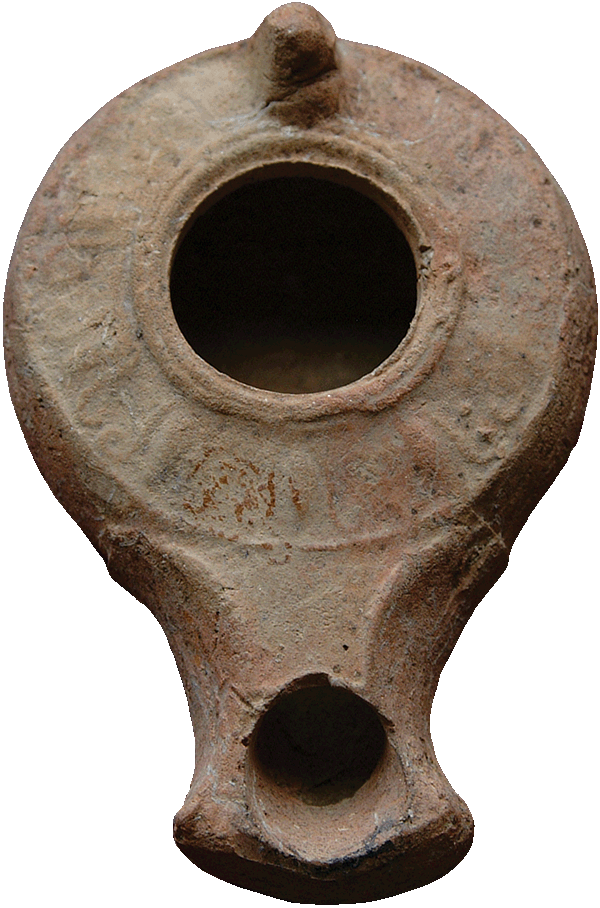
“Your word is a lamp for my feet” (Ps 119:105). Light was valuable in the ancient world, and in Israel it was often provided by oil lamps, like the one shown here.
Psalm 120. Psalm 120 (beginning fifteen sequential psalms known as the Songs of Ascents) depicts its author separated from his desired place (120:5–6) and needing God to resolve his dilemma (120:1).
If the psalmist is speaking literally (120:5–6), then he is living among barbaric unbelievers near the southeastern end of the Black Sea (Meshech) and in the wilderness (with the nomads of Kedar). If, however, he is speaking metaphorically, then the Israelites surrounding him are the deceptive warmongers. In either case, life’s frustrations are wearying him. He is among untrustworthy and antagonistic people (120:1–2, 5–7). He seeks God’s help while uttering a harsh imprecation against those who plague him (120:3–4). Although still facing his problems, he is confident that God is resolving them (120:1, 7).
Psalm 121. In this psalm of protection, the psalmist depicts God as protecting his people (121:3–8). God shields them from death (121:3; cf. 66:9), from nature’s attacks (121:5–6), and from evil things (121:7).
God is the source of help (121:1–2), who never ceases offering that help (121:3–4)—the one who protects against danger from inanimate sources (121:5–6) and against evil (harm) from animate sources (121:7–8).
The hills (121:1) are likely either those filled with danger through which pilgrims passed (thus wondering where their Protector was) or those surrounding Jerusalem, which pilgrims scanned in anticipation of seeing Mount Zion (thus locating God’s dwelling place).
Psalm 122. Thankful that people encouraged him to go to Jerusalem (122:1), David again stands within Jerusalem’s walls (122:2), impressed by its design with everything crowded together (as it should be) (122:3), and by the crowds, in obedience to God’s command, streaming in to praise God (122:4). More than merely a destination point, Jerusalem is a place to receive God’s justice and blessing (122:5–6). Those who consider Jerusalem should pray that God would bring his peace and goodness to it (122:6–9).
Psalm 123. In this, the second of only two psalms in the Psalter in which the psalmist lifts his eyes (cf. 121:1), the author focuses his attention on the God of heaven (123:1), never taking his eyes off him (123:2). Fully committed to doing God’s will, the psalmist pleads for God’s favor until both he and God’s people receive it (123:2–3). They need God’s help because those at ease (the proud)—the self-lifted-up ones (the arrogant)—deride them (123:3–4). The psalmist knows that the only way he and God’s people will endure their enemies’ attacks is to direct their eyes to the truly exalted one.
Psalm 124. In Ps 124 David conveys Israel’s feelings of hopelessness and powerlessness and Israel’s need to rely on God. In 124:1–5, he reveals that Israel has no measure of control whatsoever—the enemy’s “torrent” drags God’s people under, leaving them powerless against the constant battering. Until God acts, Israel can do nothing to secure freedom (124:6).
Yet, in 124:7, David declares, “We have escaped.” He does not assume, however, that Israel engineered its own escape; he knows that God is the one who breaks Israel’s bondage (124:8).
In an inclusio around the enemy’s attacks (124:2b–5), David presents God as Israel’s sustainer (124:1–2a) and protector (124:6). He emphasizes Israel’s debilitating terror via metaphoric language and repetition in the attack-and-deliverance sequence (124:3–7).
In Ps 124, the psalmist declares, “If the LORD had not been on our side,” then the raging water would have engulfed them (Ps 124:2–5). But in Is 43:2, the Lord promises Israel, “I will be with you when you pass through the waters, and when you pass through the rivers, they will not overwhelm you.”
Psalm 125. 125:1. Throughout the Psalter, the psalmists record only three elements that cannot be shaken (unless God shakes them): the earth, Mount Zion (Jerusalem), and those who trust in the Lord / live godly lives. The author of Ps 125 (125:1) references the latter two elements. (Being unshakable does not mean not being affected by external forces but rather means not being moved off God’s unshakable foundation.)
125:2–5. God’s presence ensures this immovable security (125:2); he does not allow his people’s enemies to rule over them forever (to protect them from following their captor’s evil ways) (125:3; cf. Dt 7:1–4). The psalmist seeks God’s blessing for true believers (whose foundation is sure) (125:4) but his judgment for those who walk with the wicked (whose foundation is not the true God) (125:5).
Psalm 126. The author structures Ps 126 to highlight two points: God’s great work (126:1–3; cf. 125:3–4) and the anticipated joy of future blessings (126:4–6).
126:1–3. In 126:1, God has returned his people from exile; they are ecstatic. In 126:2–3, the chiastic structure emphasizes God’s marvelous work: (A) the people rejoice (126:2a); (B) God has done great things (126:2b); (Bʹ) God has done great things (126:3a); (Aʹ) the people rejoice (126:3b).
126:4–6. In 126:4, the author asks God to continue his wonderful work. In 126:5–6, in stair-step fashion, the author presents the hoped-for transformation: (A) the people sow in sorrow (126:5a); (B) they reap with joy (126:5b); (Aʹ) the people sow seeds in sorrow (126:6a); (Bʹ) they reap sheaves with joy (126:6b). (People sow in tears because today’s food [the seed] must be sown for next year’s harvest.)
Psalm 127. Success comes when God blesses an endeavor and the responsible parties do what they must do (127:1, 3). Solomon’s practical experience confirmed this principle. By God’s blessing, Solomon’s hard work accomplished great things (cf. Ec 2:4–10; 5:18–20; 6:2; 12:13–14). Work wisely, and then go to sleep trusting God for the results (127:2).
Solomon observes that one blessing God may choose to give to a family is children; that blessing, moreover, may allow families to accomplish much and to gain status within society (127:3–5). Humans do their part, God does his, and the family is blessed in multiple ways.
Psalm 128. Psalms 127 and 128 present similar themes: God blesses believers in their work (127:1; 128:1–2) and in their families (127:3–5; 128:3). Psalm 128 emphasizes the importance of trusting God more prominently than does Ps 127, using “fears the LORD” as an inclusio around the blessings (128:1, 4). Furthermore, Ps 128 extends an individual’s blessings throughout that person’s lifetime and includes a national blessing (128:5–6); Ps 127 does neither.
Psalm 128 concludes with a blessing that also concludes Ps 125 (v. 5). Both psalms emphasize the importance of trusting God.
Psalm 129. 129:1–4. The blessing in 128:6 now makes sense. It is not generic but eminently practical: Israel’s enemies, for all too long, have been venting their rage on Israel (129:1–3). Israel needs peace. Oppressors ran roughshod over Israel but could not defeat God’s people (129:2–3), because God overcame those who opposed him, setting his people free (129:4).
129:5–8. Verses 5–8 convey a mild imprecation: those who despise God’s special place on earth (Zion) are to be humiliated (129:5), to become worthless, and to face a premature death (129:6–7). No one is to seek God’s blessing for such people (129:8).
Psalm 130. In stair-step fashion, the psalmist seeks the Lord (130:1–2, 5–6) and proclaims that God graciously frees people from their sins (130:3–4, 7–8).
Pleading directly for God’s mercy (130:1–3), the author cries to God from “the depths”—a specific term always indicating (metaphorically or literally) a dangerous, even deadly, situation or place. He continues revealing the intensity of his feelings through repetition, comparing his waiting to that of a night guard on sentry duty who longs for the comfort of daylight (130:5–6).
Psalm 130:3–4, 7–8 focuses on God’s merciful forgiveness and redemption of sinners, thereby suggesting that “depths” (130:1) refers to the psalmist’s grief over the devastating impact of personal and national sin.
Psalm 131. Contentment (131:1–2) comes from resting in God—not in self-seeking (considering oneself above others, perhaps even better than God; cf. Ps 10:4), not in conceit (i.e., looking down on others as being of no account; cf. Pr 30:12–13), not in achieving high status (Jr 45:5), and not in doing miraculous things (as God alone does; cf. Ps 72:18).
David humbles himself before God, taking satisfaction in being in God’s compassionate and protective arms (much like a child does who delights in holding on to his or her mother; 131:2).
Psalm 131:2–3 links back to 130:5–7. Hope (131:3) implies confident waiting—the opposite of what 131:1 describes.
Psalm 132. In a psalm with messianic implications, the author reveals David’s commitment to build a house for God (132:2–5) and God’s commitment to David and his descendants (132:11–12) and to Jerusalem, his dwelling place (132:14–18). Two petitions for God to act graciously toward David (132:1, 10) introduce the main sections, whereas a reference to spiritual clothing closes each section (132:9, 16–18).
Repetition of thought abounds, whether in the same verse through parallelism (132:2, 4–5); in consecutive verses through chiastic structure (A, 132:11b; B, 132:12a; Bʹ, 132:12b; Aʹ, 132:12c); or in nonadjacent verses through essentially the same words (132:9, 16), through the use of synonyms (132:5, 7–8, 13–14: dwelling place and resting place), through the echoing of ideas (132:2, 11: David and God swear oaths to each other; 132:8, 14: your/my resting place), or through words rarely occurring in the Psalter (132:9, 16; “priest” appears only three other times in the Psalter).
Psalm 133. Oneness among God’s people brings genuine delight (133:1). David describes his feelings about unity via two illustrations. First (133:2), he points to Aaron’s consecration as high priest—an event signifying a free-flowing channel of oneness between God and his people. Second (133:3), David speaks metaphorically of the pristine and heavy dew of Mount Hermon dripping down on the mountains of Zion—bringing life to the land. The downward flow of the oil (133:2) and dew (133:3a) reflects the downward flow of God’s blessing on his people (133:3b).
Psalm 134. The third of four sequential psalms that reference those who serve God as priests, Ps 134 encourages communication between those night-shift priests (134:1–2) and God himself (134:3). The exact phrases of Ps 134 are rare in Scripture.
Psalm 135. The words rendered “praise” and “bless” dominate the beginning (135:1–4) and concluding sections (135:19–21) of Ps 135. Comparing 135:5–7 and 135:15–18 reveals contrasts between God and idols: God’s ability to control creation, idols’ inability to control themselves. In 135:8–14, God powerfully overthrows idol-worshiping nations for the benefit of his people.
Psalms 135 and 136 share three themes: God’s rule over creation (135:6–7; 136:6–9), God’s deliverance of Israel from Egypt (135:8–9; 136:10–15), and God’s protection of Israel in the wilderness (135:10–12; 136:16–22).
The plagues unleashed against Egypt (Pss 78:42–51; 105:27–36; 135:8–9; 136:10; cf. Ex 7:1–11:10) demonstrated to Pharaoh (Ex 9:14), to the Israelites (Ex 10:2), and to “the whole earth” (Ex 9:16; cf. Rm 9:17) God’s sovereign control over nature on behalf of his covenant people (Ps 135:5–7). Both the timing and the intensity of the plagues indicated that these were not random natural phenomena.
Psalm 136. The repeated clause, “His faithful love endures forever,” drives the pace of Ps 136, building momentum with each subsequent verse. This repetition suggests that everything God does is a result of his never-ending love.
An inclusio of thanksgiving (136:1–3, 26) emphasizes the one who is to receive the gratitude of all people—that is, God, who displays goodness (136:1), who is greater than any other spiritual force (136:2), who is more powerful than all other rulers (136:3), and who is beyond all creation (136:26).
The psalmist highlights God’s acts in creation (136:4–9), in the exodus (136:10–15), in the wilderness wanderings (136:16–22), and in the ongoing provision for his people and his creation (136:23–25).
Psalm 137. Despite being in exile, the author does not plead to God for deliverance in Ps 137. Instead, he focuses on the anguish of being separated from Jerusalem.
Two emotions pervade this psalm. In 137:1–6, the psalmist experiences sadness thinking about home. Nevertheless, he determines never to forget Jerusalem. Should he ever stop remembering, he desires never to make music or sing again. In 137:7–9, venting rage in an imprecation directed at the Edomites for encouraging the Babylonians, the psalmist takes pleasure in knowing that Edom will one day face judgment (cf. Ob 1–21).
Psalm 138. Facing trouble in the midst of pagan nations, David remains confident in God. In fact, he develops this psalm as a thanksgiving psalm, hoping that the idol-worshiping kings will one day give thanks to the true God (138:4–5). The God of the universe being intimately involved in his life, David prays that God will continue to bless and remember him (138:6–8).
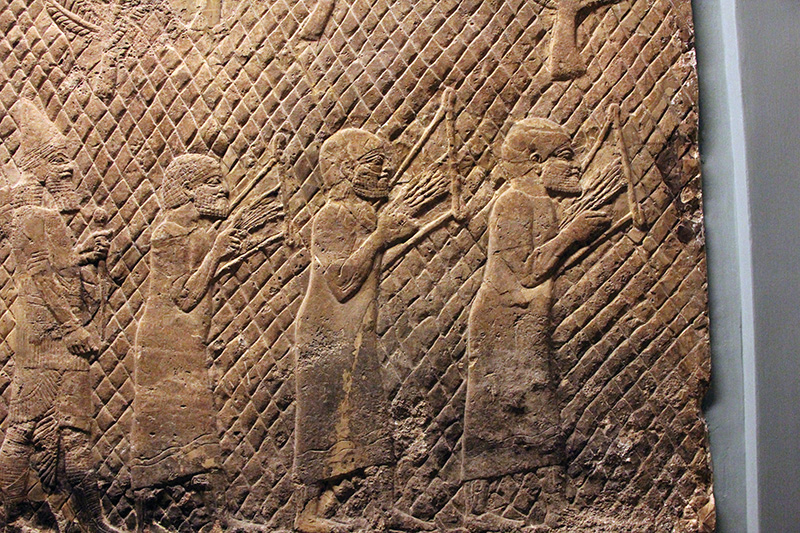
“Our captors there asked us for songs” (Ps 137:3). This relief from Nineveh depicts refugees, possibly Israelites, playing lyres as they are led by an Assyrian soldier.
© Baker Publishing Group and Dr. James C. Martin. Courtesy of the British Museum, London, England.
Psalm 139. Binding the psalm together by describing God’s intimate knowledge of his life and desires (139:1–3, 23–24), David writes about an all-knowing, everywhere-present, intimately involved God and expresses righteous rage against those who oppose him.
139:1–12. David recognizes God’s omniscience. God knows everything about David’s actions and thoughts—things even David does not know (139:1–6). Yet God still cares for David—a reality that David cannot fathom. Proclaiming God’s omnipresence (139:7–12), David declares that time and space do not confine God, who can guide and protect David wherever he is.
139:13–24. David marvels at God’s creativity in forming humans (139:13–18). He is amazed that God constantly thinks about them and mercifully preserves them. Because enemies of such a God deserve destruction, David declares his hatred for them (139:19–24). Recognizing his fallibility, however, he seeks God’s guidance in his life.
Psalm 140. As ungodly people slander and attack God (139:19–21), so they slander and attack David (140:1–5). David calls for their destruction (139:19; 140:9–11). [Serpent]
Using “Selah,” David divides Ps 140 into four parts. In the first two sections, he presents parallel cries to God for protection against those who falsely assail his character (140:1–3) or set traps to ruin him (140:4–5). In section three (140:6–8), he appeals to God for help—making the basis of his appeal their personal relationship. David concludes (140:9–13) with an imprecation against his attackers, basing his appeal to God on his needs and godly character.
Psalm 141. Desiring not to become like those whom he despises, David seeks God’s protection from himself. He wants God to keep him from practicing wickedness (141:1–5a), to keep the wicked away from him (141:5b–7), and to keep him from the wicked (141:8–10). [Incense]
David uses contrasting imagery to conclude the first and second sections of this psalm: the oil of joy (141:5) and the horror of death (141:7). He completes the psalm by expressing his hope that the wicked would fall into their own death traps (141:9–10; cf. 140:5, 9).
Psalm 142. David uses three couplets to communicate the thrust of Ps 142. In 142:1–2, he cries out to God his complaint against his attackers. In 142:4–5, he recognizes that he has no refuge in this world, except God. In the final couplet (142:6–7), David seeks deliverance because his enemies overwhelm him (142:6) and because others then would recognize God’s graciousness (142:7). In the unpaired verse (142:3), David introduces the components of his complaint: he is no match for his powerful enemies, but his God knows (and can solve) his problem.
Psalm 143. Many elements of Ps 143 parallel those of Ps 142. David cries out to God for mercy (142:1; 143:1) because his enemies are beyond his capability to handle (142:6; 143:3). He wants God to rescue him (142:6; 143:9) from his enemies’ grasp (142:7, prison; 143:3, darkness). His spirit is worn down (142:3; 143:4); he needs God’s protective care (142:5; 143:9).
In Ps 143, David, unable to worship God freely, seeks freedom from his enemies. He is near to death—exhausted, simply trying to survive (143:1, 3–4, 7, 9, 11–12). Yet, even under such circumstances, he meditates, prays, and trusts God (143:5–6, 8). Not deserving God’s mercy, David hopes that God will extend grace to him (143:2, 7–8, 10). Through all this, he remains spiritually close to God (143:10, 12).
Psalm 144. In five sequential psalms, David seeks God’s help in terrible crises. Psalms 140–43 highlight his desperation because of his enemies’ overwhelming power and, at times, picture his physical or spiritual life succumbing to pressure. By contrast, Ps 144 depicts God as a conquering warrior who sweeps down from heaven on behalf of helpless people and, with great power, defeats their enemies (144:3–6). That same God at times overwhelms his people with blessings at home, in business, and in the world (144:12–15).
The question in Ps 144:3, “what is a human that you care for him, a son of man that you think of him?” echoes Ps 8:4 (cf. Heb 2:6). Job poses a similar question: “What is a mere human, that you think so highly of him and pay so much attention to him?” (Jb 7:17).
Not currently experiencing that blessed life, David offers a repeated prayer (144:7–8, 11) that God deliver him. After the first plea, he declares that he will praise God for the victory; after the second plea, that God will greatly bless his people (144:9–10, 12–15).
Psalm 145. David conveys a sense of totality in three different arenas: time, people, and God’s works and ways. (1) Time: David declares that he and all people will praise God every day and forever (145:1–2, 21, an inclusio of praise to God). God’s reign, moreover, lasts forever (145:13). (2) People: God provides for all people, especially for those who suffer and call on his name (145:9, 14–16, 18). He cares for all his people, overcomes all the wicked, and receives praise from all people forever (145:20–21). (3) God’s works and ways: he is righteous and gracious in all that he does, showing mercy to all his works (i.e., people) (145:9–10, 17).
The praise of Ps 145 prepares the way for the praise psalms that conclude the Psalter.
Psalm 146. Psalms 146–50 all begin and end with “Hallelujah!”
The psalmist warns against trusting earthly powers, whose plans end at death (146:3–6), and encourages trusting God, who fulfills his promises forever (146:6) and ceaselessly cares for those facing physical, emotional, and personal struggles (146:7–9). He favors the godly and obstructs the wicked (146:8–9). The psalmist will praise the eternal God all of his life (146:1–2, 10); God’s people are to do likewise (146:10).
Psalm 147. The author emphasizes three truths: God is beyond humanity; God is involved in humanity; and God is to be praised by humanity. Surrounding the psalm with calls for praise (147:1, 20) and strategically positioning similar calls (147:7, 12), the psalmist creates three sections that highlight God’s immanence and transcendence (147:2–6, 8–11, 13–20).
Immanence: God helps the hurting (147:2–3), benefits the godly but opposes the ungodly (147:6, 10–11, 19–20), and meets the needs of humans and animals (147:9, 13–14).
Transcendence: God directs the universe (147:4), comprehends what humans cannot even imagine (147:5), and controls nature (147:8, 15–18).
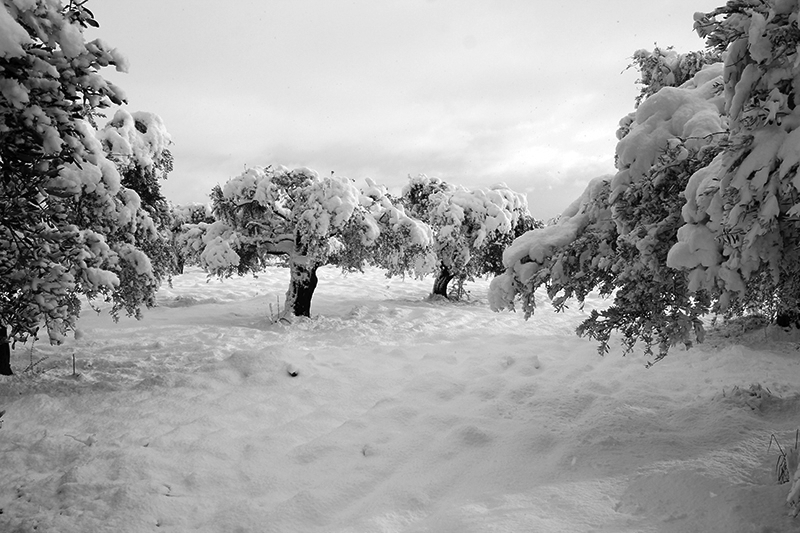
Just as God oversees the seasons and “spreads snow like wool” (Ps 147:16), he faithfully cares for his people. Here snow covers olive trees in Jerusalem.
Psalm 148. Whereas the previous two psalms conclude by emphasizing that Israel’s God reigns eternally (146:10) or that God gives his word uniquely to Israel (147:19–20), Ps 148 ends by revealing that God empowers Israel and has a special relationship to Israel (148:14).
Enclosing this praise psalm with the command “Hallelujah” (= “Praise the LORD”; 148:1a, 14d), the author begins each section (148:1b–6, 7–14c) with a similar command and indicates from where that praise is to arise: from heaven and from earth (148:1b, 7a, respectively). Then, after identifying specific beings or objects that are to offer praise (148:1c–4, 7b–12), he concludes each section with “Let them praise the name of the LORD” and gives reasons why such praise should be given (148:5–6, 13–14c).
Psalm 149. This psalm emphasizes the necessity of praising and humbly serving God. The author binds together the psalm’s two sections (149:1–4, 5–9) by revealing privileges given to the saints: praising God publicly, praising him privately, and doing his will (149:1, 5, 9).
God’s people are to praise him because he takes joyful interest in them and blesses those who humble themselves before him (149:1–4). God’s people, moreover, are to honor him by carrying out his judgment on those who oppose God (149:6–9). This judgment originates not from the saints’ own hatred of their enemies but from the recorded decision of God and is a judgment that they are to inflict because of their love for God (149:6).
Psalm 150. All people everywhere (on earth and in the heavens) (150:1, 6) are to praise God for who he is and what he does (150:2)—to praise him with music and dance (150:3–5).
Psalm 150:6 clarifies a concern that may arise throughout the Psalter: does God care only about Israel and not about the nations? Verse 6 declares that God’s interest extends to all people everywhere.
After recording eleven direct commands to praise God (150:1–5), the author uses an indirect command: “Let everything that breathes praise the LORD” (150:6). This shift slows down the pace of the psalm, giving readers time to ponder its truth—everyone in the world is to praise God. The author then concludes with one final direct command: “Hallelujah” (= “Praise the LORD”).