Slave, Servant There are numerous relationships in the OT that could be characterized as following a servant-master or slave-master model, and the two are not always distinguishable. These include service to the monarchy (2 Sm 9:2), within households (Gn 16:8), in the temple (1 Sm 2:15), or to God himself (Jdg 2:8). We also see extensive slavery laws (e.g., Ex 21:1–11; Lv 25:39–55; Dt 15:12–18) concerned with the proper treatment of slaves and their eventual release and freedom. Slaves also had certain rights that gave them special privileges and protection from their masters.
Slavery was very common in the first century AD, and there were many different kinds of slaves. For example, slaves might live in an extended household (oikos) in which they were born, or they might choose to sell themselves into this situation (1 Pt 2:18–25). Although slavery was a significant part of society in the first century AD, we never see Jesus or the apostles encourage slavery. Instead, both Paul and Peter encouraged godly character and obedience for slaves within this system (Eph 6:5–8; Col 3:22–25; 1 Tm 6:1–2; Philemon; 1 Pt 2:18–21). Likewise, masters were encouraged to be kind and fair to their slaves (Eph 6:9; Col 4:1). Later in the NT, slave trading was condemned by the apostle Paul as contrary to “sound doctrine” and “the gospel concerning the glory of the blessed God” (1 Tm 1:10–11).
Jesus embodies the idea of a servant in word and deed. He fulfills the role of the “servant of the Lord,” the Suffering Servant predicted by the prophet Isaiah (Is 42:1–4; 50:4–9; 52:13–53:12). He also takes on the role of a servant in the Gospels (Mk 10:45; Jn 13:4–5). Paul says that in the incarnation Jesus took on the nature of a servant (Php 2:7). The special relationship between Jesus and his followers is captured in the servant-master language of the NT Epistles, especially in Paul’s Letters (Rm 1:1; Php 1:1; Ti 1:1). This language focuses not so much on the societal status of these servants as on the allegiance and honor owed to Christ Jesus.
Solomon’s Colonnade A magnificent roofed structure, two hundred yards long, that stood along the east side of the courtyard of Herod’s temple, similar to a Greek stoa. Jesus teaches here during the Festival of Dedication (Jn 10:22–23). It was known as Solomon’s Colonnade (also Porch or Portico) because of the many columns that made up its architecture and the erroneous belief that it dated from the time of Solomon. It figures prominently in the gatherings of the early church (Ac 3:11; 5:12).
Songs of Ascents The titles, or superscriptions, of fifteen psalms include the designation “A song of ascents.” These psalms occur together as a group, Pss 120–34. The notion of ascending, or going up, has influenced the understanding of these psalms. The “going up” has been seen as going up to Jerusalem for a holy day, going up to Jerusalem as part of the return from the exile, going up the fifteen steps at the courts of the temple (a Jewish tradition in the Mishnah), or an aspect of their poetic style.
Son of God In the OT, heavenly beings or angels are sometimes referred to as “sons of God” (Gn 6:2; Jb 1:6; 2:1; 38:7; cf. Pss 82:6; 89:6). The more important background for the NT, however, is the use of the term with reference to the nation Israel and the messianic king from David’s line. Israel was God’s son by virtue of God’s unique calling, deliverance, and protection. Hosea 11:1 speaks of God fathering Israel. Similar references to God as the father of his people appear throughout the OT (e.g., Ex 4:22; Nm 11:12; Dt 14:1; Is 43:6; Jr 3:4; 31:9; Hs 2:1). The king from the line of David is referred to as the son of God by virtue of his special relationship to God and his representative role among the people. In the Davidic covenant, God promises to be a father to David’s descendant (2 Sm 7:14; cf. Pss 2:7; 89:26). Later Judaism appears to have taken up these passages and identified the coming Messiah as the “son of God.”
Son of Man In the OT, the phrase “son of man” usually refers to humanity in general or to a specific individual. In Ezekiel, for instance, God addresses the prophet as “son of man,” indicating his human status compared with God or highlighting his unique status as God’s prophet in contrast with the rest of humanity.
One of the most crucial OT “son of man” texts is Dn 7 because of its influence on the Gospel tradition. In a vision Daniel sees that “one like a son of man was coming with the clouds of heaven” (Dn 7:13). This exalted figure contrasts with four beasts. Many agree that the beasts likely refer to ancient world empires; however, the referent of “one like a son of man” is debated. The figure may refer to earthly Israel, since at this figure’s vindication he is endowed with authority and glory. This is precisely what “the holy ones of the Most High” receive in Dn 7:27. In this way, the “one like a son of man” is a symbol for the persecuted, earthly saints. Alternatively, the exalted figure could be a heavenly being such as the archangel Gabriel (Dn 9:21) or Michael (Dn 10:13; 12:1). Here “one like a son of man” is the heavenly counterpart and leader of suffering Israel and fights a cosmic battle on its behalf.
In the NT the term “Son of Man” occurs mostly in the Gospels and, with the exception of Jn 12:34 (where the crowd quotes Jesus), is uttered exclusively by Jesus himself. Unlike in Daniel, the epithet occurs in the Gospels with the definite article, likely indicating that the Son of Man was a known figure. In first-century Judaism many Jews believed that the Son of Man would return at the end as savior and judge. The OT provides the most helpful background for understanding the Son of Man in the Gospels.
Although in Daniel the Son of Man does not receive authority until his appearance in the Lord’s presence at his vindication, the Son of Man in the Gospels exercises such authority during his earthly ministry. Jesus also predicts that the Son of Man will suffer, die, and be raised again. Echoing Dn 7, this plight of Jesus recalls the suffering of the holy ones caused by the little horn (Dn 7:21). The clearest reference to Dn 7 in the Gospels occurs in the future-vindication sayings. In Mk 13:26; 14:62 the Son of Man comes with/on the clouds. Meanwhile, the church must stay alert and be prepared for the return of the Son of Man (Lk 12:39–40; 17:22–37; 21:34–36).
Finally, the Son of Man in Revelation is in the heavenly temple functioning as both judge and caretaker of the seven churches (Rv 1:12–20) and reaps the saints while “seated on the cloud” (Rv 14:14–16).
Sovereignty of God Broadly speaking, the Bible describes sovereignty as God’s divine authority to rule his creation in general and Israel in particular. He is the Lord of all creation and the King of Israel. He is almighty (sovereign) to accomplish his purpose, which is to restore his kingdom on earth through Christ (1 Tm 6:14–15), to whom he now has given all authority (Mt 28:18). Rather than an aloof deity, God is presented in the Bible as intensely personal and engaged in the affairs of his creation. He remains outside his creation as its supreme, infinite Creator (transcendence) while allowing his love to instruct both his justice and his power (immanence). He creates not because the necessity of his perfection requires it but rather out of sovereign freedom and love. He is both protective of his position as Lord of creation and concerned for his people’s welfare (Dt 6:13–19). His sovereignty displays his moral character (Ex 15:11–18) while demanding reciprocal love and relational obedience from his people.
Spices Spices were in high demand during the biblical period, making food and living more enjoyable, especially for the wealthy. They were used in food (implicit in Ezk 24:10) and drink (Sg 8:2). The spice trade forged the earliest routes from northern India to Sumer, Accad, and Egypt (cf. Gn 37:25). Trade led to cultural exchange and, in the time of Solomon, to national wealth from tolls collected on such shipments. Ezekiel 27:22 and Rv 18:13 show the value associated with this trade, and 2 Kg 20:13 places spices among King Hezekiah’s treasures. The sensual luxury of spices could be erotic (e.g., Est 2:12; Sg 5:1; 6:2; 8:14). Some spices, such as frankincense, were important to worship rituals in ancient Israel, being used in offerings (Lv 24:7) and in the anointing oil and incense (Ex 25:6; 30:22–38). Producing the right mixtures required skilled individuals (Ex 30:25; 1 Ch 9:29–30).
Spirit The divine-human relationship is portrayed in the Bible as predominantly spiritual in nature. God is Spirit, and humankind may communicate with him in the spiritual realm.
The OT writers use the common Hebrew word ruah (“wind, breath”) to describe force and even life from the God of the universe. In its most revealing first instance, God’s ruah hovers above the waters of the uncreated world (Gn 1:2). The OT authors often employ ruah simply to denote air in motion or breath from a person’s mouth (e.g., Jb 34:15). However, special instances of the use of ruah include references to the very life of a person (Gn 7:22; Ps 104:29), an attitude or emotion (Gn 41:8; Nm 14:24; Ps 77:3), the negative traits of pride or temper (Ps 76:12), a generally good disposition (Pr 11:13; 18:14), the seat of conversion (Ezk 18:31; 36:26), and determination given by God (2 Ch 36:22; Hg 1:14).
The NT authors used the Greek term pneuma to convey the concept of spirit. In the world of the NT, the human spirit was understood as the divine part of human reality as distinct from the material realm. Jesus is described by Luke as growing and becoming “spiritually strong” (Lk 1:80). In “spirit” Jesus perceives what certain teachers of the law are thinking in their hearts (Mk 2:8). Likewise, Jesus is “deeply moved in his spirit and troubled” at the sickness of a loved one (Jn 11:33). At the end of his life, Jesus gives up his spirit (Jn 19:30).
According to Jesus, the spirit is the place of God’s new covenant work of conversion and worship (Jn 3:5; 4:24). He declares the human spirit’s dependence on God and ascribes great virtue to those people who are “poor in spirit” (Mt 5:3).
Human beings who are possessed by an evil spirit are devalued in Mediterranean society. In various places in the Synoptic Gospels and the book of Acts, either Jesus or the disciples are involved in exorcisms of such spirits (Mt 8:28–33; Mk 1:21–28; 5:1–20; 7:24–30; 9:14–29; Lk 8:26–33; 9:37–42; Ac 5:16).
The apostle Paul points to the spirit as the seat of conversion (Rm 7:6; 1 Co 5:5). He describes believers as facing a struggle between flesh and spirit in regard to living a sanctified life (Rm 8:2–17; Gl 5:16–17). This struggle centers on the believer’s body being dead because of sin but the spirit being alive because of the crucified and resurrected Christ (Rm 8:10). Believers therefore are encouraged to lead a holistic life, lived in the Spirit.
Staff A wooden walking stick that could have various functions. In ancient times, people did considerable amounts of walking. The ground in Israel is very uneven and rocky, making a walking stick a useful item (Gn 32:10; Mt 10:10). Walking sticks likely were customized so that they could serve as identification (Gn 38:25).
Besides their utilitarian purpose, a staff also came to denote an office and/or one’s authority. Military figures carried staffs that indicated their status (Jdg 5:14), and Gn 49:10 predicts that the ruler’s staff will not depart from the tribe of Judah. Shepherds also carried a staff (Ps 23:4; Mc 7:14).
Sometimes a staff signified the presence of God with an individual, and divine signs could be associated with a raised staff. This was the case of Aaron’s staff. The Red Sea split after Moses extended his staff, and the Israelites had the better of the Amalekites on the battlefield as long as Moses kept the staff above his head.
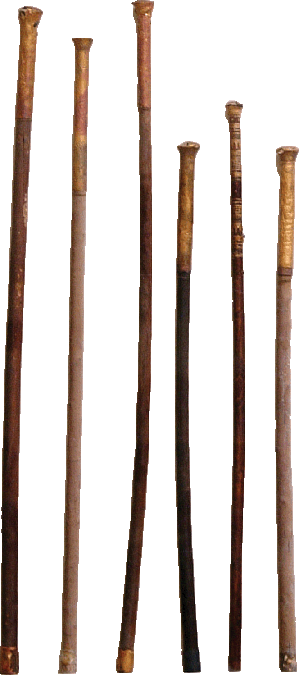
“Your rod and your staff—they comfort me” (Ps 23:4). These shepherd’s tools likely signify protection (rod) and guidance (staff). Shepherds in Israel may have used staffs similar to these staves from ancient Egypt.
© Baker Publishing Group and Dr. James C. Martin. Courtesy of the Egyptian Ministry of Antiquities and the Cairo Museum.
Stars The word “star” is used in the Bible to refer to any bright point of light in the night sky; no linguistic distinction is made between stars and planets (cf. 2 Pt 1:19; Rv 2:28; 22:16).
Stars often are used to illustrate the scope of God’s promises (Gn 15:5; 22:17; 26:4; Dt 10:22). They were used throughout the ancient Near East to represent the king, an association also evident in the OT (Nm 24:17; Is 14:12). Stars also were named, and some were objects of worship, a practice condemned in Israel (Am 5:26; cf. Dt 4:19). Stars were subject to study by foreign sages who sought to predict the future based on their observations, although their efficacy is denied (Is 47:13). Nonetheless, the arrival of the Messiah is heralded by a star in the service of its Creator (Mt 2:2–10). The falling (Rv 6:13) and the darkening (Jl 2:10; 3:15) of stars are used to depict the coming of the day of the Lord in judgment.
Stewardship The management of available resources (time, talent, finances, opportunity) in the recognition that God is the maker, owner, and provider of all things (Ps 24:1; cf. Jb 41:11; Hg 2:8). God’s followers are charged with managing what he has given. A steward was a slave or servant who oversaw all household operations (e.g., Gn 43:19; 44:1, 4) and thus was someone whom the owner trusted. Jesus similarly refers to a household manager or foreman in some of his parables (Mt 20:8; Lk 16:1, 3). The concept of stewardship is applied to believers as God’s servants who manage God’s resources in this world, a concept that began with Adam and Eve (Gn 2:15).
Regarding financial matters, the Bible teaches that a tithe (one-tenth) of one’s income should be returned to God as a reminder that all one has comes from him (Lv 27:30). The OT concept of the tithe is assumed by Jesus in Mt 23:23 but otherwise is not frequently mentioned in the NT. The NT instead focuses on the attitude of the believer, who should give sacrificially (Mk 12:41–44; Ac 2:44–45) and in love with generosity (2 Co 9:6–8), trusting that God will provide.
Strings The most frequently mentioned instrument in the OT is the kinnor, a lyre, also often referred to as a harp. The sound box of the harp is at the base, from which a straight or curved neck rises at a sharp angle so that the strings going from the box to the neck are of different length. The lyre has two uprights and a crosspiece on top, from which the strings of similar length stretch down to the sound box. The kinnor-lyre had eight to ten strings and could be played with a pick or by hand. David’s “harp” was such a lyre. The “harp” mentioned in the NT (1 Co 14:7; Rv 5:8; 14:2; 15:2) probably was also a lyre. Another OT lyre, or perhaps a harp, the nebel, complemented the kinnor-lyre. Jewish tradition about the strings implies that it produced a lower sound. The nebel-lyre is most often mentioned with other instruments, though occasionally alone. Another stringed instrument mentioned three times, the asor, may have been a harp or a lyre with ten strings (Pss 33:2; 92:3; 144:9). In Ps 150:4 there is mention of “strings,” which may refer to more than just the stringed instruments specifically mentioned in the Bible. The ancient world also had lutes, an instrument with a long, straight neck, fretted like a guitar or ukulele, proceeding from a small sound box.
Stumbling Block In the OT, this image is used to convey the concept of a “stumbling block” in a literal (Lv 19:14) or figurative (Jr 6:21) sense. In the NT, a stumbling block (Rm 14:13; 1 Co 8:9), or causing one to stumble (Lk 17:2), has either a christological or a moral application. The use of the image as a messianic reference—Christ as a stumbling block (Rm 9:32–33; 1 Co 1:23; 1 Pt 2:8)—plays off the Isaianic presentation of God as a stumbling block to his faithless people (Is 8:14–15).
Suffering While in the OT suffering is regularly an indication of divine displeasure (Lv 26:16–36; Dt 28:20–68; Is 1:25; cf. Heb 10:26–31), in the NT it becomes the means by which blessing comes to humanity.
The Bible often shows that sinfulness results in suffering (Gn 2:17; 2 Sm 12:13–18; Rm 1:18; 1 Co 11:27–30). Job’s friends mistakenly assume that he has suffered because of disobedience (Jb 4:7–9; 8:3–4, 20; 11:6), but in the final chapter of the book God commends Job and condemns his friends for their accusations (Jb 42:7–8; cf. 1:1, 22; 2:10). Like Job’s friends, Jesus’s disciples assume that blindness is an indication of sinfulness (Jn 9:1–2). Jesus rejects this simplistic notion of retributive suffering (Jn 9:3, 6–7; cf. Lk 13:1–5).
The NT writers reveal that Jesus’s suffering was prophesied in the OT (Mk 9:12; 14:21; Lk 18:31–32; 24:46; Ac 3:18; 17:3; 26:22–23; 1 Pt 1:11). Jesus is presented as the answer to human suffering. Through the incarnation, God’s Son personally experienced human suffering (Php 2:6–8; Heb 2:9; 5:8) and paid the price for sin (Rm 3:25–26; 4:25). Christ is the example in suffering (1 Pt 2:21; 4:1). He provides hope of resurrection (1 Co 15:20–26; Php 3:10–11) and a future life without suffering or death (Rv 21:4).
The NT writers repeatedly mention the benefits of suffering, for it has become part of God’s work of redemption. The suffering of believers accompanies the proclamation and advancement of the gospel (Ac 5:41–42; 2 Co 4:10–11; Php 1: 27–29; 1 Th 2:14–16) and results in salvation, faith, resurrection from the dead, and the crown of life (Mt 10:22; 2 Co 1:6; Php 3:10–11; Heb 10:32–39; 1 Pt 1:7; Rv 2:10). It is an essential part of the development toward Christian maturity (Rm 5:3–4; 2 Co 4:11; Heb 12:4; Jms 1:3–4; 1 Pt 1:7). Present suffering is light and momentary when compared to future glory (Mt 5:10–12; Rm 8:18; Heb 10:34–36).
Sun In the OT, the sun often is associated with and symbolic of life (e.g., Ec 7:11; 11:7; cf. Ps 58:8) or justice (Jb 38:13; Ps 19:6; Mal 4:2; cf. 2 Sm 23:3–4). The darkening of the sun is presented as a sign of judgment heralding the day of the Lord (Is 13:10; Ezk 32:7; Jl 2:10, 31; 3:15; Am 8:9; Mt 24:29; Mk 13:24; Rv 6:12; 9:2), which many associate with the darkness during the crucifixion (Mt 27:45; Mk 15:33; Lk 23:44).
Susa Occupied as early as 4000 BC, Susa is about two hundred miles east of Babylon. Susa first saw fame as the capital of Elam. After being destroyed by Ashurbanipal of the Assyrians (ca. 640 BC), Susa was rebuilt and eventually rose to its apex in the Persian Empire under Darius (521–486 BC). It served as a capital alongside Persepolis, Ecbatana, and Babylon. Part of its site remains occupied by the city of Shush in the Khuzestan province of Iran.
Susa is mentioned in Ezra, Nehemiah, Esther, and Daniel. Nehemiah serves at Artaxerxes I’s palace at Susa (Neh 1:1, 11; 2:1). A substantial portion of the book of Esther takes place at Susa. Ezra 4:9–10 reports that people from Susa were deported by the Assyrian king Ashurbanipal, and Dn 8:2 identifies Susa as the setting of Daniel’s vision.
Swine Pigs were widely domesticated in the ancient Near East, and in biblical times they probably resembled the wild European boar, which still existed in the forests (Ps 80:13). These animals would have been brown or gray and much hairier than modern domestic breeds, the boars having tusks and the piglets stripes. In Israel, however, pigs were regarded as one of the most unclean of all creatures, both ritually (Lv 11:7; Dt 14:8; Is 65:4; 66:3, 17) and physically (2 Pt 2:22). To associate anything of value with swine subjected it to ridicule and rendered it worthless (Pr 11:22); it was wasteful and abhorrent (Mt 7:6). The presence of herds of domesticated pigs became a mark of Gentile territory, and when Jesus once casts out some demons in such an area, he allows them to enter swine, which promptly drown themselves in the lake (Mk 5:1–20). Thus, when the prodigal son in Jesus’s parable ends up herding pigs, this represents the most degrading occupation an Israelite could imagine (Lk 15:15–16).
Tabernacle “Tabernacle” (Hb mishkan) is a general word for a tent or a dwelling. In the Pentateuch particularly, “tabernacle” most often refers to the special dwelling place of God among the Hebrew people during their wandering through the wilderness. The tabernacle is the abode of God’s glory before the building of Solomon’s temple in Jerusalem. The detailed description of the tabernacle and its construction constitutes more than one-third of the book of Exodus (chaps. Ex 25–40), signifying its theological importance to the life of God’s people.
The detailed command of God to build the tabernacle in Ex 25–30 is part of a larger dramatic narrative. While Moses is on the mountain of God receiving the instructions for the tabernacle, the Hebrews have embarked on a festival of revelry and worship, offering sacrifices to a golden calf, constructed during Moses’s absence (Ex 32:1–19). God punishes the people with a plague but does not destroy or abandon them completely, for the Lord is faithful (Ex 34:6). Exodus 35–40 then recounts the careful obedience with which the people adhere to God’s command to build the tabernacle, assiduously following the instructions given in Ex 25–30.
The description of the tabernacle is of an ornate sanctuary within a tent structure situated at the center of Israel’s camp. The tabernacle thus takes the place of the tent of meeting described in Ex 33:7–11, which is pitched outside the camp. However, the terms “tabernacle” and “tent of meeting” appear to be used synonymously in the Pentateuch after the construction of the tabernacle is completed. The dimensions of the tabernacle are as follows: 150 feet long, 75 feet wide, and 7.5 feet high (Ex 27:18). Around the exterior of the tabernacle complex are curtains that surround an outer courtyard, where an altar for burnt offerings stands at the entrance to the tent of meeting, as well as a basin filled with water for the ritual purifications of the priests. Within the outer enclosure of the tent, the holy place, stands a lampstand, an incense altar, and a table where the Bread of the Presence is placed. Within the tent is a second enclosure, the most holy place, where the ark of the covenant is placed. Various kinds of priests serve to care for the tabernacle and its offerings, utensils, and equipment as it is disassembled, transported, and reassembled (Lv 8–9; Nm 4).
The commandments for building the tabernacle parallel the giving of the law to Moses: one shapes the people’s worship, and the other shapes the people’s ethic of living. After the building of the tabernacle, God no longer dwells on a distant mountain but now resides perilously close in holy otherness. Indeed, the tabernacle serves as a tangible reminder of God’s presence and promise traveling alongside God’s people.
Tabor A mountain in Lower Galilee, southwest of the Sea of Galilee and north of the hill of Moreh and Mount Gilboa. Tabor’s strategic location and ease of fortification led to it becoming a location of military note throughout history. In Jdg 4:1–15 Deborah tells Barak to go to Mount Tabor and then to lead an attack from Tabor on Sisera’s men, who are then routed. In Jdg 8:18 Mount Tabor is also mentioned when Gideon confronts and kills Zebah and Zalmunna, two kings of Midian. Hosea uses the phrase “a net spread out on Tabor” to illustrate his judgment against Israel (Hs 5:1).
Tahpanhes A Hebrew transliteration of an Egyptian place name for an outpost bordering Sinai (see Jr 2:16; 46:14), an Egyptian fortress city in the eastern delta region of the Nile. After the destruction of Jerusalem, a group of Israelites desires to escape to Tahpanhes. Jeremiah counsels against this, warning that Nebuchadnezzar will eventually reach Tahpanhes and prophesying that if the people remain in the land, God will grant them mercy. However, the Jews do not listen, and they flee to Egypt, taking Jeremiah with them. It is in Tahpanhes that Jeremiah finishes out his prophetic career (Jr 42:19; 43:7–9; 44:1). Ezekiel also includes this city in his oracle against Egypt (Ezk 30:18).
Tamarisk A small shrub or tree with tiny leaves and slender branches common in desert regions and useful for shade or wood. Abraham plants a tamarisk tree as a sign of his covenant with Abimelech (Gn 21:33). Tamarisks are also used as landmarks identifying the locations where Saul and his officials meet during his pursuit of David (1 Sm 22:6) and where the bones of Saul and Jonathan are buried at Jabesh (1 Sm 31:13). Tamarisk fruit is the possible source of the manna that the Israelites eat in the wilderness.
Tarshish Solomon engages in trade with Tarshish (1 Kg 10:22; 2 Ch 9:21), which is described as a source of precious metals such as gold and silver (Jr 10:9; Ezk 27:12). Its location is unknown, but it is associated with islands (Ps 72:10) and with Jonah’s flight by ship from Joppa on the Mediterranean (Jnh 1:3). Both Tartessus in southwest Spain and the island of Sardinia have been suggested as possible sites. The phrase “ships of Tarshish” (Ps 48:7; Is 23:1) may refer to a fleet originating from Tarshish or more generally to a type of seaworthy merchant vessel (cf. 1 Kg 10:22; 22:48).
Tassels The Israelites are instructed to make tassels on the corners of their garments as visible reminders to obey God’s commandments. Each tassel is to incorporate a blue cord (Nm 15:37–41). This follows a severe admonition against one who sins defiantly, thus blaspheming against God. In that context, the command to wear tassels demonstrates the need for visible warnings. A summary statement appears in Dt 22:12.
When Jesus condemns the hypocrisy of the Pharisees, he notes their concern to make long tassels for the sake of appearance yet without maintaining justice (Mt 23:4–6). Based on a supposition in the wider culture that power is bound up in the fringes of garments, those who suffer illness touch the edge of Jesus’s robe (Mt 14:36; Mk 6:56). When a woman who has suffered with a hemorrhage for twelve years touches the edge of Jesus’s robe and is healed, he declares that power has gone out from him (Lk 8:40–48).
Tax Collector In the Roman Empire, tax collectors were employed to help collect taxes in the provinces. People bid for the job, and they were compensated by collecting more than the required tax. Tax collectors were despised by Jews as greedy because of the excessive profits they reaped. They also were counted as traitors because they worked for the Romans. In the NT, tax collectors often are associated with Gentiles and sinners (Mt 5:46–47; 11:19; 21:32).
Jesus is criticized by the Jewish leaders for eating with “tax collectors and sinners” (Mt 9:10–11). Jesus welcomes and teaches tax collectors (Lk 5:29; 15:1). Matthew, one of Jesus’s disciples, is a tax collector (Mt 10:3). Zacchaeus is a “chief tax collector,” which probably indicates that he collects taxes over a specific area and supervises others who do the actual collecting (Lk 19:2).
Tekoa A town in the territory of Judah about 7.5 miles south of Bethlehem, perhaps at the modern site of Khirbet et Tuqu’. Tekoa is associated with the Hezronites (1 Ch 2:24; 4:5), as the son of Hezron (Judah’s grandson) is the leader, or “father,” of Tekoa. Jeremiah 6:1 indicates that it is south of Jerusalem. Rehoboam includes it in a line of defensive fortifications (2 Ch 11:6).
Tekoa is the birthplace of Ira, one of David’s mighty warriors (2 Sm 23:26). It is better known as the birthplace of Amos, the shepherd and caretaker of sycamore fig trees turned prophet to the northern kingdom of Israel (Am 1:1; 7:14). Tekoa also is the origin of a wise, or skilled, woman whom Joab recruits as part of petitioning David to restore Absalom after he has killed Amnon (2 Sm 14).
Thebes Located on the Nile about four hundred miles south of the Mediterranean, Thebes rose to its greatest glory during the New Kingdom (1550–1070 BC) and the rise of Egypt’s Eighteenth Dynasty, which originated in Thebes. After the death of Rameses IX (ca. 1070 BC), Thebes was no longer directly connected to the royal family, and its prominence diminished. A revival of the city’s prominence occurred during the Twenty-Fifth Dynasty (760–656 BC).
Thebes was sacked by the Assyrian army in 663 BC and suffered raids by the Persians in 525 and 343 BC. The prophets Jeremiah (46:25), Ezekiel (30:14–16), and Nahum (3:8) pronounce judgment against Thebes, a city that epitomizes Egypt’s pride and defiance of God.
Tiglath-pileser III The founder of the Neo-Assyrian Empire (r. 744–727 BC), Tiglath-pileser (in the Bible, also known as “Pul”; a variant spelling is Tiglath-pilneser) annexed conquered territories and started the practice of deporting populations to minimize national sentiments of resistance.
In the Bible, Tiglath-pileser takes tribute from Menahem (2 Kg 15:19–20) and captures the Transjordan and other tribes of Israel (2 Kg 15:29; 1 Ch 5:26). When King Pekah of Israel and King Rezin of Damascus band together to resist Assyrian hegemony, they try to force King Ahaz of Judah to join them, but he appeals to Tiglath-pileser for help in exchange for fealty, against the counsel of Isaiah (see 2 Kg 16; 2 Ch 28; Is 7). In 734 BC Tiglath-pileser crushes the coalition, captures Gaza, and develops it into a trade center between Assyria and Egypt.
Tithe An offering of a tenth of the whole. Abram gives Melchizedek a tenth (Gn 14:20; Heb 7:2–9), and Jacob promises God a tenth (Gn 28:22). These occasions reflect a practice already established in patriarchal times.
Under Moses, Israel is to give God a tithe of all its crops, flocks, and herds (Lv 27:30–32). These tithes are received by the Levites for their sustenance; they in turn tithe from all that they have received (Nm 18:25–32). Deuteronomy specifies a yearly tithe eaten by the worshipers and a storehouse tithe given every three years to provide for the Levites and for resident aliens, the fatherless, and widows (Dt 14:22–29). Hezekiah (2 Ch 31:5–8) and, later, Nehemiah (Neh 10:37–38; 12:44–47; 13:10–13) reestablish this system. Malachi warns against slackness in tithing (Mal 3:8–10).
Amos uses irony to underline that tithing cannot replace righteousness (Am 4:4). Similarly, Jesus condemns scribes and Pharisees for neglecting justice, mercy, and faithfulness while tithing meticulously; instead, they should practice all of these (Mt 23:23; cf. Lk 11:42; 18:11–12).
Tomb of Jesus In the Gospels, Joseph of Arimathea directs the process of taking Jesus’s body from the place of crucifixion to his own tomb, “cut into the rock, where no one had ever been placed” (Lk 23:53). As a “rich man” (Mt 27:57), Joseph could afford a tomb of this type. All the Gospel writers indicate that the tomb had a stone at its entrance, a common feature of such tombs; both Matthew (Mt 27:60) and Mark (16:4) underscore the size of the stone.
Matthew provides unique details about Jesus’s tomb in an effort to defend the authenticity of Jesus’s resurrection: Pilate, in deference to the Pharisees, assigns a guard of soldiers to secure the tomb. The soldiers put a seal on the tomb (Mt 27:62–66), an official Roman insignia, to indicate that no one should disturb the tomb. The Jews devise an alibi when these attempts to secure the tomb prove unsuccessful (Mt 28:11–15).
On the morning of Jesus’s resurrection, some women were the first to enter the tomb and find it empty (Mk 16:1–6; Jn 20:1–2). John records that Peter and another disciple also enter the tomb (Jn 20:2–8), the latter doing so only after “stooping down.” A low entrance is a known feature of rock-hewn tombs from this time period.
Two main sites in Jerusalem have been proposed as the location of Jesus’s tomb. The site on which the Church of the Holy Sepulchre sits is favored by archaeologists because of its early traditional attestation. The Garden Tomb presents more visible features that could correlate with the biblical accounts but lacks traditional attestation.
Topheth Topheth, whose name is associated with the Hebrew word for “spit,” was located in the Ben Hinnom Valley to the immediate southwest of Jerusalem. At times, it served as the city dump, where trash was burned (Is 30:33). In the NT period, the valley was known as Gehenna, which was associated with a place of fiery punishment (e.g., Mt 5:22, 29–30; 18:9). Josiah had destroyed Topheth because it was the location of the false worship of the foreign god Molech (2 Kg 23:10–11), but the idolatrous worship site must have been rebuilt. In the time of Jeremiah, some Israelites performed child sacrifice in this location, so the prophet announced judgment against them (Jr 7:30–34; 19:6–15).
Transjordan The stretch of land east of the Jordan River extending from Mount Hermon in the north to the Gulf of Aqaba in the south, including the biblical areas of Bashan, Gilead, Ammon, Moab, and Edom. The area is roughly that of the modern country of Jordan.
Although biblical mention of the Transjordan begins in Genesis (e.g., Gn 13; 31:22–25; 32:22–32), the region first takes center stage in the events following the exodus. When the Israelites leave Kadesh-barnea and are refused passage through Edom (Nm 20:14–21), they take a more easterly route, along the edge of the desert bordering the Transjordan, thus bypassing both Edom and Moab (Nm 21). When Sihon king of the Amorites also refuses them passage and engages them in battle, and then Og king of Bashan fights against them, both kings lose their territory to the Israelites (Nm 21:21–35). Balak king of Moab then fears for his own country and hires Balaam to curse Israel, but by God’s prompting Balaam blesses Israel and curses Moab instead (Nm 22–23).
Before Israel crosses the Jordan to enter Canaan, the tribes of Reuben and Gad request the land east of the Jordan (Nm 32:1–5). Thus, Reuben, Gad, and the half tribe of Manasseh settle in the Transjordan (Jos 13:15–31). Despite the Israelites’ victories over Sihon and Og and their settlement of this region, hostilities continue between Israel and the remaining inhabitants, such as the Ammonites (Jdg 11:1–34; 1 Sm 11:1–14). During David’s reign, Israel’s territory is expanded throughout the Transjordan from Damascus in the north and through Edom in the south (2 Sm 8:1–14). Solomon’s reign and the period of the divided kingdom see ongoing struggles for control over the Transjordan (1 Kg 11:23–25; 2 Kg 10:32–33; 13:25; 14:28).
During the Hellenistic and Roman periods, the Decapolis emerged, which was a confederation of ten cities settled by Greeks, nine of which were located east of the Jordan. This region is mentioned a few times in the NT in connection with Jesus’s ministry. Jesus’s travels take him across the Jordan (Mt 19:1–2; Mk 10:1), and among the crowds who follow him are many from the Decapolis and beyond the Jordan (Mt 4:25; Mk 3:8). Although the location of his healing of the demoniac is uncertain (Mt 8:28; Mk 5:1; Lk 8:26), it is in the Decapolis region that the healed man proclaims what Jesus has done for him (Mk 5:20).
Treasury Treasure is stored in the Jerusalem temple and palace (Jos 6:24) and is collected from the spoils of war (Jos 6:19), from offerings (2 Kg 12:4; Mk 12:41), and from royal gifts (2 Kg 12:18; 1 Ch 29:3). The temple treasury contains gold, silver, other metals, and precious stones (1 Ch 29:8). Treasuries also house written records (Ezr 6:1). Treasure is stored in the small rooms that surround the sanctuary (1 Ch 28:12; see also Jr 38:11) and is guarded by Levites (1 Ch 9:26). Several treasurers are named (1 Ch 9:26; 26:20, 22; 2 Ch 25:24). The Ethiopian eunuch who meets Philip is a treasurer in the court of the Candace (Ac 8:27). The treasury funds repairs to the temple (2 Kg 12:7; Ezr 7:20).
Invading kings frequently raid the temple treasury, including Shishak of Egypt (1 Kg 14:26), Jehoash of Israel (2 Kg 14:14), and finally Nebuchadnezzar of Babylon (2 Kg 24:13; Dn 1:2), as foretold by Jeremiah (Jr 15:13). On other occasions, the kings of Judah draw money from the treasury to make tribute payments to foreign rulers (1 Kg 15:18; 2 Kg 12:18; 16:8; 18:15). “Treasury” can also refer to a private account (Pr 8:21).
Tree of Life In Gn 2:9 the tree of life is at the very center of the lush landscape of the garden of Eden. In Gn 3:22–24 the man and the woman are exiled from the garden as a consequence of their disobedience, but more specifically they are barred from the immortality granted by eating the fruit of the tree.
In the book of Proverbs the tree of life is a symbol of that which brings joy in life: wisdom (Pr 3:18), righteousness (Pr 11:30), fulfillment (Pr 13:12), soothing words (Pr 15:4). In Revelation the tree represents the reversal of the consequences of humankind’s disobedience in the garden. Eternal life is now again offered to those who persevere in Christ (Rv 2:7; 22:14). And in Rv 22:2 the tree of life is part of the scenery of the new Jerusalem. Its branches span over the river of the water of life, and its leaves are imbued with healing for the nations (cf. Ezk 47:12).
Tribute In the ancient biblical world, tribute was a payment made by one state to another, which was a mark of subjugation. The state required to pay the tribute (the vassal) often was a conquered people. The payment could consist of precious metals, currency, commodities, animals, and even human beings. Tribute allowed the sovereign state (the suzerain) to increase residual capital and gain large amounts of valuable materials, at the same time impoverishing and severely weakening the subjugated state (making future rebellions unlikely). Its administration was straightforward: every year the vassal was required to bring tribute to the suzerain. If such a payment was not made, it was a tacit sign of rebellion, and the suzerain sent a military force to punish the rebels.
At times in the biblical narrative, Israelite kings have occasions to impose tribute on other nations (e.g., 2 Sm 8:2, 6; 1 Kg 4:21; 1 Ch 18:2, 6; 2 Ch 17:11; cf. Ezr 4:20). However, in most instances, Israel appears to be on the other side of the tributary arrangement and makes monetary payments to foreign nations. Some of these instances are clear examples of Israel paying regular tribute payments to their overlord (e.g., Jdg 3:15; 2 Kg 23:33; Ezr 4:13), while others refer to bribes paid to foreign nations in order to secure military assistance against another enemy (1 Kg 15:18; 2 Kg 16:8) or settlement payments made to an attacker in exchange for its withdrawal (2 Kg 12:18; 18:15–16). On other occasions, the wealth of Israel is taken by foreign monarchs as spoils of war rather than as regular tribute (e.g., 1 Kg 14:26; 2 Kg 24:13–14). However, in nearly all these circumstances such payments result in Israel being required to give regular tributary payments thereafter to the foreign monarch.
Tyre and Sidon Two ancient city-states of the Phoenicians. Genesis 10:15 notes that Sidon was a son of Canaan, hinting at the importance of this city for the Canaanites. Several times in the Bible the term “Sidon” or “Sidonians” serves as an alternate name for the Phoenicians or Canaanites and usually refers to the southern part of this northern neighbor. There was much social and political interaction between Sidon and Tyre and the kingdoms of Israel and Judah, including Solomon’s marriage to women from Sidon (1 Kg 11:1) and the Omride dynasty’s treaties and intermarriage with the Phoenicians (1 Kg 16:31). For much of the tenth through seventh centuries BC, Israel and the Phoenicians were close economic allies. Like Israel, Sidon and Tyre suffered under the Assyrians and the Babylonians. Both Sidon and Tyre were recipients of the OT prophets’ ire. Tyre especially is the subject of prophetic denouncements (e.g., Ezk 26:1–28:19). Both cities advocated Baal worship, as demonstrated by the actions of Jezebel, the wife of King Ahab and daughter of the king of Sidon.
Tyre and Sidon continued to be significant during the NT period. Jesus goes to these two locations and condemns Jewish cities by saying that even the pagan Tyre and Sidon would have repented if they had witnessed miracles he had performed around them (Mt 11:20–23). Paul also travels to Tyre, staying there for seven days during a missionary journey (Ac 21:3–4).
Upper Gate One of the gates of the temple in Jerusalem. It apparently is also called the Upper Benjamin Gate (Jr 20:2). Its location is uncertain, but it apparently faces north (Ezk 9:2). Second Chronicles 27:3 and 2 Kg 15:35 identify it with a gate of the temple that Jotham rebuilt, but 2 Ch 23:20 suggests it (or a similarly named gate) leads into the king’s palace.
Ur An ancient Sumerian city that can be identified with modern Tell Muqayyar near the Euphrates River in modern-day Iraq.
The four biblical references to Ur mention it as the place of origin of Abraham’s family (Gn 11:28, 31; 15:7; Neh 9:7). Genesis 11:31–12:9 describes Abraham’s journey from “Ur of the Chaldeans” northwest to Haran and then south into Canaan. The name “Ur of the Chaldeans” for the city at the time of Abraham (Middle Bronze Age [2000–1550 BC]) is most likely an anachronism, since the Chaldeans did not arise as a recognizable group until the ninth century BC.
Urim and Thummim Objects used in the OT for determining the will of God. “Urim” traditionally is taken to mean “light,” while “Thummim” is generally connected with a word for “perfect.”
The size and shape of these objects is unknown. They may have been two disks, each with a shiny side and a dull side. They belonged in the breastpiece of the high priestly garments (Lv 8:8), and presumably they were drawn out by the priest or thrown down in a particular way in response to a question posed (Ex 28:30; Nm 27:21) and could give a yes or no answer. In 1 Sm 28:6 King Saul is unable to secure an answer from God by any of the normal means, including Urim, which suggests that an indeterminate answer from the disks is possible, perhaps when the disks present different faces.
The sacred stones that Hosea mentions as being among the things of which Israel will suffer loss in exile (Hs 3:4) may be the Urim and Thummim. Ezra 2:63 indicates that at the time no priest with Urim and Thummim is available (see also Neh 7:65). Whatever the cause, in postexilic times the use of Urim and Thummim as a means of oracular decisions falls into disuse.
Veil In the harsh desert of the Middle East, a veil is useful protection from the sun and windblown sand. While Hebrew women tend to appear without veils (Gn 12:14; 24:16; 29:10; 1 Sm 1:12), dressing in veils in public may have been considered appropriate for women of certain status (Sg 4:1, 3; 5:7; 6:7), so that forced removal becomes an act of shaming (Is 3:18–19; 47:2; Ezk 13:21).
However, in the Bible, veils also serve as more than protection from the elements. Rebekah puts on a veil in deference before encountering her future husband, Isaac (Gn 24:65). Tamar veils herself in order to deceive Judah, her father-in-law, into sleeping with her (Gn 38:14–19). And judgment is said to await the women who use veils to ensnare (Ezk 13:18, 21). Perhaps the most celebrated of veils in the Bible is the veil worn by Moses over his face in order to keep its glow, caused by his encounter with God, from affecting the people (Ex 34:33, 35). A veil, or screen, also hung at the entrance of the tabernacle (Ex 26:36, 37), while another significant veil, or curtain, hung in the tabernacle and the temple, separating the holy place from the most holy place (2 Ch 3:14), into which the high priest entered but once a year (on Yom Kippur) for the atonement of sin (Ex 30:10; Heb 9:3). This curtain was torn in two when Jesus died (Mt 27:51; Mk 15:38; Lk 23:45), symbolizing open access into the presence of God (Heb 10:20).
God is figuratively described as being veiled by clouds that keep us from his sight (Jb 22:14).
In the NT, Paul requires women to veil their heads, particularly in worship, while veiling of the head by men is considered inappropriate (1 Co 11:6–7; cf. Is 3:17–18). He also compares Moses’s veiled and fading glory to the surpassing and unfading glory of the ministry of the Spirit (2 Co 3:7–14) and says a veil blinds them to God’s grace that comes through Christ (2 Co 3:15). The gospel is veiled to those who are perishing (2 Co 4:3); however, this veil is removed by the Spirit when one turns to Christ (2 Co 3:16–18).
Vinegar In the Bible, vinegar is wine that during the fermentation process has become acidic and soured. It is mentioned only five times in the OT. In Nm 6:3 Nazirites are prohibited from drinking wine or wine vinegar. In Ru 2:14 vinegar is mentioned as a condiment for dipping bread. Other references, however, point out vinegar’s undesirable qualities (Pr 10:26; 25:20). In Ps 69:21 the psalmist complains that his enemies gave him vinegar for his thirst, evidently undiluted, therefore making the gesture cruel and mocking.
All four references to vinegar in the NT are in the Gospel accounts of the crucifixion (Mt 27:48; Mk 15:36; Lk 23:36; Jn 19:29). Matthew and Mark narrate that at an early point in the crucifixion the soldiers try to give Jesus wine to drink, but he refuses it. Most commentators believe that Jesus refuses this drink because of its sedative properties. All four Gospels indicate that at some point later during the crucifixion, they give Jesus wine vinegar to drink, which this time he accepts. The Gospel narrators almost certainly want the reader to see here a fulfillment of Ps 69:21.
Vineyard Grape-producing plants are widely cultivated in Palestine. Vine cultivation is detailed in the Bible. A hilly terrain is terraced, stones are cleared, and soil is plowed (Ps 80:9; Is 5:2). Walls are built up with stones, often with a hedge of thorny bushes, to protect the vineyard from thieves and animals (Is 5:2), and a watchtower overlooks the vineyard (Jb 27:18; Is 1:8; 27:3). Young vines are planted where water is supplied (Ezk 19:10). As their branches develop, they are raised up on supports (Ezk 17:6). In the spring the vines are pruned so that they will bear good grapes (Lv 25:3; Jn 15:2). When the grapes are ripe, they are gathered in baskets and taken to winepresses (Hs 9:2), while some are dried into raisins. Since the production of grapes was important to the Israelites, vine cultivation indicates national peace and security (1 Kg 4:25; Mc 4:4; Zch 3:10), and planting vineyards and consuming their fruits signal God’s blessing (2 Kg 19:29; Ps 107:37; Is 65:21–22; Jr 31:5).
The vine and the vineyard are important metaphors in the OT. The fruitfulness of the vine often symbolizes the fruitfulness or blessedness of a person (e.g., Gn 49:22; Ps 128:3). In Song of Songs the vineyard is not only the main place of love (Sg 2:13, 15; 6:11; 7:12) but also a metaphor for the woman’s body (Sg 1:14; 7:8; 8:11). The metaphors of the vine and the vineyard are also used of God’s people (Ps 80:8–13; Is 5:1–7; cf. Jr 2:21; Hs 10:1). Ezekiel uses the vine metaphor in rebuking the Israelites’ iniquity (Ezk 15:2–4; 17:3–10; 19:10–14), while Is 27:2–6 presents God’s promise of restoration through the story of the restored vineyard.
In several parables Jesus refers to vines and cultivation (e.g., Mt 9:17; 20:1–16; 21:28–32, 33–46; Lk 13:6–9), often portraying God as the owner of the vineyard (Mt 20:1; 21:28, 33; Lk 13:6). In Rv 14:18–20 God’s judgment upon his enemies is described by means of the imagery of the vine harvest (cf. Is 63:1–6; Jl 3:13). In Jn 15:1–8, Jesus identifies God as the farmer, himself as the “true vine,” and the believers as its branches, so the fruitfulness of the branches depends on their adherence to the vine.
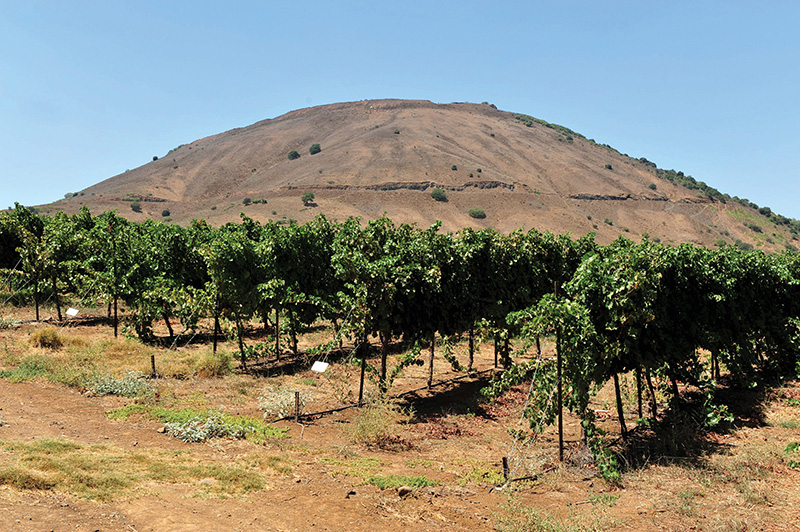
The vineyard and its fruit are used in Song of Songs as a symbol of fertility and delight.
© ChameleonsEye.
Vow A binding promise made to God while awaiting God’s help (Gn 28:20; Nm 21:2; 1 Sm 1:11). When God’s answer comes, worshipers fulfill their vows by performing what they have promised (1 Sm 1:21; Ac 21:23–24).
Mosaic regulations address how and by whom vows are to be implemented (e.g., Lv 7:16; 22:17–25; 23:38; 27:2–11; Nm 30; Dt 12:5–28), including the “Nazirite vow” of radical separation to God (Nm 6:1–21; cf. Jdg 13:2–5; Ac 18:18). Lament psalms connect vows with the outcry to God and portray their fulfillment in thank offerings that respond to God’s deliverance (Pss 50:14–15; 56:12–13; 66:13–15; cf. Jb 22:27; Jnh 2:9). Since vows are intended to distinguish God’s faithful worshipers (e.g., Ps 116:14, 17–18), Scripture condemns rash or unfulfilled vows (Nm 30:2; Dt 23:21–23; Pr 20:25; Ec 5:5–6; cf. Jdg 11:30–39). Some vows are made insincerely (2 Sm 15:7–8; Pr 7:14) or to idols (Jr 44:25).
Wadi A ravine, gorge, valley, or streambed, sometimes steep, in an arid region that is dry except during rainy season (1 Kg 17:7; 2 Kg 3:17; Jb 6:17), when it becomes susceptible to torrential, life-threatening flash flooding (Jb 6:15; Jr 47:2). Job compares his fickle friends to a wadi (Jb 6:15–20).
Watchman The watchman was stationed on the city wall or in a watchtower. He was to identify potential enemies approaching the city and alert the city’s inhabitants by blowing a trumpet (Jr 6:17; Am 3:6). It was the duty of some watchmen to inform the king of any suspicious person approaching the city wall (2 Sm 18:24–27). Just as the watchman warned of potential danger so that people could prepare themselves, so the prophet was to warn of impending judgment on the unrighteous (Ezk 33:1–11).
Water Water is mentioned extensively in the Bible due to its prevalence in creation and its association with life and purity. The cosmic waters of Gn 1 are held back by the sky (Gn 1:6–7; cf. Pss 104:6, 13; 148:4). God is enthroned on these waters in his cosmic temple (Pss 29:10; 104:3, 13; cf. Gn 1:2; Ps 78:69; Is 66:1). These same waters are released in the time of Noah (Gn 7:10–12; Ps 104:7–9).
Water is also an agent of life and fertility and is therefore associated with the presence of God. Both God himself and his temple are described as the source of life-giving water (Jr 2:13; 17:13; Jl 3:18; cf. Is 12:2–3). Ezekiel envisions this water flowing from beneath the temple and streaming down into the Dead Sea, where it brings life and fecundity (Ezk 47:1–12; cf. Zch 14:8). The book of Revelation, employing the same image, describes “the river of the water of life, clear as crystal, flowing from the throne of God and of the Lamb” (Rv 22:1). The Gihon spring in the City of David may also be associated with the Jerusalem temple (Ps 46:4; cf. Gn 2:13).
This OT imagery forms the background for Jesus’s teaching regarding eternal life in the writings of the apostle John. Jesus claims to be the source of living water, and he offers it freely to everyone who thirsts (Jn 4:10–15; 7:37; Rv 21:6; 22:17; cf. Rv 7:17). This water, which produces “a well of water springing up” in the believer for eternal life (Jn 4:14), is the work of the Holy Spirit in the believer (Jn 7:38–39).
Water is also described in the Bible as an agent of cleansing. It is extensively employed in purification rituals in the OT. In the NT, the ritual of water baptism signifies the purity and new life of the believer (e.g., Mt 3:11; Mk 1:8–10; Lk 3:16; Jn 1:26; 3:23; Ac 8:36–39; 1 Pt 3:20–21).
Finally, the NT also reveals Jesus as the Lord of water. He walks on water (Mt 14:28–29; Jn 6:19), turns water into wine (Jn 2:7–9; 4:46), and controls water creatures (Mt 17:27; Jn 21:6). Most important, Jesus commands “the winds and the waves, and they obey him” (Lk 8:25; cf. Ps 29:3).
Wheat Wheat was a major crop in Palestine throughout biblical times and was the most important crop during the patriarchal times (Gn 30:14). Wheat is a winter crop that was sown by hand in November or December; it was ready for harvest in May and was commemorated by the Festival of Weeks. Between the time of the late monarchy and the time of the NT, wheat was not only a food source but also a source of export income (Am 8:5). Wheat can be eaten in a variety of ways and was often used, ground into fine flour, as an offering at the tabernacle and temple (Lv 2:1; Ezr 6:9). In the NT, wheat is used to symbolize the good produce of the kingdom of God (Mt 13:24–31; cf. 3:12).
Wheel There is no mention of wheels in the NT, while four different types of wheels are described in the OT. They include a potter’s wheel, a chariot wheel, a wheel used for processing grain, and the wheel referred to in Ezekiel’s theophany. The potter’s wheel was a simple device for creating pottery that was symmetrical and strong. Jeremiah observed a potter working with a pottery wheel (Jr 18:3). Chariot wheels may have been invented by the Sumerians and were a common part of warfare during most of the OT. These wheels were either a solid wheel made of two or three planks of wood held together with wooden pegs or the more common wheel-and-spoke assembly. The spoke assembly was favored as iron and other metal technology was developed (Ex 14:25). This sort of wheel also functioned in the temple to hold the lavers (1 Kg 7:30–33). Wheels also were used to crush grain in order to separate the husk from the harvested grain, to grind grain into flour, and to extract oil from olives (Is 28:28). There is much speculation about the wheels in Ezekiel’s visions, which include the enigmatic description of a wheel intersecting a wheel (Ezk 1:15–16). It is clear from this description that the wheels are intended to guide a vehicle that can go in any direction instantly, but nothing else is known about them.
Winepress A mechanical device that extracts juice from grapes for use in making wine. Winepresses in ancient Israel were hewn from bedrock to form a flat surface for treading. They consisted of a pair of square or circular vats arranged at different levels and connected by a channel. The vat in which the grapes were trodden was higher and larger than its deeper counterpart into which the juice flowed from the press.
The vintage season was a joyous occasion accompanied by celebrating and feasting as family members trod the grapes. Thus, the imagery of a winepress overflowing with new wine often stands for divine blessing (Pr 3:10; Jl 2:24), and the lack of new wine is a picture of divine judgment (Jb 24:11; Jr 48:33; cf. Is 16:10). The metaphor of treading the grapes in the vats connotes divine destruction and judgment (Jl 3:13; Is 63:3). This metaphor is used climactically in Rv 14:19–20; 19:15, where the winepress is identified with divine wrath and the juice with bloodshed.
Winnowing Fork A tool resembling a shovel or a fork that was used in the winnowing process. The winnowing fork (Jr 15:7; “shovel,” Is 30:24; Mt 3:12; Lk 3:17) was used to throw the grain into the air to allow the chaff to blow away while the heavier grain settled.
Wisdom As a divine attribute, wisdom signifies that God always wills the greatest goals, and the best means to achieve those goals, for his own glory and his people’s blessing. Yet, wisdom is not mere efficiency, a calculated and streamlined process designed solely for greater productivity. God employs wisdom in creating the world (Ps 104:24–25; cf. Pr 8:22–31) and in designing salvation, though to humans his wisdom appears as foolishness (1 Co 1:18–31). Through the church God reveals his wisdom to heavenly beings (Eph 3:10). In a secondary sense, wisdom is a human attribute reflective of divine wisdom, obtained through prayer (Jms 1:5) and Scripture (Ps 119:99).
Witness One common meaning of “witness” in the OT relates to someone who gives legal testimony and to the legitimacy of that testimony (Nm 35:30; Dt 17:6; 19:15–16, 18; Pr 12:17; Is 8:16, 20). Throughout the NT the term occurs primarily in the context of someone bearing witness—especially God—or testifying to something (Rm 1:9; 2 Co 1:23; Php 1:8; 1 Th 2:5, 10), though it also has a forensic dimension in regard to one who establishes legal testimony (e.g., Ac 6:13; 7:58; 2 Co 13:1; 1 Tm 5:19; Heb 10:28), especially regarding what one has seen, such as witnesses to the resurrection (Ac 1:22; 1 Co 15:3–8). This forensic aspect of witness appears in the Gospel of John, whose author “testifies to these things” (Jn 21:24).
The people of Israel were also called to be God’s witnesses to the nations (Is 43:10; 44:8) and to be a light to them (Is 49:6). The NT continues the concept that the people of God are to be God’s witnesses. John the Baptist is commissioned to testify to the light (Jn 1:7). Jesus himself is the exemplar of a “faithful witness” (Rv 1:5). And his followers, whom he has designated as “the light of the world” (Mt 5:14), are then called to bear witness to the ends of the earth (Ac 1:8).
Throughout Revelation there resides a direct link between Christians bearing witness and suffering as a consequence (e.g., Rv 2:13; 11:1–12). It is this association of persecution and martyrdom that likely leads to the second-century employment of “martyr” (from the Greek word for “witness”) as a designation for those who bear witness to Christ to the point of death.
Word “Word” is used in the Bible to refer to the speech of God in oral, written, or incarnate form. In each of these uses, God desires to make himself known to his people. The communication of God is always personal and relational, whether he speaks to call things into existence (Gn 1) or to address an individual directly (Gn 2:16–17; Ex 3:14). The prophets and the apostles have received the word of God (Dt 18:14–22; Jn 16:13), some of which was proclaimed but not recorded. The greatest revelation in this regard is the person of Jesus Christ, who is called the “Word” of God (Jn 1:1, 14).
The psalmist declares God’s word to be an eternal object of hope and trust that gives light and direction (Ps 119), and Jesus declares the word to be truth (Jn 17:17). The NT accentuates the intimate connection between the word of God and God himself. As the “Word” of God, the eternal Lord Jesus Christ took on flesh and blood so that we might see the glory of the eternal God (Jn 1:1–18; 1 Jn 1:1–4). The sovereign glory of Christ as the Word of God is depicted in the vision of John in Rv 19:13. As the Word of God, Jesus Christ gives us our lives (Jn 1:4; 6:33; 10:10), sustains our lives (Jn 5:24; 6:51, 54; 8:51), and ultimately renders a just judgment regarding our lives (Jn 5:30; 8:16, 26; 9:39; cf. Mt 25:31–33; Heb 4:12).
Works In the most generic sense, “works” refers to the products or activities of human moral agents in the context of religious discussion. God’s works are frequently mentioned in Scripture, and they are always good (e.g., Gn 2:2–3; Ex 6:6; Pss 104; 111:9; Is 40:28; 42:5; Rm 8:23; Heb 1:3). Human works, therefore, should be in alignment with God’s works. Works in the Bible usually reflect a moral polarity: righteous or unrighteous.
Explicitly in the NT (Jn 6:28–29; Heb 11:6) and often implicitly in the OT (Is 57:12), faith is the condition for truly good works, since all humankind is under sin (Rm 3:9) and no person is righteous (Rm 3:10–18; cf. Is 64:6). God elects out of his mercy, not out of human works (Rm 9:12, 16; Ti 3:5). Works cannot save, even works of the Mosaic law (Rm 3:20–28; Gl 2:16; 3:2); salvation is a gift to be received by faith (Eph 2:8–9; 2 Tm 1:9).
Wormwood A plant common to the Middle East that has a bitter taste and can be toxic to other plants (Pr 5:4). It was also used in eradicating intestinal worms. Its bitter taste is referred to in passages speaking of sorrow, lament, or judgment (Jr 9:15; 23:15; Lm 3:15, 19; Am 5:7; 6:12). In Rv 8:10–11 the great, blazing star that falls from the sky is named “Wormwood.”
Wrath of God In both Testaments, God often is said to be angry with individuals or nations. Although God is changeless (Mal 3:6), he interacts in a personal way with a time-bound world. There is something in God’s anger to which human anger is analogous, though God’s anger is not identical to ours (Hs 11:9). God is slow to become angry; that is, his anger is a deliberate response (Ex 34:6, a text with numerous echoes) and may also be short-lived (Ps 30:5; Mc 7:18).
God’s anger against Israel in the wilderness is noteworthy (Heb 3:10, 17). The apostasy with the golden calf (Ex 32:10–12), the complaining (Nm 11:1, 33), and the failure to enter the promised land following the report of the spies (Nm 32:10–11) all provoke God to anger. Failure to heed God’s word (Zch 7:12) or that of his prophets (2 Ch 36:16), neglect of his worship (2 Ch 29:6–8), and intermarriage with idolaters (Ezr 9:14) are behaviors that incur the wrath of God.
God’s anger is directed against individuals particularly for failures of leadership (e.g., Ex 4:14; Dt 1:37; 1 Kg 11:9–11). God’s anger often is directed against the Israelite and Judean kings for idolatry (2 Ch 25:15) or for failure to remove idolatrous high places (2 Kg 23:19).
Jesus declares that disobedience to God’s Son brings upon one the wrath of God (Jn 3:36; cf. Ps 2:5, 12). God’s wrath is revealed against all forms of ungodliness and its tendency to suppress the truth (Rm 1:18). Those who demonstrate their disobedience to God or his truth will be subjected to his anger (Rm 2:8; Eph 5:6; Col 3:6).
The judgment that follows as a consequence of God’s anger being aroused takes the form of the withholding of God’s covenant favor (Ps 95:11; Is 54:8) or the implementation of his covenant curses (Dt 29:27). God’s anger is beyond human ability to endure (Ps 76:7). God’s wrath becomes particularly associated with a coming day of wrath at the end of the age, when God’s justice will be powerfully displayed (Dn 8:19; Zph 2:3; Lk 21:23; Rm 2:5; Rv 6:17).
The NT presents the ultimate remedy for God’s wrath in the person and work of Jesus Christ (Rm 5:9; 1 Th 1:10; 5:9). The use of “atonement” language (Rm 3:25; Heb 2:17; 1 Jn 2:2) is classically understood in terms of the need for God’s wrath to be satisfied. In that case, it is specifically the cross of Christ that ultimately deals with God’s righteous anger against sinners.
Yahweh The name Yahweh, derived from the Hebrew consonants yhwh (known as the Tetragrammaton [“four letters”]), is the personal name of God. In English this name is usually represented in small capital letters as “Lord” (e.g., Gn 15:1; Ex 6:3) or “God” (e.g., Gn 15:2). “Lord” without the small-capital format signifies a title, not a personal name, in Hebrew: adonay (“lord, master”). In the intertestamental period, reverent Jews became reluctant to speak the divine name, and so they substituted adonay or some title for yhwh. In the Middle Ages, when vowels were introduced to the Hebrew text, those belonging to adonay were inserted into yhwh, reminding readers to speak the title rather than the name. English speakers, however, substituting j for the y, vocalizing w with a v sound (both under the influence of German), and reading the consonants and vowels together, invented from this an artificial word that no ancient had ever pronounced: “Jehovah.”
Yoke A wooden crosspiece fastened to the neck and shoulders of one or, more often, two animals (e.g., 1 Sm 6:7) to facilitate labor. Yokes were also used by individuals to balance a load suspended from the shoulders (Nm 4:10, 12; 13:23). As such, the yoke also functioned as a symbol of subjection (Gn 27:40; Lv 26:13; Dt 28:48; Jr 27:2–7; Gl 5:1; 1 Tm 6:1), sometimes of joint labor (2 Co 6:14; Php 4:3), and is closely associated with pairs of animals (Lk 14:19; 1 Sm 11:7).
Zadok The son of Ahitub, and a descendant of Aaron (1 Ch 6:1–15, 53), Zadok is a priest during the time of David and becomes high priest during the time of Solomon. Initially, Zadok is mentioned alongside the high priest Abiathar (2 Sm 8:17). Both men serve as spies for David when Absalom, the king’s son, takes Jerusalem during a civil war. The priests’ sons, Ahimaaz and Jonathan, are runners reporting to David. Toward the end of David’s life, Abiathar supports Adonijah’s bid for the kingship, so when Solomon becomes king, Abiathar is removed from the high priesthood.
Zadok anoints Solomon as king and becomes the sole high priest, fulfilling a prophetic word uttered against the house of Eli years before (1 Kg 2:35; cf. 1 Sm 2:27–36). In his vision of a future temple, Ezekiel often references the priestly line of Zadok (Ezk 40:46; 43:19; 44:15; 48:11).
Zealots A revolutionary religious group made up of junior priests from the Jerusalem temple and others who were anti-Roman. Their activities precipitated the war with Rome that led to the destruction of the temple in AD 70. Simon, one of Jesus’s disciples, is identified as a “Zealot” (Mt 10:4; Mk 3:18; Lk 6:15; Ac 1:13), but it is not known whether he had been a member of a revolutionary group or whether this was a general term for zeal for his God and nation (cf. Ac 21:20).
Zerubbabel A Jewish leader immediately after the exile who in 539/538 BC or soon after accompanied Jewish exiles back from Babylon to Jerusalem (Ezr 2:1–6:22). Zerubbabel was the Persian-appointed governor of Judah (Hg 1:1). He was a Davidic descendant, through Shealtiel or Shealtiel’s brother Pedaiah, another of Jehoiachin’s sons (1 Ch 3:19). The prophets Zechariah and Haggai both speak of Zerubbabel in messianic terms (e.g., Zch 4:1–14). Eventually, he simply disappears from the historical record. Some speculate that the Persians removed him because of the high expectation that surrounded him as a son of David.
Ziggurat An important architectural form in the ancient Near East, the ziggurat was a stepped structure made of mud brick and built on a raised platform. Similar to a pyramid, except with a platform at the top, the ziggurat was thought to span heaven and earth and as such was used as an artificial mountain for the worship of deities. Many believe that the tower of Babylon was a ziggurat (Gn 11:1–9).
Zion A designation for the city of Jerusalem or for the mountain on which the city is built (Is 24:23; Zch 8:3). Before David captured the city, Jerusalem was held by the Jebusites. But after David took the city and made it his capital, it bore the title “City of David” and was also called “stronghold of Zion” (2 Sm 5:5–9). Later, Solomon built the temple there, making it also the religious center of the nation (1 Kg 8:1–14). Zion is said to have towers, ramparts, and citadels (Ps 48:12–13), and Jeremiah prophesies its razing (Jr 26:18).
Since the God of Israel has a special relationship with Israel and its king, God’s purposes for the world often are couched in terms of Mount Zion. God sets his king on Mount Zion (Ps 2:6) and has established Zion “forever” (Ps 48:1–8). There God is said to reign (Is 24:23). Nevertheless, the king on David’s throne and the inhabitants of Zion can be censured by God and found wanting (Am 6:1). In fact, because God identifies with the city, the people bear responsibility to represent his character. Thus, the time comes when Zion is indeed “plowed like a field” (Mc 3:12). After God’s people spend time in exile, God brings them back to Zion (Ps 126). In the NT Zion has become a symbol of the present heavenly dwelling place of God, entered into by faith (Heb 12:22), and the future destiny of the saints (Rv 14:1).
Zophar The third of Job’s three friends who sit with him while he is in misery (Jb 2:11). He is known to have the harsher, more philosophical stance in terms of theology, as he takes a very abrasive realist position in regard to Job’s situation. He is said to be a Naamathite, which probably places his origin east of the Jordan River.