6. THE DAY OF GOD’S GLORY (35:1–10)
35:1–7. The discussion in Is 35 complements that of the day of the Lord’s vengeance (35:4; cf. 34:8). Here the prophet portrays the glories that await the people of God. Whereas the “day of vengeance” (34:8) is characterized by the sword and desolation, the day of the Lord’s deliverance is characterized by his glory and sustenance. Isaiah brings out the nature of the glorious kingdom, which will affect all creation—people as well as nature itself.
Although the country has been laid desolate like the wilderness because of God’s judgment, the desolation will give way to the glory of Lebanon and the majesty of Carmel and Sharon (35:1–2). There will be rejoicing, gladness, blossoming, and shouts of joy. The people will see the glory of their God reflected in the restoration of nature. They will also experience a sense of renewal, as he assures them that their salvation includes a salvation from their enemies and restoration (35:3–4). There is no place for fear in God’s kingdom.
Restoration comes to those who are in need: the blind, the deaf, the lame, and the mute (35:5–6a). The people who rejected God’s way and suffered the consequences in judgment and alienation will again be the objects of his unmerited favor. They, like Israel of old, will see God’s glory; experience his presence, protection, and guidance; and taste of his provisions in the wilderness (35:6b–7).

“The splendor of Carmel and Sharon” (Is 35:2) is part of the vision of the return to Zion. This aerial view shows the fertile Sharon plain, located between Joppa and Mount Carmel.
35:8–10. The word of promise pertains to the postexilic community following the Jews’ return to Palestine from Babylon and Persia. Yet the language of these verses transcends the experience of any ordinary road. The highway is characterized by two qualities: holiness and joy. Its use is limited to those who are holy and have been cleansed from defilement (35:8). The people who walk in it are described as “the redeemed” (35:9), those who are in right relationship with God. The highway is the place where God brings full deliverance to his people and where he supplies their physical and spiritual needs. Hence, those who walk on the highway will be full of joy as they march toward “Zion” (35:10). The redemption of which the prophet speaks will culminate in that day when Jesus comes to restore the present earth to himself.
7. HEZEKIAH (36:1–39:8)
These chapters are virtually identical to the account recorded in 2 Kg 18:13–20:19 (see commentary there). The historical background of Is 36 and 37 lies in the events of 701 BC, when the forces of Sennacherib devastated Judah and her fortified cities. Several years prior to this (705–702 BC), Hezekiah became sick. His illness and prayer are recorded in Is 38, while his foolish act of revealing the royal treasures to the Babylonian envoys is found in Is 39.
A. Challenge and deliverance (36:1–37:38). The pious response of Hezekiah to the intimidation of the Assyrian royal spokesman is also recorded in 2 Kg 18:13–19:37. Isaiah omits the account of Hezekiah’s submission and payment of tribute (2 Kg 18:14–16). Apparently the canonical emphasis in Isaiah is on the Assyrian pride, the godly response of Hezekiah, and God’s miraculous deliverance.
36:1–22. Sennacherib’s royal spokesman accuses Hezekiah of overtly rebelling by forming an alliance with Egypt (36:4–6). He attempts to undermine confidence in the Lord by playing down Hezekiah’s reforms, threatening the people with intimidation, falsely arguing that the Lord is not able to deliver them, and claiming that the Lord is on his side (36:7–10, 13–20). Hezekiah’s officers report the threats to Hezekiah with their clothes torn as a token of mourning (36:22). They themselves have not answered the challenges, in accordance with the royal command (36:21).
37:1–38. The historical reconstruction of the international events that led to Jerusalem’s deliverance is a complex problem. The trust of the king (37:4), Isaiah’s restraint from saying, “I told you so” (37:5–7), the prayer of Hezekiah (37:14–20), and the word of the Lord through Isaiah (37:21–35) reveal remarkable wisdom on the part of Hezekiah and Isaiah and the great concern of the Lord for the Davidic kingship and Jerusalem. This is fully consistent with Isaiah’s emphases on Zion and God’s protection of his people against foreign invaders (chaps. 28–33).
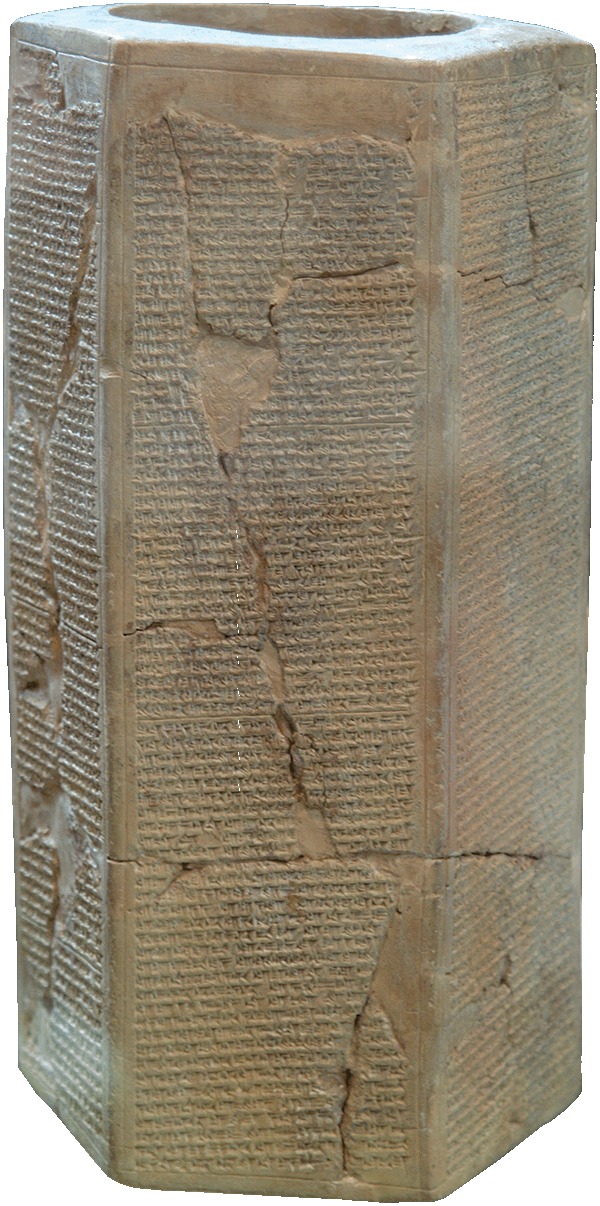
This clay prism is one of several that are inscribed with accounts of Sennacherib’s military campaigns. The disastrous defeat at Jerusalem isn’t mentioned, but the account does not claim that Jerusalem was captured either. It only mentions his victories over the surrounding cities. Of Hezekiah in Jerusalem, the prism states, “Himself [Hezekiah] I made a prisoner in Jerusalem, his royal residence, like a bird in a cage.”
© Baker Publishing Group and Dr. James C. Martin. Courtesy of the Israel Museum. Collection of the Israel Museum, Jerusalem, and courtesy of the Israel Antiquities Authority, exhibited at the Israel Museum, Jerusalem.
B. Hezekiah’s illness (38:1–22). Hezekiah’s psalm of lament and thanksgiving (38:9–20) has no parallel in 2 Kings. The text of the psalm is similar in content to Jonah’s prayer (Jnh 2) and Job’s speeches (e.g., Jb 7).
In lamenting his early death, Hezekiah compares it to pulling down a tent and to material taken off the loom before being completed (38:12). Like a bird, he made a noise in his anguish (38:14), but it seemed as if the Lord, like a lion, was intent on mauling him to pieces (38:13).
In the restoration from sickness, he experiences the joy of health and God’s never-failing love (38:15–17). In response to God’s kindness, he vows to walk humbly before God, to praise him, and to declare to the next generation the “faithfulness” of the Lord (38:18–19).
C. Envoys from Babylon (39:1–8). The account of the Babylonian messengers sent by Merodach-baladan parallels that of 2 Kg 20:12–19. It functions here as a transition to the oracles of comfort (chaps. 40–48), which presuppose the exilic situation of Judah in Babylon. Because of Hezekiah’s pride in his possessions (39:2), Isaiah proclaims God’s judgment of exile into Babylon on another generation (39:5–7). Hezekiah’s generation will escape that judgment, but the exile of Judah is inevitable.
8. THE BEGINNING OF RESTORATION (40:1–48:22)
A. Prologue (40:1–11). Isaiah 40:1–11 gives the context for reading chapters 40–48. The people of God have gone into exile because of their sins, but Isaiah affirms that the exile will end. The exile is therefore an expression of God’s judgment. It is first a just judgment; second, it is a form of restitution for damages. Israel and Judah not only have abandoned God but also have detracted from his glory by giving it to idols. The exile was a time in which God’s people could reflect on what they had done; this period of reflection was a way of paying the damages in order to be restored to fellowship with the Lord. Verse 2 alludes to the OT laws of restitution (Ex 22:4, 7, 9).
40:1–5. At God’s appointed time a proclamation of “comfort” comes to his people (40:1). The prophet and those who follow him are charged with giving comfort to God’s people. The Lord will come to help his own. The content of the message pertains to the coming era of the renewed relationship between the Lord and his people, an era in which forgiveness is proclaimed and experienced (40:2).
The announcement of the coming salvation takes place in the desert (40:3), representative of the experience of alienation. Precisely where the people of God are in need of deliverance comes the announcement to them that the Lord is coming. All of nature prepares for his theophany, making a giant road through valleys and across mountains (40:4). The promise is given that all humanity will see the “glory of the LORD” (40:5).
The Gospel writers identify John the Baptist with the preparatory “voice” of Is 40:3 (Mt 3:3; Mk 1:2–4; Lk 3:2–6).
40:6–11. The prophet again hears a voice commanding him to speak of what he has seen (40:6–8). He explains the vision in terms of blessing and judgment. The judgment of the Lord will come upon all humanity, because they are nothing but grass and like the flowers of the field—here today and gone tomorrow. When the sovereign Lord comes in power to rule, the nations will be like nothing in his presence.
The emphasis on promise is more obvious. The “word of our God remains forever” (40:8)—this is the word of promise pertaining to the coming era of restoration. “Good news” must be proclaimed to Zion so that everyone may hear (40:9). The good news is focused in the presence of the Lord: “Here is your God!” He comes with power against the adversaries and with a reward for his own (40:10). The divine warrior delivers and leads his own people like “lambs” (40:11).
B. Disputations (40:12–31). The prophet raises five questions in the context of the proclamation of the establishment of God’s kingship. These five questions, rhetorical to a large extent, are a literary device to remove any doubt from the minds of the godly as to the certainty of the establishment of the kingdom and to instill a sense of awe for God himself.
40:12–17. By means of the questions introduced by the word “who” (cf. Jb 3:8–22), Isaiah affirms that Yahweh alone is the Creator God (40:12). He needs no counselors (40:13–14). His sovereignty extends to all of creation, and especially over the nations, which are like a “drop in a bucket” or like a “speck of dust on the scales” (40:15–17).
40:18–20. The Lord is unique in that no one can compare him with anything the human mind may imagine (40:18). He is not to be likened to idols, which are powerless and fully dependent on human craftsmanship (40:19–20).
40:21–24. The God of Israel is seated “above” the earth (40:22). He is the great King, the sovereign Judge over all the world (40:23). The Lord himself oversees all that the nations do. At his time he will bring the nations to judgment. Even as grass is scorched and dried up, so God will bring the nations to nothing (40:24).
40:25–26. Yahweh is the Creator God whose might is revealed in the stars of the sky. The Babylonians deified the stars and constellations, but they too are the work of the Creator God.
40:27–31. The people are disheartened. They wonder whether God is truly able to establish his kingship. God may be the Creator of heaven and earth, know all of his creation by name, and hold the judges and rulers of this earth accountable for their actions, but does he still have concern for his people (40:27)?
The prophet affirms God’s concern for their situation by focusing their attention on God’s nature. He is the everlasting God, Yahweh, the covenant God, the Creator of heaven and earth (40:28). He tirelessly works out his plan of salvation for his people. Their restoration is based on his nature. He will renew the strength of his people, but this is contingent on their willingness to submit themselves to him (40:29–31).
C. Deliverance (41:1–44:23). The message of consolation (41:8–20) is enclosed by two arguments against the nations (41:1–7, 21–29). These arguments are addressed particularly to Israel to assure it that the nations are subject to God’s power.
41:1–7. The nations are called to come before God’s tribunal (41:1). Through a series of questions and answers, God announces the imminence of the judgment for the rebellious nations who are foolishly hoping that their idols will protect them. The instrument of God’s judgment here is ambiguous (41:2; cf. 41:21).
God answers his own question (41:4). The nations respond foolishly to the sovereignty of Israel’s God. They renew their commitment to idols. The prophet mocks those involved in the manufacture of idols. They take the raw materials, beat them smooth with a hammer, and then solder them together (41:7). The irony in this passage highlights the folly of dependence on objects made by humans for protection against the power of the nations and especially against the power of Yahweh, the God of Israel.
41:8–20. Israel will be restored to her former status because, as Redeemer, the Lord will be loyal to his “servant” (41:8). Therefore, God’s people need not fear the nations. Though Israel has been guilty of many offenses and has consequently gone into exile, it is still God’s servant because of Abraham and Jacob. The election and calling of God are freely given, and his love extends to “the ends of the earth” (41:9).
The depth of God’s care and the strength of his might comfort his disheartened people. He gives strength and will remove any obstacle or opposition (41:10–13). He is Yahweh, the Redeemer, the Holy One of Israel (41:14b). Although his people are as insignificant as a “worm” by themselves (41:14a), they will become like a “threshing board,” pulverizing and crushing any obstacle (41:15–16). Their fear will turn to great joy in the Holy One of Israel.
Yahweh the Redeemer is able to meet all the needs of his people, whether spiritual or physical (41:17). He will do everything in order to restore his people to himself. The verbs in 41:18–19 (“I will open . . . I will turn . . . I will plant . . . I will put”) express some of the many ways in which the Lord shows concrete concern for his people. He will not forsake them in their need. Instead, he will provide the thirsty with water and will change conditions so that his people will see the evidences of his love (41:20).
41:21–29. The argument of 41:21–29 is a continuation of the first section of the chapter (41:1–7). The deities of the nations are unable to do what God does (41:21–23). He can declare from the beginning what is going to happen. He can give signs. He has power over all nations. He can bring adversity as well as prosperity. By contrast, the gods of the nations are powerless (41:24). They cannot respond. Therefore, the nations must know that as long as they depend on their gods they are actually without protection.
As in 41:2, one who is unnamed will be raised up by the Lord, the God of Israel, to bring about God’s plan (41:25). The Lord, who knows the future, reveals the good news of his accomplishments in history according to his plan for his own people (41:26–27). The idols are “wind and emptiness” (41:29).
The identity of the servant of the Lord has long been a subject for discussion. In this context several arguments favor identifying the servant first with Israel (see 41:8–9) and then in a greater way with the Messiah, in whom the perfection of servanthood is found. The language about the election, calling, and particular tasks of the servant fits in very well with the OT language about Israel. [The Servant Songs of Isaiah]
42:1–4. The servant is described as one in whom God has delight and whom he has elected (42:1). The language of election is an affirmation of the servant’s continued existence and takes us back to the Abrahamic covenant, where God himself swore that he would be faithful to his covenant with Abraham’s descendants.
The description of the Holy Spirit being “on” the servant is an OT expression signifying a renewal of God’s presence, by which God’s servant is better equipped to serve him. The servant’s task is to bring “justice” to the nations (42:1, 4), which is identical to the purpose of the coming messianic king (9:7; 11:4). “Justice” here signifies neither religious nor legal practices but the rule of God on earth. The servant is tender, gentle, and faithful (42:2–3)—characteristics embodied also by Jesus Christ. The nations are waiting for their inclusion in the kingdom. The ministry of the servant will last until the fullness of the kingdom has been established (42:4).
42:5–9. The Creator God has called the servant to be a light to the nations (42:5–6). He will make the servant’s mission a success by extending the covenant to the Gentiles. The messianic nature of Israel is to so affect the earth that all nations will be blessed through it and will join with it in expressing their faith in the Lord.
God’s jealousy for his glory ensures his continued presence with his people (42:8). He will open the eyes of the blind, free the prisoners, and do whatever is necessary to establish his kingdom on earth (42:7), in fulfillment of his word to the patriarchs (Gn 12:1–3) and through the prophets. The restoration of the Jews and the inclusion of the Gentiles express the new age planned and revealed beforehand (42:9).
42:10–13. Isaiah leads the godly community, including the Gentiles, to praise God, the victorious king (cf. 44:23; 49:13; 52:9). The nations are called on to join together with the godly of Judah to sing “a new song” (42:10). Even the people in the wilderness of Kedar and in the Edomite city of Sela are invited to join in praise of the God of Israel (42:11). His people praise him because the Lord rouses himself for battle like a mighty warrior (42:13; cf. Ex 15:3, 16). Zealous for his kingdom, he will not allow enemy nations to trample his rights.
42:14–17. God has been patient with the nations for a long time (42:14a). Now he is ready to act on behalf of his people. When he comes, nothing can stop him. He is like a woman in labor who must give birth (42:14b). He has the power to destroy and to make things desolate, yet he also has the power to redeem his people (42:15–16). His people are the blind who need light and guidance. The Lord will build his kingdom while judging the nations and demolishing paganism (42:17).
42:18–43:7. Israel is a blind and deaf servant (42:18–20). Because of his unwillingness to respond to God, he was oppressed and exiled as an expression of God’s anger (42:21–25). Israel’s exile was evidence of God’s rejection, but his redemption is an expression of his love.
Israel’s formation was not a mistake. God elected (“created,” “formed”) Israel (43:1). He made them to be his people by calling them to be his. He loves his people and will do anything to redeem them. Regardless of how difficult the circumstances or how far he has to bring his people, he is with them (43:2, 5). He is their God by covenant, the Holy One who has consecrated them, their Redeemer (43:3a). He will give up nations such as Egypt, Cush (Ethiopia), and Seba (a region south of Ethiopia) in exchange for the remnant of his people (43:3b–4), his “sons” and “daughters,” who are called by his name (43:6–7). Thus, both the experience of rejection and the affirmation of redemption are the outworking of God’s will and are expressions of his fatherly concern for his children.
43:8–13. Over against the magnificent portrayal of the future of God’s people is present reality: Israel is still blind and deaf (43:8). In spite of this condition, however, God still has a future for them. They will be witnesses to his majesty and authority over the nations (43:9–10). He cannot use the nations for this purpose because they have given themselves over to idolatry (43:12). God’s people should know only Yahweh, having experienced his deliverance (43:11).
The phrases “I am he” (43:10, 13) and “I am God” (43:12) signify that only Yahweh, the God of Israel, is God. He is also the powerful Redeemer who has already shown his ability to his people. Yahweh as the God of his people has revealed himself by words as well as deeds so that all might know that he is the only true God.
43:14–21. In their need God reminds his people repeatedly that he is their Redeemer, the Holy One of Israel, “the LORD” (Yahweh), their king (43:14a, 15). In their self-doubt, they must never doubt him. The God who redeemed his people from Egypt (43:16–17) will bring down Babylon and deliver his people from exile (43:14b). The old, old story of the Passover and the miraculous journey through the Red Sea is dwarfed in comparison with “something new” (43:18–19a). This “something new” refers to the new era of forgiveness, restoration, and God’s presence. The servant of the Lord, the people whom he has chosen, will be refreshed. The rivers of water speak (43:19b–20) not only of the spiritual refreshment but also about the manner in which God will take care of the physical needs of his people in bringing them out of exile and into the promised land. The very purpose of the deliverance is that the people may praise God upon experiencing the blessings of redemption and restoration (43:21).
43:22–28. God’s people do not deserve his love. They have failed to honor him as God by neglecting to present offerings and sacrifices (43:22–24). But the nature of God does not change. He is compassionate and gracious and ready to forgive his people (43:25; cf. Ex 34:6–7; Ps 103:3, 11–14). Because of God’s unchanging love, the prophet calls on the people to turn from their state of sin and return to the Lord.
From its beginnings, Israel has been a nation of sinners (43:26–27). Kings, priests, and false prophets rebelled against the Lord. Israel can in no way claim innocence in a case against God. Therefore, Israel has been destroyed and disgraced. God is vindicated in his judgment (43:28).
44:1–8. Regardless of Israel’s past, it is still the servant of the Lord (44:1–2). Its future lies in its election. Israel is transformed by God’s grace into a new creation, the nature of which is described in a threefold way. First, the Spirit of the Lord is poured on the people (44:3). The presence of the Spirit is an expression of God’s intent to use the people as his servants and to equip them for his service. Second, the blessing of God will rest more markedly on the people’s offspring (44:3–5). The very process of internal renewal affects generations to come. In contrast to the past generations of faithlessness (43:27), there will now be generations of faithful people, blessed by the Lord. Third, the covenant will be renewed not only with Israel but also with Gentiles who will call on the Lord and join in Israel’s heritage (44:5).
The postexilic Jewish community enjoyed the benefits of restoration from exile, resettlement in the land of Canaan, and the physical and spiritual blessings of God’s presence. This progressive restoration was intensified in the coming of the Messiah, who gives the water of life (Jn 4:14). Yet the final restoration of all things will bring with it the climactic fulfillment of these words.
Isaiah 44:3 mentions the gift of God’s Spirit, one of the spectacular features of the coming messianic era. Ezekiel 36:26–27 and Jl 2:28–29 add more detail to this prophecy, fulfilled in the NT on the day of Pentecost (Ac 2:1–21).
The certainty of the future of God’s people is guaranteed by his kingship. He is Yahweh, King of Israel, Redeemer, and Lord of Armies (44:6a). There is no god like him, because he foretells what is to come (44:6b–7). Since the God of Israel knows and controls the future, his people need not fear (44:8). God’s purpose for them will stand; they will be his witnesses.
44:9–20. How different are idols from the “Rock” of Israel! The prophet depicts the folly of idolatry in the form of a satire. Idols are, after all, the work of humans and are characterized by several human limitations. First, even the best artisans have human limitations (44:9–11). Second, idols are nothing more than creations fashioned by the best of human instruments (44:12–13). Third, idols are also limited by the materials from which they are made. They are made from wood, a material hardly appropriate for the production of precious objects (44:14–17). How can one distinguish which piece of wood is more appropriate for worship and which is to be used to kindle a fire?
Clearly the whole idol industry is the work of humans and is characterized by the physical limitations of human weaknesses, the instruments, and the material itself. The pursuit of idolatry is irrational and leads to irrationality. Idolatrous people will not be able to respond appropriately to the Lord because their eyes are shut and their hearts are hardened (44:18–20). They are given to immorality and idolatry and have no way of turning back.
44:21–23. This section closes with a restatement of the uniqueness of Israel’s God. The Lord has elected, called, and forgiven his people (44:21–22). He calls them to repent by returning to him, their Redeemer. The greatness of God’s forgiveness and love is brought out in a hymn in which nature is called on to rejoice in the outworking of God’s plan of redemption (44:23). Nature itself awaits the fulfillment of this plan and the revelation of the glory of God’s people.
D. The Lord’s sovereignty (44:24–47:15). 44:24–28. The Lord is the Redeemer and has the power to renew his people (44:24). God is the Creator of the heavens and the earth. However, he also re-creates everything in accordance with his purpose, making the earth habitable for his people—an integral part of their redemption. While in exile, Israel needed the reassurance that Jerusalem would be repopulated and rebuilt and that the temple would be restored (44:26).
The power of the Lord in creation, renewal, and redemption stands in stark contrast to the impotence of the practitioners of magic and divination. God overturns the signs of the diviners and negates the wisdom of the sages (44:25). In spite of all the Babylonian claims to wisdom and magical powers, he will raise up a foreign king, Cyrus the Persian, to initiate a new stage in the history of redemption (44:28). The postexilic era of reconstruction is a resumption of God’s redemptive activities, which will culminate in the new heavens and earth and in the new Jerusalem.
45:1–8. These verses develop the role of Cyrus in God’s redemptive plan. Cyrus has been raised up and empowered by the Lord to accomplish God’s kingdom purposes (45:1). He has been anointed for the particular purpose of accomplishing God’s work on earth. Therefore, it is even possible to call him “the anointed one,” a designation generally limited to the kings of Israel and Judah.
God’s purpose in raising up Cyrus is twofold. First, he will be raised up for the sake of Israel in order to be an instrument of redemption (45:4). Second, he will cause the nations to recognize that Yahweh, the God of Israel, is the only true God (45:6). He alone has power to change light into darkness, adversity into prosperity, and vice versa (45:7).
The very designations “I am the LORD” and “I am the LORD, who does all these things” (45:5–7) express the authority of the God of Israel in fulfilling his covenantal obligations and general governance of the earth. This indirect encouragement to Israel is to assure those living in darkness and those experiencing adversity that God has the power to reverse their situation.
In another hymn (45:8), the prophet rejoices in the salvation of the Lord, which is expressed in a temporal extension of his righteous rule. Cyrus is the instrument, but the Lord is the author of it all.
45:9–13. Isaiah then calls on the nations to present their argument in the very presence of God. Since they do not have confidence in the God of Israel, they have questioned what he is doing. God is the potter and humankind is nothing but clay in his hands (45:9). God’s particular concern with the earth extends to humanity at large (45:12).
The Creator God is the Redeemer God who will establish righteousness on earth, beginning with the restoration from exile and the rebuilding of Judah (45:13).
45:14–19. The nations—represented by Egypt, Cush, and Seba (45:14)—will seek the favor of God’s people, having witnessed in the events of history that God is present with them. It is likely that 45:15 continues their confession, as the nations have not known the God of Israel and express a desire to know the Savior of Israel. Israel’s salvation is of the Lord and is therefore lasting; idolatry brings only disgrace and ruin (45:16–17).
Yahweh, the Creator of heaven and earth, shows his peculiar interest in humankind by revealing that he created the earth to be inhabited (45:18). He will never destroy it. Therefore, he chose the descendants of Jacob and revealed himself to them (45:19). His word is open, righteous, and “right.” He has revealed his decrees, and their fulfillment confirms that he is victorious and faithful.
45:20–25. The survivors of God’s judgment are invited to judge for themselves. Idols cannot foretell or control the future (45:20). Only Yahweh, the God of Israel, is able to execute his righteous plans for redeeming his people (45:21). The nations must turn to the Lord and join freely in God’s salvation—or else under compulsion at the great judgment of the nations (45:22–23).
At the final judgment of God, all nations will be “put to shame” (45:24). “Shame” is that state in which one is without help, without escape, without God, and thus completely disgraced. The righteous will rejoice in the victory, glory, and praise that God will extend to them, and their descendants will be the beneficiaries of God’s goodness (45:25). They will find that God is truly righteous in that he brings about all his promises.
46:1–13. The fall of Babylon is first portrayed by the carrying off of its gods. Bel (Marduk) was god of the capital city of Babylon (46:1). The god of the city of Borsippa was Nebo, Marduk’s son, to whom belonged wisdom and learning. As their gods are being carried off, the people of Babylon make every effort to save them, but to no avail. The political power represented by Bel and the wisdom represented by Nebo will be unable to deliver the idols of Babylon, much less the people (46:2).
The inability of Babylon’s gods to save it stands in stark contrast to the power of the Lord. God has taken pains to carry and care for Israel, like a mother, and purposes to remain faithful (46:3–4). The Babylonian gods are incapable of hearing or delivering those who depend on them (46:6–7). Not so with Yahweh, who answers his people when they call on him in their distress.
Yahweh has revealed that he alone is God, the Creator, the planner and executor of everything that has taken place on earth (46:9–10). His plan includes Cyrus, who is compared to a “bird of prey” (46:11). The prophet concludes by calling on Israel to listen and respond to God because his salvation is near, though stubborn Israel does not deserve it (46:12–13). The future of God’s people is based on God’s full and free salvation. The Lord will be victorious.
The “former things” or “past events” in Isaiah (Is 41:22; 42:9; 43:9, 18; 46:9; 48:3; 65:17) usually refer to God’s great acts of deliverance back in Exodus.
47:1–7. Babylon is portrayed as a “virgin” who will lose her genteel, cultured life (47:1). Her status will be reduced to that of a slave girl who, scantily dressed, works with the millstones and grinds flour (47:2–3). The Virgin Daughter Babylon is symbolic of the whole empire. The judgment on Babylon is an expression of the vindication of the Redeemer and Holy One of Israel, who delivers his people from their oppressors (47:4).
Babylon is also portrayed as “mistress of kingdoms” (47:5). She ruled over the nations like a queen mother but showed no mercy to the subject nations (47:6). She showed no accountability to God as she ruled (47:7).
47:8–11. The fame of Babylon is a claim to autonomy, but also to deity. The language “I am” and “there is no one else” (47:8, 10) is the language usually reserved for Yahweh and his claim that he alone is God.
Although the Babylonians have used all kinds of magic spells to secure their future, sudden disaster will overtake them (47:9). Though Babylon has used her wisdom to plot military strategies and avert political and economic disasters, she cannot match the wisdom and power of God (47:10). A disaster has been planned, and there is no way Babylon can ward off the purposes and plan of God (47:11). Whereas Babylon prided herself on her ability to predict and prevent, the God of Israel suddenly overwhelms her in his judgment.
47:12–15. The prophet sarcastically urges the people to devote themselves a little more to their magic and sorceries: there may still be some answers forthcoming from the established Babylonian systems of divination (47:12). However, these systems will prove ineffective against the God of Israel. The prophet moves on to another well-developed area of Babylonian religion: astrology (47:13). With strong irony, he calls on Babylon to turn to the astrologers and the many counselors, that they may be able to save Babylon from her fall. The counselors and astrologers are compared to stubble, which is quickly burned and of little use (47:14–15).
The prophet began by portraying Babylon’s gods being carried into exile (46:1–2) and concludes with the inability of her wise men, astrologers, and diviners to help the nation out of her great trouble. Her religious, political, and intellectual systems will completely break down. The prophet has contrasted the failure of human systems over against the God who is able to deliver and establish his eternal kingdom.
E. Proclamation of restoration (48:1–22). God has planned everything that has happened and will happen on this planet. However, the events themselves are directed toward the creation of a new era. Though God’s people may fail, he himself remains faithful to introduce and bring in that new era, which is not far off. Instead, like the judgment, it is always near. The restoration of the Jewish people from exile introduced this era in a grand way. Its future lies hidden in the revelation of God’s name, which will be manifested in the glory, righteousness, and salvation of his people.
48:1–11. Though God’s people claim to lean on him, swear by him, and point to Jerusalem as the holy city (48:1–2), they do not show their covenant relationship in their daily lives. They claim to belong to God’s “city,” the city of the great king, but their lifestyle is in direct rebellion against him. They are faithless, without any righteous deeds, and stubborn (48:4). Though God has revealed that all rebellious people will be exiled, they receive the good news of a “new” beginning (48:6). It is the new era in which the Lord begins the restoration of Israel, which will eventually include a re-creation of the heavens and the earth. It will be a time especially characterized by fulfillment of the promises of God (48:3, 5).
The prophet calls attention to the ground of salvation: “for the sake of my name” (48:9). The reason for the future salvation lies not in Israel but in God himself. For the sake of his own honor (48:11) God restrains himself; he does not unleash the fullness of his anger on his people. The restraint of God is a loving restraint. He is intent on purifying a people unto himself through adversity (48:10).
48:12–16. God keeps covenant by fulfilling all the promises he has made. He is the first and the last (48:12). By “the first,” the prophet signifies the God who has been involved in the work of creation and with his people in exile (48:13). By “the last,” Isaiah signifies the new era, which is to be introduced at the fall of Babylon and the decree of Cyrus (48:14), also designated the era of “new things” (48:6).
The Lord himself directs the history of redemption from beginning to end. He has not spoken or dealt secretly but rather has made it clear that he has planned everything that comes to pass, including the mission of the servant (48:15–16). The identity of the servant is not made clear, and opinions vary (Cyrus, the prophet himself, the messianic servant).
48:17–19. Yahweh is the Redeemer of his people, their covenant God and teacher (48:17). The Teacher God instructs his people so that they might succeed. However, Israel has been unresponsive and, as such, has missed the fullness of the covenantal blessings. Instead of experiencing the peace that comes from God’s victories over the enemies, they have been subjugated (48:18). Instead of seeing their population explode to the point of being like the sand of the seashore, they have seen their number reduced (48:19). Israel has lost God’s great blessings because of its stubbornness.
48:20–22. The prophet calls the people to leave Babylon (48:20). The coming out of Babylon marks the beginning of the era of restoration. There is a real joy among the people of God because they have experienced the return from exile as a token of God’s redemption and kingship. For this reason the people are to joyfully proclaim what God has done on their behalf. All the nations must hear that God has restored his people to be his servants. The Lord has been faithful to his promises by providing water out of the rock (48:21). The God of the exodus will continue to redeem his people. However, the effect of redemption is limited to those who have the spiritual marks of Abraham (48:22).
9. RECONCILIATION AND RESTORATION (49:1–55:13)
A. The servant of the Lord (49:1–13). These verses portray the various characteristics of the servant of God and call on the nations to pay attention to the servant even though he is despised by them.
49:1–6. The servant of God is to be judged not by his present or past status but rather by his election. God himself has called and named his servant (49:1). The prophet intimates that there is a twofold purpose in the servant’s calling. On the one hand, he is to proclaim the word, which the prophet likens to a “sharp sword”; on the other hand, he is to be like a “sharpened arrow” (49:2). The sword speaks of the prophetic ministry in which the servant, filled by the word of the Lord, speaks that word, which is able to penetrate the hearts and souls of people. The arrow, as an instrument of warfare, symbolizes God’s judgment on those who do not respond.
God himself will be glorified by his servant (49:3). He will continue to use his servant to speak to Israel as well as to the nations (49:6). God’s word will not return to him void, so the servant is guaranteed that his prophetic mission will be successful.
The servant responds by looking at his own condition. He realizes that he has not been successful and asks why he must continue to labor (49:4). God’s response is that he will shortly reward the servant with success. The tribes of Jacob will be restored as a part of God’s mission, that they might be a “light” to the nations (49:5–6). [Light to the Gentiles]
Who is the “servant”? According to 41:8–9; 44:2; and 49:3, “servant” is a prophetic designation for the restored people of God, Israel. Yet, according to 49:1–6, the servant has a mission to the nation and to the Gentiles. These words are applicable to the restored community of Jews in Judea and the Diaspora, but in a greater sense they apply to the mission of the Messiah (see Lk 2:32; Ac 26:23).
49:7. The success of the servant’s mission depends on the Lord. He, “the Redeemer” and “the Holy One of Israel,” is faithful to his election. Though the servant may be ridiculed, impoverished, persecuted, and oppressed, the kingdom of God will be established on earth. The nations and kingdoms outside of the kingdom of God will be put down. Verse 7 contains an allusion to the nature of the mission of Jesus Christ. He suffered and through his suffering obtained glory. Jesus, after his resurrection and glorification in heaven, is the great judge, who will put down all unsubmissive nations and is the one before whom all the nations must eventually lie prostrate.
49:8–13. The phrase “a time of favor” signifies the era of God’s gracious acceptance of his people, denoting an era of proclamation of freedom (49:8). It marks the renewal of the covenant and the fulfillment of God’s promises. The renewal of the covenant finds expression in God’s redemption, protection, provision, and guidance (49:9–10). He will remove obstacles and gather his people from all over the Diaspora (49:11–12).
The prophet then bursts into another hymn of praise. Nature observes and participates in the care, comfort, and relief of the afflicted children of God (49:13).
B. Zion’s surprise (49:14–21). “Zion” here is a metaphor for the people of God who lament, asking whether the Lord has completely forgotten them (49:14). God, like a mother, can never forget his children (49:15). The Lord assures the people that he will never forget them because they are “inscribed . . . on the palms of my hands” (49:16).
Zion is also likened to a mother bereft of her children and abandoned in the ruins (49:20–21). The scattered will return and be so numerous that the land will be too small (49:17–19). The land and its cities will be restored, and its enemies will be kept away. The fulfillment of these words applies to postexilic Judaism and extends until the renewal of this earth.
C. Israel’s restoration (49:22–26). The nations themselves will become instruments of the redemption of God’s people (49:22–23). They will cooperate with God’s plans so that the people of God may draw comfort and not be disappointed. The Lord will bring down the nations that seek to harm his people and will not submit to him (49:24–25). “The Mighty One of Jacob” will fight the battle for them, that the nations may know that he is the Lord, the Deliverer and Redeemer of his people (49:26).
D. Sin and obedience (50:1–11). 50:1–3. Because of the great guilt of the people of God and their lack of responsiveness, he has justly exiled them (50:1b). In the past he called them tenderly, but there was no response (50:2). He has the power to avert the exile, as seen in the plagues on Egypt, but he acts freely, deciding to let it happen. Yet, even though he sent them away, he has not divorced or sold Israel to the creditors (50:1a).
50:4–9. Who is this obedient and suffering servant? Since his suffering is not unto death and he seems to be untouched by the rejection of humanity, the servant is probably the prophet himself. The prophet, in pursuit of his prophetic mission, directs himself to the people of God in the hope of being heard and understood. Instead, he is reviled. If 50:4–9 is a restatement of 49:1–6, it is also possible to identify the servant with faithful Israel as a good disciple of the Lord.
The servant has a mission to encourage the “weary” (50:4a)—the dejected Jews in exile and all who long for God’s redemption. The authenticity of the message is guaranteed by the Lord himself, who teaches and opens the ear of the servant (50:4b–5). The servant is a responsive disciple who executes and speaks whatever he has been taught. Even in the face of unbelief and opposition he does not hesitate, because of his unique relationship with God and because of his conviction that the Lord will help him (50:6–7). No one can bring a charge against him (50:8). Over against the victorious outworking of God’s plans are the unbelievers, who will perish (50:9).
50:10–11. The response to the ministry of this servant may be one of faith or further obstinacy. He calls for a wise response rather than a continuation in folly and dark ways (50:10). If people continue to insist on walking by their own light, the judgment of God will overtake them, and there will be no escape (50:11). These verses also form an appropriate transition from chapters 49–50 to 51:1–52:12.
E. Everlasting salvation (51:1–52:12). The theme of the restoration of the people of God is developed in a series of strophes (verse units) connected by the repetition of commands (“listen,” 51:1, 4, 7, 21; “look,” 51:1–2; “wake up,” 51:9, 17; 52:1; and “leave,” 52:11), promises of comfort, and references to creation and redemption. God’s words of comfort are addressed to those who still fear the nations among whom they are dwelling. They have many lingering questions. Will the Lord restore his people to the land? Will he multiply his people again? Will their enemies prevail once more?
51:1–3. The pursuit of righteousness focuses on God’s ordering of all things in accord with his promises (51:1a). The prophet encourages all who long for the fulfillment of God’s word by pointing to God’s work in the past. He promised to multiply Abraham and Sarah’s descendants and to bless them (Gn 17:2, 5–6, 16), and so he did (51:2). Their solidarity with Abraham, as they come from the same “rock” and “quarry” (51:1b), should be comforting because God is the same and his promises do not change.
Since the people are looking for God’s grace, he will comfort Zion (51:3). The Lord will restore the land and the people, a work of restoration that points back to the garden of Eden. His people will again experience his presence, as in Eden, and will rejoice in the beginning of God’s restoration.
51:4–6. Only the godly constitute the new people of God, with whom he renews his covenant. They receive the words of assurance that God’s rule will extend beyond Israel to the nations (51:4–5). They will also see the light. The present heaven and earth must be made into a new creation, characterized by God’s triumphant and everlasting rule (51:6). Israel and the nations join together in eager expectation of the new heaven and earth.
51:7–8. The comfort of God is limited to those who have appropriated for themselves the knowledge of his righteous rule and salvation (51:7). They do not wait passively; they are God’s agents in establishing the new age. They firmly believe in God’s plan for them and for the world. Yet in their weakness they need encouragement. These verses essentially repeat the previously given words of comfort: God will judge the wicked and restore all things to his divinely purposed order (51:8).
51:9–11. In a most urgent way, reminiscent of the psalms of lamentation (cf. Ps 44:23), the prophet calls on the Lord to act on a scale grander than the exodus from Egypt (51:9–10). Then, God revealed his strong arm by redeeming his people and inflicting plagues and death on the Egyptians (Ex 7:14–12:23). When God acts in history, the redeemed will experience his deliverance (51:11). Their sorrow and sighing will be turned into an everlasting life of great joy.
51:12–16. The Creator God is the Redeemer God. He is the maker of heaven and earth and Zion (51:13a). He comforts his people like no one else (51:12). His own need not be afraid of people who by their very nature are mortal. He shall free them so magnificently that the oppressors will be unable to oppose his power (51:13b–14). He is the Lord, the great warrior whose name is the “LORD of Armies” (51:15). The word of the Lord is true, and he will protect his own until he has accomplished the restoration of all things (51:16).
51:17–23. The prophet brings the people back to their own situation. When God’s judgment came on them, there was no word of comfort (51:18). The suffering of judgment is metaphorically described as a “cup” (51:17). The “cup” is an expression of the fullness of the anger of the Lord: “devastation and destruction, famine and sword” (51:19–20).
Now, he graciously rouses them from their drunken stupor (51:21). The Lord who judged them will again defend his people (51:22). He removes the cup of judgment from them. He encourages them in that their lot will fall on their oppressors (51:23).
52:1–2. In response to their prayer (“Wake up, wake up!” 51:9), the Lord calls his people to wake up from their stupor (52:1; cf. 51:17). He has sovereignly and graciously exchanged the shame of their exile and alienation for the glory of his presence. Jerusalem, the mother city, will again be a glorious queen. Her reproach will be removed when the ungodly desist from oppressing. Only a holy people will inhabit the holy city.
52:3–6. Israel’s bondage in Egypt and her exile in Babylon were not due to God’s inability to deliver them. He freely handed them over, and freely he will deliver them. His purpose was that they might witness that he is God, who is constant and faithful to his people.
52:7–12. The good news of God’s kingship is freely proclaimed in Zion (52:7). The anger of God has subsided. He has cleansed his people and returns to dwell again in their midst (52:8). Only those who are pure, untouched by the defilements of this world, may experience his presence as in the days of the exodus (52:11). However, the new exodus is unlike the exodus under Moses in two ways.
First, they need not hasten (52:12a) because God will protect them. He has “displayed his holy arm” so that all the nations will submit to him in fear (52:10). Second, he himself will go before them, instead of merely showing his presence symbolically in the cloud of glory or the ark of the covenant (52:12b). God’s people, the recipients of his fatherly comfort, will be led home triumphantly (52:9).
F. The Suffering Servant (52:13–53:12). 52:13–15. The servant of the Lord will share the throne with God himself. He will succeed in his mission (52:13). He does what is right and pleases God. The Lord will raise him up to glory. The nations who marvel at his appearance, because the servant was greatly humiliated in his suffering, will witness his glory (52:14–15).
53:1–3. The kings and nations were amazed when they heard about the suffering servant, and so are the godly in Israel. Therefore, the question “Who has believed?” is raised (53:1). The question is meant not only to draw attention to the servant but also to introduce the servant as the means of redemption. God has chosen to reveal his power through the servant.
The servant was characterized by humility. Isaiah compares him to a “young plant” coming forth out of “dry ground” (53:2). He was an ordinary human being and not a king or potentate. The servant was unimpressive and readily rejected by humans (53:3).
53:4–6. The suffering servant knew sorrows and fully identified with humankind (53:4). Not only was he born with little chance of success; he was also extremely vulnerable. He lived as a man among humans. The rejection of the servant is graphically described. He took upon himself the very curse of God. Since God’s curse comes on any who break his covenant, the servant either was a great sinner or carried the sins of others. In addition, he is described as one who was “pierced,” “crushed,” and punished (53:5–6). He suffered in order that he might bring restoration between God and humanity.
The servant suffered not for himself but for us (53:4–5). The benefits of the vicarious suffering of the servant include reconciliation to God and forgiveness. He carried the sins and guilt of the people; therefore, he was able to bring the people of God back into fellowship with their heavenly Father. All humankind has gone astray (53:6), but through the suffering of the servant there is still the possibility for peace and healing.
53:7–9. His experience of suffering is characterized by people’s violence, by his own innocence and patience, and, most important, by God’s acceptance. The servant himself did nothing wrong. He did no violence, nor did he speak deceptively (53:9). Why, then, did God lay such suffering on him? The reason for the suffering must be found in the nature of the judgment of God (53:8). The Lord brought him through torture, judgment, death, and finally burial.
In these verses Isaiah describes how the servant was oppressed and afflicted, how he did not receive a just sentence. He was put to death and buried like a criminal. Even though his suffering was unjust, the servant accepted his humiliation quietly, patiently, and obediently. He is compared to a lamb led to the slaughter or to a sheep being sheared (53:7). Quietly he received the judgment from God because he bore that judgment for others.
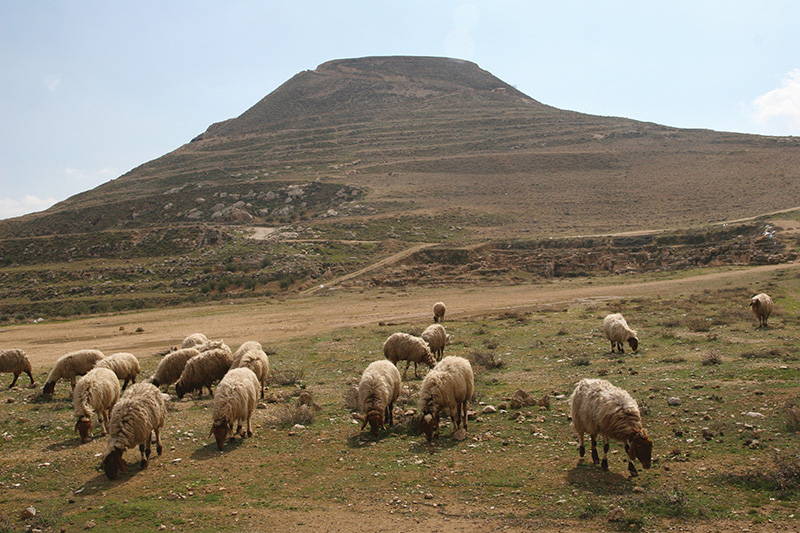
Isaiah declares, “We all went astray like sheep” (Is 53:6). But the servant bears the punishment “like a lamb led to the slaughter” (Is 53:7).
53:10–12. The servant’s death was not in vain. He had done the Lord’s will, even when he was crushed. He suffered as a human “guilt offering” (53:10) and as a rebel against God for the sake of rebels (53:12). Because God was pleased not only to crush him but also to accept his life as an offering, the effects of his death are many: life, “seed,” success, and honor. Through him many may be justified (53:11). The servant suffered on behalf of others. They share in his benefits if they turn to him as the means of forgiveness by reconciliation with the heavenly Father.
Of whom is the prophet speaking? Isaiah’s own testimony does not provide the clues for the identification of the servant. It could be Israel’s suffering on behalf of Israel, or the suffering of the prophet himself or any prophet, or that of a Moses-like figure. In the NT, the apostles encourage God’s people to suffer with patience and endurance for the sake of the kingdom (e.g., Rm 8:17–18; 2 Co 1:6). They modeled this vicarious lifestyle (Col 1:24–25). On the other hand, they also point to Jesus Christ as the paradigm (e.g., Php 2:7; 1 Pt 2:21–25). Instead of seeing a one-to-one correspondence between the Suffering Servant and Jesus, the apostles showed that the relationship between Jesus and the members of his church is such that the suffering continues. The suffering of Jesus Christ is analogous to that of the church throughout her history.
G. The new covenant (54:1–17). 54:1–6. The prophet calls on the covenant people to rejoice because of the change in their condition. The sufferings of the past and present will give way to a new era. The people are compared to a barren woman (54:1), a widow (54:4), and a woman separated from her husband (54:6).
The blessedness of the reversal from barrenness and desolation is the reward of the servant. The new age will resemble God’s graciousness to Sarah, who was barren (Gn 11:30) but who by God’s promise became the mother of nations and kings (Gn 17:16). The mother’s “tent” will be full (54:2), and the land will be repopulated (54:3).
The description of the new condition serves to encourage the people of God not to be afraid or ashamed (54:4). In the past they have been ashamed because of the disgrace they carried. However, the Lord assures them that their shame will be removed. The hope for the future lies in the Lord himself. He will again take his people to himself, because he is their Maker and husband (54:5). He is their great King, their Redeemer, the Holy One of Israel, who desires to sanctify his people; he is God of the whole world.
54:7–10. This is a description of the covenant God, who graciously renews the covenant with his people. He has abandoned them for a short time only to renew his love with great compassion—forever (54:7–8). The length and intensity of the love of God cannot be compared with the shortness of his wrath. The Lord assures his people by oath that he will never be angry with them again. He will never again use exile as an expression of his animosity toward his people (54:9).
The certainty of the covenant lies in God himself. The Lord swears that he will never remove his covenantal blessings of peace, mercy, and kindness from his people (54:10). The ground for the restoration of the Jewish people lies in the Lord’s oath to be gracious to all those who call on him.
54:11–17. The prophet contrasts the situation of the desolate Jerusalem with its glorious future. It has been attacked and disgraced and received no pity or compassion, but the glory of the mother city will be great (54:11–12). She will be completely rebuilt as the new Jerusalem.
Within the city itself the people are blessed, with a blessedness limited to the righteous (54:13–14). Their children will know the Lord and will be blessed by him. They will experience the presence and protection of God. They will not fear because God will destroy every enemy (54:15–17). Nothing can separate them from him. They enter into their heritage from the Lord.
After the exile the Jews experienced some of the benefits of God’s blessing as they were restored to the land and lived in the city of Jerusalem and in Judea. But the people of God are still looking forward to the revelation of their glorious city, the new Jerusalem, which will come from above (Rv 21:2).
H. Assurance (55:1–13). 55:1–5. God’s invitation to the people (55:1–2) is not an esoteric one. His call is like the cry of a vendor selling his wares in the marketplace. The Lord calls on anyone and everyone to turn to him as the one who is able to provide for their needs. The open proclamation of the Lord assures that whoever desires may come, including Gentiles. He promises to take care of all humanity’s needs. This redemption is gracious and free.
The gift of God is an everlasting covenant, such as the Lord made with David (55:3; cf. 2 Sm 7:8–16). The people of God will join with the Davidic Messiah in leading nations into the covenant fellowship. The nations will submit to the witness-bearing role of God’s people (55:4–5).
55:6–9. The prophet joins the invitation of the Lord with a call to the people to have faith in him and to openly show their faith by repentance from their evil works (55:6–7). There is still the possibility of reconciliation and forgiveness. God is greater than humans; as such, his thoughts cannot be likened to human thoughts (55:8–9). Human thoughts are evil for evil, but God can be gracious even when he has been hurt, dishonored, and disobeyed. Now is the day for the people to come to the Lord in faith. The prophet calls on the people to respond by signing the contract and seeking him in the present moment.
55:10–13. The certainty of free redemption and the free offer of the gospel lie in God himself. As long as the moment of grace is here, God’s invitation will not return to him void (55:10–11). He has planned to call out a people to himself, and in this he will succeed. The prophet likens the power of the word to the rain and the snow, which are useful in germinating the seed and permitting it to develop. The word of the Lord concerns the redemption and restoration of all things.
Redemption begins with the postexilic developments. The Lord calls on the people to depart from Babylon and assures them that they will be restored to the land; indeed, the land itself will be restored so that, instead of briers and thorns, cypress and myrtle will grow up (55:12–13). Even nature joins with the people of God in the restoration and now awaits further restoration. The redemption of God’s people from exile is a sign to all the godly that the Lord is the Redeemer.
10. THE GLORY AND RESPONSIBILITY OF ZION (56:1–66:24)
A. Response to redemption (56:1–8). 56:1–2. Salvation is the act of God in which he gathers his people, both Jew and Gentile, and unites them with himself and with one another (56:1). To these he extends the privilege of being subjects under his righteous rule along with all its benefits.
The proper response of the people of God is that of covenant loyalty (56:2). The Lord expects his people to act like him. He expects that the people who have been justified and thereby have entered into a relationship with him will act in accordance with his own standards. There is a blessing for all who keep the covenant.
The Sabbath is singled out as the sign of the covenant and is representative of all the commandments (56:2; cf. 56:4, 6). How one relates to the Sabbath is an indication of how one relates to the other commandments. The Sabbath commandment, therefore, is a barometer of one’s spiritual condition.
56:3–8. The Gentile and the eunuch (56:3) both show their commitment to the covenant Lord by keeping the Sabbath. In the past the eunuch could not be a part of the covenant community; there were also limitations on foreigners (Dt 23:1–8). However, the renewed covenant is extended to those who were previously unfit.
The Lord responds to the needs of those who join his covenant. The eunuch is assured that he will have a remembrance among the people of God (54:4–5). His name will be remembered forever. Foreigners who have been kept away from the worship of the Lord in Jerusalem are assured that they too will be able to bring sacrifices and worship the Lord (54:6–7).
The temple will be known as the “house of prayer” for all nations (56:7). The prophet looks forward to the new era in which Jews and Gentiles will worship God together (56:8; cf. Eph 2:14).
Jesus quotes Is 56:7 (“my house will be called a house of prayer for all nations”) as he clears out the corrupt market set up in the temple area that was supposed to be reserved as a place where foreigners could pray.
The prophet proclaims the word of God to the people of his time and at the same time issues a warning to future generations. Since the prophet warns God’s people against the dangers of apostasy, faithlessness, and formalism, the exhortation of the prophet still speaks to issues that the people of God face today.
B. Unfaithful leaders (56:9–57:2). The leaders are called “watchmen” (56:10; cf. Is 52:8; Ezk 3:17; 33:7). Leaders, whether civil or religious, charged with responsibility for the people of God are likened to “mute” and greedy dogs (56:10–11)—irresponsible in discharging their responsibility for instructing God’s people and greedy for material gain.
The struggle between righteousness and wickedness extends even to Zion (57:1–2). The wicked are those who enjoy the benefits of the covenant community without committing themselves fully to God and to his righteous purposes. As long as evil is in the world, its dark power seems to overshadow the glory of Zion.
C. Unfaithful people (57:3–13a). Isaiah goes on to compare the people of God to bad “offspring” (57:3). They are nothing but rebels because they love idolatry in all its forms (57:4–5). They have given themselves over to idolatry and immorality. [Works]
Isaiah describes the extent of Judah’s apostasy. Wherever they are, the people are corrupt, whether they go to the ravines (57:6) or to the hills (57:7), whether they stay at home (57:8) or go to Sheol (57:9).
The wicked will be left to themselves. The Lord has been patient in not destroying them thus far (57:11). Because they have shown no sign of repentance or fear of him, however, they will not stand in the judgment of God. They will fall with the rest of humanity.
D. The future of God’s people (57:13b–21). 57:13b–15. In contrast to the greedy and idolatrous ways of the wicked, the righteous and devout, who walk uprightly and commit their way to the Lord, will have a future. What a contrast between 57:1–2 and 57:13b! The perishing will have a glorious future, because they have made the Lord their refuge.
The Lord himself initiates the full redemption of his children. All obstacles will be removed for his coming (57:14). He is the exalted king, who lives “in a high and holy place” (57:15). He reaches down to save, revive, and even dwell with the devout, who are “oppressed and lowly of spirit” (57:15). The holy God will allow the humble to dwell with him on his “holy mountain” (57:13b).
57:16–21. If God were to be continually angry, the righteous would also lose heart (57:16). Therefore, he revives the spirit of his people by words of comfort. He assures the humble that they will receive all they need for this life and the life to come. In healing his people, the Lord gives them rest and consolation, guidance and protection, and joy (57:18–19). They will be at peace with God. The wicked are compared to a “storm-tossed sea” (57:20). They will never have a lasting peace.
Thus, the prophet assures the godly that the Lord is intent on providing restoration for his people, though it may take a long time. While on earth, the righteous experience some rest and peace. However, these are but tokens of the grace of God. The fullness of rest and peace will come when the Lord has fully restored the heavens and the earth and when the wicked are no more.
E. True religion (58:1–14). The prophet again calls on the people to look on themselves in terms of their commitment. The people did indeed practice fasts and the Sabbath, which were derived from the law. However, just as syncretism and paganism are abominable to God, so is religious formalism. It is not enough for people to conform to the law of God if in one or more ways they continue to sin against it. The prophet emphasizes true religion and the rewards of true godliness.
58:1–9a. The prophet shows what true religion is not. True religion includes obedience to the law of God and a delight in the presence of God; but when sought for a reward, it degenerates into formalism or pharisaism. The love of God must show itself in love of one’s neighbor. Godliness is shown not by appearing outwardly pious (58:2) but by being sensitive to the suffering of people.
The Lord regards those who fast in humility. To fast in humility is to have regard for God and for others. This regard for others is expressed by giving people a sense of importance and freedom, by giving people food, and by speaking and acting in a way that brings honor to the people of God (58:6–7). Fasting as an act of humility and contrition can be acceptable to God only if it is an expression of love for God and neighbor.
58:9b–14. True godliness shows itself in concern for justice and a love of the Sabbath. Justice is God’s concern and therefore cannot be limited to the Jewish people under the law. God is concerned with oppression, slander, and unrighteous acts (58:9b–10). The glorious presence of God will dawn on the righteous. The godly are likened to a well-irrigated garden (58:11). They are God’s appointed instruments of restoration (58:12). Such is the ministry of healing and reconciliation God has given to his people—then as well as now.
This understanding of God’s desire for justice informed what keeping the Sabbath should entail (58:13–14). The Sabbath was a day in which the people were to give themselves to the worship of the Lord. While doing so, they were also to think about ways of enriching themselves. The prophet calls the people to look on the Sabbath as a day that the Lord has given to them on which to rest. To rest from one’s labors is, first, not to think about personal gain, and second, to do what is right. To call the day a “delight” is to think about ways in which other people, too, may delight in the day. The Sabbath day is most appropriate as a day on which to do works of mercy in order to give an experience of light and joy to the oppressed and distressed (cf. Mt 12:1–8).
F. Responsibility (59:1–21). 59:1–8. The postexilic experience was marked by disillusionment; God’s promises pertaining to the new era were not completely fulfilled. Isaiah explains that the delay is not because God cannot deliver (59:1). Instead of charging God with injustice or unfairness, the community of believers must look at its own sins and shortcomings (59:2). It is guilty of murder, untruth, and injustice (59:3) and is buried in all kinds of evil (59:7–8). Israel looks like the nations instead of God’s people. The people are like mothers of evil who hatch vipers and cover sin with a veneer as thin as cobwebs (59:4–6).
59:9–15a. The community lament contains a moving confession of sin and an expression of Israel’s longing for the day of redemption. It will be a day of “light” and rejoicing; darkness and mourning will be dispelled (59:9–10). In the confession, the community expresses sorrow for its shortcomings (59:12–15a). The people have sinned against their neighbors. They have scorned justice, fidelity, and integrity and crushed the honest man. The dawning of God’s kingdom is related to, but not dependent on, God’s people ordering their lives in harmony with his purposes.
Those who returned from exile had to adjust their expectations for restoration. The early church also had to adjust to delay (see 2 Pt 3:3–10).
59:15b–21. Because of the absolute moral bankruptcy of the people, no one is able to deliver them. Only the Lord, whose arm is strong to deliver, can deal with his people (59:15b–16). Isaiah describes the Lord as a warrior readying himself to aid the godly. He puts on the body armor, representative of “righteousness,” the helmet, representative of “salvation,” and the garments, signifying his “vengeance” and “zeal” (59:17; cf. Eph 6:14–17). God is concerned about the remnant, and he expresses his concern by coming to judge the wicked, who will be punished according to their deeds (59:18–19). The Lord may delay his judgment, but he sees everything, including the affliction of his people and the evil done to those who call on his name.
The Redeemer God will reveal his glory to the ends of the earth, singling out Zion for his kingdom (59:20). The covenant will be renewed by the pouring of his Spirit on them and their children forever, so that all God’s people will be inspired to know, do, and speak according to his word (59:21).
G. The glory of Zion (60:1–62:12). The delay in the revelation of God’s victorious kingdom concerns God’s people, but God still expects them to live in accordance with his rule by practicing justice, righteousness, love, and peace. The word of the Lord (59:21) will be fulfilled.
Paul cites Is 59:21 in his argument that God will redeem apostate Israel, which has rejected the Messiah (Rm 11:27).
60:1–9. The revelation of God extends his glory and light—characteristics of the Lord himself—to his people (60:1). Glory and light will surround them, enabling the nations to see God through restored Israel (60:2–3). The repetition of the words “light,” “shine,” and “glory” creates a poetic effect.
The light in combination with “total darkness” (60:2) sets the background of a theophany. The response of the nations will be twofold. First, they will desire inclusion in the new era that will dawn on Zion (60:3). Second, they will cooperate by contributing to the welfare of Zion (60:4–9). The resources of the nations will be used to “honor . . . the LORD . . . the Holy One of Israel” (60:9). Riches, herds, flocks, and ships of Tarshish will all be submitted to God.
60:10–16. The tribute and labor of the nations will be used to rebuild Zion as an expression of God’s compassion and justice (60:10). The enemies and oppressors of Zion will receive their just deserts. The walls and gates symbolizing God’s kingdom are not for protection; the gates will always be open (60:11). The Lord will share the spoils of his victory with his people.
Furthermore, God will reestablish his glorious presence in their midst (60:13). Zion will be called the “City of the LORD” and “Zion of the Holy One of Israel” (60:14; cf. Ps 48:1–14). God will restore the fortunes of Zion. They have been forsaken but will become “eternal pride” and “a joy from age to age” (60:15). They will know that he is their Redeemer (60:16).
60:17–22. God’s governance will be not only just but glorious as well (60:17). He will prosper his people greatly with a kingdom of peace and righteousness, in which his victorious rule brings lasting salvation and joy (60:18). The glory of the new Jerusalem is in the experience of God’s presence (60:19–20; cf. Rv 21:23; 22:5).
The people will all be “righteous” (60:21); that is, they will enjoy the benefits of his kingdom: the new creation. The certainty of fulfillment is guaranteed by his signature: “I am the LORD” (60:22). He will restore everything, especially the new Jerusalem.
61:1–3. Judah and Jerusalem have been assured that God has a plan for a remnant of the people. They will return from exile. The Lord has promised to restore heaven and earth, to restore the people to himself, and to hasten the day of redemption. The announcement of the year of the Lord’s favor (61:2) means that the Lord is reconciled to humanity and that humanity may obtain forgiveness from God. In Is 61 the Lord himself, together with the prophet, confirms the eternal covenant, which cannot be broken.
The person of whom the prophet speaks in 61:1–7 is a servant of God. (Technically this is not a Servant Song.) The presence of the Spirit of God and the anointing and proclamation suggest the servant’s purpose (61:1). The messages of comfort begin with a call to loudly proclaim the good news of the Lord’s forgiveness and restoration of his people. The servant of the Lord, who has been called to proclaim the good news, can be none other than the prophet himself. In the restoration from exile, the prophets were instrumental in bringing the good news to the captives.
The prophet calls the new people of God “righteous trees” that will be “planted by the LORD” (61:3). Instead of being rejected, the people of God will be accepted and prepared for a great and glorious future. [“The Year of the LORD’S Favor”]
At the beginning of his public ministry Jesus quotes Is 61:1–2, identifying himself as the fulfillment of Isaiah’s messianic prophecies (Lk 4:18–19).
61:4–7. This redemption, however, is not to be limited to the eschatological future. The prophet quickly moves from the restoration of the people to the restoration of the land. God is also concerned with the ruins and assures his people that the cities will be rebuilt and that this will be funded by the wealth of the nations (61:4–5). The new position of the people of God is expressed by the word “priests” (61:6). They will be priests of the living God, while others take care of menial tasks.
Spiritual benefits are mixed with God’s concern for physical well-being. The people have been disgraced in exile, but they are assured that they will have a double portion in the land (61:7). The Lord knows that his people have suffered double for all of their sins (40:2), and he gives back what they have missed during the exile.
61:8–11. The new era is forever, because the covenant is forever (61:8). God knows how his people can be unpredictable and faithless; therefore, the outworking of the covenant is not dependent on them. He is faithful. His covenant will accomplish the purpose for which he has made it: that his people may be blessed (61:9).
The prophet likens the glory prepared for God’s people to the adornments of a bride, bridegroom, and priest (61:10). They will serve the Lord in the presence of the nations as a priest, adorned with “a crown of beauty,” anointed with the “festive oil,” and clothed in “splendid clothes” (61:3). The new era of the priesthood of all believers will introduce a renewal of God’s kingdom (61:11).
62:1–12. The prophet prays that the era of God’s victorious kingship, bringing full “salvation” to his people, may come soon (62:1). Then the nations will recognize the glory of Zion, which was trampled down by the enemies of God (62:2). The new names given are descriptive of the new era (62:3–4). The Lord will rejoice over his people (62:5).
Out of concern for his people, the Lord has appointed watchmen (62:6–7). The watchmen are not needed for the protection of the city, for God makes his people secure. The watchmen pray day and night for the full restoration of the people of God. The Lord responds to the prayer by an oath of assurance that he will never again do what he has done to his people (62:8–9). Redemption is certain to come, and the prophet calls the people to prepare themselves for the Savior’s coming (62:10–11).
The people receive a new name. God sets them apart as a holy people and the redeemed of the Lord (62:12; see also 60:14, 18; 62:4). These names for the new people of God signify the new relationship, the glory, and the purpose of the people of God.
H. The day of vengeance (63:1–6). Since the Lord is righteous and speaks righteously, the day of vengeance is the day of redemption of God’s people (63:4). In his verdict as the great judge, he assures the people that he truly is able to save them. Because of his righteousness, his concern for his people, and his great anger, the Lord comes to this world as the great warrior (63:1). The portrayal of the judgment of Edom is a picture of God’s judgment on the whole earth.
The day of the vindication of the Lord is an expression of the day of the Lord, an eschatological event in which God brings his cataclysmic judgment upon all the earth.
I. A prayer for God’s people (63:7–64:12). 63:7–14. Isaiah publicly proclaims the acts of the Lord’s “faithful love” (Hb hesed, 63:7) for his people, whom he adopted as his sons and daughters. He redeemed them in the expectation that they would be loyal to him (63:8). However, they were unfaithful and opposed his will (63:10).
The past era of grace and compassion is over (63:9). The godly look back over the history of redemption with a renewed longing to be included. In the past God raised up Moses, and no one could oppose his will (63:11). God showed the power of “his glorious strength” (63:12). He brought the people through the Red Sea and safely into the promised land by his divine will (63:13–14). The past reveals that nothing stands in the way of God’s will and presence. [Holy Spirit]
63:15–64:12. The prophet leads God’s people in a prayer for redemption. He grounds the petition on God’s promise to establish his sanctuary as a footstool among his people (63:15, 18), on the father-child relationship (63:16), and on the covenantal relationship with the tribes (63:17). Now it seems that they have never been called by his covenant name (63:19).
The prayer also focuses on the revelation of God. As the people pray that the Lord might descend to shake the mountains and show himself in his glorious fire, they call on him to come to their aid by taking vengeance on their enemies and by redeeming his faithful people (64:1–4). The people confess that they are not ready for him because they are sinners, unclean, hopeless, and objects of wrath (64:5–7). But they pray that the Lord may forgive and forget their sins (64:8–9). They call on the Lord as their Father and wait for his compassion. They confess his authority and their helplessness and need of forgiveness, restoration, and fellowship. They remind him that the land, the cities, Jerusalem, and the temple are in ruins (64:10–12).
J. God’s response (65:1–25). 65:1–7. The Lord is ready to respond in a most self-giving way (65:1–2). But the people are still too engrossed in sin. They show themselves to be idolaters and have little concern for spiritual purity, as they keep vigils among the graves and eat pork—against God’s explicit commandment (65:3–4). They are like Gentiles. They respond with a self-made holiness (65:5). The Lord in turn will respond in judgment. Even as the Lord has promised not to be silent until he has accomplished the redemption of his people, so he will not be silent until the enemies of his kingdom have been put down (65:6–7).
65:8–16. The prophet likens the covenant community to a cluster of grapes (65:8). Not all the grapes in a cluster are good; some are spoiled and others are unripe. However, some may still produce wine and obtain a blessing on the cluster (65:9–10). For the sake of the whole, God will be patient with the community; his judgment will be selective. The Lord will reward those who seek him, whereas he will judge the wicked.
The ungodly have forgotten the Lord and have given themselves over to idolatrous practices. They are unresponsive and rebellious toward him (65:11–12). They will mourn their disgrace, whereas the righteous will rejoice in the Lord because of the many benefits he has extended to them (65:13–15). The Lord assures his own that they will be satisfied both with food and drink and with their new name, which represents their restored status. Instead of the “former troubles” (65:16) associated with past events (see 65:17), they will experience the fullness of the restoration God has promised to all his people.
65:17–25. The Lord will again rejoice in his people. Because he has blessed them, their former troubles are forgotten (65:17; cf. 65:16). The “past” era is the experience of judgment and exile. The Lord will create a “new heaven and a new earth.” It is tempting to think of the state of restoration as the eschatological, everlasting state of the new heavens and the new earth. Even though the prophet portrays the blessings of the people of God in a final way, he is addressing those in exile, assuring them that they will have a future.
The new era is characterized by the joy of the people of God because he himself rejoices over his people (65:18–19). The sorrow of past sufferings will cease because of the comfort of the Lord. The new era is described in terms of physical health and longevity, the enjoyment of God’s benefits in physical ways, answers to prayer, and peace and the absence of malice and corruption (65:20–25). Even their children will know the Lord and will be blessed by him.
The new heavens and new earth that close the book of Isaiah (65:17–25; 66:22) also close the New Testament book of Revelation (Rv 21–22).
K. Judgment and restoration (66:1–24). As a complementary answer to that of chapter 65, in the last chapter of Isaiah the Lord affirms both the certainty of his judgment on idolatry and religious hypocrisy and the blessings of the new age, now extending that new age to the Gentiles.
66:1–6. It was tempting for OT believers to localize God’s kingship. They knew that God ruled over the whole earth, his throne was in heaven, and the temple in Jerusalem was his footstool (66:1). To approach the temple was to approach God. But the temple had turned into a place where people came to pacify their own consciences; they were trying to atone for their own misdeeds without exhibiting true contrition. In their corruption, injustice, and hatred, they were presenting sacrifices offensive to the Lord (66:3).
The prophecy of Isaiah concludes with God’s concern for true worship. God desires to have fellowship with those who show sensitivity to his word by acts of obedience, love, and justice (66:2). The love of God is evident in those who are humble and contrite in spirit. They may suffer in an unjust world, but he promises to vindicate them. On the other hand, he will avenge himself on those within the community of faith who worship in their own ways, not having a heartfelt love for God and for their brothers and sisters in the faith (66:4–5). The noise coming from the temple is the sound of the Lord himself, who has come to defend his children by bringing retribution on the wicked (66:6).
66:7–17. The Lord invites all to rejoice with Mother Jerusalem (66:7–11). Those who love her in adversity and prosperity will be rewarded with joy, fullness of life, peace, and comfort (66:12–14a). As God’s people are encouraged that the Lord is going to be with his children, he also assures the enemies that his vengeance will come upon them (66:14b). His coming is depicted in prophetic imagery: fire, chariots, whirlwinds, and swords (66:15–16). The effect of God’s judgment is that the wicked will be slain.
The prophet gives the scene of God’s judgment on the wicked in order to assure the ungodly who have been members of the covenant community that they too will be under God’s judgment. Those who have made their own rules of sanctification and defilement will be consumed together with the wicked (66:17).
66:18–23. In quick strokes the prophet describes how many nations will be instrumental in bringing together the people of God (66:18–19). They will be instrumental in restoring the Jews to full participation in the kingdom of God. But in the very process, they too will see the glory of the Lord. The Lord himself will set a sign among the nations by sending messengers who will proclaim the glorious acts of God.
The restoration of the Jews to the land, God’s continued care for the Jewish people, and God’s acts of redemption will result in many nations (including the Jews) bringing sacrifices to the Lord and serving as priests and Levites in God’s presence (66:20–21). They will gather together from festival to festival and enjoy covenant fellowship from generation to generation (66:22–23).
66:24. The prophet introduced the coming judgment and its effects in verses 15 and 16. He returns to this motif in the last verse of the prophecy (66:24), a perpetual reminder that God’s judgment on the wicked is everlasting and that those who have been condemned to separation from him in life will suffer eternal separation in death.