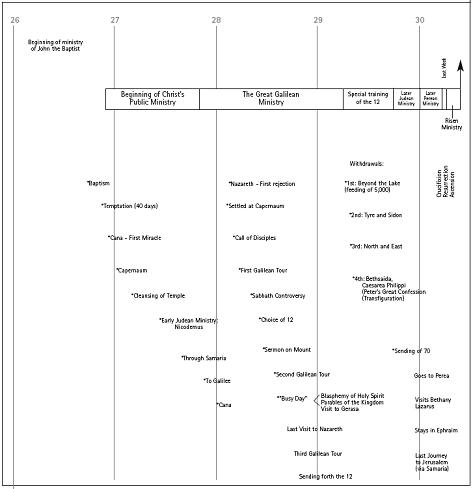
8:25 Who are You? The Jews were willfully ignorant because chapters 1–8 demonstrate that multiple witnesses testified to Jesus’ identity, and Jesus Himself in words and actions persistently proved throughout His ministry on earth that He was the Son of God and Messiah. from the beginning. The start of Jesus’ ministry among the Jews.
8:28 When you lift up the Son of Man. Jesus’ impending Crucifixion. you will know that I am He. Having refused to accept Him by faith and having nailed Him to the cross, they would one day awaken to the terrifying realization that this One whom they despised was the One whom they should have worshiped (cf. Phil. 2:9–11; Rev. 1:7). Many Jews believed on Christ after His death and Ascension, realizing that the One whom they rejected was truly the Messiah (Acts 2:36, 37, 41).
8:31–36 These verses are a pivotal passage in understanding genuine salvation and true discipleship. John emphasized these realities by emphasizing truth and freedom. The focus in the passage is upon those who were exercising the beginnings of faith in Jesus as Messiah and Son of God. Jesus desired them to move on in their faith. Saving faith is not fickle, but firm and settled. Such maturity expresses itself in full commitment to the truth in Jesus Christ resulting in genuine freedom. The passage has three features: (1) the progress of freedom (vv. 31, 32); (2) the pretense of freedom (vv. 33, 34); and (3) the promise of freedom (vv. 35, 36).
8:31 who believed Him. The first step in the progress toward true discipleship is belief in Jesus Christ as Messiah and Son of God. If you abide in My word, you are My disciples indeed. This reveals the second step in the progress toward true discipleship. Perseverance in obedience to Scripture (cf. Matt. 28:19, 20) is the fruit or evidence of genuine faith (see Eph. 2:10). The word abide means to abide habitually in Jesus’ words. A genuine believer holds fast, obeys, and practices Jesus’ teaching. The one who continues in His teaching has both the Father and the Son (2 John 9; cf. Heb. 3:14; Rev. 2:26). Real disciples are both learners (the basic meaning of the word) and faithful followers.
8:32 the truth. “Truth” here has reference not only to the facts surrounding Jesus as the Messiah and Son of God, but also to the teaching that He brought. A genuinely saved and obedient follower of the Lord Jesus will know divine truth and both freedom from sin (v. 34) and the search for reality. This divine truth comes not merely by intellectual assent (1 Cor. 2:14), but saving commitment to Christ (cf. Titus 1:1, 2).
8:33 never been in bondage to anyone. Because the Jews had often been in political subjection to many nations (Egypt, Assyria, Babylon, Greece, Syria, and Rome), they must have been referring to their inward sense of freedom.
8:34 Most assuredly. See note on 1:51. whoever commits sin. The kind of slavery that Jesus had in mind was not physical slavery, but slavery to sin (cf. Rom. 6:17, 18). The idea of “commits sin” means to practice sin habitually (1 John 3:4, 8, 9). The ultimate bondage is not political or economic enslavement, but spiritual bondage to sin and rebellion against God. Thus, this also explains why Jesus would not let Himself be reduced to merely a political Messiah (6:14, 15).
8:35, 36 The notion of slavery in verse 34 moves to the status of slaves. While the Jews thought of themselves only as free sons of Abraham, in reality, they were slaves of sin. The genuine son in the context is Christ Himself, who sets the slaves free from sin. Those whom Jesus Christ liberates from the tyranny of sin and the bondage of legalism are really free (Rom. 8:2; Gal. 5:1).
8:39 If you were Abraham’s children. The construction of this phrase indicates that Jesus was denying that mere physical lineage was sufficient for salvation (see Phil. 3:4–9). The sense would be “if you were Abraham’s children, but you are not, then you would act like Abraham did.” Just as children inherit genetic characteristics from their parents, so also those who are truly Abraham’s offspring will act like Abraham, i.e., imitate Abraham’s faith and obedience (see Rom. 4:16; Gal. 3:6–9; Heb. 11:8–19; James 2:21–24). works of Abraham. Abraham’s faith was demonstrated through his obedience to God (James 2:21–24). Jesus’ point was that the conduct of the unbelieving Jews was diametrically opposed by the conduct of Abraham, who lived a life of obedience to that which God had commanded. Their conduct toward Jesus demonstrated that their real father was Satan (vv. 41, 44).
8:41 We were not born of fornication. The Jews may well have been referring to the controversy surrounding Jesus’ birth. The Jews knew the story about Mary’s betrothal and that Joseph was not Jesus’ real father; thus, they implied that Jesus’ birth was illegitimate (see Matt. 1:18–25; Luke 1:26–38).
8:42 If God were your Father, you would love Me. The construction here (as in v. 39) denies that God is truly their Father. Although the OT calls Israel His “firstborn son” (Ex. 4:22) and affirms that God is Israel’s father by creation and separation (Jer. 31:9), the unbelief of the Jews toward Jesus demonstrated that God was not their Father spiritually. Jesus emphasized that the explicit criterion verifying the claim to be a child of God is love for His Son, Jesus. Since God is love, those who love His Son also demonstrate His nature (1 John 4:7–11; 5:1).
8:44 your father the devil. Sonship is predicated on conduct. A son will manifest his father’s characteristics (cf. Eph. 5:1, 2). Since the Jews exhibited the patterns of Satan in their hostility toward Jesus and their failure to believe in Him as Messiah, their paternity was the exact opposite of their claims (i.e., they belonged to Satan). He was a murderer from the beginning. Jesus’ words refer to the fall when Satan tempted Adam and Eve and successfully killed their spiritual life (Gen. 2:17; 3:17–24; Rom. 5:12; Heb. 2:14). Some think that the reference may also refer to Cain’s murder of Abel (Gen. 4:1–9; 1 John 3:12).
8:46 convicts Me of sin. Although the Jews argued that Jesus was guilty of sin (5:18), the sense here is that the perfect holiness of Christ was demonstrated, not by the Jews’ silence at Jesus’ question here, but by the assurance of His direct consciousness of the purity of His whole life. Only a perfectly holy One who has the closest and most intimate communion with the Father could speak such words. The Jews could martial no convincing evidence that could convict Him of sin in the heavenly court.
8:48 You are a Samaritan. Since the Jews could not attack Jesus’ personal life and conduct (v. 46), they tried an ad hominem attack of personal abuse toward Him. The reference to Jesus as a “Samaritan” probably centers in the fact that the Samaritans, like Jesus, questioned the Jews’ exclusive right to be called Abraham’s children (see vv. 33, 39).
8:51 never see death. Heeding Jesus’ teaching and following Him results in eternal life (6:63, 68). Physical death cannot extinguish such life (see 5:24; 6:40, 47; 11:25, 26).
8:52 Abraham is dead. Jesus’ assertion that anyone who keeps His word will never die (v. 51) prompted the Jews to offer a retort that once again revealed their thinking on strictly a literal and earthly level (see 3:4; 4:15).
8:56 Hebrews 11:13 indicates that Abraham saw Christ’s day (“having seen them afar off”; see note there ). Abraham particularly saw in the continuing seed of Isaac the beginning of God’s fulfilling the covenant (Gen. 12:1–3; 15:1–21; 17:1–8; cf. 22:8) that would culminate in Christ.
8:58 Most assuredly. See note on 1:51. I AM. See note on 6:22–58. Here, Jesus declared Himself to be Yahweh, i.e., the Lord of the OT. Basic to the expression are such passages as Exodus 3:14; Deuteronomy 32:39; Isaiah 41:4; 43:10 where God declared Himself to be the eternally preexistent God who revealed Himself in the OT to the Jews. See also notes on verses 24, 28.
8:59 they took up stones. The Jews understood Jesus’ claim and followed Leviticus 24:16, which indicates that any man who falsely claims to be God should be stoned. hid Himself . . . going through the midst of them. Jesus repeatedly escaped arrest and death because His hour had not yet come (see notes on 7:8, 30 ). The verse most likely indicates escape by miraculous means.
2. Sixth sign: healing the blind man (9:1–10:21)
9:1–13 Jesus performed a miracle by recreating the eyes of a man who was born with congenital blindness (v. 1). Four features highlight this healing: (1) the problem that precipitated the healing (v. 1); (2) the purpose for the man’s being born blind (vv. 2–5); (3) the power that healed him (vv. 6, 7); and (4) the perplexity of the people who saw the healing (vv. 8–13).
9:2 who sinned. While sin may be a cause of suffering, as clearly indicated in Scripture (see 5:14; Num. 12; 1 Cor. 11:30; James 5:15), it is not always the case necessarily (see Job; 2 Cor. 12:7; Gal. 4:13). The disciples assumed, like most Jews of their day, that sin was the primary, if not exclusive, cause of all suffering. In this instance, however, Jesus made it clear that personal sin was not the reason for the blindness (see v. 3).
9:3 Jesus did not deny the general connection between sin and suffering, but refuted the idea that personal acts of sin were the direct cause. God’s sovereignty and purposes play a part in such matters, as is clear from Job 1; 2.
9:4 while it is day. Jesus meant as long as He was still on earth with His disciples. The phrase does not mean that Jesus somehow stopped being the light of the world once He ascended, but that the light shone most brightly among men when He was on the earth doing the Father’s will (cf. 8:12). the night is coming. See notes on 1:4, 5; 1 John 1:5–7. The darkness has special reference to the period when Jesus was taken from His disciples during His crucifixion (v. 5).
9:5 I am the light of the world. See note on 8:12; cf. 1:5, 9; 3:19; 12:35, 46. Not only was Jesus spiritually the light of the world, but He would also provide the means of physical light for this blind man.
9:6 made clay with the saliva. As He had done when He originally made human beings out of the dust of the ground (Gen. 2:7), Jesus may have used the clay to fashion a new pair of eyes.
9:7 wash in the pool of Siloam. The term Siloam is Hebrew for “Sent.” The pool of Siloam was southeast of the orginal city of David. Its water source was through a channel (Hezekiah’s tunnel) that carried water to it from the spring of Gihon in the Kidron Valley. It may be identified with the “lower pool” or “old pool” mentioned in Isaiah 22:9, 11. Water for the water-pouring rites at the Feast of Tabernacles was drawn from this pool (see notes on 7:37–39 ).
9:8, 9 In ancient times, such severe physical deformities as congenital blindness sentenced a person to begging as the only means of support (see Acts 3:1–7). The drastic change in the healed man caused many people to believe that he was not the person born blind.
9:13–34 This section in the story of the healing of the blind man reveals some key characteristics of willful unbelief: (1) unbelief sets false standards; (2) unbelief always wants more evidence but never has enough; (3) unbelief does biased research on a purely subjective basis; (4) unbelief rejects the facts; and (5) unbelief is self-centered. John included this section on the dialogue of the Pharisees with the blind man most likely for two reasons: (1) the dialogue carefully demonstrates the character of willful and fixed unbelief, and (2) the story confirms the first great schism between the synagogue and Christ’s new followers. The blind man was the first-known person thrown out of the synagogue because he chose to follow Christ (see 16:1–3).
9:13 They. This has reference to the blind man’s “neighbors and those who previously had seen that he was blind” (v. 8). to the Pharisees. The people brought the blind man to the Pharisees most likely because the miracle had happened on the Sabbath (v. 14), and they were aware that the Pharisees reacted negatively to those who violated the Sabbath (cf. 5:1–15). The people also wanted advice from their local synagogue and religious leaders.
9:16 not from God. The reasoning may have been that since Jesus violated their interpretation of the Sabbath law, He could not be the promised Prophet of God (Deut. 13:1–5). a division. Earlier the crowds were divided in opinion regarding Jesus (7:40–43); here, the authorities also became divided.
9:17 He is a prophet. While the blind man saw clearly that Jesus was more than a mere man, the sighted but obstinate Pharisees were spiritually blind to that truth (see v. 39). Blindness in the Bible is a metaphor for spiritual darkness, i.e., inability to discern God or His truth (2 Cor. 4:3–6; Col. 1:12–14).
Spiritual Truths Pictured by Physical Healing
| 1. Blindness Matthew 9:27–31; John 9:1–7 | Sin renders one spiritually blind. | Salvation restores one’s spiritual sight. |
| 2. Leprosy Matthew 8:2, 3; Luke 17:11–21 | Sin is spiritually incurable. | Salvation provides the spiritual cure for the otherwise incurable. |
| 3. Paralysis Matthew 9:1–8; John 5:1–9 | Sin renders one spiritually incapable. | Salvation restores the use of one’s spiritual abilities. |
| 4. Demon-possession Matthew 12:22, 23; Luke 11:14 | Sin renders one unholy. | Salvation declares one holy in the sight of God. |
| 5. Death Luke 7:11–17; John 11:1–45 | Sin renders one dead in trespasses and sin. | Salvation provides eternal life in Christ. |
9:18 called the parents. While neighbors may have been mistaken about the man’s identity, the parents would know if this was their own son. The authorities considered the witness of the healed man worthless.
9:24 Give God the glory! This means that the authorities wanted the man to own up and admit the truth that Jesus was a sinner because He violated their traditions and threatened their influence (cf. Josh. 7:19). We know that this Man is a sinner. Enough unanimity existed among the religious authorities to conclude that Jesus was a sinner (cf. 8:46). Because of this already predetermined opinion, they refused to accept any of the testimony that a miracle had actually taken place.
9:27 In order to emphasize their hypocrisy, the healed man resorted to biting sarcasm when he suggested they desired to be Jesus’ disciples.
9:28 You are His disciple, but we are Moses’. At this point, the meeting degenerated into a shouting match of insults. The healed man’s wit had exposed the bias of his inquisitors. As far as the authorities were concerned, the conflict between Jesus and Moses was irreconcilable. If the healed man defended Jesus, then such defense could only mean that he was Jesus’ disciple.
9:30 The healed man demonstrated more spiritual insight and common sense than all of the religious authorities combined who sat in judgment of him and Jesus. His penetrating wit focused in on their intractable unbelief. His logic was that such an extraordinary miracle could only indicate that Jesus was from God, for the Jews believed that God responds in proportion to the righteousness of the one praying (see Job 27:9; 35:13; Pss. 66:18; 109:7; Prov. 15:29; Is. 1:15; cf. 14:13, 14; 16:23–27; 1 John 3:21, 22). The greatness of the miracle could only indicate that Jesus was actually from God.
9:34 are you teaching us? The Pharisees were incensed with the man, and their anger prevented them from seeing the penetrating insight that the uneducated, healed man had demonstrated. The phrase also revealed their ignorance of Scripture, for the OT indicated that the coming messianic age would be evidenced by restoration of sight to the blind (Is. 29:18; 35:5; 42:7; cf. Matt. 11:4, 5; Luke 4:18, 19).
9:35–41 While verses 1–34 dealt with Jesus’ restoration of physical sight in the blind man, verses 35–41 featured Jesus bringing spiritual “sight” to him.
9:35 Do you believe. Jesus invited the man to put his trust in Him as the One who revealed God to man. Jesus placed great emphasis on public acknowledgment of who He was and confession of faith in Him (Matt. 10:32; Luke 12:8). Son of God. This should be Son of Man (cf. 1:51; 3:13, 14; 5:27; 6:27, 53, 62; 8:28).
9:36 Lord. The word here should be understood not as an indication that he understood Jesus’ deity, but as meaning “sir.” See also verse 38. Since the blind man had never seen Jesus (v. 7) nor met Him since he went to wash in the pool, he did not recognize Jesus at first as the One who healed him.
9:39 For judgment. Not that His purpose was to condemn, but rather to save (12:47; Luke 19:10); saving some, nevertheless, involves condemning others (see notes on 3:16, 18 ). The last part of this verse is taken from Isaiah 6:10; 42:19 (cf. Mark 4:12). those who do not see. Those people who know they are in spiritual darkness. those who see. Refers in an ironic way to those who think they are in the light, but are not (cf. Mark 2:17; Luke 5:31).
9:40 Are we blind also? Apparently Jesus found (v. 35) the man in a public place, where the Pharisees were present listening.
9:41 your sin remains. Jesus had particular reference to the sin of unbelief and rejection of Him as Messiah and Son of God. If they knew their lostness and darkness and cried out for spiritual light, they would no longer be guilty of the sin of unbelief in Christ. But satisfied that their darkness was light, and continuing in rejection of Christ, their sin remained. See note on Matthew 6:22, 23.
10:1–39 Jesus’ discourse on Himself as the “Good Shepherd” flowed directly from chapter 9, as Jesus continued to talk to the very same people. The problem of chapter 9 was that Israel was led by false shepherds who drew them astray from the true knowledge and kingdom of Messiah (9:39–41). In chapter 10, Jesus declared Himself to be the “Good Shepherd” who was appointed by His Father as Savior and King, in contrast to the false shepherds of Israel who were self-appointed and self-righteous (Ps. 23:1; Is. 40:11; Jer. 3:15; cf. Is. 56:9–12; Jer. 23:1–4; 25:32–38; Ezek. 34:1–31; Zech. 11:16).
10:1 sheepfold. Jesus spoke in verses 1–30 using a sustained metaphor based on first-century sheep ranching. The sheep were kept in a pen, which had a gate through which the sheep entered and left. The shepherd engaged a “doorkeeper” (v. 3) or “hireling” (v. 12) as an undershepherd to guard the gate. The shepherd entered through that gate. He whose interest was stealing or wounding the sheep would choose another way to attempt entrance. The words of Ezekiel 34 most likely form the background to Jesus’ teaching since God decried the false shepherds of Israel (i.e., the spiritual leaders of the nation) for not caring properly for the flock of Israel (i.e., the nation). The Gospels themselves contain extensive sheep/shepherd imagery (see Matt. 9:36; Mark 6:34; 14:27; Luke 15:1–7).
10:3 the doorkeeper. The doorkeeper was a hired undershepherd who recognized the true shepherd of the flock, opened the gate for Him, assisted the shepherd in caring for the flock, and especially guarded them at night. the sheep hear his voice. Near Eastern shepherds stand at different locations outside the sheep pen, sounding out their own unique calls that their sheep recognize. As a result, the sheep gather around the shepherd. he calls his own sheep by name. This shepherd goes even further by calling each sheep by its own special name. Jesus’ point is that He comes to the fold of Israel and calls out His own sheep individually to come into His own messianic fold. The assumption is that they are already in some way His sheep, even before He calls them by name (see vv. 25–27; 6:37, 39, 44, 64, 65; 17:6, 9, 24; 18:9).
10:4, 5 Unlike Western shepherds who drive the sheep from the side or behind, often using sheep dogs, Near Eastern shepherds lead their flocks, their voice calling them to move on. This draws a remarkable picture of the master/disciple relationship. New Testament spiritual leadership is always by example, i.e., a call to imitate conduct (cf. 1 Tim. 4:12; 1 Pet. 5:1–3).
10:6 illustration. The word here is best translated “illustration” or “figure of speech” and conveys the idea that something cryptic or enigmatic is intended in it. It occurs again in 16:25, 29, but not in the synoptics. Having given the illustration (vv. 1–5), Jesus then began to draw salient spiritual truth from it.
10:7–10 I am the door. This is the third of seven “I AM” statements of Jesus (see 6:35; 8:12). Here, He changes the metaphor slightly. While in verses 1–5 He was the shepherd, here He is the gate. While in verses 1–5, the shepherd led the sheep out of the pen, here He is the entrance to the pen (v. 9) that leads to proper pasture. This section echoes Jesus’ words in 14:6 that He is the only way to the Father. His point is that He serves as the sole means to approach the Father and partake of God’s promised salvation. As some Near Eastern shepherds slept in the gateway to guard the sheep, Jesus here pictures Himself as the gate.
10:9, 10 These two verses are a proverbial way of insisting that belief in Jesus as the Messiah and Son of God is the only way of being “saved” from sin and hell and receiving eternal life. Only Jesus Christ is the one true source for the knowledge of God and the one basis for spiritual security.
10:11–18 Jesus picked up another expression from verses 1–5, i.e., He is the “good shepherd” in contrast to the present evil leadership of Israel (9:40, 41). This is the fourth of seven “I AM” statements of Jesus (see vv. 7, 9; 6:35; 8:12). The term good has the idea of “noble” and stands in contrast to the “hireling” who cares only for self-interest.
10:11 gives His life for the sheep. This is a reference to Jesus’ substitutionary death for sinners on the Cross. Cf. verse 15; 6:51; 11:50, 51; 17:19; 18:14.
10:12 sees the wolf coming . . . flees. The hireling (or hired hand) likely represents religious leaders who perform their duty in good times, but who never display sacrificial care for the sheep in times of danger. They stand in contrast to Jesus, who laid down His life for His flock (see 15:13).
10:16 not of this fold. This refers to Gentiles who will respond to His voice and become a part of the church (cf. Rom. 1:16). Jesus’ death was not only for Jews (see notes on vv. 1, 3 ), but also non-Jews whom He will make into one new body, the church (see notes on 11:51, 52; cf. Eph. 2:11–22).
10:17, 18 take it again. Jesus repeated this phrase twice in these two verses, indicating that His sacrificial death was not the end. His Resurrection followed in demonstration of His messiahship and deity (Rom. 1:4). His death and Resurrection resulted in His ultimate glorification (12:23; 17:5) and the outpouring of the Holy Spirit (7:37–39; cf. Acts 2:16–39).
10:19–21 The Jews once again had a mixed reaction to Jesus’ words (see 7:12, 13). While some charged Him with demon possession (see 7:20; 8:48; cf. Matt. 12:22–32), others concluded His works and words were a demonstration of God’s sanction upon Him.
D. Opposition at the Feast of Dedication (10:22–42)
10:22 Feast of Dedication. The Jewish celebration of Hanukkah, which celebrates the Israelite victory over the Syrian leader Antiochus Epiphanes, who persecuted Israel. In c. 170 B.C. he conquered Jerusalem and desecrated the Jewish temple by setting up a pagan altar to displace the altar of God. Under the leadership of an old priest named Mattathias (his family name was called the Hasmoneans), the Jews fought guerrilla warfare (known as the Maccabean Revolt; 166–142 B.C.) against Syria and freed the temple and the land from Syrian dominance until 63 B.C. when Rome (Pompey) took control of Palestine. It was in 164 B.C. on 25 Chislev (December approximately), that the Jews liberated the temple and rededicated it. The celebration is also known as the “Feast of Lights” because of the lighting of lamps and candles in Jewish homes to commemorate the event. it was winter. John indicated by this phrase that the cold weather drove Jesus to walk on the eastern side of the temple in the sheltered area of Solomon’s porch, which after the resurrection became the regular gathering place of Christians where they would proclaim the gospel (see Acts 3:11; 5:12).
10:24 tell us plainly. In light of the context of verses 31–39, the Jews were not seeking merely for clarity and understanding regarding who Jesus was, but rather wanted Him to declare openly that He was Messiah in order to justify attacking Him.
10:26, 27 This clearly indicates that God has chosen His sheep and it is they who believe and follow (see notes on vv. 3, 16; cf. 6:37–40, 44, 65).
10:28, 29 The security of Jesus’ sheep rests with Him as the good shepherd, who has the power to keep them safe. Neither thieves and robbers (vv. 1, 8) nor the wolf (v. 12) can harm them. Verse 29 makes clear that the Father ultimately stands behind the sheep’s security, for no one is able to steal from God, who is in sovereign control of all things (Col. 3:3). See notes on Romans 8:31–39. No stronger passage in the OT or NT exists for the absolute, eternal security of every true Christian.
10:30 I and My Father are one. Both Father and Son are committed to the perfect protection and preservation of Jesus’ sheep. The sentence, emphasizing the united purpose and action of both in the security and safety of the flock, presupposes unity of nature and essence (see 5:17–23; 17:22).
10:31 For the third time John records that the Jews attempted to stone Jesus (see 5:18; 8:59). Jesus’ assertion (v. 30) that He was One with the Father affirmed His claim to deity and caused the Jews to seek His execution (v. 33). Although the OT permitted stoning in certain instances (e.g., Lev. 24:16), the Romans reserved the right of capital punishment for themselves (18:31). Nevertheless, out-of-control Jews attempted a mob action in lieu of legal proceedings (see Acts 7:54–60).
10:33 make Yourself God. There was no doubt in the minds of those Jews that Jesus was claiming to be God (cf. 5:18).
10:34–36 Quoted from Psalm 82:6 where God calls some unjust judges “gods” and pronounces calamity against them. Jesus’ argument is that this psalm proves that the word god can be legitimately used to refer to others than God Himself. His reasoning is that if there are others whom God can address as “god” or “sons of the Most High,” why then should the Jews object to Jesus’ statement that He is “the Son of God” (v. 36)?
10:35 Scripture cannot be broken. An affirmation of the absolute accuracy and authority of Scripture (see notes on Matt.5:17–19 ).
10:38 believe the works. Jesus did not expect to be believed merely on His own assertions. Since He did the same things that the Father does (see notes on 5:19 ), His enemies should consider this in their evaluation of Him. The implication is, however, that they were so ignorant of God that they could not recognize the works of the Father or the One whom the Father sent (see also 14:10, 11).
10:40 He went away again beyond the Jordan. Because of the increasing hostility (see v. 39), Jesus went from the region of Judea into the unpopulated area across the Jordan River. to the place where John was baptizing at first. Cf. Matthew 3:1–6; Mark 1:2–6; Luke 3:3–6. This is probably a reference to either Perea or Batanea, the general area in the tetrarchy of Philip in the east and northeast of the Sea of Galilee. The statement is ironic, since the area where John first began became the last area in which Jesus stayed before He left for Jerusalem and Crucifixion. The people remembered John’s testimony to Christ and affirmed their faith in Him (vv. 41, 42).
11:1–12:50 The previous passage (10:40–42) marked the end of John’s treatment of Jesus’ public ministry. At that point, He began to move into seclusion and minister to His own disciples and those who loved Him as He prepared to face death. Israel had her day of opportunity; the sun was setting and the night was coming. These two chapters form the transition to chapters 13–21 which record the passion of Christ, i.e., the events surrounding the Cross.
| Feast of | Month on Jewish Calendar | Day | Corresponding Month | References |
| Passover | Nisan | 14 | Mar.-Apr. | Ex. 12:1–14; Matt. 26:17–20 |
| *Unleavened Bread | Nisan | 15–21 | Mar.-Apr. | Ex. 12:15–20 |
| Firstfruits | Nisan | 16 | Mar.-Apr. | Lev. 23:9–14 |
| or Sivan | 6 | May-June | Num. 28:26 | |
| *Pentecost (Harvest or Weeks) | Sivan | 6 (50 days after barley harvest) | May-June | Deut. 16:9–12; Acts 2:1 |
| Trumpets, Rosh Hashanah | Tishri | 1, 2 | Sept.-Oct. | Num. 29:1–6 |
| Day of Atonement, Yom Kippur | Tishri | 10 | Sept.-Oct. | Lev. 23:26–32; Heb. 9:7 |
| *Tabernacles (Booths or Ingathering) | Tishri | 15–22 | Sept.-Oct. | Neh. 8:13–18; John 7:2 |
| Dedication (Lights), Hanukkah | Chislev | 25 (8 days) | Nov.-Dec. | John 10:22 |
| Purim (Lots) | Adar | 14, 15 | Feb.-Mar. | Esth. 9:18–32 |
*The three major feasts for which all males of Israel were required to travel to the temple in Jerusalem (Ex. 23:14–19).
The MacArthur Study Bible, by John MacArthur (Nashville: Word Publishing, 1997) 185. © 1993 by Thomas Nelson, Inc.
E. Opposition at Bethany (11:1–12:11)
1. Seventh sign: raising of Lazarus (11:1–44)
11:1–57 As chapter 11 begins, Jesus stands in the shadow of facing the Cross. The little time that He had in the area beyond the Jordan (cf. Matt. 19:1–20:34; Mark 10:1–52; Luke 17:11–19:27) would soon come to an end. John picked up the story (vv. 55–57) after He moved back into the area of Jerusalem and His death on the Cross was only a few days away. In those last few days before His death, the scene in John’s Gospel changes from hatred and rejection (10:39) to an unmistakable and blessed witness of the glory of Christ. All the rejection and hatred could not dim His glory as displayed through the resurrection of Lazarus. That miracle evidences His glory in three ways: (1) it pointed to His deity; (2) it strengthened the faith of the disciples; and (3) it led directly to the Cross (12:23). The chapter can be divided as follows: (1) the preparation for the miracle (vv. 1–16); (2) the arrival of Jesus (vv. 17–37); (3) the miracle itself (vv. 38–44); and (4) the results of the miracle (vv. 45–57).
11:1 Lazarus. The resurrection of Lazarus is the climactic and most dramatic sign in this Gospel, and the capstone of Jesus’ public ministry. Six miracles have already been presented (water into wine [2:1–11], healing of the nobleman’s son [4:46–54], restoring the impotent man [5:1–15], multiplying the loaves and fishes [6:1–14], walking on the water [6:15–21], and curing the man born blind [9:1–12]). Lazarus’s resurrection is more potent than all those and even more monumental than the raising of the widow’s son in Nain (Luke 7:11–16) or Jairus’s daughter (Luke 8:40–56) because those two resurrections occurred immediately after death. Lazarus was raised after four days of being in the grave with the process of decomposition already having started (v. 39). Bethany. This Bethany is different from the other “Bethany beyond the Jordan” in 1:28 (see note there ). It lies on the eastern side of the Mount of Olives about two miles from Jerusalem (v. 18) along the road leading toward Jericho. Mary . . . Martha. This is the first mention of this family in this Gospel. John related the story of Mary’s anointing of Jesus in 12:1–8, but this reference may indicate that the original readers were already familiar with the event. Cf. Luke 10:38–42.
11:3 sent to Him. Since Jesus was in the Transjordan and Lazarus was near Jerusalem, the message to Jesus would most likely have taken one whole day to reach Him. Surely by omniscience, Jesus already knew of Lazarus’s condition (see v. 6; 1:47). He may have died before the messenger reached Jesus, since he was dead four days (v. 17) when Jesus arrived, after a two-day delay (v. 6) and a one-day journey. he whom You love. This phrase is a touching hint at the close friendship that Jesus had with Lazarus. Cf. 13:1.
11:4 the Son of God may be glorified. This phrase reveals the real purpose behind Lazarus’s sickness, i.e., not death, but that the Son of God might be glorified through his resurrection (cf. v. 4; see note on 9:3 ).
11:6 He stayed two more days. The decision to delay coming did not bring about Lazarus’s death, since Jesus already supernaturally knew his plight. Most likely by the time the messenger arrived to inform Jesus, Lazarus was already dead. The delay was because He loved the family (v. 5) and that love would be clear as He greatly strengthened their faith by raising Lazarus from the dead. The delay also ensured that Lazarus had been dead long enough that no one could misinterpret the miracle as a fraud or mere resuscitation.
11:7, 8 The disciples realized that the animosity toward Jesus was so great that His return could result in His death because of the murderous Jews (cf. 8:59; 10:31).
11:9, 10 During the light of the sun, most people did their work safely. When darkness came, they stopped. The proverbial saying, however, had a deeper meaning. As long as the Son performed His Father’s will (i.e., during the daylight period of His ministry when He is able to work), He was safe. The time would soon come (nighttime) when, by God’s design, His earthly work would end and He would “stumble” in death. Jesus was emphasizing that as long as He was on earth doing God’s will, even at this late time in His ministry, He would safely complete God’s purposes.
11:11–13 sleeps. A euphemistic term used in the NT to refer to death, particularly with reference to believers who will be physically raised to eternal life (cf. 1 Cor. 11:30; 15:51; 1 Thess. 4:13).
11:14, 15 The resurrection of Lazarus was designed to strengthen His disciples’ faith in Him as the Messiah and Son of God in the face of the strong Jewish rejection of Him.
11:16 Thomas’ words reflect loyal devotion and, at the same time, pessimism over the fact that they would probably all die. His fears were not unrealistic in the face of bitter hostility toward Jesus; and had not the Lord protected them in the garden (18:1–11), they may also have been arrested and executed. Cf. 20:24–29.
11:17 in the tomb. The term tomb means a stone sepulcher. In Israel such a grave was common. Either a cave or rock area would be hewn out, the floor inside being leveled and graded to make a shallow descent. Shelves were cut out or constructed inside the area in order to bury additional family members. A rock was rolled in front to prevent wild animals or grave robbers from entering (see also v. 38). The evangelist made special mention of the fourth day (see note on v. 3 ) in order to emphasize the magnitude of the miracle, for the Jews did not embalm and, by then, the body would have been in a state of rapid decomposition.
11:18, 19 The implication of these verses is that the family was rather prominent. The mention of the Jews also heightens the reader’s awareness of the great risk that Jesus took in coming so close to Jerusalem, which was seething with the leaders’ hatred for Him.
11:21 if You had been here. Cf. verse 32. This was not a rebuke of Jesus, but a testimony of Martha’s trust in His healing power.
11:22 whatever You ask of God. Based on Martha’s statement in verse 39, she was not saying she believed Jesus could raise Lazarus from the dead, but that she knew He had a special relationship to God so that His prayers could bring some good from this sad event.
11:25, 26 This is the fifth in a series of seven great “I AM” statements of Jesus (see 6:35; 8:12; 10:7, 9; 10:11, 14). With this statement, Jesus moved Martha from an abstract belief in the resurrection that will take place “at the last day” (cf. 5:28, 29) to a personalized trust in Him who alone can raise the dead. No resurrection or eternal life exists outside of the Son of God. Time (“at the last day”) is no barrier to the One who has the power of resurrection and life (1:4) for He can give life at any time.
11:27 She said to Him. Martha’s confession is representative of the very reason John wrote this inspired Gospel (cf. 20:30, 31). See Peter’s confession in Matthew 16:16.
11:32 See note on verse 21.
11:33 the Jews who came with her weeping. According to Jewish oral tradition, the funeral custom indicated that even a poor family must hire at least two flute players and a professional wailing woman to mourn the dead. Because the family may have been well-to-do, a rather large group appears present. He groaned in the spirit and was troubled. The phrase here does not mean merely that Jesus was deeply touched or moved with sympathy at the sight. The Greek term “groaned” always suggests anger, outrage, or emotional indignation (see v. 38; cf. Matt. 9:30; Mark 1:43; 14:5). Most likely, Jesus was angered at the emotional grief of the people because it implicitly revealed unbelief in the resurrection and the temporary nature of death. The group was acting like pagans who had no hope (1 Thess. 4:13). While grief is understandable, the group was acting in despair, thus indicating a tacit denial of the resurrection and the Scripture that promised it. Jesus may also have been angered because He was indignant at the pain and sorrow in death that sin brought into the human condition.
| 1. Widow of Nain’s son | Luke 7:14, 15 |
| 2. Jairus’ daughter | Luke 8:52–56 |
| 3. Lazarus of Bethany, brother of Mary and Martha | John 11 |
11:35 Jesus wept. The Greek word here has the connotation of silently bursting into tears in contrast to the loud lament of the group (see v. 33). His tears here were not generated out of mourning, since He was to raise Lazarus, but out of grief for a fallen world entangled in sin-caused sorrow and death. He was “a Man of sorrows and acquainted with grief” (3:16; Is. 53:3).
11:39 stench. Although Jews used aromatic spices, their custom was not to embalm the body, but to use the spices to counteract the repulsive odors from decomposition. They would wrap the body in linen cloth, adding spice in the layers and folds. The Jews did not wrap the body tightly like Egyptian mummies, but rather loosely with the head wrapped separately. This is indicated by the fact that Lazarus could move out of the tomb before he was unwrapped (v. 44; cf. 20:7).
11:41, 42 Jesus’ prayer was not really a petition, but thanksgiving to the Father. The reason for the miracle was to authenticate His claims to be the Messiah and Son of God.
11:43 This was a preview of the power to be fully displayed in the final resurrection when all the dead hear the voice of the Son of God and live (5:25, 28, 29).
2. Pharisees plot to kill Jesus (11:45–47)
11:45, 46 Jesus’ teaching and actions often divided the Jews (e.g., 6:14, 15; 7:10–13; 45–52). While some believed (cf. v. 40), others, apparently with malicious intent, informed the Pharisees of Jesus’ action.
| Turns water into wine (John 2:1–12) | Jesus is the Source of life. |
| Heals a nobleman’s son (John 4:46–54) | Jesus is Master over distance. |
| Heals a lame man at the pool of Bethesda (John 5:1–17) | Jesus is Master over time. |
| Feeds 5,000 (John 6:1–14) | Jesus is the Bread of Life. |
| Walks on water, stills a storm (John 6:15–21) | Jesus is Master over nature. |
| Heals a man blind from birth (John 9:1–41) | Jesus is the Light of the world. |
| Raises Lazarus from the dead (John 11:17–45) | Jesus has power over death. |
11:47 gathered a council. Alerted by the Pharisees, a Sanhedrin committee consisting of chief priests (former high priests and members of high priestly families) and Pharisees, called the Sanhedrin to session. The Pharisees could not by themselves take any judicial action against Jesus. Though subject to Roman control, the Sanhedrin was the highest judicial body in Israel and exercised judicial, legislative, and executive powers at that time. In Jesus’ day, the seventy members of the Sanhedrin were dominated by the chief priests, and virtually all the priests were Sadducees. The Pharisees constituted an influential minority. While the Pharisees and Sadducees were often in conflict, their mutual hatred of Jesus united them into action.
11:48 the Romans will come. The Jews were not willing to believe in Jesus as the Son of God, even though Lazarus had been raised. They feared that escalating messianic expectations could start a movement against Roman oppression and occupation that would cause the Romans to come and take away all their rights and freedoms.
11:49 Caiaphas. Caiaphas became high priest c. A.D. 18, being appointed by the Roman prefect, Valerius Gratus. His father-in-law was Annas, who had previously functioned in that same position from c. A.D. 7–14 and who exercised great influence over the office even after his tenure (see 18:12–14). Caiaphas remained in office until A.D. 36 when, along with Pontius Pilate, he was removed by the Romans. He took a leading part in the trial and condemnation of Jesus. In his court or palace, the chief priests (Sadducees) and Pharisees assembled “and plotted to take Jesus by trickery and kill Him” (see Matt. 26:3, 4).
11:50 one man should die for the people. He only meant that Jesus should be executed in order to spare their own positions and nation from Roman reprisals; but Caiaphas unwittingly used sacrificial, substitutionary language and prophesied the death of Christ for sinners. Cf. 2 Corinthians 5:21; 1 Peter 2:24.
11:51 he prophesied. Caiaphas did not realize the implications of what he spoke. While he uttered blasphemy against Christ, God parodied his statement into truth (cf. Ps. 76:10). The responsibility for the wicked meaning of his words belonged to Caiaphas, but God’s providence directed the choice of words so as to express the heart of God’s glorious plan of salvation (Acts 4:27, 28). He actually was used by God as a prophet because he was the high priest and originally the high priest was the means of God’s will being revealed (2 Sam. 15:27).
11:52 gather together in one the children of God. In context, this had reference to believing Jews of the Dispersion who would be gathered together in the Promised Land to share the kingdom of God (Is. 43:5; Ezek. 34:12). In a wider sense, this also anticipated the Gentile mission (see 12:32). As a result of Christ’s sacrificial death and Resurrection, both Jew and Gentile have been made into one group, the church (Eph. 2:11–18).
11:53 from that day on. The phrase indicates that their course of action toward Jesus was then fixed. It remained only to accomplish it. Notice that Jesus was not arrested to be tried. He had already been judged guilty of blasphemy. The trial was a mere formality for a sentence already passed (Mark 14:1, 2).
11:54 Ephraim. This probably refers to the OT city of Ephron (see 2 Chr. 13:19). Its modern village name is Et-Taiyibeh, and it is located four miles northeast of Bethel and about twelve miles from Jerusalem. The location was far enough away for temporary safety until the time of Passover (v. 55).
11:55 Passover. This is the third Passover mentioned in John (see 2:13; 6:4) and the last in Jesus’ earthly ministry at which His sacrificial death occurred. For the chronology of the Passover week, see Introduction to Luke: Outline.
11:56 they sought Jesus. The Jews who filled Jerusalem for Passover were wondering if Jesus would show Himself at this time and were actively seeking to find Him. The plot of the chief priests and Pharisees (see v. 47; 7:12) was known widely enough to pique their curiosity as to whether Jesus would dare show Himself in Jerusalem.
11:57 if anyone knew. The plotters ensured that the whole city was filled with potential informants.
12:1–50 This chapter focuses on the reactions of love and hate, belief and rejection toward Christ, leading to the Cross.
3. Mary anointing Christ (12:1–11)
12:1 six days before the Passover. This most likely was the previous Saturday with Passover coming six days later on Thursday evening through sunset Friday. See Introduction: Interpretive Challenges.
12:3 a pound of very costly oil of spikenard. The term used for “pound” actually indicates a weight around three-fourths of a pound (approximately twelve ounces). “Spikenard” was an oil extracted from the root of a plant grown in India. anointed the feet of Jesus. Since those who were eating reclined at the table, their feet extended away from it, making it possible for Mary to anoint the feet of Jesus. The act symbolized Mary’s humble devotion and love for Him.
12:5 three hundred denarii. Since one denarius was a day’s wage given to common laborers, 300 was equivalent to a year’s wages (no money was earned on the Sabbath or other holy days).
12:6 a thief. Judas’ altruism was really a front for his own personal avarice. Because he was the apostolic band’s treasurer, he was able to pilfer the group treasury secretly for his own desires.
12:7 kept this for the day of My burial. Mary performed this act to signal her devotion but, as in the case of Caiaphas (11:49–52), her act revealed more than she realized at the time. During the first century, lavish sums were spent on funerals, which included costly perfumes to cover the smell of decay (see note on 11:39 ).
12:8 This does not mean that alms should not be distributed to the poor (Deut. 15:11) but was a reminder that, while the poor would remain, Jesus would not always be with them. See Matthew 26:11; Mark 14:7.
12:11 went away and believed. This phrase signaled both a conscious, deliberate move away from the religion of the authorities and a move toward genuine faith in Jesus as Messiah and Son of God.
F. Opposition in Jerusalem (12:12–50)
1. The triumphal entry (12:12–22)
12:12–22 This section marks Jesus’ triumphal entry into Jerusalem referred to as Palm Sunday. It is one of the few incidents in Jesus’ life reported in all four Gospels (Matt. 21:1–11; Mark 11:1–11; Luke 19:29–38). By this action, He presented Himself officially to the nation as the Messiah and Son of God. The Sanhedrin and other Jewish leaders wanted Him dead but did not want Him killed during the Passover time because they feared stirring up the multitudes with whom He was popular (Matt. 26:5; Mark 14:2; Luke 22:2). Jesus entered the city, however, on His own time and forced the whole issue in order that it might happen exactly on the Passover day when the lambs were being sacrificed. As the Scripture says, “Christ, our Passover, was sacrificed for us” (1 Cor. 5:7; 1 Pet. 1:19). In God’s perfect timing (see 7:30; 8:20), at the precise time foreordained from eternity, He presented Himself to die (v. 23; 10:17, 18; 17:1; 19:10, 11; cf. Acts 2:23; 4:27, 28; Gal. 4:4).
12:12 The next day. Sunday, the day after Jesus’ visit to Bethany (see note on v. 1 ).
12:13 took branches of palm trees. The supply of date palms was plentiful; they still grow in Jerusalem today. From about two centuries earlier, the waving of palm branches had become a national, if not nationalistic, symbol, which signaled the fervent hope that a messianic liberator was arriving on the scene (6:14, 15). Hosanna! This term is a transliteration of a Hebrew word that means “give salvation now.” It was a term of acclamation or praise occurring in Psalm 118:25 which was familiar to every Jew, since that psalm was part of the Hallel (Pss. 113–118) sung each morning by the temple choir during the Feast of Tabernacles (7:37) and associated with the Feast of Dedication (10:22), especially the Passover. After shouting out the “Hosanna,” the crowds shouted Psalm 118:26; significantly, the original context of Psalm 118 may well have been the pronouncement of blessing upon a Messianic king. Jewish commentaries have understood the verse to bear messianic implications. “He who comes in the name of the Lord” refers to Messiah, especially in context with the phrase, “The King of Israel,” though that messianic title is not from Psalm 118.
12:14, 15 The synoptic Gospels give more information here regarding Jesus’ selection of a donkey (see Matt. 21:1–9; Mark 11:1–10; Luke 19:29–38). They convey the fact that Jesus deliberately planned to present Himself to the nation in this manner as a conscious fulfillment of the messianic prophecy of Zechariah 9:9 (quoted here). The words “Fear not” are not found in the Zechariah passage but were added from Isaiah 40:9. Only after Jesus’ Ascension did the disciples grasp the meaning of the triumphal entry (cf. 14:26).
12:19 the world has gone after Him. “The world” means people in general, as opposed to everyone in particular. Clearly, most people in the world did not even know of Jesus at that time, and many in Israel did not believe in Him. Often, “world” is used in this general sense (v. 47; 1:29; 3:17; 4:42; 14:22; 17:9, 21).
12:20, 21 Most likely, Gentile proselytes to Judaism who had come up for the Passover and who, in their desire to see Jesus, stood in direct antithesis to the attitude of the national leaders who desired to kill Him. At the very moment when the Jewish authorities were plotting to kill Him, Gentiles began to desire His attention.
2. The discourse on faith and rejection (12:23–50)
12:23 hour. This refers to the time of Jesus’ death, resurrection, and exaltation (v. 27; 13:1; 17:1). Up to this point, Jesus’ hour had always been future (2:4; 4:21, 23; 7:30; 8:20). Son of Man. See note on 1:51.
12:24 As the sown kernel dies to bring forth a rich harvest, so also the death of the Son of God will result in the salvation of many.
12:25, 26 Not only is the principle of death applicable to Jesus (see v. 24), but it is also applicable to His followers. As His disciples, they also may have to lose their life in service and witness for Him (see Matt. 10:37–39; 16:24, 25).
12:27 My soul is troubled. The term used here is strong and signifies horror, anxiety, and agitation. Jesus’ contemplation of taking on the wrath of God for the sins of everyone who would believe caused revulsion in the sinless Savior (cf. 2 Cor. 5:21).
12:28 glorify Your name. This request embodied the principle that Jesus lived by and would die by. See 7:18; 8:29, 50. I have . . . and will glorify. The Father answered the Son in an audible voice. This is only one of three instances during Jesus’ ministry when this sort of thing took place (cf. Matt. 3:17, His baptism; 17:5, His Transfiguration).
12:31 the ruler of this world. A reference to Satan (see 14:30; 16:11; cf. Matt. 4:8, 9; Luke 4:6, 7; 2 Cor. 4:4; Eph. 2:2; 6:12). Although the Cross might have appeared to signal Satan’s victory over God, in reality it marked Satan’s defeat (cf. Rom. 16:20; Heb. 2:14).
12:32 lifted up from the earth. This refers to Jesus’ Crucifixion (v. 33; 18:32). See note on 3:14.
12:34 remains forever. The term law was used broadly enough to include not only the five books of Moses but also the whole of the OT (see Rom. 10:4). Perhaps they had in mind Isaiah 9:7 which promised that Messiah’s kingdom would last forever, or Ezekiel 37:25 where God promised that the final David would be Israel’s prince forever (see also Ps. 89:35–37).
12:35, 36 Jesus said to them. A final invitation from Jesus was recorded by John to focus on his theme of believing in the Messiah and Son of God (see 20:30, 31).
12:37–40 In these verses, John gave the scriptural explanation for such large-scale, catastrophic unbelief on the part of the Jewish nation. The explanation was that the unbelief was not only foreseen in Scripture, but necessitated by it. In verse 38, John quotes Isaiah 53:1 and in verse 40 he quotes Isaiah 6:10 (see Rom. 10:16), both of which emphasize the sovereign plan of God in His judicial hardening of Israel (cf. Paul’s argument in Rom. 9–11). Although God predestined such judgment, it was not apart from human responsibility and culpability (see 8:24).
12:41 Isaiah . . . saw His glory and spoke of Him. This is a reference to Isaiah 6:1 (see notes there ). John unambiguously ties Jesus to God or Yahweh of the OT (see note on 8:58 ). Therefore, since verse 41 refers to Jesus, it makes Him the author of the judicial hardening of Israel. That fits His role as Judge (see 5:22, 23, 27, 30; 9:39).
12:42, 43 The indictment of verses 37–41 is followed by the exceptions of verses 42, 43 (see 1:10–13). While the people seemed to trust Jesus with much more candor and fervency, the leaders of Israel who believed in Him demonstrated inadequate, irresolute, even spurious faith (see note on 2:23–25 ). The faith of the latter was so weak that they refused to take any position that would threaten their position in the synagogue. This is one of the saddest statements about spiritual leadership, for they preferred the praises of men above the praises of God in their refusal to publicly acknowledge Jesus as Messiah and Son of God.
| 1:23 | Is. 40:3 |
| 2:17 | Ps. 69:9 |
| 6:31 | Ps. 78:24 |
| 6:45 | Is. 54:13 |
| 10:34 | Ps. 82:6 |
| 12:13 | Ps. 118:25, 26 |
| 12:15 | Zech. 9:9 |
| 12:38 | Is. 53:1 |
| 12:40 | Is. 6:10 |
| 13:18 | Ps. 41:9 |
| 15:25 | Ps. 35:19; 69:4 |
| 19:24 | Ps. 22:18 |
| 19:36 | Ex. 12:46; Num. 9:12 |
| 19:37 | Zech. 12:10 |
IV. THE PREPARATION OF THE DISCIPLES BY THE SON OF GOD (13:1–17:26)
A. In the Upper Room (13:1–14:31)
13:1–17:26 In these remaining chapters before His crucifixion, the record looks at Jesus devoting Himself to His own disciples. While chapters 1–12 center on the rejection of Jesus by the nation (cf. 1:11), chapters 13–17 center on those who did receive Him (see 1:12). Beginning in chapter 13, Jesus moved completely away from public ministry to private ministry with those who had received Him. Chapters 13–17 were spoken by Jesus as a farewell on the night of His betrayal and arrest to communicate His coming legacy to His followers (chs. 13–16) and pray for them (ch. 17). The Cross was only one day away.
13:1 to the end. Meaning “to perfection” with perfect love. God loves the world (3:16), and sinners (3:16; Matt. 5:44, 45; Titus 3:4) with compassion and common grace, but loves His own with perfect, saving, eternal love.
13:2 supper. Passover on Thursday night after sunset. See Introduction: Interpretive Challenges. the devil . . . the heart of Judas. This does not exonerate Judas, because his wicked heart desired exactly what the devil desired, the death of Jesus. The devil and Judas were in accord.
13:3 going to God. He faced betrayal, agony, and death because He knew He would be exalted to the Father afterward, where He would receive the glory and fellowship He had eternally enjoyed within the Trinity (see 17:4, 5). This was the “joy set before Him” that enabled Him to “endure the cross” (Heb. 12:2).
13:4, 5 The dusty and dirty conditions of the region necessitated the need for foot-washing. Although the disciples most likely would have been happy to wash Jesus’ feet, they could not conceive of washing each other’s feet. This was because in the society of the time foot-washing was reserved for the lowliest of menial servants. Peers did not wash one another’s feet, except very rarely and as a mark of great love. Luke points out (22:24) that they were arguing about who was the greatest of them, so that none was willing to stoop to wash feet. When Jesus moved to wash their feet, they were shocked. His actions serve also as symbolic of spiritual cleansing (vv. 6–9) and a model of Christian humility (vv. 12–17). Through this action Jesus taught the lesson of selfless service that was exemplified supremely by His death on the Cross.
13:6–10 These proceedings embarrassed all the disciples. While others remained silent, Peter, perhaps on behalf of others (see Matt. 16:13–23), spoke up in indignation that Jesus would stoop so low as to wash his feet. He failed to see beyond the humble service itself to the symbolism of spiritual cleansing involved (v. 7; cf. 1 John 1:7–9). Jesus’ response made the real point of His actions clear: Unless the Lamb of God cleanses a person’s sin (i.e., as portrayed in the symbolism of washing), one can have no part with Him.
13:10 needs only to wash his feet. The cleansing that Christ does at salvation never needs to be repeated—Atonement is complete at that point. But all who have been cleansed by God’s gracious justification need constant washing in the experiential sense as they battle sin in the flesh. Believers are justified and granted imputed righteousness (Phil. 3:8, 9), but they still need sanctification and personal righteousness (Phil. 3:12–14).
13:11, 12 not all clean. This verse refers to Judas (6:70), who was soon to lead the mob to capture Jesus (18:3).
13:15 an example. The word used here suggests both “example” and “pattern” (Heb. 4:11; 8:5; 9:25; James 5:10; 2 Pet. 2:6). Jesus’ purpose in this action was to establish the model of loving humility.
13:17 blessed are you if you do them. Joy is always tied to obedience to God’s revealed Word (see 15:14).
13:18 whom I have chosen. A reference to the twelve disciples whom the Lord had selected (see 15:16), whom the Lord knew perfectly, including Judas, who was chosen that the prophecy of Psalm 41:9 would be fulfilled.
2. Announcing the betrayal (13:21–30)
13:21 troubled. For the meaning of this word, see note on 12:27.
13:23 one of His disciples, whom Jesus loved. This is the first reference to John the apostle, the author of the Gospel (see Introduction: Author and Date). He specifically mentioned himself at the Cross (19:26, 27), at the empty tomb (20:2–9), by the Sea of Tiberias (21:1, 20–23), and in the next to last verse where he is referenced as the author of the Gospel (21:24).
13:26 He gave it to Judas Iscariot. The host at a feast (whose role was filled by Jesus) would dip into a common bowl and pull out a particularly tasty bit and pass it to a guest as a special mark of honor or friendship. Because Jesus passed it so easily to Judas, it has been suggested that he was seated near the Lord in a place of honor. Jesus was demonstrating a final gesture of His love for Judas even though he would betray Him.
13:27 Satan entered him. Judas was personally possessed by Satan himself in his betrayal of Jesus. See note on verse 2.
13:30 it was night. Although this was a historical reminiscence of John, the phrase may also be imbued with profound theological implications. It was the hour for Judas to be handed over completely to the power of darkness (Satan; cf. Luke 22:53).
3. Discourse on Christ’s Departure (13:31–14:31)
13:31–33 glorified. With Judas gone, the final events were set in motion. Rather than looking at the agony of the Cross, Jesus looked past the Cross, anticipating the glory that He would have with the Father when it was over (see 17:4, 5; Heb. 12:2).
13:33 as I said to the Jews. That statement is recorded in 8:21.
13:34, 35 Having announced His departure and having insisted that His disciples could not come with Him, Jesus began to lay out what He expected of them after His leaving. Love is to serve as the distinguishing characteristic of discipleship (v. 35; cf. 1 John 2:7–11; 3:10–12; 4:7–10, 20, 21).
13:34 A new commandment . . . as I have loved you. The commandment to love was not new. Deuteronomy 6:5 commanded love for God and Leviticus 19:18 commanded loving one’s neighbor as oneself (cf. Matt. 22:34–40; Rom. 13:8–10; Gal. 5:14; James 2:8). However, Jesus’ command regarding love presented a distinctly new standard for two reasons: (1) it was sacrificial love modeled after His love (“as I loved you”; cf. 15:13), and (2) it is produced through the New Covenant by the transforming power of the Holy Spirit (cf. Jer. 31:29–34; Ezek. 36:24–26; Gal. 5:22).
13:36 you cannot follow. Jesus’ work was nearly finished, theirs was just beginning (Matt. 28:16–20; Mark 16:15; Luke 24:47). Particularly, Peter had a work to do (see notes on 21:15–19 ). Only Jesus, as the sinless sacrifice for the trespasses of the world, could go to the Cross and die (1 Pet. 2:22–24). Also, only He could be glorified in the presence of the Father with the glory that He possessed before His Incarnation (see 12:41; 17:1–5).
13:38 See 18:25–27; cf. Matthew 26:71–75; Mark 14:69–72; Luke 22:54–62.
14:1–31 This whole chapter centers in the promise that Christ is the One who gives the believer comfort, not only in His future return, but also in the present with the ministry of the Holy Spirit (v. 26). The scene continues to be the Upper Room where the disciples had gathered with Jesus before He was arrested. Judas had been dismissed (13:30) and Jesus had begun His valedictory address to the remaining eleven. The world of the disciples was about to be shattered; they would be bewildered, confused, and ridden with anxiety because of the events that would soon transpire. Anticipating their devastation, Jesus spoke to comfort their hearts.
14:1 Instead of the disciples lending support to Jesus in the hours before His Cross, He had to support them spiritually, as well as emotionally. This reveals His heart of serving love (cf. Matt. 20:26–28). troubled. Faith in Him can stop the heart from being agitated. See note on 12:27.
14:2 mansions. Lit. dwelling places, rooms, or even apartments (in modern terms). All are in the large “Father’s house.”
14:2, 3 I go to prepare. Jesus’ departure would be for their advantage since He was going away to prepare a heavenly home for them and would return to take them so that they might be with Him. This is one of the passages that refers to the Rapture of the saints at the end of the age when Christ returns. The features in this description do not describe Christ coming to earth with His saints to establish His kingdom (Rev. 19:11–15), but rather taking believers from earth to live in heaven. Since no judgment on the unsaved is described here, this is not the event of His return in glory and power to destroy the wicked (cf. Matt. 13:36–43, 47–50). Rather, this describes His coming to gather His own who are alive and to raise the bodies of those who have died to take them all to heaven. This rapture event is also described in 1 Corinthians 15:51–54; 1 Thessalonians 4:13–18. After being raptured, the church will celebrate the marriage supper (Rev. 19:7–10), be rewarded (1 Cor. 3:10–15; 4:5; 2 Cor. 5:9, 10), and later return to earth with Christ when He comes again to set up His kingdom (Rev. 19:11–20:6).
14:6 This is the sixth “I AM” statement of Jesus in John (see 6:35; 8:12; 10:7, 9; 10:11, 14; 11:25; 15:1, 5). In response to Thomas’ query (v. 4), Jesus declared that He is the way to God because He is the truth of God (1:14) and the life of God (1:4; 3:15; 11:25). In this verse, the exclusiveness of Jesus as the only approach to the Father is emphatic. Only one way, not many ways, lead to God, i.e., Jesus Christ (10:7–9; cf. Matt. 7:13, 14; Luke 13:24; Acts 4:12).
14:7–11 from now on you know Him. They know God because they had come to know Christ in His ministry and soon in His death and Resurrection. To know Him is to know God. This constant emphasis on Jesus as God incarnate is unmistakably clear in this Gospel (v. 11; 1:1–3, 14, 17, 18; 5:10–23, 26; 8:58; 9:35; 10:30, 38; 12:41; 17:1–5; 20:28).
14:12 greater works than these he will do. Jesus did not mean greater works in power, but in extent. They would become gospel witnesses to all the world through the power of the indwelling and infilling of the Holy Spirit (Acts 1:8) and would bring many people to salvation because of the Comforter dwelling in them. The focus is on spiritual rather than physical miracles. The Book of Acts constitutes the beginning historical record of the impact that the Spirit-empowered disciples had on the world (cf. Acts 17:6). because I go to My Father. The only way Jesus’ disciples would be able to be used to do those greater works was through the power of the Holy Spirit, and He could not be sent as the Comforter until Jesus returned to the Father (v. 26; 7:39).
14:13, 14 In their hour of loss at the departure of Jesus, He comforted them with the means that would provide them with the necessary resources to accomplish their task without His immediate presence which they had come to depend upon. To ask in Jesus’ “name” does not mean to frivolously attach such an expression on the end of a prayer as a mere formula. It means: (1) the believer’s prayer should be for His purposes and kingdom, not selfish reasons; (2) the believer’s prayer should be on the basis of His merits and not any personal merit or worthiness; and (3) the believer’s prayer should be in pursuit of His glory alone. See note on 16:26–28; on the disciples’ prayer, see notes on Matthew 6:9, 10.
14:15–31 In these verses, Jesus promises believers comfort from five supernatural blessings that the world does not enjoy: (1) a supernatural Helper (vv. 15–17); (2) a supernatural life (vv. 18, 19); (3) a supernatural union (vv. 20–25), (4) a supernatural Teacher (v. 26); and (5) a supernatural peace (vv. 27–31). The key to all of this is verse 15 which relates that these supernatural promises are for those who love Jesus Christ, whose love is evidenced by obedience.
14:15 If you love Me, keep My commandments. Cf. verses 21–24. Love for Christ is inseparable from obedience (see Luke 6:46; 1 John 5:2, 3). “My commandments” are not only Jesus’ ethical commandments in context (vv. 23, 24), but the entire revelation from the Father (see 3:31, 32; 12:47–49; 17:6).
14:16 pray the Father. The priestly and intercessory work of Christ began with the request that the Father send the Holy Spirit to indwell in the people of faith (7:39; 15:26; 16:7; see note on 20:22; cf. Acts 1:8; 2:4, 33). another. The Greek word specifically means another of the same kind, i.e., someone like Jesus Himself who will take His place and do His work. The Spirit of Christ is the third person of the Trinity, having the same essence of deity as Jesus and as perfectly one with Him as He is with the Father. Helper. The Greek term here literally means “one called alongside to help” and has the idea of someone who encourages and exhorts (see note on 16:7 ). “Abiding” has to do with His permanent residence in believers (Rom. 8:9; 1 Cor. 6:19, 20; 12:13).
14:17 Spirit of truth. He is the Spirit of truth in that He is the source of truth and communicates the truth to His own (v. 26; 16:12–15). Apart from Him, men cannot know God’s truth (1 Cor. 2:12–16; 1 John 2:20, 27). dwells with you and will be in you. This indicates some distinction between the ministry of the Holy Spirit to believers before and after Pentecost. While clearly the Holy Spirit has been with all who have ever believed throughout redemptive history as the source of truth, faith, and life, Jesus is saying something new will be coming in His ministry. John 7:37–39 indicates this unique ministry would be like “rivers of living water.” Acts 19:1–7 introduces some Old Covenant believers who had not received the Holy Spirit in this unique fullness and intimacy. Cf. Acts 1:8; 2:1–4; 1 Corinthians 12:11–13.
14:18 orphans. In this veiled reference to His death, Jesus promised not to leave the disciples alone (Rom. 8:9).
14:18, 19 I will come to you . . . you will see Me. First, Jesus was referring to His Resurrection, after which they would see Him (20:19–29). There is no record that any unbelievers saw Him after He rose (see 1 Cor. 15:1–9). In another sense, this has reference to the mystery of the Trinity. Through the coming and indwelling of the Holy Spirit at Pentecost, Jesus would be back with His children (16:16; cf. Matt. 28:20; Rom. 8:9; 1 John 4:13).
14:19 you will live also. Because of His Resurrection and by the indwelling life of the Spirit of Christ, believers possess eternal life (see Rom. 6:1–11; Col. 3:1–4).
14:20 At that day. This refers to Jesus’ Resurrection when He returns to them alive.
14:21–24 Once again, Jesus emphasized the need for the habitual practice of obedience to His commands as evidence of the believer’s love for Him and the Father (see note on v. 15 ). This is consistent with the teaching of James 2:14–26 that true saving faith is manifest by works produced by God in the transforming, regenerating power of the Spirit. Those works are expressions of the love which the Spirit pours into the believer’s heart (Rom. 5:5; Gal. 5:22).
14:26 will teach you all things. The Holy Spirit energized the hearts and minds of the apostles in their ministry, helping them to produce the NT Scripture. The disciples had failed to understand many things about Jesus and what He taught; but because of this supernatural work, they came to an inerrant and accurate understanding of the Lord and His work, and recorded it in the Gospels and the rest of the NT Scriptures (2 Tim. 3:16; 2 Pet. 1:20, 21). See note on 16:7.
14:27 Peace I leave . . . not as the world gives. The word “peace” reflects the Hebrew “Shalom,” which became a greeting to His disciples after the Resurrection (20:19–26). At the individual level, this peace, unknown to the unsaved, secures composure in troubles (cf. v. 1), dissolves fear (Phil. 4:7), and rules in the hearts of God’s people to maintain harmony (Col. 3:15). The greatest reality of this peace will be in the messianic kingdom (Num. 6:26; Ps. 29:11; Is. 9:6, 7; 52:7; 54:13; 57:19; Ezek. 37:26; Hag. 2:9; cf. Acts 10:36; Rom. 1:7; 5:1; 14:17).
14:28 greater than I. Jesus was not admitting inferiority to the Father (after claiming equality repeatedly, see note on vv. 7–11 ), but was saying that if the disciples loved Him, they would not be reluctant to let Him go to the Father because He was returning to the realm where He belonged and to the full glory He gave up (17:5). He was going back to share equal glory with the Father that would be greater than what He had experienced in His Incarnation. He will in no way be inferior in that glory, because His humiliation was over.
14:30 the ruler of this world. Judas was only a tool of the “prince” who rules the system of darkness—Satan (6:70; 13:21, 27). nothing in Me. The Hebrew idiom means that Satan had nothing on Jesus, could make no claim on Him, nor charge Him with any sin. Therefore, Satan could not hold Him in death. Christ would triumph over and destroy Satan (Heb. 2:14). His death was no sign that Satan won, but that God’s will was being done. (v. 31).
B. On the Way to the Garden (15:1–17:26)
1. Instructing the disciples (15:1–16:33)
15:1–17 Through this extended metaphor of the vine and branches, Jesus set forth the basis of Christian living. Jesus used the imagery of agricultural life at the time; i.e., vines and vine crops (see also Matt. 20:1–16; 21:23–41; Mark 12:1–9; Luke 13:6–9; 20:9–16). In the OT, the vine is used commonly as a symbol for Israel (Ps. 80:9–16; Is. 5:1–7; 27:2–6; Jer. 2:21; 12:10; Ezek. 15:1–8; 17:1–21; 19:10–14; Hos. 10:1, 2). Jesus specifically identified Himself as the “true vine” and the Father as the “vinedresser” or caretaker of the vine. The vine has two types of branches: (1) branches that bear fruit (vv. 2, 8) and (2) branches that do not (vv. 2, 6). The branches that bear fruit are genuine believers. Though in immediate context the focus is upon the eleven faithful disciples, the imagery also encompasses all believers down through the ages. The branches that do not bear fruit are those who profess to believe, but their lack of fruit indicates genuine salvation has never taken place and they have no life from the vine. Especially in the immediate context, Judas was in view, but the imagery extends from him to all those who make a profession of faith in Christ but do not actually possess salvation. The image of non-fruit-bearing branches being burned pictures eschatological judgment and eternal rejection (see Ezek. 15:6–8).
15:1 I am the true vine. This is the last of seven claims to deity in the form of “I AM” statements by Jesus in the Gospel of John (see 6:35; 8:12; 10:7, 9; 10:11, 14; 11:25; 14:6).
15:2 He takes away. The picture is of the vinedresser (i.e., the Father) getting rid of dead wood so that the living, fruit-bearing branches may be sharply distinguished. This is a picture of apostate Christians who never genuinely believed and will be taken away in judgment (v. 6; Matt. 7:16; Eph. 2:10); the transforming life of Christ has never pulsated within them (8:31, 32; cf. Matt. 13:18–23; 24:12; Heb. 3:14–19; 6:4–8; 10:27–31; 1 John 2:19; 2 John 9). He prunes. God removes all things in the believer’s life that would hinder fruit-bearing, i.e., He chastises to cut away sin and hindrances that would drain spiritual life just as the farmer removes anything on the branches that keep them from bearing maximum fruit (Heb. 12:3–11).
15:4–6 Abide in Me. The word abide means to remain or stay around. The “remaining” evidences that salvation has already taken place (1 John 2:19) and not vice versa. The fruit or evidence of salvation is continuance in service to Jesus and in His teaching (8:31; Col. 1:23; 1 John 2:24). The abiding believer is the only legitimate believer. Abiding and believing actually are addressing the same issue of genuine salvation (Heb. 3:6–19). For a discussion of the perseverance of the saints, see note on Matthew 24:13.
15:6 The imagery here is one of destruction (cf. Matt. 3:10–12; 5:22; 13:40–42, 50; 25:41; Mark 9:43–49; Luke 3:17; 2 Thess. 1:7–9; Rev. 20:10–15). It pictures the judgment awaiting all those who were never saved.
15:7–10 True believers obey the Lord’s commands, submitting to His Word (14:21, 23). Because of their commitment to God’s Word, they are devoted to His will, thus their prayers are fruitful (14:13, 14), which puts God’s glory on display as He answers.
15:9, 10 abide in My love. Cf. Jude 21. This is not emotional or mystical, but defined in verse 10 as obedience. Jesus set the model by His perfect obedience to the Father, which we are to use as the pattern for our obedience to Him.
15:11 your joy may be full. Just as Jesus maintained that His obedience to the Father was the basis of His joy, so also the believers who are obedient to His commandments will experience the same joy (17:13; cf. 16:24).
15:12 Cf. 13:34, 35. See note on 1 John 2:7–11.
15:13 This is a reference to the supreme evidence and expression of Jesus’ love (v. 12), His sacrificial death upon the Cross. Christians are called to exemplify the same kind of sacrificial giving toward one another, even if such sacrifice involves the laying down of one’s own life in imitation of Christ’s example (cf. 1 John 3:16).
15:14, 15 friends. Just as Abraham was called the “friend of God” (2 Chr. 20:7; James 2:23) because he enjoyed extraordinary access to the mind of God through God’s revelation to him which he believed, so also those who follow Christ are privileged with extraordinary revelation through the Messiah and Son of God and, believing, become “friends” of God also. It was for His “friends” that the Lord laid down His life (v. 13; 10:11, 15, 17).
15:16 I chose you. Cf. verse 19. In case any pretense might exist among the disciples in terms of spiritual pride because of the privileges they enjoyed, Jesus made it clear that such privilege rested not in their own merit, but on His sovereign choice of them. God chose Israel (Is. 45:4; Amos 3:2), but not for any merit (Deut. 7:7; 9:4–6). God elected angels to be forever holy (1 Tim. 5:21). He elected believers to salvation apart from any merit (Matt. 24:24, 31; see notes on Rom. 8:29–33; Eph. 1:3–6; Col. 3:12; Titus 1:1; 1 Pet. 1:2 ). bear fruit. One purpose of God’s sovereign election is that the disciples who have been blessed with such revelation and understanding should produce spiritual fruit. The NT describes fruit as godly attitudes (Gal. 5:22, 23), righteous behavior (Phil. 1:11), praise (Heb. 13:15), and, especially, leading others to faith in Jesus as Messiah and Son of God (Rom. 1:13–16).
The Character of Genuine Saving Faith
| A. Visible Morality | Matthew 19:16–21; 23:27 |
| B. Intellectual Knowledge | Romans 1:21; 2:17ff. |
| C. Religious Involvement | Matthew 25:1–10 |
| D. Active Ministry | Matthew 7:21–24 |
| E. Conviction of Sin | Acts 24:25 |
| F. Assurance | Matthew 23 |
| G. Time of Decision | Luke 8:13, 14 |
| A. Love for God | Psalms 42:1ff.; 73:25; Luke 10:27; Romans 8:7 |
| B. Repentance from Sin | Psalms 32:5; Proverbs 28:13; Romans 7:14ff.; 2 Corinthians 7:10; 1 John 1:8–10 |
| C. Genuine Humility | Psalm 51:17; Matthew 5:1–12; James 4:6,9ff. |
| D. Devotion to God’s Glory | Psalms 105:3; 115:1; Isaiah 43:7, 48:10ff.; Jeremiah 9:23,24; 1 Corinthians 10:31 |
| E. Continual Prayer | Luke 18:1; Ephesians 6:18ff.; Philippians 4:6ff.; 1 Timothy 2:1–4; James 5:16–18 |
| F. Selfless Love | 1 John 2:9ff.; 3:144; 4:7ff. |
| G. Separation from the World | 1 Corinthians 2:12; James 4:4ff.; 1 John 2:15–17; 5:5 |
| H. Spiritual Growth | Luke 8:15; John 15:1–6; Ephesians 4:12–16 |
| I. Obedient Living | Matthew 7:21; John 15:14ff.; Romans 16:26; 1 Peter 1:2, 22; 1 John 2:3–5 |
| J. Hunger for God’s Word | 1 Peter 2:1–3 |
| K. Transformation of Life | 2 Corinthians 5:17 |
| A. Proclaim It | Matthew 4:23 |
| B. Defend It | Jude 3 |
| C. Demonstrate It | Philippians 1:27 |
| D. Share It | Philippians 1:5 |
| E. Suffer for It | 2 Timothy 1:8 |
| F. Don’t Hinder It | 1 Corinthians 9:12 |
| G. Don’t Be Ashamed of It | Romans 1:16 |
| H. Preach It | 1 Corinthians 9:16 |
| I. Be Empowered by It | 1 Thessalonians 1:5 |
| J. Guard It | Galatians 1:6–8 |
15:18, 19 Since Satan is the one who dominates the evil world system in rebellion against God (14:30), the result is that the world hates not only Jesus, but those who follow Him (2 Tim. 3:12). Hatred toward Jesus means also hatred toward the Father who sent Him (v. 23).
15:20 servant . . . master. That axiom, spoken also in 13:16, reflects the obvious truth that led Jesus to inform His disciples. They could expect to be treated like He was treated because those who hated Him don’t know God (v. 21) and would hate them also; and conversely, those who listened with faith to Him would hear them also.
15:22–24 they would have no sin. He did not mean that if He had not come, they would have been sinless. But, His coming incited the severest and most deadly sin, that of rejecting and rebelling against God and His truth. It was the decisive sin of rejection, the deliberate and fatal choice of darkness over light and death over life of which He spoke. He had done so many miracles and spoken innumerable words to prove He was Messiah and Son of God, but they were belligerent in their love of sin and rejection of the Savior. See Hebrews 4:2–5; 6:4–6; 10:29–31.
15:25 Jesus quotes Psalms 35:19; 69:4. The logic here is that if David, a mere man, could have been hated in such a terrible manner by the enemies of God, how much more would the wicked hate David’s perfect, divine Son who was the promised king that would confront sin and reign forever over His kingdom of righteousness (see 2 Sam 7:16).
15:26, 27 when the Helper comes. Again, Jesus promised to send the Holy Spirit (7:39; 14:16, 17, 26; 16:7, 13, 14). This time He emphasized the Spirit’s help for witnessing and proclaiming the gospel. See note on 16:7.
16:1–15 Jesus continued the thoughts of 15:18–25 regarding the world’s hatred of His disciples and its opposition to the testimony of the Holy Spirit regarding Him as Messiah and Son of God. In this section, He specified in greater detail how the Spirit confronts the world, i.e., not only does He testify about Jesus, but He convicts men of sin. Through conviction of sin and testimony of the gospel, the Spirit turns the hostile hearts of men away from rebellion against God into belief regarding Jesus as Savior and Lord. This section may be divided into four parts: (1) the killing of the disciples by the world (vv. 1–4); (2) the comforting of the disciples by the Lord (vv. 5–7); (3) the conviction of men by the Holy Spirit (vv. 8–12); and (4) the guidance of the believer into all truth by the Holy Spirit (vv. 13–15).
16:1 These things. This is what Jesus had just said in 15:18–25. stumble. The connotation of this word has the idea of setting a trap. The hatred of the world was such that it would seek to trap and destroy the disciples in an effort to prevent their witness to Jesus as Messiah and Son of God. Jesus did not want them to be caught unaware (v. 4).
16:2 he offers God service. Paul, before he was saved, personified this attitude as he persecuted the church, thinking that he was doing service for God (Acts 22:4, 5; 26:9–11; Gal. 1:13–17; Phil. 3:6; 1 Tim. 1:12–17). After Paul’s conversion, the persecutor became the persecuted because of the hatred of the world (2 Cor. 11:22–27; cf. Stephen in Acts 7:54–8:3).
16:4 I was with you. Jesus didn’t need to warn them because He was there to protect them.
16:5 none of you asks. Earlier they had done so (13:36; 14:5), but they were then so absorbed in their own sorrow and confusion as to lose interest in where He was going. They were apparently consumed with what would happen to them (v. 6).
16:7 the Helper will not come. Again, the promise of the Holy Spirit being sent is given to comfort the disciples. See note on 15:26, 27. The first emphasis was on His life-giving power (7:37–39). The next featured His indwelling presence (14:16, 17). The next marked His teaching ministry (14:26). His ministry of empowering for witness is marked in 15:26.
16:8 when He has come. The coming of the Holy Spirit at Pentecost was approximately forty or more days away at this point (see Acts 2:1–13). convict. This word has two meanings: (1) the judicial act of conviction with a view toward sentencing (i.e., a courtroom term, conviction of sin) or (2) the act of convincing. Here, the second idea is best, since the purpose of the Holy Spirit is not condemnation but conviction of the need for the Savior. The Son does the judgment, with the Father (5:22, 27, 30). In verse 14, it is said that He will reveal the glories of Christ to His people. He will also inspire the writing of the NT, guiding the apostles to write it (v. 13), and He will reveal “things to come,” through the NT prophecies (v. 13).
16:9 sin. The singular indicates that a specific sin is in view; i.e., that of not believing in Jesus as Messiah and Son of God. This is the only sin, ultimately, that damns people to hell (see note on 8:24 ). Though all men are depraved, cursed by their violation of God’s law and sinful by nature, what ultimately damns them to hell is their unwillingness to believe in the Lord Jesus Christ as Savior.
16:10 righteousness. The Holy Spirit’s purpose here is to shatter the pretensions of self-righteousness (hypocrisy), exposing the darkness of the heart (3:19–21; 7:7; 15:22, 24). While Jesus was on the earth, He performed this task especially toward the shallowness and emptiness of Judaism that had degenerated into legalistic modes without life-giving reality (e.g., 2:13–22; 5:10–16; 7:24; Is. 64:5, 6). With Jesus gone to the Father, the Holy Spirit continues His convicting role.
16:11 judgment. The judgment here in context is that of the world under Satan’s control. Its judgments are blind, faulty, and evil as evidenced in their verdict on Christ. The world can’t make righteous judgments (7:24), but the Spirit of Christ does (8:16). All Satan’s adjudications are lies (8:44–47), so the Spirit convicts men of their false judgment of Christ. Satan, the ruler of the world (14:30; Eph. 2:1–3) who, as the god of this world, has perverted the world’s judgment and turned people from believing in Jesus as the Messiah and Son of God (2 Cor. 4:4), was defeated at the cross. While Christ’s death looked like Satan’s greatest victory, it actually was Satan’s destruction (cf. Col. 2:15; Heb. 2:14, 15; Rev. 20:10). The Spirit will lead sinners to true judgment.
16:13 all truth. This verse, like 14:26, points to the supernatural revelation of all truth by which God has revealed Himself in Christ (vv. 14, 15), particularly. This is the subject of the inspired NT writings. See note on verse 7.
16:14 He will glorify Me. This is really the same as verse 13, in that all NT truth revealed by God centers in Christ (Heb. 1:1, 2). Christ was the theme of the OT, as the NT claims (1:45; 5:37; Luke 24:27, 44; Acts 10:43; 18:28; Rom. 1:1, 2; 1 Cor. 15:3; 1 Pet. 1:10, 11; Rev. 19:10).
16:16–19 Jesus was referring to His Ascension (“you will not see Me”) and the coming of the Holy Spirit (“you will see Me”), emphatically claiming that the Spirit and He are one (Rom. 8:9; Phil. 1:19; 1 Pet. 1:11; Rev. 19:10). Christ dwells in believers through the Holy Spirit. In that sense they see Him. See notes on 14:16–18.
16:20 sorrow will be turned into joy. The very event that made the hateful realm of mankind (“world”) rejoice and cause grief to Jesus’ disciples will be the same event that will lead to the world’s sorrow and the believer’s joy. The disciples would soon realize the marvelous nature of God’s gift of salvation and the Spirit through what He accomplished and the blessing of answered prayer (v. 24). Acts records the coming of the Holy Spirit and the power and joy (Acts 2:4–47; 13:52) of the early church.
16:22 I will see you. After the Resurrection, Jesus did see His disciples (20:19–29; 21:1–23; cf. 1 Cor. 15:1–8). Beyond that brief time of personal fellowship (Acts 1:1–3), He would be with them permanently in His Spirit (see notes on vv. 16–19; 14:16–19 ).
16:23 in that day. This is a reference to Pentecost when the Holy Spirit came (Acts 2:1–13) and sorrow turned to joy. This is a reference also to the “last days” which were inaugurated after His Resurrection and the Spirit’s coming (Acts 2:17; 2 Tim. 3:1; Heb. 1:2; James 5:3; 2 Pet. 3:3; 1 John 2:18). you will ask Me nothing. After Jesus’ departure and sending of the Spirit, believers will no longer ask Him since He is not present. Instead, they will ask the Father in His name (see notes on vv. 26–28; 14:13, 14 ).
16:24 joy may be full. In this case, the believer’s joy will be related to answered prayer and a full supply of heavenly blessing for everything consistent with the purpose of the Lord in one’s life. See note on 15:11.
16:25 in figurative language. The word means “veiled, pointed statement” that is pregnant with meaning, i.e., something that is obscure. What seemed hard to understand for the disciples during the life of Jesus would become clear after His death, Resurrection, and the coming of the Holy Spirit (see vv. 13, 14; 14:26; 15:26, 27). They would actually understand the ministry of Christ better than they had while they were with Him, as the Spirit inspired them to write the Gospels and epistles and ministered in and through them.
16:26–28 I do not say. Christ was clarifying what He meant by praying in His name. He did not mean asking Him to ask the Father, as if the Father was indifferent to believers, but not to His Son. On the contrary, the Father loves Christ’s own. In fact, the Father sent the Son to redeem them and then return. Asking in Jesus’ name means simply asking on the basis of His merit, His righteousness, and for whatever would honor and glorify Him so as to build His kingdom.
16:33 in Me you may have peace. See note on 14:27. tribulation. This word often refers to eschatological woes (Mark 13:9; Rom. 2:9) and to persecution of believers because of their testimony for Christ (cf. 15:18–16:4; Acts 11:19; Eph. 3:13). overcome. The fundamental ground for endurance in persecution is the victory of Jesus over the world (12:31; 1 Cor. 15:57). Through Jesus’ impending death, He rendered the world’s opposition null and void. While the world continues to attack His people, such attacks fail, for Christ’s victory has already accomplished a smashing defeat of the whole evil, rebellious system. See notes on Rom. 8:35–39.
2. Interceding with the Father (17:1–26)
17:1–26 Although Matthew 6:9–13 and Luke 11:2–4 have become popularly known as the “Lord’s Prayer,” that prayer was actually taught to the disciples by Jesus as a pattern for their prayers. The prayer recorded here is truly the Lord’s Prayer, exhibiting the face-to-face communion the Son had with the Father. Very little is recorded of the content of Jesus’ frequent prayers to the Father (Matt. 14:23; Luke 5:16), so this prayer reveals some of the precious content of the Son’s communion and intercession with Him. This chapter is transitional, marking the end of Jesus’ earthly ministry and the beginning of His intercessory ministry for believers (Heb. 7:25). In many respects, the prayer is a summary of John’s entire Gospel. Its principal themes include: (1) Jesus’ obedience to His Father; (2) the glorification of His Father through His death and exaltation; (3) the revelation of God in Jesus Christ; (4) the choosing of the disciples out of the world; (5) their mission to the world; (6) their unity modeled on the unity of the Father and Son; and (7) the believer’s final destiny in the presence of the Father and Son. The chapter divides into three parts: (1) Jesus’ prayer for Himself (vv. 1–5); (2) Jesus’ prayer for the apostles (vv. 6–19); and (3) Jesus’ prayer for all NT believers who will form the church (vv. 20–26).
17:1 the hour has come. The time of Jesus’ death. See note on 12:23. Glorify Your Son. The very event that would glorify the Son was His death. By it, He has received the adoration, worship, and love of millions whose sins He bore. He accepted this path to glory, knowing that by it He would be exalted to the Father. The goal is that the Father may be glorified for His redemptive plan in the Son. So He sought by His own glory the glory of His Father (13:31, 32).
17:2 authority over all flesh. Cf. 5:27; see note on Matthew 28:18. as many as You have given Him. A reference to God’s choosing of those who will come to Christ (see notes on 6:37, 44 ). The biblical doctrine of election or predestination is presented throughout the NT (15:16, 19; Acts 13:48; Rom. 8:29–33; Eph. 1:3–6; 2 Thess. 2:13; Titus 1:1; 1 Pet. 1:2).
17:3 eternal life. See notes on 3:15, 16; 5:24; cf. 1 John 5:20.
17:5 glorify Me together with Yourself. Having completed His work (v. 4), Jesus looked past the Cross and asked to be returned to the glory that He shared with the Father before the world began (see notes on 1:1; 8:58; 12:41 ). The actual completion of bearing judgment wrath for sinners was declared by Christ in the cry, “It is finished” (19:30).
17:6–10 They were Yours. This phrase sums up all of Jesus’ ministry, including the Cross that was just hours away. Again, the Son emphasized that those who believed in Him were given by the Father (see note on v. 2 ). “They were Yours” (cf. v. 9) is a potent assertion that before conversion, they belonged to God (cf. 6:37). That is true because of God’s election. They were chosen before the foundation of the world (Eph. 1:4), when their names were written in the Lamb’s Book of Life (Rev. 17:8). Cf. Acts 18:10, where God says He has many people in Corinth who belong to Him, but are not yet saved. See notes on 10:1–5, 16.
| (1) For Himself (vv. 1–5) | (2) For His disciples (vv. 6–19) | (3) For future believers; (vv. 20–26) |
| He affirms the glory of the Cross (vv. 1, 2) | He prays for their knowledge (vv. 6–9) | He prays for their oneness (vv. 20–22) |
| He expresses the very essence of eternal life (vv. 3, 4) | He prays for their perseverance (vv. 10–12) | He prays for their perfect unity (v. 23) |
| He rejoices in the shared glory of the Father (v. 5) | He prays for their joy (v. 13) | He prays for their future presence with Him (vv. 24, 25) |
| He prays for their sanctification (vv. 14–17) | He prays for their mutual love (v. 26) | |
| He prays for their mission (vv. 18, 19) |
Nelson’s Complete Book of Bible Maps & Charts (Nashville: Thomas Nelson Publishers, 1996) 353. © 1993 by Thomas Nelson, Inc.
17:8 they have believed. The Son of God affirmed the genuine saving faith of His disciples.
17:11 I am no longer in the world. So sure was Jesus’ death and departure back to the Father that Jesus treated His departure as an already accomplished fact. He prayed here for His disciples because they would have to face the world’s temptation and hatred without His immediate presence and protection (15:18–16:4). Based on the eternal nature of immutable God (“name”), He prayed for the eternal security of those who believed. He prayed that as the Trinity experiences eternal unity, so may believers. See Romans 8:31–39.
17:12 I kept them in Your name. Jesus protected them and kept them safe from the world as He said in 6:37–40, 44. One illustration of that can be seen in 18:1–11. Believers are secure forever because they are held by Christ and by God. See note on 10:28, 29. son of perdition. This identifies Judas by pointing to his destiny, i.e., eternal damnation (Matt. 7:13; Acts 8:20; Rom. 9:22; Phil. 1:28; 3:19; 1 Tim. 6:9; Heb. 10:39; 2 Pet. 2:1; 3:7; Rev. 17:8, 11). The defection of Judas was not a failure on Jesus’ part, but was foreseen and foreordained in Scripture (Pss. 41:9; 109:8; cf. 13:18).
17:15 keep them from the evil one. The reference here refers to protection from Satan and all the wicked forces following him (Matt. 6:13; 1 John 2:13, 14; 3:12; 5:18, 19). Though Jesus’ sacrifice on the Cross sealed the ultimate defeat of Satan, he is still loose and orchestrating his evil system against believers. He seeks to destroy believers (1 Pet. 5:8), as with Job and Peter (Luke 22:31, 32), and also in general (Eph. 6:12), but God is their strong protector (12:31; 16:11; cf. Ps. 27:1–3; 2 Cor. 4:4; Jude 24, 25).
17:17 Sanctify. This verb also occurs in John’s Gospel at verse 19; 10:36. The idea of sanctification is the setting apart of something for a particular use. Accordingly, believers are set apart by God for His purposes alone so that the believer does only what God wants and hates all that God hates (Lev. 11:44, 45; 1 Pet. 1:16). Sanctification is accomplished by means of the truth, which is the revelation that the Son gave regarding all that the Father commanded Him to communicate and is now contained in the Scriptures left by the apostles. Cf. Ephesians 5:26; 2 Thessalonians 2:13; James 1:21; 1 Peter 1:22, 23.
17:19 I sanctify Myself. Meaning only that He was totally set apart for the Father’s will (cf. 4:34; 5:19; 6:38; 7:16; 9:4). Jesus did that in order that believers might be set apart to God by the truth He brought.
17:21 they all may be one. The basis of this unity centers in adherence to the revelation the Father mediated to His first disciples through His Son. Believers are also to be united in the common belief of the truth that was received in the Word of God (Phil. 2:2). This is not still a wish, but it became a reality when the Spirit came (cf. Acts 2:4; 1 Cor. 12:13). It is not experiential unity, but the unity of common eternal life shared by all who believe the truth, and it results in the one body of Christ all sharing His life. See notes on Ephesians 4:4–6.
17:22 the glory which You gave Me. This refers to the believer’s participation in all of the attributes and essence of God through the indwelling presence of the Holy Spirit (v. 10; cf. Col. 1:27; 2 Pet. 1:4), as verse 23 makes clear (“I in them”).
17:23 made perfect in one. The idea here is that they may be brought together in the same spiritual life around the truth that saves. That prayer was answered by the reality of 1 Corinthians 12:12, 13; Ephesians 2:14–22.
17:24 be with Me. This will be in heaven, where one can see the full glory that is His (cf. v. 5). Some day, believers will not only see His glory, but share it (Phil. 3:20, 21; 1 John 3:2). Until then, they participate in it spiritually (2 Cor. 3:18).
17:25, 26 This summarizes the prayer of this chapter and promises the continuing indwelling Christ and His love. Cf. Romans 5:5.
V. THE EXECUTION OF THE SON OF GOD (18:1–19:37)
A. The Rejection of Christ (18:1–19:16)
18:1–40 The events of Jesus’ arrest and trial receive emphasis in this chapter. Since John’s purpose was to present Jesus as the Messiah and Son of God, he produced evidence to substantiate this purpose throughout his account of Jesus’ passion. Through all of the debasing, shameful acts that were directed toward Jesus, John skillfully shows that these events, rather than detracting from His person and mission, actually constitute decisive evidence confirming who He was and the reason for which He came (1:29; cf. 2 Cor. 5:21).
18:1 He went out. Jesus’ supreme courage is seen in His determination to go to the Cross, where His purity and sinlessness would be violated as He bore the wrath of God for sinners (3:16; see note on 12:27 ). The time of “the power of darkness” had come (Luke 22:53; see notes on 1:5; 9:4; 13:30 ). Brook Kidron. “Brook” signifies that it was an intermittent stream that was dry most of the year, but became a torrent during seasonal rains. This stream ran through the Kidron Valley between the temple mount on the east of Jerusalem and the Mt. of Olives further to the east. a garden. On the slopes of the Mt. of Olives, named for ever-present olive groves, were many gardens. Matthew 26:36 and Mark 14:32 call this particular garden “Gethsemane,” which means “oil press.” entered. The wording here suggests a walled enclosure around the garden.
18:3 a detachment of troops, and officers from the chief priests and Pharisees. The term “detachment of troops” refers to a cohort of Roman troops. A full auxiliary cohort had the potential strength of 1,000 men (i.e., 760 foot soldiers and 240 cavalry led by a chiliarch or “leader of a thousand”). Usually, however, in practice a cohort normally numbered 600 men, but could sometimes refer to as little as 200 (i.e., a “maniple”). Roman auxiliary troops were usually stationed at Caesarea, but during feast days they were garrisoned in the Antonia Fortress, on the northwest perimeter of the temple complex (in order to ensure against mob violence or rebellion because of the large population that filled Jerusalem). The second group designated as “officers” refers to temple police who were the primary arresting officers since Jesus’ destination after the arrest was to be brought before the high priest (vv. 12–14). They came ready for resistance from Jesus and His followers (“weapons”).
18:4 knowing all things. John, in a matter-of-fact way, states that Jesus was omniscient, thus God.
18:4–8 Whom are you seeking? By asking that question twice (vv. 4, 7), to which they replied, “Jesus of Nazareth” (vv. 5, 7), Jesus was forcing them to acknowledge that they had no authority to take His disciples. In fact, He demanded that they let the disciples go (v. 8). The force of His demand was established by the power of His words. When He spoke, “I am He” (v. 6), a designation He had used before to declare Himself God (8:28, 58; cf. 6:35; 8:12; 10:7, 9, 11, 14; 11:25; 14:6; 15:1, 5), they were jolted backward and to the ground (v. 6). This power display and the authoritative demand not to take the disciples were of immense significance, as the next verse indicates.
18:9 I have lost none. Jesus was saying that He protected the disciples from being arrested, so He would not lose any of them, thus fulfilling the promises He made earlier (6:39, 40, 44; 10:28; 17:12). He knew that being arrested and perhaps imprisoned or executed was more than they could bear, and it could shatter their faith. So He made sure it did not happen. All believers are weak and vulnerable if not protected by the Lord. But He will never let them be tempted beyond what they can bear (1 Cor. 10:13), as evidenced here. Believers are eternally secure, not in their own strength, but by the gracious and constant protection of the Savior (cf. Rom. 8:35–39).
18:10 Simon Peter. He surely aimed for Malchus’ head, ready to start the battle in defense of His Lord, but his was a misplaced love and courage. Christ healed his ear (Luke 22:51).
18:11 drink the cup. Peter’s impetuous bravery in verse 10 was not only misguided, but exhibited failure to understand the centrality of the death that Jesus came to die. The “cup” in the OT is associated with suffering and especially judgment, i.e., the cup of God’s wrath (Ps. 75:8; Is. 51:17, 22; Jer. 25:15; Ezek. 23:31–34; see notes on Matt. 26:39; Mark 14:36; Luke 22:42; cf. Rev. 14:10; 16:19).
18:13 Annas first. Annas held the high priesthood office from A.D. 6–15 when Valerius Gratus, Pilate’s predecessor, removed him from office. In spite of this, Annas continued to wield influence over the office, most likely because he was still regarded as the true high priest and also because no fewer than five of his sons and his son-inlaw,Caiaphas, held the office at one time or another. Two trials occurred: one Jewish and one Roman. The Jewish phase began with the informal examination by Annas (vv. 12–14, 19–23), probably giving time for the members of the Sanhedrin to hurriedly gather together. A session before the Sanhedrin was next (Matt. 26:57–68) at which consensus was reached to send Jesus to Pilate (Matt. 27:1, 2). The Roman phase began with a first examination before Pilate (vv. 28–38a; Matt. 27:11–14) and then Herod Antipas (“that fox”; Luke 13:32) interrogated Him (Luke 23:6–12). Lastly, Jesus appeared again before Pilate (vv. 38b–19:16; Matt. 27:15–31).
18:13, 14 Caiaphas. See notes on 11:49. The examination under Caiaphas was not reported by John (see Matt. 26:57–68).
18:15 another disciple . . . that disciple. Traditionally, this person has been identified with the “beloved disciple” (13:23, 24), i.e., John the apostle who authored this Gospel, but he never mentioned his own name (see Introduction: Author and Date).
18:16–18 Peter. Here is the record of the first of Peter’s predicted three denials (see note on 18:25–27 ).
18:16 known to the high priest. Apparently, John was more than just an acquaintance because the term for “known” can mean a friend (Luke 2:44). The fact that he mentioned Nicodemus (3:1) and Joseph (19:38) may indicate his knowledge of other prominent Jews.
18:19 At the core of their concern was Jesus’ claim that He was the Son of God (19:7). In a formal Jewish hearing, to question the defendant may have been illegal because a case had to rest on the weight of the testimony of witnesses (see note on 1:7 ). If this was an informal interrogation before the high priest-emeritus and not before the Sanhedrin, Annas may have thought that he was not bound by such rules. Jesus, however, knew the law and demanded that witnesses be called (vv. 20, 21). An official knew Jesus was rebuking Annas and retaliated (v. 22).
18:23 In essence, Jesus was asking for a fair trial, while His opponents, who had already decided on the sentence (see 11:47–57), had no intention of providing one.
18:24 Annas recognized that he was not getting anywhere with Jesus and sent Him to Caiaphas because, if Jesus was to be brought before Pilate for execution, the legal accusation must be brought by the current reigning high priest (i.e., Caiaphas) in his capacity as chairman of the Sanhedrin (see also note on verse 13 ).
18:25–27 Simon Peter. Here was the final fulfillment of Jesus’ prediction that Peter would deny Him three times (cf. Matt. 26:34).
18:28–19:16 This section deals with Jesus’ trial before Pilate. Although Pilate appears in every scene here, Jesus Himself and the nature of His kingdom occupy center stage.
18:28 Praetorium. The headquarters of the commanding officer of the Roman military camp or the headquarters of the Roman military governor (i.e., Pilate). Pilate’s normal headquarters was in Caesarea, in the palace that Herod the Great had built for himself. However, Pilate and his predecessors made it a point to be in Jerusalem during the feasts in order to quell any riots. Then, Jerusalem became his praetorium or headquarters. early morning. The word is ambiguous. Most likely, it refers to around 6:00 A.M. since many Roman officials began their day very early and finished by 10:00 or 11:00 A.M. lest they should be defiled. Jewish oral law gives evidence that a Jew who entered the dwelling places of Gentiles became ceremonially unclean. Their remaining outside in the colonnade avoided that pollution. John loads this statement with great irony by noting the chief priests’ scrupulousness in the matter of ceremonial cleansing, when all the time they were incurring incomparably greater moral defilement by their proceedings against Jesus.
| Aspect of Jesus' Death | Old Testament Reference | |
| The Jews viewed Jesus’ | In obedience to His Father (18:11) | Psalm 40:8 |
| death as a scandal. The | Announced by Himself (18:32; see 3:14) | Numbers 21:8, 9 |
| church understood His | In the place of His people (18:14) | Isaiah 53:4–6 |
| death as fulfillment of | With evildoers (19:18) | Isaiah 53:12 |
| Old Testament prophecy. | In innocence (19:6) | Isaiah 53:9 |
| Crucified (19:18) | Psalm 22:16 | |
| Buried in a rich man’s tomb (19:38–42) | Isaiah 53:9 |
Nelson’s Complete Book of Bible Maps & Charts (Nashville: Thomas Nelson Publishers, 1996) 353. © 1993 by Thomas Nelson, Inc.
18:29 What accusation. This question formally opened the Roman civil phase of proceedings against Jesus (in contrast to the religious phase before the Jews in v. 24). The fact that Roman troops were used at the arrest (see note on v. 3 ) proves that the Jewish authorities communicated something about this case to Pilate in advance. Although they most likely had expected Pilate to confirm their judgment against Jesus and order His death sentence, Pilate ordered, instead, a fresh hearing in his presence.
18:31 It is not lawful. When Rome took over Judea and began direct rule through a prefect in A.D. 6, capital jurisdiction (i.e., the right to execute) was taken away from the Jews and given to the Roman governor. Capital punishment was the most jealously guarded of all the attributes in Roman provincial administration.
18:32 the saying of Jesus . . . fulfilled. Jesus had said that He would die by being “lifted up” (3:14; 8:28; 12:32, 33). If the Jews had executed Him, it would have been by throwing Him down and stoning Him. But God providentially controlled all the political procedures to assure that, when sentence was finally passed, He would be crucified by the Romans and not stoned by the Jews, as was Stephen (Acts 7:59). The Jews may have preferred this form of execution based on Deuteronomy 21:23.
18:34 others. Again (cf. vv. 20, 21), Jesus demanded witnesses.
18:36 My kingdom is not of this world. By this phrase, Jesus meant that His kingdom is not connected to earthly political and national entities, nor does it have its origin in the evil world system that is in rebellion against God. If His kingdom was of this world, He would have fought. The kingships of this world preserve themselves by fighting with force. Messiah’s kingdom does not originate in the efforts of man but with the Son of Man forcefully and decisively conquering sin in the lives of His people and, some day, conquering the evil world system at His Second Coming when He establishes the earthly form of His kingdom. His kingdom was no threat to the national identity of Israel or the political and military identity of Rome. It exists in the spiritual dimension until the end of the age (Rev. 11:15).
18:38 What is truth? In response to Jesus’ mention of “truth” in verse 37, Pilate responded rhetorically with cynicism, convinced there was no answer to the question. The retort proved that he was not among those whom the Father had given to the Son (“Everyone who is of the truth hears My voice,” v. 37; see notes on 10:1–5). no fault. Cf. 19:4. John made it clear that Jesus was not guilty of any sin or crime, thus exhibiting the severe injustice and guilt of both the Jews and Romans who executed Him.
18:40 Now Barabbas was a robber. The word robber means “one who seizes plunder” and may depict not only a robber but a terrorist or guerrilla fighter who participated in bloody insurrection (see Mark 15:7).
19:1 scourged. Pilate appears to have flogged Jesus as a strategy to set Him free (see vv. 4–6). He was hoping that the Jews would be appeased by this action and that sympathy for Jesus’ suffering would result in their desire that He be released (see Luke 23:13–16). Scourging was a horribly cruel act in which the victim was stripped, tied to a post, and beaten by several torturers, i.e., soldiers who alternated when exhausted. For victims who were not Roman citizens, the preferred instrument was a short wooden handle to which several leather thongs were attached. Each leather thong had pieces of bones or metal on the end. The beatings were so savage that sometimes victims died. The body could be torn or lacerated to such an extent that muscles, veins, and/or bones were exposed. Such flogging often preceded execution in order to weaken and dehumanize the victim (Is. 53:5). Apparently, however, Pilate intended this to create sympathy for Jesus.
19:2 crown of thorns. This “crown” was made from the long spikes (up to twelve inches) of a date palm formed into an imitation of the radiating crowns which oriental kings wore. The long thorns would have cut deeply into Jesus’ head, adding to the pain and bleeding. purple robe. The color represented royalty. The robe probably was a military cloak flung around Jesus’ shoulders, intended to mock His claim to be King of the Jews.
19:4 I find no fault in Him. See note on 18:38.
19:5 Behold the Man! Pilate dramatically presented Jesus after His torturous treatment by the soldiers. Jesus would have been swollen, bruised, and bleeding. Pilate displayed Jesus as a beaten and pathetic figure, hoping to gain the people’s choice of Jesus for release. Pilate’s phrase is filled with sarcasm since he was attempting to impress upon the Jewish authorities that Jesus was not the dangerous man that they had made Him out to be.
19:6 You take Him and crucify Him. The pronouns “you” and “Him” have an emphatic force, indicating Pilate’s disgust and indignation at the Jews for their callousness toward Jesus.
19:7 We have a law. This probably refers to Leviticus 24:16: “whoever blasphemes the name of the Lord shall surely be put to death.” The charge of blasphemy (5:18; 8:58, 59; 10:33, 36) was central in Jesus’ trial before Caiaphas (see Matt. 26:57–68).
19:8 more afraid. Many Roman officials were deeply superstitious. While Jews interpreted Jesus’ claims as messianic, to the Greco-Roman person the title “Son of God” would place Jesus in the category of “divine men” who were gifted with supernatural powers. Pilate was afraid because he had just whipped and tortured someone who, in his mind, could bring down a curse or vengeance upon him.
19:9 Where are You from? Pilate was concerned about Jesus’ origins. His superstitious mind was wondering just what kind of person he was dealing with.
19:11 Jesus’ statement here indicates that even the worst evil cannot escape the sovereignty of God. Pilate had no real control (vv. 10, 11), yet he still stood as a responsible moral agent for his actions. When confronted with opposition and evil, Jesus often found solace in the sovereignty of His Father (e.g., 6:43, 44, 65; 10:18, 28, 29). the one who delivered Me to you has the greater sin. This could refer either to Judas or Caiaphas. Since Caiaphas took such an active part in the plot against Jesus (11:49–53) and presided over the Sanhedrin, the reference may center on him (18:30, 35). The critical point is not the identity of the person, but guilt because of the deliberate, high-handed, and coldly calculated act of handing Jesus over to Pilate, after having seen and heard the overwhelming evidence that He was Messiah and Son of God. Pilate had not been exposed to that. See notes on 9:41; 15:22–24; Hebrews 10:26–31.
19:12 not Caesar’s friend. This statement by the Jews was loaded with irony, for the Jews’ hatred of Rome certainly indicated they were no friends of Caesar. But they knew Pilate feared Tiberius Caesar (the Roman emperor at the time of Jesus’ Crucifixion) since he had a highly suspicious personality and exacted ruthless punishment. Pilate had already created upheaval in Palestine by several foolish acts that had infuriated the Jews, and so was under the scrutiny of Rome to see if his ineptness continued. The Jews were intimidating him by threatening another upheaval that could spell the end of his power in Palestine, if he did not execute Jesus.
19:13 the judgment seat. Pilate capitulated under pressure (v. 12) and prepared to render judgment on the original charge of sedition against Rome. This “judgment seat” was the place where Pilate sat to render the official verdict. The seat was placed on an area paved with stones known as the “Pavement.” The irony is that Pilate rendered judgment on the One whom the Father Himself entrusted with all judgment (5:22) and who would render a just condemnation of Pilate.
19:14 Preparation Day of the Passover. This refers to the day of preparation for Passover Week (i.e., Friday of Passover Week). about the sixth hour. John is here reckoning time by the Roman method of the day beginning at midnight. See note on Mark 15:25. Behold your King! That was Pilate’s mockery—that such a brutalized and helpless man was a fitting king for them. This mockery continued in the placard on the cross (vv. 19–22).
B. The Crucifixion of Christ (19:17–37)
19:17 bearing His cross. This refers to the cross-member, the horizontal bar. The condemned man carried it on his shoulders to the place of execution. Jesus carried His cross as far as the city gate, but due to the effects of the previous brutal beating, someone else had to eventually carry it for Him, i.e., Simon of Cyrene (Matt. 27:32; Mark 15:21; Luke 23:26). Golgotha. This term is an English transliteration of the Greek which, in turn, is a translation of the Aramaic word meaning “skull.” The place probably derived its name from its appearance. The precise location of the site today is uncertain.
19:18 crucified Him. Jesus was made to lie on the ground while His arms were stretched out and nailed to the horizontal beam that He carried. The beam was then hoisted up, along with the victim, and fastened to the vertical beam. His feet were nailed to the vertical beam to which sometimes was attached a piece of wood that served as a kind of seat that partially supported the weight of the body. The latter, however, was designed to prolong and increase the agony, not relieve it. Having been stripped naked and beaten, Jesus could hang in the hot sun for hours if not days. To breathe, it was necessary to push with the legs and pull with the arms, creating excruciating pain. Terrible muscle spasms wracked the entire body; but since collapse meant asphyxiation, the struggle for life continued (see note on Matt. 27:31 ). two others. Mat-thew (27:38) and Luke (23:33) use the same word for these two as John used for Barabbas, i.e., guerrilla fighters. See note on 18:40.
19:19–22 wrote a title. The custom in such executions was to place a placard or tablet around the neck of the victim as he made his way to execution. The tablet would then be nailed to the victim’s cross (see Matt. 27:37; Mark 15:26; Luke 23:38). Pilate used this opportunity for mocking revenge on the Jews who had so intimidated him into this execution (see note on v. 12 ).
19:23 His garments . . . and also the tunic. By custom, the clothes of the condemned person were the property of the executioners. The division of the garments suggests that the execution squad was made up of four soldiers (cf. Acts 12:4). The tunic was worn next to the skin. The plural “garments” probably refers to other clothes, including an outer garment, belt, sandals, and head covering.
19:24 John cites Psalm 22:18. In the psalm, David, beset by physical distress and mockery by his opponents, used the symbolism of the common practice in an execution scene in which the executioner divided the victim’s clothes to portray the depth of his trouble. It is notable that David precisely described a form of execution that he had never seen. The passage was typologically prophetic of Jesus, David’s heir to the messianic throne (see Matt. 27:46; Mark 15:34).
19:25 Although the exact number of women mentioned here is questioned, John probably refers to four women rather than three, i.e., two by name and two without naming them: (1) “His mother” (Mary); (2) “His mother’s sister” (probably Salome [Mark 15:40] the sister of Mary and mother of James and John, the sons of Zebedee [Matt. 27:56, 57; Mark 15:40]); (3) “Mary the wife of Cleopas” (the mother of James the younger and Joses-Matt. 27:56); and (4) Mary Magdalene (“Magdalene” signifies “Magdala” a village on the western shore of Galilee, two or three miles north of Tiberias). Mary Magdalene figures prominently in the Resurrection account (see 20:1–18; cf. Luke 8:2, 3 where Jesus healed her from demon possession).
19:26 the disciple whom He loved. This is a reference to John (see note on 13:23; cf. Introduction: Author and Date). Jesus, as the firstborn and breadwinner of the family before He started His ministry, did not give the responsibility to His brothers because they were not sympathetic to His ministry nor did they believe in Him (7:3–5); and they likely were not present at the time (i.e., their home was in Capernaum; see 2:12).
19:29 This drink is not to be confused with the “wine mixed with myrrh” offered to Jesus on the way to the cross (Matt. 27:34) intended to help deaden pain. The purpose of this drink (cf. Mark 15:36) was to prolong life and increase the torture and pain. It was a cheap, sour wine used by soldiers. The use of this word recalls Psalm 69:21 where the same noun occurs in the LXX. Hyssop is a little plant that is ideal for sprinkling (see Ex. 12:22).
19:30 It is finished! The verb carries the idea of fulfilling one’s task and, in religious contexts, has the idea of fulfilling one’s religious obligations (see 17:4). The entire work of redemption had been brought to completion. The single Greek word here (translated “it is finished”) has been found written on papyri receipts for taxes, meaning “paid in full” (see Col. 3:13, 14). He gave up His spirit. The sentence signaled that Jesus “handed over” His spirit as an act of His will. No one took His life from Him; rather, He voluntarily and willingly gave it up (see 10:17, 18).
19:31 Preparation Day. This refers to Friday, the day before or “the preparation” day for the Sabbath. See Introduction: Interpretive Challenges. should not remain on the cross on the Sabbath. The normal Roman practice was to leave crucified men and women on the cross until they died (and this could take days) and then leave their rotting bodies hanging there to be devoured by vultures. The Mosaic Law insisted that anyone being impaled (usually after execution) should not remain there overnight (Deut. 21:22, 23). Such a person was under God’s curse, and to leave him exposed would be to desecrate the land in their minds. their legs might be broken. In order to hasten death for certain reasons, soldiers would smash the legs of the victim with an iron mallet. Not only did this action induce shock and additional loss of blood, but it prevented the victim from pushing with his legs to keep breathing (see note on v. 18. ) and, thus, the victim died from asphyxiation.
19:34 The soldier’s stabbing of Jesus’ side involved significant penetration, resulting in the sudden flow of blood and water. Either the spear pierced Jesus’ heart or the chest cavity was pierced at the bottom. In either event, John mentioned the outflow of “blood and water” to emphasize that Jesus was unquestionably dead.
19:35 he who has seen. This has reference to John the apostle who was an eyewitness of these events (v. 26; 13:23; 20:2; 21:7, 20; cf. 1 John 1:1–4).
19:36, 37 John quoted from either Exodus 12:46 or Numbers 9:12, both of which specify that no bone of the Passover lamb may be broken. Since the NT portrays Jesus as the Passover Lamb that takes away the sin of the world (1:29; cf. 1 Cor. 5:7; 1 Pet. 1:19), these verses have special typologically prophetic significance for Him. The quote in verse 37 comes from Zechariah 12:10, which indicates God Himself was pierced when His representative, the Shepherd (Zech. 13:7; cf. Zech. 11:4, 8, 9, 15–17), was pierced. The anguish and contrition of the Jews in the Zechariah passage, because of their wounding of God’s Shepherd, is typologically prophetic of the time of the coming of the Son of God, Messiah, when at His return, Israel shall mourn over the rejection and killing of their King (cf. Rev. 1:7).
VI. THE RESURRECTION OF THE SON OF GOD (19:38–21:23)
A. The Burial of Christ (19:38–42)
19:38 Joseph of Arimathea. This man appears in all four Gospels, only in connection with Jesus’ burial. The synoptics relate that he was a member of the Sanhedrin (Mark 15:43), he was rich (Matt. 27:57), and he was looking for the kingdom of God (Luke 23:51). John treated the idea of secret disciples negatively (see 12:42, 43) but, since Joseph publicly risked his reputation and even his life in asking for the body of Jesus, John pictured him in a more positive light.
19:39 Nicodemus. See notes on 3:1–10. about a hundred pounds. An inaccurate understanding of the term used in the original, this mixture of spices weighed closer to sixty-five pounds. Myrrh was a very fragrant gummy resin, which the Jews turned into a powdered form and mixed with aloes, a powder from the aromatic sandalwood. The Jews did not embalm but did this procedure to stifle the smell of putrefaction (see note on 11:39 ).
19:40 strips . . . spices. The spices most likely were laid on the entire length of the strips of linen which were then wound around Jesus’ body. More spices were laid under the body and perhaps packed around it. The sticky resin would help the cloth adhere.
19:41, 42 garden . . . new tomb. Only John relates that the tomb was near the place where Jesus was crucified. Since the Sabbath, when all work had to cease, was nearly upon them (6:00 P.M., sunset), the nearness of the tomb was helpful. John does not mention that Joseph of Arimathea rolled a stone across the tomb’s mouth or that Mary Madgdalene and Mary the mother of Joses saw where He was laid (Matt. 27:58–61). For the time of the Lord’s death and burial, see note on Matthew 27:45.
20:1–31 This chapter records the appearances of Jesus to His own followers: (1) the appearance to Mary Magdalene (vv. 1–18); (2) the appearance to the ten disciples (vv. 19–23); and (3) the appearance to Thomas (vv. 24–29). Jesus did not appear to unbelievers (see 14:19; 16:16, 22) because the evidence of His Resurrection would not have convinced them as the miracles had not (Luke 16:31). The god of this world had blinded them and prevented their belief (2 Cor. 4:4). Jesus, therefore, appears exclusively to His own in order to confirm their faith in the living Christ. Such appearances were so profound that they transformed the disciples from cowardly men hiding in fear to bold witnesses for Jesus (e.g., Peter; see 18:27; cf. Acts 2:14–39). Once again, John’s purpose in recording these resurrection appearances was to demonstrate that Jesus’ physical and bodily resurrection was the crowning proof that He truly is the Messiah and Son of God who laid down His life for His own (10:17, 18; 15:13; cf. Rom. 1:4).
B. The Resurrection of Christ (20:1–10)
20:1 first day of the week. A reference to Sunday. From then on, believers set aside Sunday to meet and remember the marvelous Resurrection of the Lord (see Acts 20:7; 1 Cor. 16:2). It became known as the Lord’s Day (Rev. 1:10). See notes on Luke 24:4, 34. Mary Magdalene went to the tomb early, while it was still dark. Perhaps the reason why Jesus first appeared to Mary Magdalene was to demonstrate grace by His personal, loving faithfulness to someone who formerly had a sordid past; but clearly also because she loved Him so dearly and deeply, that she appeared before anyone else at the tomb. Her purpose in coming was to finish the preparation of Jesus’ body for burial by bringing more spices to anoint the corpse (Luke 24:1).
20:2 other disciple, whom Jesus loved. This is the author John. They have taken. Though Jesus had predicted His Resurrection numerous times, it was more than she could believe at that point. It would take His showing Himself alive to them by many “infallible proofs” (Acts 1:3) for them to believe.
20:5–7 saw the linen cloths lying there. A contrast existed between the resurrection of Lazarus (11:44) and that of Jesus. While Lazarus came forth from the grave wearing his grave clothes, Jesus’ body, though physical and material, was glorified and was now able to pass through the grave clothes much in the same way that He later appeared in the locked room (see vv. 19, 20; cf. Phil. 3:21). linen cloths . . . handkerchief. The state of those items indicates no struggle, no hurried unwrapping of the body by grave robbers, who wouldn’t unwrap the body anyway, since transporting it elsewhere would be easier and more pleasant if it was left in its wrapped and spiced condition. All appearances indicated that no one had taken the body, but that it had moved through the cloths and left them behind in the tomb.
20:8 the other disciple. John saw the grave clothes and was convinced by them that He had risen.
20:9 did not know the Scripture. Neither Peter nor John understood that Scripture said Jesus would rise (Ps. 16:10). This is evident by the reports of Luke (24:25–27, 32, 44–47). Jesus had foretold His Resurrection (2:17; Matt. 16:21; Mark 8:31; 9:31; Luke 9:22), but they would not accept it (Matt. 16:22; Luke 9:44, 45). By the time John wrote this Gospel, the church had developed an understanding of the OT prediction of Messiah’s resurrection (cf. “as yet”).
C. The Appearances of Christ (20:11–21:23)
1. To Mary Magdalene (20:11–18)
20:11–13 weeping. Mary’s sense of grief and loss may have driven her back to the tomb. She apparently had not crossed paths with Peter or John and, thus did not know of Jesus’ resurrection (see v. 9).
20:12 two angels. Luke (24:4) describes both. Matthew (28:2, 3) and Mark (16:5) report only one. John’s reason for the mention of angels is to demonstrate that no grave robbers took the body. This was an operation of the power of God.
20:14 did not know that it was Jesus. The reason for Mary’s failure to recognize Jesus is uncertain. She may not have recognized Him because her tears blurred her eyes (v. 11). Possibly also, the vivid memories of Jesus’ bruised and broken body were still etched in her mind, and Jesus’ resurrection appearance was so dramatically different that she failed to recognize Him. Perhaps, however, like the disciples on the road to Emmaus, she was supernaturally prevented from recognizing Him until He chose for her to do so (see Luke 24:16).
20:16 “Mary!” Whatever the reason for her failure to recognize Jesus, the moment He spoke the single word, “Mary,” she immediately recognized Him. This is reminiscent of Jesus’ words “My sheep hear My voice, and I know them, and they follow Me” (10:27; cf. 10:3, 4).
20:17 Do not cling to Me, for I have not yet ascended. Mary was expressing a desire to hold on to His physical presence for fear that she would once again lose Him. Jesus’ reference to His Ascension signifies that He would only be temporarily with them and though she desperately wanted Him to stay, He could not. Jesus was with them only for forty more days, and then He ascended (Acts 1:3–11). After He went to the Father, He sent the Holy Spirit (“The Helper”) so they would not feel abandoned (see note on 14:18, 19 ). My brethren. Disciples have been called “servants” or “friends” (15:15), but not “brothers,” until here. Because of Jesus’ work on the Cross in place of the sinner, this new relationship to Christ was made possible (Rom. 8:14–17; Gal. 3:26, 27; Eph. 1:5; Heb. 2:10–13).
2. To the disciples without Thomas (20:19–25)
20:19 the same day. See note on verse 1. the doors were shut. The Greek word indicates the doors were locked for fear of the Jews. Since the authorities had executed their leader, they reasonably expected that Jesus’ fate could be their own. Peace be with you. See notes on 14:27; 16:33. Jesus’ greeting complements His “It is finished,” for His work on the Cross accomplished peace between God and His people (Rom. 5:1; Eph. 2:14–17).
20:20 Jesus proved that He who appeared to them was the same One who was crucified (cf. Luke 24:39).
20:21 This commission builds on 17:18. See Matthew 28:19, 20.
20:22 Since the disciples did not actually receive the Holy Spirit until the day of Pentecost, some forty days in the future (Acts 1:8; 2:1–3), this statement must be understood as a pledge on Christ’s part that the Holy Spirit would be coming.
| • Matthew 8:17 | A preview fulfillment of the messianic prophecy in Isaiah 53:4. |
| • Matthew 9:6 | To let people know that Christ had the authority to forgive sins (see also Mark 2:10; Luke 5:24). |
| • Matthew 11:2–19 | To authenticate the messianic ministry for John the Baptist, who was in prison (cf. Is. 35; see also Luke 7:18–23). |
| • Matthew 12:15–21 | A preview fulfillment of the messianic prophecy in Isaiah 42:1–4. |
| • John 9:3 | To let people see the works of God on display in Christ. |
| • John 11:4 | For the glory of God through Christ. |
| • John 20:30, 31 | To call people to believe that Jesus is the Christ. |
| • Acts 2:22 | God’s authentication of Christ. |
20:23 See notes on Matthew 16:19; 18:18. This verse does not give authority to Christians to forgive sins. Jesus was saying that the believer can boldly declare the certainty of a sinner’s forgiveness by the Father because of the work of His Son, if that sinner has repented and believed the gospel. The believer, with certainty, can also tell those who do not respond to the message of God’s forgiveness through faith in Christ that their sins, as a result, are not forgiven.
20:24, 25 Thomas has already been portrayed as loyal, but pessimistic. Jesus did not rebuke Thomas for his failure, but instead compassionately offered him proof of His Resurrection. Jesus lovingly met him at the point of his weakness. Thomas’ actions indicated that Jesus had to convince the disciples rather forcefully of His Resurrection, i.e., they were not gullible people predisposed to believing in resurrection. The point is they would not have fabricated it or hallucinated it, since they were so reluctant to believe, even with the evidence they could see.
3. To the disciples with Thomas (20:26–29)
20:28 My Lord and my God! With these words, Thomas declared his firm belief in the Resurrection and, therefore, the deity of Jesus the Messiah and Son of God (Titus 2:13). This is the greatest confession a person can make. Thomas’ confession functions as the fitting capstone of John’s purpose in writing (see vv. 30, 31).
20:29 Jesus foresaw the time when such tangible evidence as Thomas received would not be available. When Jesus ascended permanently to the Father, all those who believe would do so without the benefit of seeing the resurrected Lord. Jesus pronounced a special blessing on those who believe without having Thomas’s privilege (1 Pet. 1:8, 9).
4. Statement of purpose for the Gospel (20:30, 31)
20:30, 31 These verses constitute the goal and purpose for which John wrote the Gospel (see Introduction: Background and Setting).
21:1–25 The epilogue or appendix of John’s Gospel. While 20:30, 31 constitute the conclusion of the body of the Fourth Gospel, the information here at the end of his work provides a balance to his prologue in 1:1–18. The epilogue essentially ties up five loose ends that were unanswered in chapter 20. (1) Will Jesus no longer directly provide for His own (cf. 20:17)? This question is answered in verses 1–14. (2) What happened to Peter? Peter had denied Christ three times and fled. Peter was last seen in 20:6–8 where both he and John saw the empty tomb, but only John believed (20:8). This question is answered in verses 15–17. (3) What about the future of the disciples now that they are without their Master? This question is answered in verses 18, 19. (4) Was John going to die? Jesus answers this question in verses 20–23. (5) Why weren’t other things that Jesus did recorded by John? John gives the answer to that in verses 24, 25.
5. To the disciples in Galilee (21:1–14)
21:1 Sea of Tiberias. An alternate name for the Sea of Galilee, found only in John (see 6:1).
21:2 Simon Peter. In all lists of the apostles, he is named first, indicating his general leadership of the group (e.g., Matt. 10:2).
21:3 I am going fishing. The most reasonable explanation for Peter and the others to go to Galilee in order to fish was that they went in obedience to the Lord’s command to meet Him in Galilee (Matt. 28:16). Peter and the others occupied themselves with fishing, which was their former livelihood, while they awaited Jesus’ appearance.
21:4 This could be another instance in which the Lord kept His disciples from recognizing Him (20:14, 15; cf. Luke 24:16).
21:7 that disciple whom Jesus loved. John immediately recognized that the stranger was the risen Lord, for only He had such supernatural knowledge and power (v. 6). Peter impulsively jumped in and headed to see the Lord.
21:8 two hundred cubits. Approximately three hundred feet from the shore.
21:9 fish . . . and bread. Apparently, the Lord created this breakfast as He had created food for the multitudes (6:1–13).
21:11 one hundred and fifty-three. John’s recording of the precise number reinforces the fact that he was an eyewitness author of the events he recorded (1 John 1:1–4). Jesus’ action here in providing the fish also indicated that He would still provide for His disciples’ needs (see Phil. 4:19; Matt. 6:25–33).
21:14 the third time. The reference to the “third time” refers only to the appearances reported in John’s Gospel, i.e., the first being in 20:19–23 and the second in 20:26–29.
21:15–17 The meaning of this section hinges upon the usage of two synonyms for love. In terms of interpretation, when two synonyms are placed in close proximity in context, a difference in meaning, however slight, is emphasized. When Jesus asked Peter if he loved Him, He used a word for love that signified total commitment. Peter responded with a word for love that signified his love for Jesus, but not necessarily his total commitment. This was not because he was reluctant to express that greater love, but because he had been disobedient and denied the Lord in the past. He was, perhaps, now reluctant to make a claim of supreme devotion when, in the past, his life did not support such a claim. Jesus pressed home to Peter the need for unswerving devotion by repeatedly asking Peter if he loved Him supremely. The essential message here is that Jesus demands total commitment from His followers. Their love for Him must place Him above their love for all else. Jesus confronted Peter with love because He wanted Peter to lead the apostles (Matt. 16:18), but in order for Peter to be an effective shepherd, his overwhelming drive must exemplify supreme love for his Lord.
21:15 more than these. This probably refers to the fish (v. 11) representing Peter’s profession as a fisherman, for he had gone back to it while waiting for Jesus (see v. 3). Jesus wanted Peter to love Him so supremely as to forsake all that he was familiar with and be exclusively devoted to being a fisher of men (Matt. 4:19). The phrase may refer to the other disciples, since Peter had claimed he would be more devoted than all the others (Matt. 26:33). Feed My lambs. The word feed conveys the idea of being devoted to the Lord’s service as an undershepherd who cares for His flock (see 1 Pet. 5:1–4). The word has the idea of constantly feeding and nourishing the sheep. This served as a reminder that the primary duty of the messenger of Jesus Christ is to teach the Word of God (2 Tim. 4:2). Acts 1–12 records Peter’s obedience to this commission.
21:17 Peter was grieved. The third time Jesus asked Peter, He used Peter’s word for love that signified something less than total devotion, questioning even that level of love which Peter thought he was safe in claiming (see note on vv. 15–17 ). The lessons driven home to Peter grieved his heart, so that he sought for a proper understanding of his heart, not by what he said or had done, but based on the Lord’s omniscience (cf. 2:24, 25).
21:18, 19 A prophecy of Peter’s martyrdom. Jesus’ call of devotion to Him would also mean that Peter’s devotion would entail his own death (Matt. 10:37–39). Whenever any Christian follows Christ, he must be prepared to suffer and die (Matt. 16:24–26). Peter lived three decades serving the Lord and anticipating the death that was before him (2 Pet. 1:12–15), but he wrote that such suffering and death for the Lord brings praise to God (1 Pet. 4:14–16). Church tradition records that Peter suffered martyrdom under Nero (c. A.D. 67–68), being crucified upside down, because he refused to be crucified like his Lord.
21:20–22 Jesus’ prophecy regarding Peter’s martyrdom prompted Peter to ask what would happen to John (“the disciple whom Jesus loved”; see 13:23). He may have asked this because of his deep concern for John’s future, since he was an intimate friend. Jesus’ reply, “You follow Me,” signified that his primary concern must not be for John but his continued devotion to the Lord and His service, i.e., Christ’s service must be his all-consuming passion and nothing must detract from it.
21:22, 23 till I come. Jesus’ hypothetical statement for emphasis was that, if John lived until His Second Coming, it was none of Peter’s concern. He needed to live his own life in faithfulness, not compare it with any other.
21:24 the disciple who testifies. John is a personal witness to the truth of the events that he recorded. The “we” most likely is an editorial device referring only to John (see 1:14; 1 John 1:1–4; 3 John 12), or it may include the collective witness of his apostolic colleagues.
21:25 John explained that he had been selective rather than exhaustive in his testimony. Although selective, the truth revealed in John’s Gospel is sufficient to bring anyone to faith in the Messiah and Son of God (14:26; 16:13).
Further Study
Carson, D. A. The Gospel According to John. Grand Rapids: Eerdmans, 1991.
Kent, Homer A., Jr. Light in the Darkness. Grand Rapids: Baker, 1974.
MacArthur, John. John. Chicago: Moody, (forthcoming).