THE EPISTLE OF PAUL TO THE
ROMANS
Title
This epistle’s name comes from its original recipients: the members of the church in Rome, the capital of the Roman Empire (1:7).
Author and Date
No one disputes that the apostle Paul wrote Romans. Like his namesake, Israel’s first king (Saul was Paul’s Hebrew name; Paul his Greek name), Paul was from the tribe of Benjamin (Phil. 3:5). He was also a Roman citizen (Acts 16:37; 22:25). Paul was born about the time of Christ’s birth, in Tarsus (Acts 9:11), an important city (Acts 21:39) in the Roman province of Cilicia, located in Asia Minor (modern Turkey). He spent much of his early life in Jerusalem as a student of the celebrated rabbi Gamaliel (Acts 22:3). Like his father before him, Paul was a Pharisee (Acts 23:6), a member of the strictest Jewish sect (cf. Phil. 3:5).
Miraculously converted while on his way to Damascus (c. A.D. 33–34) to arrest Christians in that city, Paul immediately began proclaiming the gospel message (Acts 9:20). After narrowly escaping from Damascus with his life (Acts 9:23–25; 2 Cor. 11:32, 33), Paul spent three years in Nabatean Arabia, southeast of the Dead Sea (Gal. 1:17, 18). During that time, he received much of his doctrine as direct revelation from the Lord (Gal. 1:11, 12).
More than any other individual, Paul was responsible for the spread of Christianity throughout the Roman Empire. He made three missionary journeys through much of the Mediterranean world, tirelessly preaching the gospel he had once sought to destroy (Acts 26:9). After he returned to Jerusalem bearing an offering for the needy in the church there, he was falsely accused by some Jews (Acts 21:27–29), savagely beaten by an angry mob (Acts 21:30, 31), and arrested by the Romans. Though two Roman governors, Felix and Festus, as well as Herod Agrippa, did not find him guilty of any crime, pressure from the Jewish leaders kept Paul in Roman custody. After two years, the apostle exercised his right as a Roman citizen and appealed his case to Caesar. After a harrowing trip (Acts 27; 28), including a violent, two-week storm at sea that culminated in a shipwreck, Paul reached Rome. Eventually released for a brief period of ministry, he was arrested again and suffered martyrdom at Rome in c. A.D. 65–67 (cf. 2 Tim. 4:6).
Though physically unimpressive (cf. 2 Cor. 10:10; Gal. 4:14), Paul possessed an inner strength granted him through the Holy Spirit’s power (Phil. 4:13). The grace of God proved sufficient to provide for his every need (2 Cor. 12:9, 10), enabling this noble servant of Christ to finish his spiritual race successfully (2 Tim. 4:7).
Paul wrote Romans from Corinth, as the references to Phoebe (Rom. 16:1, Cenchrea was Corinth’s port), Gaius (Rom. 16:23), and Erastus (Rom. 16:23)—all of whom were associated with Corinth—indicate. The apostle wrote the letter toward the close of his third missionary journey (most likely in A.D. 56), as he prepared to leave for Palestine with an offering for the poor believers in the Jerusalem church (Rom. 15:25). Phoebe was given the great responsibility of delivering this letter to the Roman believers (16:1, 2).
Background and Setting
Rome was the capital and most important city of the Roman Empire. It was founded in 753 B.C., but is not mentioned in Scripture until NT times. Rome is located along the banks of the Tiber River, about fifteen miles from the Mediterranean Sea. Until an artificial harbor was built at nearby Ostia, Rome’s main harbor was Puteoli, some 150 miles away (see note on Acts 28:13 ). In Paul’s day, the city had a population of over one million people, many of whom were slaves. Rome boasted magnificent buildings, such as the emperor’s palace, the Circus Maximus, and the Forum, but its beauty was marred by the slums in which so many people lived. According to tradition, Paul was martyred outside Rome on the Ostian Way during Nero’s reign (A.D. 54–68).
Some of those converted on the day of Pentecost probably founded the church at Rome (cf. Acts 2:10). Paul had long sought to visit the Roman church, but had been prevented from doing so (1:13). In God’s providence, Paul’s inability to visit Rome gave the world this inspired masterpiece of gospel doctrine.
Paul’s primary purpose in writing Romans was to teach the great truths of the gospel of grace to believers who had never received apostolic instruction. The letter also introduced him to a church where he was personally unknown, but hoped to visit soon for several important reasons: to edify the believers (1:11); to preach the gospel (1:15); and to get to know the Roman Christians, so they could encourage him (1:12; 15:32), better pray for him (15:30), and help him with his planned ministry in Spain (15:28).
Unlike some of Paul’s other epistles (e.g.,1 and 2 Cor., Gal.), his purpose for writing was not to correct aberrant theology or rebuke ungodly living. The Roman church was doctrinally sound, but, like all churches, it was in need of the rich doctrinal and practical instruction this letter provides.
Historical and Theological Themes
Since Romans is primarily a work of doctrine, it contains little historical material. Paul does use such familiar OT figures as Abraham (ch. 4), David (4:6–8), Adam (5:12–21), Sarah (9:9), Rebekah (9:10), Jacob and Esau (9:10–13), and Pharaoh (9:17) as illustrations. He also recounts some of Israel’s history (chs. 9–11). Chapter 16 provides insightful glimpses into the nature and character of the first-century church and its members.
The overarching theme of Romans is the righteousness that comes from God; the glorious truth that God justifies guilty, condemned sinners by grace alone through faith in Christ alone. Chapters 1–11 present the theological truths of that doctrine, while chapters 12–16 detail its practical outworking in the lives of individual believers and the life of the whole church. Some specific theological topics include principles of spiritual leadership (1:8–15); God’s wrath against sinful mankind (1:18–32); principles of divine judgment (2:1–16); the universality of sin (3:9–20); an exposition and defense of justification by faith alone (3:21–4:25); the security of salvation (5:1–11); the transference of Adam’s sin (5:12–21); sanctification (chs. 6–8); sovereign election (ch. 9); God’s plan for Israel (ch. 11); spiritual gifts and practical godliness (ch. 12); the believer’s responsibility to human government (ch. 13); and principles of Christian liberty (14:1–15:12).
Interpretive Challenges
As the preeminent doctrinal work in the NT, Romans naturally contains a number of difficult passages. Paul’s discussion of the perpetuation of Adam’s sin (5:12–21) is one of the deepest, most profound theological passages in all of Scripture. The nature of mankind’s union with Adam, and how his sin was transferred to the human race has always been the subject of intense debate. Bible students also disagree on whether 7:7–25 describes Paul’s experience as a believer or unbeliever, or is a literary device not intended to be autobiographical at all. The closely related doctrines of election (8:28–30) and the sovereignty of God (9:6–29) have confused many believers. Others question whether chapters 9–11 teach that God has a future plan for the nation of Israel. Some have ignored Paul’s teaching on the believer’s obedience to human government (13:1–7) in the name of Christian activism, while others have used it to defend slavish obedience to totalitarian regimes.
All of these and more interpretive challenges are addressed in the notes to the respective passages.
I. GREETINGS AND INTRODUCTION (1:1–15)
1:1 Paul. See Introduction: Author and Date. Bondservant. Doulos, the common NT word for servant. Although in Greek culture it most often referred to the involuntary, permanent service of a slave, Paul elevates this word by using it in its Hebrew sense to describe a servant who willingly commits himself to serve a master he loves and respects (Ex. 21:5, 6; Gal. 1:10; Titus 1:1; cf. Gen. 26:24; Num. 12:7; 2 Sam. 7:5; Is. 53:11). apostle. The Greek word means “one who is sent.” In the NT, it primarily refers to the twelve men Christ chose to accompany Him (Mark 3:13–19) and Matthaias, whom the other apostles chose to replace Judas (Acts 1:15–26). Christ gave them power to confirm their apostleship with miracles (Matt. 10:1; 2 Cor. 12:12), and authority to speak as His proxies—every NT book was written either by an apostle or under his auspices (cf. John 14:26). Their teaching is the foundation of the church (Eph. 2:20). Christ Himself selected Paul for this position (Acts 9:15; 22:14; 26:16; cf. Gal. 1:1) and trained him to fulfill this ministry (Gal. 1:12, 16). gospel of God. Used in its verb and noun forms some sixty times in this epistle, the Greek word for this phrase means “good news” (see Mark 1:1). Rome incorporated it into its emperor worship. The town herald used this word to begin important favorable announcements about the emperor—such as the birth of a son. But Paul’s good news is not from the emperor but “of God”; it originated with Him. Its message that God will forgive sins, deliver from sin’s power, and give eternal hope (1:16; cf. 1 Cor. 15:1–4) comes not only as a gracious offer, but also as a command to be obeyed (10:16). Paul was consumed with this message (1 Cor. 9:23).
1:2 which He promised before. Paul’s Jewish antagonists accused him of preaching a revolutionary new message unrelated to Judaism (Acts 21:28). But the OT is replete with prophecies concerning Christ and the gospel (1 Pet. 1:10–12; cf. Matt. 5:17; Heb. 1:1). His prophets. All the writers of the OT. The “Law and the Prophets” constitute all the OT (Acts 24:14). But the law—or the Pentateuch—was written by Moses, whom Scripture also calls a prophet (Deut. 18:15). Holy Scriptures. While the rabbinical writings popular in the first century—and often studied more diligently than Scripture itself—may not have taught the gospel of God, the divinely inspired OT certainly did (cf. Luke 24:25, 27, 32; John 5:39; Acts 3:18; 7:52; 10:43; 13:32; 26:22, 23; see note on Gen. 3:15 ). The prophets spoke clearly of a new covenant (Jer. 31:31–34; Ezek. 36:25–27; cf. Heb. 8:6–13) and of the Messiah whose sacrifice would make it possible (Is. 9:6, 7; 53:1–12).
1:3 born. Jesus was conceived in a virgin’s womb by the Holy Spirit (Luke 1:35; cf. Is. 7:14), and was delivered normally. This word emphasizes that He is an actual historical figure. Many well-known ancient writers, including the Roman historian Tacitus (Annals 15.44), the familiar Jewish historian Josephus (Antiquities, 2.18.3), and Pliny the Younger (Letters 10.96, 97) verify Jesus’ historicity. seed of David. The OT had prophesied that Messiah would be in the lineage of David (2 Sam. 7:12, 13; Ps. 89:3, 4, 19, 24; Is. 11:1–5; Jer. 23:5, 6). Both Mary, Jesus’ mother (Luke 3:23, 31), and Joseph, his legal father (Matt. 1:6, 16; Luke 1:27), were descendants of David. John makes believing that Christ has come in the flesh a crucial test of orthodoxy (1 John 4:2, 3). Because He is fully human—as well as fully God—He can serve as man’s substitute (John 1:29; 2 Cor. 5:21) and as a sympathetic high priest (Heb. 4:15, 16).
1:4 declared. The Greek word, from which the English word horizon comes, means “to distinguish.” Just as the horizon serves as a clear demarcation line, dividing earth and sky, the resurrection of Jesus Christ clearly divides Him from the rest of humanity, providing irrefutable evidence that He is the Son of God (see note on 10:9 ). Son of God. This title, used nearly thirty times in the Gospels, identifies Jesus Christ as the same in essence as God. See notes on John 1:34, 49; 11:27; 19:7 (cf. Heb. 1:5; 2 Sam. 7:14). The Resurrection clearly declared that Jesus was deity, the expression of God Himself in human form. While He was eternally the Son in anticipation of His Incarnation, it was when He entered the world in Incarnation that He was declared to all the world as the Son of God and took on the role of submission to the Father (see notes on Ps. 2:7; Heb. 1:5, 6 ). Spirit of holiness. In His Incarnation, Christ voluntarily submitted Himself to do the will of the Father only through the direction, agency, and power of the Holy Spirit (Matt. 3:16; Luke 4:1; John 3:34; see note on Acts 1:2 ). resurrection from the dead. His victory over death was the supreme demonstration and most conclusive evidence that He is God the Son (see note on 10:9; cf. Acts 13:29–33; 1 Cor. 15:14–17).
1:5 grace. The unmerited favor which God shows guilty sinners. This is the book’s first reference to the most crucial part of the gospel message: salvation is a gift from God wholly separate from any human effort or achievement (3:24, 27; 4:1–5; 5:20, 21; see note on Eph. 2:8 ). apostleship. Although the term apostle refers to the Twelve in a unique way (see note on 1:1 ), in a broader and less official sense it can describe anyone whom God has sent with the message of salvation (cf. Acts 14:14; Rom. 16:7; Heb. 3:1). obedience to the faith. True saving faith always produces obedience and submission to the lordship of Jesus Christ (16:19, 26; cf. 10:9, 10; cf. Matt. 7:13, 14, 22–27; James 2:17–20).
1:6 called. See note on 1:7. Always in the NT epistles, the “call” of God refers to God’s effectual call of elect sinners to salvation (cf. 8:28–30), rather than the general call to all people to believe (cf. Matt. 20:16).
1:7 Rome. See Introduction: Background and Setting. beloved of God, called . . . saints. The Greek text records these as three separate privileges: (1) God has set His love on His own (5:5; 8:35; Eph. 1:6; 2:4, 5; 1 John 3:1); (2) He has extended to them not only the general, external invitation to believe the gospel (Is. 45:22; 55:6; Ezek. 33:11; Matt. 11:28; John 7:37; Rev. 22:17), but His effectual calling—or His drawing to Himself all those He has chosen for salvation (8:30; 2 Thess. 2:13, 14; 2 Tim. 1:9; see note on John 6:44 ); and (3) God has set believers apart from sin unto Himself, so that they are holy ones (1 Cor. 3:16, 17; 1 Pet. 2:5, 9). Grace . . . peace. Paul’s standard greeting (1 Cor. 1:3; 2 Cor. 1:2; Gal. 1:3; Eph. 1:2; Phil. 1:2; Col. 1:2; 1 Thess. 1:1; 2 Thess. 1:2; 1 Tim. 1:2; 2 Tim. 1:2; Titus 1:4; Philem. 3).
1:8 I thank my God. In every letter Paul wrote, he expressed his gratitude for those who would receive it (e.g., 1 Cor. 1:4), except in his letter to the Galatians, whose defection from the true gospel caused him to dispense with any opening commendations (Gal. 1:6–12). your faith. This speaks of the genuineness of their salvation. The testimony of the church in Rome was so strong that, in A.D. 49, the emperor Claudius expelled all the Jews because of the influence of “Chrestus,” which was undoubtedly a reference to Christ (cf. Acts 18:2). throughout the whole world. As the center of the Roman Empire and the inhabited world, whatever happened in Rome became known universally.
1:9 serve with my spirit. In the NT, this Greek word for “serve” always refers to religious service, and is sometimes translated “worship.” Paul had seen the shallow, hypocritical religion of the Pharisees and the superstitious hedonism of pagan idolatry. His spiritual service (see note on 12:1 ), however, did not result from abject fear or legal obligation, but was genuine and sincere (cf. Phil. 3:3; 2 Tim. 1:3; 2:22). in my prayers. Paul frequently recorded the content of his requests (Eph. 3:14–19; Phil. 1:9–11; Col. 1:9–11; 2 Thess. 1:11, 12) and urged his readers to join him in prayer (15:30–32; 1 Thess. 5:17; Eph. 6:18).
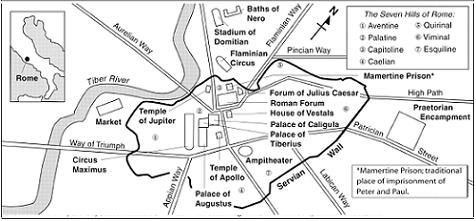
The MacArthur Study Bible, by John MacArthur (Nashville: Word Publishing, 1997) 1689. © 1993 by Thomas Nelson, Inc.
1:10 will of God. God’s sovereign orchestration of Paul’s circumstances (cf. Matt. 6:10; Acts 21:11–14; James 4:13, 14).
1:11 spiritual gift. The Greek word translated “gift” is charisma, which means a “gift of grace”—a spiritual enablement whose source is the Spirit of God. Romans uses this same term to describe: (1) Christ Himself (5:15, 16); (2) general blessings from God (11:29; cf. 1 Tim. 6:17); and (3) specific spiritual gifts given to members of the body to minister to the whole (12:6–8; cf. 1 Cor. 12:1–31; 1 Pet. 4:10, 11). Paul probably intends to encompass all three.
1:12 mutual. A glimpse of Paul’s genuine humility (cf. 1 Pet. 5:3, 4).
1:13 fruit. Scripture catalogs three kinds of spiritual fruit: (1) spiritual attitudes that characterize a Spirit-led believer (Gal. 5:22, 23); (2) righteous actions (6:22; Phil. 4:16, 17; Heb. 13:15); and (3) new converts (16:5). In this context, Paul is probably referring to the third one—a desire that was eventually realized during his imprisonment in Rome (Phil. 4:22). among the other Gentiles. This implies the church in Rome consisted primarily of non-Jews.
1:14 debtor. Paul had an obligation to God (cf. 1 Cor. 9:16–17) to fulfill His divine mandate to minister to Gentiles (1:5; Acts 9:15). Greeks. People of many different nationalities who had embraced the Greek language, culture, and education. They were the sophisticated elite of Paul’s day. Because of their deep interest in Greek philosophy, they were considered “wise.” Because of this prevalence of Greek culture, Paul sometimes used this word to describe all Gentiles (cf. 3:9). barbarians. A derisive term coined by the Greeks for all who had not been trained in Greek language and culture. When someone spoke in another language, it sounded to the Greeks like “bar-bar-bar,” or unintelligible chatter. Although in the narrowest sense “barbarian” referred to the uncultured, uneducated masses, it was often used to describe all non-Greeks—the unwise of the world. Paul’s point is that God is no respecter of persons—the gospel must reach both the world’s elite and its outcasts (cf. John 4:4–42; James 2:1–9).
1:15 gospel. See note on 1:1.
1:16, 17 These two verses crystallize the thesis of the entire book—the gospel of Jesus Christ—which Paul will unfold and explain in the following chapters.
1:16 I am not ashamed. Paul had been imprisoned in Philippi (Acts 16:23, 24), chased out of Thessalonica (Acts 17:10), smuggled out of Berea (Acts 17:14), laughed at in Athens (Acts 17:32), regarded as a fool in Corinth (1 Cor. 1:18, 23), and stoned in Galatia (Acts 14:19), but he remained eager to preach the gospel in Rome—the seat of contemporary political power and pagan religion. Neither ridicule, criticism, nor physical persecution could curb his boldness. See notes on 2 Corinthians 4:5–18; 11:23–28; 12:9, 10. power. The English word dynamite comes from this Greek word. Although the message may sound foolish to some (1 Cor. 1:18), the gospel is effective because it carries with it the omnipotence of God (cf. Ex. 15:6; Deut. 32:39; Job 9:4; Pss. 33:8, 9; 89:13; 106:8, 9; Is. 26:4; 43:13; Jer.10:12; 27:5; Matt. 28:18; Rom. 9:21). Only God’s power is able to overcome man’s sinful nature and give him new life (5:6; 8:3; John 1:12; 1 Cor. 1:18, 23–25; 2:1–4; 4:20; 1 Pet. 1:23). salvation. Used five times in Romans (the verb form occurs eight times), this key word basically means “deliverance” or “rescue.” The power of the gospel delivers people from lostness (Matt. 18:11), from the wrath of God (Rom. 5:9), from willful spiritual ignorance (Hos. 4:6; 2 Thess. 1:8), from evil self-indulgence (Luke 14:26), and from the darkness of false religion (Col. 1:13; 1 Pet. 2:9). It rescues them from the ultimate penalty of their sin, i.e., eternal separation from God and eternal punishment (see note on Rev. 20:6 ). believes. To trust, rely on, or have faith in. When used of salvation, this word usually occurs in the present tense (“is believing”) which stresses that faith is not simply a one-time event, but an ongoing condition. True saving faith is supernatural, a gracious gift of God that He produces in the heart (see note on Eph. 2:8 ) and is the only means by which a person can appropriate true righteousness (cf. 3:22, 25; 4:5, 13, 20; 5:1; see notes on 4:1–25 ). Saving faith consists of three elements: (1) mental: the mind understands the gospel and the truth about Christ (10:14–17); (2) emotional: one embraces the truthfulness of those facts with sorrow over sin and joy over God’s mercy and grace (6:17; 15:13); and (3) volitional: the sinner submits his will to Christ and trusts in Him alone as the only hope of salvation (see note on 10:9 ). Genuine faith will always produce authentic obedience (see note on 4:3; cf. John 8:31; 14:21–24). Jew first. God chose Israel to be His witness nation (Ex. 19:6) and gave her distinct privileges (3:2; 9:4, 5). Christ’s ministry was first to Israel (Matt. 15:24), and it was through Israel that salvation was to come to the world (John 4:22; cf. Acts 13:46). Greek. See note on 1:14.
1:17 righteousness of God. Better translated, “righteousness from God.” A major theme of the book, appearing over thirty times in one form or another, righteousness is the state or condition of perfectly conforming to God’s perfect law and holy character. Other terms from the same Greek root also occur some thirty times and are usually translated “justified,” “justification,” or similarly. Only God is inherently righteous (Deut. 32:4; Pss. 11:7; 116:5; John 17:25; 1 John 2:1; Rev. 16:5), and man falls woefully short of the divine standard of moral perfection (3:23; Matt. 5:48). But, the gospel reveals that on the basis of faith—and faith alone—God will impute His righteousness to ungodly sinners (see notes on 3:21–24; 4:5; 2 Cor. 5:21; Phil. 3:8, 9 ). from faith to faith. This may be a parallel expression to “everyone who believes” (1:16), as if Paul were singling out the faith of each individual believer—from one person’s faith to another’s faith to another’s and so on. Or perhaps Paul’s point is that the righteousness from God is completely on the basis of faith from beginning to end. as it is written. See note on Habakkuk 2:4. The just shall live by faith. Paul intends to prove that it has always been God’s way to justify sinners by grace on the basis of faith alone. God established Abraham as a pattern of faith (4:22–25; Gal. 3:6, 7) and thus calls him the father of all who believe (4:11, 16). Elsewhere, Paul uses this same phrase to argue that no one has ever been declared righteous before God except by faith alone (Gal. 3:11) and that true faith will demonstrate itself in action (Phil. 2:12, 13). This expression emphasizes that true faith is not a single event, but a way of life—it endures. That endurance is called the perseverance of the saints (cf. Col. 1:22, 23; Heb. 3:12–14). One central theme of the story of Job is thatno matter what Satan does, saving faith cannot be destroyed. See notes on 8:31–39.
III. CONDEMNATION: THE NEED OF GOD’S RIGHTEOUSNESS (1:18–3:20)
A. Unrighteous Gentiles (1:18–32)
1:18–3:20 After introducing the righteousness which comes from God (1:17), a theme Paul develops at length (3:21–5:21), he presents the overwhelming evidence of man’s sinfulness, underscoring how desperately he needs this righteousness that only God can provide. He presents God’s case against the irreligious, immoral pagan (1:18–32; the Gentiles) the religious, outwardly moral person (2:1–3:8; the Jews); and concludes by showing that all people alike deserve God’s judgment (3:9–20).
1:18 wrath of God. This is not an impulsive outburst of anger aimed capriciously at people whom God does not like. It is the settled, determined response of a righteous God against sin (cf. Pss. 2:5, 12; 45:7; 75:8; 76:6, 7; 78:49–51; 90:7–9; Is. 51:17; Jer. 25:15, 16; John 3:36; Rom. 9:22; Eph. 5:6; Col. 3:5, 6). is revealed. More accurately, “is constantly revealed.” The word essentially means “to uncover, make visible, or make known.” God reveals His wrath in two ways: (1) indirectly, through the natural consequences of violating His universal moral law, and (2) directly through His personal intervention (the OT record—from the sentence passed on Adam and Eve to the worldwide flood, from the fire and brimstone that leveled Sodom to the Babylonian captivity—clearly displays this kind of intervention). The most graphic revelation of God’s holy wrath and hatred against sin was when He poured out divine judgment on His Son on the Cross. God has various kinds of wrath: (1) eternal wrath, which is hell; (2) eschatological wrath, which is the final Day of the Lord; (3) cataclysmic wrath like the flood and the destruction of Sodom and Gomorrah; (4) consequential wrath, which is the principle of sowing and reaping; and (5) the wrath of abandonment, which is removing restraint and letting people go to their sins (for examples of this wrath, see Ps. 81:11, 12; Prov. 1:23–31; see note on Hos. 4:17 ). Here, it is that fifth form, God’s abandoning the wicked continually through history to pursue their sin and its consequences (vv. 24–32). ungodliness. This indicates a lack of reverence for, devotion to, and worship of the true God—a defective relationship with Him (cf. Jude 14, 15). unrighteousness. This refers to the result of ungodliness: a lack of conformity in thought, word, and deed to the character and law of God (see note on 1:17 ). suppress the truth. Although the evidence from conscience (1:19; 2:14), creation (1:20), and God’s Word is irrefutable, men choose to resist and oppose God’s truth by holding fast to their sin (cf. Ps. 14:1; John 3:19, 20).
1:19 is manifest in them. God has sovereignly planted evidence of His existence in the very nature of man by reason and moral law (1:20, 21, 28, 32; 2:15).
1:20 invisible attributes. This refers specifically to the two mentioned in this verse. by the things that are made. The creation delivers a clear, unmistakable message about God’s person (cf. Pss. 19:1–8; 94:9; Acts 14:15–17; 17:23–28). His eternal power. The Creator, who made all that we see around us and constantly sustains it, must be a being of awesome power. Godhead. That is, His divine nature, particularly His faithfulness (Gen. 8:21, 22), kindness, and graciousness (Acts 14:17). they are without excuse. God holds all people responsible for their refusal to acknowledge what He has shown them of Himself in His creation. Even those who have never had an opportunity to hear the gospel have received a clear witness about the existence and character of God—and have suppressed it. If a person will respond to the revelation he has, even if it is solely natural revelation, God will provide some means for that person to hear the gospel (cf. Acts 8:26–39; 10:1–48; 17:27).
1:21 knew God. Man is conscious of God’s existence, power, and divine nature through general revelation (vv. 19, 20). they did not glorify Him. Man’s chief end is to glorify God (Lev. 10:3; 1 Chr. 16:24–29; Ps. 148; Rom. 15:5, 6), and Scripture constantly demands it (Ps. 29:1, 2; 1 Cor. 10:31; Rev. 4:11). To glorify Him is to honor Him, to acknowledge His attributes, and to praise Him for His perfections (cf. Ex. 34:5–7). It is to recognize His glory and extol Him for it. Failing to give Him glory is man’s greatest affront to his Creator (Acts 12:22, 23). nor were thankful. They refused to acknowledge that every good thing they enjoyed came from God (Matt. 5:45; Acts 14:15–17; 1 Tim. 6:17; James 1:17). futile. Man’s search for meaning and purpose will produce only vain, meaningless conclusions. hearts were darkened. When man rejects the truth, the darkness of spiritual falsehood replaces it (cf. John 3:19, 20).
1:22 Professing to be wise, they became fools. Man rationalizes his sin and proves his utter foolishness by devising and believing his own philosophies about God, the universe, and himself (cf. Pss. 14:1; 53:1).
1:23 changed the glory . . . into an image. They substitute the worship of idols for the worship of the true God. Historians report that many ancient cultures did not originally have idols. For example, Persia (Herodotus; The Histories, 1:31), Rome (Varro in Augustine; The City of God, 4:31), even Greece and Egypt (Lucian; The Syrian Goddess, 34) had no idolatry at their founding. The fourth-century A.D. historian Eusebius reported that the oldest civilizations had no idols. The earliest biblical record of idolatry was among Abram’s family in Ur (Josh. 24:2). The first Commandment forbids it (Ex. 20:3–5), and the prophets continually ridiculed those who foolishly practiced it (Is. 44:9–17; cf. 2 Kin. 17:13–16). Although the false gods which people worship do not exist, demons often impersonate them (1 Cor. 10:20).
1:24–32 This section describes the downward spiral of the wrath of abandonment (see note on v. 18 ) in the life of man when God abandons him. Paul shows the essence (vv. 24, 25), the expression (vv. 26, 27), and the extent (vv. 28–32) of man’s sinfulness.
1:24 God also gave them up. This is a judicial term in Greek, used for handing over a prisoner to his sentence. When people consistently abandon God, He will abandon them (cf. Judg. 10:13; 2 Chr. 15:2; 24:20; Ps. 81:11, 12; Hos. 4:17; Matt. 15:14; Acts 7:38–42; 14:16). He accomplishes this (1) indirectly and immediately, by removing His restraint and allowing their sin to run its inevitable course, and (2) directly and eventually, by specific acts of divine judgment and punishment. uncleanness. A general term often used of decaying matter, like the contents of a grave. It speaks here of sexual immorality (2 Cor. 12:21; cf. Gal. 5:19–23; Eph. 5:3; 1 Thess. 4:7), which begins in the heart and moves to the shame of the body.
1:25 the lie. A denial of God’s existence and His right to be obeyed and glorified (vv. 19–21; Is. 44:20; Jer. 13:25; cf. John 8:44).
1:26 God gave them up. See notes on verses 18, 24. vile passions. Identified in verses 26, 27 as homosexuality, a sin roundly condemned in Scripture (Gen. 19; Lev. 18:22; 1 Cor. 6:9–11; cf. Gal. 5:19–21; Eph. 5:3–5; 1 Tim. 1:9, 10; Jude 7). women. Rather than the normal Greek term for women, this is a general word for female. Paul mentions women first to show the extent of debauchery under the wrath of abandonment, because in most cultures women are the last to be affected by moral collapse.
1:27 receiving in themselves the penalty. Here, the law of sowing and reaping (Gal. 6:7, 8) takes effect, as Paul refers to the self-destructive nature of this sin, of which AIDS is one frightening evidence.
1:28 God gave them over. See notes on verses 18, 24. debased. This translates a Greek word that means “not passing the test.” It was often used to describe useless, worthless metals, discarded because they contained too much impurity. God has tested man’s minds and found them worthless and useless (cf. Jer. 6:30).
1:32 knowing. Not ignorance, but blatant rebellion (see note on 2:15 ).
2:1–16 Having demonstrated the sinfulness of the immoral pagan (1:18–32), Paul presents his case against the religious moralist—Jew or Gentile—by cataloging six principles that govern God’s judgment: (1) knowledge (v. 1); (2) truth (vv. 2, 3); (3) guilt (vv. 4, 5); (4) deeds (vv. 6–10); (5) impartiality (vv. 11–15); and (6) motive (v. 16).
2:1 inexcusable . . . you . . . who judge. Both Jews (Paul’s primary audience here; cf. v. 17) and moral Gentiles who think they are exempt from God’s judgment because they have not indulged in the immoral excesses described in chapter 1, are tragically mistaken. They have more knowledge than the immoral pagan (3:2; 9:4) and thus a greater accountability (cf. Heb. 10:26–29; James 3:1). condemn yourself. If someone has sufficient knowledge to judge others, he condemns himself, because he shows he has the knowledge to evaluate his own condition. practice the same things. In their condemnation of others, they have excused and overlooked their own sins. Self-righteousness exists because of two deadly errors: (1) minimizing God’s moral standard usually by emphasizing externals; and (2) underestimating the depth of one’s own sinfulness (cf. Matt. 5:20–22, 27, 28; 7:1–3; 15:1–3; Luke 18:21).
2:2 according to truth. The meaning is “right.” Whatever God does is by nature right (cf. 3:4; 9:14; Pss. 9:4, 8; 96:13; 145:17; Is. 45:19).
2:3 See note on verse 1.
2:4 despise. Lit. “to think down on,” thus to underestimate someone’s or something’s value, and even to treat with contempt. goodness. This refers to “common grace,” the benefits God bestows on all men (cf. Matt. 5:45; Acts 14:15–17). forbearance. This word, which means “to hold back,” was sometimes used of a truce between warring parties. Rather than destroying every person the moment he or she sins, God graciously holds back His judgment (cf. 3:25). He saves sinners in a physical and temporal way from what they deserve (see note on 1 Tim. 4:10 ), to show them His saving character, that they might come to Him and receive salvation that is spiritual and eternal. longsuffering. This word indicates the duration for which God demonstrates His goodness and forbearance—for long periods of time (cf. 2 Pet. 2:5). Together these three words speak of God’s common grace—the way He demonstrates His grace to all mankind (cf. Job 12:10; Pss. 119:68; 145:9). repentance. The act of turning from sin to Christ for forgiveness and salvation. See notes on 2 Corinthians 7:9–11.
2:5 hardness. The English word sclerosis (as in arteriosclerosis, a hardening of the arteries) comes from this Greek word. But here, the danger is not physical, but spiritual hardness (Ezek. 36:26; Matt. 19:8; Mark 3:5; 6:52; 8:17; John 12:40; Heb. 3:8, 15; 4:7). impenitent heart. A refusal to repent (cf. v. 4) and accept God’s pardon of sin through Jesus Christ. treasuring up . . . wrath. To reject God’s offer of forgiveness and cling to one’s sin is to accumulate more of God’s wrath and earn a more severe judgment (see notes on Heb. 10:26–30; Rev. 20:12 ). day of wrath and . . . judgment. This refers to the final judgment of wicked men that comes at the Great White Throne at the end of the Millennium (see notes on Rev. 20:11–15 ).
2:6–10 See notes on verses 1–16. Although Scripture everywhere teaches that salvation is not on the basis of works (see notes on 4:1–4; Eph. 2:8 ), it consistently teaches that God’s judgment is always on the basis of a person’s deeds (Is. 3:10, 11; Jer. 17:10; John 5:28, 29; 1 Cor. 3:8; 2 Cor. 5:10; Gal. 6:7–9; cf. Rom. 14:12). Paul describes the deeds of two distinct groups: the redeemed (vv. 7, 10) and the unredeemed (vv. 8, 9). The deeds of the redeemed are not the basis of their salvation, but the evidence of it. They are not perfect and are prone to sin, but there is undeniable evidence of righteousness in their lives (see notes on James 2:14–20 ).
2:7 eternal life. Not simply in duration, because even unbelievers will live forever (2 Thess. 1:9; Rev. 14:9–11), but also in quality (see note on John 17:3 ). Eternal life is a kind of life, the holy life of the eternal God given to believers.
2:8 self-seeking. This word may have originally been used to describe a hireling or mercenary, someone who does what he does for money regardless of how his actions affect others. wrath. See note on 1:18.
2:9 the Jew first. Just as the Jews were given the first opportunity to hear and respond to the gospel (1:16), they will be first to receive God’s judgment if they refuse (cf. Amos 3:2). Israel will receive severer punishment because she was given greater light and blessing (see 9:3, 4).
2:11 partiality. Lit. “to receive a face,” that is, to give consideration to someone simply because of his position, wealth, influence, popularity, or appearance. Because it is God’s nature to be just, it is impossible for Him to be anything but impartial (Acts 10:34; Gal. 2:6; Eph. 6:7, 8; Col. 3:25; 1 Pet. 1:17).
2:12 sinned without law. The Gentiles who never had the opportunity to know God’s moral law (Ex. 20:1ff.) will be judged on their disobedience in relationship to their limited knowledge (see notes on 1:19, 20 ). judged by the law. The Jews and many Gentiles who had access to God’s moral law will be accountable for their greater knowledge (cf. Matt. 11:20–23; Heb. 6:4–6; 10:26–31).
2:13 will be justified. See note on 3:24 ; cf. James 2:20–26.
2:14 by nature do . . . the law. Without knowing the written Law of God, people in pagan society generally value and attempt to practice its most basic tenets. This is normal for cultures instinctively (see note on v. 15 ) to value justice, honesty, compassion, and goodness toward others, reflecting the divine law written in the heart. law to themselves. Their practice of some good deeds and their aversion to some evil ones demonstrate an innate knowledge of God’s Law—a knowledge that will actually witness against them on the day of judgment.
2:15 work of the law. Probably best understood as “the same works the Mosaic Law prescribes.” conscience. Lit. “with knowledge.” That instinctive sense of right and wrong that produces guilt when violated. In addition to an innate awareness of God’s Law, men have a warning system that activates when they choose to ignore or disobey that law. Paul urges believers not to violate their own consciences or cause others to do so (13:5; 1 Cor. 8:7, 12; 10:25, 29; 2 Cor.5:11; cf. 9:1; Acts 23:1; 24:16), because repeatedly ignoring the warnings of the conscience desensitizes it and eventually silences it (1 Tim. 4:2). See 2 Corinthians 1:12; 4:2.
2:16 the day. See note on 2:5. secrets. This primarily refers to the motives that lie behind people’s actions (1 Chr. 28:9; Ps. 139:1–3; Jer. 17:10; Matt. 6:4, 6, 18; cf. Luke 8:17; Heb. 4:12). by Jesus Christ. See note on John 5:23. my gospel. Not his own personal message, but the divinely-revealed message of Jesus Christ (see note on 1:1 ), which is “good news” in light of the bad news of judgment.
2:17–29 Having shown that outwardly moral people—Jew and Gentiles alike—will stand condemned by God’s judgment, Paul turns his argument exclusively to the Jews, God’s covenant people. Neither their heritage (v. 17a), their knowledge (vv. 17b–24), nor their ceremonies, specifically circumcision (vv. 25–29), will protect them from God’s righteous judgment.
2:17 Jew. Previously called Hebrews and Israelites, by the first century “Jew” had become the most common name for the descendants of Abraham through Isaac. “Jew” comes from “Judah” (meaning “praise”), one of the twelve tribes and the designation for the southern half of Solomon’s kingdom after his death. From the time of the Babylonian captivity, the whole race bore this title. Their great heritage, however (cf. Gen. 12:3), became a source of pride and complacency (cf. Jon. 4:2; Mic. 3:11, 12; Matt. 3:7–9; John 8:31–34, 40–59), which led to judgment instead of “praise.”
2:19, 20 the blind . . . babes. Because they possessed the law, the Jews were confident that they were spiritually superior teachers: guides to blind pagans (cf. Matt. 23:24–28), light (cf. Is. 42:6), wise in God’s ways, and able to teach babies (probably a reference to Gentile proselytes to Judaism).
2:21, 23 A series of questions designed to contrast most Jews’ practice with what they knew and taught (cf. Ps. 50:16–20; Matt. 23:3, 4; James 3:1).
2:22 do you rob temples? May refer to fraudulently skimming funds from money given to the temple or withholding part of their temple tax or offerings (cf. Mal. 3:8–10). More likely, however, it refers to the common practice—in direct violation of God’s command (Deut. 7:25)—of looting pagan temples and selling the idols and vessels for personal profit (cf. Acts 19:37) under the pretext of religion.
2:24 it is written. Quoted from Isaiah 52:5.
2:25 circumcision. See note on Genesis 17:11. profitable. As an act of obedience and a reminder of their covenant relationship to God (see notes on Gen. 17:9–14 ). uncircumcision. A Jew who continually transgressed God’s Law had no more of a saving relationship to God than an uncircumcised Gentile. The outward symbol was nothing without the inner reality.
2:26 counted as circumcision? God will regard the believing Gentile as favorably as a circumcised, believing Jew.
2:27 A Gentile’s humble obedience to the Law should serve as a stern rebuke to a Jew who, in spite of his great advantages, lives in disobedience.
2:28 outwardly. This refers to physical descendants of Abraham who have been properly circumcised (cf. 9:6; Matt. 3:9).
2:29 he is a Jew. A true child of God; the true spiritual seed of Abraham. (See 4:16; cf. Gal. 3:29). circumcision is that of the heart. The outward rite is of value only when it reflects the inner reality of a heart separated from sin unto God. Cf. Deuteronomy 10:16; 30:6. Spirit . . . letter. Salvation results from the work of God’s Spirit in the heart, not mere external efforts to conform to his law.
3:2 oracles. This Greek word is logion, a diminutive form of the common NT word logos, which is normally translated “word.” These are important sayings or messages, especially supernatural ones. Here, Paul uses the word to encompass the entire OT—the Jews received the very words of the true God (Deut. 4:1, 2; 6:1, 2; cf. Mark 12:24; Luke 16:29; John 5:39). The Jews had a great advantage in having the OT, because it contained the truth about salvation (2 Tim. 3:15) and about the gospel in its basic form (Gal. 3:8). When Paul said “preach the Word” (2 Tim. 4:2), he meant the “oracles of God” (1 Pet. 4:11) recorded in Scripture.
3:3, 4 Paul anticipated that Jewish readers would disagree with his statements that God has not guaranteed to fulfill His promises to every physical descendant of Abraham. They would argue that such teaching nullifies all the promises God made to the Jews in the OT. But his answer reflects both the explicit and implicit teaching of the OT; before any Jew, regardless of the purity of his lineage, can inherit the promises, he must come to repentance and faith (cf. 9:6, 7; Is. 55:6, 7).
3:3 the faithfulness of God. God will fulfill all the promises He made to the nation, even if individual Jews are not able to receive them because of their unbelief.
3:4 every man a liar. If all mankind were to agree that God had been unfaithful to His promises, it would only prove that all are liars and God is true. Cf. Titus 1:1. it is written. This is quoted from Psalm 51:4.
3:5–8 Paul anticipates and answers the objection that his teaching actually impugned the very holiness and purity of God’s character (see note on 3:3, 4 ).
3:5 demonstrates the righteousness of God. See note on 1:17. By contrast, like a jeweler who displays a diamond on black velvet to make the stone appear even more beautiful. (I speak as a man ). He is simply paraphrasing the weak, unbiblical logic of his opponents—the product of their natural, unregenerate minds.
3:6 judge. A major theme of Scripture (Gen. 18:25; Pss. 50:6; 58:11; 94:2), here it probably refers to the great future day of judgment (see note on 2:5 ). Paul’s point is that if God condoned sin, He would have no equitable, righteous basis for judgment.
3:8 slanderously reported. Tragically, the apostle’s gospel message of salvation by grace through faith alone had been perverted by his opponents, who argued it provided not only a license to sin, but outright encouragement to do so (5:20; 6:1, 2).
C. Unrighteous Mankind (3:9–20)
3:9–20 Paul concludes his indictment of mankind with this summary: Jew and Gentile alike stand guilty before God (see note on 1:18–3:20 ).
3:9 Are we better . . . ? “We” probably refers to the Christians in Rome who would receive this letter. Christians do not have an intrinsically superior nature to all those Paul has shown to stand under God’s condemnation. Greeks. See note on 1:14. under sin. Completely enslaved and dominated by sin.
3:10–17 Paul strings together a series of OT quotations that indict the character (vv. 10–12), conversation (vv. 13, 14), and conduct (vv. 15–17) of all people. Nine times he uses words such as “none” and “all” to show the universality of human sin and rebellion.
3:10–12 This is quoted from Psalms 14:1–3; 53:1–3.
3:10 As it is written. The common introduction to OT quotations (cf. 1:17; 2:24; 3:4; Matt. 4:4, 6, 7, 10). The tense of the Greek verb emphasizes continuity and permanence, and implies its divine authority. none righteous. Man is universally evil (cf. Ps. 14:1; see notes on 1:17 ).
3:11 none . . . understands. Man is unable to comprehend the truth of God or grasp His standard of righteousness (see Pss. 14:2; 53:3; cf. 1 Cor. 2:14). Sadly, his spiritual ignorance does not result from a lack of opportunity (1:19, 20; 2:15), but is an expression of his depravity and rebellion (Eph. 4:18). none . . . seeks. See Psalm 14:2. This verse clearly implies that the world’s false religions are fallen man’s attempts to escape the true God—not to seek Him. Man’s natural tendency is to seek his own interests (cf. Phil. 2:21), but his only hope is for God to seek him (John 6:37, 44). It is only as a result of God’s work in the heart that anyone seeks Him (Ps. 16:8; Matt. 6:33).
3:12 turned aside. See Psalm 14:3. This word basically means “to lean in the wrong direction.” It was used to describe a soldier’s running the wrong way, or deserting. All people are inclined to leave God’s way and pursue their own (cf. Is. 53:6). none who does good. See note on verse 10.
3:13 open tomb. See Psalm 5:9. Tombs were sealed not only to show respect for the deceased, but to hide the sight and stench of the body’s decay. As an unsealed tomb allows those who pass to see and smell what is inside, the unregenerate person’s open throat—that is, the foul words that come from it—reveal the decay of his heart (cf. Prov. 10:31, 32; 15:2, 28; Jer. 17:9; Matt. 12:34, 35; 15:18; James 3:1–12). asps. See Psalm 140:3; cf. Matthew 3:7; 12:34.
3:14 cursing. This is quoted from Psalm 10:7. It refers to wanting the worst for someone and publicly expressing that desire in caustic, derisive language. bitterness. The open, public expression of emotional hostility against one’s enemy (cf. Ps. 64:3, 4).
3:15–17 This is quoted from Isaiah 59:7, 8.
3:16 Destruction and misery. Man damages and destroys everything he touches, leaving a trail of pain and suffering in his wake.
3:17 way of peace. Not the lack of an inner sense of peace, but man’s tendency toward strife and conflict, whether between individuals or nations (cf. Jer. 6:14).
3:18 fear of God. See Psalm 36:1. Man’s true spiritual condition is nowhere more clearly seen than in the absence of a proper submission to and reverence for God. Biblical fear for God consists of : (1) awe of His greatness and glory, and (2) dread of the results of violating that holy nature (see note on Prov. 1:7; cf. Prov. 9:10; 16:6; Acts 5:1–11; 1 Cor. 11:30).
3:19 those . . . under the law. Every unredeemed human being. Jews received the written law through Moses (3:2), and Gentiles have the works of the law written on their hearts (2:15), so that both groups are accountable to God. every mouth . . . stopped . . . guilty. There is no defense against the guilty verdict God pronounces on the entire human race.
3:20 deeds of the law. Doing perfectly what God’s moral law requires is impossible, so that every person is cursed by that inability (see notes on Gal. 3:10, 13 ). justified. See note on verse 24. by the law is the knowledge of sin. The law makes sin known, but can’t save. See note on 7:7.
IV. JUSTIFICATION: THE PROVISION OF GOD’S RIGHTEOUSNESS (3:21–5:21)
A. The Source of Righteousness (3:21–31)
3:21–5:21 Having conclusively proved the universal sinfulness of man and his need for righteousness (1:18–3:20), Paul develops the theme he introduced in 1:17, i.e., God has graciously provided a righteousness that comes from Him on the basis of faith alone (3:21–5:21).
3:21 But now. Not a reference to time, but a change in the flow of the apostle’s argument. Having shown the impossibility of gaining righteousness by human effort, he turns to explain the righteousness that God Himself has provided. righteousness. See note on 1:17. This righteousness is unique: (1) God is its source (Is. 45:8); (2) it fulfills both the penalty and precept of God’s law. Christ’s death as a substitute pays the penalty exacted on those who failed to keep God’s law, and His perfect obedience to every requirement of God’s law fulfills God’s demand for comprehensive righteousness (2 Cor. 5:21; 1 Pet. 2:24; cf. Heb. 9:28); and (3) because God’s righteousness is eternal (Ps. 119:142; Is. 51:8; Dan. 9:24), the one who receives it from Him enjoys it forever. apart from the law. Entirely apart from obedience to any law (4:15; Gal. 2:16; 3:10, 11; 5:1, 2, 6; Eph. 2:8, 9; cf. Phil. 3:9; 2 Tim. 1:9; Titus 3:5). witnessed by the Law and the Prophets. See note on 1:2.
3:22 through faith . . . all . . . who believe. See note on 1:16.
3:22, 23 there is no difference . . . glory of God. A parenthetical comment explaining that God can bestow His righteousness on all who believe, Jew or Gentile, because all people—without distinction—fail miserably to live up to the divine standard.
3:23 all have sinned. Paul has already made this case (1:18–3:20).
3:24 justified. This verb, and related words from the same Greek root (e.g., justification), occur some thirty times in Romans and are concentrated in 2:13–5:1. This legal or forensic term comes from the Greek word for “righteous” and means “to declare righteous.” This verdict includes pardon from the guilt and penalty of sin, and the imputation of Christ’s righteousness to the believer’s account, which provides for the positive righteousness man needs to be accepted by God. God declares a sinner righteous solely on the basis of the merits of Christ’s righteousness. God imputed a believer’s sin to Christ’s account in His sacrificial death (Is. 53:4, 5; 1 Pet. 2:24), and He imputes Christ’s perfect obedience to God’s Law to Christians (cf. 5:19; 1 Cor. 1:30; see notes on 2 Cor. 5:21; Phil. 3:9 ). The sinner receives this gift of God’s grace by faith alone (3:22, 25; see notes on 4:1–25 ). Sanctification, the work of God by which He progressively makes righteous those whom He has already justified, is distinct from justification but without exception, always follows it (8:30). freely by His grace. Justification is a gracious gift God extends to the repentant, believing sinner, wholly apart from human merit or work (see note on 1:5 ). redemption. The imagery behind this Greek word comes from the ancient slave market. It meant paying the necessary ransom to obtain the prisoner’s or slave’s release. The only adequate payment to redeem sinners from sin’s slavery and its deserved punishment was “in Christ Jesus” (1 Tim. 2:6; 1 Pet. 1:18, 19), and was paid to God to satisfy His justice.
3:25 whom God set forth. This great sacrifice was not accomplished in secret, but God publicly displayed His Son on Calvary for all to see. propitiation. Crucial to the significance of Christ’s sacrifice, this word carries the idea of appeasement or satisfaction—in this case Christ’s violent death satisfied the offended holiness and wrath of God against those for whom Christ died (Is. 53:11; Col. 2:11–14). The Hebrew equivalent of this word was used to describe the mercy seat—the cover to the ark of the covenant—where the high priest sprinkled the blood of the slaughtered animal on the Day of Atonement to make atonement for the sins of the people. In pagan religions, it is the worshiper, not the god, who is responsible to appease the wrath of the offended deity. But in reality, man is incapable of satisfying God’s justice apart from Christ, except by spending eternity in hell. Cf. 1 John 2:2. through faith. See note on 1:16. forbearance. See note on 2:4. passed over the sins. This means neither indifference nor remission. God’s justice demands that every sin and sinner be punished. God would have been just, when Adam and Eve sinned, to destroy them, and with them, the entire human race. But in His goodness and forbearance (see 2:4), He withheld His judgment for a certain period of time (cf. Ps. 78:38, 39; Acts 17:30, 31; 2 Pet. 3:9).
3:26 to demonstrate . . . His righteousness. This is accomplished through the Incarnation, sinless life, and substitutionary death of Christ. just and the justifier. The wisdom of God’s plan allowed Him to punish Jesus in the place of sinners and thereby justify those who are guilty, without compromising His justice.
3:27 Where is boasting then? Cf. 4:1, 2; 1 Corinthians 1:26–29.
3:28 justified by faith. See note on verse 24. Although the word alone does not appear in the Greek text, that is Paul’s clear meaning (cf. 4:3–5; see note on James 2:21 ). deeds of the law. See note on verse 20.
3:29 God of the Gentiles. There is only one true God (cf. 1 Cor. 8:5, 6).
3:31 Knowing he would be accused of antinomianism (being against the law) for arguing that a man was justified apart from keeping the law, Paul introduced here the defense he later developed in chapters 6 and 7. through faith . . . we establish the law. Salvation by grace through faith does not denigrate the law, but underscores its true importance: (1) by providing a payment for the penalty of death, which the law required for failing to keep it; (2) by fulfilling the law’s original purpose, which is to serve as a tutor to show mankind’s utter inability to obey God’s righteous demands and to drive people to Christ (Gal. 3:24); and (3) by giving believers the capacity to obey it (8:3, 4).
B. The Example of Righteousness (4:1–25)
4:1 Abraham our father. Paul uses the model of Abraham to prove justification by faith alone because the Jews held him up as the supreme example of a righteous man (John 8:39), and because it clearly showed that Judaism with its works-righteousness had deviated from the faith of the Jews’ patriarchal ancestors. In a spiritual sense, Abraham was the forerunner of the primarily Gentile church in Rome as well (see notes on 1:13; 4:11, 16; cf. Gal. 3:6, 7).
4:2 justified by works. Declared righteous on the basis of human effort (see note on 3:24 ). boast. If Abraham’s own works had been the basis of his justification, he would have had every right to boast in God’s presence. That makes the hypothetical premise of verse 2 unthinkable (Eph. 2:8, 9; 1 Cor. 1:29).
4:3 A quotation of Genesis 15:6, one of the clearest statements in all Scripture about justification (see note on 3:24 ). believed. Abraham was a man of faith (see note on 1:16; cf. 4:18–21; Gal. 3:6, 7, 9; Heb. 11:8–10). But faith is not a meritorious work. It is never the ground of justification—it is simply the channel through which it is received and it, too, is a gift. See note on Ephesians 2:8. accounted. Cf. verses 5, 9, 10, 22. This word can also be translated “imputed” (vv. 6, 8, 11, 23, 24). Used in both financial and legal settings, this Greek word, which occurs nine times in chapter 4 alone, means to take something that belongs to someone and credit to another’s account. It is a one-sided transaction. Abraham did nothing to accumulate it; God simply took His own righteousness and credited it to Abraham as if it were actually his. This God did because Abraham believed in Him (see note on Gen.15:6 ). righteousness. See notes on 1:17; 3:21.
4:4, 5 Broadening his argument from Abraham to all people, the apostle here makes it clear that the forensic act of declaring a person righteous is completely apart from any kind of human work. If salvation were on the basis of one’s own effort, God would owe salvation as a debt—but salvation is always a sovereignly given gift of God’s grace (3:24; Eph. 2:8, 9) to those who believe (cf. 1:16). Since faith is contrasted with work, faith must mean the end of any attempt to earn God’s favor through personal merit.
4:5 justifies the ungodly. Only those who relinquish all claims to goodness and acknowledge they are ungodly are candidates for justification (cf. Luke 5:32). accounted. See note on verse 3.
4:6–8 Paul turns for support of his argument to Psalm 32:1, 2, a penitential psalm written by David after his adultery with Bathsheba and his murder of her husband (2 Sam. 11). In spite of the enormity of his sin and the utter absence of personal merit, David knew the blessing of imputed righteousness.
4:9–12 Paul anticipated what his Jewish readers would be thinking: If Abraham was justified by his faith alone, why did God command him and his descendants to be circumcised? His response not only answers those concerned with circumcision, but the millions who still cling to some other kind of religious ceremony or activity as their basis for righteousness. See notes on Genesis 15:6.
4:9 circumcised. This refers to Jews (see notes on Gen. 17:11–14 ; cf. Acts 15:19–29; Rom. 2:25–29; 4:11; Gal. 5:1–4; 6:12; Phil. 3:2–5). uncircumcised. All Gentiles (see notes on 2:25–29 ).
4:10 Not while . . . but while uncircumcised. The chronology of Genesis proves Paul’s case. Abraham was eighty-six when Ishmael was born (Gen. 16:16), and Abraham was ninety-nine when he was circumcised. But God declared him righteous before Ishmael had even been conceived (Gen. 15:6; 16:2–4)—at least fourteen years before Abraham’s circumcision.
4:11, 12 the father of all those who believe. Racially, Abraham is the father of all Jews (circumcised); spiritually, he is the father of both believing Jews (v. 12) and believing Gentiles (uncircumcised; v. 11). Cf. 4:16; Galatians 3:29.
4:11 sign. This indicates man’s need for spiritual cleansing (cf. 2:28, 29; Jer. 4:3, 4; 9:24–26) and of the covenant relationship between God and His people (see note on Gen. 17:11 ). seal. An outward demonstration of the righteousness which God had credited to him by faith.
4:13–15 Just as Abraham was not justified by the rite of circumcision (vv. 9–12), neither was he justified by keeping the Mosaic Law (vv. 13–15).
4:13 promise . . . heir of the world. This refers to Christ and is the essence of the covenant God made with Abraham and his descendants (see note on Gen. 12:3 ; cf. Gen.15:5; 18:18; 22:18). The final provision of that covenant was that through Abraham’s seed all the world would be blessed (Gen. 12:3). Paul argues that “the seed” refers specifically to Christ and that this promise really constituted the gospel (Gal. 3:8, 16; cf. John 8:56). All believers, by being in Christ, become heirs of the promise (Gal. 3:29; cf. 1 Cor. 3:21–23). not . . . through the law. That is, not as a result of Abraham’s keeping the law. righteousness of faith. Righteousness received from God by faith (see note on 1:17 ).
4:14 those who are of the law. If only those who perfectly keep the law—an impossibility—receive the promise, faith has no value. promise . . . of no effect. Making a promise contingent on an impossible condition nullifies the promise (see note on v. 13 ).
4:15 law brings about wrath. By exposing man’s sinfulness (cf. 7:7–11; Gal. 3:19, 24).
4:16 of faith. Justification is through faith alone (see notes on 1:16, 17 and 3:24 ). according to grace. But the power of justification is God’s great grace (see note on 1:5 ), not man’s faith. promise. See note on verse 13. those who are of the law. Believing Jews. those who are of the faith of Abraham. Believing Gentiles. father of us all. See note on verse 11.
4:17 as it is written. Quoted from Genesis 17:5. gives life to the dead. Abraham had experienced this firsthand (Heb. 11:11, 12; cf. Rom. 4:19). calls those things which do not exist as though they did. This is another reference to the forensic nature of justification. God can declare believing sinners to be righteous, even though they are not, by imputing His righteousness to them, just as God made or declared Jesus “sin” and punished Him, though He was not a sinner. Those whom He justifies, He will conform to the image of His Son (8:29, 30).
4:18–25 Having shown that justification is through faith, not works (vv. 1–8), and that it is by grace, not the keeping of law (vv. 9–17), Paul now concludes by showing that it results from divine power, not human effort (vv. 18–25).
4:18 contrary to hope. From the human perspective, it seemed impossible (cf. v. 19). Cf. Genesis 17:5. what was spoken. Quoted from Genesis 15:5.
4:19 weak in faith. This occurs when doubt erodes one’s confidence in God’s Word. the deadness of Sarah’s womb. She was only ten years younger than Abraham (Gen. 17:17), ninety years old (well past childbearing age) when they received the promise of Isaac.
4:20 the promise. Of the birth of a son (Gen. 15:4; 17:16; 18:10). giving glory to God. Believing God affirms His existence and character and thus gives Him glory (cf. Heb. 11:6; 1 John 5:10).
4:22 therefore. Because of his genuine faith (see Gen. 15:6).
4:23 not . . . for his sake alone. All Scripture has universal application (cf. 15:4; 2 Tim. 3:16, 17), and Abraham’s experience is no exception. If Abraham was justified by faith, then all other people are justified on the same basis.
4:25 A paraphrase of the LXX (Greek translation of the OT) rendering of Isaiah 53:12. Perhaps these words were adapted to and quoted from an early Christian confession or hymn. delivered up. I.e., crucified. because of our justification. The Resurrection provided proof that God had accepted the sacrifice of His Son and would be able to be just and yet justify the ungodly.
C. The Blessings of Righteousness
5:1–11 Paul completed his case that God justifies sinners on the basis of faith alone, and he turned his pen to counter the notion that although believers receive salvation by faith, they will preserve it by good works. He argues that they are bound eternally to Jesus Christ, preserved by His power and not by human effort (cf. Is. 11:5; Ps. 36:5; Lam. 3:23; Eph. 1:18–20; 2 Tim. 2:13; Heb. 10:23). For the Christian, the evidences of that eternal tie are: (1) his peace with God (v. 1); (2) his standing in grace (v. 2a); (3) his hope of glory (vv. 2b–5a); (4) his receiving of divine love (vv. 5b–8); (5) his certain escape of divine wrath (vv. 9, 10); and (6) his joy in the Lord (v. 11).
Glorifying God (Rom. 4:20, 21)
| 1. Living with purpose. | (1 Cor. 10:31) |
| 2. Confessing sins. | (Josh. 7:19) |
| 3. Praying expectantly. | (John 14:13) |
| 4. Living purely. | (1 Cor. 6:18–20) |
| 5. Submitting to Christ. | (Phil. 2:9–11) |
| 6. Praising God. | (2 Cor. 4:15) |
| 7. Obeying God. | (2 Cor. 9:13; 2 Thess. 1:12) |
| 8. Growing in faith. | (Rom. 4:20–21) |
| 9. Suffering for Christ's sake. | (1 Pet. 4:15–16) |
| 10. Rejoicing in God. | (1 Chr. 16:10) |
| 11. Worshiping God. | (Ps. 86:9) |
| 12. Bearing spiritual fruit. | (John 15:8) |
| 13. Proclaiming God's Word. | (2 Thess. 3:1) |
| 14. Serving God's people. | (1 Pet. 4:10–11) |
| 15. Purifying Christ's church. | (Eph. 5:27; 2 Thess. 1:10) |
| 16. Giving sacrificially. | (2 Cor. 9:13) |
| 17. Unifying believers. | (John 17:22) |
| 18. Salvation of the lost. | (Ps. 21:5; 1 Thess. 2:12; 2 Thess. 2:14) |
| 19. Shining Christ's light. | (Matt. 5:16) |
| 20. Spreading God's gospel. | (2 Cor. 4:15) |
Salvation: Man’s Greatest Possession
| Justification (Past Tense) | Sanctification (Present Tense) | Glorification (Future Tense) |
| Saved immediately from sin's penalty | Saved progressively from sin's power | Saved ultimately from sin's presence |
“For by grace you have been saved through faith, and that not of yourselves; it is the gift of God.” (Ephesians 2:8)
Nelson’s Complete Book of Bible Maps & Charts (Nashville: Thomas Nelson Publishers, 1996) 409. © 1993 by Thomas Nelson, Inc.
5:1 having been justified. The Greek construction—and its English translation—underscores that justification is a one-time legal declaration with continuing results (see note on 3:24 ), not an ongoing process. peace with God. Not a subjective, internal sense of calm and serenity, but an external, objective reality. God has declared Himself to be at war with every human being because of man’s sinful rebellion against Him and His laws (v. 10; cf. 1:18; 8:7; Ex. 22:24; Deut.32:21, 22; Ps. 7:11; John 3:36; Eph. 5:6). But the first great result of justification is that the sinner’s war with God is ended forever (Col. 1:21, 22). Scripture refers to the end of this conflict as a person’s being reconciled to God (vv. 10, 11; 2 Cor. 5:18–20).
5:2 access. Used only twice elsewhere in the NT (Eph. 2:18; 3:12), this word always refers to the believer’s access to God through Jesus Christ. What was unthinkable to the OT Jew (cf. Ex. 19:9, 20, 21; 28:35) is now available to all (Jer. 32:38, 40; Heb. 4:16; 10:19–22; cf. Matt. 27:51). stand. This refers to the permanent, secure position believers enjoy in God’s grace (cf. v. 10; 8:31–34; John 6:37; Phil. 1:6; 2 Tim. 1:12; Jude 24). hope of the glory of God. Unlike the English word hope, the NT word contains no uncertainty; it speaks of something that is certain, but not yet realized. The believer’s ultimate destiny is to share in the very glory of God (8:29, 30; John 17:22; 2 Cor. 3:18; Phil. 3:20, 21; 1 John 3:1, 2), and that hope will be realized because Christ Himself secures it (1 Tim. 1:1). Without the clear and certain promises of the Word of God, the believer would have no basis for hope (15:4; Ps. 119:81, 114; Eph. 2:12; cf. Jer. 14:8).
5:3 tribulations. A word used for pressure, like that of a press squeezing the fluid from olives. Here, they are not the normal pressures of living (cf. 8:35), but the inevitable troubles that come to followers of Christ because of their relationship with Him (Matt. 5:10–12; John 15:20; 2 Cor. 4:17; 1 Thess. 3:3; 2 Tim. 3:12; 1 Pet. 4:19). Such difficulties produce rich spiritual benefits (vv. 3, 4). perseverance. Sometimes translated “patience,” this word refers to endurance, the ability to remain under great and pressure without succumbing (15:5; Col. 1:22, 23; 2 Thess. 1:4; Rev. 14:12).
5:4 character. A better translation is “proven character.” The Greek word simply means “proof.” It was used of testing metals to determine their purity. Here, the proof is Christian character (cf. James 1:12). Christians can glory in tribulations because of what those troubles produce.
5:5 love of God . . . poured out. God’s love for us (cf. v. 8) has been lavishly poured out to the point of overflowing within our hearts. Paul moves from the objective aspects of our security in Christ to the internal, more subjective. God has implanted within our hearts evidence that we belong to Him in that we love the One who first loved us (1 Cor. 16:22; cf. Gal. 5:22; Eph. 3:14–19; 1 John 4:7–10). Spirit who was given. A marvelous testimony to God’s love for us (8:9, 14, 16, 17; John 7:38, 39; 1 Cor. 6:19, 20; 12:13; Eph. 1:18).
5:6 without strength. Lit. “helpless.”Unregenerate sinners are spiritually dead and incapable of doing anything to help themselves (John 6:44; Eph. 2:1). in due time. At the moment God had chosen (cf. Gal. 4:4). Christ died for the ungodly. God’s love for His own is unwavering because it is not based on how lovable we are, but on the constancy of His own character; God’s supreme act of love came when we were at our most undesirable (cf. Matt. 5:46).
5:7 righteous man . . . good man. As uncommon as such a sacrifice is, Paul’s point is that we were neither of these persons—yet Christ sacrificed Himself for us.
5:9 Much more. What Paul is about to say is even more amazing and wonderful. justified. See note on 3:24. by His blood. Through Jesus’ violent, substitutionary death. References to the blood of the Savior include the reality that He bled in His death (a necessity to fulfill the OT imagery of sacrifice), but are not limited to the fluid itself. New Testament writers also use the term blood as a graphic way to describe violent death (see Matt. 23:30, 35; 27:4–8, 24, 25; John 6:53–56; Acts 5:28; 20:26). References to the Savior’s blood are not simply pointing to the fluid, but His death and entire atoning work (cf. 3:25; Eph. 1:7; 2:13; Col. 1:14, 20; Heb. 9:12; 10:19; 13:12; 1 Pet. 1:2, 19; 1 John 1:7; Rev. 1:5). wrath. See note on 1:18. Christ bore the full fury of God’s wrath in the believing sinner’s place, and there is none left for him (see 8:1; 1 Thess. 1:10; 5:9).
5:10 saved by His life. When we were God’s enemies, Christ was able by His death to reconcile us to God. Certainly, now that we are God’s children, the Savior can keep us by His living power.
5:11 reconciliation. This is between God and sinners. See notes on 2 Corinthians 5:18–20.
D. The Imputation of Righteousness (5:12–21)
5:12–21 In one of the most enigmatic passages in the entire book, Paul sets out to show how one person’s death can provide salvation for many. To prove his point, he uses Adam to establish the principle that it is possible for one man’s actions to inexorably affect many other people.
5:12 just as . . . sin entered. Not a particular sin, but the inherent propensity to sin entered the human realm; people became sinners by nature. Adam passed to all his descendants the inherent sinful nature he possessed because of his first disobedience. That nature is present from the moment of conception (Ps. 51:5), making it impossible for man to live in a way that pleases God. Satan, the father of sin (1 John 3:8), first brought temptation to Adam and Eve (Gen. 3:1–7). through one man. When Adam sinned, all mankind sinned in his loins (v.18; cf. Heb. 7:7–10). Since his sin transformed his inner nature and brought spiritual death and depravity, that sinful nature would be passed on seminally to his posterity as well (Ps. 51:5). death. Adam was not originally subject to death but, through his sin, it became a grim certainty for him and his posterity. Death has three distinct manifestations: (1) spiritual death or separation from God (cf. Eph. 2:1, 2; 4:18); (2) physical death (Heb. 9:27); and (3) eternal death (also called the second death), which includes not only eternal separation from God, but eternal torment in the lake of fire (Rev. 20:11–15). because all sinned. Because all humanity existed in the loins of Adam, and have through procreation inherited his fallenness and depravity, it can be said that all sinned in him. Therefore, humans are not sinners because they sin, but rather they sin because they are sinners.
5:13 sin is not imputed. See note on 2 Corinthians 5:19. Though all people were regarded as sinners (v. 12), because there was no explicit list of commands, there was no strict accounting of their specific points of violation. when there is no law. The period from Adam to Moses, when God had not yet given the Mosaic Law.
5:14 Nevertheless death reigned. But even without the law, death was universal. All people from Adam to Moses were subject to death, not because of their sinful acts against the Mosaic Law (which they did not yet have), but because of their own inherited sinful nature. not sinned . . . likeness . . . of Adam. Those who had no specific revelation as did Adam (Gen. 2:16, 17) or those who had the Mosaic Law (cf. v. 13), but nevertheless sinned against the holiness of God, i.e., those who “sinned without law” (2:12). a type of Him . . . to come. Both Adam and Christ were similar in that their acts affected many others. This phrase serves as transition from the apostle’s discussion of the transference of Adam’s sin to the crediting of Christ’s righteousness.
5:15–21 In this passage, Paul explores the contrasts between the condemning act of Adam and the redemptive act of Christ. They were different in their effectiveness (v. 15), their extent (v. 16), their efficacy (v. 17), their essence (vv. 18, 19), and their energy (vv. 20, 21).
5:15 many died. Paul uses the word many with two distinct meanings in verse 15, just as he will the word all in verse 18. He has already established that all people, without exception, bear the guilt of sin and are therefore subject to death (see notes on v. 12 ). So the “many” who die must refer to all Adam’s descendants. much more. Christ’s one act of redemption was immeasurably greater than Adam’s one act of condemnation.
5:16 the gift. Salvation by grace. the judgment . . . from one offense. See notes on verse 12. condemnation. The divine guilty verdict; the opposite of justification. many offenses. Adam brought upon all people the condemnation for only one offense—his willful act of disobedience. Christ, however, delivers the elect from the condemnation of many offenses. justification. See note on 3:24.
5:17 death reigned. Adam’s sin brought universal death—exactly opposite the result he expected and Satan had promised: “You will be like God” (Gen. 3:5). Christ’s sacrifice brought salvation to those who believe. gift of righteousness. See notes on 1:17; 3:24; see also 2 Corinthians 5:21; Phil. 3:8, 9. will reign in life. Unlike Adam’s act, Christ’s act has—and will—accomplish exactly what He intended (cf. Phil. 1:6), i.e., spiritual life (cf. Eph. 2:5).
5:18, 19 Summaries of the analogy of Adam and Christ.
5:18 condemnation. See note on verse 16. one Man’s righteous act. Not a reference to a single event, but generally to Christ’s obedience (cf. v. 19; Luke 2:49; John 4:34; 5:30; 6:38), culminating in the greatest demonstration of that obedience, death on a cross (Phil. 2:8). free gift . . . to all men. This cannot mean that all people will be saved; salvation is only for those who exercise faith in Jesus Christ (cf. 1:16, 17; 3:22, 28; 4:5, 13). Rather, like the word many in verse 15, Paul is using “all” with two different meanings for the sake of parallelism, a common practice in the Hebrew OT.
Adam and Christ: Comparison and Contrast
| Adam | Christ |
| Made in the divine image. | Is the form and very essence of God. |
| Thought it a prize to be grasped at to be as God. | Thought it not a prize to be grasped at to be as God. |
| Aspired to a reputation. | Made Himself of no reputation. |
| Spurned the role of God's servant. | Took upon Himself the form of a bondservant (slave). |
| Seeking to be like God, | Coming in the likeness of men, |
| And being made a man (of dust, now doomed), | And being found in appearance as a man (Rom. 8:3), |
| He exalted himself, | He humbled Himself, |
| And became disobedient unto death. | And became obedient to the point of death. |
| He was condemned and disgraced. | God highly exalted Him and gave Him the name and position of Lord. |
Nelson’s Complete Book of Bible Maps & Charts (Nashville: Thomas Nelson Publishers, 1996) 415. © 1993 by Thomas Nelson, Inc.
5:19 made righteous. This expression probably refers to one’s legal status before God and not an actual change in character, since Paul is contrasting justification and condemnation throughout this passage, and he has not yet introduced the doctrine of sanctification (chs. 6–8) which deals with the actual transformation of the sinner as a result of redemption.
5:20 the law entered. Cf. Galatians 3:19. Although the Mosaic Law is not flawed (7:12), its presence caused man’s sin to increase (cf. 7:8–11). Thus, it made people more aware of their own sinfulness and inability to keep God’s perfect standard (7:7; Gal. 3:21, 22), and it served as a tutor to drive them to Christ (Gal. 3:24).
5:21 This is the final summary of the analogy of Adam and Christ.
V. SANCTIFICATION: THE DEMONSTRATION OF GOD’S RIGHTEOUSNESS (6:1–8:39)
6:1–8:39 Paul moves from demonstrating the doctrine of justification, which is God’s declaring the believing sinner righteous (3:20–5:21), to demonstrating the practical ramifications of salvation for those who have been justified. He specifically discusses the doctrine of sanctification, which is God’s producing actual righteousness in the believer (6:1–8:39).
6:1–10 Paul begins his lesson on sanctification by arguing that, in spite of their past, all whom God has justified will experience personal holiness (cf. 1 Cor. 6:9–11a; 1 Tim. 1:12, 13).
6:1 Shall we continue in sin. Because of his past Pharisaic experience, Paul was able to anticipate the major objections of his critics. He had already alluded to this criticism, that by preaching a justification based solely on the free grace of God, he was encouraging people to sin (cf. 3:5, 6, 8).
6:2 Certainly not! Lit. “may it never be!” Used fourteen times in Paul’s epistles (ten in Romans: 3:4, 6, 31; 6:2, 15; 7:7, 13; 9:14; 11:1, 11), this expression is the strongest Greek idiom for repudiating a statement, and it contains a sense of outrage that anyone would ever think the statement was true. we . . . died to sin. Not a reference to the believer’s ongoing daily struggle with sin, but to a one-time event completed in the past. Because we are “in Christ” (6:11; 8:1), and He died in our place (5:6–8), we are counted dead with Him. This is the fundamental premise of chapter 6, and Paul spends the remainder of the chapter explaining and supporting it.
6:3 baptized into Christ Jesus. This does not refer to water baptism. Paul is actually using the word baptized in a metaphorical sense, as we might in saying someone was immersed in his work, or underwent his baptism of fire when experiencing some trouble. All Christians have, by placing saving faith in Him, been spiritually immersed into the person of Christ, that is, united and identified with Him (cf. 1 Cor. 6:17; 10:2; Gal. 3:27; 1 Pet. 3:21; 1 John 1:3; see note on Acts 2:38 ). Certainly, water baptism pictures this reality, which is the purpose—to show the transformation of the justified. into His death. This means that immersion or identification is specifically with Christ’s death and Resurrection, as the apostle will explain (see 6:4–7).
6:4 buried with Him. Since we are united by faith with Jesus, as baptism symbolizes, His death and burial become ours. newness of life. This is true if, in Christ, we died and were buried with Him, we have also been united with Him in His resurrection. There is a new quality and character to our lives, a new principle of life. This speaks of the believer’s regeneration (cf. Ezek. 36:26; 2 Cor. 5:17; Gal. 6:15; Eph. 4:24). Whereas sin describes the old life, righteousness describes the new.
6:6 our old man. A believer’s unregenerate self. The Greek word for “old” does not refer to something old in years but to something that is worn out and useless. Our old self died with Christ, and the life we now enjoy is a new divinely-given life that is the life of Christ Himself (cf. Gal. 2:20). We have been removed from the unregenerate self ’s presence and control, so we should not follow the remaining memories of its old sinful ways as if we were still under its evil influence (see notes on Gal. 5:24; Eph. 4:20–24; Col. 3:9, 10 ). body of sin. Essentially synonymous with “our old man.” Paul uses the terms body and flesh to refer to sinful propensities that are intertwined with physical weaknesses and pleasures (e.g., 8:10, 11, 13, 23). Although the old self is dead, sin retains a foothold in our temporal flesh or our unredeemed humanness, with its corrupted desires (7:14–24). The believer does not have two competing natures, the old and the new; rather, one new nature is still incarcerated in unredeemed flesh (see note on v. 12 ). But the term flesh is not equivalent to the physical body, which can be an instrument of holiness (v. 19; 12:1; 1 Cor. 6:20). done away. Rendered powerless or inoperative.
6:7 has died. Through his union with Christ (see note on v. 3 ). freed from sin. No longer under its domination and control.
6:8 we shall also live with Him. The context suggests that Paul means not only that believers will live in the presence of Christ for eternity, but also that all who have died with Christ, which is true of all believers, will live a life here that is fully consistent with His holiness.
6:9 dominion. Mastery, control, or domination. Cf. verses 11, 12.
6:10 He died to sin. Christ died to sin in two senses: (1) in regard to sin’s penalty—He met its legal demands upon the sinner; and (2) in regard to sin’s power—forever breaking its power over those who belong to Him; and His death will never need repeating (Heb. 7:26, 27; 9:12, 28; 10:10; cf. 1 Pet. 3:18). Paul’s point is that believers have died to sin in the same way. He lives to God. He lives for God’s glory.
6:11–14 Paul addresses the logical conclusion of his readers: If the old self is dead, why is there continually a struggle with sin and how can the new self become dominant (see also 7:1–25)? His exhortation is contained in two key words: reckon (vv. 11b, 12) and present (vv. 13, 14).
6:11 Likewise. This implies the importance of Paul’s readers knowing what he just explained. Without that foundation, what he is about to teach will not make sense. Scripture always identifies knowledge as the foundation for one’s practice (cf. Col. 3:10). reckon. While it simply means to count or number something, it was often used metaphorically to refer to having an ab-solute, unreserved confidence in what one’s mind knows to be true—the kind of heartfelt confidence that affects a person’s actions and decisions. Paul is not referring to mind games in which we trick ourselves into thinking a certain way. Rather, he is urging us to embrace by faith what God has revealed to be true. dead . . . to sin. See verses 2–7. in Christ. Paul’s favorite expression of our union with Christ. This is its first occurrence in Romans (cf. Eph. 1:3–14).
6:12 mortal body. The only remaining repository where sin finds the believer vulnerable. The brain and its thinking processes are part of the body and thus tempt our souls with its sinful lusts (see note on v. 6 ; cf. 8:22, 23; 1 Cor. 15:53; 1 Pet. 2:9–11).
6:13 present. This refers to a decision of the will. Before sin can have power over a believer, it must first pass through his will (cf. Phil. 2:12, 13). your members. The parts of the physical body, the headquarters from which sin operates in the believer (7:18, 22–25; cf. 12:1; 1 Cor. 9:27). instruments of unrighteousness. Tools for accomplishing that which violates God’s holy will and law.
6:14 sin shall not have dominion. Sin must be able to exercise control in our bodies or Paul’s admonition becomes unnecessary (v. 13). But sin does not have to reign there; so the apostle expresses his confidence that those who are Christ’s will not allow it to do so. not under law but under grace. This does not mean God has abrogated His moral law (3:31; cf. Matt. 5:17–19). The law is good, holy, and righteous (7:12; cf. 1 Tim. 1:8), but it cannot be kept, so it curses. Since it cannot assist anyone to keep God’s moral standard (cf. 7:7–11), it can only show the standard and thus rebuke and condemn those who fail to keep it. But the believer is no longer under the law as a condition of acceptance with God—an impossible condition to meet and one designed only to show man his sinfulness (see notes on 3:19, 20 ; cf. Gal. 3:10–13)—but under grace, which enables him to truly fulfill the law’s righteous requirements (7:6; 8:3, 4). Chapter 7 is Paul’s complete commentary on this crucial expression.
6:15–23 This section continues Paul’s discussion of sanctification by reminding his readers of their past slavery to sin and their new slavery to righteousness. He wants them to live in submission to their new master, Jesus Christ, and not to be entangled again with the sins that characterized their old life, sins which no longer have any claim over them.
6:15 Shall we sin. Cf. 3:5, 6, 8; 6:1. not under law but under grace. See note on verse 14.
6:17 form of doctrine . . . delivered. In the Greek, “form” is a word for a mold such as a craftsman would use to cast molten metal. Paul’s point is that God pours His new children into the mold of divine truth (12:2; cf. Titus 2:1). New believers have an innate and compelling desire to know and obey God’s Word (1 Pet. 2:2).
6:18 having been set free. See note on verse 2. slaves of righteousness. See verse 16.
6:19 human terms . . . weakness of your flesh. Paul’s use of the master/slave analogy was an accommodation to their humanness and their difficulty in grasping divine truth. your members. See note on verse 13. more lawlessness. Like a vicious animal, sin’s appetite only grows when it is fed (Gen. 4:7).
6:21 fruit. Or benefit.
6:22 set free from sin. See note on verse 2. holiness. The benefit of being slaves to God is sanctification, the outcome of which is eternal life.
6:23 This verse describes two inexorable absolutes: (1) spiritual death is the paycheck for every person’s slavery to sin; and (2) eternal life is a free gift God gives undeserving sinners who believe in His Son (cf. Eph. 2:8, 9).
7:1–8:4 Knowing that his readers—especially Jewish ones—would have many questions about how the law relates to their faith in Christ, Paul sets out to explain that relationship (he refers to the law twenty-seven times in this passage). In a detailed explanation of what it means not to be under law but under grace (6:14, 15), Paul teaches that: (1) the law can no longer condemn a believer (7:1–6); (2) it convicts unbelievers (and believers) of sin (7:7–13); (3) it cannot deliver a believer from sin (7:14–25); and (4) believers who walk in the power of the Spirit can fulfill the law (8:1–4).
7:1 know the law. Lit. “those who know law.” Although Paul intends to include God’s written law, he is not referring to any specific law code, but to a principle that is true of all law—Greek, Roman, Jewish, or biblical. dominion. I.e., jurisdiction. No matter how serious a criminal’s offenses may be, he is no longer subject to prosecution and punishment after he dies.
7:2, 3 These two verses are not a complex allegory, but a simple analogy, using marriage law to illustrate the point Paul had just made about law’s jurisdiction (v. 1). This passage is not teaching that only the death of a spouse frees a Christian to remarry; it is not teaching about divorce and remarriage at all. Both Christ and Paul have fully addressed those issues elsewhere (cf. Matt. 5:31, 32; 19:3–12; 1 Cor. 7:10–15).
7:3 The law that governs a married woman’s actions no longer has any jurisdiction over her once her husband dies. Widows are free to marry again, and Paul even encourages younger ones to remarry as long as their potential mates are believers (1 Cor. 7:39; 1 Tim. 5:14). Even the legitimately divorced can marry again (see notes on 1 Cor.7:8, 9 ).
7:4 Therefore. The logical conclusion or application of Paul’s brief argument (vv. 1–3) follows. become dead. The Greek construction of this verb emphasizes two important points: (1) this death happened at a point in time, with results that are complete and final; and (2) someone else—in this case God Himself—initiated this death (lit. “you were made to die”). In response to faith in His Son, God makes the believing sinner forever dead to the condemnation and penalty of the law (cf. 8:1). through the body of Christ. Because, as the substitute for sinners, He suffered the penalty of death that the law demanded. be married to another. Just as the widow in Paul’s analogy (vv. 2, 3) was freed to remarry, the believer has been freed from his hostile relationship to a law that condemned him and can, therefore, be remarried—this time to Christ (cf. 2 Cor. 11:2; Eph. 5:24–27). fruit. A transformed life that manifests new attitudes (Gal. 5:22, 23) and actions (John 15:1, 2; Phil. 1:11; cf. 2 Cor. 5:21; Gal. 2:19, 20; Eph. 2:10; see note on 1:13 ).
7:5 flesh. Scripture uses this term in a non-moral sense to describe man’s physical being (John 1:14), and in a morally evil sense to describe man’s unredeemed humanness (see notes on 6:6; Rom. 8; Gal. 5; Eph. 2 ), i.e., that remnant of the old man which will remain with each believer until each receives his or her glorified body (8:23). “In the flesh” here describes a person who is able to operate only in the sphere of fallen mankind—an unredeemed, unregenerate person (8:9). Although the believer can manifest some of the deeds of the flesh, he can never again be “in the flesh.” sinful passions. The overwhelming impulses to think and do evil, which characterize those who are “in the flesh” (Eph. 2:3). aroused by the law. The unbeliever’s rebellious nature is awakened when restrictions are placed on him and makes him want to do the very things the law forbids (see note on v. 8; cf. 1:32). our members. See note on 6:13. fruit to death. The sinful passions at work in unbelievers produce a harvest of eternal death (see note on 5:12; cf. Gal. 6:7, 8).
7:6 delivered from the law. Not freedom to do what God’s Law forbids (6:1, 15; 8:4; cf. 3:31) but freedom from the spiritual liabilities and penalties of God’s Law (see note on v. 4; cf. Gal. 3:13). Because we died in Christ when He died (see note on 6:2 ), the law with its condemnation and penalties no longer has jurisdiction over us (vv. 1–3). serve. This is the verb form of the word for “bondservant” (see note on 1:1 ), but here it is parallel to being slaves of righteousness (cf. 6:18, 19, 22), emphasizing that this service is not voluntary. Not only is the believer able to do what is right; he will do what is right. the newness of the Spirit. A new state of mind which the Spirit produces, characterized by a new desire and ability to keep the law of God (see note on 8:4 ). oldness of the letter. The external, written law code that produced only hostility and condemnation.
7:7 Is the law sin? Paul wanted to make certain his readers did not conclude (from vv.4–6) that the Law itself was evil (cf. v. 12). I would not have known sin. The Law reveals the divine standard, and as believers compare themselves against that standard, they can accurately identify sin, which is the failure to meet the standard. Paul uses the personal pronoun “I” throughout the rest of the chapter, using his own experience as an example of what is true of unredeemed mankind (vv. 7–12) and true of Christians (vv. 13–25). covet. Quoted from Exodus 20:17; Deuteronomy 5:21.
7:8 opportunity by the commandment. The word opportunity describes a starting point or base of operations for an expedition. Sin uses the specific requirements of the law as a base of operation from which to launch its evil work. Confronted by God’s Law, the sinner’s rebellious nature finds the forbidden thing more attractive, not because it is inherently attractive, but because it furnishes an opportunity to assert one’s self-will. sin was dead. Not lifeless or nonexistent (see notes on 5:12, 13 ), but dormant. When the law comes, sin becomes fully active and overwhelms the sinner.
7:9 without the law. Not ignorance or lack of concern for the law (cf. Phil. 3:6), but a purely external, imperfect conception of it. when the commandment came. When he began to understand the true requirements of God’s moral Law at some point prior to his conversion. sin revived. He realized his true condition as a desperately wicked sinner (cf. 1 Tim. 1:15). I died. He realized his deadness, spiritually, that all his religious credentials and accomplishments were rubbish (Phil. 3:7, 8).
7:10 was to bring life. Theoretically, perfect obedience to the law could bring eternal life, and with it happiness and holiness. But, no one except Christ has—or could—ever fully obey it (2 Cor. 5:21; see note on 10:5 ).
7:11 sin . . . deceived me. By leading him to expect life from his keeping of the law, when what he actually found was death (v. 10); and by convincing him that he is acceptable to God because of his own merit and good works.
7:12 The fact that the law reveals, arouses, and condemns sin, bringing death to the sinner, does not mean that the law is evil (cf. v. 7). Rather, the law is a perfect reflection of God’s holy character (cf. vv. 14, 16, 22; Ps. 19:7–11) and the standard for believers to please Him.
7:13 Has then what is good become death. Sin is the cause of spiritual death, not the good law. sin . . . might become . . . sinful. An awareness of the true nature of sin and its deadly character, which brings the sinner to see his need of salvation—the very purpose God intended the law to serve (Gal. 3:19–22).
7:14–25 Some interpret this chronicle of Paul’s inner conflict as describing his life before Christ. They point out that Paul describes the person as “sold under sin” (v. 14); as having “nothing good” in him (v. 18); and as a “wretched man” trapped in a “body of death” (v. 24). Those descriptions seem to contradict the way Paul describes the believer in chapter 6 (cf. vv. 2, 6, 7, 11, 17, 18, 22). However, it is correct to understand Paul here to be speaking about a believer. This person desires to obey God’s Law and hates his sin (vv. 15, 19, 21); he is humble, recognizing that nothing good dwells in his humanness (v. 18); he sees sin in himself, but not as all that is there (vv. 17, 20–22); and he serves Jesus Christ with his mind (v. 25). Paul has already established that none of those attitudes ever describe the unsaved (cf. 1:18–21, 32; 3:10–20). Paul’s use of present tense verbs in verses 14–25 strongly supports the idea that he is describing his life currently as a Christian. For those reasons, it seems certain that chapter 7 describes a believer. However, of those who agree that this is a believer, there is still disagreement. Some see a carnal, fleshly Christian; others a legalistic Christian, frustrated by his feeble attempts in his own power to please God by keeping the Mosaic Law. But the personal pronoun “I” refers to the apostle Paul, a standard of spiritual health and maturity. So in verses 14–25, Paul must be describing all Christians—even the most spiritual and mature—who, when they honestly evaluate themselves against the righteous standard of God’s Law, realize how far short they fall. He does so in a series of four laments (vv. 14–17, 18–20, 21–23, 24, 25).
7:14 the law is spiritual. I.e., it reflects God’s holy character. carnal. Lit. “of flesh.” This means earthbound, mortal, and still incarcerated in unredeemed humanness. Paul does not say he is still “in the flesh” (see note on 7:5 ), but the flesh is in him. sold under sin. Sin no longer controls the whole man (as with an unbeliever; cf. 6:6), but it does hold captive the believer’s members, or his fleshly body (v. 23; cf. v. 18). Sin contaminates him and frustrates his inner desire to obey the will of God.
7:15 understand. This refers to knowledge that goes beyond the factual and includes the idea of an intimate relationship (cf. Gal. 4:9). By extension, this word was sometimes used to express approving or accepting (cf. 1 Cor. 8:3). That is its sense here, i.e., Paul found himself doing things he did not approve of.
7:16 I agree with the law that it is good. Paul’s new nature defends the divine standard—the perfectly righteous law is not responsible for his sin (v. 12). His new self longs to honor the law and keep it perfectly (v. 22).
7:17 no longer I who do it. The Greek adverb for “no longer” signifies a complete and permanent change. Paul’s new inner self (see note on 6:6 ), the new “I,” no longer approved of the sin that was still residing in his flesh, like his old self did (cf. v. 22; Gal. 2:20), but rather, strongly disapproved. Many have misconstrued Paul’s comments as abdicating personal responsibility for his sin by embracing a form of Greek dualism (which would later spawn Gnosticism; see Introduction to 1 John). Dualism taught that the body is evil and the spirit is good, so its adherents sinned with impunity by claiming they were not responsible; their sin was entirely the product of their physical bodies, while their spirits remained untouched and unsullied. But the apostle has already acknowledged personal guilt for his sin (v. 14; cf. 1 John 1:10). sin that dwells in me. His sin does not flow out of his new redeemed innermost self (“I”), but from his unredeemed humanness, his flesh “in me” (Gal. 5:17).
7:18 in me . . . nothing good dwells. The flesh serves as a base camp from which sin operates in the Christian’s life. It is not sinful inherently (see note 6:6 ), but because of its fallenness, it is still subject to sin and is thoroughly contaminated. my flesh. The part of the believer’s present being that remains unredeemed (see notes on v. 7; 6:6, 12 ).
7:20 no longer I who do it, but sin. See note on verse 17.
7:21 law. Not a reference to God’s law, but to an inviolable spiritual principle.
7:22 I delight in the law of God. The believer’s justified, new inner self no longer sides with sin, but joyfully agrees with the law of God against sin (Pss. 1:2; 119:14, 47, 77, 105, 140; cf. 2 Cor. 4:16; Eph. 3:16).
7:23 another law. A corresponding spiritual principle to the one in verse 21. But this principle, which Paul identifies as “the law of sin,” operates in the members of his body—that is, his unredeemed and still sinful humanness (see notes on 6:6 )—waging war against his desire to obey God’s law. law of my mind. Equivalent to the new inner self (2 Cor. 5:17; see notes on 6:6 ), which longs to obey the law of God (see notes on vv. 21, 22 ).Paul is not saying his mind is spiritual and his body is inherently evil (see note on v. 17 ).
7:24 wretched man. In frustration and grief, Paul laments his sin (cf. Pss. 38:14; 130:1–5). A believer perceives his own sinfulness in direct proportion to how clearly he sees the holiness of God and perfection of His law. deliver. This word means “to rescue from danger” and was used of a soldier pulling his wounded comrade from the battlefield. Paul longed to be rescued from his sinful flesh (cf. 8:23). body of death. The believer’s unredeemed humanness, which has its base of operation in the body (see notes on v. 5; 6:6, 12 ). Tradition says that an ancient tribe near Tarsus tied the corpse of a murder victim to its murderer, allowing its spreading decay to slowly infect and execute the murderer—perhaps that is the image Paul has in mind.
7:25 The first half of this verse answers the question Paul has just raised (v. 24)—he is certain that Christ will eventually rescue him when He returns (cf. 8:18, 23; 1 Cor. 15:52, 53, 56, 57; 2 Cor. 5:4). The second half summarizes the two sides of the struggle Paul has described (vv. 14–24). with the mind. See note on verse 23. I myself. Paul’s new redeemed self (see note on 6:6 ). the flesh. See notes on verse 5; 6:6, 12. law of sin. See note on verse 23.
8:1 therefore. The result or consequence of the truth just taught. Normally, it marks the conclusion of the verses immediately preceding it. But here it introduces the staggering results of Paul’s teaching in the first seven chapters: that justification is by faith alone on the basis of God’s overwhelming grace. no condemnation. Occurring only three times in the NT, all in Romans (cf. 5:16, 18), “condemnation” is used exclusively in judicial settings as the opposite of justification. It refers to a verdict of guilty and the penalty that verdict demands. No sin a believer can commit—past, present, or future—can be held against him, since the penalty was paid by Christ and righteousness was imputed to the believer. And no sin will ever reverse this divine legal decision (see note on v. 33 ). those . . . in Christ Jesus. I.e., every true Christian; to be in Christ means to be united with Him (see notes on 6:2, 11 ; cf. 6:1–11; 1 Cor. 12:13, 27; 15:22). walk according to the flesh . . . the Spirit. This phrase is not found here in the earliest manuscripts but only at the end of verse 4, perhaps indicating an inadvertent copyist insertion.
8:2–30 The Spirit, who was mentioned only once in chapters 1–7 (cf. 1:4), is referred to nearly twenty times in chapter 8. He frees us from sin and death (vv. 2, 3); enables us to fulfill God’s Law (v. 4); changes our nature and grants us strength for victory over our unredeemed flesh (vv. 5–13); confirms our adoption as God’s children (vv. 14–16); and guarantees our ultimate glory (vv. 17–30).
8:2 The word for introduces the reason there is no condemnation for the believer; the Spirit has replaced the law that produced only sin and death (7:5, 13) with a new, simple law that produces life: the law of faith (3:27), or the message of the gospel. the law of the Spirit of life. Synonymous with the gospel, the law of faith. the law of sin and death. The Law of God. Although it is good, holy, and righteous (7:12), because of the weakness of the flesh (see notes on v. 3; 7:7–11 ), it can produce only sin and death (7:5, 13).
8:3 what the law could not do. Deliver sinners from its penalty (Acts 13:38, 39; Gal. 3:10) or make them righteous (Gal. 3:21). weak . . . the flesh. Because of the sinful corruption of unregenerate people, the law was powerless to produce righteousness (Gal. 3:21). His own Son. See notes on Psalm 2:7; Galatians 4:4; Philippians 2:6, 7; Hebrews 1:1–5. in the likeness of sinful flesh. Although in His Incarnation Christ became fully man (see note on 1:3 ), He took only the outward appearance of sinful flesh, because He was completely without sin (Heb. 4:15). condemned sin in the flesh. God’s condemnation against sin was fully poured out on the sinless flesh of Christ (Is. 53:4–8; cf. Phil. 2:7).
8:4 righteous requirement of the law. The thoughts, words, and deeds which the moral Law of God demands. The ceremonial aspect of the Mosaic Law has been set aside (Col. 2:14–17), and the basic responsibility for the civil aspect, which shows the application of the moral law in a community, has been transferred to human government (13:1–7). The moral law finds its basis in the character of God and is presented in outline form in the Ten Commandments; its most condensed form is in Jesus’ commands to love God and to love one’s neighbor as one’s self. Its substance has never been abrogated, but finds its authority in the new covenant. Every unbeliever is still under its requirement of perfection and its condemnation, until coming to Christ (Gal. 3:23–25) and every believer still finds in it the standard for behavior. fulfilled. Although the believer is no longer in bondage to the moral law’s condemnation and penalty (7:6), the law still reflects the moral character of God and His will for His creatures. But what the external, written code was unable to accomplish, the Spirit is able to do by writing the law on our hearts (Jer. 31:33, 34) and giving us the power to obey it. not walk according to the flesh but . . . the Spirit. Not an admonition, but a statement of fact that applies to all believers. “Walk” refers to a lifestyle, the habits of living and thinking that characterize a person’s life (cf. Luke 1:6; Eph. 4:17; 1 John 1:7). Since every true Christian is indwelt by the Spirit (v. 9), every Christian will manifest the fruit He produces in his life (Gal. 5:22, 23).
8:5 those who live . . . the flesh. All unbelievers (see note on v. 4 ). set their minds. This Greek verb refers to a basic orientation of the mind—a mind-set that includes one’s affections, mental processes, and will (cf. Phil. 2:2, 5; 3:15, 19; Col. 3:2). Paul’s point is that unbelievers’ basic disposition is to satisfy the cravings of their unredeemed flesh (Phil. 3:19; 2 Pet. 2:10). those who live . . . the Spirit. All believers (see note on v. 4 ).
8:6 carnally minded. “Minded” is a noun form of the verb in verse 5. “Carnally” means “of flesh.” This is a simple spiritual equation: The person with the mind set on the flesh is spiritually dead (cf. 1 Cor. 2:14; Eph. 2:1). spiritually minded. This describes every Christian. The person with his mind set on the things of the Spirit is very much spiritually alive and at peace with God (see note on 5:1; cf. Eph. 2:5).
8:7 enmity against God. The unbeliever’s problem is much deeper than acts of disobedience, which are merely outward manifestations of inner fleshly compulsions. His basic inclinations and orientation toward gratifying himself—however outwardly religious or moral he may appear—are directly hostile to God. Even the good deeds that unbelievers perform are not truly a fulfillment of God’s Law, because they are produced by the flesh, for selfish reasons, and from a heart that is in rebellion (see note on 5:1 ).
8:8 in the flesh. See note on 7:5.
8:9 dwells. This refers to being in one’s own home. The Spirit of God makes His home in every person who trusts in Jesus Christ. Cf. 1 Corinthians 6:19, 20; 12:13. When there is no evidence of His presence by the fruit He produces (Gal. 5:22, 23), a person has no legitimate claim to Christ as Savior and Lord.
8:10 the body is dead because of sin. The body is unredeemed and dead in sin (see notes on 6:6, 12; 7:5; cf. 8:11, 23). the Spirit is life because of righteousness. It is best to translate the word spirit as the person’s spirit, not the Holy Spirit. Paul is saying that if God’s Spirit indwells you (v. 9), the human spirit is alive (cf. Eph. 2:5) and can manifest true righteousness (cf. v. 4).
8:11 your mortal bodies. See note on 6:12; cf. 8:23.
8:12 the flesh. Our unredeemed humanness—that complex of sinful passions that sin generates through its one remaining domain—our bodies (see notes on 6:6, 12; 7:5 ).
8:13 put to death the deeds of the body. Paul’s first instruction concerning what his readers must do in the struggle with sin destroys several false views of how believers are made holy: (1) that in a crisis-moment we are immediately made perfect; (2) that we must “let God” take over while we remain idle; and (3) that some turning-point decision will propel us to a higher level of holiness. Rather, the apostle says the Spirit provides us with the energy and power to continually and gradually be killing our sins, a process never completed in this life. The means the Spirit uses to accomplish this process is our faithful obedience to the simple commands of Scripture (see notes on Eph. 5:18; Col. 3:16; cf. 13:14; Pss. 1:2; 119:11; Luke 22:40; John 17:17; 1 Cor. 6:18; 9:25–27; 1 Pet. 2:11).
8:14 led by the Spirit. Believers are not led through subjective, mental impressions or promptings to provide direction in making life’s decisions—something Scripture nowhere teaches. Instead, God’s Spirit objectively leads His children sometimes through the orchestration of circumstances (Acts 16:7) but primarily through: (1) illumination, divinely clarifying Scripture to make it understandable to our sinful, finite minds (Luke 24:44, 45; 1 Cor. 2:14–16; Eph. 1:17–19; cf. Eph. 3:16–19; Col. 1:9); and (2) sanctification, divinely enabling us to obey Scripture (Gal. 5:16, 17; 5:25). sons of God. When a person experiences the Spirit’s leading in those ways, he gains assurance that God has adopted him into His family (see notes on 8:15–17; 1 John 3:2; for other tests of true faith, see Introduction to 1 John: Historical and Theological Themes).
8:15 spirit of bondage . . . to fear. Because of their life of sin, unregenerate people are slaves to their fear of death (Heb. 2:14, 15), and to their fear of final punishment (1 John 4:18). Spirit of adoption. Not primarily a reference to the transaction by which God adopts us (see notes on Eph. 1:5; Gal. 4:5, 6 ), but to a Spirit-produced awareness of the rich reality that God has made us His children, and, therefore, that we can come before Him without fear or hesitation as our beloved Father. It includes the confidence that we are truly sons of God. Abba. An informal, Aramaic term for Father that conveys a sense of intimacy. Like the English terms “Daddy” or “Papa,” it connotes tenderness, dependence, and a relationship free of fear or anxiety (cf. Mark 14:36).
8:16 bears witness with our spirit. In Roman culture, for an adoption to be legally binding, seven reputable witnesses had to be present, attesting to its validity. God’s Holy Spirit confirms the validity of our adoption, not by some inner, mystical voice, but by the fruit He produces in us (Gal. 5:22, 23) and the power He provides for spiritual service (Acts 1:8).
8:17 heirs. Every believer has been made an heir of God, our Father (Matt. 25:34; Gal. 3:29; Eph. 1:11; Col. 1:12; 3:24; Heb. 6:12; 9:15; 1 Pet. 1:4). We will inherit eternal salvation (Titus 3:7), God Himself (Lam. 3:24; cf. Ps. 73:25; Rev. 21:3), glory (5:2), and everything in the universe (Heb. 1:2). Unlike the Jewish practice of the primacy of the firstborn son, under Roman law the inheritance was divided equally between the children, where the law more carefully protected possessions that had been inherited. joint heirs. God has appointed His Son to be heir of all things (Heb. 1:2). Every adopted child will receive by divine grace the full inheritance Christ receives by divine right (cf. Matt. 25:21; John 17:22; 2 Cor. 8:9). if . . . we suffer with Him. Proof of the believer’s ultimate glory is that he suffers—whether it comes as mockery, ridicule, or physical persecution—because of his Lord (Matt. 5:10–12; John 15:18–21; 2 Cor. 4:17; 2 Tim. 3:12).
8:18 glory . . . revealed in us. This looks forward to the resurrection of the body (v. 23) and the subsequent complete Christ-likeness which is the believer’s eternal glory. See Philippians 3:20, 21; Colossians 3:4; 1 John 3:2.
8:19 the creation. This includes everything in the physical universe except human beings, whom Paul contrasts with this term (vv. 22, 23). All creation is personified to be, as it were, longing for transformation from the curse and its effects. the revealing. Lit. “an uncovering,” or “an unveiling.” When Christ returns, God’s children will share His glory. See note on verse 18.
8:20 futility. This refers to the inability to achieve a goal or purpose. Because of man’s sin, God cursed the physical universe (Gen. 3:17–19), and now, no part of creation entirely fulfills God’s original purpose.
8:21 delivered. Cf. 2 Peter 3:10; Revelation 21:4, 5.
8:23 firstfruits of the Spirit. Just as the first pieces of produce to appear on a tree provide hope of a future harvest, the fruit which the Spirit produces in us now (Gal. 5:22, 23) provides hope that we will one day be like Christ. groan. With grief over our remaining sinfulness (7:24; cf. Ps. 38:4, 9, 10). adoption. The process that began with God’s choice (Eph. 1:5) and included our actually becoming His children at salvation (Gal. 4:5–7) will culminate with our glorification—the full realization of our inheritance (see vv. 29, 30). redemption of our body. Not the physical body only, but all of man’s remaining fallenness (see notes on 6:6, 12; 7:5; cf. 1 Cor. 15:35–44; Phil. 3:20, 21; 2 Pet. 1:3, 4; 1 John 3:2).
8:24 hope. See note on 5:2.
8:26 Likewise. As the creation (v. 22) and believers (v. 23) both groan for ultimate restoration, the Spirit does as well. groanings which cannot be uttered. Divine articulations within the Trinity that cannot be expressed in words, but carry profound appeals for the welfare of every believer (cf. 1 Cor. 2:11). This work of the Holy Spirit parallels the high priestly work of intercession by the Lord Jesus on behalf of believers (see Heb. 2:17, 18; 4:14–16; 7:24–26).
8:27 the mind of the Spirit. No words are necessary because the Father understands and agrees with what the Spirit thinks. See note on Jude 20.
8:28 The best manuscript evidence records this verse as, “we know that God causes all things . . .” good. In His providence, God orchestrates every event in life—even suffering, temptation, and sin—to accomplish both our temporal and eternal benefit (cf. Deut. 8:15, 16). called. Cf. verse 30; see note on 1:7. As always, in the NT epistles, this call is God’s effectual calling of His elect that brings them to salvation.
8:29 foreknew. Not a reference simply to God’s omniscience—that in eternity past He knew who would come to Christ. Rather, it speaks of a predetermined choice to set His love on us and established an intimate relationship—or His election (cf. Acts 2:23—a rule of Greek grammar, called the Granville Sharp rule, equates “predetermination” and “foreknowledge”; see notes on 1 Peter 1:1, 2, and cf. with 1:20—the term must be interpreted the same in both verses). See notes on election in 9:11–23. predestined. Lit. “to mark out, appoint, or determine beforehand.” Those whom God chooses, He destines for His chosen end—that is, likeness to His Son (see notes on Eph. 1:4, 5, 11 ). conformed to the image of His Son. The goal of God’s predestined purpose for His own is that they would be made like Jesus Christ. This is the “prize of the upward call” (Phil. 3:14; cf. Eph. 4:13; Phil. 3:20, 21; Col. 1:28; 1 John 3:2). firstborn. The preeminent one, the only one who is the rightful heir (cf. Ps. 89:27; Col. 1:15–18; Rev. 1:5). Jesus Christ is the most notable one among those who have become “brethren” by being made like Him.
In Christ . . . Christians Are Secure
| 1. No fear | (8:28) |
| 2. No despair | (8:29, 30) |
| 3. No adversary | (8:31) |
| 4. No unmet need | (8:32) |
| 5. No indictment | (8:33) |
| 6. No condemnation | (8:34) |
| 7. No separation | (8:35, 36, 38, 39) |
| 8. No defeat | (8:37) |
8:30 predestined. See note on verse 29. called. See note on 1:7. justified. See note on 3:24. glorified. Paul uses the past tense (as though it had already occurred) for a future event to emphasize its certainty (cf. vv. 18, 21; 2 Tim. 2:10).
8:31–39 Paul closes his teaching about the believer’s security in Christ with a crescendo of questions and answers for the concerns his readers might still have. The result is an almost poetic expression of praise for God’s grace in bringing salvation to completion for all who are chosen and believe—a hymn of security.
8:31 If God is for us. The Greek construction is better translated, “Since God is for us.”
8:32 Paul’s point is: Would God do less for His children than He did for His enemies? freely give. This word means “to bestow out of grace.” Paul often uses it to denote forgiveness (2 Cor. 2:7, 10; 12:13; Col. 2:13; 3:13) and may intend that here. all things. Referring either to every sin the believer commits (if “freely give” is translated “forgiveness”) or to whatever is necessary to complete the purpose He had in choosing us (vv. 29, 30; cf. Phil. 1:6)
8:33, 34 The setting of these verses is the divine courtroom.
8:33 God’s elect. See notes on verses 29, 30. It is God who justifies. See note on 3:24.Who can successfully accuse someone whom God has declared righteous?
8:34 condemns. To declare guilty and sentence to punishment. There are four reasons the believer can never be found guilty: (1) Christ’s death; (2) His Resurrection; (3) His exalted position; and (4) His continual intercession for them. intercession. Cf. Isaiah 53:12; Hebrews 7:25.
8:35–39 This list of experiences and persons that can’t separate the believer from God’s love in Christ was not just theory to Paul. Rather, it was personal testimony from one who had personally survived assaults from these entities and emerged triumphant.
8:35 the love of Christ. Not our love for Christ, but His love for us (John 13:1), specifically here as He demonstrated it in salvation (1 John 4:9, 10). tribulation. See note on 5:3. Here the word probably refers to the kind of adversity common to all men. distress. This refers to being strictly confined in a narrow, difficult place or being helplessly hemmed in by one’s circumstances. persecution. Suffering inflicted on us by people because of our relationship with Christ (Matt. 5:10–12).
8:36 This is a quotation from the LXX (the ancient Greek translation of the Hebrew OT) of Psalm 44:22.
8:37 more than conquerors. A compound Greek word, which means to over-conquer, to conquer completely, without any real threat to personal life or health.
8:38 principalities. Fallen angels or demons (cf. Eph. 6:12; Col. 2:15; Jude 6). powers. The plural form of this common word for “power” is used to refer to either miracles or to persons in positions of authority.
8:39 nor height nor depth. These are common astronomical terms used to refer to the high and low points of a star’s path; nothing in life’s path, from beginning to end, can separate us from Christ’s love. Possibly, Paul may intend to describe all of space from top to bottom. nor any other created thing. In case anything or anyone might be left out, this covers everything but the Creator Himself. the love of God. Cf. 5:5–11.
VI. RESTORATION: ISRAEL’S RECEPTION OF GOD’S RIGHTEOUSNESS (9:1–11:36)
9:1 conscience. See note on 2:15. in the Holy Spirit. Only when the Spirit controls the conscience can it be trusted—but it remains imperfect and its warnings must always be evaluated against the Word of God (cf. 1 Cor. 4:3–5).
9:3 accursed. The Greek word is anathema, which means “to devote to destruction in eternal hell” (cf. 1 Cor. 12:3; 16:22; Gal. 1:8, 9). Although Paul understood the exchange he was suggesting was impossible (8:38, 39; John 10:28), it was still the sincere expression of his deep love for his fellow Jews (cf. Ex. 32:32).
9:4 Israelites. The descendants of Abraham through Jacob, whose name God changed to Israel (Gen. 32:28). adoption. Not in the sense of providing salvation to every person born a Jew (see notes on 8:15–23 ; cf. 9:6), but sovereignly selecting an entire nation to receive His special calling, cove-nant, and blessing and to serve as His witness nation (Ex. 4:22; 19:6; Hos. 11:1; cf. Is. 46:3, 4). glory. The glory cloud (Shekinah) that pictured God’s presence in the OT (Ex. 16:10; 24:16, 17; 29:42, 43; Lev. 9:23). His glory was supremely present in the Holy of Holies in both the tabernacle and the temple, which served as the throne room of Yahweh, Israel’s King (Ex. 25:22; 40:34; 1 Kin. 8:11). covenants. See note on Genesis 9:16. A covenant is a legally binding promise, agreement, or contract. Three times in the NT the word covenants is used in the plural (Gal. 4:24; Eph. 2:12). All but one of God’s covenants with man are eternal and unilateral—that is, God promised to accomplish something based on His own character and not on the response or actions of the promised beneficiary. The six biblical covenants include: (1) the covenant with Noah (Gen. 9:8–17); (2) the covenant with Abraham (Gen. 12:1–3; see note on 4:13 ); (3) the covenant of law given through Moses at Sinai (Ex. 19–31; cf. Deut. 29, 30); (4) the priestly covenant (Num. 25:10–13); (5) the covenant of an eternal kingdom through David’s greatest Son (2 Sam. 7:8–16); and (6) the new covenant (Jer. 31:31–34; Ezek. 37:26; cf. Heb. 8:6–13). All but the Mosaic covenant are eternal and unilateral. It is neither, since Israel’s sin abrogated it and it has been replaced by the new covenant (cf. Heb. 8:7–13). service. Better translated “temple service,” this refers to the entire sacrificial and ceremonial system that God revealed through Moses (cf. Ex. 29:43–46). promises. Probably this refers to the promised Messiah, who would come out of Israel, bringing eternal life and an eternal kingdom (cf. Acts 2:39; 13:32–34; 26:6; Gal. 3:16, 21).
9:5 fathers. The patriarchs Abraham, Isaac, and Jacob, through whom the promises of the Messiah were fulfilled. Christ . . . the eternally blessed God. This is not intended primarily as a benediction, but as an affirmation of the sovereignty and deity of Christ.
9:6 word of God. This refers specifically to the privileges and promises God had revealed to Israel (v. 4; cf. Is. 55:11; Jer. 32:42). not all Israel who are of Israel. Not all the physical descendants of Abraham are true heirs of the promise (see notes on 2:28, 29 ).
9:7 To illustrate the truth of verse 6, Paul reminds his readers that even the racial and national promises made to Abraham were not made to every physical descendant of his, but only to those who came through Isaac. Cf. Genesis 21:12. children. Only Isaac’s descendants could truly be called the children of Abraham, the inheritors of those racial and national promises (Gen. 17:19–21).
9:8 children of the flesh. Abraham’s other children by Hagar and Keturah were not chosen to receive the national promises made to him. children of God. Paul’s point is that just as not all of Abraham’s descendants belonged to the physical people of God—or national Israel—not all of those who are true children of Abraham through Isaac are the true spiritual people of God and enjoy the promises made to Abraham’s spiritual children (4:6, 11; cf. 11:3, 4).
| the word of His grace | Acts 14:3; 20:32 |
| the word of promise | Rom. 9:9 |
| the word of reconciliation | 2 Cor. 5:19 |
| the word of life | Phil. 2:16 |
| the word of truth | Eph. 1:13; Col. 1:5 |
| the word of Christ | Col. 3:16 |
| the faithful word | Titus 1:9 |
| the word of His power | Heb. 1:3 |
| the word of righteousness | Heb. 5:13 |
| prospers | (Ps. 1:3) | restores | (Ps. 19:7) |
| warns | (Ps. 19:11) | rewards | (Ps. 19:11) |
| protects | (Ps. 119:11) | counsels | (Ps. 119:24) |
| strengthens | (Ps. 119:28) | makes wise | (Ps. 119:97–100) |
| guides | (Ps. 119:105) | revives | (Ps. 119:154) |
| confronts | (Jer. 23:29) | frees | (John 8:31–32) |
| sanctifies | (John 17:17) | enriches | (Col. 3:16) |
| teaches | (2 Tim. 3:16) | rebukes | (2 Tim. 3:16) |
| corrects | (2 Tim. 3:16) | instructs | (2 Tim. 3:16) |
| equips | (2 Tim. 3:17) | judges | (Heb. 4:12) |
| saves | (1 Pet. 1:23) | nourishes | (1 Pet. 2:2) |
9:9 Quoted from Genesis 18:10.
9:11 the children. The twins Jacob and Esau. done any good or evil. God’s choice of Jacob, instead of Esau, to continue the physical line was not based on his personal merit or demerit. the purpose of God according to election. Rather, God’s choice of Jacob resides solely in His own sovereign plan, a perfect example of election unto salvation. God has chosen some Jews—and some Gentiles—but not all, for salvation. not of works but of Him who calls. The fact that God made His choice of Jacob (1) before the boys were born and (2) apart from personal merit demonstrates that election unto spiritual life is unrelated to any human effort and is based only on the prerogative of God, who makes His selection (see note on 8:29; cf. 1 Cor. 1:9).
9:12 Quoted from Genesis 25:23.
9:13 Jacob I have loved, but Esau I have hated. Quoted from Malachi 1:2, 3. Actual emotional hatred for Esau and his offspring is not the point here. Malachi, who wrote this declaration more than 1,500 years after their death, was looking back at these two men—and by extension the nations (Israel and Edom) that came from their loins. God chose one for divine blessing and protection, and the other He left to divine judgment.
9:14 Is there unrighteousness with God? Paul once again anticipates his readers’ objection to Paul’s theology. If God were to choose some people for salvation and pass over others apart from their merits or actions, that would make God arbitrary and unfair (cf. Gen. 18:25; Pss. 7:9; 48:10; 71:19; 119:137, 142; Jer. 9:23, 24).
9:15 Quoted from Exodus 33:19. In response to the accusation that such a teaching about God’s sovereign election is inconsistent with His fairness, Paul cites this text from the OT that clearly indicates that God is absolutely sovereign and does elect who will be saved without violating His other attributes. He determines who receives mercy.
9:16 it. God’s gracious choice of certain people unto eternal life (see note on 8:29 ). who wills. Salvation is not initiated by human choice; even faith is a gift of God (see note on 1:16; cf. John 6:37; Eph. 2:8, 9). who runs. Salvation is not merited by human effort (see notes on v. 11 ).
9:17 Quoted from Exodus 9:16. This again (as v. 15) is an OT quote to prove that God does sovereignly choose who will serve His purposes and how. raised you up. This refers to bringing forward or lifting up and was often used to describe the rise of leaders and countries to positions of prominence (cf. Hab. 1:6; Zech. 11:16). Undoubtedly, Pharaoh thought his position and actions were of his own free choice to accomplish his own purposes, but in reality he was there to serve God’s purpose. My name. The sum of the character of God (cf. Ex. 34:5–7).
9:18 The mighty act of God in freeing Israel from the hand of Pharaoh demonstrated two corollary truths. Both Moses and Pharaoh were wicked sinners, even murderers, and were equally worthy of God’s wrath and eternal punishment. But Moses received mercy while Pharaoh received God’s judgment, because that was God’s sovereign will (cf. 11:7; Josh. 11:18–20; 1 Thess. 5:9; 2 Pet. 2:12). hardens. The Greek word literally means to make something hard, but is often used figuratively to refer to making stubborn or obstinate. Ten times Exodus refers to God’s hardening Pharaoh’s heart (e.g., 4:21; 7:3, 13), and other times to Pharaoh’s hardening his own heart (e.g., 8:32; 9:34). This does not mean that God actively created unbelief or some other evil in Pharaoh’s heart (cf. James 1:13), but rather that He withdrew all the divine influences that ordinarily acted as a restraint to sin and allowed Pharaoh’s wicked heart to pursue its sin unabated (cf. 1:24, 26, 28).
9:19 Why does He still find fault? The objection is: How can God blame anyone for sin and unbelief when He has sovereignly determined that person’s destiny?
9:20 O man, who are you to reply against God? The nature of Paul’s reply makes it clear that he is not addressing those with honest questions about this difficult doctrine, but those who seek to use it to excuse their own sin and unbelief.
9:20, 21 Using the familiar OT analogy of the potter (cf. Is. 64:6–8; Jer. 18:3–16), Paul argues that it is as irrational, and far more arrogant, for men to question God’s choice of certain sinners for salvation, as for a piece of pottery to question the purposes of the potter.
9:22, 23 These verses are not intended to identify the origin of evil or explain fully why God has allowed it, but they do provide three reasons He has permitted its presence and contamination: (1) to demonstrate His wrath; (2) to make His power known; and (3) to put the riches of His glorious mercy on display. No one is treated unfairly: Some receive the justice they earn and deserve (6:23), others graciously receive mercy.
9:22 What if. This introduces a statement of fact in the form of a rhetorical question. wanting. The Greek word speaks of divine intention, not passive resignation. endured. God could justly destroy sinners the first time they sin. But He patiently endures their rebellion rather than giving them what every sin deserves: eternal punishment. See note on 2:4. vessels of wrath. Continuing the analogy of a potter, Paul refers to those whom God has not chosen for salvation, but rather allowed to incur the just penalty for their sin—God’s wrath (see note on 1:18 ). prepared for destruction. By their own rejection of Him. God does not make men sinful, but He leaves them in the sin they have chosen (see note on v. 18 ).
9:23 glory. This refers to the greatness of God’s character, seen especially in the grace, mercy, compassion, and forgiveness He grants sinners in Christ. vessels of mercy. Those whom He has chosen for salvation. He had prepared beforehand. This refers to divine election (see note on v. 29 ).
9:25–33 Paul finishes his argument that Israel’s unbelief is not inconsistent with God’s plan of redemption by using the OT to show that her unbelief reflects exactly what the prophets recorded (vv. 25–29), and that it is consistent with God’s prerequisite of faith (vv. 30–33).
9:25, 26 Paul quotes Hosea 1:9, 10; 2:23. Hosea spoke of the ultimate restoration of Israel to God, but Paul’s emphasis is that restoration necessarily implies her present alienation from God. Therefore, Israel’s unbelief is consistent with the OT revelation.
9:27, 28 See Isaiah 10:22, 23. Isaiah prophesied that the southern kingdom of Judah would be conquered and scattered—temporarily rejected by God—because of her unbelief. Paul’s point is that the scattering Isaiah described was only a preview of Israel’s rejection of the Messiah and her subsequent destruction and scattering.
9:29 See Isaiah 1:9. Again, only a remnant of Israel will survive God’s wrath, solely because of His mercy. LORD of Sabaoth. Cf. James 5:4. This OT title for God is translated “Lord of hosts” and refers to His all-encompassing sovereignty.
9:30–32 Paul concludes the lesson on God’s divine choice by reminding his readers that, although God chooses some people to receive His mercy, those who receive His judgment do so not because of something God has done to them, but because of their own unwillingness to believe the gospel (cf. 1 Thess. 2:10). Sinners are condemned for their personal sins, the supreme one being rejection of God and Christ (cf. 2:2–6, 9, 12; John 8:21–24; 16:8–11).
9:30 righteousness of faith. Righteousness which comes from God on the basis of faith (see note on 1:17 ).
9:31 the law of righteousness. Righteousness earned by keeping the law (cf. 3:20; see note on 8:3 ).
9:32 not . . . by faith. See notes on 3:21–24. works of the law. By doing everything the law prescribed (cf. Gal. 2:16; 3:2, 5, 10).
9:33 See Isaiah 8:14; 28:16. Long before Jesus’ coming, the OT prophets had predicted that Israel would reject her Messiah, illustrating again that her unbelief is perfectly consistent with the Scripture.
10:1 prayer to God for Israel. Paul’s calling as an apostle to the Gentiles (11:13; Acts 9:15) did not diminish his continual entreaties to God (cf. 1 Tim. 2:1–3) for Israel to be saved (cf. 1:16; John 4:22; Acts 1:8), or his own evangelistic efforts toward Jews.
10:2 zeal for God. Demonstrated by legalistic conformity to the law and fierce opposition to Judaism’s opponents (Acts 22:3; 26:4, 5; Gal. 1:13, 14; Phil. 3:5, 6).
10:3 ignorant of God’s righteousness. Ignorant both of God’s inherent righteousness revealed in the law and the rest of the OT (which should have shown the Jews their own unrighteousness) and of the righteousness which comes from Him on the basis of faith (see note on 1:17 ). their own righteousness. Based on their conformity to God’s law and often to the less demanding standards of their own traditions (Mark 7:1–13).
10:4 Christ is the end of the law. Although the Greek word translated “end” can mean either “fulfillment” or “termination,” this is not a reference to Christ’s having perfectly fulfilled the law through His teaching (Matt. 5:17, 18) or through His sinless life (2 Cor. 5:21). Instead, as the second half of the verse shows, Paul means that belief in Christ as Lord and Savior ends the sinner’s futile quest for righteousness through his imperfect attempts to save himself by efforts to obey the law (cf. 3:20–22; Is. 64:6; Col. 2:13, 14).
10:5 the righteousness which is of the law. A righteous standing before God on the basis of obedience to the law. The man who does those things shall live by them. Quoted from Leviticus 18:5. To hope for a righteousness based on obedience to the law requires perfect conformity in every detail (Gal. 3:10; James 2:10; cf. Deut. 27:26)—an utter impossibility.
10:6, 7 Paul speaks of the righteousness based on faith as if it were a person and puts in its mouth a quotation from Deuteronomy 30:12, 13. His point is that the righteousness of faith does not require some impossible odyssey through the universe to find Christ.
10:8 The word is near you. Quoted from Deuteronomy 30:14. The journey of verses 6, 7 is unnecessary because God has clearly revealed the way of salvation: It is by faith. word of faith. The message of faith is the way to God.
10:9 confess . . . the Lord Jesus. Not a simple acknowledgment that He is God and the Lord of the universe, since even demons acknowledge that to be true (James 2:19). This is the deep personal conviction, without reservation, that Jesus is that person’s own master or sovereign. This phrase includes repenting from sin, trusting in Jesus for salvation, and submitting to Him as Lord. This is the volitional element of faith (see note on 1:16 ). believe in your heart. See note on 1:16. God has raised Him from the dead. Christ’s Resurrection was the supreme validation of His ministry (cf. John 2:18–21). Belief in it is necessary for salvation because it proved that Christ is who He claimed to be and that the Father had accepted His sacrifice in the place of sinners (4:24; cf. Acts 13:32, 33; 1 Pet. 1:3, 4). Without the Resurrection, there is no salvation (1 Cor. 15:14–17). See note on 1:4. will be saved. See note on 1:16.
10:10 confession. This Greek word basically means to say the same thing, or to be in agreement with someone. The person who confesses Jesus as Lord (v. 9) agrees with the Father’s declaration that Jesus is Savior and Lord.
10:11 Quoted from Isaiah 28:16; 49:23. This quotation not only demonstrates that salvation by grace through faith alone has always been God’s salvation plan, but that no one—including Gentiles—was ever to be excluded (1:16; 3:21, 22; 2 Pet. 3:9; see also Jon. 3:5).
10:12 there is no distinction. Cf. 3:22, 23; Galatians 3:28, 29; Ephesians 2:11–13; 3:4–6.
10:13 Paul quoted Joel (2:32) to further emphasize that salvation is available for people of all nations and races. calls on the name. This familiar OT expression (e.g., Pss.79:5, 6; 105:1; 116:4, 5) does not refer to some desperate cry to just any deity but to the one true God as He has revealed Himself—a revelation which now includes recognition of Jesus as Lord (v. 9) and of the One who raised up Jesus from the dead (v. 9).
10:14, 15 Paul’s main point in this series of rhetorical questions is that a clear presentation of the gospel message must precede true saving faith. True faith always has content—the revealed Word of God. Salvation comes to those who hear and believe the facts of the gospel.
10:15 beautiful . . . feet of those who preach the gospel. Quoted from Isaiah 52:7. It is the message of Good News which those feet carry that is so welcome.
10:16 obeyed the gospel. The Good News is not only a gracious offer but a command to believe and repent (1:4–6; 2:8; 6:17; Acts 6:7; 2 Thess. 1:7, 8; Heb. 5:9). believed our report. Quoted from Isaiah 53:1. The report Isaiah described was of the substitutionary death of Christ (53:5)—the Good News of the gospel.
10:17 faith . . . by hearing. See note on verses 14, 15. the word of God. The preferred rendering is “the word of Christ,” which means “the message about Christ”—the gospel (cf. Matt. 28:19, 20; Acts 20:21).
10:18 Paul cited this quotation from the LXX (the Greek translation of the Hebrew OT) version of Psalm 19:4 to show that even David understood that God’s revelation of Himself has reached the entire earth (cf. 1:18–20; Jer. 29:13; Matt. 24:14; John 1:9; Col. 1:5, 6).
10:19–21 Israel was ignorant of the salvation truth contained in her own Scriptures, including that the gospel would reach the Gentiles, as promised in Deuteronomy 32:21; Isaiah 65:1, 2.
10:19 those who are not a nation. The Gentiles, who are not a part of Israel, God’s special, chosen nation.
10:20, 21 Quoted from Isaiah 65:1, 2.
10:21 disobedient. Lit. “to contradict,” or “to speak against.” As throughout her history, Israel once again had contradicted the Word of God—this time it was the truth of the gospel (cf. Matt. 21:33–41; Luke 14:21–24).
11:1–36 In this section Paul answers the question that logically arises from 10:19–21: “Is God’s setting aside of Israel for rejecting Christ permanent?” At stake is whether God can be trusted to keep His unconditional promises to that nation (cf. Jer. 33:19–26).
11:1 cast away. To thrust away from oneself. The form of the question in the Greek text expects a negative answer. Despite Israel’s disobedience (9:1–13; 10:14–21), God has not rejected His people (cf. 1 Sam. 12:22; 1 Kin. 6:13; Pss. 89:31–37; 94:14; Is. 49:15; 54:1–10; Jer. 33:19–26). Certainly not! The strongest form of negation in Greek (see note on 6:2 ).
11:2 whom He foreknew. See note on 8:29. Israel’s disobedience does not nullify God’s predetermined love relationship with her. Elijah. See note on 1 Kin. 17:1.
11:3 Quoted from 1 Kings 19:10.
11:4 Quoted from 1 Kings 19:18. Baal. See note on 1 Kings 16:31, 32; cf. Numbers 22:41.
11:5 a remnant. Although the nation had rejected Jesus, thousands of individual Jews had come to faith in Him (cf. Acts 2:41; 4:4; 6:1). election of grace. God did not choose this remnant because of its foreseen faith, good works, spiritual worthiness, or racial descent, but solely because of His grace (cf. Deut. 7:7, 8; Eph. 2:8, 9; 2 Tim. 1:9).
11:6 grace . . . no longer of works. Human effort and God’s grace are mutually exclusive ways to salvation (cf. 3:21–31; 4:1–11; 9:11; Gal. 2:16, 21; 3:11, 12, 18; Titus 3:5).
| Rom. 3:4 | Ps. 51:4 |
| Rom. 3:10–12 | Ps. 14:1–3; cf. 53:1–3 |
| Rom. 3:13a | Ps. 5:9 |
| Rom. 3:13b | Ps. 140:3 |
| Rom. 3:14 | Ps. 10:7 |
| Rom. 3:18 | Ps. 36:1 |
| Rom. 4:7, 8 | Ps. 32:1, 2 |
| Rom. 8:36 | Ps. 44:22 |
| Rom. 10:18 | Ps. 19:4 |
| Rom. 11:9, 10 | Ps. 69:22, 23 |
| Rom. 15:3 | Ps. 69:9 |
| Rom. 15:9 | Ps. 18:49; cf. 2 Sam. 22:50 |
| Rom. 15:11 | Ps. 117:1 |
11:7 Israel . . . what it seeks. In spite of their intense religious zeal, the Jews of Paul’s day had failed to obtain God’s righteousness (9:31, 32; 10:2, 3). the elect. Those whom God graciously had chosen in turn sought and found His righteousness (see notes on 9:30; 10:4 ). were blinded. By a judicial act of God (cf. Ex. 4:21; 7:3; 9:12; 10:20, 27; 11:10; 14:4, 8, 17; Deut. 2:30; John 12:40), in response to their hardened hearts (cf. Ex. 8:15, 32; 9:34; 10:1; 2 Chr. 36:13; Ps. 95:8; Prov. 28:14; Matt. 19:8; Mark 3:5; Eph. 4:18; Heb. 3:8, 15; 4:7).
11:8–10 These OT quotes both illustrate God’s judicial hardening of unbelieving Israel, and show that what Paul is teaching is not in violation of or inconsistent with the OT.
11:8 it is written. See note on 3:10. The first line is quoted from Isaiah 29:10 and the last lines are adapted from Deuteronomy 29:4.
11:9 Adapted from Psalm 69:22, 23. A person’s “table” was thought to be a place of safety, but the table of the ungodly is a trap. Many people trust in the very things that damn them.
11:11 stumbled . . . fall. The form of Paul’s question (see note on v. 1 ) and his strong response confirm that Israel’s blindness, hardening, and apostasy are not irreversible. their fall. Israel’s rejection of Jesus Christ. provoke . . . to jealousy. God intends to use His offer of salvation to the despised Gentiles (see note on Acts 22:21–23 ) to draw the nation back to Him (vv. 25–27). salvation . . . to the Gentiles. Something the OT had long prophesied (cf. Gen. 12:3; Is. 49:6; Matt. 8:11, 12; 21:43; 22:1–14; Acts 13:46, 47; 28:25–28).
11:12 riches for the world. The rich truths of salvation (Gen. 12:3; Is. 49:6; cf. 2 Cor. 8:9). their failure. The refusal of the Jews to acknowledge Jesus of Nazareth as their Messiah and to be God’s witness nation resulted in the Gentile church being given that privilege. their fullness. Their future spiritual renewal (Rev. 7:4, 9; cf. Zech. 8:23; 12:10; 13:1; 14:9, 11, 16). Israel’s “fall” and “failure” is temporary (vv. 25–27).
| Rom. 2:24 | Is. 52:5 |
| Rom. 3:15–17 | Is. 59:7, 8 |
| Rom. 9:27, 28 | Is. 10:22, 23 |
| Rom. 9:29 | Is. 1:9 |
| Rom. 9:33 | Is. 8:14; 28:16 |
| Rom. 10:11 | Is. 28:16 |
| Rom. 10:15 | Is. 52:7 |
| Rom. 10:16 | Is. 53:1 |
| Rom. 10:20 | Is. 65:1 |
| Rom. 10:21 | Is. 65:2 |
| Rom. 11:8 | Is. 29:10 |
| Rom. 11:26, 27a | Is. 59:20, 21 |
| Rom. 11:27b | Is. 27:9 |
| Rom. 11:34 | Is. 40:13 |
| Rom. 14:11a | Is. 49:18 |
| Rom. 14:11b | Is. 45:23 |
| Rom. 15:12 | Is. 11:10 |
| Rom. 15:21 | Is. 52:15 |
11:13 apostle to the Gentiles. See Acts 18:6; 22:21; 26:17, 18; Ephesians 3:8; 1 Timothy 2:7.
11:14 provoke to jealousy. See note on verse 11. my flesh. His fellow Israelites (see note on 9:3 ).
11:15 their being cast away . . . reconciling of the world . . . acceptance. See notes on verse 12. life from the dead. Not bodily resurrection, but the passing from spiritual death to spiritual life (John 5:24). This phrase also describes the future spiritual rebirth of Israel (cf. vv. 25–27; Zech. 12:10; 13:1).
11:16 firstfruit. The first portion of the harvest, which was to be given to the Lord (Ex. 23:19; 34:26; Lev. 2:12; 23:10; Num. 15:19–21; 18:12, 13; Deut. 18:4). the lump is also holy. Because the firstfruit offering represented the entire portion, the entire piece of dough could be said to be holy, set apart to God (cf. Ex. 31:15; Lev. 27:14, 30, 32; Josh. 6:19). root. The patriarchs Abraham, Isaac, and Jacob. See note on 4:13. branches. The patriarchs’ descendants: the nation of Israel.
11:17–24 In this section, Paul sternly warns the Gentiles against pride and arrogance (cf. vv. 18, 20) because of Israel’s rejection and their being grafted in.
11:17 branches were broken off. See Jeremiah 5:10; 11:16, 17; Matthew 21:43. Some, but not all, of the branches of Israel (see note on v. 16 ) were removed; God always preserved a believing remnant (cf. vv. 3, 4). a wild olive tree . . . grafted in. Olives were an important crop in the ancient world. Although trees often lived for hundreds of years, individual branches eventually stopped producing olives. When that happened, branches from younger trees were grafted in to restore productivity. Paul’s point is that the old, unproductive branches (Israel) were broken off and branches from a wild olive tree (Gentiles) were grafted in. the root and fatness. Once grafted in, Gentiles partake of the richness of God’s covenant blessings as the spiritual heirs of Abraham (see notes on 4:11, 12; Gal. 3:29 ). the olive tree. The place of divine blessing; God’s covenant of salvation made with Abraham (Gen. 12:1–3; 15:1–21; 17:1–27).
11:18 do not boast. There is no place in the church for spiritual pride, still less for anti-Semitism—we are the spiritual offspring of Abraham (4:11, 16; Gal. 3:29). branches. The unbelieving Jews who had been broken off. the root supports you. Gentiles are not the source of blessing, but have been grafted into the covenant of salvation that God made with Abraham (cf. Gal. 3:6–9, 13, 14).
11:19 Branches. See note on verse 17. grafted in. See note on verse 17.
11:20 unbelief . . . faith. Branches were broken off and others grafted in based solely on the issue of faith, not race, ethnicity, social or intellectual background, or external morality. Salvation is ever and always by faith alone (cf. 1:16, 17; Eph. 2:8, 9). fear. See 1 Corinthians 10:12; 2 Corinthians 13:5. God will judge the apostate church (cf. Rev. 2:15, 16; 3:16) just as surely as He judged apostate Israel.
11:21 If Israel (the “natural branches”) was not spared despite being God’s covenant nation, why should Gentiles, strangers to God’s covenants (Eph. 2:11, 12; see note on 9:4 ), expect to be spared if they sin against the truth of the gospel?
11:22 consider the goodness and severity. All of God’s attributes work in harmony; there is no conflict between His goodness and love, and His justice and wrath. Those who accept His gracious offer of salvation experience His goodness (2:4); those who reject it experience His severity (2:5). those who fell. The unbelieving Jews described in verses 12–21. “Fell” translates a Greek word meaning “to fall so as to be completely ruined.” Those who reject God’s offer of salvation bring upon themselves utter spiritual ruin. if you continue. Genuine saving faith always perseveres (cf. John 8:31; 15:5, 6; Col. 1:22, 23; Heb. 3:12–14; 4:11; 1 John 2:19). cut off. God will deal swiftly and severely with those who reject Him.
11:23, 24 In the future, Israel will repent of unbelief and embrace the Messiah (Zech. 12:10). In the terms of Paul’s analogy, God will at that time gladly graft the (believing) Jewish people back into the olive tree of His covenant blessings because it was theirs originally (9:4)—unlike the wild branches (the Gentiles; cf. Eph. 2:11, 12).
11:25 mystery. This word is used to refer to NT truth previously not revealed (see notes on 1 Cor. 2:7; Eph. 3:2–6 ). This mystery has two components: (1) Israel has experienced a partial spiritual hardening, and (2) that hardening will last only for a divinely specified period of time. See note on 16:25. wise in your own opinion. Another warning to the Gentiles against spiritual pride and arrogance (see notes on vv. 17–24 ). blindness in part. The nation’s blindness does not extend to every individual Jew. Through all of history God has always preserved a believing remnant (see notes on vv. 5, 17 ). until the fullness of the Gentiles has come in. “Until” refers to a specific point in time; “fullness” refers to completion; “has come in” translates a Greek verb often used to speak of coming to salvation (cf. Matt. 5:20; Mark 9:43, 45, 47; John 3:5; Acts 14:22). Israel’s spiritual hardening (which began with rejecting Jesus as Messiah) will last until the complete number of elect Gentiles has come to salvation.
11:26, 27a Quoted from Isaiah 59:20, 21.
11:26 all Israel. All the elect Jewish people alive at the end of the Tribulation, not the believing remnant of Jews within the church during this church age (see notes on vv. 5, 17 ). Since the remnant has already embraced the truth of the gospel (see note on v. 25 ), it could not be in view here, since it no longer needs the salvation this verse promises. The Deliverer will come out of Zion. See Psalms 14:7; 53:6; Isaiah 46:13. The Lord Jesus Christ’s millennial rule will be associated with Mt. Zion (Ps. 110:2). Zion. See notes on Psalm 110:2; Hebrews 12:22.
11:27 covenant. The new covenant (Is. 59:21; Jer. 31:31–34). When I take away their sins. Quoted from Isaiah 27:9. A necessary prerequisite for Israel’s salvation (cf. Ezek. 36:25–29; Heb. 8:12).
11:28 gospel . . . enemies. Israel’s temporary situation during her time of spiritual hardening (see note on v. 25 ). concerning the election. From the perspective of God’s eternal choice, Israel will always be His covenant people (see note on v. 1 ). the sake of the fathers. The patriarchs (Abraham, Isaac, and Jacob), recipients of the Abrahamic covenant (Ex. 2:24; Lev. 26:42; 2 Kin. 13:23).
11:29 the gifts . . . are irrevocable. See note on verse 1. God’s sovereign election of Israel, like that of individual believers, is unconditional and unchangeable because it is rooted in His immutable nature and expressed in the unilateral, eternal Abrahamic covenant (see note on 9:4 ).
11:30, 31 God will extend His grace to unbelieving Israel, just as He did to unbelieving Gentiles (cf. Rom. 5:8). Salvation, whether of Jews or Gentiles, flows from God’s mercy (cf. 1 Tim. 1:12–14).
11:32 Though not the author of sin (Ps. 5:4; Hab. 1:13; James 1:13), God allowed man to pursue his sinful inclinations so that He could receive glory by demonstrating His grace and mercy to disobedient sinners (cf. Eph. 2:2; 5:6).
11:33–36 The majesty, grandeur, and wisdom of God’s plan revealed in verses 1–32 caused Paul to burst out in praise. This doxology is a fitting response not only to God’s future plans for Israel (chs. 9–11), but to Paul’s entire discussion of justification by faith (chs. 1–11).
11:33 wisdom. See Psalm 104:24; Daniel 2:20; Ephesians 3:10; Revelation 7:12. knowledge. God’s omniscience (cf. 1 Sam. 2:3; 1 Kin. 8:39; Pss. 44:21; 147:5). judgments. God’s purposes or decrees, which are beyond human understanding (cf. Ps. 36:6). ways. The methods God chooses to accomplish His purposes (cf. Job 5:9; 9:10; 26:14).
11:34 Quoted from Isaiah 40:13.
11:35 Quoted from Job 41:11.
11:36 See 1 Corinthians 8:6; 15:28; Ephesians 1:23; 4:6; Hebrews 2:10. God is the source, the sustainer, and the rightful end of everything that exists.
VII. APPLICATION: THE BEHAVIOR OF GOD’S
RIGHTEOUSNESS (12:1–15:13)
12:1–16:27 In these final five chapters, Paul explains in great detail how believers are to practically live out the rich theological truths of chapters 1–11. God has graciously given believers so much that Paul exhorts them to respond in grateful obedience.
12:1 beseech. This Greek word comes from a root which means “to call alongside to help.” Jesus used a related word, often translated “Helper,” in reference to the Holy Spirit (John 14:16, 26; 15:26; 16:7). This family of words later came to connote exhorting, encouraging, or counseling. Paul was speaking as a counselor to his readers, but his counsel carried the full weight of his apostleship. therefore. This refers to the last refrain of his doxology of praise in 11:36. Since all things are for His glory, we must respond by offering ourselves for that purpose. mercies of God. The gracious, extravagant, divine graces Paul expounded in the first eleven chapters, including God’s love (1:7; cf. 5:5; 8:35, 39), grace (1:6, 7; 3:24; 5:2, 20, 21; 6:15), righteousness (1:17; 3:21, 22; 4:5, 6, 22–24; 5:17, 19), and the gift of faith (1:5, 17; 3:22, 26; 4:5, 13; 5:1; 10:17; 12:3). present your bodies a living sacrifice. Under the Old Covenant, God accepted the sacrifices of dead animals. But because of Christ’s ultimate sacrifice, the OT sacrifices are no longer of any effect (Heb. 9:11, 12). For those in Christ, the only acceptable worship is to offer themselves completely to the Lord. Under God’s control, the believer’s yet-unredeemed body (see note on 6:6, 12; 7:5 ; cf. 8:11, 23) can and must be yielded to Him as an instrument of righteousness (6:12, 13; cf. 8:11–13). reasonable service. “Reasonable” is from the Greek word for “logic.” In light of all the spiritual riches believers enjoy solely as the fruit of God’s mercies (Rom. 11:33, 36), it logically follows that they owe God their highest form of service. Understood here is the idea of priestly, spiritual service, which was such an integral part of OT worship.
12:2 do not be conformed. “Conformed” refers to assuming an outward expression that does not reflect what is really inside, a kind of masquerade or act. The word’s intent implies that Paul’s readers were already allowing this to happen and they must stop. this world. Better translated, “age,” which refers to the system of beliefs, values—or the spirit of the age—at any time current in the world. This sum of contemporary thinking and values forms the moral atmosphere of our world and is always dominated by Satan (cf. 2 Cor. 4:4). transformed. The Greek word, from which the English word “metamorphosis” comes, connotes a change in outward appearance. Matthew uses the same word to describe the Transfiguration of Jesus (Matt. 17:2). Just as Christ, briefly and in a limited way, displayed outwardly His inner, divine nature and glory at the Transfiguration, Christians should outwardly manifest their inner, redeemed natures, not once, however, but daily (cf. 2 Cor. 3:18; Eph. 5:18). renewing of your mind. That kind of transformation can occur only as the Holy Spirit changes our thinking through consistent study and meditation on Scripture (Ps. 119:11; cf. Phil. 4:8; Col. 1:28; 3:10, 16). The renewed mind is one saturated with and controlled by the Word of God. good . . . acceptable . . . perfect. Holy living of which God approves. These words borrow from OT sacrificial language and describe a life that is morally and spiritually spotless, just as the sacrificial animals were to be (cf. Lev. 22:19–25).
12:3 grace. The divine, undeserved favor that called Paul to be an apostle and gave him spiritual authority (Rom. 1:1–5; cf. 1 Cor. 3:10; Gal. 2:9) and also produced sincere humility (1 Tim. 1:12–14). soberly. The exercise of sound judgment, which will lead believers to recognize that in themselves they are nothing (cf. 1 Pet. 5:5), and will yield the fruit of humility (cf. 3 John 9). measure of faith. The correct proportion of the spiritual gift—or supernatural endowment and ability—the Holy Spirit gives each believer (see note on 1 Pet. 4:10 ) so he may fulfill his role in the body of Christ (1 Cor. 12:7, 11). “Faith” is not saving faith, but rather faithful stewardship, the kind and quantity required to use one’s own particular gift (cf. 1 Cor. 12:7, 11). Every believer receives the exact gift and resources he needs to fulfill his role in the body of Christ.
12:4–8 One of two NT passages (cf. 1 Cor. 12:12–14) listing the general categories of spiritual gifts. The emphasis in each list is not on believers’ identifying their gift perfectly, but on faithfully using the unique enablement God has given each. The fact that the two lists differ clearly implies the gifts are like a palette of basic colors, from which God selects to blend a unique hue for each disciple’s life (see notes on vv. 6–8; 1 Cor. 12:12–14 ).
12:4 many members . . . one body. Just as in the natural body, God has sovereignly given the body of Christ a unified diversity (see note on 1 Cor. 12:14–20 ).
12:5 in Christ. See notes on 8:1; Ephesians 1:3–14.
12:6 gifts. See note on 12:3. according to the grace . . . given. Undeserved and unmerited (see note on v. 3 ). The gift itself (1 Cor.12:4), the specific way in which it is used (1 Cor. 12:5), and the spiritual results (1 Cor.12:6) are all sovereignly chosen by the Spirit completely apart from personal merit (1 Cor. 12:11). prophecy. See note on 1 Corinthians 12:10. This Greek word means “speaking forth” and does not necessarily include prediction of the future or any other mystical or supernatural aspects. Although some prophets in Acts did make predictions of future events (11:27, 28; 21:10, 11), others made no predictions but spoke the truth of God to encourage and strengthen their hearers (15:32; cf. vv. 22–31). The evidence does suggest, however, that in the first century, before the NT was complete and the sign gifts had ceased (see notes on 1 Cor. 13:8–10; cf. 2 Cor. 12:12; Heb. 2:3, 4), this word may have had both non-revelatory and revelatory facets. In its non-revelatory sense, the word prophecy simply identifies the skill of public proclamation of the Word of God (see notes on 1 Cor. 14:3, 24, 25; 1 Pet. 4:11 ). in proportion to our faith. Lit. “the faith,” or the full revealed message or body of Christian faith (Jude 3; cf. 2 Tim. 4:2). The preacher must be careful to preach the same message the apostles delivered. Or, it could also refer to the believer’s personal understanding and insight regarding the gospel (see note on v. 3 ).
12:7 ministry. From the same Greek word as “deacon” and “deaconess,” this refers to those who serve. This gift, similar to the gift of helps (1 Cor. 12:28), has broad application to include every kind of practical help (cf. Acts 20:35; 1 Cor. 12:28). teaching. The ability to interpret, clarify, systematize, and explain God’s truth clearly (cf. Acts 18:24, 25; 2 Tim. 2:2). Pastors must have the gift of teaching (1 Tim. 3:2; Titus 1:9; cf. 1 Tim. 4:16), but many mature, qualified laymen also have this gift. This differs from preaching (prophecy), not in content, but in the unique skill for public proclamation (see note on v. 6 ).
12:8 exhortation. The gift which enables a believer to effectively call others to obey and follow God’s truth (see note on v. 1 ). It may be used negatively to admonish and correct regarding sin (2 Tim. 4:2), or positively, to encourage, comfort, and strengthen struggling believers (cf. 2 Cor. 1:3–5; Heb. 10:24, 25). gives. This denotes the sacrificial sharing and giving of one’s resources and self to meet the needs of others (cf. 2 Cor. 8:3–5, 9; 11; Eph. 4:28). liberality. Simplicity, single-mindedness, and openhearted generosity. The believer who gives with a proper attitude does not do so for thanks and personal recognition, but to glorify God (cf. Matt. 6:2; Acts 2:44, 45; 4:37–5:11; 2 Cor. 8:2–5). leads. Lit. “standing before.” Paul calls this gift “administrations” (1 Cor. 12:28), a word that means “to guide” and is used of the person who steers a ship (Acts 27:11; Rev. 18:17). In the NT, this word is used to describe only leadership in the home (1 Tim. 3:4, 5, 12) and the church (1 Cor. 12:28; 1 Tim. 5:17; cf. Acts 27:11; Rev. 18:17). Again, the church’s leaders must exercise this gift, but it is certainly not limited to them. shows mercy. One who actively shows sympathy and sensitivity to those in suffering and sorrow, and who has both the willingness and the resources to help lessen their afflictions. Frequently, this gift accompanies the gift of exhortation. cheerfulness. This attitude is crucial to ensure that the gift of mercy becomes a genuine help, not a discouraging commiseration with those who are suffering (cf. Prov. 14:21, 31; Luke 4:18, 19).
12:9–21 This passage provides a comprehensive and mandatory list of traits that characterize the Spirit-filled life (cf. John 15:8; Eph. 2:10). Paul presents these characteristics under four categories: (1) personal duties (v. 9); (2) family duties (vv. 10–13); (3) duties to others (vv. 14–16); and (4) duties to those who consider us enemies (vv. 17–21).
12:9 love. The supreme NT virtue, which centers on the needs and welfare of the one loved and does whatever necessary to meet those needs (cf. Matt. 22:37–39; Gal. 5:22; 1 Pet. 4:8; 1 John 4:16; see notes on 1 Cor. 13 ). hypocrisy. See note on Matthew 6:2. Christian love is to be shown purely and sincerely, without self-centeredness or guile.
12:10 kindly affectionate . . . with brotherly love. To be devoted to other Christians with a family sort of love, not based on personal attraction or desirability (cf. 1 Thess. 4:9). This quality is the primary way the world can recognize followers of Christ (John 13:35; cf. 1 John 3:10, 17–19). in honor giving preference. To show genuine appreciation and admiration for fellow believers by putting them first (Phil. 2:3).
12:11 Whatever is worth doing in the Christian life is valuable enough to be done with enthusiasm and care (John 9:4; Gal.6:10; Heb. 6:10, 11: cf. Eccl. 9:10; 2 Thess.3:13). Sloth and indifference not only prevent good, but allow evil to prosper (Prov.18:9; Eph. 5:15, 16). fervent in spirit. Lit. “to boil in spirit.” This phrase suggests having plenty of heat to produce adequate, productive energy, but not so much heat that one goes out of control (cf. Acts 18:25; 1 Cor. 9:26; Gal. 6:9).
12:12 rejoicing in hope. Of Christ’s return and our ultimate redemption (see notes on 5:2; 8:19 ; cf. Matt. 25:21; 1 Cor. 15:58; 2 Tim. 4:8). patient. Perseverance (see note on 5:3 ). tribulation. See note on 5:3. continuing steadfastly in prayer. Cf. Acts 2:42; 1 Thessalonians 5:17; 1 Timothy 2:8.
12:13 distributing. From a Greek word that means commonality, partnership, or mutual sharing, which is often translated “fellowship,” and “communion” (Acts 2:42, 44; cf. 4:32; 1 Tim. 6:17, 18). given to hospitality. Lit. “pursuing the love of strangers” Heb. 13:2)—not merely entertaining one’s friends. In NT times, travel was dangerous and inns were evil, scarce, and expensive. So the early believers often opened their homes to travelers, especially to fellow believers (2 Tim. 1:16–18; 3 John 5–8; cf. Luke 14:12–14; 1 Pet. 4:9). Church leaders should be role models of this virtue (Titus 1:8).
12:14 Bless those who persecute you. Treat enemies as if they were your friends (Luke 6:27–33; cf. Matt. 5:44; Luke 23:34; Acts 7:60; 1 Pet. 2:21–23).
12:15 Rejoice . . . weep. To be glad in the blessings, honor, and welfare of others—no matter what one’s own situation (cf. 1 Cor. 12:26; 2 Cor. 2:3), and to be sensitive or compassionate to the hardships and sorrows of others (Col. 3:12; James 5:11; cf. Luke 19:41–44; John 11:35).
12:16 same mind toward one another. To be impartial (see notes on 2:11; James 2:1–4, 9; cf. Acts 10:34; 1 Tim. 5:21; 1 Pet. 1:17). set your mind . . . high things. To be haughty with self-seeking pride (cf. Phil. 2:3). wise in your own opinion. Christians are not to have conceit or feelings of superiority toward fellow believers (cf. 1:22).
12:17 Repay no one evil for evil. The OT law of “eye for eye, tooth for tooth” was never intended to be applied by individuals in the OT or NT; rather, it was a standard for the collective society to enforce good conduct among people (1 Thess. 5:15; see note on Ex. 21:23, 24; cf. Lev. 24:20; Deut. 19:21; 1 Pet. 3:8, 9). regard for good things. Christians are to respect what is intrinsically proper and honest. “Good” also carries the idea of visibly and obviously having the right behavior when around others, especially unbelievers.
12:18 If it is possible. Although a believer should do everything possible to be at peace with others, it will not always come, because it also depends on others’ attitudes and responses.
12:19 wrath. Of God (see note on 1:18 ). Vengeance. Divine retribution as quoted from Deuteronomy 32:35.
12:20 heap coals of fire on his head. This refers to an ancient Egyptian custom in which a person who wanted to show public contrition carried a pan of burning coals on his head. The coals represented the burning pain of his shame and guilt. When believers lovingly help their enemies, it should bring shame to such people for their hate and animosity (cf. Prov. 25:21, 22).
13:1 be subject. This Greek word was used of a soldier’s absolute obedience to his superior officer. Scripture makes one exception to this command: when obedience to civil authority would require disobedience to God’s Word (Ex. 1:17; Dan. 3:16–18; 6:7, 10; see note on Acts 4:19). governing authorities. Every position of civil authority without regard to competency, morality, reasonableness, or any other caveat (1 Thess. 4:11, 12; 1 Tim. 2:1, 2; Titus 3:1, 2). there is no authority except from God. Since He alone is the sovereign ruler of the universe (Pss. 62:11; 103:19; 1 Tim. 6:15), He has instituted four authorities on earth: (1) the government over all citizens; (2) the church over all believers; (3) the parents over all children; and (4) the masters over all employees. appointed. Human government’s authority derives from and is defined by God. He instituted human government to reward good and to restrain sin in an evil, fallen world.
13:2 resists the ordinance of God. Since all government is God-ordained, disobedience is rebellion against God. judgment. Not God’s judgment, but punishment from the government for breaking the law (see note on v. 4 ).
13:3 not a terror to good works, but to evil. Even the most wicked, godless governments act as a deterrent to crime. Do what is good . . . have praise. Peaceful, law-abiding citizens need not fear the authorities. Few governments will harm those who obey their laws. In fact, governments usually commend such people.
13:4 God’s minister . . . for good. By helping restrain evil and protecting life and property. Paul took advantage of his government’s role in promoting what is good when he exercised his rights as a Roman citizen to obtain justice (Acts 16:37; 22:25, 29; 25:11). bear the sword. This symbolizes the government’s right to inflict punishment on wrongdoers—especially capital punishment (Gen. 9:6; cf. Matt. 26:52; Acts 25:11). to execute wrath. Not God’s wrath, but the punishment inflicted by the civil authorities.
13:5 be subject. See note on verse 1. because of . . . conscience’ sake. Out of a sense of obligation to God and to keep a clear conscience before Him (see note on 2 Cor. 1:12 ), not merely to avoid punishment from the civil authorities.
13:6 because of this. Because God ordained human government and demands submission to it (vv. 1–5). taxes. The Greek word referred specifically to taxes paid by individuals, particularly those living in a conquered nation to their foreign rulers—which makes the tax even more onerous. That tax was usually a combined income and property tax. In this context, however, Paul uses the term in the broadest possible sense to speak of all kinds of taxes. Jesus explicitly taught that taxes are to be paid—even to the pagan Roman government (Matt. 22:17–21). He also set an example by willingly paying the temple tax (Matt. 17:24–27).
13:7 Render . . . to all their due. “Render” translates a Greek word signifying the payment of something owed—not a voluntary contribution—and is reinforced by the word due. The apostle reiterates that paying taxes is mandatory (see note on v. 6 ). customs. Tolls or taxes on goods. fear . . . honor. God demands that we show sincere respect and an attitude of genuine high esteem for all public officials.
13:8 Owe no one anything. Not a prohibition against borrowing money, which Scripture permits and regulates (cf. Ex. 22:25; Lev. 25:35–37; Deut. 15:7–9; Neh. 5:7; Pss. 15:5; 37:21, 26; Ezek. 22:12; Matt. 5:42; Luke 6:34). Paul’s point is that all our financial obligations must be paid when they are due. See notes on Deuteronomy 23:19, 20; 24:10–13. love one another. Believers are commanded to love not only other Christians (John 13:34, 35; 1 Cor. 14:1; Phil. 1:9; Col. 3:14; 1 Thess. 4:9; 1 Tim. 2:15; Heb. 6:10; 1 Pet. 1:22; 4:8; 1 John 2:10; 3:23; 4:7, 21), but also non-Christians (Matt. 5:44; Luke 6:27, 35; cf. Luke 6:28, 34; Rom. 12:14, 20; Gal. 6:10; 1 Thess. 5:15). fulfilled the law. See note on 13:10.
13:9 To demonstrate that love fulfills the law, Paul cites four of the Ten Commandments dealing with human relations and ties them in with an overarching OT command. He quotes Exodus 20:13–15, 17 (cf. Deut. 5:17–19, 21). summed up . . . love your neighbor as yourself. This command, quoting Leviticus 19:18, encompasses all of God’s Laws concerning human relationships (Matt. 22:39); if we truly love our neighbor (anyone with whom we have contact, cf. Luke 10:25–37), we will do what is in his best interest (13:10).
13:10 love is the fulfillment of the law. If we treat others with the same care that we have for ourselves, we will not violate any of God’s Laws regarding interpersonal relationships (Matt. 7:12; James 2:8).
13:11 time. The Greek word views time not in terms of chronology, but as a period, era, or age (cf. 3:26; Matt. 16:3; Mark 1:15; Luke 21:8; Acts 1:7; 3:19; Rev. 1:3). sleep. Spiritual apathy and lethargy, i.e. unresponsiveness to the things of God. our salvation. Not our justification, but the final feature of our redemption, glorification (see note on 8:23 ). is nearer. We will be glorified when Jesus returns (see note on 8:23 ), which draws closer with each passing day. The Bible frequently uses the return of Jesus Christ to motivate believers to holy living (2 Cor. 5:10; Titus 2:11–13; Heb. 10:24, 25; James 5:7, 8; 1 Pet. 4:7–11; 2 Pet. 3:11–14).
13:12 night. This refers to man’s depravity and Satan’s dominion (cf. 1 Thess. 5:4, 5). day. This refers to Christ’s return and reign (cf. 1 Thess. 5:2–4). cast off. In light of Christ’s imminent return, Paul exhorts believers to repent of and forsake their sins (2 Pet. 3:14; 1 John 2:28; cf. Eph. 4:22; Col.3:8–10; Heb. 12:1, 14; James 1:21; 1 Pet. 2:1; 4:1–3). the armor of light. The protection that practical righteousness provides (cf. Eph. 6:11–17).
13:13 Let us walk properly. By living a life pleasing to God, manifesting with outward behavior the inner reality of a redeemed life (cf. 6:4; 8:4; Luke 1:6; Gal. 5:16, 25; Eph. 2:10; 4:1, 17; 5:2, 8, 15; Phil. 1:27; 3:16, 17; Col. 1:10; 2:6; 1 Thess. 2:12; 4:1, 12; 1 Pet. 2:12; 1 John 2:6; 2 John 4, 6). revelry. Wild parties, sexual orgies, brawls, riots (cf. Gal. 5:21; 1 Pet. 4:3). lewdness and lust. Sexual immorality (cf.1 Cor. 6:18; Eph. 5:3; Col. 3:5; 1 Thess. 4:3; 2 Tim. 2:22). strife and envy. These are closely associated iniquities (cf. 1 Cor. 3:3; 2 Cor. 12:20; Gal. 5:20; Phil. 1:15; 1 Tim. 6:4), since the former is often the result of the latter.
| Owe anything but love | Rom. 13:8 |
| Judge | Rom. 14:13 |
| Defraud/deprive | |
| in marriage | 1 Cor. 7:5 |
| Devour/consume | Gal. 5:15 |
| Provoke/challenge | Gal. 5:26 |
| Envy | Gal. 5:26 |
| Lie | Col. 3:9 |
| Hate | Titus 3:3 |
| Speak against/complain | James 4:11; 5:9 |
13:14 But put on the Lord Jesus Christ. This phrase summarizes sanctification, the continuing spiritual process in which those who have been saved by faith are transformed into His image and likeness (cf. 2 Cor. 3:18; Gal. 4:19; Phil. 3:13, 14; Col. 2:7; 1 John 3:2, 3). The image Paul uses to describe that process is taking off and putting on clothing, which is symbolic of thoughts and behavior. See notes on Ephesians 4:20–24. no provision. This word has the basic meaning of planning ahead or forethought. Most sinful behavior results from wrong ideas and lustful desires lingering in the mind (cf. James 1:14, 15). the flesh. See note on 7:5. its lusts. See Galatians 5:17; Ephesians 2:3.
14:1–12 The diversity of the church displays Christ’s power to bring together dissimilar people in genuine unity. Yet, Satan often works on man’s unredeemed flesh to create division and threaten that unity. The threat to unity which Paul addresses in this passage arises when mature (strong) believers—both Jews and Gentiles—conflict with immature (weak) believers. The strong Jewish believers understood their freedom in Christ and realized that the ceremonial requirements of the Mosaic Law were no longer binding. The mature Gentiles understood that idols are not gods and, therefore, that they could eat meat that had been offered to them. But in both cases, the weaker brothers’ consciences were troubled, and they were even tempted to violate their consciences (a bad thing to train oneself to do). Knowing that the mature Jews and Gentiles would be able to understand these struggles, Paul addresses most of his comments to them.
14:1 Receive. The Greek word refers to personal and willing acceptance of another. weak in the faith. This characterizes those believers who are unable to let go of the religious ceremonies and rituals of their past. The weak Jewish believer had difficulty abandoning the rites and prohibitions of the old covenant; he felt compelled to adhere to dietary laws, observe the Sabbath, and offer sacrifices in the temple. The weak Gentile believer had been steeped in pagan idolatry and its rituals; he felt that any contact with anything remotely related to his past, including eating meat that had been offered to a pagan deity and then sold in the marketplace, tainted him with sin. Both had very sensitive consciences in these areas, and were not yet mature enough to be free of those convictions. Cf. 1 Corinthians 8:1–13. disputes over doubtful things. Better translated, “for the purpose of passing judgment on opinions (or scruples).” The mature believer should not sit in judgment on the sincere but underdeveloped thoughts that govern the weak believer’s conduct.
14:2 one believes. This refers to the strong believer, whose mature faith allows him to exercise his freedom in Christ by eating the inexpensive meat sold at the pagan meat markets—inexpensive because a worshiper had first offered it as a sacrifice to a pagan deity (see notes on 1 Cor. 8:1–13 ). only vegetables. The strict diet that weak Jewish and Gentile believers ate to avoid eating meat that was unclean or may have been sacrificed to idols.
14:3 despise . . . judge. “Despise” indicates a contempt for someone as worthless, who deserves only disdain and abhorrence. “Judge” is equally strong and means “to condemn.” Paul uses them synonymously: The strong hold the weak in contempt as legalistic and self-righteous; the weak judge the strong to be irresponsible at best and perhaps depraved.
14:4 To his own master he stands or falls. How Christ evaluates each believer is what matters, and His judgment does not take into account religious tradition or personal preference (cf. 8:33, 34; 1 Cor. 4:3–5).
14:5 esteems one day. Though it was no longer required by God, the weak Jewish believer felt compelled to observe the Sabbath and other special days associated with Judaism (cf. Gal. 4:9, 10; see notes on Col. 2:16, 17 ). On the other hand, the weak Gentile wanted to separate himself from the special days of festivities associated with his former paganism because of its immorality and idolatry. esteems every day alike. The mature believers were unaffected by those concerns. Let each be fully convinced. Each Christian must follow the dictates of his own conscience in matters not specifically commanded or prohibited in Scripture. Since conscience is a God-given mechanism to warn, and responds to the highest standard of moral law in the mind (2:14, 15), it is not sensible to train yourself to ignore it. Rather, respond to its compunctions, and as you mature, by learning more, your mind will not alert it to those things which are not essential.
14:6 The strong believer eats whatever he pleases and thanks the Lord. The weak brother eats according to his ceremonial diet and thanks the Lord that he made a sacrifice on His behalf. In either case, the believer thanks the Lord, so the motive is the same. to the Lord.Whether weak or strong, the motive behind a believer’s decisions about issues of conscience must be to please the Lord.
14:7 lives to himself . . . dies to himself. The focus of Christian living is never oneself. Everything we do should be to please our sovereign Lord (cf. 1 Cor. 6:20; 10:31).
14:9 Lord of both the dead and the living. Christ died not only to free us from sin, but to enslave us to Himself (6:22); to establish Himself as Sovereign over the saints in His presence and those still on earth (cf. Phil.2:11; 1 Tim. 6:15; Rev. 17:14; 19:16).
14:10 judge . . . show contempt. See note on verse 3. your brother. A fellow believer in Christ. the judgment seat of Christ. The preferred rendering is “the judgment seat of God” (see notes on 1 Cor. 3:13–15 ). Every believer will give an account of himself, and the Lord will judge the decisions he made—including those concerning issues of conscience. That verdict is the only one that matters (see notes on 1 Cor. 4:1–5; 2 Cor. 5:9, 10 ).
14:11 it is written. Paul quotes Isaiah 45:23; 49:18 (cf. Phil. 2:10, 11).
14:13 judge. See note on verse 3. but rather resolve. The same Greek word translated “judge” (14:3, 10, 13) is here translated “resolve.” In verses 3, 10, 13a the meaning is negative: “to condemn.” In verse 13b, the meaning is positive: “to determine or make a careful decision.” The point of Paul’s play on words is that instead of passing judgment on their brothers, they should use their best judgment to help fellow believers. stumbling block. Anything a believer does—even though Scripture may permit it—that causes another to fall into sin (1 Cor. 8:9).
14:14 I know and am convinced by the Lord Jesus. This truth was not the product of his own thinking or the teaching of others, but of divine revelation (cf. Gal. 1:12). See note on 1 Corinthians 7:12. nothing unclean of itself. See note on Acts 10:15; cf. Mark 7:15; 1 Tim. 4:3–5; Titus 1:15). unclean. The Greek word originally meant “common” but came to mean “impure” or “evil” (see note on Acts 10:14 ). to him who considers . . . to him it is unclean. If a believer is convinced that a certain behavior is sin—even if his assessment is wrong—he should never do it. If he does, he will violate his conscience, experience guilt (cf. 1 Cor. 8:4–7; see note on 2:15 ), and perhaps be driven back into deeper legalism instead of moving toward freedom (see note on v. 5 ).
14:15 grieved. The Greek word refers to causing pain or distress. A weak believer may be hurt when he sees a brother do something he believes is sinful. But still worse, the strong believer may cause his weaker brother to violate his own conscience (cf. 1 Cor. 8:8–13). love. See notes on 1 Corinthians 13. Love will ensure that the strong Christian is sensitive and understanding of his brother’s weaknesses (1 Cor. 8:8–13). destroy. This refers to complete devastation. In the NT, it is often used to indicate eternal damnation (Matt. 10:28; Luke 13:3; John 3:16; Rom. 2:12). In this context, however, it refers to a serious devastation of one’s spiritual growth (cf. Matt. 18:3, 6, 14). the one for whom Christ died. Any Christian (cf. 1 Cor. 8:11).
14:16 your good. The rightful exercise of one’s Christian liberty (cf. 1 Cor. 10:23–32). spoken of as evil. To blaspheme. When unbelievers see a strong Christian abusing his freedom in Christ and harming a weaker brother, they will conclude that Christianity is filled with unloving people, which reflects badly on God’s reputation (cf. 2:24).
14:17 kingdom of God. The sphere of salvation where God rules in the hearts of those He has saved (see notes on Acts 1:3; 1 Cor. 6:9 ). eating and drinking. Non-essentials and external observances. righteousness. Holy, obedient living (cf. Eph. 6:14; Phil. 1:11). peace. The loving tranquility, produced by the Spirit, that should characterize believers’ relationships with God and each other (Gal. 5:22). joy in the Holy Spirit. Another part of the Spirit’s fruit, this describes an abiding attitude of praise and thanksgiving regardless of circumstances, which flows from one’s confidence in God’s sovereignty (Gal. 5:22; 1 Thess. 1:6).
14:18 approved by men. This refers to approving something after a careful examination, like a jeweler inspecting a stone to determine its quality and value. Christians are under the microscope of a skeptical world that is assessing how they live with and treat one another (cf. John 13:35; Phil. 2:15).
14:20 work of God. A fellow Christian who has been redeemed by the efforts of the Father, Son, and Holy Spirit, not his own (cf. v. 15; Eph. 2:10). All things . . . pure. The discretionary liberties which God has given to believers and are good in themselves (cf. vv.14, 16). who eats with offense. One who uses those God-given liberties carelessly and selfishly, offending his weaker brother.
14:21 stumbles. See note on verse 13. offended . . . made weak. This phrase does not appear in the better manuscripts.
14:22, 23 The strongest Christian can bring harm to himself in the area of Christian liberty by denouncing or belittling the freedom God has given him (Gal. 5:1), or by carelessly flaunting his liberty without regard for how that might affect others (cf.1 Cor. 10:23–32).
14:22 Have it to yourself before God. This is better translated, “have as your own conviction before God.” Paul urges the strong believer to understand his liberty, enjoy it, and keep it between God and himself. what he approves. The strong believer maintains a healthy conscience because he does not give a weak believer a cause to stumble.
14:23 who doubts is condemned. When the weak brother violates his conscience, he sins. whatever is not from faith. The thoughts and actions that the conscience condemns.
15:1 We . . . who are strong. See notes on 14:1–13. to bear. The word means “to pick up and carry a weight.” It is used of carrying a pitcher of water (Mark 14:13), of carrying a man (Acts 21:35), and figuratively of bearing an obligation (Acts 15:10). The strong are not to simply tolerate the weaknesses of their weaker brothers; they are to help the weak shoulder their burdens by showing loving and practical consideration for them (Gal. 6:2; cf. 1 Cor. 9:19–22; Phil. 2:2–4). scruples. Better translated, “weaknesses.” weak. See note on 14:1.
| Be devoted | Rom. 12:10 |
| Honor by giving preference | Rom. 12:10 |
| Be of the same mind | Rom. 12:16; 15:5 |
| Build up | Rom. 14:19; 1 Thess. 5:11 |
| Be at peace | Rom. 14:19 |
| Receive/accept | Rom. 15:7 |
| Admonish/comfort | Rom. 15:14; 1 Thess. 4:18; 5:11 |
| Greet | Rom. 16:16; 1 Cor. 16:20; 2 Cor. 13:12; 1 Pet. 5:14 |
| Care | 1 Cor. 12:25 |
| Serve | Gal. 5:13 |
| Bear burdens | Gal. 6:2 |
| Forbear, be patient | Eph. 4:2; Col. 3:13 |
| Be kind | Eph. 4:32 |
| Submit | Eph. 5:21 |
| Esteem highly | Phil. 2:3 |
| Forgive | Col. 3:13 |
| Seek the good | 1 Thess. 5:15 |
| Stimulate | Heb. 10:24 |
| Confess sins | James 5:16 |
| Pray for | James 5:16 |
| Be hospitable | 1 Pet. 4:9 |
| Be humble | 1 Pet. 5:5 |
| Fellowship in the light | 1 John 1:7 |
15:2 edification. To build up and strengthen. This is essentially the same appeal Paul made earlier (14:19), only with the additional qualification of self-sacrifice (1 Cor. 10:23, 24; cf. Phil. 2:2–5).
15:3 Christ did not please Himself. His ultimate purpose was to please God and accomplish His will (John 4:34; 5:30; 6:38; 8:25, 27–29; Phil. 2:6–8). it is written. Quoted from Psalm 69:9. The reproaches . . . fell on Me. “Reproaches” refers to slander, false accusations, and insults. Men hate God, and they manifested that same hate toward the One He sent to reveal Himself (cf. John 1:10, 11, 18).
15:4 things . . . written before. The divinely revealed OT. written for our learning. Although Christians live under the New Covenant and are not under the authority of the Old Covenant, God’s moral law has not changed and all Scripture is of spiritual benefit (1 Cor. 10:6, 10, 11; 2 Pet. 1:20, 21). Paul’s description of the benefits of Scripture certainly includes the NT, but speaks primarily about “the sacred writings”—or the OT (2 Tim. 3:15–17). patience. See note on 5:3. comfort. Lit. “encouragement.” The Word of God not only informs believers how to endure, but it also encourages them in the process. hope. See note on 5:2. Without the clear and certain promises of the Word of God, the believer has no basis for hope (cf. Ps. 119:81, 114; Jer. 14:8; Eph. 2:12).
15:5 to be like-minded toward one another. Paul urges the strong and the weak (see notes on 14:1–13 ), despite their differing views on these non-essential issues, to pursue loving, spiritual harmony in regard to matters on which the Bible is silent.
15:6 with one mind and one mouth. Our unity should be both real (one mind) and apparent (one mouth). But the consummate purpose of unity is not to please other believers but to glorify God. God and Father. This expression emphasizes the deity of Christ. Jesus is not an adopted son of God; He is of the same essential being and nature as God. This is such an important connection that it appears frequently in the NT (2 Cor. 1:3; 11:31; Eph. 1:3; Col. 1:3; 1 Pet. 1:3).
15:7 receive. See note on 14:1. as Christ . . . received us. If the perfect, sinless Son of God was willing to bring sinners into God’s family, how much more should forgiven believers be willing to warmly embrace and accept each other in spite of their disagreements over issues of conscience (Matt. 10:24; 11:29; Eph. 4:32–5:2).
15:8 a servant to the circumcision. Jesus was born a Jew (see note on Matt. 1:1 ), and as a child, He was circumcised and identified physically with the sign of the covenant (see notes on 4:11; Gen. 17:11–14 ). promises made to the fathers. The covenant with Abraham that God reiterated to both Isaac and Jacob (see note on 4:13 ).
15:9–12 To show that God’s plan has always been to bring Jew and Gentile alike into His kingdom and to soften the prejudice of Christian Jews against their Gentile brothers, Paul quotes from the Law, the Prophets, and twice from the Psalms—all the recognized divisions of the OT—proving God’s plan from their own Scriptures.
15:9 that the Gentiles might glorify God for His mercy. Because He extended His grace and mercy to a people outside the covenant (see notes on 10:11–21; 11:11–18 ). it is written. Quoted from 2 Samuel 22:50; Psalm 18:49.The psalmist sings praise to God among the nations, which alludes to Gentile salvation.
15:10 Quoted from Deuteronomy 32:43.
15:11 Quoted from Psalm 117:1. Laud. Praise.
15:12 Quoted from Isaiah 11:10. root of Jesse. A way of referring to Jesus as the descendant of David, and thus of David’s father Jesse (see note on Rev. 5:5 ).
15:13 God of hope. God is the source of eternal hope, life, and salvation, and He is the object of hope for every believer (see note on 5:2 ). by the power of the Holy Spirit. The believer’s hope comes through the Scripture (cf. 15:4; Eph. 1:13, 14), which was written and is applied to every believing heart by the Holy Spirit.
VIII. CONCLUSIONS, GREETINGS, AND
BENEDICTION (15:14–16:27)
15:14–22 Not wanting to jeopardize his relationship with the believers in Rome by seeming to be insensitive, presumptuous, or unloving, Paul sets out to explain how he could write such a forthright letter to a church he did not found and had never visited.
15:14 goodness. This refers to high moral character. The believers in Rome hated evil and loved righteousness, attitudes their lives displayed. knowledge. Refers to deep, intimate knowledge indicating that the Roman believers were doctrinally sound (Col. 2:2, 3), illustrating the fact that truth and virtue are inseparable (cf. 1 Tim. 1:19). admonish. To encourage, warn, or advise—a comprehensive term for preaching (1 Cor. 14:3) and personal counseling (see note on 12:1 ). Every believer is responsible to encourage and strengthen other believers with God’s Word and is divinely equipped to do so (2 Tim. 3:16).
15:15 as reminding you. In spite of their spiritual strength, these Christians needed to be reminded of truths they already knew but could easily neglect or even forget (cf. 1 Tim. 4:6; 2 Tim. 2:8–14; Titus 3:1).
15:16 minister. “Minister” was a general Greek term used of public officials. But in the NT, it is used most often of those who serve God in some form of public worship (e.g., Phil. 2:17; Heb. 1:7, 14; 8:1, 2, 6), including that of a priest (Luke 1:23). to the Gentiles. Although Paul’s practice was always to present the gospel to the Jews first in every city he visited (see note on Acts 13:5 ), his primary apostolic calling was to the Gentiles (11:13; Acts 9:15). the offering. Having referred to himself as a minister, a word with priestly overtones, Paul explains that his priestly ministry is to present to God an offering of a multitude of Gentile converts.
15:17 glory. Lit. “to boast. Paul never boasted in his accomplishments as an apostle, but only in what Christ had accomplished through him (1 Cor. 1:27–29, 31; 2 Cor. 10:13–17; 12:5, 9; Gal. 6:14; 1 Tim. 1:12–16).
15:19 signs and wonders. See notes on Acts 2:19; 2 Corinthians 12:12. God used them to authenticate true preaching and teaching. to Illyricum. The region that roughly corresponds to former Yugoslavia and current northern Albania. In Paul’s day, this area was more commonly known as Dalmatia (2 Tim 4:10). Jerusalem to Illyricum covered some 1400 miles.
15:20 gospel. See note on 1:1. another man’s foundation. Paul’s goal was to reach those who had never heard the gospel—the primary function of a NT evangelist (Eph.4:11). But for pastor-teachers, building on the foundation laid by such an evangelist is the crucial part of their ministry (cf. 1 Cor. 3:6).
15:21 it is written. Quoted from Isaiah 52:15; see note on 3:10. The OT quotation refers primarily to Christ’s Second Coming, but in its broader application it refers to the process of evangelism that began in Paul’s day and continues throughout church history until Christ returns.
15:22 hindered from coming. The form of this Greek verb indicates an ongoing problem, and that something external created the hindrance. Paul was providentially being prevented by God from going to Rome (cf. Acts 16:7).
15:23, 24 Careful and sensible planning does not demonstrate a lack of trust in God’s providence. But plans must always be subject to the Lord’s control and alteration—just as Paul’s were (cf. Prov. 16:9).
15:23 no longer having a place. Paul believed he had covered the region with the gospel sufficiently and could move on to other areas. a great desire . . . to come to you. See notes on 1:10–13.
15:24 Spain. The city and region referred to in the OT as Tarshish (1 Kin. 10:22; Jon.1:3), located on the far western end of the European continent. It had become a major center of commerce and culture, made accessible by the vast network of Roman roads. Its most famous ancient son was Seneca, the philosopher and statesman who tutored Nero and served as prime minister of the Roman Empire. helped on my way there by you. Paul hoped the church at Rome would supply him with an escort and supplies to make the journey to Spain.
15:25 minister. See note on Acts 6:2.
15:26 Macedonia and Achaia. See notes on Acts 16:9; 1 Thessalonians 1:7. Paul ministered in these regions during his first and second missionary journeys. contribution. The Greek word carries the basic idea of sharing and is usually translated “fellowship”or “communion.” The context indicates that here it is the sharing of a financial gift to help support the poor in Jerusalem (1 Cor. 16:1; 2 Cor. 8:2–4; Gal. 2:9, 10).
15:27 their spiritual things. The “things”were gospel truths first preached to the Gentile believers by the Jewish apostles, prophets, teachers, and evangelists.
15:28 this fruit. The financial gift for the Jerusalem church; the fruit of their genuine love and gratitude. Spain. See note on 15:24.
15:30 the love of the Spirit. This phrase occurs only here in Scripture and refers to Paul’s love for the Holy Spirit, not the Spirit’s love for him (cf. Ps. 143:10).
15:30, 31 prayers . . . that I may be delivered. Many Jews in Judea rejected the gospel and were prepared to attack Paul when he returned. Aware of the trouble that awaited him (Acts 20:22–24), he wanted the Roman Christians to pray for his deliverance only so he could complete the ministry the Lord had given him. Their prayers were answered in that he met with success in Jerusalem (Acts 21:17, 19, 20) and was delivered from death, but not imprisonment (Acts 21:10, 11; 23:11).
15:31 may be acceptable. Paul wanted the Jewish Christians in Jerusalem to receive the financial gift from the Gentiles with loving gratitude, recognizing it as a gesture of brotherly love and kindness.
15:32 the will of God. See note on 1:10. refreshed together with you. Paul eventually found the joy and rest for which he was looking (Acts 28:15).
15:33 the God of peace. Just as He is the God of hope (see note on v. 13 ), God is also the source of true peace (cf. Eph. 2:11–14; Phil. 4:7).
16:1–27 This chapter, which has almost no explicit teaching and contains several lists of mostly unknown people, is the most extensive and intimate expression of Paul’s love and affection for other believers and coworkers found anywhere in his NT letters. It also provides insights into the lives of ordinary first-century Christians and gives an inside look at the nature and character of the early church.
16:1 Phoebe. This name means “bright and radiant,” which aptly fits Paul’s brief description of her personality and Christian character. servant. The term from which we get “deacon” and “deaconess” (see notes on 1 Tim. 3:10, 11 ). In the early church, women servants cared for sick believers, the poor, strangers, and those in prison. They instructed the women and children (cf. Titus 2:3–5). Whether Phoebe had an official title or not, she had the great responsibility of delivering this letter to the Roman church. When they had served faithfully and become widowed and destitute, such women were to be cared for by the church (see notes on 1 Tim. 5:3–16 ). Cenchrea. A neighboring port city of Corinth, where Paul wrote Romans. The church in Cenchrea was probably planted by the Corinthian church.
16:3 Priscilla and Aquila. See notes on Acts 18:1–3.
16:4 risked their own necks for my life. Probably at Corinth or Ephesus, but the details are not known.
16:5 Epaenetus. Probably saved through Paul’s preaching and lovingly discipled by the apostle. firstfruits. See note on 1:13. He was the first convert in Asia Minor (modern Turkey), which in the best manuscripts replaces the word Achaia.
16:6 Mary, who labored much for us. “Labored much” connotes hard work to the point of exhaustion. The context suggests she might have ministered in the church at Rome since its founding and been mentioned to Paul by others (possibly Priscilla and Aquila). But nothing more is known of her.
16:7 Andronicus and Junia. Perhaps a married couple, since “Junia” can be a woman’s name. fellow prisoners. Probably a reference to their actually sharing the same cell or adjacent cells at some point. of note among the apostles. Their ministry with Paul, and perhaps with Peter and some of the other apostles in Jerusalem before Paul was converted, was well known and appreciated by the apostles.
16:8 Amplias. A common name among the emperor’s household slaves at that time; he may have been one of those in “Caesar’s household” (Phil. 4:22).
16:9 Stachys. An uncommon Greek name meaning “ear of corn.” He was obviously close to Paul, but the details are un-known.
16:10 Aristobulus. Since Paul does not greet him personally, he was probably not a believer, although some relatives and household servants apparently were. One noted biblical scholar believes that he was the brother of Herod Agrippa I and the grandson of Herod the Great.
16:11 Herodion. Related to the Herod family, and so perhaps associated with the household of Aristobulus. my countryman. The preferred reading is “my kinsman,” indicating that he may have been one of Paul’s Jewish relatives. Narcissus. See note on 16:10. Some scholars believe that this was the Emperor Claudius’s secretary. If so, two households within the palace had Christians in them (cf. Phil. 4:22).
16:12 Tryphena and Tryphosa. Possibly twin sisters, whose names mean “delicate” and “dainty.” Persis. Named after her native Persia; since her work is spoken of in the past tense, she was probably older than the other two women in this verse.
16:13 Rufus. Biblical scholars generally agree that he was one of the sons of Simon of Cyrene, the man enlisted to carry Jesus’ cross (cf. Mark 15:21) and was likely saved through that contact with Christ. Mark wrote his Gospel in Rome, possibly after the letter to Rome was written, and circulated. Paul would not have mentioned Rufus if that name were not well known to the church in Rome. chosen in the Lord. Elected to salvation. Some translations render “chosen” as “choice,” which indicates he was widely known as an extraordinary believer because of his great love and service. his mother and mine. Rufus was not Paul’s natural brother. Rather, Rufus’s mother, the wife of Simon of Cyrene, at some time had cared for Paul during his ministry travels.
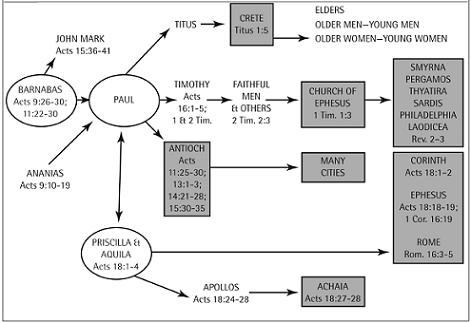
The MacArthur Bible Handbook, by John MacArthur (Nashville: Thomas Nelson Publishers, 2003) 365. © 2003 by Thomas Nelson, Inc.
16:14, 15 “Brethren” in this context probably refers to both men and women, which indicates that these names represent the outstanding leaders of two of the assemblies in Rome.
16:16 holy kiss. Kissing of friends on the forehead, cheek, or beard was common in the OT. The Jews in the NT church carried on the practice, and it became especially precious to new believers, who were often outcasts from their own families because of their faith, because of the spiritual kinship it signified (see note on 1 Thess. 5:26 ).
16:17–20 Paul considered it necessary to insert into his greetings of love this caution against harmful teachings and practices that undermine the truth of Christianity and are its greatest threat. Genuine love will be ready to forgive evil, but it will not condone or ignore it. Those such as Paul, who truly love other believers who are dear to them, will warn them about sin and harm (cf. 1 Cor.13:6).
16:17 divisions and offenses. Doctrinal falsehood and unrighteous practices (cf. Matt. 24:24; Acts 20:27–32; Gal. 1:6–8; Eph. 4:14).
| Rom. 16:20b | “The grace of our Lord Jesus Christ be with you.” |
| 1 Cor. 16:23 | “The grace of our Lord Jesus Christ be with you.” |
| 2 Cor. 13:14 | “The grace of the Lord Jesus Christ, and the love of God, and the communion of the Holy Spirit be with you all.” |
| Gal. 6:18 | “Brethren, the grace of our Lord Jesus Christ be with your spirit. Amen.” |
| Eph. 6:24 | “Grace be with all those who love our Lord Jesus Christ in sincerity.” |
| Phil. 4:23 | “The grace of our Lord Jesus Christ be with you all.” |
| Col. 4:18 | “Grace be with you.” |
| 1 Thess. 5:28 | “The grace of our Lord Jesus Christ be with you.” |
| 2 Thess. 3:18 | “The grace of our Lord Jesus Christ be with you all.” |
| 1 Tim. 6:21b | “Grace be with you.” |
| 2 Tim. 4:22 | “The Lord Jesus Christ be with your spirit. Grace be with you.” |
| Titus 3:15b | “Grace be with you all.” |
| Philem. 25 | “The grace of our Lord Jesus Christ be with your spirit.” |
16:18 belly. These people are driven by self-interest and self-gratification, often seen in their pretentious, extravagant, and immoral lifestyles (cf. Phil. 3:18, 19; 2 Tim. 3:7, 8; 2 Pet. 1:20–2:3, 10–19; Jude 12, 13). simple. The unsuspecting or naive person (cf.2 Cor. 11:13–15).
16:19 become known. See note on 1:8.
16:20 God of peace. See 15:33; Hebrews 13:20. will crush Satan. See note on Genesis 3:15. shortly. “Soon, speedily, quickly” (Acts 12:7; 22:18; cf. Rev. 22:7, 12, 20). grace of our Lord Jesus Christ. See note on 1:7.
16:21 Lucius. Either (1) a native of Cyrene, one of the prophets and teachers in Antioch who participated in Paul and Barnabas’s commissioning (Acts 13:1–3) or (2) another form of “Luke,” the author of the Gospel of Luke and the Book of Acts. Jason. One of the first converts in Thessalonica who evidently let Paul stay in his home for a short time before Paul and Silas were sent to Berea (see notes on Acts 17:5–10 ). Sosipater. A longer form of “Sopater” (Acts 20:4–6), a Berean (cf. Acts 17:10–12) who joined other believers in meeting Paul at Troas after the apostle left Ephesus. my countrymen. See note on verse 11.
16:22 Tertius. Paul’s secretary, who wrote this letter as Paul dictated it, inserts a personal greeting.
16:23 Gaius. One of Paul’s converts at Corinth (cf. 1 Cor. 1:14). His full name was most likely “Gaius Titius Justus” (Acts 18:7). the whole church. The congregation that met in Gaius’s house. Erastus. A common name in NT times, but probably not the same man referred to in Acts 19:22 or 2 Timothy 4:20. treasurer. The city of Corinth. This was a prominent position with political clout. Quartus. He may have been a physical brother of Erastus, but more likely just the final brother-in-Christ listed here.
16:24 This verse is not found in the earliest Greek manuscripts of Romans which is understandable in view of the longer, more explicit benediction that follows.
16:25–27 The letter concludes with a beautiful doxology that praises God for His work through Jesus Christ and thereby summarizes the major themes of Romans (see notes on 11:33–36 ; cf. Matt. 6:13; Luke 19:37, 38; Eph. 3:20, 21; Heb. 13:20, 21; Rev.5:9, 10).
16:25 my gospel. See notes on 1:1; 2:16 ; cf. Galatians 1:11; 2:2. preaching of Jesus Christ. Synonymous with the gospel, it was Paul’s supreme life commitment (see notes on 10:14, 15, 17; cf. 1 Cor. 1:23, 24; 2 Cor. 4:5, 6). the mystery. See note on 11:25. In the NT, this word does not have its modern connotation. Instead, it refers to something hidden in former times but now made known (1 Cor. 4:1; Eph. 5:32; 6:19; Col. 1:25, 26; 2 Thess. 2:7, 8; 1 Tim. 3:9, 16). The NT’s most common mystery is that God would provide salvation for Gentiles as well as Jews (Eph. 3:3–9).
16:26 prophetic Scriptures made known. God had told Israel that He would not only call her to righteousness, but appoint her as a light (of the gospel) to the nations (see notes on Is. 42:6; 49:6; 1 Pet. 1:10, 11 ; cf. Gen. 12:3; Ex. 19:6; Is. 49:22; 53:11; 60:3–5; Jer. 31:31, 33).
16:27 to God . . . be glory. It was through the Father that the gospel was ultimately revealed, therefore He deserves all the credit, praise, and worship.
Further Study
Hodge, Charles. Commentary on the Epistle to the Romans. Grand Rapids: Eerdmans, reprint 1968.
MacArthur, John. Romans 1–8. Chicago: Moody, 1991.
MacArthur, John. Romans 9–16. Chicago: Moody, 1994.
McClain, Alva J. Romans: The Gospel of God’s Grace. Chicago: Moody, 1973.
Morris, Leon. The Epistle to the Romans. Grand Rapids: Eerdmans, 1988.
Murray, John. The Epistle to the Romans. Grand Rapids: Eerdmans, 1968.