Original Meaning
The Basis of the Levites’ Entitlements (18:1–2)
THE OPENING STATEMENT CONSISTS of four main clauses, each containing the key word naḥalâ (“allotment, grant/property”; NIV “inheritance”; see coments on 1:38). The focus is on a group among the Israelites: “the priests,” “Levites,” and “the whole tribe of Levi.” The first expression refers to those who perform sacrificial rituals and other spiritual ministries at the central sanctuary (10:8; 18:18; 27:9–14; 31:9), while the latter two suggest these people trace their origins back to Levi (Gen. 29:34).2 The expressions “with Israel” (v. 1a) and “among their brothers” (v. 2) reflect the relationship between the Levitical priests and other Israelites. Unlike other tribes, Levi received no territorial allotment when Canaan was divided after the conquest.
The key word naḥalâ appears in every line in verses 1–2. With the exception of a few passages in Deuteronomy, this word refers to the land of Canaan as Israel’s property received from Yahweh.3 Here Moses anticipates the day when the land is conquered and distributed among the tribes as their grants.4 However, since the Levites will not receive an allotment, they will be denied a base from which to flourish economically like their fellow Israelites. Although the present comments on the Levites’ landless status are based on Numbers 18:20–26,5 Moses speaks of the Levites’ compensation as “offerings made to the LORD” (i.e., food gifts),6 returned to Yahweh as his grant rather than the “tithe.”
To compensate for their landless status, Yahweh offers himself as the Levitical priests’ grant (v. 2b; cf. Num 18:20). Whereas 4:20 (cf. 32:9) designates Israel as Yahweh’s naḥalâ (“people of grant”), here Yahweh is the naḥalâ of the Levitical priests.7 In effect, Yahweh invites them to eat from his own table; that which the people present to him, he passes on to them. “As he [Yahweh] promised them” (v. 2) reassures the Levites of their security in him, though the following statement obligates the Israelites to provide for them.
Bridging Contexts
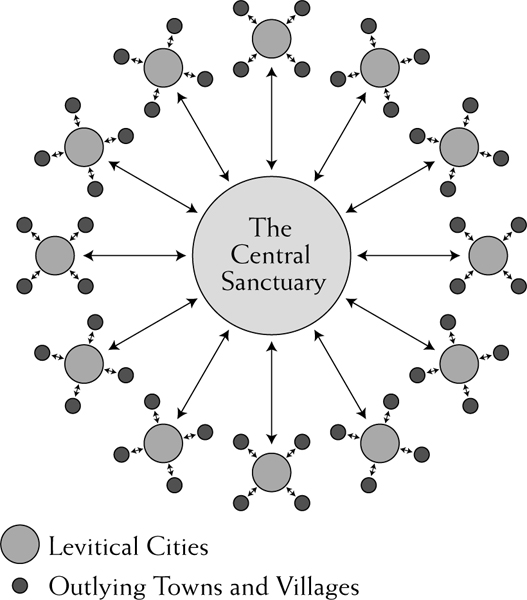
THE LEVITES IN THEIR towns. In Numbers 35:1–8 Yahweh commanded the Israelites to set aside forty-eight cities and surrounding pasturelands scattered throughout the land for the Levites. Joshua 21:1–42 describes the fulfillment of this command, cataloguing the Levitical cities in each tribal territory. Nowhere does the Old Testament explain the function of these cities or the roles the Levites were to play there. The purpose of these cities seems to have been to ensure that every region had access to pastoral care, which would involve caring for the needy, administering cleansing rituals, presiding over local sacrifices (cf. 1 Sam. 9:12–13; cf. 8:16–17; 9:12–24; 16:1–6) and ceremonies of blessings and cursing (cf. 27:9–14; Josh. 8:33), teaching Torah (31:9–13; 33:8–11), generally keeping alive the traditions of Israel, ensuring covenant fidelity, and representing the central sanctuary in the far-flung regions of the land.
While Levitical cities never appear in Old Testament narratives,16 the shiftlessness of the Levites in Judges 17–18 and 19–20 suggests the Levites themselves quickly lost their spiritual way after the settlement. No doubt their irresponsibility contributed to the national loss of memory regarding Yahweh and his saving acts (Judg. 2:10).17
Contemporary Significance
A BIBLICAL THEOLOGY OF ministry. This passage has great significance for developing a biblical theology of ministry. (1) To be called into divine service is the highest calling imaginable. The Levites’ claim to Yahweh as their special grant and the guarantor of their well-being was unique among the Israelites. However, Yahweh promised to meet their needs indirectly, through the gifts of his people. In their dependence on God, the Levites modeled the relationship with God that Israel as a nation enjoyed and ministers today enjoy.
(2) Because the Lord himself chooses and summons those who stand before him and serve in his name, divine service is a vocation, not a profession. “To stand before God” means that we listen carefully to his voice and commit ourselves to doing his will, and “to serve in his name” means that we receive our authority from him and that everything we do is driven by the passion to glorify him. Whereas the Scriptures concerning Israel speak of these as privileges reserved for angels (Luke 1:19), prophets (1 Kings 17:1; Jer. 23:18, 22), and priests (Zech. 3:1; Heb. 10:11–12), the New Testament teaching on the priesthood of all believers (1 Peter 2:9) means that because of the work of Jesus Christ believers collectively have direct access to God and responsibility to represent him to the unbelieving world.
A Schematic Portrayal of the Location and Function of the Levitical Cities
(3) This passage provides an Old Testament illustration of the truth declared by Paul to Timothy, “The elders who direct the affairs of the church well are worthy of double honor, especially those whose work is preaching and teaching. For the Scripture says, ‘Do not muzzle the ox while it is treading out the grain,’ and ‘The worker deserves his wages’ ” (1 Tim. 5:17–18). Those called into the Lord’s service need to be freed up from the demands of normal gainful employment so that they may attend to the work of the Lord without distraction. In ancient Israel destitute Levites were a disgrace to the nation and a blot on Yahweh’s reputation.18 Similarly today, the manner in which God’s people attend to his servants is a barometer of their spiritual health. A minister in need is a symptom of a people living independently of God. “Righteousness, only righteousness” (see 16:20) demands that God’s people care for those whom he has called into his service with generosity and liberality.
Original Meaning
The Nature of the Levites’ Entitlements (18:3–5)
WITH THE ANNOUNCEMENT “NOW this is the share due the priests,” this second paragraph concretizes what Moses meant by the food gifts of Yahweh and his grant (v. 1). Yahweh may be the Levitical priests’ possession, but he takes care of them by means of the sacrifices that the people bring to him. Moses specifies three types of offerings: meat; the crops of the fields, vineyards, and olive groves; and wool (for clothing and blankets). The gifts brought to the priests must be choice gifts: the shoulder,8 jowls, and the stomach of the animals; the first of the processed grain, wine, olive oil;9 and the first fleeces of their flocks. These expressions remind the Israelites of Yahweh’s abundant provision and reinforce their duty to treat the priests as generously as Yahweh has treated them.
Whereas verse 2 grounded the Levites’ privileges in Yahweh’s promise, verse 5 bases them in his election. Here Moses summarizes the Levites’ roles as professional worshipers of Yahweh: Yahweh has chosen them “to stand [before Yahweh]”10 and “[to] minister in the LORD’s name always” (cf. v. 7; 10:8). This is official court language, authorizing them to enter the Sovereign’s presence to minister to him or to receive a commission from him (cf. Dan. 1:4). The reference to “their descendants” highlights the hereditary nature of the priesthood.
Bridging Contexts
THE LEVITES IN THEIR towns. In Numbers 35:1–8 Yahweh commanded the Israelites to set aside forty-eight cities and surrounding pasturelands scattered throughout the land for the Levites. Joshua 21:1–42 describes the fulfillment of this command, cataloguing the Levitical cities in each tribal territory. Nowhere does the Old Testament explain the function of these cities or the roles the Levites were to play there. The purpose of these cities seems to have been to ensure that every region had access to pastoral care, which would involve caring for the needy, administering cleansing rituals, presiding over local sacrifices (cf. 1 Sam. 9:12–13; cf. 8:16–17; 9:12–24; 16:1–6) and ceremonies of blessings and cursing (cf. 27:9–14; Josh. 8:33), teaching Torah (31:9–13; 33:8–11), generally keeping alive the traditions of Israel, ensuring covenant fidelity, and representing the central sanctuary in the far-flung regions of the land.
While Levitical cities never appear in Old Testament narratives,16 the shiftlessness of the Levites in Judges 17–18 and 19–20 suggests the Levites themselves quickly lost their spiritual way after the settlement. No doubt their irresponsibility contributed to the national loss of memory regarding Yahweh and his saving acts (Judg. 2:10).17
Contemporary Significance
A BIBLICAL THEOLOGY OF ministry. This passage has great significance for developing a biblical theology of ministry. (1) To be called into divine service is the highest calling imaginable. The Levites’ claim to Yahweh as their special grant and the guarantor of their well-being was unique among the Israelites. However, Yahweh promised to meet their needs indirectly, through the gifts of his people. In their dependence on God, the Levites modeled the relationship with God that Israel as a nation enjoyed and ministers today enjoy.
(2) Because the Lord himself chooses and summons those who stand before him and serve in his name, divine service is a vocation, not a profession. “To stand before God” means that we listen carefully to his voice and commit ourselves to doing his will, and “to serve in his name” means that we receive our authority from him and that everything we do is driven by the passion to glorify him. Whereas the Scriptures concerning Israel speak of these as privileges reserved for angels (Luke 1:19), prophets (1 Kings 17:1; Jer. 23:18, 22), and priests (Zech. 3:1; Heb. 10:11–12), the New Testament teaching on the priesthood of all believers (1 Peter 2:9) means that because of the work of Jesus Christ believers collectively have direct access to God and responsibility to represent him to the unbelieving world.
A Schematic Portrayal of the Location and Function of the Levitical Cities
(3) This passage provides an Old Testament illustration of the truth declared by Paul to Timothy, “The elders who direct the affairs of the church well are worthy of double honor, especially those whose work is preaching and teaching. For the Scripture says, ‘Do not muzzle the ox while it is treading out the grain,’ and ‘The worker deserves his wages’ ” (1 Tim. 5:17–18). Those called into the Lord’s service need to be freed up from the demands of normal gainful employment so that they may attend to the work of the Lord without distraction. In ancient Israel destitute Levites were a disgrace to the nation and a blot on Yahweh’s reputation.18 Similarly today, the manner in which God’s people attend to his servants is a barometer of their spiritual health. A minister in need is a symptom of a people living independently of God. “Righteousness, only righteousness” (see 16:20) demands that God’s people care for those whom he has called into his service with generosity and liberality.
Original Meaning
The Range of the Levites’ Entitlements (18:6–8)
CONTRARY TO MOST ENGLISH translations,11 the concern in this paragraph is not to grant Levites from the towns permission to serve in the central sanctuary—this is assumed—but to ensure that all Levites have access to the entitlements.12 The second person expression “your gates” (NIV “your towns”) confirms that this text addresses Israelites, charging them to respect the status and privileges of the Levitical priests.
In verses 6–7 Moses invites all Levites to participate in the prerequisites described in verses 3–5 by presenting a hypothetical scenario involving a Levite who leaves his hometown and comes to the central sanctuary.13 Moses affirms the impulse of a Levite driven by a personal desire to worship at the place that Yahweh has chosen (cf. 12:15), granting full permission not only to worship at the central sanctuary but also to join fellow Levites in ministering in Yahweh’s name. Portraying them as “brothers” serving in the name of Yahweh and standing before him, this text assumes neither conflict nor competition between priests who serve at the central sanctuary and those who serve in outlying locations.
On the surface this invitation to Levites from outlying districts seems to contradict Numbers 18, which distinguishes between Aaron and his sons, who are authorized to perform cultic service within the sanctuary, and the Levites, who may not. However, Moses does not specify the rituals they may perform in the temple. These Levites are no threat to the high priest and his sons, who enjoy hereditary title to inner sanctuary service. Their role may be purely auxiliary, but even then they are performing “priestly” service in the presence of Yahweh at his invitation. Since Deuteronomy encourages worshipers from the towns to bring Levites with them to the central sanctuary, it is reasonable to assume they would serve in the presence of Yahweh by tending to the spiritual needs of those from their towns.
In verse 8 Moses finally gets to the point of this paragraph: equal prerequisites for equal service. The expression “a portion like a portion” (NIV “share equally”) creates an effective envelope around this passage (cf. v. 1) and highlights Moses’ concern for all Levites. He insists that those who move to the central sanctuary are entitled to the food prerequisites of verses 3–5, just like those who are based there. The last clause of verse 8 is unclear. In general, it seems that when Levites move to the central sanctuary, their dues there are not to be reduced simply because they continue to have income from inherited property back home.14 In any case, it is doubtful the text envisages the move to the central sanctuary to be permanent.15
Bridging Contexts
THE LEVITES IN THEIR towns. In Numbers 35:1–8 Yahweh commanded the Israelites to set aside forty-eight cities and surrounding pasturelands scattered throughout the land for the Levites. Joshua 21:1–42 describes the fulfillment of this command, cataloguing the Levitical cities in each tribal territory. Nowhere does the Old Testament explain the function of these cities or the roles the Levites were to play there. The purpose of these cities seems to have been to ensure that every region had access to pastoral care, which would involve caring for the needy, administering cleansing rituals, presiding over local sacrifices (cf. 1 Sam. 9:12–13; cf. 8:16–17; 9:12–24; 16:1–6) and ceremonies of blessings and cursing (cf. 27:9–14; Josh. 8:33), teaching Torah (31:9–13; 33:8–11), generally keeping alive the traditions of Israel, ensuring covenant fidelity, and representing the central sanctuary in the far-flung regions of the land.
While Levitical cities never appear in Old Testament narratives,16 the shiftlessness of the Levites in Judges 17–18 and 19–20 suggests the Levites themselves quickly lost their spiritual way after the settlement. No doubt their irresponsibility contributed to the national loss of memory regarding Yahweh and his saving acts (Judg. 2:10).17
Contemporary Significance
A BIBLICAL THEOLOGY OF ministry. This passage has great significance for developing a biblical theology of ministry. (1) To be called into divine service is the highest calling imaginable. The Levites’ claim to Yahweh as their special grant and the guarantor of their well-being was unique among the Israelites. However, Yahweh promised to meet their needs indirectly, through the gifts of his people. In their dependence on God, the Levites modeled the relationship with God that Israel as a nation enjoyed and ministers today enjoy.
(2) Because the Lord himself chooses and summons those who stand before him and serve in his name, divine service is a vocation, not a profession. “To stand before God” means that we listen carefully to his voice and commit ourselves to doing his will, and “to serve in his name” means that we receive our authority from him and that everything we do is driven by the passion to glorify him. Whereas the Scriptures concerning Israel speak of these as privileges reserved for angels (Luke 1:19), prophets (1 Kings 17:1; Jer. 23:18, 22), and priests (Zech. 3:1; Heb. 10:11–12), the New Testament teaching on the priesthood of all believers (1 Peter 2:9) means that because of the work of Jesus Christ believers collectively have direct access to God and responsibility to represent him to the unbelieving world.
A Schematic Portrayal of the Location and Function of the Levitical Cities
(3) This passage provides an Old Testament illustration of the truth declared by Paul to Timothy, “The elders who direct the affairs of the church well are worthy of double honor, especially those whose work is preaching and teaching. For the Scripture says, ‘Do not muzzle the ox while it is treading out the grain,’ and ‘The worker deserves his wages’ ” (1 Tim. 5:17–18). Those called into the Lord’s service need to be freed up from the demands of normal gainful employment so that they may attend to the work of the Lord without distraction. In ancient Israel destitute Levites were a disgrace to the nation and a blot on Yahweh’s reputation.18 Similarly today, the manner in which God’s people attend to his servants is a barometer of their spiritual health. A minister in need is a symptom of a people living independently of God. “Righteousness, only righteousness” (see 16:20) demands that God’s people care for those whom he has called into his service with generosity and liberality.