Original Meaning
A Declaration of Trust (125:1–2)
THIS PSALM OF TRUST OPENS WITH two comparisons meant to encourage confidence on the part of those who pray the psalms. In the first example the community is compared to Mount Zion, and in the second Yahweh is compared with the mountains that encircle Jerusalem.
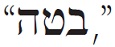
Those who trust in the LORD. Although this verse contains the first occurrence of the word “trust” (batah) in the Songs of Ascent, its rarity in this collection is not matched in the remainder of the Psalter. The word batah occurs more often in the Psalter than in any other book in the Old Testament, with the term frequently appearing in tandem with language and imagery that suggests God’s vindication or deliverance.4
The plural participial form of the verb (i.e., “those who trust”) in verse 1a indicates that this psalm has a communal orientation, “those” refers to the community. Further, the reference to Israel in verse 2 as “his people” reinforces the communal focus of this psalm,5
as do other terms it contains. The substantival use of the adjective in the plural (“the righteous” [v. 3]; “those who are good” [v. 4]; “those who are upright” [v. 4]) has a collective sense that sets up the comparison between “those who trust” (referring to the members of the community) versus the evildoers and those who are crooked in their way (on their identity, see below).
Are like Mount Zion. Those who trust in the Lord in the face of perilous circumstances are compared to Mount Zion, “which cannot be shaken but endures forever.” In the Songs of Zion (e.g., Pss 46; 48; 87) the psalmists celebrate the stability and security of Mount Zion, and in Psalm 125:1b the poet reiterates this theme by claiming that Zion “cannot be shaken” (mot). The verb mot typically connotes something much stronger than just being “shaken” or “disturbed.” More often the word means “to totter” or “to fall,” as in the sense of being destroyed or falling apart (cf. Ps 60:2). In Psalm 46:5–6 the psalmist refers specifically to the security of Zion by claiming that “God is within her, she will not fall” (mot); despite the travails she faces, Zion will not be destroyed. Zion’s security, however, is juxtaposed to the instability of the nations in Psalm 46: “Nations are in uproar, kingdoms fall” (mot). In Psalm 125 the psalmist compares the community of those who trust in Yahweh to Zion, and like Zion they too will not fall (mot) in the face of impending threats; rather, the community will continue to dwell in the land.6
Goldingay aptly notes that while the comparison in verse 1 can be labeled a simile, “there is a substantial link, and not merely a figurative one, between Yahweh and Zion, and thus between the people and Zion, as well as between the people and Yahweh.”7
The simile invites theological reflection on the inherent connections that exist between Zion, Yahweh, and his people, particularly in light of the threat mentioned in verse 3.
The LORD surrounds his people. The Songs of Ascent employ a common technique by connecting one verse to the subsequent verse through the use of shared vocabulary (anadiplosis; see Ps 121). In Psalm 125:2 the psalmist makes a second comparison, and in doing so he takes the word for “mount” or “mountain” in verse 1 and makes it the operative image in verse 2. Whereas the word har (“mountain”) was used in verse 1 in reference to Mount Zion proper, its use in verse 2 alludes to the mountains that surround Jerusalem. Although both the Old and New Testaments refer to going “up to Jerusalem,” Mount Zion is not the highest point in the area. The Mount of Olives stands sixty-six meters higher than Zion, and Mount Scopus towers more than seventy-six meters above Zion, with other peaks standing higher than Zion as well.8
The surrounding mountains function as a wall around Zion—a wall that keeps invading forces at bay. In a similar fashion Yahweh surrounds “his people” (v. 2b), thereby warding off that which threatens them. The term “surrounds” (sabib) is rarely used in reference to God’s protective care, but in this instance it captures well the thrust of the metaphoric claim.
Bridging Contexts
PSALM 125 REMINDS WORSHIPERS of two fundamental truths central to the Christian faith: the world can be a dangerous place, and Yahweh can be a sure refuge. The psalmist seeks to hold both truths in tandem from his understanding that a proper view of both leads to true worship and faithful living.
Living in a troubled world. Like many of the Songs of Ascent, this psalm speaks candidly about a troubled and troubling world that threatens the faithful. The kinds of threats posed in Psalm 125 are more than existential threats, although they are surely that as well. The scepter of the wicked lords it over them, thereby destabilizing their world and tempting the righteous to “do evil.” The last verse of the psalm suggests that some people have already capitulated to the temptation to do evil, so their lives can only be described as “crooked ways.” The presence of such threats, however, does not seem surprising to the psalmist—such menacing circumstances appear to be the norm in a broken world. Contrary to the views of Karl Marx and many others, Christianity has little room in its theology for an escapist ideology. Like the psalmist in Psalm 125, the Christian faith does not ignore the world, nor does it seek to escape the trouble inherent to it. Christianity readily accepts that such is life in a broken creation (Rom 8:20–22). In 1 Peter 4:12 Peter instructs the community, “Dear friends, do not be surprised at the fiery ordeal that has come on you to test you, as though something strange were happing to you.” If the Christian faith is not an escapist religion, and if such “fiery ordeals” are not surprising, then how should a Christian live in such times? The response involves a mixture of right belief and right praxis, or perhaps better said, right belief that issues in right action. Peter returns to this theme later in 1 Peter 4 when he exhorts the community by saying, “So then, those who suffer according to God’s will should commit themselves to their faithful Creator and continue to do good” (1 Pet 4:19). Peter contends that trials and struggles should not lead people away from God; instead, such realities should drive believers toward God by compelling them to commit (or recommit) themselves to God, which in turn, should lead to right action.
A more explicit parallel to this theme in Psalm 125 appears in 2 Timothy 3:12–15. There Paul refers to his own sufferings in the world and then explains that all followers of Christ can expect persecution and trouble in this life (v. 12). In the midst of such trying circumstances there will be two paths, two orientations. Some people will fail to orient themselves to the ways of God (v. 13). He labels that group as “evildoers and imposters” and suggests that they will “go from bad to worse, deceiving and being deceived” in the face of such trials. They will “turn to crooked ways” (Ps 125:5). But there are others who still desire to orient their lives toward God. To those persons he gives encouragement and exhorts them to “continue in what you have learned and have become convinced of” (2 Tim 3:14).
For the community in Yehud, and any community, the gravity associated with the reality of life could have provided a “reasonable excuse” for people to jettison their fundamental commitments of faith. Similarly, the gravity associated with the reality of life could provide a “reasonable excuse” for any person to escape into a religious cocoon and assume that such an existence is truly authentic life. The biblical witness, however, rejects both extremes and instead invites believers to live fully in this world with lives oriented toward God
Protection of God. Psalm 125 continues to reinforce a repeated theme in the Songs of Ascent: the protection of God. To be more specific, these psalms are variations on this theme. Some psalms celebrate the protection that has already been afforded by God, while others turn to God in supplications which ask that this kind of protection be granted now. Psalm 120 pleads with Yahweh for protection and deliverance (v. 2) due to the lying lips and threats of war that surround the psalmist. Psalm 121 celebrates that, as the Maker of heaven and earth (v. 2), God watches over his people and will keep them from all harm. Psalm 122 refers to Jerusalem and the “house of the LORD” present within the city—both are images of security and safety in a troubled time. Psalm 123 pleads with God to have mercy on his people by bringing an end to the shame that their enemies have brought on them; the psalmist seeks the kind of protection a master would provide for his household. Psalm 124 celebrates that, because God was on the people’s side, they escaped the perils of foreign threats. This psalm, Psalm 125, returns to the theme of a foreign threat with the reference to the “scepter of the wicked.” Whereas the first five poems in the Songs of Ascent allude to the hostile world in which the psalmists live, Psalm 125 is the first psalm to make explicit reference to the nature of the threat. Hossfeld and Zenger have suggested that Psalms 125 and 129 serve as a framing device in the middle section of the Songs of Ascent collection (Pss 125–29).15
Both poems contain an overt political reference, and both mention the “righteous” and the “wicked.” In fact, these psalms are the only two poems in this collection that mention both groups.
As suggested above, all these psalms suggest that the world in which the poets live contains threats that are real, dangerous, and omnipresent. Despite the seemingly omnipresent nature of these enemies, the psalmists are quick to assert the certainty that the enemies are not omnipotent. While these enemies do pose threats, they are no threat to God. In Psalm 48 the psalmist declares that the kings all joined forces to come against Jerusalem, but when they saw God in the city’s fortress they “were astounded; they fled in terror. Trembling seized them there, pain like that of a woman in labor” (vv. 4–6). Because the enemies pose no threat to God, the community can trust (Ps 125:1) that God is their refuge. He encircles them as their protector, even as the mountains encircle Jerusalem.
Contemporary Significance
PSALM 125, AND TEXTS LIKE IT, both comfort us and challenge us, assure us and compel us. The psalm begins by noting the kind of protection afforded by the God we serve and shifts in verse 4 to challenging us to remain “straight of heart.” To complicate matters, however, surrounding the challenge to remain upright of heart is the previous verse, which refers to the scepter of the wicked (v. 3), and the following verse, which alludes to those who have abandoned their faith commitments (v. 5). The call to remain faithful is “hemmed in,” if you will, with texts that remind us of the reasons why faithfulness is difficult, and trust in God even more so. There are many people to whom we minister and with whom we live and work who feel hemmed in. While the names and identities may differ from those mentioned in Psalm 125, the crisis does not. The reality of the wicked and the temptation of crooked ways both before us and behind us makes it seem as though God is no longer present, much less our protector. What we all long to know is that we are not alone in such circumstances, and even more, that perhaps, just perhaps, we might encounter the protective presence of God amid such trials. In his work The Magnificent Defeat, Frederick Buechner writes:
For what we need to know, of course, is not just that God exists, not just that beyond the steely brightness of the stars there is a cosmic intelligence of some kind that keeps the whole show going, but that there is a God right here in the thick of our day-to-day lives who may not be writing messages about himself in the stars but in one way or another is trying to get messages through our blindness as we move around down here knee deep in the fragrant muck and misery and marvel of the world. It is not objective proof of God’s existence that we want but the experience of God’s presence. That is the miracle that we are all really after and that is also, I think, the miracle that we really get.16
The psalmist invites those who pray this psalm to make a confession. The admission that not all is right with the world is only part of this confession, albeit an important part. The greater confession concerns the protective care of the pray-ers’ God. As certain as they are of wicked rulers, evildoers, and those who have chosen crooked paths, they are to be equally assured—no, even more assured—of the presence of their God. As noted above, the Songs of Zion suggest that when God is present in Jerusalem the city is inviolable, her people secure. God’s presence and God’s protection prove sufficient in a world that appears unruly and unstable. The psalmist invites the community to look around and see—to see the hills ’round about Jerusalem and to remember. They are to be reminded that, as sure as the mountains surround the city, so too can they be sure that God surrounds them.
In a world that appears both unruly and unstable, people today still wonder whether God is sufficient to be our protector. Because we have become blinded, as Buechner suggests, we have lost sight of his presence. And when we lose sight of his presence, it is far easier to choose the crooked paths offered by seductive powers than to remain straight of heart and choose to do his good will. In such moments we need the good news of Psalm 125; we need to be reminded that God indeed surrounds his people.
Original Meaning
A Declaration of Trust Regarding the Enemy (125:3)
IN VERSES 1–2 THE PSALMIST EMPLOYS two comparisons that provide a positive declaration of trust. Both verses state positive circumstances that justify a sense of security. In verse 3, however, the psalmist provides what might be labeled a “negative” declaration of trust.9
Here the psalmist explains what Yahweh will do to eradicate the threat that is before the people. This “negation” of the threat provides an additional reason for a sense of security.
The scepter of the wicked will not remain. The “scepter [shebet] of the wicked” mentioned in verse 3 invokes the language of an oppressive rule at the hands of a foreign power. The term “scepter” (shebet) itself functions metonymically and is value neutral; it simply refers to the ruler of a nation. For example, in Psalm 45:7 the word “scepter” (shebet) appears in the phrase “the scepter of justice” (Ps 45:6), a phrase meant to symbolize the just rule of Israelite kings. The term’s connotation in Psalm 125, however, is far more ominous. Hossfeld and Zenger suggest that the phrase implies both “a political and social system,” as well as the type of injustice practiced by the oppressive nations.10
Although not precisely identical to this phrase in language, similar phrases appear in the Old Testament in reference to the nations that oppressed Israel. In Isaiah 9:4, for example, the phrase “the rod [shebet] of their oppressor” is used in reference to the rule of Assyria. Similarly, in referring to the king of Babylon, the writer of Isaiah 14:5 places “the scepter [shebet] of the rulers” in apposition to “the rod [mateh] of the wicked.”
In Psalm 125:3 the psalmist states that the “scepter of the wicked will not remain [nuah] over the land allotted to the righteous.” Since the verb nuah can mean “to rest,” its use in this context could suggest that the scepter of wickedness has yet to “rest” upon the land. While this meaning is possible, the preferred meaning seems to be “to remain.”11
Later in the psalm (v. 5), the poet asserts that those within the community who turn aside to wicked ways will be led away with the “evildoers.” As Allen avers, the psalmist makes “a plea for Yahweh to deal with renegades who have broken the covenant and forfeited their share in the land by expelling them and their foreign patrons.”12
By implication, the “evildoers” are already in the land, thus suggesting that the “scepter of the wicked” has already exerted its influence.13
The land allotted to the righteous. In verse 3 the psalmist suggests two reasons why the scepter of the wicked should not remain. He explains that the scepter currently rules over the “land allotted to the righteous.” The expected word for “land” (’erets) does not appear in this context; instead, the psalmist refers to a “lot” or an “allotment” (goral). This word has its greatest concentration in the book of Joshua—twenty-six appearances, or more than twice the appearances found in any other book in the Old Testament—and in that context the term refers to the allotment of the land to the people of Israel upon their entry into it. By using this term in Psalm 125, the poet seeks to construct an important argument. The “scepter of the wicked” cannot remain in the land because this land does not belong to them; this land belongs to the ones to whom it was allotted, “the righteous.”
The psalmist also provides a second, more explicit rationale for why the wicked cannot remain in the land: if they do, the faithful ones might use their hands for evil. Other postexilic texts suggest that, under the influence of the occupying Persians, the community in Yehud turned upon itself and its members carried out injustice toward one another, as in Nehemiah 5. That chapter recounts how Nehemiah chastised the Jewish leaders in Jerusalem for charging interest on their own people (v. 7) despite the prohibitions in Exodus 2:25, Leviticus 25:35–37, and Deuteronomy 23:19–20. In Leviticus the community is commanded, “Do not take interest or any profit from [the poor], but fear your God, so they may continue to live among you. You must not lend them money at interest or sell them food at a profit” (Lev 25:36–37). Apparently these torah requirements were being ignored, thus causing some people in the post-exilic community to sell their sons and daughters into slavery (Neh 5:5). Such behavior was surely understood as evil. Whether or not this matter is the one in view in Psalm 125:3 is impossible to determine, but the scope of verse 3 certainly would have encompassed this action and others like it.
Bridging Contexts
PSALM 125 REMINDS WORSHIPERS of two fundamental truths central to the Christian faith: the world can be a dangerous place, and Yahweh can be a sure refuge. The psalmist seeks to hold both truths in tandem from his understanding that a proper view of both leads to true worship and faithful living.
Living in a troubled world. Like many of the Songs of Ascent, this psalm speaks candidly about a troubled and troubling world that threatens the faithful. The kinds of threats posed in Psalm 125 are more than existential threats, although they are surely that as well. The scepter of the wicked lords it over them, thereby destabilizing their world and tempting the righteous to “do evil.” The last verse of the psalm suggests that some people have already capitulated to the temptation to do evil, so their lives can only be described as “crooked ways.” The presence of such threats, however, does not seem surprising to the psalmist—such menacing circumstances appear to be the norm in a broken world. Contrary to the views of Karl Marx and many others, Christianity has little room in its theology for an escapist ideology. Like the psalmist in Psalm 125, the Christian faith does not ignore the world, nor does it seek to escape the trouble inherent to it. Christianity readily accepts that such is life in a broken creation (Rom 8:20–22). In 1 Peter 4:12 Peter instructs the community, “Dear friends, do not be surprised at the fiery ordeal that has come on you to test you, as though something strange were happing to you.” If the Christian faith is not an escapist religion, and if such “fiery ordeals” are not surprising, then how should a Christian live in such times? The response involves a mixture of right belief and right praxis, or perhaps better said, right belief that issues in right action. Peter returns to this theme later in 1 Peter 4 when he exhorts the community by saying, “So then, those who suffer according to God’s will should commit themselves to their faithful Creator and continue to do good” (1 Pet 4:19). Peter contends that trials and struggles should not lead people away from God; instead, such realities should drive believers toward God by compelling them to commit (or recommit) themselves to God, which in turn, should lead to right action.
A more explicit parallel to this theme in Psalm 125 appears in 2 Timothy 3:12–15. There Paul refers to his own sufferings in the world and then explains that all followers of Christ can expect persecution and trouble in this life (v. 12). In the midst of such trying circumstances there will be two paths, two orientations. Some people will fail to orient themselves to the ways of God (v. 13). He labels that group as “evildoers and imposters” and suggests that they will “go from bad to worse, deceiving and being deceived” in the face of such trials. They will “turn to crooked ways” (Ps 125:5). But there are others who still desire to orient their lives toward God. To those persons he gives encouragement and exhorts them to “continue in what you have learned and have become convinced of” (2 Tim 3:14).
For the community in Yehud, and any community, the gravity associated with the reality of life could have provided a “reasonable excuse” for people to jettison their fundamental commitments of faith. Similarly, the gravity associated with the reality of life could provide a “reasonable excuse” for any person to escape into a religious cocoon and assume that such an existence is truly authentic life. The biblical witness, however, rejects both extremes and instead invites believers to live fully in this world with lives oriented toward God
Protection of God. Psalm 125 continues to reinforce a repeated theme in the Songs of Ascent: the protection of God. To be more specific, these psalms are variations on this theme. Some psalms celebrate the protection that has already been afforded by God, while others turn to God in supplications which ask that this kind of protection be granted now. Psalm 120 pleads with Yahweh for protection and deliverance (v. 2) due to the lying lips and threats of war that surround the psalmist. Psalm 121 celebrates that, as the Maker of heaven and earth (v. 2), God watches over his people and will keep them from all harm. Psalm 122 refers to Jerusalem and the “house of the LORD” present within the city—both are images of security and safety in a troubled time. Psalm 123 pleads with God to have mercy on his people by bringing an end to the shame that their enemies have brought on them; the psalmist seeks the kind of protection a master would provide for his household. Psalm 124 celebrates that, because God was on the people’s side, they escaped the perils of foreign threats. This psalm, Psalm 125, returns to the theme of a foreign threat with the reference to the “scepter of the wicked.” Whereas the first five poems in the Songs of Ascent allude to the hostile world in which the psalmists live, Psalm 125 is the first psalm to make explicit reference to the nature of the threat. Hossfeld and Zenger have suggested that Psalms 125 and 129 serve as a framing device in the middle section of the Songs of Ascent collection (Pss 125–29).15
Both poems contain an overt political reference, and both mention the “righteous” and the “wicked.” In fact, these psalms are the only two poems in this collection that mention both groups.
As suggested above, all these psalms suggest that the world in which the poets live contains threats that are real, dangerous, and omnipresent. Despite the seemingly omnipresent nature of these enemies, the psalmists are quick to assert the certainty that the enemies are not omnipotent. While these enemies do pose threats, they are no threat to God. In Psalm 48 the psalmist declares that the kings all joined forces to come against Jerusalem, but when they saw God in the city’s fortress they “were astounded; they fled in terror. Trembling seized them there, pain like that of a woman in labor” (vv. 4–6). Because the enemies pose no threat to God, the community can trust (Ps 125:1) that God is their refuge. He encircles them as their protector, even as the mountains encircle Jerusalem.
Contemporary Significance
PSALM 125, AND TEXTS LIKE IT, both comfort us and challenge us, assure us and compel us. The psalm begins by noting the kind of protection afforded by the God we serve and shifts in verse 4 to challenging us to remain “straight of heart.” To complicate matters, however, surrounding the challenge to remain upright of heart is the previous verse, which refers to the scepter of the wicked (v. 3), and the following verse, which alludes to those who have abandoned their faith commitments (v. 5). The call to remain faithful is “hemmed in,” if you will, with texts that remind us of the reasons why faithfulness is difficult, and trust in God even more so. There are many people to whom we minister and with whom we live and work who feel hemmed in. While the names and identities may differ from those mentioned in Psalm 125, the crisis does not. The reality of the wicked and the temptation of crooked ways both before us and behind us makes it seem as though God is no longer present, much less our protector. What we all long to know is that we are not alone in such circumstances, and even more, that perhaps, just perhaps, we might encounter the protective presence of God amid such trials. In his work The Magnificent Defeat, Frederick Buechner writes:
For what we need to know, of course, is not just that God exists, not just that beyond the steely brightness of the stars there is a cosmic intelligence of some kind that keeps the whole show going, but that there is a God right here in the thick of our day-to-day lives who may not be writing messages about himself in the stars but in one way or another is trying to get messages through our blindness as we move around down here knee deep in the fragrant muck and misery and marvel of the world. It is not objective proof of God’s existence that we want but the experience of God’s presence. That is the miracle that we are all really after and that is also, I think, the miracle that we really get.16
The psalmist invites those who pray this psalm to make a confession. The admission that not all is right with the world is only part of this confession, albeit an important part. The greater confession concerns the protective care of the pray-ers’ God. As certain as they are of wicked rulers, evildoers, and those who have chosen crooked paths, they are to be equally assured—no, even more assured—of the presence of their God. As noted above, the Songs of Zion suggest that when God is present in Jerusalem the city is inviolable, her people secure. God’s presence and God’s protection prove sufficient in a world that appears unruly and unstable. The psalmist invites the community to look around and see—to see the hills ’round about Jerusalem and to remember. They are to be reminded that, as sure as the mountains surround the city, so too can they be sure that God surrounds them.
In a world that appears both unruly and unstable, people today still wonder whether God is sufficient to be our protector. Because we have become blinded, as Buechner suggests, we have lost sight of his presence. And when we lose sight of his presence, it is far easier to choose the crooked paths offered by seductive powers than to remain straight of heart and choose to do his good will. In such moments we need the good news of Psalm 125; we need to be reminded that God indeed surrounds his people.
Original Meaning
The Petition (125:4–5)
IN THE LIGHT OF THE CIRCUMSTANCES recounted in verse 3 (i.e., the presence of “the scepter of the wicked” upon the land), the psalmist contends that the members of the community must choose one of two paths. Either they can align themselves with those who choose to do good, or they can align themselves with those who “turn to crooked ways.” The contrast of the “two ways” of living appears first in Psalm 1 but reappears repeatedly in the Psalter (cf. Ps 37:8–11). Each “way” reflects a particular orientation in life, and each orientation leads to a certain end. In Psalm 1, for example, the life of the righteous person is oriented toward the law of Yahweh; such a person delights in God’s law and meditates on it. As a result, the Lord watches over his way (Ps 1:6)—but “not so the wicked” (v. 4a). Their life is oriented away from God; consequently, their path leads to destruction.
In Psalm 125 the poet petitions Yahweh to act in behalf of those who are “upright in heart.” The word “upright” comes from the root yshr, which has as its root meaning “to be straight.” The word’s use in texts such as Ezekiel 1:7 and Isaiah 40:3 retain this nuance of being straight, as in a straight leg or a straight way in the desert. Proverbs 3:6 invokes the same root but in a metaphorical sense. There the sage writes, “In all your ways submit to him, and he will make your paths yashar [’straight’].” In Psalm 125:4 the writer refers to those who are “yashar [’straight’] of heart,” those who have willingly chosen the ways of God. The language of being “straight of heart” stands in contrast to those mentioned in verse 5a, “those who turn to crooked ways.” The word for “crooked ways” (‘aqalqal) is rare in the Old Testament and suggests a twisting or winding path (cf. Judg 5:6). Thus, the psalmist lifts up two images: the one who remains “straight of heart” and the one who turns to a twisted or crooked path.
The poet also assures the community that toward each kind of person, Yahweh acts with justice. In verse 4 the psalmist requests that Yahweh will do good to those who are straight of heart. The certainty of his petition is matched by the certainty of his statement in verse 5. Those who make their ways crooked will be led away with the “evildoers.” In this case the evildoers are the foreigners associated with the scepter of the wicked in verse 3, and the “crooked ones” are those who have chosen to align themselves with them. In orienting their lives with the evildoers, the crooked ones can anticipate the same fate—they will be banished (v. 5b).
The psalm concludes with a benediction: “Peace be upon Israel.” Although many recognize the final phrase as a gloss, Kraus is correct in his assessment that it serves as the “real theme of the psalm.”14
The poem announces the end of the evildoers and those who desire to be like them. That will bring to the land peace, shalom, in all its fullness.
Bridging Contexts
PSALM 125 REMINDS WORSHIPERS of two fundamental truths central to the Christian faith: the world can be a dangerous place, and Yahweh can be a sure refuge. The psalmist seeks to hold both truths in tandem from his understanding that a proper view of both leads to true worship and faithful living.
Living in a troubled world. Like many of the Songs of Ascent, this psalm speaks candidly about a troubled and troubling world that threatens the faithful. The kinds of threats posed in Psalm 125 are more than existential threats, although they are surely that as well. The scepter of the wicked lords it over them, thereby destabilizing their world and tempting the righteous to “do evil.” The last verse of the psalm suggests that some people have already capitulated to the temptation to do evil, so their lives can only be described as “crooked ways.” The presence of such threats, however, does not seem surprising to the psalmist—such menacing circumstances appear to be the norm in a broken world. Contrary to the views of Karl Marx and many others, Christianity has little room in its theology for an escapist ideology. Like the psalmist in Psalm 125, the Christian faith does not ignore the world, nor does it seek to escape the trouble inherent to it. Christianity readily accepts that such is life in a broken creation (Rom 8:20–22). In 1 Peter 4:12 Peter instructs the community, “Dear friends, do not be surprised at the fiery ordeal that has come on you to test you, as though something strange were happing to you.” If the Christian faith is not an escapist religion, and if such “fiery ordeals” are not surprising, then how should a Christian live in such times? The response involves a mixture of right belief and right praxis, or perhaps better said, right belief that issues in right action. Peter returns to this theme later in 1 Peter 4 when he exhorts the community by saying, “So then, those who suffer according to God’s will should commit themselves to their faithful Creator and continue to do good” (1 Pet 4:19). Peter contends that trials and struggles should not lead people away from God; instead, such realities should drive believers toward God by compelling them to commit (or recommit) themselves to God, which in turn, should lead to right action.
A more explicit parallel to this theme in Psalm 125 appears in 2 Timothy 3:12–15. There Paul refers to his own sufferings in the world and then explains that all followers of Christ can expect persecution and trouble in this life (v. 12). In the midst of such trying circumstances there will be two paths, two orientations. Some people will fail to orient themselves to the ways of God (v. 13). He labels that group as “evildoers and imposters” and suggests that they will “go from bad to worse, deceiving and being deceived” in the face of such trials. They will “turn to crooked ways” (Ps 125:5). But there are others who still desire to orient their lives toward God. To those persons he gives encouragement and exhorts them to “continue in what you have learned and have become convinced of” (2 Tim 3:14).
For the community in Yehud, and any community, the gravity associated with the reality of life could have provided a “reasonable excuse” for people to jettison their fundamental commitments of faith. Similarly, the gravity associated with the reality of life could provide a “reasonable excuse” for any person to escape into a religious cocoon and assume that such an existence is truly authentic life. The biblical witness, however, rejects both extremes and instead invites believers to live fully in this world with lives oriented toward God
Protection of God. Psalm 125 continues to reinforce a repeated theme in the Songs of Ascent: the protection of God. To be more specific, these psalms are variations on this theme. Some psalms celebrate the protection that has already been afforded by God, while others turn to God in supplications which ask that this kind of protection be granted now. Psalm 120 pleads with Yahweh for protection and deliverance (v. 2) due to the lying lips and threats of war that surround the psalmist. Psalm 121 celebrates that, as the Maker of heaven and earth (v. 2), God watches over his people and will keep them from all harm. Psalm 122 refers to Jerusalem and the “house of the LORD” present within the city—both are images of security and safety in a troubled time. Psalm 123 pleads with God to have mercy on his people by bringing an end to the shame that their enemies have brought on them; the psalmist seeks the kind of protection a master would provide for his household. Psalm 124 celebrates that, because God was on the people’s side, they escaped the perils of foreign threats. This psalm, Psalm 125, returns to the theme of a foreign threat with the reference to the “scepter of the wicked.” Whereas the first five poems in the Songs of Ascent allude to the hostile world in which the psalmists live, Psalm 125 is the first psalm to make explicit reference to the nature of the threat. Hossfeld and Zenger have suggested that Psalms 125 and 129 serve as a framing device in the middle section of the Songs of Ascent collection (Pss 125–29).15
Both poems contain an overt political reference, and both mention the “righteous” and the “wicked.” In fact, these psalms are the only two poems in this collection that mention both groups.
As suggested above, all these psalms suggest that the world in which the poets live contains threats that are real, dangerous, and omnipresent. Despite the seemingly omnipresent nature of these enemies, the psalmists are quick to assert the certainty that the enemies are not omnipotent. While these enemies do pose threats, they are no threat to God. In Psalm 48 the psalmist declares that the kings all joined forces to come against Jerusalem, but when they saw God in the city’s fortress they “were astounded; they fled in terror. Trembling seized them there, pain like that of a woman in labor” (vv. 4–6). Because the enemies pose no threat to God, the community can trust (Ps 125:1) that God is their refuge. He encircles them as their protector, even as the mountains encircle Jerusalem.
Contemporary Significance
PSALM 125, AND TEXTS LIKE IT, both comfort us and challenge us, assure us and compel us. The psalm begins by noting the kind of protection afforded by the God we serve and shifts in verse 4 to challenging us to remain “straight of heart.” To complicate matters, however, surrounding the challenge to remain upright of heart is the previous verse, which refers to the scepter of the wicked (v. 3), and the following verse, which alludes to those who have abandoned their faith commitments (v. 5). The call to remain faithful is “hemmed in,” if you will, with texts that remind us of the reasons why faithfulness is difficult, and trust in God even more so. There are many people to whom we minister and with whom we live and work who feel hemmed in. While the names and identities may differ from those mentioned in Psalm 125, the crisis does not. The reality of the wicked and the temptation of crooked ways both before us and behind us makes it seem as though God is no longer present, much less our protector. What we all long to know is that we are not alone in such circumstances, and even more, that perhaps, just perhaps, we might encounter the protective presence of God amid such trials. In his work The Magnificent Defeat, Frederick Buechner writes:
For what we need to know, of course, is not just that God exists, not just that beyond the steely brightness of the stars there is a cosmic intelligence of some kind that keeps the whole show going, but that there is a God right here in the thick of our day-to-day lives who may not be writing messages about himself in the stars but in one way or another is trying to get messages through our blindness as we move around down here knee deep in the fragrant muck and misery and marvel of the world. It is not objective proof of God’s existence that we want but the experience of God’s presence. That is the miracle that we are all really after and that is also, I think, the miracle that we really get.16
The psalmist invites those who pray this psalm to make a confession. The admission that not all is right with the world is only part of this confession, albeit an important part. The greater confession concerns the protective care of the pray-ers’ God. As certain as they are of wicked rulers, evildoers, and those who have chosen crooked paths, they are to be equally assured—no, even more assured—of the presence of their God. As noted above, the Songs of Zion suggest that when God is present in Jerusalem the city is inviolable, her people secure. God’s presence and God’s protection prove sufficient in a world that appears unruly and unstable. The psalmist invites the community to look around and see—to see the hills ’round about Jerusalem and to remember. They are to be reminded that, as sure as the mountains surround the city, so too can they be sure that God surrounds them.
In a world that appears both unruly and unstable, people today still wonder whether God is sufficient to be our protector. Because we have become blinded, as Buechner suggests, we have lost sight of his presence. And when we lose sight of his presence, it is far easier to choose the crooked paths offered by seductive powers than to remain straight of heart and choose to do his good will. In such moments we need the good news of Psalm 125; we need to be reminded that God indeed surrounds his people.

 NIDOTTE 1:646.