Original Meaning
A Blessed Life (128:1–4)
THE FIRST STROPHE IN PSALM 128 begins and ends with a reference to the fear of the Lord (vv. 1a, 4b). In the Hebrew word order, verse 1 opens with the macarism “blessed” (’ashre), which is then followed by the phrase, “all who fear the LORD.” In the Hebrew, as in the English, the final phrase in the strophe is “fear the LORD.” This phrase creates an inclusio around the entire first strophe and governs its reading.
Blessed are all who fear the LORD. The term ’ashre, “blessed,” appears with considerable regularity in the literature of the Old Testament.5
Frequently this term appears in conjunction with conduct and attitudes the faithful of God should embody. These actions and attitudes, however, are not arbitrary commitments; rather, they are commitments that signal that a person’s life is congruent with the larger purposes of God. To reinforce this understanding, the writer of Psalm 128 further describes the “blessed” person as one who “walk[s] in obedience” to the Lord (v. 1b). Thus, the term ’ashre could be translated as “truly happy” or “content,” in the sense that as one aligns her life with the ways of God, she discovers a blessed life, a life that is truly happy and fulfilled. Contrary to contemporary society’s fixation with self-fulfillment, the psalmist rightly knows that the blessed life is the life that is oriented toward God and God’s purposes in the world.6
This kind of life is marked by a sense of the “fear [of] the LORD” (v. 1a). Within the wisdom tradition, the fear of the Lord might best be described as “a foundational trust in YHWH as the good, life-promoting creator God who, despite all disturbances and dangers, rules the universe and brings success on the path of life to those who seek to recognize the proper order of life and act in accordance with it.”7
One does not “fear” the Lord because of what he can do in the sense of judgment, but of what he can bring: life in all its fullness.
Blessing and prosperity will be yours. The psalmist spoke in the third person in the opening verse and provided something of a universal claim concerning the blessed or truly happy life. In shifting to the second person in verses 2–3, however, the universal claim made in verse 1 is meant to be appropriated in the lives of the readers or hearers. Beginning with verse 2a, the psalmist outlines the blessings to be enjoyed in the lives of those who fear the Lord. First among them is the claim that people will “eat the fruit of [their] labor.” At first reading, this claim may seem to stand in tension with the previous poem, Psalm 127. In that psalm, the poet cautioned people against rising early and staying up late in order to toil for food. Yet in Psalm 128 the psalmist acknowledges the value of labor and the good it produces (i.e., food). How could one psalm caution against too much work and the other laud it? The different approach to work in the two psalms stems from the larger presupposition operative in each psalm. In Psalm 127 individuals are cautioned, if not outright chastised, for working too hard out of the belief that they can secure their own future. Psalm 128 begins with the universal claim concerning the blessed person. This person lives in the “fear [of] the LORD” and consequently understands, as Hossfeld and Zenger explain (see above), that it is the Lord who “brings success on the path of life to those who seek to recognize the proper order of life and act in accordance with it.” Psalm 128 provides no hint of self-reliance but instead receives all “blessings and prosperity” (v. 2b) as a gift from God.
Like a fruitful vine . . . like olive shoots. In verse 3 the psalmist recounts additional markers of the blessed life. These markers, namely a wife and children, recall the imagery present in Psalm 127. In Psalm 128:3a, however, the psalmist mentions the wife specifically and celebrates that she will be “a fruitful vine.” The word “fruitful” (parah) recalls the command in Genesis 1:22 for the man and woman to be “fruitful” (parah) and multiply (rabah). This pairing of terms echoes throughout the remainder of Genesis, first regarding Noah and his sons and then in terms of the patriarchs (e.g., Gen 9:1, 7; 28:3; 35:11). The reference to the wife as a “fruitful vine” obviously celebrates the fertility of the wife and her capacity to bear children, but it may implicitly signal that the male referent and his family are experiencing the fullness of life as commanded at creation and as fulfilled subsequently by God’s people.
The second familial image involves children, another theme shared with Psalm 127. In that psalm the poet celebrated the gift of children as “a heritage from the LORD” and a “reward” (v. 3). Moreover, the psalmist recognized and celebrated the protection afforded to parents by their children in the court. In Psalm 128 the psalmist also invites the reader to recognize children as a blessing from God. And as in Psalm 127, the writer of Psalm 128 recognizes the benefits of children. In this psalm children are compared to “olive shoots.” Olive trees are not cultivated from seed; rather, new trees come from the shoots that grow around older olive trees. Biologically, the new shoots are identical copies of the source tree; they are the new life that stems from the older tree. As Helga Weippert has suggested, in a culture in which the notion of an afterlife was unknown, one’s life continued only through the lives of his or her children.8
In Psalm 128 the psalmist invokes the image of the olive shoots as a means of celebrating the new life represented in these “shoots” but also and equally as a means of celebrating the permanency of the life of his family through them.
Yes, this will be the blessing. The final verse in the first strophe (v. 4) returns to third-person language: “Yes, this will be the blessing for the man who fears the LORD.” The word for “blessing” in verse 4 differs from the word used in the first verse of the psalm. In verse 1 the psalmist used ’ashre, which means “truly blessed” or “content,” as suggested above, and describes a state of existence. In verse 4, however, the psalmist uses the pual form of the verb barak, “to bless.” The pual stem is passive, suggesting that the subject of the sentence is acted upon by another. Unfortunately, the NIV does not clearly capture this sense. A better rendering might be, “Thus, shall the man be blessed who fears the LORD,” as in the NRSV and ESV. Read in this way, the text provides another universal claim: The man who fears the Lord will be blessed by that very God.9
Whereas ’ashre (“blessed”) refers to a state of existence or contentment, barak (“to bless”) signals that the source of that blessing is not the person himself or herself. As in Psalm 127, the psalmist acknowledges that God is the one “from whom all blessings flow.”
Bridging Contexts
RETRIBUTIVE JUSTICE AND BLESSINGS. As noted in Psalm 127, texts associated with the wisdom tradition typically operate within a system of retributive justice; the righteous receive blessings but the wicked, punishment. The contrast between the life of the righteous and that of the wicked appears repeatedly in Proverbs 10–22. In Proverbs 10:27, for example, the sage writes, “The fear of the LORD adds length to life, but the years of the wicked are cut short.” Such language is not reserved for the book of Proverbs, however. A nearly identical statement occurs in Psalm 37:9: “For those who are evil will be destroyed, but those who hope in the LORD will inherit the land.” A cursory reading of texts such as these might lead one to construct an image of God as one who “takes names” and metes out punishment or reward as appropriate. Constructing this image would be to reduce the idea of retributive justice simply to a forensic notion.12
Such a view underestimates the depths of the worldview that is foundational to the concept of retributive justice. The sages averred that God had structured the created order, but even more, as Kenneth Kuntz has explained, they believed that the “structure of reality is essentially good and that man’s well-being is contingent upon his conforming to that unseen, yet efficacious order.”13
In the Old Testament, “conforming to that unseen, yet efficacious order” cannot occur apart from the torah of God, the ways of God. That worldview explains why the psalmist calls “blessed” those who “walk in obedience” to God (Ps 128:1b)—they are participating in the “efficacious order” that has been established and is sustained by God. But what of the verses that follow, particularly those that mention food, a wife, and offspring? Are food and family nothing more than incentives offered by God to coax his people to faithfulness? Is he buying the faithfulness of his people (Job 1:9)? The psalmist refuses such reductionistic thinking and asks us to do the same. Those who fear the Lord and walk in his ways understand something of the structure of the created order (Ps 19), but even more, through their relationship with God and their commitment to his ways, they are conforming their lives to that order. In Psalm 128:2–3 the psalmist suggests that those who remain committed to that order (v. 1) may discover life in all of its fullness (i.e., food, family, and community). The fullness of life is not a “reward,” so to speak, but a gift. And as verse 5 reminds, these blessings are not an “automatic ‘receipt of retribution,’ but a free gift of the God of Israel, who is present with his people.”14
Blessings of life. In verses 2–3 the psalmist invites the readers or hearers to celebrate three aspects of life that are gifts from God: food, a wife, and children. Throughout the Songs of Ascent there is a focus on the ordinary—and perhaps even more mundane—aspects of life. Yet these aspects of life are lifted up and “accorded a high level of dignity.”15
In verse 2b the psalmist explains that to those who fear the Lord, “blessings and prosperity” will come. In this psalm, blessings and prosperity have nothing to do with wealth or power. As noted above, the Hebrew word tov, translated “prosperity” in the NIV (vv. 2, 5), can function as a synonym for shalom (“peace,” “wholeness”). Thus, verse 2b could be translated as “how blessed you will be and it shall go well with you.” The translation of tov as “prosperity” in the NIV is unfortunate and may lead readers in ways not intended. In North American culture, the terms “prosperity” and “prosperous” are generally associated with affluence, which could lead some people to assume that a proper fear of Yahweh (v. 1a) and a proper life of obedience (v. 1b) should necessarily lead to prosperity in its most materialistic forms. Psalm 128, however, is not concerned with the accumulation of wealth but with the fullness of life, with tov and shalom. In the postexilic period, life was anything but tov and shalom. Those living in Yehud were faced with numerous challenges: taxation imposed on the region by the Persians, tensions between those returning from exile and those who remained in the land, crop failure, famine, and poverty, to name but a few.16
In the face of such daunting social and economic circumstances the psalmist reframes the issue. According to Psalm 128, food and family, as simple at they may seem, signal a full life. They are blessings from God and are meant to be received as such.
Contemporary Significance
PSALM 128 OPENS BY UNITING the “fear of the LORD” with walking in obedience. The psalmist does not suggest that this is an “either . . . or” option, as though a person could choose one at the expense of the other. Instead, to fear the Lord is to walk in obedience; to walk in obedience is to know the fear of the Lord. The claim is not merely tautological, however, as though one concept simply repeats the other by using different language. To the contrary, the psalmist invites us into a way of life, one that is predicated on relationship and manifested through daily life. That way of life is the blessed life.
This reframing of the blessed life is the gift of wisdom theology to the contemporary reader. The choices in life are manifold, from the most basic to the deepest and most profound. Yet, because these choices are legion, we are left paralyzed. When we have so many choices to make, how can we make any choice? And if we do not choose correctly, how can we be assured of a blessed life, a life filled with tov and shalom? And if we are not sure life can be filled with tov and shalom, then can we be sure there is any order whatsoever in the world in which we live? These questions present vexing issues to which the psalmist provides a sure response. He does not instruct the reader to “choose wisely” among the myriad options; instead he points the reader, novice and experienced alike, down a pathway. The psalmist knows that those on the pathway, those who seek to order their lives rightly, after the ways of God and in the fear of God, will see the world differently. Those individuals will soon realize that the goal of life is not to earn divine blessing but to receive the simple elements of life as divine blessing, as an assurance that life is indeed filled with tov and shalom.
Original Meaning
Blessings from Zion (128:5–6)
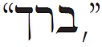
THE LANGUAGE OF BLESSING (
BARAK
), which concluded the first strophe, appears in the first line of the second strophe. The repetition of terms from one line to the next (anadiplosis) is a characteristic feature of the Songs of Ascent. In verse 4 God is rightly presumed as the subject of the passive verb barak, but in verse 5 the psalmist is much more explicit. Yahweh is the agent of the blessings to come.10
Psalm 128 closes with a benediction that announces blessings upon the pilgrims who are making their journey from their homes to Jerusalem, to Mount Zion. As suggested above, the first four verses of the psalm have as their focus the household, with references to food production and family life, both of which are perceived as blessings from God. The final two verses in the psalm, however, shift the focus through explicit references to Zion and Jerusalem in verse 5. The first four verses highlight the blessings that come to those who fear the Lord and walk in his ways, but verse 5 specifies not only the source of blessings but also those blessings yet to come. Unlike Psalm 127, Psalm 128 invokes elements of Zion theology (cf. Pss 46; 48). In particular, the psalmist asserts that blessings come from Zion because that is the place where Yahweh dwells. The language and theology invoked in this benediction resonate with that found in the well-known Zion psalm, Psalm 46. In verse 4 of that psalm, the poet explains that “there is a river whose streams make glad the city of God, the holy place where the Most High dwells.” These streams pour out into the city and region, and thus pour forth the blessings of Yahweh upon his land and upon his people (cf. Ezek 47). The writer of Psalm 128 prays similarly that God’s blessings would pour forth from Zion upon his people (v. 5a).
The NIV translates verses 5–6 as a series of three blessings or wishes. The first verbal form, yebareka, “he will bless you,” is an imperfect with a pronoun attached. The imperfect form often functions with a jussive sense and expresses to the hearer the wish or desire of the speaker. The NIV and NRSV translate the next two phrases similarly, “May . . . you . . .,” thus creating a series of three blessings. Upon closer inspection, however, the structure of the subsequent sentences (vv. 5b, 6a) suggests an alternative translation. Following the imperfect with a jussive in verse 5a (“May the LORD bless you”), the next two lines begin with the imperative: “see” (ra’ah). In Hebrew, whenever a jussive is followed by another sentence with an imperative, the following sentence expresses a sense of purpose (“May X happen so that Y will happen”).11
Thus a preferred translation of verses 5–6 would be:
May the LORD bless you from Zion,
so that you may see the prosperity of Jerusalem
all the days of your life.
So that you may live to see your children’s children.
Peace be upon Israel.
The implications of this alternative reading are significant to the theology of the psalm itself. The psalm does not conclude with three benedictory wishes, as though all three statements are equal. The psalmist is clear: the benediction is, “May the LORD bless you from Zion.” This blessing will result in what follows: enjoying the goodness of Jerusalem and living a long life. The word “propersity” (tov) in verse 5b often functions as a synonym for shalom, “peace,” “wholeness,” or “goodness” (Isa 52:7; Jer 8:15). In Psalm 128 the psalmist asks the Lord to bless the hearer from Zion so that he may experience the peace and wholeness of Zion. In turn, the peace and wholeness of Jerusalem will allow the hearer to live a long life—“to see your children’s children.” The last line in the psalm reiterates the desire for peace upon Israel, a desire expressed elsewhere in the collection (Pss 120:7; 122:6–9; 125:5).
Bridging Contexts
RETRIBUTIVE JUSTICE AND BLESSINGS. As noted in Psalm 127, texts associated with the wisdom tradition typically operate within a system of retributive justice; the righteous receive blessings but the wicked, punishment. The contrast between the life of the righteous and that of the wicked appears repeatedly in Proverbs 10–22. In Proverbs 10:27, for example, the sage writes, “The fear of the LORD adds length to life, but the years of the wicked are cut short.” Such language is not reserved for the book of Proverbs, however. A nearly identical statement occurs in Psalm 37:9: “For those who are evil will be destroyed, but those who hope in the LORD will inherit the land.” A cursory reading of texts such as these might lead one to construct an image of God as one who “takes names” and metes out punishment or reward as appropriate. Constructing this image would be to reduce the idea of retributive justice simply to a forensic notion.12
Such a view underestimates the depths of the worldview that is foundational to the concept of retributive justice. The sages averred that God had structured the created order, but even more, as Kenneth Kuntz has explained, they believed that the “structure of reality is essentially good and that man’s well-being is contingent upon his conforming to that unseen, yet efficacious order.”13
In the Old Testament, “conforming to that unseen, yet efficacious order” cannot occur apart from the torah of God, the ways of God. That worldview explains why the psalmist calls “blessed” those who “walk in obedience” to God (Ps 128:1b)—they are participating in the “efficacious order” that has been established and is sustained by God. But what of the verses that follow, particularly those that mention food, a wife, and offspring? Are food and family nothing more than incentives offered by God to coax his people to faithfulness? Is he buying the faithfulness of his people (Job 1:9)? The psalmist refuses such reductionistic thinking and asks us to do the same. Those who fear the Lord and walk in his ways understand something of the structure of the created order (Ps 19), but even more, through their relationship with God and their commitment to his ways, they are conforming their lives to that order. In Psalm 128:2–3 the psalmist suggests that those who remain committed to that order (v. 1) may discover life in all of its fullness (i.e., food, family, and community). The fullness of life is not a “reward,” so to speak, but a gift. And as verse 5 reminds, these blessings are not an “automatic ‘receipt of retribution,’ but a free gift of the God of Israel, who is present with his people.”14
Blessings of life. In verses 2–3 the psalmist invites the readers or hearers to celebrate three aspects of life that are gifts from God: food, a wife, and children. Throughout the Songs of Ascent there is a focus on the ordinary—and perhaps even more mundane—aspects of life. Yet these aspects of life are lifted up and “accorded a high level of dignity.”15
In verse 2b the psalmist explains that to those who fear the Lord, “blessings and prosperity” will come. In this psalm, blessings and prosperity have nothing to do with wealth or power. As noted above, the Hebrew word tov, translated “prosperity” in the NIV (vv. 2, 5), can function as a synonym for shalom (“peace,” “wholeness”). Thus, verse 2b could be translated as “how blessed you will be and it shall go well with you.” The translation of tov as “prosperity” in the NIV is unfortunate and may lead readers in ways not intended. In North American culture, the terms “prosperity” and “prosperous” are generally associated with affluence, which could lead some people to assume that a proper fear of Yahweh (v. 1a) and a proper life of obedience (v. 1b) should necessarily lead to prosperity in its most materialistic forms. Psalm 128, however, is not concerned with the accumulation of wealth but with the fullness of life, with tov and shalom. In the postexilic period, life was anything but tov and shalom. Those living in Yehud were faced with numerous challenges: taxation imposed on the region by the Persians, tensions between those returning from exile and those who remained in the land, crop failure, famine, and poverty, to name but a few.16
In the face of such daunting social and economic circumstances the psalmist reframes the issue. According to Psalm 128, food and family, as simple at they may seem, signal a full life. They are blessings from God and are meant to be received as such.
Contemporary Significance
PSALM 128 OPENS BY UNITING the “fear of the LORD” with walking in obedience. The psalmist does not suggest that this is an “either . . . or” option, as though a person could choose one at the expense of the other. Instead, to fear the Lord is to walk in obedience; to walk in obedience is to know the fear of the Lord. The claim is not merely tautological, however, as though one concept simply repeats the other by using different language. To the contrary, the psalmist invites us into a way of life, one that is predicated on relationship and manifested through daily life. That way of life is the blessed life.
This reframing of the blessed life is the gift of wisdom theology to the contemporary reader. The choices in life are manifold, from the most basic to the deepest and most profound. Yet, because these choices are legion, we are left paralyzed. When we have so many choices to make, how can we make any choice? And if we do not choose correctly, how can we be assured of a blessed life, a life filled with tov and shalom? And if we are not sure life can be filled with tov and shalom, then can we be sure there is any order whatsoever in the world in which we live? These questions present vexing issues to which the psalmist provides a sure response. He does not instruct the reader to “choose wisely” among the myriad options; instead he points the reader, novice and experienced alike, down a pathway. The psalmist knows that those on the pathway, those who seek to order their lives rightly, after the ways of God and in the fear of God, will see the world differently. Those individuals will soon realize that the goal of life is not to earn divine blessing but to receive the simple elements of life as divine blessing, as an assurance that life is indeed filled with tov and shalom.

 NIDOTTE 1:763–64.