Original Meaning
The Involvement of the Lord in Life (127:1–2)
THE FIRST STROPHE OF THE PSALM explains the necessity of God’s involvement in human life by alluding to two spheres of it: the home and the city. To live one’s life apart from the involvement of God would be to run the risk of engaging in activity that, in the end, proves unsuccessful and meaningless. The opening verse of the strophe is highly structured. Verses 1a and 1b begin with ’im YHWH lo’ (“Unless the LORD . . .”), followed by an imperfect verb (“to build,” “to guard”) in the first half of the line. Normally, an ’im lo’ (“if . . . not”) construction appears in oaths or oathlike statements with the intent of expressing an affirmative declaration. For example, in Jeremiah 15:11 Yahweh exclaims, “Surely [’im lo’] I will deliver you for a good purpose.”5
In Psalm 127, however, the use of ’im lo’ funtions differently. Much like in Psalm 124:1–2, the psalmist refers to possible or irreal situations.6
The second half of the line begins with the noun shawe’ (“vain”), followed by a perfect verb (“to labor,” “to stand watch”). The highly stylized form of the opening verses suggests they are meant to be read together, but even more, that they point to a common conclusion.
Unless the LORD builds the house. The word “house” (bayit) occurs more than two thousand times in the Old Testament and, similarly to its use in English, the Hebrew term covers a wide range of meanings. The term bayit, in its most basic sense, can refer to a home or a family dwelling (cf. Gen 44:14), or more symbolically to the household in general (cf. Gen 45:11), to a family line (Exod 6:14), or to a dynasty (cf. 2 Sam 7:16). The term can also refer to an entire nation (Ruth 4:11). If the proverbial sayings in verse 1 had an “earlier life” as independent proverbs, their use of bayit likely referred to the actual construction of a home, and the same referent is likely in view in the psalm. The use of the verb “labor” (‘amal) in the second half of the line supports this reading, given that ‘amal can refer to strenuous, manual labor (Deut 26:7; Ps 107:12). Further, the subject of the verb, “builders,” normally refers to those constructing something (i.e., a house, temple, or wall).7
Yet because of the polyvalent nature of the term and the penchant for writers of proverbs to play on such polyvalence, the precise meaning here of bayit remains open to a number of interpretations.
As similarly in the first line, the second line of verse 1 presents a possible or irreal situation. The image shifts from that of the home to that of the city, with a particular focus on the city as a place of security. The implication is that any human attempt to protect the city remains vain unless Yahweh watches over it. Together, the images of “the building of houses and keeping watch over a city evoke the human preconditions for a happy and carefree life together, for a family and a society.”8
In vain. In the opening strophe the word “vain” (shawe’) occurs three times and thus serves to link the proverbial statement in verse 1 to the claim made in verse 2. Although the English does not reflect the word order, the word “vain” (shawe’) appears as the first word in three different lines: “In vain [shawe’] the builders toil over it” (v. 1b); “in vain [shawe’] the guards stand watch” (v. 1d); “in vain [shawe’] you rise early” (v. 2a). The translation of shawe’ as “vain” calls to mind the dominant term in the book of Ecclesiates: “vanity” (hebel). Upon closer analysis, however, the terms connote very different meanings in their respective contexts. In Ecclesiastes the writer employs the word “vanity” (hebel) to suggest that, while persons may be successful in their undertakings, their activities may still prove to be pointless, ephemeral, and worthless. The psalmist, however, is not assessing a value on building a house or guarding a city; rather, the psalmist is claiming that the success of such work is contingent on whether God is involved in the activity. If God is not involved, such activity remains deceptive, delusional, and ultimately unsuccessful.9
The theme of vain or deceptive activity continues in verse 2. The verse opens literally, “it is vanity to you,” followed by three participial phrases meant to describe the person the psalmist has in mind: those who “rise early,” those who “stay up late,” and those “toiling for food to eat.” The first two participial phrases function as time markers that signal a long work day.10
The third participial phrase does not refer to the duration of the activity but, intead, assigns a particular value to that activity. The poet refers to “the bread of toil” (‘ezeb). Elsewhere in the Psalter (Ps 80:5), the psalmist refers to eating “the bread of tears” as a cipher for suffering in life. The noun “toil” (‘ezeb) in Psalm 127 refers to strenuous labor or pain and always has a negative connotation. Consequently, the “bread of toil” does not refer to the bread earned from toil (as suggested in the NIV); instead, the phrase reflects a particular way of life, one filled with the hardship of labor. Texts that reflect the tenets of wisdom theology typically extol the virtue of work (cf. Prov 6:6–11; 10:4–5; 12:24; 24:30–34), yet in Psalm 127 this kind of toil—relentless work from sunup to sundown—proves deceptive and useless (shawe’).
He grants sleep to those he loves. The first three clauses of verse 2 recount the harried activity of humans attempting to secure their own lives. This image of such a laborious life is placed alongside the image of sleep in verse 2d.11
Although based upon the structure of the verse and, even more, human experience, one might infer that hard work leads to sleep, the psalmist invites the reader to think otherwise. In verse 1 he confesses that all human activity is useless unless God is actively involved. In verse 2 he confesses that the toilsome life depicted in the first three lines of the verse likewise is vain or useless; it does not secure one’s life. The psalmist does not dismiss the value of hard work, only the assumption that hard work is all one needs to succeed. Like in verse 1 the psalmist reminds the reader that God’s involvement in human life is what leads to success and satisfaction. The claim that God grants sleep to his beloved ones means that human beings “can afford to relax and sleep because Yhwh continues to be active.”12
Human effort alone is not sufficient to create a meaningful life, but when divine involvement intersects with human effort, the fear of a vain and useless (shawe’) life is erased.
Bridging Contexts
IN READING PSALM 127, the overarching theme unfolds: dependence on Yahweh. The language and imagery of the psalm considers this theme in the light of events associated with everyday life: building, protecting, working, and even procreating. The psalm also must be considered within the larger collection of the Songs of Ascent. The emphasis on Zion and the temple in Psalm 120–34 provides an additional level of interpretation to the psalm. The mention of building a house in verse 1a recalls the mention of the “house of the LORD” in Psalms 122:1, 9 and anticipates the reference in Psalm 134:1. The references to a “city” in Psalm 127:1b recall the mention of Jerusalem (or Zion) in Psalms 122:2; 125:2; 126:1; 128:5; 129:5; 132:13; 133:3; and 134:3. Even the language associated with “watching” or guarding recalls language from Psalms 121:3–8 and 130:6. Further, the focus on offspring or “children” in the second half of Psalm 127 is used explicitly in reference to the offspring of David in Psalm 132:12. The connections between Psalm 127 and its larger context may explain the psalm’s inclusion within the larger collection, but it does not necessarily drive the poem’s interpretation at the level of the individual psalm.
As noted above, Psalm 127 has been traditionally recognized as a wisdom psalm. Broadly construed, the theological underpinnings of the wisdom tradition are rooted in a system of retributive justice. Hard work and faithfulness to the ways of Yahweh result in blessings, while apathy and improper behavior result in a diminished existence. Although Leo Perdue’s assessment is correct that retributive justice was not “some infallible system that was inevitably true” (cf. the books of Job and Ecclesiates), the claims associated with retributive justice certainly established a mechanistic worldview that operated from the assumption that retributive justice was more true than not.16
Many of the proverbs provide counsel about everyday life predicated on a system of retributive justice. Virtues of diligence and hard work receive praise, while sloth and wickedness, condemnation. In Proverbs 6:6–8 the sage extols the ant as an exemplary model of wisdom: the ant works hard during the summer and at harvest in order to secure its future. The sage continues in that chapter by chastising the “sluggard” and asking, “When will you get up from your sleep? A little sleep, a little slumber, a little folding of the hands to rest—and poverty will come on you like a thief” (Prov 6:9b–11a). Texts such as these might lead one to conclude that the theology associated with wisdom texts appears overly anthropocentric, that it appears to suggest everything rests on whether humanity does enough or does the right thing, and only then do the blessings of God follow.
Psalm 127 invokes another stream of thought within the wisdom tradition. This stream does not stand in tension with Proverbs 6 and related texts but instead seeks to make more explicit the triangular relationship that exists beween God, humans, and everyday life.17
In texts such as Proverbs 6, the assumption is that God is in the “background,” so to speak, ensuring that retributive justice unfolds as appropriate. In Psalm 127, however, God moves to the foreground. There is an inherent connection between the work of God, the work of humans, and the unfolding of everyday life. The goodness of life and the certainty of the future cannot be fully secured by humans alone; fully securing them is the work of God. Other wisdom texts echo this strain of thought. For example, in Proverbs 21:31 the sage writes, “The horse is made ready for the day of battle, but victory rests with the LORD.” The people may prepare for battle, as well they should, but ultimately it is the work of God that remains decisive. Security does not come from human effort alone, but only as humans recognize their utter dependence on God. The language of the second strophe (vv. 3–5) reinforces this assertion. The psalmist acknowledges that children are a heritage “from the LORD” and they are a reward “from him” (emphasis added). Beyond building a house, securing a city, and working the land, humans remain dependent on Yahweh even for the giving of a family. The triangular relationship between God, humans, and everyday life extends into every facet of life, thus necessitating a sense of humility in those very same places of life.
In the first strophe of Psalm 127 humans are referred to as builders, guards, and laborers; yet, despite their dedicated efforts, vigilent attention, and exhausting toil, none of their actions ensure success. Worse yet, all of them remain vain (shawe’) unless God is involved. In verse 2d, however, the psalmist reminds us that, because God is involved, he gives sleep to his beloved. The image of giving sleep proves instructive. As noted above, Proverbs 6:9–11 includes a derisive statement about sleep, as though sleep is inherently bad, but in Psalm 127 sleep fares much better. The psalmist encourages a rhythm between work and rest, but this kind of rhythm only comes after the laborer’s faithful submission to God.18
This kind of rhthym only comes after we have “rested” in the belief that God is at work in our daily lives.19
For the psalmist, the ability to sleep implies recognition that all his efforts cannot do what God alone can do. The psalmist does not call for the cessation of building, guarding, or toiling, but only recognition of our limitations. Although Psalm 8 reminds us that God made humans a little lower than God (or “the angels,” NIV), Psalm 127 reminds us that we are not God. Gratefully, this psalm reorients us with a proper theological anthropology in light of everyday life and, more significantly, in light of God.
Contemporary Significance
PSALM 127 PROVIDES Christians in the twenty-first century with a powerful corrective concerning our own abilities to “make something of ourselves.” Those of us who live in the United States are well acquainted with the rhetoric of the “American dream.” Historians trace the first use of that phrase to James Truslow Adams in his 1931 book The Epic of America.20
In that volume Adams contends that, because of this dream, “each man and woman shall be able to attain to the fullest stature of which they are innately capable, and be recognized by others for what they are.”21
There is an inherent assumption in this claim that is thoroughly anthropocentric. As David Platt suggests, the American dream teaches us that “our greatest asset is our own ability.”22
Out of this belief, we may fall prey to two lines of thought, neither of which is life giving.
First, because we believe success is contingent upon effort, we are compelled to work harder. Prior to the invention of electricity, most of our ancestors lived according to the rhythm of the day. So long as there was sunlight, they would work. As the day ebbed into evening and transitioned to night, their work slowed and finally came to a halt. Some may have worked by candlelight or lantern for a time, but because these were precious commodities they too were held in reserve. Such a life stands in stark contrast to our own. Because our computers travel with us and artificial light is always available, we now can work late into the evening and through the night—darkness never falls upon us. Cell phones allow us to remain on call and accessible 24/7. And worse yet, this capacity to work continuously has become a source of pride for us. We assume that we “will attain to the fullest stature of that which we are innately capable,” to borrow from James Truslow Adams, if we not only work hard but work even harder than that. Yet as Eugene Peterson admonishes, “Relentless, compulsive work habits (‘the bread of anxious toil’) which our society rewards and admires are seen as a sign of weak faith and assertive pride, as if God could not be trusted to accomplish his will, as if we could rearrange the universe by our own effort.”23
Psalm 127 invites us to reconsider our lives and the work that has been placed in our hands. We are invited to depend on God and not on ourselves. Surely the God who “stretches out the heavens like a canopy” (Isa 40:22) is worthy of our trust. So long as we depend on ourselves, we are resigned to eating the “bread of anxious toil.”
Second, Psalm 127 goes so far as to suggest that unless God is part of our work, or perhaps better stated, unless we are part of God’s work, our efforts are in vain. In John 15:5 Jesus instructs his disciples, “I am the vine; you are the branches. If you remain in me and I in you, you will bear much fruit; apart from me you can do nothing.” In our own hubris and out of our own sense of self-reliance, we may become convinced that we, in fact, are the vines—that all life springs from us. But such thinking is misguided and an affront to the work of God in the world. As a reminder of God’s work in the world, the psalmist refers to children in the second half of Psalm 127. If ever humans could look at something and declare, “We made that,” surely that would be the case with children. We could assume that we, in fact, are the vines—and that all life, especially the life of our children, springs from us. And yet . . . the psalmist confesses that children are “from the LORD” and “from him” (v. 3). When one watches the birth of his or her own child, one becomes keenly aware that this work is much bigger than either the husband or the wife, and even the two together. In some way that cannot be explained, God has invited human beings into his ongoing creative work in the world. He has allowed the branches to experience something of what the Vine already knows. And in those moments, our hubris and self-reliance should give way to utter humility.
Original Meaning
Children are a Heritage from the Lord (127:3–5)
BEGINNING IN VERSE 3 THE PSALM shifts to a different subject matter. This shift is evident in the use of the particle hinneh, a term meant to signal the start of a new stanza or pericope. Not all English translations opt to translate the term, however. The NIV and NRSV, for example, do not supply a corresponding term in English, while the NASB and ESV render the term as “Behold.” Whether a translation renders the term in English or not, its presence in the Hebrew text signals the start of the next section in the text.
In the second half of Psalm 127 the poet turns to familial matters and, in particular, considers the blessings associated with a larger family. Similar to the claims made in verses 1–2, the latter strophe in the psalm focuses on the activity of God in human life.
Heritage from the LORD. In the opening line of the second strophe, the psalmist describes children as “the heritage from the LORD.” The Hebrew word nahalah, often translated as “heritage” or “inheritance,” typically refers to the land given to Israel by Yahweh. The term appears repeatedly in the book of Joshua (50x) with reference to the land apportioned among the tribes (e.g., Josh 14:9, 13; 15:20; 16:5). Although the land belongs to God, he apportions it to his people, thereby securing their future. The psalmist makes a similar move in declaring that children are the nahalah of Yahweh. Children are a free gift from God, even as the land was, and as similarly with the land, children secure the future of God’s people.13
In Psalm 127:3b the psalmist explains that children are a reward from God—they are valuable. Although the word tsakar can mean “wages,” the meaning should not be taken literally. The term in Psalm 127 does not imply that fathers have “earned” children because of their work or that they are being given children as a “reward” for some particular act. Similar to tsakar in Isaiah 40:10; 62:11, tsakar in Psalm 127:3b is something that belongs to God but is given as a gift. The use of tsakar in verse 3b parallels the language of nahalah in verse 3a.14
Much as the first strophe suggests that nothing humans do can be successful apart from God’s active involvement in the human sphere, the second strophe begins with the declaration that it is precisely because of God’s active involvement in life (in the form of giving children) that humans can in fact be successful.
Like arrows in the hand of a warrior. In verses 4 and 5a the psalmist compares children to arrows by suggesting that the blessed man has a quiver full of “arrows.” Earlier in the Songs of Ascent arrows were mentioned (Ps 120:4), but with a negative connotation. In Psalm 120 the term refers to the injurious comments of the taunting enemies who threaten the psalmist, who himself seeks peace. By contrast, the poet in Psalm 127 invokes the image of arrows in an effort to signal the strength and protection that comes from having children in one’s youth (v. 4a). To contextualize this thought, the psalmist refers to the gate (sha‘ar; NIV “court”) in verse 5b, suggesting that a quiver full of children will prevent the father from experiencing shame in that public forum. The gate was the place of public assembly but also the location for business and commercial activity, as well as the location for settling legal disputes. In the book of Ruth, for example, the question concerning the next of kin (go’el) is resolved at the city gate. Because the gate funtioned as the center of the community, it was also a prime location for injustice, abuse, and corruption, thus leading the prophet Amos to exhort those in the Northern Kingdom to establish justice in the gates (Amos 5:15). The psalmist explains that although the gate holds the potential for injustice and false accusations, the blessed man and his quiver full of children will thwart any forms of injustice or abuse attempted by his enemies.15
Bridging Contexts
IN READING PSALM 127, the overarching theme unfolds: dependence on Yahweh. The language and imagery of the psalm considers this theme in the light of events associated with everyday life: building, protecting, working, and even procreating. The psalm also must be considered within the larger collection of the Songs of Ascent. The emphasis on Zion and the temple in Psalm 120–34 provides an additional level of interpretation to the psalm. The mention of building a house in verse 1a recalls the mention of the “house of the LORD” in Psalms 122:1, 9 and anticipates the reference in Psalm 134:1. The references to a “city” in Psalm 127:1b recall the mention of Jerusalem (or Zion) in Psalms 122:2; 125:2; 126:1; 128:5; 129:5; 132:13; 133:3; and 134:3. Even the language associated with “watching” or guarding recalls language from Psalms 121:3–8 and 130:6. Further, the focus on offspring or “children” in the second half of Psalm 127 is used explicitly in reference to the offspring of David in Psalm 132:12. The connections between Psalm 127 and its larger context may explain the psalm’s inclusion within the larger collection, but it does not necessarily drive the poem’s interpretation at the level of the individual psalm.
As noted above, Psalm 127 has been traditionally recognized as a wisdom psalm. Broadly construed, the theological underpinnings of the wisdom tradition are rooted in a system of retributive justice. Hard work and faithfulness to the ways of Yahweh result in blessings, while apathy and improper behavior result in a diminished existence. Although Leo Perdue’s assessment is correct that retributive justice was not “some infallible system that was inevitably true” (cf. the books of Job and Ecclesiates), the claims associated with retributive justice certainly established a mechanistic worldview that operated from the assumption that retributive justice was more true than not.16
Many of the proverbs provide counsel about everyday life predicated on a system of retributive justice. Virtues of diligence and hard work receive praise, while sloth and wickedness, condemnation. In Proverbs 6:6–8 the sage extols the ant as an exemplary model of wisdom: the ant works hard during the summer and at harvest in order to secure its future. The sage continues in that chapter by chastising the “sluggard” and asking, “When will you get up from your sleep? A little sleep, a little slumber, a little folding of the hands to rest—and poverty will come on you like a thief” (Prov 6:9b–11a). Texts such as these might lead one to conclude that the theology associated with wisdom texts appears overly anthropocentric, that it appears to suggest everything rests on whether humanity does enough or does the right thing, and only then do the blessings of God follow.
Psalm 127 invokes another stream of thought within the wisdom tradition. This stream does not stand in tension with Proverbs 6 and related texts but instead seeks to make more explicit the triangular relationship that exists beween God, humans, and everyday life.17
In texts such as Proverbs 6, the assumption is that God is in the “background,” so to speak, ensuring that retributive justice unfolds as appropriate. In Psalm 127, however, God moves to the foreground. There is an inherent connection between the work of God, the work of humans, and the unfolding of everyday life. The goodness of life and the certainty of the future cannot be fully secured by humans alone; fully securing them is the work of God. Other wisdom texts echo this strain of thought. For example, in Proverbs 21:31 the sage writes, “The horse is made ready for the day of battle, but victory rests with the LORD.” The people may prepare for battle, as well they should, but ultimately it is the work of God that remains decisive. Security does not come from human effort alone, but only as humans recognize their utter dependence on God. The language of the second strophe (vv. 3–5) reinforces this assertion. The psalmist acknowledges that children are a heritage “from the LORD” and they are a reward “from him” (emphasis added). Beyond building a house, securing a city, and working the land, humans remain dependent on Yahweh even for the giving of a family. The triangular relationship between God, humans, and everyday life extends into every facet of life, thus necessitating a sense of humility in those very same places of life.
In the first strophe of Psalm 127 humans are referred to as builders, guards, and laborers; yet, despite their dedicated efforts, vigilent attention, and exhausting toil, none of their actions ensure success. Worse yet, all of them remain vain (shawe’) unless God is involved. In verse 2d, however, the psalmist reminds us that, because God is involved, he gives sleep to his beloved. The image of giving sleep proves instructive. As noted above, Proverbs 6:9–11 includes a derisive statement about sleep, as though sleep is inherently bad, but in Psalm 127 sleep fares much better. The psalmist encourages a rhythm between work and rest, but this kind of rhythm only comes after the laborer’s faithful submission to God.18
This kind of rhthym only comes after we have “rested” in the belief that God is at work in our daily lives.19
For the psalmist, the ability to sleep implies recognition that all his efforts cannot do what God alone can do. The psalmist does not call for the cessation of building, guarding, or toiling, but only recognition of our limitations. Although Psalm 8 reminds us that God made humans a little lower than God (or “the angels,” NIV), Psalm 127 reminds us that we are not God. Gratefully, this psalm reorients us with a proper theological anthropology in light of everyday life and, more significantly, in light of God.
Contemporary Significance
PSALM 127 PROVIDES Christians in the twenty-first century with a powerful corrective concerning our own abilities to “make something of ourselves.” Those of us who live in the United States are well acquainted with the rhetoric of the “American dream.” Historians trace the first use of that phrase to James Truslow Adams in his 1931 book The Epic of America.20
In that volume Adams contends that, because of this dream, “each man and woman shall be able to attain to the fullest stature of which they are innately capable, and be recognized by others for what they are.”21
There is an inherent assumption in this claim that is thoroughly anthropocentric. As David Platt suggests, the American dream teaches us that “our greatest asset is our own ability.”22
Out of this belief, we may fall prey to two lines of thought, neither of which is life giving.
First, because we believe success is contingent upon effort, we are compelled to work harder. Prior to the invention of electricity, most of our ancestors lived according to the rhythm of the day. So long as there was sunlight, they would work. As the day ebbed into evening and transitioned to night, their work slowed and finally came to a halt. Some may have worked by candlelight or lantern for a time, but because these were precious commodities they too were held in reserve. Such a life stands in stark contrast to our own. Because our computers travel with us and artificial light is always available, we now can work late into the evening and through the night—darkness never falls upon us. Cell phones allow us to remain on call and accessible 24/7. And worse yet, this capacity to work continuously has become a source of pride for us. We assume that we “will attain to the fullest stature of that which we are innately capable,” to borrow from James Truslow Adams, if we not only work hard but work even harder than that. Yet as Eugene Peterson admonishes, “Relentless, compulsive work habits (‘the bread of anxious toil’) which our society rewards and admires are seen as a sign of weak faith and assertive pride, as if God could not be trusted to accomplish his will, as if we could rearrange the universe by our own effort.”23
Psalm 127 invites us to reconsider our lives and the work that has been placed in our hands. We are invited to depend on God and not on ourselves. Surely the God who “stretches out the heavens like a canopy” (Isa 40:22) is worthy of our trust. So long as we depend on ourselves, we are resigned to eating the “bread of anxious toil.”
Second, Psalm 127 goes so far as to suggest that unless God is part of our work, or perhaps better stated, unless we are part of God’s work, our efforts are in vain. In John 15:5 Jesus instructs his disciples, “I am the vine; you are the branches. If you remain in me and I in you, you will bear much fruit; apart from me you can do nothing.” In our own hubris and out of our own sense of self-reliance, we may become convinced that we, in fact, are the vines—that all life springs from us. But such thinking is misguided and an affront to the work of God in the world. As a reminder of God’s work in the world, the psalmist refers to children in the second half of Psalm 127. If ever humans could look at something and declare, “We made that,” surely that would be the case with children. We could assume that we, in fact, are the vines—and that all life, especially the life of our children, springs from us. And yet . . . the psalmist confesses that children are “from the LORD” and “from him” (v. 3). When one watches the birth of his or her own child, one becomes keenly aware that this work is much bigger than either the husband or the wife, and even the two together. In some way that cannot be explained, God has invited human beings into his ongoing creative work in the world. He has allowed the branches to experience something of what the Vine already knows. And in those moments, our hubris and self-reliance should give way to utter humility.

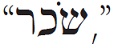 NIDOTTE 3:1244–46.