Original Meaning
Call to Praise the Lord (134:1–2)
VERSES 1–2 CONTAIN THREE IMPERATIVES addressed to the “servants of the LORD” (v. 1a). The first and last imperative are identical, “Praise [baraku] the LORD,” thus creating a framing device in the first strophe (vv. 1a, 2b). Between the two calls to praise the Lord, the psalmist situates the action of the people within the temple (“house of the LORD,” “sanctuary”).
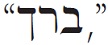
Praise the LORD. The Hebrew word for “praise” comes from the root brk, a term which occurs more than four hunderd times throughout the Old Testament. Depending on context, usage, and form, the Hebrew term can mean “to praise,” “to bless,” or even “to greet.” Barak can refer to encounters between human beings (Gen 27:30; Deut 33:1; 2 Sam 6:20), but more often it is God who dispenses blessings to his people or his creation. For example, God blesses humans in Genesis 12:2, Exodus 20:24, and Psalm 115:22, but he also blesses elements of the created order in Genesis 1:22; 2:3 and Exodus 23:25. Although our contemporary culture tends to discount the notion of a blessing, in the ancient Near Eastern world “there was nothing more important than securing the blessing of God in one’s life or nation.”3
Clearly it is this meaning that appears to be inferred in the final verse (v. 3) of Psalm 134. In verse 1a and 2b, however, the psalmist exhorts the community to “bless” Yahweh. While the idea of God’s blessing his people seems logical, the reverse—the people’s blessing God—seems counterintuitive. Other ancient Semitic traditions expressed similar reservations about who could bless whom and decided that the deity was the one who granted blessing but never the one who received blessing. By contrast, Yahweh in the Old Testament not only appears as the subject of the verb “to bless” but also can function as the object of the verb, as evidenced in this psalm. Obviously barak functions differently depending on whether Yahweh is the subject or the object of the verb. The NIV has attempted to capture this difference by rendering barak as “to praise” whenever Yahweh is the object of the verb and humans are the subject (as in Ps 134:1a, 2b). The Septuagint understood the different nuance being communicated in this use of barak and so rendered the Hebrew term with eulogeō, “to speak well of,” as a servant would speak well of his or her superior.4
Within the framework of a covenant, or even a patron-client relationship, the master or lord would bestow favor on the servant, and in return the servant would speak well of, or “bless,” the master. In the Old Testament, God bestows blessings upon his people, and in return his people speak well of God; they bless or praise God for the good he has brought to them.
Servants of the LORD. The servants of the Lord mentioned in verse 1a appear to refer to the larger worshiping community and not more specifically to priests or Levites. As Leslie Allen has rightly noted, the plural form of “servant” does not refer to priests or Levites in other texts.5
In Isaiah 54:17 the phrase refers to the entire worshiping community, as it does in Psalms 113:1 and 135:1. In Psalm 134:1b, the NIV’s rendering of the verb ‘amad (“to stand”) as “to minister” might lead some interpreters to assume the priestly class is in view in both lines of verse 1. While the verb ‘amad is used to refer to cultic personnel (cf. Deut 10:8; 18:7; 1 Chr 23:20), the term can also refer to the activity of the larger worshiping community (cf. Lev 9:5; Jer 7:10). The communal references in the previous psalms provide further justification for interpreting this language communally.6
Lift up your hands. In addition to praising Yahweh, the servants are called to “lift up” their hands. The NIV and NEB render the full line, “Lift up your hands in the sanctuary.” In the Hebrew, the preposition “in” does not appear prior to the word “sanctuary.” Allen suggests the word functions accusatively and should be translated “towards the sanctuary.”7
Elsewhere in the Psalter a similar meaning appears, but in those instances the preposition ’el (“to” or “toward”) occurs in contexts that refer to the lifting of hands toward the sanctuary or temple (cf. Pss 5:7; 28:2; 135:2). Although the preposition is absent from Psalm 134, the imagery and meaning remain consistent with those of the other texts. The worshipers are not lifting their hands in the air in celebration—they are lifting their hands toward the one being exalted or honored, the one who is the source of blessing (i.e., the God who dwells in the sanctuary). In Egyptian iconography, the palms of the worshiper are not lifted up, as though to the sky, but instead turned forward in the direction of the one being worshiped.8
Bridging Contexts
ALBEIT BRIEF, PSALM 134 proves to be a fitting conclusion to the Songs of Ascent. Martin Leuenberger has noted that much of the vocabulary in this short psalm can be found in earlier psalms in Songs of Ascent collection.10
Various forms of the word barak, “bless,” appear in verses 1a, 2b, and 3a, but they also appear earlier—in Psalms 124:6; 128:5; 129:8; 132:15; and 133:3. The verb “stand” (‘amad) appears in Psalm 134:1 and earlier in Psalm 122:2. The phrase “house of the LORD” in Psalm 134:1b appears earlier in Psalm 122:1. As noted above, the reference to “servant” or “servants” appears earlier in Psalms 123:1 and 132:10. The final line in Psalm 134, “Maker of heaven and earth,” appears earlier in Psalms 121:2 and 124:8. Because of the similarities between Psalm 134 and the other psalms that comprise the larger collection, Leuenberger has suggested that perhaps Psalm 134 was created specifically for its “literary place” in the collection (i.e., the conclusion).11
Whether this poem was created specifically as a conclusion to the Songs of Ascent or was used earlier as a separate psalm is difficult, if not impossible, to determine with certainty. Nevertheless, Leuenberger’s observations concerning the repetition of key words and phrases in Psalm 134 merits the interpreter’s attention. The temptation for the interpreter might be to read Psalm 134 in isolation, simply as a call to praise God; yet to do so is to miss the rich intertextuality found in the poem. Psalm 134 is indeed a call to praise and bless God, but the theology of that call is grounded in the prayers that precede this psalm.
The opening poems in this collection refer to the troubled circumstances surrounding those who opted to make a pilgrimage to Zion. Their world was not idyllic and serene, but a world fraught with those who spoke often of violence (Ps 120), threatened to sweep away God’s people (Ps 124), and oppressed God’s people (Ps 129); there were evildoers all around (Ps 125). In such a context, making a pilgrimage seems like an unwise choice. Yet the threatening circumstances mentioned in the Songs of Ascent were matched by declarations of God’s faithfulness to his people. The psalmists refer to lifting up their eyes to Yahweh for help (Pss 121; 123), and they declare that those who trust in God are immovable, like Mount Zion (Ps 125). The God to whom they cry is the “Maker of heaven and earth” (Pss 122:2; 124:8; 134:3), the one enthroned in the heavens (Ps 123:1). The reality of the threats around them was held in check by the certainty of their confession, the certainty of their God. In Psalm 134 the poet calls on the people to bless God and lift up their hands toward the temple. As suggested above, by this lifting up of their hands to or toward the temple, the people are acknowledging Yahweh as the source of power, the true Maker of heaven and earth—the one who will bless his people from Zion.
Contemporary Significance
THE FIRST QUESTION in the Westminster Shorter Catechism is, “What is the chief end [primary purpose] of man?” The answer is, “to glorify God and enjoy him forever.” The Songs of Ascent invite worshipers to consider the question posed in the Catechism, a question that is profoundly theological and deeply existential. What is our end? What is our purpose? Psalm 134 invites worshipers into this larger purpose, that of glorifying God. But the invitation to bless God, to lift our hands toward him, must be heard in the light of the poems that precede this concluding psalm. The call “to glorify God and enjoy him forever” is not a form of escapism from a reality fraught with “dangers, toils and snares”; rather, it is a form of confession declaring that such powers, while real, do not measure up to the God whom we confess. We lift our hands to God, the Maker of heaven and earth, assured that from him “all blessings flow.”
Original Meaning
Blessings from Zion (134:3)
IN THE FINAL VERSE THE PRIESTS pronounce a blessing on those who have gathered “in the house of the LORD” (v. 1b). The verb barak appears for the third time in the psalm. As noted above, its meaning in verses 1a and 2b is better understood as “to praise” or “to exalt.” In verse 3, however, barak means “to bless” in the more traditional sense of the word. The concluding blessing recalls the blessing offered by Aaron in Numbers 6:24, “The LORD
bless you and keep you.”9
In the Songs of Ascent, the form of the blessing found both here and in Psalm 128:5 does not include the final phrase (“and keep you”) from the Aaronic benediction but prefers instead the addition of the phrase “from Zion.” Yahweh issues forth his blessings from Zion.
The shift from plural to singular in the psalm is also suggestive. In verse 1a the noun is plural, “servants,” and each of the imperatives in that strophe is plural. In verse 3, however, the singular form of “you” appears. The use of the singular “you” in verse 3 corresponds to the use of the singular in Numbers 6:24. The singular form used in Numbers 6 as well as in Psalms 128 and 134 suggests that while God’s blessings do extend to the community as a whole, they also extend to the individual worshipers.
Maker of heaven and earth. The guarantor of the blessings that are to come upon Israel is none other than the Creator, the one who has made heaven and earth. On the phrase, “Maker of heaven and earth,” see the discussion on Psalm 115:15.
Bridging Contexts
ALBEIT BRIEF, PSALM 134 proves to be a fitting conclusion to the Songs of Ascent. Martin Leuenberger has noted that much of the vocabulary in this short psalm can be found in earlier psalms in Songs of Ascent collection.10
Various forms of the word barak, “bless,” appear in verses 1a, 2b, and 3a, but they also appear earlier—in Psalms 124:6; 128:5; 129:8; 132:15; and 133:3. The verb “stand” (‘amad) appears in Psalm 134:1 and earlier in Psalm 122:2. The phrase “house of the LORD” in Psalm 134:1b appears earlier in Psalm 122:1. As noted above, the reference to “servant” or “servants” appears earlier in Psalms 123:1 and 132:10. The final line in Psalm 134, “Maker of heaven and earth,” appears earlier in Psalms 121:2 and 124:8. Because of the similarities between Psalm 134 and the other psalms that comprise the larger collection, Leuenberger has suggested that perhaps Psalm 134 was created specifically for its “literary place” in the collection (i.e., the conclusion).11
Whether this poem was created specifically as a conclusion to the Songs of Ascent or was used earlier as a separate psalm is difficult, if not impossible, to determine with certainty. Nevertheless, Leuenberger’s observations concerning the repetition of key words and phrases in Psalm 134 merits the interpreter’s attention. The temptation for the interpreter might be to read Psalm 134 in isolation, simply as a call to praise God; yet to do so is to miss the rich intertextuality found in the poem. Psalm 134 is indeed a call to praise and bless God, but the theology of that call is grounded in the prayers that precede this psalm.
The opening poems in this collection refer to the troubled circumstances surrounding those who opted to make a pilgrimage to Zion. Their world was not idyllic and serene, but a world fraught with those who spoke often of violence (Ps 120), threatened to sweep away God’s people (Ps 124), and oppressed God’s people (Ps 129); there were evildoers all around (Ps 125). In such a context, making a pilgrimage seems like an unwise choice. Yet the threatening circumstances mentioned in the Songs of Ascent were matched by declarations of God’s faithfulness to his people. The psalmists refer to lifting up their eyes to Yahweh for help (Pss 121; 123), and they declare that those who trust in God are immovable, like Mount Zion (Ps 125). The God to whom they cry is the “Maker of heaven and earth” (Pss 122:2; 124:8; 134:3), the one enthroned in the heavens (Ps 123:1). The reality of the threats around them was held in check by the certainty of their confession, the certainty of their God. In Psalm 134 the poet calls on the people to bless God and lift up their hands toward the temple. As suggested above, by this lifting up of their hands to or toward the temple, the people are acknowledging Yahweh as the source of power, the true Maker of heaven and earth—the one who will bless his people from Zion.
Contemporary Significance
THE FIRST QUESTION in the Westminster Shorter Catechism is, “What is the chief end [primary purpose] of man?” The answer is, “to glorify God and enjoy him forever.” The Songs of Ascent invite worshipers to consider the question posed in the Catechism, a question that is profoundly theological and deeply existential. What is our end? What is our purpose? Psalm 134 invites worshipers into this larger purpose, that of glorifying God. But the invitation to bless God, to lift our hands toward him, must be heard in the light of the poems that precede this concluding psalm. The call “to glorify God and enjoy him forever” is not a form of escapism from a reality fraught with “dangers, toils and snares”; rather, it is a form of confession declaring that such powers, while real, do not measure up to the God whom we confess. We lift our hands to God, the Maker of heaven and earth, assured that from him “all blessings flow.”

 NIDOTTE 1:758.