Original Meaning
The Call to Praise God (135:1–4)
THE CALL FOR THE PEOPLE TO PRAISE GOD dominates the initial strophe, with the verb halelu (“praise”) appearing four times, and a related term, zamar, which means to make celebratory music, appears once. Following the repeated call to praise God in the opening verses, the psalmist puts forth two reasons justifying this imperatival call to praise.
Servants of the Lord. As noted in the chart above, the opening verses of Psalm 135 echo the vocabulary found in the preceding psalm, Psalm 134. The references to “servants” (Ps 135:1b) and “ministering” or “standing” (Ps 135:2a) recall the use of the same terms in Psalm 134:1–2. As noted there, the plural form of “servant” does not refer to priests or Levites in other texts, but more generally to the worshiping community.6
While the immediate context of Psalm 135:1–2 is not determinative, the final strophe is suggestive. In those verses the psalmist invites “all you Israelites” (v. 19)—priests and non-priests alike—to praise God. The reference to the entire community in the final strophe makes plausible the claim that the “servants of the LORD” in verse 1 has the same, more expansive understanding in view.
For the LORD is good. Verse 3 provides the first of two reasons meant to justify the call to praise God. In this verse God is celebrated as “good” (tov). In Psalm 133:1, the word “good” (tov) appeared in reference to the blessedness of communal unity. In Psalm 135, however, attention turns back to God, and more specifically, to the character of God. Consequently, in verse 3a the congregation is exhorted to praise God, “for the LORD is good”—a phrase that functioned as a common formula in postexilic temple liturgy (e.g., Jer 33:11; 1 Chr 16:34; Pss 118:1; 136:1). In Psalm 135:3b the community is encouraged to “sing praise” or “make music” (zmr) to his name. In communal hymns, the verb frequently appears at the beginning of the psalm and serves to introduce the call to praise God (e.g., Pss 33:2; 66:2; 81:2; 95:2; 147:1).
For the LORD has chosen Jacob. Psalm 135:4 provides the second reason for God’s praise: God’s election of his people. The verb bahar, “to choose,” appears 170 times in the Old Testament, with the most occurrences appearing in the book of Deuteronomy. On the use of bahar in reference to the election of Israel as God’s people, see Deuteronomy 4:37; 7:6–7; 10:15; 14:2. In these verses Israel is reminded that their election is not based on their status—their election comes as a result of God’s gracious act. According to Deuteronomy 7:6–7, “the LORD your God has chosen [bahar] you out of all the peoples on the face of the earth to be his people, his treasured possession [segullah]. The LORD did not set his affection on you and choose [bahar] you because you were more numerous than the other peoples, for you were the fewest of all the peoples. But it was because the LORD loved you.”
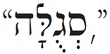
In addition to using bahar in Psalm 135:4, the psalmist also explains that Israel, in being elected or chosen, became God’s “treasured possession” (segullah), a term that can also be translated as “crown jewel” and have royal connotations.7
Hossfeld and Zenger suggest that the reference to a “crown jewel” may be a subtle reference to the notion of Yahweh as the Divine King.8
The reference to the kingship of Yahweh in verse 4 presages the more explicit references to Yahweh’s kingship in the following verses.
Bridging Contexts
AS A HYMN OF PRAISE, Psalm 135 invites the worshiper to make confessions that are central to the biblical witness of the God who has made himself known to his people. These confessions, however, are more than simple platitudes directed at a deity in the hope of placating that deity. Instead, as Sigmund Mowinckel has correctly noted, these kinds of prayers and confessions can be labeled “world-making.” In confessing God, one encounters God, and in doing so the world is shaped and reshaped—as are those who pray these psalms.20
Although Walter Brueggemann affirms Mowinckel’s notion of the world-making capacity of hymns, he also offers what I would argue is an unwarranted negative assessment of psalms of orientation (i.e., hymns).21
He contends that these psalms exhibit a high degree of certitude and that “such a satisfied and assured assertion of orderliness probably comes from the well-off, from the economically secure and the politically significant . . . . such religious conviction comes from those who experience life as good, generous and reliable.”22
Yet much of the Psalter was likely compiled after the exile, when social and political circumstances strained the theological claims of Israel. Consequently, the confessions collected in the Psalter and prayed by those in Yehud likely served to declare what they knew to be true about their God. Hymns of praise were not attempts at social control by the elite, as Brueggemann intimates; rather, such hymns were theological anchors that tethered the people of Israel to the central tenets of their faith.23
Encountering the living God. In his description of the hymn of praise, Sigmund Mowinckel writes,
The core of the hymn of praise is the consciousness of the poet and congregation that they are standing face to face with the Lord himself, meeting the almighty, holy and merciful God in his own place, and worshiping him with praise and adoration. He is in their midst and they owe him everything.24
Psalm 135 is not simply a historical recitation of events in Israel’s past; rather, the poem is a call to confession that eventuates in unfettered praise of the God who encountered his people and encounters them still. This psalm begins and ends with the same phrase, halelu yah, “praise the LORD.” Further still, three more times in verses 1b–3 (and perhaps four times, if ellipsis is assumed in verse 2a) the psalmist calls the people to praise (halelu) God, and once he calls them to “sing praise” (zamar). The psalm then concludes with a fivefold call to praise or bless the name of Yahweh (vv. 19–21a). Thus the entire poem is bounded by the well-structured call to praise:
Verse 1: halelu yah
Verses 1b–3: Fivefold call to praise God (if ellipsis is assumed)
. . .
Verses 19–21a: Fivefold call to praise God
Verse 21b: halelu yah
When the references to natural phenomena (vv. 5–7) and historical events (vv. 8–14) are rehearsed, they are processed through the lens of praise. And through the lens of praise, the congregation both recognizes and celebrates this powerful God who has encountered them and encounters them still. His name endures forever (v. 13), and he continues to vindicate those who declare themselves to be his servants.
The election of Israel. After issuing the opening call to praise God, the psalmist roots this hymn of praise in the election of Israel. Joel Kaminsky has helpfully traced the modernists’ critique against the biblical concept of election and has concluded that what is needed is a reclamation of this central theological claim in Scripture, both for Jews and Christians. He writes, “I do not think either tradition can sidestep, marginalize, or jettison election theology without severing its connections to its biblical roots, a move that would greatly impoverish or perhaps even destroy both of these venerable faith traditions.”25
The writer of Psalm 135 understood the centrality of election in the faith of Israel, a tradition that reaches back to the calling of Abraham and the assembling of God’s people at Sinai. These events cast a long shadow. Prior to tracing the work of God in the world at large in Psalm 135, the psalmist roots his praise in the work of God in “choosing” (bahar) Jacob/Israel as his people. In calling a people, God ensured their inheritance and promised his continued presence with them (v. 13). Election results in praise (Ps 135:1b–3, 19–21a). Paul makes similar use of the notion of election in the New Testament. In Ephesians 1:3–14 he suggests that those in Christ have an inheritance (vv. 11, 14). As the adopted children of God (v. 5), we receive the riches of his grace and are called to a life of unfettered praise (vv. 6, 12, 14). This act of God in “choosing” and electing his people appears across the New Testament in varying ways and gives an explanation for the salvific acts provided by God.26
The testimony of the power of God against human power can only be understood correctly in the light of election and the call to praise the God who has encountered his people. The recitation of these key moments in Israel’s history reflects a theological claim that is far deeper than some form of triumphalism. The psalmist is doing more than simply recalling the “good old days” when Israel’s enemies were thwarted. Instead, these stories of God’s victory over human power give testimony about Israel’s covenantal partner. The God who has chosen them has been at work to secure their future—and he remains so. Even as he has done in the past, he will continue to “vindicate his people and have compassion on his servants” (v. 14). When they realize that this God is the God they are encountering, they can do nothing else than lift their voices in praise.
Contemporary Significance
IN TEACHING AND PREACHING on Psalm 135, the temptation can be to focus primarily on the historical allusions in verses 8–12 and highlight how God strikes down any foe. We know these stories well, and such an approach might feed into our own insecurity about the future and the world in which we live. Or one might be tempted to focus primarily on the powerlessness of idols (vv. 15–18) and lampoon those who trust in idols. While both of these themes appear in this psalm and can be found elsewhere in Scripture, they are not the focal point of the poem—they buttress the larger claim.
The point of the hymn is to confess what we know about God, and what we know about God begins with election (v. 4). It is only because God has made us his treasured possession that we come to understand that “our Lord is greater than all gods” (v. 5). It is only because God has chosen us that we understand and believe that “the LORD does whatever pleases him” (v. 6). And it is because God has chosen us as his covenantal partners that he has acted in our behalf to secure our future. The defeating of the enemies in verses 8–12 and the lampooning of the idols in verses 15–18 serve to support the claim that our covenantal partner is “great” (v. 5). He is the God of all power.
Original Meaning
God’s Kingship over All Creation (135:5–7)
BEFORE INTRODUCING THE HUMAN KINGS overthrown by Yahweh (vv. 8–14), the psalmist pauses to acknowledge the royal rule of God over all creation. The claims asserted in this portion of the psalm serve to substantiate the claims made in the latter verses.
Our Lord is greater than all gods. In verse 5 the psalmist gives testimony. In Hebrew syntax, a personal pronoun does not have to be used in conjunction with a verb; the gender, person, and number are built into the structure of most verbs. In this verse, for example, the verb is yada‘ti, “I know.” Although not necessary, the personal pronoun may be inserted in the sentence, thereby potentially shifting or altering the meaning. In verse 5a the personal pronoun “I” (’ani) appears prior to yada‘ti, “I know.” The NIV’s translation does not account for the addition of the pronoun, but the use of the pronoun is likely meant to create a reflexive sense: “I myself know that the LORD is great.”9
This translation reflects the testimonial nature of these verses.
The confessional tone of this verse continues in the second line of verse 5. Here, however, the psalmist makes a subtle shift from singular to plural in confessing that “our Lord is greater than all gods” (emphasis added). The psalmist makes a confession about God in verse 5a but then adds a collective bent to his confession with the reference to “our Lord” in verse 5b. This shift has a rhetorical function similar to Joshua’s declaration before the people in Joshua 24. In both Psalm 135 and Joshua 24, the speaker makes a claim with the assumption that the community would join him in his claim (cf. Josh 24:15, 18).10
In Psalm 135:5b the psalmist confesses that “our Lord is greater than all gods.” While this line of the poem clearly acknowledges the supremacy of Israel’s God, the choice of words adds texture to this claim. The Hebrew word for “Lord” used in this verse is not “Yahweh,” as might be expected, but ’adon, which literally means “lord” or “master.” In Psalm 123:2 the psalmist uses this term in the context of the master servant relationship, thereby highlighting the covenantal relationship between God and his people. This understanding may inform our reading of Psalm 135. In verse 1 of this psalm the people are referred to as the “servants” of the Lord; in verse 5 the psalmist mentions “the Lord” (’adon) of Israel and compares him with the “gods” (’elohim) of the nations. The psalmist confesses the glory of Israel’s God because Israel’s Lord or Master (’adon) is greater than all the other gods of the nations. The master-servant relationship mentioned in Psalm 123:2 appears once more in Psalm 135 and affirms the covenantal relationship between God and his people, and even more, affirms this God’s preeminence in the face of other gods.
The LORD does whatever pleases him. The first line of Psalm 135:6 is drawn from Psalm 115:3. The Hebrew text reads literally, “everything which Yahweh desires, he does” (kol ’asher-hapets yehwah ‘asah). As noted in the commentary on Psalm 115, the verb hapats, “to desire,” appears fifty times in the Old Testament with God as the subject. Judith Krawelitzski notes that in those fifty uses some texts mention objects or values in which God takes delight (i.e., right sacrifices).11
Other texts mention certain people in whom God does or does not take delight, and still others refer to certain actions (i.e., “justice”) in which God takes delight. Krawelitzski notes that beyond these three categories are a number of texts that refer more broadly to what God desires, and these texts are generally found in Isaiah 40–55 and the psalms. The use of this phraseology in Ps 135 appears to fall in the latter category. Israel’s God can do whatever he pleases in any realm—heaven, earth, sea, and the deeps—because he is greater than all other gods. Verse 7 extends this thought by providing a rationale for why God can do whatever he pleases in these realms, namely, not only does Yahweh stand over them as the Divine King, but he also manifests his rule within them. Although perhaps strange to our modern ears, the mention of storm clouds, wind, and rain in verse 7 likely evoked the images of the Canaanite god of storms and weather—Baal. The point, however, was not to compare Yahweh to Baal but to declare that Yahweh alone reigns in, through, and over creation. These phenomena are “the demonstration of the disempowerment of all false gods and God-resistant powers.”12
By making these claims in verses 5–7 the psalmist prepares the way for the confessions concerning human power in the subsequent verses.
Bridging Contexts
AS A HYMN OF PRAISE, Psalm 135 invites the worshiper to make confessions that are central to the biblical witness of the God who has made himself known to his people. These confessions, however, are more than simple platitudes directed at a deity in the hope of placating that deity. Instead, as Sigmund Mowinckel has correctly noted, these kinds of prayers and confessions can be labeled “world-making.” In confessing God, one encounters God, and in doing so the world is shaped and reshaped—as are those who pray these psalms.20
Although Walter Brueggemann affirms Mowinckel’s notion of the world-making capacity of hymns, he also offers what I would argue is an unwarranted negative assessment of psalms of orientation (i.e., hymns).21
He contends that these psalms exhibit a high degree of certitude and that “such a satisfied and assured assertion of orderliness probably comes from the well-off, from the economically secure and the politically significant . . . . such religious conviction comes from those who experience life as good, generous and reliable.”22
Yet much of the Psalter was likely compiled after the exile, when social and political circumstances strained the theological claims of Israel. Consequently, the confessions collected in the Psalter and prayed by those in Yehud likely served to declare what they knew to be true about their God. Hymns of praise were not attempts at social control by the elite, as Brueggemann intimates; rather, such hymns were theological anchors that tethered the people of Israel to the central tenets of their faith.23
Encountering the living God. In his description of the hymn of praise, Sigmund Mowinckel writes,
The core of the hymn of praise is the consciousness of the poet and congregation that they are standing face to face with the Lord himself, meeting the almighty, holy and merciful God in his own place, and worshiping him with praise and adoration. He is in their midst and they owe him everything.24
Psalm 135 is not simply a historical recitation of events in Israel’s past; rather, the poem is a call to confession that eventuates in unfettered praise of the God who encountered his people and encounters them still. This psalm begins and ends with the same phrase, halelu yah, “praise the LORD.” Further still, three more times in verses 1b–3 (and perhaps four times, if ellipsis is assumed in verse 2a) the psalmist calls the people to praise (halelu) God, and once he calls them to “sing praise” (zamar). The psalm then concludes with a fivefold call to praise or bless the name of Yahweh (vv. 19–21a). Thus the entire poem is bounded by the well-structured call to praise:
Verse 1: halelu yah
Verses 1b–3: Fivefold call to praise God (if ellipsis is assumed)
. . .
Verses 19–21a: Fivefold call to praise God
Verse 21b: halelu yah
When the references to natural phenomena (vv. 5–7) and historical events (vv. 8–14) are rehearsed, they are processed through the lens of praise. And through the lens of praise, the congregation both recognizes and celebrates this powerful God who has encountered them and encounters them still. His name endures forever (v. 13), and he continues to vindicate those who declare themselves to be his servants.
The election of Israel. After issuing the opening call to praise God, the psalmist roots this hymn of praise in the election of Israel. Joel Kaminsky has helpfully traced the modernists’ critique against the biblical concept of election and has concluded that what is needed is a reclamation of this central theological claim in Scripture, both for Jews and Christians. He writes, “I do not think either tradition can sidestep, marginalize, or jettison election theology without severing its connections to its biblical roots, a move that would greatly impoverish or perhaps even destroy both of these venerable faith traditions.”25
The writer of Psalm 135 understood the centrality of election in the faith of Israel, a tradition that reaches back to the calling of Abraham and the assembling of God’s people at Sinai. These events cast a long shadow. Prior to tracing the work of God in the world at large in Psalm 135, the psalmist roots his praise in the work of God in “choosing” (bahar) Jacob/Israel as his people. In calling a people, God ensured their inheritance and promised his continued presence with them (v. 13). Election results in praise (Ps 135:1b–3, 19–21a). Paul makes similar use of the notion of election in the New Testament. In Ephesians 1:3–14 he suggests that those in Christ have an inheritance (vv. 11, 14). As the adopted children of God (v. 5), we receive the riches of his grace and are called to a life of unfettered praise (vv. 6, 12, 14). This act of God in “choosing” and electing his people appears across the New Testament in varying ways and gives an explanation for the salvific acts provided by God.26
The testimony of the power of God against human power can only be understood correctly in the light of election and the call to praise the God who has encountered his people. The recitation of these key moments in Israel’s history reflects a theological claim that is far deeper than some form of triumphalism. The psalmist is doing more than simply recalling the “good old days” when Israel’s enemies were thwarted. Instead, these stories of God’s victory over human power give testimony about Israel’s covenantal partner. The God who has chosen them has been at work to secure their future—and he remains so. Even as he has done in the past, he will continue to “vindicate his people and have compassion on his servants” (v. 14). When they realize that this God is the God they are encountering, they can do nothing else than lift their voices in praise.
Contemporary Significance
IN TEACHING AND PREACHING on Psalm 135, the temptation can be to focus primarily on the historical allusions in verses 8–12 and highlight how God strikes down any foe. We know these stories well, and such an approach might feed into our own insecurity about the future and the world in which we live. Or one might be tempted to focus primarily on the powerlessness of idols (vv. 15–18) and lampoon those who trust in idols. While both of these themes appear in this psalm and can be found elsewhere in Scripture, they are not the focal point of the poem—they buttress the larger claim.
The point of the hymn is to confess what we know about God, and what we know about God begins with election (v. 4). It is only because God has made us his treasured possession that we come to understand that “our Lord is greater than all gods” (v. 5). It is only because God has chosen us that we understand and believe that “the LORD does whatever pleases him” (v. 6). And it is because God has chosen us as his covenantal partners that he has acted in our behalf to secure our future. The defeating of the enemies in verses 8–12 and the lampooning of the idols in verses 15–18 serve to support the claim that our covenantal partner is “great” (v. 5). He is the God of all power.
Original Meaning
The Power of God against the Nations (135:8–14)
IN THE THIRD STROPHE OF THIS POEM, the psalmist turns to consider the display of God’s power among the nations. The use of names and actions recorded in Psalm 135 presupposes that the readers had a general familiarity with Israel’s canonical history as expressed in the Pentateuch. As a result, the psalmist has no need to rehearse the entirety of this history, nor does he provide considerable detail. Relating history for the sake of history is not the psalmist’s intent. To the contrary, these truncated accounts serve to substantiate the poet’s larger claim concerning the power of Israel’s God.
He struck down the firstborn of Egypt. Verses 8–9 recount Yahweh’s decisive victory over Pharaoh. The psalmist mentions the “signs and wonders” that were “sent” by Yahweh. In the book of Deuteronomy, the words “signs and wonders,” which appear together, function more nearly as a hendiadys in reference to the acts of God against the Egyptians (e.g., Deut 6:22; 26:8; 29:2). Of the ten signs and wonders, however, only the last one is referenced specifically, the plague affecting the firstborn. Yahweh’s act of striking down Egypt’s firstborn demonstrated the potency of his power versus the power apparatus of the Egyptians.13
He struck down many nations. Yahweh’s victory over kings and imperial powers continues in Psalm 135:10–12 and culminates in the giving of the land as an inheritance. In recounting not only the victory in Egypt but also the subsequent victories, the psalmist employs the verb nakah (“to strike”), a verb found frequently in texts referring to battles between political or military powers, in verses 8a and 10a.14
As seen in verse 10a, the verb is used in conjunction with the Sihon and Og traditions but with one significant alteration. In the Pentateuch and the book of Joshua, Israel and Moses are traditionally given credit for the slaying of Sihon and Og (cf. Num 21:24, 35; Deut 1:4; 3:2; 4:46; 29:6; Josh 2:10; 21:1).15
In nearly every account the narrator credits either Israel or Moses for having struck down the two kings. In Psalm 135, however, the psalmist has reworked the tradition to ensure that Yahweh is credited with the victory over Pharaoh, the mighty kings Sihon and Og, and “all the kings of Canaan” as well. Yahweh deserves Israel’s praise because he has overturned political powers and empires to ensure that the people of Israel receive their inheritance.16
Your name, LORD, endures forever. Having just recounted Yahweh’s primacy over all other gods (v. 5), as evidenced in his victory over all nations (vv. 8–12), the psalmist moves to consider the significance of these claims for the present and future generations. In verse 13a he declares that the name (shem) of Yahweh endures forever. By referring to the name (shem) of Yahweh, the psalmist refers to the very nature and character of God. The Hebrew term shem (“name”) stands in parallel construction with the Hebrew word zeker in verse 13b. The latter term generally means “remembrance” or “memorial” (cf. Ps 6:6), but when zeker and shem stand in a parallel relationship, the former term often carries the meaning “reputation,” or as the NIV translates the term, “renown.” The nature and reputation of God did not cease with the giving of the land—they remain available “through all generations.”
Verse 14 extends the thought expressed in verse 13 by indicating how God will relate to his people. The verb in verse 14a, shapat, means “to judge,” but here the implied meaning is “to judge in behalf of” or “to vindicate.” This language alludes to the image of kingship, in this case divine kingship. The role of the human king in the ancient Near East was to execute judgment in behalf of his people, thus ensuring the well-being of society. What was expected of the human king (cf. Ps 72) was expected even more of the Divine King (cf. Ps 144). The psalmist contends that even as Yahweh has vindicated his people in the face of human power before, he will do so again—his name and reputation guarantee it (v. 13).
Bridging Contexts
AS A HYMN OF PRAISE, Psalm 135 invites the worshiper to make confessions that are central to the biblical witness of the God who has made himself known to his people. These confessions, however, are more than simple platitudes directed at a deity in the hope of placating that deity. Instead, as Sigmund Mowinckel has correctly noted, these kinds of prayers and confessions can be labeled “world-making.” In confessing God, one encounters God, and in doing so the world is shaped and reshaped—as are those who pray these psalms.20
Although Walter Brueggemann affirms Mowinckel’s notion of the world-making capacity of hymns, he also offers what I would argue is an unwarranted negative assessment of psalms of orientation (i.e., hymns).21
He contends that these psalms exhibit a high degree of certitude and that “such a satisfied and assured assertion of orderliness probably comes from the well-off, from the economically secure and the politically significant . . . . such religious conviction comes from those who experience life as good, generous and reliable.”22
Yet much of the Psalter was likely compiled after the exile, when social and political circumstances strained the theological claims of Israel. Consequently, the confessions collected in the Psalter and prayed by those in Yehud likely served to declare what they knew to be true about their God. Hymns of praise were not attempts at social control by the elite, as Brueggemann intimates; rather, such hymns were theological anchors that tethered the people of Israel to the central tenets of their faith.23
Encountering the living God. In his description of the hymn of praise, Sigmund Mowinckel writes,
The core of the hymn of praise is the consciousness of the poet and congregation that they are standing face to face with the Lord himself, meeting the almighty, holy and merciful God in his own place, and worshiping him with praise and adoration. He is in their midst and they owe him everything.24
Psalm 135 is not simply a historical recitation of events in Israel’s past; rather, the poem is a call to confession that eventuates in unfettered praise of the God who encountered his people and encounters them still. This psalm begins and ends with the same phrase, halelu yah, “praise the LORD.” Further still, three more times in verses 1b–3 (and perhaps four times, if ellipsis is assumed in verse 2a) the psalmist calls the people to praise (halelu) God, and once he calls them to “sing praise” (zamar). The psalm then concludes with a fivefold call to praise or bless the name of Yahweh (vv. 19–21a). Thus the entire poem is bounded by the well-structured call to praise:
Verse 1: halelu yah
Verses 1b–3: Fivefold call to praise God (if ellipsis is assumed)
. . .
Verses 19–21a: Fivefold call to praise God
Verse 21b: halelu yah
When the references to natural phenomena (vv. 5–7) and historical events (vv. 8–14) are rehearsed, they are processed through the lens of praise. And through the lens of praise, the congregation both recognizes and celebrates this powerful God who has encountered them and encounters them still. His name endures forever (v. 13), and he continues to vindicate those who declare themselves to be his servants.
The election of Israel. After issuing the opening call to praise God, the psalmist roots this hymn of praise in the election of Israel. Joel Kaminsky has helpfully traced the modernists’ critique against the biblical concept of election and has concluded that what is needed is a reclamation of this central theological claim in Scripture, both for Jews and Christians. He writes, “I do not think either tradition can sidestep, marginalize, or jettison election theology without severing its connections to its biblical roots, a move that would greatly impoverish or perhaps even destroy both of these venerable faith traditions.”25
The writer of Psalm 135 understood the centrality of election in the faith of Israel, a tradition that reaches back to the calling of Abraham and the assembling of God’s people at Sinai. These events cast a long shadow. Prior to tracing the work of God in the world at large in Psalm 135, the psalmist roots his praise in the work of God in “choosing” (bahar) Jacob/Israel as his people. In calling a people, God ensured their inheritance and promised his continued presence with them (v. 13). Election results in praise (Ps 135:1b–3, 19–21a). Paul makes similar use of the notion of election in the New Testament. In Ephesians 1:3–14 he suggests that those in Christ have an inheritance (vv. 11, 14). As the adopted children of God (v. 5), we receive the riches of his grace and are called to a life of unfettered praise (vv. 6, 12, 14). This act of God in “choosing” and electing his people appears across the New Testament in varying ways and gives an explanation for the salvific acts provided by God.26
The testimony of the power of God against human power can only be understood correctly in the light of election and the call to praise the God who has encountered his people. The recitation of these key moments in Israel’s history reflects a theological claim that is far deeper than some form of triumphalism. The psalmist is doing more than simply recalling the “good old days” when Israel’s enemies were thwarted. Instead, these stories of God’s victory over human power give testimony about Israel’s covenantal partner. The God who has chosen them has been at work to secure their future—and he remains so. Even as he has done in the past, he will continue to “vindicate his people and have compassion on his servants” (v. 14). When they realize that this God is the God they are encountering, they can do nothing else than lift their voices in praise.
Contemporary Significance
IN TEACHING AND PREACHING on Psalm 135, the temptation can be to focus primarily on the historical allusions in verses 8–12 and highlight how God strikes down any foe. We know these stories well, and such an approach might feed into our own insecurity about the future and the world in which we live. Or one might be tempted to focus primarily on the powerlessness of idols (vv. 15–18) and lampoon those who trust in idols. While both of these themes appear in this psalm and can be found elsewhere in Scripture, they are not the focal point of the poem—they buttress the larger claim.
The point of the hymn is to confess what we know about God, and what we know about God begins with election (v. 4). It is only because God has made us his treasured possession that we come to understand that “our Lord is greater than all gods” (v. 5). It is only because God has chosen us that we understand and believe that “the LORD does whatever pleases him” (v. 6). And it is because God has chosen us as his covenantal partners that he has acted in our behalf to secure our future. The defeating of the enemies in verses 8–12 and the lampooning of the idols in verses 15–18 serve to support the claim that our covenantal partner is “great” (v. 5). He is the God of all power.
Original Meaning
The Powerlessness of Idols (135:15–18)
IN THIS STROPHE THE PSALMIST ADOPTS an abbreviated form of Psalm 115:4–6, 8. (See the comments on Ps 115 for an extended analysis of that text.) While the poet appears to draw principally from Psalm 115, he does make one significant modification to the earlier text—a modification that contributes to the larger topic concerning the power of Yahweh. In Psalm 115, as in Psalm 135, the psalmists lampoon the idols for their inability to speak, see, and hear. In Psalm 115:7b the writer extends this line of thinking by claiming that the idols cannot even “utter a sound with their throats,” but in writing Psalm 135:17b he omits the phrase altogether and instead inserts a text from Jeremiah’s critique of idols: “nor is their breath in their mouths” (see Jer 10:14). The lack of breath in their mouths suggests that there is no life in them (Gen 2:7). Because the idols are lifeless, they have no power and are ineffectual. So too are those who make them and rely on them (Ps 135:18).17
Bridging Contexts
AS A HYMN OF PRAISE, Psalm 135 invites the worshiper to make confessions that are central to the biblical witness of the God who has made himself known to his people. These confessions, however, are more than simple platitudes directed at a deity in the hope of placating that deity. Instead, as Sigmund Mowinckel has correctly noted, these kinds of prayers and confessions can be labeled “world-making.” In confessing God, one encounters God, and in doing so the world is shaped and reshaped—as are those who pray these psalms.20
Although Walter Brueggemann affirms Mowinckel’s notion of the world-making capacity of hymns, he also offers what I would argue is an unwarranted negative assessment of psalms of orientation (i.e., hymns).21
He contends that these psalms exhibit a high degree of certitude and that “such a satisfied and assured assertion of orderliness probably comes from the well-off, from the economically secure and the politically significant . . . . such religious conviction comes from those who experience life as good, generous and reliable.”22
Yet much of the Psalter was likely compiled after the exile, when social and political circumstances strained the theological claims of Israel. Consequently, the confessions collected in the Psalter and prayed by those in Yehud likely served to declare what they knew to be true about their God. Hymns of praise were not attempts at social control by the elite, as Brueggemann intimates; rather, such hymns were theological anchors that tethered the people of Israel to the central tenets of their faith.23
Encountering the living God. In his description of the hymn of praise, Sigmund Mowinckel writes,
The core of the hymn of praise is the consciousness of the poet and congregation that they are standing face to face with the Lord himself, meeting the almighty, holy and merciful God in his own place, and worshiping him with praise and adoration. He is in their midst and they owe him everything.24
Psalm 135 is not simply a historical recitation of events in Israel’s past; rather, the poem is a call to confession that eventuates in unfettered praise of the God who encountered his people and encounters them still. This psalm begins and ends with the same phrase, halelu yah, “praise the LORD.” Further still, three more times in verses 1b–3 (and perhaps four times, if ellipsis is assumed in verse 2a) the psalmist calls the people to praise (halelu) God, and once he calls them to “sing praise” (zamar). The psalm then concludes with a fivefold call to praise or bless the name of Yahweh (vv. 19–21a). Thus the entire poem is bounded by the well-structured call to praise:
Verse 1: halelu yah
Verses 1b–3: Fivefold call to praise God (if ellipsis is assumed)
. . .
Verses 19–21a: Fivefold call to praise God
Verse 21b: halelu yah
When the references to natural phenomena (vv. 5–7) and historical events (vv. 8–14) are rehearsed, they are processed through the lens of praise. And through the lens of praise, the congregation both recognizes and celebrates this powerful God who has encountered them and encounters them still. His name endures forever (v. 13), and he continues to vindicate those who declare themselves to be his servants.
The election of Israel. After issuing the opening call to praise God, the psalmist roots this hymn of praise in the election of Israel. Joel Kaminsky has helpfully traced the modernists’ critique against the biblical concept of election and has concluded that what is needed is a reclamation of this central theological claim in Scripture, both for Jews and Christians. He writes, “I do not think either tradition can sidestep, marginalize, or jettison election theology without severing its connections to its biblical roots, a move that would greatly impoverish or perhaps even destroy both of these venerable faith traditions.”25
The writer of Psalm 135 understood the centrality of election in the faith of Israel, a tradition that reaches back to the calling of Abraham and the assembling of God’s people at Sinai. These events cast a long shadow. Prior to tracing the work of God in the world at large in Psalm 135, the psalmist roots his praise in the work of God in “choosing” (bahar) Jacob/Israel as his people. In calling a people, God ensured their inheritance and promised his continued presence with them (v. 13). Election results in praise (Ps 135:1b–3, 19–21a). Paul makes similar use of the notion of election in the New Testament. In Ephesians 1:3–14 he suggests that those in Christ have an inheritance (vv. 11, 14). As the adopted children of God (v. 5), we receive the riches of his grace and are called to a life of unfettered praise (vv. 6, 12, 14). This act of God in “choosing” and electing his people appears across the New Testament in varying ways and gives an explanation for the salvific acts provided by God.26
The testimony of the power of God against human power can only be understood correctly in the light of election and the call to praise the God who has encountered his people. The recitation of these key moments in Israel’s history reflects a theological claim that is far deeper than some form of triumphalism. The psalmist is doing more than simply recalling the “good old days” when Israel’s enemies were thwarted. Instead, these stories of God’s victory over human power give testimony about Israel’s covenantal partner. The God who has chosen them has been at work to secure their future—and he remains so. Even as he has done in the past, he will continue to “vindicate his people and have compassion on his servants” (v. 14). When they realize that this God is the God they are encountering, they can do nothing else than lift their voices in praise.
Contemporary Significance
IN TEACHING AND PREACHING on Psalm 135, the temptation can be to focus primarily on the historical allusions in verses 8–12 and highlight how God strikes down any foe. We know these stories well, and such an approach might feed into our own insecurity about the future and the world in which we live. Or one might be tempted to focus primarily on the powerlessness of idols (vv. 15–18) and lampoon those who trust in idols. While both of these themes appear in this psalm and can be found elsewhere in Scripture, they are not the focal point of the poem—they buttress the larger claim.
The point of the hymn is to confess what we know about God, and what we know about God begins with election (v. 4). It is only because God has made us his treasured possession that we come to understand that “our Lord is greater than all gods” (v. 5). It is only because God has chosen us that we understand and believe that “the LORD does whatever pleases him” (v. 6). And it is because God has chosen us as his covenantal partners that he has acted in our behalf to secure our future. The defeating of the enemies in verses 8–12 and the lampooning of the idols in verses 15–18 serve to support the claim that our covenantal partner is “great” (v. 5). He is the God of all power.
Original Meaning
Invitation to Praise God (135:19–21)
IN THE FINAL STROPHE OF THE PSALM THE POET RETURNS once more to Psalm 115 and models the final section of Psalm 135 after the langauge found in Psalm 115:9–11. In Psalm 115 the poet calls on all Israel, the house of Aaron, and those who fear the Lord to trust in God. In adapting this earlier material, the writer of Psalm 135 alters it in two notable ways. First, he adds a fourth group to the list, namely, the house of Levi.18
Thus the names of those being invoked include “all the Israelites” (the laity), the house of Aaron (the priests), the house of Levi (the temple singers and temple personnel), and those who fear God (the entire nation).19
In addition to including the house of Levi, the psalmist also exhorts the people to a particular action. In Psalm 115 all three groups were invited to trust in Yahweh. In Psalm 135, however, the four groups are instructed to barak Yahweh, or “praise Yahweh.” The word barak is frequently translated “to bless.” On the meaning of barak, “to praise” or “to bless,” see the comments on Psalm 134.
Although Psalm 135 traces the early history of Israel up to the point of their entry into the land, verse 21 references Zion as the place where God dwells. The emphasis on Zion in the concluding verse serves to create an arc back to the Songs of Ascent (Ps 132:13; 133:3; 134:3).
Bridging Contexts
AS A HYMN OF PRAISE, Psalm 135 invites the worshiper to make confessions that are central to the biblical witness of the God who has made himself known to his people. These confessions, however, are more than simple platitudes directed at a deity in the hope of placating that deity. Instead, as Sigmund Mowinckel has correctly noted, these kinds of prayers and confessions can be labeled “world-making.” In confessing God, one encounters God, and in doing so the world is shaped and reshaped—as are those who pray these psalms.20
Although Walter Brueggemann affirms Mowinckel’s notion of the world-making capacity of hymns, he also offers what I would argue is an unwarranted negative assessment of psalms of orientation (i.e., hymns).21
He contends that these psalms exhibit a high degree of certitude and that “such a satisfied and assured assertion of orderliness probably comes from the well-off, from the economically secure and the politically significant . . . . such religious conviction comes from those who experience life as good, generous and reliable.”22
Yet much of the Psalter was likely compiled after the exile, when social and political circumstances strained the theological claims of Israel. Consequently, the confessions collected in the Psalter and prayed by those in Yehud likely served to declare what they knew to be true about their God. Hymns of praise were not attempts at social control by the elite, as Brueggemann intimates; rather, such hymns were theological anchors that tethered the people of Israel to the central tenets of their faith.23
Encountering the living God. In his description of the hymn of praise, Sigmund Mowinckel writes,
The core of the hymn of praise is the consciousness of the poet and congregation that they are standing face to face with the Lord himself, meeting the almighty, holy and merciful God in his own place, and worshiping him with praise and adoration. He is in their midst and they owe him everything.24
Psalm 135 is not simply a historical recitation of events in Israel’s past; rather, the poem is a call to confession that eventuates in unfettered praise of the God who encountered his people and encounters them still. This psalm begins and ends with the same phrase, halelu yah, “praise the LORD.” Further still, three more times in verses 1b–3 (and perhaps four times, if ellipsis is assumed in verse 2a) the psalmist calls the people to praise (halelu) God, and once he calls them to “sing praise” (zamar). The psalm then concludes with a fivefold call to praise or bless the name of Yahweh (vv. 19–21a). Thus the entire poem is bounded by the well-structured call to praise:
Verse 1: halelu yah
Verses 1b–3: Fivefold call to praise God (if ellipsis is assumed)
. . .
Verses 19–21a: Fivefold call to praise God
Verse 21b: halelu yah
When the references to natural phenomena (vv. 5–7) and historical events (vv. 8–14) are rehearsed, they are processed through the lens of praise. And through the lens of praise, the congregation both recognizes and celebrates this powerful God who has encountered them and encounters them still. His name endures forever (v. 13), and he continues to vindicate those who declare themselves to be his servants.
The election of Israel. After issuing the opening call to praise God, the psalmist roots this hymn of praise in the election of Israel. Joel Kaminsky has helpfully traced the modernists’ critique against the biblical concept of election and has concluded that what is needed is a reclamation of this central theological claim in Scripture, both for Jews and Christians. He writes, “I do not think either tradition can sidestep, marginalize, or jettison election theology without severing its connections to its biblical roots, a move that would greatly impoverish or perhaps even destroy both of these venerable faith traditions.”25
The writer of Psalm 135 understood the centrality of election in the faith of Israel, a tradition that reaches back to the calling of Abraham and the assembling of God’s people at Sinai. These events cast a long shadow. Prior to tracing the work of God in the world at large in Psalm 135, the psalmist roots his praise in the work of God in “choosing” (bahar) Jacob/Israel as his people. In calling a people, God ensured their inheritance and promised his continued presence with them (v. 13). Election results in praise (Ps 135:1b–3, 19–21a). Paul makes similar use of the notion of election in the New Testament. In Ephesians 1:3–14 he suggests that those in Christ have an inheritance (vv. 11, 14). As the adopted children of God (v. 5), we receive the riches of his grace and are called to a life of unfettered praise (vv. 6, 12, 14). This act of God in “choosing” and electing his people appears across the New Testament in varying ways and gives an explanation for the salvific acts provided by God.26
The testimony of the power of God against human power can only be understood correctly in the light of election and the call to praise the God who has encountered his people. The recitation of these key moments in Israel’s history reflects a theological claim that is far deeper than some form of triumphalism. The psalmist is doing more than simply recalling the “good old days” when Israel’s enemies were thwarted. Instead, these stories of God’s victory over human power give testimony about Israel’s covenantal partner. The God who has chosen them has been at work to secure their future—and he remains so. Even as he has done in the past, he will continue to “vindicate his people and have compassion on his servants” (v. 14). When they realize that this God is the God they are encountering, they can do nothing else than lift their voices in praise.
Contemporary Significance
IN TEACHING AND PREACHING on Psalm 135, the temptation can be to focus primarily on the historical allusions in verses 8–12 and highlight how God strikes down any foe. We know these stories well, and such an approach might feed into our own insecurity about the future and the world in which we live. Or one might be tempted to focus primarily on the powerlessness of idols (vv. 15–18) and lampoon those who trust in idols. While both of these themes appear in this psalm and can be found elsewhere in Scripture, they are not the focal point of the poem—they buttress the larger claim.
The point of the hymn is to confess what we know about God, and what we know about God begins with election (v. 4). It is only because God has made us his treasured possession that we come to understand that “our Lord is greater than all gods” (v. 5). It is only because God has chosen us that we understand and believe that “the LORD does whatever pleases him” (v. 6). And it is because God has chosen us as his covenantal partners that he has acted in our behalf to secure our future. The defeating of the enemies in verses 8–12 and the lampooning of the idols in verses 15–18 serve to support the claim that our covenantal partner is “great” (v. 5). He is the God of all power.

 NIDOTTE 3:224.