Original Meaning
Recalling the Experience in Exile (137:1–4)
A NUMBER OF TRANSLATIONS end the first strophe at verse 3, but the strophe should be extended to include verse 4. Understood in this way, the opening and closing lines in this strophe refer to Babylon, and together they create an inclusio around the entire strophe. The opening line of verse 1 refers to being “by [‘al] the rivers of Babylon,” and the final three words in verse 4 refer to being “in [‘al] a foreign land.” From start to finish verses 1–4 recall the events associated with Babylon. In addition to the inclusio, further evidence can be marshalled to justify this divison. For example, the reference to “songs” in verse 4 repeats the language found in verse 3a–c.5
By the rivers of Babylon. Here the psalmist recalls life in exile—according to him, the people “sat” (NIV) or “dwelled” by the rivers of Babylon. The Hebrew word yashab can mean either “to sit” or “to dwell,” but in this instance the preferred meaning appears to be the latter. Ezekiel 3:15 recalls a similar scene: the prophet “came to the exiles who lived [yashab] at Tel Aviv near the Kebar River.” The image in Psalm 137:1 is not that of a group who decided to sit down by a river one day to weep but rather of a community whose home in exile was there by the rivers. The word “rivers” likely refers to the system of canals in Babylon that connected the Tigris and the Euphrates. Shimon Bar-Efrat suggests that this opening line paints a stark contrast between the conditions faced by those in exile and the conditions that characterized life in Zion.6
He proposes that the Hebrew word “Zion” has its etymology in the root tsyh, “a dry region.”7
Thus the exiles have left their homeland, a dry region, and have been forcibly settled in a region flowing with water. As Bar-Efrat explains, “from a material point of view, the exiles’ condition had improved. . . . They could build houses and plant fruit trees (Jer 29:5) and start a new life. But the material point of view is not the only one.”8
Regardless of their new life in Babylon, Babylon was not Jerusalem. So they wept as they remembered Zion. The opening strophe does not mention Yahweh, nor are their comments directed toward Yahweh; the exiles are not worshiping or lifting up their communal laments to Yahweh, they are simply remembering (zakar) Zion, but remembering in the fullest sense of the word.9
On the poplars. The Hebrew word for this particular tree is ‘arabah, which can be translated “willow tree” (NRSV) or “poplar tree” (NIV); but the tree is likely the Populus euphratica, the Euphrates poplar that is often found alongside rivers in arid regions and can grow to a height of some fifteen meters. The psalmist explains that the community “hung” their lyres on these trees. Elsewhere in the Old Testament the lyre is often associated with songs of praise and festal celebration. In Nehemiah 12:27 the lyre is played along with the cymbals and harps in the dedication of Jerusalem’s wall. Similarly, the lyre is played as others sing and celebrate (Job 21:12). And throughout the book of Psalms the lyre is connected with songs of praise (e.g., Pss 98:5; 147:7). But by the rivers of Babylon the lyre was not needed. Songs of praise were replaced with weeping, and dancing with mourning.
Our captors asked us for songs. In Psalm 137:3 the poet recalls the taunting nature of those who held the exiles captive. Such imagery highlights the oppressive power of the Babylonian Empire. In verse 3 the psalmist refers to the Babylonians as “our captors” and “our tormentors.” The word “captors” comes from the verb shabah, “to take captive,” and carries with it heavy political and militaristic overtones elsewhere in the Old Testament (e.g., 1 Kgs 5:2; Jer 41:10, 14; 1 Chr 5:21; 2 Chr 6:36). The oppressive connotations continue with the label “our tormentors” (tolalenu). Although the term itself is a hapax legomenon, the most likely root is yll, meaning “to wail” or “to howl.”10
The “tormentors” are those who cause others to wail. The two terms together highlight the challenge of living under foreign oppression. Bob Becking has suggested that, in labeling the Babylonians “our captors” and “our tormentors,” the Jewish community offered a particular view of the cause of the exile. Becking explains that, to the Jewish community, “the Exile was not a neutral event in history, nor a punishment by YHWH in view of their sins, but a brute act of a cruel enemy.”11
This assessment of exile informs our understanding of the final strophe in this psalm and the imprecations contained therein.
How can we sing the songs of the LORD. As suggested above, verses 1 and 4 of Psalm 137 create an inclusio for the first strophe. Verse 1 refers to being “by [‘al] the rivers of Babylon,” and verse 4 concludes with a reference to being “in [‘al] a foreign land.” The word “foreign” (nekar) in verse 4 establishes both geographical and theological claims. Having been taken to Babylon, the exiles were clearly on foreign soil. They were no longer enjoying the land that was their “inheritance,” as that land was referenced in the two preceding psalms (Pss 135:12; 136:21).
In addition to the geographical meaning of nekar, the term can also carry a theological claim. Although nekar occurs thirty-six times in the Old Testament, nearly half of those occurrences refer to “foreign gods.”12
In the ancient worldview, when one nation conquered another nation, the victor’s god was considered more powerful. The destruction of Jerusalem and its temple would have signaled to the Babylonians that Marduk indeed was the superior deity. To have been led away to Babylon was indeed to live “in a foreign land,” but even more, it was to live in the land where Marduk was worshiped as the god of gods. Understandably, the psalmist looks back at that moment and asks, “How could we sing the songs of the LORD upon foreign soil?”13
Could the exiles have sung a song? Nothing prevented them from singing, but as Hossfeld and Zenger note, “a Yahweh song, sung by the conquered and deported Yahweh musician for the entertainment of the adherents of Marduk, in the midst of Babylon, was simply impossible—especially if the deportees wanted to hold fast to their faith.”14
To hang their harps on the poplars and refuse to sing was not a sign of resignation or hopelessness, but one of active resistance.
Bridging Contexts
THE REALITY OF POWER. Like the two previous poems, Psalm 137 confronts those who pray this psalm with the very real issue of power. Psalms 135 and 136 named several world and territorial powers—Pharaoh, Sihon, Og, and the mighty kings—and each psalm records how Yahweh dismantled them one by one, thus confirming his rightful title as Divine King. Psalm 137, however, explores the issue of power in a decidedly different manner. In the first four verses, the world-altering power of the Babylonian Empire comes to the fore. Existence as a refugee and exile is nothing if not “world-altering.”26
Along with the temple and city walls, everything that those in Judah knew and believed about the world came crashing down in 586 BCE. Rather than confidently asserting the inviolability of Zion, the exiles sat weeping on foreign soil. As a result, Psalm 137 serves as a stirring reminder of the devastating effects of oppressive power on human life.
Psalm 137 confronts the reader, both ancient and modern, with the reality of unchecked power in the world—a problem that did not end with the fall of Babylon in 539 BCE. If the psalm is postexilic, as suggested above, then it was likely written from Jerusalem when Yehud was under the thumb of another empire, the Persians.27
As Goldingay has noted, any “imperial authority that controls and oppresses [Yehud] after the exile could be thought of as Babylon,” and indeed was thought so, as recorded in other postexilic texts (e.g., Ezra 5:13; Neh 13:6).28
Thus the problem of unchecked power continued, as did the theological challenges that it posed, thereby making the claims of Psalm 137 timeless and necessary for subsequent generations. Understood as such, this imprecatory psalm is much more than a historical relic meant solely to capture the trauma and angst endured during one particular experience in Israel’s history; instead, the psalm now stands as a testimony to the potentially devastating reality of power on human life.
The acknowledgment of power in the world appears across the biblical witness.29
In his letter to the church at Rome, Paul acknowledges the powers of the world but confesses he is “convinced that neither death nor life, neither angels nor demons, neither the present nor the future, nor any powers, neither height nor depth, nor anything else in all creation, will be able to separate us from the love of God that is in Christ Jesus our Lord” (Rom 8:38–39). In its own way Psalm 137 makes a similar confession. The psalmist does not diminish the reality of power or its devastating effects, but he is persistent in his claim that the presence of power in the world does not diminish his confession in the God of Israel.
The justice of God. If the opening strophe (Ps 137:1–4) serves as a reminder of the effects of power, the final strophe testifies to the justice of God. The two previous psalms both declared that Yahweh was the God of gods, greater than all other gods (Pss 135:5; 136:2). Those psalms celebrated the power of God over all other powers while rightfully concluding that Israel’s God is indeed the God of heaven (Ps 136:26). In Psalm 137 the psalmist adds to that description of Yahweh. The request in verse 7, and the two imprecations that follow, announce that violence will not go unchecked by God. Frequently interpreters will attempt to temper the language of the final three verses by claiming that the psalmist, while he had anger, gave his desire for revenge over to God. In some ways this claim reduces the prayer of the psalmist to little more than a therapeutic exercise. Such an explanation fails to address fully the confession being articulated by the poet. In short, he is declaring that God reigns, and because of that claim God can be trusted to right all injustice and thwart all powers that stand in opposition to his vision for the world. While the language and imagery in these verses strains our imagination, they are rooted in a concept of talion, as suggested above; but even more, they are rooted in the confession of the reign of God.
In his book Exclusion and Embrace, Miroslav Volf refers to an ethic of divine justice. His comments come in reference to his discussion on the rider on a white horse in the book of Revelation (Rev 19:11–21). In that text, the rider is said to have coming out of his mouth a sharp sword with which to strike down the nations (v. 15). Volf addresses those who might object to any image of a sword-wielding God. He writes, “It would not be worthy of God not to wield the sword; if God were not angry at injustice and deception, and did not make a final end to violence, God would not be worthy of our worship.”30
The images in Revelation 19 and Psalm 137 are not the musings of a disgruntled minority projecting their anger on God—rather, both texts confess that God takes injustice and oppressive power seriously and that in his reign as Divine King he can be trusted to eradicate them as he moves to establish things on earth as they are in heaven.
Contemporary Significance
HOW DOES THE READER of Scripture appropriate such a challenging text? The truth is that some readers will not. The hermeneutical challenges posed by such a psalm are significant. Consequently, some readers of Scripture will simply turn elsewhere. Others, out of moral protest, will refuse to read or preach such a text while contending that such words are unfit for use in worship. As one writer argued,
[That is] what the psalms really are: in large part, and to a degree seldom encountered otherwise, a text dominated by primitive and uncontrolled feelings of hatred, desire for vengeance and self-righteousness. . . . In spite of all apparent “matters of fact” that seem to deny it, I must acknowledge that for a long time I have not read any text so marked by excessive and unbridled hatred and thirst for revenge.31
Although both treatments are perhaps understandable, neither option is satisfactory for those who receive Scripture as the “word of God for the people of God.” Admittedly, some texts prove easier to exegete than others. But to disqualify a text based on our own assessment of it is to place ourselves above Scripture rather than under its authority. We must wrestle with texts such as these to hear God’s word anew.
Psalm 137 invites us to think seriously about God, the world, and our place in it. As Erich Zenger has opined, “the shrill tones of the psalms of enmity can serve to shock Christianity out of the well-regulated slumber of its structural amnesia about God.”32
Psalm 137 reminds us of the reality of oppressive power that exists in the world, even today. “Babylon” now has many faces and goes by many names. Its presence in our world is legion, and we have come to accept it as reality—as the norm. A “shrill” psalm such as Psalm 137 seems oddly out of place for many of us because we have been lulled into a certain slumber that has made us accustomed to oppression in this world. But for those who live under oppression today, for those who this very day sit by the banks of a river and weep because they have hung up any thought of singing again, this psalm is far from shrill. This psalm reminds us that we should be less concerned about how this psalm fits neatly into “our world” and more concerned about those for whom this psalm describes their world.
As Zenger suggests, this psalm also calls us out of our amnestic view of God. Most of us prefer a domesticated view of God, one in which God looks strangely similar to ourselves. But such a view makes God little more than a household deity reserved for our own personal needs. The God of Scripture, however, resembles nothing of the sort. Psalms 135 and 136 invited us to remember this God who acted in history to thwart the powers that inhibited the unfolding of his kingdom. This God is no household deity—he is the God of heaven. And it is in this God that those who pray Psalm 137 hope. The psalmist invites God into the very warp and woof of the human condition and prays “with an understanding of the reign of the Lord that looks for its manifestation in the affairs of people and nations.”33
Oppression does not escape the view of God—he “remember[s]” (v. 7).
Original Meaning
An Oath to Jerusalem (137:5–6)
IN THE SECOND STROPHE THE PSALMIST continues the theme of remembering that dominated the first strophe. The very structure of the second strophe itself reinforces this theme and its significance, as evidenced by the chiasm formed in verses 5a/b and 6a/b. The two outer lines (vv. 5a, 6b) highlight the word pair “forgetting” and “remembering,” while the two inner lines (vv. 5b, 6a) include a self-curse, highlighting the punishment to be meted out for failure to remember.
In verses 1–4 the psalmist speaks on behalf of the community (“we,” “our”), but in verses 5–6 he shifts to first-person singular language (“I,” “my”) and issues three oaths. The shift from communal to individual language in these verses recalls a similar rhetorical move made in Psalm 135:5. Both Psalms 135 and 137 open with a communal focus, which is interrupted by an individual who makes a confession or oath (Pss 135:5; 137:5–6). The intent of the confession is to state one’s own commitment or belief, but even more, to invite the community to believe similarly.
As suggested above, Psalm 137:1–4 looked back to the time of the exile, when those in Babylon remembered Zion. In remembering Zion while living on foreign soil, the only response was silence. In the second strophe, however, the poet shifts from a recollection of the past to an oath in the present. Although the psalmist has returned from exile to the homeland, he pledges never to forget Jerusalem, the place of his “highest joy” (v. 6d).
Swearing an oath. In verses 5a/b and 6a/b, the psalmist begins each oath with the conjuction “if” (’im). In addition to its other functions, ’im can introduce the protasis of a sworn oath, thereby marking a process or event that the speaker claims will not occur.15
In this instance the psalmist swears that he will not forget Jerusalem, nor will he fail to remember Jerusalem, lest his hand and tongue become useless. The oath formula suggests the resolve of the speaker to remember.
My right hand . . . my tongue. In his oath the psalmist issues a self-curse involving both his right hand and tongue. He imprecates that if he forgets (shakah) Jerusalem, his right hand may forget (shakah). The Hebrew text does not indicate what the right hand might forget, so the NIV has provided a likely suggestion: “its skill.” Understood in this way, the psalmist is declaring that if he forgets Jerusalem he should no longer to be able to play his harp (first self-curse) or sing the songs of Zion (second self-curse). Other scholars have offered alternative interpretations of these self-curses. Bar-Efrat has suggested that both elements actually refer to the act of making an oath.16
If the psalmist failed to remember Jerusalem, then the hand that was raised in the oath and the tongue that uttered the oath would be cursed. Hossfeld and Zenger have argued the hand and tongue are metonymns for action and speech, the “fundamental aspects of life.”17
As central as action and speech are to life, so too is remembering Jerusalem; the failure to remember Zion is a sign of the ebbing away of life.18
While intriguing, both proposals seem to press the imagery too far, with Hossfeld and Zenger doing so more than Bar-Efrat. If the oath refers to temple singers, as they say it does, then the prior explanation seems preferable. Those who sing and play instruments in the temple area declare an oath to remember Jerusalem, and they issue a self-curse as part of this oath. The self-curse strips them of the very tasks they are meant to do in service to God.
My highest joy. In verse 6c–d the psalmist adds one final oath, “If [’im] I do not consider Jerusalem my highest joy.” A more literal (and wooden) rendering of the Hebrew reflects the spatial imagery invoked in this verse: “If I do not cause Jerusalem to go up over my highest joy.” The verb “to go up” (‘alah) appears regularly in the Old Testament in reference to a person or persons “going up” to Jerusalem (cf. 2 Sam 19:34; 1 Kgs 12:27, 28; 2 Kgs 23:9; Isa 2:3//Mic 4:2; Zech 14:16). In this instance, however, the image has been inverted. The psalmist is not “going up” to Jerusalem but instead figuratively lifting up Jerusalem.19
He swears that he will lift up Jerusalem over (‘al) his chief joy, thereby making it his quintessential joy, his “highest joy.” As in the two other oaths, the protasis includes the conjunction ’im (“if”), but unlike in the other two there is no apodosis, no self-curse. Consequently, one may assume that verse 6c–d actually functions more as summary of the two previous oaths. Refusing to forget Jerusalem (v. 5a) and swearing to remember the city (v. 6b) signals that the psalmist has made Jerusalem his highest joy.
Bridging Contexts
THE REALITY OF POWER. Like the two previous poems, Psalm 137 confronts those who pray this psalm with the very real issue of power. Psalms 135 and 136 named several world and territorial powers—Pharaoh, Sihon, Og, and the mighty kings—and each psalm records how Yahweh dismantled them one by one, thus confirming his rightful title as Divine King. Psalm 137, however, explores the issue of power in a decidedly different manner. In the first four verses, the world-altering power of the Babylonian Empire comes to the fore. Existence as a refugee and exile is nothing if not “world-altering.”26
Along with the temple and city walls, everything that those in Judah knew and believed about the world came crashing down in 586 BCE. Rather than confidently asserting the inviolability of Zion, the exiles sat weeping on foreign soil. As a result, Psalm 137 serves as a stirring reminder of the devastating effects of oppressive power on human life.
Psalm 137 confronts the reader, both ancient and modern, with the reality of unchecked power in the world—a problem that did not end with the fall of Babylon in 539 BCE. If the psalm is postexilic, as suggested above, then it was likely written from Jerusalem when Yehud was under the thumb of another empire, the Persians.27
As Goldingay has noted, any “imperial authority that controls and oppresses [Yehud] after the exile could be thought of as Babylon,” and indeed was thought so, as recorded in other postexilic texts (e.g., Ezra 5:13; Neh 13:6).28
Thus the problem of unchecked power continued, as did the theological challenges that it posed, thereby making the claims of Psalm 137 timeless and necessary for subsequent generations. Understood as such, this imprecatory psalm is much more than a historical relic meant solely to capture the trauma and angst endured during one particular experience in Israel’s history; instead, the psalm now stands as a testimony to the potentially devastating reality of power on human life.
The acknowledgment of power in the world appears across the biblical witness.29
In his letter to the church at Rome, Paul acknowledges the powers of the world but confesses he is “convinced that neither death nor life, neither angels nor demons, neither the present nor the future, nor any powers, neither height nor depth, nor anything else in all creation, will be able to separate us from the love of God that is in Christ Jesus our Lord” (Rom 8:38–39). In its own way Psalm 137 makes a similar confession. The psalmist does not diminish the reality of power or its devastating effects, but he is persistent in his claim that the presence of power in the world does not diminish his confession in the God of Israel.
The justice of God. If the opening strophe (Ps 137:1–4) serves as a reminder of the effects of power, the final strophe testifies to the justice of God. The two previous psalms both declared that Yahweh was the God of gods, greater than all other gods (Pss 135:5; 136:2). Those psalms celebrated the power of God over all other powers while rightfully concluding that Israel’s God is indeed the God of heaven (Ps 136:26). In Psalm 137 the psalmist adds to that description of Yahweh. The request in verse 7, and the two imprecations that follow, announce that violence will not go unchecked by God. Frequently interpreters will attempt to temper the language of the final three verses by claiming that the psalmist, while he had anger, gave his desire for revenge over to God. In some ways this claim reduces the prayer of the psalmist to little more than a therapeutic exercise. Such an explanation fails to address fully the confession being articulated by the poet. In short, he is declaring that God reigns, and because of that claim God can be trusted to right all injustice and thwart all powers that stand in opposition to his vision for the world. While the language and imagery in these verses strains our imagination, they are rooted in a concept of talion, as suggested above; but even more, they are rooted in the confession of the reign of God.
In his book Exclusion and Embrace, Miroslav Volf refers to an ethic of divine justice. His comments come in reference to his discussion on the rider on a white horse in the book of Revelation (Rev 19:11–21). In that text, the rider is said to have coming out of his mouth a sharp sword with which to strike down the nations (v. 15). Volf addresses those who might object to any image of a sword-wielding God. He writes, “It would not be worthy of God not to wield the sword; if God were not angry at injustice and deception, and did not make a final end to violence, God would not be worthy of our worship.”30
The images in Revelation 19 and Psalm 137 are not the musings of a disgruntled minority projecting their anger on God—rather, both texts confess that God takes injustice and oppressive power seriously and that in his reign as Divine King he can be trusted to eradicate them as he moves to establish things on earth as they are in heaven.
Contemporary Significance
HOW DOES THE READER of Scripture appropriate such a challenging text? The truth is that some readers will not. The hermeneutical challenges posed by such a psalm are significant. Consequently, some readers of Scripture will simply turn elsewhere. Others, out of moral protest, will refuse to read or preach such a text while contending that such words are unfit for use in worship. As one writer argued,
[That is] what the psalms really are: in large part, and to a degree seldom encountered otherwise, a text dominated by primitive and uncontrolled feelings of hatred, desire for vengeance and self-righteousness. . . . In spite of all apparent “matters of fact” that seem to deny it, I must acknowledge that for a long time I have not read any text so marked by excessive and unbridled hatred and thirst for revenge.31
Although both treatments are perhaps understandable, neither option is satisfactory for those who receive Scripture as the “word of God for the people of God.” Admittedly, some texts prove easier to exegete than others. But to disqualify a text based on our own assessment of it is to place ourselves above Scripture rather than under its authority. We must wrestle with texts such as these to hear God’s word anew.
Psalm 137 invites us to think seriously about God, the world, and our place in it. As Erich Zenger has opined, “the shrill tones of the psalms of enmity can serve to shock Christianity out of the well-regulated slumber of its structural amnesia about God.”32
Psalm 137 reminds us of the reality of oppressive power that exists in the world, even today. “Babylon” now has many faces and goes by many names. Its presence in our world is legion, and we have come to accept it as reality—as the norm. A “shrill” psalm such as Psalm 137 seems oddly out of place for many of us because we have been lulled into a certain slumber that has made us accustomed to oppression in this world. But for those who live under oppression today, for those who this very day sit by the banks of a river and weep because they have hung up any thought of singing again, this psalm is far from shrill. This psalm reminds us that we should be less concerned about how this psalm fits neatly into “our world” and more concerned about those for whom this psalm describes their world.
As Zenger suggests, this psalm also calls us out of our amnestic view of God. Most of us prefer a domesticated view of God, one in which God looks strangely similar to ourselves. But such a view makes God little more than a household deity reserved for our own personal needs. The God of Scripture, however, resembles nothing of the sort. Psalms 135 and 136 invited us to remember this God who acted in history to thwart the powers that inhibited the unfolding of his kingdom. This God is no household deity—he is the God of heaven. And it is in this God that those who pray Psalm 137 hope. The psalmist invites God into the very warp and woof of the human condition and prays “with an understanding of the reign of the Lord that looks for its manifestation in the affairs of people and nations.”33
Oppression does not escape the view of God—he “remember[s]” (v. 7).
Original Meaning
Imprecatory Plea against Edom and Babylon (137:7–9)
THE THEME OF REMEMBERING CONTINUES in the final strophe. Whereas verses 1–4 recall how those in exile remembered Zion and verses 5–6 announce the psalmist’s oath never to forget, the final strophe turns attention away from the psalmist and his community and instead calls on Yahweh to remember. In particular, the psalmist implores Yahweh to remember, or call to mind, the actions of the Edomites and the Babylonians.
Remember, LORD, what the Edomites did. The book of Obadiah (verses 10–14 in particular) recounts the actions of the Edomites as the Babylonians laid waste to Jerusalem. The psalmist provides his own account of the taunting suffered by the Israelites at the hands of the Edomites. Psalm 137 reports that the Edomites cheered the Babylonians with the cry to “tear it down.” The verb ‘arah in the piel stem means “to expose” and can refer literally to exposing the nakedness of another person (Lev 20:19). Figuratively, however, the term can be used in reference to a city, and, given that cities are personified as feminine, the verb may refer to a city about to be “exposed” or put to shame (Isa 3:17; Lam 4:21; Ezek 16:35–42). The repetition of the call to “expose” the city in Psalm 137:7d moves from the figurative to the literal by adding the descriptive phrase, “down to its foundations” (cf. Hab 3:13). The Babylonian destruction razed Jerusalem to its foundations, and according to Obadiah the Edomites “stood aloof” (Obad 11) and “rejoice[d]” over what was happening to the people of Judah (v. 12). Because the eponymous ancester of the Edomites was Esau, the outrage against the Edomites stemmed from a perceived violation of kinship norms. In Obadiah, twice the prophet admonishes the Edomites for mistreating “your brother” (vv. 10, 12). This perceived violation of kinship norms and the hostility that resulted against the Edomites is not unique to Psalm 137 (cf. Ezek 25:12–14; Jer 49:7–22).
Daughter Babylon, doomed to destruction. Psalm 137:8 begins with a vocative, “Daughter Babylon,” signaling that the psalmist is no longer addressing Yahweh (v. 7) but the city of Babylon itself. Following “Daughter Babylon,” the word hashshedudah, the one “doomed to destruction,” stands in apposition. Although the word is pointed as a passive participle in the Hebrew text, a number of interpreters follow a Greek translation (Symmachus) and render the term as an active participle, “the devastator.”20
Other scholars, however, have recognized the Hebrew text as the more difficult reading and opted instead to retain the passive construction.21
As a passive participle the term could be rendered, “the one devastated,” implying that Babylon has already fallen, or it could be rendered passively but implying a future devastation of Babylon—“O Daughter Babylon, the one condemned to devastation.” The subsequent curses in verses 8a–9 suggest that the psalmist longs for future action that will utterly and finally devastate the city of Babylon, thus making retribution complete. Although the Achaemenid dynasty under Cyrus defeated the Babylonians, the city of Babylon itself apparently suffered little under the hands of the new empire.22
Based on the principle of lex talionis, the psalmist desired to see the city of Babylon devastated even as Jerusalem had been (v. 8).
Happy is the one who repays you. Verses 8b and 9 contain two curses or imprecations against Babylon. Both imprecations begin with the word ’ashre, regrettably translated as “happy” in both the NIV and NRSV. It is this notion of being “happy” juxtaposed with doling out judgment and dashing babies against rocks that creates such cognitive dissonance for most readers. DeClaissé-Walford has suggested that rather than translating ’ashre as “happy,” perhaps the word “content” captures better the sense of peace that will be realized once judgment is enacted.23
Both imprecations must be read in the light of talion, a concept developed in early Babylonian law codes but also found throughout Scripture. Based on this legal principle, criminals should receive as punishment what they carried out against their victims. Two words that appear in verse 8 operate as technical terms for talion. The verb “repays” (the piel form of the root shlm) in verse 8b and two uses of the root gml (“to reward” or “to repay”) in verse 8c underscore the importance of this concept in interpreting these verses.24
The admittedly disturbing language and imagery in verse 9 is rooted in the tactics of warfare as practiced in (but not limited to) that cultural setting. In addition to the murder of children, other Old Testament texts mention the murder of pregnant women and the elderly in the contexts of battle (Deut 32:25; 2 Kgs 8:12; Hos 14:1; Amos 1:12; Nah 3:10). Walter Brueggemann and William Bellinger explain the logic of the psalmist’s focus on the killing of Babylonian children. They contend that the murder of the children would have “destroyed the next generation of warriors.”25
While no doubt such an act would certainly have destroyed a generation of warriors, the action called for in verse 9 is better understood based on the concept of talion. The psalmist was calling for punishment to be carried out against the Babylonians based on the treatment the Israelites had received, particularly as it related to their children. In recording the fall of Jerusalem, Jeremiah 52 cites that Zedekiah was captured on the plains of Jericho and that there the king of Babylon executed all the sons of Zedekiah in front of him prior to putting out his eyes. But the death of Israel’s children was not limited to royal families. The book of Lamentations records the horrors of war and, in particular, refers to the deaths of children during the final seige. Their dead children “became their food when my people were destroyed” (Lam 4:10; cf. 2:20). The imprecation in Psalm 137:9, then, is not the result of some unchecked vitriol; instead, it is a call to enact the concept of talion, even if carried out at the level of nations.
Bridging Contexts
THE REALITY OF POWER. Like the two previous poems, Psalm 137 confronts those who pray this psalm with the very real issue of power. Psalms 135 and 136 named several world and territorial powers—Pharaoh, Sihon, Og, and the mighty kings—and each psalm records how Yahweh dismantled them one by one, thus confirming his rightful title as Divine King. Psalm 137, however, explores the issue of power in a decidedly different manner. In the first four verses, the world-altering power of the Babylonian Empire comes to the fore. Existence as a refugee and exile is nothing if not “world-altering.”26
Along with the temple and city walls, everything that those in Judah knew and believed about the world came crashing down in 586 BCE. Rather than confidently asserting the inviolability of Zion, the exiles sat weeping on foreign soil. As a result, Psalm 137 serves as a stirring reminder of the devastating effects of oppressive power on human life.
Psalm 137 confronts the reader, both ancient and modern, with the reality of unchecked power in the world—a problem that did not end with the fall of Babylon in 539 BCE. If the psalm is postexilic, as suggested above, then it was likely written from Jerusalem when Yehud was under the thumb of another empire, the Persians.27
As Goldingay has noted, any “imperial authority that controls and oppresses [Yehud] after the exile could be thought of as Babylon,” and indeed was thought so, as recorded in other postexilic texts (e.g., Ezra 5:13; Neh 13:6).28
Thus the problem of unchecked power continued, as did the theological challenges that it posed, thereby making the claims of Psalm 137 timeless and necessary for subsequent generations. Understood as such, this imprecatory psalm is much more than a historical relic meant solely to capture the trauma and angst endured during one particular experience in Israel’s history; instead, the psalm now stands as a testimony to the potentially devastating reality of power on human life.
The acknowledgment of power in the world appears across the biblical witness.29
In his letter to the church at Rome, Paul acknowledges the powers of the world but confesses he is “convinced that neither death nor life, neither angels nor demons, neither the present nor the future, nor any powers, neither height nor depth, nor anything else in all creation, will be able to separate us from the love of God that is in Christ Jesus our Lord” (Rom 8:38–39). In its own way Psalm 137 makes a similar confession. The psalmist does not diminish the reality of power or its devastating effects, but he is persistent in his claim that the presence of power in the world does not diminish his confession in the God of Israel.
The justice of God. If the opening strophe (Ps 137:1–4) serves as a reminder of the effects of power, the final strophe testifies to the justice of God. The two previous psalms both declared that Yahweh was the God of gods, greater than all other gods (Pss 135:5; 136:2). Those psalms celebrated the power of God over all other powers while rightfully concluding that Israel’s God is indeed the God of heaven (Ps 136:26). In Psalm 137 the psalmist adds to that description of Yahweh. The request in verse 7, and the two imprecations that follow, announce that violence will not go unchecked by God. Frequently interpreters will attempt to temper the language of the final three verses by claiming that the psalmist, while he had anger, gave his desire for revenge over to God. In some ways this claim reduces the prayer of the psalmist to little more than a therapeutic exercise. Such an explanation fails to address fully the confession being articulated by the poet. In short, he is declaring that God reigns, and because of that claim God can be trusted to right all injustice and thwart all powers that stand in opposition to his vision for the world. While the language and imagery in these verses strains our imagination, they are rooted in a concept of talion, as suggested above; but even more, they are rooted in the confession of the reign of God.
In his book Exclusion and Embrace, Miroslav Volf refers to an ethic of divine justice. His comments come in reference to his discussion on the rider on a white horse in the book of Revelation (Rev 19:11–21). In that text, the rider is said to have coming out of his mouth a sharp sword with which to strike down the nations (v. 15). Volf addresses those who might object to any image of a sword-wielding God. He writes, “It would not be worthy of God not to wield the sword; if God were not angry at injustice and deception, and did not make a final end to violence, God would not be worthy of our worship.”30
The images in Revelation 19 and Psalm 137 are not the musings of a disgruntled minority projecting their anger on God—rather, both texts confess that God takes injustice and oppressive power seriously and that in his reign as Divine King he can be trusted to eradicate them as he moves to establish things on earth as they are in heaven.
Contemporary Significance
HOW DOES THE READER of Scripture appropriate such a challenging text? The truth is that some readers will not. The hermeneutical challenges posed by such a psalm are significant. Consequently, some readers of Scripture will simply turn elsewhere. Others, out of moral protest, will refuse to read or preach such a text while contending that such words are unfit for use in worship. As one writer argued,
[That is] what the psalms really are: in large part, and to a degree seldom encountered otherwise, a text dominated by primitive and uncontrolled feelings of hatred, desire for vengeance and self-righteousness. . . . In spite of all apparent “matters of fact” that seem to deny it, I must acknowledge that for a long time I have not read any text so marked by excessive and unbridled hatred and thirst for revenge.31
Although both treatments are perhaps understandable, neither option is satisfactory for those who receive Scripture as the “word of God for the people of God.” Admittedly, some texts prove easier to exegete than others. But to disqualify a text based on our own assessment of it is to place ourselves above Scripture rather than under its authority. We must wrestle with texts such as these to hear God’s word anew.
Psalm 137 invites us to think seriously about God, the world, and our place in it. As Erich Zenger has opined, “the shrill tones of the psalms of enmity can serve to shock Christianity out of the well-regulated slumber of its structural amnesia about God.”32
Psalm 137 reminds us of the reality of oppressive power that exists in the world, even today. “Babylon” now has many faces and goes by many names. Its presence in our world is legion, and we have come to accept it as reality—as the norm. A “shrill” psalm such as Psalm 137 seems oddly out of place for many of us because we have been lulled into a certain slumber that has made us accustomed to oppression in this world. But for those who live under oppression today, for those who this very day sit by the banks of a river and weep because they have hung up any thought of singing again, this psalm is far from shrill. This psalm reminds us that we should be less concerned about how this psalm fits neatly into “our world” and more concerned about those for whom this psalm describes their world.
As Zenger suggests, this psalm also calls us out of our amnestic view of God. Most of us prefer a domesticated view of God, one in which God looks strangely similar to ourselves. But such a view makes God little more than a household deity reserved for our own personal needs. The God of Scripture, however, resembles nothing of the sort. Psalms 135 and 136 invited us to remember this God who acted in history to thwart the powers that inhibited the unfolding of his kingdom. This God is no household deity—he is the God of heaven. And it is in this God that those who pray Psalm 137 hope. The psalmist invites God into the very warp and woof of the human condition and prays “with an understanding of the reign of the Lord that looks for its manifestation in the affairs of people and nations.”33
Oppression does not escape the view of God—he “remember[s]” (v. 7).

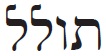 were the harsh, pitiless slave-drivers who drove the prisoners they had plundered hundreds of miles eastward to distant Babylon” (Alfred Guillaume, “The Meaning of twll in Psalm 137:3,” JBL 75 [1956], 144).