Original Meaning
Heading (138:0)
PSALM 138 BEGINS THE FINAL Davidic collection in the book of Psalms (Pss 138–45). The superscription in each of the eight psalms includes the phrase “Of David” (ledawid). There are three other “David collections” in the Psalter. Books 1 and 2 contain two large collections that include David’s name in the psalms’ superscriptions (Pss 3–41; 51–72) and culminate with a reference to the “prayers of David” in 72:20. David is largely absent from the superscriptions in Books 3 and 4 of the Psalter.3
In Book 5 (Pss 107–45), however, the name “David” reappears in the superscription of two collections. The first one, Psalms 108–10, begins Book 5; the second one, Psalms 138–45, concludes it. As I have argued elsewhere, the reemergence of David in the superscriptions in Book 5 signals that David has become emblematic of the poor servant who depends entirely on Yahweh for deliverance.4
In Book 5 David is not the warring king seen in earlier psalms (e.g., Ps 18) but instead the one in need of God’s deliverance, as is certainly true in Psalm 138 (vv. 6–8). In this way David functions as a model of piety for all who pray these psalms.
Bridging Contexts
AS A PSALM OF CONFESSION Psalm 138 invites us to consider a number of declarations made about God and his work in the world.
The supremacy of Yahweh. In all three strophes the psalmist confesses that Yahweh alone is the true God. The mention of “gods” (‘elohim) in verse 1b invites a comparison of Psalm 138 with Psalm 82. In Psalm 82:4 the “gods” are chastised by Yahweh for failing to “rescue the weak and the needy,” as well as for failing to deliver them “from the hand of the wicked”; further, in 82:7 Yahweh declares that these deities are not true gods and will “die like mere mortals.” In Psalm 138, however, Yahweh is declared as the one enthroned on high, the one characterized by hesed, “covenant loyalty,” and ’emet, “faithfulness.” And unlike the “gods” mentioned in Psalm 82, Yahweh delivers the lowly.
The writer of Psalm 138 moves from the realm of the “gods” to the realm of empires and human kings, and there, too, Yahweh proves his supremacy, but perhaps in an unexpected way. In Psalms 135 and 136 the psalmist recounted Yahweh’s decimation of nations and kings, thereby leading one to surmise that any nation or king subsequently mentioned in the Psalter would meet with the same fate at the hands of Israel’s God. Yet Psalm 138 prays for a fate far different for the “kings of the earth.” When those in positions of power hear what Yahweh has done and see the greatness of God’s glory (i.e., his reign), they can do nothing other than confess and sing to the Lord. They will shrink back as they pay homage to the one true king.
The final strophe of Psalm 138 affirms the supremacy of Yahweh as manifested in the deliverance of his people. As noted above, this psalm reflects the conditions of the restored community during the postexilic period, and it is likely that the supplicant is either a “person who speaks in the identity of the people or is the personified community” itself.12
The psalmist and the community affirm that because Yahweh is the Divine King, his people have hope for their vindication. Were Yahweh not the supreme God, any hope in him would be tenuous at best; but because they confess what they know to be true (i.e., Yahweh is God alone), they look forward to his acts of deliverance renewed and revealed for a new generation.
Immanence and transcendence. Psalm 138 juxtaposes the immanence and transcendence of God without needing to clarify or resolve the ambiguity inherent in that juxtaposition. Yahweh is the God of the heavens, yet he is fully active in creation. See Bridging Contexts on Psalm 113 for an extensive reflection on the immanence and transcendence of God.
Contemporary Significance
PSALM 138 CONFESSES to the proleptic reign of God—the kingdom of God has come already, but it is not yet fully realized. The psalmist confesses to the supremacy of God and notes the work of God already in his life (v. 3), yet he also acknowledges that the world is not as it should be. When the world is not as we had hoped and when powers seem to rise up all around us, our human inclination is to push back and fight. In Psalm 138 the psalmist does indeed push back and resist the claims of his world, but his resistance begins and ends in worship and prayer. Such suggestions may appear naïve at best, and superficial at worst, yet the work of worship and prayer is rooted in a fundamental confession that the kingdom of God has come and is coming still. Moreover, our work of worship and prayer reflects our tenacious belief that only one God sits on high—and despite the circumstances of the world, he “looks kindly on the lowly” still.
The belief in the proleptic reign of God offers a response to the questions posed in the dystopian vision of our modern culture. Dystopian literature provides nightmarish visions of a future in which human power goes unchecked and impotent individuals suffer under the oppressive rule of authorities.13
The disquieting Hunger Games trilogy by Suzanne Collins and the haunting work of Lois Lowry (The Giver) capture well this dystopian view of the future. Regrettably, audiences assume this literature is written primarily for “young adults,” and consequently they miss the existential themes evoked in it. These works reflect the angst that frequently plagues all ages of our society. The underlying assumption is that the crisis of the present will yield a sense of powerlessness and hopelessness for the future.
Although God had earlier answered the prayers of the psalmist, kings remained in power and enemies still assailed him. When we as individuals and communities confess our belief in God’s reign, we are resisting the urge to believe in a dystopian vision of reality. We are declaring that the reign of God compels us to see the world differently. In his work on the book of Revelation, Richard Bauckham writes:
The effect of John’s visions, one might say, is to expand his readers’ world, both spatially (into heaven) and temporally (into the eschatological future), or to put it another way, to open their world to divine transcendence. . . . it is not that the here-and-now are left behind in an escape into heaven or the eschatological future, but that the here-and-now look quite different when they are opened to transcendence.14
To borrow Bauckham’s language, Psalm 138 invites us to “expand our world” both spatially and temporally. The psalmist worships in the temple but claims that God is enthroned on high. The psalmist confesses what God has done (v. 3) but longs for all that God will do. To see the world differently necessitates a proper view of “divine transcendence,” a divine transcendence that is capable of reaching into the present moment while also pointing to the divine future.
Original Meaning
Pledge to Confess God (138:1–3)
THE FIRST STROPHE IN THE PSALM includes the psalmist’s pledge to confess God (v. 1) and spells out the content of that confession (vv. 2–3).
I will praise you. As noted above, the verb yadah can mean “to praise” and also “to confess” or give testimony. The psalmist vows to confess God with his whole person. Not only does the poet mention his heart (i.e., “his will”) but also his mouth (“I will sing” [v. 1b]) and his body (“I will bow down” [v. 2a]).5
Before the “gods.” In verse 1b the psalmist vows to sing praises to Yahweh “before the ‘gods’ ” (neged ’elohim). At first glance the reference to the ’elohim in Psalm 138 appears to differ markedly in tone from the rhetoric found in Deutero-Isaiah. In that collection the idols are mocked relentlessly as vacuous creations of human hands (e.g., Isa 41:29; 44:9–20; 46:1–7)—a claim similarly made elsewhere in Book 5 of the Psalter (cf. Pss 115:4–8; 135:15–18). In Psalm 138, however, the psalmist speaks not of idols but of ’elohim, “gods.” While Deutero-Isaiah mocked the idols, the author of Psalm 138, by using the phrase “before the ‘gods’ ” (neged ’elohim), promises to sing the praises of Yahweh “in defiance [of the gods].”6
Rather than mocking the ineffectiveness of idols or gods, the psalmist opts to testify about Yahweh’s hesed (“covenantal loyalty”) and ’emet (“faithfulness”). The very character of God, his “name” (shem), has been proven by his hesed and ’emet toward his people.
The act of confessing Yahweh “before the ‘gods’ ” (neged ’elohim) asserts Yahweh’s supremacy over all other presumed deities. In making such a claim the psalmist also posits a political claim. As similarly in Psalms 86:8 and 96:4, the referent for ’elohim in Psalm 138 is clearly the gods of the nations. Because gods and nations were so closely associated in the ancient Near East, the psalmist’s defiant claim of Yahweh’s faithfulness “before” the gods (’elohim) also implies a certain rejection of the claims of supremacy by the surrounding nations.
When I called, you answered me. The NRSV translates the beginning of verse 3 as “on the day I called,” but the opening prepositional phrase beyom (“in a day”) lacks the kind of specificity suggested in the NRSV. The phrase beyom likely has a temporal frame of reference and is better translated as “when” or “whenever” (cf. Jer 34:13; Pss 20:10; 56:9). In Psalm 138:2 the poet praises God for his unfailing love and faithfulness. In verse 3 he makes a general statement to support that claim, namely, that whenever he called on Yahweh, the Lord proved himself faithful and answered. The psalmist confesses that Yahweh’s faithfulness “greatly emboldened me.”
Bridging Contexts
AS A PSALM OF CONFESSION Psalm 138 invites us to consider a number of declarations made about God and his work in the world.
The supremacy of Yahweh. In all three strophes the psalmist confesses that Yahweh alone is the true God. The mention of “gods” (‘elohim) in verse 1b invites a comparison of Psalm 138 with Psalm 82. In Psalm 82:4 the “gods” are chastised by Yahweh for failing to “rescue the weak and the needy,” as well as for failing to deliver them “from the hand of the wicked”; further, in 82:7 Yahweh declares that these deities are not true gods and will “die like mere mortals.” In Psalm 138, however, Yahweh is declared as the one enthroned on high, the one characterized by hesed, “covenant loyalty,” and ’emet, “faithfulness.” And unlike the “gods” mentioned in Psalm 82, Yahweh delivers the lowly.
The writer of Psalm 138 moves from the realm of the “gods” to the realm of empires and human kings, and there, too, Yahweh proves his supremacy, but perhaps in an unexpected way. In Psalms 135 and 136 the psalmist recounted Yahweh’s decimation of nations and kings, thereby leading one to surmise that any nation or king subsequently mentioned in the Psalter would meet with the same fate at the hands of Israel’s God. Yet Psalm 138 prays for a fate far different for the “kings of the earth.” When those in positions of power hear what Yahweh has done and see the greatness of God’s glory (i.e., his reign), they can do nothing other than confess and sing to the Lord. They will shrink back as they pay homage to the one true king.
The final strophe of Psalm 138 affirms the supremacy of Yahweh as manifested in the deliverance of his people. As noted above, this psalm reflects the conditions of the restored community during the postexilic period, and it is likely that the supplicant is either a “person who speaks in the identity of the people or is the personified community” itself.12
The psalmist and the community affirm that because Yahweh is the Divine King, his people have hope for their vindication. Were Yahweh not the supreme God, any hope in him would be tenuous at best; but because they confess what they know to be true (i.e., Yahweh is God alone), they look forward to his acts of deliverance renewed and revealed for a new generation.
Immanence and transcendence. Psalm 138 juxtaposes the immanence and transcendence of God without needing to clarify or resolve the ambiguity inherent in that juxtaposition. Yahweh is the God of the heavens, yet he is fully active in creation. See Bridging Contexts on Psalm 113 for an extensive reflection on the immanence and transcendence of God.
Contemporary Significance
PSALM 138 CONFESSES to the proleptic reign of God—the kingdom of God has come already, but it is not yet fully realized. The psalmist confesses to the supremacy of God and notes the work of God already in his life (v. 3), yet he also acknowledges that the world is not as it should be. When the world is not as we had hoped and when powers seem to rise up all around us, our human inclination is to push back and fight. In Psalm 138 the psalmist does indeed push back and resist the claims of his world, but his resistance begins and ends in worship and prayer. Such suggestions may appear naïve at best, and superficial at worst, yet the work of worship and prayer is rooted in a fundamental confession that the kingdom of God has come and is coming still. Moreover, our work of worship and prayer reflects our tenacious belief that only one God sits on high—and despite the circumstances of the world, he “looks kindly on the lowly” still.
The belief in the proleptic reign of God offers a response to the questions posed in the dystopian vision of our modern culture. Dystopian literature provides nightmarish visions of a future in which human power goes unchecked and impotent individuals suffer under the oppressive rule of authorities.13
The disquieting Hunger Games trilogy by Suzanne Collins and the haunting work of Lois Lowry (The Giver) capture well this dystopian view of the future. Regrettably, audiences assume this literature is written primarily for “young adults,” and consequently they miss the existential themes evoked in it. These works reflect the angst that frequently plagues all ages of our society. The underlying assumption is that the crisis of the present will yield a sense of powerlessness and hopelessness for the future.
Although God had earlier answered the prayers of the psalmist, kings remained in power and enemies still assailed him. When we as individuals and communities confess our belief in God’s reign, we are resisting the urge to believe in a dystopian vision of reality. We are declaring that the reign of God compels us to see the world differently. In his work on the book of Revelation, Richard Bauckham writes:
The effect of John’s visions, one might say, is to expand his readers’ world, both spatially (into heaven) and temporally (into the eschatological future), or to put it another way, to open their world to divine transcendence. . . . it is not that the here-and-now are left behind in an escape into heaven or the eschatological future, but that the here-and-now look quite different when they are opened to transcendence.14
To borrow Bauckham’s language, Psalm 138 invites us to “expand our world” both spatially and temporally. The psalmist worships in the temple but claims that God is enthroned on high. The psalmist confesses what God has done (v. 3) but longs for all that God will do. To see the world differently necessitates a proper view of “divine transcendence,” a divine transcendence that is capable of reaching into the present moment while also pointing to the divine future.
Original Meaning
Kings Will Confess God (138:4–6)
IN THE SECOND STROPHE THE PSALMIST declares that the world powers, the “kings of the earth,” will join with the psalmist in making a confession about Israel’s God.
May all the kings of the earth praise you, LORD. In verse 4 the psalmist prays that the kings of the earth will confess or praise (yadah) Yahweh and sing (shir) of his ways. The kings of the earth will join the people of God in their praise, thus participating joyously in the ways of God. This portion of the Psalter was likely collected during the Persian period. According to the royal imperial ideology of Persia’s Achaemenid dynasty, their empire was a worldwide one in which nations participated joyously in the Achaemenid rule because, under this dynasty, the world was well ordered. The claim made by the poet in Psalm 138, however, reverses such imagery and thereby pictures an entirely reordered world. According to the psalmist, the empires of the world will participate joyously in the praise and confession of Yahweh.
The ways of the LORD
. The psalmist explains that the kings will make their confession once they “hear what you have decreed.” The second half of verse 4 provides the precondition for what is announced in the first half of the verse. In his translation of verse 4, Leslie Allen captures well this relationship between the two halves: “Let all the kings in the world give you thanks in reaction to hearing of the promises of your mouth.”7
The kings will not confess Yahweh until they have first heard “what you have decreed,” or, more literally, until they have heard “the words of your mouth” (’imre-pika [v. 4b]). The emphasis, however, is not simply on God’s making a pronouncement ex cathreda, so to speak, but on the content of his speech. The kings of the earth shall recognize the intended order of the world as outlined in the “ways of the LORD” when they hear the words of his mouth (’imre-pika). Buysch has noted that pika (“your mouth”) occurs seven times in the Psalter. Of these seven occurrences, three appear in Ps 119 (vv. 13, 72, 88). In each of the three instances, pika stands in a construct relationship with terms such as “law,” “justice,” and “testimony.” All three words are considered “technical terms” for the torah.8
The psalmist declares that once the kings of the earth hear the “words of Yahweh’s mouth,” his torah, they will realize who serves as the true king and will join Israel in singing of his ways.
For the glory of the LORD is great. The final line of the second strophe reinforces the psalmist’s claim of Yahweh’s universal rule as Divine King. The word “glory” (kabod) occurs in texts that acknowledge God’s divine reign (cf. Isa 6:1–8; Pss 97:1, 6; 145:10–13), as does the declaration about the “greatness” of Yahweh (cf. Pss 48:1; 95:3).9
The kings of the earth hear the words of Yahweh’s mouth, thus leading them to confess him and sing his praises while acknowledging that he reigns as the King on high.
The LORD is exalted. The NIV associates verse 6 with the final strophe; but while doing so is syntactically possible, the verse seems better understood as the final verse in the second strophe. Grammatically speaking, verses 4–5 both begin with imperfects (yiqtols), which here should be translated as jussives (i.e., “May all the kings”) expressing the desire of the psalmist to see the kings praise God and sing of him (v. 6a). Verse 6 begins with the evidential use of the particle ki, “for.” The claims made in verse 6 are “evidence” for the statements made in verses 4–5; put differently, the oblique reference to kingship in verse 6 serves to explicate the claims made in verses 4–5. As King, Yahweh stands on high, but he sees the lowly—the care of the poor is the responsibility of all kings in the ancient Near East. A similar confession is made in Psalm 113. There the psalmist declares that Yahweh is “exalted over the nations, his glory above the heavens” (v. 4), but as Divine King “he raises the poor from the dust” (v. 7). Thus, the declaration in Psalm 139:8 by the kings of the earth concerning Yahweh’s kingship (i.e., “the glory of the LORD is great”) is predicated on both the words of his mouth and the actions of his hands.
Bridging Contexts
AS A PSALM OF CONFESSION Psalm 138 invites us to consider a number of declarations made about God and his work in the world.
The supremacy of Yahweh. In all three strophes the psalmist confesses that Yahweh alone is the true God. The mention of “gods” (‘elohim) in verse 1b invites a comparison of Psalm 138 with Psalm 82. In Psalm 82:4 the “gods” are chastised by Yahweh for failing to “rescue the weak and the needy,” as well as for failing to deliver them “from the hand of the wicked”; further, in 82:7 Yahweh declares that these deities are not true gods and will “die like mere mortals.” In Psalm 138, however, Yahweh is declared as the one enthroned on high, the one characterized by hesed, “covenant loyalty,” and ’emet, “faithfulness.” And unlike the “gods” mentioned in Psalm 82, Yahweh delivers the lowly.
The writer of Psalm 138 moves from the realm of the “gods” to the realm of empires and human kings, and there, too, Yahweh proves his supremacy, but perhaps in an unexpected way. In Psalms 135 and 136 the psalmist recounted Yahweh’s decimation of nations and kings, thereby leading one to surmise that any nation or king subsequently mentioned in the Psalter would meet with the same fate at the hands of Israel’s God. Yet Psalm 138 prays for a fate far different for the “kings of the earth.” When those in positions of power hear what Yahweh has done and see the greatness of God’s glory (i.e., his reign), they can do nothing other than confess and sing to the Lord. They will shrink back as they pay homage to the one true king.
The final strophe of Psalm 138 affirms the supremacy of Yahweh as manifested in the deliverance of his people. As noted above, this psalm reflects the conditions of the restored community during the postexilic period, and it is likely that the supplicant is either a “person who speaks in the identity of the people or is the personified community” itself.12
The psalmist and the community affirm that because Yahweh is the Divine King, his people have hope for their vindication. Were Yahweh not the supreme God, any hope in him would be tenuous at best; but because they confess what they know to be true (i.e., Yahweh is God alone), they look forward to his acts of deliverance renewed and revealed for a new generation.
Immanence and transcendence. Psalm 138 juxtaposes the immanence and transcendence of God without needing to clarify or resolve the ambiguity inherent in that juxtaposition. Yahweh is the God of the heavens, yet he is fully active in creation. See Bridging Contexts on Psalm 113 for an extensive reflection on the immanence and transcendence of God.
Contemporary Significance
PSALM 138 CONFESSES to the proleptic reign of God—the kingdom of God has come already, but it is not yet fully realized. The psalmist confesses to the supremacy of God and notes the work of God already in his life (v. 3), yet he also acknowledges that the world is not as it should be. When the world is not as we had hoped and when powers seem to rise up all around us, our human inclination is to push back and fight. In Psalm 138 the psalmist does indeed push back and resist the claims of his world, but his resistance begins and ends in worship and prayer. Such suggestions may appear naïve at best, and superficial at worst, yet the work of worship and prayer is rooted in a fundamental confession that the kingdom of God has come and is coming still. Moreover, our work of worship and prayer reflects our tenacious belief that only one God sits on high—and despite the circumstances of the world, he “looks kindly on the lowly” still.
The belief in the proleptic reign of God offers a response to the questions posed in the dystopian vision of our modern culture. Dystopian literature provides nightmarish visions of a future in which human power goes unchecked and impotent individuals suffer under the oppressive rule of authorities.13
The disquieting Hunger Games trilogy by Suzanne Collins and the haunting work of Lois Lowry (The Giver) capture well this dystopian view of the future. Regrettably, audiences assume this literature is written primarily for “young adults,” and consequently they miss the existential themes evoked in it. These works reflect the angst that frequently plagues all ages of our society. The underlying assumption is that the crisis of the present will yield a sense of powerlessness and hopelessness for the future.
Although God had earlier answered the prayers of the psalmist, kings remained in power and enemies still assailed him. When we as individuals and communities confess our belief in God’s reign, we are resisting the urge to believe in a dystopian vision of reality. We are declaring that the reign of God compels us to see the world differently. In his work on the book of Revelation, Richard Bauckham writes:
The effect of John’s visions, one might say, is to expand his readers’ world, both spatially (into heaven) and temporally (into the eschatological future), or to put it another way, to open their world to divine transcendence. . . . it is not that the here-and-now are left behind in an escape into heaven or the eschatological future, but that the here-and-now look quite different when they are opened to transcendence.14
To borrow Bauckham’s language, Psalm 138 invites us to “expand our world” both spatially and temporally. The psalmist worships in the temple but claims that God is enthroned on high. The psalmist confesses what God has done (v. 3) but longs for all that God will do. To see the world differently necessitates a proper view of “divine transcendence,” a divine transcendence that is capable of reaching into the present moment while also pointing to the divine future.
Original Meaning
God Preserves the Lowly (138:7–8)
IN VERSE 6 THE PSALMIST RECOUNTS Yahweh’s commitment as Divine King to lift up the lowly. That declaration serves not only as evidence for the anticipated confession of the kings in verses 4–5 (as suggested above) but also as the ground of hope for the psalmist in verses 7–8. In this final strophe the psalmist moves from the general to the particular, from a general claim about Yahweh to its significance for his own predicament.
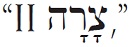
I walk in the midst of trouble. The psalmist’s allusion to the threats that confront him indicates he is in “the midst of trouble.” The word for “trouble” is tsarah and derives from the root tsr, which often refers to enemies.10
Although the image of walking “in the midst of trouble” portrays a more abstract notion of trouble (i.e., “distress”), in reality, the image is much more concrete. The psalmist is referring to the individuals who are threatening him, as confirmed by the parallel lines of verse 7c–d and the mention of the psalmist’s “foes.”
Your hand. Three times in the final two verses the psalmist makes reference to Yahweh’s hand or hands. Metaphorically, they signal the deliverance initiated by Yahweh and made manifest in the life of the psalmist. In verse 6 the psalmist confessed that Yahweh is the Divine King, the one “exalted” and “lofty.” Repeatedly in Book 5 of the Psalter Yahweh is depicted as the God of the heavens, yet his enthronement in the heavens in no way precludes the possibility of his active intervention in the life of his people. Frequently, the “hand of God” signals his work of deliverance, particularly against those who threaten the people of God. In Psalm 136, for example, the poet declared that Yahweh defeated the forces of Pharaoh with “a mighty hand and an outstretched arm” (v. 12). Similarly, in verse 7c the psalmist confesses that Yahweh “stretch[es] out his hand” against the psalmist’s enemies; it is by God’s “right hand” that the Lord will deliver the beleaguered poet (v. 7e).
In the final line of Psalm 138 the psalmist makes the third reference to “hand,” but the image has shifted. The poet implores Yahweh not to “abandon the works of your hands.” Although the phrase “works of your hands” can refer to creation (cf. Ps 102:26), the phrase appears frequently in Book 5 of the Psalter in reference to Yahweh’s acts of deliverance (Pss 107:22, 24; 111:2, 6; 118:17; 143:5; 145:4, 9, 10, 17). In Psalm 138, however, a third possibility exists. The “works of your hands” may in fact refer to the psalmist or community as the pray-ers of this psalm. The parallel construction of the first and last lines of verse 8 confirms this possibility:
| A |
B |
C |
| The LORD
|
will vindicate |
me (v. 8a) |
| A’ |
B’ |
C’ |
| (ellipsis) |
do not abandon |
the works of your hands. |
The first-person references in verse 7 strengthen this argument further by drawing attention to the psalmist and his community.
The verb rapah in the final line of the psalm can be translated as “abandon” (NIV), but the term invokes the image of something being dropped or let go (Josh 10:6). In Psalm 138 the psalmist implores Yahweh not to drop or let go of his people, the works of his hands. This request is rooted in the Deuteronomic promise that Yahweh would not forsake (rapah) his people (Deut 4:31; 31:6, 8; Josh 1:5).11
The psalm comes to a close with the assurance of God’s vindication—an assurance predicated on the hesed of Yahweh (v. 8b) and grounded in the Deuteronomic promise of God’s faithfulness (v. 8c).
Bridging Contexts
AS A PSALM OF CONFESSION Psalm 138 invites us to consider a number of declarations made about God and his work in the world.
The supremacy of Yahweh. In all three strophes the psalmist confesses that Yahweh alone is the true God. The mention of “gods” (‘elohim) in verse 1b invites a comparison of Psalm 138 with Psalm 82. In Psalm 82:4 the “gods” are chastised by Yahweh for failing to “rescue the weak and the needy,” as well as for failing to deliver them “from the hand of the wicked”; further, in 82:7 Yahweh declares that these deities are not true gods and will “die like mere mortals.” In Psalm 138, however, Yahweh is declared as the one enthroned on high, the one characterized by hesed, “covenant loyalty,” and ’emet, “faithfulness.” And unlike the “gods” mentioned in Psalm 82, Yahweh delivers the lowly.
The writer of Psalm 138 moves from the realm of the “gods” to the realm of empires and human kings, and there, too, Yahweh proves his supremacy, but perhaps in an unexpected way. In Psalms 135 and 136 the psalmist recounted Yahweh’s decimation of nations and kings, thereby leading one to surmise that any nation or king subsequently mentioned in the Psalter would meet with the same fate at the hands of Israel’s God. Yet Psalm 138 prays for a fate far different for the “kings of the earth.” When those in positions of power hear what Yahweh has done and see the greatness of God’s glory (i.e., his reign), they can do nothing other than confess and sing to the Lord. They will shrink back as they pay homage to the one true king.
The final strophe of Psalm 138 affirms the supremacy of Yahweh as manifested in the deliverance of his people. As noted above, this psalm reflects the conditions of the restored community during the postexilic period, and it is likely that the supplicant is either a “person who speaks in the identity of the people or is the personified community” itself.12
The psalmist and the community affirm that because Yahweh is the Divine King, his people have hope for their vindication. Were Yahweh not the supreme God, any hope in him would be tenuous at best; but because they confess what they know to be true (i.e., Yahweh is God alone), they look forward to his acts of deliverance renewed and revealed for a new generation.
Immanence and transcendence. Psalm 138 juxtaposes the immanence and transcendence of God without needing to clarify or resolve the ambiguity inherent in that juxtaposition. Yahweh is the God of the heavens, yet he is fully active in creation. See Bridging Contexts on Psalm 113 for an extensive reflection on the immanence and transcendence of God.
Contemporary Significance
PSALM 138 CONFESSES to the proleptic reign of God—the kingdom of God has come already, but it is not yet fully realized. The psalmist confesses to the supremacy of God and notes the work of God already in his life (v. 3), yet he also acknowledges that the world is not as it should be. When the world is not as we had hoped and when powers seem to rise up all around us, our human inclination is to push back and fight. In Psalm 138 the psalmist does indeed push back and resist the claims of his world, but his resistance begins and ends in worship and prayer. Such suggestions may appear naïve at best, and superficial at worst, yet the work of worship and prayer is rooted in a fundamental confession that the kingdom of God has come and is coming still. Moreover, our work of worship and prayer reflects our tenacious belief that only one God sits on high—and despite the circumstances of the world, he “looks kindly on the lowly” still.
The belief in the proleptic reign of God offers a response to the questions posed in the dystopian vision of our modern culture. Dystopian literature provides nightmarish visions of a future in which human power goes unchecked and impotent individuals suffer under the oppressive rule of authorities.13
The disquieting Hunger Games trilogy by Suzanne Collins and the haunting work of Lois Lowry (The Giver) capture well this dystopian view of the future. Regrettably, audiences assume this literature is written primarily for “young adults,” and consequently they miss the existential themes evoked in it. These works reflect the angst that frequently plagues all ages of our society. The underlying assumption is that the crisis of the present will yield a sense of powerlessness and hopelessness for the future.
Although God had earlier answered the prayers of the psalmist, kings remained in power and enemies still assailed him. When we as individuals and communities confess our belief in God’s reign, we are resisting the urge to believe in a dystopian vision of reality. We are declaring that the reign of God compels us to see the world differently. In his work on the book of Revelation, Richard Bauckham writes:
The effect of John’s visions, one might say, is to expand his readers’ world, both spatially (into heaven) and temporally (into the eschatological future), or to put it another way, to open their world to divine transcendence. . . . it is not that the here-and-now are left behind in an escape into heaven or the eschatological future, but that the here-and-now look quite different when they are opened to transcendence.14
To borrow Bauckham’s language, Psalm 138 invites us to “expand our world” both spatially and temporally. The psalmist worships in the temple but claims that God is enthroned on high. The psalmist confesses what God has done (v. 3) but longs for all that God will do. To see the world differently necessitates a proper view of “divine transcendence,” a divine transcendence that is capable of reaching into the present moment while also pointing to the divine future.

 HALOT 2:1058–59. According to HALOT,
  is derived from
  “enemy” or “foe.”