Original Meaning
Heading (139:0)
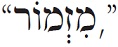
SIMILAR TO THE OTHER PSALMS in this final Davidic collection, this psalm includes the superscription “Of David” (ledawid). On the figure of David in the final Davidic collection see the comments on Psalm 138, “Heading.” The superscription also includes the notation, “For the director of music” (lamnatseah), a term likely referring to a worship or liturgical leader. The frequency of this directive in superscriptions across the Psalter indicates its importance in Israel’s cultic affairs. The precise role of that person, however, remains unclear. Other forms of the verb (natsah) appear in Ezra and 1–2 Chronicles in reference to those who supervise the affairs of the temple. The last term in the superscription, mizmor, “a psalm,” refers to a song likely to be sung with instrumental accompaniment.8
In Book 5 the title is assigned to Psalms 108–10, the first Davidic collection in the book, as well as to Psalms 139–41 and 143 in the final Davidic collection.
Bridging Contexts
IN TURNING TO PSALM 139, readers of Scripture often refer to God’s omniscience, omnipresence, and omnipotence, but as Howard Neil Wallace muses, “the psalm does not want to make a statement about the Lord’s omni-this or that. The psalm is not a philosophical or theological treatise on the nature of God.”28
Instead, this psalm confesses both God’s constant presence with the psalmist as well as his comprehensive knowledge of the psalmist. The psalm is intimately personal, as is the God to whom the psalm testifies.
The constant presence and comprehensive knowledge of God appears to evoke for the psalmist both “flight” and “fascination,” both comfort and fear.29
As noted in the exegetical comments above, several verses use language that seems to suggest the weightiness that comes with the nearness of God’s presence. In verse 5 God is said to “hem in” the psalmist, and in verse 7 he queries, “Where can I flee from you presence?” Both images (being hemmed in and fleeing) nearly always carry a negative connotation. Similarly, the reference to Yahweh’s “grasp” of the psalmist in verse 10b leaves open whether this action is positive or negative, a comfort or cause for fear. Yet as the poem draws to a close, it is the psalmist’s nearness to God (v. 18b) that gives him cause for hope even in the face of impending threats.
The image of God’s hand in the psalm illustrates further this “flight and fascination” with God’s presence in the psalm. In verses 13 and 15, the poet invokes images of knitting and weaving to explain the care with which God created him. Wallace contends that both verbs, knitting and weaving, are evidence of “manual dexterity”; the hands of God were at work in the creation and formation of the psalmist’s life.30
Earlier in the poem the hand of God is said to guide the psalmist (v. 10a), thereby suggesting once more the formative work of God in his life. Yet in verse 5 he confesses that God laid his hand upon him. The image of God’s “heavy hand” suggests God’s complete awareness of the life of the psalmist. No reason is provided or justification offered for the divine hand that has befallen the psalmist. He simply understands that even God’s corrective action is expressive of his pervasive presence. Therein lies the challenge of worshiping a God who remains intimately personal with his creation, who takes seriously the “I-Thou” relationship. The God who is near to us is the God who knows us—who knows even those parts of our lives we would prefer to remain hidden (cf. Ps 90:8b).
Throughout Scripture this tenuous balance between “flight” and “fascination” exists. Because God is pervasively present, the comfort of his presence is juxtaposed with the very threat of the same. The God who appears to Israel on Mount Sinai in a theophany is the same God who exacts judgment moments later at the base of that very mountain. The God who calls David from the fields to be his anointed king is the same God who chastens David for his pursuit of Bathsheba. Neither moment escapes his gaze; both confirm his presence.
Contemporary Significance
IN THE OLD TESTAMENT, far greater attention is paid to the people of Israel as a corporate entity than to individuals. Indeed, individuals played key roles within the life of Israel, but the primary relationship explored in the Old Testament is of that between God and his people. Psalm 139, however, proves to be an exception to that observation. In this text the psalmist reflects on the human condition—in particular, on God’s interaction within individual human experience.
Many of the great hymns of the Christian faith give considerable attention to the personal relationship between God and the individual. The chorus of one hymn (“In the Garden”) reads, “And he walks with me and he talks with me, and he tells me that I am his own.” The refrain of another hymn reads, “Just a closer walk with Thee / grant it, Jesus, is my plea / daily walking close to Thee / Let it be, dear Lord, let it be.” Hymns such as these tend to highlight the “fascination,” or the comfort, gained from God’s presence. Rarely do hymns remind us of the kind of pervasive presence of God in our lives that might prompt a sense of holy fear. We are content with having God near us, but preferably not too near. As one writer explained, “We are reluctant to be known so well. There are things in our lives we keep hidden from others, even God. But if God is really the one we believe God to be then it follows that we are never out of the presence of God nor [are we] unknown to God.”31
Like the psalmist, the thought of God’s pervasive presence should inspire us, yet give us pause. The God who has known us from our very beginnings is the God who has watched us all along. He has seen our comings and goings, our faithfulness and faithlessness. Yet he has remained present with us (v. 18). Because God has known us, fully known us, we can trust in him when the world goes awry and seems to be in open rebellion against his ways (vv. 19–22). And because God has known us, fully known us, we should be compelled to ask God to search us to see whether there is any offensive way in us (vv. 23–24). By living in the tension between comfort and fear, we acknowledge anew the presence of God; we acknowledge anew our desire to walk in “the way everlasting.”
Original Meaning
God’s Examination of the Psalmist (139:1–6)
THE OPENING STROPHE OF THE PSALM considers Yahweh’s comprehensive knowledge of the psalmist. The poet captures the fullness of God’s knowledge through several examples of merism. A merism is a poetic technique that expresses a totality by mentioning two parts, typically polar opposites. For example, Psalm 139 includes “when I sit” and “when I rise” (v. 2a), “my going out and my lying down” (v. 3a), and “behind and before” (v. 5a). Poetically speaking, a merism provides vivid images that are meant to replace more abstract concepts such as “all,” “every,” or “always.” Given this intended usage, a merism is meant to be understood figuratively or metaphorically, but not literally.9
Thus the psalmist’s contention that Yahweh hems the psalmist in “behind and before” is best understood figuratively: Yahweh completely surrounds the psalmist.
You have searched me . . . and you know me. The psalm begins with the divine name, “you LORD,” which constitutes an invocation in the truest sense of the term—one invoking Yahweh to search the psalmist. The verb “to search” (haqar) can refer to searching out land (Judg 18:2) or searching out a city (2 Sam 10:3), but often, especially in the wisdom literature, the verb means “to search” in the sense of “to examine” (Prov 18:17; 28:11; Job 13:9). As noted above, the verb “to know” (yada‘) appears seven times in Psalm 139—four of them in this strophe. Because Yahweh has “examined” the psalmist, God “knows” him fully.
You know when I sit. Verses 2–3 begin with a merism in the first line, followed by a summative statement in the second. The merisms recount the psalmist’s actions and inaction. Taken together, they appear to be chiastically structured: inaction (“sit”); action (“rise”); action (“going out”); inaction (“lying down”). Four verbs of perception reflect Yahweh’s attentiveness to the fullness of the psalmist’s life: “to know” (yada‘); “to perceive” (bin); “to discern” (zarah); and “to be familiar with” (sakan). None of the terms imply a critical, hostile, or even scrutinizing attitude toward the psalmist; instead, they reveal the depth of Yahweh’s knowledge.10
This depth of knowledge is held in tension with the claim that Yahweh knows these things “from afar” (v. 2b). Particularly throughout Book 5 of the Psalter, Yahweh is depicted as the God of the heavens, a claim meant to reinforce Yahweh’s cosmic kingship, yet his position in the heavens in no way precludes his capacity to be fully observant of his people and cognizant of their lives.
Before a word is on my tongue. Although the pattern evident in the two preceding verses (a merism followed by a summative statement) breaks down in verse 4, the emphasis on the comprehensive nature of Yahweh’s knowledge remains in view. Verses 2–3 suggest that Yahweh is fully aware of the psalmist’s actions; verse 4 extends the reach of his knowledge by claiming that Yahweh knows even the psalmist’s thoughts. The Hebrew term for “word” (millah) is a synonym for the traditional Hebrew term for “word” (dabar), with no real differentiation in meaning. The use of the term millah does, however, reflect the penchant for wisdom language in Psalm 139. Of the thirty-eight occurrences of the term, the vast majority appear in texts associated with Israel’s wisdom tradition (Prov 23:9; Job 4–38 [34x]; Ps 19).
You hem me in behind and before. The verb “to hem in” (tsur) or “to bind” is an equivocal term that at times refers simply to the binding or tying up of items (Exod 32:4; 2 Kgs 5:23), while in other texts a more ominous meaning is implied. For example, the word can mean to “hem in” in the sense of laying siege to a city (Deut 20:12; 2 Sam 11:1; Ezek 4:3). The question is whether Yahweh is making the psalmist secure or is “laying siege” to him. Is the comment meant to be construed as a comforting thought or one that induces fear? The second half of verse 5 offers little help in making this determination. “The hand of the LORD” can signal judgment (e.g., 1 Sam 5:6; Ps 75:8), but equally it can also indicate the fullness of God’s presence (e.g., Ezek 8:1; 37:1; 40:1). To suggest it must mean one or the other creates a false dilemma. Even as the merisms in Psalm 139:2–3 used polar-opposite images to construct a much greater truth, so too does the language used here invite the reader to think beyond the dichotomy of meanings. As Goldingay has commented, “the person who has nothing to hide has nothing to fear of Yhwh’s binding or the touch of Yhwh’s hand.”11
Yahweh is indeed close enough to bind him up (in support) but also “to lay siege” to him, should doing so be warranted. In verse 5 of Psalm 139 the stress is on God’s attentive presence. The psalmist confesses that Yahweh is fully cognizant of his life because Yahweh can be found on “all sides” of him.
Such knowledge is too wonderful for me. The word “wonderful” translates the rare Hebrew term pili’, appearing only here and in Judges 13:18. The more commonly occurring verb pala’ can refer to things that are puzzling to understand or too difficult to comprehend, and that nuance is likely intended in Psalm 139:6 as well. The psalmist is not celebrating how “wonderful” God’s knowledge is, nor is he celebrating God’s “omniscience” (see Bridging Contexts). Instead, the psalmist is confessing that God’s ability to be fully cognizant of his life is a thought too difficult to grasp fully. The NET more nearly captures the sense of verse 6: “Your knowledge is beyond my comprehension; it is so far beyond me, I am unable to fathom it.” In his conclusion of the first strophe, the psalmist is awestruck at the fullness of God’s knowledge of his life.
Bridging Contexts
IN TURNING TO PSALM 139, readers of Scripture often refer to God’s omniscience, omnipresence, and omnipotence, but as Howard Neil Wallace muses, “the psalm does not want to make a statement about the Lord’s omni-this or that. The psalm is not a philosophical or theological treatise on the nature of God.”28
Instead, this psalm confesses both God’s constant presence with the psalmist as well as his comprehensive knowledge of the psalmist. The psalm is intimately personal, as is the God to whom the psalm testifies.
The constant presence and comprehensive knowledge of God appears to evoke for the psalmist both “flight” and “fascination,” both comfort and fear.29
As noted in the exegetical comments above, several verses use language that seems to suggest the weightiness that comes with the nearness of God’s presence. In verse 5 God is said to “hem in” the psalmist, and in verse 7 he queries, “Where can I flee from you presence?” Both images (being hemmed in and fleeing) nearly always carry a negative connotation. Similarly, the reference to Yahweh’s “grasp” of the psalmist in verse 10b leaves open whether this action is positive or negative, a comfort or cause for fear. Yet as the poem draws to a close, it is the psalmist’s nearness to God (v. 18b) that gives him cause for hope even in the face of impending threats.
The image of God’s hand in the psalm illustrates further this “flight and fascination” with God’s presence in the psalm. In verses 13 and 15, the poet invokes images of knitting and weaving to explain the care with which God created him. Wallace contends that both verbs, knitting and weaving, are evidence of “manual dexterity”; the hands of God were at work in the creation and formation of the psalmist’s life.30
Earlier in the poem the hand of God is said to guide the psalmist (v. 10a), thereby suggesting once more the formative work of God in his life. Yet in verse 5 he confesses that God laid his hand upon him. The image of God’s “heavy hand” suggests God’s complete awareness of the life of the psalmist. No reason is provided or justification offered for the divine hand that has befallen the psalmist. He simply understands that even God’s corrective action is expressive of his pervasive presence. Therein lies the challenge of worshiping a God who remains intimately personal with his creation, who takes seriously the “I-Thou” relationship. The God who is near to us is the God who knows us—who knows even those parts of our lives we would prefer to remain hidden (cf. Ps 90:8b).
Throughout Scripture this tenuous balance between “flight” and “fascination” exists. Because God is pervasively present, the comfort of his presence is juxtaposed with the very threat of the same. The God who appears to Israel on Mount Sinai in a theophany is the same God who exacts judgment moments later at the base of that very mountain. The God who calls David from the fields to be his anointed king is the same God who chastens David for his pursuit of Bathsheba. Neither moment escapes his gaze; both confirm his presence.
Contemporary Significance
IN THE OLD TESTAMENT, far greater attention is paid to the people of Israel as a corporate entity than to individuals. Indeed, individuals played key roles within the life of Israel, but the primary relationship explored in the Old Testament is of that between God and his people. Psalm 139, however, proves to be an exception to that observation. In this text the psalmist reflects on the human condition—in particular, on God’s interaction within individual human experience.
Many of the great hymns of the Christian faith give considerable attention to the personal relationship between God and the individual. The chorus of one hymn (“In the Garden”) reads, “And he walks with me and he talks with me, and he tells me that I am his own.” The refrain of another hymn reads, “Just a closer walk with Thee / grant it, Jesus, is my plea / daily walking close to Thee / Let it be, dear Lord, let it be.” Hymns such as these tend to highlight the “fascination,” or the comfort, gained from God’s presence. Rarely do hymns remind us of the kind of pervasive presence of God in our lives that might prompt a sense of holy fear. We are content with having God near us, but preferably not too near. As one writer explained, “We are reluctant to be known so well. There are things in our lives we keep hidden from others, even God. But if God is really the one we believe God to be then it follows that we are never out of the presence of God nor [are we] unknown to God.”31
Like the psalmist, the thought of God’s pervasive presence should inspire us, yet give us pause. The God who has known us from our very beginnings is the God who has watched us all along. He has seen our comings and goings, our faithfulness and faithlessness. Yet he has remained present with us (v. 18). Because God has known us, fully known us, we can trust in him when the world goes awry and seems to be in open rebellion against his ways (vv. 19–22). And because God has known us, fully known us, we should be compelled to ask God to search us to see whether there is any offensive way in us (vv. 23–24). By living in the tension between comfort and fear, we acknowledge anew the presence of God; we acknowledge anew our desire to walk in “the way everlasting.”
Original Meaning
The Psalmist’s Thoughts on Fleeing from God (139:7–12)
THE SECOND STROPHE CONTINUES the theme of God’s pervasive presence. The strophe opens with a set of rhetorical questions followed by a series of hypothetical, or irreal, queries meant to suggest the fullness of God’s presence in the world.
Where can I flee from your presence? Verse 7 contains two rhetorical questions placed in parallel. Both questions concern the scope of God’s spirit or presence. Both terms, “Spirit” and “presence,” also appear together in Psalms 51:11 and 104:29–30. While the verb in the first question, “go” (halak), appears innocuous enough, the verb in the second question, “flee” (barah), typically suggests the action of a person under duress and in need of escaping a probable threat. Often the verb is followed by the prepositional phrase “from the face of” (mippane) or “from the presence of,” indicating the cause of the threat. In Genesis 35:1, for example, Jacob flees (barah) from the presence of (mippane) Esau. In Psalm 139:7 the psalmist refers to fleeing (barah) from the presence of (mippane) Yahweh. Similar to the use of the verb “to hem in” (tsur) in verse 5, the verb barah appears to suggest a negative connotation, i.e., the psalmist is fleeing from the threatening presence of God. But also like tsur, barah (“flee”) is meant to suggest the comprehensive and pervasive sense of God’s presence—it is coming at him all the time.
You are there. In verses 8–9 the psalmist returns to the use of merisms to convey the spatial sense, both vertical and horizontal, of God’s presence. In verse 8 he acknowledges that if he goes up to the heavens or makes his bed in the depths, “you [God] are there.” Although the NIV refers to the “depths” in verse 8b, the Hebrew actually reads “Sheol,” in reference to the underworld. Traditionally, Yahweh is not associated with Sheol, much less does he make his presence known there; the heavens are considered his domain (cf. Ps 115). As with the merisms mentioned earlier, this one should also be understood figuratively, not literally. Although the statement does reflect the ancient three-tiered worldview (heavens, earth, and under the earth), we should not follow Hossfeld and Zenger in their claim that with this verse “we may be on the threshold of resurrection in the Old Testament.”12
Instead, we should understand the psalmist as speaking figuratively and as once more suggesting the all-encompassing and inescapable presence of God.
The second merism functions horizontally. The “wings of the dawn” refers to the east, from where the sun rises, and to the “far side of the sea,” which refers to the distant horizon in the west. Even as God’s presence is inescapable vertically (from the heights to the depths), so too is his presence inescapable from the east to the west.
Your right hand will hold me fast. The psalmist confesses that, regardless of his location, God’s hand will guide him and hold (’ahaz) him. As similarly with “to hem in” (tsur) and “to flee” (barah), the verb “to grasp” or “to take hold of” (’ahaz) is equivocal. The term can refer to grasping someone or something like a trap (Job 18:19) or a lion (Isa 5:29), and hence can have a negative connotation (Pss 119:53; 137:9). Alternatively, the word can refer to Yahweh’s grasping the psalmist’s right hand as a sign of his continual presence, as in Psalm 73:23. Regardless of where the psalmist flees, he can escape neither the grasp nor the notice of Israel’s God.
The darkness will hide me. The final two verses in this strophe appear to contain another merism, this one involving darkness and light; but in reality these terms function differently. The psalmist proposes another possible scenario for escaping the presence of God. In the ancient Near East light was typically associated with divine presence (Num 6:25–26), while darkness was associated with chaos and death.13
The writer of Psalm 139 suggests that if he were in the darkness, the place of chaos and death, the place that is absent of light, then perhaps finally he would find a place apart from God. The psalmist quickly recognizes the fault in his own logic, however, because “even the darkness will not be dark to [God]” (v. 12). The darkness quickly ceases to be darkness because of the radiant light of God. His very presence casts out all darkness (John 1:5).
Bridging Contexts
IN TURNING TO PSALM 139, readers of Scripture often refer to God’s omniscience, omnipresence, and omnipotence, but as Howard Neil Wallace muses, “the psalm does not want to make a statement about the Lord’s omni-this or that. The psalm is not a philosophical or theological treatise on the nature of God.”28
Instead, this psalm confesses both God’s constant presence with the psalmist as well as his comprehensive knowledge of the psalmist. The psalm is intimately personal, as is the God to whom the psalm testifies.
The constant presence and comprehensive knowledge of God appears to evoke for the psalmist both “flight” and “fascination,” both comfort and fear.29
As noted in the exegetical comments above, several verses use language that seems to suggest the weightiness that comes with the nearness of God’s presence. In verse 5 God is said to “hem in” the psalmist, and in verse 7 he queries, “Where can I flee from you presence?” Both images (being hemmed in and fleeing) nearly always carry a negative connotation. Similarly, the reference to Yahweh’s “grasp” of the psalmist in verse 10b leaves open whether this action is positive or negative, a comfort or cause for fear. Yet as the poem draws to a close, it is the psalmist’s nearness to God (v. 18b) that gives him cause for hope even in the face of impending threats.
The image of God’s hand in the psalm illustrates further this “flight and fascination” with God’s presence in the psalm. In verses 13 and 15, the poet invokes images of knitting and weaving to explain the care with which God created him. Wallace contends that both verbs, knitting and weaving, are evidence of “manual dexterity”; the hands of God were at work in the creation and formation of the psalmist’s life.30
Earlier in the poem the hand of God is said to guide the psalmist (v. 10a), thereby suggesting once more the formative work of God in his life. Yet in verse 5 he confesses that God laid his hand upon him. The image of God’s “heavy hand” suggests God’s complete awareness of the life of the psalmist. No reason is provided or justification offered for the divine hand that has befallen the psalmist. He simply understands that even God’s corrective action is expressive of his pervasive presence. Therein lies the challenge of worshiping a God who remains intimately personal with his creation, who takes seriously the “I-Thou” relationship. The God who is near to us is the God who knows us—who knows even those parts of our lives we would prefer to remain hidden (cf. Ps 90:8b).
Throughout Scripture this tenuous balance between “flight” and “fascination” exists. Because God is pervasively present, the comfort of his presence is juxtaposed with the very threat of the same. The God who appears to Israel on Mount Sinai in a theophany is the same God who exacts judgment moments later at the base of that very mountain. The God who calls David from the fields to be his anointed king is the same God who chastens David for his pursuit of Bathsheba. Neither moment escapes his gaze; both confirm his presence.
Contemporary Significance
IN THE OLD TESTAMENT, far greater attention is paid to the people of Israel as a corporate entity than to individuals. Indeed, individuals played key roles within the life of Israel, but the primary relationship explored in the Old Testament is of that between God and his people. Psalm 139, however, proves to be an exception to that observation. In this text the psalmist reflects on the human condition—in particular, on God’s interaction within individual human experience.
Many of the great hymns of the Christian faith give considerable attention to the personal relationship between God and the individual. The chorus of one hymn (“In the Garden”) reads, “And he walks with me and he talks with me, and he tells me that I am his own.” The refrain of another hymn reads, “Just a closer walk with Thee / grant it, Jesus, is my plea / daily walking close to Thee / Let it be, dear Lord, let it be.” Hymns such as these tend to highlight the “fascination,” or the comfort, gained from God’s presence. Rarely do hymns remind us of the kind of pervasive presence of God in our lives that might prompt a sense of holy fear. We are content with having God near us, but preferably not too near. As one writer explained, “We are reluctant to be known so well. There are things in our lives we keep hidden from others, even God. But if God is really the one we believe God to be then it follows that we are never out of the presence of God nor [are we] unknown to God.”31
Like the psalmist, the thought of God’s pervasive presence should inspire us, yet give us pause. The God who has known us from our very beginnings is the God who has watched us all along. He has seen our comings and goings, our faithfulness and faithlessness. Yet he has remained present with us (v. 18). Because God has known us, fully known us, we can trust in him when the world goes awry and seems to be in open rebellion against his ways (vv. 19–22). And because God has known us, fully known us, we should be compelled to ask God to search us to see whether there is any offensive way in us (vv. 23–24). By living in the tension between comfort and fear, we acknowledge anew the presence of God; we acknowledge anew our desire to walk in “the way everlasting.”
Original Meaning
God’s Presence from the Beginning of Life (139:13–18)
IN THE THIRD STROPHE OF PSALM 139 the poet continues his reflection on God’s presence by highlighting God’s involvement in the life of the psalmist from its very beginning. The focus on his birth, however, is not an afterthought but actually serves to buttress the claims made in the first two strophes. As evidence of this logic, verse 13 begins with the causal use of the particle ki, translated as “for” or “because.”14
The first strophe concentrates on the comprehensive nature of God’s knowing presence, and the second highlights the psalmist’s inability to escape the pervasive presence of God. These claims make sense “because” (ki) God has been with the psalmist from the beginning of his life.
For you created my inmost being. In verse 13 the psalmist attributes his creation to God. Rather than using more traditional creation language (bara’, “to create,” or ‘asah, “to make”), the psalmist uses the verb qanah, which normally means “to acquire by purchase” (cf. Gen 47:19; 49:30; Lev 22:11; Jer 32:7).15
Although the transactional nature of the term remains its dominant meaning throughout the Old Testament, the word does appear in contexts that clearly refer to creation. For example, in Genesis 14:22 Yahweh is referred to as the “Creator [qanah] of heaven and earth,” and in Deuteronomy 32:6 the verbs qanah and ‘asah, “to make,” appear together in reference to the creation of the nation. The second line of Psalm 139:13 develops the creation motif further by indicating that the psalmist was knit together in his mother’s womb. Other texts in the Old Testament make reference to the mother’s womb; most notably for the present context is Psalm 22:10, “from my mother’s womb you have been my God.” Both Psalms 22 and 139 confess God’s presence with the psalmist from the very beginning of existence.
I am fearfully and wonderfully made. In Psalm 139:14 the psalmist describes his own creation using two words frequently employed in reference to God’s great acts in Israel’s history. In other psalms these terms appear in parallel when discussing events associated with God’s deliverance of Israel (cf. Pss 45:5; 65:6; 106:22). Thus, the birth of a human is described in terms reminiscent of the birth of the nation, with both being awe inspiring. While the NIV’s translation captures the general sense of the Hebrew, a more literal rendering places the stress on the mystery of human creation. In Hebrew there is no conjunction (“and”) between the two terms; and to complicate matters further, neither does the Hebrew have the verb “made,” though it has been supplied in the NIV. The Hebrew simply reads, “for I am fearfully wonderful.” The emphasis in Psalm 139 is not simply on the quality of the workmanship (“fearfully and wonderfully made”), but instead on the mystery of human creation itself. The psalmist acknowledges that human creation, from its beginning, is a mystery and a wonder known only to God.16
My frame was not hidden from you. Verses 15–16a intensify the claims made in the preceding verses. The psalmist confesses that although Yahweh is the God of the heavens, the one who “perceive[s] my thoughts from afar” (v. 2b), God is also the one who was fully present in the psalmist’s formation. In verse 16a the poet indicates that Yahweh looked on his “unformed body” (golem). The Hebrew word golem, a hapax legomenon, appears only here in the Old Testament. In Babylonian Aramaic, the term refers to a formless mass or an incomplete vessel.17
The word’s later use in the Talmud suggests the term could be construed as meaning “embryo” or something that was formless or shapeless. In this context golem is better understood as parallel to “my frame” (‘otsem) in verse 15a, with both terms referring to a human in its embryonic state.18
In both instances the psalmist affirms God’s watchful presence over his life.
I was woven together in the depths of the earth. In verse 15b the psalmist employs more traditional creation language in declaring that he was “made” (‘asah). In the parallel line (v. 15c), however, the psalmist returns to the language of needlecraft (cf. v. 13b). The verb “woven together” (radam) appears elsewhere in Scripture in reference to the embroidery work carried out for the tabernacle. Threads of blue, purple, and scarlet were intertwined in the making of the curtain (Exod 26:36; 27:16; 28:39; 35:35; 36:37; 38:18–23). The intricate work of embroidery, the weaving of varied strands, is meant to parallel the intricate work of human creation as each person is woven into a tapestry.
In Psalm 139:15b–c the psalmist refers to the formation of the human as taking place “in secret” and “in the depths of the earth,” respectively. The “secret place” likely refers to the mother’s womb, already mentioned in verse 13b.19
The latter phrase, however, has received considerable treatment concerning its meaning. The reference to the earth and fertility has led some to suggest the influence of foreign myths associated with a “mother earth.”20
But the association between the mother’s womb and the depths of the earth can be more easily explained based on references to both images (womb and earth) elsewhere in the Old Testament. Job confesses, “Naked I came from my mother’s womb, and naked I shall return there” (Job 1:21). In Job’s confession, the womb and the earth are treated as though they are identical, yet when people die they do not return literally to their mother’s womb. The presumed association likely stems from Genesis 2:7. There the narrator explains that humans were formed from the “dust of the ground,” thus implying that, at some primeval level, all humans have their origin of life in the “depths of the earth.” The question for the psalmist, however, does not concern the location of the origins of life as much as it does whether God was present even there. He concludes in the affirmative.
All the days ordained for me. The psalmist indicates that all the days ordained for him are written in “your book.” Other texts in the Old Testament refer to a scroll or book; many of these texts (e.g., Exod 32:32–33; Pss 56:8; 69:28; Dan 12:1; Mal 3:16) serve various functions but none imply that they contain the preordained affairs of humans. Hossfeld and Reuter have suggested that the book mentioned in Psalm 139 likely stems from the Mesopotamian idea of tablets or books of fate in which the deities would write the preordained life of humans.21
By making this claim immediately after using the womb imagery, the psalmist declares that no part of his life, from his formation in the “secret places” even until now, has escaped the watchful gaze of Yahweh.
How precious to me are your thoughts. Verses 17–18 provide a conclusion to the third strophe and arguably to the entire hymnic section (vv. 1–18). The verb yaqar can mean “precious” (NIV), as in the sense of “valued,” but the term also can mean “difficult” or “weighty.”22
Given the larger context of verses 1–18, the verse is better translated as, “How difficult it is for me to fathom your thoughts about me, O God” (NET). Understood in this manner, verse 17 is a reprise of verse 6. The psalmist confesses a sense of awe at the vastness of God’s thoughts about him.
The psalmist concludes by confessing, “When I awake, I am still with you.” Since in the psalm the poet has not referenced falling asleep, the first verb (“awake”) is problematic. A number of interpreters have followed the critical apparatus in the BHS in suggesting that the Hebrew term translated “awake” actually comes from the similar root qtsts, which means “to come to an end.” Rendering the verb accordingly, the line could be translated, “When I come to the end—I am still with you” (NRSV). The psalmist could be referring to the end of his life or simply the end of all God’s thoughts. Either way, he confesses that, while he cannot know the vast sum of God’s thoughts, he does know that God is with him, whether at the end of his inquiry or the end of his life.
Bridging Contexts
IN TURNING TO PSALM 139, readers of Scripture often refer to God’s omniscience, omnipresence, and omnipotence, but as Howard Neil Wallace muses, “the psalm does not want to make a statement about the Lord’s omni-this or that. The psalm is not a philosophical or theological treatise on the nature of God.”28
Instead, this psalm confesses both God’s constant presence with the psalmist as well as his comprehensive knowledge of the psalmist. The psalm is intimately personal, as is the God to whom the psalm testifies.
The constant presence and comprehensive knowledge of God appears to evoke for the psalmist both “flight” and “fascination,” both comfort and fear.29
As noted in the exegetical comments above, several verses use language that seems to suggest the weightiness that comes with the nearness of God’s presence. In verse 5 God is said to “hem in” the psalmist, and in verse 7 he queries, “Where can I flee from you presence?” Both images (being hemmed in and fleeing) nearly always carry a negative connotation. Similarly, the reference to Yahweh’s “grasp” of the psalmist in verse 10b leaves open whether this action is positive or negative, a comfort or cause for fear. Yet as the poem draws to a close, it is the psalmist’s nearness to God (v. 18b) that gives him cause for hope even in the face of impending threats.
The image of God’s hand in the psalm illustrates further this “flight and fascination” with God’s presence in the psalm. In verses 13 and 15, the poet invokes images of knitting and weaving to explain the care with which God created him. Wallace contends that both verbs, knitting and weaving, are evidence of “manual dexterity”; the hands of God were at work in the creation and formation of the psalmist’s life.30
Earlier in the poem the hand of God is said to guide the psalmist (v. 10a), thereby suggesting once more the formative work of God in his life. Yet in verse 5 he confesses that God laid his hand upon him. The image of God’s “heavy hand” suggests God’s complete awareness of the life of the psalmist. No reason is provided or justification offered for the divine hand that has befallen the psalmist. He simply understands that even God’s corrective action is expressive of his pervasive presence. Therein lies the challenge of worshiping a God who remains intimately personal with his creation, who takes seriously the “I-Thou” relationship. The God who is near to us is the God who knows us—who knows even those parts of our lives we would prefer to remain hidden (cf. Ps 90:8b).
Throughout Scripture this tenuous balance between “flight” and “fascination” exists. Because God is pervasively present, the comfort of his presence is juxtaposed with the very threat of the same. The God who appears to Israel on Mount Sinai in a theophany is the same God who exacts judgment moments later at the base of that very mountain. The God who calls David from the fields to be his anointed king is the same God who chastens David for his pursuit of Bathsheba. Neither moment escapes his gaze; both confirm his presence.
Contemporary Significance
IN THE OLD TESTAMENT, far greater attention is paid to the people of Israel as a corporate entity than to individuals. Indeed, individuals played key roles within the life of Israel, but the primary relationship explored in the Old Testament is of that between God and his people. Psalm 139, however, proves to be an exception to that observation. In this text the psalmist reflects on the human condition—in particular, on God’s interaction within individual human experience.
Many of the great hymns of the Christian faith give considerable attention to the personal relationship between God and the individual. The chorus of one hymn (“In the Garden”) reads, “And he walks with me and he talks with me, and he tells me that I am his own.” The refrain of another hymn reads, “Just a closer walk with Thee / grant it, Jesus, is my plea / daily walking close to Thee / Let it be, dear Lord, let it be.” Hymns such as these tend to highlight the “fascination,” or the comfort, gained from God’s presence. Rarely do hymns remind us of the kind of pervasive presence of God in our lives that might prompt a sense of holy fear. We are content with having God near us, but preferably not too near. As one writer explained, “We are reluctant to be known so well. There are things in our lives we keep hidden from others, even God. But if God is really the one we believe God to be then it follows that we are never out of the presence of God nor [are we] unknown to God.”31
Like the psalmist, the thought of God’s pervasive presence should inspire us, yet give us pause. The God who has known us from our very beginnings is the God who has watched us all along. He has seen our comings and goings, our faithfulness and faithlessness. Yet he has remained present with us (v. 18). Because God has known us, fully known us, we can trust in him when the world goes awry and seems to be in open rebellion against his ways (vv. 19–22). And because God has known us, fully known us, we should be compelled to ask God to search us to see whether there is any offensive way in us (vv. 23–24). By living in the tension between comfort and fear, we acknowledge anew the presence of God; we acknowledge anew our desire to walk in “the way everlasting.”
Original Meaning
The Threat of Enemies (139:19–24)
THE FINAL STROPHE ABRUPTLY SHIFTS from the hymnic language of the first three strophes to more petitionary language in the final strophe. In these six verses the psalmist utters a petition (vv. 19–20), a declaration of commitment (vv. 21–22), and a concluding plea (vv. 23–24).23
Verse 18 ended the third strophe with the psalmist’s affirmation that he remained in the presence of God. In verses 19–24 he introduces the presence of yet another party, the enemies. Through his petitions the psalmist aligns himself with God and asks for God to redress his present circumstances.
The wicked . . . you who are bloodthirsty. The psalmist describes the enemies as the “wicked” and the “bloodthirsty,” or literally, “men of blood.” The latter phrase, “men of blood” (’anshe damim), appears repeatedly in the laments found in the first two Davidic collections (Pss 1–41; 42–72), where it refers to violent persons and murderers.24
In the book of Proverbs, the threat of the bloodthirsty is made evident. There the sage announces that the men of blood seek out the life of the upright and blameless (Prov 29:10). These labels prove critical in understanding the image being presented in this strophe and the imprecatory language involved. The labeling of the enemy as “wicked” and “bloodthirsty” is not petty name-calling by the psalmist; instead, it is indicative of the grave threat he perceives. The psalmist has no recourse against such violent power but to turn to the God who is present with him.
Do I not hate those who hate you? The psalmist’s petition in verse 19 is not rooted in personal animosity or desire for revenge; rather, the poet petitions God to act because these people are against him (i.e., God). Although the word “hate” (sone’) can refer to an emotion or feeling, it is often used in the context of a relationship. In those instances, “hating” does not connote a negative emotion but, instead, a lack of relationship (cf. Mal 1:2–5; Luke 14:26). Through their misuse of God’s name and rebellion against God (vv. 20, 21b), the “haters” have demonstrated not only their proclivity to sin but also, and even more, their desire to abrogate any relationship with God. Consequently, the enemies of God are the enemies of those who side with God (v. 22). While such language may appear harsh, the psalmist affirms that “there can be no moral or spiritual neutrality.”25
Search me, God, and know my heart. The psalmist concludes the poem with the same request from verse 1, “search me . . . and know me.” In verse 23, however, the psalmist extends this request by asking God to test him concerning “my anxious thoughts” (sar‘appay).26
In the Old Testament, “anxious thoughts” can be the result of night visions (Job 4:13) or defamatory rhetoric (Job 20:2), as well as the fear of being mistreated by others (Ps 94:19). In Psalm 139 the psalmist’s anxieties are due to the threat posed by the enemies mentioned in verses 19–22. The psalmist’s only hope is God; thus, the purpose of God’s searching, knowing, and testing is to determine whether there is “any offensive way in me.”27
Because the psalmist desires the presence of God, he seeks to eradicate anything in his own life that might vitiate that life-giving relationship. Earlier in the strophe the psalmist established that the enemies of God are defined by their arrogant speech and rebellious behavior; they are “haters of God.” Rather than becoming like the enemies, the psalmist desires nothing more than to walk in the “everlasting way” (v. 24).
Bridging Contexts
IN TURNING TO PSALM 139, readers of Scripture often refer to God’s omniscience, omnipresence, and omnipotence, but as Howard Neil Wallace muses, “the psalm does not want to make a statement about the Lord’s omni-this or that. The psalm is not a philosophical or theological treatise on the nature of God.”28
Instead, this psalm confesses both God’s constant presence with the psalmist as well as his comprehensive knowledge of the psalmist. The psalm is intimately personal, as is the God to whom the psalm testifies.
The constant presence and comprehensive knowledge of God appears to evoke for the psalmist both “flight” and “fascination,” both comfort and fear.29
As noted in the exegetical comments above, several verses use language that seems to suggest the weightiness that comes with the nearness of God’s presence. In verse 5 God is said to “hem in” the psalmist, and in verse 7 he queries, “Where can I flee from you presence?” Both images (being hemmed in and fleeing) nearly always carry a negative connotation. Similarly, the reference to Yahweh’s “grasp” of the psalmist in verse 10b leaves open whether this action is positive or negative, a comfort or cause for fear. Yet as the poem draws to a close, it is the psalmist’s nearness to God (v. 18b) that gives him cause for hope even in the face of impending threats.
The image of God’s hand in the psalm illustrates further this “flight and fascination” with God’s presence in the psalm. In verses 13 and 15, the poet invokes images of knitting and weaving to explain the care with which God created him. Wallace contends that both verbs, knitting and weaving, are evidence of “manual dexterity”; the hands of God were at work in the creation and formation of the psalmist’s life.30
Earlier in the poem the hand of God is said to guide the psalmist (v. 10a), thereby suggesting once more the formative work of God in his life. Yet in verse 5 he confesses that God laid his hand upon him. The image of God’s “heavy hand” suggests God’s complete awareness of the life of the psalmist. No reason is provided or justification offered for the divine hand that has befallen the psalmist. He simply understands that even God’s corrective action is expressive of his pervasive presence. Therein lies the challenge of worshiping a God who remains intimately personal with his creation, who takes seriously the “I-Thou” relationship. The God who is near to us is the God who knows us—who knows even those parts of our lives we would prefer to remain hidden (cf. Ps 90:8b).
Throughout Scripture this tenuous balance between “flight” and “fascination” exists. Because God is pervasively present, the comfort of his presence is juxtaposed with the very threat of the same. The God who appears to Israel on Mount Sinai in a theophany is the same God who exacts judgment moments later at the base of that very mountain. The God who calls David from the fields to be his anointed king is the same God who chastens David for his pursuit of Bathsheba. Neither moment escapes his gaze; both confirm his presence.
Contemporary Significance
IN THE OLD TESTAMENT, far greater attention is paid to the people of Israel as a corporate entity than to individuals. Indeed, individuals played key roles within the life of Israel, but the primary relationship explored in the Old Testament is of that between God and his people. Psalm 139, however, proves to be an exception to that observation. In this text the psalmist reflects on the human condition—in particular, on God’s interaction within individual human experience.
Many of the great hymns of the Christian faith give considerable attention to the personal relationship between God and the individual. The chorus of one hymn (“In the Garden”) reads, “And he walks with me and he talks with me, and he tells me that I am his own.” The refrain of another hymn reads, “Just a closer walk with Thee / grant it, Jesus, is my plea / daily walking close to Thee / Let it be, dear Lord, let it be.” Hymns such as these tend to highlight the “fascination,” or the comfort, gained from God’s presence. Rarely do hymns remind us of the kind of pervasive presence of God in our lives that might prompt a sense of holy fear. We are content with having God near us, but preferably not too near. As one writer explained, “We are reluctant to be known so well. There are things in our lives we keep hidden from others, even God. But if God is really the one we believe God to be then it follows that we are never out of the presence of God nor [are we] unknown to God.”31
Like the psalmist, the thought of God’s pervasive presence should inspire us, yet give us pause. The God who has known us from our very beginnings is the God who has watched us all along. He has seen our comings and goings, our faithfulness and faithlessness. Yet he has remained present with us (v. 18). Because God has known us, fully known us, we can trust in him when the world goes awry and seems to be in open rebellion against his ways (vv. 19–22). And because God has known us, fully known us, we should be compelled to ask God to search us to see whether there is any offensive way in us (vv. 23–24). By living in the tension between comfort and fear, we acknowledge anew the presence of God; we acknowledge anew our desire to walk in “the way everlasting.”

 HALOT 1:566.
 HALOT 1:194.
 ThWAT 5:942–43.
 HALOT 1:431–2.
 NIDOTTE 3:1261.