Study Notes
1–2 Although Paul writes together with Timothy and although he addresses the entire church in Colossae, in this very personal letter to Philemon he uses “I,” rather than “we,” and “you” (singular, except in vv. 22,25).
 1 Paul. See note on Ro 1:1. prisoner. See Eph 3:1; Php 1:13 and notes. Timothy. See note on Col 1:1; see also Introduction to 1 Timothy: Recipient. Philemon. A Christian living in Colossae or nearby and the owner of the slave Onesimus.

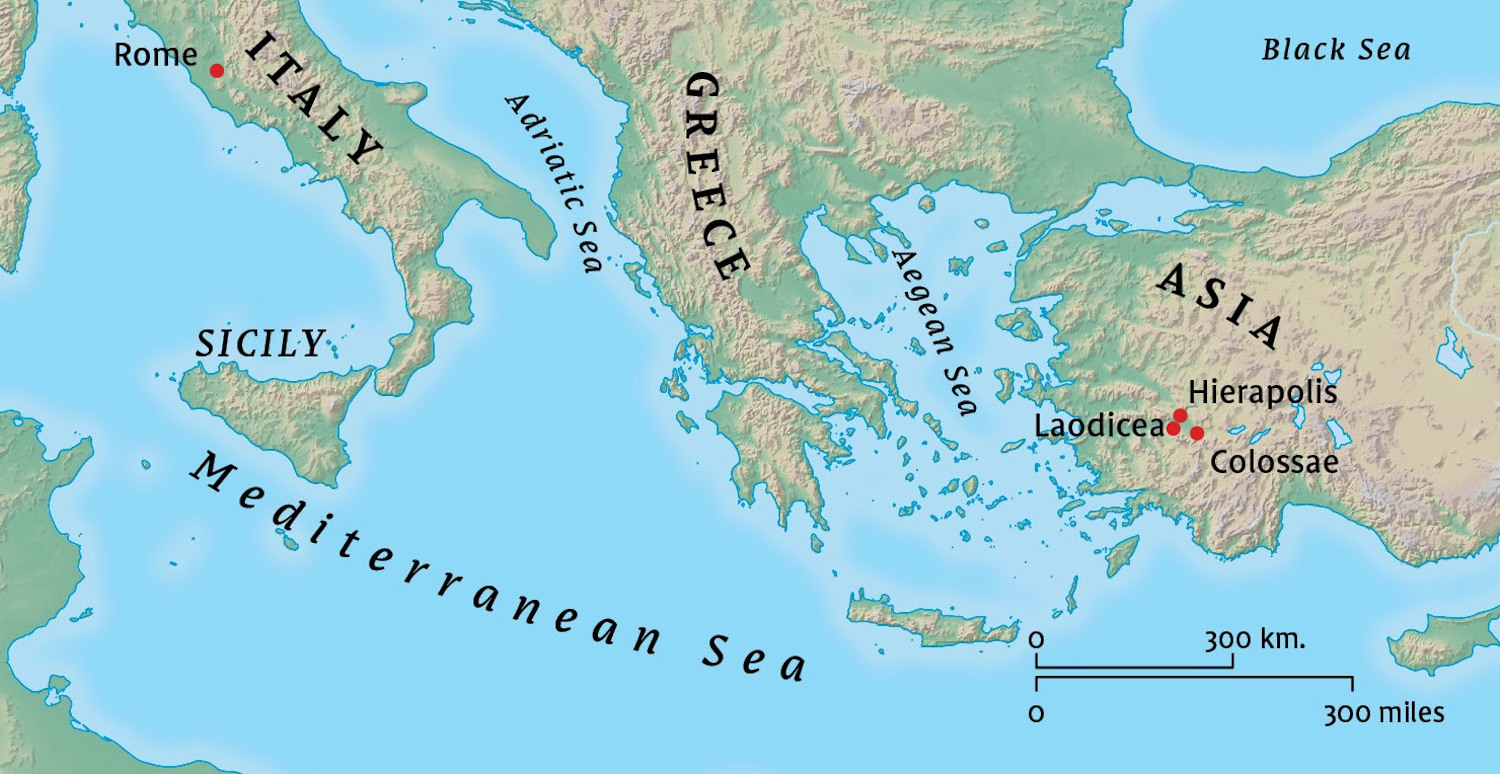
2 Apphia. Probably Philemon’s wife. Archippus. See Col 4:17.
3 Grace . . . peace. See note on Ro 1:7. Lord Jesus Christ. Occurs also at the end of this letter (v. 25). See note on 1Th 1:1.
4 thank . . . remember you in my prayers. See Php 1:3–4 and note.
5–6 Philemon’s love and partnership in the faith have encouraged many people. Paul is now preparing to ask him to extend that love and fellowship to Onesimus in a radical way.
5 See Col 1:4. his holy people. See notes on Ro 1:7; Eph 1:1; Col 1:4.
6 partnership. Or “fellowship.” Paul refers to the deep connection and participation of their common life in Christ.
7 hearts. Figurative for the human spirit and all that flows from it (see vv. 12,20; cf. also Ps 4:7 and note). Paul’s praise for Philemon’s refreshing “the hearts of the Lord’s people” prepares the way for his appeal regarding Onesimus, his “very heart” (v. 12).
8–9 What could seem manipulative in today’s world was considered courteous in Paul’s world because it was indirect. Moreover, he was utterly sincere about not wanting to be heavy-handed.
10 my son. See note on 1Ti 1:2. Onesimus. See NIV text note; see also Introduction: Recipient, Background and Purpose.
11 useless . . . useful. A wordplay on the meaning of Onesimus’s name (see NIV text note on v. 10).
12 Returning a runaway slave to his owner subjected that slave to the risk of any form of punishment the owner cared to mete out. Paul was confident that, at the very least, Philemon would not mistreat Onesimus.
13 I would have liked to keep him. Though Paul, in prison, could have benefited from the help of Onesimus, he graciously sends him back to Philemon in the hope that Philemon would exercise similar graciousness toward Onesimus. in chains for the gospel. See v. 1 and note.
16 no longer as a slave. Although not explicitly calling for Onesimus’s release, Paul is implicitly undermining the institution of slavery. Cf. 1Ti 6:2. The gospel transcends human distinctions (see Col 3:11).
 17–19 Martin Luther said, “Even as Christ did for us with God the Father, thus Paul also does for Onesimus with Philemon.”
18 owes you anything. If he ran away, Onesimus may have stolen property from Philemon as well. Paul promises to repay any debt so that there is no obstacle to Philemon’s forgiveness (see also v. 19).
19 writing this with my own hand. See 1Co 16:21 and note. owe me your very self. Paul had probably led Philemon to faith in Christ.
20 benefit. The Greek for this word is another play on the name Onesimus. heart. See note on v. 7.
21 even more than I ask. Probably suggesting that Philemon set Onesimus free. Early church tradition supports this, claiming that Onesimus became Bishop of Ephesus in the late first century.
22 one thing more. It was not unusual for an ancient letter, though occasioned by one matter, to also include another matter. Often, as here, the second matter had to do with how and when the author planned to meet the recipient again. In this context, a visit would also disclose if Philemon had done as Paul asked.
23 Epaphras. See Col 1:7 and note; 4:12.
24 Mark, Aristarchus. See note on Col 4:10. Demas and Luke. See note on Col 4:14.
25 grace. See note on Ro 1:7. The letter begins (v. 3) and ends with grace. be with your spirit. See note on Gal 6:18.