Esther
1. The First Two Feasts—Vashti Is Deposed (1:1–22)
2. The Third Feast—Esther Becomes Queen (2:1–20)
3. Mordecai Rescues the King (2:21–23)
4. Haman’s Plot to Annihilate the Jews (3:1–15)
5. Mordecai’s Petition to Esther (4:1–17)
6. The Fourth Feast—Esther’s First Banquet (5:1–8)
7. Haman’s Hatred of Mordecai (5:9–14)
8. The King Rewards Mordecai (6:1–14)
9. The Fifth Feast—Esther’s Second Banquet and Haman Impaled (7:1–10)
10. The King’s Edict to Spare the Jews (8:1–17)
11. The Jews Triumph over Their Enemies (9:1–17)
13. Mordecai Is Exalted (10:1–3)
Introduction
The book of Esther, one of two biblical books highlighting a female character, provides the story of a young Jewish girl named Hadassah (Esther), who lives among the Jewish diaspora in Persia. Esther plays a major role in the deliverance of the Jews who were destined to be destroyed and annihilated at the hand of the evil Haman. Also central to the narrative is her cousin Mordecai, whose discovery of Haman’s plot to annihilate the Jews is pivotal. Mordecai’s rise from common man to nobility is one of several examples of role reversal, where the underdog unexpectedly becomes the hero of the story.
Ahasuerus, the Persian king, is also important to the story line; he consistently allows nobles in the royal palace to influence his decisions, causing him to vacillate and waver on matters related to ruling the kingdom. Early in the story his wife, Queen Vashti, is deposed from her royal throne after refusing to attend her inebriated husband’s banquet where her exquisite beauty was to be displayed before the guests. Her overthrow gives place for Esther to enter the scene and to become God’s instrument of deliverance.
Esther’s story testifies to God’s sovereignty and his faithfulness to deliver his people wherever they may be—in the promised land or in exile. Though God is never mentioned by name in this book, the reader encounters God at every turn. No event in the narrative is coincidental; every segment is divinely orchestrated, and in the end, God is glorified.
Historical Context
The story of Esther takes place during the reign of Ahasuerus of Persia, between the years 486 and 465 BC, after King Cyrus had allowed the Jews to return to their homeland and to rebuild the temple in Jerusalem (538 BC). Scholars’ views on the dating of the book range from mid-fifth to mid-third centuries BC. Those who advocate for an early date point to (1) the presence of Persian loan words and the scarcity of Greek words, (2) the author’s familiarity with the geography of Susa, and (3) the close similarities between the Hebrew of Esther and the language of Chronicles. Advocates for a late date suggest that the opening statement, “This is what happened during the time of Xerxes, the Xerxes who ruled over 127 provinces,” places the author at a temporal vantage point removed from the events. Also noted is the lack of interest in the land of Israel and the absence of religious practices, features that distance the story from the events of Ezra and Nehemiah.
Canonicity
The inclusion of the book of Esther in the canon was originally disputed in both Jewish and Christian circles. According to rabbinic literature, the absence of God’s name, the secularity of the book, and the addition of Purim to the feasts of the Torah contributed to this controversy (e.g., Babylonian Talmud Megillah 7a). In the writings of early church fathers, the book was rejected by some because of its nationalistic and genocidal tone (e.g., Melito of Sardis, Athanasius, Gregory of Nazianzus, Theodore of Mopsuestia), while it was accepted by others who adopted Josephus’s list of alphabetic canonical texts (e.g., Origen).
Historicity
Among scholars, some advocate for a historical interpretation of the book, while others support the notion that the narrative was written as an imaginative story of a comedic style composed solely for entertainment purposes. Scholarly arguments for a nonhistorical interpretation include (1) the absence from Persian records of a queen named Esther, (2) the fact that Persian queens were of noble birth and not from ethnic minorities, (3) the unprecedented idea that Persian kings would have consulted with legal advisors to make decisions, and (4) the unlikelihood that Persia, a country that favored ethnic minorities and allowed the Jews to return to their homeland, would have issued an edict to annihilate Jews.
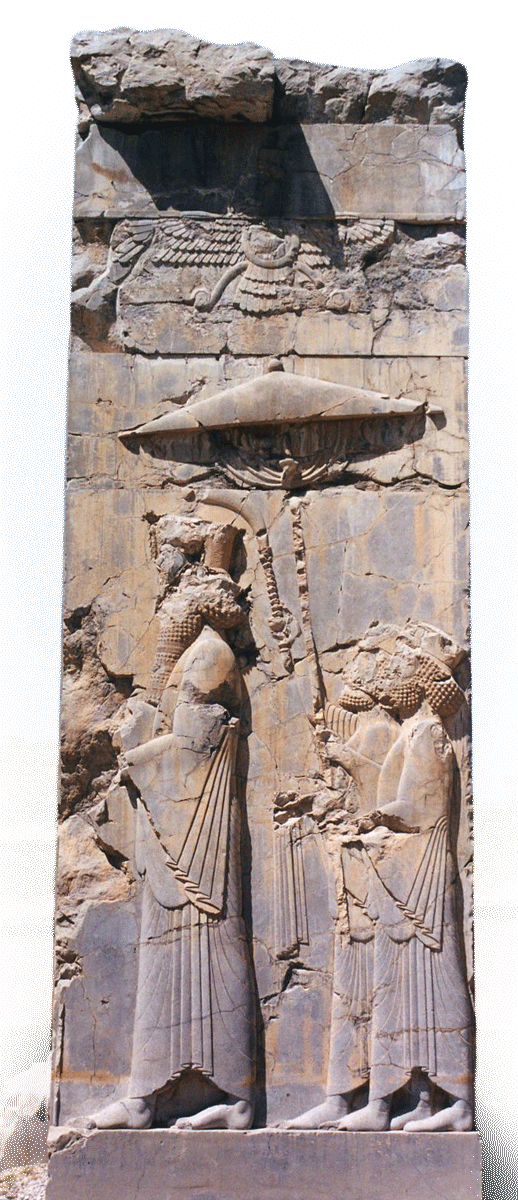
King Xerxes I (Ahasuerus) with attendants, depicted in a relief from the remains of his palace at Persepolis
Although these arguments have some merit, each one can be refuted in turn: (1) not every queen is mentioned in ancient Persian records, (2) biblical characters who became prominent leaders were often born outside of noble families, (3) Israelite and foreign rulers frequently consulted with their advisors before deciding important matters (e.g., Pharaoh, Gen. 41:8; Rehoboam, 1 Kings 12:6–9), and finally (4) history shows that nations that once favored Jewish presence in their midst sooner or later allowed the rise of anti-Semitism.
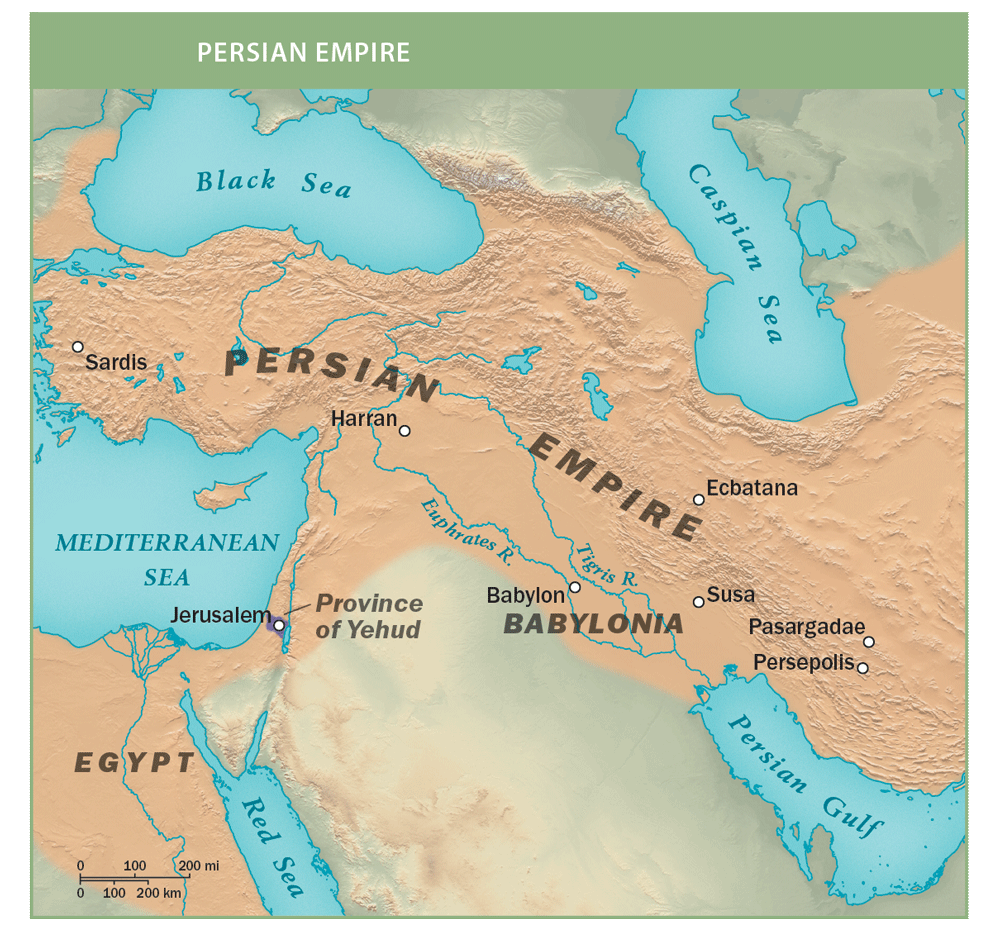
According to historical records, no Persian king has ever had a Jewish queen named Esther. However, in Herodotus’s writings, Amestris (Esther? See Herodotus, Histories 7.114, 9.112) is introduced as the wife of King Xerxes I, the biblical Ahasuerus. Most scholars associate Mordecai with the court official Marduka mentioned in a text from Borsippa, who served the Persian king as inspector in the citadel of Susa. Biblical records tell us that not all Jews who lived in exile chose to return home to the province of Yehud (Judah). Some opted to remain in Persia, where they had established deep familial roots. Mordecai and Esther lived among them and were by this time well integrated into Persian culture.
Literary Features
The book of Esther is meticulously woven together with intricate literary features that include “doublets” (e.g., two eunuchs, twice casting of lots), “keywords” (e.g., feasts, edicts), “humor” (e.g., legislation of husbandly authority), “incongruence” (e.g., minority killing majority), and “exaggeration” (e.g., extravagant banquets). The story highlights frequent cases of “reversal,” or a sudden turn of events (peripety). Noteworthy examples of this last item are the following: (1) Vashti’s dethronement (2:1) followed by Esther’s coronation (2:17); (2) Haman’s empowerment (3:10) ending with his fatal disempowerment (7:10); (3) Mordecai’s humble beginnings (2:5) finding him as grand vizier in the royal court (10:2–3); (4) the book opening with two Persian banquets (1:3, 9) and ending with two Jewish banquets (8:17; 9:18); (5) the king first endorsing an anti-Jewish edict (3:13) and eventually sanctioning a pro-Jewish decree (8:11); and (6) the planned annihilation of the Jews (3:6–7) turning into the annihilation of the enemies of the Jews (8:11–9:1).
Genre
Scholars have proposed various genres for the narrative, from Jewish novella to historical wisdom tale, comedic narrative, court legend, historicized myth, short story, folklore, and burlesque (literary farce). There is sufficient internal data for the book to be considered historical (e.g., name of Persian king, Jewish communities in exile, origin of Purim festival), and when this is combined with the rhetorical and literary features (e.g., humor, exaggeration, peripety), the narrative represents a historical-comedic masterpiece.
Commentary
1. The First Two Feasts—Vashti Is Deposed (1:1–22)
The book of Esther begins with a description of its historical background. The events of the book occur when the city of Susa is serving as the capital of Persia and the empire includes 127 provinces (possible hyperbole) that extend from India to Ethiopia (Cush). During the third year of his reign, Ahasuerus organizes a lavish banquet that will last 180 days and at which event he will display before the male nobility of his kingdom his affluence and his distinguished fame as the ruler of the vast Persian Empire. Ahasuerus’s banquet, the longest feast mentioned in the Bible, is marked by indulgence in wine and strong drink, gastronomic extravagance, and excessive reveling (1:4–8), as was common in royal feasts of this period (Herodotus, Histories 1.133–35). The event corresponds well with the war council of 483 BC, when the king assembled his officials to plan a campaign to conquer Greece. While the king is entertaining his guests in the palace, his wife Queen Vashti also holds a feast for women in another section of the royal citadel (1:9).
On the seventh day of the celebration, while King Ahasuerus is in high spirits and drunk with wine, he commands seven eunuchs to bring Queen Vashti to his palace in order to display her magnificent beauty. To the king’s astonishment, Queen Vashti categorically refuses to obey the orders and leaves her husband publicly humiliated and irate in the presence of his awaiting guests (1:12). It is likely that the queen has previously experienced such ordeals when the king’s drunkenness has seriously affected his ability to make moral decisions. Her unflinching response to the king’s request seems to indicate so. The biblical text provides a number of accounts where reckless decisions are made by drunk leaders. For example, King Belshazzar (Dan. 5:2), Nabal (1 Sam. 25:36), and Amnon (2 Sam. 13:28) suffer great personal losses shortly after becoming inebriated.
Though Vashti holds a position of authority, her status is noticeably subordinate to that of the king’s aristocrats. Not only is she subjected to her husband’s narcissistic caprices, but she is also at the mercy of his court officials, whose masculinity seems to have been threatened by her refusal to parade herself before them. Drawing on their alleged legal expertise, the king’s officials pronounce the harshest possible judgment on the queen. She is publicly dethroned. The anxiety of the king’s advisors has been fueled by the unlikely hypothesis that women would rebel en masse against the patriarchal system of the day and destroy the peace of the kingdom (1:16–18). How ironic that the decision to depose one queen opens wide the door through which another queen will deliver the entire Jewish population of Persia.

The Persian Empire (550–330 BC) boasted four capital cities: Susa, Pasargadae, Ecbatana, and Persepolis. The magnificent archaeological remains of Persepolis, pictured here, attest to the wealth of the empire.
2. The Third Feast—Esther Becomes Queen (2:1–20)
In chapter 2, physical beauty and sexual attraction become once again major themes of the story. In chapter 1, the author informed us that Vashti was stunning. After her removal from royalty, the king’s attendants seek attractive young virgins from all the provinces of the empire and bring them to the citadel of Susa. Following twelve months of beauty treatments, these young women are to be presented to the king as would-be queens (2:2–4). The young virgins who have been chosen for the royal pageant are confined inside the palace and triply secure in the citadel of Susa, in the royal harem, under the watchful eye of a eunuch named Hegai. Once in the harem, the young women seemingly have very little contact with the outside world (2:11).
Mordecai the Jew (2:5; 5:13), of the tribe of Benjamin, appears on the scene as Esther’s older cousin who has adopted her after the death of her parents and who has raised her in his own household. Mordecai is a second- or third-generation exiled Jew who is well entrenched in the culture of Persia and who has risen through the ranks in the courts of the king. His prominent position is in many ways a fulfillment of the words of the prophet Jeremiah, who pronounced to the exiles decades earlier to
build houses and settle down; plant gardens and eat what they produce. Marry and have sons and daughters; find wives for your sons and give your daughters in marriage, so that they too may have sons and daughters. Increase in number there; do not decrease. Also, seek the peace and prosperity of the city to which I have carried you into exile. Pray to the Lord for it, because if it prospers, you too will prosper. (Jer. 29:5–7)
After hearing of the search for beautiful young women, Mordecai decides to release Esther into the care of Hegai but seeks daily confirmation of her welfare from the officials in the harem (2:8–11). Not only is Mordecai concerned with Esther’s physical and emotional well-being, but given the potential dangers of living as a Jew in a foreign land, he is worried that her Jewish identity might be revealed and might draw unnecessary attention (2:19–20).
Following the elaborate process of a royal beauty pageant, radiant Esther enters the royal residence, wins the favor of the king, and becomes the new queen of Persia. What better way to commemorate the event than to have a coronation banquet, proclaim a national holiday, and distribute gifts throughout the kingdom (2:15–18)?
3. Mordecai Rescues the King (2:21–23)
All seems to go well in the kingdom. The king’s anger against Vashti has subsided, a new queen has been appointed, and the celebrations that accompany the coronation have blessed everyone. Yet trouble is brewing on the horizon, as Bigthana and Teresh, two eunuchs of the king, openly devise a plot to assassinate him (2:21). While sitting at the king’s gate, Mordecai discovers the plan, and without delay he informs Queen Esther. In turn, Esther makes the plot known to the king and credits Mordecai with providing this crucial life-saving information. The king’s quick reaction puts an end to the scheme, and Bigthana and Teresh are investigated, found guilty, and condemned to death (2:23). Disaster is averted, and Mordecai’s name is appropriately inscribed in the annals of the king.
4. Haman’s Plot to Annihilate the Jews (3:1–15)
After being exalted to the highest seat of honor, pompous and egotistical Haman begins to receive reverence and admiration by all, except by Mordecai, who refuses to bow down and kneel before him at the king’s gate (3:2). His courageous behavior mirrors that of Shadrach, Meshach, and Abednego, who categorically refuse to bow before the statue of Nebuchadnezzar, a daring move that earns them a visit to the fiery furnace (Dan. 3:1–21). In both accounts, God intervenes, delivers his servants from certain death, and exalts them to positions of leadership in the kingdom.
Informed by royal officials that Mordecai is a Jew, Haman devises a plan to exterminate both Mordecai and his people by a royal decree sealed with the signet ring of the king. The decree commands the leaders of all the provinces of Persia “to destroy, kill and annihilate all the Jews—young and old, women and little children—on a single day, the thirteenth day of the twelfth month, the month of Adar, and to plunder their goods” (3:13). The edict is obtained by Haman through deceptive means that dehumanize the Jews and present them as an unassimilated people who habitually disobey the king’s laws (3:8). Convinced by Haman’s arguments, the king condemns the entire Jewish population of the kingdom to death.
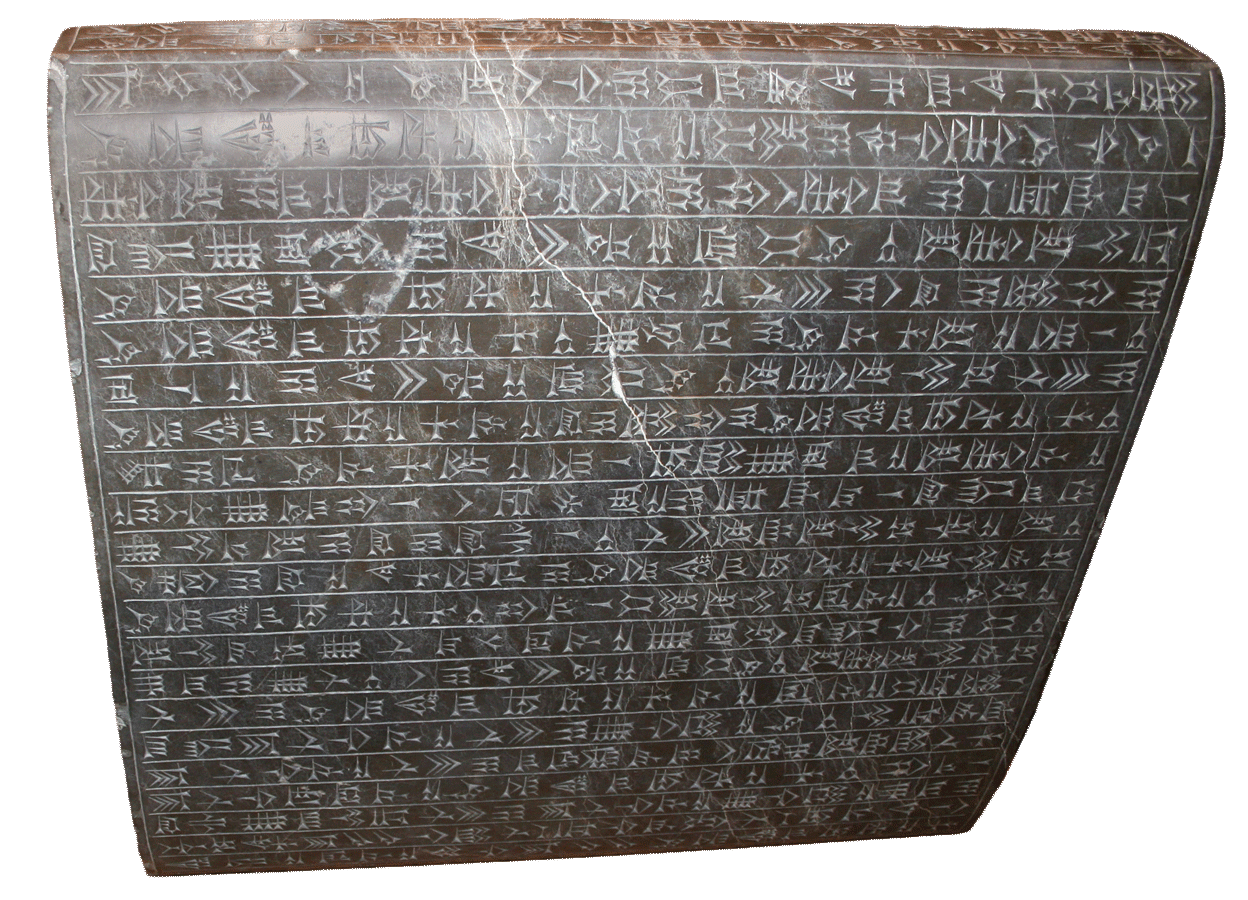
This stone tablet from Persepolis was inscribed during the reign of Xerxes I (Ahasuerus) and includes a list of the countries that he ruled.
After the decree is sent out to all the provinces, the king and Haman sit down in the palace to celebrate the event. Meanwhile outside the palace, the mood grows somber, and the inhabitants of Susa become confused and mystified by the sudden news of the impending “final solution” (3:15). The Hebrew word translated “confused” (nabokah) appears in only two other passages in the Hebrew Bible. In Exodus 14:3, after the Israelites experience the original Passover in Egypt and leave their homes with the plunder of the Egyptians, they find themselves “confused” (nebukim) as they wander between their former homes and the Red Sea. In Joel 1:18, the cattle are said to be “wandering aimlessly” (naboku), without pasture, as the day of the Lord approaches. In these three cases, feelings of disorientation, bewilderment, and vulnerability describe the condition of the communities, and such is the atmosphere in Susa.
5. Mordecai’s Petition to Esther (4:1–17)
Contributing to the state of confusion is distraught Mordecai, whose wailing is heard throughout the city, and whose transformed outward appearance—the wearing of sackcloth and ashes—is noticeably out of character for a man of his social status (4:1). In the Bible, sackcloth and ashes typically accompany laments and mourning for the dead, and in certain cases, fasting for the deliverance of a people (e.g., Gen. 37:34; Lam. 2:10–12). Mordecai’s demeanor and unusual garb appropriately reflect the mood of the Susan community.
When Esther hears about Mordecai’s distress, she is deeply troubled and seeks to find out the reason for her cousin’s unusual behavior. Mordecai sends a detailed report to Esther describing Haman’s edict and his offer to pay a sum of money into the royal treasury in order to have all the Jews killed. Together with this report, Mordecai gives a copy of the royal decree to Esther and pleads with her to request an audience before the king in order to intercede on behalf of her people (4:8).
Upon learning that Esther has not been summoned to appear before the king for over thirty days, Mordecai urges Esther to take the greatest risk of her life and request a special royal audience. According to the law of Persia, a refusal by the king would result in certain death for the queen. Although Esther lives a privileged life in the royal palace, she finds herself desperately constrained, unable to communicate directly with her cousin Mordecai outside and unable to freely approach the king inside. The glory of queenship begins to fade as Esther faces the realities of her confined existence. But, prompted by Mordecai’s urgency, she accepts the challenge, knowing full well that her decision could cost her her life (4:11). Esther quickly heeds Mordecai’s famous words, “And who knows but that you have come to royal position for such a time as this?” (4:14). She urgently calls a fast and declares, “If I perish, I perish” (4:16).
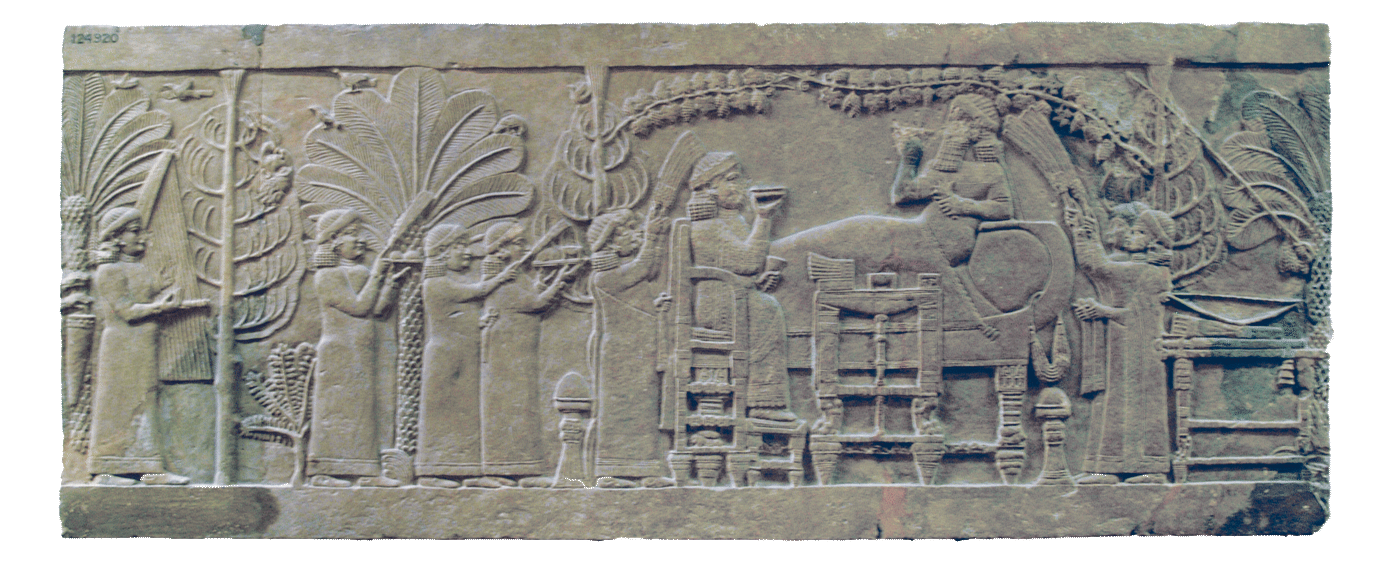
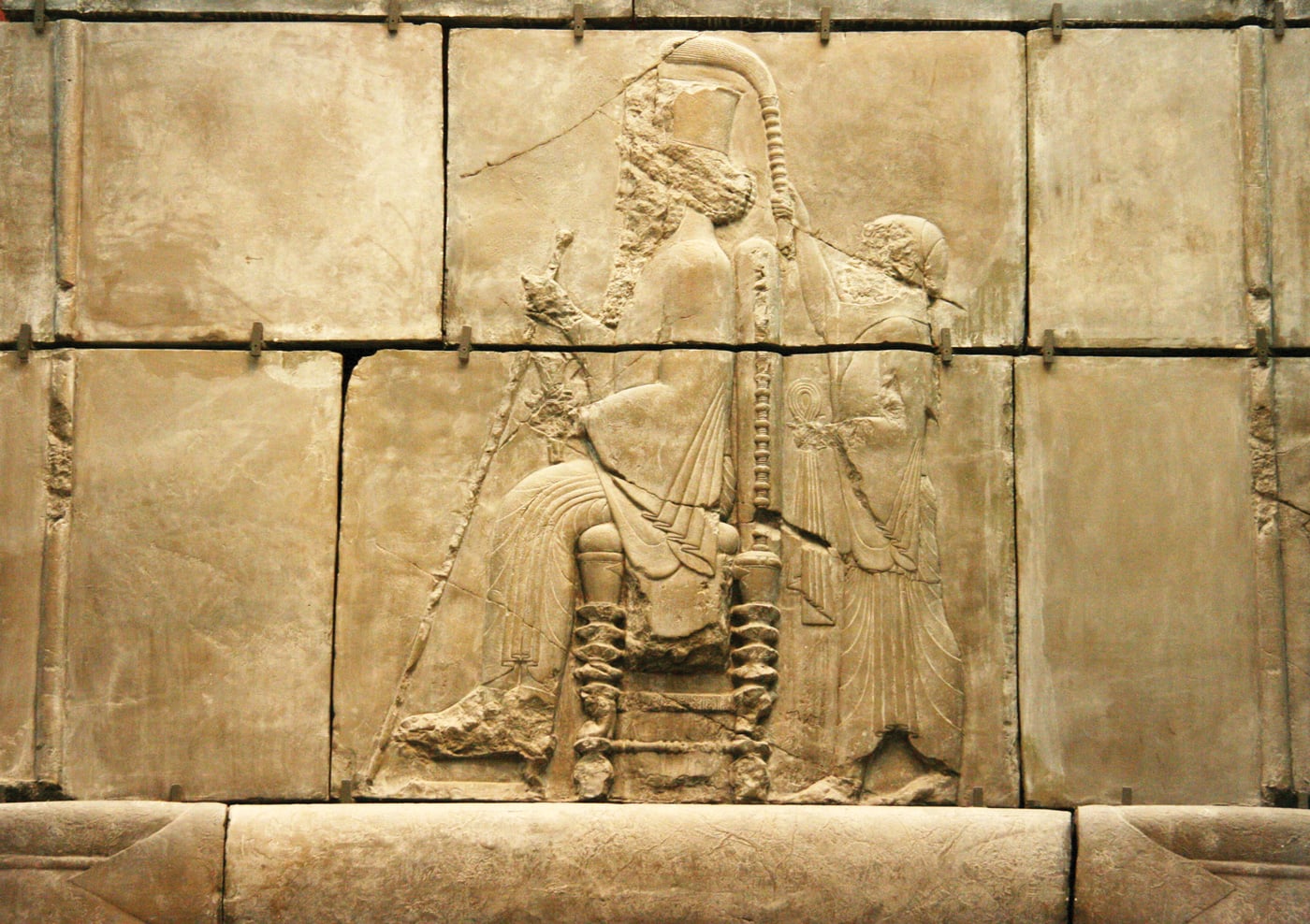
In a scene reminiscent of Esther and Ahasuerus (Esther 5:5), King Ashurbanipal reclines at a banquet with his queen in this relief from the North Palace at Nineveh (645–635 BC).
6. The Fourth Feast—Esther’s First Banquet (5:1–8)
After three days of fasting, Esther clothes herself with royal garments and makes her way to the palace where her fate and that of her people will be determined. When the king sees Esther entering his chamber, he extends his royal scepter and invites her to make her petition known to him (5:2). The king offers her “up to half the kingdom” (5:3), an idiom that is not to be taken literally but rather signifies that the petitioner has gained great favor in the eyes of the king (see Mark 6:23).
In response to the king’s question, Esther invites the king and Haman to a private banquet on that day in her royal quarters. Without delay, the king accepts, and he and Haman make their way to Esther’s residence. Reclining on the couch with a drink in his hand, the king inquires once again concerning Esther’s petition. Seemingly without hesitation, Esther craftily withholds the answer to the question and invites her two guests to join her again the next day for another banquet at which she will disclose her request (5:7). The purpose for Esther’s calculated delay is never revealed.
7. Haman’s Hatred of Mordecai (5:9–14)
Full of joy and inebriated, Haman leaves Queen Esther’s banquet and returns home to boast of his great wealth and honored position in the courts of the king. On the way home, Haman encounters his nemesis Mordecai, who refuses once again to bow before him (5:9). Seething with rage, pretentious Haman vows revenge.
After bragging to his family and friends about the special privileges he has received from the royals, Haman expresses severe discontentment at Mordecai’s refusal to honor him (5:13). Haman’s concerned wife, Zeresh, quickly recommends an unconscionable solution, one that will both humiliate Mordecai and vindicate her husband: “Have a pole set up, reaching to a height of fifty cubits, and ask the king in the morning to have Mordecai impaled on it. Then go with the king to the banquet and enjoy yourself” (5:14). Delighted with his wife’s suggestion and convinced that the king will concur, Haman has the pole set up (more likely than a gallows for hanging [see NIV 1984], since impalement was a common form of execution by the Persians) in preparation for his revenge.
8. The King Rewards Mordecai (6:1–14)
Afflicted by insomnia, King Ahasuerus requests that the royal records be read to him. Providentially, the report of Mordecai’s heroism regarding his disclosure of the assassination plot is read by the attendant. Rather than falling asleep, the king becomes intrigued by the details of the account and asks if the hero has been honored for his bravery (6:3). The king’s attendant replies that nothing has been done to honor him. Eager to recompense the one who saved his life, the king asks who is in the court in order to discuss the best possible way to honor this brave man. The timing could not be better! Haman has just entered the courtyard to approach the king with his despicable request for permission to impale Mordecai (6:4).
Summoned to the king’s presence, Haman rushes to his side anticipating that his request will be quickly granted. The king asks Haman: “What should be done for the man the king delights to honor?” (6:6). Who other than himself would narcissistic Haman consider worthy of the king’s honor? Haman offers what he considers to be the most ingenious proposition of his life, one that will exalt him above everyone in the kingdom, or so he thinks! He proposes that the honoree should be dressed in royal garb and be paraded through the city streets on a royal horse with attendants proclaiming: “This is what is done for the man the king delights to honor” (6:9). Without hesitation, the king agrees and commands Haman to personally grant this royal treatment to Mordecai the Jew.
How devastating for egomaniac Haman to realize that the lavish reward he has devised is to be granted to his nemesis Mordecai and not to him. Once again, Haman’s hopes are shattered, and his mood quickly changes from exhilaration to devastation, a clear example of the recurring reversal motif. How could this be happening to him? How can he now petition the king to have Mordecai killed? With these questions haunting him, Haman obeys the king’s orders and parades Mordecai through the city streets in the exact manner he has suggested to the king earlier that day. What a disgrace for Haman!
Humiliated by the events, Haman rushes home to his wife and advisors and tells them everything that happened to him that day (6:12). After listening to the distressing report, his counselors utter one of the most critical statements of the narrative, a declaration that provides a needed ray of hope for the Jews of the empire: “Since Mordecai, before whom your downfall [Hebrew napal] has started, is of Jewish origin, you cannot stand against him—you will surely come to ruin [napal]” (6:13). The repetition of the key Hebrew word napal (“to fall”) is significant, as it foreshadows Haman’s impending fall from nobility (cf. 7:8). No sooner has Haman’s disgrace been predicted than he is whisked away to Esther’s second banquet (6:14).
9. The Fifth Feast—Esther’s Second Banquet and Haman Impaled (7:1–10)
The moment has now come for Esther to make her petition known to the king. Only with great care can she proceed with her accusation of Haman, since he is the grand vizier of the kingdom and she is only a vulnerable queen. Will the king believe her story? Will she obtain the favor needed to prevent the execution of the royal decree? As these thoughts race through her mind, Esther reveals to the king the impending plan to slaughter and annihilate her people (7:3–4). Startled by the details of this looming atrocity, the king immediately asks Esther for the name of the instigator (7:5). Without hesitation, Esther turns and points to Haman, who is seized with horror at the potential consequences of his conspiracy (7:6). Enraged, King Ahasuerus bolts out of the banquet hall and exits to the garden in order to regain his composure and decide the fate of Haman.
Upon his return, King Ahasuerus finds foolish Haman fallen (Hebrew napal) on the couch where Esther is reclining, begging her for mercy. Furious at this outrageous behavior, the king cries out: “Will he even molest the queen while she is with me in the house?” (7:8). One of the royal attendants who has witnessed the unfolding events informs the king that Haman has recently set up a pole in order to impale Mordecai, the recent honoree. Without wavering, the king declares: “Impale him on it!” (7:9). Haman is now condemned to death, the very fate he has devised for Mordecai and the Jews of Persia (7:5–10). At once, the king’s fury is appeased and hope is renewed for the Jewish population of the kingdom.
10. The King’s Edict to Spare the Jews (8:1–17)
The day of Haman’s execution ironically becomes the day of Esther and Mordecai’s exaltation, a clear reversal of events. Following Haman’s death, King Ahasuerus gives Haman’s estate to Queen Esther and rewards Mordecai by giving him the royal signet ring that was used to seal the first decree against the Jews (8:1–2). Although Haman is now dead and gone, Mordecai and Esther face the grim reality that their ordeal is far from over. Unless the unchangeable law established by Haman is canceled, overturned, or neutralized, the Jews will continue living in peril for their lives. Mordecai and Esther have to act swiftly in order to prevent the massacre and annihilation of their own people.
Once again, Queen Esther approaches the king, this time with a tearful and deeply emotional plea (8:3). She receives immediate favor and is given permission for her and Mordecai to issue a new royal decree that will allow the Jews from Persia to defend themselves against their enemies (8:8). The new decree, originally written in the Persian language, is dictated by Mordecai and transcribed into the scripts and languages of all peoples and provinces in Persia (8:9). Although Esther is the one who pled before the king, the focus quickly shifts to Mordecai, who assumes the leadership in issuing the new decree. By this time, Mordecai has replaced Haman in the royal courts, another striking case of reversal.
The composition and diffusion of this new legal document echo with great precision Haman’s earlier verdict. In both cases, (1) royal secretaries are summoned (3:12 // 8:9), (2) the decree is written in the languages of the empire (3:14 // 8:9), (3) the decree is written in the name of the king and sealed with his signet ring (3:12 // 8:10), (4) couriers are dispatched (3:13 // 8:10), (5) the edict gives permission to kill and annihilate enemies (3:13 // 8:11), (6) the events are to take place on the thirteenth of Adar (3:13 // 8:12), and (7) the decree is issued by messengers throughout the city of Susa (3:15 // 8:14).
In both cases, the people of the city of Susa react with deep emotions. Following Haman’s decree, the people of Susa are confounded and the Jews fear for their lives (3:15). Following Mordecai’s decree, the city of Susa holds “a joyous celebration,” and the Jews of every province cheer with dancing and feasting (8:15–17).
11. The Jews Triumph over Their Enemies (9:1–17)
Eleven months have passed since Haman’s original decree to annihilate the Jews. The day anticipated by all has now come, and contrary to earlier expectations, the Jews emerge as victors rather than victims. Haman’s planned catastrophe has turned into deliverance, and his intended terror has turned into feasting. Once again, a reversal of fortune has occurred: “The tables were turned and the Jews got the upper hand over those who hated them” (9:1).
The events of the day are costly for the enemies of the Jews, as more than seventy-five thousand lose their lives. What was originally intended to be a defensive approach is described in the chapter in offensive terms, virtually depicting the Jews as calculated aggressors who violently annihilate all who hate them (9:5–10). Scholars have struggled with the grim details of this chapter, questioning the merciless slaughter of Persian women and children, the excessive number of people who are killed, and Esther’s request to continue the killing for a second day when apparently the Jews have already killed “all their enemies with the sword” (9:5). Some have suggested that Esther’s request to continue the slaughter and to have Haman’s sons impaled reveals her vindictive and bloodthirsty nature. Others have justified her behavior by pointing to her need to ensure complete safety for her people and to remove all possible future enemies from the kingdom. Public humiliation by impaling is not unique to the book of Esther. This practice was common in the ancient Near East (as depicted in the relief of the Assyrian siege of Lachish) and occurs in other biblical accounts (e.g., 1 Sam. 31:8–10, Saul and his sons).
For the Jewish communities of Persia, there is a renewed sense of security: “The people of all the other nationalities were afraid of them, and all the nobles of the provinces, the satraps, the governors and the king’s administrators helped the Jews, because fear of Mordecai had seized them” (9:2–3). The Jews can now live peacefully throughout the kingdom of Persia, at least as long as Mordecai and Esther remain influential in the courts of the king.
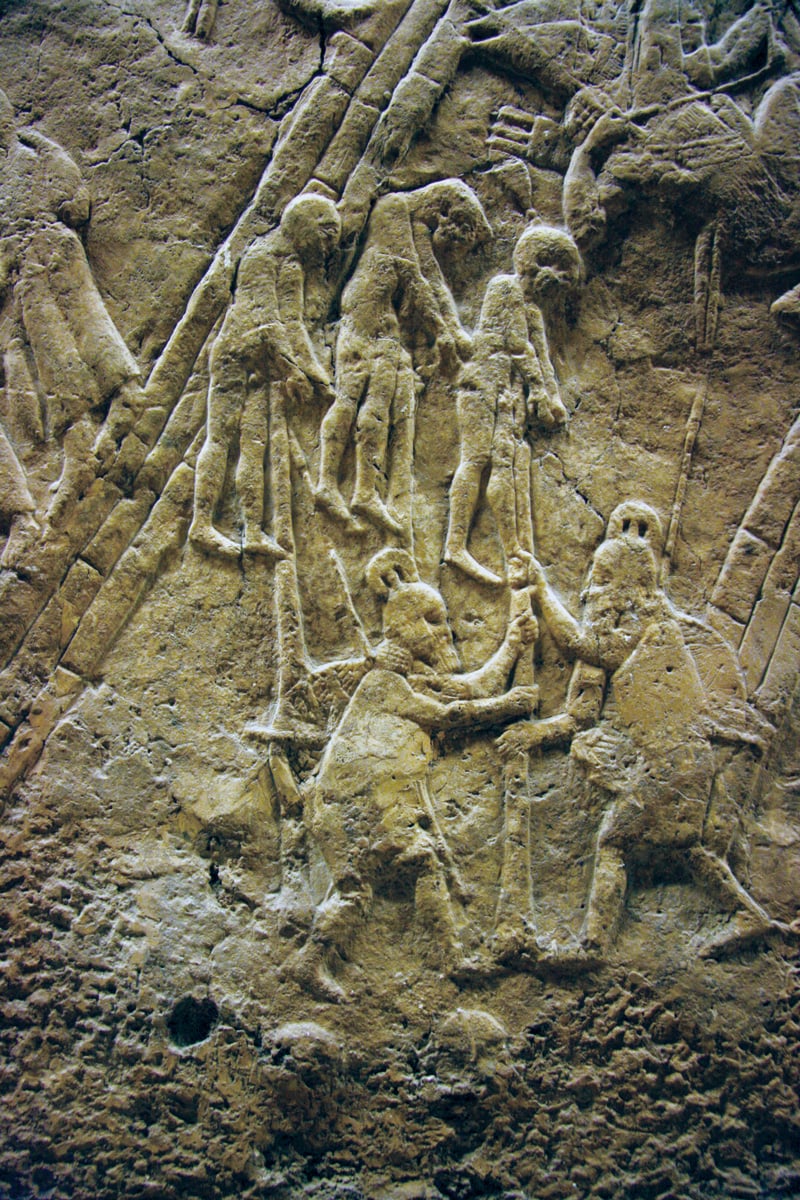
Humiliation by impaling, as shown in an Assyrian relief (Nineveh, 700–692 BC) of the siege of Lachish (cf. Esther 9:14)
With the endorsement of the king, Mordecai sends a letter to all the Jews of the kingdom and institutes the feast of Purim (or “lots”). Since then, on the fourteenth and fifteenth of Adar, Jewish communities around the world celebrate the triumph of the deliverance of the Jews of Persia (9:28). During this feast, the book of Esther is read in synagogues, and active participation by the congregation is strongly encouraged. Cheers are shouted at the mention of Esther and Mordecai, while hisses and jeers are yelled at the mention of Haman. Families commemorate the event by “giving presents of food to one another and gifts to the poor” (9:22).
13. Mordecai Is Exalted (10:1–3)
Surprisingly, the book ends with an exposition of Mordecai’s fame rather than a description of Esther’s accomplishments. Queen Esther’s role seems to have faded, while Mordecai is exalted and granted the ultimate reward. His deeds are recorded in the royal annals, and his “acts of power and might, together with a full account of his greatness” (10:2), are recompensed by the king with a promotion to the highest position in the royal courts, second in command to the king himself (10:3).
Conclusion
The story of Esther begins and ends with a feast, and throughout the whole book, banquets, celebrations, parties, and festivities fill the story line. Food and drink abound, as lavish affairs show off wealth and power, celebrate important events, and commemorate victories. The content of the book is entertaining and comical, and its characters are colorful and amusing. But even more significant, the book of Esther underlines numerous biblical truths. Among them, Haman’s story confirms that “pride goes before destruction, a haughty spirit before a fall” (Prov. 16:18). Esther and Mordecai highlight the importance of fasting and contrition in order to receive direction from God (Esther 4:3; 9:31; 1 Pet. 3:12). Most of all, the book of Esther confirms that God is faithful to keep his promises and to deliver his people from oppression and destruction wherever they may be in the world (Ps. 124:1–8; Rom. 8:31).
The book of Esther reveals God’s eternal love and providential care for his people. Dispersed in exile, the Jews were at the mercy of ruling powers and anti-Semites. But as depicted in the book of Esther, God’s chosen people are never alone. At home or away, they dwell in his presence, receive his protection, and delight in his abundant provision.
Although God’s name is conspicuously absent from the book, every “coincidental” turn of events carries his inimitable imprint. God’s omnipresence is felt throughout the narrative as he orchestrates events, responds to the faithful, thwarts the plans of enemies, delivers his people from annihilation, and restores their covenantal hope for a future.
Select Bibliography
Allen, Leslie C., and Timothy S. Laniak. Ezra, Nehemiah, Esther. New International Biblical Commentary. Peabody, MA: Hendrickson, 2003.
Baldwin, Joyce G. Esther. Tyndale Old Testament Commentaries. Downers Grove, IL: InterVarsity, 1984.
Bechtel, Carol M. Esther. Interpretation. Louisville: Westminster John Knox, 2002.
Berlin, Adele. Esther. JPS Bible Commentary. Philadelphia: Jewish Publication Society, 2001.
Day, Linda. Esther. Abingdon Old Testament Commentaries. Nashville: Abingdon, 2005.
Fox, Michael V. Character and Ideology in the Book of Esther. 2nd ed. Grand Rapids: Eerdmans, 2001.
Jobes, Karen H. Esther. NIV Application Commentary. Grand Rapids: Zondervan, 1999.
Kahana, Hanna. Esther: Juxtaposition of the Septuagint Translation with the Hebrew Text. Leuven: Peeters, 2005.
Klein, Lillian R. From Deborah to Esther: Sexual Politics in the Hebrew Bible. Minneapolis: Fortress, 2003.
Levenson, Jon Douglas. Esther. Old Testament Library. Louisville: Westminster John Knox, 1997.
Millgram, Hillel I. Four Biblical Heroines and the Case for Female Authorship: An Analysis of the Women of Ruth, Esther, and Genesis 38. Jefferson, NC: McFarland & Company, 2008.