Malachi
2. God’s Love for His People (1:2–5)
4. The Knowledge of God (2:1–9)
5. Intermarriage and Divorce (2:10–16)
6. The Justice and Patience of God (2:17–3:6)
8. God’s Love for the Remnant (3:13–4:3)
Introduction
Malachi the Prophet
Nothing is known about Malachi, his ancestry, or his place of residence. According to the church fathers, Malachi was a Levite from the region of Zebulun. It is impossible to verify this assertion, but Malachi’s concern with the corruption of worship, the glory of God, the corruption of the priesthood, and the tithe would support the priestly interests if not the background of the prophet.
Date
He lived after the exile in a world filled with shattered hopes. Scholars are in general agreement on the postexilic date of this book, and though there is some minor disagreement, his ministry is dated around 440 BC. This date fits the present archaeological evidence of the devastation of Edom by the Nabateans (1:3–4), the reference to the “governor” of the Persian province (1:8), the existence of the temple, and the moral and social problems portrayed in Ezra-Nehemiah.

Historical Context
Following Israel’s return from exile, the prophetic promises were only partially fulfilled. The prophets had spoken about the renewal of the covenant, the restoration of the people to the land, the messianic kingdom of peace, the renewal of temple worship, the continuity of the priestly ministry, the rebuilding of a glorious temple, and a new era characterized by Isaiah as the New Jerusalem (65:17–25).
The religious enthusiasm characteristic of the returning exiles and the contemporaries of Haggai and Zechariah had waned. The restoration of which the prophets had spoken had not yet come. God had not “shaken” the nations, and the messianic kingdom had not yet been established. The Lord had not blessed his people as he had promised. The era of fulfillment had turned into a period of waiting. While waiting, some had exchanged their beliefs for the fast life (3:5, 15), while others were cynical about the value of organized religion. A minority remained faithful regardless of how bad the times were (3:16).
Theological Themes
God raised up Malachi to address the problems of cynicism, formalism, and unfaithfulness, and questions about the benefits of godliness. Malachi defends the love, honor, and justice of God. God’s love is shown by his election and care for his own. God, Father of Israel and king of the universe, expects his children to respond to his love, honor, and justice.
The focus of the prophet is on the veracity of God and on humanity’s responsibility. The Lord is faithful, even when it seems as if he does not respond. The prophecy encourages all who remain faithful to him to persevere. Malachi calls for responsibility in marriage, sacrifice, religion, social concerns, tithes, and observance of God’s laws. He redefines the “godly” as those who persevere in godliness. Israel may no longer claim any automatic hold on God but must show that they have the Spirit of God. God is faithful to his own and will richly reward his children.
Literary Features
Malachi is the twelfth of the Minor Prophets. The placement of the book after Zechariah may not have been out of chronological considerations but because of the connecting phrase, “A prophecy: The word of the Lord” (1:1), also found in Zechariah 9:1; 12:1. The prophet uses a disputation form to move his audience from the presumptions that their relationship with Yahweh is good and that Yahweh is at fault to the conclusion that they all, priests and people, are under judgment. The Lord’s favor rests on a small community within Israel and will extend to all who fear him, including people from the nations.
Commentary
The book of Malachi is an oracle, a word, from Yahweh. “Oracle” (or “burden”) is a technical, prophetic term for a word of judgment on both the nations and Israel/Judah. The prophet functions as an ambassador whose duty is to proclaim the word, no matter how burdensome the message or how unresponsive the people. The prophet is appointed by God to discharge his office, and in that appointment there is a sense of urgency (cf. Jer. 20:9). He must proclaim the oracle, because the oracle is the word of Yahweh.
2. God’s Love for His People (1:2–5)
In the first disputation, Yahweh assures his people of his love. The structure is symmetric. The cynicism of the people (1:2) is symmetric with the expression of hope in God (1:5). The affirmation of God’s “love” (1:2–3) is symmetric with an affirmation of his “greatness” (1:5). God’s past acts against Edom (1:3) are symmetric with his promise to rid the land of all evil (1:4). The focus of the oracle is on the demonstrations of Yahweh’s love for his people, which are the very reasons why the elect in Israel should put their faith in God and praise him (1:1–2).
Although the postexilic Jewish community was not living in the fullness of the messianic age, they had been loved. It had been nearly a century since their return from exile and the rebuilding of the temple. The priests were again serving God in the temple. God was reconciled to his people, and through the ministry of the prophets Haggai and Zechariah he had encouraged them to look forward to the messianic kingship that would bring peace, prosperity, and justice (cf. Hag. 2:20–23; Zech. 9:9; 13:1–14:21). Yet the prophetic assurance of God’s love receives only a cynical response from God’s people.
In response to the people’s question, “How have you loved us?” Malachi turns to Israel’s history. Yahweh loved Jacob more than Esau. His love is not based on Israel’s righteousness (Deut. 9:4) or greatness (Deut. 7:7) but on his promise of blessing (Deut. 7:8) guaranteed by oath to Abraham, Isaac, and Jacob. Esau was bypassed. No human reasoning can fully explain God’s choice. His love for Jacob was an act of love, election, and sovereignty (Rom. 9:1–29).
The people may have given Malachi a cynical look as he proclaimed God’s love for them a second time. The Edomites, descendants of Esau, were supposed to have been wiped out, and their territory should have been given to Israel (Amos 9:11–12; Obadiah 8–10, 18–19, 21). Yet they still existed as a nation, and their territory now adjoined Judah!
God’s judgment on Esau, however, is progressive, slowly moving toward completion (1:3–4). The Edomites had harassed the Judeans as they attempted to flee Judah and Jerusalem at the time of the fall of Jerusalem (586 BC). The books of Obadiah and Lamentations speak of the hatred shown by the Edomites, who did not help Judah in her time of need but instead rejoiced in her tragedy. Later, the Edomites were displaced by desert nomads who had destroyed the mountain strongholds and devastated the land, forcing them to flee into the northern Negev. Malachi confirms the prophetic word of God’s judgment on the Edomites. Regardless of how long it may be, Yahweh himself will see to the end of the Edomites (1:4).

The land of Edom. The Lord says of this land belonging to the descendants of Esau, “I have turned his hill country into a wasteland” (Mal. 1:3).
The rejection and judgment of Edom is without mercy. God promises to harass and judge the Edomites (Idumeans) until every trace of their evil scheming and activity is removed. His anger will rest on them until their land is emptied of Edomites. Malachi encourages God’s people with the promise that evil will be dealt with in the day of the Lord.
In the Old Testament, Edom represents all the enemies of God’s kingdom. The prophets point beyond the Edomites to the fall of all Gentile kingdoms. Since God’s judgment rests on such a small nation (Edom), how much more will it extend to all kingdoms! If the Edomites, who are related to the Israelites, will not escape the judgment of God, how will other nations avoid the day of the Lord? It is in this context that we must understand God’s response to Judah. He declares that he will so execrate and destroy evil that not a trace will be left. During the time of the postexilic restoration, the Jews remained subject to a foreign nation, the Persians. In the coming centuries they would be subject to the Greeks, the Ptolemies, the Seleucids, and the Romans. The Lord here affirms that he will judge all nations that oppress his people, thus purging all wickedness from his creation. History attests to the fulfillment of this promise: the Lord brought desolation to Edom and to the enemies of his people. The Lord’s anger still rests upon wickedness, and he will make an end to the rule of evil forever.
In anticipation of God’s coming demonstration of his love for the elect, the people of God must now pray with hope that Yahweh be exalted beyond the territory of Israel (1:5). This prayer is often taken as a proclamation (“Great is the Lord”). However, the same phrase is translated correctly in the psalms as “The Lord be exalted” (40:16; 70:4 NIV 1984). The context is hope in the deliverance of the Lord. The eyes of faith already see his victory over the enemies of the kingdom and the full establishment of God’s kingdom. The translation should be: “May Yahweh be exalted beyond the borders of Israel.” The phrase “beyond the borders” has occasioned difficulty. The preposition may be translated as “over” or “beyond.” In view of his universal interest (1:11, 14) and his concern that evil be removed, the reading “beyond” is preferable. Yahweh, the God of Israel, is not limited to Judah. His kingship will extend to the ends of the earth.
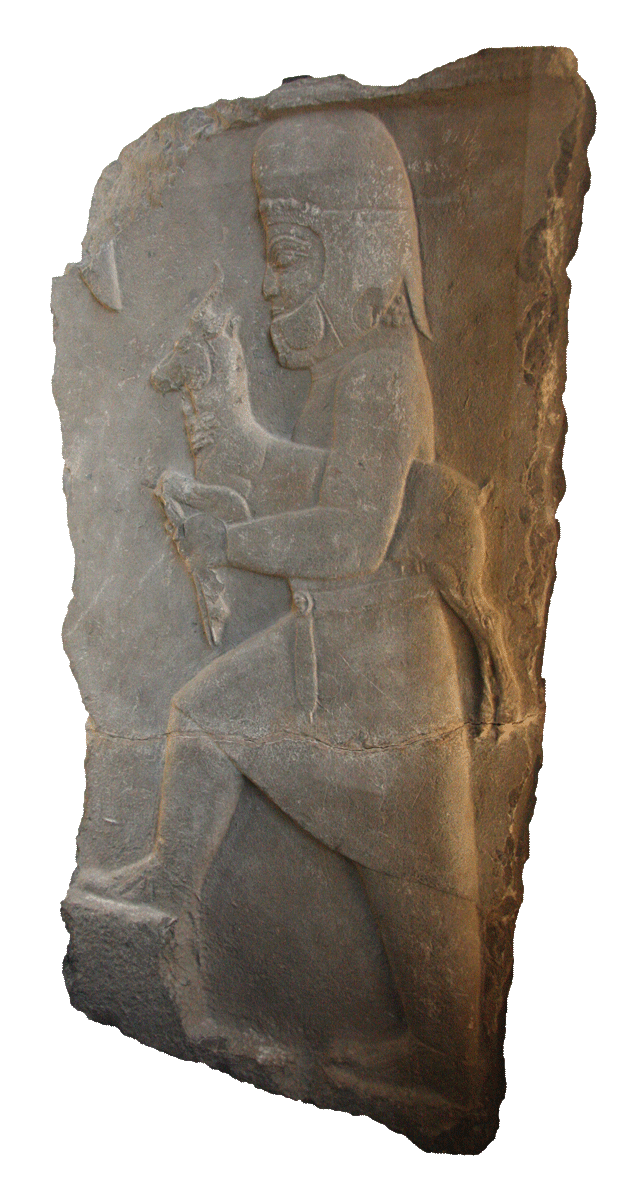
The Lord asks whether a governor would be happy if he were offered a lame or diseased animal (Mal. 1:8). This palace relief depicts the type of offering made to royalty: a servant is bringing a kid goat to be sacrificed for a royal banquet (Persepolis, fifth century BC).
Even though the people are not certain of God’s love (1:2), he expects a minimal response of honor and respect. Malachi likens the situation to that of a son’s respect for his father or a servant’s respect for his master. The people of God, however, are so self-centered that they cannot express themselves in love and devotion toward Yahweh. He affirms that he is Father and master. God is not only the Father of the faithful (1:6) but also the king whose kingdom is not limited to Jerusalem or the land of Judea. His name is feared among the nations. He is the great king.
These three grounds for honoring Yahweh (as Father, master, and king) provide the structure of the second disputation. Malachi’s argument focuses on the priests’ utter disregard for the God of Israel. They of all people should be expected to remain faithful. The job of the priests as cultic functionaries was to please God by presenting offerings and sacrifices and in teaching the law of God. They may not have been aware of their attitudes and hidden motives. This section is a warning for Christians, particularly ministers of the Word, to be careful not to “despise” or “show contempt for” the name of God by slovenly attitudes and shoddy service.
Malachi charges the priests with profaning the glorious name of the Lord (1:6–10). Since God is the Father of his people and the master of the universe, it is only fair that his servants, the priests, protect his “honor” (“glory”) and give reason for the Gentiles to “respect” the God of Israel. Instead, they are irreverent and nurture a low view of God. Malachi cites their disregard of the sacrificial laws as evidence of their guilt. They show contempt for God by having no regard for the revealed priestly rules and regulations. His “table” (i.e., the tables on which the sacrifices were slaughtered; cf. Ezek. 40:39–43) is treated with contempt. In response to the twofold disputation (“How have we shown contempt for your name?” and “How have we defiled you?”), Yahweh charges the priests with defiling his altar by presenting offerings not in accordance with the priestly regulations. According to Leviticus 22:23–27, the priests were to inspect the offerings before they were consecrated to the Lord to see whether they were ritually clean. The priests, according to Malachi, disregard these regulations. They sacrifice anything presented to the Lord in the temple, whether blind, lame, or sickly. The prophet returns to the analogy with which he began by asking whether they present sickly animals as gifts to the governor, their political master. They must repent and ask God to restore his favor. However, if they continue their practices, the priests may as well close the temple down and extinguish the fires on the altar. The Lord looks for heartfelt honor, not mere formalism.
Certainly, Yahweh’s kingship extends from east to west, because his name is great among the nations (1:11). Malachi concludes that this worship of God is more acceptable than worship in the Jerusalem temple. This does not mean that God is pleased with pagan sacrifices but that true worship is offered to him by Gentiles who come to him in faith (cf. Zeph. 2:11; 3:9). A note of expectation of a greater fulfillment may also be present, as his kingdom extends from “where the sun rises to where it sets,” from east to west. When Jews worshiped the Lord in their various locations of the Diaspora (Persia, Babylonia, Egypt), Gentiles were drawn to his worship as God-fearers and proselytes. The prophetic word was already being fulfilled; Gentiles were joining with the Jews in the worship of Yahweh in increasing numbers. Truly, Yahweh’s name was known and was becoming great among the nations. Thus, the prophet argues against the priests that, since Yahweh’s name is great among the nations, how much more should the people of Jerusalem and Judea honor their God?
The prophet moves rapidly from charges and countercharges to judgment (1:12–14). He charges the people with profaning the Lord and his temple. The charge is a severe one. But they respond by asking what wrong they have done. They are bored with their vocation. By permitting injured, lame, and sickly animals to be brought into the temple, they demonstrate that they are more concerned about their own livelihood than about the honor of the Lord. Anyone who continues to bring sickly sacrifices, even in fulfillment of a vow, will be cursed because, regardless of the priestly attitudes, God is the great king. He will turn the priestly blessing into a curse.
4. The Knowledge of God (2:1–9)
In the second disputation, Malachi charges the priests with not giving honor to God; they offer defiled and blemished offerings and sacrifices. In this third disputation, focus shifts from their cultic function to their function as teachers of God’s word. The key word is “warning” (literally “commandment,” 2:1, 4). Malachi repeats the word and purposely builds up suspense so as to stimulate the question, what commandment has been broken that causes the Lord’s curse to rest on the priests? It is not until verse 7 that the commandment is set forth in a straightforward manner: “For the lips of a priest ought to preserve knowledge, because he is the messenger of the Lord Almighty and people seek instruction from his mouth.”
The knowledge of God is not knowledge about God or secrets pertaining to the priesthood. “Knowledge” is the ability to know and the desire to do the will of God on earth in accordance with his commandment. Knowledge is immensely practical, because it is in essence what could be called “godliness,” “wise living,” or “the way to holiness” (cf. Hos. 4:1, 6). The Lord has commanded the priests not only to oversee the offerings, sacrifices, and tabernacle but also to be the guardians of his revelation (Deut. 31:9). The priests were the teachers of the law of God. The failure of the priests before the exile had brought the judgment of God on Israel and Judah. Malachi is concerned that their present insensitivity will renew God’s judgment. His prophetic denunciation is an expression of his concern for the well-being of God’s people.
Yahweh will not hesitate to curse his own priests (2:1–3). The curses are those enumerated in Deuteronomy 28:15, 20. The curses were applicable to all of God’s people but particularly to the priests, because they had been instructed in “the commandment.” The curse is explicated in a threefold formula, which is best translated as “I shall send a curse on you; and I shall curse your blessings. Indeed I shall curse them.”
In verse 3, the nature of the curse is brought out more clearly. Yahweh will not limit his curse to the priests but will extend it to their children. He will also disregard their festivals, which were the occasions when the priests received food from the people; so when there was an economic depression, the priests were the first to suffer. At this time, the sacrifices being presented are unacceptable to the Lord. He puts them in the same class as dung (NIV 1984 “offal,” 2:3), which was removed from the temple to be burned. The language is strong, but so is God’s feeling about the priests.
The curse stands in contrast to the covenant God made with Levi (2:4–7). The original covenant was made with Phinehas, the grandson of Aaron, after he demonstrated his loyalty to the Lord (Num. 25:12–13). The purpose of the covenant was not curse but life and peace. However, “life and peace” were conditioned on the faithful performance of the priests. Malachi reminds the priests of their ancestry in order to evoke in them responsive hearts. In the early days of Israel, priests feared the Lord and respected him. They were the guardians of the law of God and did not betray Yahweh by improper speech and infidelity. Instead, they were characterized by godliness in that they walked in accordance with God’s standards of fidelity, peace, and equity. When the priests were the guardians of the law, were godly, and walked in fellowship with the Lord, they were his human instruments in restoring many from evil. The priests were the theocratic officers by whom the covenantal relationship was kept alive. It is at this point that Malachi explains the original “commandment” or “warning” to the priests (2:7).
The priests of Malachi’s time have gone astray (2:8). They have departed from “the commandment” God originally gave them. Therefore, the Lord has withheld the fullness of blessing and will turn the blessings of “life and peace” into a curse. The problem is with the priests, who have turned away from glorifying the Lord, led people into sin, and disregarded their duties. The lives and teaching of the priests cause people to sin against the Lord. Thus, they breach the terms of the covenant. A breach in covenant fidelity evokes God’s wrath, judgment, and curse.
Malachi 2:9 is a summary of 1:6–2:8. The repetition of the word translated “despise” or “show contempt for” (1:6; 2:9) forms an inclusio, for Yahweh has charged the priests with despising his name. They do not honor him as a Father and king in their sacred duty as priests. Their way of life and public instruction have led the people astray. The autonomy of the priests will incur God’s judgment. Rather than being sought after as “messengers” of the Lord, the priests will be despised by the people. When this happens, the people will no longer be misled. The Lord does not annul the covenant with Levi but suspends the blessings of “life and peace.” Because the priests have little regard for God’s glory, he will utterly reject them—unless they learn to respond by following in the ways of the Lord and by studying the word of God. If the priests are to avert God’s curse and judgment on them, they must return to the original commandment given to their forefathers. They may again become the “messengers” of the Lord by being the guardians of his law, faithful in their walk with God, and teachers of his people. Then the Lord’s blessings of life and peace will attend his people.
5. Intermarriage and Divorce (2:10–16)
The fourth disputation, Malachi 2:10–12, opens abruptly. Who is speaking? Who is the “Father”? It seems that the people contest something the prophet has said, or it may be that the prophet is quoting a proverb. Since Malachi, by the disputation method, portrays the spirit of the people as filled with cynicism and sarcasm, it is best to take verse 10 as an argument by the people. It is filled with self-righteousness and self-justification but is hollow from Malachi’s perspective. The people’s argument may be restated as, “Have we not all one Father? Has not one God created us? Why should we deal treacherously with one another? Why should we profane the covenant of the fathers?” Yahweh, who sees the heart, charges that they have dealt treacherously with each other and that they have broken the covenant. They have desecrated the “holy” institution of marriage by intermarriage and divorce. God is concerned with the purity of his people. The history of Israel before the exile was marked by idolatry, syncretism, and acculturation. Intermarriage was the way in which the people of Judah and Israel had accepted the cultures and gods of the nations (Judg. 2:11–13, 19; 1 Kings 11:1–8). Malachi’s concerns, together with Ezra’s and Nehemiah’s (Ezra 9:1–2; Neh. 13:23–24), are with the identity of God’s people. When any of God’s people flout his law and break the covenant, they have no right to belong to the covenant community. They are to be disciplined. No offering can help the unrepentant sinner. Whoever tears down the covenant community by intermarriage has no right to be a part of that community.
In addition to intermarriage, God is concerned with divorce (2:13–17). If intermarriage is an affront to God’s holy presence, how much more is he concerned with marital infidelity and divorce! Even if the people were to cry, bring offerings, and implore him to answer their prayers, he would have no regard for their rituals. The anticipated response to the prophetic judgment is a quick, spirited, indignant “Why?” The question receives a twofold response.
First, Malachi removes any pretense to innocence by stating that Yahweh will appear as witness to their faithlessness, which has manifested itself in divorce. The covenant relationship is characterized by fidelity, and the absence of marital fidelity is symptomatic of a deeper spiritual problem. The people are unreliable in their relationship with their peers, wives, and God. They are religious infidels.
Second, the severity of God’s judgment is due to his intense hatred of divorce. The people have argued from the mistaken theological position that, since God is the Father of all Israel, they are safe from his judgment. Malachi replies that God’s true children have the Spirit of God, which is manifested in faithfulness. The fruit of the Spirit of God is love and fidelity. The central verse (2:15), which is also one of the most difficult verses in the entire book, gives the theological ground for marital fidelity: (1) God has made “man” as one, namely male and female (Gen. 2:24); (2) man is “one,” being both flesh and spirit; and (3) God’s purpose is to raise up godly children through holy matrimony, which is characterized by a union of flesh with flesh and spirit with spirit. Therefore, not all may claim that God is their Father. The prophet has thus introduced the importance of the “spirituality” of God and of those who worship him. Since God has made human beings to have a spirit, they can relate to God only in the spirit. Only those who have the Spirit are his children, and they must respond by guarding their spirit. Covenant fidelity has a spiritual dimension that is expressed by marital fidelity.
6. The Justice and Patience of God (2:17–3:6)
The fifth disputation introduces a new element. The people have already questioned God’s love, majesty, and fidelity. Now they raise the issue of his justice. Their argument, however, is wearing down because they have wearied the Lord (2:17). They have argued that they are all right and that the fault lies with God, but now they charge God with being unfair in all his dealings with humankind. They think that God does not discriminate between evil and good and that he even delights in those who do evil. Therefore, they ask, “Where is the God of justice?” The threefold charge against the Lord receives a threefold response (3:1–6).
First, the Lord will send his “messenger” who will prepare the way of the Lord. In Isaiah 40:3–4 the preparation of the Lord’s coming is made by making ready a “way.” His coming in Isaiah is to introduce judgment and to reward his children. Malachi also speaks of God’s coming in judgment. The coming of God (3:5) is connected with the coming of the messenger of the covenant. The identity of this messenger is far from certain. The word for “messenger” in Hebrew is malak, and the Hebrew for “my messenger” is the same as the name Malachi. Is he, Malachi, the angel of the covenant or Elijah (4:5–6)? Jesus connects him with John the Baptist as having the spirit and power of Elijah (Luke 1:17; cf. Matt. 11:14). The purpose of the messenger is clear: he is to prepare the people for the coming of the Lord. In response to the first question, Malachi has introduced the “messenger” as God’s means of announcing that his judgment rests on the wicked. The evil are not good in God’s sight.
Second, the Lord will come to the temple. “The Lord” is further described as “the messenger of the covenant.” Although some interpreters distinguish “the Lord” from “the messenger,” the parallel construction argues for their synonymity. “The Lord” must be Yahweh, who has promised to fill the temple with his glory (Ezek. 43:1–5; Hag. 2:9). Yet he is also known as “the messenger of the covenant.” A “messenger” was charged to guard Israel on the way to Canaan (Exod. 23:20–23), and it may well be that the identification of “the messenger” with “the Lord” is an Old Testament revelation anticipating God’s fuller revelation in Jesus the Messiah. The Father sent John the Baptist and his Son to prepare humanity for the great judgment. The purpose of the messenger of the covenant is to “refine” the people of God.
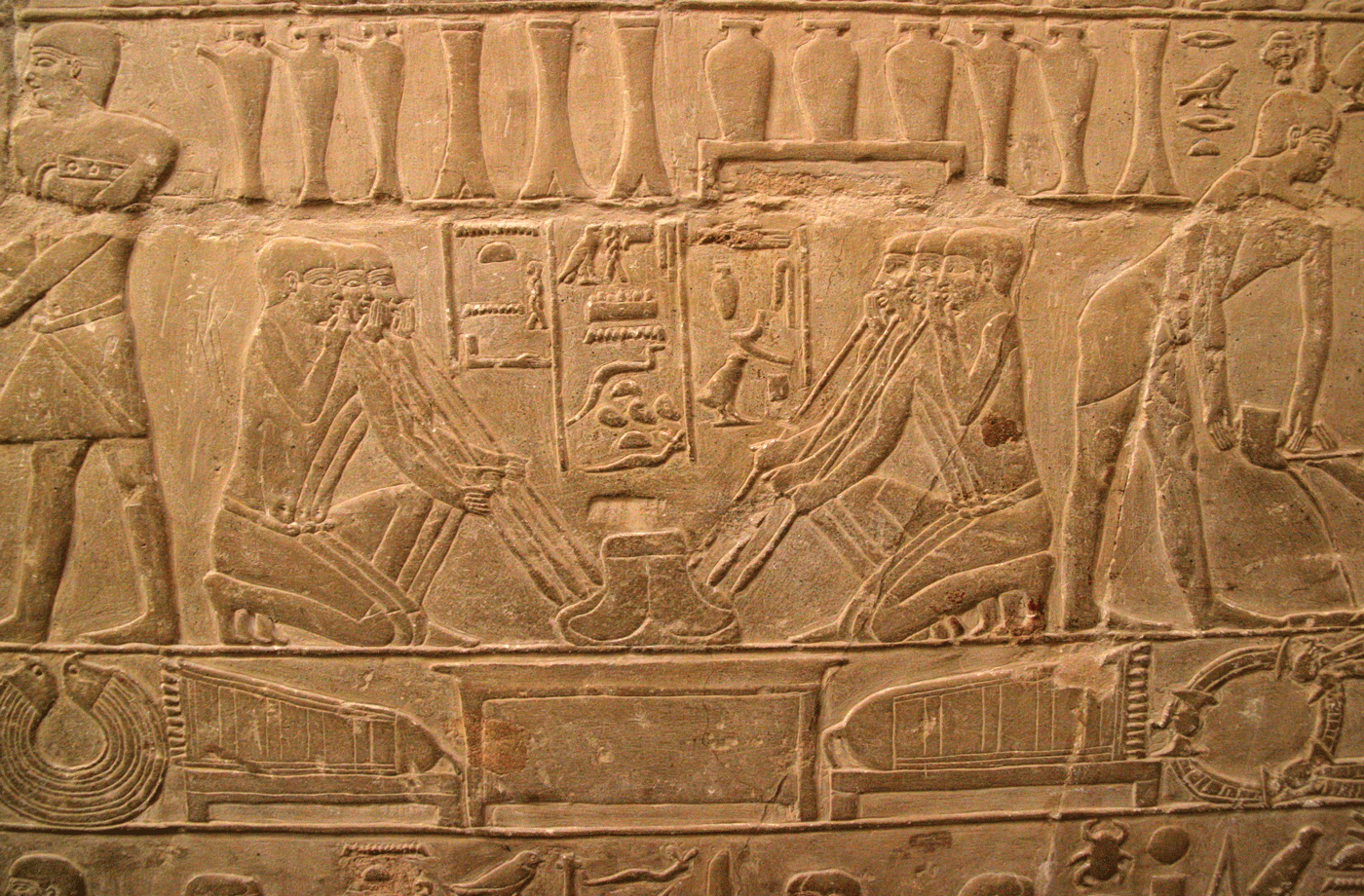
Malachi 3:2 uses the image of a refiner’s fire. This relief from the tomb of Mere-Ruka shows craftsmen using blowpipes to increase the forge fire (Saqqara, Egypt, ca. 2300 BC).
The coming of the messenger is to introduce an era in which the restoration of the covenant will be ushered in in a new way. In response to the accusation that God is pleased with the wicked, Malachi has introduced the coming of the messenger of the covenant as God’s means of purifying a people for himself. He compares the process of purification to the refining fire of the silversmith and the soap of a launderer. His purpose is to purge the people of God so that they will be like gold and silver.
God does not delight in evil but rather delights in “offerings in righteousness” (3:3). These can be offered only by those who have come through the process of purification. The righteous who lived before Christ looked forward to his coming and experienced the acceptance of their offerings in faith. The reference to the past is an expression of God’s covenantal fidelity. God does not change. He has always expected his children to bring him offerings in the spirit of purity and righteousness. The opponents of the prophet’s message have charged that God delights in evil; the prophet responds that God does not delight in evil but rather in righteousness.
Finally, the certainty of God’s response is made sure by his coming in judgment. In response to their third question, “Where is the God of justice?” God comes in judgment. Even though this judgment may be delayed for millennia (2 Pet. 3:3–9), the judgment will certainly come on all who have broken his commandments.
Even though the commentaries and versions are not in agreement as to the extent of the argument, 3:6 could be the conclusion of 2:17–3:6. The Lord has charged his people with wearying him (2:17). They should be destroyed. Though the Lord is vexed by the words of his people, he does not change. His purposes stand. As an expression of his patience, forbearance, compassion, grace, and willingness to forgive, the Lord continues his plan of redemption. The fact that he does not yet come in judgment is an expression of grace. The people may change in that the righteous may join the wicked or may wonder whether God loves the wicked more than the righteous. The comfort of the godly is the revelation that the Lord does not change. Out of concern for his loved ones, the Lord will send the messenger and the messenger of the covenant to encourage them before his coming in judgment against all the wicked.
Since the coming of John the Baptist and Jesus Christ, a portion of the prophetic word of Malachi has been fulfilled. Jesus came as the “messenger of the covenant,” by whom Jews and Gentiles find entrance into the covenant, by whom God accepts our offerings, and by whose Spirit we are purified. Because of God’s grace we are not consumed.
In the fifth disputation, Malachi argued that God would show his justice in judgment at his appointed time. The prophet, true to the prophetic tradition, calls for a response in preparation for the coming of the messenger and the messenger of the covenant. The appeal for a particular response links this section to the third disputation (3:10–16). In both sections, God is expecting a renewal of fidelity: in marriage (2:10–16) and in worship (3:7–12). The former is representative of our love for others and the latter of our love for God.
God remains faithful to his promise that he will return to those who seek him with all their heart. Israel’s history is the story of a lack of responsiveness to God and his commandments. Even after the exile they were slow to respond. They were satisfied with their lack of commitment. The prophetic countercharge is quick. Malachi singles out one example of infidelity to God: the tithe.
Israel’s failure to give the tithe exposes their failure to show loyalty to God in worship. The people have “robbed” God. The verb signifies a taking by force of what belongs to someone else. The tithe was God’s divine right, specified in the law (Lev. 27:30; Num. 18:24–28; Deut. 14:28–29). From the tithes, Levites, priests, orphans, widows, and aliens were supported. The “offerings” were the portions of sacrifices that the priests were permitted to use for food (Exod. 29:27–28; Lev. 7:32; Num. 5:9). Support for the temple personnel and social programs is failing.
Greediness is not only a mark of selfishness; it is a token of infidelity and therefore of outright disobedience. The most severe penalty for failure to conform to God’s will is “curse.”
Malachi has demonstrated that Yahweh is not the Father of the descendants of Abraham but of those who have the Spirit of God. God is a good Father to responsive children. He promises to take care of their needs. The covenant king is concerned with extending his blessings to his people. For that reason, the prophet details how the Lord will grant his blessings (3:11–12): by taking care of all their needs, by protecting their possessions, by prospering their labor, and by keeping away the locusts. Since the people are reluctant, the prophet calls on them to test the Lord. This challenge to the people must be related to his call for them to return. By their repentance they will express their faith and dependence on him and will therefore be restored to covenant fellowship. The Lord promises that his blessing will rest on his people so that they will be blessed in this life and in the life to come.
8. God’s Love for the Remnant (3:13–4:3)
In the sixth disputation, Malachi sums up the argument of the book. In the first disputation (1:2–5), he argued that the Lord loves his people and that one day the faithful will recognize and see with their own eyes the establishment of the Lord’s kingdom on earth. In the meantime, the hope of the faithful is in God, whose honor, fidelity, and justice are beyond question. The prophet sums up his argument by affirming that God will reward his loyal children who persevere to the end. This disputation is also related to the fifth (2:17–3:6), but is more direct and severe. The prophet does not give a general call for repentance. He makes it clear that many in the covenant community are too concerned with self but are incapable of establishing their own righteousness. Their feet are set on slippery paths, and they will perish. On the other hand, there is always a righteous remnant that does the will of God on earth, and they will receive a glorious reward.
The Lord charges the community of faith with speaking harshly against him (3:13–14). They say it is “futile” to serve God and that there is no “gain” in keeping God’s commandments. The prophets have argued that it is vain to serve idols, but the people turn the argument around by claiming that allegiance to the Lord brings no benefit, no reward. The Hebrew word for “gain” or “reward” used here is not the usual word for reward, but signifies a bribe or a means of covering one’s eyes toward injustice. Malachi uses the word sarcastically to reveal that the people are asking for undeserved favors. They expect God to do big things for them while they get by with injustice, improper sacrifices, divorce, and withholding tithes.
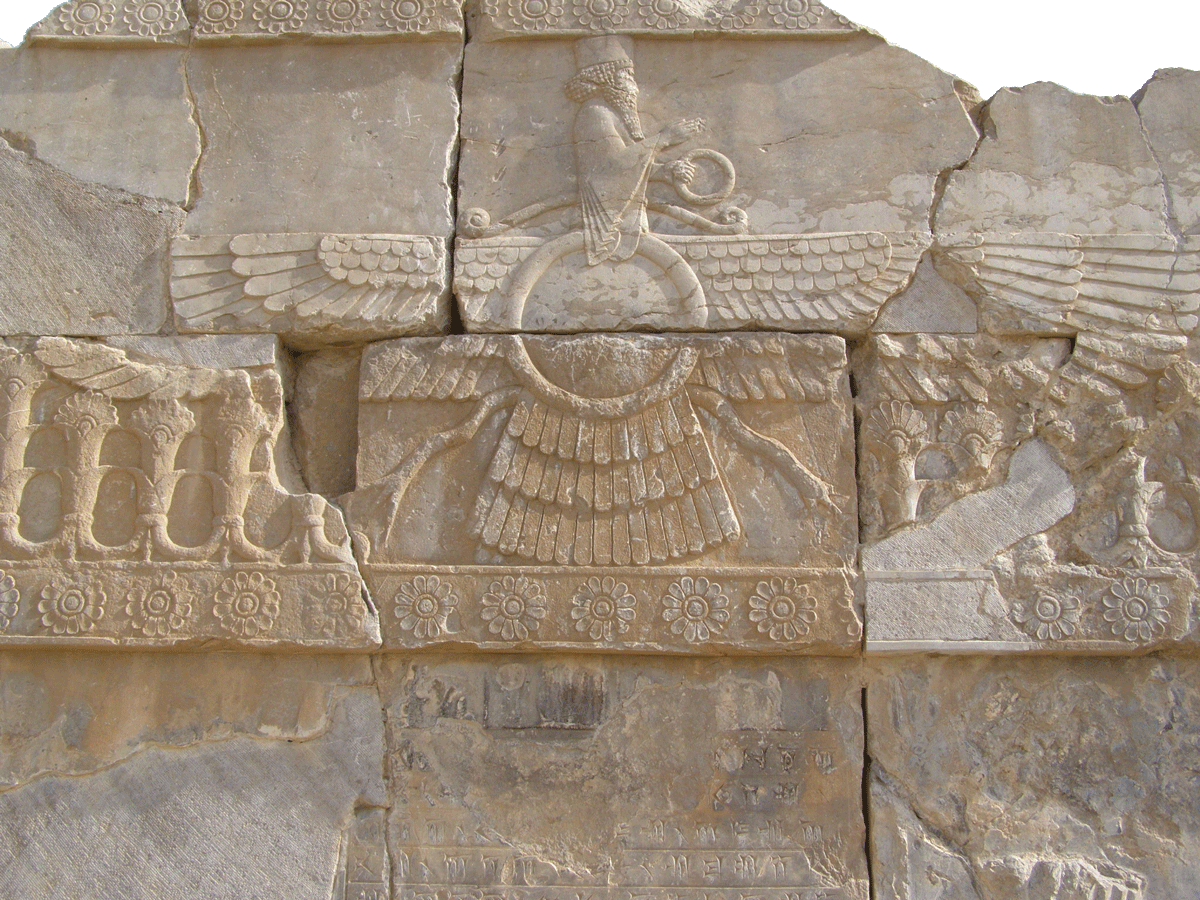
Malachi 4:2 describes “the sun of righteousness . . . with healing in its wings” (KJV, RSV, NASB), similar to the winged sun disk in this relief portraying the Zoroastrian god Ahuramazda (Persepolis, 550–330 BC).
The people expect their religiosity to pay big dividends. They equate faithfulness to God with “going about like mourners” (3:14). Their hearts are not in their religion. They believe but do not have faith. Their lack of sincerity is brought out by their observation about the “arrogant.” They make the bold claim that the arrogant, who are filled with pride and live independently from the Lord, are the lucky ones. They set their own lifestyle, live practically without God, test him, and still prosper. Thus, they argue against the justice, love, and fidelity of God. The Lord has invited his own to test him and to see that he is good (3:10), but the people here respond skeptically and sarcastically that the arrogant put him to the test by flouting his commandments and get away with it. They have already come to the conclusion that God does not care what his children do. They have called into question God’s fatherly concern for his children. God leaves their argument unanswered, shifting his attention to a group of godly people.
Within the covenant community, there is a group that has kept itself distinct from the arrogant, mockers, and cynics (3:16–18). They are variously called “those who feared the Lord” (3:16, twice), those who “honored his name” (3:16), “the righteous” (3:18), and “those who serve God” (3:18). The godly are thus characterized by their love for God and by their obedience to him. Malachi intends to let us into the discussions of two distinct groups. The complaints of the first group are loud and clear (3:14–15), but what are the godly saying? It does not seem to matter. Instead, Malachi emphasizes the various designations for the godly by drawing our immediate attention to God’s responsiveness to his children, that God knows his own. It may be that the godly pray in the spirit of Psalm 73 for God to take care of their pains, while expressing trust in him:
Surely God is good to Israel,
to those who are pure in heart.
But as for me, my feet had almost slipped;
I had nearly lost my foothold.
For I envied the arrogant
when I saw the prosperity of the wicked. (Ps. 73:1–3)
In response, their names are written in “a scroll of remembrance” (cf. Exod. 32:32–33; Ps. 69:28; 87:6; Dan. 12:1). The Lord has marked a people for himself who will accept his tender care and the rewards of their labors. The greatest reward is to be a member of his “treasured possession” (Hebrew segullah). The word segullah is difficult to translate, since it connotes a people elected and loved by the Lord, who keep his commandments, and who make up a royal priesthood and a holy nation and who will share in a glorious future that God has prepared for his own (cf. Exod. 19:4–5; Deut. 7:6–9; 14:2; 26:17–19; Ps. 135:4). The prophet compares the Lord’s care to a father’s care for his son who has served him well. When the Lord shows his love for his people, then they will see the difference between the righteous and the wicked. The prophet indirectly addresses those who have argued against him, but he is directly addressing the godly community with words of comfort. They will see it with their own eyes. The day of the Lord will come upon mankind as a terrifying experience (4:1–3). The prophet compares it to the burning of a furnace and likens the wicked to stubble and shrubs that will be unable to stand the fire of that terrible day. They will be completely removed even as trees are destroyed by fire. Yet that day will bring its rewards for the righteous. The Lord will share with them the triumphs of his victory, expressed here metaphorically as “the sun of righteousness” and “healing in its wings.”
The phrase “the sun of righteousness” is to be understood in the sense of Isaiah’s prophecies. Righteousness represents the effects of God’s righteousness on this earth: victory and glory (Isa. 51:6–7; 62:1–2). Yahweh shares his victory and glory with his people. They will experience the fullness of the restoration as a healing process. Regardless of their suffering in life, Yahweh guarantees that his victory and his restoration will be shared by his own. The light will dawn for his people in such a way that all the promises of the Law, the Prophets, our Lord, and the apostles will be fulfilled in them. That moment will mark the full establishment of his kingdom, which may come in gradually; and it may not always be apparent, but it will most certainly come. This will mark a time of great rejoicing. The joy and sense of fulfillment for God’s children is likened to calves that, when released from the stable, paw at the ground. The arrogant and practical atheists will be unable to resist the renewal of the strength of God’s children. A separation between the righteous and the self-righteous has taken place even within the community of faith. The one group will be marked for destruction while the other will be marked as God’s possession.
The conclusion to the book of Malachi includes a final appeal to observe the law of Moses in preparation for Elijah’s return, to guard their spirit, and to return to the Lord. Malachi calls on the godly to love God and to love man. He emphasizes the practice of godliness in contrast to an intellectual knowledge of the Scriptures. Our Lord taught that John the Baptist came in the spirit and power of Elijah (Matt. 11:14; cf. Mal. 3:1). The new age will be characterized by a renewal of the covenant, and the sons of the covenant will enjoy a sense of continuity with their spiritual ancestors, Abraham, Isaac, and Jacob.
Select Bibliography
Alden, Robert L. “Malachi.” In The Expositor’s Bible Commentary. Edited by Frank E. Gaebelein. Vol. 7. Grand Rapids: Zondervan, 1985.
Baker, David W. Joel, Obadiah, Malachi. NIV Application Commentary. Grand Rapids: Zondervan, 2006.
Baldwin, Joyce G. Haggai, Zechariah, Malachi. Tyndale Old Testament Commentaries. Downers Grove, IL: InterVarsity, 1972.
Hill, Andrew E. Malachi. Anchor Bible. New York: Doubleday, 1998.
Kaiser, Walter C. Malachi: God’s Unchanging Love. Grand Rapids: Baker Books, 1984.
Miller, Steven R. Nahum–Malachi. Holman Old Testament Commentary. Nashville: Broadman & Holman, 2004.
Smith, Ralph L. Micah–Malachi. Word Biblical Commentary. Waco: Word, 1984.
Stuart, D. “Malachi.” In The Minor Prophets: An Exegetical and Expository Commentary. Edited by Thomas Edward McComiskey. Grand Rapids: Baker Academic, 1992.
Taylor, Richard A., and E. Ray Clendenen. Haggai and Malachi. New American Commentary. Nashville: Broadman & Holman, 2004.
Verhoef, Pieter A. The Books of Haggai and Malachi. New International Commentary on the Old Testament. Grand Rapids: Eerdmans, 1987.