The Prophetic Books
The Prophetic Books record the messages of persons inspired and called by God to minister to the spiritual condition of the covenant people. They include the books of Isaiah through Malachi and constitute a section of the biblical canon also called simply “the Prophets.” The books of the Prophets are subdivided into the Major Prophets (Isaiah, Jeremiah, Ezekiel, and Daniel) and the Minor Prophets (Hosea, Joel, Amos, Obadiah, Jonah, Micah, Nahum, Habakkuk, Zephaniah, Haggai, Zechariah, and Malachi).The term “prophet” comes from a Greek word, and has often been interpreted as either a “forthteller” or a “foreteller.” The principal Hebrew term for “prophet,” however, means “one called” to proclaim a message of divine origin. The prophets announced good and bad tidings alike, depending upon the circumstances, over a period of several centuries.
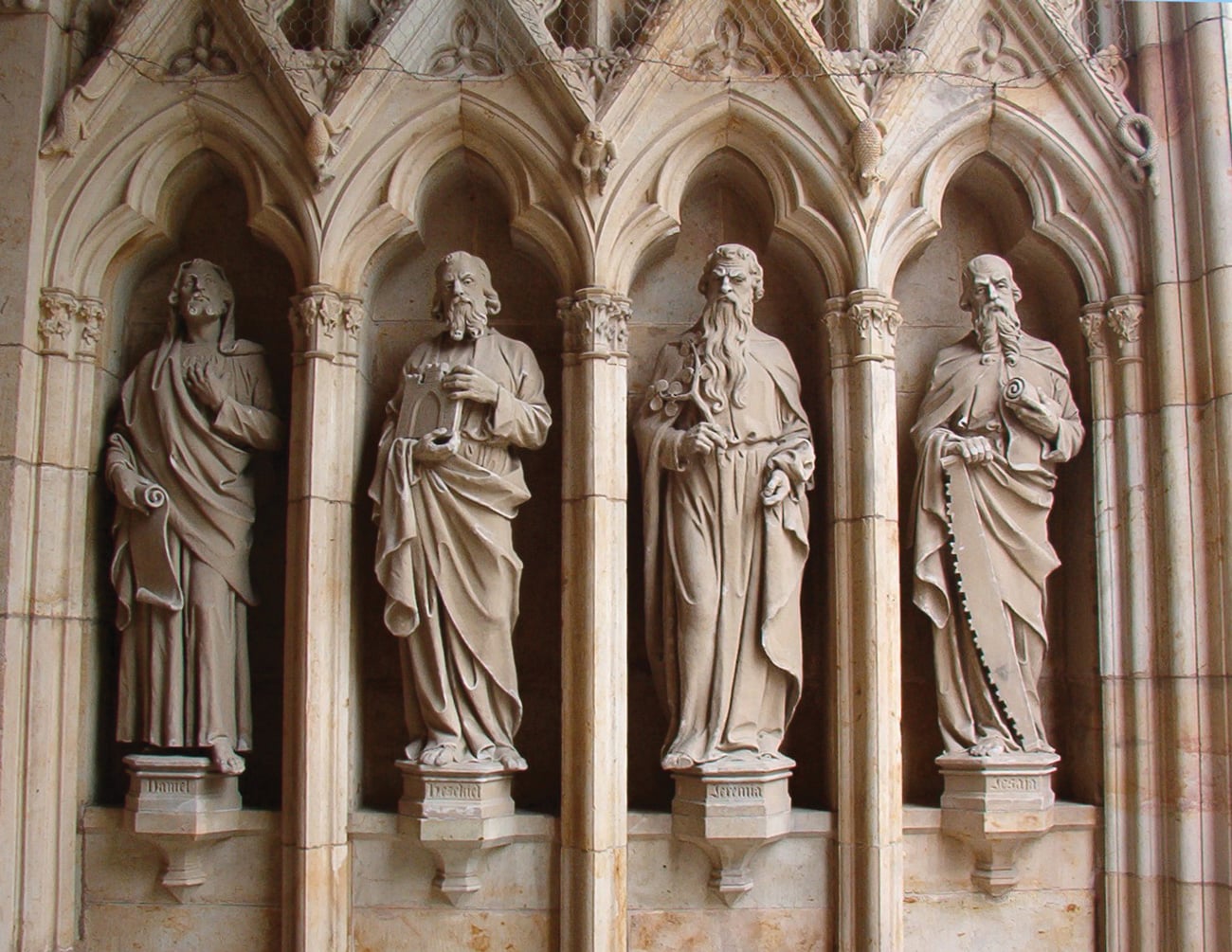
The prophets Daniel, Ezekiel, Jeremiah, and Isaiah stand at the southwest entrance of the Skara Domkyrka, Sweden.
The prophets sometimes received their messages directly from God, but on other occasions indirectly in visions and dreams. Although there were prophetesses in Israel, only men seem to have made public proclamations that were recorded. Prophets came from various social levels. Some were of obscure origin, such as Elijah, while others were priests (Ezekiel and possibly Jeremiah). Isaiah was probably a highly placed court official in Judah, while Daniel, though not strictly a prophet in the usual sense, was a distinguished statesman of Hebrew origin in a foreign court.
The purpose of prophecy was to confront the nation of Israel with the demands of traditional covenantal faith based on the instruction of the Mosaic law, to condemn idolatrous practices in Israel, and to promise punishment if such behavior continued or blessing if the people heeded the call to repentance and returned to faith in God. Predictions of a Messiah and a new kingdom of righteousness are notable elements of prophecy, along with the assurance of a new covenant, the latter being established by the Christ-event.
The prophets’ messages were based on a thorough knowledge of the law of Moses, and the individuals received their proclamations as part of their spiritual communion with God. Two themes, especially, course through the books of the Prophets—the appropriate worship of God and the practice of social justice—giving them currency across the ages. Their words were recorded in somewhat different ways, but written accounts probably would have been made at or shortly after the time of oral delivery. The collections of the prophets’ oracles into books or anthologies likely occurred in stages, taking final form sometime after the death of the prophet. Their proclamations glorified God as supreme Lord, revealed his will for the nation, and demanded a high level of dedication and spiritual living among the Israelites. Their declaration of God’s redemption in history was climaxed by the work of Jesus, who came to fulfill all that the Law and the Prophets had spoken concerning him. The prophetic writings are among the great spiritual treasures of the Christian church.