Song of Solomon
1. The Shulammite Maiden (1:1–3:5)
B. The King and the Maiden Banter (1:2–2:2)
C. The Maiden Seeks Her Shepherd Lover (2:3–3:5)
2. The King Woos the Shulammite Maiden (3:6–7:9)
A. The King’s First Proposal (3:6–5:8)
B. The King’s Second Proposal (5:9–7:9)
3. The Shulammite Maiden Rejects the King (7:10–8:4)
4. The Shulammite Maiden and Her Shepherd Lover Are Reunited (8:5–14)
Introduction
Title
This book takes its title from the superscription (1:1) and is variously labeled the Song, Songs, Song of Songs, Song of Solomon, and the Best Song. The alternative name, Canticles, is derived from the Latin Vulgate.
Genre and Literary Features
The Song is placed among the books of wisdom and poetry in the Septuagint and most English versions. While not wisdom literature in the strict sense, the Song shares some affinities with wisdom in that the work is associated with wise King Solomon (1 Kings 4:29–34), concerns itself with the mystery of humans created male and female, and offers instruction (at least implicitly) on human behavior as it relates to sexuality and marriage. The Song is grouped first among the five festival scrolls (Megilloth) in the Hebrew canon, and in later Judaism it was designated to be read as part of the Passover celebration.
Like Psalms, Proverbs, and Lamentations, the Song is entirely poetic in literary form (with the exception of the superscription). The distinguishing feature of Hebrew poetry, and all poetry in the ancient Near East, is rhythm of sound and rhythm of thought. Rhythm of sound is the regular pattern of stressed or unstressed syllables in lines of poetry, including the repetition of sounds through alliteration and assonance. Rhythm of thought is the balancing of ideas in a structured or systematic way. The primary vehicle for conveying this thought rhythm is word parallelism, in which similar or opposite ideas are offset in the lines of poetry (e.g., earrings/strings of jewels, 1:10; mountains/hills, 2:8; opened/left, gone, 5:6). Sometimes this poetic parallelism arranges ideas synthetically or climactically, in that each idea in the successive lines of the verse builds on the previous one (e.g., wall/windows/lattice, 2:9).
Poetry is a language of images often given to making comparisons by utilizing simile and metaphor. This is especially true of the Song as lyrical love poetry. Frequently the Western reader finds these comparisons humorous or even uncomplimentary (e.g., “your waist is a mound of wheat,” or “your nose is like the tower of Lebanon,” 7:2, 4), not to mention difficult to understand. The bold language and vivid imagery of the love poetry sometimes shock and embarrass the modern reader (e.g., 7:8). In part this may be due to the idyllic overtones of the Song. Although the Song is not an idyll in the technical sense, today’s technologically sophisticated audience experiences uneasiness when encountering these kinds of unfamiliar pastoral scenes.
The Song does conform, however, to literary conventions of love poetry in the second millennium BC. For example, the Egyptian love songs of the New Kingdom (ca. 1570–1085 BC) contain many of the same themes and employ similar figures of speech (see Longman, 49–52; Garrett and House, 49–57). The garden motif as erotic symbol and lyrics in praise of the rapture and mystery of human sexual love are prominent. Simile and metaphor abound, including descriptive songs that compare the physical features of the lovers to exotic flora and fauna. Songs of desire calling the partners to love, to partake of delicate foods, and to drink spiced wine to refresh “lovesickness,” and even the attention to fine apparel and exquisite perfumes and ointments are commonplace in the literature. When the Song is viewed against this literary backdrop, its strangeness is diminished and appreciation for its simple beauty and sensitive treatment of the subject matter is enhanced.
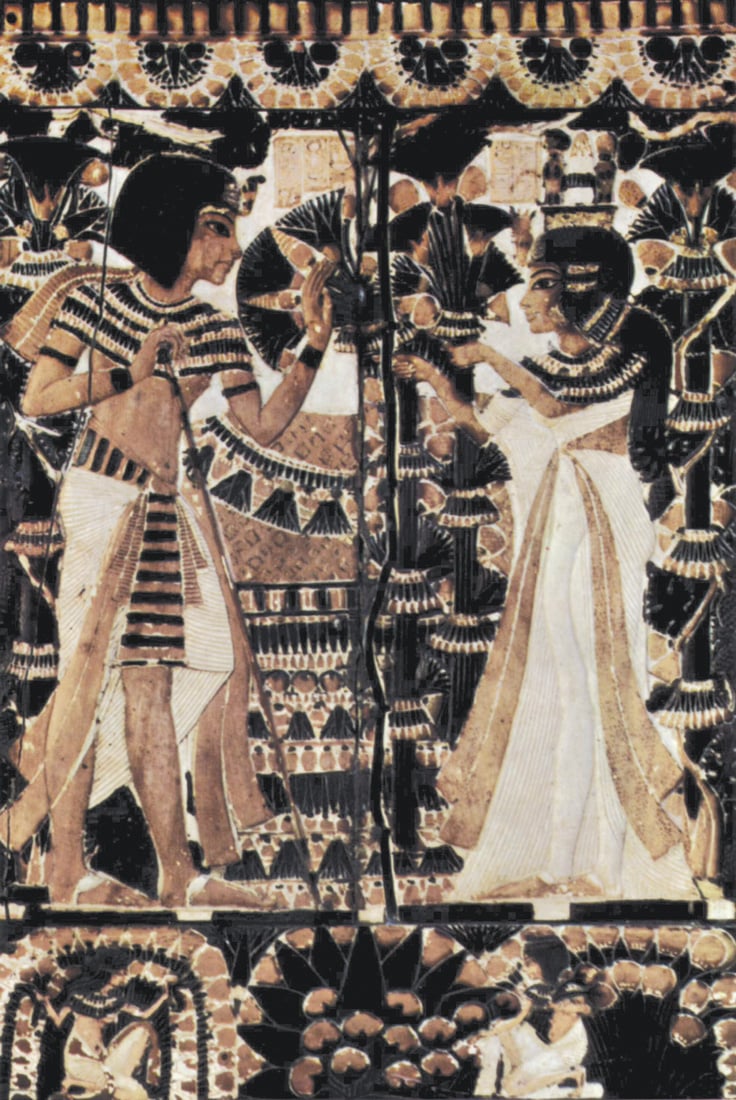
Egyptians used imagery similar to that found in the Song of Solomon. In this garden scene, King Tutankhamun appears with his queen, who is holding lotus flowers and mandrakes and wearing a perfume cone on her head (Egypt, fourteenth century BC).
Specific literary forms and formal features identified in the love poetry of the Song include descriptive songs, in which each lover sketches the other in highly figurative language (4:1–7; 6:4–7; 7:1–9); self-description (1:5–7; 8:10); songs of admiration, calling attention to the lover’s adornment (1:9–11; 4:9–11); songs of desire, characterized by an invitation to love (1:2–4; 8:1–4); and search narratives, recounting the maiden’s energy and persistence in seeking her lover (3:1–4; 5:2–7).
Several more technical literary devices recognized in the Song include oath formulas (2:7; 3:5; 5:8; 8:4); the teasing song, as the lovers banter in their desire to unite (2:14–17; 5:2–7); the boasting song, in which the maiden flaunts her uniqueness (6:8–10); the urgent call to love, usually prefaced with an imperative verb (2:5, 17; 4:16; 7:11–13; 8:14); and the game of love, composed of the search narrative (5:2–7), an oath formula (5:8), the “teasing question” posed by the friends (5:9), the maiden’s answer song (5:10–16), another teasing question from the friends (6:1), and finally, the “formula of belonging” (6:2–3).
Structure
There are as many outlines for structuring the content of the Song as methods of interpretation. While the book contains repeated phrases and lines (e.g., “how beautiful you are, my darling” [1:15; 4:1, 7]; “my beloved is mine” [2:16; 6:3]; “who is this?” [3:6; 6:10; 8:5]; “my sister, my bride” [4:9, 12; 5:1]; and “daughters of Jerusalem, I charge you” [2:7; 3:5; 5:8; 8:4]), only the charge to the daughters of Jerusalem in 2:7; 3:5; and 8:4 appears to serve as a refrain perhaps marking strophic structure. The speeches or direct discourse provide clues for dividing the text, yet the speakers remain largely unidentified. Speech content can aid in the identification of the speaker, but this is not conclusive. The terse language and cryptic nature of the poetry often make ascertaining the exact extent of a given speech no easy task. These efforts to assign the speeches to specific participants in the love story are complicated by the question of the exact number of characters in the story. No wonder many biblical commentators consider the Song a rather random assortment of love poems collected into an anthology (see Longman, 42–43 ; Ryken, 272–74). This commentary on the Song views the poetry as a loosely unified composition and “reweaves” the narrative along the lines of a three-character love story in a series of sequential events.
Authorship and Date
Traditional biblical scholarship has ascribed the Song of Solomon to King Solomon and dated the poetry to the late tenth century BC—largely on the strength of the superscription to the book (1:1; see Provan, 235–36). Some ancient Jewish traditions credit the work to King Hezekiah, the Judahite ruler accorded a prominent place in the preservation of the Israelite wisdom literature (Prov. 25:1; cf. 2 Chron. 32:27–29; see Murphy, 6n17).
The problems of authorship and the date of the Song are closely related. The inconclusive nature of the book’s title further complicates the matter. The Hebrew phrase lishlomoh (1:1) may be understood variously as “of/to/for/about Solomon” (cf. the notations in, e.g., Ps. 3:1; 4:1; 5:1). Thus this title may imply that Solomon wrote the poetry, that the poems were dedicated to him, or that they are songs composed about him.
Scholarly appeal to other criteria related to authorship proves no more useful in establishing the identity of the writer of the Song. Though Solomon’s name occurs six times elsewhere in the book (1:5; 3:7, 9, 11; 8:11, 12), and other passages attest to his sagacity and literary skill (e.g., 1 Kings 4:29–34), these references assert nothing concerning his authorship of this poetry. Instead, they merely confirm Solomon’s role as a key figure in the love story.
The exotic vocabulary (e.g., perfume, 1:12; saffron, calamus, aloes, 4:13–14) and the author’s knowledge of Palestinian flora and fauna (including fifteen species of animals and twenty-one varieties of plants) might suggest Solomonic authorship (cf. 1 Kings 4:33).
As the previous discussion indicates, however, neither the Solomonic references nor the language of the poetry yields solid evidence for ascertaining the authorship of the “best of songs.” Unhappily, the results are similar when these various criteria are examined and applied to the problem of dating the Song.
The presence of Aramaic influence and Persian and Greek loan words has caused biblical commentators to assign dates to the book ranging from Israel’s united monarchy (tenth century BC) to the Persian and Greek periods (ca. 500–300 BC).
The juxtaposition of Jerusalem and Tirzah in a poetic couplet (6:4) is often suggested as a clue to fixing the date of the Song, since Tirzah was the capital city of the northern kingdom during the reigns of Baasha, Elah, Zimri, Tibni, and Omri (ca. 900–870 BC). But the city may have been used by Jeroboam I as a secondary royal residence (cf. 1 Kings 14:17) and was likely a prominent and beautiful city long before it became the capital (cf. Josh. 12:24).
Additionally, the indiscriminate mention of geographical localities found in both the northern and southern kingdoms (e.g., Jerusalem, 1:5; En Gedi, 1:14; Sharon, 2:1; Gilead, 4:1) may suggest the united monarchy, when these places were part of the same political realm. The preponderance of northern and eastern cities and regions (e.g., Bethrabbim, Carmel, Damascus, Gilead, Hermon, Heshbon, Lebanon, Mahanaim, Sharon, Shulam, and Tirzah), however, better argues for the time of the divided monarchy and a northern provenance for the writing of the book.
One final factor influencing informed opinion on the authorship and date of the Song deserves mention. The interpretive method adopted by the individual translator/commentator in large measure determines how one outlines the text and understands the poetry with respect to the number of characters in the story and plot development, and ultimately colors the way one arranges and evaluates the various strands of evidence bearing on the question of authorship and date.
For example, those who contend the love story is a two-character drama are likely to focus attention on the exotic vocabulary, the plethora of references to flora and fauna, and the apparent unity of geography within the poems and opt for a date in the Solomonic age, if not Solomonic authorship (see the discussions in Carr, 19–20; Garrett and House, 22–25). By contrast, those who view the poetry depicting a love triangle with King Solomon cast as the “villain” would tender a northern kingdom provenance and an early-divided-kingdom date (e.g., Waterman as cited in Pope, 24). The scholar employing the typological or cultic approach to the Song will likely emphasize the late lexical features of the text and the device of “literary fiction” in the poetry where Solomon simply represents the “great lover” and will conclude that the book should be dated to the Persian period (e.g., Murphy, 4).
Although awareness of these complexities connected with authorship and date is crucial to any study of the Song, caution and restraint are clearly in order since no consensus exists even among conservative biblical scholars. Despite this inability to firmly establish an author and date for the Song of Solomon, the lack of concrete knowledge on these two issues in no wise diminishes the beauty of the poetry or the power of its message.
Given the uncertainties associated with the superscription and the unusual nature of the book’s vocabulary and style, the Song is best regarded as an anonymous composition. The weight of the literary, historical, and linguistic evidence as currently assessed points to a northern kingdom provenance and an early (preexilic) date for the writing of the book. Attempts to be more precise than this are tenuous and return relatively little benefit for the overall comprehension of the message and meaning of the love songs.
Methods of Interpretation
No single Old Testament book has proven more perplexing for biblical interpreters than the Song of Solomon. Centuries of careful study, analysis, and commentary by biblical scholars of various traditions and theological persuasions have produced little interpretive consensus.
First, the theme or topic of the Song has confused, shocked, and embarrassed both Jewish and Christian interpreters—so much so that the rabbis and early church fathers debated the value of the Song and its place in the biblical canon for generations. What merit is there in a book that contains no suggestion of worship, no hint of social concern, no affirmation of faith in God, indeed not even any mention of God (save the possible reference to “the very flame of the Lord” [NIV note] in 8:6)? What value in a book vaunting human affection, physical passion, and erotic sexual love?
Second, the nature and structure of the poetry does not lend itself to ready analysis. Aside from the ambiguous references to King Solomon, clear historical parallels and allusions are wanting. Much of the language of the book is unusual if not unique and obscure, making translation and interpretation difficult. By definition lyrical poetry is brief in length, concentrated in meaning, and often lacking smooth transitions, posing a dilemma for commentators seeking to divide the book into smaller logical units. In turn, this makes for uncertainty in identifying the number of different characters in the love story and assigning these smaller units of speech to specific individuals.
The dramatic approach has been part of church tradition since the third century AD (e.g., Origen as cited in Carr, 32). Based largely on the analogy of later Greek drama, this approach understands the Song as an ancient Hebrew play. The poetry is considered a dramatic script intended for royal entertainment. Speeches are assigned to the principal characters of the melodrama (whether two or three, depending on the identification of the shepherd as one and the same with the king), with the daughters of Jerusalem (or harem) represented by a female chorus. Attempts to divide the Song into acts and scenes often require significant emendation of the text, and efforts to cast the book as Greek drama are forced and artificial.
Unlike allegory, the typological method tends to recognize the historical elements of the book (whether it commemorates Solomon’s marriage to Pharaoh’s daughter or recounts the king’s wooing of the Shulammite maiden) but subordinates the literal presentation of Old Testament history to a correspondent New Testament pattern or parallel (see the discussion in Carr, 24-25; Bullock, 228). The traditional “type/antitype” fulfillment is God’s covenant relationship to Israel for the Jewish interpreter or Christ’s relationship to the church as his bride for the Christian interpreter. Thus the expression of love in the Song may illustrate the truth of God’s relationship to his creation or his chosen people, or Christ’s relationship to the church. This despite the fact that the Song itself gives no hint that it is intended as typology, nor does the New Testament make any significant use of the Song, either by direct quotation or indirect allusion.
The cultic or mythological approach views the Song as a Hebrew adaptation of Mesopotamian fertility cult liturgy (see the discussion in Garrett and House, 81–83). The annual ritual was a reenactment of the ancient myth recounting the goddess Ishtar’s searching for her dead lover in the netherworld and finally restoring him to life through sexual union, thus ensuring creation’s continued fertility. It is assumed that the cultic associations of the Song were forgotten or consciously changed to make the book acceptable to the Israelite faith.
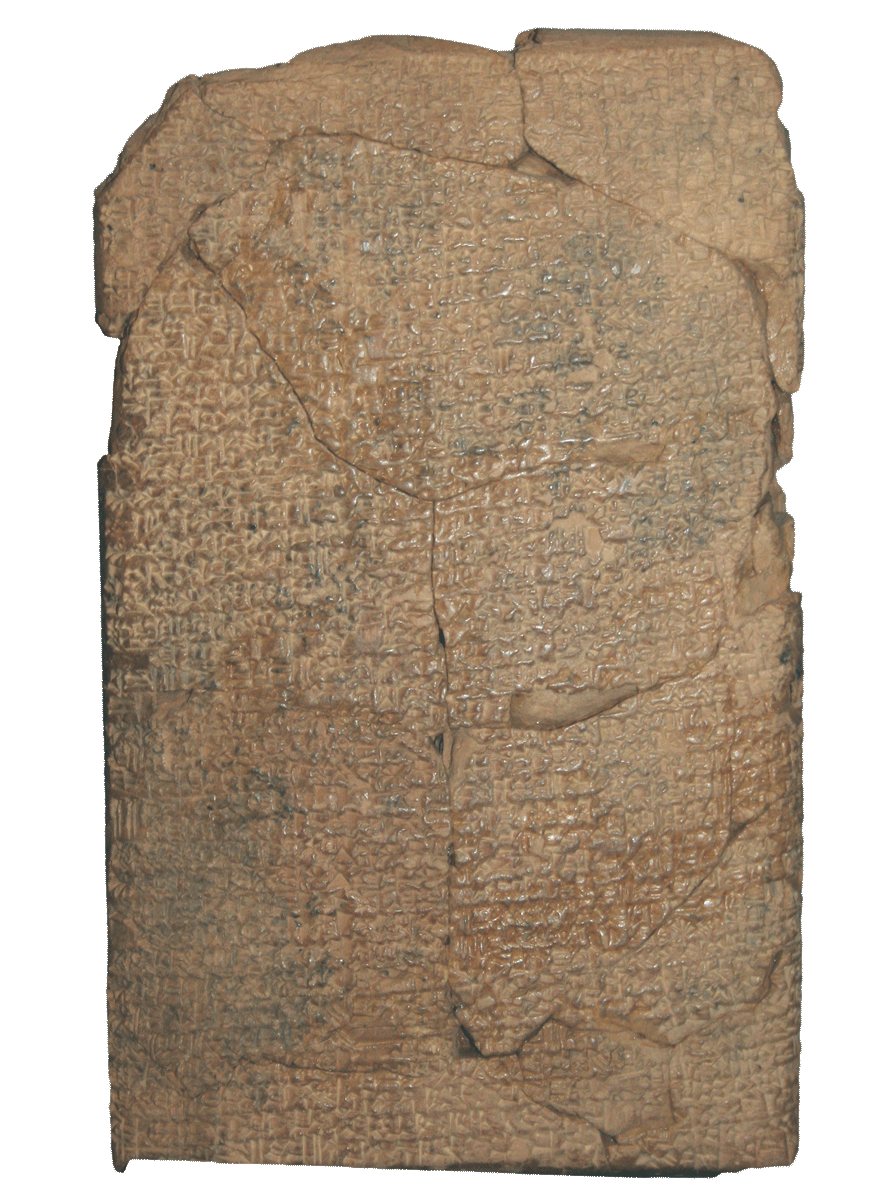
Sacred marriage texts from the ancient Near East, such as this Sumerian tablet from Nippur (1974–1954 BC), recount the love affairs of the gods.
The wedding cycle approach assumes the Song is an amalgam of nuptial poems (see the discussion in Pope, 141–45). The series of songs honoring the bride and groom were eventually formalized into a cycle of recitations that were incorporated into the wedding celebration. The Song does contain numerous parallels to ancient Jewish wedding customs and to this day is chanted or sung as an integral part of the orthodox Jewish wedding ceremony.
While the historical aspects of the book are not denied, the didactic view understands the poem as a vehicle for instruction and simply subordinates the circumstances surrounding the occasion of the book in favor of the moral and didactic purposes of the literature. The book is seen to present the purity and wonder of sexual love, to promote ideals of simplicity, faithfulness, and chastity, and to instruct on the virtue of human affection and the beauty and holiness of marriage.
The allegorical method is the oldest and most popular approach to the Song. Here it is important to distinguish between allegory as a literary type and allegorizing as an interpretive method. Allegory is defined as an obvious symbolic representation in literature, or simply, extended metaphor. Allegory says one thing but conveys another, deeper, hidden meaning. The allegorizing of a text occurs when the interpreter understands a given passage as an allegory even though the author did not intend it as such (as in the case of the Song). The allegorical method may relate historical events in symbolic form or the symbolism may be nonhistorical, but the approach tends to emphasize the role of the poetry as a vehicle for some hidden spiritual truth (see Bullock, 228). As applied to the Song, the allegorizing method has predominantly yielded insights for Jewish interpreters on the spiritual truth of God’s covenant relationship to Israel, or for Christian interpreters on Christ’s relationship to his church and the individual believer.
The literal approach takes the Song at face value and interprets the love poetry for what it appears to be—a sensual, even erotic expression of emotion and passion as two young lovers voice their desire for each other (see Bullock, 231–32; Carr, 34–35; Ryken, 271–72). The literal interpretive stance makes no attempt to apologize for the frankness of language or boldness of imagery in the poem by resorting to typology or allegorizing. Nor does it seek to justify the biblical treatment of the subject of human love and sexuality, since God made man male and female and sanctioned their union as one flesh at creation. Whether composed by him or not, for some the love poetry of the Song is believed to reflect real events associated with the reign of King Solomon. For others, the collection of poems celebrating human love and sexuality has no particular historical associations. In either case, those opting for a more literal approach to the love poems must assume the lovers in the Song are married (or eventually get married), though this is nowhere made explicit in the book.
One popular approach considers the book a collection of a series of (random?) love poems with no historical connection and no intended plot structure (“a kind of erotic psalter,” Longman, 43). Another literal approach views the book’s poetry as a unified composition, but with no historical connection and no intended plot (e.g., Gledhill, 37; Hess, 34–35). For example, the headings for the speech units in the NIV assume two primary characters, “She” and “He” (designated in the NIV 1984 as the “Beloved” and the “Lover”), and the paragraph structure implies movement from the love of courtship to the intimacy of marriage.
In keeping with the storytelling nature of the Hebrew people, this commentary assumes a three-character love story and adopts the literal-historical approach in combination with elements of the didactic approach. The book is likely a northern kingdom satire on the reign of Solomon and his exploitation of women (ironically to his own demise), and a memorializing of the exemplary character of the Shulammite maiden, who rejects the wooing of the king because of her faithfulness to her shepherd lover.
Commentary
1. The Shulammite Maiden (1:1–3:5)
A. Superscription (1:1). The title of the book, both English and Hebrew, is taken from the first verse. Literally translated, the verse reads, “the song of songs, which is of Solomon.” The expression “song of songs” is an idiom for the superlative in Hebrew—“the best song.” The word “song” is a generic term for any happy, festival song (cf. Isa. 24:9; 30:29). The possessive pronoun attributing the work to Solomon, if original, is ambiguous at best.
B. The king and the maiden banter (1:2–2:2). The opening sections of the poem find the maiden in the royal court of King Solomon, with no indication as to how she came to be there (although 6:11–12 implies she was taken from the countryside against her will). Those who espouse a three-character Song recognize 1:9–2:2 as a dialogue between the king and the maiden but understand her speeches as projections directed to the shepherd lover she has left behind and not as direct responses to Solomon’s flattery.
1:2–4. In the anxiety and confusion of her separation from her home in the northern hill country and her shepherd lover, the maiden recalls the tenderness of his affection and the pleasure she experienced when kissing him (1:2–4a). The pleasure of the lover’s kiss is likened to wine, a connection well attested in ancient literature (4:10; 5:1; 7:9; Prov. 9:2, 5). More than the physical sensations of lovemaking, the maiden recalls and longs for the sense of belonging and security she enjoyed in the presence of the shepherd lover.
A pun occurs in verse 3 in that the words for “perfume” and “name” sound alike in Hebrew. The name of a person and his or her character and personality were inseparable in the ancient mind. Remembering the sweet fragrance of the shepherd’s cologne causes the maiden to glory in the strength and richness of the shepherd’s character. Like the aroma of expensive ointment, the shepherd’s personality attracts all the young maidens. A sense of urgency surfaces in the maiden’s plea for the lover to rescue her from her plight, indicated by the use of an imperative verb (“take me away”). The maiden is not asking to be brought into the king’s private chambers! Rather, she implores the shepherd to rescue her from the royal harem before Solomon violates her sexually and destroys their relationship.
The shift to the first-person plural (1:4b) marks the end of the maiden’s speech and may represent a dramatic interjection in the poem. The “we” is thought to be the women of the royal harem. Apparently they recognize the unique nature of the maiden’s love for her absent shepherd, and they extol her sincere affection and faithfulness. Indeed, this admixture of these qualities in the chemistry of a male-female relationship merits more praise than wine.
1:5–8. Perhaps the interjection of the harem women reminds the maiden of her visage in contrast to theirs (1:5–7). Unlike the soft and white-skinned harem women, she is black or dark, yet very beautiful. Like the tents of the Transjordanian nomads woven of black goat hair, the maiden has been tanned dark brown by exposure to the sun while working in her family’s vineyards. The curious stares of the other women prompt self-justification. No reason is given for her brothers’ anger, though they do reappear later in the poem (8:8–9). It is possible that it is no more than wordplay, as she has been “burned” by the sun and “burned” by the anger of her brothers. The vineyard she has neglected is her own person. The duration and intensity of her outdoor activity have interrupted or even canceled normal hygenic and cosmetic routines. The imperative, “Tell me” (1:7), addressed to the absent shepherd parallels that of verse 4 and underscores the distress of the maiden’s situation. If the shepherd can call to her from among all the flocks and shepherds seeking refuge from the noonday heat in the shade of rocks and trees, her search for him will be expedited.
The shift to the feminine form (1:8) marks a different speaker, probably the women of the royal harem. The phrase “most beautiful of women” is repeated three times in refrains by the harem women (1:8; 5:9; 6:1), and it echoes a constant theme in the poem—the flawless beauty of the maiden. Verse 8 has puzzled interpreters in that the women’s instructions to follow the sheep tracks and then graze her young goats nearby in hopes of finding the shepherd seem nonsensical because they encourage the very behavior the maiden wishes to avoid.
1:9–15. Solomon now enters the scene, and his first words are an attempt to divert the maiden’s attention from the shepherd to himself through flattering speech and the presentation of costly gifts (1:9–11). Complimentary comparisons of women to animals are a common feature of ancient Near Eastern love poetry (cf. Garrett, 522–23). In the Song the maiden is likened to a mare (1:9), dove (1:15), goats and sheep (4:1–2), and gazelle fawns (4:5), while the shepherd is compared to the gazelle or stag (2:9, 17). The maiden’s rustic beauty excites interest in the king in the same way a mare might attract attention among Pharaoh’s stallions. The radiance of the maiden’s countenance is enhanced by her jewelry and ornamentation, an important part of female dress in the Old Testament world. The shift back to the first-person plural in verse 11 may indicate that the harem women are speaking again, although this is not clear. Ornaments crafted especially for the maiden are ordered, the reference to gold and silver perhaps indicating expensive and exquisite jewelry befitting her rapturous beauty.
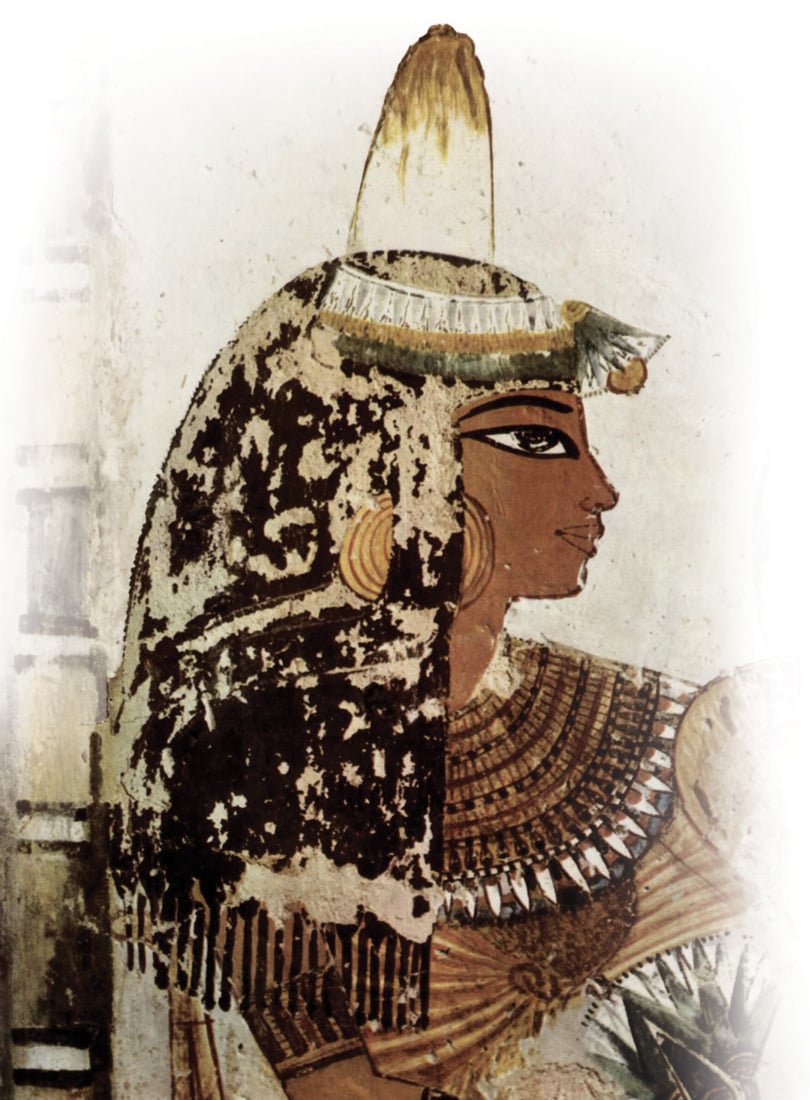
A woman with a perfumed cone on her head (tomb of Menna, Egypt, fifteenth century BC)
The juxtaposition of the “king” and “my beloved” in the maiden’s soliloquy (1:12–14) indicates they are not one and the same person. While the king entertains at a royal banquet (whether publicly or privately is unclear), the maiden’s own perfume incites erotic imaginations of the shepherd lover. The intensity of her romantic response is reinforced by the mention of three separate fragrances. “Spikenard” (NEB) was an exotic and expensive ointment derived from plants native to India; myrrh was an aromatic resin manufactured from the gum of a species of tree in southern Arabia. The sachet, or necklace with a pouch, was a common way to use myrrh as a perfume. The myrrh was mixed with a fat or oil base and placed in a hollow pod or wrapped in a cloth or leather pouch and worn as a necklace or bracelet. As body heat melted the fat, the aroma of the solid stick of myrrh was released.
The king continues to laud the captivating comeliness of the maiden (1:15), twice repeating the word “beautiful.” The expression “your eyes are doves” is obscure. Both the maiden and shepherd are described as having “dove eyes” (1:15; 4:1; 5:12), and the dove is elsewhere one of the metaphors used of both lovers (2:14; 5:2; 6:9). The dove is a symbol of peace, purity, and tenderness in the Old Testament. The eyes are thought to reveal inner character, so “dove eyes” may suggest qualities of innocence, purity, loyalty, and fidelity evident in the lovers.
1:16–2:2. The maiden’s initial response may have given Solomon false hope, as she repeats his very words. However, she quickly lets it be known that her words are intended for another and that she does not belong in the presence of the king (1:16–2:1). The scene of her lovemaking is pastoral, in grassy fields and under spreading trees—not the palace precincts. In her modesty she compares herself to the more common wildflowers of the countryside, flowers of Sharon not far from her home in Shulam.
The king’s final simile, a weak attempt to play on the maiden’s words, falls on deaf ears (2:2). He continues to exalt her beauty above the “thorns” of his harem, oblivious to the fact that the banter has another dimension. This other dimension is intimated by the satirical repetition of “my” in the opening exchange of speeches (1:9, 13, 14, 15, 16; 2:2, 3) and demonstrated more clearly in the maiden’s next discourse.
C. The maiden seeks her shepherd lover (2:3–3:5). 2:3–7. The literary form of this section is the boasting or admiration song, common in ancient love poetry. The maiden touts her lover and rejoices in the delight his lovemaking arouses in her. The cultivated fruit tree in the midst of a wild wood calls attention to the uniqueness of her lover. To “sit in his shade” (2:3) suggests cool refreshment and the comfort and protection of the lover’s physical proximity. The fruits sweet to her taste are the elements of his lovemaking. In contrast to Solomon’s banquet, the maiden imagines her own wedding feast with her shepherd’s pure and faithful love as her banner or emblem of betrothal (2:4; cf. Ps. 20:5; 60:4). Overcome with exhaustion in the ecstasy of lovemaking, the maiden requests refreshment with foods the ancients believed possessed powers to restore and enhance romantic energies and capabilities. These aphrodisiacs included raisins, apples, raisin cakes, pomegranates, and spiced wine (2:5; 4:13; 7:8, 12–13). The “raisin cakes” (NJB, NASB) embodied considerable erotic symbolism, as they were associated with the rites of the ancient fertility cults (cf. Jer. 7:18; 44:18–19).
The maiden’s charge to the daughters of Jerusalem, or harem women, in her company is a recurring refrain in the poem (2:7; 3:5; 8:4). The refrain marks major breaks in the text of the poem and usually occurs in the context of physical intimacy. “By the gazelles and by the does of the field” is a rustic oath formula underscoring urgency and seriousness in her entreaty. Love is not to be stirred until the partners have taken full satisfaction in the intimate physical delights of each other’s company.
2:8–13. The imperative verbs in the opening and closing verses, 2:8 and 13, signal an intensification of emotion in the maiden as she continues to dream about the shepherd lover left behind. The repetition of “Arise, my darling” in verses 10 and 13 is an envelope construction making this a separate stanza in the unit. Dwelling on her lover and the sweetness of his affection moves the maiden to fantasize that he has come to rescue her from the king’s harem. The analogy to the wild animals of the hill country continues, perhaps a subtle foil between the freedom the “stag” enjoys and the confinement of the “doe” behind the walls, lattices, and windows of the palace complex. The stag, staring, gazing, bounding from window to window seeking a glimpse of his doe, is the picture of both crestfallen loneliness and energetic impatience. Winter is over and the spring season has come, evidenced by the blooming flowers, nesting birds, and early fruit of the fig orchards (2:11–13). Love is awakened; it is now time for the lovers to be rejoined in their natural setting. The certainty of warmth and spring growth following the winter rains no doubt images the ever-budding affections of the lovers. The two-character interpretation of the poem strains at this point to make sense of the plot. If Solomon is the lover, why must he come from the hills and peer through garden lattices for a glance of the maiden? If the maiden is confined in the palace precincts and Solomon and the lover are one in the same, why must she (even in a dream) steal through the streets of Jerusalem pursuing her lover? The anthology-of-love-poems approach considers this poem an invitation by the man to the woman to join him in a tryst (and addressing the issue of morality by assuming the context of marriage based on a canonical reading of the Songs [e.g., Longman, 116; cf. p. 70]).
2:14–15. The comparison of the maiden to a nesting rock dove echoes 2:12 and maintains the springtime imagery of the previous section. The “dove” is a pet name for the maiden (1:15; 4:1; 5:2, 12; 6:9) and a common symbol of love and fertility in the ancient Near East (cf. Garrett, 523). “Face” (literally “appearance”) and “voice” are paired in chiasmus in verse 14 in the maiden’s memory of the playfulness of their love. The meaning of verse 15 is obscure. It may be a literal reference to measures taken in the vineyards to prevent spoilage by foxes (since the maiden worked the vineyards prior to her abduction, 1:6), or it may be a symbolic statement of the blossoming love shared by the two and a veiled expression of their desire to prevent the relationship from being “ruined” by the foxes (intruders or rivals?) before it matures.
2:16–17. The vivid memory of the shepherd and the vibrance of the intimate moments she shared with him during the spring season(s) in the vineyards elicits an affirmation of love and loyalty from the maiden. Verse 16 is repeated in 6:3 and emphasizes the exclusiveness of their relationship. “Browsing” or “feeding” among the lilies is a metaphor for the lover’s enjoyment of the maiden’s physical charms (cf. 6:2). “Until the day breaks” is a poetic idiom for the dawn. The joy and pleasure of the physical intimacies shared through the night are ended at daybreak. As the sun rises and chases away the shadows of night, so the shepherd lover turns and runs like a stag back into the hills. Like the dove, the gazelle or stag has connections with Mesopotamian fertility rites, being a model of sexual prowess (cf. 2:8–9; see Longman, 119–20).
The expression “my beloved” in verse 16 is the favorite epithet of the maiden for the rustic shepherd lover. The word occurs more than thirty times in the book, and elsewhere in the Old Testament the term can mean “uncle” or “relative” (Num. 36:11; 2 Kings 24:17; Amos 6:10) or even refer to lovemaking (Prov. 7:18; Ezek. 16:8; 23:17; cf. Song 1:2; 4:10). In extrabiblical literature the cognate word for the Hebrew signifies “darling (sexual) partner,” and it is employed in ancient love poetry and fertility cult liturgies with erotic connotations (cf. TDOT 3:143–44). The term may even be a euphemism for the breasts or genitals (cf. 7:12).
3:1–5. The opening line of this “search narrative” in 3:1 confirms that the entire section (2:3–3:5) is to be understood as the recounting of the maiden’s fantasy as she pines for her absent lover. The dream or fantasy concludes dramatically with her frantic search of the city for the shepherd and the passionate reunion of the lovers in the deserted streets of Jerusalem. The plural “nights” implies that the fantasy or dream is a recurring one (NEB “night after night”) or that it lasts all night long (NIV). The refrain in verses 1–2 continues the pattern of repeated phrases and lines throughout the entire stanza (e.g., 2:7 and 3:5; 2:10 and 2:13) and accentuates the earnestness and persistence of the maiden’s search. Soon after encountering the watchmen or night police making their rounds, the maiden locates her lover and the dream sequence ends ideally. Her second night-search fantasy has no such happy ending (5:2–8). In her joy and relief the maiden clutches her lover and refuses to release him from her embrace—almost a prophetic foreshadowing of how she intends to respond to the shepherd lover should they ever be reunited (cf. 8:1–4). The leading of the lover into her mother’s house may signify the formalizing of their love relationship (i.e., parental approval and a public wedding; cf. 8:8, 13). The phrase “to the room of the one who conceived me” (3:4) is probably a reference to the sexual consummation of their relationship. Only then will she freely give him the “nectar of her pomegranates” and the delicacies of her love (8:2). The first stanza of the poem concludes (3:5) with a word-for-word repetition of the charge previously made to the harem women.
2. The King Woos the Shulammite Maiden (3:6–7:9)
A. The king’s first proposal (3:6–5:8). The two-character approach to the Song identifies this unit as a segment of what was probably a longer royal nuptial song honoring the marriage of Solomon and the maiden and celebrating the consummation of their love (cf. Psalm 45). However, this understanding of the poem cannot adequately account for the maiden’s second night search for her lover, nor her charge to the harem women concerning the absent lover and their response (5:8–9). The refrain in 3:5 and 8:4 is followed by the same question: “Who is this coming up from the desert?” Here the question is posed by the harem women, and it introduces the pericope under discussion.
3:6–11. The verses seem to be a lyrical flashback, reminding the maiden of how she came to be a part of the royal harem. The “who” in verse 6 is probably the maiden, since the accompanying demonstrative pronoun this is feminine singular in form. The king has returned to the royal city in all his splendor with yet another beautiful woman from the kingdom for his ever-expanding harem. (This sight was no doubt fairly common in the capital, as Solomon had 140 women in the harem at the time of this episode [6:8], and a total of 1,000 women populated the royal harem by the end of his reign [1 Kings 11:1–8].) The convoy of armed bodyguards suggests a tour or review of the empire, not a military campaign. The Hebrew word translated “palanquin” (NRSV; NIV: “carriage”; NJB: “litter”; NASB: “traveling couch”) is unique in the Old Testament, and its derivation is uncertain. The NJB understands two different vehicles in the royal procession—the litter that transports the Shulammite maiden and the exquisitely constructed portable throne (palanquin) on which Solomon is carried. The crown the king wears is not the diadem of kingship but a wedding wreath.
4:1–15. The king’s rehearsal of the maiden’s beauty and his invitations to love constitute this longest single unit in the poem. The first half of the passage is a descriptive song with highly figurative language and is bounded by the inclusio, “How beautiful you are, my darling” (4:1, 7). The descriptive song mixes pastoral, domestic, and urban images common in ancient love poetry (e.g., myrrh, lilies, pomegranates, etc.). The language of the love poem now becomes increasingly erotic and explicit. The import of the descriptive song is the maiden’s flawless beauty from head to toe (literally, from eyes [4:1] to breasts [4:5]); she mirrors the beauty, freshness, and innocence of the natural world and the strength and elegance of the manmade world. The phrases “mountain of myrrh” and “hill of incense” (4:6) are more difficult to understand. This may be a generic allusion to all the physical charms of the maiden or another erotic figure of speech signifying the breasts or vulva. Either way the king’s objective is transparent—to fully possess all the maiden’s physical charms through intimate sexual relations. Portions of the descriptive song (4:1–3) are repeated later in the king’s second poetic sketch of the maiden (6:5–7). The phrase “until the day breaks” also occurs in 2:17. There the Shulammite encourages the shepherd to take full satisfaction in her love all night. Here the king foists his desire for the same on the maiden.
The two imperatives in verse 8 mark the transition from descriptive song (4:1–7) to a song of admiration (4:9–11) as Solomon continues to woo the maiden. Geographically the Shulammite has been brought to Jerusalem from her home in the northern hill country. Now the king urges that she break from her past socially and emotionally by accepting his proposal for love and marriage. She has ravished his heart with her physical beauty and sensual charm, as the admiration song calling attention to her adornment confesses. “Sister” and “brother” are titles of endearment spoken commonly between lovers in the poetry of the ancient Near East (4:9–10, 12; cf. Garrett, 526; Carr, 121). “Bride” is better understood as “betrothed one,” in that her relationship to Solomon has not yet been consummated sexually. The girl remains a virgin, a garden locked up and a sealed spring. The garden metaphor is also a popular motif in ancient Near Eastern love poetry (cf. Carr, 59–60). The female character is often depicted as an orchard, a garden full of choice fruit and exotic plants. The trees and plants mentioned are predominantly those associated with the accoutrements of romance and lovemaking (e.g., spices, oils, perfumes, and even foods and potions considered aphrodisiacs), all serving to heighten the erotic and the sensual.
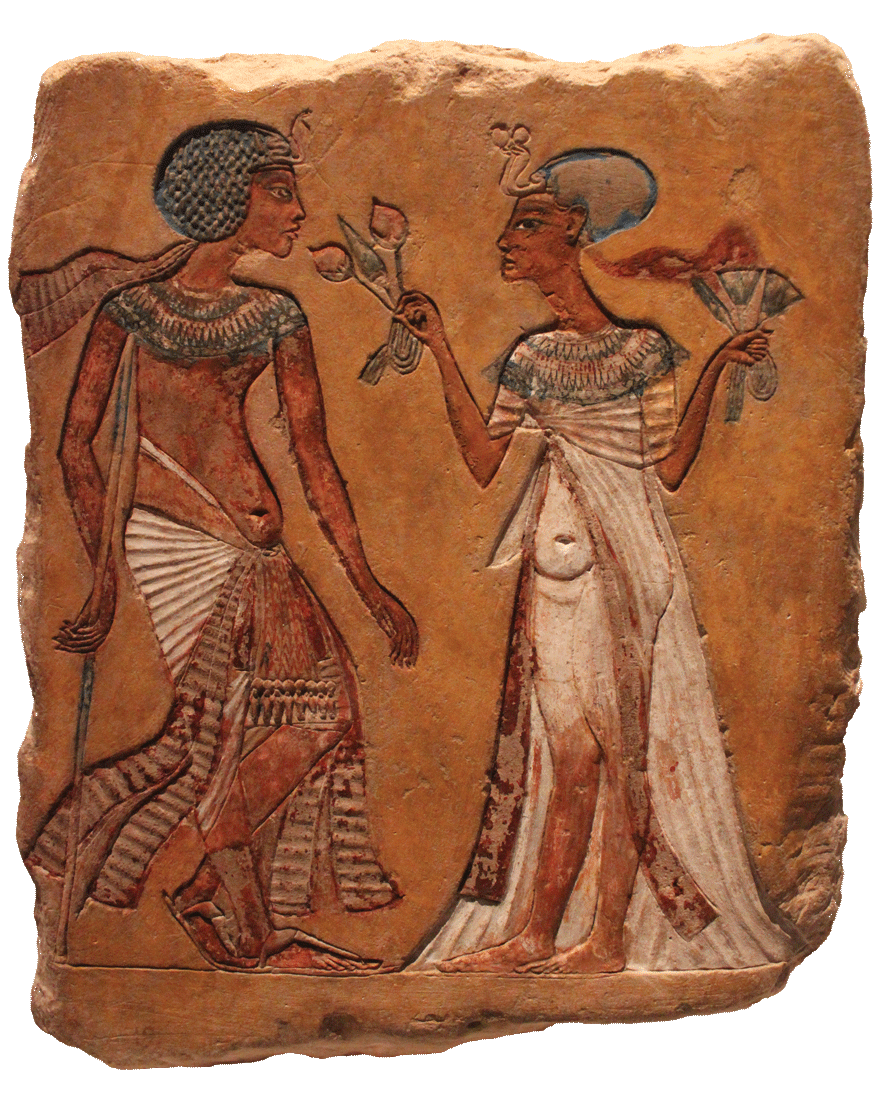
A royal couple is depicted in a garden setting in this painting from Amarna (fourteenth century BC).
4:16–5:1. The two-character interpretation understands this section as the climax of the love poem. According to this view, the maiden has succumbed to the king’s passionate wooing, willingly offering him the “fruit of her garden,” and the king happily “possesses” the garden, consummating their marital relationship. This approach assumes that the imperative “awake” (4:16) in the lovers’ dialogue is conjunctive, not disjunctive. Yet in previous speeches the maiden has used the imperative verb disjunctively, indicating her address or response is intended not for the king but for another. The two-character approach also fails to adequately explain how the maiden remains a virgin (who has stored up her “delicacies” for her lover [7:12–13] and stood like “a wall” against the amorous advances of the king [8:10]) until she is reunited with her lover at the end of the poem. The maiden imagines and yearns for the breezes of fate to waft the fragrance of her love to her true lover, alluring him to deliver her from the confines of the royal harem. Interestingly enough, this very sequence of events constitutes the maiden’s second night-search fantasy (5:2–8). She can only invent the absent shepherd lover’s ideal response to her invitation.
The harem women may be speaking in 5:1c, applauding the lovers’ faithfulness and encouraging their continued enjoyment of the pleasures of lovemaking. The “friends” may also be guests and companions of the lovers (perhaps at a wedding feast?), advising them to take full satisfaction in the physical intimacies of the marriage bond.
5:2–8. That King Solomon is not the lover the maiden has invited to enter her “garden” is made clear by this second lengthy search narrative. Her wishful thinking in 4:16–5:1 becomes a reality, if only in a night vision. The one she has longed for, the one to whom she has pledged her love, stands at her very door! The shepherd identifies himself by making mention of his dew-drenched hair, hardly unusual for one who sleeps outside and tends flocks through the night, but most unusual for a king with the reputation for self-indulgent luxury.
The maiden’s hesitation and excuse-making delay her answering the door, turning the lover away. The reason for her behavior is unclear. Her reaction may be attributed to fear of another disappointment, fatigue, or disbelief, or perhaps even a fatalistic resignation to her present plight. Her continued shouts and frantic searching for the departed lover avail nothing, save incurring the wrath of the night watchmen, who partially strip and beat her (for disturbing the peace, mistaking her for a prostitute, or for a second offense in violating the harem curfew?).
The two-character view considers this a temporary lapse in the marriage of the king and the maiden because he is late in returning home (cf. Carr, 131). The maiden pouts in her self-pity, lamenting the postponement of the tryst she has anticipated. When the lover finally arrives, she greets him with apathy and indifference, then later regrets her action and seeks to make amends. This view not only distorts the literary intentions of the search-find motif in love poetry but also tarnishes the idyllic love relationship portrayed everywhere else in the poem. The anthology-of-love-poems approach notes the actions of the two characters as “odd,” but emphasizes the creation of mood over any real-life experience (cf. Longman, 161).
The charge to the harem women is a partial repetition of Song of Solomon 2:7 and 3:5, and, like 3:5, signals another major break in the poem. The maiden is either asking the women to inform her lover she is forlorn, weak, and lovesick because of his absence or rhetorically stating she is not exhausted from lovemaking (cf. 2:5).
The cultic interpretation of the Song highlights this second night-search narrative (in combination with the occurrence of “beloved” in the singular) as a vestige of Canaanite fertility cult influence in the Song (cf. Pope, 149–53). The maiden is thought to be the goddess searching for her lover, the god Dod, who died and rests in the netherworld. Upon finding him she renews him with sexual intercourse, commemorated annually in the ritualistic marriage of the king to a virgin in his harem. This approach ignores the immediate context of the lovers’ dialogue, discounts a more literal interpretation of the search narrative, and dismisses the other preexilic citations of the word “beloved.”
B. The king’s second proposal (5:9–7:9). 5:9–6:12. The subsequent material introduced in 5:9 constitutes one of the more stylized sections of the poem (5:9–6:12). The highly figurative descriptive speeches are placed within the framework of a series of transitional interrogative interjections by the harem (5:9; 6:1, 10, 13). The harem women are bewildered by the maiden’s behavior. Their confusion is voiced in the form of a query to the Shulammite. What is so special about her lover that she refuses the king? There is also the practical matter of seeking justification for the charge given to them earlier (5:8).
5:9–16. The answer to the question posed by the harem women (5:9) takes the form of a descriptive song reciting the lover’s good looks (5:10–16). Once the harem women witness his handsome features, they will know why he is “better than others.” The descriptive song is characterized by romantic exaggeration, and several of these similes and metaphors have their antecedents in the earlier descriptive songs praising the maiden’s beauty. The only thing remarkable about the passage is its subject matter, as descriptive songs about male characters in ancient love poetry are exceptional. The comeliness, strength, and splendor of his physical appearance no doubt reflect the incomparable inner qualities of character and personality the lover possesses. This man is her lover—reason enough to spurn the wooing of the king and sufficient rebuttal to the harem’s interrogation.
6:1–3. Convinced that the maiden’s lover is indeed better than others and worthy of such loyal devotion, the harem women accept the maiden’s charge (6:1). They too will join the quest for the absent lover, if she can only provide some clue as to his whereabouts so they might commence searching.
The maiden’s enigmatic response (6:2–3) almost defies explanation. Is she speaking literally of his vineyard or of a secluded garden haunt the lover frequented? If she is, she should go there and seek him out instead of combing the city streets and enlisting the help of the harem women. Is she confined to the palace precincts? Elsewhere the garden motif has represented the physical intimacies of lovemaking. But if the maiden is understood as speaking figuratively about herself, the response still carries little meaning for the location of the absent lover. Perhaps the mutual pledge of loyalty (6:3) offers a solution: the bond of love between the two is so strong that in spite of his physical absence the lover continues to “browse among the lilies” of his garden in the mind and heart of the maiden.
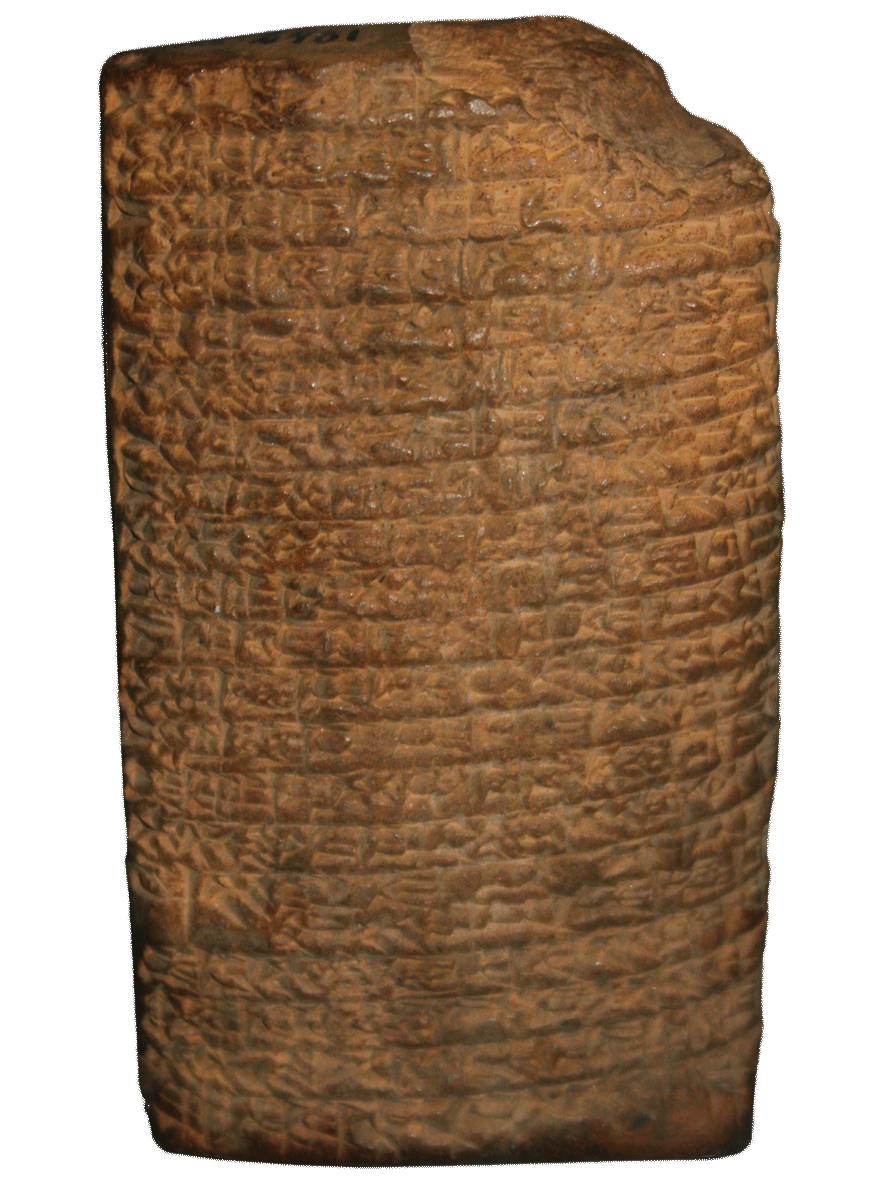
Aside from Song of Solomon 5:10–16, this Sumerian love poem from Nippur (2037–2029 BC) provides one of the few descriptions of male beauty in ancient love poetry. It starts, “Bridegroom, dear to my heart, goodly is your beauty, honeysweet.”
6:4–10. If the descriptive song in 7:1–9 is ascribed to the shepherd lover, then 6:4–9 is Solomon’s final speech in the poem and represents his last attempt to betroth and wed the Shulammite maiden. Tirzah (the name means “beauty”) was a Canaanite stronghold appropriated by Jeroboam I (ca. 930–909 BC; 1 Kings 14:17; 15:21, 23) as the first royal city of the northern kingdom. Later the city was fortified and refurbished as the primary residence of the Omride dynasty (ca. 885 BC; 1 Kings 16:8, 15, 17, 23). The “queens” and “concubines” are a reference to Solomon’s harem, while the “virgins” or “maidens” are probably the countless number of women of marriageable age in the realm. The two-character interpretation of the poem argues (most unconvincingly!) that the love of the king (Solomon) and the maiden (perhaps Abishag) is pure and genuine since there are only 140 women in the royal harem at the time (cf. Carr, 148).
The final question posed by the harem women (6:10) is rhetorical in that it is not so much a question directed toward the maiden as a statement about her unrivaled beauty. The verse may well represent part of the chorus by which the queens and concubines praise the extraordinary beauty of the maiden (6:9). The interrogative “Who is this?” is identical in form to the expression in 3:6 and also appears in 8:5. The threefold repetition of the question constitutes a perfect foil, summarizing the drama of the love poem:
3:6 Who is this? The maiden arriving in Jerusalem with Solomon, bereft of home and lover.
6:10 Who is this? The maiden unsurpassed in beauty, unmatched in loyal devotion, praised by the harem women.
8:5 Who is this? The maiden freed, reunited with her lover, and returning to her village home.
The celestial similes not only portray the radiance, brightness, and freshness of the maiden’s appearance but also celebrate her uniqueness. The sun and moon dominate the heavens without equal. The phrase “majestic as the stars in procession” (NIV) repeats the last line of 6:4 and is better translated “terrible like an army with banners” (so RSV). The image conveys the awesome splendor associated with army troops in dress parade.
6:11–12. This section is crucial to the understanding of the Song, and yet verse 12 is the most difficult line of the poem to translate and interpret sensibly. (See the variations in the major English versions.) Literally rendered, the verse reads “I did not know, my soul, (it/he) set me in the chariot of Amminadab.” The confusion results from the ambiguous syntax in the verse, especially the relationship of “my soul” to the verbs in the line. (Here the Septuagint actually changes the first verb [“know”] from first to third person and reads “my soul did not know” to solve the problem.) Is “my soul” the subject or object of “did not know” or the subject of “set me”? If the latter, then “my soul” is a figure for another person (hence the translations “my desire” [NJB, NIV] or “my fancy” [NRSV], in reference to the lover). The maiden uses many terms of endearment for her lover, but “my soul” is not one of them. Perhaps the maiden here recounts her abduction by Solomon and transport to Jerusalem upon venturing into the orchard of nut trees near her home one spring.
6:13–7:9. As previously noted, imperative verbs often signal significant shifts in speech patterns or breaks in the dramatic action of the poem. This section (6:13–7:9) marks the maiden’s last appearance among the harem women and records Solomon’s final attempt to woo and wed the Shulammite. The women urge her to return (6:13a), apparently to dance. The fourfold repetition of their plea emphasizes their urgency and the seriousness of the situation (the maiden’s departure from the harem?). The verse implies that the maiden has been or intends to go somewhere away from the palace confines. Presumably the shepherd has arrived to claim the maiden as his own, or she has refused to participate in the harem dance (at the wedding feast—perhaps her own?). Whatever the reason, it is the maiden’s continued refusal of the king that finally induces him to release her from the harem and any betrothal obligations.
The maiden has no interest in being a court spectacle for the friends of the king. The Shulammite has no intention of submitting to inspection by the male onlookers in attendance (the verb “look” is masculine in form: “Why should you men look?”) This exchange (6:13b) contains the only Old Testament occurrence of the appellative “Shulammite” (see the discussion in Longman, 192). Shulam was probably the home of the maiden. The location of the site is unknown, but the village of Shunem near Mount Tabor in the region of Galilee is regarded as the most likely identification. The meaning of the last line eludes interpreters. The phrase literally means “the dance of the two armies” (NIV “Mahanaim,” a proper name; NJB “two rows”; NEB “the lines”). Exact meaning notwithstanding, the maiden shuns the idea of being made an exhibition at the court dance (see the discussions in Carr, 155; Garrett, 528).
The answer to the maiden’s question (7:1–9) is predictable: “Dance for us because your physical beauty infatuates us.” The two-character interpretation makes this another descriptive song about the maiden by the king or bridegroom. This portrait of the maiden’s physical charms moves up from the feet instead of down from the head (cf. 5:1–5). The reference to the king as a third party in verse 5 has led many to assign verses 1–5 to the friends of the bridegroom or royal (male) onlookers. Prominent in the descriptive song are the graphic sketches of the distinctively sexual aspects of the maiden’s anatomy (thighs, pudenda, belly, and breasts). The repetition of “how beautiful” in verse 6 (cf. 7:1) may indicate that the king or bridegroom now joins in the adoration of the maiden (recalling the ecstasy of the sexual intimacies experienced the previous night according to the two-character interpretation). The language of the passage is the most erotically explicit of the poem.
The three-character understanding of the poem views the passage as Solomon’s last attempt to betroth the maiden and add her permanently to the ranks of the royal harem. The descriptive song of the bawdy onlookers (7:1–5) is particularly sexual in focus, lacking the sensitivity and dignity of the more euphemistic sensual symbolism encountered earlier in the poem, as well as the mutuality of the sexual experience. The “grasping” and “climbing” and the breast/genital orientation of the king’s speech (7:6–9) invoke images of conquest, self-indulgence, lust, and self-gratification. Again, the gentleness, tenderness, willing surrender, and reciprocation in lovemaking as a shared experience by the lovers seems absent. Thus the passage provides an effective foil for the two kinds of human love, contrasting the purity and genuineness of one-to-one love of the Genesis-creation-account ideal with the one-to-many love found in the royal harem.
3. The Shulammite Maiden Rejects the King (7:10–8:4)
The maiden, for the final time, affirms her love for another, the shepherd lover out in the countryside. It is this concluding assertion of loyalty and faithfulness that gains the maiden’s release from the claims of the king and the confines of the royal harem. Perhaps in recognition of her great virtue and unswerving loyalty, the king permits the maiden to return to her northern village. Her persistent rejection of the king’s wooing and her unfading devotion to her absent lover must have won Solomon’s favor, as it has won that of the harem women. She has remained a garden locked up and a spring enclosed (4:12), a wall fortified with towers (8:10), and now her desire to freely give the love she has stored up to her shepherd lover is apparently granted (7:12–13). The beauty of sexual love is represented in the fertility symbols of the vineyards, pomegranates, and mandrakes (“every delicacy,” 7:13). The maiden’s desire to share love’s intimacies with the shepherd is so overwhelming she almost wishes he were a brother so any public display of affection would not incur the contempt of the villagers.
In escorting the shepherd to her mother’s home the maiden accomplishes two goals: she gains approval from her mother and the brothers of the shepherd, and she fulfills her dream of consummating their vows in the place where she was “schooled” by her mother in the art of romance and lovemaking. “Spiced wine” and mandrake apples were renowned aphrodisiacs in Egypt and Mesopotamia. The phrase “nectar of my pomegranates” (8:2) has distinctly erotic connotations, the woman’s breasts being identified with pomegranates in Egyptian love poetry (cf. Carr, 167; Hess, 230). The love repose the maiden imagined in 2:6 will soon be a reality, as the awakening of love fancied in 4:16 now comes to fruition. The refrain closing this major section of the poem carries the full force intended by the writer. The maiden and the shepherd have been rejoined in love.
4. The Shulammite Maiden and Her Shepherd Lover Are Reunited (8:5–14)
Admittedly, the collage of poetic units constituting the conclusion of the Song presents numerous difficulties for the interpreter. The problem in identifying the character speaking, determining the extent of that speech, and then assigning those speech units to the appropriate characters is so acute that many commentators regard these last ten verses as a separate collection of poetic fragments appended to the Song by later scribes or editors. The dissimilarity of the material with the rest of the poem, along with the moralizing tendencies of 8:6–7, is cited as further evidence of the disjunctive nature of this section (cf. Murphy, 195). The anthology-of-love-poems approach identifies four separate poems in the section of 8:5–14 (8:5–7, 8–10, 11–12, 13–14; see Longman, 206–22).
The interrogative “Who is this?” echoes 3:6 and 6:10, and as in the other two instances, the maiden is the object of the question (8:5a). Here it is probably the maiden’s brother (or her brothers) who calls attention to the pair approaching arm in arm by questioning his companions in the field or vineyard.
The Hebrew verb forms in 8:5b–7 have masculine suffixes, indicating the maiden is speaking to her lover. The apple-tree motif of 8:5b occurred previously, in the context of the maiden’s description of the lover and her delight in his lovemaking (2:3–6). While it is clear that the maiden initiates the love-play and that the passage makes reference to marital love, verse 5b defies explanation. Perhaps the verse is an oblique statement about the cycle of love in humanity—lovemaking, conception, birth, life, and love aroused, leading to lovemaking and conception in the next generation. This then is the maiden’s poetic declaration that she is fulfilling her destiny in life by her love relationship with the shepherd.
Seals (8:6) were pieces of stone or metal inscribed with personalized markings and were tantamount to an individual’s signature. The seal was an important emblem of ownership and possession in the ancient world. When stamped, the impression of the seal registered the seal-bearer’s claim whether in economic or legal documents, or even on private property (cf. Hess, 238; Garrett, 529–30). The maiden requests that the seal of her lover be stamped indelibly on her heart. Then he, and he alone, will have claim to the maiden’s love. Why? The proverbial statements of verses 6–7 help explain the didactic purposes of the poem and serve as the climax to the foil of the maiden’s one-to-one love and Solomon’s one-to-many love. Genuine human love is as permanent as death, and the righteous jealousy of this affection will never surrender possession of the loved one, just as the grave tenaciously clings to the dead. True love burns bright and intense, “a raging flame” (8:6, NRSV). This phrase literally reads “flame of Yah” and has puzzled translators and interpreters. If this is a reference to Yahweh, the verse implies God himself kindles the flames of human love. Finally, the flames of genuine human love are unquenchable in the face of life’s surging flood tides. The worth, the value, of this kind of love is beyond calculation. The wealth of a household, indeed the wealth of an empire (even Solomon’s), cannot purchase the loyalty, devotion, true passion, and faithfulness of genuine human love.

In Song of Solomon 8:6, the maiden asks her lover to “place me like a seal over your heart.” Ancient seals such as this one, which is stamped into a storage jar handle, denoted ownership. The design contains the wording “lmlk” (“belonging to the king”) above a winged sun disc and the place name “Sokoh” (eighth–seventh century BC).
The maiden’s brothers recall her growth and development from their “little sister” into a mature woman ready for a life of her own (8:8–9). The earlier anger of the brothers (1:6) was likely their jealous protection of their sister’s chastity against the designs of overzealous suitors in an attempt to prevent premature love before the proper time for her marriage. The phrase “on the day she is spoken for” (8:8) implies this was the purpose of the lovers’ return to her home village—the granting of approval for marriage. If she proves worthy of such a union (i.e., if she has preserved her virginity), they will dutifully provide her with the dress, ornamentation, and dowry befitting such a momentous occasion.
In reply to the conditional pledge of her brothers, the maiden avows that she has guarded her chastity and remains a virgin (8:10–12). Despite her abduction and the wooing of Solomon, she has remained a garden locked, a spring sealed, a reservoir of faithful love. Implicit in the maiden’s boast of chastity is her maturing and blossoming womanhood and her readiness for wedlock (“my breasts are like towers”). “His eyes” is a reference to the shepherd lover, and “bringing contentment” suggests his recognition of the rightness and the wholesomeness of their relationship.
The term “vineyard” has consistently been a metaphor for the person of the maiden (including her sexual charms). The strongest support for the three-character interpretation of the Song is found here. The maiden’s “vineyard,” her love and sexual delicacies, belonged to her and were hers to give. Solomon had let out his vineyard (his own person and his own sexual energies) to “tenants” (i.e., the women of the royal harem). Whether two hundred women (cf. the 140 in 6:8) or the one thousand women (1 Kings 11:3), Solomon has made his choice—including the ugly consequences that surfaced later in his reign (cf. 1 Kings 11:1–8). The maiden has preserved her “vineyard” from the exploitation and corruption of harem love and now experiences the joy of freely giving it to her one lover.
The shepherd addresses either those who live in the maiden’s village or the maiden herself (8:13). If the former, he is seeking public approval and support from the clan for his marriage to the maiden or else calling for shouts of celebration in response to the wedding feast. If the latter, he beckons the maiden for a song confirming her desire for him and commitment to a life of love even rivers cannot wash away (8:7).
The maiden’s response (perhaps part of a nuptial song) is immediate and complete (8:14). Her invitation to love, oft repeated, will finally, joyously be realized. The maiden will pour out her love long stored, and the lovers will eat, drink, feast, and linger over love’s delicacies. Love will not be aroused until its desire has been fulfilled (2:7; 3:5; 8:4). The gazelle/stag simile calls to mind an early fantasy of the maiden (2:8–13). The erotic symbolism of the poem’s concluding verse is simple and appropriate. The maiden tenderly invites the shepherd to playfully, happily commune with her in all the jubilation, ecstasy, and mystery of sexual love.
Select Bibliography
Bullock, C. Hassell. An Introduction to the Old Testament Poetic Books. Chicago: Moody, 1979.
Carr, G. L. The Song of Solomon. Tyndale Old Testament Commentaries. Downers Grove, IL: InterVarsity, 1984.
Garrett, Duane. “Song of Songs.” In Zondervan Illustrated Bible Backgrounds Commentary. Edited by John H. Walton. Grand Rapids: Zondervan, 2009.
Garrett, Duane, and Paul R. House. Song of Songs/Lamentations. Word Biblical Commentary. Nashville: Thomas Nelson, 2004.
Gledhill, Tom. The Message of the Song of Songs. Downers Grove, IL: InterVarsity, 1994.
Hess, Richard S. Song of Songs. Baker Commentary on the Old Testament Wisdom and Psalms. Grand Rapids: Baker Academic, 2005.
Jenson, Robert W. Song of Songs. Interpretation. Louisville: Westminster John Knox, 2005.
Longman, Tremper, III. Song of Songs. New International Commentary on the Old Testament. Grand Rapids: Eerdmans, 2001.
Murphy, Roland E. The Song of Songs. Hermeneia. Minneapolis: Fortress, 1990.
Pope, Marvin. Song of Songs. Anchor Bible. Garden City, NY: Doubleday, 1977.
Provan, Iain. Ecclesiastes/Song of Songs. NIV Application Commentary. Grand Rapids: Zondervan, 2001.
Ryken, Leland. “The Song of Solomon.” In Words of Delight: A Literary Introduction to the Bible. 2nd ed. Grand Rapids: Baker Academic, 1993.