Ruth
1. Setting: Famine and Family Tragedy (1:1–5)
2. Widows and Their Worries: Back to Bethlehem (1:6–22)
B. The Nature of Naomi’s Worries/Naomi’s Resolve and Confession (1:8–15)
C. Ruth’s Resolve and Confession (1:16–17)
3. A Worthy Woman Meets a Worthy Man (2:1–23)
A. Ruth Finds Work (Favor) in Boaz’s Field (2:1–3)
B. Boaz Reaches Out to Ruth, and Ruth Responds with Gratitude (2:4–16)
C. Ruth Returns Home with a Favorable Report (2:17–23)
A. Naomi Navigates a Plan (3:1–5)
B. Ruth Reaches Out to Boaz at the Threshing Floor (3:6–9)
C. Boaz Responds with Gratitude and a Requirement (3:10–15)
D. Ruth Returns Home (3:16–18)
A. The Legal Decision Made (4:1–6)
B. The Decision Confirmed (4:7–12)
6. The Marriage: Family Fortunes and Fruitfulness (4:13–17)
7. Conclusion: Future Fruitfulness (4:18–22)
Introduction
Date and Authorship
This heart-wrenching yet refreshing story unfolds “in the days when the judges ruled” (1:1). This places the account chronologically somewhere between circa 1380 and 1050 BC. The book was likely composed by an unnamed author relying on oral sources at a later period in Israelite history, one that seems to coincide with David and the early monarchy (Ruth 4:7, 17). Historically, the period of the judges represents a setting when religious syncretism provoked military aggression resulting in societal unrest, a cycle that perpetuated itself until the Lord graciously intervened by raising up a judge (Judges 2). As a literary bridge, the notification in 1:1 points the reader back to the last verse in Judges, where it concludes, “In those days Israel had no king; everyone did as they saw fit” (Judg. 21:25). It also points forward to the closing genealogy in Ruth, mentioning David (4:18–22), which anticipates 1–2 Samuel, when kingship is formally grafted into the covenantal community. In this way Ruth functions as a literary hinge with respect to its placement in the English Bible (an arrangement based upon the Greek Septuagint).
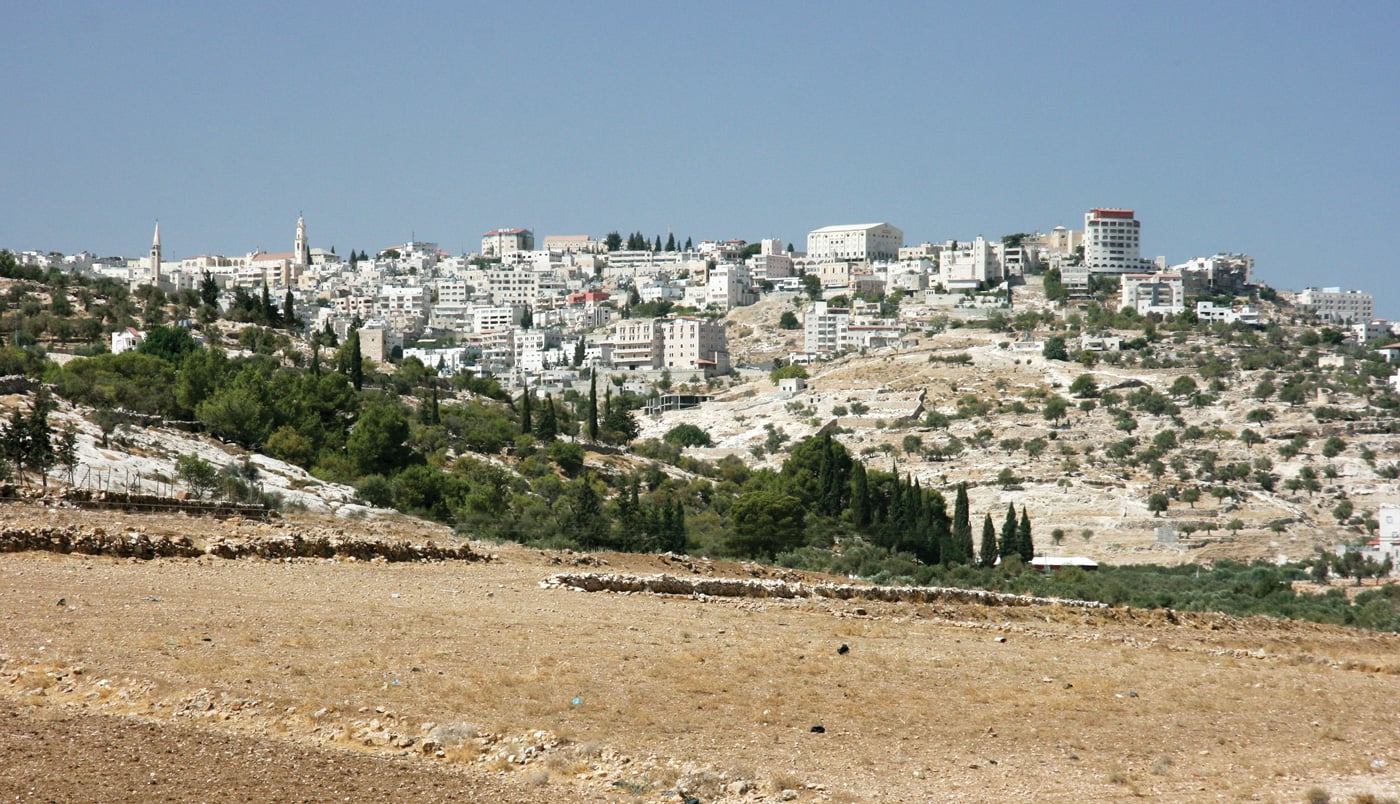
Theological Themes
Ruth recounts the private and domestic affairs of a family of four from Bethlehem, with literary artistry full of suspense and emotion. Even the most casual reader recognizes themes of divine providence, mercy, and provision for the less privileged. An equally notable and repetitive theme concerns the idea of redemption, particularly evident in Boaz’s crucial role as kinsman-redeemer.
Collectively, these themes, which are communicated through speech rather than narration, unveil the main point driving the narrative. Ruth finds both a physical and spiritual home in Israel. But how can a Moabite secure a home in Israel and even be included in David’s lineage? These are pertinent questions given Deuteronomic law, which forbids Israelite associations with Moabites, a chided enemy. Moreover, how can Israel’s renowned king come from mixed ancestry? The book of Ruth not only lauds the Lord’s merciful hand of guidance on Naomi and Ruth but also addresses these intriguing questions in light of the bigger picture of Israelite history.
Commentary
1. Setting: Famine and Family Tragedy (1:1–5)
The grim opening of this story grips the reader on three counts. First, it is neither a prosperous nor a fruitful time in the nation’s life (1:1). Second, and not unrelated, the people of Israel face famine (1:1). The fact that a famine prevails in Bethlehem, in Judah’s “house of bread,” together with the religious crisis dominating the landscape indicates an unpleasant visitation by the Lord on the land. The Lord promised famine as one among many of his acts of judgment for covenantal waywardness (Lev. 26:18–20; Deut. 28:24; Jer. 24:10; 27:8–13; 29:17; 34:17; 38:2; Ezek. 6:11; 7:15; 12:16). The writer now zooms in on one specific family and their attempt to deal with these circumstances. Elimelek, his wife Naomi, and their two sons Mahlon and Kilion relocate from Bethlehem to the neighboring fields of Moab in search of food. Their relocation to Moab suggests that in spite of previous tumultuous relationships between Moab and Israel (Numbers 22; 25), relative peace prevails at the time the family uproots (Judg. 3:11; 5:31). Although the stated motivation of finding food provides a logical rationale for moving, one wonders if it does not point to the fragile nature of Elimelek’s faith, much like the faith of Israel’s patriarchs who went to Egypt in time of famine (Gen. 12:10; 26:1; 41:54–57). However one interprets their journey, the family attempts to face their crisis practically by securing necessary food.
Third, after arriving on foreign soil, the family meets a series of tragedies. More precisely, we read Elimelek’s obituary. Elimelek dies and is survived by his wife and two sons. While this is tragic for Naomi, the widow would have taken a measure of comfort, and even hope, in the fact that she had two sons—heirs and people who could look after her in her old age (Deut. 25:5–10; Lev. 25:25). But this is not meant to be.
After Elimelek dies, both sons marry Moabite women. The fact that Mahlon and Kilion forge relationships with Moabite women, however, is suspicious. For men from Bethlehem to marry Moabite women is problematic under the Mosaic economy. Even though the Moabites are related to Israel by virtue of Lot’s incestuous relationship with his older daughter (Gen. 19:36–37), the biblical record mandates their separation as early as the time of Moses. Two critical events provide a rationale. First, the king of Moab hired a Mesopotamian prophet to curse Israel on four occasions when the nation was on the verge of taking possession of the promised land (Num. 22:4–6; 23:1–24:25). The Lord, however, turned the curses into blessings because of his relentless commitment to Abraham: “Whoever curses you I will curse” (Gen. 12:3; Num. 24:10–24). Second, by invitation of some Moabite women, the Israelites polluted themselves by worshiping a foreign deity, Baal of Peor (Num. 25:1–3; 31:15–16). On account of these two events, Moabites have been excluded from Israelite religious practices (Deut. 23:3–4).
Israelites were prohibited from making political and marriage alliances with foreigners due to the possibility of religious enticement toward deities other than Yahweh (Deut. 7:1–3; Exod. 34:11–16). Although the Moabites are not specifically mentioned in Deuteronomy and Exodus, and regardless of their family ties to Israel, they are treated like nonfamily members or “foreigners” elsewhere. Solomon receives condemnation in Kings, as do the Jews of Ezra and Nehemiah’s day, because these married, among other foreigners, Moabite women (1 Kings 11:1–8; Ezra 9:1–6; Neh. 13:23–27). Conjoining Israelite relatives to a list with foreigners illustrates the severity of the separation. Essentially, the Israelites were to treat the Moabites like nonfamily members and have nothing to do with them because of conflicting religious practices. Although the narrator refrains from passing specific judgment on Elimelek’s sons, their marriages to Ruth and Orpah should be interpreted as anything but neutral.
After about ten years, the situation moves from bad to worse for Naomi. Another tragedy strikes: both of Naomi’s sons die. Without sons or grandchildren, she is now utterly hopeless for the well-being of her own future, not to mention the painful effects for Ruth and Orpah. The deaths of Mahlon and Kilion signal death for the continuation of the family name and inheritance, essentially a loss of a home and identity.
Thus a heavy and mournful atmosphere obtains at the outset, due to famine and three deaths. Furthermore, the likely cause of famine (national disobedience), the move to Moab (perhaps a display of fear not faith), and the marriages to Moabite women (relationships not sanctioned by Israelite law) create suspicion for a reader aware of Mosaic legislation. This marriage of emotions (sorrows with suspicion) invites an interpretation that, perhaps, the ongoing struggles that face Elimelek’s family are somewhat self-imposed. Regardless, from famine in Judah to family tragedy in a foreign land, Naomi and her two daughters-in-law face great loss. It seems a dark and dismal future awaits them.
2. Widows and Their Worries: Back to Bethlehem (1:6–22)
A. Back to Bethlehem (1:6–7). Against this grim setting Naomi confronts some important news in the fields of Moab. She learns that famine no longer threatens Judah. Since Hebrew and Moabite are closely related languages, perhaps this accounts for her ability to understand the conversation.
That a famine no longer prevails in Bethlehem indicates a pleasant visitation by the Lord on his land and people. Indeed, he promised bread as one among many of his acts of mercy for covenantal faithfulness (Deut. 28:3–5, 8, 11–12; Lev. 26:3–5). Thus, the news of food in Bethlehem is linked to the Lord’s favor, a connection that the writer implicitly emphasizes. With this bit of “good news” Naomi realizes that the way forward for all concerned is the way back to her home in Bethlehem. The three women set out for their trip to Judah. For Naomi it represents a return trip, but for Ruth and Orpah it entails a journey into the unknown.
B. The nature of Naomi’s worries/Naomi’s resolve and confession (1:8–15). On journeying back to Bethlehem, Naomi has second thoughts regarding the benefits of bringing Ruth and Orpah home with her. She openly shares her worries and concerns with them. Her sentiments are not communicated through narration but by three speeches (1:8–9, 11–13, 15). In each we witness a display of her sentiment to care for Ruth and Orpah, which translates into a relentless resolve to persuade them to keep their homes in Moab. The heart of her concern is that the women have homes, places of refuge, security, provision, and above all identity (1:9; 3:1; 4:11, 12, 18). Naomi wants Yahweh to give them patrimonial roots typical to the current tribal social structure. Accordingly, she does not allow her personal sentiments to prevail over the practical matters facing these women. Naomi deliberately and selflessly distances herself from the emotional ties that, undoubtedly, bind them.
In the first speech Naomi questions if it may not be better for each of them to return to “your mother’s home,” to “the home of another husband,” places where each would be guaranteed to find the needed security and assistance (1:8–9). She stirs up doubt about their choice to relocate. To travel with Naomi will entail a journey into the unknown, a life lived on foreign soil with its accompanying hardships. By appealing to their Moabite blood ties, Naomi tries to free them of ongoing obligations to her, a nonblood relative and a foreigner. Naomi understands that the death of her sons technically severed continued familial obligations between her, Orpah, and Ruth. Her speech concludes with a benediction asking the Lord to grant them reciprocating kindness (1:8). This speech represents Naomi’s first attempt to persuade her daughters-in-law.
After the benediction Naomi kisses them, and off they are supposed to go. Naomi’s resolve, however, is met with resistance at a deep level, something witnessed by the women’s tears and words (1:9). They argue, “We will go back with you to your people” (1:10). The statement reveals that their ties to Naomi are deeper than to their own mothers. Clearly their desire for Naomi’s well-being mirrors their mother-in-law’s concern for Orpah and Ruth. They pledge their commitment not to abandon her. Far from naively following her, however, they acknowledge the great cost involved. The use of the possessive “your people” in 1:10 identifies the level of risk for them in finding a new home in Judah. It reflects the distance between Naomi’s people, the Israelites, and the Moabite women. It expresses the cross-cultural experience that awaits them. Nonetheless, Orpah and Ruth put Naomi first. They disregard the risks and doubts raised by Naomi, and in so doing they rival their mother-in-law’s resolve.
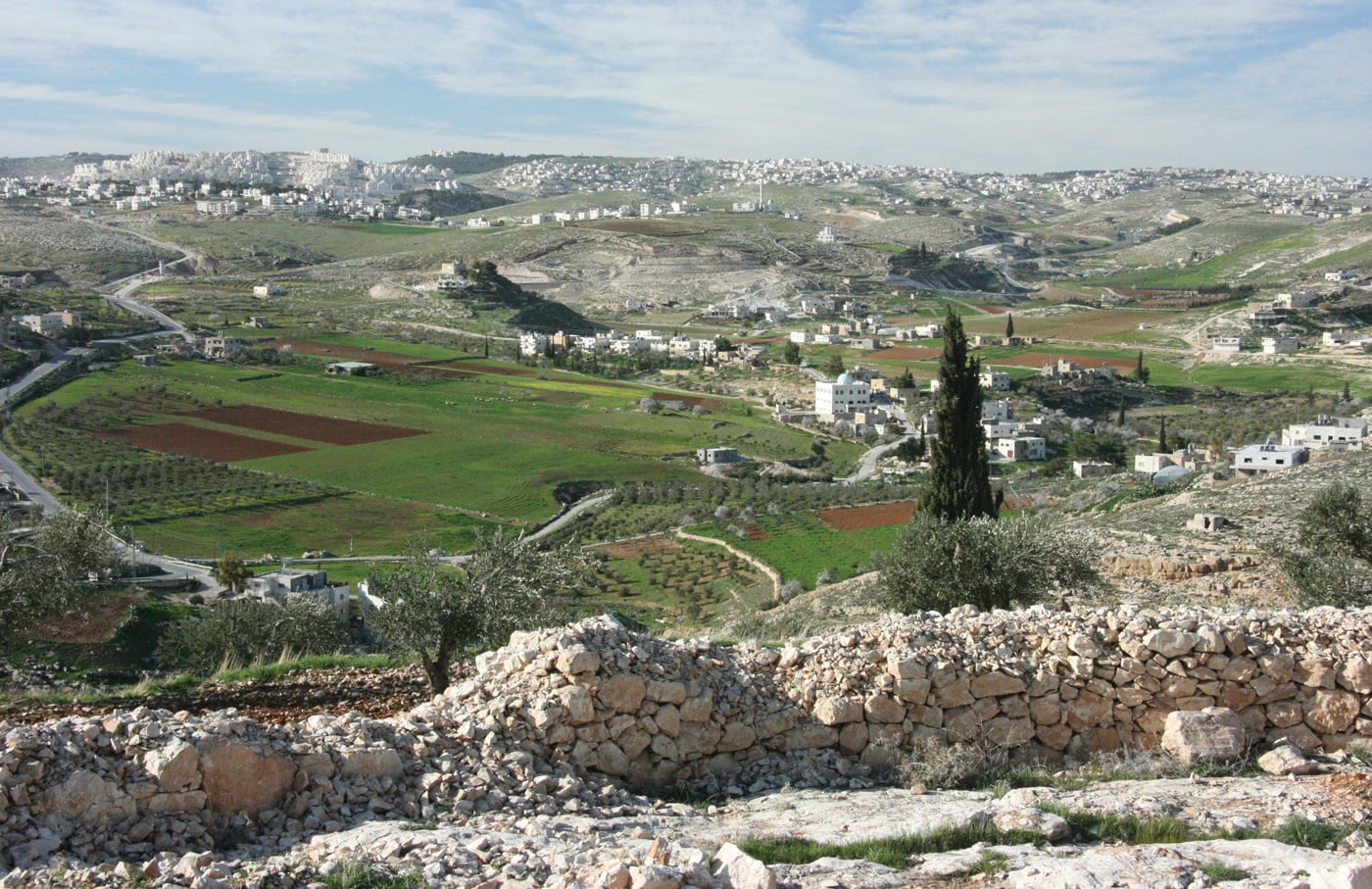
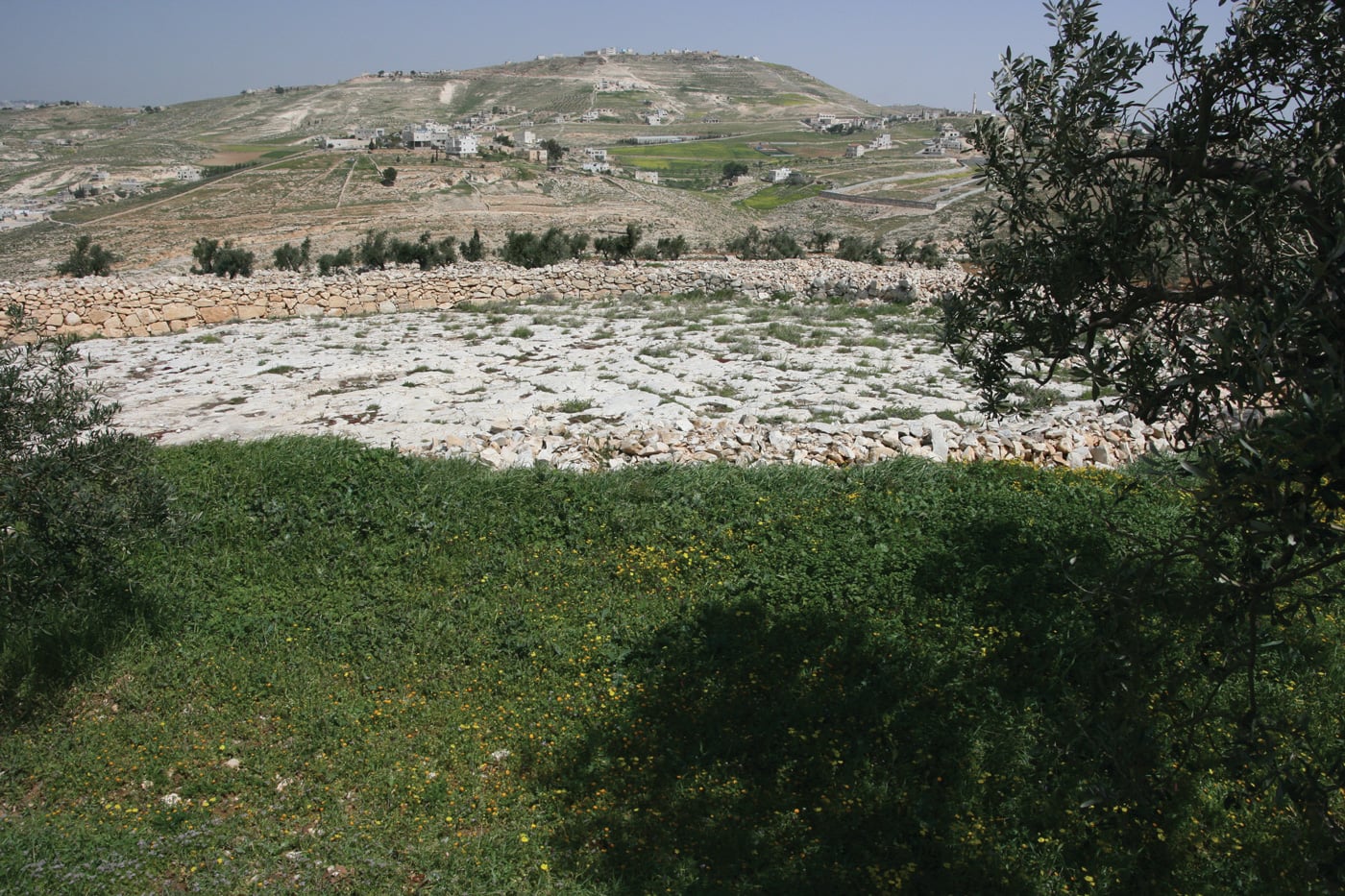
The region around modern Bethlehem
Naomi retorts with an honest and humble confession (1:11–13), a second speech attempting to persuade them to keep their hope of a home in Moab rather than Bethlehem. Naomi initially appeals to insurmountable practical difficulties, items the women cannot dispute. Because Naomi has nothing to offer them by way of future marriage options, she warns, once a widow always a widow as long as they remain with her. As widows they can hope for nothing more than poverty and destitution, an empty and bleak future. While she can bear the precarious nature of her own situation, Naomi does not want to subject Ruth and Orpah to such circumstances.
Naomi also appeals to a religious drawback. As is typical of the ancient Near Eastern mindset, Naomi attributes divine disfavor as the source of her inexplicable suffering (1:13). For this reason, Naomi cautions her daughters-in-law that the Lord’s hand of disfavor may continue to affect them adversely and is a valid reason to reconsider. Thus Naomi hones in on the negatives both practically and religiously in the hope that the women will relent.
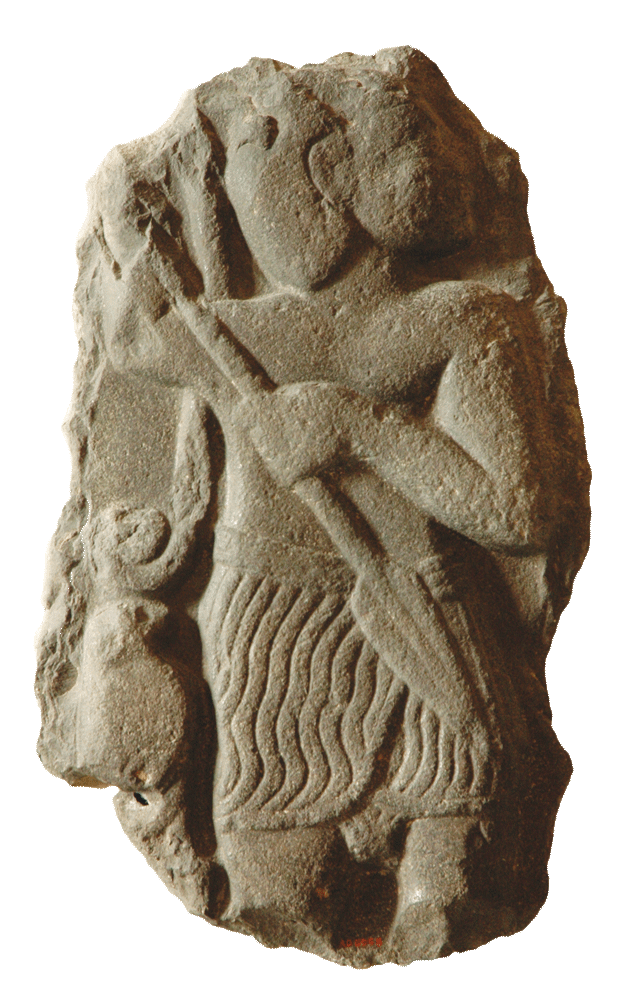
A warrior god from Moab, possibly Chemosh (cf. Ruth 1:15)
With this second speech both women reach a final decision. Orpah departs, determined to make Moab her home once again (1:14). The author narrates and reports the outcome of the conversation, allowing the reader to pass silent judgment on both Orpah’s decision and Naomi’s resolve to keep these women in Moab. There is little doubt that Naomi’s resolve should be characterized as selfless and genuinely concerned for the women’s physical well-being. The narrative firmly establishes this. But one wonders if Naomi is not too caught up in the practical (finding Ruth a home) to the neglect of the spiritual benefits these women might have accrued by going to Bethlehem (i.e., finding refuge in the Lord, the God of Israel). Again, the author allows room for this possible interpretation.
Reluctant Ruth, by contrast, clings to Naomi (1:14). Ruth’s gesture indicates a staunch loyalty to the relationship, a loyalty much like one gives in marriage (Gen. 2:24; 1 Kings 11:2) or in service to the kingdom (2 Sam. 20:2). This prompts Naomi’s third and final attempt to persuade Ruth to find her home in Moab, not Judah (1:15). Her method includes pressuring Ruth to be like her sister-in-law, as well as arguing that living in Moab is preferred due to the established deity and territorial associations familiar to Ruth (1:15). By this statement Naomi declares that Ruth belongs to Moab, her people are the Moabites, and her god is Chemosh (Num. 21:27–30). Naomi dissuades her from making what would amount to a radical change in the status quo. Yet even after this compelling attempt, Ruth’s resolve remains intact.
C. Ruth’s resolve and confession (1:16–17). For the first time Ruth speaks. She interprets Naomi’s previous injunctions to journey back to Moab (along with Orpah) as abandonment of her mother-in-law, something Ruth resolutely refuses (1:16). Her words, which are followed by an oath (1:16–17), indicate her relentless resolve to stay with Naomi and help the reader to grasp the profound sentiment behind Ruth’s physical gesture of clinging to Naomi (1:14).
In general, Ruth is expressing covenantal loyalties to Naomi in much the same way Jonathan pledges to David, along the lines of other covenants between equals in the Bible. Ruth elects to extend her familial relationship of obligation already established with Naomi through marriage to Mahlon (4:10) regardless of his death. These renewed loyalties translate into a radical change for Ruth, specifically, a change in ethnic identity. In short, Ruth pledges to become an Israelite. Her commitment to Naomi is such that it entails becoming an Israelite even though the text does not state this explicitly until later (4:11–12, 13–17). Old alliances (social, religious, and political) must be discarded so as not to threaten the obligations involved with the renewed relationship. Ruth’s specific statement about wanting to be buried in Naomi’s homeland seems to capture her willingness to embrace a new land and ethnicity (1:17). Indeed, archaeology has shown a connection between mortuary data and the ethnic identity of the deceased. Furthermore, a change in ethnic identity meant a change in religion, since the two were bound together.
It is not surprising, therefore, that in the oath sealing her commitment to Naomi, Ruth invokes the name of the Lord rather than Chemosh to sanction the renewed relationship (1:17). The oath also indicates just how far Ruth is willing to go to serve Naomi. Ruth asks that the Lord hold her liable unto death if she does not keep her commitment to Naomi, thereby placing herself under Deuteronomic obligations. Outside of the book of Ruth, this oath formula appears only in 1 Samuel 20:13.
Generally speaking, native Israelites swear by Elohim (God), not Yahweh (the Lord) in oaths that employ the deity to punish the oath taker if he or she does not follow through with the promised actions. The preference for the more generic Elohim over Yahweh (a specific term that resonates with covenant; Exodus 3; 6) suggests a deliberate distance between the deity and the one taking the self-maledictory oath. A native Israelite would, however, use the name of the Lord in a common oath formula, such as “as the Lord lives.” In the latter, omission of the self-maledictory piece allows the oath taker freedom to use the more personal divine name. Accordingly, the name functions like a verbal signature, a guarantee of the genuine desire to do what is being pledged.
Ruth implores the Lord to punish her if she does not do all that is in her power to care for Naomi (1:17). This entails nothing less than a change in ethnicity and religion. That Ruth calls on the Lord and not Elohim perhaps underscores the influence of Naomi’s faith on her while in Moab. The oath demonstrates her full assimilation to Elimelek’s family and culture. But it also shows Ruth is “swearing by the true God (rather than some other being who might be designated as ‘god’) . . . reflecting the strength of her emotion and commitment” (Revell, 203).
The fact that Ruth willfully becomes an Israelite and embraces the Lord by moving to Judah is somewhat typical of one in the ancient world adopting the god of the land to which they have moved. Her actions are atypical, however, when viewed against the average Israelite who, at that time, tended toward adopting foreign gods alongside the Lord. This syncretism (fusing two or more originally different beliefs into one) so dominant at the time the story unfolds is something Ruth chooses not to embrace. Ruth does what few Israelites are able to do, embrace and fully commit to Yahwistic religion yet discard all opposing religious alliances. In a very real sense, Ruth clings to the Lord by clinging to Naomi. Because her actions stand in stark contrast to those of the typical Israelite in this regard, at numerous and even awkward times in the story the author reminds the reader of Ruth’s Moabite ethnicity (1:22; 2:2, 21; 4:5, 10). Ruth the Moabitess is a model Israelite in that she embraces Yahweh fully and exclusively. But she is also a model Israelite in showing kindness according to Mosaic law. Furthermore, Ruth’s naturalization process is crucial for the story line and the upcoming betrothal narrative (3:7–15). It legitimizes her marriage to an Israelite man, unlike her first marriage, to Mahlon.
Thus the covenantal loyalties described in these verses, her burial desires, and the oath using the Lord’s name seem to reflect that necessary break with her past (not syncretism), a break that has religious, social, and political ramifications. Indeed, the journey to her future home is such that it will require the kind of break and assimilation Ruth is pledging to Naomi.
D. In Bethlehem (1:18–22). After such a statement of loyalty and fidelity, Naomi’s pleas stop, and they set out for Judah as originally intended (1:18). When Naomi arrives in Bethlehem without Elimelek, Kilion, and Mahlon, she shocks the city on account of the great loss so apparent in her life (1:19). When confronted by the women in town, Naomi reveals the theological grid that informs her situation (1:20–21). She interprets her pitiful condition (once full but now empty) as caused by both “the Almighty” and “the Lord,” in personal opposition. This explains why she requests they no longer call her Naomi but Mara, a name change that in Hebrew reflects the bitterness she has experienced.
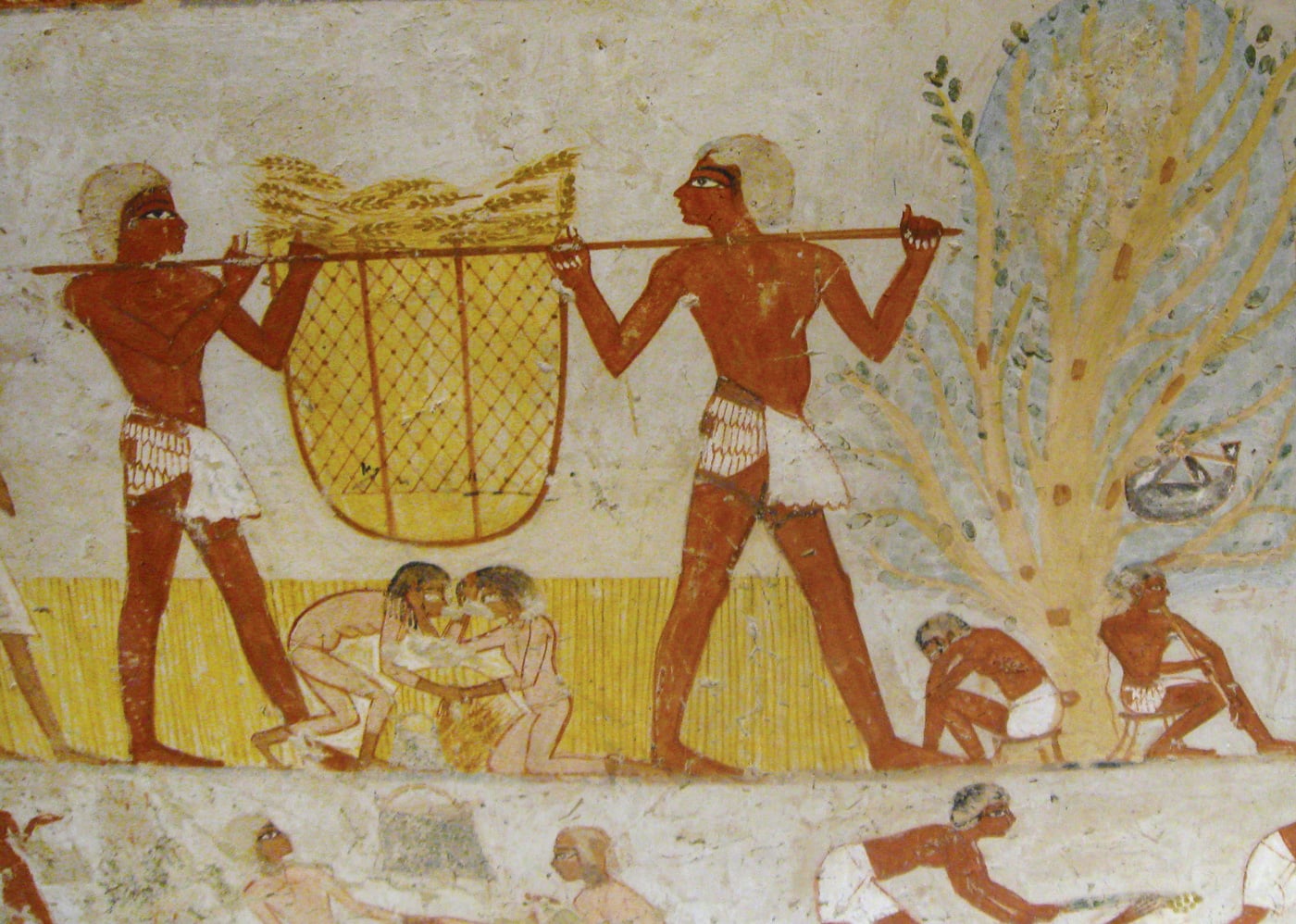
Harvesting scene from the Tomb of Menna (Luxor, Egypt, ca. fourteenth century BC). Notice the two women gleaning in the field and the waterskin hanging on the tree.
The notification that their arrival in Bethlehem (1:18–22) coincides with the beginning of the barley harvest in March to April confirms the correctness of what Naomi heard in the fields of Moab (1:6). But the women’s successful trip is not the sole concern of the chapter. With the conversation between Naomi and Ruth exhibiting mutual resolve and powerful confessions, the author is establishing the exemplary characters of these women. Furthermore, the grim atmosphere is beginning to turn to a more hopeful tone for Naomi, reflecting a hope that becomes more fully developed in what follows.
3. A Worthy Woman Meets a Worthy Man (2:1–23)
A. Ruth finds work (favor) in Boaz’s field (2:1–3). The author introduces the reader to a new character (2:1). Before offering a name introduction, the writer gives information about this person that will be vital to the development of the plot. First, the character happens to be a distant male relative of Naomi’s husband. Second, this relative is designated as a “man of standing” (2:1). The very existence of someone related to Elimelek and Naomi gives the reader cause to hope that Naomi’s misfortunes may change due to legal responsibilities a living family member had to a deceased relative’s family (Lev. 25:25; Deut. 25:5–10). Only after these introductory items do we learn that the person’s name is Boaz. Indeed, Boaz will be the means that allows the widows to find food, favor, and ultimately a restored home. The scene is now set for the “coincidental” meeting between Ruth and Boaz.
At Ruth’s initiative and in accordance with standard Mosaic practice that encouraged the poor and needy to find sustenance by gleaning in another’s field, she sets out (2:2). Upon Ruth’s arrival at the field we are told promptly that it belongs to Boaz, a person from Elimelek’s family (2:3). Here the mention of Boaz’s name appears first, and then his kinship tie to Elimelek follows, a reverse of 2:1. By supplying the field owner’s name first and the kinship tie second, the author creates a tangible hope that Ruth might actually meet Boaz, a necessary rendezvous, one that could potentially help the distressed women. Thus both hope and suspense build as the story unfolds. In Bethlehem there exists a family member who could rescue Naomi (hope). But without the ability to find him, the women have no chance in reestablishing a home (suspense). The chance encounter turns out to be a sovereign setup of circumstances. Boaz notices Ruth and, as a result, she finds escalating favor with him.
B. Boaz reaches out to Ruth, and Ruth responds with gratitude (2:4–16). Boaz speaks for the first time in the narrative (2:4). He exchanges a blessing with his workers, which shows his cordial nature and the good relationship he shares with them. Next Boaz notices a new worker. Once made aware of the worker’s identity, Boaz kindly reaches out to her and, in so doing, reveals the strength of his own character in three ways (2:5–7).
First, he goes beyond the Mosaic mandate (the requirement to leave food for the poor in the fields; Deut. 24:19) by providing for her need to drink, encouraging her to stay in his field, and offering her protection (2:8–9). Boaz also showers Ruth with exceptional favors by allowing her to have a meal with him and the reapers and by granting her special access to wheat pieces deliberately left by the reapers (2:14–16).
Second, Boaz recognizes and honors Ruth’s conduct and reputation. He acknowledges her displays of loyalty to Naomi and family, loyalties that were costly and translated into personal denial and sacrifice (2:11).
Third, he pronounces a blessing on her and asks that she be rewarded richly by “the Lord, the God of Israel, under whose wings you have come to take refuge” (2:12). The latter statement represents Boaz’s own commentary on Ruth’s gestures that have won her a great reputation. He understands that Ruth’s change of ethnic identity is religious in nature. Ruth has put her trust in the Lord rather than in her familiar Moabite deities. The Hebrew term translated here as “refuge” appears mainly, although not exclusively, in the Psalms and reflects one’s personal and private association with the Lord rather than the national or territorial association (e.g., Ps. 7:1; 11:1; 16:1). Furthermore, the compound designation Boaz uses here, “the Lord, the God of Israel,” deliberately distinguishes the Lord from foreign gods, namely, Chemosh, Moab’s chief deity. Thus Boaz seems to be acknowledging that Ruth is a follower of Yahweh. He affirms that her Abrahamic-like abandonment to uproot geographically, no matter how difficult, has brought her to a good place spiritually. He confirms Ruth’s religious assimilation rather than her religious syncretism. Boaz’s words function as a testimonial of Ruth’s character. Indeed, Ruth is doing what she previously pledged to Naomi, to become an Israelite (1:16–17). Furthermore, Boaz’s statement reveals that he views Ruth functionally as an Israelite. In these three ways, Boaz’s speech reveals his strong reputation and character. Through his acts of kindness, Boaz becomes the answer to his own prayer, as the Lord blesses Ruth when Boaz showers her with practical favors and recognition.
Ruth then responds with gratitude. Even as she formally responds to Boaz (2:10), his initial query about the identity of the woman in his field reveals her hardworking nature (2:7). Her physical gesture of bowing down to the ground reflects a deep humility and submission to an elder. Her words that follow illumine more of the integrity of her heart. Regardless of Ruth’s naturalization process, she still considers herself “a foreigner,” a point further illustrated in the remark, “I do not have the standing of one of your servants” (2:10, 13). These statements reflect Ruth’s perception about her origin and not her current status as an Israelite. She assumes her foreign origin naturally disqualifies her from benefiting from Boaz’s generosity. Her overall response is characterized with grace and gratitude (2:10, 13). Thus, through the unexpected meeting and conversation, the author has established the noble characters of Ruth and Boaz. It equally exposes the unseen hand of Yahweh providentially at work. Indeed, a worthy woman meets a worthy man (2:1; 3:11).
C. Ruth returns home with a favorable report (2:17–23). The practical outworking of Boaz’s initial favor translates into the abundance of food Ruth brings back to Naomi after her first day on the job, approximately twenty to twenty-five pounds, or twenty-five liters—enough for roughly five days (2:17). Boaz meets the immediate practical needs of two desperate women. He continues to do so for about three months, the duration of two harvests (2:23). However, later that evening Naomi informs Ruth (the reader already knows this; 2:1) of Boaz’s ability to meet an even greater need (2:20).
Threshing floor outside Bethlehem
On account of Ruth’s fruitful workday and the owner’s obvious generosity, Naomi pronounces a blessing on this man without knowing his identity (2:19). However, once Naomi learns that Boaz is the man Ruth worked for, she bubbles over with enthusiasm and pronounces a second blessing on him. But the latter arises because of the concrete knowledge Naomi now possesses. Not only is Boaz a man of stellar character and wealth, a relative, and known to Ruth, but he happens to be a close relative described by Naomi as “one of our kinsman-redeemers” (2:20 NIV 1984; NIV “guardian-redeemers”).
Mosaic legislation defines a redeemer as a male, near blood relative who has the responsibility for rescuing, protecting, and helping weaker relatives. His responsibilities might include such things as buying back land belonging to relatives that was sold or forfeited, defending legal interests of that relative, executing a relative’s killer, or siring and raising children with the wife of the deceased relative in order to perpetuate the family name (Lev. 25:25–28; Deut. 25:5–10).
The mention of Boaz as kinsman-redeemer injects even more hope into the narrative, a hope only previously alluded to with Boaz’s introduction, the unexpected meeting between Ruth and Boaz, and the favors Boaz bestows on Ruth (2:1, 3, 14–16). Thus Boaz’s crucial role in the story line now unfolds with more specificity. Furthermore, Boaz’s affirmation of Ruth’s covenantal loyalties to the Lord sets the stage for the upcoming betrothal narrative.
A. Naomi navigates a plan (3:1–5). Ruth works in Boaz’s field for about three months and continues to live with Naomi (2:23). But living together was never Naomi’s long-term plan for Ruth. Now that Boaz and Ruth have providentially met, and given that Boaz bears a legal family responsibility, Naomi attempts to secure a new home and identity for Ruth. She hopes to restore the coveted family name and reputation along with any inheritance. Naomi seizes the opportunity to inform Boaz of his responsibility by sending Ruth to communicate to him at the threshing floor.
B. Ruth reaches out to Boaz at the threshing floor (3:6–9). In submission to Naomi, Ruth follows a set of instructions puzzling to a reader removed from Israelite laws and customs. First, Ruth “uncovered his feet and lay down” (3:7). Although she might be uncovering his literal feet, it is possible that she is exposing his private parts, given the euphemistic use of “feet” for genitals and sexual relations elsewhere in the Bible (Isa. 7:20; Deut. 28:57). Second, once he awakes and learns of her identity, Ruth asks specific instructions of him. Her words to Boaz, “Spread the corner of your garment over me, since you are a kinsman-redeemer” (3:9 NIV 1984), indicate a desire for marriage (Ezek. 16:8; Deut. 22:30). As an Israelite, Ruth proposes marriage to Boaz. Her conduct represents an interpretation and contextualization of Israelite law governing a widow’s social standing. However, in light of forbidden Israelite and Moabite relations, she is still taking a great risk, regardless of her solid reputation. For this reason, Naomi and Boaz take precautionary measures as they instruct Ruth.
C. Boaz responds with gratitude and a requirement (3:10–15). Boaz’s response further shows that he is a man of integrity and noble character. He allays her fears and without hesitation happily obliges. His unequivocal acceptance of her proposal relies on the fact that she is a woman of noble character (3:11). Indeed, as a new Israelite, Ruth is a worthy woman. He deems it honorable that Ruth has pursued and preferred him (3:10). It is unfathomable given the writer’s intentionality in bolstering Boaz’s godly and reputable character that he would agree to marry “Ruth, the Moabite” if she had not changed her ethnic identity.
Although Boaz agrees to the proposal and responds with gratitude, a potential threat looms (3:10–13). There exists another man whose legal rights to meet Ruth’s needs surpass his own due to closer familial ties. The law requires that Boaz appeal to this person before agreeing to Ruth’s request (3:10–13). Now there are two possible places where Ruth might find a home! Boaz cautions Ruth but assures her of his strong desire to provide for her.
D. Ruth returns home (3:16–18). Again Boaz does not send Ruth back to Naomi “empty-handed” (3:17). He gives her an ample supply of barley and causes her to return with another favorable report (3:14–15). As before, the favor extended to Ruth concerns more than abundance of food; now it entails Boaz’s verbal commitment to marry Ruth and give her a new home and identity in Israel. Tension still remains, however, as to the full outcome. What will become of Ruth and Boaz? As long as this “other man” exists it remains to be seen whether her new home will be with Boaz.
A. The legal decision made (4:1–6). The escalating tension and suspense finally reach a climactic outcome. By taking the reader directly to the city gate, the place where legal decisions are heard and decided, the author highlights Boaz’s urgency in attending to the matter as anticipated by Naomi (3:18). Reaching a decision entails assembling Boaz and the redeemer to sit and discuss the matter in the company of ten elders, the number required for legal and marriage benedictions (4:1–2). Once Boaz fully airs the matter with the nameless kinsman-redeemer, the latter determines he cannot fulfill his obligations for personal reasons (4:3–6). The curious omission of the redeemer’s personal name represents the author’s way of giving a high profile to the act of redemption, the necessary event to secure restoration for both women. In fact, the terms “redeem” and “kinsman-redeemer” appear multiple times in chapter 4. The repetition reflects the importance of the event. “The redeemer” is relinquishing his rights to Boaz (4:6). Boaz accepts his obligations, which entail marrying Ruth, purchasing the land, and giving money to Naomi in the form of property (4:9–10; Deut. 25:5–10).
B. The decision confirmed (4:7–12). The decision is now confirmed by a sandal exchange and two speeches: one by Boaz (4:9–10) and the other by the gathered witnesses (4:11–12). The sandal exchange functioned like a receipt for business conducted. Accordingly, it indicates a formal transference of property reflecting possession (Josh. 1:3). Boaz’s public and verbal affirmation functions as a ratifying oath sealing the business deal (4:9–10). His statement reveals the intent of the Mosaic legislation: perpetuating the name of the dead. But it also shows how the legislation is contextualized given Naomi’s age. Rather than marry widowed Naomi as prescribed in the law, Boaz agrees to marry “Ruth the Moabite, Mahlon’s widow.” This designation, different from the previous one, is uniquely suited to the legal proceedings. Out of necessity, it emphasizes Ruth’s legal social status as a widow. Together with the sandal exchange it represents a formal declaration of what Boaz gains.
Finally, the public and verbal affirmation of the elders and witnesses concludes the business transaction (4:11–12). The witnesses affirm the rightness of the decision by declaring a blessing on Boaz’s new household: for Boaz’s wife they ask for fruitfulness akin to Rachel’s and Leah’s. They wish Ruth to be like a matriarch in Israel, a key indicator of Ruth’s changed status. They deem her a formal and legitimate member of the house of Israel. For Boaz personally they ask that he be famous in Bethlehem. Indeed, as father of Obed and husband of Ruth, Boaz (already prominent and famous for his acts of kindness) will receive greater renown as an ancestor of David. And for his entire household they ask the blessing of children, such as was found in Perez’s house. By recalling Perez, they are reminded of how his birth parallels the birth of Obed in that it represents the continuation of a threatened lineage through the providence of the Lord and the active role of another wise widow named Tamar (Gen. 38:24–30).
Thus, business in town is terminated. Boaz now has the legal right to marry Ruth. The witness of the Israelite elders and the blessings they pronounce underscore how Ruth, now an Israelite, has the right to receive the blessings of Abraham concerning fruitfulness and prosperity. It shows how an enemy of Israel becomes blessed by pledging allegiance and faithfulness to the Lord.
6. The Marriage: Family Fortunes and Fruitfulness (4:13–17)
Boaz at last marries Ruth. Although she experienced infertility when previously married to Mahlon, the Lord enables her to conceive with Boaz as he enabled Sarah, Rebekah, and Rachel (Gen. 21:1–2; 25:21–25; 30:22–24). The significance of this cannot be overstated. The fact that barren Ruth conceives is a hallmark of the promises to Abraham. More specifically, like the birth of Isaac in the patriarchal narratives, it suggests that David comes from “promise.” In contrast to the opening of the book, where the town’s women noticed Naomi’s emptiness, they now acknowledge her fullness and the Lord’s goodness toward her in the birth of a grandson. In Boaz she has an honorable relative, one who has met her practical needs. Through Ruth, Naomi has experienced deep love and commitment, such as might have been supplied by the ideal of seven sons. And by gaining a grandson Naomi is assured of full restoration to the family name. They ask, as they did for Boaz, that the child be renowned in Israel.
Following this the neighborhood women, not the parents, name the child. They name him Obed, or “the one who serves.” Indeed, their benediction on Obed is realized by the statement, which reveals Obed’s ties to Israel’s famous King David, “[Obed] was the father of Jesse, the father of David” (4:17). Not only will Obed serve Naomi, but Obed, as grandfather of King David, will in turn serve Israel. Accordingly, Obed will receive a renowned reputation. As mother of Obed and wife of Boaz, Ruth (already famous for her acts of kindness) will receive greater renown as an ancestor of David. Thus for the first time in the book the author discards Ruth’s Moabite designation. It is no longer necessary because her marriage to Boaz formalizes her assimilation into Israel. Although once empty, Naomi has now received fullness from the Lord’s sovereign and merciful hand in her old age.
Thus the “naturalization” process that Ruth undergoes enables her to marry Boaz. Ruth finds a new home in Israel, the answer to Naomi’s passionate concern. Ruth also finds a spiritual home by trusting in Israel’s God. Her functional change in ethnic identity, whereby she transfers membership to Israel, also explains how a Moabite can be included in David’s line, the enthusiastic witness of the Israelite elders verifying Ruth’s Israelite membership, and the outpouring of blessings and fruitfulness in Ruth’s life. The evidence suggests that David’s ancestry is neither mixed nor suspicious. In fact, the noble woman and man lauded in the story are no less than the ancestors of the founder of the Judean dynasty. Therefore, the book not only introduces David in a way the books of Samuel and Chronicles do not, but it also appears to be an attempt to legitimize David’s rule so as to free it from any scandal that could have surfaced during or after his reign.
7. Conclusion: Future Fruitfulness (4:18–22)
The concluding genealogy provides proof that their marriage has future implications for the house of Israel. Although deliberately limited in scope, it lauds the fruitfulness of the house of Perez. In describing him as an ancestor of David, the genealogy shows the nature of the restoration afforded to Tamar and to the descendants of Jacob (Gen. 38:29; 46:12). It equally shows the nature of the restoration given to Ruth and Naomi through Boaz. But the genealogy also points forward to the physical and spiritual restoration Israel will experience from King David (2 Samuel 7). The genealogy of David’s family at the end of Ruth declares that Yahweh’s previous promise to Abraham, “and kings shall come forth from you” (Gen. 17:6 RSV), stands for the future regardless of Israel’s present temperament toward the Lord (1:1). Indeed, without this providentially driven betrothal narrative there would have been no King David in Israel.
Although Naomi wanted to establish a home and identity for Ruth, the Lord ultimately builds a home for her in a way Naomi could never have fathomed. On account of Jesus, the great Son of David and the ultimate kinsman-redeemer (Matt. 1:1; Luke 1:68), those who take refuge in him find a new identity as children of God (John 1:12) and a new home as citizens of the eternal kingdom of God (Matt. 19:28–30; Rom. 14:17).
Select Bibliography
Alter, Robert. The Art of Biblical Narrative. New York: Basic Books, 1981.
Berlin, Adele. “Ruth.” In Harper’s Bible Commentary. Edited by James Luther Mays. San Francisco: Harper & Row, 1988.
Campbell, Edward. Ruth: A New Translation and Commentary. Anchor Bible. New York: Doubleday, 1975.
Hubbard, Robert L., Jr. The Book of Ruth. New International Commentary on the Old Testament. Grand Rapids: Eerdmans, 1988.
Nielsen, Kirsten. Ruth. Old Testament Library. Louisville: Westminster John Knox, 1997.
Revell, E. J. The Designation of the Individual: Expressive Usage in Biblical Narrative. Kampen, Netherlands: Kok Pharos, 1996.
Smith, Mark S. “‘Your People Shall Be My People’: Family and Covenant in Ruth 1:16–17.” Catholic Biblical Quarterly 69 (2007): 242–58.
Younger, K. Lawson, Jr. Judges, Ruth. NIV Application Commentary. Grand Rapids: Zondervan, 2002.