A Brief Overview of Christ’s Life
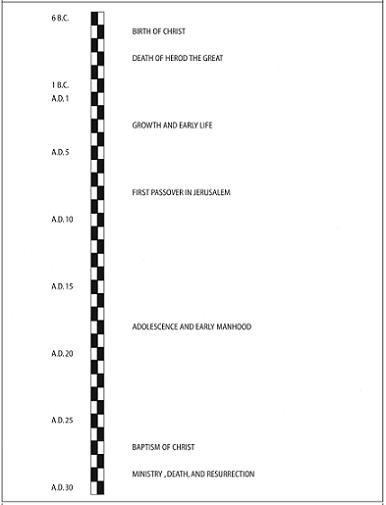
The MacArthur Study Bible, by John MacArthur (Nashville: Word Publishing, 1997) 1385. © 1993 by Thomas Nelson, Inc.
1:15 The time is fulfilled. Refers not to time in a chronological sense, but to the time for decisive action on God’s part. With the arrival of the King, a new era in God’s dealings with men had come. See note on Gal. 4:4. the kingdom of God. Refers to God’s sovereign rule over the sphere of salvation which, at present, is in the hearts of His people (Luke 17:21) and, in the future, in a literal, earthly kingdom (Rev. 20:4–6). at hand. This means that the King was present. Repent, and believe. Repentance (see note on v. 4 ) and faith (see note on Rom. 1:16 ) are man’s required responses to God’s gracious offer of salvation (cf. Acts 20:21).
B. He Calls His Disciples (1:16–20)
1:16 Sea of Galilee. Also known as the Sea of Chinnereth (Num. 34:11), the Lake of Gennesaret (Luke 5:1), and the Sea of Tiberias (John 6:1). A large, freshwater lake about 13 miles long and 7 miles wide, and about 690 feet below sea level (making it the lowest body of fresh water on earth), the Sea of Galilee was home to a thriving fishing industry. Simon and Andrew. The first of two sets of brothers whom Jesus called to follow Him. Like James and John, they were fishermen. Since Andrew had been a follower of John the Baptist (John 1:40), it is possible that Peter had been as well. They had evidently returned to their fishing business after John’s arrest (see note on v. 14 ). They had already met and spent time with Jesus (see note on Matt. 4:18 ), but were here called to follow Him permanently. net. A rope forming a circle about nine feet in diameter with a net attached. It could be thrown by hand into the water, then hauled in by means of a weighted rope attached to it.
1:17 Follow Me. Used frequently in the Gospels in reference to discipleship (2:14; 8:34; 10:21; Matt. 4:19; 8:22; 9:9; 10:38; 16:24; 19:21; Luke 9:23, 59, 61; 18:22; John 1:43; 10:27; 12:26). fishers of men. Evangelism was the primary purpose for which Jesus called the apostles, and it remains the central mission for His people (cf. Matt. 28:19, 20; Acts 1:8).
1:18 followed Him. I.e., became His permanent disciples (see note on v. 16 ).
1:19 James . . . John. The second set of fishermen brothers called by Jesus (see note on v. 16 ). Their mother and Jesus’ mother may have been sisters (cf. 15:40; Matt. 27:55, 56 with John 19:25). If so, they were Jesus’ cousins.
1:20 hired servants. This phrase indicates that Zebedee’s fishing business was a prosperous one and that he was a man of importance (cf. John 18:15).
C. He Ministers in Capernaum (1:21–34)
1:21 Capernaum. A prosperous fishing village on the northwest shore of the Sea of Galilee, Capernaum was a more important city than Nazareth. Capernaum contained a Roman garrison and was located on a major road. Jesus made the city His headquarters (cf. 2:1) after His rejection at Nazareth (Matt. 4:13; Luke 4:16–31). synagogue. The place where Jewish people gathered for worship (“synagogue” is a transliteration of a Greek word meaning “to gather together”). Synagogues originated in the Babylonian captivity after the destruction of the temple by King Nebuchadnezzar of Babylon in 586 B.C.. They served as places of worship and instruction. Jesus frequently taught in the synagogues (cf. v. 39; 3:1; 6:2), as did Paul (cf. Acts 13:5; 14:1; 17:1). taught. Mark frequently mentions Jesus’ teaching ministry (cf. 2:13; 4:1, 2; 6:2, 6, 34; 10:1; 11:17; 12:35; 14:49).
1:22 authority. Jesus’ authoritative teaching, as the spoken Word of God, contrasts sharply with that of the scribes (experts in the OT Scriptures), who based their authority largely on that of other rabbis. Jesus’ direct, personal, and forceful teaching was so foreign to their experience that those who heard Him were are “astonished” (cf. Titus 2:15).
1:23 man . . . cried out. Satan and his demon hosts opposed Jesus’ work throughout His ministry, culminating in the Cross. Jesus always triumphed over their futile efforts (cf. Col. 2:15), convincingly demonstrating His ultimate victory by His Resurrection. unclean spirit. I.e., morally impure. The term is used interchangeably in the NT with “demon.” See note on 5:2.
1:24 What have we to do with You. Or, possibly, “Why do you interfere with us?” The demon was aware that he and Jesus belonged to two radically different kingdoms, and thus had nothing in common. That the demon used the plural pronoun “we” indicates that he spoke for all the demons. Nazareth. See note on verse 9. the Holy One of God. Cf. Psalm 16:10; Daniel 9:24; Luke 4:34; Acts 2:27; 3:14; 4:27; Revelation 3:7. Amazingly, the demon affirmed Jesus’ sinlessness and deity—truths which many in Israel denied, and still deny.
1:25 Be quiet. Jesus wanted no testimony to the truth from the demonic realm to fuel charges that He was in league with Satan (cf. 3:22; Acts 16:16–18).
1:27 with authority. See note on verse 22. Jesus had absolute authority in His actions as well as His words (Matt. 28:18).
1:29 the house of Simon and Andrew. Originally from Bethsaida (John 1:44), the two brothers had moved to Capernaum when Jesus established his headquarters there (see note on v. 21 ). James and John. Only Mark mentions their presence at the healing of Peter’s mother-in-law.
1:30 Simon’s wife’s mother. Paul also affirmed that Peter was married (1 Cor. 9:5). That his mother-in-law was living with Peter and his wife may indicate that her husband was dead. a fever. That she was too ill to get out of bed, coupled with Luke’s description of her fever as a “high fever” (Luke 4:38), suggest that her illness was serious, even life-threatening.
1:32 when the sun had set. This marked the close of the Sabbath and the easing of the restrictions associated with it. Specifically, rabbinic law prohibited carrying any burdens (such as stretchers) on the Sabbath. they brought. The report of Jesus’ healing of the demon-possessed man in the synagogue and Peter’s mother-in-law created a sensation in Capernaum and aroused the hopes of other sufferers.
1:34 did not allow the demons to speak. See notes on verse 25; 3:11, 12. they knew Him. The demons’ theology was absolutely orthodox (James 2:19); but though they knew the truth, they rejected it and God, who is its source.
D. He Reaches Out to Galilee (1:35–45)
1:36 Simon and those who were with Him. The first instance in the Gospels of Peter’s assuming of leadership. The pronoun “Him” would be better translated “him,” referring to Peter, not Jesus’ companions. Those with Peter are not named, though Andrew, James, and John were likely among them.
1:37 Finding Jesus after a diligent search (v. 36), Peter and the others implored Him to return to Capernaum and capitalize on the excitement generated by the previous night’s healings.
1:39 throughout all Galilee. Mark’s terse statement summarizes a preaching tour that must have lasted for weeks, or even months (cf. Matt. 4:23, 24).
1:40–45 Mark relates one of Jesus’ many healings during the Galilean ministry summarized in verse 39. The leper’s healing emphasizes Jesus’ miraculous power over disease, since leprosy was one of the most dreaded diseases of antiquity.
1:40 leper. Lepers were considered ceremonially unclean, and were outcasts from society (Lev. 13:11). While the OT term for leprosy includes other skin diseases (see note on Lev. 13:2 ), this man may have actually had true leprosy (Hansen’s Disease), or else his cure would not have created such a sensation (v. 45).
1:41 compassion. Only Mark records Jesus’ emotional reaction to the leper’s desperate plight. The Greek word appears only in the synoptic Gospels and (apart from parables) is used only in reference to Jesus. touched him. Unlike rabbis, who avoided lepers lest they become ceremonially defiled, Jesus expressesd His compassion with a physical gesture.
1:44 say nothing to anyone. The ensuing publicity would hinder Jesus’ ability to minister (as in fact happened, cf. v. 45) and divert attention away from His message. Cf. 3:12; 5:43; 7:36; see note on Matthew 8:4. go your way, show yourself to the priest. The priest was the one on duty at the temple. Jesus commanded the healed leper to observe the OT regulations concerning cleansed lepers (Lev.14:1–32). Until the required offerings had been made, the man remained ceremonially unclean. a testimony to them. The priest’s acceptance of the man’s offering would be public affirmation of his cure and cleansing.
1:45 proclaim it freely. Only Mark records the cleansed leper’s disobedience, although Luke hints at it (Luke 5:15). no longer openly enter the city. The result of the leper’s disobedience was that Jesus could no longer enter a city without being mobbed by those seeking to be cured of diseases. Jesus’ ministry of teaching in that area thus came to a halt. deserted places. Jesus kept to the relatively uninhabited regions to allow the excitement over His cure of the leper to die down. Luke also notes that He used His time in the wilderness for prayer (Luke 5:16).
E. He Defends His Ministry (2:1–3:6)
2:1 This conflict episode is the first of five conflict episodes (2:1–12; 13–17, 18–22, 23–28; 3:1–6). He was in the house. This is better translated, “He was at home.” This home was likely Peter’s home, where Jesus had taken up temporary residence (cf. Matt. 4:13).
2:2 the word. The Good News of the Gospel, that salvation is by grace alone, through faith alone, for the forgiveness of sins.
2:3 a paralytic. Since he was lying on a bed, the man’s paralysis was severe—perhaps he was a quadriplegic.
2:4 they uncovered the roof. Most homes in Palestine had flat roofs used for relaxation in the cool of the day and for sleeping on hot nights, and there was usually an external stairway that extended to the roof. Often, as here, the roof was made of slabs of burnt or dried clay that were placed on supporting beams which stretched from wall to wall. The builder then spread a uniform coat of fresh, wet clay over those slabs of hardened clay to serve as a seal against the rain. The paralytic’s friends took him up to the top of such a house and dug out the top coat of clay, removing several of the slabs until they made enough room to lower him down into Jesus’ presence. the paralytic. See note on verse 3.
2:5 When Jesus saw their faith. The aggressive, persistent effort of the paralytic’s friends was visible evidence of their faith in Christ to heal. Son, your sins are forgiven you. Many Jews in that day believed that all disease and affliction was a direct result of one’s sins. This paralytic may have believed that as well; thus, he would have welcomed forgiveness of his sins before healing. The Greek verb for “are forgiven” refers to sending or driving away (cf. Ps. 103:12; Jer. 31:34; Mic. 7:19). Thus, Jesus dismissed the man’s sin and freed him from its guilt (see note on Matt. 9:2 ).
2:6 the scribes. See note on Matthew 2:4; cf. 1:22.
2:7 this Man . . . blasphemies. The scribes were correct in saying that only God can forgive sins (cf. Is. 43:25), but incorrect in saying Jesus blasphemes. They refused to recognize Jesus’ power as coming from God, much less that He Himself was God.
2:8 in His spirit. This can also be translated, “by His spirit.” This phrase refers not to the Holy Spirit, but to the omniscient mind of the Savior.
2:9 Which is easier. It is much easier to say, “Your sins are forgiven you.” No human can disprove that such a thing actually occurred since it is invisible. Commanding a paralytic to walk would be more difficult to say convincingly, however, because the actions of the paralytic would immediately verify the effect (healed or not healed) of the command (see note on Matt. 9:5 ).
2:10 But that you may know. Jesus’ power to heal the paralytic’s physical infirmities proved the veracity of His claim and power to forgive sins. Son of Man. Jesus used this term for Himself to emphasize His humiliation (see notes on 14:62; Matt. 8:20 ). It appears fourteen times in Mark (vv. 10, 28; 8:31, 38; 9:9, 12, 31; 10:33, 45; 13:26; 14:21 (twice), 41, 62).
2:14 Levi the son of Alphaeus. One of the Twelve, more commonly known as Matthew (see Introduction to Matthew: Title). tax office. Matthew was a publican, a tax collector, a despised profession in Palestine because such men were viewed as traitors. Publicans were Jews who had bought tax franchises from the Roman government. Any amount they collected over what Rome required, they were allowed to keep. Thus, many publicans became wealthy at the expense of their own people (see notes on Matt. 5:46; 9:9 ). he arose and followed Him. This simple action of Matthew signified his conversion. Because his response was so immediate, it is likely that Matthew was already convicted of his sin and recognized his need of forgiveness.
2:15 dining. This can also be translated, “reclining at table,” a common posture for eating when guests were present. According to Luke 5:29, this was a feast that Matthew gave in Jesus’ honor. tax collectors. There were two categories of tax collectors: (1) gabbai, who collected general taxes on land and property, and on income, referred to as poll or registration taxes; (2) mokhes, who collected a wide variety of use taxes, similar to our import duties, business license fees, and toll fees. There were two categories of mokhes: Great mokhes hired others to collect taxes for them, while small mokhes did their own assessing and collecting. Matthew was a small mokhe. It is likely that representatives of both classes attended Matthew’s feast. All of them were considered both religious and social outcasts. sinners. A term the Jews used to describe people who had no respect for the Mosaic Law or rabbinic traditions, and were, therefore, the most vile and worthless of people. sat together. Lit. “were reclining with.” Jesus’ willingness to associate with tax collectors and sinners by sharing in the feast with them deeply offended the scribes and Pharisees.
2:16 scribes and Pharisees. Lit. “the scribes of the Pharisees.” This phrase indicates that not all scribes were Pharisees (on scribes, see note on Matt. 2:4 ). Pharisees were a legalistic sect of Jews known for their strict devotion to the ceremonial law (see note on Matt. 3:7 ).
2:17 I did not come to call the righteous. The words “to repentance” do not appear in the better manuscripts. They do appear, however, in Luke 5:32, a parallel passage. The repentant person—the one who recognizes he is a sinner and who turns from his sin—is the object of Jesus’ call. The person who is sinful but thinks he is righteous refuses to acknowledge his need to repent of his sin. See notes on Matthew 9:12, 13; John 9:39–41.
2:18 disciples of John. Those followers of John the Baptist who did not transfer their allegiance to Jesus (cf. John 3:30; Acts 19:1–7). At this time John was is in prison (Matt. 4:12). Their question indicates that they were observing the Pharisaic traditions (cf. Matt. 9:14). the Pharisees. See note on verse 16. The association of John’s disciples with the Pharisees indicates that both groups were disturbed about the problem raised by Jesus’ association with tax collectors and sinners (cf. v. 15). fasting. The twice-a-week fast was a major expression of orthodox Judaism during Jesus’ day (cf. Luke 18:9–14). Yet, the OT prescribed only one fast, and that on the Day of Atonement (Lev. 16:29, 31).
2:19 friends of the bridegroom fast. In Jesus’ illustration, the “friends of the bridegroom” were the attendants the bridegroom selected to carry out the wedding festivities. This was certainly not a time to fast. Fasting was usually associated with mourning or times of great spiritual need. Jesus’ point was that the ritual practiced by John’s disciples and the Pharisees was out of touch with reality. There was no reason for Jesus’ followers to mourn and fast while enjoying the unique reality of His presence among them.
2:20 taken away from them. This refers to a sudden removal or being snatched away violently—an obvious reference to Jesus’ capture and crucifixion. then they will fast. An appropriate time for mourning was to be at the Crucifixion of Jesus.
2:21, 22 Jesus offered two parables to illustrate that His new and internal gospel of repentance from and forgiveness of sin could not be connected to or contained in the old and external traditions of self-righteousness and ritual (see note on Matt. 9:17 ).
2:22 new wineskins. Newly made and unused wineskins provided the necessary strength and elasticity to hold up as wine fermented.
2:23 grainfields. The roads in first-century Palestine were primarily major arteries; once travelers left those main roads, they walked along wide paths that bordered and traversed pastures and grain fields. on the Sabbath. Sabbath transliterates a Hebrew word that refers to a ceasing of activity or rest. In honor of the day when God rested from His creation of the world (Gen. 2:3), the Lord declared the seventh day of the week to be a special time of rest and remembrance for His people, which He incorporated into the Ten Commandments (see note on Ex. 20:8 ). But hundreds of years of rabbinical teaching had added numerous unbearable and arbitrary restrictions to God’s original requirement, one of which forbade any travel beyond three thousand feet of one’s home (cf. Num. 35:5; Josh. 3:4). pluck the heads of grain. Travelers who did not take enough food for their journey were permitted by the Mosaic Law to pick enough grain to satisfy their hunger (Deut. 23:24, 25; see note on Matt. 12:2 ).
2:24 what is not lawful on the Sabbath. Rabbinical tradition had interpreted the rubbing of grain in the hands (cf. Luke 6:1) as a form of threshing and had forbidden it. Reaping for profit on the Sabbath was forbidden by the Mosaic Law (Ex. 34:21), but that profit-seeking was obviously not the motive here (see note on Matt. 12:2 ). Actually, the Pharisees’ charge was is itself sinful since they were holding their tradition on a par with God’s Word (see notes on Matt.15:2–9 ).
2:25 He said to them, “Have you never read . . .” Jesus’ sarcasm pointed out the main fault of the Pharisees, who claimed to be experts and guardians of Scripture, yet were ignorant of what it actually taught (cf. Rom. 2:17–24). what David did. David and his companions were fleeing for their lives from Saul when they arrived at Nob, where the tabernacle was located at that time. Because they were hungry, they asked for food (cf. 1 Sam. 21:1–6).
2:26 in the days of Abiathar the high priest. The phrase “in the days” can mean “during the lifetime.” According to 1 Samuel 21:1, Ahimelech was the priest who gave the bread to David. Abiathar was Ahimelech’s son, who later was the high priest during David’s reign. Since Ahimelech died shortly after this incident (cf. 1 Sam. 22:19, 20), it is likely that Mark simply added this designation to identify the well-known companion of David who later became the high priest, along with Zadok (2 Sam. 15:35). the show-bread. Twelve loaves of unleavened bread (representing the twelve tribes of Israel) were placed on the table in the sanctuary of the tabernacle and, at the end of the week, replaced with fresh ones. The old loaves were to be eaten only by the priests. While it was not normally lawful for David and his companions to eat this showbread, neither did God want them to starve; so, nowhere does Scripture condemn them for eating this bread (see note on Matt. 12:4 ).
2:27 The Sabbath was made for man. God instituted the Sabbath to benefit man by giving him a day to rest from his labors and to be a blessing to him. The Pharisees turned it into a burden and made man a slave to their myriad of man-made regulations.
2:28 also Lord of the Sabbath. Jesus claimed that He was greater than the Sabbath, and thus was God. Based on that authority, Jesus could, in fact, reject the Pharisaic regulations concerning the Sabbath and restore God’s original intention for Sabbath observance to be a blessing, not a burden.
3:1–6 This conflict episode is the last of the five conflict episodes which began in 2:1 (2:1–12, 13–17, 18–22, 23–28). As such, it gives a sense of climax to the growing antagonism between Jesus and the Jewish leaders. In this encounter, Jesus gave the Pharisees a living illustration of scriptural Sabbath observance and His sovereign authority over both man and the Sabbath.
3:1 synagogue. The Jews’ local places of assembly and worship (see note on 1:21 ). withered hand. This describes a condition of paralysis or deformity from an accident, a disease, or a congenital defect.
3:2 accuse. The Pharisees were not open to learning from Jesus, but only looked for an opportunity to charge Him with violating the Sabbath, an accusation they could bring before the Sanhedrin.
3:4 Jesus countered the Pharisees with a question that elevated the issue at hand from a legal to a moral problem. Is it lawful. By referring to the Mosaic Law, Jesus was forcing the Pharisees to examine their tradition regarding the Sabbath to see if it was consistent with God’s OT law. to do good . . . evil, to save . . . kill. Christ used a device common in the Middle East—He framed the issue in terms of clear-cut extremes. The obvious implication is that failure to do good or save a life was wrong and not in keeping with God’s original intention for the Sabbath (see notes on 2:27; Matt. 12:10 ). But they kept silent. The Pharisees refused to answer Jesus’ question, and by their silence implied that their Sabbath views and practices were false.
3:5 anger. Definite displeasure with human sin reveals a healthy, moral nature. Jesus’ reaction was consistent with His divine nature and proved that He is the righteous Son of God. This kind of holy indignation toward sinful attitudes and practices was to be more fully demonstrated when Jesus cleansed the temple (cf. 11:15–18; Matt. 21:12, 13; Luke 19:45–48). hardness of their hearts. This phrase refers to an inability to understand because of a rebellious attitude (Ps. 95:8; Heb. 3:8, 15). The Pharisees’ hearts were becoming more and more obstinate and unresponsive to the truth (cf. 16:14; Rom. 9:18).
3:6 the Pharisees . . . plotted. They absolutely refused to be persuaded by anything Jesus said and did (cf. John 3:19), but were instead determined to kill Him. The Greek word for “plotted” (lit. “counseled together”) includes the notion of carrying out a decision already made; the Pharisees were simply discussing how to implement it. Herodians. This secular, political party, which took its name from Herod Antipas and was strong in its support for Rome, opposed the Pharisees on nearly every issue, but were willing to join forces with them because both desperately wanted to destroy Jesus. See note on Matthew 22:16.
F. He Ministers to Multitudes (3:7–12)
3:8 In spite of His conflicts with the Pharisees, Jesus remained very popular with the ordinary people. Mark is the only Gospel writer who, at this point in Jesus’ ministry, noted that the masses came from all parts of Palestine to see and hear Him. Idumea. An area southeast of Judea, mentioned only here in the NT and populated by many Edomites (originally descendants of Esau, see note on Gen. 36:43 ). By this time, it had become mostly Jewish in population and was considered a part of Judea. beyond the Jordan. The region east of the Jordan River, also called Perea, and ruled by Herod Antipas. Its population contained a large number of Jews. Tyre and Sidon. Two Phoenician cities on the Mediterranean coast, north of Galilee. Phoenicia as a whole was often designated by these cities (cf. Jer. 47:4; Joel 3:4; Matt. 11:21; Acts 12:20).
3:10 afflictions. Lit. “a whip, a lash,” sometimes translated “plagues,” or “scourges.” This term metaphorically describes various painful, agonizing physical ailments and illnesses.
3:11 unclean spirits. This refers to demons (see note on 1:23; cf. Luke 4:41). whenever they saw Him. The tense of the Greek verb means there were many times when demons looked at Jesus and contemplated the truth of His character and identity. You are the Son of God. Cf. 1:24. The demons unhesitatingly affirmed the uniqueness of Jesus’ nature, which Mark saw as clear proof of Jesus’ deity.
3:12 warned . . . not make Him known. Jesus always rebuked demons for their testimonies about Him. He wanted His teaching and actions, not the impure words of demons, to proclaim who He was (see note on 1:25; cf. Acts 16:16–18).
G. He Commissions the Twelve (3:13–19)
3:13 called . . . those He Himself wanted. The Greek verb called empasizes that Jesus acted in His own sovereign interest when He chose the twelve disciples (cf. John 15:16).
3:14 appointed twelve. Christ, by an explicit act of His will, formed a distinct group of twelve men who were among His followers (see note on Matt. 10:1 ). This new group constituted the foundation of His church (cf. Eph. 2:20).
3:15 have power. This word for power is sometimes rendered “authority.” Along with the main task of preaching, Jesus gave the Twelve the right to expel demons (cf. Luke 9:1).
3:16–19 A list of the Twelve (see notes on Matt. 10:2–4 ).
3:16 Peter. From this point on (except in 14:37), Mark uses this name for Simon, though this is not when the designation was first given (cf. John 1:42), nor does it mark the complete replacement of the name Simon (cf. Acts 15:14). The name means “stone,” and describes Peter’s character and activities, namely, his position as a foundation rock in the building of the church (cf. Matt. 16:18; Eph. 2:20).
3:17 Sons of Thunder. Mark defines the Aramaic term “Boanerges” for his Gentile readers. This name for the two brothers probably referred to their intense, outspoken personalities (cf. 9:38; Luke 9:54).
3:18 Thaddaeus. The only name that is not the same in all the NT lists of the Twelve (cf. Matt. 10:2–4; Luke 6:14–16; Acts 1:13). Matthew calls him Lebbaeus, with Thaddaeus as a surname (Matt. 10:3); Luke and Acts call him “Judas the son of James”; and John 14:22 refers to him as “Judas (not Iscariot).” the Cananite. This title does not indicate that this Simon was a native of Cana. Rather, the word is derived from the Aramaic, which means “to be zealous” and was used for those who were zealous for the Law. Luke uses the word transliterated from the Greek term that meant “the Zealot” (Luke 6:15; see note on Matt. 10:4 ).
3:19 Iscariot. This Hebrew term means “man of Kerioth,” as in Kerioth-Hezron, south of Hebron (Josh. 15:25). went into a house. A clearer translation is “went home,” which would refer to Jesus’ return to Capernaum (cf. 2:1). Verse divisions of the text are also misleading here; the phrase should be included with verse 20 and actually start the new paragraph.
H. He Rebukes the Scribes and Pharisees (3:20–30)
3:21 His own people. In Greek, this expression was used in various ways to describe someone’s friends or close associates. In the strictest sense, it means family, which is probably the best understanding here. lay hold of Him. Mark uses this same term elsewhere to mean the arrest of a person (6:17; 12:12; 14:1, 44, 46, 51). Jesus’ relatives evidently heard the report of verse 20 and came to Capernaum to restrain Him from His many activities and bring Him under their care and control, all supposedly for His own good. out of His mind. Jesus’ family could only explain His unconventional lifestyle, with its willingness for others always to impose on Him, only by saying He was irrational or had lost His mind.
3:22 scribes. Jewish scholars, also called lawyers, mostly Pharisees who were experts in the law and its application (see note on Matt. 2:4 ). Beelzebub. Satan (see note on Luke 11:15 ).
3:23 parables. Jesus answered the scribes by making an analogy between well-known facts and the truths He expounded (see note on Matt. 13:3 ).
| Matthew 10:2—4 | Mark 3:16—19 | Luke 6:13—16 | Acts 1:13 |
| 1. Simon called Peter | Simon named Peter | Simon named Peter | Peter |
| 2. Andrew | James, son of Zebedee | Andrew, Peter’s brother | James |
| 3. James, son of Zebedee | John, brother of James | James | John |
| 4. John | Andrew | John | Andrew |
| 5. Philip | Philip | Philip | Philip |
| 6. Bartholomew | Bartholomew | Bartholomew | Thomas |
| 7. Thomas | Matthew | Matthew | Bartholomew |
| 8. Matthew the tax collector | Thomas | Thomas | Matthew |
| 9. James, son of Alphaeus | James, son of Alphaeus | James, son of Alphaeus | James, son of Alphaeus |
| 10. Lebbaeus surnamed Thaddaeus | Thaddaeus | Simon called the Zealot | Simon the Zealot |
| 11. Simon the Cananite | Simon the Cananite (cf. John 14:22) | Judas, son of James | Judas, son of James |
| 12. Judas Iscariot | Judas Iscariot | Judas Iscariot | Matthias to be selected (v. 26) |
3:26 has an end. An expression used only in Mark which refers to Satan’s ultimate doom as head of the demonic world system. See notes on Revelation 20:1–10.
3:27 enter a strong man’s house and plunder his goods. One must be stronger than Satan in order to enter his domain (“strong man’s house”), bind him (restrain his action), and free (“plunder”) people (“his goods”) from his control. Only Jesus had such power over the devil. Cf. Romans 16:20; Hebrews 2:14, 15.
3:28 Assuredly, I say to you. Mark’s first use of this expression, which occurs throughout the Gospels, is used as a formula that always introduces truthful and authoritative words from Jesus (cf. 6:11; 8:12; 9:1, 41; 10:15, 29; 11:23; 12:43; 13:30; 14:9, 18, 25, 30).
3:29 he who blasphemes . . . never has forgiveness. When a person deliberately and disrespectfully slanders the person and ministry of the Holy Spirit in pointing to the lordship and redemption of Jesus Christ, he forfeits any possibility of forgiveness of sins (see note on Matt. 12:31 ), because he has wholly rejected the only basis of God’s salvation.
I. He Identifies His Spiritual Family (3:31–35)
3:31 His brothers and His mother. I.e., Jesus’ earthly family (see notes on v. 21; Matt.12:46 ). The narrative that left off at verse 21 resumes here.
3:35 Jesus makes a decisive and comprehensive statement on true Christian discipleship. Such discipleship involves a spiritual relationship that transcends the physical family and is open to all who are empowered by the Spirit of God to come to Christ in repentance and faith and enabled to live a life of obedience to God’s Word.
J. He Preaches in Parables (4:1–34)
4:1 sat. Sitting is the typical rabbinical position for teaching; and more practically, Jesus may have sat because of the rocking of the boat in the water.
4:2 parables. A common method of teaching in Judaism, which Jesus uses to conceal the truth from unbelievers while explaining it to His disciples (cf. v. 11; see note on Matt. 13:3 ).
4:3–8 This parable depicts the teaching of the gospel throughout the world and the various responses of people to it. Some will reject it; some will accept it for a brief time, but then fall away; yet, some will believe and will lead others to believe.
4:4 wayside. I.e., either a road near a field’s edge or a path that traversed a field, both of which were hard surfaces due to constant foot traffic.
4:5 stony ground. Beds of solid rock, usually limestone, lying under the surface of good soil. They are a little too deep for the plow to reach, and too shallow to allow a plant to reach water and develop a decent root system in the small amount of soil that covers them.
4:7 thorns. Tough, thistle-bearing weeds that use up the available space, light, and water that good plants need.
4:8 increased . . . a hundred. An average ratio of harvested grain to what had been sown was 8 to 1, with a 10 to 1 ratio considered exceptional. The yields Jesus refers to are like an unbelievable harvest.
4:9 He who has ears to hear, let him hear! On the surface, this is a call for the listener to be attentive and discern the meaning of Jesus’ analogy. Yet, more than human understanding is necessary to interpret the parable. Only those who have been redeemed will have the true meaning explained to them by the divine Teacher.
2. The reason for parables (4:10–12)
4:11 mystery . . . parables. A “mystery” refers to something previously hidden and unknown but revealed in the NT (see notes on 1 Cor. 2:7; Eph. 3:4–6 ). In context, the subject of the mystery is the kingdom of heaven (see note on Matt. 3:2 ), which Jesus communicates in the form of parables. Thus the mystery is revealed to those who believe; yet, it remains concealed to those who reject Christ and His gospel (see note on Matt.13:11 ). to those who are outside. I.e., those who are not followers of Christ.
4:12 so that. See note on Matthew 13:13. Unlike Matthew, which specifically quotes Isaiah 6:9, 10, Mark quotes Jesus as giving the substance of what Isaiah wrote in that text. Lest they should turn. The implication is that unbelievers do not want to turn from sin (see notes on Matt. 13:3, 13 ).
3. The parable of the sower explained (4:13–20)
4:13 all the parables. Understanding the parable of the sower is to be key in to the disciples’ ability to discern the meaning of Jesus’ other parables of the kingdom (vv. 21–34).
4:14–20 Jesus explains the parable of the sower. Jesus is the sower, who is in fact Jesus Himself (cf. Matt. 13:37), along with anyone who proclaims the gospel.
4:14 the word. Luke 8:11 says it is the “word of God,” and Matthew 13:19 calls it the “word of the kingdom.” It is the salvation gospel (see note on Matt. 13:19 ).
4:16 receive it with gladness. Gladness here indicates an enthusiastic, emotional, yet superficial response to the gospel that does not take into account the cost involved.
4:17 no root. Because the person’s heart is hard, like the stony ground (see note on v. 5 ), the gospel never takes root in the individual’s soul and never transforms his life; there is only a temporary, surface change. tribulation or persecution. Not the routine difficulties and troubles of life, but specifically the suffering, trials, and persecutions that result from one’s association with God’s Word. stumble. The Greek word also means “to fall” or “to cause offense.” From this Greek word comes the English word scandalize. All those meanings are appropriate since the superficial believer is offended, stumbles, and falls away when his faith is put to the test (cf. John 8:31; 1 John 2:19).
4:19 cares of this world. Lit. “the distractions of the age.” A preoccupation with the temporal issues of this present age blinds a person to any serious consideration of the gospel (cf. James 4:4; 1 John 2:15, 16). deceitfulness of riches. Not only do money and material possessions not fail to satisfy the desires of the heart or bring the lasting happiness they deceptively promise, but they also blind those who pursue them to eternal, spiritual concerns (1 Tim. 6:9, 10).
4:20 hear . . . accept . . . bear fruit. Three Greek present participles mark continuing action. Believers, in contrast to unbelievers, hear God’s Word because God allows them to hear it. They “accept” it; they understand and obey it because God opens their mind and heart and transforms their lives. The result is that they produce spiritual fruit.
4:21 lamp. This refers to a small clay bowl made with a spout to hold a wick and containing a few ounces of oil that served as the fuel. a lampstand. In common homes, this was simply a shelf protruding from the wall. Wealthier homes might have separate, ornate stands (cf. Rev. 1:12).
4:22 there is nothing hidden . . . revealed. The purpose in keeping something hidden is so that one day it can be revealed. Jesus’ teaching was never intended to be just for an inner circle of followers. It would be the responsibility of the disciples to communicate the gospel of the kingdom to the world at large (cf. Matt. 28:19, 20).
4:24 With the same measure. The disciples will realize spiritual results which the disciples realized were to be in proportion to the amount of effort they put forth; they would reap as they had sown. more will be given. The one who has learned spiritual truth and applied it diligently will receive even more truth to apply.
4:26–29 Only Mark records this parable which complements the parable of the sower by explaining in more depth the results of spiritual growth accomplished in good soil.
4:26 kingdom of God. See note on 1:15.
4:29 he puts in the sickle, because the harvest has come. When the grain is ripe, the sower of the seed must harvest the crop. There are two possible interpretations of this unexplained parable. It could be referring to the entire scope of the kingdom, from the time Jesus sowed the gospel message until the final harvest in the future. His disciples would continue the work of presenting the gospel that would eventually yield a harvest. The better interpretation pictures the gospel working in lives. After the gospel is presented, the Word of God works in the individual heart, sometimes slowly, until the time when God reaps the harvest in that person and saves him.
| Parable | Matthew | Mark | Luke |
| 1. Lamp Under a Basket | 5:14–16 | 4:21,22 | 8:16,17; 11:33–36 |
| 2. A Wise Man Builds on Rock and a Foolish Man Builds on Sand | 7:24–27 | 6:47–49 | |
| 3. Unshrunk (New) Cloth on an Old Garment | 9:16 | 2:21 | 5:36 |
| 4. New Wine in Old Wineskins | 9:17 | 2:22 | 5:37,38 |
| 5. The Sower | 13:3–23 | 4:2–20 | 8:4–15 |
| 6. The Tares (Weeds) | 13:24–30 | ||
| 7. The Mustard Seed | 13:31,32 | 4:30–32 | 13:18,19 |
| 8. The Leaven | 13:33 | 13:20,21 | |
| 9. The Hidden Treasure | 13:44 | ||
| 10. The Pearl of Great Price | 13:45,46 | ||
| 11. The Dragnet | 13:47–50 | ||
| 12. The Lost Sheep | 18:12–14 | 15:3–7 | |
| 13. The Unforgiving Servant | 18:23–35 | ||
| 14. The Workers in the Vineyard | 20:1–16 | ||
| 15. The Two Sons | 21:28–32 | ||
| 16. The Wicked Vinedressers | 21:33–45 | 12:1–12 | 20:9–19 |
| 17. The Wedding Feast | 22:2–14 | ||
| 18. The Fig Tree | 24:32–44 | 13:28–32 | 21:29–33 |
| 19. The Wise and Foolish Virgins | 25:1–13 | ||
| 20. The Talents | 25:14–30 | ||
| 21. The Growing Seed | 4:26–29 | ||
| 22. The Absent Householder | 13:33–37 | ||
| 23. The Creditor and Two Debtors | 7:41–43 | ||
| 24. The Good Samaritan | 10:30–37 | ||
| 25. A Friend in Need | 11:5–13 | ||
| 26. The Rich Fool | 12:16–21 | ||
| 27. The Watchful Servants | 12:35–40 | ||
| 28. The Faithful Servant and the Evil Servant | 12:42–48 | ||
| 29. The Barren Fig Tree | 13:6–9 | ||
| 30. The Great Supper | 14:16–24 | ||
| 31. Building a Tower and a King Making War | 14:25–35 | ||
| 32. The Lost Coin | 15:8–10 | ||
| 33. The Lost Son | 15:11–32 | ||
| 34. The Unjust Steward | 16:1–13 | ||
| 35. The Rich Man and Lazarus | 16:19–31 | ||
| 36. Unprofitable Servants | 17:7–10 | ||
| 37. The Persistent Widow | 18:1–8 | ||
| 38. The Pharisee and the Tax Collector | 18:9–14 | ||
| 39. The Minas (Pounds) | 19:11–27 |
The MacArthur Study Bible, by John MacArthur (Nashville: Word Publishing, 1997) 1417. © 1993 by Thomas Nelson, Inc.
4:30–32 This parable of the mustard seed pictures the kingdom of God’s beginning with a small influence and then becoming worldwide in its scope.
4:31 a mustard seed. A reference to the common, black mustard plant. The leaves were used as a vegetable and the seed as a condiment. It also had medicinal benefits. smaller than all. The mustard seed is not the smallest of all seeds in existence, but it was in comparison to all the other seeds the Jews sowed in Palestine.
4:32 herbs. This refers to garden vegetables grown specifically for eating. birds of the air. While not a tree in the truest sense of the word, the mustard shrub has been known to grow as large as fifteen feet high and to have the properties of a tree, such as having branches large enough for birds to nest in. The tree represents the sphere of salvation, which would grow so large that it would provide shelter, protection, and benefit to people (see note on Matt. 13:32 ). Even unbelievers have been blessed by association with the gospel and the power of God in salvation. Christians have been a benediction to the world. See note on 1 Cor. 7:14.
4:33, 34 This conclusion to Mark’s account of Jesus’ parables highlights Mark’s recording only representative samples of all the parables Jesus taught.
4:34 But without a parable He did not speak to them. On that particular day, Jesus spoke to the larger crowd only in parables. This method of teaching left unbelievers with riddles and kept them from being forced to believe or disbelieve Him. They could make no decision to follow Him since they did not understand what He taught.
K. He Demonstrates His Power (4:35–5:43)
1. Calming the waves (4:35–41)
4:35–41 This account demonstrates Jesus’ unlimited power over the natural world.
4:35 the other side. Jesus and His disciples were are on the western shore of the Sea of Galilee. To escape the crowds for a brief respite, Jesus wanted to go to the eastern shore, which had no large cities and therefore fewer people.
4:37 great windstorm. Wind occurs commonly on that lake, which is about 690 feet below sea level and surrounded by hills. The Greek word can also mean “whirlwind.” In this case, it was a storm so severe that it took on the properties of a hurricane (see note on Matt. 8:24 ). The disciples, used to being on the lake in the wind, thought this storm would drown them (v. 38).
4:38 He was . . . asleep. Jesus was so exhausted from a full day of healing and preaching that even this storm could not wake Him up (see note on Matt. 8:24 ).
4:39 Peace, be still! Lit. “be silent, be muzzled.” Storms normally subside gradually, but when the Creator gave the order, the natural elements of this storm ceased immediately.
4:41 they feared exceedingly. This was not fear of being harmed by the storm, but a reverence for the supernatural power Jesus had just displayed. The only thing more terrifying than having a storm outside the boat was having God in the boat! Who can this be. This statement betrayed the disciples’ wonder at the true identity of Jesus.
2. Casting out demons (5:1–20)
5:1 the other side of the sea. The eastern shore of the Sea of Galilee (cf. Luke 8:26). the country of the Gadarenes. The preferred reading in Mark is “Gerasenes” rather than “Gadarenes.” It most likely refers to the small town of Gersa (or Khersa, Kursi; see note on Matt. 8:28 ) which was located midway on the eastern shore. “Country of” refers to the general region that included Gersa and was under the jurisdiction of the city of Gadara, which was located some six miles southeast of the Sea of Galilee; this prominence of Gadara in the area was probably why Luke referred to the region as the country of the Gadarenes (Luke 8:26, 37).
5:2 out of the tombs a man. Mark mentions only one of the demon-possessed men, who was probably the more prominent of the two (cf. Matt. 8:28). The “tombs”—common dwelling places for the demented of that day—were burial chambers carved out of hillsides on the outskirts of town. If the man and his companion were Jews, for whom touching dead bodies was a great defilement, living in such an area was an added torment. unclean spirit. This refers to the demon who was controlling the man. Such spirits in themselves were morally filthy and caused much harm for those whom they possessed (see notes on 1:32–34; cf. Luke 4:33, 36; 7:21; 8:2).
5:3 no one could bind him. Multiple negatives are used in the Greek text to emphasize the man’s tremendous strength.
5:4 shackles and chains. Shackles (probably metal or perhaps, in part, cord or rope) were used to restrain the feet, and chains were metal restraints for the rest of the body.
5:5 crying out and cutting himself with stones. “Crying out” describes a continual, unearthly scream uttered with intense emotion. The stones likely were rocks made of flint with sharp, jagged edges.
5:7 What have I to do with You. A common expression of protest (see note on 1:24 ). Son of the Most High God. The demons knew that Jesus was deity, the God-man. “Most High God” was an ancient title used by both Jews and Gentiles to identify the one, true, and living God of Israel and to distinguish Him from all false idol-gods (cf. Gen. 14:18–20; Num. 24:16; Deut. 32:8; Pss. 18:13; 21:7; Is. 14:14; Dan. 3:26; Luke 1:32; Heb. 7:1). I implore You . . . do not torment me. See note on Matt. 8:29. Mark adds “I implore you,” which shows the demon tried to have Jesus soften the severity of his inevitable fate. Cf. James 2:19.
5:9 What is your name? Most likely, Jesus asked this question in view of the demon’s appeal not to be tormented. However, He did not need to know the demon’s name in order to expel him. Rather, Jesus posed the question to bring the reality and complexity of this case into the open. Legion. A Latin term, by then common to Jews and Greeks, that defined a Roman military unit of six thousand infantrymen. Such a name denotes that the man was controlled by a large number of militant evil spirits, a truth reiterated by the expression “for we are many.”
5:10 he begged. The demon understood that Jesus had all power over him and addressed Him with an intense desire that his request be granted. not send them out of the country. See note on verse 1. The demons wanted to remain in the same area where they had been exercising their evil powers.
5:11 swine. Pigs were unclean animals to the Jews, so the people tending this herd were Gentiles, or perhaps Jews who had no concern for the law (see note on Matt. 8:30 ).
5:13 Jesus gave them permission. According to His sovereign purposes, Jesus allowed the demons to enter the pigs and destroy them; the text offers no other explanation (cf. Deut. 29:29; Rom. 9:20). By doing this, Jesus gave the man a graphic, visible, and powerful lesson on the immensity of the evil from which he had been delivered.
5:15 sitting. The man’s restful condition contrasted with his former restless, agitated state. in his right mind. He was no longer under the frenzied, screaming control of the demons.
5:16 those who saw it told . . . about the swine. Those may refer to both the Twelve and the men who tended the pigs. They wanted people to know what had happened to the man and the pigs, and the relationship between the two events.
5:17 plead with Him to depart from their region. The residents of the region became frightened and resentful toward Jesus because of what had happened. They may have been concerned about the disruption of their normal routine and the loss of property, and they wanted Jesus and His powers to leave the area so no more financial losses would occur. More likely, however, was the reality that they were ungodly people frightened by Christ’s display of spiritual power (see note on Matt. 8:34 ).
5:19 tell them . . . the Lord has done. Jesus was referring to Himself as God who controlled both the natural and the supernatural worlds (cf. Luke 8:39).
5:20 Decapolis. A league of ten Greek-influenced (Hellenized) cities east of the Jordan River (see note on Matt. 4:25 ).
5:21 the other side. Jesus and the disciples returned to the northwest shore of the Sea of Galilee.
5:22 rulers of the synagogue. They presided over the elders of local synagogues. Those elder groups, made up of lay officials, were in charge of arranging the services and overseeing other synagogue affairs.
5:25 flow of blood. This denotes a chronic internal hemorrhage, perhaps from a tumor or other disease (see note on Matt. 9:20 ).
5:26 suffered many things from many physicians. In NT times, it was common practice in difficult medical cases for people to consult many different doctors and receive a variety of treatments. The supposed cures often conflicted and made the ailment worse, not better. Luke suggests in Luke 8:43 that the woman was not helped because her condition was incurable.
5:28 If only I may touch His clothes. The woman’s faith in Jesus’ healing powers was so great that she believed even indirect contact with Him through His garments (see note on Matt. 9:20 ) would be enough to produce a cure.
5:29 fountain of her blood. I.e., the source of her bleeding, with the analogy being to the origin of a spring.
5:30 power had gone out of Him. Christ’s power, His inherent ability to minister and work supernaturally, proceeded from Him under the conscious control of His sovereign will. Who touched My clothes? Jesus asked this question not out of ignorance, but so He might draw the woman out of the crowd and allow her to praise God for what had happened.
5:34 your faith has made you well. Jesus’ public statement concerned the woman’s faith (expressed in vv. 28, 33) and its results. The form of the Greek verb translated “has made you well” can also be rendered “has made you whole,” and indicates that her healing was complete. It is the same Greek word often translated “to save” (see note on Matt. 9:22 ) and is the normal NT word for saving from sin, which suggests that the woman’s faith also led to spiritual salvation.
5:36 only believe. The verb is a command for present, continuous action urging Jairus to maintain the faith he had initially demonstrated in coming to Jesus. Christ that there was no other proper response to Jairus’ helpless situation, and He was confident of faith’s outcome (cf. Luke 8:50).
5:37 Peter, James, and John. This is the first time Mark gives special status to these three disciples. Scripture never explains why these men were sometimes allowed to witness things that the other disciples were not (cf. 9:2; 14:33); but the trio did constitute an inner circle within the Twelve. Even the Greek grammar implies this inner grouping by placing their three names under one definite article (i.e., the Greek word for “the”).
5:38 wept and wailed. In that culture, this weeping and wailing was a sure sign that a death had occurred. Because burial followed soon after death, it was the people’s only opportunity to mourn publicly. The wailing was especially loud and mostly from paid mourners (see note on Matt. 9:23 ).
5:39 not dead, but sleeping. With this figurative expression, Jesus meant that the girl was not dead in the normal sense, because her condition was temporary and would be reversed (see note on Matt. 9:24; cf. John 11:11–14; Acts 7:60; 13:36; 1 Cor. 11:30; 15:6, 18, 20, 51; 1 Thess. 4:13, 14).
5:40 ridiculed. This word could more literally be translated, “laughed Him to scorn,” or “were laughing in His face.” They understood Jesus’ words literally and thought they were absurd; so, “ridiculed” most likely refers to repeated bursts of laughter aimed at humiliating the Lord. This reaction, although shallow and irreverent, indicates that the people were convinced of the irreversible nature of the girl’s death and underscores the reality of the miracle Jesus was about to do. put them all outside. Jesus expelled them. This was an emphatic, forceful expulsion showing His authority, and was done because the disbelieving mourners had disqualified themselves from witnessing the girl’s resurrection.
5:41 Talitha, cumi. Mark is the only Gospel writer who recorded Jesus’ original Aramaic words. Talitha is a feminine form of “lamb,” or “youth.” Cumi is an imperative meaning “arise.” As in other such instances, Jesus addressed the person of the one being raised, not just the dead body (cf. Luke 7:14; John 11:43).
5:43 no one should know it. Knowledge of the miracle could not be completely withheld, but Christ did not want news of it to spread until after He had left the area, because He knew such news might cause His many Jewish opponents in Galilee to seek Him out and kill Him prematurely. He also wanted to be known for bringing the gospel, not simply as a miracle-worker. Jesus was no doubt concerned that the girl and her parents not be made the center of undue curiosity and sensationalism.
L. He Returns to His Hometown (6:1–6)
6:1 His own country. I.e., Nazareth, Jesus’ hometown (see note on Matt. 2:23 ). His disciples. This was not a private, family visit, but a time for ministry.
6:2 Sabbath. See note on 2:23. This implies that Jesus did not teach publicly until the Sabbath. teach in the synagogue. See note on 1:21. astonished. The same word is used in 1:22 (see note there ); however, here the people’s initial reaction gave way to skepticism and to a critical attitude toward Jesus.
6:3 carpenter. The people of Nazareth still thought of Jesus as one who carried on his father’s trade (cf. Matt. 13:55) as a craftsman who worked in wood and other hard materials (e.g., stones, bricks). The common earthly position of Jesus and His family caused the townspeople to stumble. They refused to see Him as higher than themselves and found it impossible to accept Him as the Son of God and Messiah. Son of Mary. Only here is Jesus called this. The normal Jewish practice was to identify a son by his father’s (Joseph’s) name. Perhaps that was not done here because Joseph was already dead, or because Christ’s audience was recalling the rumors about His illegitimate birth (cf. John 8:41; 9:29)—a man was called the son of his mother if his father was unknown—and were purposely insulting Him with this title as a reference to illegitimacy. brother of James, Joses, Judas, and Simon. See note on Matt. 12:46. These were actual half-brothers of Jesus. James was later one of the leaders in the Jerusalem church (cf. Acts 12:17; 15:13; 21:18; 1 Cor. 15:7; Gal. 1:19; 2:9, 12), and he wrote the epistle of James. Judas (Heb. name Judah) later wrote writes the epistle of Jude. Nothing more is known of the other two. His sisters. Actual half-sisters of Jesus whose names are never given in the NT. Nothing is known of them, not even if they became believers as the other family members did. they were offended at Him. The English word scandalize comes from the Greek verb translated “were offended,” which essentially means “to stumble,” or “become ensnared,” and fall into a sin (see note on 4:17 ). The residents of Nazareth were deeply offended at Jesus’ posturing Himself as some great teacher because of His ordinary background, His limited formal education, and His lack of an officially-sanctioned religious position.
6:4 See note on Matt. 13:57. Jesus called Himself a prophet, in accord with one of His roles (cf. v. 15; 8:28; Matt. 21:11, 46; Luke 7:16; 24:19; John 6:14; 7:40; 9:17). own house. His own family (cf. John 7:5; Acts 1:14).
6:5 He could do no mighty work there. Cf. Matthew 13:58. This statement does not mean that His power was somehow diminished by their unbelief. It may suggest that, because of their unbelief, people were not coming to Him for healing or miracles the way they did in Capernaum and Jerusalem. Or, more importantly, it may signify that Christ limited His ministry both as (1) an act of mercy, so that the exposure to greater light would not result in a worse hardening that would subject them to greater condemnation, and (2) a judgment on their unbelief. He had the power to do more miracles, but not the will, because they rejected Him. Miracles belonged among those who were ready to believe.
6:6 He marveled because of their unbelief. Marveled means Jesus was astonished and amazed at Nazareth’s reaction to Him, His teaching, and His miracles. He was not surprised at the fact of the people’s unbelief, but at how they could reject Him while claiming to know all about Him. Faith should have been the response in that town in Galilee, the region where Christ did so many miracles and so much teaching. villages in a circuit. The outcome of Jesus’ visit to Nazareth was that He left there and made a teaching tour of other places in Galilee, concluding near where He started (cf. Matt. 9:35).
M. He Sends out His Disciples (6:7–13)
6:7 the twelve. See notes on 3:16–19; Matt. 10:2–4. The twelve disciples were by now a divinely-commissioned, recognized group. send them out. The form of this Greek verb indicates that Jesus individually commissioned each pair to go out as His representatives. two by two. This prudent practice (cf. Eccl. 4:9–12) was used by Jewish alms collectors, by John the Baptist (Luke 7:19), by Jesus on other occasions (11:1; 14:13; Luke 10:1), and by the early church (Acts 13:2, 3; 15:39–41; 19:22). The practice gave the disciples mutual help and encouragement and met the legal requirement for an authentic testimony (Deut. 19:15). unclean spirits. See notes on 1:23; 5:2.
6:8 a staff. The walking stick, a universal companion of travelers in those days, which also provided potential protection from criminals and wild animals. no bag. They were not to carry the usual leather traveling bag or food sack.
6:9 to wear sandals. Ordinary footwear consisted of leather or wood soles tied by straps around the ankle and instep. Sandals were necessary protection for the feet in view of the hot, rough terrain of Palestine. not to put on two tunics. Tunics were standard garments of clothing. Men of comparative wealth would wear two, but Jesus wanted the disciples to identify with the common people and travel with minimum clothing.
6:10 The disciples were to carefully select where they stayed (cf. Matt. 10:11), but once there, their sole focus was to be on ministry. Contentment with their first host and his accommodations would testify to others while the disciples ministered (cf. 1 Tim. 6:6).
6:11 shake off the dust. A symbolic act that signified renunciation of further fellowship with those who rejected them (see note on Matt. 10:14 ). When the disciples made this gesture, it would show that the people had rejected Jesus and the gospel, and were hence rejected by the disciples and by the Lord. more tolerable for Sodom and Gomorrah. People who reject Christ’s gracious, saving gospel will face a fate worse than those pagans killed by divine judgment on the two OT cities (see notes on Gen. 19:24; Matt. 10:15 ).
6:12, 13 preached . . . cast out many demons. Cf. verse 7. The Twelve were heralds of the gospel and had repeated success in expelling evil spirits from people. Their success demonstrated Christ’s power over the supernatural world and confirmed His claim to being God.
6:12 repent. See notes on 1:15; Matthew 3:2.
6:13 anointed with oil . . . sick. In Jesus’ day, olive oil was often used medicinally (cf. Luke 10:34). But here, it represents the power and presence of the Holy Spirit and was used symbolically in relation to supernatural healing (cf. Is. 11:2; Zech. 4:1–6; Matt. 25:2–4; Rev. 1:4, 12). As a well-known healing agent, the oil was an appropriate, tangible medium the people could identify with as the disciples ministered to the sick among them.
N. He Gains a Powerful Enemy (6:14–29)
6:14 King Herod heard. See note on Matthew 14:1. The context indicates that Herod heard some exciting news centering on Jesus and resulting from the disciples’ recent preaching and miracle working in Galilee. John the Baptist. The forerunner of Christ (see notes on 1:4–7; Matt. 3:1, 4, 6 ).
6:15 It is Elijah. This identification of Jesus, which probably had been discussed repeatedly among the Jews, was based on the Jewish expectation that the prophet Elijah would return prior to Messiah’s Coming (see notes on Mal. 4:5; Matt. 11:14; Luke 1:17 ). the Prophet . . . one of the prophets. Some saw Jesus as the fulfillment of Deuteronomy 18:15, the messianic prophecy that looked to the One who, like Moses, would lead His people. Others were willing to identify Jesus only as a great prophet, or one who was resuming the suspended line of OT prophets. These and the other opinions, although misplaced, show that the people still thought Jesus was special or somehow supernatural.
6:16 John . . . has been raised from the dead! By this excited, guilt-laden confession, Herod showed that he could not forget the evil he had done in beheading John the Baptist and that his conscience had led him to the fear that John was somehow back from the dead (cf. Matt. 14:1, 2; Luke 9:7–9).).
6:17 John . . . bound him in prison. Herod kept him fettered while imprisoned, probably at Machaerus, near the northeast shore of the Dead Sea. Herod’s intention was to protect John from the plots of Herodias (cf. v. 20). Herodias. Herod’s niece, the daughter of his half-brother Aristobulus. Philip’s. Herod Philip II, another half-brother of Herod Antipas (the Herod in this passage). Therefore, Philip was also an uncle of Herodias (see note on Matt. 14:3 ).
6:18 John had said . . . It is not lawful. The tense of the Greek verb and Mark’s wording imply that John had repeatedly rebuked Herod Antipas that his marriage to Herodias was contrary to Mosaic Law (see note on Matt. 14:3; cf. Matt. 3:7–10).
6:20 he did many things. The preferred reading is “he was very perplexed,” which indicates that Herod’s interaction with John left him in great internal conflict—in a moral struggle between his lust for Herodias and the prodding of his guilty conscience.
6:21 nobles. This term may also be translated “lords,” or “great ones.” These were men who held high civil offices under Herod. high officers. High-ranking military officials (Gr., chiliarchs ) who each commanded one thousand men. chief men of Galilee. The key social leaders of the region.
6:22 Herodias’ daughter. Salome, her daughter by Philip (see note on Matt. 14:6 ). danced. This refers to a solo dance with highly suggestive hand and body movements, comparable to a modern striptease. It was unusual and almost unprecedented that Salome would have performed in this way before Herod’s guests (cf. Esth. 1:11, 12).
6:23 up to half my kingdom. This was an exaggeration designed to enhance Herod’s previous statement of generosity. As a Roman tetrarch, Herod actually had no “kingdom” to give.
6:26 because of the oaths. Herod, as a ruler, felt bound because oaths were considered sacred and unbreakable (see notes on Matt. 5:34; 14:9 ).
6:27 executioner. This term originally meant “spy” or “scout,” but it came to describe a staff member of a Roman tribune. They served as couriers and bodyguards as well as executioners. Herod had adopted the custom of surrounding himself with such men.
O. He Regroups with the Disciples (6:30–32)
6:31 by yourselves. Jesus’ invitation for a retreat into the desert was restricted to the Twelve. He knew they needed rest and privacy after their tiring ministry expedition and the continuing press of the people.
6:32 departed . . . in the boat by themselves. The disciples obeyed Jesus’ proposal, departing from His headquarters in Capernaum using the same boat as in 5:2.
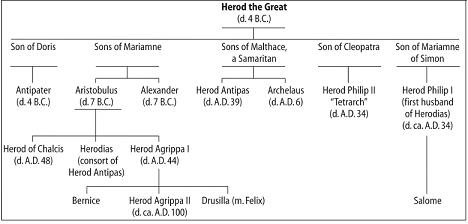
The MacArthur Study Bible, by John MacArthur (Nashville: Word Publishing, 1997) 1395. © 1993 by Thomas Nelson, Inc.
P. He Feeds the Five Thousand (6:33–44)
6:33 ran there on foot. The direction (toward the northeast shore of the lake) and speed of the boat, along with the lack of other available boats, caused the crowd to follow by land. arrived before them. Contained only in Mark’s account, this phrase does not necessarily mean that everyone arrived before the boat, because the land distance was probably eight miles, twice as far as the four miles the boat had to travel. Rather, those young and eager in the crowd were able to outrun both the rest of the people and the boat (probably because it encountered no wind or a contrary wind) and actually arrived at the shore before the boat (cf. Matt. 14:13, 14; Luke 9:11; John 6:3, 5).
6:34 was moved with compassion. See note on Matthew 9:36. sheep not having a shepherd. An OT picture (cf. Num. 27:17; 1 Kin. 22:17; 2 Chr. 18:16; Ezek. 34:5) used to describe the people as helpless and starving, lacking in spiritual guidance and protection, and exposed to the perils of sin and spiritual destruction.
6:37 two hundred denarii. A single denarius (see note on Matt. 22:19 ) was equivalent to a day’s pay for the day laborer (cf. Matt. 20:2). Two hundred denarii would therefore equal eight months’ wages and be quite beyond the disciples’ means.
6:38 loaves. Lit. “bread-cakes” or “rolls.”
6:39 green grass. This detail indicates that the feeding occurred in the spring, the rainy season, before the hot summer turned the grass dry and brown.
6:40 in hundreds and in fifties. A symmetrical seating arrangement, possibly fifty semi-circles of one hundred people each, with the semi-circles one behind the other in ranks. Such an arrangement was familiar to the Jews during their festivals, and it made food distribution more convenient.
6:41 looked up to heaven. A typical prayer posture for Jesus (cf. 7:34; Luke 24:35; John 11:41; 17:1). Heaven was universally regarded as the Father’s dwelling place (Matt. 6:9).
The Roman Empire in the New Testament
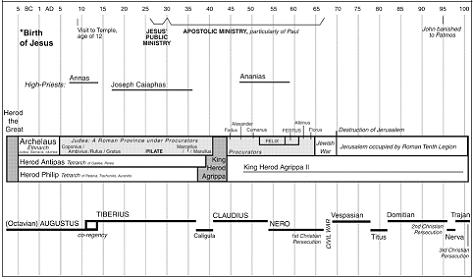
The MacArthur Study Bible, by John MacArthur (Nashville: Word Publishing, 1997) 1376. © 1993 by Thomas Nelson, Inc.
6:42 all ate and were filled. The hunger of everyone in the crowd was completely satisfied (cf. John 6:11).
6:43 twelve baskets full. These baskets were small wicker containers like the ones the Jews used to carry food.
6:44 five thousand men. The Greek word for “men” means strictly males, so the numerical estimate did not include women and children (cf. Matt. 14:21). The women and children were traditionally seated separately from the men for meals. When everyone was added, there could have been at least twenty thousand people.
Q. He Walks on Water (6:45–52)
6:45 the boat. See note on verse 32. go before Him. The implication is that Jesus was to rejoin the disciples later. Bethsaida. A town on the west side of the Sea of Galilee and south of Capernaum (cf. Matt. 11:21).
6:46 the mountain. The entire east side of the Sea of Galilee is mountainous with steep slopes leading up to a plateau. Up one of the slopes was a good place to pray, away from the crowd (cf. John 6:15).
6:47 middle of the sea. Normally in traveling across the northern end of the lake, they would have been within one or two miles of shore. But on that this occasion, the wind had carried the boat several miles south, closer to the center of the lake (cf. Matt. 14:24).
6:48 fourth watch. 3:00 A.M. to 6:00 A.M. walking on the sea. The verb’s tense depicts a steady progress, unhindered by the waves. would have passed them by. The more literal rendering, “desired to come alongside of,” indicates Jesus’ intention here. He wanted to test the disciples’ faith, so He deliberately changed course and came parallel to the boat to see if they would recognize Him and His supernatural powers and invite Him aboard.
6:49 a ghost. I.e., an apparition or imaginary creature. The Greek term gives us the English word phantom. Because of the impossibility of such an act and their fatigue and fear in the stormy conditions, the Twelve did not at first believe the figure was actually Jesus.
6:50 Be of good cheer! This command, always linked in the Gospels to a situation of fear and apprehension (cf. 10:49; Matt. 9:2, 22; 14:27; Luke 8:48; John 16:33; Acts 23:11), urged the disciples to have a continuing attitude of courage. It is I. Lit. “I AM.” This statement clearly identified the figure as the Lord Jesus, not some phantom. It also echoed the OT self-revelation of God (cf. Ex. 3:14).
6:52 they had not understood about the loaves. An explanation of the disciples’ astonishment at what had just happened. Because they misunderstood the real significance of that afternoon’s miracle, they could not grasp Jesus’ supernatural character as displayed in His power over the lake. their heart was hardened. Cf. 8:17. The disciples’ minds were impenetrable, so they could not perceive what Christ was saying (cf. 4:11, 12). This phrase conveys or alludes to rebellion, not just ignorance (see note on 3:5 ).
R. He Heals Many People (6:53–56)
6:53 Gennesaret. See note on Matthew 14:34.
6:56 marketplaces. Open spaces, usually just inside city walls or near city centers, where people congregated for various business and social purposes. Here, the term might indicate its original meaning of any place where people generally assembled. The people brought the sick to such locations because Jesus was more likely to pass by. His garment. See note on 5:28.
S. He Answers the Pharisees (7:1–23)
7:1 Pharisees . . . come from Jerusalem. This delegation of leading representatives of Judaism came from Jerusalem, probably at the request of the Galilean Pharisees. scribes. See notes on 3:22; Matthew 2:4.
7:2 defiled. The disciples of Jesus were being accused of eating with hands that had not been ceremonially cleansed, and thus had not been separated from the defilement associated with their having touched anything profane.
7:3 wash. This washing had nothing to do with cleaning dirty hands but with a ceremonial rinsing. The ceremony involved someone pouring water out of a jar on to another’s hands, whose fingers must be pointing up. As long as the water dripped off at the wrist, the person could proceed to the next step. He then had water poured over both hands with the fingers pointing down. Then each hand was to be rubbed with the fist of the other hand. tradition of the elders. This body of extrabiblical laws and interpretations of Scripture had actually supplanted Scripture as the highest religious authority in Judaism (see note on Matt. 15:2 ).
7:4 marketplace. See note on 6:56. couches. This word does not appear in the better manuscripts.
7:5 Why do Your disciples not. The Pharisees and scribes went to the disciples’ Master for an explanation of the disciples’ allegedly disgraceful conduct. In reality, they were accusing Jesus of teaching His disciples to disobey the traditions of the elders. unwashed hands. See note on verse 3.
7:6 did Isaiah prophesy. Isaiah 29:13 is quoted almost word for word from the Greek translation of the OT (LXX). Isaiah’s prophecy fit the actions of the Pharisees and scribes perfectly (see note on Is. 29:13 ). hypocrites. I.e., spiritual spiritual phonies (see note on Matt. 6:2 ). They followed the traditions of men because such teaching required only mechanical and thoughtless conformity without a pure heart.
7:8 commandment of God . . . tradition of men. Jesus first accused them of abandoning all the commandments contained in God’s Word. Then He charged them with substituting God’s standard with a humanly designed standard. See note on Matt. 15:2.
7:10 Moses said. This verse quotes from Exodus 20:12 (the fifth Commandment) and Exodus 21:17. Both refer specifically to the duty of honoring one’s parents, which includes treating them with respect, love, reverence, dignity, and assisting them financially. The second quotation indicates how seriously God regards this obligation.
7:11 Corban. A Hebrew term meaning, “given to God.” It refers to any gift or sacrifice of money or goods an individual vowed to dedicate specifically to God. As a result of such dedication, the money or goods could be used only for sacred purposes.
7:13 making the word of God of no effect through your tradition. “Making . . . of no effect” means, “to deprive of authority” or “to cancel.” The “tradition” in question allowed any individual to call all his possessions “Corban” (see note on v. 11 ). If a son became angry with his parents, he could declare his money and property “Corban.” Since Scripture teaches that any vow made to God could not be violated (Num. 30:2), his possessions could not be used for anything but service to God and not as a resource to assist his parents financially. But Jesus condemned this practice by showing that the Pharisees and scribes were guilty of canceling out God’s Word (and His command to honor one’s parents) through their tradition.
| From Jerusalem | Miles |
| 1. Bethany | 2 |
| 2. Bethlehem | 6 |
| 3. Emmaus | 7 |
| 4. Jericho | 15 |
| 5. Jordan | 21 |
| 6. Sychar | 31 |
| 7. Mediterranean Sea | 40 |
| 8. Cana | 69 |
| 9. Capernaum | 85 |
| 10. Caesarea Philippi | 105 |
| 11. Tyre | 106 |
| 12. Zarephath | 118 |
| 13. Sidon | 130 |
| From Capernaum: | |
| 1. Bethsaida | 6 |
| 2. Cana | 16 |
| 3. Nain | 22 |
| 4. Nazareth | 23 |
| 5. Caesarea Philippi | 27 |
| 6. Mediterranean Sea | 32 |
| 7. Tyre | 37 |
| 8. Zarephath | 45 |
7:16 This verse does not occur in the best manuscripts.
7:18 defile him. See note on verse 2.
7:19 Since food is merely physical, no one who eats it will defile his heart or inner person, which is spiritual. Physical pollution, no matter how corrupt, cannot cause spiritual or moral pollution. Neither can external ceremonies and rituals cleanse a person spiritually. thus purifying all foods. This comment should be taken as a parenthetical comment from the Gospel writer. By overturning the tradition of hand washing, Jesus, in effect, removed the restrictions about dietary laws. Mark had the advantage of hindsight as he looked back on the event, and was no doubt influenced by Peter’s experience (see Introduction: Author and Date) in Joppa (see note on Acts 10:15 ).
7:20 What comes out of a man. A person’s defiled heart is expressed in what he says and what he does (see note on Matt. 15:11; cf. 12:34–37). defiles. See note on verse 2.
7:21 fornications. Lit. illicit sexual activity.
7:22 lewdness. Lit. unrestrained, shameless behavior. an evil eye. A Hebrew expression referring to envy and jealousy (Deut. 28:54; Prov. 23:6; Matt. 20:15).
III. BROADENING HIS MINISTRY: IN VARIOUS GENTILE REGIONS (7:24–9:50)
A. Tyre and Sidon: He Delivers a Gentile Woman’s Daughter (7:24–30)
7:24 Tyre . . . Sidon. See note on 3:8. wanted no one to know. Jesus did not seek a public ministry in the area. It is likely He wanted time to rest from the pressure of the Jewish leaders and an opportunity to further prepare the disciples for His coming crucifixion and their ministry.
7:25 unclean spirit. I.e., a demon (see note on 1:23; cf. Matt. 15:22).
7:26 Greek. A non-Jew in both language and religion (see note on Rom. 1:14 ). Syro-Phoenician. The region of Phoenicia at that time was part of the province of Syria. Matthew 15:22 adds that she was a descendant of the Canaanites.
7:27 first. The illustration Jesus gave was in essence a test of the woman’s faith. Jesus’ first responsibility was to preach the gospel to the children of Israel (cf. Rom. 1:16; 15:8). But that “first” also implied there would come a time when Gentiles would receive God’s blessings another time. the children’s bread and throw it to the little dogs. The “children’s bread” refers to God’s blessings offered to the Jews. This picture indicates that the “little dogs” (Gentiles) had a place in the household of God, but not the prominent one (see note on Matt. 15:26 ). little dogs. The diminutive form suggests that this refers to dogs that were kept as pets. Jesus was referring to the Gentiles, but He did not use the derisive term the Jews usually employed for them that described mangy, vicious mongrels.
7:28 Yes, Lord. These words convey the woman’s humble faith and worshipful attitude. She knew she was sinful and undeserving of any of God’s blessing. She responds with a complete absence of pride and self-reliance, which Jesus answersed by granting her request (vv. 29, 30).
B. Decapolis: He Heals a Deaf-Mute (7:31–37)
7:31 departing from the region of Tyre and Sidon . . . Sea of Galilee. Jesus traveled twenty miles north from Tyre and passed through Sidon, which was deep in Gentile territory. From there, He went east, crossed the Jordan River, and traveled south along the eastern shore of the Sea of Galilee. Decapolis. See note on 5:20.
7:33 put His fingers in his ears. Because the man could not hear, Jesus used His own form of sign language to tell him that He was about to heal the man’s deafness. He spat and touched his tongue. Also a form of sign language by which Jesus offered the man hope for a restored speech.
7:34 Ephphatha. An Aramaic word that Mark immediately defines.
7:36 tell no one. Although Jesus ministered to Gentiles as the need arose, His intention was not to have a public ministry among them. See note on 1:44.
C. The Eastern Shore of Galilee: He Feeds the Four Thousand (8:1–9)
8:1–9 While all four Gospels record the feeding of the 5,000, only Matthew (15:32–38) and Mark record the feeding of the 4,000.
8:1 the multitude being very great. This probably resulted because of the widespread report of Jesus’ healing of the deaf and mute man (7:36).
8:2 I have compassion. Only here and in the parallel passage (Matt. 15:32) did Jesus use this word of Himself. When he fed the 5,000, Jesus expressed compassion for the people’s lost spiritual condition (6:34); here, He expressed compassion for people’s physical needs (cf. Matt. 6:8, 32). Jesus could empathize with their hunger, having experienced it Himself (Matt. 4:2). continued with Me three days. This detail reflects the crowd’s eagerness to hear Jesus’ teaching and experience His healings (cf. Matt. 15:30). That they were with Him for three days before the miraculous feeding distinguishes this event from the earlier feeding of the 5,000, in which the crowd gathered, ate, and dispersed in one day (Matt. 14:14, 15, 22, 23).
8:4 How can one satisfy these people with bread. Some find the disciples’ question incredible in light of the earlier feeding of the 5,000. But it was consistent with their spiritual dullness and lack of understanding (cf. vv. 14–21; 6:52). in the wilderness. The Decapolis (see note on 5:20 ) region was not as heavily populated as Galilee.
8:5 loaves. Flat cakes of bread which could easily be broken into smaller pieces.
8:8 seven large baskets. These baskets were not the same kind of baskets mentioned in the feeding of the 5,000 (6:43). Those were small baskets, commonly used by the Jewish people to hold one or two meals when traveling. The word here refers to large baskets (large enough to hold a man, Acts 9:25) used by Gentiles. What was done with the leftover food is not stated. It was likely given back to the people to sustain them on their trip home, since the disciples evidently did not take it with them (cf. v. 14).
8:9 four thousand. The number of the men only, not including the women and children (Matt. 15:38). Adding them could raise the count to at least sixteen thousand people.
D. Dalmanutha: He Disputes with the Pharisees (8:10–12)
8:10 Dalmanutha. This location is not mentioned in any secular literature and is only mentioned here in the NT. The location is unknown, but it is clearly in the region near Magdala. Recent archeological work in the area, when the water level of Lake Galilee was at an all-time low, revealed several heretofore unknown anchorages. One small harbor has been found between Magadala and Capernaum, and this may have been Dalmanutha.
8:11 Pharisees. See notes on 2:16; Matthew 3:7. sign from heaven. The skeptical Pharisees demanded further miraculous proof of Jesus’ messianic claims. Not content with the countless miracles He had performed on earth, they demanded some sort of astronomical miracle. Having already given them more than enough proof, Jesus refused to accommodate their spiritual blindness. The supreme sign verifying His claim to be Son of God and Messiah was to be His Resurrection (Matt. 12:39, 40).
E. The Other Side of the Lake: He Rebukes the Disciples (8:13–21)
8:13 the other side. I.e., to the northeast shore, where Bethsaida (Julias) was located (v. 22).
8:15 leaven of the Pharisees and . . .Herod. Leaven in the NT illustrates influence (see note on Matt. 13:33 ) and most often symbolizes the evil influence of sin. The leaven of the Pharisees included both their false teaching (Matt. 16:12) and their hypocritical behavior (Luke 12:1); the leaven of Herod Antipas was his immoral, corrupt conduct (cf. 6:17–29). The Pharisees and the Herodians were allied against Christ (3:6).
8:17 Why do you reason . . . no bread? Jesus’ question rebuked the disciples for missing His point (see note on v. 15 ). He was concerned with spiritual truth, not mundane physical matters. heart still hardened. I.e., they were rebellious, spiritually insensitive, and unable to understand spiritual truth (see notes on 3:5; 6:52 ).
8:18–21 Jesus’ five questions further rebuked the disciples for their hardness of heart, and also reminded them of His ability to provide anything they might lack.
8:21 How is it you do not understand? An appeal based on the questions Jesus had just asked. Matthew’s parallel account reveals that the disciples finally understood His point (Matt. 16:12).
F. Bethsaida: He Heals a Blind Man (8:22–26)
8:22–26 The second of Jesus’ two miracles recorded only in Mark (cf. 7:31–37). It is also the first of two healings of blind men recorded in Mark (cf. 10:46–52).
8:22 Bethsaida. See note on 6:45 for the other Bethsaida. This is Bethsaida Julias, several miles north of the Sea of Galilee and east of the Jordan River.
8:23 spit on his eyes. This action and Jesus’ touching his eyes with His hands (v. 25) were apparently meant to reassure the blind man (who would naturally depend on his other senses, such as touch) that Jesus would heal his eyes (cf. 7:33; John 9:6).
8:26 Neither go into the town. Jesus led the blind man out of town before healing him (v. 23), probably to avoid publicity and the mob scene that would otherwise result. Unlike others in the past (cf. 1:45; 7:36), he apparently obeyed.
G. Caesarea Philippi and Capernaum: He Instructs the Disciples (8:27–9:50)
1. Peter confesses Jesus as Christ (8:27–30)
8:27 Caesarea Philippi. A city about twenty-five miles north of Bethsaida (Julias) near Mt. Hermon, not to be confused with the Caesarea located on the Mediterranean coast about sixty miles northwest of Jerusalem.
8:28 Elijah. See notes on 6:15; Malachi 4:5; Matthew 11:14; Luke 1:17.
8:29 But who do you say that I am? After they reported the prevailing erroneous views about Jesus (v. 28), He asked the disciples to give their own evaluation of who He was. The answer every person gives to this question will determine his or her eternal destiny. You are the Christ. Peter unhesitatingly replied on behalf of the Twelve (cf. Matt. 14:28; 15:15; 17:4; 19:27; 26:33; John 6:68; 13:36), clearly and unequivocally affirming that they believed Jesus to be the Messiah.
8:30 tell no one. Jesus’ messianic mission cannot be understood apart from the Cross, which the disciples did not yet understand (cf. vv. 31–33; 9:30–32). For them to have proclaimed Jesus as Messiah at this point would have only furthered the misunderstanding that the Messiah was to be a political-military deliverer. This misunderstanding would lead to the Jewish effort to make Jesus king by force (John 6:15; cf. 12:12–19) in order be freed. The Jewish people, desperate to be rid of the yoke of Rome, would seek to make Jesus king by force (John 6:15; cf. 12:12–19).
8:31–10:52 In this section, as they travel to Jerusalem, Jesus prepares the disciples for His death.
2. He predicts His death (8:31–33)
8:31 Son of Man. See note on 2:10. must suffer many things. Jesus’ sufferings and death were inevitable because they were divinely ordained (Acts 2:22, 23; 4:27, 28), although, humanly speaking, they were caused by His rejection by the Jewish leaders. See notes on Psalm 118:22; Isaiah 53:3; cf. 12:10; Matthew 21:42. elders. See note on 7:3. chief priests. Members of the Sanhedrin and representatives of the twenty-four orders of ordinary priests (cf. Luke 1:8). scribes. Experts in the OT law (see note on Matt. 2:4 ). after three days. In keeping with the sign of Jonah (Matt. 12:40). rise again. Jesus always mentioned His Resurrection in connection with His death (cf. 9:31; 10:34; Matt. 16:21; 17:23; 20:19; Luke 9:22; 18:33), making it all the more incomprehensible that the disciples were so slow to understand.
8:32 He spoke . . . openly. I.e., not in parables or allusions (cf. John 16:29). Peter . . . began to rebuke Him. The disciples still could not comprehend a dying Messiah (see note on v. 30 ). Peter, as usual (see note on v. 29 ), expressed the thoughts of the rest of the Twelve (cf. v. 33). His brash outburst expressed not only presumption and misunderstanding, but also deep love for Jesus.
8:33 Get behind Me, Satan! In a startling turnaround, Peter, who had just been praised for being God’s spokesman (Matt. 16:17–19), was now condemned as Satan’s mouthpiece. Yet, Jesus’ sacrificial death was God’s plan (Acts 2:22, 23; 4:27, 28) and whoever opposed it was, wittingly or not, advocating Satan’s work.
3. He explains the cost of discipleship (8:34–38)
8:34 deny himself. No one who is unwilling to deny himself can legitimately claim to be a disciple of Jesus Christ. take up his cross. This phrase reveals the extent of self-denial—to the point of death, if necessary. Cross-bearing begins when the penitent sinner becomes aware that he cannot save himself and, holding nothing back, surrenders completely to God’s mercy (cf. Matt. 19:21, 22). and follow Me. See notes on 1:17; Matthew 10:38.
8:35 loses his life . . . will save it. This paradoxical saying reveals an important spiritual truth: those who pursue a life of ease, comfort, and acceptance by the world will not find eternal life. On the other hand, those who give up their lives (see note on v. 34 ) for the sake of Christ and the gospel will find it. Cf. John 12:25.
8:36, 37 soul. This refers to the real person, who will live forever in heaven or hell. To have all that the world has to offer yet not have Christ is to be eternally bankrupt; all the world’s goods will not compensate for losing one’s soul eternally. See note on Matthew 16:26.
8:38 ashamed of Me and My words. Those who reject the demands of discipleship prove themselves to be ashamed of Jesus Christ and the truth He taught, thus not redeemed from sin at all. Son of Man. See note on 2:10. when He comes. This is Mark’s first reference to Jesus’ Second Coming, an event later described in detail in the Olivet Discourse (13:1–37).
4. He reveals His glory (9:1–10)
9:1 Assuredly, I say to you. A solemn statement appearing only in the Gospels and always spoken by Jesus. It introduces topics of utmost significance (see note on 3:28 ). not taste death till they see the kingdom. The event Jesus had in mind has been variously interpreted as (1) His Resurrection and Ascension, (2) the coming of the Spirit at Pentecost, (3) the spread of Christianity, or (4) the destruction of Jerusalem in A.D. 70. The most accurate interpretation, however, is to connect Christ’s promise with the Transfiguration in the context (vv. 2–8), which provides a foretaste of His coming glory. That all three synoptic Gospels place this promise immediately before the Transfiguration supports this view, as does the fact that “kingdom” can refer to royal splendor.
9:2 after six days. Matthew and Mark place the Transfiguration “six days” after Jesus’ promise (v. 1); Luke, no doubt including the day the promise was made and the day of the Transfiguration itself, describes the interval as “about eight days” (Luke 9:28). Peter, James, and John. See note on 5:37. As the inner circle of Jesus’ disciples, these three were sometimes allowed to witness events that the other disciples were not (cf. 14:33). a high mountain. This is most likely Mt. Hermon (about 9,200 feet above sea level), the highest mountain in the vicinity of Caesarea Philippi (cf. 8:27). transfigured. From a Greek word meaning “to change in form,” or “to be transformed.” In some inexplicable way, Jesus manifested some of His divine glory to the three disciples (cf. 2 Pet. 1:16).
9:3 shining, exceedingly white. The divine glory emanating from Jesus made even his clothing radiate brilliant, white light. Light is often associated with God’s visible presence (cf. Ps. 104:2; Dan. 7:9; 1 Tim. 6:16; Rev. 1:14; 21:23).
9:4 Elijah . . . with Moses. These men were symbolized the Prophets and the Law, the two great divisions of the OT. The order, “Elijah,” then “Moses,” is unique to Mark (who reverses the order in v. 5). talking with Jesus. The subject was His coming death (Luke 9:31).
9:5 Rabbi. Lit. “my master.” A title of esteem and honor given by the Jews to respected teachers. In the NT, it is also used of John the Baptist (John 3:26). let us make three tabernacles. So as to make the three illustrious figures stay permanent. It is also possible that Peter’s suggestion reflected his belief that the millennial kingdom was about to be inaugurated (cf. Zech. 14:16).
9:7 a cloud . . . overshadowed them. This is the glory cloud, Shekinah, which throughout the OT was symbolic of God’s presence (see note on Rev. 1:7; cf. Ex. 13:21; 33:18–23; 40:34, 35; Num. 9:15; 14:14; Deut. 1:33). a voice came out of the cloud. The Father’s voice from the cloud cut off Peter’s fumbling words (Matt. 17:5; Luke 9:34). This is My beloved Son. The Father repeated the affirmation of His love for the Son, first given at Jesus’ baptism (1:11). The parallel accounts of the Transfiguration (Matt. 17:5; Luke 9:35) also record these words, as does Peter (2 Pet. 1:17). Hear Him! Jesus, the One to whom the Law and the Prophets pointed (cf. Deut. 18:15), is the One whom the disciples are to listen to and obey (cf. Heb. 1:1, 2).
9:9 commanded them . . . tell no one. See note on 8:30. till the Son of man had risen from the dead. This looks to the time when the true nature of Jesus’ messianic mission will be evident to all, namely, that He has come to conquer sin and death, not the Romans. Son of Man. See note on 2:10.
9:10 questioning what the rising from the dead meant. Like most of the other Jewish people (the Sadducees being notable exceptions), the disciples believed in a future resurrection (cf. John 11:24). What confused them was Jesus’ implication that His own resurrection was imminent, and thus so was His death. The disciples’ confusion provides further evidence that they still did not understand Jesus’ messianic mission (see notes on v. 9; 8:30 ).
5. He clarifies Elijah’s role (9:11–13)
9:11 Elijah must come first. Cf. 8:28, 29. The scribes’ teaching in this case was not based on rabbinical tradition, but on the OT (Mal. 3:1; 4:5). Malachi’s prediction was well known among the Jews of Jesus’ day, and the disciples were no doubt trying to figure out how to harmonize it with the appearance of Elijah they had just witnessed. The scribes and Pharisees also, no doubt, argued that Jesus could not be the Messiah, based on the fact that Elijah had not yet appeared. Confused, the three disciples asked Jesus for His interpretation.
9:12 Elijah is coming first. Jesus affirmed the correctness of the scribal interpretation of Malachi 3:1; 4:5, which must have puzzled the disciples even more. Son of Man. See note on 2:10. suffer . . . be treated with contempt. Jesus pointed out that the prophecies about Elijah in no way precluded the suffering and death of Messiah, for that, too, was predicted in the OT (e.g., Pss. 22; 69:20, 21; Is. 53; see note on Rom. 1:2 ).
9:13 Elijah has also come. Jesus addressed the disciples’ question: the prophecies of Elijah’s coming had been fulfilled in John the Baptist. Though certainly not a reincarnation of Elijah (cf. John 1:21), John had come in the “spirit and power of Elijah,” and would have fulfilled prophecies, if they had believed (see notes on Matt. 11:14; Luke 1:17). Because many Jews did reject both John the Baptist and Jesus, there will be another who will come in the spirit and power of Elijah before the Second Coming of Christ (see notes on Matt. 11:14; Rev. 11:5, 6 ). they did to him. The Jewish leaders rejected John the Baptist (Matt. 21:25; Luke 7:33), and Herod killed him (6:17–29). as it is written of him. No specific OT prophecies predicted that Messiah’s forerunner would die. Therefore, this statement is best understood as having been fulfilled typically. The fate intended for Elijah (1 Kin. 19:1, 2) had befallen John the Baptist. See notes on Matthew 11:11–14.
6. He casts out a stubborn spirit (9:14–29)
9:14 the disciples. I.e., the nine who had remained behind.
9:17 has a mute spirit. The boy had a demonically-induced inability to speak, a detail found only in Mark’s account.
9:18 they could not. The disciples’ failure is surprising, in light of the power granted them by Jesus (3:15; 6:13).
9:19 O faithless generation. Cf. Psalm 95:10. The word generation indicates that Jesus’ exasperation was not merely with the father, or the nine disciples, but also with the unbelieving scribes, who were no doubt gloating over the disciples’ failure (cf. v. 14).
9:22 to destroy him. This demon was an especially violent and dangerous one. Open fires and unfenced bodies of water were common in first-century Palestine, providing ample opportunity for the demon’s attempts to destroy the child. The father’s statement added to the pathos of the situation. The boy was probably disfigured from burn scars, and further ostracized because of them. His situation also created a hardship for his family, who would have had to watch the boy constantly to protect him from harm.
9:23 all things are possible. The oldest manuscripts omit “believe,” thus making the phrase, “If you can,” a question or exclamation on Jesus’ part. The issue was not His lack of power but the father’s lack of faith. Though Jesus often healed apart from the faith of those involved, here He chose to emphasize the power of faith (cf. Matt. 17:20; Luke 17:6). Jesus healed multitudes, but many, if not most, did not believe in Him. Cf. Luke 17:15–19.
9:24 I believe; help my unbelief! Admitting the imperfection of his faith, mixed as it was with doubt, the desperate father pleaded with Jesus to help him to have the greater faith the Lord demanded of him.
9:25 the people came running. Noting the growing crowd, Jesus acted without further delay, perhaps to spare the boy and his anguished father any further embarrassment. Also, the Lord did not perform miracles to satisfy thrill seekers (cf. 8:11; Luke 23:8, 9). I command you. Jesus’ absolute authority over demons is well attested in the NT (e.g., 1:32–34; 5:1–13; Luke 4:33–35). His healings demonstrated His deity by power over the natural world. His authority over demons demonstrated His deity by power over the supernatural world.
9:29 This kind. Some demons are more powerful and obstinate and, thus, more resistant to being cast out than others (cf. Matt. 12:45). See notes on Daniel 10:10–21. nothing but prayer. Perhaps overconfident from their earlier successes (cf. 6:13), the disciples became enamored with their own gifts and neglected to draw on divine power. fasting. The earliest manuscripts omit this word.
7. He again predicts His death and resurrection (9:30–32)
9:30 passed through Galilee. Leaving the region around Caesarea Philippi, Jesus and the disciples began the journey to Jerusalem that would result in His Crucifixion several months later. Their immediate destination was Capernaum (v. 33). did not want anyone to know. Jesus continued to seek seclusion so He could prepare the disciples for His death (cf. 7:24).
9:31 Son of Man. See note on 2:10.
9:31, 32 Jesus continued His teaching about His upcoming death and Resurrection—a subject the disciples still did not understand (see notes on v. 10; 8:30–33 ).
8. He defines kingdom greatness (9:33–37)
9:33 Capernaum. See note on 1:21. the house. The use of the definite article suggests this was the house Jesus stayed in when in Capernaum. Whether it was Peter’s house (cf. 1:29) or someone else’s is not known.
9:34 they kept silent. Convicted and embarrassed, the disciples were speechless. who would be the greatest. A dispute which was possibly triggered by the privilege granted Peter, James, and John to witness the Transfiguration. The disciples’ quarrel highlights their failure to apply Jesus’ explicit teaching on humility (e.g., Matt. 5:3), and the example of His own suffering and death (vv. 31, 32; 8:30–33). It also prompted them to ask Jesus to settle the issue, which He did—though not as they had expected.
9:35 sat down. Rabbis usually sat down to teach (cf. Matt. 15:29; Luke 4:20; 5:3; John 8:2). If anyone desires to be first. The disciples undeniably did desire this (v. 34; cf. 10:35–37). last of all and servant of all. The disciples’ concept of greatness and leadership, drawn from their culture, needed to be completely reversed. Not those who lord their position over others are great in God’s kingdom, but those who humbly serve others (cf. 10:31, 43–45; Matt. 19:30–20:16; 23:11, 12; Luke 13:30; 14:8–11; 18:14; 22:24–27).
9:36 a little child. The Greek word indicates an infant or toddler. If the house they were in was Peter’s (see note on v. 33 ), this may have been one of his children. The child became in Jesus’ masterful teaching an example of believers who have humbled themselves and have become like trusting children.
9:37 Whoever receives one of these little children in My name. Not actual children, but true believers—those who have humbled themselves like little children (see note on v. 36 ).
9. He identifies true spiritual fruit (9:38–41)
9:38 John answered. This is the only recorded instance in the synoptic Gospels in which he alone speaks. In light of Jesus’ rebuke (vv. 35–37), John’s conscience troubled him about an earlier incident in which he had been involved. It is clear that the unnamed exorcist was not a fraud because he actually was casting out demons. He was apparently a true believer in Jesus; John and the others opposed him because he was not openly and officially allied with Jesus, as they were.
9:39, 40 Jesus ordered them not to hinder the exorcist, making the logical point that someone sincerely acting in His name would not soon turn against Him. There is no neutral ground regarding Jesus Christ; those “who [are] not against [Him are] on [His] side,” but by the same token, “He who is not with Me is against Me, and he who does not gather with Me scatters abroad” (Matt.12:30).
9:41 because you belong to Christ. Jesus considered acts of kindness done to His followers to be done to Him (cf. Matt. 25:37–40). assuredly, I say to you. See note on 3:28. his reward. That is, his unique place and service in the eternal kingdom.
10. He warns would-be stumbling blocks (9:42–50)
9:42 whoever causes . . . to stumble. The word translated “to stumble” literally means “to cause to fall.” To entice, trap, or lead a believer into sin is a serious matter. little ones who believe in Me. See note on verse 37. millstone. This refers to a large, upper millstone, so heavy that it had to be turned by a donkey (see note on Matt. 18:6 ). Even such a horrifying death (a Gentile form of execution) is preferable to leading a Christian into sin.
9:43 cut it off. See note on Matthew 5:29. Jesus’ words are to be taken figuratively; no amount of self-mutilation can deal with sin, which is an issue of the heart. The Lord is emphasizing the seriousness of sin and the need to do whatever is necessary to deal with it. life. The contrast of life with hell indicates that Jesus was referring to eternal life. hell. The Greek word refers to the Valley of Hinnom near Jerusalem, a garbage dump where fires constantly burned, furnishing a graphic symbol of eternal torment (see note on Matt.5:22 ). the fire that shall never be quenched. See note on Matthew 25:46. That the punishment of hell lasts for eternity is the unmistakable teaching of Scripture (cf. Dan. 12:2; Matt. 25:41; 2 Thess. 1:9; Rev. 14:10, 11; 20:10).
9:44, 46. The better Greek manuscripts omit these verses, which merely repeat the quote from Isaiah 66:24 found in verse 48.
9:47 kingdom of God. See note on 1:15.
9:49 The meaning of this difficult verse seems to be that believers are purified through suffering and persecution. The link between salt and fire seems to lie in the OT sacrifices, which were accompanied by salt (Lev. 2:13).
9:50 Salt is good. Salt was an essential item in first-century Palestine. In a hot climate, without refrigeration, salt was the practical means of preserving food. Have salt in yourselves. The work of the Word (Col. 3:16) and the Spirit (Gal. 5:22, 23) produce godly character, enabling a person to act as a preservative in society. Cf. Matt. 5:13. have peace with one another. Cf. Matthew 5:9; Romans 12:18; 2 Corinthians 13:11; 1 Thessalonians 5:13; James 3:18.
IV. CONCLUDING HIS MINISTRY: THE ROAD TO JERUSALEM (10:1–52)
A. He Teaches on Divorce (10:1–12)
10:1 other side of the Jordan. This region was known as Perea. Jesus was to minister there until leaving for Jerusalem, shortly before Passion Week (see note on Matt. 19:1 ). Jordan. See note on 1:5.
10:2 Pharisees. See note on 2:16. came and asked Him . . . testing Him. The Pharisees hoped to publicly discredit Jesus’ ministry. The resulting loss of popularity, they hoped, would make it easier for them to destroy Him. Also, Perea (see note on v. 1 ) was ruled by Herod Antipas, who had imprisoned John the Baptist for his views on divorce and remarriage (6:17, 18). The Pharisees no doubt hoped a similar fate would befall Jesus. Is it lawful . . . to divorce. The Pharisees attempted to entrap Jesus with a volatile issue in first-century Judaism—divorce. There were two schools of thought, one allowing divorce for virtually any reason, the other denying divorce except on grounds of adultery (see note on Matt. 19:3 ). The Pharisees undoubtedly expected Jesus to take one side, in which case He would lose the support of the other faction.
10:3 What did Moses command you? Jesus sets the proper ground rules for the discussion. The issue was not rabbinical interpretations, but the teaching of Scripture.
10:4 permitted. The Mosaic Law, as the Pharisees were forced to concede, nowhere commanded divorce. The passage in question (Deut. 24:1–4) recognized the reality of divorce and sought to protect the wife’s rights and reputation and also regulated remarriage. certificate of divorce. In this document, the husband was required to state the reason for the divorce, thus protecting the wife’s reputation (if she were, in fact, innocent of wrongdoing). It also served as her formal release from the marriage, and affirmed her right to remarry (assuming she was not guilty of immorality). The liberal wing of the Pharisees had misconstrued Deuteronomy 24 to be teaching that divorce was “permitted” for any cause whatsoever (citing as legitimate grounds such trivial events as the wife’s ruining dinner or the husband’s simply finding a more desirable woman), provided that the proper legal paperwork was done. Thus, they magnified a detail, mentioned merely in passing, into the main emphasis of the passage.
Central Palestine in Christ’s Time
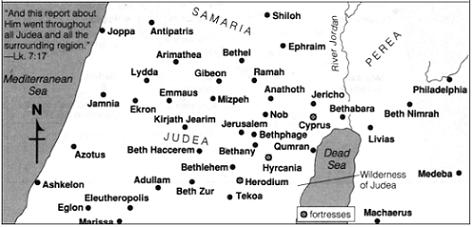
Nelson’s Complete Book of Bible Maps & Charts (Nashville: Thomas Nelson Publishers, 1996) 322. © 1993 by Thomas Nelson, Inc.
10:5 the hardness of your heart. See notes on 3:5; 6:52. This hardness refers to the flagrant, unrepentant pursuit of sexual immorality. Divorce was to be a last resort in dealing with such hard-heartedness. The Pharisees mistook God’s gracious provision in permitting divorce (under certain circumstances) for His ordaining of it.
10:6 from the beginning. Divorce formed no part of God’s original plan for marriage, which was that one man be married to one woman for life (Gen. 2:24). male and female. Lit. “a male and a female,” i.e., Adam and Eve. Mark quotes from Genesis 1:27; 5:2.
10:7, 8 Jesus took the issue beyond mere rabbinical quibbling over the technicalities of divorce to God’s design for marriage. The passage Christ quotes (Gen. 2:24) presents three reasons for the inviolability of marriage: (1) God created only two humans (see note on v. 6 ), not a group of males and females who could configure as they pleased or switch partners as it suited them; (2) the word translated “be joined” literally means “to glue,” thus reflecting the strength of the marriage bond; and (3) in God’s eyes a married couple is “one flesh,” forming an indivisible union, manifesting that oneness in the birth of children.
10:9 Therefore what God has joined together. Jesus added a fourth reason for the inviolability of marriage (see note on vv. 7, 8 ): God ordains marriages and thus they are not to be broken by man.
10:11, 12 Remarriage after a divorce—except for legitimate biblical grounds—proliferates adultery. The innocent party—one whose spouse has committed prolonged, hard-hearted, unrepentant adultery—may remarry without being guilty of adultery, as may a believer whose unbelieving spouse has chosen to leave the marriage (see note on 1 Cor. 7:15 ).
B. He Blesses the Children (10:13–16)
10:13 little children. See note on 9:36. that He might touch them. I.e., lay His hands on them and pray for them (Matt. 19:13). Jewish parents commonly sought the blessing of prominent rabbis for their children.
10:14 do not forbid them. Jesus rebuked the disciples for their attempt to prevent the children from seeing Him (v. 13). They were not the ones to decide who had access to Jesus (cf. Matt. 15:23). of such is the kingdom of God. Most, if not all, of these children would have been too young to exercise personal faith. Jesus’ words imply that God graciously extends salvation to those who are too young or too mentally impaired to exercise faith (see note on Matt. 19:14 ). kingdom of God. See note on 1:15.
10:15 Assuredly, I say to you. See note on 3:28. as a little child. I.e., with humble, trusting dependence, and the recognition of having achieved nothing of value or virtue.
10:16 blessed them. See note on verse 13.
C. He Confronts the Rich Young Ruler (10:17–27)
10:17 one. The other synoptic Gospels reveal that this man was young (Matt. 19:20), and a “ruler,” probably in the synagogue (Luke 18:18). He was also wealthy (v. 22). what shall I do. Steeped in the legalism of his day, the young man naturally thought in terms of some religious deed that would guarantee him eternal life. His lack of understanding about the true nature of salvation, however, did not mean he was insincere. eternal life. More than just eternal existence, eternal life is a different quality of life. Eternal life exists in Christ alone (see notes on John 3:15, 16; cf. John 10:28; 17:2, 3; Rom. 6:23; 1 John 5:11, 13, 20). Those who possess it have “passed from death to life” (John 5:24; 1 John 3:14; cf. Eph. 2:1–3); they have died to sin and are alive to God (Rom. 6:11); they have the very life of Christ in them (2 Cor. 4:11; Gal. 2:20), and they enjoy a relationship with Jesus Christ that will never end (John 17:3).
10:18 Why do you call Me good? Jesus challenged the young man to think through the implications of ascribing to Him the title “good.” Since only God is intrinsically good, was he prepared to acknowledge Jesus’ deity? By this query, Jesus did not deny His deity; on the contrary, He affirmed it.
10:19 Quoted from Exodus 20:12–16. Do not defraud. This was not the wording of any of the Ten Commandments, and is unique to Mark’s account. It seems to be a paraphrase of the command against coveting.
10:20 all these things I have kept. His answer was no doubt sincere, but superficial and untrue. He, like Paul (Phil. 3:6), may have been blameless in terms of external actions, but not in terms of internal attitudes and motives (cf. Matt. 5:21–48).
10:21 Jesus . . . loved him. I.e., He felt great compassion for this sincere truth-seeker who was so hopelessly lost. God does love the unsaved (see notes on Matt. 5:43–48 ). sell whatever you have. Jesus was not making either philanthropy or poverty a requirement for salvation, but exposing the young man’s heart. He was not blameless, as he maintained (v. 20), since he loved his possessions more than his neighbors (cf. Lev. 19:18). More importantly, he refused to obey Christ’s direct command, choosing to serve riches instead of God (Matt. 6:24). The issue was to determine whether he would submit to the lordship of Christ no matter what He asked of him. So, as he would not acknowledge his sin and repent, neither would he submit to the sovereign Savior. Such unwillingness on both counts kept him from the eternal life he sought. treasure in heaven. I.e., salvation and all its benefits, given by the Father who dwells there, both in this life and the life to come (cf. Matt. 13:44–46). take up the cross. See notes on 8:34–38.
10:22 went away sorrowful. His sorrow was purely a worldly disappointment based on the fact that he did not receive the eternal life he sought because the price of sacrifice was too high. He loved his wealth (cf. 8:36, 37).
10:23 How hard it is for those who have riches. See note on verse 27. Hard in this context means impossible (cf. v. 25). Riches tend to breed self-sufficiency and a false sense of security, leading those who have them to imagine they do not need divine resources (see Luke 16:13; contrast Luke 19:2; cf. 1 Tim. 6:9, 17, 18).
10:24 astonished. See note on verse 26.
10:25 camel . . . eye of a needle. The Persians expressed impossibility by saying it would be easier to put an elephant through the eye of a needle. This was a Jewish colloquially adaptation of that expression denoting impossibility (the largest animal in Palestine was a camel). Many improbable interpretations have arisen that attempt to soften this phrase, e.g., (1) that “needle” referred to a tiny gate in the Jerusalem city wall that camels could enter only with difficulty (but there is no evidence that such a gate ever existed, and if it had, any sensible camel driver would have simply found a larger gate); or (2) that a copyist’s error resulted in kamelos (camel) being substituted for kamilos, a large rope or cable (but a large rope could no more go through the eye of a needle than a camel could, and it is extremely unlikely that the text of all three synoptic Gospels would have been changed in exactly the same way). Jesus used this illustration to say explicitly that salvation by human effort is impossible; it is wholly by God’s grace. The Jews believed that with alms a person purchased salvation (as recorded in the Talmud), so the more wealth one had, the more alms he could give, the more sacrifices and offerings he could offer, thus purchasing redemption. The disciples’ question (v. 26) makes it clear that they understood what Jesus meant—that not even the rich could buy salvation. See note on Matthew 19:24.
10:26 Who then can be saved? Jesus’ teaching ran counter to the prevailing rabbinical teaching, which gave the wealthy a clear advantage for salvation. Jesus’ emphatic teaching that even the rich cannot be saved by their own efforts left the bewildered disciples wondering what chance the poor had. See notes on Romans 3:9–20; Galatians 3:10–13; Philippians 3:4–9.
10:27 With men it is impossible, but not with God. It is impossible for anyone to be saved by his own efforts (see note on v. 25 ) since salvation is entirely a gracious, sovereign work of God. See notes on Romans 3:21–28; 8:28–30; Galatians 3:6–9, 26–29.
D. He Confirms the Disciples’ Rewards (10:28–31)
10:28 we have left all. Peter noted that the Twelve had done what the Lord had asked the rich young ruler to do (cf. v. 21) and had come to Him on His terms. Would that self-abandoning faith, Peter asked, qualify them for a place in the kingdom?
10:29 Assuredly, I say to you. See note on 3:28.
10:30 in this time . . . the age to come. Following Jesus brings rewards in this present age and when Messiah’s glorious kingdom comes. with persecutions. Great trials often accompany great blessings (see notes on Rom. 8:17; Phil. 1:29; 2 Tim. 3:12 ). eternal life. See note on verse 17.
10:31 Believers will share equally in the blessings of heaven—a truth illustrated by the parable of Matthew 19:30–20:16 (see notes there ).
E. He Prepares the Disciples for His Death (10:32–34)
10:32 going up to Jerusalem. From Perea (see note on v. 1 ), via Jericho (v. 46). This is the first mention of Jerusalem as Jesus’ destination. Because of the elevation of Jerusalem (about 2,550 feet above sea level), travelers always spoke of going “up” to the city, regardless of where in Israel they started. amazed. I.e., at Jesus’ resolute determination to go to Jerusalem (cf. Luke 9:51) despite the cruel death that awaited Him there (cf. vv. 32–34). they followed. The Greek syntax makes it clear that this group was distinct from the Twelve, probably pilgrims en route to Jerusalem for Passover. They were afraid because they realized something significant was about to happen that they did not understand. the twelve. See note on 3:14.
10:32–34 Jesus predicts His death and resurrection to the Twelve for the third and last time (cf. 8:31; 9:31). This prediction is also the most detailed of the three predictions, specifically mentioning that He would be mocked (15:17–20; Luke 23:11, 35–39), scourged (15:15), and spat upon (14:65; 15:19).
F. He Challenges the Disciples to Humble Service (10:35–45)
10:35–45 This incident reveals yet again the disciples’ failure to grasp Jesus’ teaching on humility (see notes on 9:34; Matt. 20:21 ). Ignoring the Lord’s repeated instruction that He was going to Jerusalem to die (see note on vv. 32–34 ), the disciples still thought that the physical manifestation of the kingdom was about to appear, and they were busy maneuvering for the places of prominence in this kingdom (cf. Matt. 18:1).
10:35 James and John, the sons of Zebedee. See note on 1:19. Matthew reveals that their mother accompanied them and spoke first (Matt. 20:20, 21), after which James and John reiterated her request. If she was Jesus’ aunt, the three undoubtedly hoped to capitalize on the family ties.
10:37 sit . . . on Your right . . . Your left. I.e., in the places of highest prominence and honor beside the throne. in Your glory. I.e., in the glorious majesty of Jesus’ kingdom (cf. Matt. 20:21).
10:38 the cup . . . the baptism. Endure suffering and death as Jesus would (cf. vv. 32–34; see note on Matt. 20:22 ).
10:39 James and John would suffer like their Master (cf. Acts 12:2; Rev. 1:9), but that in itself would not earn them the honors they desired.
10:40 not Mine to give. Honors in the kingdom are bestowed not on the basis of selfish ambition, but because of divine sovereign will.
10:41 the ten . . . began to be greatly displeased. This indignation was not righteous indignation, since they, too, had been guilty in the past of such self-serving conduct (9:33, 34) and would be so in the future (Luke 22:24). The rest of the disciples resented James and John for their attempt to gain an advantage over the others in pursuing the honor they all wanted.
10:42 lord it over them . . . exercise authority. These parallel phrases convey the sense of autocratic, domineering authority.
10:43 not be so among you. There is no place in the church for domineering leaders (cf. 9:35; Matt. 23:8–12; 1 Pet. 5:3–6; 3 John 9, 10).
10:45 Son of Man. See note on 2:10. did not come to be served. Jesus was the supreme example of servant leadership (cf. John 13:13–15). The King of kings, and Lord of lords (Rev. 19:16) relinquished His privileges (Phil. 2:5–8) and gave His life as a selfless sacrifice in serving others. ransom for many. See note on Matt. 20:28. Ransom refers to the price paid to free a slave or a prisoner; for means “in place of.” Christ’s substitutionary death on behalf of those who would put their faith in Him is the most glorious, blessed truth in all of Scripture (cf. Rom.8:1–3; 1 Cor. 6:20; Gal. 3:13; 4:5; Eph. 1:7; Titus 2:14; 1 Pet. 1:18, 19). The ransom was not paid to Satan, as some erroneous theories of the Atonement teach. Satan is presented in Scripture as a foe to be defeated, not a ruler to be placated. The ransom price was paid to God to satisfy His justice and holy wrath against sin. In paying it, Christ “bore our sins in His own body on the [cross]” (1 Pet. 2:24). See notes on 2 Cor. 5:21.
| 1. Mark 10:45; Matt. 20:28 | Christ gave Himself as a ransom for sin. |
| 2. Romans 4:25 | Christ was delivered up for sin. |
| 3. Romans 5:6, 8 | Christ died for sinners. |
| 4. Romans 6:3 | God sent His Son on account of sin. |
| 5. 1 Corinthians 15:3 | Christ died for sins. |
| 6. 2 Corinthians 5:21 | God made Christ sin on behalf of sinners. |
| 7. Galataisns 1:4 | Christ gave Himself for sins. |
| 8. Galatians 3:13 | Christ became a curse in order to redeem. |
| 9. Hebrews 9:28 | Christ was offered once to bear the sins of many. |
| 10. 1 Peter 2:24 | Christ bore sins in His body. |
| 11. 1 Peter 3:18 | Christ suffered for sins. |
| 12. 1 John 2:2 | Christ is the propitiation for sins. |
G. He Heals a Blind Man (10:46–52)
10:46–52 The second of two healings of blind men recorded in Mark (cf. 8:22–26).
10:46 Jericho. A city located about fifteen miles northeast of Jerusalem and five miles from the Jordan River. The route from Perea to Jerusalem passed through it. This is the only recorded visit of Jesus to this city. As He went out. Mark and Matthew state that the healing took place as Jesus was leaving Jericho, Luke as He was entering the city. Mark and Matthew may be referring to the ancient walled city, just north of the NT city, while Luke refers to NT Jericho. Or, Luke’s words may simply mean that Jesus was in the vicinity of Jericho when the healing took place. See note on Matthew 20:30. blind . . . begging. Matthew notes that there were two blind beggars, whereas Mark and Luke focus on the more vocal of the two (cf. Matt. 8:28 with 5:2; Luke 8:27). Since they were unable to work, blind people usually made their living by begging (cf. John 9:8). These men had staked out a good site on the main road to Jerusalem. son of Timaeus. This is the translation of “Bartimaeus”; the Aramaic prefix “bar” means “son of.”
10:47 Nazareth. See note on 1:9. Son of David. A common messianic title, used as such only in the synoptic Gospels (see note on Matt. 1:1 ).
10:49 Jesus . . . commanded him to be called. Jesus implicitly rebuked those who were trying to silence the blind beggar (v. 48).
10:51 Rabboni. An intensified form of “rabbi” (see note on 9:5 ).
10:52 your faith has made you well. Lit. “saved you.” Bartimaeus’s physical and spiritual eyes were likely opened at the same time. The outward healing reflected the inner wellness of salvation.
V. CONSUMMATING HIS MINISTRY: JERUSALEM (11:1–16:20)
11:1–11 This passage, traditionally called Jesus’ triumphal entry (more accurately, it was Jesus’ coronation as the true King), portrays His last major public appearance before His Crucifixion. The importance of this event is indicated by the fact that this is only the second time that all four Gospels include the same event (cf. Matt. 21:1–11; Luke 19:29–44; John 12:12–19).
11:1 drew near Jerusalem. This general transition statement marks the end of the narrative in chapter 10. It also indicates the beginning of the final phase of Christ’s three-year ministry. Bethphage. A small town east of Jerusalem whose name literally means “house of unripe figs” (see note on Matt. 21:1 ). Bethany. The hometown of Mary, Martha, and Lazarus (John 11:1) on the eastern slope of the Mount of Olives, two miles east of Jerusalem. Mount of Olives. This mountain stood between Bethany and Jerusalem (see note on Matt. 24:3 ).
11:2 the village opposite you. Most likely Bethphage. “Opposite” implies that it was somewhat off the main road. colt. According to usage of this word in Greek papyri (ordinary written documents dating from NT times that were made of papyrus reed), this colt was most likely a young donkey—a definition also in harmony with other Scriptures (see note on Matt. 21:5; cf. Gen. 49:11; Judg. 10:4; 12:14; Zech. 9:9). no one has sat. The Jews regarded animals that had never been ridden as especially suited for holy purposes (cf. Num. 19:2; Deut. 21:3; 1 Sam. 6:7).
11:3 if anyone says to you. Because of its very nature, Jesus anticipated the disciples’ action would be challenged (v. 5). Lord. Even though he does not use “Lord” with this meaning in the rest of his Gospel, Mark was referring to Jesus. In Luke and John, this “Lord” appears often as a name for Jesus. People in the area knew Christ and the disciples well, and the owner would have understood the reference.
11:8 spread their clothes. Such action was part of the ancient practice of welcoming a new king (see note on Matt. 21:8 ). branches. Palm branches which symbolized joy and salvation and pictured future royal tribute to Christ (Rev. 7:9). The crowd was excited and filled with praise for the Messiah who taught with such authority, healed the sick, and raised the dead (Lazarus; cf. John 12:12–18).
11:9 Hosanna! Originally a Hebrew prayer meaning “save now.” On this occasion, it probably served simply as an acclamation of welcome. Blessed is He who comes. See note on Matt. 21:9. This phrase is part (Ps. 118:26) of the Hallel (the Hebrew word for “praise”), comprised of Psalms 113–118, which was sung at all the Jewish religious festivals, most notably at the Passover (see note on Ps. 113:1–9 ). “He who comes” was not an OT messianic title, but definitely had come to carry such implications for the Jews (cf. Matt. 11:3; Luke 7:19; John 3:31; 6:14; 11:27; Heb. 10:37).
11:10 the kingdom of our father David.
This tribute, recorded only by Mark, acknowledges Jesus as bringing in the messianic kingdom promised to David’s Son. The crowd (v. 9) paraphrased the quote from Psalm 118:26 (v. 9), anticipating that Jesus was fulfilling prophecy by bringing in the kingdom.
11:11 temple. This refers not just to the inner, sacred sanctuary, but to the entire area of courts and buildings. looked around at all things. A description distinctive to Mark, quite possibly based on one of Peter’s eyewitness memories. Christ acted as one who had the authority to inspect temple conditions, and His observation missed nothing. He went out to Bethany. Nearby Bethany was a relatively safe place to avoid sudden, premature arrest by the Jewish leaders.
Messianic Prophecies in the Psalms
| Prophecy | Psalm | Fulfillment |
| 1.God will announce Christ to be His Son | 2:7 | Matthew 3:l7; Acts 13:33; Hebrews1:5 |
| 2.All things will be put under Christ’s feet | 8:6 | 1 Cor. 15:27, Hebrews 2:8 |
| 3.Christ will be resurrected from the grave | 16:10 | Mark 16:6,7; Acts 13:35 |
| 4.God will forsake Christ in His moment of agony | 22:1 | Matthew 27:46; Mark 15:34 |
| 5.Christ will be scorned and ridiculed | 22:7,8 | Matthew 27:39–43; Luke 23:35 |
| 6.Christ’s hands and feet will be pierced | 22:16 | John 20:25,27; Acts 2:23 |
| 7.Others will gamble for Christ’s clothes | 22:18 | Matthew 27:35,36 |
| 8.Not one of Christ’s bones will be broken | 34:20 | John 19:32,33,36 |
| 9.Christ will be hated unjustly | 35:19 | John 15:25 |
| 10.Christ will come to do God’s will | 40:7,8 | Hebrews 10:7 |
| 11.Christ will be betrayed by a friend | 41:9 | John 13:18 |
| 12.Christ’s throne will be eternal | 45:6 | Hebrews 1:8 |
| 13.Christ will ascend to heaven | 68:18 | Ephesians 4:8 |
| 14.Zeal for God’s temple will consume Christ | 69:9 | John 2:17 |
| 15.Christ will be given vinegar and gall | 69:21 | Matthew 27:34; John 19:28–30 |
| 16.Christ’s betrayer will be replaced | 109:8 | Acts 1:20 |
| 17.Christ’s enemies will bow down to Him | 110:1 | Acts 2:34,35 |
| 18.Christ will be a priest like Melchizedek | 110:4 | Hebrews 5:6; 6:20; 7:17 |
| 19.Christ will be the chief cornerstone | 118:22 | Matthew 21:42; Acts 4:11 |
| 20.Christ will come in the name of the Lord | 118:26 | Matthew 21:9 |
The MacArthur Study Bible, by John MacArthur (Nashville: Word Publishing, 1997) 754. © 1993 by Thomas Nelson, Inc.
1. Cursing the fig tree (11:12–14, 20–26)
11:12 the next day. Matthew 21:18 says this was “in the morning,” probably before 6:00 A.M. Bethany. See note on verse 1.
11:13 fig tree having leaves. Fig trees were common as a source of food. Three years were required from planting until fruit bearing. After that, a tree could be harvested twice a year, and it usually yielding much fruit. The figs normally grew with the leaves. This tree had leaves but no fruit. Its location near the road (cf. Matt. 21:19) implies that it was public property. It was also apparently in good soil because its foliage was ahead of season and ahead of the surrounding fig trees. The abundance of leaves held out promise that the tree might also be ahead of schedule with its fruit. not the season for figs. The next, normal fig season was in June, more than a month away. This phrase, unique to Mark, emphasizes the unusual nature of this fig tree.
11:14 Let no one eat fruit from you ever again. Jesus’ direct address to the tree personified it and condemned it for not providing what its appearance promised. This incident was not the acting out of the parable of the fig tree (Luke 13:6–9), which was a warning against spiritual fruitlessness. Here, Jesus cursed the tree for its misleading appearance that suggested great productivity without providing it. It should have been full of fruit, but was barren. The fig tree was frequently an OT type of the Jewish nation (Hos. 9:10; Nah. 3:12; Zech. 3:10); and in this instance, Jesus used the tree by the road as a divine object lesson about Israel’s spiritual hypocrisy and fruitlessness (see note on Matt. 21:19; cf. Is. 5:1–7).
2. Cleansing the temple (11:15–19)
11:15–19 See note on Matthew 21:12. Although Jesus had cleansed the temple three years earlier (John 2:14–16), it had become more corrupt and profane than ever and thus He was again compelled to offer clear testimony to God’s holiness and to His judgment against spiritual desecration and false religion. Even as God sent His prophets repeatedly throughout the OT to warn His people of their sin and idolatry, Christ never stopped declaring God’s will to a rebellious people, no matter how often they rejected it. With this temple cleansing, Jesus showed vividly that He was on a divine mission as the Son of God.
11:15 temple. See note on verse 11. The large court of the Gentiles was the setting for the events that followed. bought and sold. Animals were needed by the Jews for their sacrificial temple offerings, and it was more convenient for the worshipers to buy them there, rather than to bring the animals from a distance and risk that they would not pass the high priest’s inspection. The sellers either belonged to the high priestly hierarchy or paid a large fee to temple authorities for the privilege of selling. Whichever was the case, the high priest’s family benefited monetarily. money changers. They were are in the court to exchange Greek and Roman coins for Jewish or Tyrian coins which pilgrims (every Jewish male twenty and older) had to use for the annual half-shekel payment for temple religious services (see note on Matt. 21:12 ). A fee as high as ten or twelve percent was assessed for this exchange service. those who sold doves. These birds were so often used for sacrifice that Mark makes separate mention of their sellers. Doves were the normal offering of the poor (Lev. 5:7) and were also required for other purposes (Lev. 12:6; 14:22; 15:14, 29).
11:16 not allow anyone to carry wares. Jesus did not want people to continue the practice of using the court as a shortcut through which to carry utensils and containers with merchandise to other parts of Jerusalem, because such a practice revealed irreverence for the temple—and ultimately for God Himself.
11:17 Jesus defended Himself by appealing to Scripture (see note on Matt. 21:13 ) after His actions had caused a crowd to gather. a house of prayer for all nations. This was the true purpose for God’s temple. Only Mark includes “for all nations” from Isaiah’s text (56:7), probably because he was mainly addressesing Gentiles. The court of the Gentiles was the only part of the temple they were permitted to use for prayer and worship of God, and the Jews had frustrated that worship by turning it into a place of greedy business. a den of thieves. Using Jeremiah’s phrase (Jer. 7:11), Jesus described the religious leaders as robbers who found refuge in the temple, comparable to how highwaymen took refuge in caves with other robbers. The temple had become a place where God’s people, instead of being able to worship undisturbed, were extorted and their extortioners were protected.
11:18 scribes and chief priests. Here, Mark uses this combination for the first time. These men were among those who comprised the principal leadership in the Sanhedrin (see notes on Matt. 2:4; 26:59 ). sought how they might destroy Him. See note on 3:6. The leaders had continuing discussions on how to kill Jesus. astonished at His teaching. See note on 1:22.
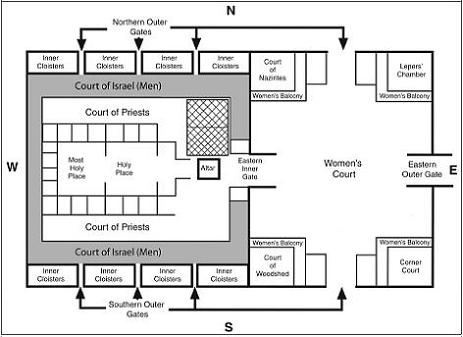
The MacArthur Study Bible, by John MacArthur (Nashville: Word Publishing, 1997) 1461. © 1993 by Thomas Nelson, Inc.
11:19 went out of the city. Jesus’ practice during the first three days of Passion Week was not to leave Jerusalem until sunset, when the crowds dispersed and the city gates were about to be closed.
11:20 in the morning. See note on verse 12. dried up from the roots. The tree blight that prevented fruit (v. 14) had spread upward through the tree and killed it. Matthew describes the event in a more compact fashion, but his account still allows the same time frame as Mark’s (see note on Matt. 21:19 ).
11:21 Rabbi. See note on 9:5.
11:22 Have faith in God. A gentle rebuke for the disciples’ lack of faith in the power of His Word. Such faith believes in God’s revealed truth and His power, and seeks to do His will (cf. 1 John 5:14; see note on Matt. 21:21 ).
11:23 this mountain . . . into the sea. This expression was related to a common metaphor of that day, “rooter up of mountains,” which was used in Jewish literature of great rabbis and spiritual leaders who could solve difficult problems and seemingly do the impossible. Obviously, Jesus did not literally uproot mountains; in fact, He refused to do such spectacular miracles for the unbelieving Jewish leaders (see note on Matt. 12:38 ). Jesus’ point is that if believers sincerely trust in God and truly realize the unlimited power that is available through such faith in Him, they will see His mighty powers at work (cf. John 14:13, 14; see note on Matt. 21:21 ).
11:24 whatever things you ask when you pray. This clause places no limits on a believer’s prayers, as long as they are according to God’s will and purpose (see note on Matt. 17:20 ). This, therefore, means that man’s faith and prayer must be consistent with God’s sovereignty. And it is not the believer’s responsibility to figure out how that can be true, but simply to be faithful and obedient to Jesus’ clear teaching on prayer, as Jesus gives it in this passage. God’s will is being unfolded through all of redemptive history, by means of the prayers of His people. His saving purpose is coming to pass through the faith of those who hear the gospel and repent. Cf. James 5:16.
11:25 stand praying. The traditional Jewish prayer posture (cf. 1 Sam. 1:26; 1 Kin. 8:14, 22; Neh. 9:4; Matt. 6:5; Luke 18:11, 13). Kneeling or lying with one’s face on the ground was used during extraordinary circumstances or for extremely urgent requests (cf. 1 Kin. 8:54; Ezra 9:5; Dan. 6:10; Matt. 26:39; Acts 7:60). anything against anyone. An all-inclusive statement that includes both sins and simple dislikes that cause the believer to hold something against another person. Anyone incorporates believers and unbelievers. forgive. Believers have an ongoing duty to forgive. Jesus states the believer’s ongoing duty to have a forgiving attitude. Successful prayer requires forgiveness as well as faith. See notes on Ephesians 4:32.
11:26 See notes on Matthew 6:15; 18:21–34. This is the only occurrence in Mark of the word trespasses, a term that denotes a falling aside or departing from the path of truth and uprightness.
C. Teaching in Public and in Private (11:27–13:37)
1. Publicly: in the temple (11:27–12:44)
a. concerning His authority (11:27–33)
11:27 temple. Again, this was the court of the Gentiles—more specifically Solomon’s porch or the royal porch on the south side of the court (cf. v. 11; John 10:23; Acts 5:12). chief priests. See note on Matthew 2:4. The group that met Jesus may have included Caiaphas and Annas, who served concurrently for several years (Luke 3:2). Because of the importance of this confrontation, the captain of the temple, the second highest official, may also have been present.
11:28 By what authority. The leaders wanted to know what credentials Jesus—an untrained, unrecognized, seemingly self-appointed rabbi—claimed that would authorize Him to do what He was doing. They had recovered from the initial shock of the previous day’s events, and had become aggressive in demanding an explanation (see note on Matt. 21:23; cf. John 2:18). these things. Primarily a reference to Jesus’ actions in cleansing the temple. But the undefined, vague nature of this expression leaves open the inclusion of everything Jesus had been doing and teaching during His public ministry.
11:30 baptism of John. See notes on 1:4; Matthew 21:25. Jesus put them on the defensive and made their evaluation of John’s authority a test case for their evaluation of His own authority. was it from heaven or from men? Jesus gave the Jewish leaders only those two alternatives in judging the source of John’s authority, and, by implication, His own authority. Christ was, in effect, forcing the men to carry out their roles as religious guides for the people and to go on record with an evaluation of John’s ministry as well as His (see note on Matt. 21:25 ). Answer Me. This challenge by Jesus occurs only in Mark’s account. It implies that the Jews did not have the courage to answer His question honestly.
b. concerning His rejection (12:1–12)
12:1–12 Jesus taught this parable to confront the chief priests and elders and reveal their hypocritical character.
12:1 them. I.e., the chief priests, scribes, and elders (cf. 11:27). parables. See notes on 4:2, 11. vineyard. A common sight in that region. The hillsides of Palestine were covered with grape vineyards, the backbone of the economy. Here, it symbolizes Israel (cf. Ps. 80:8–16; Is. 5:1–7; Jer. 2:21). Jesus used Isaiah 5:1, 2 as the basis for this imagery (see note on Matt. 21:33 ). a hedge. Lit. “a fence.” It may have been a stone wall or a hedge of briars built for protection. wine vat. Located under the winepress. The grapes were squeezed in the press and the juice ran through a trough into this lower basin, where it could be collected into wineskins or jars. tower. This structure had a threefold purpose: (1) it served as a lookout post; (2) it provided shelter for the workers; and (3) it was used for storage of seed and tools. leased it to vine-dressers. Jesus added to the picture from Isaiah 5:1, 2. The owner made an agreement with men he believed were reliable caretakers, who were to pay a certain percentage of the proceeds to him as rent. The rest of the profit belonged to them for their work in cultivating the crop. The “vinedressers” represent the Jewish leaders.
12:2 vintage-time. Better translated, “harvest-time.” This harvest usually occurred for the first time in the fifth year after the initial planting (cf. Lev. 19:23–25). servant. All the servants in the parable represent the OT prophets.
12:6 son, his beloved. The son represents Jesus Christ (see note on Matt. 21:37 ).
12:7 the inheritance will be ours. The vinedressers were greedy. Because they wanted the entire harvest and the vineyard for themselves and would stop at nothing to achieve that end, they plotted to kill the owner’s son. Because Jesus had achieved such a following, the Jewish leaders believed the only way to maintain their position and power over the people was to kill Him (cf. John 11:48).
12:9 destroy the vinedressers. The owner of the vineyard will execute the vinedressers, thus serving as a prophecy of the destruction of Jerusalem (A.D. 70) and the nation of Israel. According to Matthew, this verdict was echoed by the chief priests, scribes, and elders (see note on Matt. 21:41 ). give the vineyard to others. This result was fulfilled in the establishment of Christ’s church and its leaders, who were mostly Gentiles.
12:10, 11 This messianic prophecy is a quotation of Psalm 118:22, 23 from the LXX. Jesus continued His teaching in the form of a parable, but here His kingdom is seen as a building instead of a vineyard. The point is that the rejected son and the rejected stone represent Christ.
12:10 The stone which the builders rejected. Builders typically rejected stones until they found one perfectly straight that could serve as the cornerstone, which was critical to the symmetry and stability of the building. In Jesus’ metaphor, He Himself is the stone the builders (the Jewish religious leaders) rejected (crucified). But the resurrected Christ is the cornerstone (cf. Acts 4:10–12; 1 Pet. 2:6, 7; see note on Matt. 21:42 ).
12:12 against them. The chief priests, scribes, and elders were aware that Christ was condemning their actions, but it only aroused their hatred, not their repentance.
c. concerning paying taxes (12:13–17)
12:13–17 The second of a series of questions that the Jewish religious leaders hoped would trap Jesus into declaring Himself an insurrectionist (cf. 11:28). This one concerns the controversial issue of paying taxes to Rome.
12:13 Pharisees and the Herodians. Matthew indicates that disciples of the Pharisees accompanied the Herodians. The Pharisees may have hoped that Jesus would not recognize them and be caught off guard by their seemingly sincere question. The Herodians were a political party of Jews who backed Herod Antipas, who in turn was a puppet of Rome (see note on Matt. 22:16 ).
12:14 regard the person of men. This speaks of impartiality, or showing no favoritism. While this was flattery on the part of the Pharisees and Herodians, it was nonetheless true that Jesus would not be swayed by a person’s power, prestige, or position. taxes to Caesar. The Greek word for “taxes” was borrowed from the Latin word that gives us the English “census.” The Romans counted all the citizens and made each one pay an annual poll tax of one denarius (see note on Matt. 22:17 ).
12:15 hypocrisy. The Pharisees and Herodians feigned interest in Jesus’ teaching and attempted to hide their true intention to trap Him. But He perceived their true motives (cf. John 2:25). Why do you test Me? Jesus’ response exposed the true motive of the Pharisees and Herodians and revealed their hypocrisy. denarius. This small silver coin, minted by the Roman emperor, was the equivalent of a day’s wage for a common laborer or soldier (see note on Matt. 22:19 ).
12:16 image. On one side of the denarius was likely the image of the current emperor, Tiberius, though at that time it could have also been Augustus, since both coins were in circulation. Tiberius is more likely because the response was “Caesar’s,” indicating the current ruler rather than the past rule. inscription. If the coin was minted by Tiberius, it would have read, “Tiberius Caesar Augustus, the son of the Divine Augustus” on one side and “Chief Priest” on the other. See note on Matthew 22:19.
12:17 Render to Caesar. The Greek word for “render” means “to pay or give back,” which implies a debt. All who lived within the realm of Caesar were obligated to return to him the tax that was owed him. It was not optional. Thus, Jesus declared that all citizens are under divine obligation to pay taxes to whatever government is over them (cf. Rom. 13:1–7; 1 Pet. 2:13–17; see note on Matt. 22:21 ).
d. concerning the resurrection (12:18–27)
12:18 Sadducees. The most wealthy, influential, and aristocratic of all the Jewish sects. All the high priests, chief priests, and the majority of the Sanhedrin (see note on Matt. 26:59 ) were Sadducees. They ignored the oral law, traditions, and scribal laws of the Pharisees, viewing only the Pentateuch as authoritative (see note on Matt. 3:7 ). who say there is no resurrection. This was the most distinctive aspect of the Sadducees’ theology, which they adopted because of their allegiance to the Pentateuch and their belief that Moses did not teach a literal resurrection from the dead. With such a disregard for the future, the Sadducees lived for the moment and whatever profit they could make. Since they controlled the temple businesses, they were extremely upset when Jesus cleansed the temple of the money changers because He cut into their profits (11:15–18). This is why they wanted to discredit Jesus in front of the people.
12:19 The Sadducees were summarizing Deuteronomy 25:5, 6, which refers to the custom of a levirate marriage (marriage to a dead husband’s brother). God placed it in the Law of Moses to preserve tribal names, families, and inheritances (see note on Matt. 22:24 ). Moses wrote. The Sadducees appealed to Moses because they were aware of Jesus’ high regard for Scripture, and therefore believed He would not contest the validity of the levirate marriage.
12:24 the power of God. Their ignorance of the Scriptures extended to their lack of understanding about the miracles God performed throughout the OT. Such knowledge would have enabled them to believe in God’s power to raise the dead.
12:25 neither marry. Marriage was designed by God for companionship and the perpetuation of the human race on the earth. Jesus was emphasizing the fact that in heaven there will be no exclusive or sexual relationships. Believers will experience an entirely new existence in which they will have perfect spiritual relationships with everyone else. like angels. Believers will be like angels in that they will be spiritual, eternal beings who will not die (cf. 1 Cor. 15:39–44, 48, 49; see note on Matt. 22:30 ).
12:26 book of Moses. This refers to the Pentateuch—the first five books of the OT. Jesus appealed to the only Scriptures the Sadducees held as completely authoritative. the burning bush passage. A reference to Exodus 3:1–4:17, where God first appeared to Moses at the bush. how God spoke to him, saying, “I am.” By keying on the emphatic present tense of Exodus 3:6, “I am the God of Abraham, the God of Isaac, and the God of Jacob,” Jesus was underscoring the personal and perpetual covenantal relationship which God established with the three patriarchs. Even though all three were dead when God spoke to Moses, God was still their God just as much as when they were alive on earth—and more so in that they were experiencing eternal fellowship with Him in heaven (see note on Matt. 22:32 ).
12:27 You are . . . greatly mistaken. Jesus accused the Sadducees of making an error in teaching that there is no resurrection.
e. concerning the greatest commandment (12:28–34)
12:28 scribes. See note on 1:22. Which is the first commandment. The rabbis had determined that there were 613 commandments contained in the Pentateuch, one for each letter of the Ten Commandments. Of the 613 commandments, 248 were seen as affirmative and 365 as negative. Those laws were also divided into heavy and light categories, with the heavy laws being more binding than the light ones. The scribes and rabbis, however, had been unable to agree on which were heavy and which were light. This orientation to the law led the Pharisees to think Jesus had devised His own theory. So the Pharisees asked this particular question to get Jesus to incriminate Himself by revealing His unorthodox and unilateral beliefs.
12:29 Hear, O Israel. By quoting the first part of the Shema (Deut. 6:4, 5), which is Hebrew for “hear,” Jesus confirmed the practice of every pious Jew who recited the entire Shema (Num. 15:37–41; Deut. 6:4–9; 11:13–21) every morning and evening.
12:30 love the LORD. Taken from Deuteronomy 10:12; 30:6, Jesus’ answer used God’s own word from the Pentateuch to answer the question, indicating the orthodox nature of His theology. See note on Matthew 22:37.
12:31 the second. Jesus took the Pharisees’ question one step further by identifying the second greatest Commandment, because it was critical to an understanding of the complete duty of love. This Commandment, also from the books of Moses (Lev. 19:18), is of the same nature and character as the first. Genuine love for God is followed in importance by a genuine love for people (see note on Matt. 22:39 ). neighbor. Cf. Luke 10:29–37.
12:32, 33 the scribe said. The scribe’s response reveals that he understood OT teaching that moral concerns take precedence over ceremonial practices (cf. 1 Sam. 15:22; Is. 1:11–15; Hos. 6:6; Mic. 6:6–8).
12:33 burnt offerings. Sacrifices that were completely consumed on the altar (cf. Lev. 1:1–17; 6:8–13).
12:34 not far from the kingdom. Jesus both complimented and challenged the scribe. Jesus acknowledged the scribe’s insight about the importance of love. Yet, by stating that the scribe was “not far” from the kingdom, He emphasized that he was is not in the kingdom. He understood the requirements of love, but he needed only also to love and obey the One who alone could could grant him entrance to the kingdom.
f. concerning the Messiah’s true sonship (12:35–37)
12:35 Jesus’ question exposed the Jewish religious leaders’ ineptness as teachers and their ignorance of what the OT taught about the true nature of the Messiah. temple. See note on 11:11. Christ. This is a translation of the OT Hebrew word Messiah, which means “anointed one” and refers to the King whom God had promised. Son of David. The common messianic title that was standard in scribal teaching. The religious leaders were convinced that the Messiah would be no more than a man; thus, they deemed such a title appropriate (see notes on 10:47; Matt. 22:42 ).
12:36 David himself said by the Holy Spirit. David used his own words, yet he wrote under the inspiration of the Holy Spirit (cf. 2 Sam. 23:2). The LORD said to my Lord. In this quote from the Hebrew text (Ps. 110:1), the first word for LORD is Yahweh, which is God’s covenant name. The second word for Lord is a different word that the Jews used as a title for God. Here, David pictures God speaking to the Messiah, whom David calls his Lord. The religious leaders of Jesus’ day recognized this psalm as messianic.
12:37 David himself calls Him “Lord.” Jesus interpreted Psalm 110:1 for the Pharisees’ sake. David would not have called one of his descendants “Lord.” Thus, the Messiah is more than the “Son of David”—He is also the “Son of God.” Jesus was proclaiming the Messiah’s deity, and thus His own (cf. Rom. 1:3; 2 Tim. 2:8; see note on Matt. 22:45 ). common people. The multitude of people who observed this confrontation between Jesus and the religious leaders.
g. concerning the scribes (12:38–40)
12:38 Beware. This means “to see” or “to watch.” It carries the idea of guarding against the evil influence of the scribes. long robes. A long, flowing cloak that announced the wearer as a devout and noted scholar. greetings. Accolades for those holding titles of honor.
12:39 best seats in the synagogues. The bench in the synagogue nearest the chest where the sacred scrolls were housed—an area reserved for leaders and people of renown (see note on James 2:3 ).
12:40 devour widows’ houses. Jesus exposed the greedy, unscrupulous practice of the scribes. Scribes often served as estate planners for widows, which gave them the opportunity to convince distraught widows that they would be serving God by supporting the temple or the scribe’s own holy work. In either case, the scribe benefited monetarily and effectively robbed the widow of her husband’s legacy to her. long prayers. The Pharisees attempted to flaunt their piety by praying for long periods. Their motive was not devotion to God, but a desire to be revered by the people.
h. concerning true giving (12:41–44)
12:41 treasury. This refers to the thirteen trumpet-shaped receptacles on the walls in the court of the women where offerings and donations to the temple were placed.
12:42 two mites. A mite was a small copper coin, which was the smallest denomination in use. It was worth about an eighth of a cent. a quadrans. For the benefit of his Roman audience (see Introduction: Background and Setting), Mark related the mite to this smallest denomination of Roman coinage. A quadrans was equal to one sixty-fourth of a denarius, and a denarius was the equivalent of a day’s wage.
12:43 Assuredly, I say to you. See note on 3:28.
12:44 her whole livelihood. This could be translated, “all she had to live on.” That meant that she would not be able to eat until she earned more.
2. Privately: on the Mount of Olives (13:1–37)
13:1–37 This great sermon by Jesus is commonly known as the Olivet Discourse because Jesus delivered it on the Mt. of Olives just east of the temple, across the Kidron Valley. Jesus’ prediction of the coming destruction of the temple prompted a question from the disciples about the character of the end times. The remainder of the passage (vv. 5–37) is His response to their question as He describes His Second Coming at the end of the present age.
a. the disciples’ question about end times (13:1)
13:1 what manner of stones and what buildings. See note on Matthew 24:1. This unidentified disciple was admiring the magnificence and beauty of the temple and the surrounding buildings and was encouraging a similar response from Jesus. It is likely that the disciple could not comprehend how such an awesome structure could be left “desolate” (cf. Matt. 23:38).
b. the Lord’s answer (13:2–37)
13:2 Jesus answered. In response to the disciple’s admiration, Jesus again predicted that the temple would be destroyed. About forty years later, in A.D. 70, the Romans ransacked Jerusalem, killed a million Jews, and demolished the temple. Not one stone. The only stones left undisturbed were huge foundation stones that were not actually a part of the temple edifice but formed footings for the retaining wall under the entire temple mount. These can be viewed today in the “Rabbi’s Tunnel” which runs north-south along the western wall. It is a portion of the western side of the retaining wall that today is called the Wailing Wall. More of that retaining wall, including the steps used to ascend and descend from the temple mount, has also been uncovered on the southern side.
13:3 Mount of Olives. See note on 11:1. Peter, James, John, and Andrew asked Him privately. These four disciples were asking on behalf of all the Twelve.
13:4 The disciples were speculateing that Jesus would usher in the kingdom very soon, so they asked a twofold question: (1) When would the temple be destroyed and the kingdom begin? and (2) What event would herald the beginning of the kingdom? when will these things be? When implies immediacy. The disciples thought that Jesus was about to usher in the kingdom of God at any time (cf. Luke 19:11), at least by the end of the Passover season. “These things” refers to the desolation and destruction of the temple (cf. Matt. 23:38; 24:2) the sign. The disciples probably expected some miraculous occurrence—such as complete darkness, brilliant light, or an angel from heaven—to announce the coming millennial kingdom (see note on Matt. 24:3 ). All of those things would occur at that time (see notes on vv. 24–27 ).
13:5 Take heed. This Greek word literally means “to see,” but it was often used as it is here with the idea of “keep your eyes open,” or “beware.”
13:6 I am He. Many false prophets would come forward claiming to be messiahs and deliverers, offering themselves as the solution to the world’s problems. Some would even claim to be Christ Himself. The number of false christs will increase as the end nears (cf. Matt. 24:23, 24).
13:7 the end. The consummation of the present age (see note on Matt. 24:6 ).
13:8 the beginnings of sorrows. The Greek word for “sorrows” means “birth pangs.” The Lord was referring to the pain a woman experiences in childbirth. Birth pains signal the end of pregnancy. They are infrequent at first and gradually increase just before the child is born. Likewise, the signs of verses 6–8 will be infrequent, relatively speaking, in the beginning and will escalate to massive and tragic proportions just before Christ’s Second Coming (cf. 1 Thess. 5:3; see note on Matt. 24:8 ).
13:9 councils. The Greek word is literally “sanhedrins.” These were local, Jewish courts attached to the synagogues which tried charges of heresy and normal infractions of the law. The historian Josephus says that each city’s council was composed of seven judges (Antiquities, 4.8.14), and the Mishnah records that there were twenty-three judges in every city with more than one hundred Jewish men (“Sanhedrin” 1.6). These “councils” were like smaller versions of the great Sanhedrin that convened in Jerusalem (see note on Matt. 26:59). beaten. These local councils usually administered thirty-nine stripes so as not to violate Deuteronomy 25:2, 3. The recipient of the punishment was stripped bare to the waist. He received thirteen lashings to his chest and twenty-six to his back (see note on 2 Cor. 11:24 ). in the synagogues. The synagogues were the places for Jewish assembly and worship. When the councils convened, they typically met in the synagogue.
13:10 first be preached to all the nations. Before the end (see note on v. 7 ), there will be a worldwide proclamation of the gospel. This proclamation may even refer to the occasion when an angel will supernaturally proclaim the gospel throughout the world before God pours out His judgment at the end of the Tribulation (Rev. 14:6–8; see note on Matt. 24:14 ).
13:11 what you will speak. Although the persecution will be terrifying, Christians are not to be anxious in anticipation of those events. for it is not you who speak. Rather than being fearful, believers can remain calm and depend on the Holy Spirit, who will give them the appropriate and effective words to say in defense of their faith in Christ. See note on Luke 12:11.
13:13 endures to the end shall be saved. See note on Matt. 24:13. This endurance does not produce salvation; it is Spiritempowered perseverance and proof of the reality of salvation in the person who endures. Christ will eventually deliver such believers out of the present evil system into God’s eternal kingdom (cf. Matt. 10:22).
13:14 the abomination of desolation. This first referred to the desecration of the temple by Antiochus Epiphanes, the king of Syria, in the second century B.C. when he sacrificed a pig on the temple altar. That event was similar in character to what Jesus refers to here, i.e., the Antichrist’s ultimate desecration, when he sets up an image of himself in the temple during the Tribulation (see notes on Dan. 9:27; 11:31; Matt. 24:15; 2 Thess. 2:4 ). standing where it ought not. Matthew 24:15 indicates the location as the “holy place.” This phrase from Matthew occurs only one other place in the NT (Acts 21:28), where it clearly refers to the temple. This clause from Mark thus specifically implies that the temple will be rebuilt in the future and that the daily sacrificial system will be reinstated. Standing indicates that the abomination of desolation will be continuous, actually lasting for three and one-half years (Dan. 12:11; cf. Rev. 12:6). (let the reader understand). This indicates that Jesus was not issuing these warnings to the disciples or to others of their generation, who would not experience this event, but to believers in the end time. Those who will read these truths will be prepared and understand the trials they are enduring. flee to the mountains. The Greek word for “flee” is related to the English word fugitive, a person on the run to escape danger. Jesus warns those who live in Judea to escape the holocaust by taking refuge in the mountains (see note on Matt. 24:16 ).
13:15 into the house. So urgent will be the need to flee that if a person happens to be on the roof of his house (see note on 2:4 ) when he hears the news, he is to run down the outside stairway and leave town without going inside his house to retrieve any belongings.
13:16 clothes. The Greek word refers to the outer cloak. Jesus warns those working in the fields not to take the time to retrieve their cloaks that may be at home or some distance away at the entrance to the field.
13:17 pregnant and . . . nursing babies. Jesus certainly felt compassion for those women who will be hindered from fleeing quickly because they carry children. But He may have been warning them about atrocities that could include unborn children being slashed in the wombs and tiny infants being crushed (cf. Hos. 13:16).
13:18 in winter. This refers to the rainy season in Palestine, when streams could become impassable and when it would be difficult to glean food from barren fields.
13:19 tribulation, such as has not been. This reveals that the Tribulation Jesus was referring to is in the future and that it will be the greatest that has ever occurred. It will be of long duration and will be characterized by severe pressure and continual anguish. This is the Great Tribulation at the end of the age (cf. Rev. 7:14; see note on Matt. 24:21 ).
13:20 shortened. Lit. “mutilated” or “amputated.” Jesus was referring to the determination of God to cut short or limit the period of time to only three and one-half years (cf. Dan. 7:25; Rev. 12:14; see note on Matt. 24:22 ). the elect’s sake. The elect may refer to the nation of Israel (cf. Is. 45:4), or to those who become Christians during the Tribulation (Rev. 17:14). In either case, God cuts short the days for their benefit.
13:21 Look, here is the Christ! Satan will cause false christs to appear in an attempt to deceive the elect into leaving their places of refuge. False teachers will claim that Christ is in their midst or is back in Jerusalem or elsewhere in Judea.
13:22 signs and wonders. These are satanic-inspired pseudo-miracles that false christs will use to support their claims to be the true Christ (cf. 2 Thess. 2:9).
13:23 take heed. Jesus issues a prophetic warning to be on guard. He has told the elect refugees of the future all they need to know to avoid being misled and deceived by Satan’s emissaries.
13:24 in those days, after that tribulation. Those days describes the events of verses 6–23 and, thus, that tribulation refers to the Great Tribulation of which Jesus had just spoken. This identification also means that what He was about to describe (vv. 24–27) will occur immediately at the end of the future Tribulation period (cf. Matt. 24:29). the sun will be darkened. The sun will go black as the universe begins to disintegrate before the return of Christ (see notes on Matt. 24:29; Acts 2:20; Rev. 6:12 ).
13:25 stars of heaven will fall. Heavenly bodies will careen through space at random (cf. Rev. 6:13, 14; 8:10–13; 16:8, 17–20). powers in the heavens. All the forces of energy that hold everything in space constant, and which Christ controls, He will allow to become random and chaotic (cf. Is. 13:6–16; 34:1–5; 2 Pet. 3:10–12).
13:26 Son of Man. See note on 2:10. coming in the clouds with great power and glory. Jesus will return to earth in the same manner in which He left it (cf. Acts 1:9–11; cf. Dan. 7:13, 14; Rev. 1:7). The psalmist said that God uses “clouds” as His chariot (Ps. 104:3), and Isaiah 19:1 pictures the Lord riding on a cloud. Although these “clouds” could be natural, they more likely describe the supernatural “glory cloud” that represented God’s presence in OT Israel (see note on Rev. 1:7 ). While Christ possesses “great power and glory,” His return will be accompanied with visible manifestations of this power and glory (cf. Rev. 6:15–17; 11:15–19; 16:17–21; 19:11–16). He will redeem the elect, restore the devastated earth, and establish His rule on earth.
13:27 angels. A number of angels return with Christ (cf. 8:38; Matt. 16:27; see following note ). gather . . . His elect. Angels are God’s gatherers; they gather unbelievers for judgment (Matt. 13:41, 49, 50), and they gather the elect for glory. The elect will include the 144,000 Jewish witnesses (see note on Rev. 7:4 ), their converts (Rev. 7:9), and the converts of the angelic preachers (see note on Rev. 14:6 ). They will also include the OT saints, gathered out of their graves and united with their redeemed spirits (Dan. 12:1–3). from the four winds. A colloquial expression meaning “from everywhere,” and similar to the expression “from the four corners of the earth.” None of the elect on earth or in heaven will miss entering the kingdom.
13:28 this parable. See note on 4:2. fig tree. See note on 11:13.
13:29 Just as the fig tree’s buds turning into leaves was a sign of the nearness of summer, the events Jesus described as birth pains (vv. 6–23) are to be a clear indication of the return of Christ (see note on Matt. 24:32 ). these things. The events of verses 6–23. it is. Luke 21:31 refers to “it” as the kingdom of God. This identification is consistent with the question the disciples initially asked Jesus (v. 4), which was about the signs that would herald the establishment of the kingdom.
13:30 Assuredly, I say to you. See note on 3:28. this generation. The generation of people living during the end times that witnesses the signs and events leading to the return of Christ (see note on Matt. 24:34 ).
13:31 Heaven and earth will pass away. The universe as we know it will be dramatically altered after the thousand-year reign of Christ (see notes on 2 Pet. 3:10–13 ). My words will by no means pass away. It is impossible for God’s Word to be negated, destroyed, or altered in any way (cf. Ps. 19:9; Matt. 5:18; Luke 16:17; John 10:35).
13:32 that day and hour. The exact day and time of Christ’s return (see note on Matt. 24:36 ). no one knows. The time of Christ’s return will not be revealed in advance to any person. At this time, it was known only to God the Father. angels. While all the angelic beings enjoy intimacy with God, hover around His throne to do His bidding (Is. 6:2–7), and continually behold Him (Matt. 18:10), they have no knowledge of the time of Christ’s return. nor the Son. When Jesus spoke these words to the disciples, even He had no knowledge of the date and time of His return. Although Jesus was fully God (John 1:1, 14), when He became a man, He voluntarily restricted the use of certain divine attributes (Phil. 2:6–8). He did not manifest them unless directed by the Father (John 4:34; 5:30; 6:38). He demonstrated His omniscience on several occasions (cf. John 2:25; 13:3), but He voluntarily restricted that omniscience to only those things God wanted Him to know during the days of His humanity (John 15:15). Such was also the case about the knowledge of the date and time of Jesus’ return. After He was resurrected, however, Jesus resumed His full divine knowledge (cf. Matt. 28:18; Acts 1:7).
13:33 watch and pray. Christ sounded a warning for believers to be on guard (see note on v. 5 ) in two practical ways: (1) watch is a call to stay awake and be alert, looking for approaching danger; and (2) pray emphasizes the believer’s constant need for divine assistance in this endeavor. Even believers do not have in themselves sufficient resources to be alert to spiritual dangers that can so easily surprise them.
13:34 doorkeeper. In Jesus’ day, this person guarded the outer gate of the house in order to be ready to let the returning master in upon his arrival. All of Christ’s disciples are to be like doorkeepers, always remaining alert and vigilant for their Master’s return.
13:35 in the evening . . . or in the morning. The normal expressions designating the four three-hour watches of the night from 6:00 P.M. to 6:00 A.M. Their names identify the ends of the three-hour periods rather than the periods’ beginnings.
D. Arrangements for Betrayal (14:1, 2, 10, 11)
14:1 After two days. In the context of Matthew 26:2, Jesus predicted that His Crucifixion was to take place in “two days,” which would be Friday, since He was speaking on Wednesday evening. Mark’s time line here is the same as Matthew’s (see note on Matt. 26:2 ). the Passover. I.e., Friday of Passover, which would have begun on Thursday at sunset. The Passover commemorated the “passing over” of the homes of the Israelites by the angel of death, who killed the firstborn of Egypt (Ex. 12:1–13:16). The Passover began on the fourteenth day of Nisan (the first month of the Jewish calendar) with the slaughtering of the Passover lamb, and continued into the early hours of the fifteenth (see notes on Ex. 12:6; Matt. 26:2 ). Feast of Unleavened Bread. This feast commemorated the departure of the Israelites from Egypt (Ex. 23:15). It began immediately after the Passover and lasted from Nisan 15–21. Unleavened bread refers to the type of bread the Israelites were to take with them in their escape, which represented the absence of the leaven of sin in their lives and household (see notes on Ex. 12:14; Lev. 23:6–8 ). chief priests. See note on 8:31. scribes. See note on Matt. 2:4.
14:2 Not during the feast. Because the Passover had to be celebrated in Jerusalem, the city would have been overflowing; perhaps as many as two million people were there. Since many would have been from Galilee—an area where Jesus had many followers—and the religious leaders did not want to start a riot, they determined to wait until after the Passover season when the crowds would be diminished (see note on Matt. 26:5 ).
E. Anointing, the Last Supper, Betrayal, Arrest, Trial [Jewish Phase] (14:3–9, 12–72)
1. The anointing: Bethany (14:3–9)
14:3–9 The incident recorded here had occurred the previous Saturday (cf. John 12:1). It is Mark’s account of the anointing of Jesus by Mary in preparation for His Crucifixion (cf. Matt. 26:6–13; John 12:2–8).
14:3 Bethany. See note on 11:1. Simon the leper. This man is mentioned in the NT only in connection with this narrative. Since a leper was an outcast in Jewish society, he was probably miraculously cleansed of his leprosy by Jesus, and may have planned this meal for Jesus in gratitude (see notes on Lev. 13; Matt. 26:6 ). a woman. John 12:3 identifies her as Mary, the sister of Martha and Lazarus, who were also present at this meal. alabaster flask. This long-necked bottle was made from a special variety of marble, a material which proved to be the best container for preserving expensive perfumes and oils (see note on Matt. 26:7 ). spikenard. This actually represents two words in the Greek that could be translated “pure nard.” The oil was derived from the nard plant, which was native to India. That it was pure meant it was genuine and unadulterated, which is what made it so costly. broke the flask. She may have simply broken the neck of the bottle so that she could pour out the contents more quickly—an expression of her sincere and total devotion to the Lord.
14:4 some who were indignant. John 12:4, 5 says that Judas was the instigator, and Matthew 26:8 indicates that all the disciples, following Judas’ lead, were angry with Mary’s waste of a valuable commodity.
14:5 three hundred denarii. Since a denarius was a day’s wage for a common laborer, it represented almost a year’s work for such a person. given to the poor. While eleven of the disciples would have agreed with this use of the money, the fact is that the poor may never have seen it. Since Judas was in reality a thief masquerading as the treasurer of the Twelve, he could have embezzled all of it (John 12:6).
14:7 you have the poor with you always. Opportunities to minister to the poor are always available, but Jesus would be in their presence for only a limited time. This was not a time for meeting the needs of the poor and the sick; it was a time for sacrificial worship of the One who would soon suffer and be crucified (see note on Matt. 26:11; cf. 2:19).
14:8 anoint My body for burial. Mary did so, probably without realizing what she was doing. Her anointing of Jesus became a symbol that anticipated His death and burial (see note on Matt. 26:12 ).
14:9 Assuredly, I say to you. See note on 3:28. gospel. See note on 1:1.
14:10 Judas Iscariot. Standing in sharp contrast to the love and devotion of Mary was the hatred and treachery of Judas. This disciple, who is understandably referred to last in the lists of the Twelve, was the son of Simon, who was also called “Iscariot.” The name “Iscariot” means “man of Kerioth,” which was a small town in Judea about twenty-three miles south of Jerusalem (cf. 3:19). Thus, Judas was not a Galilean like the other disciples. It is clear that Judas never had any spiritual interest in Jesus. He was attracted to Him because he expected Jesus to become a powerful religious and political leader. He saw great potential for power, wealth, and prestige through his association with Him. But Jesus knew what Judas was like from the start, and that is why He chose him as one of the Twelve. He was the one who would betray Him so that the Scripture and God’s plan of salvation would be fulfilled (Pss. 41:9; 55:12–15, 20, 21; Zech. 11:12, 13; John 6:64, 70, 71; 13:18; 17:12). the twelve. See note on 3:14. chief priests. See note on 8:31.
14:11 money. Matthew says the amount Judas agreed to as blood money was thirty pieces of silver (see note on Matt. 26:15 ). sought how he might conveniently. Sought is better translated “began to seek.” Conveniently means that Judas was looking for a suitable occasion to carry out his evil plan, which would be when Jesus was away from the crowds (Luke 22:6).
The Passovers of Christ’s Ministry
| A.D. 27 | First Passover of Christ’s ministry (John 2:13) |
| A.D. 28 | Second Passover of Christ’s ministry (no mention in Gospels) |
| A.D. 29 | Third Passover of Christ’s ministry (John 6:4) |
| A.D. 30 | Crucifixion of Christ (Matt. 26:17; Mark 14:1; Luke 22:11; John 11:55) |
2. The Last Supper: Jerusalem (14:12–31)
14:12 Unleavened Bread. Passover and the Feast of Unleavened Bread were so closely associated that both terms were used interchangeably to refer to the eight-day celebration that began with the Passover. Although “Unleavened Bread” is used here, Mark’s clear intention is the preparation for Passover (see notes on v. 1; Matt. 26:17 ). killed the Passover lamb. The lambs were killed on 14 Nisan at twilight (Ex. 12:6), a Hebrew term meaning “between the two evenings,” or between 3:00 and 5:00 P.M. After the lamb was slaughtered and some of its blood was sprinkled on the altar, the lamb was taken home, roasted whole, and eaten in the evening meal with unleavened bread, bitter herbs, charoseth (a paste made of crushed apples, dates, pomegranates, and nuts, into which they dipped bread), and wine.
14:13 two of His disciples. I.e., Peter and John (Luke 22:8). Only two people were allowed to accompany a lamb to the sacrifice. man . . . carrying a pitcher of water. This is the only way that Jesus identified the man. He stood out because it was unusual for a man to carry a pitcher of water; women usually performed that chore (see note on Matt.26:18 ).
14:14 guest room. The word is translated “inn” in Luke 2:7. It typically referred to a place where a traveler could spend the night—a place of lodging or a guest room in someone’s home, as was the case here (cf. Matt. 26:18).
14:15 large upper room. This indicates that the room was located upstairs, and may have been a roof chamber built on top of the house. make ready. Peter and John were to prepare the Passover meal for Jesus and the other disciples.
14:17 In the evening. The Passover meal was to be eaten at night after sunset, but it had to be completed before midnight (Ex. 12:8–14). with the twelve. Peter and John may have rejoined Jesus and the other disciples and led them to the Upper Room. This may also be a general reference to the Twelve, meaning that Jesus came with the other ten disciples to meet Peter and John.
14:18 sat and ate. The order of the Passover meal was as follows: (1) drinking a cup of red wine mixed with water (cf. Luke 22:17); (2) the ceremonial washing of hands symbolizing the need for spiritual and moral cleansing; (3) eating the bitter herbs, symbolic of the bondage in Egypt; (4) drinking the second cup of wine, at which time the head of the household explained the meaning of Passover; (5) singing of the Hallel (Pss. 113–118)—at this point they sang the first two; (6) serving the lamb, with the head of the household distributing pieces of it with the unleavened bread; (7) drinking the third cup of wine (see notes on 1 Cor. 10:16 ).
14:20 dips with Me in the dish. There were likely several dishes around the table. Judas was probably one of several sitting near Jesus and, thus, would have dipped in the same bowl with Him.
14:21 Son of Man. See note on 2:10. as it is written. Jesus was no victim; His betrayal by Judas was prophesied in the OT (Ps. 22; Is. 53), and was part of God’s predetermined plan to provide salvation (Acts 2:23). good . . . if he had never been born. Cf. John 8:21–24; 16:8–11. This was because the terror Judas would experience in hell would be so great. The most severe punishment is reserved for Judas and others like him (Heb.10:29). This statement is one of the strongest statements in Scripture on human responsibility for believing in Jesus Christ, coupled with the consequences of unbelief.
14:22–25 At this point in the narrative, it appears that Judas has gone (John 13:23–30) and Jesus was alone with the faithful eleven disciples (see note on Luke 22:21 ). It was then that He transformed the Passover of the Old Covenant into the Lord’s Supper of the New Covenant, creating a new memorial feast to remember God’s deliverance from sin.
14:22 as they were eating. Nothing from any of the Gospel accounts indicates which part of the meal they were eating, but it is likely that this occurred just prior to eating the roasted lamb or concurrently with it. It is significant that Jesus established the truth of the New Covenant while in the midst of eating the Passover. this is My body. Jesus gave new meaning to eating the bread. The unleavened bread symbolized the severing of the Israelites from the old life in Egypt. It represented a separation from worldliness, sin, and false religion and the beginning of a new life of holiness and godliness. From then on, in the Lord’s Supper, the bread would symbolize Christ’s body, which He sacrificed for the salvation of humankind (see note on Matt. 26:26 ).
14:23 the cup. The third cup of wine in the ceremony (see note on 1 Cor. 10:16 ).
14:24 My blood of the New Covenant. The shedding of blood in a sacrifice was always God’s requirement in establishing any covenant (cf. Gen. 8:20; 15:10; Ex. 24:5–8). Here, Christ’s blood needed to be shed for the remission of sins (Heb. 9:22; 1 Pet. 1:19; see note on Matt. 26:28 ). for many. This literally means “for the benefit of many.” The “many” are all who believe, both Jew and Gentile. See note on 10:45; cf. Matthew 20:28.
14:25 Assuredly, I say to you. See note on 3:28. I will no longer drink. Jesus declared that this would be the last Passover, and that He would not drink wine with them again, since this was His last meal. Until the inauguration of the millennial kingdom, believers are to share this memorial meal (see notes on 1 Cor. 11:23–34 ). drink it new. This anticipation served as an assurance to them of Jesus’ return and His establishment of His earthly, millennial kingdom. It possibly implies that the Communion service will continue to be observed in the millennial kingdom, as a memorial to the Cross. It more probably indicates that Jesus would not have another Passover with them until the kingdom (see notes on Ezek. 45:18–25; 45:21–24 ). It is also true that in the kingdom, some commemorative sacrifices from the Old Covenant will be restored (Ezek. 43–45), which will have meaning never understood before the Cross of Christ to which they pointed. kingdom of God. The earthly millennial kingdom is in view.
14:26 sung a hymn. Probably Psalm 118, the last psalm of the traditional Hallel, sung at Passover (see note on Matt. 26:30 ). Mount of Olives. See note on 11:1.
14:27 made to stumble. See note on 4:17; Matthew 26:31. This can be translated “fall away,” and it refers to the disciples’ temporary falling away from their loyalty to Jesus. it is written. Quoted from Zechariah 13:7.
14:28 to Galilee. Jesus promised to meet the disciples in His post-resurrection form (cf. 16:7; Matt. 28:16, 17; see note on Matt. 28:7 ).
14:30 Assuredly, I say to you. See note on 3:28. before the rooster crows twice. In the Jewish reckoning of time, “cock crow” was the third watch of the night, ending at 3:00 A.M., which was when roosters typically began to crow (see note on 13:35 ). Mark, alone among the Gospels, indicates that the rooster crowed two times (v. 72; see note on Matt. 26:34 ).
3. The prayer: Gethsemane (14:32–42)
14:32 Gethsemane. The name means “oil press,” and referred to a garden filled with olive trees on a slope of the Mount of Olives. Jesus frequented this spot with the disciples when He wanted to get away from the crowds to pray (cf. John 18:1, 2; see note on Matt. 26:36 ).
14:33 Peter, James, and John. See note on 5:37. Jesus likely had them accompany Him into the garden because they were the leaders of the Twelve and had to learn an important lesson to pass on to the others (vv. 34–42). troubled. The Greek word refers to a feeling of terrified amazement. In the face of the dreadful prospect of bearing God’s full fury against sin, Jesus was in the grip of terror (see note on Matt. 26:38 ).
14:34 even to death. Jesus’ sorrow was so severe that it threatened to cause His death at that moment. It is possible for a person to die from sheer anguish (cf. Luke 22:44; see note on Matt. 26:38 ).
14:35 if . . . possible. Jesus was not asking God if He had the power to let the cup pass from Him, but if it were possible in God’s plan. Christ was soon to partake of this cup in the Cross as God’s only sacrifice for sin (cf. Acts 4:12). the hour. I.e., the time of His sacrificial death as decreed by God. It included everything from the betrayal (v. 41) to Jesus’ trials, the mockery, and His Crucifixion.
14:36 Abba. An endearing, intimate Aramaic term that is essentially equivalent to the English word Daddy (cf. Rom. 8:15; Gal. 4:6). all things are possible. Jesus knew that it was in the scope of God’s power and omniscience to provide an alternate plan of salvation, if He desired (see note on v. 35 ). cup. This refers to the cup of divine wrath mentioned in the OT (Ps. 75:8; Is. 51:17; Jer. 49:12). Christ was to endure the fury of God over sin, Satan, the power of death, and the guilt of iniquity (see notes on Matt. 26:39; Luke 22:42; John 18:11 ). not what I will, but what You will. This reveals Jesus’ total resolution and resignation to do the will of God. He came into the world to do God’s will, and this remained His commitment while here (see notes on Matt. 26:39; cf. John 6:38–40).
14:37 Simon. Jesus’ use of Simon may imply that Peter was not living up to the significance and meaning of his new name, “Peter” (see note on Matt. 16:18 ). one hour. This phrase suggests that Jesus had spent an hour praying, a duration in which Peter had been unable to stay awake.
14:38 Watch. This Greek word means “to keep alert.” Jesus was encouraging Peter, James, and John to discern when they were under spiritual attack. They were not to let their self-confidence lull them to sleep spiritually. the flesh is weak. Because willing spirits are still attached to unredeemed flesh, believers are not always able to practice the righteousness they want to do (cf. Rom. 7:15–23; see note on Matt. 26:41 ).
14:41 Are you still sleeping and resting? The three disciples remained indifferent not only to the needs of Christ at that moment, but also to their need of strength and watchfulness for the impending temptation that all eleven would face. The disciples needed to learn that spiritual victory goes to those who are alert in prayer and who depend on God, and that self-confidence and spiritual unpreparedness lead to spiritual disaster. Son of Man. See note on 2:10.
4. The betrayal: Gethsemane (14:43–52)
14:43 Judas, one of the twelve. See notes on 3:19; Matthew 26:47. All the Gospel writers refer to him this way (vv. 10, 20; Matt. 26:14, 47; Luke 22:47; John 6:71); and in so doing, they display remarkable restraint in describing and evaluating Judas. Especially in this context, such a simple description actually heightens the evil of his crime more than any series of derogatory epithets or negative criticisms could do. It also points out the precise fulfillment of Jesus’ announcement in verses 18–20. a great multitude with swords and clubs. This multitude was a carefully selected group whose sole purpose was arresting Jesus so He could can be put to death. A cohort (six hundred men at full strength) of Roman soldiers (John 18:3, 12) was is in this crowd because the Jewish leaders (cf. Luke 22:52) who organized the throng needed permission from Rome to carry out the death penalty and feared the crowds. The swords were the regular small hand weapons of the Romans, and the wood clubs were ordinary weapons carried by the Jewish temple police. chief priests . . . scribes . . . elders. Although representing three distinct sections of the Sanhedrin(as indicated by the Greek definite article with each), they were acting in unity. These Jewish leaders had evidently for some time (see notes on 3:6; 11:18 ) hoped to accuse Jesus of rebellion against Rome. Then His execution could be blamed on the Romans, and the leaders could escape potential reprisals from those Jews who admired Jesus. The Sanhedrin likely had hurried to Pontius Pilate, the Roman governor, to ask immediate use of his soldiers; or perhaps they acted on a prearranged agreement for use of these troops on short notice. Whatever the case, the leaders enlisted the assistance of the Roman military from Fort Antonia in Jerusalem.
14:44 kiss. In addition to being a special act of respect and affection, this kind of kiss was a sign of homage in Middle Eastern culture. Out of the varieties of this kiss (on the feet, on the back of the hand, on the palm, on the hem of the garment), Judas chose the embrace and the kiss on the cheek—the one that showed the closest love and affection, normally reserved for one with whom a person had a close, intimate relationship (such as a pupil for his teacher). Judas could not have chosen a more despicable way to identify Jesus, because he perverted its usual meaning so treacherously and hypocritically.
14:45 Rabbi. “My master” (see note on 9:5 ). kissed Him. Kissed is an intensified form of the verb for kiss in verse 44, and it denotes a fervent, continuous expression of affection (cf. Luke 7:38, 45; 15:20; Acts 20:37). It was with intensity that Judas pretended to love Christ. The act was likely prolonged enough so the crowd had time to identify Jesus.
14:47 one of those who stood by. This refers to Simon Peter (John 18:10), one of the two disciples who brought weapons (Luke 22:38). Mark and the other synoptic writers do not identify Peter explicitly, perhaps because they wrote earlier than John, during the time when Peter would still have been in danger of Jewish revenge. the servant of the high priest. Malchus (John 18:10). He was neither a soldier nor a temple policeman, but rather was a high-ranking personal slave of Caiaphas, the high priest, probably sent along to observe Judas and report on the events of the evening.
14:48 as against a robber. Jesus expressed a righteous resentment toward the crowd’s actions and attitudes. A robber was normally a highwayman or armed bandit who would resist arrest. The setting which the crowd orchestrated was inconsistent with His well-known ministry as a religious teacher.
14:49 temple. See note on 11:11. The temple was the most public place in Jerusalem. the Scriptures must be fulfilled. Entirely apart from the crowd’s sinful intentions against Jesus, God used them sovereignly to fulfill prophecy (cf. Is. 53:7–9, 12) and to accomplish His gracious purposes (see note on Matt. 26:54 ).
14:50 forsook Him. The disciples found no comfort in Jesus’ reference to Scripture, but instead their faith in Him collapsed as they realized He would not resist arrest and that they also might be captured.
14:51 certain young man. Perhaps this was Mark himself. If the mob under Judas’s guidance had first gone to Mark’s mother’s house in search of Jesus—possibly where the last Passover was observed by Jesus and the Twelve—Mark could have heard the noise, suspected what was happening, and hurried to follow the multitude. a linen cloth. Either a loose-fitting linen sleeping garment or a sheet Mark had hastily wrapped around himself after being roused from bed.
14:52 fled . . . naked. Mark escaped capture and ran, but in doing so, his covering came off or was pulled off, and he left with nothing on—or perhaps nothing more than undergarments.
14:53–15:15 Mark’s account of Jesus’ trials, like that of all the Gospels, makes it clear that Christ was tried in two general phases: first, before the religious authorities (the Jewish Sanhedrin), and second, before the secular, political authorities (Rome, represented by the governor, Pontius Pilate). Each of these phases had three parts: preliminary interrogation, formal arraignment, and formal sentencing. Mark, like the other Gospel writers, did not include a comprehensive account of all the details and stages. A complete picture requires the material from all four Gospels to be combined.
5. The Jewish trial: Caiaphas’s house (14:53–72)
14:53 high priest. Caiaphas, the leader of the Sanhedrin (see notes on Matt. 26:3, 57; cf. John 18:24). He was the official high priest in A.D. 18–36. all the chief priests, the elders, and the scribes. See note on verse 43. The entire Sanhedrin, the whole hierarchy, was out in force.
14:54 courtyard of the high priest. A quadrangle in the center of the high priest’s residence.
14:55 council. The Sanhedrin (see note on Matt. 26:59 ).
14:56 Because Jesus was innocent, the Jewish leaders could not convict Him except by relying on perjured testimony and perverted justice. The Jewish leaders were intent on doing whatever was necessary, even if they had to violate every biblical and rabbinical rule. many bore false witness against Him. There was no lack of people to come forward at the Sanhedrin’s invitation to consciously present false, lying testimony. did not agree. The testimonies were grossly inconsistent. The law, however, required exact agreement between two witnesses (Deut. 17:6; 19:15).
14:57, 58 false witness. The witnesses maliciously garbled and misrepresented Jesus’ statements. Quite possibly, they blended His figurative statement about His death and Resurrection in John 2:19–22 with His prediction of a literal destruction of the temple in 13:2. Their charge claimed He was disloyal to the present order of religion and worship (by replacing the current temple), and that He was blaspheming God (by saying He would so quickly rebuild the temple without hands).
14:58 I will destroy this temple made with hands. This temple refers to the material sanctuary in Jerusalem. Jesus boldly made this assertion in front of the temple the Jews revered, but His words were not fully understood (see notes on 14:57, 58; John 2:19, 20 ).
14:60 Caiaphas attempted to salvage the tense situation when the continued false charges were failing to establish a case or elicit a response from the Lord. The high priest could not understand how Jesus could remain silent and not offer any defense.
14:61 kept silent. This represented the silence of innocence, integrity, and faith in God. An answer by Jesus would have given all the false testimonies and illegal proceedings an appearance of legitimacy. Christ. This term refers to Jesus’ claim to be the promised Messiah (see note on Matt. 1:1 ). Son of the Blessed. This refers to Jesus’ claim to deity. This use of the expression is the only one in the NT, and it is an example of Jewish wording that avoided using God’s name (see note on John 8:58 ). Jesus’ acceptance of messiahship and deity (cf. Luke 4:18–21; John 4:25, 26; 5:17, 18; 8:58) had always brought vigorous opposition from the Jewish leaders (John 5:19–47; 8:16–19; 10:29–39). Clearly, the high priest was asking this question in hopes that Jesus would affirm it and open Himself to the formal charge of blasphemy.
14:62 I am. An explicit, unambiguous declaration that Jesus was and is both the Messiah and the Son of God. Son of Man. See notes on 2:10; Matthew 8:20. Jesus used this commonly acknowledged messianic title of Himself more than eighty times in the Gospels, here in a reference to Psalm 110:1 and Daniel 7:13 (cf. Rev. 1:13; 14:14). right hand of the Power. Cf. 10:37; Acts 2:33; 7:55; Hebrews 2:9; Revelation 12:5. Jesus’ glorified position is next to the throne of God (the “Power” is another reference to God). clouds. See note on 13:26; cf. Matthew 24:30; 26:64; Luke 21:27; Acts 1:9–11; Revelation 1:7; 14:14.
14:63 tore his clothes. A ceremonial, and in this case contrived, display of grief and indignation over the presumed dishonoring of God’s name by Jesus (cf. Gen 37:29; Lev. 10:6; Job 1:20; Acts 14:14; see note on Matt. 26:65 ). further need . . . of witnesses. A rhetorical question that expressed relief that the tense and embarrassing situation was finally over. Because Jesus had allegedly incriminated Himself in the eyes of the Sanhedrin, they would not need to summon any more lying witnesses.
14:64 blasphemy. See note on 2:7; cf. 3:29. Strictly speaking, Jesus’ words were not “blasphemy,” or defiant irreverence of God (Lev. 24:10–23), but Caiaphas regarded them as such because Jesus claimed for Himself equal power and prerogative with God.
14:65 spit on Him . . . beat Him. For the Jews, to “spit” in another’s face was the most gross and most hateful form of personal insult (cf. Num. 12:14; Deut. 25:9). Their brutal cruelty reached a climax and revealed the great depravity of their hearts when they “beat Him,” or hit Him with clenched fists. Prophesy. They jeeringly and disrespectfully ordered Jesus to use the prophetic powers He claimed to have—even in the frivolous manner of telling them who had hit Him (Matt. 26:68).
14:66 below. The apartments around it were higher than the courtyard itself. one of the servant girls. She was a female slave, or maid, in the household of the high priest, and she might have been the same gatekeeper (cf. John 18:15, 16) who admitted Peter and who, being curious and suspicious of him, wanted a closer look.
14:67 of Nazareth. Their reference to Jesus’ hometown communicates a feeling of contempt, in keeping with the views of the Jewish leaders and the poor reputation Nazareth generally had (cf. John 1:46).
14:68 the porch. Used only here in the NT, this term denotes “the forecourt,” or “entryway,” a covered archway of the courtyard, opening onto the street. a rooster crowed. This reference brings to mind Jesus’ prediction in verse 30 (see note there ) and Matthew 26:34. Amid all the accusations being hurled at him, Peter either did not hear the rooster’s crowing, or failed to realize its significance. When the rooster crowed the second time, Jesus looked at Peter (Luke 22:61), triggering Peter’s memory and bringing conviction of his denials (cf. v. 72).
14:70 Galilean. This was frequently used as a derisive label by people in Jerusalem toward their northern neighbors. It suggested that natives of Galilee were deemed unsophisticated and uneducated (cf. Acts 4:13).
F. Trial [Roman Phase], Crucifixion (15:1–41)
1. The Roman trial: Pilate’s Praetorium (15:1–15)
15:1 Immediately, in the morning. At daybreak, probably between 5:00 and 6:00 A.M. Having illegally decided Jesus’ guilt during the night (14:53–65; John 18:13–24), the Sanhedrin formally convened after daybreak to pronounce a sentence. chief priests. See note on Matthew 2:4. a consultation. Luke 22:66–71 describes this meeting. It amounted to little more than reiterating the charges earlier made against Jesus and affirming His guilty verdict. elders and scribes. See notes on 14:43, Matthew 2:4. the whole council. The entire Sanhedrin (see notes on 14:43, 53; Matt. 26:59 ). Pilate. The Roman procurator (governor) of Judea from A.D. 26–36. His official residence was at Caesarea, but he was in Jerusalem for the Passover celebration.
15:2 Pilate asked. John records (John 18:30) that the Jewish leaders demanded that Pilate agree to the death sentence they had already pronounced on Jesus (14:64). Pilate refused, and the Jewish leaders then presented their false charges against Jesus (Luke 23:2). Having heard those charges, Pilate then questioned Him. Are You the King of the Jews? The only charge Pilate took seriously was that Jesus claimed to be a king, thus making Him guilty of rebellion against Rome. Pilate’s question reveals that he had already been informed of this charge (Luke 23:2). It is as you say. Jesus’ answer acknowledged that He was the rightful king of Israel, but implied that Pilate’s concept of what that meant differed from His (cf. John 18:34–37).
15:3 many things. Cf. Luke 23:2, 5.
15:4 Do You answer nothing? Pilate was amazed at Jesus’ silence, since accused prisoners predictably and vehemently denied the charges against them. Jesus may have remained silent in fulfillment of prophecy (Is. 42:1, 2; 53:7), or because Pilate had already pronounced him innocent (Luke 23:4; John 18:38), or for both reasons.
15:6 at the feast. The Passover. accustomed to. Ancient secular sources indicate that Roman governors occasionally granted amnesty at the request of their subjects. Assuming that the people would ask for their king (whom they had so acknowledged earlier in the week; 11:1–10) to be freed, Pilate undoubtedly saw this annual custom as the way out of his dilemma regarding Jesus.
15:7 Barabbas. A robber (John 18:40) and murderer (Luke 23:18, 19) in some way involved as an anti-Roman insurrectionist. Whether his involvement was motivated by political conviction or personal greed is not known. It is impossible to identify the specific insurrection in question, but such uprisings were common in Jesus’ day and were precursors of the wholesale revolt of A.D. 66–70.
15:10 because of envy. Pilate realized that the Jewish authorities had not handed Jesus over to him out of loyalty to Rome. He saw through their deceit to the underlying reason—their jealousy over Jesus’ popularity with the people.
15:13 Crucify. See note on verse 15.
15:15 scourged. This scourging was conducted with a whip (known as a flagellum ) consisting of a wooden handle to which metal-tipped leather thongs were attached. Being scourged with a flagellum was a fearful ordeal, ripping the flesh down to the bone, causing severe bleeding. It was a beating from which prisoners often died. crucified. See note on Matthew 27:31. Crucifixion, the common Roman method of execution for slaves and foreigners, was described by the Roman writer Cicero as “the cruelest and most hideous punishment possible.”
2. The crucifixion: Golgotha (15:16–41)
15:16 Praetorium. The Roman governor’s official residence in Jerusalem, probably located in the Fortress Antonia complex. whole garrison. The Roman cohort, consisting of six hundred men, was stationed in Jerusalem. All the soldiers who were not on duty at that time gathered to mock Jesus.
15:17 clothed Him with purple . . . crown of thorns. Purple was the color traditionally worn by royalty; the crown of thorns was in mockery of a royal crown. The callous soldiers decided to hold a mock coronation of Jesus as king of the Jews.
15:18 Hail, King of the Jews! The greeting was a parody of the title given to Caesar.
15:19 a reed. An imitation of a royal scepter.
15:21 Condemned prisoners were required to carry the heavy crossbeam of their cross to the execution site. Exhausted from a sleepless night and severely wounded and weakened by His scourging, Jesus was unable to continue. The Roman guards conscripted Simon, apparently at random, to carry Jesus’ crossbeam the rest of the way. Simon, from the North African city of Cyrene, was on his way into Jerusalem. The identification of him as “the father of Alexander and Rufus” (cf. Rom. 16:13) is evidence of Mark’s connection with the church at Rome (see Introduction: Background and Setting).
15:22 Golgotha . . . Place of a Skull. Golgotha is an Aramaic word meaning “skull,” which Mark translates for his readers (see Introduction: Background and Setting). Although the exact site is unknown, today two locations in Jerusalem are considered as possibilities: (1) Gordon’s Calvary (named for the man who discovered it in modern times) to the north; and (2) the traditional site (from the fourth century) to the west at the Church of the Holy Sepulchre, a tradition dating to the fourth century.
15:23 wine mingled with myrrh. To deaden the pain temporarily (see note on Matt. 27:34 ), the Romans allowed victims of crucifixion this drink, probably not out of compassion, but to keep them from struggling while being crucified.
15:24 crucified. See note on verse 15. None of the Gospel accounts gives a detailed description of the actual crucifixion process. divided His garments. This was in fulfillment of Psalm 22:18. The executioners customarily divided the victim’s clothes among themselves.
15:25 third hour. The Crucifixion occurred at 9:00 A.M., based on the Jewish method of reckoning time. John notes that it was “about the sixth hour” when Pilate sentenced Jesus to be crucified (John 19:14). John apparently used the Roman method of reckoning time, which counted the hours from midnight. Thus, John’s “sixth hour” would have been about 6:00 A.M.
15:26 inscription of His accusation. The crime for which a condemned man was executed was written on a wooden board, which was fastened to the cross above his head. Jesus’ inscription was written in Latin, Hebrew, and Greek (John 19:20). See note on Matthew 27:37. THE KING OF THE JEWS. Since Pilate had repeatedly declared Jesus to be innocent of any crime (Luke 23:4, 14, 15, 22), he ordered this inscription written for Him. While Pilate’s intent was probably neither to mock nor to honor Jesus, he certainly intended it as an affront to the Jewish authorities, who had given him so much trouble. When the outraged Jewish leaders demanded the wording be changed, Pilate refused (see note on John 19:22 ). A comparison of all four Gospel accounts reveals that the full inscription read, THIS IS JESUS OF NAZARETH, THE KING OF THE JEWS. See note on Luke 23:38.
15:27 two robbers. They were probably involved with Barabbas in the rebellion (see note on v. 7 ), since robbery itself was not a capital offense under Roman law.
15:28 By placing Jesus’ cross between the two robbers’ crosses (v. 27), Pilate may have intended to further insult the Jews, implying that their king was nothing but a common criminal. God intended it, however, as a fulfillment of prophecy (cf. Is. 53:12).
15:29 wagging their heads. A gesture of contempt and derision (cf. 2 Kin. 19:21; Pss.22:7; 44:14; 109:25; Jer. 18:16; Lam. 2:15). You who destroy the temple and build it in three days. The passersby repeated the false charge made during Jesus’ trial before Caiaphas(14:58). The charge was a misunderstanding of Jesus’ words in John 2:19–21.
15:32 Christ. See note on 1:1. descend . . . from the cross. The unbelieving Jewish authorities A final demand for a miracle by the unbelieving Jewish authorities (cf. 8:11). Their claim that they would then see and believe was false, since they later refused to believe the even greater miracle of Christ’s Resurrection. those who were crucified with Him. The two robbers joined in the reviling of Jesus, though one later repented (Luke 23:40–43).
15:33 sixth hour. Noon, by Jewish reckoning, at the half-way point of Jesus’ six hours on the Cross (see note on v. 25 ). darkness. A mark of divine judgment (cf. Is. 5:30; 13:10, 11; Joel 2:1, 2; Amos 5:20; Zeph. 1:14, 15; Matt. 8:12; 22:13; 25:30). The geographical extent of the darkness is not known, although the writings of the church fathers hint that it extended beyond Palestine. ninth hour. I.e., 3:00 P.M.
15:34 Eloi . . . sabachthani? Aramaic words of Psalm 22:1. Matthew, who also recorded this cry, gave the Hebrew words (Matt. 27:46). why have You forsaken Me? Jesus felt keenly His abandonment by the Father, resulting from God’s wrath being poured out on Him as the substitute for sinners (see notes on 2 Cor. 5:21 ).
15:35 Elijah. Further mockery which in effect meant, “Let the forerunner come and save this so-called Messiah” (see note on Luke 1:17 ).
15:36 sour wine. Cheap wine commonly consumed by soldiers and workers. It may have been an act of mercy, or merely intended to prolong His suffering. a reed. A hyssop branch (John 19:29).
15:37 cried out with a loud voice. Demonstrating amazing strength in light of the intense suffering He had endured, Jesus’ shout revealed that His life did not ebb away slowly, but that He voluntarily gave it up (John 10:17, 18). For the words of Christ’s cry, see Luke 23:46.
15:38 the veil of the temple was torn in two. The massive curtain separating the Holy of Holies from the rest of the sanctuary (Ex. 26:31–33; 40:20, 21; Lev. 16:2; Heb. 9:3). Its tearing signified that the way into God’s presence was opened by the death of His Son.
15:39 centurion. The Roman officer in charge of the crucifixion. Centurions, considered the backbone of the Roman army, commanded one hundred soldiers. saw that He cried out like this. The centurion had seen many crucified victims die, but none like Jesus. The strength He possessed at His death, as evidenced by His loud cry (v. 37), was unheard of for a victim of crucifixion. That, coupled with the earthquake that coincided with Christ’s death (Matt. 27:51–54), convinced the centurion that Jesus “truly . . . was the Son of God.” According to tradition, this man became a believer (see note on Matt. 27:54 ).
15:40 Some of these women had earlier been at the foot of the cross (John 19:25–27). By then, unable to watch Jesus’ suffering at such close range, they were “looking on from afar.” Their sympathetic loyalty was in sharp contrast to the disciples who, except for John, were nowhere to be found. Mary Magdalene. She was from the village of Magdala, on the western shore of the Sea of Galilee, hence her name. Luke notes that Jesus had cast seven demons out of her (Luke 8:2). She is usually named first when the women who followed Jesus are listed. This may suggest that she was their leader. Mary the mother of James the Less and of Joses. She is distinguished from the other Marys by the name of her sons. “James the Less” (called “James the son of Alphaeus” in Matt. 10:3) was one of the Twelve. Salome. The wife of Zebedee (Matt. 27:56), and the mother of James and John (see note on 10:35 ).
15:41 many other women. These women had been with Jesus since the days of His Galilean ministry, traveling with Him and the disciples, caring for their needs (cf. Luke 8:2, 3).
G. Burial in Joseph of Arimathea’s Tomb (15:42–47)
15:42 Preparation Day. I.e., Friday, the day before the Sabbath (Saturday).
15:43 Joseph of Arimathea. Arimathea, known in the OT as Ramah, or Ramathaimzophim (the birthplace of Samuel, 1 Sam. 1:1, 19; 2:11), was located about fifteen to twenty miles northwest of Jerusalem. Joseph was a prominent member of the “council” (or the Sanhedrin, see note on 14:43 ), who had opposed Jesus’ condemnation (Luke 23:51). kingdom of God. See note on 1:15. coming and taking courage. Pilate would not likely have been pleased to see a member of the Sanhedrin, after that group had forced him to crucify an innocent man. Further, Joseph’s public identification with Jesus would enrage the other members of the Sanhedrin.asked for the body of Jesus. Though prisoners sentenced to death forfeited the right to burial under Roman law, their bodies were usually granted to relatives who asked for them, but Jesus’ mother was emotionally exhausted from the ordeal. There is no evidence that His brothers and sisters were in Jerusalem, and His closest friends, the disciples, had fled (except for John, who had Mary to take care of; John 19:26, 27). In the absence of those closest to Jesus, Joseph courageously asked Pilate for Jesus’ body.
Jesus’ Seven Last Words on the Cross
| 1. A Word of Mercy | The prayer for forgiveness to the Father | “Father, forgive them, for they do not know what they do” (Luke 23:34). | 9 A.M. |
| 2. A Word of Grace | The promise to the repentant criminal | “Assuredly, I say to you, today you will be with Me in Paradise” (Luke 23:43). | Almost Noon |
| 3. A Word of Compassion | The provision for Jesus’ mother | John 19:26, 27: “He said to His mother, ‘Woman, behold your son!’Then He said to the disciple,‘Behold your mother!’” | Almost Noon Near |
| 4. A Word of Anguish | The cry of separation from the Father | “‘Eloi, Eloi, lama sabachthani?’ which is translated, ‘My God, My God, why have You forsaken Me?’” (Mark 15:34). | 3 P.M. |
| 5. A Word of Need | The acknowledgement of thirst to the soldiers | “I thirst!” (John 19:28). | 3 P.M. |
| 6. A Word of Victory | The cry of accomplishment to the world | “It is finished!” (John 19:30). | 3 P.M. |
| 7. A Word of Trust | The cry of deliverance to the Father | “Father, into Your hands I commit My spirit” (Luke 23:46). | 3 P.M. |
15:44 Pilate marveled. Victims of crucifixion often lingered for days, hence Pilate’s surprise that Jesus was dead after only six hours. Before granting Jesus’ body to Joseph, Pilate checked with the centurion in charge of the crucifixion (see note on v. 39 ) to verify that Jesus was really dead.
15:45 he granted the body to Joseph. Having received confirmation from the centurion that Jesus was dead, Pilate granted Jesus’ body to Joseph. By that act, the Romans officially pronounced Jesus dead.
15:46 wrapped Him in the linen. The Jews did not embalm corpses, but wrapped them in perfumed burial cloths (see note on 16:1 ). Nicodemus, another prominent member of the Sanhedrin (cf. John 7:50), assisted Joseph in caring for the body of Jesus (John 19:39, 40). These men, who had kept their allegiance to Jesus secret during His lifetime, now came forward publicly to bury Him, while the disciples, who had openly followed Jesus, hid (John 20:19). tomb . . . hewn out of the rock. This tomb was located near Golgotha (John 19:42). Matthew adds that it was Joseph’s own (Matt. 27:60), while Luke and John note that no one had been buried in it (Luke 23:53; John 19:41).
16:1 Sabbath was past. The Sabbath officially ended at sundown on Saturday, after which the women were able to purchase spices. Mary Magdalene, Mary the mother of James, and Salome. See note on Matthew 27:56. Luke mentions that Joanna and other women were also there (Luke 24:10; cf. 15:41). spices. The women bought more spices in addition to those prepared earlier (cf. Luke 23:56; John 19:39, 40). anoint. Unlike the Egyptians, the Jewish people did not embalm their dead. Anointing was an act of love to offset the stench of a decaying body. That the women came to anoint Jesus’ body on the third day after His burial showed that they, like the disciples, were not expecting Him to rise from the dead (cf. 8:31; 9:31; 10:34).
16:2 when the sun had risen. John 20:1 says that Mary Magdalene arrived at the tomb while it was still dark. She may have gone on ahead of the other women, or the whole party may have set out together while it was still dark and arrived at the tomb after sunrise.
16:3 Who will roll away the stone. Only Mark records this discussion on the way to the tomb. The women realized they had no men with them to move the heavy stone (v. 4) away from the entrance to the tomb. Since they had last visited the tomb on Friday evening, they did not know it had been sealed and a guard posted. This had been done on Saturday (Matt. 27:62–66).
16:4 the stone had been rolled away. This was not to let Jesus out, but to let the witnesses in. When the angel rolled away the stone (Matt. 28:2), the earthquake may have affected only the area around the tomb, since the women apparently did not feel it.
16:5 entering the tomb. The outer chamber, separated from the burial chamber by a small doorway. young man clothed in a long white robe. The angel, having rolled away the stone (Matt. 28:2), had then entered the burial chamber. Luke records that there were two angels in the tomb; Matthew and Mark focus on the one who spoke (for similar instances, see note on 10:46 ).
16:6 Jesus of Nazareth, who was crucified. Better, “the Nazarene” (see note on Matt. 2:23 ). The inspired account leaves no doubt about who had been in the tomb. The idea put forth by some unbelievers that the women went to the wrong tomb is unfounded. He is risen! Christ’s Resurrection is one of the central truths of the Christian faith (1 Cor. 15:4) and the only plausible explanation for the empty tomb. Even the Jewish leaders did not deny the reality of the empty tomb, but concocted the story that the disciples had stolen Jesus’ body (Matt. 28:11–15). The idea that the fearful (John 19:19), doubting (vv. 11, 13; Luke 24:10, 11) disciples somehow overpowered the Roman guard detachment and stole Jesus’ body is absurd. That they did it while the guards were asleep is even more preposterous. Surely, in moving the heavy stone from the mouth of the tomb, the disciples would have awakened at least one of the soldiers. And in any case, how could the guards have known what happened while they were asleep? Many other theories have been invented over the centuries to explain away the empty tomb, all of them equally futile.
16:7 and Peter. Peter was not singled out as the leader of the disciples, but to be reassured that, despite his denials of Christ, he was still one of them. He is going before you into Galilee . . . as He said. See note on 14:28. The disciples’ lack of faith made them slow to act on these words; they did not leave for Galilee (Matt. 28:7, 16) until after Jesus repeatedly appeared to them in Jerusalem (cf. Luke 24:13–32; John 20:19–31).
16:8 afraid. They were overwhelmed by the frightening appearance of the angel and the awesome mystery of the Resurrection.
16:9–20 The external evidence strongly suggests that these verses were not originally part of Mark’s Gospel. While the majority of Greek manuscripts contain these verses, the earliest and most reliable do not. A shorter ending also existed, but it is not included in the text. Further, some that include the passage note that it was missing from older Greek manuscripts, while others have scribal marks indicating the passage was considered spurious. The fourth-century church fathers Eusebius and Jerome noted that almost all Greek manuscripts available to them lacked verses 9–20. The internal evidence from this passage also weighs heavily against Mark’s authorship. The transition between verses 8 and 9 is abrupt and awkward. The Greek particle translated “now” that begins verse 9 implies continuity with the preceding narrative. What follows, however, does not continue the story of the women referred to in verse 8, but describes Christ’s appearance to Mary Magdalene (cf. John 20:11–18). The masculine participle in verse 9 expects “he” as its antecedent, yet the subject of verse 8 is the women. Although she had just been mentioned three times (v. 1; 15:40, 47), verse 9 introduces Mary Magdalene as if for the first time. Further, if Mark wrote verse 9, it is strange that he would only now note that Jesus had cast seven demons out of her. The angel spoke of Jesus’ appearing to His followers in Galilee, yet the appearances described in verses 9–20 are all in the Jerusalem area. Finally, the presence in these verses of a significant number of Greek words used nowhere else in Mark argues that Mark did not write them. Verses 9–20 represent an early (they were known to the second-century fathers Irenaeus, Tatian, and, possibly, Justin Martyr) attempt (known to the second-century fathers Irenaeus, Tatian, and, possibly, Justin Martyr) to complete Mark’s Gospel. While for the most part summarizing truths taught elsewhere in Scripture, verses 9–20 should always be compared with the rest of Scripture, and no doctrines should be formulated based solely on them. Since, in spite of all these considerations of the likely unreliability of this section, it is possible to be wrong on the issue, it is good to consider the meaning of this passage and leave it in the text, just as with John 7:53–8:11.
16:9 He rose early on the first day of the week. That is, early Sunday morning. Mary Magdalene. See note on 15:40.
16:12, 13 This incident is related in Luke 24:13–32.
16:14 the eleven. The Twelve minus Judas, who had committed suicide (Matt. 27:3–10). unbelief and hardness of heart. They did not believe the witnesses of the Resurrection (vv. 12, 13; cf. Luke 24:10, 11).
16:15, 16 This is similar to Matthew’s account of the Great Commission, with the added contrast of those who have been baptized (believers) with those who refuse to believe and are condemned. Even if verse 16 is a genuine part of Mark’s Gospel, it does not teach that baptism saves, since the lost are condemned for unbelief, not for not being baptized (see notes on Acts 2:38 ).
16:17, 18 These signs were promised to the apostolic community (Matt. 10:1; 2 Cor. 12:12), not all believers in all ages (cf. 1 Cor. 12:29, 30). All (with the exception of drinking poison) were experienced by some in the apostolic church and reported in Scripture (e.g., Acts 28:5), but not afterward (cf. v. 20).
16:19 right hand of God. The place of honor Jesus assumed after His Ascension (see note on Acts 2:33 ).
16:20 confirming the word through . . . signs. See notes on Acts 2:22; 2 Corinthians 12:12; Hebrews 2:4.
Further Study
Hiebert, D. Edmond. Mark: Portrait of a Servant. Chicago: Moody, 1974.
MacArthur, John. Mark. Chicago: Moody (forthcoming).