Title
First and Second Kings were originally one book, called in the Hebrew text, Kings, from the first word in 1:1. The Greek translation of the OT, the Septuagint (LXX), divided the book in two, and this was followed by the Latin Vulgate version and English translations. The division was for the convenience of copying this lengthy book on scrolls and codexes; it was not based on features of content. Modern Hebrew Bibles title the books “Kings A” and “Kings B.” The LXX and Vulgate connected Kings with the books of Samuel, so that the titles in the LXX are “The Third and Fourth Books of Kingdoms” and in the Vulgate “Third and Fourth Kings.”
The Books of 1 and 2 Samuel and 1 and 2 Kings combined represent a chronicle of the entire history of Judah’s and Israel’s kingship from Saul to Zedekiah. First and Second Chronicles provides only the history of Judah’s monarchy.
Author and Date
Jewish tradition proposed that Jeremiah wrote Kings, though this is unlikely because the final event recorded in the book (see 2 Kin. 25:27–30) occurred in Babylon in 561 B.C. Jeremiah never went to Babylon, but to Egypt (Jer. 43:1–7), and would have been at least eighty-six years old by 561 B.C. Actually, the identity of the unnamed author remains unknown. Since the ministry of prophets is emphasized in Kings, it seems that the author was most likely an unnamed prophet of the Lord who lived in exile with Israel in Babylon.
Kings was written between 561–538 B.C. Since the last narrated event (2 Kin. 25:27–30) sets the earliest possible date of completion and because there is no record of the end of the Babylonian captivity in Kings, the release from exile (538 B.C.) identifies the latest possible writing date. This date is sometimes challenged on the basis of “to this day” statements in 8:8; 9:13, 20, 21; 10:12; 12:19; 2 Kings 2:22; 8:22; 10:27; 14:7; 16:6; 17:23, 34, 41; 21:15. However, it is best to understand these statements as those of the sources used by the author, rather than statements of the author himself.
It is clear that the author used a variety of sources in compiling this book, including “the book of the acts of Solomon” (11:41), “the chronicles of the kings of Israel” (14:19; 15:31; 16:5, 14, 20, 27; 22:39; 2 Kin. 1:18; 10:34; 13:8, 12; 14:15, 28; 15:11, 15, 21, 26, 31), and “the chronicles of the kings of Judah” (14:29; 15:7, 23; 22:45; 2 Kin. 8:23; 12:19; 14:18; 15:6, 36; 16:19; 20:20; 21:17, 25; 23:28; 24:5). Further, Isaiah 36:1–39:8 provided information used in 2 Kings 18:9–20:19, and Jeremiah 52:31–34 seems to be the source for 2 Kings 25:27–29. This explanation proposes a single, inspired author, living in Babylon during the Exile, using these pre-exilic source materials at his disposal.
Background and Setting
A distinction must be made between the setting of the books’ sources and that of the books’ author. The source material was written by participants in and eyewitnesses of the events. It was reliable information, which was historically accurate concerning the sons of Israel, from the death of David and the accession of Solomon (971 B.C.) to the destruction of the temple and Jerusalem by the Babylonians (586 B.C.). Thus, Kings traces the histories of two sets of kings and two nations of disobedient people, Israel and Judah, both of whom were growing indifferent to God’s law and His prophets and were headed for captivity.
The Book of Kings is not only accurate history, but interpreted history. The author, an exile in Babylon, wished to communicate the lessons of Israel’s history to the exiles. Specifically, he taught the exilic community why the Lord’s judgment of exile had come. The writer established early in his narrative that the Lord required obedience by the kings to the Mosaic Law, if their kingdom was to receive His blessing; disobedience would bring exile (9:3–9). The sad reality that history revealed was that all the kings of Israel and the majority of the kings of Judah “did evil in the sight of the LORD.” These evil kings were apostates, who led their people to sin by not confronting idolatry, but sanctioning it.
Because of the kings’ failure, the Lord sent His prophets to confront both the monarchs and the people with their sin and their need to return to Him. Because the message of the prophets was rejected, the prophets foretold that the nation(s) would be carried into exile (2 Kin. 17:13–23; 21:10–15). Like every prophecy uttered by the prophets in Kings, this word from the Lord came to pass (2 Kin. 17:5, 6; 25:1–11).
Therefore, Kings interpreted the people’s experience of exile and helped them to see why they had suffered God’s punishment for idolatry. It also explained that just as God had shown mercy to Ahab (1 Kin. 22:27–29) and Jehoiachin (2 Kin. 25:27–30), so He was willing to show them mercy.
The predominant geographical setting of Kings is the whole land of Israel, from Dan to Beersheba (4:25), including Transjordan. Four invading nations played a dominant role in the affairs of Israel and Judah from 971 to 561 B.C. In the tenth century B.C., Egypt impacted Israel’s history during the reigns of Solomon and Rehoboam (3:1; 11:14–22, 40; 12:2; 14:25–27). Syria (Aram) posed a great threat to Israel’s security during the ninth century B.C., c. 890–800 B.C. (15:9–22; 20:1–34; 22:1–4, 29–40; 2 Kin. 6:8–7:20; 8:7–15; 10:32, 33; 12:17, 18; 13:22–25). The years from c. 800 to 750 B.C. were a half-century of peace and prosperity for Israel and Judah, because Assyria neutralized Syria and did not threaten to the south. This changed during the kingship of Tiglath-Pileser III (2 Kin. 15:19, 20, 29).
From the mid-eighth century to the late-seventh century B.C., Assyria terrorized Palestine, finally conquering and destroying Israel (the northern kingdom) in 722 B.C. (2 Kin. 17:4–6) and besieging Jerusalem in 701 B.C. (2 Kin. 18:17–19:37). From 612 to 539 B.C., Babylon was the dominant power in the ancient world. Babylon invaded Judah (the southern kingdom) three times, with the destruction of Jerusalem and the temple occurring in 586 B.C. during that third assault (2 Kin. 24:1–25:21).
Historical and Theological Themes
Kings concentrates, then, on the history of the sons of Israel from 971 to 561 B.C. First Kings 1:1–11:43 deals with Solomon’s accession and reign (971–931 B.C.). The two divided kingdoms of Israel and Judah (931–722 B.C.) are covered in 1 Kings 12:1; 2 Kings 17:41. The author arranged the material in a distinctive way in that the narration follows the kings in both the north and the south. For each reign described, there is the following literary framework.
Every king is introduced with: (1) his name and relation to his predecessor; (2) his date of accession in relationship to the year of the contemporary ruler in the other kingdom; (3) his age on coming to the throne (for kings of Judah only); (4) his length of reign; (5) his place of reign; (6) his mother’s name (for Judah only); and (7) spiritual appraisal of his reign. This introduction is followed by a narration of the events that occurred during the reign of each king. The details of this narration vary widely.
Each reign is concluded with: (1) a citation of sources; (2) additional historical notes; (3) notice of death; (4) notice of burial; (5) the name of the successor; and (6) in a few instances, an added postscript (e.g., 15:32; 2 Kin. 10:36). Second Kings 18:1–25:21 deals with the time when Judah survived alone (722–586 B.C.). Two concluding paragraphs speak of events after the Babylonian exile (2 Kin. 25:22–26, 27–30).
Three theological themes are emphasized in Kings.
First, the Lord judged Israel and Judah because of their disobedience to His law (2 Kin. 17:7–23). This unfaithfulness on the part of the people was furthered by the apostasy of the evil kings who led them into idolatry (2 Kin. 17:21, 22; 21:11), so the Lord exercised His righteous wrath against His rebellious people.
Second, the word of the true prophets came to pass (13:2, 3; 22:15–28; 2 Kin. 23:16; 24:2). This confirmed that the Lord did keep His Word, even His warnings of judgment.
Third, the Lord remembered His promise to David (11:12, 13, 34–36; 15:4; 2 Kin. 8:19). Even though the kings of the Davidic line proved themselves to be disobedient to the Lord, He did not bring David’s family to an end as He did the families of Jeroboam I, Omri, and Jehu in Israel. Even as the book closes, the line of David still exists (2 Kin. 25:27–30), so there is hope for the coming “seed” of David (see 2 Sam. 7:12–16). The Lord is thus seen as faithful, and His Word is trustworthy.
Interpretive Challenges
The major interpretive challenge in Kings concerns the chronology of the kings of Israel and Judah. Though abundant chronological data is presented in the book of Kings, this data is difficult to interpret for two reasons.
First, there seems to be internal inconsistency in the information given. For instance, 1 Kings 16:23 states that Omri, king of Israel, began to reign in the thirty-first year of Asa, king of Judah, and that he reigned twelve years. But according to 1 Kings 16:29, Omri was succeeded by his son Ahab in the thirty-eighth year of Asa, giving Omri a reign of only seven years, not twelve (for resolution, see note on 16:23 ).
Second, from extra biblical sources (Greek, Assyrian, and Babylonian), correlated with astronomical data, a reliable series of dates can be calculated from 892 to 566 B.C. Since Ahab and Jehu, kings of Israel, are believed to be mentioned in Assyrian records, 853 B.C. can be fixed as the year of Ahab’s death and 841 B.C. as the year Jehu began to reign. With these fixed dates, it is possible to work backward and forward to determine that the date of the division of Israel from Judah was c. 931 B.C., the fall of Samaria 722 B.C., and the fall of Jerusalem 586 B.C. But when the total years of royal reigns in Kings are added, the number for Israel is 241 years (not the 210 years of 931 to 722 B.C.) and Judah 393 years (not the 346 years of 931 to 586 B.C.).
However, it is recognized that in both kingdoms there were some co-regencies, i.e., a period of rulership when two kings, usually father and son, ruled at the same time, so the overlapping years were counted twice in the total for both kings. Further, different methods of reckoning the years of a king’s rule and even different calendars were used at differing times in the two kingdoms, resulting in the seeming internal inconsistencies. The accuracy of the chronology in Kings can be demonstrated and confirmed.
A second major interpretive challenge deals with Solomon’s relationship to the Abrahamic and Davidic covenants. First Kings 4:20, 21 has been interpreted by some as the fulfillment of the promises given to Abraham (cf. Gen. 15:18–21; 22:17). However, according to Numbers 34:6, the western border of the land promised to Abraham was the Mediterranean Sea. In 1 Kings 5:1ff., Hiram is seen as the independent king of Tyre (along the Mediterranean coast), dealing with Solomon as an equal. Solomon’s empire was not the fulfillment of the land promise given to Abraham by the Lord, although a great portion of that land was under Solomon’s control.
Further, the statements of Solomon in 1 Kings 5:5 and 8:20 are his claims to be the promised seed of the Davidic covenant (cf. 2 Sam. 7:12–16). The author of Kings holds out the possibility that Solomon’s temple was the fulfillment of the Lord’s promise to David. However, while the conditions for the fulfillment of the promise to David are reiterated to Solomon (6:12), it is clear that Solomon did not meet these conditions (11:9–13). In fact, none of the historical kings in the house of David met the condition of complete obedience that was to be the sign of the Promised One.
According to Kings, the fulfillment of the Abrahamic and Davidic covenants did not take place in Israel’s past, thus laying the foundation for the latter prophets (Isaiah, Jeremiah, Ezekiel, Daniel, and the Twelve) who would point Israel to a future hope under Messiah when the covenants would be fulfilled (see Is. 9:6, 7).
Since the division of 1 and 2 Kings arbitrarily takes place in the middle of the narrative concerning King Ahaziah in Israel, the following outline combines 1 and 2 Kings.
I. THE UNITED KINGDOM: THE REIGN OF SOLOMON (1:1–11:43)
1:1–11:43 The first division of Kings chronicles the reign of Solomon. The literary structure is centered around the building activities of Solomon (6:1–9:9) and climaxes with the failure of Solomon to follow the Lord wholeheartedly (11:1–43).
A. The Rise of Solomon (1:1–2:46)
1:1 advanced in years. David was seventy years old (cf. 2 Sam. 5:4, 5).
1:2 the king may be warm. In his old age, circulatory problems plagued King David so he had trouble keeping warm. The royal staff proposed a solution—that a young virgin nurse watch over him and, at night, warm him with her body heat. This was in harmony with the medical customs of that day; both the Jewish historian Josephus (first century A.D.) and the Greek physician Galen (second century A.D.) recorded such a practice.
1:3 Abishag the Shunammite. Abishag was a beautiful teenager from the town of Shunem, in the territory of Issachar located three miles north of Jezreel (Josh. 19:18; 1 Sam. 28:4; 2 Kin. 4:8). Though from the same town, she is not to be identified with the Shulamite in the Song of Solomon (6:13).
1:4 the king did not know her. Although apparently joining David’s harem (cf. 2:17, 22–24), Abishag remained a virgin.
1:5 Adonijah. Adonijah was the fourth son of David (2 Sam. 3:4) and, probably, the oldest living son; Amnon (2 Sam. 13:28, 29) and Absalom (2 Sam. 18:14, 15) had been killed and Chileab apparently died in his youth, since there is no mention of him beyond his birth. As David’s oldest surviving heir, Adonijah attempted to claim the kingship. chariots and horsemen. Like Absalom (2 Sam. 15:1), Adonijah sought to confirm and support his claim to kingship by raising a small army.
1:7 Joab. David’s nephew (1 Chr. 2:16), the commander of the army of Israel (2 Sam. 8:16) and a faithful supporter of David’s kingship (2 Sam. 18:2; 20:22). He was guilty of the illegal killings of Abner and Amasa (2:5; cf. 2 Sam. 3:39; 20:10). Adonijah wanted his support in his bid for the throne. Abiathar. One of the two high priests serving concurrently during David’s reign (2 Sam. 8:17), whose influence Adonijah sought.
1:8 Zadok. The other high priest serving during David’s reign (2 Sam. 8:17), whose ancestors will serve the millennial temple (see Ezek. 44:15). He had been high priest in the tabernacle at Gibeon under Saul (1 Chr. 16:39). Benaiah. The commander of the Cherethites and Pelethites (v. 44), David’s official guards distinguished for bravery (see 2 Sam. 23:20). See note on 1 Samuel 30:14. He was regarded by Joab as a rival. Nathan. The most influential prophet during David’s reign (2 Sam. 7:1–17; 12:1–15, 25). Shimei. Cf. 4:18. A different individual than the Shimei referred to in 1 Kings 2:8, 36–46; 2 Samuel 16:5–8. the mighty men. See 2 Samuel 23:8–39.
1:9 Zoheleth. Lit. “Serpent Stone,”a standard landmark identified with a previous Jebusite snake worship location. En Rogel. Lit. “the spring of the fuller.” Typically identified as being located at the north-west confluence of the Kidron and Hinnom valleys to the south of Jerusalem. Here, Adonijah held a political event to court popularity and secure his claim to the throne.
1:11–27 The revolt of Adonijah was defeated by Nathan, who knew the Lord’s will (see 2 Sam. 7:12; 1 Chr. 22:9) and acted quickly by having Bathsheba go to David first to report what was happening, after which he would follow (v. 23).
1:11 Bathsheba the mother of Solomon. The mothers of the kings of the Davidic line are continually noted (2:13, 19; 14:21; 15:2; 2 Kin. 8:26; 12:1; 14:2; 15:2, 33; 18:2; 21:1, 19; 22:1; 23:31, 36; 24:8). The queen mother held an influential position in the royal court. For the account of how David sinned with her, see 2 Samuel 11.
1:12 save . . . the life of your son. If Adonijah had become king, the lives of Bathsheba and Solomon would have been in jeopardy, because often in the ancient Near East potential claimants to the throne and their families were put to death (cf. 15:29; 16:11; 2 Kin. 10:11).
1:13 Did you not . . . swear. This oath was given privately (unrecorded in Scripture) by David, perhaps to both Nathan and Bathsheba. The Lord’s choice of Solomon was implicit in his name Jedidiah, meaning “loved by the Lord” (2 Sam. 12:24, 25) and explicit in David’s declaration to Solomon (1 Chr. 22:6–13). Cf. verses 17, 20, 35.
1:28–53 See 1 Chronicles 29:21–25.
1:29 the king took an oath. David swore another oath to carry out his earlier oath to make Solomon king, and he made good on it that very day.
1:33 my own mule. The riding of David’s royal mule showed Israel that Solomon was David’s chosen successor (see 2 Sam. 13:29). Gihon. This spring, which was east of Jerusalem in the Kidron Valley, was Jerusalem’s main water supply, located about one-half mile north of En Rogel (v. 9) and hidden from it by an intervening hill. Thus, the sound of Solomon’s anointing ceremony could have been heard without being seen by Adonijah’s party.
1:34 anoint him king. Saul and David had been anointed by Samuel, the Lord’s priest and prophet (1 Sam. 10:1; 16:13); Solomon was also to be recognized by priest and prophet. The participation of the prophet Nathan gave Solomon’s coronation evidence of the Lord’s blessing. Throughout the book of Kings, God identified His chosen kings through prophets (11:37; 15:28, 29; 16:12; 2 Kin. 9:3). blow the horn. The blowing of the trumpet signaled a public assembly where the people corporately recognized Solomon’s new status as co-regent with and successor to David (vv. 39, 40).
1:35 Israel and Judah. These were two major geographical components of David’s and Solomon’s kingdoms. Even while still unified, these two separate entities, that would later divide (12:20), were clearly identifiable.
1:39 tabernacle. This was the tent David set up in Jerusalem (2 Sam. 6:17; 1 Chr. 15:1) to house the ark of the covenant, not the tabernacle of Moses (see 3:4).
1:41–49 Adonijah . . . heard it. The loud shouts hailing Solomon as king reached the ears of those attending Adonijah’s feast at En Rogel nearby. A messenger came with the full report of Solomon’s coronation, so that the cause of Adonijah was lost and the party ended with the people leaving in fear.
1:42 Jonathan. The son of Abiathar, the priest, was an experienced messenger (2 Sam. 15:36; 17:17).
1:50 horns of the altar. Cf. 2:28. The horns were corner projections on the altar of burnt offering on which the priests smeared the blood of the sacrifices (Ex. 27:2; 29:12). By grasping the horns, Adonijah sought to place himself under the protection of God (see Ex. 21:13, 14).
2:1 he charged Solomon. Leaders typically exhorted their successors, e.g., Moses (Deut. 31:7, 8), Joshua (Josh. 23:1–6), and Samuel (1 Sam. 12:1–25). So also David gave Solomon a final exhortation.
2:2 the way of all the earth. An expression for death (Josh. 23:14; cf. Gen 3:19). be strong . . . prove yourself a man. An expression of encouragement (Deut. 31:7, 23; Josh. 1:6, 7, 9, 18; 1 Sam. 4:9) with which David sought to prepare Solomon for the difficult tasks and the battles in his future.
The Kings of the United Kingdom
| Saul | 1 Samuel 9:1–31:13; 1 Chronicles 10:1–14 |
| David | 2 Samuel; 1 Kings 1:1–2:9; 1 Chronicles 11:1–29:30 |
| Solomon | 1 Kings 2:10–11:43; 2 Chronicles 1:1–9:31 |
2:3 keep the charge of the Lord your God. David admonished Solomon to obey the Mosaic Law so he could have a successful kingship (cf. Deut. 17:18–20).
2:4 His word. The unconditional Davidic covenant was made by the Lord with David in 2 Samuel 7:4–17 and confirmed to Solomon in 1 Kings 9:5, promising the perpetuation of the Davidic dynasty over Israel. If your sons take heed to their way. David declared that the king’s obedience to the Law of Moses was a necessary condition for the fulfillment of the divine promise. The Book of Kings demonstrates that none of the descendants of David remained faithful to God’s Law; none of them met the conditions for the fulfillment of the divine promise. Rather, David’s words provided a basis for explaining the Exile. Thus, the ultimate and final King of Israel would appear at a later, undesignated time.
2:5 Abner . . . Amasa. These were victims of Joab’s jealousy and vengeance who were killed after warfare had ceased (2 Sam. 3:27; 20:10), thus bringing Joab’s punishment as a murderer (Deut. 19:11–13).
2:7 sons of Barzillai. David told Solomon to repay Barzillai’s kindness to David (2 Sam. 17:27–29) by showing similar kindness to Barzillai’s sons. eat at your table. A position of honor that could include a royal stipend (18:19; 2 Sam. 9:7; 2 Kin. 25:29).
2:8 Shimei. He had angrily stoned and vehemently cursed David when David was escaping from Absalom (2 Sam. 16:5–13). Shimei’s actions were worthy of death (Ex. 22:28), and David counseled Solomon through subtle means to arrange for his just punishment (vv. 36–46).
2:10–12 See 2 Samuel 5:5; 1 Chronicles 29:26–28.
2:10 the City of David. I.e., Jerusalem (cf. 8:1).
2:11 forty years. David ruled from c. 1011–971 B.C., probably with Solomon as co-regent during his final year (cf. 11:41).
2:12 firmly established. Solomon’s succession enjoyed the Lord’s approval, and Solomon experienced unchallenged authority, prosperity, and renown (v. 46).
2:15 all Israel had set their expectations on me. A reference to Adonijah’s perceived right to the kingship as the oldest surviving son according to ancient Near Eastern custom.
2:17 give me Abishag. In the ancient Near East, possession of the royal harem was a sign of kingship (cf. 2 Sam. 3:8; 12:8; 16:20–22). Adonijah’s request for Abishag was an attempt to support his claim to the kingship and perhaps generate a revolt to usurp the throne. Bathsheba didn’t see the treachery (vv. 18–21).
2:22 Ask for . . . the kingdom also. Solomon recognized Adonijah’s request as the prelude to his usurping of the throne. Because Adonijah’s request violated the terms of loyalty Solomon had previously specified (1:52), he pronounced a formal, legal death sentence on Adonijah (vv. 23, 24).
2:24 as He promised. Solomon viewed himself as the fulfillment of the Lord’s promise to David in 2 Samuel 7:12–16 (see also 5:5; 8:18–21). The ultimate fulfillment will be the Messiah, Jesus, who will return to Israel and set up His kingdom (see Is. 9:6, 7).
2:26 Anathoth. A priestly town, three miles northeast of Jerusalem (cf. Jer. 1:1). There Abiathar, the disloyal high priest (1:7), lived in banishment.
2:27 fulfill the word of the LORD. Solomon’s removal of Abiathar from the office of priest fulfilled God’s prophecy that Eli’s line of priests would be cut off (1 Sam. 2:30–35). This reestablished the line of Eleazar/Phinehas in Zadok (2:35), as promised by God (cf. Num. 25:10–13).
2:28 Joab fled to the tabernacle. Cf. 1:50. He knew he would have been killed already if he had not been so popular with the army. The altar provided no real sanctuary to the rebel and murderer (cf. Ex. 21:14).
2:31 strike him down. Like Adonijah (1:50), Joab sought asylum at the altar (2:28). The protection of the Lord at the altar applied only to accidental crimes, not premeditated murder (Ex. 21:14), so Solomon ordered Benaiah to administer the violent death sought by David (2:6).
2:33 peace forever. This pledge is ultimately to be fulfilled in the Messiah’s kingdom (see Is. 2:2–4; 9:6, 7).
2:34 wilderness. The tomb of Joab’s father was near Bethlehem (2 Sam. 2:32). Joab’s house was probably on the edge of the Judean wilderness, east of Bethlehem.
2:36 do not go out. Shimei had not provoked Solomon directly as Adonijah had. Therefore, Solomon determined to keep Shimei under close watch by confining him to Jerusalem.
2:39 Gath. A major Philistine city about thirty miles southwest of Jerusalem.
2:45 throne of David. In contrast to Shimei’s curse (2 Sam. 16:5–8), the Lord’s blessing was to come through the ruler of David’s line, not Saul’s (cf. 2 Sam. 7:12, 13, 16).
2:46 With the death of Shimei, all the rival factions were eliminated.
B. The Beginning of Solomon’s Wisdom and Wealth (3:1–4:34)
3:1 a treaty with Pharaoh. The Pharaoh was probably Siamun, the next-to-last ruler of the weak twenty-first dynasty. Solomon’s treaty with Pharaoh signified that he held a high standing in the world of his day. Pharaoh’s daughter was the most politically significant of Solomon’s 700 wives (cf. 7:8; 9:16; 11:1).
3:2 the high places. The open-air, hilltop worship centers that the Israelites inherited from the Canaanites had been rededicated to the Lord; the use of pagan altars had been forbidden (Num. 33:52; Deut. 7:5; 12:3). After the building of the temple, worship at the high places was condemned (11:7, 8; 12:31; 2 Kin. 16:17–20; 21:3; 23:26). no house . . . for the name of the LORD. Name represented the character and presence of the Lord (cf. Ex. 3:13, 14). He had promised to choose one place “to put His name for His dwelling place” (Deut. 12:5). The temple at Jerusalem was to be that place (cf. 5:3, 5; 8:16, 17, 18, 19, 20, 29, 43, 44, 48; 9:3, 7). In the ancient Near East, to identify a temple with a god’s name meant that the god owned the place and dwelt there.
3:3 except. Solomon’s failure in completely following the Lord was exhibited in his continual worship at the high places.
3:4–15 See 2 Chronicles 1:7–13.
3:4 Gibeon. A town about seven miles northwest of Jerusalem, where the tabernacle of Moses and the original bronze altar were located (1 Chr. 21:29; 2 Chr. 1:2–6).
3:5 dream. God often gave revelation in dreams (Gen. 26:24; 28:12; 46:2; Dan. 2:7; 7:1; Matt. 1:20; 2:12, 19, 22). However, this dream was unique—a two-way conversation between the Lord and Solomon.
3:6 great mercy . . . great kindness. These terms imply covenant faithfulness. Solomon viewed his succession to David as evidence of the Lord’s faithfulness to His promises to David.
3:7 little child. Since Solomon was probably only about twenty years of age; he readily admitted his lack of qualification and experience to be king (cf. 1 Chr. 22:5; 29:1). See note on Numbers 27:15–17.
3:8 a great people. Based on the census, which recorded 800,000 men of fighting age in Israel and 500,000 in Judah (2 Sam. 24:9), the total population was over four million, approximately double what it had been at the time of the conquest of the land (see Num. 26:1–65).
3:9 an understanding heart. Humbly admitting his need, Solomon sought “a listening heart” to govern God’s people with wisdom.
3:10 pleased the LORD. The Lord was delighted that Solomon had not asked for personal benefits, e.g., long life, wealth, or the death of his enemies.
3:12 anyone like you. Solomon was one of a kind in judicial insight, as illustrated in verses 16–27.
3:14 lengthen your days. In contrast to riches and honor that were already his, a long life was dependent on Solomon’s future obedience to the Lord’s commands. Because of his disobedience, Solomon died before reaching seventy years of age (cf. Ps. 90:10).
3:16–27 harlots came to the king. Here is an illustration of how wisely Solomon ruled. In Israel, the king was the ultimate “judge” of the land, and any citizen, even the basest prostitute, could petition him for a verdict (2 Sam. 14:2–21; 15:1–4; 2 Kin. 8:1–6).
3:25 half . . . half. In ordering his servants to cut the child in two, Solomon knew the liar would not object, but out of maternal compassion the real mother would (cf. Ex. 21:35).
3:28 feared the king. Israel was in awe of and willing to submit to the rule of Solomon because of his wisdom from God.
4:1 all Israel. Solomon was in firm control of all the people. Israel’s squabbling factions had fallen in line behind the king.
4:2 Azariah . . . the son of. Actually, he was the son of Ahimaaz and the grandson of Zadok, as “son of” can mean “descendant of” (cf. 1 Chr. 6:8, 9). In David’s roster of officials, the army commander came first (2 Sam. 8:16; 20:23). Under Solomon, the priest and other officials preceded the military leader.
4:3 scribes. They probably prepared royal edicts and kept official records. recorder. Likely, he maintained the records of all important daily affairs in the kingdom.
4:4 priests. Zadok and Abiathar had served together as high priests under David (2 Sam. 8:17; 20:25). Although Abiathar had been removed from priestly service and exiled (2:26, 27, 35), he maintained his priestly title until his death.
4:5 Nathan. Whether this is the prophet Nathan (see note on 1:8 ) or another person by that name is uncertain, but it could be that Solomon was honoring the sons of the prophet.
4:6 over the household. One who managed Solomon’s properties, both lands and buildings (cf. 16:9; 18:3; 2 Kin. 18:18, 37; 19:2). over the labor force. One who oversaw the conscripted workers of Solomon (cf. 5:13–18).
4:7 twelve governors. Solomon divided the land into twelve geographical districts (different from the tribal boundaries), each supervised by a governor. Each month a different governor collected provisions in his district to supply the king and his staff.
4:20 numerous as the sand by the sea. A clear allusion to the Lord’s promise to Abraham in Genesis 22:17. The early years of Solomon’s reign, characterized by population growth, peace, and prosperity, were a foreshadowing of the blessings that will prevail in Israel when the Abrahamic covenant is fulfilled.
4:21 all kingdoms. The borders of the kingdoms which Solomon influenced echoed the Lord’s promise to Abraham in Genesis 15:18. However, Solomon’s reign was not the fulfillment of the Abrahamic covenant for three reasons: (1) Israel still only lived in the land “from Dan as far as Beersheba” (v. 25). Abraham’s seed did not inhabit all the land promised to Abraham. (2) The non-Israelite kingdoms did not lose their identity and independence, but rather recognized Solomon’s authority and brought him tribute without surrendering title to their lands. (3) According to Numbers 34:6, the Mediterranean Sea is to be the western border of the land of promise, indicating that Tyre was to be a part of the Promised Land. However, Hiram king of Tyre was a sovereign who entered into a bilateral or parity treaty (between equals) with Solomon (5:1–12).
4:22 provision. I.e., the daily provisions for Solomon’s palace.
4:24 Tiphsah . . . Gaza. Tiphsah was located on the west bank of the Euphrates River and Gaza on the southwestern Mediterranean coast. These towns represented the northeast and southwest points of Solomon’s influence.
4:26 forty thousand stalls. Though the Hebrew text reads 40,000, this was probably a copyist’s error in transcribing the text, and it should read 4,000 as in 2 Chronicles 9:25.
4:30 the East . . . Egypt. The people east of Israel in Mesopotamia and Arabia (cf. Job 1:3) and in Egypt were known for their wisdom. Egypt had been renowned for learning and science, as well as culture. Solomon’s wisdom was superior to all at home or abroad (v. 31).
4:31 sons of Mahol. This probably meant “singers,” a guild of musicians who created sacred songs.
4:32 proverbs . . . songs. Hundreds of Solomon’s proverbs have been preserved in the Book of Proverbs (see Introduction to Proverbs). One of his songs is the Song of Solomon, also called the “Song of Songs” indicating that it was Solomon’s finest work.
4:33 trees . . . animals . . . birds. Solomon described and taught about all kinds of plant and animal life, e.g., Proverbs 6:6–8; 28:15; 30:19.
4:34 men of all nations. Solomon acquired an international reputation for his wisdom. Many important visitors came from faraway places to learn from Solomon’s wisdom (cf. 10:1–13).
C. The Preparations for the Building of the Temple (5:1–18)
5:1–16 See 2 Chronicles 2:1–18.
5:1 Hiram king of Tyre. Tyre was an important port city on the Mediterranean Sea north of Israel. Two towering mountain ranges ran within Lebanon’s borders, and on their slopes grew thick forests of cedars. Hiram I ruled there c. 978–944 B.C. He had earlier provided building materials and workers for David to build his palace (2 Sam. 5:11). Solomon maintained the friendly relations with Hiram established by David. They were beneficial to both as Israel exchanged wheat and oil for timber (see vv. 9–11).
5:4 rest. The guarantee of peace with the peoples surrounding Israel allowed Solomon to build the temple (cf. 4:24).
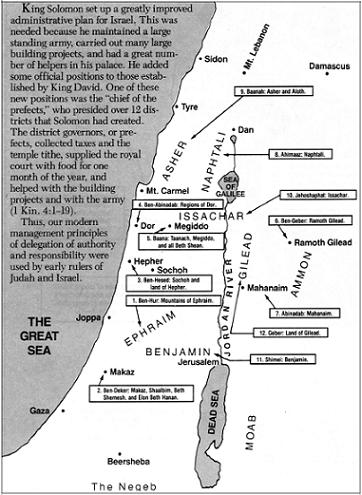
Nelson’s Complete Book of Bible Maps & Charts (Nashville: Thomas Nelson Publishers, 1996) 116. © 1993 by Thomas Nelson, Inc.
5:5 the name. Name represents the character and nature of the person indicated. See note on 3:2. Your son. Solomon claimed to be the promised offspring of David, the fulfillment of the Lord’s promise to David in 2 Samuel 7:12, 13. However, Solomon’s later disobedience proved that he was not the ultimate, promised offspring (11:9–13).
5:6 cedars . . . from Lebanon. The cedars of Lebanon symbolized majesty and might (Ps. 92:12; Ezek. 31:3). Because it was durable, resistant to rot and worms, close-grained, and could be polished to a fine shine, its wood was regarded as the best timber for building. The logs were tied together and floated down the Mediterranean Sea to Joppa (see v. 9; 2 Chr. 2:16), from where they could be transported to Jerusalem, thirty-five miles inland. Sidonians. These are the inhabitants of the city of Sidon, located on the Mediterranean Sea about twenty-two miles north of Tyre. Here, the term probably referred, in a general sense, to the Phoenicians, who were skilled craftsmen.
5:7 Blessed be the LORD. Perhaps Hiram was a worshiper of the true God, but it is equally possible that he was only acknowledging Jehovah as the God of the Hebrews (cf. 2 Chr. 2:16). a wise son. Hiram recognized Solomon’s wisdom in seeking to honor his father David’s desires.
5:9 food for my household. Tyre’s rocky terrain grew great trees, but little good food. Hiram asked Solomon to supply food for his court in exchange for his lumber.
5:13 a labor force out of all Israel. Lit. “conscripted labor.” These 30,000 men who labored in Lebanon were Israelites of the land. They were sent to Lebanon, 10,000 a month in rotation. For every month they worked, they were off two months, which meant they worked only four months per year. These Israelite laborers must be distinguished from the Canaanite remnant who were made into permanent slaves. See note on 9:21, 22. The 30,000 Israelites were free and performed the task of felling trees.
5:16 three thousand three hundred. See note on 2 Chronicles 2:2. people who labored. According to 2 Chronicles 2:17, 18, these 150,000 laborers (5:15) and their supervisors were non-Israelite inhabitants of the land.
5:18 Gebalites. Inhabitants of Gebal, a town located about sixty miles north of Tyre.
D. The Building of the Temple and Solomon’s House (6:1–9:9)
6:1–38 See 2 Chronicles 3:1–17; 7:15–22.
6:1 four hundred and eightieth year. Solomon began to build the temple by laying its foundation (v. 37) 480 years after the Exodus from Egypt. The 480 years are to be taken as the actual years between the Exodus and the building of the temple, because references to numbers of years in the Book of Kings are consistently taken in a literal fashion. Also, the literal interpretation correlates with Jephthah’s statement recorded in Judges 11:26. fourth year. I.e., 966 B.C. Thus, the Exodus is to be dated 1445 B.C.
6:2 cubits. Normally the cubit was about 18 inches. This would make the temple structure proper 90 feet long, 30 feet wide, and 45 feet high. However, 2 Chronicles 3:3 may indicate that the longer royal cubit of approximately 21 inches was used in the construction of the temple. On this measurement, the temple structure proper would have been 105 feet long, 35 feet wide and 52? feet high. The dimensions of the temple seem to be double those of the tabernacle (see Ex. 26:15–30; 36:20–34).
6:3 vestibule. A porch about fifteen feet long in front of the temple building proper.
6:4 windows. Placed high on the inner side of the temple wall, these openings had lattices or shutters capable of being opened, shut, or partially opened. They served to let out the vapors of the lamps and the smoke of incense, as well as to give light.
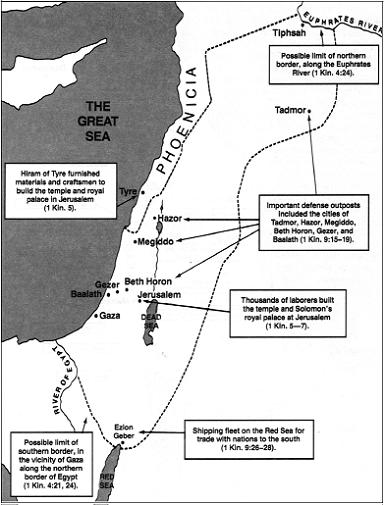
Nelson’s Complete Book of Bible Maps & Charts (Nashville: Thomas Nelson Publishers, 1996) 115. © 1993 by Thomas Nelson, Inc.
6:5 chambers. Another attached structure surrounded the main building, excluding the vestibule. It provided rooms off the main hall to house temple personnel and to store equipment and treasure (cf. 7:51).
6:6 lowest . . . middle . . . third. This attached structure to the temple was three stories high. Each upper story was one cubit wider than the one below it. Instead of being inserted into the temple walls, beams supporting the stories rested on recessed ledges in the temple walls themselves.
6:7 stone finished at the quarry. The erection of the temple went much faster by utilizing precut and prefitted materials moved on rollers to the temple site. In addition, the relative quiet would be consistent with the sacredness of the undertaking.
6:8 doorway . . . stairs. The entrance to the side rooms of the temple was on the south side, probably in the middle. Access to the second and third stories was by means of a spiral staircase that led through the middle story to the third floor.
6:11–13 During the construction of the temple, the Lord spoke to Solomon, probably through a prophet, and reiterated that the fulfillment of His word to David through his son was contingent on Solomon’s obedience to His commands (cf. 2:3, 4; 3:14; 9:4–8). The use of the same words, “I will dwell among the children of Israel,” in verse 13 as in Exodus 29:45 implied that Solomon’s temple was the legitimate successor to the tabernacle. The Lord forewarned Solomon and Israel that the temple was no guarantee of His presence; only their continued obedience would assure that.
6:16 the Most Holy Place. This inner sanctuary, partitioned off from the main hall by cedar planks, was a perfect cube about thirty feet on a side (v. 20) and was the most sacred area of the temple. The Most Holy Place is further described in verses 19–28. The tabernacle also had “a Most Holy Place” (Ex. 26:33, 34).
6:17 the temple sanctuary. This was the Holy Place, just outside the Most Holy Place, 60 feet long, 30 feet wide and 45 feet high, that housed the altar of incense, the golden tables of the showbread, and the golden lampstands (7:48, 49).
6:19 the ark of the covenant of the LORD. The ark was a rectangular box made of acacia wood. The ark was made at Sinai by Bezalel according to the pattern given to Moses (Ex. 25:10–22; 37:1–9). The ark served as the receptacle for the two tablets of the Ten Commandments (Ex. 25:16, 21; 40:20; Deut. 10:1–5) and the place in the “inner sanctuary” or Most Holy Place where the presence of the Lord met Israel (Ex. 25:22).
6:20 overlaid it with pure gold. Cf. verses 21, 22, 28, 30, 32, 35. Gold was beaten into fine sheets, and then hammered to fit over the beautifully embellished wood (vv. 18, 29); it was then attached to every surface in the temple proper, both in the Holy Place and in the Most Holy Place, so that no wood or stone was visible (v. 22).
6:23 cherubim. These two sculptured winged creatures, with human faces overlaid with gold (cf. Gen. 3:24; Ezek. 41:18, 19), stood as guards on either side of the ark (see 2 Chr. 3:10–13) and are not to be confused with the cherubim on the mercy seat (see Ex. 25:17–22). The cherubim represented angelic beings who were guardians of God’s presence and stood on either side of the ark (8:6, 7) in the Most Holy Place. They were fifteen feet tall and fifteen feet between wing tips (vv. 24–26). See note on Exodus 25:18.
6:29 palm trees. An image reminiscent of the Garden of Eden in Genesis 2. The palm tree represented the tree of life from the Garden.
6:31–35 There was distinct and magnificent separation by doors between the inner court of the temple (v. 36) and the Holy Place, as well as between the Holy Place and the Most Holy Place.
6:36 the inner court. This walled-in, open space that surrounded the temple was also called “the court of the priests” (2 Chr. 4:9) or the “upper court” (Jer. 36:10). The wall of that court had a layer of wood between each of the three courses of stone. The alternation of timber beams with masonry was common in Mediterranean construction.
6:37 fourth year . . . Ziv. Cf. 6:1.
6:38 seven years. From foundation to finishing, the temple took seven years and six months to build. See note on 2 Chronicles 5:1.
7:1 thirteen years. Having built the house for the Lord, Solomon then built one for himself. Solomon’s “house” was a complex of structures that took almost twice as long to build as the temple. The time involved was probably because there was not the same preparation for building or urgency as for the national place of worship. The temple and Solomon’s house together took twenty years to complete (cf. 9:10).
7:2–5 the House of the Forest of Lebanon. As a part of the palace complex, Solomon also built this large rectangular building, 150 feet long, 75 feet wide and 45 feet high. It was built of a forest of cedar pillars from Lebanon. Three rows of cedar columns supported trimmed cedar beams and a cedar roof.
7:6 the Hall of Pillars. This colonnade was probably an entry hall or waiting area for the Hall of Judgment, which was most likely used for the transaction of public business.
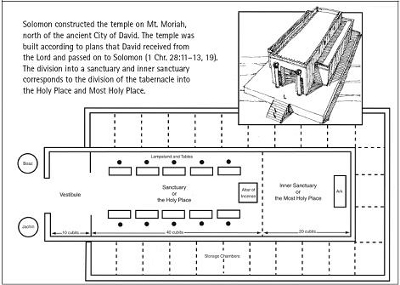
The MacArthur Study Bible, by John MacArthur (Nashville: Word Publishing, 1997) 471. © 1993 by Thomas Nelson, Inc.
7:7 the Hall of Judgment. The place where Solomon would publicly hear petitions from Israelites and render judgments was added to the grand palace site.
7:8 house . . . court . . . house. Behind the Hall of Judgment was an open court. Within this court, Solomon built his own personal residence, a palace for his harem, and royal apartments for the Egyptian princess he had married.
7:9–12 A fortune was spent on building, adjacent to the temple, the whole palace with its three parts: (1) the king’s home; (2) the courtyard in the middle; and (3) the house of the women on the other side.
7:13 Huram. Although having the same Hebrew name (Hiram), this individual was distinct from the King of Tyre (5:1). Huram had a Tyrian father, but his mother was of the tribe of Naphtali. Second Chronicles 2:14 states that Huram’s mother came from the tribe of Dan. Probably one verse refers to her place of birth and the other to her place of residence. Or, if his parents were originally from the two tribes, then he could legitimately claim either. The description of Huram’s skills in verse 14 is exactly the same as that of Bezalel who made the tabernacle (Ex. 31:3; 36:1). Huram made the pillars (vv. 14–22). See note on 2 Chronicles 2:13, 14.
7:15 two pillars. One bronze pillar was on each side of the temple’s entrance (v. 21). Each pillar was 27 feet high and 18 feet around. See note on 2 Chronicles 3:15.
7:16 capitals. These distinctively treated upper ends of the bronze pillars, added 7.5 feet to the height of each pillar.
7:18 pomegranates. One of the fruits of the Promised Land (Num. 13:23; Deut. 8:8), these were popular, decorative motifs used on the hem of Aaron’s priestly garment (Ex. 28:33, 34).
7:21 Jachin . . . Boaz. These names meant “He shall establish” and “In it is strength,” respectively. It is likely that each name recalls promises given to the Davidic house, and that they perpetually reminded the worshipers of God’s grace in providing the Davidic monarchy, as well as each king’s need to depend on God for his success. See note on 2 Chronicles 3:17. They were also symbolic of the strength and stability of God’s promise of a kingdom forever, even though the temple would come down (see Jer. 52:17).
7:23 the Sea. A huge circular bronze basin corresponding to the laver of the tabernacle. According to verse 26, this great basin’s capacity was about 12,000 gallons (see note on 2 Chr. 4:5 ). The sea stood in the courtyard on the temple’s southeast side and provided the priests water to wash themselves and their sacrifices (2 Chr. 4:6). It probably also supplied water for the ten movable basins (vv. 38, 39). See note on 2 Chronicles 4:2.
7:25 twelve oxen. Huram arranged three oxen facing in each of the four directions of the compass to support the sea. See note on 2 Chronicles 4:4.
7:26 two thousand baths. See note on 2 Chronicles 4:5.
7:27–37 carts. Huram made ten movable stands of bronze 6 feet square and 4.5 feet high. Each consisted of 4 upright corner poles joined together by square panels. For mobility, the stands rode on four wheels of bronze (v. 30).
7:38 lavers. Huram made ten bronze basins as water containers for the stands. Each measured six feet across and held about 240 gallons of water.
7:40 the shovels and the bowls. Shovels were used to scoop up the ashes that were then emptied into the bowls for disposal. The same tools served the same purpose in the tabernacle (Ex. 27:3).
7:45 burnished bronze. I.e., bronze polished to a high shine.
7:46 between Succoth and Zaretan. Succoth was located on the east side of the Jordan River just north of the Jabbok River (Gen. 33:17; Josh. 13:27; Judg. 8:4, 5). Zaretan was nearby. This location was conducive to good metallurgy, because it abounded in clay suitable for molds and lay close to a source of charcoal for heat, namely, the forests across the Jordan River.
7:48 the altar of gold. The altar of incense stood in front of the Most Holy Place (cf. Ex. 30:1–4). the table of gold. The table was made on which the showbread was placed, which the law required to be continually in God’s presence (Ex. 25:30).
7:49 lampstands. Ten golden lampstands standing directly in front of the Most Holy Place, five on either side of the doors, provided a corridor of light.
7:51 David had dedicated. Solomon deposited that which David had dedicated to the Lord (2 Sam. 8:7–12) in the side rooms of the temple.
8:1–21 See 2 Chronicles 5:2–6:11.
8:1 elders . . . heads. The elders of Israel were respected men who were in charge of local government and justice throughout Israel (Ex. 18:13–26; Num. 11:16–30; 1 Sam. 8:1–9). They advised the king on important matters of state (12:6–11; 1 Sam. 15:30; 2 Sam. 17:5). The heads of the tribes or chief fathers were the oldest living males within each extended family unit. They were the ones responsible for learning the law and leading their families to obey it.
8:2 seventh month. Solomon finished building the temple in the eighth month of the previous year (6:38; see 2 Chr. 5:1); all its detail signified the magnificence and beauty of God’s nature and His transcendent, uncommon glory. The celebration, then, did not take place until eleven months later. Apparently, Solomon intentionally scheduled the dedication of the temple to coincide with the Feast of Tabernacles held in the seventh month, when there would be a general assembly of the people in Jerusalem. That was also a Jubilee year, so it was especially appropriate (Lev. 23:33–36, 39–43; Deut. 16:13–15).
8:4–6 brought up the ark. The ark of the covenant was transported by the priests and the Levites from the tent that David had made for it in Jerusalem (2 Sam. 6:17). They also brought to the temple the tabernacle and all its furnishings which had been located at Gibeon (2 Chr. 1:2–6). The ark was placed in the Most Holy Place (v. 6).
8:7, 8 poles. God had originally commanded that poles be used to carry the ark (Ex. 25:13–15). They were left protruding to serve as a guide so the high priest could be guided by them when he entered the dark inner sanctuary.
8:8 to this day. The phrase is used from the perspective of one who lived and wrote before the destruction of the temple in 586 B.C. The writer of 1 Kings incorporated such sources into his book (cf. 9:13, 21; 10:12; 12:19).
8:9 two tablets of stone. At this time, the ark of the covenant contained only the two tablets inscribed with the Ten Commandments. The pot of manna (Ex. 16:33) and Aaron’s rod that budded (Num. 17:10) were no longer in the ark. See Hebrews 9:4.
8:10 the cloud. The cloud was “the glory of the LORD,” the visible symbol of God’s presence. It signaled the Lord’s approval of this new temple. A similar manifestation took place when the tabernacle was dedicated (Ex. 40:34, 35). See note on Leviticus 9:23.
8:12–21 See 2 Chronicles 6:1–11.
8:12, 13 Solomon’s solemn declaration was addressed to the Lord. Solomon recognized the thick darkness as the manifestation of the Lord’s gracious presence among His people (cf. Ex. 19:9; 20:21; Lev. 16:2) and affirmed that he had built the temple so the Lord could dwell there in the glory of thick darkness.
8:14–21 Solomon turned around from addressing the Lord and spoke to the assembly of Israel gathered at the temple. Solomon, in verses 15–19, rehearsed the story of 2 Samuel 7:12–16 and claimed that he, having built the temple, had become the fulfillment of God’s promise to his father David (vv. 20, 21). However, Solomon’s claim was premature because the Lord later appeared to him and declared the necessity of obedience for the establishment of Solomon’s throne (9:4–9), an obedience which would be lacking in Solomon (11:6, 9, 10).
8:22–53 See note on 2 Chronicles 6:12–40. Solomon then moved to the altar of burnt offering to offer a lengthy prayer of consecration to the Lord. First, he affirmed that no god could compare to Israel’s God, the Lord (vv. 23, 24). Second, he asked the Lord for His continued presence and protection (vv. 25–30). Third, he listed seven typical Israelite prayers that would require the Lord’s response (vv. 31–54). These supplications recalled the detailed list of curses that Deuteronomy 28:15–68 ascribed for the breaking of the law. Specifically, Solomon prayed that: (1) the Lord would judge between the wicked and the righteous (vv. 31, 32); (2) the Lord would forgive the sins that had caused defeat in battle (vv. 33, 34); (3) the Lord would forgive the sins that had brought on drought (vv. 35, 36); (4) the Lord would forgive the sins that had resulted in national calamities (vv. 37–40); (5) the Lord would show mercy to God-fearing foreigners (vv. 41–43); (6) the Lord would give victory in battle (vv. 44, 45); and (7) the Lord would bring restoration after captivity (vv. 46–54).
8:22 spread out his hands. The spreading of open hands toward heaven was a normal posture of individual prayer (Ex. 9:29; Is. 1:15).
8:27 heaven . . . cannot contain You. Solomon confessed that even though the Lord had chosen to dwell among His people in the cloud at the temple, He far transcended containment by anything in all creation.
8:54–61 Solomon arose to pronounce a benediction on the people. His words were substantially a brief recapitulation of the preceding prayer in which he affirmed the faithfulness of the Lord to Israel (v. 56) and exhorted Israel to faithfulness to the Lord (vv. 57–61).
8:62–66 See 2 Chronicles 7:1–10.
8:62 offered sacrifices. To complete the temple’s dedication, Solomon led the people in presenting peace offerings to the Lord (cf. Lev. 3:1–17; 7:11–21), in which they consumed 22,000 bulls and 120,000 sheep and goats (v. 63). Although the number of sacrifices offered seems high, it was in keeping with the magnitude of this event. Obviously, the single bronze altar could not accommodate such an enormous number of sacrifices. Solomon first had to consecrate the entire middle courtyard, the one directly in front of the temple (v. 64). After consecrating the court, Solomon probably had a series of auxiliary altars set up in the court to accommodate all the peace offerings.
8:65 the entrance of Hamath to the Brook of Egypt. The “entrance of Hamath” was located about twenty miles south of Kadesh on the Orontes River and was the northern boundary of the land promised to Israel (Num. 34:7–9; Josh. 13:5). The “Brook of Egypt” is to be equated with Wadi El-Armish in the northeastern Sinai, the southern boundary of the land promised to Israel. These locations show that people from all over Israel attended the dedication of the temple.
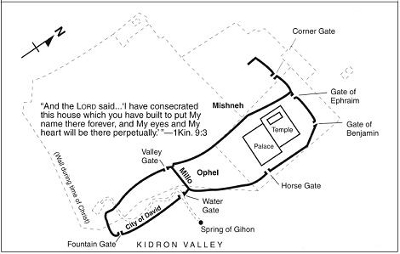
The MacArthur Study Bible, by John MacArthur (Nashville: Word Publishing, 1997) 478. © 1993 by Thomas Nelson, Inc.
9:1–9 See 2 Chronicles 7:11–22.
9:1, 2 finished . . . the king’s house. According to 6:1, Solomon began building the temple in April/May 966 B.C. The temple was completed in October/November 959 B.C. (6:38). The temple dedication and Solomon’s prayer to the Lord occurred eleven months after the completion of the temple in September/October 958 B.C. The Lord did not appear to Solomon this second time (cf. 3:5–14) until Solomon had completed the building of his own palace in 946 B.C. (cf. 7:1). Thus, the Lord’s response came approximately twelve years after Solomon’s prayer and supplication to the Lord recorded in 8:22–53.
9:3 consecrated. The Lord made the temple holy by being present in the cloud (cf. 8:10). As proof of the temple’s consecration, the Lord told Solomon that He had put His name there (cf. 3:2). forever. God was not saying He would dwell in that building forever, since in less than 400 years it was destroyed by the Babylonians (cf. vv. 7–9). He was saying that Jerusalem and the temple mount are to be His earthly throne as long as the earth remains, through the millennial kingdom (see Is. 2:1–4; Zech. 14:16). Even during the eternal state, there will be the heavenly Jerusalem, where God will eternally dwell (see Rev. 21:1, 2). eyes . . . heart. These symbolized, respectively, the Lord’s constant attention toward and deep affection for Israel. By implication, He promised them access to His presence and answers to their prayers.
9:4–9 See 2 Chronicles 7:17–22.
9:4 if you walk. The Lord reiterated to Solomon the importance of obedience to the Mosaic statutes in order to experience the blessings of the Davidic covenant (cf. 2:3, 4).
9:6 if you . . . turn. If Israel (“you” is plural) abandoned the Lord to worship other gods, God would expel Israel from the land and destroy the temple (v. 7).
9:9 this calamity. The destruction of Jerusalem and exile from the land (v. 8) were predicted by Moses in Deuteronomy 29:24–28. The devastation of the temple, which came in 586 B.C., graphically demonstrated the Lord’s anger against Israel’s sin, particularly the sin of idolatry.
E. The Further Building Projects of Solomon (9:10–28)
9:10–28 See 2 Chronicles 8:1–18.
9:10 at the end of twenty years. The completion of the building of the temple (seven years) and the building of Solomon’s palace (thirteen years) would be c. 946 B.C. (see note on 9:1, 2 ).
9:11 Solomon then gave Hiram twenty cities. Solomon sold these twenty cities in Galilee to Hiram in exchange for the gold (about 4.5 tons) mentioned in verse 14. Probably these cities lay along the border between Tyre and Israel, just outside the territory of Asher. Later, Hiram gave the towns back to Solomon. See note on 2 Chronicles 8:2.
9:13 to this day. See note on 8:8.
9:15 the Millo. A landfill in the depression between the city of David and the temple and palace complex to the north (see 2 Sam. 5:9). Hazor. Ten miles north of the Sea of Galilee, Hazor protected Israel’s northeastern entrance from Syria and Mesopotamia. Megiddo. Megiddo guarded a crucial pass in the Carmel mountains, which linked the valley of Jezreel and the international coastal highway to Egypt. Gezer. Twenty miles west of Jerusalem, Gezer lay in the coastal plain at the intersection of the coastal highway and the main road to Jerusalem.
9:17 Lower Beth Horon. About twelve miles northwest of Jerusalem along a road connecting Gibeon with the western lowlands and providing a western approach to Jerusalem. See note on 2 Chronicles 8:5.
9:18 Baalath. The designation of several cities in Canaan. See note on 2 Chronicles 8:6. Tadmor. Probably the same as Tamar, sixteen miles southwest of the Dead Sea on the southeastern boundary of the land (cf. Ezek. 47:19; 48:28). Another Tadmor existed 150 miles northeast of Damascus, which is possibly the reference of 2 Chronicles 8:4.
9:19 storage cities. Cities whose primary purpose was to store food (2 Chr. 17:12; 32:28). cities for his chariots. Solomon built military outposts for his chariots and horses. To defend his kingdom, these garrisons were probably located along key roads throughout the nation. All the cities listed in verses 15–19 met this requirement.
9:20–23 See note on 2 Chronicles 8:7–10.
9:21, 22 forced labor. I.e., “conscripted slave labor.” See note on 5:13. Only resident aliens permanently became part of this force, since the law did not allow Israelites to make fellow Israelites slaves against their will (Ex. 21:2–11; Lev. 25:44–46; Deut. 15:12–18). Additionally, verse 22 adds that he did not move someone from an established post, even for a specific project.
9:21 to this day. See note on 8:8.
9:23 See note on 2 Chronicles 2:2.
9:25 Solomon offered. Once the temple had been built, Solomon’s practice of sacrificing to God at the various high places ceased (cf. 3:2–4). He kept Israel’s three great annual feasts, Unleavened Bread, Pentecost, and Tabernacles (Deut. 16:1–17), at the temple in Jerusalem.
9:26 Ezion Geber. Solomon’s port located on the modern Gulf of Aqabah.
9:28 Ophir. The location of Ophir is unknown. It has been suggested it was located on the southwestern Arabian peninsula. First Kings 10:11, 12 possibly suggests that Ophir was close to or a part of the kingdom of Sheba. four hundred and twenty talents. This was about sixteen tons of gold. Second Chronicles 8:18 has 450 talents (see note on 2 Chr. 8:18 ).
F. The Culmination of Solomon’s Wisdom and Wealth (10:1–29)
10:1–29 See 2 Chronicles 9:1–28.
10:1 Sheba. Sheba was located in southwestern Arabia, about 1,200 miles from Jerusalem. concerning the name of the LORD. The primary motive for the queen’s visit was to verify Solomon’s reputation for wisdom and devotion to the Lord. hard questions. Riddles designed to stump the hearer (cf. Judg. 14:12).
10:5 no more spirit in her. Lit. the experience “left her breathless.”
10:9 the LORD your God. The queen was willing to credit Solomon’s God with giving him wisdom that resulted in just and righteous decisions. Though she recognized the Lord as Israel’s national God, there was no confession that Solomon’s God had become her God to the exclusion of all others. There is no record that she made any offerings to God at the temple.
10:10 one hundred and twenty talents. About four and one-half tons (cf. 9:28).
10:11 almug wood. Probably the strong, long-lasting sandalwood, which is black on the outside and ruby red inside.
10:12 to this day. See note on 8:8.
10:14 six hundred and sixty-six talents. About twenty-five tons of gold.
10:15 Gold also came to Solomon from tolls and tariffs from traders, revenues from loyal administrators, and taxes from Arabian kings who used caravan routes under Solomon’s control.
10:16, 17 shields. From his gold revenues, Solomon made 200 large shields, containing about 7.5 pounds of gold each, and 300 small shields, having 3.75 pounds of gold each, that were ornamental in design and restricted to ceremonial use.
10:21 silver. To show the wealth of Solomon’s kingdom, the writer explains that gold was so plentiful that the value of silver dropped to nothing. House of the Forest of Lebanon. See note on 7:2–5.
10:22 merchant ships. These “ships of Tarshish” were large, all-weather cargo vessels designed to make long ocean voyages.
10:25 silver and gold . . . horses. The wisdom God had given to Solomon (v. 24) caused many rulers, like the queen of Sheba (vv. 1–13), to bring presents to Solomon as they sought to buy his wisdom to be applied in their own nations. These gifts led Solomon to multiply for himself horses, as well as silver and gold, precisely what God’s king was warned against in Deuteronomy 17:16, 17. Solomon became ensnared by the blessings of his own wisdom and disobeyed God’s commands.
10:28 Keveh. Keveh was in Cilicia, an area south of the Taurus Mountains in Asia Minor. In antiquity, Cilicia was fabled for breeding and selling the best horses.
10:29 six hundred shekels. About fifteen pounds of silver. one hundred and fifty. About 3.75 lbs. of silver. Hittites. The majority of Hittites lived in Anatolia (Asia Minor). From c. 1720–1200 B.C. a unified kingdom ruled over the Hittites. These kings spread the influence of the Hittites throughout the ancient Near East; the Hittite empire reached the peak of its power c. 1380–1350 B.C. When the Hittite empire collapsed, c. 1200 B.C., many Hittite city-states developed, each with its own king. These rulers were called “the kings of the Hittites” and were scattered in Solomon’s day throughout Anatolia and northern Aram (Syria). Syria. This familiar geographical area within the bounds set by the Taurus Mountains in the north, the western bend of the Euphrates River and the edge of the desert in the east, the Litani River to the south and the Mediterranean Sea to the west, had Damascus as its major city. Syria is actually a later Greek term; the land was known in OT times as Aram.
G. The Decline of Solomon (11:1–43)
11:1–6 loved many foreign women. Many of Solomon’s marriages were for the purpose of ratifying treaties with other nations, a common practice in the ancient Near East. The practice of multiplying royal wives, prohibited in Deuteronomy 17:17 because the practice would turn the king’s heart away from the Lord, proved to be accurate in the experience of Solomon. His love for his wives (vv. 1, 2) led him to abandon his loyalty to the Lord and worship other gods (vv. 3–6). No sadder picture can be imagined than the ugly apostasy of his latter years (over 50), which can be traced back to his sins with foreign wives. Polygamy was tolerated among the ancient Hebrews, though most in the East had only one wife. A number of wives was seen as a sign of wealth and importance. The king desired to have a larger harem than any of his subjects, and Solomon resorted to this form of state magnificence. But it was a sin directly violating God’s Law, and the very result which that law was designed to prevent actually happened in Solomon’s life.
11:1 Moabites. Descendants of Lot (Gen. 19:37) who lived in the land east of the Dead Sea between the Arnon River to the north and the Zered Brook to the south. Ammonites. Descendants of Lot (Gen. 19:38) who were located in the area of the Transjordan beginning about twenty-five miles east of the Jordan River. Edomites. Descendants of Esau (Gen. 36:1) who were located in the area south of Moab, southeast of the Dead Sea. Sidonians. See note on 5:6. Hittites. See note on 10:29.
11:4 as . . . David. Cf. verse 6. David is consistently presented in the Book of Kings as the standard by which other kings were to act and be judged (3:14; 9:4; 14:8; 15:3; 2 Kin. 8:19; 22:2). This was not because David had not sinned (cf. 2 Sam. 11; 12), but because he repented appropriately from his sin (Pss. 32; 51), and because sin did not continue as the pattern of his life.
11:5 Ashtoreth. A deliberate distortion of the Canaanite ashtart, revocalized based on the Hebrew word for shame. She was the goddess of love and fertility, especially worshiped at Tyre and Sidon. Milcom. Another name for Molech (v. 7), the national god of the Ammonites. His name seems to mean “the one who rules.” The worship of Molech was associated with the sacrifice of children in the fire (Lev. 18:21; 20:2, 3, 4, 5; Jer. 32:35).
11:6 evil in the sight of the LORD. The particular evil of Solomon was his tolerance and personal practice of idolatry. These same words were used throughout the book of Kings to describe the rulers who promoted and practiced idolatry (15:26, 34; 16:19, 25, 30; 22:52; 2 Kin. 3:2; 8:18, 27; 13:2, 11; 14:24; 15:9, 18, 24, 28; 17:2; 21:2, 20; 23:32, 37; 24:9, 19). Solomon became an open idolater, worshiping images of wood and stone in the sight of the temple which, in his early years, he had erected to the one true God.
11:7 Chemosh. The god of the Moabites, to whom the sacrifice of children as a burnt offering was customary (2 Kin. 3:27). hill . . . east of Jerusalem. Probably the Mt. of Olives. This is the area called Tophet in Jeremiah 7:30–34 and the Mt. of Corruption in 2 Kings 23:13.
11:9, 10 appeared to him twice. The first time was at Gibeon (3:5), the next at Jerusalem (9:2). On both occasions, God had warned Solomon, so he had no excuses.
11:11 not kept My covenant. Solomon failed to obey the commandments to honor God (Ex. 20:3–6), which were part of the Mosaic covenant. Obedience to that covenant was necessary for receiving the blessings of the Davidic covenant (see 2:3, 4). tear the kingdom away from you. The Lord’s tearing of the kingdom from Solomon was announced in Ahijah’s symbolic action of tearing his garment in verses 29–39. The tearing of the robe, picturing the loss of the kingdom, recalls the interaction between Samuel and Saul (1 Sam. 15:27, 28), when the Lord took the kingdom away from Saul because of his disobedience. The great gifts to Solomon followed by his great abuse warranted such a judgment.
11:12 not do it in your days. The Lord’s great love for David caused Him to temper His judgment with mercy by not disrupting the kingdom in Solomon’s lifetime (cf. v. 34). This showed that Solomon’s disobedience did not annul the Davidic covenant; the Lord’s commitment to fulfill His word to David remained firm (cf. 2 Sam. 7:12–16).
11:13 one tribe. The one tribe that remained loyal to the Davidic dynasty was Judah (cf. 12:20). for the sake of Jerusalem. The Lord had chosen Jerusalem as the place where His name would dwell forever (9:3). Therefore, Jerusalem and the temple would remain so that the divine promise might stand.
11:14–18 Hadad the Edomite. Even though Hadad belonged to the royal family that ruled Edom, he escaped death at the hands of David’s army when he was a child, and he fled to Egypt (cf. 2 Sam. 8:13, 14; 1 Chr. 18:12, 13).
11:18 Midian. The land directly east of Edom, to which Hadad first fled on his way to Egypt. Paran. A wilderness southeast of Kadesh in the central area of the Sinai Peninsula (cf. Num. 12:16; 13:3).
11:21 Let me depart. Like Moses (Ex. 2:10), Hadad’s son grew up in Pharaoh’s household. As did Moses (Ex. 5:1), Hadad requested that Pharaoh allow him to leave Egypt. Hearing of the deaths of David and Joab, he renounced his easy position and possessions in Egypt to return to Edom in order to regain his throne. His activities gave great trouble to Israel (v. 25).
11:23–25 Rezon. After David conquered Zobar (2 Sam. 8:3–8), Rezon and his men took Damascus and established the strong dynasty of Syrian kings that troubled Israel in the ninth century B.C. (cf. 15:18; 20:1).
11:26 Jeroboam the son of Nebat. In contrast to Hadad and Rezon, who were external adversaries of Solomon, God raised up Jeroboam from a town in Ephraim as an internal adversary. Jeroboam was from Ephraim, the leading tribe of Israel’s ten northern tribes. He was a young man of talent and energy who, having been appointed by Solomon as leader over the building works around Jerusalem, rose to public notice.
11:28 labor force. See note on 5:13.
11:29 Ahijah the Shilonite. Ahijah was a prophet of the Lord who lived in Shiloh, a town in Ephraim about twenty miles north of Jerusalem. See note on 1 Samuel 1:3.
11:30–32 Here is a monumental prophecy that, because of Solomon’s sins, the kingdom would be divided and Jeroboam would rule in the northern area (cf. vv. 35–37).
11:33 See notes on 11:5, 7.
11:36 a lamp before Me. A lighted lamp represented the life of an individual (Job 18:6; Ps. 132:17). God promised that David, from the tribe of Judah, would continue to have descendants ruling in Jerusalem (cf. 2 Sam. 21:17; 1 Kin. 15:4; 2 Kin. 8:19).
11:38 if you heed all that I command you. The Lord gave the same promise to Jeroboam that He had made to David—an enduring royal dynasty over Israel, the ten northern tribes, if he obeyed God’s Law. The Lord imposed the same conditions on Jeroboam for his kingship that He had imposed on David (2:3, 4; 3:14).
11:39 but not forever. This statement implied that the kingdom’s division was not to be permanent and that David’s house would ultimately rule all the tribes of Israel again (cf. Ezek. 37:15–28).
11:40 kill Jeroboam. Though the prophecy was private (v. 29), the king heard about it and Jeroboam became a marked man, guilty in Solomon’s eyes of rebellion and worthy of the death penalty. Shishak. Shishak was the founder of the twenty-second dynasty in Egypt. He reigned c. 945–924 B.C. He invaded Judah during the reign of Rehoboam (14:25, 26).
11:42 forty years. 971–931 B.C.
II. THE DIVIDED KINGDOM: THE KINGS OF ISRAEL AND JUDAH (12:1–2 KIN. 17:41)
12:1–2 Kin. 17:41 The division of Solomon’s kingdom had been predicted by the Lord to Solomon (11:11–13) and through Ahijah to Jeroboam (11:29–37). This section of the Books of Kings shows how the word of the Lord through the prophet was fulfilled and narrates the history of the divided kingdom, Israel (the northern kingdom) and Judah (the southern kingdom), from 931–722 B.C.
A. The Rise of Idolatry: Jeroboam of Israel/Rehoboam of Judah (12:1–14:31)
12:1–14:31 This section describes the disruption of the united kingdom (12:1–24) plus the establishment and royal sanctioning of idolatry in Israel (12:25–14:20) and Judah (14:21–31). The reigns of Solomon’s son, Rehoboam, in the south (c. 931–913 B.C.) and Solomon’s servant, Jeroboam, in the north (c. 931–910 B.C.) are discussed. See 2 Chronicles 10:1–12:16.
12:1 Shechem. A city located in the hill country of northern Ephraim, thirty miles north of Jerusalem. Shechem had a long and important history as a political and religious center (cf. Gen. 12:6; Josh. 8:30–35; 24:1–28, 32). all Israel. The representatives of the ten northern tribes assembled to accept Rehoboam as king (cf. 2 Sam. 5:3).
12:2 heard it. Jeroboam, in Egypt (11:40), learned about the death of Solomon (11:43).
12:3 Jeroboam . . . spoke. The ten northern tribes summoned Jeroboam from Egypt to become their representative and spokesman in their dealings with Rehoboam.
12:4 yoke. The hardships that resulted from Solomon’s policy of compulsory labor service (cf. 5:13; 9:22; 11:28) and excessive taxes (cf. 4:7) came because the splendor of his courts, the magnitude of his wealth, and the profits of his enterprises were not enough to sustain his demands.
12:6, 7 the elders. These were older, experienced counselors and administrators who had served Solomon. They counseled Rehoboam to give concessions to the ten tribes.
12:8–10 the young men. The contemporaries of Rehoboam, about forty years of age (cf. 14:21), who were acquainted only with the royal court life of Solomon, recommended that Rehoboam be even harsher on the ten tribes than Solomon had been.
12:10 My little finger . . . my father’s waist! A proverbial manner of saying he was going to come at them with greater force than Solomon had exhibited (vv. 11–14).
12:15 from the LORD. God sovereignly used the foolishness of Rehoboam to fulfill Ahijah’s prophecy (11:29–39).
12:16 David. These words of Israel (v. 16) expressed deliberate, willful rebellion against the dynasty of David (cf. v. 19). Defiantly, the Israelites quoted the rallying cry used in Sheba’s failed rebellion against David (2 Sam. 20:1). The northern tribes declared that they had no legal tie with David and went their way.
12:17 the children of Israel. People from the northern tribes who had migrated south and settled in Judah.
12:18 Adoram. Sending the chief of taxation and forced labor (Adoniram in 4:6; 5:14) to negotiate with the northern tribes was foolish (cf. v. 4).
12:19 to this day. See note on 8:8.
12:20–24 The kingdom was divided at that point. Israel (the ten northern tribes) had its own king.
12:21 the tribe of Benjamin. The tribe of Benjamin split loyalty and land during the divided kingdom era. According to verse 20, only the tribe of Judah remained completely loyal to the house of David, but in verses 21, 23 it is said that Benjamin was associated with “all the house of Judah,” the emphasis being on the tribe of Judah. Certain towns of northern Benjamin, most notably Bethel (v. 29), were included in the northern kingdom. Simeon, the tribe originally given land in the southern section of Judah’s territory (Josh. 19:1–9), had apparently migrated north and was counted with the ten northern tribes (cf. 1 Chr. 12:23–25; 2 Chr. 15:9; 34:6). Thus, the ten northern tribes were Reu-ben, Simeon, Zebulun, Issachar, Dan, Gad, Asher, Naphtali, Manasseh, and Ephraim. The southern kingdom was the tribe of Judah only. The twelfth tribe, Benjamin, was split between the two kingdoms. The tribe of Levi, originally scattered throughout both kingdoms (Josh. 21:1–42), resided in Judah during the divided kingdom era (see 2 Chr. 11:13–16).
12:22 the man of God. Cf. 17:24. A common OT expression designating a man with a message from God who would speak authoritatively on the Lord’s behalf (cf. Deut. 33:1; 2 Tim. 3:17). See note on Deuteronomy 33:1.
12:24 this thing is from Me. Through the prophet Shemaiah, the Lord commanded Rehoboam and his army not to invade Israel. God, in judgment, had ordained the north-south split (v. 15; 11:29–39), so to attack Israel was to oppose God Himself.
12:25 Shechem. Cf. verse 1. Jeroboam fortified the city of Shechem and made it into his royal residence. Cf. Judges 9:1–47. Penuel. Jeroboam also fortified Penuel, a city about ten miles east of the Jordan River on the River Jabbok, asserting his sovereignty over the Israelites east of the Jordan.
12:26 return to the house of David. The Lord had ordained a political, not a religious, division of Solomon’s kingdom. The Lord had promised Jeroboam political control of the ten northern tribes (11:31, 35, 37). However, Jeroboam was to religiously follow the Mosaic Law, which demanded that he follow the Lord’s sacrificial system at the temple in Jerusalem (11:38). Having received the kingdom from God, he should have relied on divine protection, but he did not. Seeking to keep his subjects from being influenced by Rehoboam when they went to Jerusalem to worship, he set up worship in the north (vv. 27, 28).
The Land of the Divided Kingdom
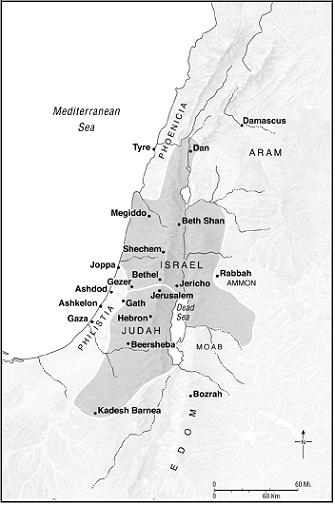
The MacArthur Study Bible, by John MacArthur (Nashville: Word Publishing, 1997) 494. © 1993 by Thomas Nelson, Inc.
12:28 two calves of gold. These two calves, probably made of wood overlaid with gold, were presented to Israel as pedestals on which the Lord supposedly sat or stood. He publicly presented them using the very words with which idolatrous Israel had welcomed Aaron’s golden calf. He repeated Aaron’s destructive sin of trying to make an earthly image of God. See note on Exodus 32:4.
12:29 Bethel . . . Dan. Bethel was located about eleven miles north of Jerusalem within the territory of Benjamin (Josh. 18:11–13, 22). It lay at the southern end of Jeroboam’s kingdom on the main north-south road to Jerusalem. Israel had long revered Bethel as a sacred place because Jacob had worshiped there (Gen. 28:10–22; 35:1–15). Dan was located in the northernmost part of Jeroboam’s kingdom, about twenty-five miles north of the Sea of Galilee. A paganized worship of the Lord was practiced at Dan during the period of the judges (Judg. 18:30, 31).
12:30 this thing became a sin. Jeroboam’s policy promoted gross and flagrant violation of the second commandment (Ex. 20:4–6) and led to violation of the first commandment (Ex. 20:3).
12:31 the high places. Jeroboam built minor sanctuaries on high places throughout the land of Israel. Over the centuries these high places became the breeding grounds of Israel’s idolatrous apostasy (cf. Hos. 5:1). See note on 3:2. priests. Jeroboam appointed priests to run his sanctuaries from all his tribes. His action blatantly violated the stipulation that only Aaron’s descendants were to hold that office in Israel (Num. 3:10).
12:32 ordained a feast. Jeroboam instituted a religious festival to compete with the Feast of Tabernacles held at the temple in Jerusalem and scheduled it for the fifteenth day of the eighth month (October/November), exactly one month after its divinely ordained Judean counterpart (Ex. 34:22, 23; Lev. 23:33–36, 39, 40).
13:1 man of God. See note on 12:22.
13:2 Josiah. He ruled Judah about 300 years later c. 640–609 B.C. (cf. 2 Kin. 22:1–23:30). sacrifice the priests of the high places. The prophet predicted that Josiah would slaughter the illegitimate priests of the high places of his day who made offerings on the altar at Bethel. This prophecy was realized in 2 Kings 23:15–20, executing the divine judgment on the non-Levitical priesthood established by Jeroboam (12:31, 32).
13:3 sign. An immediate “wonder” that served to authenticate the reliability of the long-term prediction (cf. Deut. 18:21, 22), this sign came to pass in verse 5. the ashes on it shall be poured out. Proper ritual required the disposal of sacrificial ashes in a special “clean” place (Lev. 4:12; 6:10, 11). Contact with the ground would render the ashes “unclean” and nullify the procedure.
13:9 commanded me by the word of the LORD. The prophet’s divine commission expressly forbade receiving any hospitality at Bethel. It even required him to return home by a different route from the one by which he came, lest he should be recognized. The prophet’s own conduct was to symbolize the Lord’s total rejection of Israel’s false worship and the recognition that all the people had become apostates.
13:11 an old prophet. Here was a spokesman for the Lord who had compromised his ministry by his willingness to live at the very center of the false system of worship, without speaking out against it.
13:18 He was lying to him. Why the old prophet deceived the man of God, the text does not state. It may be that his own sons were worshipers at Bethel or perhaps priests, and this man wanted to gain favor with the king by showing up the man of God as an imposter who acted contrary to his own claim to have heard from God. Accustomed to receiving direct revelations, the Judean prophet should have regarded the supposed angelic message with suspicion and sought divine verification of this revised order.
13:20 the word of the LORD. The lie arose from his own imagination (cf. Jer. 23:16; Ezek. 13:2, 7), but the true prophecy came from the Lord (cf. Ex. 4:16; Deut. 18:18; Jer. 1:9).
13:22 your corpse shall not come to the tomb of your fathers. Israelites buried their dead with the bones of ancestors in a common grave (Judg. 8:32; 2 Sam. 2:32). The lack of such a burial was considered in Israel a severe punishment and disgrace. See note on Ecclesiastes 6:3–6.
13:24 donkey . . . lion. Both the donkey and the lion acted unnaturally: The donkey did not run and the lion did not attack the donkey or disturb the man’s body. Unlike the disobedient prophet, the beasts bent their wills to God’s sovereignty.
13:32 will surely come to pass. The old prophet instructed his sons to bury him beside the Judean prophet (v. 31). The old prophet was finally willing to identify himself with the message that the man of God from Judah had given against worship at Bethel.
13:33 again he made priests. Unlike the old prophet, Jeroboam did not change his evil ways, but continued appointing priests outside the tribe of Levi to serve the high places (12:30–32).
14:1 At that time. Probably indicating a time shortly after the incident recorded in chapter 13. Abijah. Meaning “my father is the Lord,” Jeroboam’s son’s name implies that his father desired to be regarded as a worshiper of the Lord at the time of his son’s birth. Abijah was referred to as a “child” (vv. 3, 12, 17), a term which can be used from childhood through young adulthood. Of all of Jeroboam’s family, Abijah was the most responsive to the Lord (v. 13). Jeroboam’s son, Abijah, should not be confused with Rehoboam’s son of the same name (see note on 15:1–8 ).
14:2 disguise yourself. Probably to avoid recognition by the people. Jeroboam did not want his subjects to know that he was consulting a prophet of the Lord. Shiloh. See note on 11:29.
14:3 take . . . ten loaves. A simple ordinary food gift added to the disguise (cf. 1 Sam. 9:7, 8; 2 Kin. 8:8). Ten loaves of bread, some cakes, and a jar of honey reflected the means of a common person, not royalty.
14:9 more evil. Jeroboam had not only failed to live up to the standard of David, but his wickedness had surpassed even that of Saul and Solomon. He had installed a paganized system of worship for the entire population of the northern kingdom (cf. 16:25, 30; 2 Kin. 21:11).
14:11 dogs . . . birds. The covenant curse of Deuteronomy 28:26 was applied to Jeroboam’s male descendants.
14:13 the grave. See note on 13:22.
14:14 a king. I.e., Baasha (15:27–30).
14:15 Ahijah announced God’s stern judgment on Israel for joining Jeroboam’s apostasy. Struck by the Lord, Israel would sway like a reed in a rushing river, a biblical metaphor for political instability (cf. Matt. 11:7; Luke 7:24). One day, the Lord would uproot Israel from Palestinian soil and scatter it in exile east of the Euphrates River. The fulfillment of this prophecy is recorded in 2 Kings 17:23.
14:17 Tirzah. Jeroboam had apparently moved his capital from Shechem to Tirzah (cf. 12:25), located in the tribal region of Manasseh, about seven miles northeast of Shechem and thirty-five miles north of Jerusalem. Tirzah was famous for its beauty (Song 6:4).
14:20 twenty-two years. 931–910 B.C.
14:21 seventeen years. 931–913 B.C.
14:22–24 Judah outdid her ancestors in evil, provoking the Lord to jealous anger (v. 22). Signs of idolatrous practice were everywhere (vv. 23, 24). She even practiced sacred prostitution to promote fertility (v. 24). Judah had begun the downward slide toward doom that Israel was in.
14:25 fifth year. 927/926 B.C. Shishak. See note on 11:40.
14:27 bronze shields. These bronze shields replaced Solomon’s gold shields, which were used as a ransom paid to Shishak. The bronze shields illustrate the sharp decline from the reign of Solomon to Rehoboam.
14:30 war . . . all their days. Many border skirmishes erupted as the armies in the north and south maneuvered for tactical advantage and control of territory (14:19; 15:6). A major battle ultimately erupted during the reign of Abijam (cf. 2 Chr. 13:1–20).
B. Kings of Judah/Israel (15:1–16:22)
15:1–16:22 Having documented the establishment of idolatry in both Israel and Judah (12:1–14:31), the text moves to a quick survey of the kings of Judah and Israel from 913 to 885 B.C. The author notes that the high places remained in Judah (15:14), and the sins of Jeroboam continued in Israel (15:26, 34; 16:13, 19).
15:1–8 Abijam. He was at first called Abijah in 2 Chronicles 13:1, 2. Since Abijam means “father of the sea,” and Abijah, “my father is the LORD,” he may have had his name changed because of his sin. See notes on 2 Chronicles 13:1–22.
15:2 three years. 913–911 B.C. Parts of years were considered as whole years in this reckoning (cf. v. 9).
15:3 his heart was not loyal. Cf. 11:4, where the same statement was made about Solomon. Cf. verse 14.
15:4 a lamp. See note on 11:36.
15:5 what was right in the eyes of the LORD. This commendation is frequently used in speaking of kings of Judah and means only that they did or did not do what was generally acceptable to God, e.g., verse 11.
15:7 war. See 14:30; 2 Chronicles 13:1–20.
15:9–24 Asa. He was the first of the religiously good kings of Judah (cf. v. 11). See notes on 2 Chronicles 14:1–16:14.
15:10 forty-one years. 911–870 B.C.
15:11–15 Asa did four good things: (1) he removed the “sacred” prostitutes (v. 12); (2) he rid the land of all the idols made by his predecessors (v. 12); (3) he removed the corrupt queen mother and burned the idol she had made; and (4) he placed “holy things,” items that he and his father had dedicated to the Lord, back in the temple (v. 15). Though he never engaged in idolatry, Asa’s failure was his toleration of “the high places” (v. 14).
15:13 obscene image. This term is derived from the verb “to shudder” (Job 9:6). “Horrible, repulsive thing” suggests a shocking, perhaps even a sexually explicit, idol. Asa removed his grandmother, Maacah, the official queen mother, because of her association with this idol. Brook Kidron. A seasonal river that ran through the Kidron Valley that marks the eastern boundary of Jerusalem.
The Kings of the Divided Kingdom
Judah
| Rehoboam | 931–913 |
| Abijah (Abijam) | 913–911 |
| Asa | 911–870 |
| Jehoshaphat | 873–848 |
| Jehoram (Joram) | 853–841 |
| Ahaziah | 841 |
| Athaliah (queen) | 841–835 |
| Joash (Jehoash) | 835–796 |
| Amaziah | 796–767 |
| Azariah (Uzziah) | 790–739 |
| Jotham | 750–731 |
| Ahaz | 735–715 |
| Hezekiah | 715–686 |
| Manasseh | 695–642 |
| Amon | 642–640 |
| Josiah | 640–609 |
| Jehoahaz | 609 |
| Jehoiakim | 609–597 |
| Jehoiachin | 597 |
| Zedekiah | 597–586 |
Israel
| Jeroboam I | 931–910 |
| Nadab | 910–909 |
| Baasha | 909–886 |
| Elah | 886–885 |
| Zimri | 885 |
| Tibni | 885–880 |
| Omri | 885–874 |
| Ahab | 874–853 |
| Ahaziah | 853–852 |
| Joram (Jehoram) | 852–841 |
| Jehu | 841–814 |
| Jehoahaz | 814–798 |
| Jehoash (Joash) | 798–782 |
| Jeroboam II | 793–753 |
| Zechariah | 753 |
| Shallum | 752 |
| Menahem | 752–742 |
| Pekahiah | 742–740 |
| Pekah | 752–732 |
| Hoshea | 732–722 |
15:16 Baasha. Asa, who ruled Judah (c. 911–870 B.C.), enjoyed ten years of peace after Jeroboam’s defeat by Abijam (2 Chr. 13:19, 20) until Baasha began attacking. See notes on 15:27–16:7; 2 Chronicles 16:1–6.
15:17 Ramah. A strategic town in Benjamin, located about five miles north of Jerusalem along the main north-south highway, built by Baasha, king of Israel, to effectively blockade the city of Jerusalem.
15:18 Ben-Hadad. Ben-Hadad I, the grandson of Hezion (probably Rezon; see note on 11:23–25, c. 940–915 B.C.) and the son of Tabrimmon (c. 912–890 B.C.). He was the powerful ruler of the Syrian kingdom (Aramea; see note on 10:29 ), centered in Damascus. The majority of historians think that Ben-Hadad reigned c. 900–860 B.C. and was succeeded by a son or grandson, Ben-Hadad II, who ruled c. 860–841 B.C. (cf. 20:34). Asa sent a sizable gift to influence Ben-Hadad I to break his treaty with Israel, to enter instead a treaty with Judah and invade Israel from the north.
15:20 Ijon . . . Naphtali. The army of Ben-Hadad I invaded Israel and took cities in the land north of the Sea of Galilee, a conquest giving Syria control of the trade routes to the Mediterranean coast and Israel’s fertile Jezreel Valley, and also making Syria a great military threat to Israel. Baasha gave up fortifying Ramah and went to live in Tirzah, the capital of the Northern Kingdom.
15:22 Geba . . . Mizpah.With the threat to Judah from Israel removed, Asa conscripted a Judean labor force to fortify Geba, about six miles northeast of Jerusalem, and Mizpah, about seven miles north of Jeru-salem, using the very building material for those fortifications that Baasha had used at Ramah.
15:25 Nadab . . . two years. 910–909 B.C.
15:27–16:7 Baasha. See note on 15:16.
15:27 Gibbethon. This city, located about thirty-two miles west of Jerusalem, within the territory of Dan, was given to the Levites (Josh. 19:44) but controlled by the Philistines, on whose border it lay.
15:29 he killed all the house of Jeroboam. Baasha, the northern king, in a vicious practice too common in the ancient Near East, annihilated all of Jeroboam’s family. This act fulfilled Ahijah’s prophecy against Jeroboam (cf. 14:9–11). However, Baasha went beyond the words of the prophecy, since 14:10 specified judgment only on every male, while Baasha killed all men, women, and children.
15:30 This epitaph for wicked Jeroboam of Israel follows through the history of the northern kingdom relentlessly as the standard of sin by which judgment fell on the successive kings (see 15:34; 16:2, 19, 31; 22:52; 2 Kin. 3:3; 10:29, 31; 13:2, 11; 14:24; 15:9, 18, 24, 28).
15:33 twenty-four years. 909–886 B.C.
16:1 Jehu the son of Hanani. Cf. verse 7 This Hanani may have been the prophet who warned Judah’s King Asa (2 Chr. 16:7–9). Jehu, like Ahijah before him (14:7–16), delivered the Lord’s message of judgment to the king of Israel. The pattern emerges in the Book of Kings that the Lord used His prophets as a legitimate means by which to confront the sin of Israel’s kings.
16:2–4 Baasha had angered the Lord by following the sinful paths of Jeroboam. Appropriately, he faced the same humiliating judgment Jeroboam had (14:10, 11). Though he waded through slaughter to his throne, he owed it to the permission of God, by whom all kings reign. His judgment was that no long line of heirs would succeed him; instead, his family would be totally annihilated and their corpses shamefully scavenged by hungry dogs and birds.
16:8–14 Elah . . . two years. C. 886–885 B.C.
16:11 friends. I.e., “relatives able to redeem.” Cf. Ruth 2:1. Zimri not only killed Elah and his immediate sons, but all of the extended relatives of Baasha who could help his family.
16:15 seven days. Zimri’s reign (885 B.C.) was the shortest of any king of Israel. Gibbethon. See note on 15:27.
16:16 Omri. When the soldiers of Israel in the field heard of Elah’s death, they immediately acclaimed Omri, the commander of Israel’s army, as the new king.
16:21 Tibni. The death of Zimri (vv. 17, 18) automatically placed the kingdom in Omri’s hands. Half of the population, including the army, sided with Omri, but the other half backed Tibni. Nothing further is known of Tibni, but he was strong enough to rival Omri for about four years (cf. v. 15 with v. 23).
16:21–28 Omri. He ruled the northern kingdom c. 885–874 B.C.
16:23-2 Kin. 13:25 This section is stra-tegic in the Books of Kings and contains over one-third of the total narrative of the book(s). The coming of the dynasty of Omri to the kingship of Israel brought with it the introduction of Baal worship with official sanction in Israel (16:31, 32). Through intermarriage with the house of Omri, Baal worship penetrated into Judah and corrupted the line of David (2 Kin. 8:18, 27), initiating a gigantic struggle before Baalism was officially eradicated in both Israel and Judah (2 Kin. 9:14–12:21).
1. The introduction of Baal worship (16:23–34)
16:23 twelve years. Omri ruled twelve years (c. 885–874 B.C.), from Asa’s twenty-seventh year (16:15) to Asa’s thirty-eighth year (v. 29). This notice of his beginning to reign in Asa’s thirty-first year must be a reference to his sole rule.
16:24 Samaria. The hill of Samaria, named after its owner, Shemer, was located seven miles northwest of Shechem and stood 300 feet high. Though ringed by other mountains, it stood by itself so that attackers had to charge uphill from every side. This new capital amounted to the northern equivalent of Jerusalem. Its central location gave Israelites easy access to it.
16:29–22:40 Ahab . . . twenty-two years. C. 874–853 B.C.; see notes on 2 Chronicles 18:1–34.
16:30 evil . . . more than all who were before him. With Ahab, Israel’s spiritual decay reached its lowest point. He was even worse than his father, Omri, who was more wicked than all before him (v. 25). Ahab’s evil consisted of perpetuating all the sins of Jeroboam and promoting the worship of Baal in Israel (vv. 31, 32). Of all Israel’s kings, Ahab outraged the Lord most (v. 33).
16:31 Jezebel. The wretched wife of Ahab became symbolic of the evil of false religion (cf. Rev. 2:20). Ethbaal. His name meant “Baal is alive.” The father of Jezebel was the king of Phoenicia (including Tyre and Sidon) who had murdered his predecessor and, according to Josephus, was a priest of the gods Melqart and Astarte.
16:31, 32 Baal. Meaning “lord, husband, owner,” Baal was the predominant god in Canaanite religion. He was the storm god who provided the rain necessary for the fertility of the land. The worship of Baal was widespread among the Canaanites with many local manifestations under various other titles, the Tyrians calling him Baal Melqart. The worship of Baal had infiltrated Israel long before the time of Ahab (Judg. 2:11, 13; 3:7; 10:6, 10; 1 Sam. 12:10). However, Ahab gave it official sanction in Samaria through building a temple for Baal (see 2 Kin. 3:2). As David had captured Jerusalem and his son Solomon had built a temple for the Lord there, so Omri established Samaria and his son Ahab built a temple for Baal there.
16:34 Hiel of Bethel built Jericho. The refortification of Jericho was forbidden by God, who had supernaturally destroyed it. But Joshua predicted that a man and his sons would violate God’s restriction (see note on Josh. 6:26 ). Two of Hiel’s sons died when they sought to help him fortify the city.
2. The opposition of Elijah to Baal worship (17:1–2 Kin. 1:18)
17:1 Elijah. His name means “the LORD is God.” The prophet Elijah’s ministry corresponded to his name: He was sent by God to confront Baalism and to declare to Israel that the Lord was God and there was no other. Tishbite. Elijah lived in a town called Tishbe, east of the Jordan River in the vicinity of the Jabbok River. not be dew nor rain. The autumn and spring rains and summer dew were necessities for the crops of Israel. The Lord had threatened to withhold these from the land if His people turned from Him to serve other gods (Lev. 26:18, 19; Deut. 11:16, 17; 28:23, 24). Elijah had prayed for the drought (cf. James 5:17) and God answered. It lasted three years and six months according to James (5:17). The drought proved that Baal, the god of the rains and fertility, was impotent before the Lord.
17:3 Brook Cherith. This was probably a seasonal brook that flowed during the rainy season but dried up when the weather turned hot. It was located east of the Jordan River.
17:6 ravens brought. This was God’s supernatural provision, much like the manna and quail during Israel’s wilderness wanderings (Ex. 16:13–36).
17:9 Zarephath. A town on the Mediterranean coast about seven miles south of Sidon. Elijah was sent to live there, in a territory controlled by Ahab’s father-in-law, Ethbaal. In this way, he showed the power of God in the very area where the impotent Baal was worshiped, as He provided miraculously for the widow in the famine (vv. 10–16).
17:23 your son lives! Canaanite myths claimed that Baal could revive the dead, but here it was the Lord, not Baal, who gave back the boy’s life. This conclusively demonstrated that the Lord was the only true God and Elijah was His prophet (v. 24).
17:24 a man of God. See note on 12:22. A man of God has a true word from God.
18:1 third year. Cf. James 5:17.
18:2 famine. This was to give Ahab opportunity to repent. He was the cause of national judgment in the famine. If he repented, rain would come.
18:3 Obadiah. His name means “servant of the LORD.” He was the manager of Ahab’s royal palace and a devout worshiper of the Lord who had demonstrated his devotion to the Lord by protecting 100 of the Lord’s prophets from death by Jezebel (vv. 4, 13). This had put him on tenuous ground with Ahab.
18:12 the Spirit of the LORD will carry you. The servant had been asked to tell Ahab that Elijah was present to speak with him (vv. 7, 18), but he was afraid because Ahab was seeking Elijah so intensely. Since Elijah had disappeared from sight earlier (17:5), Obadiah was afraid that the Holy Spirit would carry Elijah away again (cf. 2 Kin. 2:16) and the irrational Ahab would kill him for the false report of Elijah’s presence.
18:17 troubler. Such was one who brought misfortune on a community by breaking an oath or by making a foolish oath (Josh. 6:18; 7:25).
18:18 Baals. These were the local idols of Baal (cf. Judg. 2:11). The prophet boldly told Ahab that the calamity of drought and famine was traceable directly to his and his family’s patronage and practice of idolatry.
18:19 Mount Carmel. The Carmel range of mountains, rising to 1,800 feet at its highest point, extends about thirty miles to the southeast from the shores of the Mediterranean Sea into the south of the Jezreel Valley. A series of rounded peaks and valleys, it became a symbol of beauty and fruitfulness because of its lush tree cover (Song 7:5; Is. 35:2). It is not known at exactly what point along this ridge the contest between Elijah and the prophets of Baal took place. The queen cared for 850 false prophets who were associated with her.
18:21 falter between two opinions? Lit. “limp along on or between two twigs.” Israel had not totally rejected the Lord, but was seeking to combine worship of Him with the worship of Baal. The issue posed by Elijah was that Israel had to choose who was God, the Lord or Baal, and then serve God wholeheartedly. Rather than decide by his message, Elijah sought a visible sign from heaven.
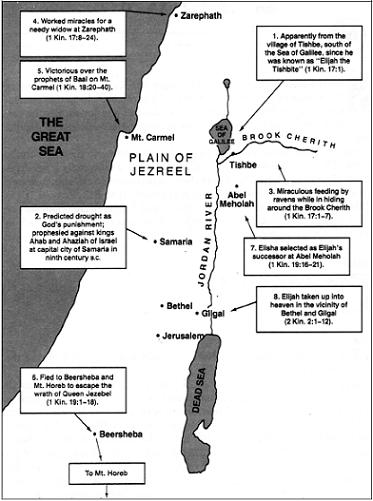
Nelson’s Complete Book of Bible Maps & Charts (Nashville: Thomas Nelson Publishers, 1996) 123. © 1993 by Thomas Nelson, Inc.
18:24 the God who answers by fire. Since Baal’s followers believed that he controlled the thunder, lightning, and storms, and the Lord’s followers declared the same (Pss. 18:14; 29:3–9; 104:3), this would prove to be a fair test to show who was God.
18:27 mocked. The myths surrounding Baal portrayed him as musing on actions to take, fighting a war, traveling, and even dying and coming back to life. Elijah’s sarcastic advice to the prophets of Baal played on these beliefs.
18:28 the blood gushed out. Self-laceration was practiced to rouse a god’s pity and response in the ancient world, but was prohibited by the OT law (Lev. 19:28; Deut. 14:1).
18:29 no . . . no . . . no. This threefold declaration emphasized the lack of response on the part of Baal. The fact that there was no response indicated Baal’s impotence and non-existence (Jer. 10:5).
18:31 twelve stones. The twelve stones represented the Twelve Tribes, since this contest had significance for both Judah and Israel. Although the tribes had been divided into two nations, they were still one people in the Lord’s plans, with the same covenants and a single destiny.
18:32 two seahs. This was about four gallons or one-third of a bushel of seed.
18:36 the evening sacrifice. This sacrifice was offered around 3:00 P.M. (Ex. 29:38–41; Num. 28:3–8).
18:40 Seize the prophets. Taking advantage of the excited feelings of the people over the manifestation of Jehovah as the true God, Elijah called on them to seize the priestly imposters and fill the river with their blood, the river that was dried up by their idolatry. Brook Kishon. This river, which drains the Jezreel Valley from east to the northwest, was in the valley north of Mount Carmel. executed them. The killing of the 450 prophets of Baal (18:19) fulfilled the law’s demands that false prophets be executed (Deut. 13:1–5) and that those embracing idolatry or inciting others to practice it were worthy of death (Deut. 13:13–18; 17:2–7). Further, these deaths were just retribution for Jezebel’s killing of the Lord’s prophets (vv. 4, 13).
18:41 eat and drink. Elijah instructed Ahab to celebrate the end of the drought.
18:42 bowed down. Elijah’s actions expressed his and Israel’s humble submission to God. Elijah prayed for rain this time (cf. 17:1; James 5:17), and God again answered (cf. James 5:18). Since the Lord’s curse was lifted, the rains would be coming.
18:45 Jezreel. A town located in the tribal allotment of Issachar at the eastern end of the Jezreel Valley, north of Mount Gilboa, about fifty-five miles north of Jerusalem. Jezreel was Ahab’s winter capital (see 21:1), situated between fifteen to twenty-five miles east of the Carmel Range.
18:46 ran ahead. It was customary in the ancient Near East for kings to have runners before their chariots. The prophet showed Ahab his loyalty by rendering to him that service. Empowered by God, Elijah ran on foot ahead of Ahab’s chariot the fifteen to twenty-five miles from Mount Carmel to Jezreel.
19:3 he saw. His hope shattered, Elijah fled as a prophet, broken by Jezebel’s threats (v. 2), her unrepentant Baalism, and her continuing power over Israel. Elijah expected Jezebel to surrender; when she did not capitulate, he became a discouraged man (vv. 4, 10, 14). Beersheba. A city located 100 miles south of Jezreel (18:45, 46) in the Negev, it marked the southern boundary of the population of Judah.
19:4 broom tree. A desert bush that grew to a height of ten feet It had slender branches featuring small leaves and fragrant blossoms. take my life. Since Israelites believed that suicide was an affront to the Lord, it was not an option, whatever the distress. So Elijah asked the Lord for death (cf. Jon. 4:3, 8) because he viewed the situation as hopeless. Job (Job 6:8, 9), Moses (Num. 11:10–15), and Jeremiah (Jer. 20:14–18) had also reacted in similar fashion during their ministries.
19:6 cake . . . and . . . water. As at Cherith and Zarephath (17:6, 19), God provided food and drink for Elijah in the midst of his distress and the surrounding famine.
19:8 forty days. Elijah’s trip took over double the time it should have taken. Therefore, the period had symbolic meaning as well as showing literal time. As the people of Israel had a notable spiritual failure and so wandered forty years in the wilderness (Num. 14:26–35), so a discouraged Elijah was to spend forty days in the desert. As Moses had spent forty days on the mountain without bread and water, sustained only by God as he awaited a new phase of service (Ex. 34:28), so Elijah was to spend forty days depending on God’s enablement as he prepared for a new commission from the Lord. As Moses had seen the presence of God (Ex. 33:12–23), so Elijah experienced a manifestation of God. Horeb. An alternate name for Mount Sinai, located about 200 miles south of Beersheba.
19:10, 14 Elijah viewed the Israelites as rebels against the Mosaic covenant, a rebellion that his ministry had been unable to arrest (see v. 3). Paul used this incident as an illustration in Romans 11:3.
19:11 the LORD passed by. The three phenomena, wind, earthquake, and fire, announced the imminent arrival of the Lord (cf. Ex. 19:16–19; Ps. 18:7–15; Hab. 3:3–6). The Lord’s self-revelation to Elijah came in a faint, whispering voice (v. 12). The lesson for Elijah was that Almighty God was quietly, sometimes imperceptibly, doing His work in Israel (v. 18).
19:15 the Wilderness of Damascus. The Syrian Desert south and east of the city of Damascus, the city located to the northeast of Israel.
19:15–17 The Lord instructed Elijah to anoint Hazael of Syria (see 2 Kin. 8:8), Jehu (see 2 Kin. 9:2), and Elisha (v. 19) for the purpose of commissioning them to destroy Baal worship in Israel. Through these three men, the Lord completed the execution of Baal worshipers that Elijah had begun. Actually, Elijah commissioned only the last of these three men directly; the other two were indirectly commissioned through Elisha. Elisha was involved in Hazael’s becoming Syria’s king (2 Kin. 8:7–14), and one of Elisha’s associates anointed Jehu (2 Kin. 9:1–3). By the time the last of these men died (2 Kin. 13:24), Baalism had been officially barred from Israel.
19:16 Abel Meholah. The hometown of Elisha was located in the Jordan Valley, ten miles south of Beth-Shanon, in the tribal allotment of Manasseh.
19:18 Paul used God’s response to Elijah as an illustration in Romans 11:4. kissed him. Kissing the image or symbol of Baal was apparently a common act in worship (cf. Hos. 13:2).
19:19 Elisha. This name means “my God is salvation” and belonged to Elisha, the successor to Elijah (see 2 Kin. 2:9–15). Shaphat. Elisha’s father, whose name meant “he judges.” twelve yoke of oxen. It was a common practice for several teams of oxen, each with his own plow and driver, to work together in a row. After letting the others pass, Elijah threw his mantle around the last man, Elisha, thus designating him as his successor.
19:20 Go back again. Elijah instructed Elisha to go, but to keep in mind the solemn call of God and not to allow any earthly affection to detain his obedience.
19:21 slaughtered. The slaughter of the oxen was a farewell feast for family and friends, indicating that Elisha was making a decisive break. He followed Elijah and became his servant (lit. “aide,” the same term used for Joshua’s relationship with Moses in Ex. 24:13; 33:11). Just as Elijah resembled Moses, so Elisha resembled Joshua.
20:1 Ben-Hadad. This was likely Ben-Hadad II of Syria (see note on 15:18 ) who marched on the capital of Israel and demanded surrender by Ahab (vv. 2–6). thirty-two kings. These were probably rulers of client city-states in the land of Syria (see notes on 10:29 ).
20:9 I will do . . . I cannot do. Ahab was willing to give tribute to Ben-Hadad as his vassal (vv. 2–4), but he refused to allow the Syrian king to plunder his palace (vv. 5–8).
The Ministries of Elijah and Elisha
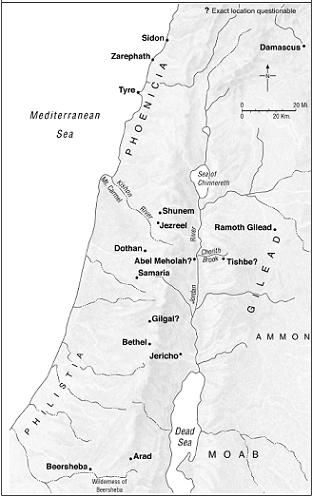
The MacArthur Study Bible, by John MacArthur (Nashville: Word Publishing, 1997) 506. © 1993 by Thomas Nelson, Inc.
20:10, 11 Ben-Hadad boasted that his army would level the hill of Samaria to dust (v. 10). Ahab replied that Ben-Hadad should not boast of the outcome of the battle before it began (v. 11).
20:13 I will deliver it into your hand today. These were the words of assurance given before battles when the Lord was about to fight on Israel’s side (Josh. 6:2, 16; 8:1, 18; Judg. 7:2; 18:10; 1 Sam. 23:4; 24:4). Further, the victory would show Ahab that the Lord was in every respect the mighty God He claimed to be. Though the people and king of Israel had dishonored God, He would not utterly cast them off (vv. 14, 15).
20:17–21 The battle strategy was to send out the young leaders who could perhaps draw near to the Syrians without arousing too much alarm and then, at a given signal, initiate a charge, joined by Ahab’s main striking force, that would catch the drunken Syrians off guard and throw them into confusion. The glorious victory, won so easily and with such a small force, was granted so that Ahab and the people would know that God was sovereign.
20:22 the spring of the year. Spring was the usual time for battles in the ancient Near East (see note on 2 Sam. 11:1 ), and a prophet warned Ahab that Ben-Hadad would retaliate in the following year.
20:23 gods of the hills. The advisers of Ben-Hadad believed that Israel had won the previous battle because it occurred in mountainous terrain, the area they believed was ruled by Israel’s “gods.” They counseled Ben-Hadad to strengthen his army and fight Israel again, only on level ground (v. 25). Obviously, this attitude insulted Israel’s God, the Lord, who is sovereign over the whole earth (cf. 2 Kin. 19:16–19). That blasphemous depreciation of the Lord’s power meant certain defeat for the Syrians (v. 28).
20:26 Aphek. Though several towns in Israel bore the name Aphek, the one mentioned here probably lay about three miles east of the Sea of Galilee, north of the Yarmuk River.
20:27 like two little flocks of goats. Compared to the massive herd of Arameans covering the land, Israel looked like two little goat flocks. Goats were never seen in large flocks or scattered like sheep; hence the description of the two compact divisions.
20:28 man of God. See note on 12:22.
20:30 inner chamber. Lit. “a room in a room,” a safe, well-hidden place.
20:31 sackcloth . . . and ropes. Sackcloth traditionally symbolized mourning and penitence. Ropes around the heads were symbols of surrender.
20:34 marketplaces. Lit. “streets, outside places.” Bazaars were set up in a foreign land (cf. Neh. 13:16), a lucrative market for Israelite goods.
20:35 sons of the prophets. An association of prophets that met and possibly lived together for study, encouragement, and service (see note on 1 Sam. 10:5 ).
20:35, 36 The prophet needed to be wounded as if in battle to carry out the drama. The refusal to do as the prophet said was wrong, as it was a withholding of necessary aid to a prophet of God in the discharge of his duty. It was severely punished as a warning to others (cf. 13:2–24).
20:39–43 The prophet illustrated that, just as a soldier pays dearly for losing a prisoner in war, Ahab will pay for letting Ben-Hadad, the idolatrous enemy of God, live.
20:39 a talent of silver. This was about seventy-five pounds of silver, more than a common soldier could afford and for which debt he would face death.
20:40 your judgment. This “judicial parable” was designed to trap Ahab into announcing the punishment for his own crime (see 2 Sam. 12:1–12). Unknowingly, Ahab declared his own judgment (v. 42).
20:42 utter destruction. By declaring the battles to be holy war (vv. 13, 22, 28), the Lord had put Ben-Hadad and the Syrians under the ban, a reference to something belonging to the Lord and destined to be destroyed (Deut. 7:2; 20:16). By freeing Ben-Hadad, Ahab had disobeyed the law and would suffer the ban in place of Ben-Hadad.
20:43 sullen and displeased. Ahab was resentful and angry because of the Lord’s reaction to his actions (cf. 21:4).
21:1 Jezreel. See note on 18:45. Ahab had built a second palace in Jezreel, where he lived when not in the capital at Samaria.
21:2 Give me your vineyard. In Canaanite culture, since land was simply a commodity to be traded and sold for profit, Ahab’s offer to Naboth of an exchange of property or offer of purchase was a common transaction in the Near East.
21:3 The LORD forbid. Naboth’s words implied that trading or selling his property would be a disregard of the law and, thus, displeasing in God’s eyes (cf. 1 Sam. 24:6; 26:11; 2 Sam. 23:17), because the vineyard was his ancestral property. The Lord, the owner of all the land of Israel, had forbidden Israelite families to surrender ownership of family lands permanently (Lev. 25:23–28; Num. 36:7–9). Out of loyalty to God, Naboth declined Ahab’s offer.
21:7 You now exercise authority over Israel! This statement can be taken as an exclamation or a question. Either way, Jezebel was rebuking Ahab for not exercising absolute royal power in the matter.
21:8 she wrote letters. Written by the royal scribe, ancient letters were mainly in the form of a scroll sealed in clay or wax with the sender’s personal signature. The seal made the contents of the letters a royal mandate and implied that disobedience would certainly lead to some kind of punishment.
21:9 Proclaim a fast. To call an assembly for solemn fasting implied that a disaster threatened the people that could be averted only if they would humble themselves before the Lord and remove any person whose sin had brought God’s judgment upon them (cf. Judg. 20:26; 1 Sam. 7:5, 6; 2 Chr. 20:2–4).
21:10 two men. The Mosaic Law required two witnesses in capital cases (Num. 35:30; Deut. 17:6; 19:5). scoundrels. Lit. “sons of Belial.” These were utterly wicked men. See note on 1 Samuel 2:12. blasphemed God and the king. The penalty for cursing God and the king was death (Ex. 22:28).
21:13 outside the city. They hypocritically climaxed their violent murder by killing the innocent Naboth in a place that was in accordance with the Mosaic Law (Lev. 24:14; Num. 15:35, 36). He was stoned to death in the open fields and his sons were killed with him (2 Kin. 9:26), eliminating all possible heirs.
21:19 Elijah’s first announcement of judgment applied to Ahab personally. He said that the dogs would lick Ahab’s blood in the same place that Naboth died, outside the city of Jezreel. This prophecy was not fulfilled because of his repentance (vv. 27–29), but was partially fulfilled in the licking of Ahab’s blood by dogs at the pool in Samaria (22:37, 38).
21:21–24 Elijah’s second announcement of judgment applied to Ahab and his house. The judgment was virtually identical with one made to Jeroboam (14:10, 11) and similar to the one made to Baasha (16:3, 4).
21:23 concerning Jezebel. Jezebel was singled out for judgment because of her initiative in driving Ahab in the promotion of Baalism (v. 25). Elijah’s prophecy concerning her was literally fulfilled in 2 Kings 9:10, 30–37.
21:27 tore his clothes. The tearing of garments was a common expression of grief, terror, or repentance in the face of great personal or national calamity (Num. 14:6; Josh. 7:6; Judg. 11:35; 2 Sam. 1:2; 3:31).
21:29 days of his son. Since Ahab had truly humbled himself before the Lord, he did not see the disaster forecast for him (v. 19). Instead, God postponed it until the reign of his son, Joram, c. 852–841 B.C. (2 Kin. 9:25, 26). Joram died in the field of Naboth (cf. v. 19).
22:1 three years. Israel had peace for three years following the two years of war with Syria described in 20:1–34. During this peace, Ben-Hadad, Ahab, and ten other kings formed a coalition to repel an Assyrian invasion. Assyrian records described the major battle fought at Qarqar on the Orontes River in 853 B.C. Though Assyria claimed victory, later events show that they were stopped from further advance southward at that time. With the Assyrian threat neutralized, Ahab turned his attention to the unfinished conflict with Syria.
The Kings of Judah (Divided Kingdom)
| Rehoboam | 1 Kings 12:1–14:31; 2 Chronicles 10:1–12:16 |
| Abijam (Abijah) | 1 Kings 15:1–8; 2 Chronicles 13:1–22 |
| Asa | 1 Kings 15:9–24; 2 Chronicles 14:1–16:14 |
| Jehoshaphat | 1 Kings 22:41–50; 2 Chronicles 17:1–20:37 |
| Joram (Jehoram) | 2 Kings 8:16–24; 2 Chronicles 21:1–20 |
| Ahaziah | 2 Kings 8:25–29; 2 Chronicles 22:1–9 |
| Athaliah (queen) | 2 Kings 11:1–16; 2 Chronicles 22:1–23:21 |
| Joash (Jehoash) | 2 Kings 11:17–12:21; 2 Chronicles 23:16–24:27 |
| Amaziah | 2 Kings 14:1–22; 2 Chronicles 25:1–28 |
| Uzziah (Azariah) | 2 Kings 15:1–7; 2 Chronicles 26:1–23 |
| Jotham | 2 Kings 15:32–38; 2 Chronicles 27:1–9 |
| Ahaz | 2 Kings 16:1–20; 2 Chronicles 28:1–27 |
| Hezekiah | 2 Kings 18:1–20:21; 2 Chronicles 29:1–32:33 |
| Manasseh | 2 Kings 21:1–18; 2 Chronicles 33:1–20 |
| Amon | 2 Kings 21:19–26; 2 Chronicles 33:21–25 |
| Josiah | 2 Kings 22:1–23:30; 2 Chronicles 34:1–35:27 |
| Jehoahaz | 2 Kings 23:31–33; 2 Chronicles 36:1–4 |
| Jehoiakim | 2 Kings 23:34–24:7; 2 Chronicles 36:5–8 |
| Jehoiachin | 2 Kings 24:8–16; 2 Chronicles 36:9, 10 |
| Zedekiah | 2 Kings 24:18–25:21; 2 Chronicles 36:11–21 |
22:2 Jehoshaphat. The king of Judah, c. 873–848, whose reign is described in verses 41–50. See notes on 2 Chronicles 17:1–21:3.
22:3 Ramoth in Gilead. Ramoth was a Levitical city east of the Jordan River in Gilead, on the north border of Gad, the home of Jephthah (Judg. 11:34) and a key administrative center in Solomon’s kingdom (4:13). It seems to have been one of the cities that Ben-Hadad should have returned to Israel (20:34).
22:5 inquire for the word of the LORD. Jehoshaphat was willing to help Ahab fight Syria (v. 4), but reminded Ahab of the need to seek the will of the Lord before going into battle (cf. 1 Sam. 23:1–5, 9–13; 2 Sam. 2:1; 5:19–25; 2 Kin. 3:11–20).
22:6 prophets. These 400 prophets of Ahab were not true prophets of the Lord. They worshiped at Bethel in the golden calf center set up by Jeroboam (12:28, 29) and were supported by Ahab, whose religious policy also permitted Baal worship. Their words were designed to please Ahab (v. 8), so they refused to begin with the authoritative “thus says the LORD” and did not use the covenant name for Israel’s God, “LORD.”
The Kings of Israel (Divided Kingdom)
| Jeroboam I | 1 Kings 12:25–14:20 |
| Nadab | 1 Kings 15:25–31 |
| Baasha | 1 Kings 15:32–16:7 |
| Elah | 1 Kings 16:8–14 |
| Zimri | 1 Kings 16:15–20 |
| Tibni | 1 Kings 16:21, 22 |
| Omri | 1 Kings 16:21–28 |
| Ahab | 1 Kings 16:29–22:40 |
| Ahaziah | 1 Kings 22:51–53; 2 Kings 1:1–18 |
| Jehoram (Joram) | 2 Kings 2:1–8:15 |
| Jehu | 2 Kings 9:1–10:36 |
| Jehoahaz | 2 Kings 13:1–9 |
| Jehoash (Joash) | 2 Kings 13:10–25 |
| Jeroboam II | 2 Kings 14:23–29 |
| Zechariah | 2 Kings 15:8–12 |
| Shallum | 2 Kings 15:13–15 |
| Menahem | 2 Kings 15:16–22 |
| Pekahiah | 2 Kings 15:23–26 |
| Pekah | 2 Kings 15:27–31 |
| Hoshea | 2 Kings 17:1–41 |
22:7 a prophet of the LORD. Jehoshaphat recognized that the 400 prophets were not true prophets of the Lord, and wished to hear from a true prophet.
22:8 Micaiah. His name means “Who is like the LORD?”
22:10 throne. A portable, high-backed chair made of wood with arm rests and separate foot stool.
22:11 Zedekiah. He was the spokesman for the false prophets. In contrast to verse 6, he used the introductory formula and God’s covenant name.
22:15 Go and prosper. Micaiah sarcastically repeated the message of the false prophets as he had been encouraged to do (v. 13). Ahab sensed the sarcasm and demanded that Micaiah tell him the truth (v. 16).
22:17 sheep that have no shepherd. The image of the king as a shepherd and his people as the sheep was a familiar one (Num. 27:16, 17; Zech. 13:7). Micaiah’s point was that Israel’s shepherd, King Ahab, would be killed and his army scattered.
22:22 a lying spirit. This must be Satan, whom the Lord allowed to speak through 400 demons who indwelt the 400 false prophets.
22:24 struck . . . on the cheek. This was a rebuke by the leader of the false prophets (v. 6) for the perceived insolence of Micaiah and his claim to truly speak for God. It was followed by a sarcastic question asking if the prophet could tell which direction the spirit in Zedekiah had gone.
22:28 If you ever return. In accordance with Deuteronomy 18:21, 22, Micaiah declared to Ahab that if he lived to return from the battle, then he had uttered a false prophecy.
22:30 disguise myself. Rejecting the prophecy, but fearing it also, Ahab decided not to wear his official robe, but the clothes of an ordinary soldier.
22:31 only with the king of Israel. The very Syrian king, Ben-Hadad, whose life Ahab had spared (20:34), singled him out for death.
22:32 Jehoshaphat cried out. According to 2 Chronicles 18:31, this was a prayer for the Lord’s deliverance. Jehoshaphat’s cry showed the Syrians that he was not Ahab.
22:34 at random. The Syrian bowman shot at an Israelite soldier, not knowing that it was the disguised Ahab. The arrow found a small groove between the breastplate and the flexible scale armor that covered the lower abdomen and thighs. Instantly, Ahab slumped in his chariot, mortally wounded in the stomach and bleeding to death.
22:38 while the harlots bathed. The Hebrew text may read “where” or “while.” In either case, the point is the same: Ahab, the spiritual harlot (i.e., idolater), was associated with the physical harlots at his death. according to the word of the LORD. Ahab’s death fulfilled the prophecies spoken by Elijah (21:19) and Micaiah (v. 17).
22:39 the ivory house. Ahab’s palace at Samaria had internal walled panels that were made of inlaid ivory, indicative of his kingdom’s economic prosperity. cities that he built. Archeological excavations show that Ahab strengthened the fortifications of Samaria, Megiddo, and Hazor.
22:41 fourth year. A reference to the beginning of Jehoshaphat’s reign, after being co-regent with his father Asa, in 870 B.C.
22:42 twenty-five years. 873–848 B.C.
22:43 doing what was right. Jehoshaphat faithfully followed in his father Asa’s footsteps, doing what pleased the Lord. His only major fault, like that of his father, was his failure to close down the high places.
22:44 made peace. In 2 Chronicles 19:2, Jehu the prophet rebuked Jehoshaphat for this alliance.
22:45 made war. See 2 Kings 3:7–27; 2 Chronicles 17:11; 20:1–30.
22:47–49 Jehoshaphat controlled Edom, which gave him access to Ezion Geber. He sought to emulate Solomon’s fleet and wealth (9:26–28), but was unsuccessful. According to 2 Chronicles 20:36, 37, the Lord destroyed his fleet because of Jehoshaphat’s alliance to build it with Ahaziah, king of Israel. First Kings 22:49 apparently refers to a subsequent attempt by Ahaziah to continue the joint venture after the disaster.
22:51–2 Kings 1:18 Ahaziah . . . two years. 853–852 B.C.
22:53 he served Baal. Ahaziah continued the official promotion of Baal worship (cf. 16:31, 32). First Kings ends at this point in the middle of Ahaziah’s reign which is picked up in 2 Kings 1:1–18. The explanation for this unusual break is found in Introduction: Title.
Further Study
Davis, John J. and John C. Whitcomb. A History of Israel from Conquest to Exile. Grand Rapids: Baker, 1980.
Patterson, R. D. and Hermann J. Austel. 1, 2 Kings, in Expositor’s Bible Commentary. Grand Rapids: Zondervan, 1988.