13:4 wayside. The fields were bordered by paths beaten hard by foot traffic and baking sun.
13:5 stony places. Very shallow soil on top of a layer of bedrock. From the top it looks fertile, but there is no depth to sustain roots or reach water (v. 21).
13:7 thorns. Weeds, the roots of which were still in the ground after plowing had been done.
13:11 it has been given to you. Here Jesus clearly affirms that the ability to comprehend spiritual truth is a gracious gift of God, bestowed sovereignly on the elect (v. 11). The reprobate people, on the other hand, are passed over. They reap the natural consequence of their own unbelief and rebellion—spiritual blindness (v. 13). the mysteries of the kingdom of heaven. “Mysteries” are those truths which have been hidden from all ages in the past and revealed in the NT. See notes on 1 Corinthians 2:7; 4:1; Ephesians 3:4, 5.
13:13 because seeing they do not see. Here Matthew seems to suggest that their own unbelief causes their spiritual blindness. Luke 8:10, however, emphasizes God’s initiative in obscuring the truth from these unbelievers (“to the rest it is given in parables, [so] that ‘Seeing they may not see, and hearing they may not understand’”; cf. Is. 6:9). Both are true, of course. Yet we are not to think that God blinds them because He somehow delights in their destruction (cf. Ezek. 33:11; see note on 23:37 ). This judicial blinding may be viewed as an act of mercy, lest their condemnation be increased (see note on v. 3 ).
13:14, 15 Quoted from Isaiah 6:9, 10 (see notes there ).
13:17 many . . . desired to see. Cf. John 8:56; 1 Peter 1:9–12.
13:19 word of the kingdom refers to the message of how to enter God’s kingdom, the sphere of salvation, i.e., the gospel (cf. “word of reconciliation” in 2 Cor. 5:19). wicked one. Satan. Cf. 1 John 5:19. The gospel never penetrates these souls, so it disappears from the surface of their understanding, here seen as the enemy’s snatching it away.
13:20 stony places. Some people commit themselves to Christ in an emotional, superficial way, but that commitment is not real. They remain interested only until there is a sacrificial price to pay and then abandon Christ. See note on 1 John 2:19.
13:22 who received seed among the thorns. These commit superficially without truly repenting. They can’t break with the love of money and the world (James 4:4; 1 John 2:15–17; see notes on 19:16–21 ).
13:23 the good ground. Just as there are three soils with no fruit, thus no salvation, there are three kinds of good soil with fruit. Not all believers are equally fruitful, but all are fruitful (cf. 7:16; John 15:8).
2. The wheat and tares (13:24–30, 34–43)
13:25 tares. Probably darnel, a type of weed that can hardly be distinguished from wheat until the head matures. In an agricultural setting, sowing darnel in someone else’s wheat field was a way for enemies to destroy someone’s livelihood catastrophically. Here it pictures Satan’s efforts to deceive the church by mingling his children with God’s, in some cases making it impossible for believers to discern the true from the false. Jesus explains the parable in verses 36–43.
3. The mustard seed (13:31, 32)
13:32 a tree, so that the birds of the air come and nest in its branches. Palestinian mustard plants are large shrubs, sometimes up to fifteen feet high, certainly large enough for birds to lodge in. This verse refers undoubtedly to several OT passages, including Ezekiel 17:23; 31:6; Daniel 4:21—passages that prophesied the inclusion of Gentiles in the kingdom.
13:33 The kingdom of heaven is like leaven. Here the kingdom is pictured as yeast, multiplying quietly and permeating all that it contacts. The lesson is the same as the parable of the mustard seed. Some interpreters suggest that since leaven nearly always symbolizes evil in Scripture (see note on Mark 8:15 ) it must connote evil here as well. They make the leaven some evil influence inside the kingdom, but that twists Jesus’ actual words and violates the context, in which Jesus is repeatedly describing the kingdom itself as the pervading influence.
13:34 without a parable He did not speak to them. For the rest of His Galilean ministry, all Jesus’ public teaching consists of only parables.
13:35 spoken by the prophet. The “prophet” in this case was the psalmist. See Psalm 78:2.
13:37 He who sows. The true sower of salvation seed is the Lord Himself. He alone can empower the heart to transform. He is the One who saves sinners, even through the preaching and witnessing of believers (Rom. 10:14).
13:43 shine forth as the sun. Cf. Daniel 12:3. Believers already shine because they have the Spirit of Christ and the glorious message of the gospel (5:16; 2 Cor. 4:3–7). They will shine even more in the glory of Christ’s kingdom and eternal heaven (Rom. 8:16–23; Phil. 3:20, 21; Rev. 19:7–9).
| 1. The Sower | 13:1–23 | The good news of the gospel will be rejected by most people. |
| 2. The Wheat and the Tares | 13:24–30, 36–43 | People with genuine faith and people with a false profession of faith will coexist between Christ’s two advents. |
| 3. The Mustard Seed | 13:31, 32 | Christendom will grow quickly from a meager beginning and will include Gentiles. |
| 4. The Leaven | 13:33–35 | Kingdom influence will permeate the world. |
| 5. The Hidden Treasure | 13:44 | The gospel is a priceless treasure. |
| 6. The Pearl of Great Price | 13:45, 46 | True believers are willing to give up their all for the priceless gospel. |
| 7. The Dragnet | 13:47–50 | Angels will separate the wicked from the righteous at Christ’s Second Coming. |
5. The hidden treasure (13:44)
6. The pearl of great price (13:45, 46)
13:44–46 These two parables have identical meanings. Both picture salvation as something hidden from most people (see note on v. 11 ) but so valuable that people who have it revealed to them are willing to give up all they have to possess it.
13:47 dragnet. Some people fished by dragging a large weighted net along the bottom of the lake. When pulled in, it contained an assortment of fish that had to be sorted. In a similar way the visible kingdom, the sphere of those who claim to be believers, is full of both good and bad and will be sorted in the judgment.
13:49 angels. They serve God in judgment (cf. v. 41; 2 Thess. 1:7–10).
8. The householder (13:51, 52)
13:52 brings out of his treasure things new and old. The disciples are not to spurn the old for the sake of the new. Rather, they are to understand the new insights gleaned from Jesus’ parables in light of the old truths, and vice versa.
B. Narrative 3: The Kingdom Conflict (13:53–17:27)
1. Nazareth rejects the King (13:53–58)
13:54 His own country. I.e., Nazareth.
13:55 His brothers. See note on 12:46. The fact that Joseph does not appear in any of these accounts suggests that he was no longer living.
13:57 A prophet . . . in his own country. This ancient proverb parallels the modern saying, “familiarity breeds contempt.” They knew Jesus well as a boy and a young man from their own town, and they concluded that He was nothing special. Verse 58 gives the sad result (cf. Mark 6:4).
13:58 He did not do many mighty works there. See note on Mark 6:5.
2. Herod murders John the Baptist (14:1–12)
14:1–12. Mark 6:14–29 (cf. Luke 9:7–9) also records the murder of John the Baptist.
14:1 Herod. See note on 2:22. This Herod is Antipas, ruler of Galilee. tetrarch. One of four rulers of a divided region. After the death of Herod the Great, Palestine was divided among his sons. Elsewhere, Matthew refers to Herod as “King” (v. 9), because that was the title by which the Galileans knew him.
14:3 Herodias, his brother Philip’s wife. Herodias was the daughter of Aristobulus, another son of Herod the Great; so when she married Philip, she was marrying her own father’s brother. What precipitated the arrest of John the Baptist was that Herod Antipas (another of Herodias’s uncles) talked Herodias into leaving her husband (his brother) in order to marry him (Mark 6:17), thus compounding the incest, as well as violating Leviticus 18:16. John was outraged that a ruler in Israel would sin this way openly, so he rebuked Herod severely (v. 4). For this, Herod imprisoned and later killed John (Mark 6:14–29).
14:6 the daughter of Herodias. Salome, daughter of Herodias and Philip. According to Josephus, the Jewish historian, she married yet another son of Herod the Great (her own father’s brother and her mother’s uncle), thus further tangling the web of incest in that family.
14:8 prompted by her mother. See note on verse 6.
14:9 because of the oaths. A promise made with a certain oath was considered sacred and inviolable (see note on 5:34 ), especially when made by a ruling monarch. Herod was widely known for his duplicity, so he was not concerned with honesty but rather with the appearance of things. He did not want to be embarrassed in front of his dinner guests.
14:12 buried it. In a cave (Mark 6:29).
3. Jesus feeds the 5,000 (14:13–21)
14:13 multitudes . . . followed Him on foot. They traveled great distances over land to reach the secluded spot where Jesus had come by boat.
14:14 moved with compassion. See note on 9:36.
14:16 give them something to eat. Jesus knew they did not have enough food to feed the crowd. He wanted the disciples to state it plainly so the record would be clear that a miracle by His power had occurred (vv. 17, 18). See 16:9, 10.
4. Jesus walks on water (14:22–33)
14:24 tossed by the waves. See notes on 8:24, 27.
14:25 fourth watch. 3:00–6:00 A.M.
14:33 You are the Son of God. Cf. 27:43, 54.
5. Multitudes seek healing (14:34–36)
14:34 Gennesaret. A town on the northwest shore of the Sea of Galilee.
14:36 the hem of His garment. See note on 9:20.
6. The scribes and Pharisees challenge Jesus (15:1–20)
15:2 tradition of the elders. This body of extrabiblical law had existed only in oral form and only since the time of the Babylonian captivity. Later, it was committed to writing in the Mishnah near the end of the second century. The Law of Moses contained no commandment about washing one’s hands before eating, except for priests, who were required to wash before eating holy offerings (Lev. 22:6, 7).
15:3 transgress. Verses 4–6 identify this sin as dishonoring one’s parents in a cleverly devised way. The commandments of God were clear (quoted from Ex. 20:12; 21:17; Deut. 5:16); but to circumvent them, some people claimed they could not financially assist their parents because they had dedicated a certain sum of money to God, who was greater than their parents. The rabbis had approved this exception to the commandments of Moses and thus, in effect, nullified God’s law (v. 6).
| Miracle | Matthew | Mark | Luke | John | |
| 1. | Cleansing a Leper | 8:2 | 1:40 | 5:12 | |
| 2. | Healing a Centurion’s Servant (of paralysis) | 8:5 | 7:1 | ||
| 3. | Healing Peter’s Mother-in-Law | 8:14 | 1:30 | 4:38 | |
| 4. | Healing the Sick at Evening | 8:16 | 1:32 | 4:40 | |
| 5. | Stilling the Storm | 8:23 | 4:35 | 8:22 | |
| 6. | Demons Entering a Herd of Swine | 8:28 | 5:1 | 8:26 | |
| 7. | Healing a Paralytic | 9:2 | 2:3 | 5:18 | |
| 8. | Raising the Ruler’s Daughter | 9:18,23 | 5:22,35 | 8:40,49 | |
| 9. | Healing the Hemorrhaging Woman | 9:20 | 5:25 | 8:43 | |
| 10. | Healing Two Blind Men | 9:27 | |||
| 11. | Curing a Demon-Possessed, Mute Man | 9:32 | |||
| 12. | Healing a Man’s Withered Hand | 12:9 | 3:1 | 6:6 | |
| 13. | Curing a Demon-Possessed, Blind and Mute Man | 12:22 | 11:14 | ||
| 14. | Feeding the Five Thousand | 14:13 | 6:30 | 9:10 | 6:1 |
| 15. | Walking on the Sea | 14:25 | 6:48 | 6:19 | |
| 16. | Healing the Gentile Woman’s Daughter | 15:21 | 7:24 | ||
| 17. | Feeding the Four Thousand | 15:32 | 8:1 | ||
| 18. | Healing the Epileptic Boy | 17:14 | 9:17 | 9:38 | |
| 19. | Temple Tax in the Fish’s Mouth | 17:24 | |||
| 20. | Healing Two Blind Man | 20:30 | 10:46 | 18:35 | |
| 21. | Withering the Fig Tree | 21:18 | 11:12 | ||
| 22. | Casting Out an Unclean Spirit | 1:23 | 4:33 | ||
| 23. | Healing a Deaf-Mute | 7:31 | |||
| 24. | Healing a Blind Man at Bethsaida | 8:22 | |||
| 25. | Escape from the Hostile Multitude | 4:30 | |||
| 26. | Catch of Fish | 5:1 | |||
| 27. | Raising of a Widow’s Son at Nain | 7:11 | |||
| 28. | Healing the Infirm, Bent Woman | 13:11 | |||
| 29. | Healing the Man with Dropsy | 14:1 | |||
| 30. | Cleansing the Ten Lepers | 17:11 | |||
| 31. | Restoring a Servant’s Ear | 22:51 | |||
| 32. | Turning Water into Wine | 2:1 | |||
| 33. | Healing the Nobleman’s Son (of fever) | 4:46 | |||
| 34. | Healing an Infirm Man at Bethesda | 5:1 | |||
| 35. | Healing the Man Born Blind | 9:1 | |||
| 36. | Raising of Lazarus | 11:43 | |||
| 37. | Second Catch of Fish | 21:1 |
The MacArthur Study Bible, by John MacArthur (Nashville: Word Publishing, 1997) 1457. © 1993 by Thomas Nelson, Inc.
15:6 you have made the commandment of God of no effect by your tradition. See note on Mark 7:13.
15:8, 9 Quoted from Isaiah 29:13.
15:11 what comes out of the mouth, this defiles a man. People might defile themselves ceremonially (under the Old Covenant) by eating something unclean, but they would defile themselves morally by saying something sinful (cf. James 3:6). Here Jesus clearly distinguishes between the law’s ceremonial requirements and its inviolable moral standard. Ceremonial defilement could be dealt with through ceremonial means. But moral defilement corrupts a person’s soul.
15:14 Let them alone. This severe judgment is a form of God’s wrath. It signifies abandonment by God and is described as “giving them over” in Romans 1:18–32 (see notes there ). Cf. Hosea 4:17.
15:15 this parable. I.e., verse 11. The “parable” is not at all hard to understand, but it was hard for even the disciples to accept. Years later, Peter still found it hard to accept that all foods are clean (Acts 10:14).
7. A Syro-Phoenician woman believes (15:21–28)
15:22 Son of David. See note on 1:1.
15:24 lost sheep of the house of Israel. See note on 10:6.
15:26 the children’s bread. The lost sheep of the house of Israel must be fed before the “little dogs” (see note on 10:5 ). Christ uses a word here that speaks of a family pet. His words with this woman are not to be understood as harsh or unfeeling. In fact, He is tenderly drawing from her an expression of her faith in verse 27.
8. Jesus heals multitudes (15:29–31)
15:29 skirted the Sea of Galilee. He actually travels north from Tyre to Sidon and then cuts a wide path around the eastern shore of Galilee to Decapolis (Mark 7:31), a primarily Gentile region. He may have taken this route to avoid the territory ruled by Herod Antipas (cf. 14:1, 2). The events that follow must have occurred in Decapolis (see note on 4:25 ).
9. Jesus feeds the 4,000 (15:32–39)
15:33 Where could we get enough bread. No wonder our Lord calls them men of little faith (8:26; 14:31; 16:8; 17:20), when they ask such a question after He has recently fed the 5,000 (14:13–21).
15:34 See note on 14:16. Again the Lord has them confess for the record how little food they had in comparison to the size of the crowd. This confession makes clear that the feeding is miraculous evidence of His deity.
15:38 four thousand. Christ ended His ministry in Galilee with the feeding of the 5,000 (14:13–21). Here He ends His ministry in the Gentile regions by feeding the 4,000. He later would end His Jerusalem ministry with a meal in the Upper Room with His disciples.
10. The Pharisees and Sadducees seek a sign (16:1–12)
16:1 a sign from heaven. See note on 12:38. This time Jesus rebukes them for being so concerned with heavenly signs that they cannot interpret the signs of the times all around them. Then He refers them to the same sign He gave before, the sign of the prophet Jonah (v. 4; cf. 12:39).
16:2, 3 As primitive as their method of predicting the weather is, their ability to discern spiritual matters is worse. They have the long-promised and long-awaited Messiah in their midst and refuse to acknowledge Him.
16:6 the leaven of the Pharisees and the Sadducees. When Jesus warns of this dangerous influence, the disciples think He is talking about bread. Again He reminds them of the fact that the Lord provided plenty of bread, so they don’t need the bread the Pharisees are offering. How soon they forget the miracles! See note on 13:33.
16:12 the doctrine of the Pharisees and Sadducees. Here the leaven of the Pharisees is their “doctrine.” In Luke 12:1, it is their “hypocrisy.” The two are linked closely. The most sinister influence of the Jewish leaders is a pragmatic doctrine that made room for hypocrisy. They are too concerned with externals and ceremonies and the way things appear and not concerned enough with matters of the heart. Jesus rebukes them for their hypocrisy again and again. See note on 23:25.
11. Peter confesses Christ (16:13–20)
16:13 Caesarea Philippi is a district about twenty-five miles north of Galilee, at the base of Mt. Hermon. It was different from the city of Caesarea built by Herod the Great on the Mediterranean coast.
16:16 the living God. An OT name for Jehovah (e.g., Deut. 5:26; Josh. 3:10; 1 Sam. 17:26, 36; 2 Kin. 19:4, 16; Pss. 42:2; 84:2; Dan. 6:26; Hos. 1:10). It contrasts God and dead, dumb idols (Jer. 10:8; 18:15; 1 Cor. 12:2).
16:17 flesh and blood has not revealed this to you. Christ’s messianic claims had always alluded subtly to OT prophecies and been substantiated with miraculous works. Never before had He explicitly taught Peter and the apostles the fullness of His identity. God the Father had opened Peter’s eyes to the full significance of those claims, and revealed to him who Jesus really was. In other words, God had opened Peter’s heart to this deeper knowledge of Christ by faith. Peter is not merely expressing an academic opinion about the identity of Christ; his is a confession of personal faith, made possible by a divinely-regenerated heart.
16:18 on this rock. The word for “Peter,” Petros, means a small stone (John 1:42). Jesus uses a play on words here with petra, which means a foundation boulder (cf. 7:24, 25). Since the NT makes it abundantly clear that Christ is both the foundation (Acts 4:11, 12; 1 Cor. 3:11) and the head (Eph. 5:23) of the church, it is a mistake to think that here He is giving either of those roles to Peter. There is a sense in which the apostles played a foundational role in the building of the church (Eph. 2:20), but the role of primacy is reserved for Christ alone, not assigned to Peter. So Jesus’ words here are best interpreted as a simple play on words in that a boulder-like truth came from the mouth of one who was called a small stone. Peter himself explains the imagery in his first epistle: the church is built of “living stones” (1 Pet. 2:5) who, like Peter, confess that Jesus is the Christ, the Son of the living God. Christ Himself is the “chief cornerstone” (1 Pet. 2:6, 7). church. Matthew is the only Gospel where this term is found (see also 18:17). Christ calls it “My church,” emphasizing that He alone is its Architect, Builder, Owner, and Lord. The Greek word for church means “called out ones.” While God had, since the beginning of redemptive history, been gathering the redeemed by grace, the unique church He promised to build begins at Pentecost with the coming of the Holy Spirit, by whom the Lord baptizes believers into His body—which is the church (see notes on Acts 2:1–4; 1 Cor. 12:12, 13 ). the gates of Hades. Hades is the place of punishment for the spirits of dead unbelievers, entered at death. This Jewish phrase, then, refers to death. Even death, the ultimate weapon of Satan (cf. Heb. 2:14, 15), has no power to stop the church. The blood of martyrs, in fact, has led to the growth of the church in size and spiritual power.
16:19 the keys of the kingdom of heaven. These represent authority, and here Christ gives Peter (and by extension all other believers) authority to declare what is bound or loosed in heaven. This echoes the promise of John 20:23, where Christ gives the disciples authority to forgive or retain the sins of people. All these actions must be understood in the context of 18:15–17, in which Christ lays out specific instructions for dealing with sin in the church (see note on 18:15 ).
Christ’s actions mean that any duly constituted body of believers, acting in accord with God’s Word, has the authority to declare if someone is forgiven or not. The church’s authority is not to determine these things but to declare the judgment of heaven based on the principles of the Word. When churches make such judgments on the basis of God’s Word, they can be sure heaven is in accord. In other words, whatever they “bind” or “loose” on earth is already “bound” or “loosed” in heaven. When the church says the unrepentant person is bound in sin, the church is saying what God says about that person. When the church acknowledges that a repentant person has been loosed from that sin, God agrees.
16:20 tell no one. See notes on 8:4; 12:16.
12. Jesus predicts His death (16:21–28)
16:21 From that time. This verse begins a new emphasis in Matthew’s account. He turns his attention from Jesus’ public ministry to His private instructions for the disciples, which take on a new, somber tone. The disciples have confessed their faith in Him as Messiah. From then on, He begins to prepare them for His death. See note on 20:19.
16:23 Get behind Me, Satan! The harshness of this rebuke contrasts sharply with Christ’s words of commendation in verses 17–19. Jesus suggests that Peter is being a mouthpiece for Satan. Jesus’ death is part of God’s sovereign plan (Acts 2:23; 4:27, 28). “Yet it pleased the Lord to bruise Him” (Is. 53:10). Christ came with the express purpose of dying as an atonement for sin (John 12:27). And those who thwart His mission are doing Satan’s work.
16:24 take up his cross. See note on 10:38.
16:26 exchange. At the judgment when a person faces the disastrous hell of remorse and suffering for his lost soul, with what will he buy it back from perdition? Nothing!
16:27 will come . . . will reward. In the future, God will reward believers (1 Cor. 4:5; 2 Cor. 5:8–10; Rev. 22:12). Here, however, the Lord is concerned with the reward of the ungodly—final and eternal judgment (Rom. 2:5–11; 2 Thess. 1:6–10).
16:28 some standing. In all three of the synoptic Gospels, this promise occurs immediately prior to the transfiguration of Jesus (Mark 9:1–8; Luke 9:27–36). Furthermore, the word for “kingdom” can be translated “royal splendor.” Therefore, it seems most natural to interpret this promise as a reference to the Transfiguration, which “some” of the disciples—Peter, James, and John—will witness only six days later (see note on 17:1 ).
13. Jesus reveals His glory (17:1–13)
17:1 after six days. The precise reference to the amount of time elapsed is unusual for Matthew. It seems he is carefully connecting Jesus’ promise in 16:28 with the event that immediately follows. Mark agrees on the figure of six days (Mark 9:2), but Luke, probably counting the day of Peter’s confession and the day of Christ’s Transfiguration separately at the start and end of this period, says it was “about eight days” (Luke 9:28). Peter, James, and John. These three, in the inner circle closest to Christ (see note on 10:2 ), are often seen alone with Jesus (26:37; Mark 5:37; 13:3).
17:2 transfigured. Christ undergoes a dramatic change in appearance, so the disciples can behold Him in His glory.
17:3 Moses and Elijah. These represent the Law and the Prophets, respectively, both of which foretold Christ’s death, and that is what Luke says the three of them are discussing (Luke 9:31).
17:4 three tabernacles. This refers undoubtedly to the booths used to celebrate the Feast of Tabernacles, when the Israelites lived in booths for seven days (Lev. 23:34–42). Peter wishes to stay in that place.
17:5 Hear Him! Peter errs in placing Moses and Elijah on the same level as Christ. Christ is the very one to whom Elijah and Moses pointed. The voice of the Father (v. 5) interrupts while Peter “was still speaking.” The words are the same as those spoken from heaven at Christ’s baptism (3:17).
17:6 fell on their faces. Such falling is a common response to the presence of the holy God of the universe. Cf. Isaiah 6:5; Ezekiel 1:28; Revelation 1:17.
17:9 Tell the vision to no one. See notes on 8:4 and 12:16.
17:10 Why . . . Elijah must come first? Because it was so prophesied by Malachi 4:5, 6. See note on 11:14.
17:12 Elijah has come already. See note on 11:14. The Jewish leaders have failed to recognize John the Baptist (though the disciples do, v. 13). John came in the spirit and power of Elijah—and the Jewish leaders killed him. The Messiah was “about to suffer” similarly.
14. Jesus heals a child (17:14–21)
17:17 O faithless and perverse generation. Verse 20 indicates that the Lord is referring to the disciples and their weak faith (see note on 15:33 ).
17:19 Why could we not cast it out? When Christ sent the disciples out (10:6–8), He explicitly commissioned them to do these kinds of miracles. Less than a year later, they fail where they had once succeeded. Christ explains their failure: they lack faith (v. 20). This deficiency does not consist in a lack of confidence; they are surprised that they cannot cast out this demon. The problem probably lies in a failure to make God—rather than their own gifts—the object of their confidence (see note on v. 20 ).
17:20 faith as a mustard seed. True faith, by Christ’s definition, always involves surrender to the will of God. What He teaches here is nothing like positive-thinking psychology. Jesus says that both the source and the object of all genuine faith—even the weak, mustard-seed variety—is God. And “with God nothing will be impossible” (Luke 1:37). See also note on 21:21. nothing will be impossible. Here Christ assumes the qualifying thought explicitly added by 1 John 5:14: what we ask for must be “according to His will.”
17:21 except by prayer and fasting. Again this instruction suggests that the underlying problem is the disciples’ failure to make God the object of their faith (see notes on vv. 19, 20 ). But this verse is not found in the best manuscripts.
15. Jesus foretells His betrayal (17:22, 23)
17:22 about to be betrayed, i.e., by Judas Iscariot. See notes on 26:47, 50.
16. Jesus pays the temple tax (17:24–27)
17:24 the temple tax, a half-shekel tax (equivalent to about two days’ wages), was collected annually from every Jewish male over twenty, for the upkeep of the temple (Ex. 30:13, 14; 2 Chr. 24:9). As kings did not tax their own sons, technically, Jesus, as God’s Son, was exempt from the tax (v. 26). But to avoid offense, He pays on behalf of Himself and Peter (v. 27). Cf. Rom. 13:1–7; Titus 3:1; 1 Pet. 2:13–17.
V. THE KING’S ADMINISTRATION (18:1–23:39)
A. Discourse 4: The Childlikeness of the Believer (18:1–35)
This discourse is the fourth of five around which Matthew frames his narrative (see Introduction: Historical and Theological Themes). This section’s theme is the childlikeness of the believer.
1. A call for childlike faith (18:1–6)
18:3 become as little children is how Jesus characterized conversion. Like the Beatitudes, this verse pictures faith as the simple, helpless, trusting dependence of those who have no resources of their own. Like children, they have no achievements and no accomplishments to offer or with which to commend themselves.
18:5 Whoever receives. See note on 10:41. one little child like this speaks not of literal children, but of children in the sense described in verses 3 and 4 (those who have humbled themselves like children), i.e., true believers (verse 6). See notes on 10:42; 19:14.
18:6 millstone. A stone used for grinding grain, lit. “the millstone of an ass,” a stone so large it took a donkey to turn it. Gentiles used this form of execution, and therefore it was particularly repulsive to the Jews.
2. A warning against offenses (18:7–9)
18:7 Woe to the world. Those in the world will cause Christians to be offended, stumble, and sin, and they will be judged for it. But fellow believers should not lead others into sin, directly or indirectly. One would be better off dead. Cf. Romans 14:13, 19, 21; 15:2; 1 Corinthians 8:13.
18:8, 9 cut it off . . . pluck it out. See note on 5:29.
3. A parable about a lost sheep (18:10–14)
18:10 do not despise, i.e., spurn or belittle another believer by treating him or her unkindly or indifferently. their angels. This does not suggest that each believer has a personal guardian angel. Rather, the pronoun is collective and refers to the fact that believers are served by angels in general. These angels are pictured “always” watching the face of God so as to hear His command to help a believer when needed. Treating any fellow believer with contempt is extremely serious since God and the holy angels are so concerned for their well-being.
18:14 perish. The word here can (and does in this context) refer to spiritual devastation rather than to utter eternal destruction. It does not suggest that God’s children ever could perish in the ultimate sense (cf. John 10:28).
4. A pattern for church discipline (18:15–20)
18:15 The prescription for church discipline in verses 15–17 must be read in light of the parable of the lost sheep in verses 12–14. The goal of this process is restoration. If successful, “you have gained your brother.” Step one is to “tell him his fault” privately.
18:16 if he will not hear, i.e., if he remains impenitent, follow step two: “take with you one or two more,” to fulfill the principle of Deuteronomy 19:15 (see note there).
18:17 tell it to the church. If he still refuses to repent, step three requires that the matter be reported to the whole assembly (verse 17) so that all may lovingly pursue the sinning brother’s reconciliation. But failing that, step four means that the offender must be excommunicated, regarded by the church as “a heathen and a tax collector” (see note on 5:46 ). The idea is not merely to punish the offender, or to shun him completely, but to remove him as a detrimental influence from the fellowship of the church, and then to regard him as an evangelistic prospect rather than as a brother. Ultimately, the sin for which he is excommunicated is a hardhearted impenitence.
18:18 bind on earth . . . bound in heaven. See note on 16:19.
18:19 if two of you agree on earth. This promise applies to the issue of discipline discussed in verses 15–17. The “two of you” spoken of here harks back to the two or three witnesses involved in step two of the discipline process (see note on verse 15 ).
18:20 two or three. Jewish tradition requires at least ten men (a minyan ) to constitute a synagogue or even hold public prayer. Here Christ promises to be present in the midst of an even smaller flock—“two or three witnesses” gathered in His name for the purpose of discipline (see note on verse 15 ).
5. A lesson about forgiveness (18:21–35)
18:21 Up to seven times? Peter thinks he is being magnanimous. The rabbis, citing several verses from Amos (1:3, 6, 9, 11, 13), taught that since God forgave Israel’s enemies only three times, it was presumptuous and unnecessary to forgive anyone more than three times.
18:22 seventy times seven. Innumerable times. See note on Luke 17:4.
18:23 servants. Because of the large amounts of money involved, it is likely these “servants” would have been provincial governors who owed the king the money from taxation.
18:24 ten thousand talents. This amount of money is nearly incomprehensible. The talent was the largest denomination of currency, and “ten thousand” in common parlance signified an infinite number.
18:25 that he be sold. The king could recover some of this loss by selling family members into slavery.
18:27 forgave him pictures the generous, compassionate forgiveness of God extended to a pleading sinner who owes him an unpayable debt. Cf. Colossians 2:14.
18:28 a hundred denarii. About three months’ wages. This amount was not negligible by normal standards, but it was a pittance in comparison to what the servant had been forgiven.
18:29 Have patience . . . I will pay you all. Cf. v. 26. The forgiven man hears the same pleading he has given before his master but is utterly without compassion (v. 30).
18:31 fellow servants . . . grieved. A lack of forgiveness offends fellow believers. Most of all it offends God, who chastens His unforgiving children severely (vv. 32–34). See notes on verse 34; cf. 6:15.
18:34 his master was angry. Because He is holy and just, God is always angry at sin, including the sins of His children (cf. Heb. 12:5–11). torturers. Not executioners. This pictures severe discipline, not final condemnation. all that was due to him. The original debt was unpayable, and the man is still without resources. So it seems unlikely that the slave is saddled once again with the same debt he had already been forgiven. Rather, what he now owes his master is to be exacted in chastening by his master until he is willing to forgive others.
B. Narrative 4: The Jerusalem ministry (19:1–23:39)
1. Some kingly lessons (19:1–20:28)
19:1 the region of Judea beyond the Jordan. Perea was the name of the region just east of the Jordan River. It was not technically part of Judea, but the territory ruled by Herod the Great had included both regions, and it was commonly referred to this way. Christ’s ministry in Perea lasts only a few months. It is from here that He will make His final journey to Jerusalem just prior to Passion Week (20:17–19).
19:3 Is it lawful. The Rabbis Shammai and Hillel (both near-contemporaries of Christ) differed sharply regarding divorce. The Shammaites interpreted the law rigidly and permitted a man to divorce his wife only if she was guilty of sexual immorality. for just any reason. The Hillelites took a wholly pragmatic approach and permitted a man to divorce his wife indiscriminately.
19:4 Quoted from Genesis 1:27; 5:2. Jesus’ challenge to the Pharisees echoes the question raised by Malachi 2:15: “But did He not make them one?” (cf. verse 6).
19:5 Quoted from Genesis 2:24 (see note there ).
19:7 Why then did Moses command to give a certificate of divorce. The Pharisees misrepresent Deuteronomy 24:1–4. It is not a “command” for divorce but a limitation on remarriage in the event of a divorce. While recognizing the legitimacy of divorce when a man “has found some uncleanness” (Deut. 24:1) in his wife (sexual sin, by Jesus’ interpretation in verse 9), Moses did not “command” divorce. See note on Deuteronomy 24:1–4.
19:8 Moses . . . permitted you to divorce. The verse certainly emphasizes “permitted.” Thus Jesus clearly sides with the Shammai school of interpretation (see note on v. 3 ). because of the hardness of your hearts. The phrase underscores the truth that divorce is only a last-resort response to hard-hearted sexual immorality (v. 9).
19:9 sexual immorality. This is a term that encompasses all sorts of sexual sins. Both here and in 5:32, Jesus includes this “exception clause,” clearly permitting the innocent party in such a divorce to remarry without incurring the stigma of one who “commits adultery.” See notes on 5:31, 32.
19:10 it is better not to marry. The disciples correctly understand the binding nature of marriage and the very high standard Jesus is setting, permitting divorce only in extreme circumstances.
19:12 let him accept it. Since not everyone can handle celibacy (verse 11), Christ is not requiring it here. Rather, He makes it entirely a matter of personal choice—except for those who are physically unable to marry, either through natural causes or because of the violence of other men. Still others may find there are pragmatic reasons not to marry for the good of the kingdom (see notes on 1 Cor. 7:7–9 ). But in no way does Christ suggest that celibacy is superior to marriage (cf. Gen. 2:18; 1 Tim. 4:3).
19:14 of such. These children were too young to exercise personal faith. See Luke 18:15, where Luke refers to them as “infants.” Therefore, it is all the more significant that Christ uses them to illustrate those who make up “the kingdom of heaven” (cf. 18:1–4). Mark 10:16 also says He “blessed them.” God often shows a special mercy to those who, because of age or mental deficiency, are incapable of either faith or willful unbelief (cf. Jon. 4:11). They are called “innocents” in Jeremiah 19:4. Innocence does not mean they are free from the inherited guilt and moral corruption of Adam’s sin (see notes on Rom. 5:12–19 ) but rather that they are not culpable in the same sense as those whose sins are premeditated and deliberate. Jesus’ words here suggest that God’s mercy is graciously extended to infants so that those who die are sovereignly regenerated and granted entrance into the kingdom—not because they are deserving of heaven, but because God in His grace chooses to redeem them. See notes on 2 Samuel 12:23; Mark 10:14.
19:16 Good Teacher. This way of addressing Jesus does not necessarily recognize His deity. The young man simply means that Christ is righteous and a teacher from God who apparently has eternal life and might know how he could get it.
19:17 Why do you call Me good? No one is good but One. Jesus is not disclaiming His own deity but rather teaching the young man that all but God are sinners. This young man’s most serious spiritual defect is his reluctance to confess his own utter spiritual bankruptcy. See note on 5:3; cf. Luke 18:11. if you want to enter into life, keep the commandments. This teaching, of course, is law, not gospel. Before showing him the way to life, Jesus impresses on the young man both the high standard required by God and the absolute futility of seeking salvation by his own merit. The young man should have responded as the disciples do in verse 25 and confessed that keeping the law perfectly is impossible, but instead the young man confidently declares that he qualifies for heaven under those terms.
19:18, 19 These commandments are five of the six that make up the second table of the Ten Commandments, all dealing with human relationships (cf. Ex. 20:12–16; Deut. 5:16–20). See note on 22:40. Christ omits the tenth Commandment, which deals with covetousness, and adds Leviticus 19:18, which summarizes the second half of the Decalogue. Cf. Romans 13:1–10.
19:20 I have kept. The self-righteous young man would not admit to his own sin. See note on 9:13.
19:21 go, sell what you have and give to the poor. Again Jesus is not setting forth terms for salvation but exposing the young man’s true heart. His refusal to obey here reveals two things: (1) he is not blameless as far as the law was concerned, because he is guilty of loving himself and his possessions more than his neighbors (cf. v. 19); and (2) he lacks true faith, which involves a willingness to surrender all at Christ’s bidding (16:24). Jesus is not teaching salvation by philanthropy, but He is demanding that this young man give Him first place. The young man fails the test (v. 22). come, follow Me. This is the answer to the young man’s question in verse 16. It is a call to faith. It is likely that the young man never even heard or contemplated it, even though, because his own love of his possessions is such a stumbling block, he has already rejected Jesus’ claim to lordship over his life. Thus he walks away in unbelief.
e. about who may be saved (19:23–30)
19:24 camel . . . eye of a needle. I.e., it is impossible. Jesus is underscoring the impossibility of anyone’s being saved by merit. Since wealth was deemed proof of God’s approval and those who had it could give more alms, it was commonly thought that rich people were the most likely candidates for heaven (see note on Mark 10:25 ). Jesus destroys that notion and, along with it, the notion that anyone can merit enough divine favor to gain entrance into heaven. See note on verse 25.
19:25 Who then can be saved? This is the right question to ask; it shows that they get Jesus’ message (see note on v. 17 ). Salvation is possible only through divine grace (v. 26). See notes on Romans 3:9–20; Galatians 3:10–13; Philippians 3:4–9.
19:27 we have left all and followed You. Peter points out that they have already done what Christ demanded of the rich young ruler (v. 21). They have embarked on the life of faith with Christ. Note that Jesus does not rebuke Peter for his expectation of reward (cf. Rev. 22:12).
19:28 regeneration. Here the term does not carry its normal theological meaning of personal regeneration (cf. Titus 3:5). Instead, Jesus is speaking of “the times of restoration of all things, which God has spoken by the mouth of all His holy prophets since the world began” (Acts 3:21). This reference is to the earthly kingdom described in Revelation 20:1–15, when believers will sit with Christ on His throne (Rev. 3:21). judging. Governing. Cf. 1 Corinthians 6:2, 3.
19:30 first will be last, and the last first. This statement means that everyone ends up the same, a truth that is explained by the parable that follows (see note on 20:16 ).
f. about equality in the kingdom (20:1–16)
20:1 hire laborers. Such hiring was typical during harvest. Day laborers stood in the market place from dawn, hoping to be hired for the day’s work. The work day began at 6:00 A.M. and went to 6:00 P.M.
20:2 a denarius a day. A fair wage for a full day’s labor (see note on 22:19 ).
20:3 third hour. 9:00 A.M. They are standing idle because no one has hired them (v. 7).
20:4 whatever is right. So eager to work, these men do not even negotiate a specific wage.
20:6 eleventh hour. I.e., 5:00 P.M. Desperate for work, they have waited nearly “all day.” They will take whatever they can get.
20:8 last to the first. This is the clue that opens the parable (see note on v. 16 ).
20:13 I am doing you no wrong. Everyone receives a full day’s wage, to their shock (vv. 9–11). The man is acting graciously to those whom he overpaid. This payment is no slight against those whom he paid a full wage for a full day’s work. That was precisely what they agreed to in the beginning, but it was the landowner’s privilege to extend the same generosity to all (v. 15; cf. Rom. 9:15).
20:16 the last will be first, and the first last. In other words, everyone finishes in a dead heat. No matter how long each of the workers worked, they each received a full day’s wage. Similarly, the thief on the cross will enjoy the full blessings of heaven alongside those who have labored their whole lives for Christ. Such is the grace of God (see note on 19:30 ).
20:17 going up to Jerusalem. Thus begins Jesus’ final journey to the Cross.
20:19 crucify. This is the third time Jesus tells the disciples of His death (see note on 16:21; cf. 17:22, 23); also three of the disciples had overheard Jesus discussing His death with Moses and Elijah at the Transfiguration (Luke 9:31). This time, however, He adds more details.
h. about true greatness (20:20–28)
20:20 mother of Zebedee’s sons. Mark 10:35 says James and John themselves raised Christ’s question in verse 21. Without contradiction, it is possible either that the three of them asked together or, perhaps even more likely, that they had discussed it among themselves beforehand, and each posed the question to Jesus privately.
20:21 Grant . . . these two sons of mine. Probably playing off the words of Jesus in 19:28, James and John have enlisted their mother to convey their proud, self-seeking request to Jesus. The disciples keep seeking position (cf. 18:1, 4; 23:11; Mark 9:34, Luke 9:46; 22:24, 26) right up to the table at the Last Supper.
20:22 You do not know what you ask. The greatest glory goes to those who suffer the most for Christ. the cup that I am about to drink. The cup of God’s wrath (see notes on 26:39; Mark 14:36; Luke 22:42; John 18:11 ). the baptism that I am baptized with. This baptism is the immersion of the Lord into suffering (cf. Luke 12:50); however, the phrases referring to baptism here and in verse 23 do not appear in the best manuscripts.
20:23 You will indeed. James was beheaded (Acts 12:2) and John was tortured and exiled to Patmos (Rev. 1:9) for the sake of Christ. for whom it is prepared. God alone has chosen.
20:24 were greatly displeased means jealous displeasure. They all would have petitioned Jesus for the exalted, favored positions, given the opportunity. See note on verse 21.
20:25–28 In this rich text, the Lord teaches the disciples that the style of greatness and leadership for believers is different. The Gentile leaders dominate in dictatorial fashion, using carnal power and authority. Believers are to do the opposite—they lead by being servants and giving themselves away for others, as Jesus did.
20:28 to give His life a ransom for many. The word translated “for” means “in the place of,” underscoring the substitutionary nature of Christ’s sacrifice. A “ransom” is a price paid to redeem a slave or a prisoner. Redemption does not involve a price paid to Satan. Rather, the ransom is offered to God to satisfy His justice and wrath against sin. The price paid is Christ’s own life as a blood atonement (cf. Lev. 17:11; Heb. 9:22). The meaning of the Cross, then, is this: Christ subjects Himself to the divine punishment against sin on our behalf (cf. Is. 53:4, 5; see note on 2 Cor. 5:21 ). Suffering the brunt of divine wrath in the place of sinners is the “cup” He speaks of having to drink and the baptism He is preparing to undergo (v. 22).
2. Some kingly deeds (20:29–21:27)
a. healing two blind men (20:29–34)
20:29 out of Jericho. See note on verse 30.
20:30 two blind men. Mark 10:46 and Luke 18:35 mention only one blind man, and Luke says this encounter took place as Christ was approaching Jericho rather than when He was leaving (v. 29). The difficulties are fairly simple to reconcile: there were two blind men, but Bartimaeus (Mark 10:46) was the spokesman of the two and was, therefore, the sole focus of both Luke’s and Mark’s accounts (see note on 8:28 ). It is also a fact that there were two Jerichos: one the mound of the ancient city (the ruins of which may still be seen today); the other the inhabited city of Jericho, close by. Jesus may have been going “out of” old Jericho and entering new Jericho. Or perhaps the events are telescoped for us, so that Christ first encounters the blind men on His way into the city, but the healing takes place as he departs. Son of David. See note on 1:1.
b. receiving adoration (21:1–11)
21:1 Bethphage is a small town near Bethany, on the southeast slope of the Mt. of Olives. It is mentioned nowhere else in Scripture except in connection with Christ’s triumphal entry (Mark 11:1; Luke 19:29).
21:3 if anyone says anything to you. Mark records that this was in fact exactly what happened (Mark 11:5, 6). Having just arrived in Bethphage (v. 1), Jesus would have no opportunity to make arrangements for the use of these animals. Yet He knows precisely the location of the animals and the disposition of the owners. Such detailed foreknowledge reveals His divine omniscience.
21:5 A colt, the foal of a donkey quotes Zechariah 9:9 exactly (cf. Is. 62:11). The Jewish multitudes recognize the fulfillment of this messianic prophecy and respond with titles and accolades fit only for the Messiah (see note on v. 9 ).
21:7 the donkey and the colt. Matthew is the only Gospel writer who mentions the mare donkey. But all mention the young age of the donkey (John 12:14) or state that no man had ever sat on him (Mark 11:2; Luke 19:30). The mare was brought along, possibly to induce the colt to cooperate. set Him on them. I.e., on the clothes. Christ rode on the young colt (Mark 11:7).
21:8 spread their clothes on the road. Spreading one’s garments on the street was an ancient act of homage reserved for high royalty (cf. 2 Kin. 9:13), suggesting that they recognize His claim to be King of the Jews.
21:9 Hosanna transliterates the Hebrew expression that is translated “Save now” in Psalm 118:25. Blessed is He quotes verse 26 of the same psalm exactly. With such expressions, along with the messianic title “Son of David,” the crowd is acknowledging Christ’s messianic claim (see note on 1:1 ). The date of this entry was Sunday, 9 Nisan, A.D. 30, exactly 483 years after the decree of Artaxerxes mentioned in Daniel 9:24–26 (see note there ).
c. cleansing the temple (21:12–17)
21:12 drove out. This cleansing of the temple is Jesus’ second. John 2:14–16 describes a similar incident at the beginning of Christ’s public ministry. The two incidents differ: In the first cleansing, temple officials confront Christ immediately afterward (see note on v. 23; cf. John 2:18); none of the accounts of this second cleansing mention any such confrontation. Instead, the synoptic Gospels describe how Jesus addresses all those present (v. 13) and even make the incident an occasion for public teaching (Mark 11:17; Luke 19:46, 47). those who bought and sold. He regards both merchants and customers guilty of desecrating the temple. Items being bought and sold include “doves” and other animals for sacrifice (cf. John 2:14). money changers. Currency-exchange agents, present in droves, were needed because Roman coins and other forms of currency were deemed unacceptable for temple offerings. Evidently both merchants and money changers were charging such excessive rates that the temple marketplace took on the atmosphere of a thieves’ den (v. 13). This kind of commerce took place in the court of the Gentiles, a large area covering several acres on the temple mount.
21:13 It is written. Jesus conflates two OT prophecies, Isaiah 56:7 (“For My house shall be called a house of prayer for all nations”) and Jeremiah 7:11 (“Has this house, which is called by My name, become a den of thieves in your eyes?”).
21:15 children, lit. “boys.” The crowd in Jerusalem for the Passover would have included a large number of twelve-year-olds, who were celebrating their first Passover in Jerusalem, just as Jesus Himself had done.
21:16 Yes. Have you never read. Jesus’ reply to the “indignant” chief priests and scribes amounts to an inescapable assertion of His deity. He quotes from Psalm 8:2, which speaks of “praise” offered to God. By using that verse in defense of the worship God had ordained “out of the mouth of babes” on His behalf, He claims the right to receive worship as God.
d. cursing a fig tree (21:18–22)
21:19 Immediately is a relative term; the tree may have died at once, but Mark 11:14, 20 (see notes there ) suggested that the withering was not visible until the following day. Jesus’ cursing of the tree is a purposeful divine object lesson, not an impetuous act of frustration. Scripture often uses the fig tree as a symbol of Israel (Hos. 9:10; Joel 1:7), and the barren fig tree often symbolizes divine judgment on Israel because of her spiritual fruitlessness (see note on 3:8 ) despite an abundance of spiritual advantages (Jer. 8:13; Joel 1:12). Jesus’ act therefore illustrates God’s judgment against earthly Israel for shameful fruitlessness, exemplified in the rejection of their Messiah. One of Christ’s parables teaches a similar lesson (Luke 13:6–9).
21:21 if you have faith and do not doubt. This teaching presupposes that the thing requested is actually God’s will (see note on 17:20 ), since only God-given faith is so doubt-free (cf. Mark 9:24). it will be done. A miracle on such a cosmic scale is precisely what the scribes and Pharisees want Christ to do, but He always declines (see note on 12:38 ). Here He speaks figuratively about the immeasurable power of God, unleashed in the lives of those with true faith.
e. answering a challenge (21:23–27)
21:23 these things, i.e., both His public teaching and miracles. They may also have in mind His act of cleansing the temple on the day before (see note on v. 12 ). And who gave You this authority? They are forced to acknowledge that He has some source of indisputable authority. His miracles are too obvious and numerous to be fraudulent. Even His teaching is with such force and clarity that it is obvious to all that there is authority in His words (see note on 7:29 ).
21:25 The baptism of John—where was it from? Jesus catches the Jewish leaders in their own trap. They no doubt hope that He will answer by asserting that His authority comes directly from God (as He has many times before—cf. John 5:19–23; 10:18). They, then, accuse Him of blasphemy and use the charge as an excuse to kill Him—as they have also attempted to do before (John 5:18; 10:31–33). Here, however, Jesus asks a question that places them in an impossible dilemma, because John is widely revered by the people. They cannot affirm John’s ministry without condemning themselves. And if they deny John’s legitimacy, they fear the response of the people (v. 26). In effect, Jesus exposes their own lack of any authority to examine Him. See note on Luke 20:5.
3. Some kingly parables (21:28–22:14)
21:31 Which of the two did the will of his father? Jesus forces the Jewish leaders to testify against themselves. The point of the parable is that doing is more important than saying (cf. 7:21–27; James 1:22). They have to acknowledge this; yet, in doing so, they condemn themselves. The idea that repentant tax collectors and harlots would enter the kingdom before outwardly religious hypocrites is a recurring theme in His ministry (see note on 5:20) that infuriates the Jewish leaders.
21:32 the way of righteousness. I.e., the repentance and faith that results in the imputation of God’s righteousness (see note on Rom. 3:21 ). tax collectors and harlots. See notes on 5:46; 9:9; Mark 2:15. The pariahs of Jewish society, most publicly despised by the chief priests and elders, had found salvation while the self-righteous leaders had not. Cf. Romans 10:3.
b. wicked vinedressers (21:33–46)
21:33 a vineyard . . . a winepress. See Isaiah 5:2. Jesus is clearly alluding to this OT passage, which would have been familiar to the Jewish leaders. The vineyard is a common symbol for the Jewish nation in Scripture. Here the landowner, representing God, develops the vineyard with great care, then leases it to vinedressers, representing the Jewish leaders.
21:34 his servants. I.e., the OT prophets.
21:35 beat one, killed one, and stoned another. Matthew often blends and simplifies details (see notes on v. 19; 8:28; 20:30 ). From Mark’s account, we learn that in Jesus’ telling of this story, three different servants came individually. The tenants “beat” the first one, “stoned” the second, and “killed” the third (Mark 12:2–5). This behavior corresponds to the Jewish rulers’ treatment of many of the OT prophets (1 Kin. 22:24; 2 Chr. 24:20, 21; 36:15, 16; Neh. 9:26; Jer. 2:30).
21:37 my son. This person represents the Lord Jesus Christ, whom they kill (vv. 38, 39) and, thereby, incur divine judgment (v. 41).
21:41 lease his vineyard to other vinedressers. Again, the Jewish leaders pronounce their own judgment (see note on v. 31 ). Their verdict against the evil vinedressers is also Christ’s judgment against them (v. 43). The kingdom and all the spiritual advantages given to Israel will now be given to “other vinedressers,” symbolizing the church (v. 43), which consists primarily of Gentiles (cf. Rom. 11:11).
21:42 The stone . . . rejected refers to Jesus’ Crucifixion, and the restoration of “the chief cornerstone” anticipates His Resurrection. the chief cornerstone. To the superficial eye, this quotation from Psalm 118:22, 23 is irrelevant to the parable that precedes it. But it is taken from a messianic psalm. Jesus cites it to suggest that the Son who was killed and thrown out of the vineyard is also the “chief cornerstone” in God’s redemptive plan.
21:43 a nation bearing the fruits of it refers to the church. See note on verse 41. Peter speaks of the church as “a holy nation” (1 Pet. 2:9).
21:44 this stone. Christ is “a stone of stumbling and a rock of offense” to unbelievers (Is. 8:14; 1 Pet. 2:9). And the prophet Daniel pictures Him as a great stone “cut out of the mountain without hands,” which falls on the kingdoms of the world and crushes them (Dan. 2:44, 45). Whether a ceramic vessel “falls on” a rock or the rock “falls” on the vessel, the result is the same. The saying suggests that both enmity and apathy are wrong responses to Christ, and those guilty of either are in danger of judgment.
21:45 they perceived that He was speaking of them. By evoking so much familiar messianic imagery (vv. 42–44), Christ makes His meaning inescapable to the chief priests and Pharisees.
22:2 like a certain king who arranged a marriage. Jesus tells a similar, but different, parable in Luke 14:16–23. Here, the banquet is a wedding feast for the king’s own son, making the apathy (v. 5) and rejection (v. 6) of those invited much more of a personal slight against the king. Also here they actually mistreat and kill the king’s messengers—an unthinkable affront to the king’s goodness.
22:4 Again, he sent out other servants. This action illustrates God’s patience and forbearance with those who deliberately spurn Him. He continues to invite them even after they have ignored or rebuffed His goodness.
22:7 he was furious. His patience finally exhausted, He judges them. burned up their city. The judgment Jesus described anticipates the destruction of Jerusalem in A.D. 70. Even the massive stone temple was destroyed by fire and reduced to rubble in that conflagration. See notes on 23:36; 24:2; Luke 19:43.
22:9 as many as you find, invite to the wedding. This instruction illustrates the offer of the gospel freely, to everyone indiscriminately (cf. Rev. 22:17).
22:11 a wedding garment. All, without exception, are invited to the banquet, so this man is not to be viewed as a common party-crasher. In fact, all the guests are rounded up hastily from “the highways” and, therefore, none could be expected to come with proper attire. That means the wedding garments are supplied by the king himself. So this man’s lack of a proper garment indicates that he has purposely rejected the king’s own gracious provision. His affront to the king is actually a greater insult than those who refuse to come at all, because he commits his impertinence in the presence of the king. The imagery seems to represent those who identify with the kingdom externally, profess to be Christians, belong to the church in a visible sense, yet spurn the garment of righteousness Christ offers (cf. Is. 61:10) by seeking to establish a righteousness of their own (cf. Rom. 10:3; Phil. 3:8, 9). Ashamed to admit their own spiritual poverty (see note on 5:3 ), they refuse the better garment the King graciously offers and are thus guilty of a horrible sin against His goodness.
22:12 And he was speechless. I.e., he had no excuse.
22:13 outer darkness describes the darkness farthest from the light. weeping and gnashing of teeth speaks of inconsolable grief and unremitting torment. Jesus commonly uses the phrases in this verse to describe hell (cf. 13:42, 50; 24:51).
22:14 many are called, but few are chosen. The call spoken of here is sometimes referred to as the “general call” (or the “external call”), a summons to repentance and faith that is inherent in the gospel message. This call extends to all who hear the gospel. “Many” hear it; “few” respond (see the many-few comparison in 7:13, 14). Those who respond are the “chosen,” the elect. In the Pauline writings, the word call usually refers to God’s irresistible calling extended to the elect alone (Rom. 8:30), known as the “effectual call” (or the “internal call”). The effectual call is the supernatural drawing of God which Jesus speaks of in John 6:44 (see note on Rom. 1:7 ). Here, a general call is in view, and this call extends to all who hear the gospel. This call is the great “whosoever will” of the gospel (cf. Rev. 22:17). Here, then, is the proper balance between human responsibility and divine sovereignty: the “called” who reject the invitation do so willingly, and therefore their exclusion from the kingdom is perfectly just. The “chosen” enter the kingdom only because of the grace of God in choosing and drawing them.
4. Some kingly answers (22:15–46)
22:16 Herodians were a party of the Jews who supported the Roman-backed Herodian dynasty. The Herodians were not a religious party, like the Pharisees, but a political party, probably consisting largely of Sadducees (including the rulers of the temple). By contrast, the Pharisees hated Roman rule and the Herodian influence. That these groups would conspire together to trap Jesus reveals how seriously both groups viewed Him as a threat. Herod himself wanted Jesus dead (Luke 13:31), and the Pharisees were already plotting to kill Him as well (John 11:53). So they join efforts to seek their common goal.
22:17 Is it lawful to pay taxes to Caesar, or not? At issue was the poll tax, an annual fee of one denarius (see note on v. 19 ) per person. Such “taxes” were part of the heavy taxation Rome assessed. Since these funds were used to finance the occupying armies, all Roman taxes were hated by the people. But the poll tax was the most hated of all because it suggested that Rome owned even the people, while they viewed themselves and their nation as possessions of God. It is therefore significant that they question Christ about the poll tax in particular. If He answers no to their question, the Herodians will charge Him with treason against Rome. If He says yes, the Pharisees will accuse Him of disloyalty to the Jewish nation, and He will lose the support of the multitudes.
22:19 denarius. See note on Mark 12:16. A silver coin, the value of a day’s wage for a Roman soldier. The coins were minted under the emperor’s authority since only he could issue gold or silver coins. The denarius of Jesus’ day was minted by Tiberius. One side bore an image of his face; the other featured an engraving of him sitting on his throne in priestly robes. The Jews considered such images to be idolatry, forbidden by the second Commandment (Ex. 20:4), which made this tax and these coins doubly offensive.
22:21 Caesar’s . . . God’s. Caesar’s image is stamped on the coin; God’s image is stamped on the person (Gen 1:26, 27). The Christian must “render” obedience to Caesar in Caesar’s realm (Rom. 13:1–7; 1 Pet. 2:13–17), but “the things that are God’s” do not belong to Caesar and should be given only to God. Christ, thus, acknowledges Caesar’s right to assess and collect taxes, and He makes it the duty of Christians to pay them. But He does not suggest (as some suppose) that Caesar had sole or ultimate authority in the social or political realms. Ultimately, all things are God’s (Rom. 11:36; 2 Cor. 5:18; Rev. 4:11)—including the realm in which Caesar or any other earthly ruler exercises authority.
b. on the resurrection (22:23–33)
22:23 no resurrection. See note on 3:7.
22:24 his brother shall marry his wife. This refers to the law of levirate marriage, found in Deuteronomy 25:5–10 (see note there ). This provision ensures that family lines are kept intact and widows are cared for.
22:30 like angels of God in heaven. The Sadducees did not believe in angels (see note on 3:7 ), so here Jesus is exposing another of their false beliefs. Angels are deathless creatures who do not propagate and, therefore, have no need for marriage. “In the resurrection,” the saints will have those same characteristics.
22:32 not the God of the dead. Jesus’ argument (taken from the Pentateuch, because the Sadducees recognized only Moses’ authority—see note on 3:7 ) is based on the emphatic present tense “I AM” of Exodus 3:6. This subtle but effective argument silenced the Sadducees (v. 34). See note on Mark 12:26.
c. on the first and great commandment (22:34–40)
22:35 a lawyer refers to a scribe whose specialty was interpreting the law. See notes on 2:4; Luke 10:25.
22:36 See note on Mark 12:28.
22:37 heart . . . soul . . . mind. Mark 12:30 adds “strength.” The quote is from Deuteronomy 6:5, part of the shema (Heb. for “hear,” Deut. 6:4). That verse says “heart . . . soul . . . strength.” Some LXX manuscripts add “mind.” The use of the various terms does not distinguish among human faculties but underscores the completeness of the kind of love commanded.
22:39 love your neighbor as yourself quotes from Leviticus 19:18. Contrary to some contemporary interpretations, it does not mandate self-love. Rather, it contains in different words the very same idea as the Golden Rule (see note on 7:12 ). It prompts believers to measure their love for others by what they wish for themselves.
22:40 all the Law and the Prophets, i.e., the whole OT. Jesus thus subsumes man’s whole moral duty under two categories: love for God and love for one’s neighbors. These same two categories differentiate the first four Commandments of the Decalogue from the final six.
d. on David’s greater Son (22:41–46)
22:42 What do you think. A phrase often used by Christ to introduce a question designed to test someone (v. 17; 17:25; 18:12; 21:28; 26:66). Here the Pharisees, Herodians, Sadducees, and scribes all put Him to the test, but He also tests them. The Son of David. See note on 1:1. “Son of David” was the most common messianic title in Jesus’ day. Their answer reflects their conviction that the Messiah would be no more than a man, and in reply, Jesus asserts His deity again. See note on verse 45.
22:43 in the Spirit, i.e., under the inspiration of the Holy Spirit (cf. Mark 12:36).
22:44 Quotes from Psalm 110:1.
22:45 David then calls Him “Lord.” David would not have addressed a merely human descendant as “Lord.” Here Jesus is not disputing whether “Son of David” is an appropriate title for the Messiah; after all, the title is based on what is revealed about the Messiah in the OT (Is. 11:1; Jer. 23:5), and it is used as a messianic title in 1:1 (see note there ). But Jesus is pointing out that the title “son of David” does not begin to sum up all that is true about the Messiah who is also “Son of God” (Luke 22:70). The inescapable implication is that Jesus is declaring His deity.
5. Some kingly pronouncements (23:1–39)
a. to the scribes and Pharisees (23:1–36)
23:2 Moses’ seat is equivalent to a university’s “chair of philosophy.” To “sit in Moses’ seat” was to have the highest authority to instruct people in the law. The expression here may be translated, “[they] have seated themselves in Moses’ seat,” emphasizing that this is an imaginary authority they claim for themselves. The priests and Levites had some authority to decide matters of the law (Deut. 17:9), but the scribes and Pharisees had exceeded any legitimate authority and were adding human tradition to the Word of God (15:3–9). For that Jesus condemns them (vv. 8–36).
23:3 observe and do, i.e., insofar as it accords with the Word of God. The Pharisees were prone to bind “heavy burdens” (v. 4) of extrabiblical traditions on others’ shoulders. Jesus explicitly condemns that sort of legalism.
23:5 phylacteries refers to leather boxes containing a parchment with writing in four columns (Ex. 13:1–10, 11–16; Deut. 6:4–9; 11:13–21). Men wear these during prayer—one on the middle of the forehead and one on the left arm just above the elbow. The use of phylacteries was based on an overly literal interpretation of such passages as Exodus 13:9, 10 and Deuteronomy 6:8. Evidently, the Pharisees made the phylacteries more prominent by broadening the leather straps by which they bound phylacteries to their arms and foreheads. the borders of their garments, i.e., the tassels that Jesus Himself wore (see note on 9:20 ); so He condemned not the tassels themselves but the mentality that would enlarge the tassels to make a person appear to be especially spiritual.
23:8–10 Rabbi . . . father . . . teachers. Here Jesus condemns pride and pretense, not titles per se. Paul repeatedly speaks of “teachers” in the church and even refers to himself as the Corinthians’ “father” (1 Cor. 4:15). Nor does this prohibition forbid the showing of respect (cf. 1 Thess. 5:11, 12; 1 Tim. 5:1). Christ is merely forbidding the use of such names as spiritual titles or in an ostentatious sense that gives undue spiritual authority to a human being, as if he were the source of truth rather than God.
23:13 nor do you allow. The Pharisees, having shunned God’s righteousness, are seeking to establish a righteousness of their own (Rom. 10:3) and teaching others to do the same. Their legalism and self-righteousness obscure the narrow gate by which everyone must enter the kingdom (see notes on 7:13, 14 ).
23:14 This verse does not appear in the earliest available manuscripts of Matthew, but it does appear in Mark. See notes on Mark 12:40.
23:15 proselyte refers to a Gentile convert to Judaism. See Acts 6:5. a son of hell, i.e., someone destined for hell.
23:16 it is nothing. This arbitrary distinction gave Pharisees a sanctimonious justification for lying with impunity. If someone swore “by the temple” (or the altar, v. 18; or heaven, v. 22), his oath was not considered binding, but if he swore “by the gold of the temple,” he could not break his word without being subject to the penalties of Jewish law. Our Lord makes it clear that swearing by those things is tantamount to swearing by God Himself. See note on 5:34.
23:23 tithe of mint and anise and cummin refers to garden herbs, not really the kind of farm produce that the tithe was designed to cover (Lev. 27:30). But the Pharisees fastidiously weighed out a tenth of every herb, perhaps even counting individual anise seeds. Jesus’ point, however, is not to condemn their observance of the law’s fine points. The problem is that they “neglected the weightier matters” of justice and mercy and faith—the moral principles underlying all the laws. They were satisfied to focus on incidentals and externals but willfully resisted the spiritual meaning of the law. Jesus tells them they should concentrate on those larger issues “without leaving the others undone.”
23:24 strain out a gnat and swallow a camel. Some Pharisees would strain their beverages through a fine cloth to make sure they did not inadvertently swallow a gnat—the smallest of unclean animals (Lev. 11:23). The camel was the largest of all the unclean animals (Lev. 11:4).
23:25 you cleanse the outside. The Pharisees’ focus on external issues lay at the heart of their error. Who would want to drink from a cup that had been washed on the outside but was still filthy inside? Yet the Pharisees lived their lives as if external appearance were more important than internal reality. That behavior was the very essence of their hypocrisy, and Jesus rebukes them for it repeatedly (see notes on 5:20; 16:12 ).
23:27 whitewashed tombs. Tombs were regularly whitewashed to make them stand out. Accidentally touching or stepping on a grave caused ceremonial uncleanness (Num. 19:16). A freshly whitewashed tomb would be brilliantly white and clean-looking—sometimes spectacularly ornate. But the inside was full of defilement and decay. Contrast Jesus’ words here and in Luke 11:44.
23:30 we would not have been partakers. A ridiculous claim to self-righteousness when they were already plotting the murder of the Messiah (cf. John 11:47–53).
23:34 prophets, wise men, and scribes refers to the disciples, as well as to the prophets, evangelists, and pastors who followed them (cf. Eph. 4:11).
23:35 Abel . . . Zechariah refers to the first and last OT martyrs, respectively. son of Berechiah. (Zech. 1:1). The OT does not record how he died. However, 2 Chronicles 24:20, 21 records the death of another Zechariah, son of Jehoiada. He was stoned in the court of the temple, exactly as Jesus describes here. All the best manuscripts of Matthew contain the phrase “Zechariah, son of Berechiah” (though it does not appear in Luke 11:51). Some interpreters have suggested that the Zechariah in 2 Chronicles 24 was actually a grandson of Jehoiada and that his father’s name was also Berechiah. But there is no difficulty if we simply take Jesus’ words at face value and accept His infallible testimony that Zechariah the prophet was martyred between the temple and the altar in a way very similar to how the earlier Zechariah was killed.
23:36 this generation. This generation experienced the utter destruction of Jerusalem and the burning of the temple in A.D. 70. Jesus’ lament over Jerusalem and His removal of the blessing of God from the temple (vv. 37, 38) strongly suggest that the sacking of Jerusalem in A.D. 70 was the judgment He is speaking about. See notes on 22:7; 24:2; Luke 19:43.
23:37 I wanted . . . but you were not willing! God is utterly sovereign and therefore fully capable of bringing to pass whatever He desires (cf. Is. 46:10), including the salvation of whomever He chooses (Eph. 1:4, 5). Yet He sometimes expresses a wish for that which He does not sovereignly bring to pass (cf. Gen. 6:6; Deut. 5:29; Ps. 81:13; Is. 48:18). Such expressions in no way suggest a limitation on the sovereignty of God or imply any actual change in Him (Num. 23:19). But these statements do reveal essential aspects of the divine character: He is full of compassion, sincerely good to all, desirous of good, not evil, and therefore not delighted with the destruction of the wicked (Ezek. 18:32; 33:11). While affirming God’s sovereignty, one must understand His pleas for the repentance of the reprobate as well-meant appeals—and His goodness toward the wicked as a genuine mercy designed to provoke them to repentance (Rom. 2:4).
The emotion displayed by Christ here (and in all similar passages, such as Luke 19:41) is obviously a deep, sincere passion. All Christ’s feelings must be in perfect harmony with the divine will (cf. John 8:29); therefore, these lamentations should not be thought of as mere exhibitions of His humanity.
23:38 Your house is left to you desolate. A few days earlier, Christ had referred to the temple as His Father’s “house” (21:13). But the blessing and glory of God were being removed from Israel (see 1 Sam. 4:21). When Christ “depart[s] from the temple” (24:1), the glory of God goes with Him. Ezekiel 11:23 describes Ezekiel’s vision of the departure of the Shekinah glory in his day. The glory left the temple and stood on the Mount of Olives (see notes on 24:3; Luke 19:29 ), exactly the same route Christ follows here (cf. 24:3).
23:39 you shall see Me no more. Christ’s public teaching ministry is over. He withdraws from national Israel until the time yet future when they will recognize Him as Messiah (Rom. 11:23–26). Then Christ quotes from Psalm 118:26.
VI. THE KING’S ATONEMENT (24:1–28:15)
A. Discourse 5: The Olivet Discourse (24:1–25:46)
This discourse is the last of the five Matthew features (see Introduction: Historical and Theological Themes). It is known as the Olivet Discourse, and it contains some of the most important prophetic material in all of Scripture.
1. The destruction of the temple (24:1, 2)
24:1 the buildings of the temple. Herod the Great began this temple in 20 B.C. (see note on 2:1 ), and it was still under construction when the Romans destroyed it in A.D. 70 (see note on v. 2 ). At the time of Jesus’ ministry, the temple was one of the most impressive structures in the world, made of massive blocks of stone bedecked with gold ornamentation. Some of the stones in the temple complex measured 40 by 12 by 12 feet and were expertly quarried to fit perfectly against one another. The temple buildings were made of gleaming white marble, and the whole eastern wall of the large main structure was covered with gold plates that reflected the morning sun, making a spectacle that was visible for miles. The entire temple mount had been enlarged by Herod’s engineers, using large retaining walls and vaulted chambers on the south side and southeast corner. This doubled the large courtyard area atop the temple mount. The whole temple complex was magnificent by any standard. The disciples’ conversation here may have been prompted by Jesus’ words in 23:38. They are undoubtedly wondering how a site so spectacular could be left “desolate.”
24:2 not one stone shall be left here. These words are fulfilled literally in A.D. 70. Titus, the Roman general, built large wooden scaffolds around the walls of the temple buildings, piled them high with wood and other flammable items, and set them ablaze. The heat from the fires was so intense that the stones crumbled. The rubble was then sifted to retrieve the melted gold, and the remaining ruins were “thrown down” into the Kidron Valley. See notes on 22:7; Luke 19:43.
2. The signs of the times (24:3–31)
24:3 Mount of Olives is the hill directly opposite the temple, across the Kidron Valley to the east (see note on Luke 19:29 ). This spot affords the best panoramic view of Jerusalem. At the base of this mountain is Gethsemane (see note on 26:36 ). what will be the sign of Your coming. Luke 19:11 records that the disciples still “thought the kingdom of God would appear immediately.” The destruction of the temple (v. 2) did not fit the eschatological scheme they envisioned, so they asked for clarification. Jesus addresses their questions in reverse order, describing the prophetic sign of His coming (actually a series of signs) in verses 4–35 and then addressing their question about the timing of these events, beginning in verse 36. When they ask about His coming (Gr. parousia; lit. “presence”), they do not envision a Second Coming in the far-off future. They are speaking of His coming in triumph as Messiah, an event which they, no doubt, anticipated would occur presently. Even if they were conscious of His approaching death, which he had plainly prophesied to them on repeated occasions (see note on 20:19 ), they could not have anticipated His Ascension to heaven and the long intervening church age. However, when Jesus uses the term parousia in His discourse, He uses it in the technical sense as a reference to His Second Coming.
24:6 but the end is not yet. False prophets, as well as wars and rumors of wars, characterize the whole of the present age, but will escalate toward the end (cf. 2 Tim. 3:13).
24:8 sorrows. The word means “birth pangs.” Famines, earthquakes, and conflicts have always characterized life in a fallen world; but by calling these things “the beginning” of labor pains, Jesus indicated that things will get notably and remarkably worse at the end of the era as these unique tribulations signal the coming of Messiah to judge sinful humanity and set up His millennial kingdom. Cf. 1 Thessalonians 5:3; Revelation 6:1–17; 8:1–9:21; 16:1–21; see note on verse 14.
24:9 deliver you up. See note on 10:17.
24:10 many will be offended, lit. “caused to stumble,” suggesting professing believers who fall away and even turn against “one another” in shocking acts of spiritual treachery. Those who fall away in such a manner give evidence that they never were true believers (see note on v. 13 ).
24:13 endures to the end . . . be saved. Cf. 10:22. The people who persevere are the same ones who are saved, not the ones whose love grows cold (v. 12). This fact does not suggest that a person’s perseverance secures salvation. Scripture everywhere teaches precisely the opposite: God, as part of His saving work, secures a believer’s perseverance. True believers “are kept by the power of God through faith for salvation” (1 Pet. 1:5). The guarantee of one’s perseverance is built into the New Covenant promise. God says: “I will put My fear in their hearts so that they will not depart from Me” (Jer. 32:40). Those who do fall away from Christ give conclusive proof that they were never truly believers to begin with (1 John 2:19). To say that God secures perseverance is not to say that Christians are passive in the process, however. He keeps believers “through faith” (1 Pet. 1:5)—their faith. Scripture sometimes calls Christians to hold fast to their faith (Heb. 10:23; Rev. 3:11) or warns against falling away (Heb. 10:26–29). Such admonitions do not negate the many promises that true believers will persevere (John 10:28, 29; Rom. 8:38, 39; 1 Cor. 1:8, 9; Phil. 1:6). Rather, the warnings and pleas are among the means God uses to secure this perseverance in the faith. Notice that the warnings and the promises often appear side by side. For example, when Jude urges believers, “keep yourselves in the love of God” (Jude 21), he immediately points them to God, “who is able to keep you from stumbling” (Jude 24).
24:14 preached in all the world. Despite all the tribulations that would come—deception of false teachers, wars, persecutions, natural disasters, defections from Christ, and all the obstacles to the spread of the gospel—the message ultimately penetrates every part of the globe. God is never without a witness, and He will proclaim the gospel from heaven itself, if necessary (cf. Rev. 14:6). then the end will come. “The end” refers to the final, excruciating birth pangs (see note on v. 8 ). This is how Christ characterizes the time of great Tribulation described in the verses that follow.
24:15 abomination of desolation. See notes on Daniel 9:27; 11:31. This phrase originally referred to the desecration of the temple in the second century B.C. by Antiochus Epiphanes, king of Syria. Antiochus invaded Jerusalem in 168 B.C., made the altar into a shrine to Zeus, and even sacrificed pigs on it. However, Jesus clearly was looking toward a yet-future “abomination of desolation.” Some suggest that this prophecy was fulfilled in A.D. 70 when Titus invaded Jerusalem and destroyed the temple (see note on v. 2 ). However, the apostle Paul saw a still-future fulfillment (2 Thess. 2:3, 4), as did John (Rev. 13:14, 15), when the Antichrist sets up an image in the temple during the future Tribulation. Christ’s words here, therefore, look beyond the events of A.D. 70 to a time of even greater global cataclysm that will immediately precede His coming (cf. vv. 29–31).
24:16 the mountains. Probably a reference to the region southeast of Jerusalem, particularly the Dead Sea area, where there are many caves and places of refuge. David hid from Saul in this area (1 Sam. 23:29). This area would also include the hills of Moab and Edom.
24:21 great tribulation. The words “has not been” and “nor ever shall be”—along with the description that follows—identify this as the yet-future time in which God’s wrath shall be poured out on the earth (see note on Rev. 7:14 ). Jesus’ descriptions of the cataclysms that follow closely resemble the outpouring of divine wrath described in the bowl judgments of Revelation 16 and His subsequent appearing in Revelation 19 (see note on v. 30 ).
24:22 those days will be shortened. If the afflictions of this time were to continue, “no flesh would be saved,” i.e., no one would survive. But “for the elect’s sake” (so that redeemed people do not suffer more than they can bear) the time is “shortened,” i.e., held short of total destruction. Both Daniel 7:25 and Revelation 12:14 (see notes there ) suggest that the actual length of time the beast will be permitted to terrorize the world is fixed at three and one-half years.
24:24 to deceive, if possible, even the elect. This warning clearly implies that such deception is not possible (John 10:4, 5).
24:26 do not believe it. No one should consider the claims of self-styled messiahs, because all of them are false. When Christ returns, no one will miss it (vv. 27, 28).
24:28 the eagles will be gathered together. The location of a carcass is visible from great distances because of the carrion birds circling overhead (cf. Job 39:27–30). Similarly, Christ’s return will be clearly evident to all, near and far. Lightning makes the same point in verse 27. The eagle-carcass imagery here also speaks of the judgment that will accompany His return (Rev. 19:21).
24:29 the sun will be darkened. Such phenomena are a common feature of Day of the Lord prophecy (see Is. 13:9, 10; Ezek. 32:7, 8; Joel 2:10, 31; 3:15; Amos 8:9). The ultimate fulfillment of these prophecies occurs during the time of the beast’s reign (Rev. 6:12, 13; 8:12).
24:30 the sign of the Son of Man, i.e., the Son of Man Himself is the sign. The events described here precisely parallel the description in Daniel 7:13 and Revelation 19:11–21. all the tribes of the earth will mourn, i.e., over their own rebellion. Israel in particular will mourn over their rejection of the Messiah (cf. Zech. 12:10–12).
24:31 from one end of heaven to the other. All the “elect” from heaven and earth are gathered and assembled before Christ. This culmination of world history ushers in the millennial reign of Christ (cf. Rev. 20:4).
3. The parable of the fig tree (24:32–35)
24:32 parable from the fig tree. When the fig branch “puts forth leaves,” only a short time remains until summer. Likewise, when the final labor pains begin (see note on v. 14 ), Christ’s return “is near; it is at the doors!” (v. 33).
24:34 this generation cannot refer to the generation living at that time of Christ, since “all these things”—the abomination of desolation (v. 15), the persecutions and judgments (vv. 17–22), the false prophets (vv. 23–26), the signs in the heavens (vv. 27–29), Christ’s final return (v. 30), and the gathering of the elect (v. 31)—did not “take place” in their lifetime. It seems best to interpret Christ’s words as referring to the generation alive at the time when those final, hard, labor pains begin (see note on v. 14 ). This view would fit with the lesson of the fig tree, which emphasizes the short span of time in which these things will occur (see note on v. 32 ).
24:35 Heaven and earth will pass away. Cf. Isaiah 24:18–20. See notes on 2 Peter 3:10–13.
4. The lesson of Noah (24:36–44)
24:36 day and hour. See note on Mark 13:32. The disciples want to fix the precise time, but this was not for them to know (Acts 1:7). Instead, Christ emphasizes faithfulness, watchfulness, stewardship, expectancy, and preparedness. He teaches these virtues in the parables that follow.
24:37 as the days of Noah were. Jesus emphasizes not the extreme wickedness of Noah’s day (Gen. 6:5) but the people’s preoccupation with mundane matters of everyday life (“eating and drinking, marrying and giving in marriage,” v. 38), when judgment fell suddenly. They had received warnings, in the form of Noah’s preaching (2 Pet. 2:5) and the ark itself, which testified to the judgment that was to come. But they were unconcerned about such matters and were therefore swept away unexpectedly in the midst of their daily activities.
24:40, 41 one will be taken, i.e., taken in judgment (cf. v. 39), just as in Noah’s day (“took them”; v. 39). This clause does not refer to the catching away of believers described in 1 Thessalonians 4:16, 17.
24:43 the thief. Since no one knows what hour the thief will come, no one knows the hour of the Lord’s return or the Day of the Lord that accompanies His Coming (cf. 1 Thess. 5:2; 2 Pet. 3:10). But the believer is to be ready at all times.
24:44 at an hour you do not expect. The following parables teach Christ’s followers to be ready in case He comes sooner than anticipated (vv. 43–51) and also to be prepared in case He delays longer than expected (25:1–13).
5. The parable of the two servants (24:45–51)
24:45–51 The evil servant represents an unbeliever who refuses to take seriously the promise of Christ’s return (cf. 2 Pet. 3:4). Though he is an unbeliever (as demonstrated by his punishment—see note on 22:13 ), he is nonetheless accountable to Christ for the stewardship of his time. Jesus is teaching that every person in the world holds his life, natural abilities, wealth, and possessions in trust from God and must give account of how these things are used.
24:51 weeping and gnashing of teeth. See note on 22:13.
6. The parable of the ten virgins (25:1–13)
25:1–13 The parable of the ten virgins underscores the importance of being ready for Christ’s return in any event, even if He delays longer than expected. When He does return, there will be no second chances for the unprepared (vv. 11, 12).
25:1 ten virgins, i.e., bridesmaids. The wedding would begin at the bride’s house when the bridegroom arrived to observe the wedding ritual. Then a procession would follow as the bridegroom takes the bride to his house for the completion of festivities. For a night wedding, “lamps,” which were actually torches, lighted the procession.
25:12 I do not know you. See note on Luke 13:25; cf. Matthew 7:23.
7. The parable of the talents (25:14–30)
25:14–30 The parable of the talents illustrates the tragedy of wasted opportunity. The man who goes on the journey represents Christ, and the servants represent professing believers given different levels of responsibility. Faithfulness is what he demands of them (see note on v. 23 ), and the parable suggests that all who are faithful will be fruitful to some degree. The fruitless person is unmasked as a hypocrite and destroyed (v. 30).
25:15 talents. A talent was a measure of weight, not a specific coin, so that a talent of gold was more valuable than a talent of silver. A talent of silver (the word translated “money” in verse 18 is literally silver) was a considerable sum of money. The modern meaning of the word talent, denoting a natural ability, stems from the erroneous application of this parable to the stewardship of one’s natural gifts.
25:23 the joy of your lord. The man with five talents and the man with two received exactly the same reward, indicating that the reward is based on faithfulness, not results.
25:24 a hard man. This characterization of the master maligns him as a cruel and ruthless opportunist, “reaping and gathering” what he had no right to claim as his own. This slothful servant does not represent a genuine believer, because it is obvious that this man does not know the master well.
25:26 you knew that I reap where I have not sown. In repeating the servant’s charge against him, the master does not acknowledge that it is true. He allows the man’s own words to condemn him. If the servant really believes the master to be the kind of man he portrays, that was all the more reason for him not to be slothful. His accusation against the master—even if it had been true—does not justify his own laziness.
25:29 to everyone who has, more will be given. See 13:12. The recipients of divine grace inherit immeasurable blessings in addition to eternal life and the favor of God (cf. Rom. 8:32). But those who despise the riches of God’s goodness, forbearance, and long-suffering (Rom. 2:4), burying them in the ground and clinging instead to the paltry and transient goods of this world, will ultimately lose everything they have (cf. 6:19; John 12:25).
25:30 outer darkness . . . weeping and gnashing of teeth. See note on 22:13.
8. The judgment of the nations (25:31–46)
25:31 He will sit on the throne of His glory. This verse speaks of the earthly reign of Christ described in Revelation 20:4–6. The judgment described here in verses 32–46 is different from the Great White Throne judgment of Revelation 20:11–15. This judgment precedes Christ’s millennial reign, and the subjects seem to be only those who are alive at His coming. This judgment is sometimes referred to as the judgment of the nations, but Jesus’ verdicts address individuals in the nations, not the nations as a whole (cf. v. 46).
25:32, 33 sheep, i.e., believers (10:16; Ps. 79:13; Ezek. 34). They receive the place at “His right hand,” the place of favor. goats. These represent unbelievers, consigned to the place of dishonor and rejection.
25:34 prepared for you. This phrase shows that their salvation is a gracious gift of God, not something merited by the deeds described in verses 35 and 36. Before “the foundation of the world,” God chose them and ordained them to be holy (Eph. 1:4), predestined to be conformed to Christ’s image (Rom. 8:29). So the good deeds commended in verses 35 and 36 are the fruit, not the root, of their salvation. The deeds do not gain their entry into the kingdom but merely manifest God’s grace in their lives. They are objective criteria for judgment, because they are the evidence of saving faith (cf. James 2:14–26).
25:40 the least of these My brethren. This phrase refers in particular to other disciples. Some would apply this to national Israel, others to needy people in general. But here Christ is specifically commending “those on His right” (v. 34) for the way they received His emissaries. See note on 18:5.
25:46 everlasting punishment . . . eternal life. The same Greek word is used in both instances. The punishment of the wicked is as never-ending as the bliss of the righteous. The wicked are not given a second chance, nor are they annihilated. The punishment of the wicked dead is described throughout Scripture as “everlasting fire” (v. 41); “unquenchable fire” (3:12); “shame and everlasting contempt” (Dan. 12:2); a place where “their worm does not die, and the fire is not quenched” (Mark 9:44–49); a place of “torments” and “flame” (Luke 16:23, 24); “everlasting destruction” (2 Thess. 1:9); a place of torment with “fire and brimstone” where “the smoke of their torment ascends forever and ever” (Rev. 14:10, 11); and a “lake of fire and brimstone” where the wicked are “tormented day and night forever and ever” (Rev. 20:10). Here Jesus indicates that the punishment itself is everlasting—not merely the smoke and flames. The wicked are forever subject to the fury and the wrath of God. They consciously suffer shame and contempt and the assaults of an accusing conscience—along with the fiery wrath of an offended deity—for all of eternity. Even hell will acknowledge the perfect justice of God (Ps. 76:10); those who are there will know that their punishment is just and that they alone are to blame (cf. Deut. 32:3–5).
B. Narrative 5: The Crucifixion and Resurrection (26:1–28:15)
1. The plot to kill the King (26:1–5)
26:2 Passover was God’s chosen time for Christ to die. He was the antitype to which the Passover lamb had always referred. Christ had always avoided His enemies’ plots to kill Him (Luke 4:29, 30; John 5:18; 10:39), but now it was His time (see note on v. 5 ). The true Lamb of God would take away the sin of the world (John 1:29).
26:3 Caiaphas served as high priest from A.D. 18 to 36, an unusually long tenure for anyone in that role. His longevity suggests that he had a close relationship with both Rome and the Herodian dynasty. He was son-in-law to his predecessor, Annas (John 18:13; see note on Luke 3:2 ). He controlled the temple and no doubt personally profited from the corrupt merchandising that was taking place there (see note on 21:12 ). His enmity against Jesus seems intensely personal and especially malevolent; every time he appears in Scripture, he is seeking Jesus’ destruction.
26:5 Not during the feast. The Jewish leaders, who had been eager to kill Jesus for so long, decide to postpone their plot until a more politically opportune time. But they could not; God’s chosen time has come (see notes on vv. 2, 18, 54 ).
26:6 Simon the leper. Simon was almost certainly someone whom Jesus had healed of leprosy, because lepers were deemed unclean and therefore were not permitted to socialize or even live in cities. See note on Leviticus 13:2 for a discussion on leprosy.
26:7 an alabaster flask of very costly fragrant oil. Mark sets the value at “more than three hundred denarii” (see note on Mark 14:5 ), nearly a year’s wages—very costly indeed. Even the expensive flask was broken (Mark 14:3), making the act that much more costly. Alabaster was a fine variety of marble, quarried in Egypt, which could be carved into delicate containers for storing costly perfumes. John tells us that this woman was Mary, sister of Martha and Lazarus (John 12:3); thus Martha and Mary were evidently serving the meal for Simon the leper. Matthew and Mark mention that she anointed his head. John adds that she anointed His feet and wiped them with her hair. A similar act of worship is related in Luke 7:36–38, but the differences in timing, location, and other details make it clear that the two occasions are different.
26:8 they were indignant. John says Judas was the spokesman who voiced the complaint and that he did it for hypocritical reasons (John 12:4–6). Evidently the other disciples, being undiscerning, were quick to sympathize with Judas’s protest.
26:11 For you have the poor with you always. Jesus certainly is not disparaging ministry to the poor, especially so soon after the lesson of the sheep-and-goats judgment (cf. 25:35, 36). However, He reveals here that there is a higher priority than any other earthly ministry—worship rendered to Him. This claim would be an utter blasphemy for anyone less than God, so yet again He was implicitly affirming His deity (see notes on 8:27; 12:6, 8; 21:16; 22:42, 45 ).
26:12 she did it for My burial. This does not necessarily mean that Mary is consciously aware of the significance of her act. It is doubtful that she knows of His approaching death or at least how close it was. But this act is pure worship, her heart having been moved by God to perform a sacrificial and symbolic act, the full significance of which she probably did not know.
26:13 a memorial to her. This promise is guaranteed by the inclusion of this story in the NT.
26:15 thirty pieces of silver. The price of a slave (Ex. 21:32).
26:17 the first day of the Feast of Unleavened Bread. The Passover lambs were killed (Mark 14:12) on 14 Nisan (March/April). That evening, the Passover meal was eaten. The Feast of Unleavened Bread followed immediately after Passover, on 15–21 Nisan. The entire time was often referred to either as Passover (Luke 22:1) or as the Feast of Unleavened Bread. Therefore, the first day refers to 14 Nisan. See Introduction to John: Interpretive Challenges; see note on John 19:14.
26:18 a certain man. Mark 14:13 and Luke 22:10 say they would be able to identify the man because he would be “carrying a pitcher of water,” a chore normally reserved for women. He was evidently someone they did not know, probably a servant of whoever owned the house with an “upper room,” where the Passover meal was to be eaten (Mark 14:15; Luke 22:12). Jesus has evidently made these arrangements clandestinely, in order to prevent His premature betrayal. Had Judas known ahead of time where the meal was to be eaten, he would surely have alerted the chief priests and elders (see vv. 14–16). But none of these things were to happen until the “time” was “at hand.” All these details reveal how Jesus Himself is sovereignly in control of the details of His own Crucifixion (see notes on vv. 5, 54 ).
26:20 sat down, lit. “reclined” (see note on Mark 14:18; cf. John 13:25).
26:26 Take, eat; this is My body. Jesus thus transforms the last Passover into the first observance of the Lord’s Supper. He is the central antitype in both ceremonies, being represented symbolically by both the paschal lamb of the Passover and the elements in the Communion service. His statement, “this is My body,” could not possibly have been taken in any literal sense by the disciples present that evening. See note on Luke 22:19.
26:28 My blood of the New Covenant. Covenants were ratified with the blood of a sacrifice (Gen. 8:20; 15:9, 10). Jesus’ words here echo Moses’ pronouncement in Exodus 24:8. The blood of the New Covenant is not an animal’s blood, but Christ’s own blood, shed for the remission of sins. See notes on Jeremiah 31:31–34; Hebrews 8:1–10:18; 8:6.
26:29 My Father’s kingdom, i.e., the earthly millennial kingdom (see Luke 22:18, 29, 30).
26:30 sung a hymn. Probably Psalm 118. The Talmud designated Psalms 113–118 as the Hallel (praise psalms) of Egypt. These psalms were sung at Passover (see notes on Pss. 113–118 ).
5. The prophecy of Peter’s denial (26:31–35)
26:31 stumble. See verse 56. The Greek word is the same word Jesus used for “offended” in 24:10, describing the falling away and spiritual treachery that would occur in the last days. Here, however, Jesus speaks of something less than full and final apostasy. In a moment of fleshly fear, the disciples disown Christ (v. 34); but He prays that their faith will not fail (Luke 22:32; John 17:9–11), and that prayer is answered. The verse Jesus quotes here is Zechariah 13:7 (see note there ).
26:32 I will go before you to Galilee. See note on 28:7.
26:34 before the rooster crows. Mark adds “twice.” The rooster would begin crowing about 3:00 A.M. (cf. Mark 13:35). Though Peter and all the disciples insist that they would never deny Christ (vv. 33, 35), they are only a few hours away from fulfilling this prophecy (vv. 74, 75; Mark 14:66–72).
26:36 Gethsemane, lit. “oil press.” Christ and His disciples met here frequently (John 18:2), just across the Kidron Valley from Jerusalem (John 18:1). A garden of ancient olive trees is there to this day. Judas’ familiarity with Jesus’ patterns enabled him to find Jesus there, even though Christ had not previously announced His intentions.
26:38 sorrowful, even to death. Jesus’ anguish has nothing to do with fear of men or the physical torments of the Cross. He is sorrowful because, within hours, the full cup of divine fury against sin would be His to drink (see note on v. 39 ).
26:39 this cup. Cf. verse 42. A cup often symbolizes divine wrath against sin in the OT (Is. 51:17, 22; Jer. 25:15–17, 27–29; Lam. 4:21, 22; Ezek. 23:31–34; Hab. 2:16). The next day, Christ will “bear the sins of many” (Heb. 9:28), and the fullness of divine wrath will fall on Him (Is. 53:10, 11; 2 Cor. 5:21). This is the price of the sin He bore, and He paid it in full. His cry of anguish in 27:46 reflects the extreme bitterness of the cup of wrath He is given. not as I will, but as You will. This statement implies no conflict between the persons of the Godhead. Rather, it reveals graphically how Christ, in His humanity, voluntarily surrenders His will to the will of the Father in all things, precisely so there would be no conflict between the divine will and His desires. See John 4:34; 6:38; 8:29; Philippians 2:8. See note on John 5:30.
26:41 the flesh is weak. The tenderness of this plea is touching. Christ Himself is well acquainted with the feeling of human infirmities (Heb. 4:15), yet without sin. At this very moment, He is locked in a struggle against human passions which, while not sinful in themselves, must be subjugated to the divine will if He is to avoid sin. See note on verse 39.
26:47 Judas, one of the twelve. See verse 14. All four evangelists refer to Judas this way (Mark 14:10, 43; Luke 22:47; John 6:71). Only once (John 20:24) is another disciple so described. The Gospel writers seem to use the expression to underscore the insidiousness of Judas’ crime, especially here, in the midst of the betrayal.
26:48, 49 See notes on Mark 14:44, 45.
26:50 Friend. This Greek word is not the usual one for friend but a word meaning “comrade.”
26:51 one of those. John identifies the swordsman as Peter and the victim as Malchus (John 18:10). Clearly, Peter was not aiming for the ear, but for the head. Only Luke mentions that Jesus healed Malchus’s ear (see note on Luke 22:51 ).
26:52 perish by the sword. Peter’s action was vigilantism. No matter how unjust the arrest of Jesus, Peter had no right to take the law into his own hands in order to stop it. Jesus’ reply was a restatement of the Genesis 9:6 principle: “Whoever sheds man’s blood, by man his blood shall be shed,” an affirmation that capital punishment is an appropriate penalty for murder.
26:53 more than twelve legions. A Roman legion consisted of 6,000 soldiers, so this would represent more than 72,000 angels. In 2 Kings 19:35, a single angel killed more than 185,000 men in a single night, so this many angels would make a formidable army. See note on Luke 2:13.
26:54 Scriptures be fulfilled. God Himself had foreordained the details of how Jesus would die (Acts 2:23; 4:27, 28). Dying was Christ’s consummate act of submission to the Father’s will (see note on v. 39 ). Jesus Himself was in absolute control (John 10:17, 18). Yet it is not Jesus alone, but everyone around Him—His enemies included—who fulfill precisely the details of the OT prophecies. These events display His divine sovereignty. See notes on verse 2; 1:22; 5:18; 27:50.
8. The trial before the Sanhedrin (26:57–68)
26:57 Caiaphas the high priest. See note on verse 3. From John 18:13, we learn that Christ was taken first to Annas (former high priest and father-in-law of Caiaphas). He then was sent bound to Caiaphas’s house (John 18:24). The conspiracy was well planned, so that “the scribes and the elders” (the Sanhedrin, see note on v. 59 ) are already “assembled” at Caiaphas’s house and ready to try Jesus. The time is some time between midnight and the first rooster’s crowing (v. 74). Such a hearing was illegal on several counts: criminal trials were not to be held at night (see note on 27:1 ); and trials in capital cases could be held only at the temple and only in public. See note on 27:2 for a fuller chronology of the events leading up to the Crucifixion.
Christ’s Trials, Crucifixion, and Resurrection
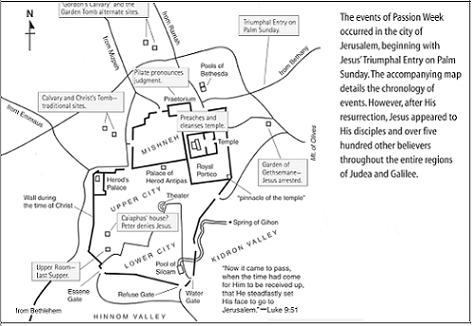
The MacArthur Study Bible, by John MacArthur (Nashville: Word Publishing, 1997) 1443. © 1993 by Thomas Nelson, Inc.
26:59 the council. See note on John 3:1. The great Sanhedrin was the supreme court of Israel, consisting of seventy-one members, presided over by the high priest. They met daily in the temple to hold court, except on the Sabbath and other holy days. Technically, they did not have the power to administer capital punishment (John 18:31), but in the case of Stephen, for example, this lack did not deter his stoning (cf. Acts 6:12–14; 7:58–60). Roman governors, evidently, sometimes ignored such incidents as a matter of political expediency. In Jesus’ case, the men who are trying Him are the same ones who have conspired against Him (cf. John 11:47–50).
26:60 they found none. Even though many people were willing to perjure themselves, the Sanhedrin could not find a charge that had enough credibility to indict Jesus. Evidently, the “false witnesses” could not agree among themselves.
26:61 destroy the temple of God. See John 2:19–21. The witness distorts Jesus’ meaning. Mark 14:58 gives a fuller account of their testimony.
26:63 under oath. See note on 5:34. Caiaphas was trying to break Jesus’ silence (v. 62). The oath was supposed to make Him legally obligated to reply. Jesus’ answer (v. 64) implies acceptance of the oath.
26:64 The imagery is taken from Psalm 110:1 and Daniel 7:13.
26:65 the high priest tore his clothes. Normally, this act expresses deep grief (2 Kin. 19:1; Job 1:20; Jer. 36:24). The high priest was forbidden to tear his clothes (Lev. 10:6; 21:10), but the Talmud made an exception for high priests who witnessed a blasphemy. But Caiaphas’s supposed grief is as phony as the charge of blasphemy against Jesus; he is gloating over having found something on which to base his charges (v. 67).
26:74 he began to curse and swear. I.e., calling on God as his witness, he declares, “I do not know the Man!” and pronounces a curse of death on himself at God’s hand if his words are untrue. All four Gospels record Peter’s betrayal. Cf. verses 31–35.
26:75 And Peter remembered. Luke 22:61 records that Jesus made eye contact with Peter at this very moment, which must have magnified Peter’s already unbearable sense of shame. “He went out”—evidently departing from Caiaphas’ house—“and wept bitterly.” The true Peter is seen not in his denial but in his repentance. This account reminds us of our own weakness as well as the richness of divine grace (see also John 21:15–19).
27:1 When morning came. The Sanhedrin waited until daybreak to render its official verdict (cf. 26:66), possibly a token nod to the rule against criminal trials at night (see note on 26:57 ).
27:2 delivered Him . . . Pilate. Jesus had two trials, one Jewish and religious, the other Roman and secular. Rome reserved the right of execution in capital cases (see note on 26:59 ), so Jesus had to be handed over to the Roman authorities for execution. Pilate’s headquarters were in Caesarea, on the Mediterranean coast, but he was in Jerusalem for the Passover celebrations, so he oversaw the trial (see note on Mark 15:1 ). Christ was brought before Pilate (vv. 2–14), then was sent to Herod for yet another hearing (Luke 23:6–12), and then returned to Pilate for the final hearing and pronouncing of sentence (vv. 15–26).
27:3 remorseful. Judas feels the sting of his own guilt, but this feeling does not constitute genuine repentance. Godly sorrow leads to repentance, but Judas’ remorse is of a different kind, as demonstrated by his suicide (v. 5). Cf. 2 Corinthians 7:10.
27:5 hanged himself. See note on Acts 1:18.
27:9 spoken by Jeremiah. Actually, the statement paraphrases Zechariah 11:12, 13. But the Hebrew canon was divided into three sections, Law, Writings, and Prophets (cf. Luke 24:44). Jeremiah came first in the order of prophetic books, so the Prophets were sometimes collectively referred to by his name.
11. The trial before Pilate (27:11–26)
27:11 It is as you say. These words were probably spoken immediately after the dialogue reported by John 18:34–36.
27:25 His blood be on us. The Jews accept the blame for the execution of Jesus and do not hold the Romans responsible. Cf. 21:38, 39.
27:26 scourged. The whip used for scourging consisted of several strands of leather attached to a wooden handle. Each strand had a bit of metal or bone attached to the end. The victim was bound to a post by the wrists, high over his head, so that the flesh of the back would be taut. An expert at wielding the scourge could literally tear the flesh from the back, lacerating muscles, and sometimes even exposing the kidneys or other internal organs. Scourging was fatal in some cases.
Crucifixion Prophecies in the Psalms
| Prophecy | Psalm | Fulfillment |
| 1. God will forsake Christ in His moment of agony | 22:1 | Matt. 27:46; Mark 15:34 |
| 2. Christ will be scorned and ridiculed | 22:7, 8 | Matt. 27:39–43; Luke 23:35 |
| 3. Christ’s hands and feet will be pierced | 22:16 | John 20:25, 27; Acts 2:23 |
| 4. Others will gamble for Christ’s clothes | 22:18 | Matt. 27:35, 36 |
| 5. Not one of Christ’s bones will be broken | 34:20 | John 19:32, 33, 36 |
| 6. Christ will be betrayed by a friend | 41:9 | John 13:18 |
| 7. Christ will be given vinegar and gall | 69:21 | Matt. 27:34; John 19:28–30 |
12. The soldiers’ mocking (27:27–31)
27:27 Praetorium. Pilate’s residence in Jerusalem. It was probably located in the Antonia Fortress, adjacent to the northwest corner of the temple. “The soldiers of the governor” were part of a “garrison”—about six hundred soldiers—assigned to serve the governor (Pilate) during his stay in Jerusalem.
27:28 scarlet robe. Mark 15:17 and John 19:2 say “purple,” suggesting that the robe may have been something between royal purple and scarlet, the closest thing they could find to the traditional garb of royalty. The word for robe refers to a military cloak undoubtedly belonging to one of the soldiers.
27:29 a reed in His right hand. To imitate a scepter in a mocking way, the soldiers purposely chose something like a stick to put in Jesus’ hand.
27:30 they spat on Him. See Isaiah 50:6. struck Him on the head. A reed long enough to make a mock scepter would be firm enough to be extremely painful, about like a broom handle. John 19:3 says they hit him with their fists as well.
27:31 to be crucified. Crucifixion was a form of punishment that had been passed down to the Romans from the Persians, Phoenicians, and Carthaginians. Roman crucifixion was a lingering doom—by design. Roman executioners had perfected the art of slow torture while keeping the victim alive. Some victims even lingered until they were eaten alive by birds of prey or wild beasts. Most hung on the cross for days before dying of exhaustion, dehydration, traumatic fever, or—most likely—suffocation. When the legs would no longer support the weight of the body, the diaphragm was constricted in a way that made breathing impossible. That is why breaking the legs would hasten death (John 19:31–33), but this was unnecessary in Jesus’ case. The hands were usually nailed through the wrists, and the feet through the instep or the Achilles tendon (sometimes using one nail for both feet). None of these wounds would be fatal, but their pain would become unbearable as the hours dragged on. The most notable feature of crucifixion was the stigma of disgrace that was attached to it (Gal. 3:13; 5:11; Heb. 12:2). One indignity was the humiliation of carrying one’s own cross, which might weigh as much as two hundred pounds. Normally a quaternion, four soldiers, would escort the prisoner through the crowds to the place of crucifixion. A placard bearing the indictment would be hung around the person’s neck.
13. The crucifixion (27:32–56)
27:32 Cyrene. A city in north Africa. Evidently, the scourging had so weakened Jesus that He was unable to carry the cross. This is another touching picture of His humanity, beset with all human weaknesses except sin (Heb. 4:15).
27:33 Place of a Skull. Golgotha may have been a skull-shaped hill, or it may have been so named because, as a place of crucifixion, it accumulated skulls. None of the Gospels mention a hill. Luke 23:33 uses the name Calvary, from the Latin calvaria, meaning “skull.”
27:34 wine mingled with gall. Gall simply refers to something bitter. Mark 15:23 identifies it as myrrh, a narcotic. The Jews had a custom, based on Proverbs 31:6, of administering a pain-deadening medication mixed with wine to victims of crucifixion, in order to deaden the pain. Tasting what it was, Christ, though thirsty, “would not drink” lest it dull His senses before He completed His work. The lessening of physical pain would probably not have diminished the efficacy of His atoning work (see notes on 26:38, 39 ). But He needed His full mental faculties for the hours yet to come. It was necessary for Him to be awake and fully conscious, for example, to minister to the dying thief (Luke 23:43).
27:35 divided His garments. The garments of the victim were the customary spoils of the executioners. John 19:23, 24 gives a fuller account. This action was foretold in Psalm 22:18.
27:37 the accusation. For a reconciliation of the differences between the various accounts of this inscription, see note on Luke 23:38 (cf. Mark 15:26). The fact that the placard was placed “over His head” suggests that this cross was in the familiar shape with an upright protruding above the transom, and not the T-shaped cross that was also sometimes used.
27:38 robbers. This word denotes a rebel and brigand who plunders as he steals. Mere thieves were not usually crucified. These were probably cohorts of Barabbas.
27:40 destroy the temple and build it in three days. See 26:61. They had missed Jesus’ point. “He was speaking of the temple of His body” (John 2:21). He would not “come down from the cross,” but not because He was powerless to do so (John 10:18). The proof that He was the Son of God will come “in three days” (see note on 12:40 ), when He returns with “the temple” (i.e., His body) rebuilt.
27:42 we will believe Him. See notes on 12:38; 16:1.
27:45 from the sixth hour until the ninth hour. From noon until 3:00 P.M. The crucifixion began at 9:00 A.M. (see notes on Mark 15:25; Luke 23:44 ).
27:46 Eli, Eli, lama sabachthani. Eli is Hebrew; the rest Aramaic (Mark 15:34 gives the entire wail in Aramaic). This cry fulfills Psalm 22:1, one of many striking parallels between that psalm and the specific events of the Crucifixion (see notes on Ps. 22 ). Christ, at that moment, was experiencing the abandonment and despair that resulted from the outpouring of divine wrath on Him as sin-bearer (see note on 26:39 ).
27:50 yielded up His spirit. A voluntary act. See John 10:18. See note on 26:54.
27:51 the veil of the temple, i.e., the curtain that blocked the entrance to the Most Holy Place (Ex. 26:33; Heb. 9:3). The tearing of the veil signifies that the way into God’s presence is now open to all through a new and living way (Heb. 10:19–22). The fact that it tears “from top to bottom” shows that no person split the veil. God did it.
27:52 bodies of the saints . . . were raised. Matthew alone mentions this miracle. Nothing more is said about these people, which would be unlikely if they remained on earth for long. Evidently, these people were given glorified bodies; they appeared “to many” (v. 53), enough to establish the reality of the miracle; and then they no doubt ascended to glory, a kind of foretaste of 1 Thessalonians 4:16.
27:54 the centurion. See note on 8:5. those with him. These men were probably under the centurion’s charge. Mark 15:39 says the centurion was the one who uttered the words of confession, but he evidently spoke for his men as well. Their “fear” speaks of an awareness of their sin, and the word truly suggests a certainty and conviction that bespeaks genuine faith. These men represent an answer to Jesus’ prayer in Luke 23:34. Their response contrasts sharply with the mocking taunts of verses 39–44.
27:56 Mary Magdalene. She had been delivered from seven demons (Luke 8:2); the other “Mary” (“wife of Clopas,” John 19:25, a variant of Alphaeus) was the mother of the apostle known as “James the Less” (Mark 15:40; see note on 10:2 ). the mother of Zebedee’s sons. Salome (Mark 15:40), mother of James and John. From John 19:26, we learn that Mary, the mother of Jesus, was also present at the cross—possibly standing apart from these three, who were “looking on from afar” (v. 55), as if they could not bear to watch His sufferings; but neither could they bear to leave Him.
27:57 Arimathea. A town about fifteen to twenty miles northwest of Jerusalem. Joseph. Mark 15:43 and Luke 23:50, 51 identify him as a member of the Sanhedrin (see note on 26:59 ), though Luke says “he had not consented to their decision and deed” in condemning Christ. Joseph and Nicodemus (John 19:39), both being prominent Jewish leaders, bury Christ in Joseph’s own “new tomb” (v. 60), thus fulfilling exactly the prophecy of Isaiah 53:9.
27:62 the next day. The Sabbath. the Day of Preparation, i.e., Friday.
15. The resurrection (28:1–15)
28:1 as the first day of the week began to dawn. The Jewish Sabbath officially ended with sundown on Saturday. At that time, the women could purchase and prepare spices (Luke 24:1). The event described here occurs the next morning, at dawn on Sunday, the first day of the week. other Mary. The mother of James the Less (see note on 27:56 ).
28:2 a great earthquake. This earthquake is the second associated with Christ’s death (27:51). This one may have been confined to the immediate area around the grave, when “an angel” supernaturally “rolled back the stone from the door”—not to let Jesus out, for if He could rise from the dead, He would need no help escaping an earthly tomb, but to let the women and the apostles in (v. 6).
28:4 became like dead men. This suggests that they are not merely paralyzed with fear, but completely unconscious, totally traumatized by what they have seen. The word translated “shook” has the same root as the word for “earthquake” in verse 2. The sudden appearance of this angel, at the same time the women arrived, is their first clue that something extraordinary is happening.
28:6 Come, see the place where the Lord lay. See note on Luke 24:4 for the order of these events as gleaned from all four Gospels.
28:7 there you will see Him. See verses 10, 16; 26:32; John 21:1–14. This does not mean they would not see Jesus until then. He was seen by the apostles several times before they saw Him in Galilee (Luke 24:15, 34, 36; John 20:19, 26). But His supreme post-resurrection appearance is in Galilee, where “He was seen by over five hundred brethren at once” (1 Cor. 15:6). See note on verse 16.
A Brief Overview of Christ’s Ministry
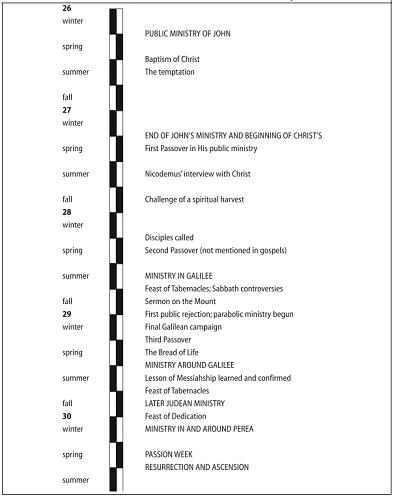
The MacArthur Study Bible, by John MacArthur (Nashville: Word Publishing, 1997) 1386. © 1993 by Thomas Nelson, Inc.
28:9 Jesus met them. For a summary of Christ’s post-resurrection appearances, see note on Luke 24:34.
28:10 My brethren, i.e., the disciples.
28:11 reported to the chief priests. The Jewish leaders’ determination to cover up what has occurred reveals the obstinacy of unbelief in the face of undeniable evidence (Luke 16:31).
28:12 a large sum of money, lit. “silver” (cf. 26:15). The bribery is necessary because the soldiers’ story, if true, could cost them their lives—since they were charged with guard duty under Pilate’s personal orders (27:65). The Jewish leaders also promise to cover for the soldiers if the false story they spread leaks back to Pilate (v. 14).
28:13 while we slept. The story is obviously bogus and not a very good cover-up. They could not possibly know what happened while they were asleep.
VII. EPILOGUE: THE KING’S ASSIGNMENT (28:16–20)
28:16 the eleven disciples does not mean that only the eleven are present. The fact that some there “doubted” (v. 17) strongly suggests that more than the eleven are present. It is likely that Christ arranges this meeting in Galilee because that is where most of His followers are. This location seems the most likely for the massive gathering of disciples Paul describes in 1 Corinthians 15:6 (see note on v. 7 ).
28:17 but some doubted. That simple phrase is one of countless testimonies to the integrity of Scripture. The transparent honesty of a statement like this shows that Matthew is not attempting to exclude or cover up facts that might lessen the perfection of such a glorious moment.
28:18 All authority. See 11:27; John 3:35. Absolute sovereign authority—lordship over all—is handed to Christ, “in heaven and on earth.” This verse is clear proof of His deity. The time of His humiliation is at an end, and God has exalted Him above all (Phil. 2:9–11).
28:19 therefore, i.e., on the basis of His authority, the disciples are sent to “make disciples of all nations.” The sweeping scope of their commission corresponds with His unlimited authority. in the name of the Father . . . Son and . . . Holy Spirit. The for-
Further Study
MacArthur, John. Matthew 1–7. Chicago: Moody, 1985.
MacArthur, John. Matthew 8–15. Chicago: Moody, 1987.
MacArthur, John. Matthew 16–23. Chicago: Moody, 1988.
MacArthur, John. Matthew 24–28. Chicago: Moody, 1989.
Morris, Leon. The Gospel According to Matthew. Grand Rapids: Eerdmans, 1992.