Amos
1. God’s War Oracles against the Nations (1:1–2:16)
B. God’s Judgment of the Foreign Nations (1:3–2:3)
C. God’s Judgment of His People (2:4–16)
2. The Reasons for God’s Judgment of Israel (3:1–6:14)
A. For Every Effect There Is a Cause (3:1–8)
B. God Will Bring Judgment on Israel (3:9–4:3)
C. Israel Did Not Return to God When They Worshiped (4:4–13)
D. Lamenting the Death of the Nation (5:1–17)
E. Don’t Be Deceived by False Hopes (5:18–27)
F. Don’t Be Deceived by Size, Affluence, or Power (6:1–14)
3. Visions and Exhortations about the End (7:1–9:15)
A. Two Visions of Destruction Bring Compassion (7:1–6)
B. Vision of Destruction of King and Temple (7:7–17)
C. Vision and Exhortation about the End (8:1–14)
D. No One Can Escape from God’s Hand (9:1–10)
E. The Hope of Final Restoration (9:11–15)
Introduction
Amos the Prophet
The first verse of the book of Amos informs the reader that this book contains the “words of Amos,” indicating that he was the one who originally spoke the prophetic oracles collected together on this scroll. Amos is never mentioned elsewhere in the Hebrew Bible, so there is very limited information about his life and ministry. Amos grew up in Judah in the small village of Tekoa, which was approximately twelve miles south of Jerusalem. Tekoa was located high in the mountains along the ridge road that went from Hebron to Jerusalem. To the west of Tekoa were rocky hills where shepherds could tend their sheep, and to the east was a rugged, dry wasteland that sloped down toward the Dead Sea. This small village had a military outpost (2 Chron. 11:5–12) that was constructed to protect Judah’s southern cities from invading armies. Since Amos lived relatively close to Jerusalem, one can assume that he periodically worshiped at the temple, heard stories about past military conflicts from soldiers at the fort in Tekoa, and was well acquainted with the sheep business.
Before Amos became a prophet, he worked as a shepherd (7:14). The unusual Hebrew word for “shepherd” in 1:1 indicates that he was a “manager of shepherds,” a middle-class position that implies Amos must have had some education and good managerial abilities. Amos also cared for a grove of sycamore fig trees (7:14), but he never provides any explanation of what he did with these figs. His rural background comes through in the imagery he uses to describe the behavior of lions (3:4) and the requirements of shepherds when a lion kills one of their sheep (3:12). He knows about traps used to catch birds (3:5), the plagues that occasionally ruin crops (4:9), the lamenting of farmers (5:16), the foolishness of running horses over rocks (6:12), the damage swarms of locusts can afflict on crops (7:1–2), and how to use a sieve to separate out good grain from the straw and chaff at harvest time (9:9).
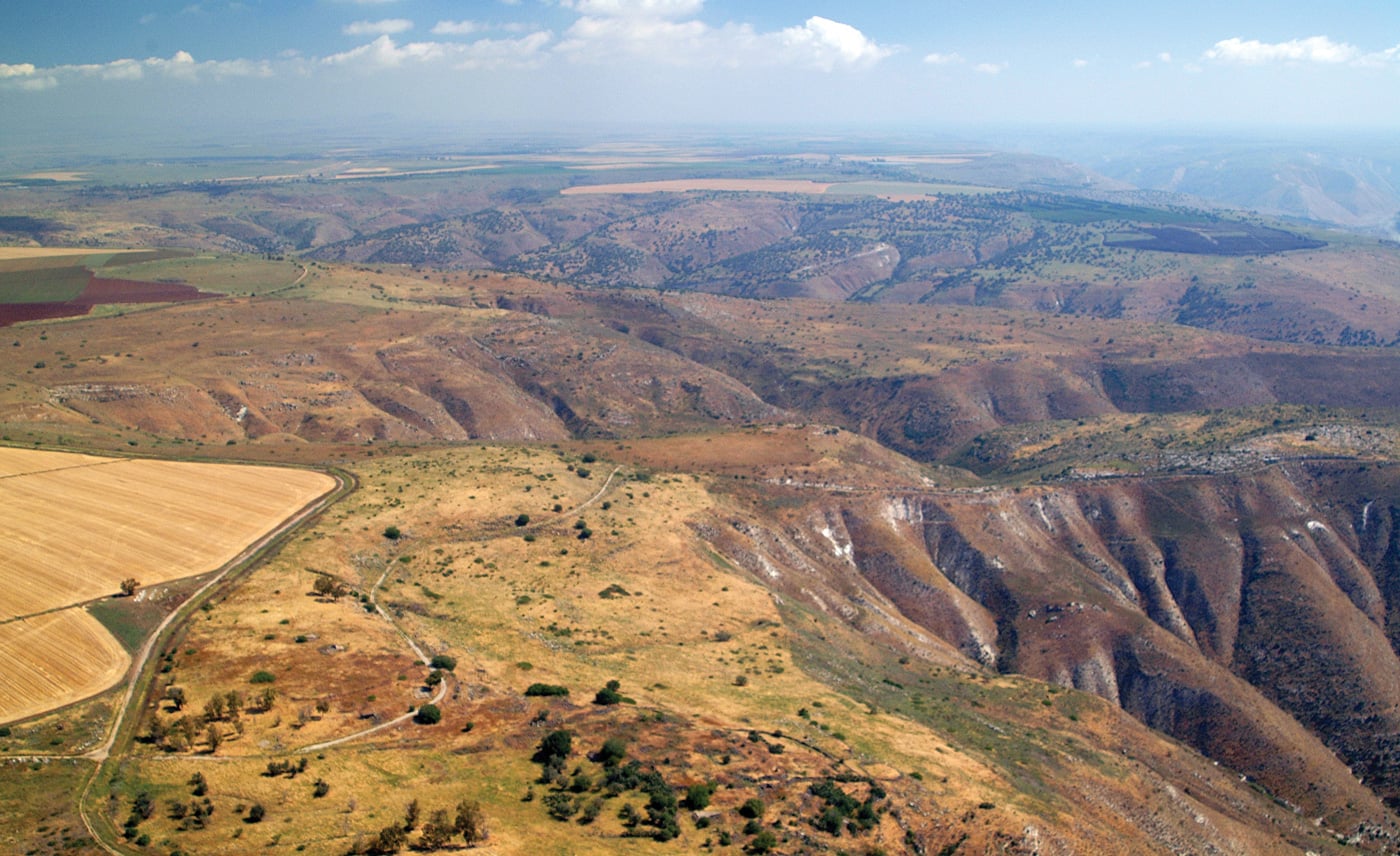
Historical Context
Amos 1:1 indicates that the prophet spoke these words during the reigns of Jeroboam II king of Israel (793–753 BC) and Uzziah king of Judah (791–740 BC). Amos lived in Judah during the long, prosperous, righteous, and strong military reign of King Uzziah (2 Chron. 26:1–5). Uzziah equipped a large elite army with the finest weapons, defeated the Philistines, and rebuilt the fortifications of Jerusalem; but later in his reign he proudly insisted on offering for himself a sacrifice in the temple, so the Lord punished him with leprosy (2 Chron. 26:6–23). Even though Amos lived in Judah, God called him to declare the word of God in the northern nation of Israel, where Jeroboam II ruled (7:15). Second Kings 14:23–26 says little about the forty-one-year reign of Jeroboam II, except that he did evil in the eyes of the Lord and that he expanded the borders of Israel just as God had promised through the prophet Jonah. When Amos prophesied his message, the powerful army of Jeroboam II had already conquered the territory from Hamath in the north to the brook of the Arabah in the south (6:14); thus Amos’s ministry should be dated in the second half of Jeroboam’s reign, possibly around 760 BC. Uzziah and Jeroboam II expanded these kingdoms to equal the size of the large kingdom ruled by David and Solomon. All this military success made it difficult for the people in Israel to believe Amos’s warnings of God’s coming judgment, for everything was going well and they had a strong army. Israel had a strong economy based on tribute from defeated nations, trade, and the agricultural produce of the land, so Amos’s talk about the defeat of the army, the destruction of cities, and exile seemed more like the ravings of a mad prophet. During Amos’s ministry in Israel he got into a controversy with Amaziah, the priest at the temple in Bethel (7:10–17). After hearing Amos’s prophecy, the priest sent king Jeroboam II a letter concerning the treasonous words of Amos (7:10), for Amos claimed that God would raise up a sword against the dynasty of Jeroboam (7:9).
Amos spends a fair bit of time talking about the deplorable social situation in Israel. Because of its strong economy, Israel had a wealthy upper class that lived like kings in large palatial homes (6:8, 11). According to Amos, some have winter homes in the Jordan Valley for the warmer climates and summer homes around Samaria in the cooler mountain elevations (3:15). These people enjoy lavish parties with the best music, wine, oils, and food (6:4–6), but they are totally unconcerned about the rampant oppression of the lower class (6:6–7). Amos condemns the wealthy people who are crushing the needy (4:1), the businessmen who are cheating the poor by using false weights (8:4–6), the landowners who charge exorbitant rents (5:11), and those who bribe judges to win court cases (5:10, 12). The wealthy drive poor people into bankruptcy or slavery, sexually mistreat servant workers, and do not return pledged garments in the evening as the law stipulates (2:6–8).
Amos does not say a whole lot about the religious situation in Israel. He indicates that God has rejected their worship and hates their music because their hearts and actions do not demonstrate a transformed life guided by justice (5:21–24). Some of these people sacrifice often in order to impress God and brag about their generosity to impress their friends (4:4–5), but God can see what is really in their hearts. Amos condemns the worship going on at the temples in Bethel (including a golden calf), at Gilgal, and at Beersheba, then challenges his audience to truly seek the Lord if they want to live (5:4–6). There was some pagan worship in Israel (5:26; 8:14), but the prophet Hosea addresses this issue in much more detail. The people do know about God’s election of Israel as his own special people (3:1–2), God’s deliverance of Israel from Egypt (2:10; 9:7), his conquest of the Amorites and giving of the land to his people in the days of Joshua (2:10), and God’s promise to save his people on the final day of the Lord (5:18–20); but these great acts of divine salvation only bring on a false impression of security instead of a deep commitment to fear God. The wealthy people enjoy God’s blessings, but they fail to love and serve God with all their heart (Deut. 10:12).
Amos was called from his secular work of managing shepherds in Tekoa to persuasively speak God’s message to the people of Israel (7:15). Before this divine call to action he was not a prophet and his father was not among the professional prophets who worked at temples for money (7:12–14; Mic. 3:5). His short ministry in Israel probably did not last even a year, but he did preach powerful messages both in the capital city of Samaria (3:9; 4:1; 6:1) and at the temple in the city of Bethel (7:1–17). Although no one organized the messages of Nathan, Gad, Elijah, and Elisha into separate books in the Hebrew Bible, the oracles of Amos were gathered together to form one of the first prophetic writings. When the earthquake hit Israel about two years after Amos preached his messages (1:1), people seemed to realize that this was a fulfillment of the earthquake prophecies in 2:13; 8:8; 9:1, 5. This may be one of the key reasons why Amos’s prophecies were widely accepted as divinely inspired and worthy of reproduction in written form.
Authorship
Some critical commentaries imagine a long writing process involving as many as four different stages of redactors or editors who gradually added verses and paragraphs to the original writings of Amos over the next three hundred years. They suggest that the superscription in 1:1; the oracles against Tyre and Edom in 1:9–12 and against Judah in 2:1–4; the hymns in 4:13; 5:8–9; and 9:5–6; and the final salvation oracle in 9:11–15 were not written by Amos. But other commentators have pointed out that most of the messages in Amos contain a similar style, common rhetorical and persuasive techniques, a balanced structure, and thematic continuity that point to the compilation of these oracles by one individual. These characteristics would probably not be present if multiple people over several generations added verses here and there to reflect the theological issues in later periods of history. It is better to view the book as a unit that portrays the conflicting tensions Amos faced in his ministry. Assigning passages to later authors robs the prophet of authentic parts of his message, denies him knowledge of so-called advanced theological themes, limits his ability to change his style of writing when introducing new genres of literature, and takes away his expression of words of comfort.
Literary Features
The style of most of Amos’s oracles is poetry, though there are a few verses of narrative (e.g., 1:1; 5:1; 7:10–17). Amos uses rhetorical questions to get his audience to think about what they believe (3:3–6; 5:18, 20, 25; 6:2, 12; 7:8; 8:2; 9:7), employs numbered phrases (“for three sins . . . even for four” in 1:3–2:6), pairs oracles against the nations (1:3–2:16), and experiences visions (7:1–8:3). Five times in 4:6–11 he repeats, “you have not returned to me,” there are five visions in 7:1–9:4, and there are five parallel conditional clauses in 9:2–4. Amos likes to prove his point by quoting his audience’s own perspective on a topic (2:12; 4:1; 5:14; 6:13; 7:10, 11, 16; 8:5–6, 14; 9:10) and by quoting authoritative Hebrew traditions to back up a point (2:9–10; 3:1; 5:6, 14; 9:7). He persuades people by quoting from hymns (4:13; 5:8–9; 9:5–6), referring to legal and cultic requirements (2:6–8; 3:12; 4:4–5; 5:21–24; 8:5–6), and using wisdom sayings (3:3–6; 6:12). By skillfully working these factors into his arguments, Amos presents a powerfully logical case that should bring to repentance those who are humble enough to listen to what God is saying.
Theological Themes
The theological message embedded in Amos’s oracles gives them authority as well as power. Foundational to everything else is Amos’s belief that Yahweh, the God of Israel, is the sovereign power that rules the world. He is the “Lord of Hosts” (3:13; NIV “Lord God Almighty”), the ruler of the armies of heaven and earth, who testifies against his people and will come and destroy the wicked (5:9). He is the creator of the world (4:13) and controller of the stars (5:8), who lives in his magnificent heavenly palace (9:6). He can touch the earth and cause it to melt or call forth fire (7:4), plagues (7:1–2), and water (5:8; 9:6) to bring destruction on the earth. He is a holy God (2:7; 4:2), who will come in great power to establish his justice on the earth. He uses armies (3:11), nature (4:6–9), and his spoken word as his instruments to accomplish his will. He offers life, hope, and the possibility of his grace to those who will seek him (5:4, 6, 14–15). But not every Hebrew person will enter into God’s blessed kingdom on the day of the Lord (5:18–20), for God will separate the righteous from the wicked (9:10) and then pour out his blessings on his faithful people as well as on the Gentiles that are called by the name of the Lord (9:12).
It is this God who speaks through Amos to reveal his will for Israel; he is the lion that roars to warn his people of grave impending danger (1:2; 3:8). God reminds them of his past grace in miraculously delivering them from the power of Egypt, his loving care while they were in the wilderness, his powerful grace that enabled them to defeat the Amorites in Canaan and take control of the land, and his grace that called some to be prophets and Nazirites (2:9–11; 3:1). He has chosen Israel out of all the families of the earth to be his people (3:2), but his grace does not give his people an absolute guarantee of divine blessings. Their election carries with it a great responsibility to love the Lord with all their hearts and to follow the stipulations of their covenant relationship. If they fail to walk in God’s ways as defined in the covenant (2:6–8), if they do not stop acting unjustly toward others (8:4–6), and if they continue in their pride (6:8), God will punish them for their iniquities (3:2).
Commentary
1. God’s War Oracles against the Nations (1:1–2:16)
A. The superscription (1:1–2). This book begins like most other prophetic books: by identifying the author of these words (Amos), his secular employment (a manager of shepherds), his location (Tekoa), his audience (the northern tribes in Israel), and his time (during the reign of Uzziah and Jeroboam II), probably around 765–760 BC. The words that he spoke he “saw” (NIV) or “envisioned” (NASB), a term that points to the prophet perceiving them through the medium of divine revelation.
Verse 2 introduces God’s roaring voice as the source of the prophet’s message. God speaks words of warning from his temple in Jerusalem; his voice is like that of a roaring lion that screams out as he leaps to capture his prey (cf. Amos 3:7–8). As a consequence of God’s ferocious action, the land where the shepherds pasture their flocks will mourn, and even the fertile, green Mount Carmel will dry up. The drying up of these two symbols of fertility confirms that Amos’s message is actually God’s roar and summarizes what God is now doing (he is on the attack). These early warnings of worse times to come should have motivated the prophet’s audience to listen to what Amos was saying.
B. God’s judgment of the foreign nations (1:3–2:3). Although other prophets have oracles against other nations (Isaiah 13–23; Jeremiah 46–51; Ezekiel 25–32), the oracles by Amos are much shorter, structured with identical phrases, put in pairs, and serving as parts of a larger “war oracle.” Before Israelite troops went to war, the commander would seek God’s approval (1 Sam. 23:2, 4) by asking a prophet or priest to pray for divine guidance. Once God answered the prophet, he would pronounce a war oracle that usually explained how God would defeat their enemies and save his people. Since the Israelites in Samaria were involved in many wars during this period, Amos used the war oracle to get the people’s attention, to gain their approval of him as a true prophet, and to cause them to realize exactly what God was planning to do in the near future.
First, Amos gives an oracle about the defeat of Syria and its capital city of Damascus (1:3–5). The prophet’s Israelite audience would quickly agree with Amos that Syria had acted in rebellion against God. They had sinned “three . . . even four” times, a rhetorical expression that indicates repeated rebellion and legitimates God’s punishment. It was just for God to bring his wrath against them, for recently they had inhumanly mistreated the Israelite people living in Gilead, the area east of the Sea of Galilee (2 Kings 13:1–7). Amos compares their immoral behavior to the harvesting of grain. Just as farmers drag heavy wooden threshing sledges with iron spikes over the grain to separate the grain from the stalk, so the Syrians brutalize the people of Gilead by running over them. Consequently, God will send the fire of war against the palaces of kings Hazael and Ben-Hadad, destroy the gates of Damascus, remove the people who live in the distant provinces of Syria, and exile the remaining people back to the place where they came from in Kir (cf. Amos 9:7).
Using nearly identical terminology, the second oracle speaks out against the Philistines (1:6–8), who have also committed many rebellious acts. God will hold them accountable and pour out his wrath on them. Amos castigates Gaza for kidnapping the entire population of some unwalled villages and then selling them to the Edomites. These innocent people have been treated like animals, denied their freedom, and sold at the slave market. Consequently, God will bring fire on the palaces of Gaza and the other Philistine fortified cities. The common people, the rulers in these cities, and the remnant that remains will perish. Certainly the Israelite audience would have applauded the words of this courageous prophet from Judah and accepted him as a true prophet.
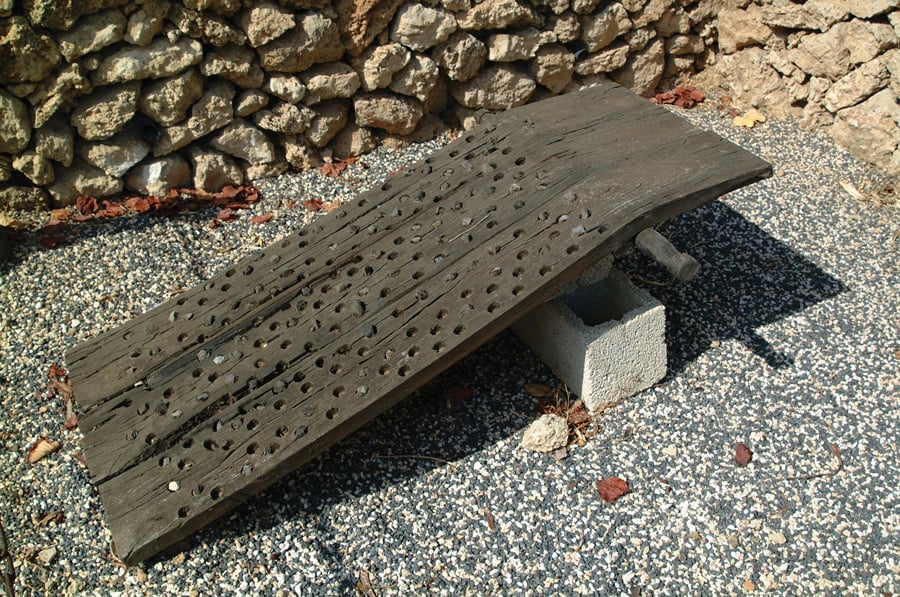
Amos compares Syria to a threshing sledge (Amos 1:3), like the one seen here.
The next two oracles, addressing God’s plans for the Phoenicians and the Edomites, use a slightly different pattern: the punishment statement is shorter, and there is no final “says the Lord.” The Phoenicians from the cities of Tyre (and probably Sidon) have sinned repeatedly, so it is proper for God to send his wrath against them (1:9–10). Their sin is similar to that of the Philistines, in that both of these nations have sold people to Edom. But selling an entire village of innocent people (possibly Israelites) is not their only fault, for the Phoenicians have kidnapped people from a country that they had a peace treaty with. Instead of respecting their treaty, the Phoenicians have betrayed this trust and broken their covenant. This may have happened because King Jehu killed the children of Ahab and Jezebel (she was a Phoenician; 2 Kings 10:1–11), although Amos never identifies this specifically. Amos’s Israelite audience would naturally despise the treasonous acts of these former allies, so they would wholeheartedly agree that God should destroy Tyre with fire and ruin the king’s palace.
Next Amos addresses the many sins of Edom (1:11–12), the descendants of Esau (Gen. 36:1). Although Jacob and Esau were blood brothers and should have had brotherly love for one another, the two nations that came from these brothers fought again and again (2 Sam. 8:11–14; 2 Kings 8:20–22; 14:7; 16:6). Amos concludes that it was just for God’s wrath to fall on Edom because the Edomites have had absolutely no mercy on the sons of Jacob, but in great anger repeatedly have allowed the fire of their hatred to drive them to kill their brothers. Consequently, the audience would agree with God’s plan to send the fires of war against the main Edomite city of Teman and destroy the palaces in Bozrah.
The last pair of oracles addresses the future of the Ammonites and Moabites, the two nations that came from Lot’s two daughters (Gen. 19:30–38). God’s word about the Ammonites (1:13–15) is that his determination will not vacillate, for he has decided to pour out his wrath on them because of their three and four acts of rebellion. Among their rebellious deeds is the specific sin of ripping open pregnant women from Gilead, a heinous atrocity in which the Ammonites killed innocent noncombatants, defenseless women and their unborn children, in a time of war (cf. 2 Kings 15:16). This heartless and senseless butchering terrorized those living in Gilead (probably Hebrews). These cold-blooded murderers did this simply to enlarge the borders of Ammon. Certainly Amos’s audience in Samaria would agree that God is just in kindling the fires of war on the capital city of Ammon (Rabbah), to destroy the palaces of the king who has ordered these atrocities, and to exile their rulers and princes to another land.
The sixth war oracle identifies Moab (2:1–3) as a very rebellious nation that God is determined to punish because the Moabites desecrated the body of the dead king of Edom, an act of vindictiveness and total disrespect for an enemy. All people in all cultures honor their dead and would view the desecration of a dead body as a morbid and perverted act. Especially heinous in this case is the burning of the corpse, thus depriving the king of a culturally appropriate burial. So God will send the fire of war on the chief cities of Moab, and many people will die, specifically those in power. (“Judge” [NASB; NIV: “ruler”] is another title for the king.)
C. God’s judgment of his people (2:4–16). The final pair of oracles describes what God will do to Israel and Judah (2:4–6). The Israelites who were listening to Amos were probably a little surprised to hear that a prophet from Judah would condemn his own nation, but this adds to Amos’s credibility and the persuasiveness of his message, for a true prophet must speak everything God says and not show any favoritism. Israel and Judah had lived as separate nations for about two hundred years, and the two nations fought several wars against each other (1 Kings 14:30; 15:7, 16–21; 2 Kings 14:8–14), so the Israelites in Samaria had little love for the people of Judah. Following the established pattern, Amos speaks about the many rebellious deeds of Judah and God’s determination to hold them accountable. Two of Judah’s acts of rebellion are recounted. First, they have not followed the covenant stipulations in the law of Moses. They agreed to follow God’s instructions when they committed themselves to a covenant relationship with God, so now they will be held accountable for what they agreed to. One of the ways they have failed is that they have listened to the lies and deceptive ideas of their leaders and false prophets (cf. Isa. 3:12; 28:15; Mic. 3:5). These political and religious leaders have led the people astray after other gods and did not stop them from unjust practices toward the poor. Since Judah has sinned, fire will consume the palaces of its rulers in Jerusalem. It will be treated no differently than will the other nations. Of course when the Israelites in Amos’s audience heartily agreed with God’s punishment of Judah for breaking the covenant, they were admitting that it was legitimate to judge Israel with this standard, for they also had knowledge of God’s covenant laws.
The climactic conclusion to this prophetic message is the extended oracle about Israel (2:6–16), the people Amos is talking to. Of course they are expecting this war oracle to end with the usual positive conclusion that God will save them and use Israel to defeat God’s enemies. But Amos surprises them by using the exact same terminology of judgment against Israel because Israel too has sinned many times (“three . . . even four”). Thus, Israel is no better than any of these other nations and should be evaluated on exactly the same terms. They are guilty, so God will not rescind his decision to pour out his wrath on them. Instead of listing just one sin, Amos catalogs seven ways the people of Israel have rebelled against God (2:6–8). These rebellious acts involve the mistreatment of others (just like the other nations), but the difference is that Israel shamefully mistreats her own people, not foreigners.
First, poor and innocent Israelite debtors are not assisted with charity (Deut. 15:12–18) or given additional time to repay their debt. Instead, they are heartlessly forced to give up their land to a wealthy lender or are driven into slavery. Second, this is done even to people who cannot pay off a relatively small amount of debt (the price of a pair of sandals). Third, the powerful metaphorically trample the heads of the helpless into the dust (cf. Isa. 3:15), mercilessly humiliating them and treating them as the scum of the earth. Fourth, people in the upper class manipulate the weak to their own advantage and deprive them of their normal rights as God-created human beings. Fifth, contrary to the stipulations in the law of Moses (Exod. 21:7–11; Lev. 18:8, 15; 19:20–22), a wealthy father and his son have had sexual relations with the same servant girl. God claims that all these ugly deeds “profane my holy name” (2:7); they pollute and desecrate his reputation, and they defile his moral standards. Because of these acts other people will not see God’s holiness reflected in his people. Sixth, wealthy people who have taken a garment as a pledge from a debtor are supposed to return it in the evening (Exod. 22:25–27; Deut. 24:12–13), but these heartless people refuse to return the garment so that the poor person can keep warm for the night. Instead, they take the stolen cloak to the temple with them, an act that does not please God at all. Finally, the seventh rebellious act is that judges steal the wine people have given to the state to pay a fine. These judges would take the wine with them to the temple to drink or to present as a drink offering to God. These acts demonstrate that the Israelites mistreat people just like the other nations, plus they break the laws of Moses, just like the people of Judah.
In order to emphasize the ungratefulness and perversity of the Israelites, Amos goes on to describe God’s past acts of grace on behalf of the people of Israel, who are now rebelling against him (2:9–12). Many years ago God graciously defeated their enemies while they were enslaved in Egypt and enabled Joshua and the Israelite army to defeat the many nations (including their giants) living in Canaan. He also cared for them by providing everything they needed for forty years while they wandered in the wilderness, and he sent them prophets and Nazirites to reveal his will, but they forgot about his grace and rejected his prophets. Therefore God’s judgment (Amos 1:13–16) will shake this nation and destroy its strong army. No one, no matter how strong they are, no matter how fast they can run, will be able to escape this horrible destiny. God’s judgment on Israel will be severe.
2. The Reasons for God’s Judgment of Israel (3:1–6:14)
A. For every effect there is a cause (3:1–8). Many Israelites would have questioned this word of divine judgment against them, for many thought that their election as God’s special chosen people (Deut. 7:6–7) and God’s powerful grace in delivering them from Egypt (Exodus 14–15) implied that God would never destroy them (3:1–2). Amos indicates that God makes no absolute promises to sinful people but will require much from those who have received his blessings. Therefore, God’s plan is to punish sinful Israel, if there is no repentance. Although some were no doubt astonished by the announcement, Amos emphasizes that everything that happens in this world has a cause. Lions roar for a reason, birds get caught in a trap for a reason, trumpets are blown for a reason, destruction comes to a city for a reason, and God tells a prophet to warn a nation for a reason. This should cause the Israelites to fear God’s roar and repent, for Amos is warning them of God’s plan to destroy them.
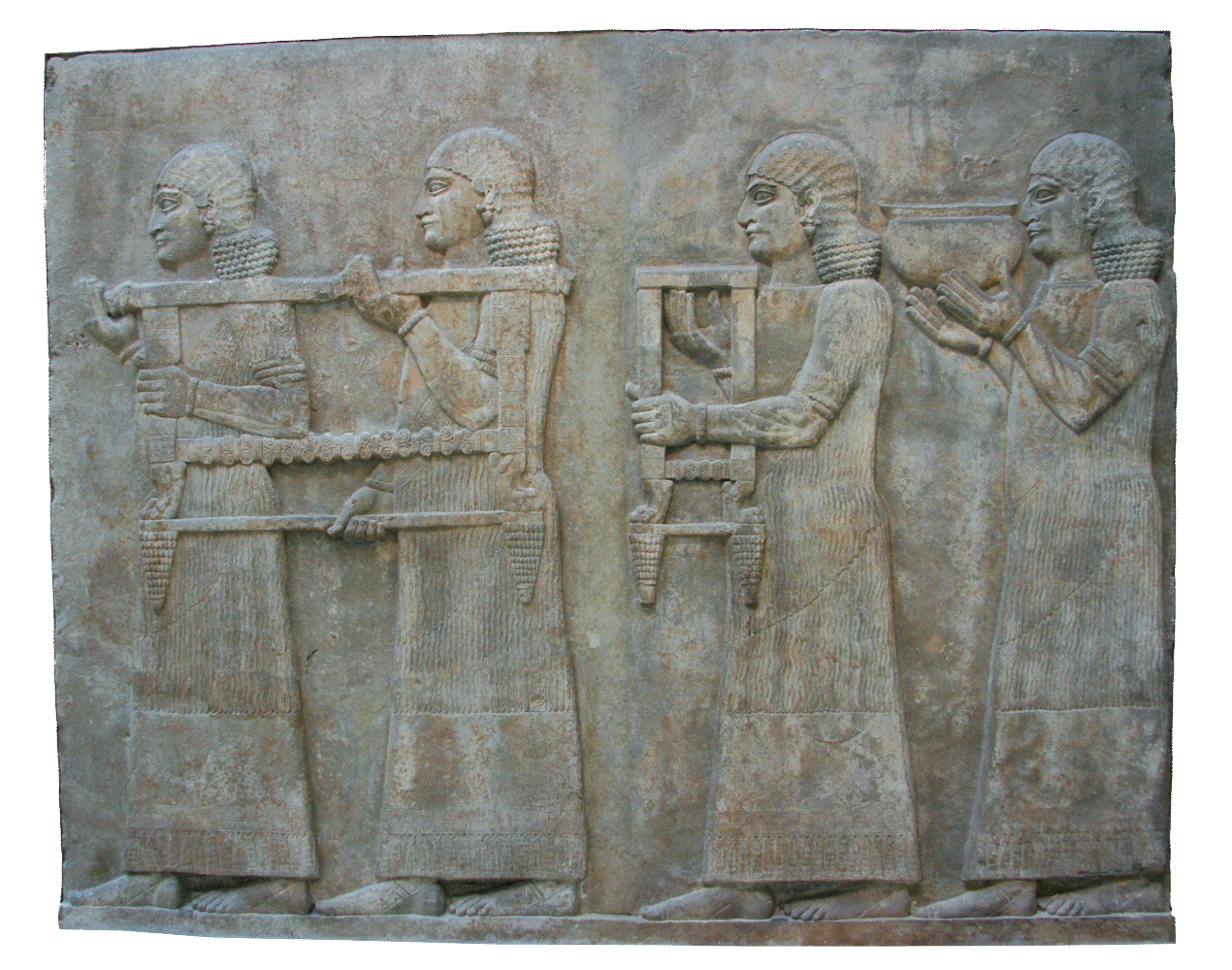
When Israel’s houses are destroyed, as Amos warns (Amos 3:15), not even their ornate furniture will be spared. Such beautiful furniture is illustrated in this Neo-Assyrian relief as it is carried by servants, possibly taken away as plunder (721–705 BC).
B. God will bring judgment on Israel (3:9–4:3). Since some Israelites doubt that God will judge them, Amos uses three judgment oracles to persuade them that this is true. First (3:9–12), God asserts that if some pagan people from the Philistine city of Ashdod and from Egypt were to watch what has been happening in the capital city of Samaria, they would testify that there is much oppression and violence, and that many people are acting like they do not know the difference between right from wrong. Because of this, God will have a foreign nation surround Israel, destroy its fortresses, and loot the large homes of the wealthy oppressors. As a lion devours everything but a few useless scraps and bones of the animal it is eating, so this enemy will devour everything from the homes of the upper class except a few worthless scraps of wood and a small piece of cloth (3:12). Second (3:13–15), Amos warns his audience that God will remove every security the people have, both objects of religious security, like the altar at the temple at Bethel, and objects of material security, like their wonderful winter and summer homes. Even their furniture with inlaid ivory decorations will be destroyed. Third (4:1–3), God swears an irreversible oath against the wealthy and powerful women of Samaria (“the cows of Bashan”) who crush the poor and live for pleasure. These people will be forcibly led through the breaches in the walls of Samaria with meat hooks (being treated like cows) and will be sent far away. These three judgment speeches indicate that there is no question about God’s plans, and his oath makes these plans absolutely sure.
C. Israel did not return to God when they worshiped (4:4–13). Some Israelites may think they are safe from any judgment because they regularly go to the temple to worship God. To counter this false conclusion, Amos imitates a priest calling the people of Israel to come to the temple (cf. Ps. 100:4; Joel 1:13–14). He sarcastically invites them to sin (4:4–5), because that is what they do when they go to their temples for worship. Instead of encouraging them to come once a year to sacrifice, which was the normal practice (cf. 1 Sam. 1:3), Amos sarcastically invites them to prove how superspiritual they are by coming every day. Does God want people to tithe every three days instead of every three years (Deut. 14:22, 28), or is he looking for righteous people with a pure heart? Is God glorified when people give large thank and freewill offerings and then brag about them? Are they actually glorifying God or themselves? To further his persuasive point that these people do not truly worship God, Amos reminds them of five trials God sent to cause them to turn to him (4:6–13): (1) God sent a famine and a lack of food, but they did not return to him. (2) God withheld the rain, and they still did not turn to him. Then God (3) ruined the crops in their gardens and vineyard, (4) sent plagues and caused men to die in battle, and (5) overthrew some of them just like he overthrew Sodom and Gomorrah, but still they did not return to God with all their hearts. Since the Israelites will not come to God and get right with him, God is coming to them, so they need to prepare to meet God (4:12). The Creator of the heavens and the earth, the one who knows everything and has the power to do anything, will meet them and hold each one of them accountable.
D. Lamenting the death of the nation (5:1–17). Having made very limited progress in persuading the Israelites to transform their lives, Amos begins to wail as he laments the death of the nation. Although it seems to most Israelites that Israel has a strong army and economy, God realizes that the nation is as good as dead because he knows what the future holds. Amos laments that the virgin Israel, a young nation in the prime of her life, is soon to be a fallen, deserted virgin that no one will help. He laments that her armies will go out strong but come back decimated, with few survivors (5:3). Her only hope is to seek God truly if she wants to live (5:4). It is useless to worship at Bethel or other sacred temples in the nation because all of those temples will be destroyed with a fire that cannot be put out. God will bring destruction, because in Israel, violence is ruling over justice (5:7). The plain truth is that righteousness is dead and buried. In hymnic style (5:8–9) Amos reminds his audience that their only hope is in the true God, who put the stars in their constellations. This God can also bring great darkness over the earth, just like he did in the time of Noah (Genesis 7–8) or when he flashes his destructive power and destroys a strong, fortified city. Why would God do such a thing? As long as the upper class continues to manipulate decisions in court and deprive the weak of justice (5:10–11), God will do everything he can to prevent the rich from receiving the rewards of their injustice. They will not enjoy their homes built through oppression and injustice (5:12); instead, a dark day of calamity is coming when the prosperous will be forever silent, having received their just reward (5:13). Their only hope is to reject evil behavior and love justice; maybe God will be merciful (5:15). If they do not do this, the whole nation will experience a day of wailing and mourning like they have never known before. God’s powerful presence will pass through the midst of Israel, just like he passed through the midst of Egypt at the time of the Passover, when he killed the firstborn children (Exod. 11:4–6).
E. Don’t be deceived by false hopes (5:18–27). Lest anyone think that somehow the nation of Israel will escape God’s wrath and not suffer judgment, Amos addresses three issues that might be false sources of hope for the people in Israel. First, the prophet questions the audience about their beliefs about the day of the Lord (5:18–20). Some Israelites doubt his prediction of doom; they think that on the day of the Lord, God will miraculously intervene in history, defeat his enemies, and invite his Hebrew people to enjoy his eternal kingdom, where the Messiah will reign as king forever. Amos announces that this is a deceptive hope, for that day will actually be a day of darkness for Israel. On that day the Israelites will be lumped together with God’s enemies. Disaster after disaster will happen to them; it will be impossible to flee from God’s judgment.
Second, Amos reminds his audience it would be deceptive to think that their worship will win them favor with God, for God hates their worship (5:21–24). He does not accept any of their sacrifices or any of their worship songs because righteous behavior does not rule their lives. If a person lives sinfully all week, God will see that and will not accept the ritualistic worship of such a person on the Sabbath. What they need to do is to let justice flow out of their lives like a river. This means that God wants to see the results of repentance in the way people live: the rich dealing honestly with the poor, justice in the courts, and no one selling people into slavery.
The third issue Amos addresses is the deceptive pagan worship that some people have followed (5:25–27). The question in 5:25 seems to ask if the people only brought sacrifices to God during their wilderness journey. The implied answer is no. Their covenant relationship with God is based on worshiping God with all their heart and soul (Deut. 6:5), not just on the external act of sacrificing to God. So the people should not be deceived and think that God will be pleased with those who are worshiping the Assyrian star god, called Sikkuth or Kiyyun. One cannot bow down to other gods and still claim to be honoring the one true God. Because they have done these things, Amos warns his audience that God Almighty will send Israel into exile far beyond Damascus, into the land of Assyria (5:27).
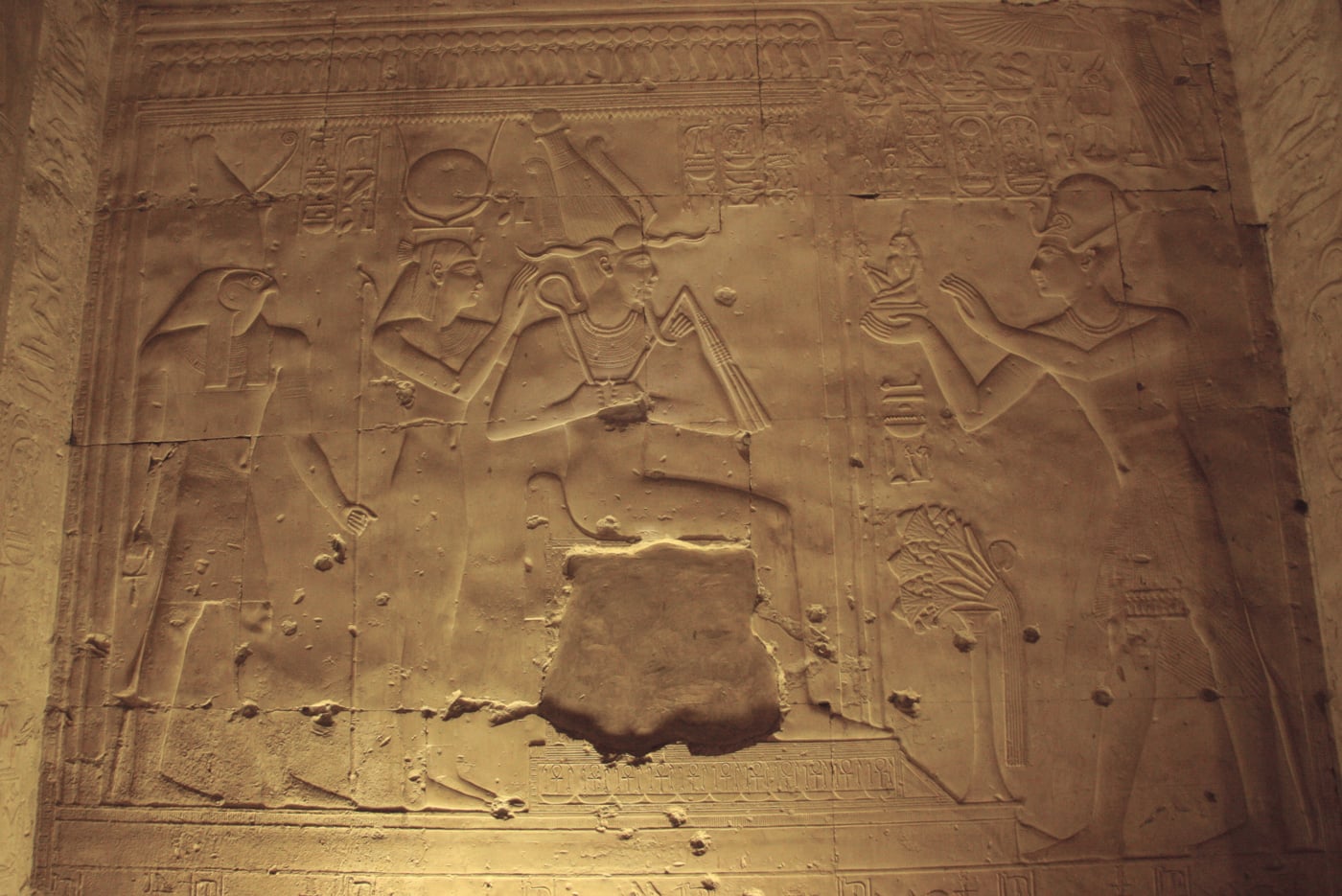
Amos urges Israel to “maintain justice in the courts” (Amos 5:15). Justice was important throughout the ancient world, as this relief from Abydos illustrates. Pharaoh stands before the gods offering up Maat, the goddess of order and justice, to indicate that he upholds justice.
F. Don’t be deceived by size, affluence, or power (6:1–14). In another woe oracle Amos laments at an Israelite funeral banquet (cf. Jer. 16:5–9) because the foremost people of the capital city of Samaria feel so secure and carefree in their present situation. He challenges them to go visit the cities of Kalneh, Gath, and Hamath to see if those kingdoms are bigger than Israel. Are they living with a false sense of security like the people in Samaria? Since these cities are smaller, they have no false sense of security; they are vigilant and try to put off the day of their calamity, but the Israelites’ smug attitude of indestructibility actually brings their end nearer. Next Amos describes the affluence displayed at this funeral banquet (6:4–6). Those attending sprawl out on the finest furniture, eat the best beef, enjoy great music, drink large amounts of wine, and have the finest lotions; but they ignore and do not grieve over the deterioration of the nation. God announces that the feasting days will soon be over, and these first-class citizens will go into exile first (6:7).
The Lord loathes the pride and arrogance of the wealthy who live securely in their large palaces (6:8), so God has determined to destroy the nation’s fortified cities, to destroy the population through war so much that those who come to bury the dead will find no one alive in any of these houses (6:10). Then he will smash all the large and small houses to bits. Finally, the prophet asks a series of absurd questions like: “Do people run horses on rocks?” (6:12, author’s translation). Obviously, only a crazy person would be dumb enough to try this, for soon the horse would fall and break a leg. So too, is it absurd that the Israelites have turned a good thing like justice into something as destructive as poison? Is it absurd for Israelites to brag about defeating the city of Lo Debar, which means “nothing”? Only God defeats cities; people do not have the “strength” to defeat the city of “Karnaim,” which means “horns, strength” (see NIV note). In the end there is only one possible destiny for this sinful and deceived nation. God will send a powerful nation against them to defeat them, from the northern border at Hamath to the southern border by the Dead Sea.
3. Visions and Exhortations about the End (7:1–9:15)
It appears that chapters 7–9 were spoken while the prophet Amos was preaching in and around the temple at Bethel. The date is unknown, but Amaziah’s later attempt to exclude Amos from preaching in the Bethel temple (7:12) suggests these sermons were given near the end of his ministry in Israel.
A. Two visions of destruction bring compassion (7:1–6). Amos’s first vision is about a locust plague that God sends to destroy Israel’s crops (7:1–3). Since the king has already had his share of the crops, this plague will hit hard the poor farmers, who would get the second crop. Because of Amos’s love for these people, he intercedes by asking God to have compassion because these poor farmers could not survive the famine that such a severe event would bring. In response God stops the plague and provides the people with more time to repent of their sins.
In the second vision Amos sees a fire that is able to dry up the sea and destroy the farmland (7:4–6). The picture is not very clear, but this must be something like a gigantic volcanic eruption if it is able to destroy both the land and the sea. If part of the land is the farmland of Israel, one can understand why the prophet Amos would identify with the people living in that area. Although there is no evidence that the people of Israel have repented and turned to God, once again Amos briefly intercedes and asks God to stop this fire, and once again God has compassion.
B. Vision of destruction of king and temple (7:7–17). In the third vision the prophet observes God with a plumb line, standing on a wall (the exact wall is not identified) in order to determine if the wall is plumb (7:6–9). This symbolizes God’s work of examining the nation of Israel to find out if it is upright or if it is falling over and in need of destruction. Does Israel meet God’s specifications in the covenant: loving God with all their hearts? Are they holy as God is holy? Do the people live according to the instructions God has given them? It is evident that Israel is not plumb and does not meet God’s standards, for the interpretation of the vision (7:9) indicates that God plans to bring some nation against Israel in order to destroy its pagan high places, their king Jeroboam II, and their sanctuaries at Bethel and Dan, for God has determined to spare them no longer. Thus the end of the nation is near.
In a brief historical interlude Amos reports what Amaziah the priest in charge of the temple at Bethel does when he hears this prophecy about the plumb line (7:10–17). He interprets the news in this vision as political treason, so he reports Amos’s prophecy to king Jeroboam II. The text does not include any response from Jeroboam II, so no one knows if Amos actually had to leave Israel immediately. Because of this vision Amaziah confronts Amos and tells him to flee back to Judah, to leave the foreign affairs of Israel to the Israelite prophets, and to go make his money as a professional prophet in Jerusalem. Showing no fear of Amaziah, Amos denies being a professional prophet who works for money and states that he makes his living by caring for sheep. Amos explains that he is in Israel prophesying because of God’s calling, so Amaziah’s attempt to shut him up and send him out of Israel is an act that directly contradicts God’s command. In a not so subtle way Amos is boldly condemning Amaziah, undermining his authority and raising questions about the priest’s relationship with God. Amos concludes this tense confrontation by announcing that Amaziah’s family will one day be disgraced and killed, his inheritance in Israel will be lost, and Amaziah will be exiled with the rest of Israel into a pagan land.
C. Vision and exhortation about the end (8:1–14). Like the preceding section, this portion has a vision followed by a related message about God’s approaching judgment of Israel. In this vision the prophet notices a basket of ripe summer fruit, indicating that it is harvest time (8:1–3). The interpretation of the vision is that the time is ripe for God to harvest the fruit in the nation of Israel; thus its end is near. The statement “I will spare them no longer” (8:2) connects this vision with the earlier plumb line vision, which had the same warning. This evaluative statement indicates that there will be some dire consequences, because God’s assessment of this fruit is very negative. Verse 3 explains what will happen. God paints a word picture in which dead bodies are lying everywhere, even defiling the temple area, because the gods that were worshiped there will provide no protection. A few people will live, but some will be wailing for their dead family members while others will be stunned and shocked so severely that they will be dumbfounded and silent.
The rest of the chapter reflects on this terrible event in a judgment speech (8:4–14). Initially, the prophet provides an accusation (8:4–6) that gives one of the reasons why God will no longer have mercy. Earlier, in Samaria, Amos pointed to the violence and oppression of the poor (2:6–8; 3:9–10; 4:1; 5:11–13), so it is not surprising that he returns to this theme again when he preaches at a new location (the Bethel temple), where the people have not heard his earlier messages. This time he focuses on the deceptive actions of the scheming merchants as well as their attitudes about the Sabbath. Amos speaks about those who crush and trample the poor in the land of Israel. In previous oracles Amos talked about oppression by the wealthy upper class, but here it is the middle-class merchants who are abusing those who trade in the marketplace. In two different ways, they are cheating the buyers and sellers who come to trade with them. First, they take advantage of the poor by having two sets of weights for their scales: a heavy weight (1.1 shekels) for buying grain, so that the seller will have to provide more grain than is honestly required, and a light weight (0.9 shekel) for selling grain, so that they will have to part with less grain when people buy from them. Second, they use a larger bushel basket that has to be filled when the merchant is buying grain and a smaller bushel basket when the merchant is selling grain. Of course one could always add a little dust, dirt, and chaff when selling so that it does not cost so much grain to fill a bushel basket. These deceptive practices were contrary to God’s requirement (Lev. 19:35–36; Deut. 25:13–15; Prov. 11:1; 16:1). Through dishonest means like these, the merchants were able to drive the poor into bankruptcy or slavery because they could not pay their debts. God, says Amos, will act against the nation of Israel because of this kind of unrighteous activity.
Part of the tragedy of this situation is that these devious merchants can hardly wait until the Sabbath or other religious feast days are over. They are anxious to get back to the business of cheating people. The Sabbath was to be a holy day (Exod. 20:8–11), and the celebration at the New Moon feast (Lev. 23:23–25; 1 Sam. 20:5; Isa. 1:13–14) was to be a day dedicated to God, so no work was to be done. Although the nation maintains the aura of orthodoxy by not having businesses open on holy days, the merchants are more interested in making more money than in worshiping God.
Elsewhere God swears by his own holiness (4:2) or by himself (6:8), but in Amos 8:7 he swears by his name, the “Majestic/Glorious one of Jacob” (NIV “Pride of Jacob”). Since God does not change, there is no doubt about whether God’s judgment will fall on Israel. In almost hymnic fashion (8:8–9) God describes how his coming will affect their world. The earth will quake, moving up and then down like the mighty Nile River. Plates of solid rock will collide under the surface, and things on the surface will be destroyed, causing people to mourn and fear for their lives (cf. Isa. 24:1–6, 19–21). God’s judgment will turn the present optimistic songs of joy in Israel into words of mourning. The few remaining people will lament in sackcloth and ashes. The severity of their bitter agony is expressed by comparing their mourning to the wailing of a family that has lost its only son (8:10).
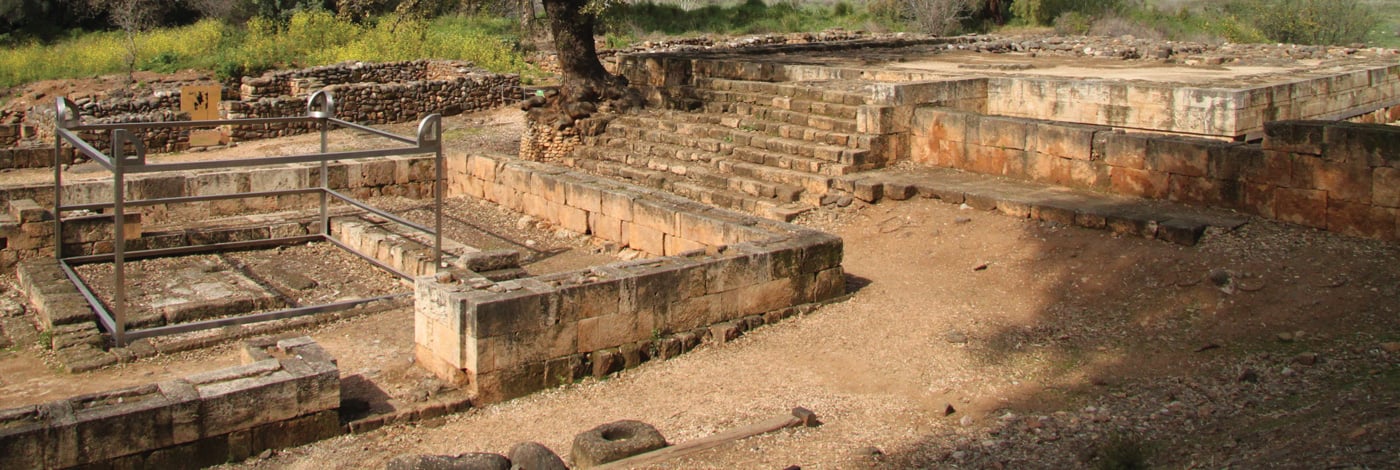
This high place at Dan (tenth century BC) functioned as a worship center. Archaeologists have uncovered incense burners, incense stands, and a horned incense altar; however, it is unclear if this is where Jeroboam I placed the golden calf, the “god” of Dan (Amos 8:14).
The final paragraph (8:11–14) indicates that during this period of divine judgment people will try to find a word of comfort from God or some direction about what they can do to survive this dark period, but none will be available. When there is a famine and there is no water or food, people go to great lengths to survive by rigorously searching from one end of the country to the other just to find something to eat. In a similar manner people will search for a prophetic message from God, but none will be found. They rejected Amos (7:10–17) and other prophets (2:11–12), so eventually God will reject them and will send no one to comfort them. Part of the reason may be implied in 8:14, for it appears that the prophet is saying that those who follow other gods will fall and never rise again. The phrase, “those who swear allegiance to the guilt of Samaria” (8:14, author’s translation), probably refers to people who swear oaths at the Baal and Asherah temple built in Samaria (1 Kings 16:32); this is their “guilt.” The reference to the god who lives at the city of Dan is to the golden calf that Jeroboam I put in a temple in Dan (1 Kings 12:29) just after the northern tribes declared their independence from Judah. The “way/custom of Beersheba” (see NASB, NRSV; the NIV has “god of Beersheba”) must also refer to the pagan religious practice at that city in the southern part of Judah. The people who worship at these syncretistic places will cease and never be seen again.
D. No one can escape from God’s hand (9:1–10). The final chapter begins with another vision, a hymn, and a final warning. The fifth vision pictures the enactment of God’s judgment on Israel by describing his destruction of Israel’s temple (probably at Bethel) and by statements that God will not allow anyone in the nation to escape his wrath (9:1–4). In this vision God is standing beside an altar at a temple, commanding that the temple and the people in it be destroyed. The earth will shake, the pillars of the temple will buckle, and the falling roof and pillars will kill all those inside. Although this vision involves only one building and a few people inside it, one should assume that similar events will happen throughout the country, for five times God indicates that no one will escape from his hand. Using exaggerated terminology, Amos states that even if people try to hide in the depths of Sheol or climb up to heaven (both are impossible), they will not escape from God’s wrath. Others may try to hide in caves at Mount Carmel or deep in the sea, but God will find them. Even the few that go into exile will not be safe from the sword, because God is determined to punish these sinners.
Having described the thoroughness and severity of God’s judgment, Amos reminds his audience of the greatness of God’s power by quoting from one of their hymns (9:5–6). God is able to bring about everything he has predicted because he is the commander in chief of the armies of heaven, the Lord of Hosts. When he touches the earth, his power has the ability to melt it, to make it move up and down (the earthquake), and to cause people to mourn. He is the glorious God who lives in the upper reaches of the heavens; he is the God who created the earth and who has already demonstrated at the time of Noah that he is able to destroy all flesh on earth with a flood. His name is Yahweh, the God of the people of Israel. This hymn confirms to Amos’s audience that God is able to carry out the judgment described in the vision in 9:1–4.
The third short paragraph in this section attempts to convince those who still question God’s intention to punish his own special and chosen people (9:7–10). Although there were still some people who thought that “disaster will not overtake or meet us” (9:10), God reveals that his judgment is coming. It appears that these people believe that God’s tremendous grace in bringing the Israelites from Egypt is a sure sign that God will never judge his people. But Amos argues that God also delivered other nations (the Philistines and Arameans) from difficult situations in other countries and brought them to new lands. Does this mean that God will never judge these nations? Obviously, no Israelite would say this. God also claims that he views the Cushites from southern Egypt as similar to Israel; thus, Israel is not the only nation God cares about. The real key to understanding God’s future action is not to view it as an extension of God’s past acts of grace. One of the main predictive factors that can indicate God’s future action is the sinfulness of each nation. He will destroy every sinful nation. Yet within these dire predictions is the brief promise that God will not totally destroy all the people from Israel. There will always be a righteous remnant left (9:8). How will God distinguish the righteous from the wicked? He will separate the righteous from the wicked just like a farmer uses a sieve to separate the good grain from dust and rocks that get mixed in with the grain on the threshing floor.
E. The hope of final restoration (9:11–15). The scroll containing Amos’s messages ends with a surprising vision of hope for the distant future. Maybe some Israelites will be reminded of what the future holds for the righteous people of God and will repent of their sins so that they will be able to enjoy this time of divine blessing. Some modern commentators doubt that Amos ever gave this message and argue that a later editor added it to Amos’s messages, because it seems so foreign to the rest of his harsh messages, and because it could have provided a false hope for some in his audience. Since most other prophets speak messages of both judgment and hope, since this positive vision applies only to the distant future, and since this hope is not applied to sinful Israel but only to those who are called by God’s name, this section should be viewed as a legitimate attempt to persuade Amos’s audience to seek God now, so that they will not miss out on God’s blessings in the future. This paragraph has two parts, one based on the introductory “in that day” phrase in 9:11, and the other based on the phrase “the days are coming” in 9:13.
God reminds the Israelites that his promises to his people have not changed; he will eventually establish his glorious kingdom (9:11–12) and restore the land and its people (9:13–15). Regarding the first promise, God’s action is dramatically recounted in four “I will” clauses (9:11). Concerning the nation that he will soon judge, he says, “I will restore” it like it was in the past. God will restore the ruptured and dilapidated kingdom that was united under David (the fallen booth) but divided into two nations (Israel and Judah) after the death of Solomon (1 Kings 12). This future restoration will involve both Hebrews (9:11) and people from foreign nations (9:12). In addition God promises that “I will repair,” “[I will] restore,” and “[I will] rebuild” the ruined cities that will suffer destruction in the near future. Later prophetic writers will expand and speak more broadly about the conditions in the New Jerusalem and this restored nation, including information about a future Davidic king (the Messiah) who will rule forever in righteousness (Isa. 9:1–7; Ezek. 37:15–28; Hos. 3:5). Verse 12 indicates that other people who are called by God’s name from Edom (a symbol of foreign nations, as in Isa. 34:1–8; 63:1–6) will be a part of this future kingdom. This verse became very important when the early Christian church was trying to decide if they should allow uncircumcised Gentiles into the church. James’s quotation of Amos 9:12 resolved the issue (Acts 15:16–17), bringing a unified acceptance of Gentiles who bear God’s name just as Amos prophesied. Although the history of Israel demonstrates great hatred between Edom and Israel (1:11–12), through the witness of the seed of Abraham, God will extend his blessings to other people (Gen. 12:1–3; Isa. 2:1–4; 19:18–25; 42:6; 66:18–21). People from every tribe, language, and nation will be part of God’s future kingdom (Dan. 7:14).
The second promise relates to the restoration of fertility to the land and the return of the people to the land of Israel (9:13–15). When God restores his kingdom, the land will produce so abundantly that those harvesting grain in the summer will not be able to finish their work before it is time to plow the fields for the next crop. The grapes will be so large and abundant that their juice will flow like a stream down the hills. Finally, the land of milk and honey will produce the kind of crops envisioned in the covenant blessings (Lev. 26:5). The land will then be like a restored Garden of Eden (Isa. 51:3; Ezek. 36:35). God will also cause some of his exiled people to return from their captivity so that they can rebuild their homes and enjoy the blessings of a fertile land. Once God plants them in his land, they will be like deep-rooted plants that cannot be uprooted. Since God has given this land to them, no other nation will ever remove them from this land. This will be that glorious time when God will fulfill many of his eschatological promises to his people.
Select Bibliography
Hubbard, David Allan. Joel and Amos. Tyndale Old Testament Commentaries. Downers Grove, IL: InterVarsity, 1989.
McComiskey, Thomas Edward. “Amos.” In The Minor Prophets: An Exegetical and Expository Commentary. Edited by Thomas Edward McComiskey. Grand Rapids: Baker Academic, 1992.
Motyer, J. Alec. The Day of the Lion: The Message of Amos. Downers Grove, IL: InterVarsity, 1974.
Paul, Shalom. A Commentary on the Book of Amos. Hermeneia. Philadelphia: Fortress, 1991.
Smith, Gary V. Hosea, Amos, Micah. NIV Application Commentary. Grand Rapids: Zondervan, 2001.
Stuart, Douglas. Hosea–Jonah. Word Biblical Commentary. Waco: Word, 1987.