Obadiah
2. Yahweh’s Message against Edom (1b–14)
A. Edom’s Judgment Pronounced and Reaffirmed (1b–9)
3. The Day of the Lord (15–21)
C. Yahweh’s Kingdom Established (19–21)
Introduction
Obadiah the Prophet
This shortest book of the Old Testament is ascribed to Obadiah the prophet (v. 1). His name means “servant (or worshiper) of Yahweh,” and is one of the more common biblical names (cf. 1 Kings 18:3–16; 1 Chron. 3:21; 7:3; 8:38; 9:44; 12:9; 27:19; 2 Chron. 17:7; 34:12; Ezra 8:9; Neh. 10:5; 12:25). Aside from an unfounded tradition of the Babylonian Talmud (Sanhedrin 39b) that identifies Obadiah with Ahab’s steward, a devout believer in the Lord (1 Kings 18:3–16), personal information about Obadiah is completely wanting.
Date
Obadiah’s oracle has been dated variously to time periods ranging from 850 to 400 BC. The date of the prophecy can be ascertained only by assuming that verses 11–14 refer to a specific episode in the history of Israel. The two most likely referents are the attack of Jerusalem by the Philistines and Arabs (ca. 844 BC; cf. 2 Kings 8:20; 2 Chron. 21:16–17) during the reign of Jehoram (853–841 BC), or the destruction of Jerusalem by the Babylonians in 587 BC (2 Kings 25:1–12; cf. Ps. 137:7–9; Ezek. 25:1–3, 12–14). Dating Obadiah shortly after the fall of Jerusalem seems to be the more likely option, since the total conquest of the city described in verse 11 is best accounted for by Nebuchadnezzar’s invasion, siege, and sack of the Judean capital.

Literary Features
The book of Obadiah is one of several oracles against Edom (Isa. 21:11–12; 34:5–17; Jer. 49:7–22; Ezek. 25:12–14; 35:1–15; Amos 1:11–12), and its literary form is generally identified as a national oracle, much like Nahum’s prophecy against Assyria (cf. also the national oracles in Isa. 13:1–23:18; Jer. 46:1–51:64; Ezek. 25:1–32:32; Amos 1:3–2:16; Zeph. 2:4–15). This anti-Edomite polemic can be traced through the Old Testament, from the mixed blessing Isaac pronounces on Esau (Gen. 27:39–40) to the exilic imprecation of Edom for its part in the overthrow of Jerusalem (Ps. 137:7) right through Malachi’s affirmation of Edom’s obliteration (1:2–4).
Obadiah’s oracle, like those of Isaiah (1:1), Daniel (8:1), and Nahum (1:1), is a “vision” or revelation. In its broader sense the word signifies a divine communication to God’s prophet or spokesman, and it connotes the authority and authenticity of the prophetic message. More specifically, the word is a technical term associated with the seeing of a vision. Its use in the Old Testament is restricted almost exclusively to the preexilic prophets and often occurs in the context of impending judgment. That Obadiah’s oracle is a “vision” helps account for the terseness of language, the vivid imagery, and the certain realization of the event seen in advance as the prophet makes known Yahweh’s word.
Obadiah 1b–6 repeats practically verbatim the words of Jeremiah 49:14–16 and 49:9–10. Naturally this raises the question of priority. Three views have emerged in the scholarly literature, one defending Obadiah’s priority, one positing Jeremiah as the original source with Obadiah drawing from it, and one arguing for a no-longer-extant source common to both prophets. A common anti-Edomite source is the most likely explanation for the similarities between the two prophecies, with Jeremiah drawing more loosely from it and Obadiah adhering more carefully to the received tradition.
Although the literary unity of Obadiah has been challenged by critical biblical scholars, there is a basic strophic pattern in the prophecy evidencing an overarching design. The repetition of “Yahweh” at the beginning and end of verses 1–4 and 15–21 marks out clear literary units. The formulas “declares the Lord” (vv. 4, 8) and “the Lord has spoken” (v. 18) are additional indicators of a deliberate structure.
The classic four-point outline, standard in Hebrew prophetic literature (i.e., charges against specific sins, pronouncement of divine judgment, call to repentance, promises of restoration to the remnant) is evident in Obadiah, minus the call to repentance (characteristic of the anti-Edomite oracles). This basic theology is underscored by the recurrent themes of the day of the Lord, Esau/Edom, Edom’s sin in relation to Judah, and the eventual reversal of the divinely appointed roles for each.

The mountainous terrain of the land of Edom, which figures prominently in the book of Obadiah’s imagery
Theological Themes
Obadiah, as Yahweh’s envoy, proclaims a tripartite message to the nations. First, he condemns the pride and cruelty of the Edomites in their mistreatment of Judah during the sack of Jerusalem. This gross misconduct will not go unpunished, and Edom’s doom is certain (vv. 2–9).
Second, the prophet addresses the remnant of Israel, assuring them of the ultimate triumph of Yahweh and righteousness over the wickedness of all the nations in the day of the Lord (vv. 15–16). That day brings the promise of deliverance and restoration for the people of God, a theme common to the prophets.
Finally, implicit throughout this brief prophecy is Yahweh’s dominion over the nations. He is “the Sovereign Lord” (v. 1) who logs the iniquities of the peoples (vv. 10–14), administers divine justice (vv. 4, 8, 15), and controls the destinies of the nations.
Obadiah’s oracle of divine retribution against Edom for assisting in and gloating over Judah’s day of misfortune clearly teaches God’s sovereignty over the nations of the earth and his justice in punishing the guilty. It also serves as a warning to the nations that they too are in jeopardy of having their deeds returned on them as the day of God’s wrath approaches (vv. 15–16).
More important for Israel, this prophetic statement of God’s activity in history was designed to call to mind his covenant love for his people, thus bringing a word of encouragement for the present and a promise of hope for the future (cf. Ps. 111:2–9; Lam. 3:21–28).
Commentary
Unlike other prophetic books, Obadiah’s oracle contains no information about the time or place of its origin, nor does it include any autobiographical data about the prophet. The brevity of the superscription matches the brevity of the book, perhaps to focus attention on the message rather than on the prophet himself.
The word used to describe Obadiah’s prophecy (“vision”) is a technical term having to do with receiving a revelatory word from God. More than mere human sight, this visionary experience is the result of divine inspiration and implies that the prophet actually saw and heard the communication from Yahweh. This gives him the insight and perception necessary to understand the unveiling of future events. The same expression occurs in Isaiah 1:1 and Nahum 1:1, and the ecstatic visionary experience the word connotes may help account for the graphic imagery and explicit detail of the language found in these prophecies.
2. Yahweh’s Message against Edom (1b–14)
A. Edom’s judgment pronounced and reaffirmed (1b–9). Edom (also called Hor, Seir, and Esau) and Israel were kin according to the ancestral traditions recorded in the Old Testament. The eponymous patriarchs of Edom and Israel were Esau and Jacob respectively, both sons of Isaac (Gen. 25:19–34; 27:1–28:9; 32:1–33:20). The country of Edom was located in the highlands and sandstone cliffs on the southeastern edge of the Dead Sea, from the Brook Zered in the north to the Gulf of Aqaba in the south. A strong tribal organization existed in Edom from patriarchal times (Gen. 36:1–30), and the Edomites had a form of monarchy before the Israelites (Gen. 36:31–43). Edom was well established as a nation by the time of Israel’s exodus from Egypt, as they denied Israel passage to the east and threatened them with a show of force (Num. 20:14–21; 21:4). Edom and Israel coexisted peacefully until the reign of Saul (1 Sam. 14:47); David defeated the Edomites at the Valley of Salt (2 Sam. 8:13–14). Judah controlled Edom as a satellite state until the time of Jehoram, when the Edomites successfully revolted and reestablished autonomous rule (2 Kings 8:20–22; cf. 1 Kings 11:14–25; 22:47). Later victories by the Judean kings Amaziah (2 Kings 14:7) and Uzziah (2 Kings 14:22) were localized and temporary at best.
As early as 597 BC, the Babylonians wrested control of the Negev from Judah (cf. 2 Kings 24:8–17), and the Edomites moved into the area to fill the vacuum. In 587 BC Edom not only assisted Babylon in the sack of Jerusalem but also occupied Judean villages, and continued to live in them well into the Persian period (cf. 1 Esdras 4:50). The exact date of Edom’s collapse remains imprecise, and the circumstances are uncertain. By the time of Malachi’s oracle (ca. 460 BC) the Edomite kingdom was in ruins (1:2–4). Edom apparently remained largely independent until a coalition of Arab tribes overpowered and displaced the Edomites sometime during the fifth century BC. By 312 BC inscriptional evidence indicates the Nabateans had overrun the region of Edom, making Petra their capital city. Remaining Edomites either moved to Idumea or were absorbed by the Nabatean Arabs.
Obadiah’s first pronouncement begins and ends with the Yahweh word formula characteristic of Hebrew prophetic speech, marking verses 1b–4 as a distinct utterance. The use of the formula at once identifies the source and authority of the prophetic word (cf. Amos 3:8; Mic. 3:8), as well as the covenantal context of the message. (This divine name was revealed to Israel as part of the postexodus covenant experience constituting them as the people of God; Exod. 6:2–7; 19:1–24:18) The title “Lord Yahweh” underscores God’s rule over heaven, earth, and human history and is best translated “Sovereign Lord” (NIV). Fittingly, even as Judah was decimated and made a byword among the nations (Ps. 44:13–14; Lam. 2:15–16), Edom too will be reduced (i.e., “cut down to size”), made desolate, and despised by her neighbors (v. 2). The self-deception induced by a sense of false security in the inaccessible heights of the surrounding terrain ironically will only compound the abasement Edom will experience once judgment comes. Like Assyria, who said, “I am the one! And there is none besides me,” Edom too is destined for ruin and the scoffing of passersby (Zeph. 2:15). Like Babylon, Edom has not reckoned with God, and so calamity and unforeseen catastrophe will suddenly befall her (Isa. 47:8–11).

Ad-Deir (also called “The Monastery”), one of several buildings that the Nabateans carved into the rock in Petra, their capital, in the territory that once belonging to Edom
Despite the terseness of Obadiah’s language, it is rich with puns, imagery, and surprise. The wordplay in verse 3 is striking, in that the term for rocks (Hebrew sela) is akin to the name of the Edomite capital, Sela. Edom’s perceived invincibility, similar to that of the soaring eagle that nests high in the crags, takes no account of the fact that even the eagle can soar and nest only at the express command of God. Edom has miscalculated her strength, foolishly forgetting that God’s pleasure “is not in the strength of the horse, nor his delight in the legs of the warrior” (Ps. 147:10–11).
Obadiah’s second pronouncement (vv. 5–9) expands the message of judgment introduced in the previous section. The degree of Edom’s punishment is at issue in verses 5–6. Thieves steal only what they want (or can carry), and grape pickers may overlook a few grapes. However, on the day Edom is ransacked and pillaged, nothing will remain untouched by the looters. Even the most mundane of possessions will be pillaged by the ruthless invaders (cf. Jer. 49:9–10).
Interestingly, verse 6 begins with a variant form of the interrogative word that opens the book of Lamentations: “How?” The parallel to the lament over Judah is heightened by reference to the treachery of former allies (Lam. 1:2, 19). Judah had her “friends” too, but in the day of distress they were traitors and covenant breakers (Ps. 55:20; cf. Amos 1:9). Centuries before, the prophets had warned of the folly of political alliances (see Hos. 7:8–11). Those who once shared food at a common meal (i.e., those in economic or political union with Edom) will lay a snare and entrap Edom unawares. (The last phrase of verse 7 is obscure, as the variations in the English versions attest.)
It seems best to understand the reference to wisdom or knowledge as further irony. Edom is about to be deceived, in spite of all her wisdom. Pride distorts reality and blinds to the truth. This is why Edom is so easily deceived by treacherous allies. Edom’s pride (v. 3) carries the seeds of its own destruction in that God has purposed to bring low and to disgrace all who boast in conceit and insolence (Prov. 11:2; 16:16–18; Isa. 16:6; 25:11). Babylon was vaunted for her wisdom, yet it proved impotent in the face of destruction (Isa. 47:8–15). Edom’s reputation as a depot of wisdom tradition in the ancient world was also widespread (see Jer. 49:7). Yet it too will fall. Teman was an important city in Edom, and here it is used as an appellative for the whole (v. 9). Military prowess, like wisdom, will prove useless in the day of God’s wrath. Edom’s defensive strategies will be confounded and her warriors routed. With the slaughter of the Edomites the jealous Lord has taken vengeance on his foes, punished the guilty, and restored faith and hope in the remnant of Judah for the fulfillment of covenant promises.
B. Indictments (10–14). The causal use of the Hebrew preposition min in verse 10 (NASB, NIV: “because”; NEB, RSV: “for”) marks the beginning of the second stanza in this first division of Obadiah’s oracle. This section of the prophecy explains why Yahweh has decreed divine judgment against the Edomites. The list of charges (labeled “violence,” v. 10) levied against Edom is made more weighty by the fact that the wrongdoing has been perpetrated by a brother against a brother (see Gen. 25:24–34; Deut. 23:7). The charges include failure to ally with Judah in resisting a common foe (v. 11); delighting in Judah’s calamity with vindictiveness, haughtiness, gloating, and mockery (v. 12); trespassing and looting the ruins of Jerusalem (v. 13); and ambushing fugitives fleeing east from the Babylonian onslaught and returning them to the enemy.
This catalog of Edomite crimes calls to mind the lawsuit oracle or judicial speech (e.g., Hos. 4:1–3; Mic. 6:1–2). Usually this prophetic speech form has three parts: the summons, the trial (with speeches by both prosecution and defense), and the sentence. The treachery and faithlessness of Edom has been so heinous that the sentence (Edom’s humiliation and dissolution, vv. 2–10, 15) immediately follows the summons (v. 1b). The trial contains only the speech by the prosecution (i.e., the indictments), and this merely to underscore Edom’s guilt and the justice of the verdict of Edom’s death warrant.
3. The Day of the Lord (15–21)
A. Universal judgment (15–16). These verses mark the beginning of the second principal section of Obadiah’s oracle. The specific indictment of Edom now gives way to a more general statement of the universal judgment that characterizes the day of the Lord. The shift to the broader themes of judgment on the nations and the restoration of Israel lends perspective to Obadiah’s pressing concern for divine justice in view of Edom’s role in Jerusalem’s fall. It also bolsters future hope among the remnant of Jacob by validating the eschatological paradigm, often repeated by the prophets, of the final triumph of Yahweh in the world order (e.g., Isaiah 24–27; 32; Jeremiah 29–33; Ezekiel 33–34; Hosea 13–14; Amos 9).
This thematic alternation in verses 15–21 is heightened by the striking language variation in the Hebrew text, with the series of eight alephs (the first letter of the Hebrew alphabet, an unvoiced guttural sound) opening each of the lines in verses 12–14, abruptly interrupted by the fourfold repetition of the harsher palatal consonant k in verses 15–16 (in the prepositions ki, “for, because,” and kaasher, “just as”; cf. NASB, RSV). The emphatic position of the causal preposition “for/because” sets the tone for this segment of the prophet’s message and further explains the relationship between the pointed denunciation of Edom and the more indefinite pronouncement of God’s wrath against the nations.
The notion that crime punishes itself (“your deeds will return upon your own head,” v. 15), or the principle of retribution, is well founded in biblical teaching. The legislation of the Torah is rooted in the concept of lex talionis, or “an eye for an eye” (Exod. 21:24–25; Lev. 24:20; Deut. 19:21), meaning punishment will be exacted in a fashion commensurate with the crime. Israel’s wisdom tradition echoes this belief (Prov. 26:27; cf. Ps. 7:15–16); and even Paul acknowledges that people reap what they sow (Gal. 6:7–8). Judah witnessed the surety of this truth when God used Assyria to punish Samaria, crushed the Assyrian Empire by the hand of Nebuchadnezzar, and tragically, used this same Babylonian king to destroy Judah because of her guilt (Jer. 25:8–14). Obadiah calls the remnant of Judah to observe the final destiny of the wicked and to rest in Yahweh as their portion and strength (Ps. 73:17–19, 23–28).
“You drank on my holy hill” (v. 16) is a cryptic expression for the cup of wrath God pours down the gullets of the nations as he defends his people Israel (Isa. 51:17–23; cf. Zech. 12:2). Ironically, the cup of wrath once tasted by Samaria is now passed on to Judah (Ezek. 23:31–34); finally, it will be drunk by the nations (v. 16). Like the staggering drunkard falling unconscious to the ground in his own vomit, the nations will drink themselves into oblivion with the wine of God’s anger (Jer. 25:27, 32–33). Edom’s offense is all the more abominable because it participated in the destruction and desecration of Jerusalem, the city that bears God’s name.
B. Zion delivered (17–18). The adversative conjunction “but” introducing these lines of the oracle alerts the reader to the upcoming comparison, as the prophet contrasts the judgment and destruction pending for Edom (vv. 1b–14) with the future blessing and restoration of Israel (vv. 17–21). “Mount Zion” is a common reference in the Prophets and the Psalms to Jerusalem, the city of David (2 Sam. 5:7; 1 Kings 8:1). That Mount Zion will be “holy” (v. 17) is an indication of the extent of Jacob’s salvation and restoration and the fullness of renewed relationship with Yahweh.
The use of the word pair “Jacob/Joseph” heightens the foil between Jacob and Esau, and may be more than a poetic echo, as the use of “Joseph” elsewhere in the Old Testament suggests the larger collection of Israelite tribes (Ps. 77:15; Zech. 10:6; cf. Ezek. 37:16–19). The holiness characteristic of the restored remnant in Zion transforms Israel into an instrument of Yahweh’s judgment, confirming Ezekiel’s word about God’s vengeance on Edom (Ezek. 25:14). The consuming fire of God’s wrath that devoured the “stubble of wickedness” during the exodus (Exod. 15:7) and toppled the haughty Assyrians (Isa. 10:12–19; 29:5–6) is now unleashed against the Edomites. Unlike Israel, where the Lord preserved a remnant from Mount Zion, not one survivor will escape from the mountain of Esau (vv. 9, 19). The juxtaposition of Jacob and Esau (v. 18) recalls the ancient narrative of fraternal rivalry and the prophecy Rebekah received concerning “two nations” in her womb (Gen. 25:21–27). It also lends perspective to the later declaration of Malachi, “Yet I have loved Jacob, but Esau I have hated” (Mal. 1:2–3). The concluding phrase “the Lord has spoken” serves as a sort of colophon, solemnizing the prophecy regarding the day of the Lord and emphasizing the certainty and finality of Esau’s judgment.
C. Yahweh’s kingdom established (19–21). Characteristic of prophetic literature, Obadiah’s oracle concludes with the promise of restoration for the remnant of Israel. The promise of people moving to claim territories formerly occupied by enemies (vv. 19–20) enlarges the thought found in verse 17. Although the translation of verse 20a is difficult (here it seems best to read “the exiles of this army [or host], the sons of Israel, will have the Canaanites’ land as far as Zarephath,” following the NJB), there can be no doubt that the people referred to in verse 19 are indeed the house of Jacob. Zarephath was a town between Tyre and Sidon on the Phoenician coast, and Sepharad has been identified with Sardis in Asia Minor or Hesperides near Benghazi in North Africa. Regions in the south (the Negev and Edom), the west (Shephelah and the coastal plain of Philistia), and the north and east (Zarephath, Samaria, and Gilead) will again be inhabited by the house of Jacob and Joseph. The prophet certainly intends to stir up memories of distant promises made to the Israelite forefathers concerning the land of Canaan as an inheritance, an everlasting possession (Gen. 17:1–8; Exod. 3:8; Josh. 1:1–9; 2 Sam. 7:10; cf. Deut. 1:6–8). The purpose of Obadiah’s appeal to history is to instill hope in the Babylonian exiles (and those who remained in Jerusalem as vassals to Nebuchadnezzar) by reinforcing their faith in Yahweh as a covenant-keeping God. By beginning and ending these verses (vv. 19–20) with the Israelite possession of the Negev, the prophet indicates that the fall of Edom should be viewed as the trigger event setting in motion the fulfillment of all God’s promises to Israel.
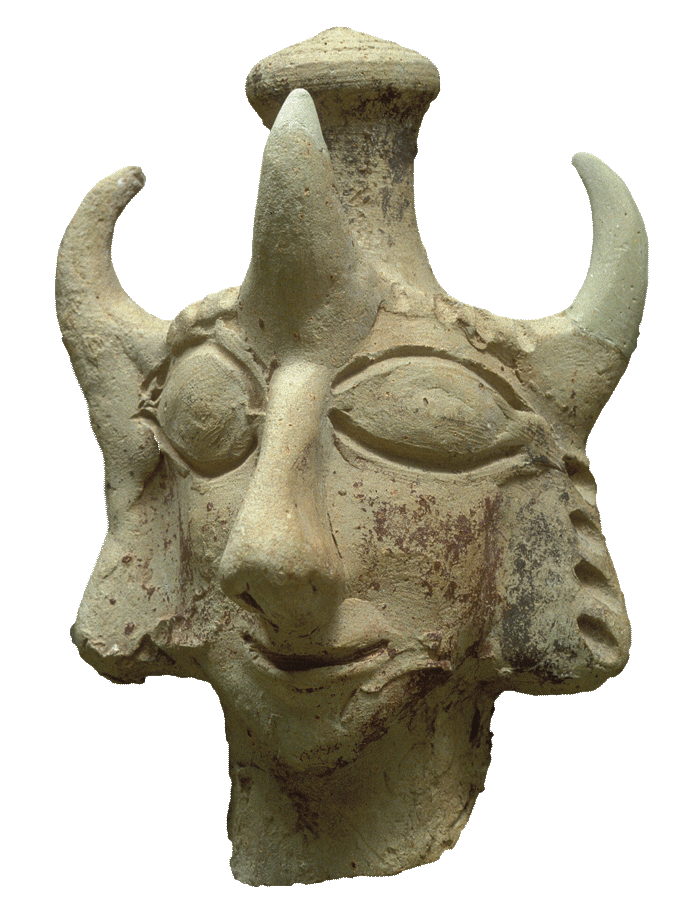
The Edomites may have trusted in their gods and goddesses, like the three-horned deity pictured here, but they would not escape God’s judgment.
The culmination of Israel’s restoration as predicted by Obadiah parallels the final outcome of human history, in that both consummate with the Lord’s kingdom or sovereign rule in the created order (v. 21). This theme of Yahweh’s ultimate dominion over the world through Israel as his signet occurs frequently in the Old Testament as part of the messianic expectation of the day of the Lord (e.g., Ezek. 37:24–28; Dan. 2:44–45; 7:21–27; 9:24–27; Zech. 12:3–4). The ongoing contrast between the destinies of Mount Zion and the mountains of Esau now reaches its climax. Israel will be saved and restored, while Edom will be judged for her crimes of injustice and oppression. The juxtaposition of the terms “deliverers” and “judge” (NIV “govern”) is theologically significant given the close relationship of their meanings. The Hebrew judge was a divinely appointed savior for the people of Israel, the oppressed, and the socially disadvantaged (Judg. 3:9, 15; 2 Kings 13:5; Neh. 9:27). The Old Testament judge brought deliverance to the oppressed Israelites by renewing covenant faith (Judg. 6:19–32), establishing covenant justice in the community (Judg. 4:5), and judging oppressor nations through military action (Judg. 3:10; 4:6–16). By raising up these deliverers in Zion, God would not only accomplish the immediate goal of judging Edom’s sin and avenging Israel but also achieve his larger objective of establishing his righteous dominion on earth and executing true justice among the nations.
Select Bibliography
Alexander, T. Desmond, David W. Baker, and Bruce Waltke. Obadiah, Jonah, Micah. Tyndale Old Testament Commentaries. Downers Grove, IL: InterVarsity, 1988.
Allen, Leslie C. The Books of Joel, Obadiah, Jonah, and Micah. New International Commentary on the Old Testament. Grand Rapids: Eerdmans, 1976.
Craigie, Peter C. Twelve Prophets. Vol. 1. Daily Study Bible. Philadelphia: Westminster, 1984.
Niehaus, Jeffrey J. “Obadiah.” In The Minor Prophets: An Exegetical and Expository Commentary. Edited by Thomas Edward McComiskey. Grand Rapids: Baker Academic, 1992.
Raabe, Paul R. Obadiah. Anchor Bible. New York: Doubleday, 1996.
Stuart, Douglas. Hosea–Jonah. Word Biblical Commentary. Waco: Word, 1987.
Watts, John D. W. Obadiah: A Critical Exegetical Commentary. Grand Rapids: Eerdmans, 1969.