1–3 John
1. The Prologue of 1 John—from Witness to Fellowship (1:1–4)
2. The Question of Sin and the Commandment to Love (1:5–2:17)
A. Those Claiming Not to Be Sinning (1:5–2:2)
B. The Old Commandment of the Lord: “Love Your Brothers and Sisters!” (2:3–11)
C. Love Not the World! (2:12–17)
3. The Antichrist Has Come! The Secessionists Deny Jesus’s Messiahship (2:18–29)
A. The Departure of the Antichrists Shows Their Inauthenticity (2:18–20)
B. Those Who Deny Jesus as the Christ Lose the Father (2:21–25)
C. Abide in Christ and His Anointing (2:26–29)
4. To Abide in Christ Is to Attain Victory over Sin (3:1–24)
A. Christ Removes Our Sins . . . and Our Sinning (3:1–6)
B. Those Who Sin, Not Loving Brothers and Sisters, Are Not from God (3:7–10)
C. The Party of Cain—the Brother Killers—Includes the Indifferent (3:11–17)
D. On Loving in Truth and in Deed (3:18–24)
5. The Antichrists Are Coming! They Deny Jesus Came in the Flesh (4:1–6)
A. Those Who Deny Jesus’s Humanity Are False Prophets and Antichrists (4:1–3)
B. Greater Is He That Is in You Than He That Is in the World (4:4–6)
6. Let Us Love One Another! (4:7–21)
A. We Love because God Has First Loved Us (4:7–10)
B. The Perfecting of Love in Us (4:11–17)
C. To Love God Is to Love Brothers and Sisters (4:18–21)
7. The Victory That Overcomes the World (5:1–21)
A. Belief in Jesus as the Christ Is Victory (5:1–3)
B. The Life-Producing Testimony (5:4–12)
C. The Boldness of Faith (5:13–15)
D. Keep from Mortal Sins—in Particular, Idols! (5:16–21)
1. Greetings to the Chosen Lady and Her Children (1–3)
2. Let Us Love One Another (4–6)
3. Beware the Deceivers and the Antichrists, Who Deny the Flesh of Jesus! (7–11)
1. Greetings to the Beloved Gaius (1–2)
2. Joy at Believers’ Walking in the Truth (3–8)
3. Diotrephes the Primacy-Lover (9–10)
4. Imitate Not Evil but Good (11–12)
5. Final Greetings among Friends (13–15)
Introduction
Date, Author, and Audience
The three epistles of John appear to have been written in the last decade and a half of the first century AD (85–95), and they fit within the larger set of Johannine writings (“Johannine” means “pertaining to John”), which includes the Gospel of John (finalized around 100) and Revelation (finalized around 90).
The author of these epistles does not give his name directly in the text (unlike Revelation), but the author of 2 and 3 John calls himself “the elder.” Given the fact that 1 John is especially close to 2 John in style and content, and that 2 and 3 John were associated together traditionally, the author of all three Johannine Epistles may be called John the elder. Interestingly, Irenaeus mentions the graves of two Christian leaders in Ephesus as those of John the elder and John the apostle. Some confusion of the two is apparent, in that both may have been disciples of the Lord and both may have been called an “elder.” Papias claims not to have known any of the Twelve but does claim to be a disciple of John the elder. Irenaeus claims to have been a disciple of Polycarp, who in turn claims to have sat at the feet of John the apostle. Least speculative is the likelihood of several Christian leaders in the Johannine situation between 70 and 100, of whom John the elder, the author of the epistles, is one.
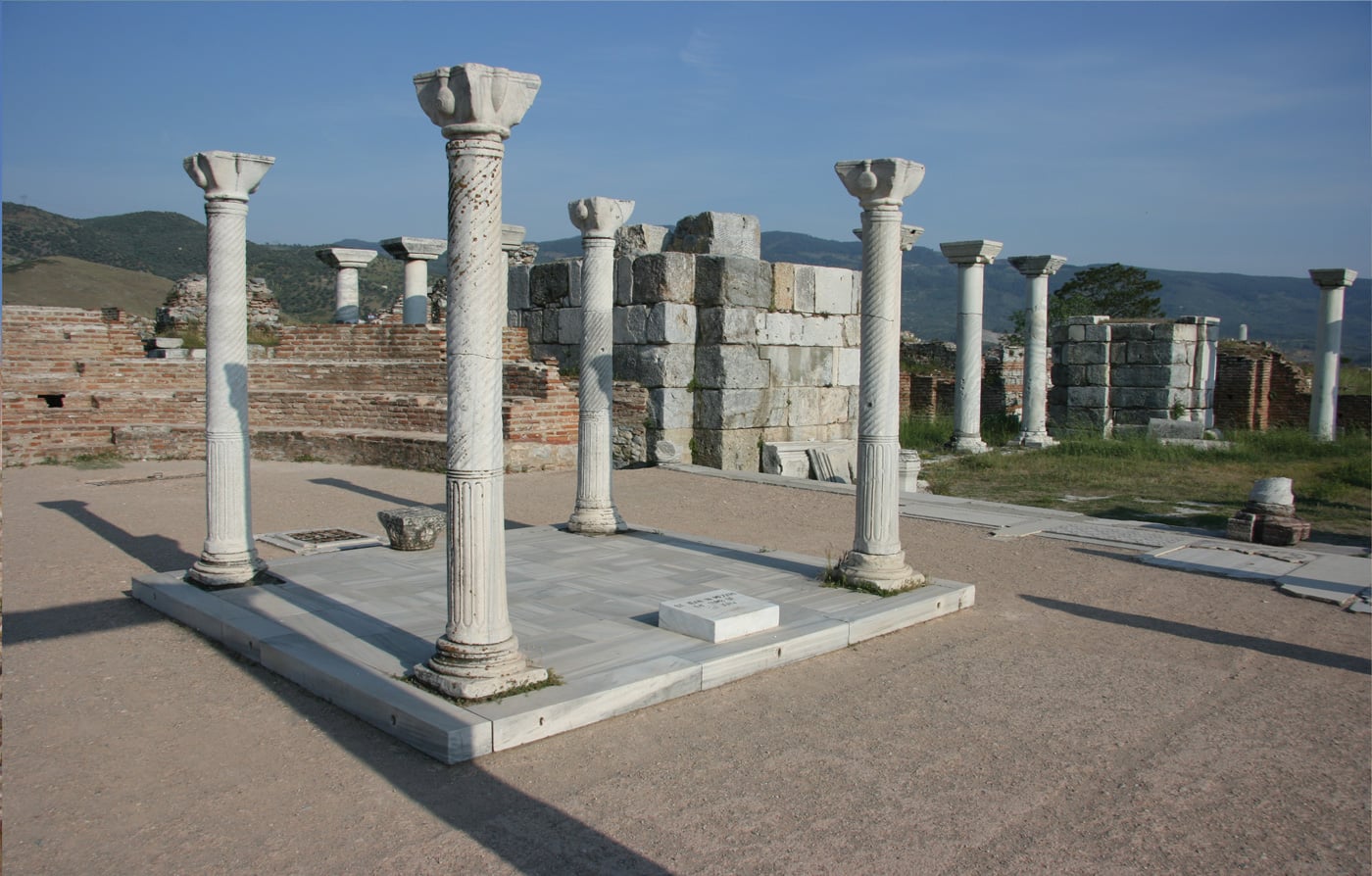
While historical-critical scholars have argued that the first clear connecting of John the apostle with the Gospel bearing his name is Irenaeus (around 180), this is not the case. There is no second-century opinion as to who might be associated with the Johannine Gospel and Epistles other than the apostle and the elder, and one can understand their being referred to by their appellations (“the beloved disciple” and “the elder”) if indeed they had the same first name and were ministering within the same general context. An overlooked clue to John’s authorship, though, may be found in Acts 4:19–20, where Luke attributes a Petrine saying to Peter (we must obey God rather than man; Acts 4:19; 5:29; 11:17) and a typically Johannine saying to John (we cannot help testifying to what we have seen and heard; John 3:32; Acts 4:20; 1 John 1:3). It may have been wrong or misguided, but Luke connects the apostle John with a Johannine saying a full century before Irenaeus.
The three epistles of John are uneven in length, and they also differ in terms of their audiences. First John, which is four times as long as the other two combined, is written as a circular to several churches in Asia Minor. Second John is written to “the lady chosen by God and to her children,” which is a reference to either a church or a female congregation leader and thus is addressed to a particular community and its leadership. Third John is written to a particular leader, Gaius, whose community members had been denied hospitality by Diotrephes.
Relationship to the Gospel of John
The relation of the Johannine Epistles to the Gospel is questioned. By the middle of the third century they were associated together as by the same author. Debates as to which preceded the other abound, but if an earlier edition of John was finalized around 85, the epistles may have followed the first edition and preceded the final edition around 100. While the vocabulary of 1 and 2 John is most similar to that of the Gospel, some differences of emphasis and approach are apparent—especially the epistles’ more dogmatic and less dialectical mode of thought and their appeals to other sources of authority. Because the Gospel of John appears to have been finalized after the death of the beloved disciple (Jesus never said he would not die; John 21:18–24), the final editor appeals to his authority; and the material apparently added to the Gospel (John 1:1–18; chaps. 6, 15–17, and 21, plus “eyewitness” and beloved disciple references) seems very similar to the form and thrust of the epistles.
Therefore, a likely composition scenario envisions (1) a first edition of the Gospel around 80–85 (hence, it was the second Gospel written, as an augmentation of Mark, possibly before the completion of Matthew and Luke) preserving the testimony of John the apostle as the beloved disciple; (2) the composition of the Johannine Epistles between 85 and 95 by John the elder—accompanied by the ongoing ministry of John the apostle until his death during the reign of Trajan (beginning in AD 98); and (3) a finalization and circulation of the Fourth Gospel around 100 by John the elder, who declared in third-person reference, “his testimony is true” (John 19:35; 21:24). Revelation fits in here somewhere, although despite many similarities with the Gospel and epistles, it is the most grammatically and stylistically different among the Johannine writings. Then again, if John the elder (or another scribe) was involved also in the writing of the beloved disciple’s narrative, even for its first edition, the distinctive style and vocabulary might be more closely connected to John the apostle than the literary evidence suggests.

Domitian, emperor of Rome AD 81–96, required emperor worship, which was one of the crises faced by the Johannine community.
Occasion and Content
The main concern of the Johannine Epistles is church unity. Here the exhortation to “love one another” is advanced repeatedly, as the original commandment of Jesus (John 13:34–35) finds its application as the key to Christian unity in the late-first-century church (1 John 3:10–23; 4:7–12, 16–21; 5:2–3; 2 John 5–6). The need for unity is apparent in the many crises addressed by the epistles: questions of ethics, defections, temptations from the world, tensions within the community, false teachers, struggles over authority, and a brief mention of idolatry.
A common approach to identifying the adversaries in the Johannine Epistles is to see them as gnostics; after all, the antichrists in 1 John 4:1–3 and 2 John 7 refuse to believe that Jesus came in the flesh—the docetist heresy. While all gnostics were docetists, not all docetists were gnostics. Further, the antichrists of 1 John 2:18–25 are secessionists, who have recently left the church, denying Jesus’s messiahship in clinging to the Father, so there may have been more than one antichristic threat. (The Greek term antichristos is found nowhere in Revelation, only in 1 and 2 John.) Therefore, a less speculative approach is to acknowledge more than one set of likely adversaries within the Johannine situation rather than to laden Cerinthus and his kin with multiple imagined heretical fallacies.
Through the Johannine Gospel and Revelation, as well as the letters of Ignatius and Clement of Rome, several largely sequential yet somewhat overlapping crises appear to have confronted members of the Johannine situation between 70 and 100. These include (1) coming apart from the customs of “the world” within a largely Gentile (pagan) setting; (2) tensions with local Jewish family and friends over the law of Moses and how Jesus represents the will of the Father as the Messiah/Christ; (3) tensions with pagan worship—especially emperor worship, which had increased in its expectations and celebrations under the reign of Domitian (AD 81–96); (4) Gentile Christians’ teaching a doctrine of assimilation within pagan cultic settings—including an occasional defense of participating in the cultic honoring of the emperor, legitimated by a docetist teaching of a nonsuffering Jesus; (5) struggles with institutionalizing tendencies in the early church, designed to defend against docetist influences by appealing to a centralized form of hierarchical leadership. It is incorrect to think that only one crisis lay behind the struggles faced within the Johannine situation over three decades.
In the light of these issues, the ethical concerns of the elder come to the fore and present themselves for consideration in every generation. They include such issues as (1) debates over sin and what it means to be “without sin”; (2) living in the world but not of the world; (3) who the antichrists were and how their first-century threats relate to other adversaries in later generations; (4) the call to love one another as a means of providing a way to Christian unity; (5) warnings against idolatry; (6) exhortations to extend hospitality to other believers; and (7) warnings against leadership styles resorting to intimidation and self-assertion rather than the liberating command of truth. In these and other ways, the Johannine Epistles continue to be relevant to readers in every generation, especially as their content communicates from one context to another.
Commentary for 1 John
1. The Prologue of 1 John—from Witness to Fellowship (1:1–4)
The first Johannine Epistle appears to have been written as a circular to one or more Christian communities in Asia Minor. The author names himself as “the elder” in the second and third Epistles (2 John 1; 3 John 3), but in his first and fullest communication he simply begins with a worship piece that is very similar in vocabulary and form to the prologue of the Johannine Gospel. Note the use of first-person plural references (“we,” 1:1–5) as a means of including the audiences with the community of the elder. Appeals to corporate solidarity draw the hearers and readers into fellowship with the author and other Johannine leaders (cf. John 1:14, 16; 21:24), and the first epistle draws squarely on familiar themes developed in the first edition of the Gospel.
Like the prologue of the Gospel (John 1:1–18), the prologue of the first epistle (1 John 1:1–4) begins with a declaration of that which was from “the beginning.” Rather than the beginning of the world, though, this prologue highlights the beginning of the Christian movement, harkening back to the ministry of Jesus. The testimony of what has been heard, seen, touched, and beheld connects the firsthand experience with the ministry of Jesus with second- and third-generation believers (John 20:29). Not only do the Gospel, the works and words of Jesus, the testimony of John the Baptist, and the Scriptures declare the Word of Life, but now the elder also does so with the witness of his letter.
The author here stands with the firsthand experience of the apostles and others who encountered the ministry of Jesus some five decades earlier. Links are drawn between firsthand encounter with the earthly ministry of Jesus and the firsthand encounter with the spiritual ministry of the risen Christ, imparted through the Holy Spirit to authentic believers (John 1:1–18 and chaps. 6, 15–17, 21). Even the testimony to “what we have seen and heard” (1:3) becomes an explicit Johannine association in Luke’s rendering of the testimony of Peter and John in Acts 4:19–20. Luke connects this Johannine phrase with John the apostle a full century before Irenaeus, and the Johannine elder does the same, independently. Jesus declares what he has seen and heard from the Father (John 3:32), and his apostolic followers (John 20:21–23) do the same.
The goal of the elder’s sharing is koinōnia, “fellowship,” extended from one generation and sector of the Jesus movement to others. This is not, however, a mere expression of the desire for fellowship; Christian unity is rooted in the same unity that the Son has enjoyed with the Father from the beginning (John 17:20–26). This unity is both spiritual and missional. The loving fellowship between the Father and the Son and between Christ and his followers has a name: the Holy Spirit now avails without measure. This spiritual unity is experienced in fullness where believers gather in the name of Jesus (Matt. 18:18–20). And yet, authentic koinōnia is also a factor of sharing a sense of agency. The Son is one with the Father because he knows what the Father is doing and because he carries out the Father’s mission (John 3:31–36); likewise, believers share unity with the Son, as he does with the Father (John 17:20–26), as his partners and friends because they know and do his will (John 15:14–15). True Christian fellowship then inevitably leads to joy (John 15:11; 16:20–24; 17:13), which is why the elder writes his letters (2 John 12).
2. The Question of Sin and the Commandment to Love (1:5–2:17)
The question of those claiming to be “without sin” is an intriguing one in 1 John. On one hand, it might appear that we have an alien gnostic group claiming perfectionism as a factor of direct access to God without need of the atonement. After all, the first commentary on John was written by Heracleon, a second-century gnostic, and the flesh-denying antichrists of 1 John 4:1–3 might point in that direction. This view has several problems to it, however. (1) The elder also speaks of the impossibility of sinning for anyone who is born of God (1 John 3:9), so this may be a simple extension of the elder’s own teaching. (2) Just because the second antichrists are docetists (Jesus just appeared to suffer and die—as fully divine, he did not), this does not mean they are gnostic heretics; they may have simply been Gentile believers with a Hellenistic worldview. (3) Being “without sin” may be a particular reference to something in particular not being wrong, not a reference to sinlessness proper. (4) The emphasis on the atoning work of Christ is asserted in order to get people to abandon the sin that he came to remove (1 John 3:1–10) and to love one another. Therefore, those claiming to be “without sin” in John’s audience are challenged with the commandment of the Lord to love one another (John 13:34–45).
A. Those claiming not to be sinning (1:5–2:2). Like any good teacher, the elder employs the inclusive “we” as a way of addressing his second-person audience, “you.” He does this in verse 5 just as he has in each of the first four verses. Verse 6, however, turns the use of “we” to others. “If we say . . .” (NASB, RSV) is a way of confronting the claims of others, either in his immediate audience or among those his audience are having to engage. In listing the claims of some, the inclinations of all are addressed. While some of these claims are challenged as false in and of themselves, other admirable claims are confronted if they are not also accompanied by congruent behaviors. The first citation of what some might be claiming fits within this category.
In verse 6, those who claim to have fellowship with God but walk in darkness lie and do not practice the truth. Walking in darkness is not spelled out, but it likely refers to particular moral practices that are out of step with the elder and at least some leaders within the community. Conversely, the life-producing way forward involves “walking in the light” just as God is in the light, which avails the believer Christian fellowship and the cleansing blood of God’s Son, delivering believers from sin. Such an appeal, though, was apparently rejected on two accounts: those confronted probably were not convinced that their behavior amounted to walking in darkness, and therefore they claimed not to be sinning. This leads to the elder’s challenging of their defensive statements.

In ancient times small oil lamps, such as this one from the Roman Period, were used for light. Olive oil was poured into the central cavity, and a wick placed in the hole at the pointed end would be lit. The imagery of “walking in the light” is used several times in 1 John.
The next two statements regarding what “we say,” which are challenged by the elder, include claiming to “be without sin” (1:8) and claiming that “we have not sinned” (1:10). The elder challenges these assertions directly: if we claim to have no sin, “we deceive ourselves and the truth is not in us.” To confess our sins, though, is to acknowledge the authenticity of our condition and to avail ourselves of God’s forgiveness and cleansing power (1:9). More pointedly, to claim that we have not sinned is “to make him [God] out to be a liar,” and to expose the fact that God’s word is not abiding in us (1:10). Again, the confronted might not have been claiming sinlessness proper, but the elder certainly raises the bar in hopes of getting them to acknowledge the darkness of their ways that they might be persuaded to walk in the true light of ways pleasing to God.
In the next sentence (2:1) the elder extends his ethical appeal to the entire audience: “My little children, I am writing these things to you so that you may not sin” (NRSV); at the same time he emphasizes the availability of grace for any who might. He employs a word used for the Holy Spirit in the Gospel of John—“helper,” or “advocate”—but here he uses it in reference to Jesus. This is a familiar Johannine term, and while the Holy Spirit is “another” counselor and advocate (John 14:16), Jesus is the original. Conversely, he then employs an unusual reference to the atoning sacrifice (Greek hilasmos; see also 1 John 4:10) of Jesus Christ the righteous one, which seems more Pauline than Johannine. In fact, the word never occurs in the Gospel of John. Of course, the redeeming work of Christ is not simply for the community’s benefit; it extends to the entire world, and that is the power of the gospel being proclaimed (2:2).
B. The old commandment of the Lord: “Love your brothers and sisters!” (2:3–11). The true evidence of knowing Christ is incarnational: obeying his commandments, the chief of which is to love one another. To obey the original commandment of Jesus is to experience God’s love being perfected within (2:5). The elder now moves to the third-person singular in confronting the problematic community member. “Whoever says . . .” is the hook, and the three laudable statements listed are that one has come to know him (2:4), to abide in him (2:6), and to be in the light (2:9). To these positive claims to a believing relationship with Christ, the elder poses the true evidence of authenticity. Such a person will obey Christ’s commandments (2:4), will walk as Christ walked (2:6), and will not hate his or her brother or sister (2:9). Therefore, the true and outward evidence of the vertical relationship is the horizontal; the clearest measure of one’s abiding in the love of Christ is the demonstration of loving consideration for others. Anything short of that is darkness, blindness, and death.
C. Love not the world! (2:12–17). Lest particular members of his audience feel singled out or left out, the elder now targets specific demographic groups in his audiences, covering the range of ages and relationships. To the “little children” (NIV “dear children”) he announces forgiveness in the name of Christ (2:12); to the fathers, he affirms their knowing of “him who is from the beginning” (2:13; cf. John 1:1–3); to the youth, he extols their conquering the evil one (2:13). This triad is followed, then, by a second. To the children, he writes to affirm their knowledge of the Father; to the fathers, he writes because they know “him who is from the beginning”; and to the youth he writes because they are strong and indwelt by the word of God, and because they have overcome the evil one (2:14). The repetition and the parallel references add emphasis to his affirming message: “Do not love the world or anything in the world” (2:15). Rather than spell out particular sins, however, the elder is content to leave the sins of worldliness general: the desire of the flesh, the desire of the eyes, and pride in wealth (2:16) cover the territory effectively. These drives do not come from the Father but from the world. And the world, along with its desires, is a fleeting reality, not an enduring one. Doing the will of God, however, leads to eternal life (2:17).
3. The Antichrist Has Come! The Secessionists Deny Jesus’s Messiahship (2:18–29)
Christian speculation about the identity and advent of the antichrist has been a major pastime from the second century until today. In order to stay close to the text and its original meaning, however, we should be aware of several facts. (1) The Greek word antichristos does not appear in Revelation, but only in 1 and 2 John. While “the beast,” “666,” and other biblical villains might seem likely prospects for speculating about contemporary threats, each of these subjects must be investigated on its own. The antichrist passages may have had nothing to do with “the beast” in Revelation. (2) Rather than pointing to a single person as “the antichrist,” the three antichristic passages in the Johannine Epistles are primarily plural: they did this or that. (3) Rather than a futuristic threat, the first antichristic passage points to an event in the recent past—a church split. Therefore, “antichrists” is the term used within this Christ-centered community to explain the fact that family and friends have left John’s church and perhaps joined another religious community. (4) The antichrists of 1 John 4:1–3 and 2 John 7 are not former schismatic threats but present and impending invasive threats. They are false teachers, not community-abandoning schismatics. (5) The problematic theological content of the two antichristic groups is entirely different, and the groups probably represent two threats, not one. The first refuses to believe that Jesus was the Messiah; the second refuses to believe that Jesus came in the flesh. The anti-Messiah predictions of long ago have now come to rest on the Johannine community, but the warnings of the elder are contemporary—addressed to his immediate audience, literally—not futuristic predictions.
A. The departure of the antichrists shows their inauthenticity (2:18–20). Indeed, the schismatic crisis this Johannine community has experienced fulfills the prediction of old that an adversary to the Messiah would come. This shows that it is the last hour, calling for a special measure of faith and faithfulness. Many antichrists have come, and their advent is marked by community members’ having left John’s church and abandoned fellowship with their brothers and sisters in Christ. Further, their departure shows they never were convinced of the truth to begin with, which reflects the elder’s own thoughts on why some are able to remain with Christ and his fellowship and some are not. Is schism and abandoning the fellowship of believers the “sin” that was mentioned earlier? Perhaps, although there may have been more than one. As the departure of the faith-wavering shows their lack of belonging to the true community, those who remain are encouraged by the elder’s affirming their anointing by the Holy One and their abiding in true knowledge. Community defection is the mark of their antichristic actions, but the elder goes on, then, to address their root problems resulting from their inadequate beliefs.
B. Those who deny Jesus as the Christ lose the Father (2:21–25). In declaring again why he is writing (1 John 1:4; 2:1, 7–8, 12, 13–14, 21, 26; 5:13; 2 John 5, 12; 3 John 13), the elder affirms what he hopes for in his audience as though it were an actualized reality: their knowing and abiding in the truth. The “liar,” though, is the one who denies that Jesus is the Messiah. This is the antichrist, the one who denies the Father and the Son. To deny the Son is to forfeit the Father, but to confess the Son is to receive the Father. Given that the Johannine situation was probably in its third decade of dialectical engagement with local Jewish family and friends, the temptation of the first secessionists was to affirm Jewish monotheism (holding to the Father) so as not to be thought guilty of either blasphemy or ditheism (having two Gods), which was the growing charge against the Jesus movement in the 70s and 80s. Rather, to hold to the Son is to receive the Father, promises the Johannine elder, and this leads to receiving the promise of eternal life (2:25).
The larger set of dialogues between the Jesus movement and its parent Jewish family in Asia Minor probably experienced something of the following elements. (1) Paul and other traveling ministers came through Asia Minor reaching Jewish and Gentile audiences alike. This probably caused some tension between the Jesus movement and local Jewish leaders; it certainly did among pagan temple keepers and religious artisans. (2) After the destruction of Jerusalem in AD 70, Jewish religious identity was reorganized into more of a biblical religion than a cultic one. Sacrifices were no longer offered, but keeping the law of Moses was central to being Jewish, and the heart of the law was the worship of one God. (3) As Christian confession of Jesus’s messiahship developed into higher Christologies, both in worship practices and in evangelistic emphases, this evoked accusations of “ditheism.” At Jamnia, on the western coast of Israel, a blessing against the heretics (the Birkat ha-Minim) was codified, which was the twelfth of eighteen benedictions. It cursed the followers of “the Nazarene,” and scholars have recently come to see these tensions as explaining the references in John that even back then those who confessed Jesus openly were put “out of the synagogue” (John 9:22; 12:42; 16:2). While there probably was not anything like a universal ban or excommunication of Jesus followers, these pressures against confessing Jesus as the Christ, and especially as the Son of God, caused at least some defections of Jesus adherents from local synagogues. (4) Once they had departed from the synagogue, however, their Jewish family and friends likely sought to draw them back into the more established faith community, with its more supportive religious practices—the way of Moses, the truth of the torah, and the life afforded the children of Abraham. This might explain the reason for the first antichristic crisis. Jewish Christians had abandoned the Jesus movement to return to the religious security of the synagogue with its monotheism and religious certainty. (5) This would explain the elder’s positing of holding to Jesus as the Christ as integral to the approval of the Father. To deny the Son is to forfeit the Father, but to embrace the Son is to receive the Father, who sent him.
C. Abide in Christ and his anointing (2:26–29). Here the deceivers would be appealing to the hallmarks of Jewish faith and practice at the expense of the Jesus movement. Consider the appeals of the religious leaders in the Gospel: “We are disciples of Moses!” (John 9:28). “We are Abraham’s descendants” (John 8:33). They claimed that whoever speaks of himself is a presumptuous prophet, not a true prophet. Therefore, Jesus in the Gospel is presented as addressing those claims with his authentic mission from the Father (see Deut. 18:15–22). Here the emphasis is placed on the spiritual anointing that believers have received from the one who abides in him and in whom they abide. Reminding them of the words of Jesus about God’s direct instruction through the Spirit (John 6:45; 14:26; 15:26; 16:1–15), the elder affirms the importance of abiding in Christ as the present teacher (2:27; cf. John 15:1–15). This will strengthen them in their time of trial, and it inspires them to live in the righteousness they have received as a result of being born anew in the life of Christ.
4. To Abide in Christ Is to Attain Victory over Sin (3:1–24)
In chapter 3 of 1 John, the elder moves from concern over further defections and schisms, and he challenges conventional examples of sin. While the author does not spell things out with particularity, he does mention seeing a brother or sister in need and not helping them by sharing the means one has (3:17). Is this the sin mentioned in the first chapter? Perhaps; then again, not treating community members lovingly may take a variety of forms, so it is easier to include a matter for ethical consideration than to exclude one. Whatever the case, to abide in Christ is to attain victory over sin, and this is the central thrust of this section.
A. Christ removes our sins . . . and our sinning (3:1–6). Now the elder emphasizes the benefits of faith in Christ, leading with the privilege of being called the children of God (3:1). The community hymn celebrating the conviction that as many as received him received the power to become the children of God (John 1:12–13) is here developed as a benefit of abiding in Christ and his community. From the perspective of this-worldly existence, however, the prospect of next-worldly glory is extolled. We see now only in part, but when the fullness of God is revealed, believers shall be like him and will see him as he really is. This hope in God’s glory in the future emboldens faithfulness to his ways in the present. In that sense, a vision of God’s purity becomes the motivator of purified living in the present (3:4). Finally, the elder emphasizes Christ’s taking away the sins of believers, implying both the power of his sacrifice and the capacity of his work to deliver the one abiding in him from the power of sin. No one who abides in Christ sins, and the one who sins has neither seen him nor known him. Relationship with Christ involves transformation and deliverance from sin; this is central to the power of the gospel.
B. Those who sin, not loving brothers and sisters, are not from God (3:7–10). Now the elder moves back to countering the seditious influence of those who would deceive them or lead them astray (3:7). Motivating his audience to live in righteous ways if they hope to be righteous, he also links the committing of sin to being a child of the devil. With this polarizing of options, he seeks to bolster believers’ commitments to right living commensurate with their right believing. Those who are born of God do not sin because the “seed” of God abides in them (3:9). To be born of God is to eradicate the human bent toward sinning. Parallel to the stories in the Gospel, where a person’s response to the revealer exposed whether one was rooted in light or darkness (John 3:18–21), here the measure of one’s spiritual condition is whether that person does what is right. More specifically, to not love one’s brothers and sisters betrays a lack of rootedness in God (3:10). This rhetorical move marks an interesting contrast to the Gospel. In John’s Gospel, rootedness in God is exposed by a person’s response to the one who not only speaks the words of God but who is the Word of God. In John’s first epistle, rootedness in God is indicated by one’s loving regard for members of the fledgling Christian community, as authentic righteousness is ultimately relational.
C. The party of Cain—the brother killers—includes the indifferent (3:11–17). Appealing again to the original teachings of Jesus, commanding his followers to love one another (John 13:34–35), the elder leverages the worst of fratricidal archetypes: Cain, the brother killer (3:12; Genesis 4). Would any in his audience relish the idea of being numbered among members of “the Cain Party”? Of course not! The threat of being labeled a brother killer becomes a negative incentive used to motivate the opposite: loving regard for members of the community. This ploy is followed by a positive reference to loving one another as the true measure of having passed from death to life (3:14). Back to negative intensification in verse 15, to hate a brother or sister in the community is to be guilty of murder (Matt. 5:21–22), and to be guilty of murder is to forfeit eternal life. By veering back and forth between negative and positive means of motivation, the elder seeks to steer his audiences toward right practice as well as righteous faith.
In verse 16 the example of Jesus is used climactically as the one who laid down his life for others as the ultimate example of love. Here the teaching of Jesus in John 15:13 becomes applied as an example for others to emulate. If Jesus was willing to lay down his life for his friends, and if the Johannine community is indeed inhabited by friends of Jesus, they ought also to be willing readily to lay down their lives for one another. On one hand, this parallel bears associations with martyrdom. To ingest the flesh and blood of Jesus (John 6:51–58) is to be willing to share in his sufferings on the cross. Only those willing to share in the Lord’s crucifixion are worthy of participating with him in his resurrection (Rom. 6:5; Phil. 3:10–11; Mark 8:34–38).
The association with martyrdom here seems to point to persecution under Domitian, who required emperor worship of his subjects and punished severely (sometimes capitally) any who did not reverence the idols of Rome. Construction for Domitian’s temple to himself in Ephesus began in AD 82 and was finished about seven years later. At the entrance of the temple stood a large statue of Domitian with a raised, clenched fist, and the altar of his temple bore carvings of subjugated peoples being humbled at the hand of the Romans. Two decades later, Pliny, the governor of nearby Bithynia, wrote to the emperor Trajan asking if he should continue to kill Christians who refused to deny Christ or to worship Trajan’s image. Pliny had just put to death two young Christian women, who, despite being warned three times, had refused to do either. In reply, the emperor advises him not to seek out Christians to persecute them, but if they are duly warned and refuse to worship Caesar, they must of course be put to death, implying a standing policy (Pliny the Younger, Letter 10.96–97).
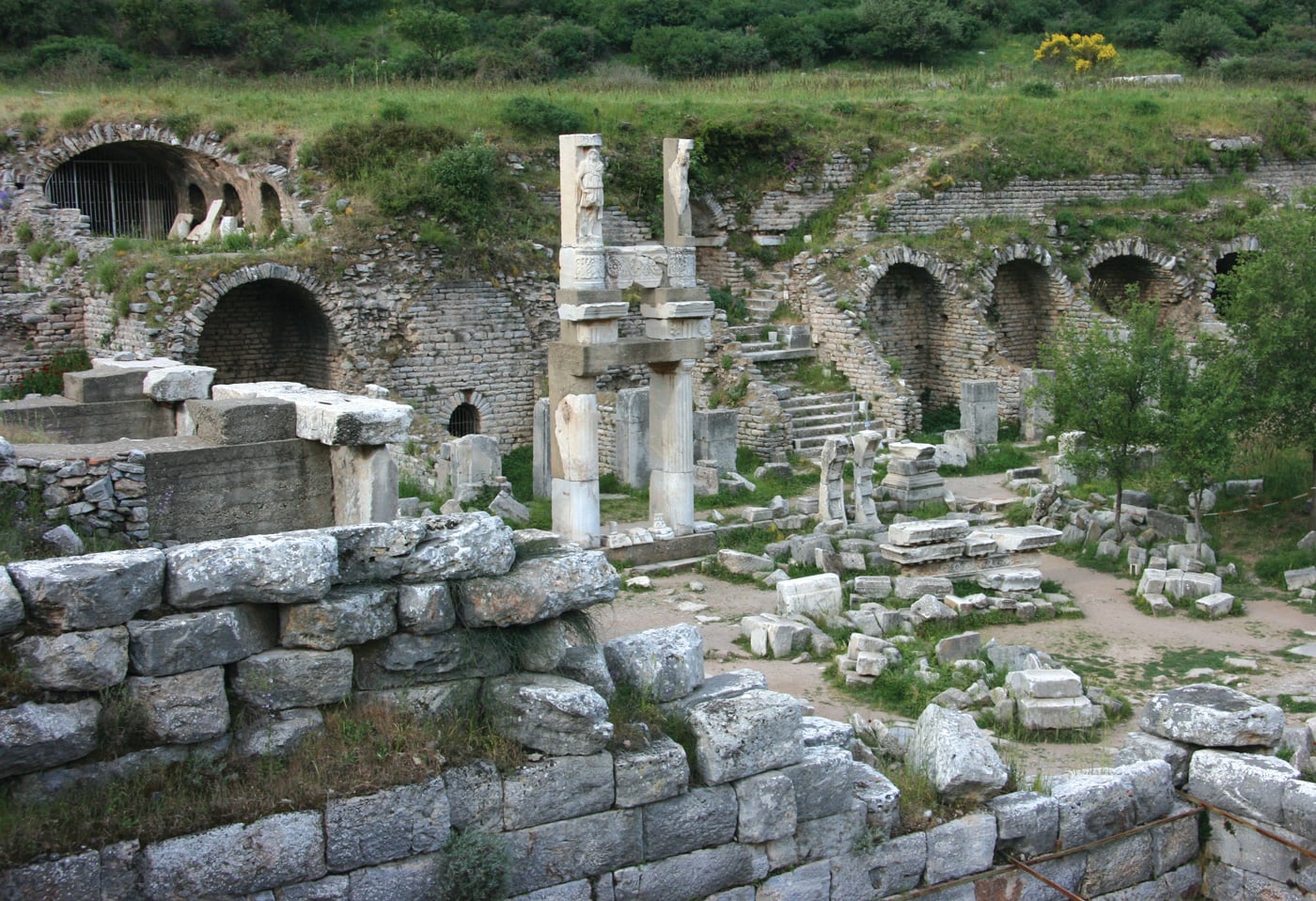
Ruins of the ancient temple of Domitian at Ephesus. First John 3:16 refers to laying down one’s life, which may have been necessary for Christians who refused to worship Domitian.
Therefore, the willingness to suffer for Christ may have been more than an abstract consideration. It may indeed have been a measure of one’s ultimate love and dedication to the Lord and his community. Pliny mentions those who have been accused of being Christians but were found to be “innocent” of the name. All they were guilty of was meeting together before the dawn, eating some common food, and singing a hymn to Christ “as though he were a god.” Pliny declares that any such person, of course, could not be found “guilty” of being a Christian. If that is how the pagan governor saw it, how might fellow Christians have felt if someone who had denied them and their Lord in order to escape Roman persecution showed up for worship and expected to continue in fellowship with other believers? Was this the sin mentioned in the early part of the epistle, and were Gentile Christians claiming it was not a sin, therefore claiming to be without sin for participating in Roman civic life?
Following this appeal to willingly suffer the ultimate of sacrifices for the love of Christ and his beloved, however, the elder swings to the most mundane of considerations. Verse 17 emphasizes the issue of those having physical means and refusing to share with brothers and sisters in need. Is this the “sin” addressed in the early part of the epistle? Perhaps the appeal to love one another as motivated by the love of Christ simply had to do with caring for the sustenance of fellow believers—sharing. After all, if this was the mark of the true fellowship of believers after the Holy Spirit had come upon them (Acts 2:42–47; 4:32–37), why was it not more evident within this community? The love of Christ also delivers us from the most insidious of sins: indifference.
D. On loving in truth and in deed (3:18–24). The elder concludes his exhortation to love others with an appeal to human integrity. Love should not be in word only but also in truth and in action. Congruity between word and deed reassures the believer’s heart, but even if one’s heart feels condemning, the good news is that God is greater than one’s heart. Better yet, if one’s heart is not condemning but confirming, the believer has boldness before God and receives what is asked for because of obeying God’s commandments and doing what is pleasing to him (3:21–22; John 14:13–17; 15:7, 16; 16:23–27; James 4:2–3). Notice again the vertical and horizontal components of the commandments of God: to “believe in the name of his Son, Jesus Christ, and to love one another” (3:23). Just as abiding in him leads to fruitful discipleship (John 15:1–5), to obey his commandments is to abide in Christ and he in the believer (3:24; John 15:8–10). Knowing this to be true is conveyed as a gift by the Spirit (John 14:15–17). To abide in Christ is to attain victory, even victory over the power of sin itself.
5. The Antichrists Are Coming! They Deny Jesus Came in the Flesh (4:1–6)
While the first antichristic passage (1 John 2:18–25) describes a church split in which so-called believers abandoned the Johannine fellowship and likely rejoined the local Jewish community, the second antichristic passage describes a threat in the impending future that is not a schism but an invasion. False teachers are about, and the way they are discerned is also by considering their Christology. In contrast to the first group, however, which refused to believe that Jesus was the Jewish Messiah, this second threat probably involved Gentile Christian teachers who refused to believe Jesus had come in the flesh. Indeed, the differences are several: one crisis is largely in the past, the other largely in the future; one crisis involves a departure, the other a visitation; and the first group denied Jesus’s messiahship, the next his fleshly humanity. These appear to be very different threats indeed. The second threat continues on, then, in 2 John 7, as docetist teachers (Greek dokeō means “seem,” “appear”—Jesus just seemed to be suffering) preached a nonsuffering Jesus.
A. Those who deny Jesus’s humanity are false prophets and antichrists (4:1–3). While the first antichristic threat involved the splitting off of Johannine Christians, the second antichristic threat involved the crisis of false prophets coming to their church with a troubling message. In these and other situations, it is often the threat of problematic actions that leads to the discussion of problematic beliefs. The schismatic defections of Jewish Christians were challenged on the basis of their flawed (from John’s perspective) understanding of monotheism, leading them to diminish Jesus’s messiahship and his relation to the Father. If Jesus was indeed, however, sent from the Father as the prophet-Messiah predicted by Moses (Deut. 18:15–22; John 5:17–47), to receive him is to receive the Father, but to deny him is to forfeit the Father’s pleasure. Likewise, the teachings and actions of Gentile preachers are “tested” to see if they stand up to righteous scrutiny.
A likely scenario is that the teachings of these traveling Gentile-Christian ministers sought to negotiate a middle path between the Jewish-Christian rejection of “worldly” behavior and an accommodation of standard religious, political, and moral practices within pagan Asia Minor and across the Greco-Roman world. Other than the last verse of 1 John (stay away from idols; 5:21), the elder does not mention the specifics. Standard practices, however, would have involved participation in religious-cultural festivals, which sometimes involved offerings to the gods, the eating of foods offered to idols, and engaging in cultic prostitution (Rev. 2:12–29). Especially under the reign of Domitian (81–96), when subjects of the empire were expected to at least offer incense to “the divine emperor” or to confess Caesar as Lord and God (note the direct challenge in John 20:28), the refusal to participate may have borne negative consequences.
This was especially a problem for a metropolis such as Ephesus if non-Jewish civic leaders began forgoing cultural festivals in honor of the emperor and pagan gods as a result of their newfound Christian faith. Not only would Christian leaders be put on trial now and then (Antipas, according to tradition, was roasted to death in a kettle [Rev. 2:13]; John was banished to Patmos in 84; Ignatius, bishop of Antioch, was put to death by Emperor Trajan around 115), but also common Christians would have been pressured to participate in cultural festivities as marks of support for the empire. If residents and civic leaders diminished their participation in holiday events—especially on the emperor’s birthday and during imperial visits—because such events were “worldly” and unfit for followers of Christ, this posed a civic problem. Ephesus might lose Roman financial support for building projects and for being an official “keeper of the temple”—a highly sought-after status. Ephesus had received this award twice and was in stiff competition with Pergamum for many decades in vying for Roman favor in exchange for imperial honor. Therefore, pressure was social as well as political. And some Gentile Christians may have felt that some of these practices were not a problem, including worshiping the emperor. Therefore, a nonsuffering Jesus legitimated nonsuffering discipleship. If Jesus did not suffer, his followers need not suffer either; worldly living was thus excused by a docetic Christology.
Therefore, the way to test false prophets is to examine their christological claims. While their assimilative teachings might have excused social and religious compromise in the name of “abundant life” or prosperous living in the world, costly grace implies costly discipleship. Docetic preachers (the full-blown gnostic threat was more of a second-century phenomenon) could be distinguished from suitable traveling ministers, however, by testing their beliefs and asking whether they believed Jesus Christ actually came in the flesh. If so, they could be warmly received; if not, they should be kept away from the community and rejected as perpetuating the spirit of the antichrist (4:3), which destroys Christian fellowship.
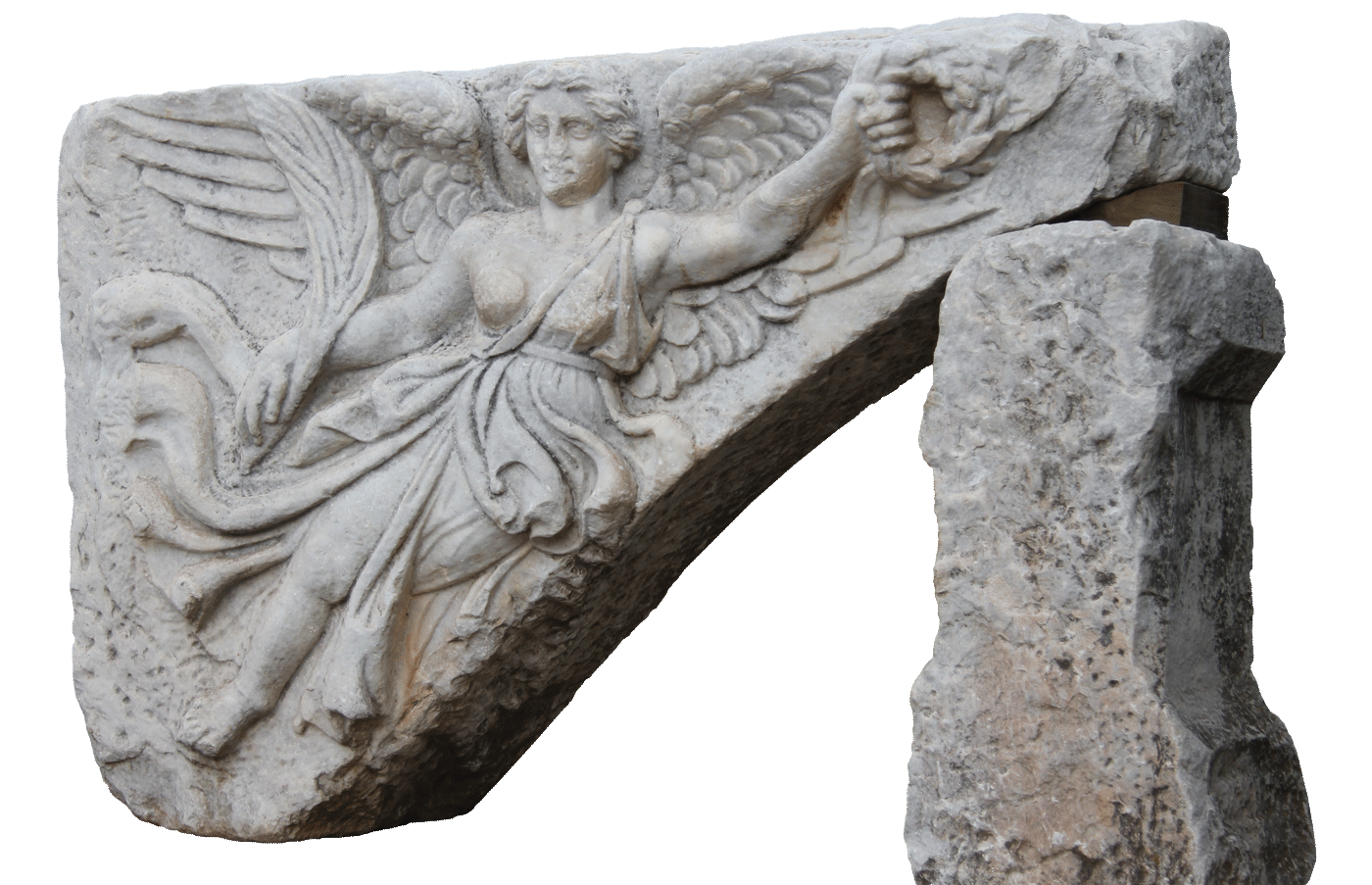
A relief of the goddess Nike, uncovered during the excavations at Ephesus
B. Greater is he that is in you than he that is in the world (4:4–6). At the entrance to the temple of Domitian in Ephesus is a large carving of the goddess Nike. (Nikē in Greek means “victory.”) In Greek mythology this winged deity was drawn into assisting Zeus in the battle against the Titans, but the use of its image here reminded subjects of the empire that they were conquered by the “divine emperor.” Amidst other reminders of Roman domination, the author here assures his audience that “greater is he that is in you, than he that is in the world” (4:4 KJV). The worldly origin of the adversaries explains why the worldly listen to them, but the elder contrasts himself and his audience with the antichrists and their cohorts. Claiming to be from God, those who heed the elder show themselves also to be knowers of God; conversely, those who are not rooted in God turn a deaf ear to the Johannine leadership. The parallel to the interpretive reflection on the reception of Jesus here is clear. Just as the response of Jesus’s audiences to him and his message exposed the degree to which they were “of the truth” and “knowers of God,” the same measure is now extended to the elder’s audiences. The spirit of truth and the spirit of error are distinguished, from the elder’s perspective, in the telling response to his corrective word (4:6). Those who do not heed his word do not know God; the responsive ones, however, do.
6. Let Us Love One Another! (4:7–21)
Organizing a community effectively can happen in many ways. Rules may be laid down, with the rewarding of the compliant and the punishing of those committing infractions; incentives may be posed as an approach to reinforcing some behaviors and discouraging others; distant goals may be identified with means of attaining them being explored; values may be clarified and extolled as a means of motivating adherence; and leaders may be delegated authority, serving as determiners of standards and arbiters of conflict. The elder obviously has attained a good deal of personal authority, but whether it comes from positional or personal status is impossible to know. Whatever the case, he casts all his influence into the appeal for his audiences to “love one another” as a means of motivating righteous living, right belief, and right relationship with other believers. Therefore, amid the centrifugal forces of worldly temptations, community defections, and false teachings, the appeal to follow the loving commandment of the Lord becomes the centripetal force levied to create relational harmony and corporate solidarity. This love-producing agenda is conveyed by means of three strategic appeals.
A. We love because God has first loved us (4:7–10). The first appeal to love one another roots its persuasion in the essential character of God, which from beginning to end is love. Not to love is not to know God, and everyone who loves is born of God and knows God (4:7–8). God’s love, of course, must be extended, and the means by which God has done so is the sending of his Son so that the world might live through him (4:9). The very character of love, however, is defined as a factor of God’s initiative, not human ingenuity. God’s favor cannot be garnered by human merit or evoked as a consequence of human initiative. In contrast to the conditional covenant of the Mosaic law, and in diametric opposition to the patronage systems of the Greco-Roman world, the loving work of God is granted unconditionally and freely. Sacrifices offered by humans can in no way compare with the ultimate atoning sacrifice offered by God (4:10; see also 2:2). That is the perfect sacrifice, which eclipses all other approaches to justification (Heb. 10:1–39), and this is why it requires a revelation from God to be understood. Human attempts to garner divine favor can never suffice, for God’s love is essentially undeserved. Revelation will ever be an affront to religion, and its central content is the first-initiated love of God made manifest in his Son. This is the pivotal introduction of grace to the cosmos, and the history of salvation has never been the same.
B. The perfecting of love in us (4:11–17). The elder’s second appeal for his audiences to love one another moves the locus of the revelation of God’s love through Jesus as the Son of God to the lives of believers. The perfecting of God’s love in the Christian life becomes the locus of the ongoing revelation of God’s love in the world, and it thereby is of world-changing significance. Our love for one another is a direct implication of God’s love for us, and it becomes the truest evidence of the believer’s mutual abiding in God (4:13, 16). Evidence of abiding in God is also manifested in the believer’s confessing Jesus as the Son of God (4:15), and this becomes the believer’s testimony to the world about its savior (4:14). Therefore, the perfection of God’s love in the life of the believer is a factor of boldness on the day of judgment (4:17). Is this a reference to the judgment at the end of time, or is it a reference to the trial believers face in the world as witnesses to what they have seen and heard? Whatever the case, the perfection of love in the life of the believer becomes an eschatological witness to God’s love in the world, just as Christ revealed God’s love from the beginning. Incarnation happens again as the believer abides in the love of God and as God’s love is perfected in the changed and changing life of the believer.
C. To love God is to love brothers and sisters (4:18–21). The third strategic attempt to motivate loving action and character among the elder’s audience involves an appeal to the believer’s aspirations and identity. The human-divine relationship is not rooted in fear but in love; after all, perfect love casts out all fear (4:18). Again, our love as a response to God’s love is emphasized (4:19) as an echo of verse 10. While the saving initiative of God’s love is the central hope of the gospel, that reality evokes an irresistible human response of love for God. As in the countered statements of particular targets in his audience in the first two chapters, the elder once more quotes the ones he aims to correct. Those who say, “I love God,” but hate their brothers and sisters are liars. Is this the sin referred to in the early verses of the book—hypocrisy? How can one claim to love God, whom one has not seen, without loving one’s brothers and sisters in faith, whom one has seen? The appeal to the believer’s identity and aspiration is a winsome move. One cannot authentically claim to love God without also loving those God loves—brothers and sisters within the beloved community of believers. This makes the original commandment of the Lord that much more compelling: those who love God must love Christian brothers and sisters. They have no choice. To refuse to embrace the beloved of God is to deny, in effect, one’s love for the Father. Again, the incarnated message drowns out the verbal utterance. The clearest “word” is one’s life; so it was with the original incarnation, and so it continues to be in the lives of Jesus’s followers.
7. The Victory That Overcomes the World (5:1–21)
In contrast to the violent victories of Zeus and Nike, and in opposition to the myth of redemptive violence propounded by Domitian and the Romans, the victory of Christ Jesus overcomes the world once and for all. Unlike sacrifices that need to be repeated at every festival, the sacrifice of Christ has put an end to all human attempts to attain divine favor. As an affront to the garnering of favor within systems of social honor and patronage whereby accolades granted are motivated by the hope of procuring rewards and avoiding punishment, God’s loving grace is undeserved and received through faith alone. And yet, while grace is received by faith, it is manifested in the world through faithfulness. In the final chapter of 1 John as a circular read among the Asia Minor churches, both faith and faithfulness are lifted up as a response to, and an implication of, that victory of God which overcomes the world.
A. Belief in Jesus as the Christ is victory (5:1–3). Just as the original ending of the Gospel of John (John 20:31) is written in order that hearers and readers might believe that Jesus is the Christ, the Son of God, and in believing have life in his name, the promise of this message concludes the final chapter of the first Johannine epistle. To believe that Jesus is the Christ implies the content of Christian faith, but the loving regard for his followers is again declared as its authentic measure. Especially as an antidote to Johannine Christians who might yet be tempted to abandon the community and their belief in Jesus as the Christ, returning to the religious and cultural security of the local synagogue, the elder emphasizes that believing “Jesus is the Christ” (5:1) is the center of spiritual birth.
Those tempted to remain “underground” among Jewish family and friends, like Nicodemus, who came to Jesus “at night” (John 3:2), would especially be confronted by this reminder of saving faith. For those refusing to risk synagogue expulsion (John 9:22; 12:42; 16:2) by confessing belief in Jesus’s messiahship openly, this reminder was a targeted appeal to bolster their courage. And, in contrast to the first antichrists, who split off from the church and denied their fellowship with brothers and sisters in Christ, obeying God’s commandments and abiding in his love is measured by love for one another. While loving one another above implies sharing with those in need and getting along with others, the implied meaning here is for corporate solidarity with Christ and his community. Thus, Christian faith is the victory that overcomes the world and all of its temptations.
B. The life-producing testimony (5:4–12). To believe in Jesus as the Christ is also to believe in him as the Son of God (John 20:31), and Gentile believers are thus included in the confessional formula, as well as Jewish believers. Not only is it the Christian faith that overcomes the world (5:4), but so do the Christian faithful (5:5) by their trust and obedience. Jesus’s coming by water and by blood likely refers to one or more of the following: the physical birth process emphasizing Jesus’s humanity, martyrological associations with the sacramental themes of baptism and communion, or the water and blood that flowed from the side of Jesus in John 19:34. Whatever the case, the emphasis is on the suffering humanity of Jesus and its implications for discipleship: if Jesus indeed suffered and died, we must be willing to do the same (John 6:27, 51–58, 63). To this emphasis is added testimony of the Spirit, and these three testify to Jesus’s authenticity as the Son of God. As the Johannine Jesus emphasizes three witnesses, not just his own (John 5:31–38; 8:13–19; Deut. 17:6; 19:15), so the Johannine elder emphasizes three witnesses—the water, the blood, and the Spirit—which bear final testimony in the hearts of believers (5:10). These are ultimately the testimony of God (5:9), which outweighs human testimony on all accounts.
While some ancient manuscripts preface this threefold witness with a trinitarian formula (adding “in heaven: the Father, the Word and the Holy Spirit, and these three are one. And there are three that testify on earth”; see NIV note) in verses 7–8, that addition to the text clearly represents a later development in Christian theology. Since the early church came to associate the three witnesses of the Father, Son, and Holy Spirit with this passage in preaching and interpreting the passage, one can understand how such a “clarification” of the more obscure meaning might have been added. The central emphasis of the original threefold association, however, is not simply “earthly” as opposed to “heavenly”; it is antidocetic. It elevates pointedly the importance of Jesus’s fleshly humanity. In so doing, not only are the false teachings of the second antichrists being challenged, but so are their implications. Believers must be willing to suffer for their faith, in solidarity with the Lord. To deny him before humanity is to risk denial by the Son of Man before the Father (Mark 8:34–38), and authentic believers must count the cost of faithful discipleship (John 6:51–63). Parallel to “making God a liar” in 1 John 1:8–10 by denying one’s sin, one here makes God a liar by not receiving God’s testimony about Jesus’s fleshly humanity (5:10). Might there be a connection here? If claiming to be without sin is less a matter of asserting flawless perfection and more a matter of arguing that cultural and religious assimilation (participating in pagan festivals, worshiping Caesar, maintaining guild memberships with their votive inductions, etc.) are not sinful, these liberties were likely challenged by the docetic teaching that Jesus was so divine that he could not have suffered and died. Therefore, one cannot expect believers to risk suffering and loss; if Jesus did not suffer, we need not do so either. Just as hope for the resurrection can only come by means of the cross, the only way to life is through the dead and risen Son of God (5:12).
C. The boldness of faith (5:13–15). For the sixth time in this epistle (5:13; see 2:14, 21, 26) the elder declares his purpose in writing, and this time he explicitly echoes the evangelistic purpose of the Fourth Gospel (John 20:31): that his hearers/readers might believe in the name of the Son of God and thereby know that they have eternal life. The elder then reminds them of the promise of Jesus that anything asked in his name will be granted by the Father (John 14:13–14; 15:16) and that by asking in his name is the world overcome (John 16:23–32). Just as the purpose of Jesus is to further the will of the Father who sent him (John 4:34; 5:30; 6:40), the purpose of his followers should be the furthering of his will in the world (John 15:14–15) as his partners and friends. Even Jewish religious leaders believe that those who further the will of God receive their requests in partnership with God (John 9:32), and here the believer is reminded that anything one asks in the name of Jesus will be granted (5:14). But what does that involve? Is it simply a matter of concluding a petition with the words, “in Jesus’s name,” or “if it be thy will”? If so, any boldness related to asking according to his will as a recipe for effective praying, or as an inferred proper form, misses the point entirely.
For prayer to be effective according to the will of God or the will of Jesus, the believer must first discern the divine will. Mutual abiding implies intimate relationship and dialogue. God hears the believer’s petitions because the believer has heard and discerned the will of God. Therefore, for the believer to pray according to the will of the Son, who seeks to do only what is the will of the Father (John 8:28), involves first becoming attuned to his will. Laying down one’s own will and embracing the will of the Lord reorients one’s life and reformats one’s prayers. While God is not dependent on human assistance to accomplish his will in the world, he invites us into partnership as his followers. And, if the believer has indeed discerned the divine will and is offering it back to God as an earnest request, how can God not also grant what God has desired? This is the confidence and boldness of the believer’s prayer: not in the right words or proper forms, but in the will of the Lord, which we offer back in our petitions and which we further with our willingness to lay down our lives for his friends and the beloved world for which he died.
D. Keep from mortal sins—in particular, idols! (5:16–21). The elder’s concluding paragraph picks up again the main topic outlined in the second paragraph of the epistle: sin—its identification and its consequences. Here he distinguishes between mortal sins and venial ones. But what is meant by a sin leading or not leading to death? Would his audience have understood the distinction in particular? If not, they are not given much help in distinguishing the two, unless verse 21 is added as a means of clarifying what death-producing sins might have involved. The practical importance of the distinction, however, involves prayerful graciousness and discernment regarding some sins but the stern rejection of death-producing ones. The fact that there was apparent disagreement on which category some practices fit into casts some light on the claim to be “without sin” in 1 John 1:8–10. If the Johannine leadership were challenging some sins as mortal sins, to be rejected and disavowed on pain of spiritual death, and if some Gentile Christian—whose tendencies may have been bolstered by the false teachings of docetizing antichrists—were claiming that some practices were neither sinful nor a problem, that likely reflects an acute crisis faced by the elder and the communities he was addressing. Of course, all wrongdoing is sin (5:17), although not all sins lead to death. The root and the stock of the tree, however, determine the character of its fruit.
Therefore, the one who is truly begotten of God does not sin, and he or she is protected by the Only Begotten Son of God (John 1:14, 18), who has overcome the evil one (5:18). The elder thus concludes his letter with three corporate affirmations of what “we know” as bases for Christian faith and practice. First, we know that those who are really born of God do not sin, and this serves as an exhortation for authentic believers to live with integrity, ensuring their outward deeds match their spiritual commitments. Second, we know that believers are “of God,” while the whole world is rooted in the evil one (5:19). This should account for the disparity between the way of life and the way of death, which creates tensions in every context and generation. Third, we know that the Son of God is come and has given us understanding to know the one who is true, and to do so authentically (5:20). The Son of the true one is Jesus Christ, and he is even the “true God and eternal life” (see John 1:18). To worship him alone is to refuse the appeals—political, societal, and material—to worship false gods and programs. All of this comes clear, then, in the last sentence: “Little children, stay away from idols!” (author’s translation).

Statues of Zeus, such as this one from Ephesus (first century AD), as well as altars and temples to this chief deity have been unearthed in Asia Minor and were a part of the culture of the day. First John ends with the admonition, “keep yourselves from idols” (5:21).
On one hand, verse 21 seems out of place; perhaps it was tagged on by a distant editorial hand, some scholars might venture. What if, however, it is added as a crystallization of the central spiritual and moral thrust of the entire epistle? To commit oneself to Christ as the Only Begotten Son of the living God is to deny and disavow all idolatries and their associated practices, including pagan worship and its festivals. Where the Roman Empire simply accommodated veneration of the gods and added “the divine Caesar” to the local pantheon, this allowed regional pride and religious identity to flourish while at the same time garnering respect and deference to the occupying Roman presence. Most Gentile residents of Asia Minor would not have been bothered by such expectations; they were happy to see worshiping Caesar as no more a problem than saluting a flag or pledging allegiance to one’s homeland. Jewish Christians, however, called for a higher commitment. In the worship of one God and his Son Jesus Christ, to live under his lordship means to displace all others. For those claiming that casual emperor laud and participation in cultic festivals were not a problem, and thus claiming to be “without sin,” the elder’s message is clear. There is one Lord—Christ Jesus—and just as he laid down his life for his friends, so should his followers be willing to do on behalf of others. So staying away from idols becomes a leading measure of one’s love for Christ and for one another.
This being the case, the elder’s struggle was not against gnostic perfectionists, who claimed to have “arrived” spiritually and thus to be beyond reproach. Rather, just community members of Jewish background were tempted to rejoin the synagogue, with its familiar traditions and religious certainty, excusing their abandonment of John’s community and their Lord by diminishing his place as the Messiah and the Son of God. Conversely, community members of Gentile backgrounds were tempted to “love the world” (2:15) in assimilative ways: joining in with civic celebrations, emperor worship, and pagan moral practices, and excusing such compromises by teaching a nonsuffering Jesus who did not come in the flesh. The elder challenges both of these tendencies as the denial of community values going back to the teachings of Jesus himself—the command to love one another and not to abandon the community of faith or its values. Thus the teachings of Jesus in the Johannine Gospel find their timely application in the first Johannine Epistle, which was circulated and read in meetings for worship among the churches of Asia Minor. The members’ love for one another is a direct measure of their love for God.
Commentary for 2 John
While the first Johannine epistle was likely a circular to be read among the churches of Asia Minor, the second is written to “the lady chosen by God and to her children,” probably around 90. The author names himself as “the elder,” and the emphases on loving one another, truth, abiding, the Father-Son relationship, and joy mark this clearly as being written by the same leader. The phrase “lady chosen by God” may refer to women leaders in this sector of early Christianity, especially as the woman in whose home a house church met would have had special authority in offering hospitality and in guiding community life. A larger home would have been a more likely place to hold worship than a smaller one; and within such settings the man of the home would have taken leadership in the public sphere, but the woman of the home would have taken leadership domestically, managing servants and welcoming guests. Her responsibilities would likely have extended to the leading of worship. The high place of women in the Gospel of John, featuring the Samaritan woman as the apostle to the Samaritans, Martha as uttering a climactic christological confession, her sister Mary as the anointer of Jesus’s feet, the mother of Jesus and other women as faithful to Jesus at the cross, and Mary Magdalene as the apostle to the apostles, this featuring of women in leadership and ministry reflects a more primitive epoch in the history of the early church than the more patriarchal developments soon to follow. The Second Epistle of John appears to follow this pattern as an established one. Then again, the reference to the chosen lady’s “sister” in verse 13 could suggest a feminine reference to a connected church community, as the reference to “the children of your elect sister” sending their greetings also (2 John 13 NKJV, RSV) seems to refer to a community if not another female Christian leader. The pointed message of 2 John, however, is to call for loving one another and also to reject the false teachings of docetic teachers, labeled “antichrists,” for the sake of Christian unity.
1. Greetings to the Chosen Lady and Her Children (1–3)
The greeting of this letter compliments the chosen lady and her children, and the elder not only expresses his love for her in the truth but also emphasizes that all who know the truth do so as well (v. 1). He claims the truth “abides in us and will be with us forever” (v. 2 NASB) as a means of supporting his compliment and continues with a blessing reminiscent of Paul’s letters. “Grace, mercy and peace from God the Father and from Jesus Christ, the Father’s Son” is bestowed on his audience in truth and love (v. 3). In that sense, the elder’s greeting extends lovingly not only to a fellow leader within the Johannine situation but also to her congregation.
2. Let Us Love One Another (4–6)
The elder expresses his joy at finding “some of your children walking in the truth” (v. 4), which suggests meaningful contact with her community. The elder emphasizes here, as in his first epistle, the formerly “new commandment” (NIV “new command”) that they had known “from the beginning” (v. 5), challenging them to love one another. He then defines love as walking according to the Father’s commandments. This familiar style and content connects 2 John with 1 John, and both are connected to the love command of Jesus in John 13:34–35. To walk in the truth is also to love one another within community relationship. This implies staying in the community and not leaving, as did the first antichristic threat (1 John 2:18–25), and it also implies addressing new threats as they present themselves.
3. Beware the Deceivers and the Antichrists, Who Deny the Flesh of Jesus! (7–11)
In contrast to the first antichristic threat, which involved a community defection resulting from refusing to believe Jesus was the Jewish Messiah, the second antichristic threat involved the advent of false teachers who refused to believe Jesus had come in the flesh. In verse 7, the docetic threat warned about in 1 John 4:1–3 is now trumpeted with a stark warning: any who do not confess that Jesus Christ has come in the flesh are the “deceiver and the antichrist” (v. 7). The audience is warned to be on their guard, lest they lose what they have worked for. Where the emphasis in the Gospel is on abiding in Christ (John 15:1–8), here it is placed on abiding in the teaching about Christ (v. 9). One difference between the beloved disciple’s teaching and the elder’s emphasis might be suggested here. The one who goes beyond the teaching does not have God, but the one who abides in it has both the Father and the Son (v. 10). False teachers are to be denied hospitality, as welcoming them is akin to participating in their evil deeds (v. 11).
The elder extends final greetings, sending also greetings from the children of the elect sister of the elect lady (vv. 12–13). Again, the feminine reference could be a reference to women leaders in the church, or it could be a feminine reference to the church and its leadership. Either way, the elder’s endearing relationship with these leaders is clear. He expresses his desire to come as an incarnated message—in person, so that their joy might be complete—rather than simply writing with pen and ink. In so doing he exemplifies and communicates the same quality of loving concern to which he calls his audience.
Commentary for 3 John
1. Greetings to the Beloved Gaius (1–2)
While 1 John was a circular, and 2 John was an epistle to a leader and her church, 3 John is a letter to an individual, Gaius, whom the elder loves in the truth. Referring to him as “beloved” (NIV “my dear friend”), the elder says that he prays that all would go well with him and that his physical health would match his spiritual health.
2. Joy at Believers’ Walking in the Truth (3–8)
The elder shares his joy at the testimony of some of “the friends” (NRSV; NIV: “believers”) regarding Gaius’s faithfulness to the truth and how he has walked in it. He extols Gaius’s loving hospitality extended to “the friends,” which appears to be a reference to Johannine Christians (v. 5). Hospitality was apparently extended to traveling ministers, even though they were unknown to their host. They have, in turn, testified to the gracious hospitality they received, and they have testified of Gaius’s love before the church (v. 6). Which church is meant here is not clear. It could represent a local community, but it more likely represents an emerging center of Christian authority (such as Antioch) that sends out traveling ministers and also supports them. Their travels draw support from fellow believers rather than from nonbelievers, and the elder exhorts Gaius to also support other such traveling ministers as co-workers in the truth.
3. Diotrephes the Primacy-Lover (9–10)
The elder claims to have written something to “the church,” but then he claims that “Diotrephes the primacy-lover does not receive us” (v. 9, author’s translation). One question relates to what is meant by “the church.” Was it the local church under which Diotrephes served as a local leader, or was it a centralized ecclesial body from which Diotrephes was deriving his authority? The second question relates to what is meant by the Greek term philoprōteuōn, “primacy-lover.” Does “loves to be first” suggest selfishness or egoistic focus on himself, or does it refer to his clinging to positional authority (cf. Peter in Matt. 10:2, who is called “first,” prōtos, among the disciples)? A third question relates to why Diotrephes might not have received the elder and his associates. Did he think they were heretical (perhaps associating them with docetizing antichrists), or was he threatened by their approach to authority, perceiving it as challenging his own?
In verse 10 the elder addresses the issue with personal accountability; he poses the likelihood of paying Diotrephes and his community a visit in order to challenge the false charges Diotrephes is spreading about the Johannine leadership. Apparently not only is he speaking disparagingly of Johannine believers, but he also refuses to welcome them and casts out of his own church any who are willing to grant them hospitality. This point makes it hard to believe that he was simply a local leader with a bad temper. More likely is a parallel to the teachings of Ignatius in his letters to the churches: Diotrephes represents a means of dealing with the challenges of docetism and church discipline in the third Christian generation. Just as Ignatius, bishop of Antioch, advocated appointing one bishop in every church in Asia Minor (an application of Peter’s receiving keys to the kingdom in Matt. 16:17–19?) and raising the value of staying within the walls of the church community, Diotrephes appears to be implementing this sort of advice. In that sense, he and the elder are trying to do the same sort of thing by different means: working to hold their communities together in the face of internal and external pressures. The elder approaches the matter by calling for loving one another and for solidarity with the community in relational terms; Diotrephes seeks to establish and maintain unity by structural means, including clear lines of authority and its hierarchical exercise.
This being the case, the following scenario is likely. First, in response to Judaizing pressures, empire-worship expectations, and docetizing threats among the churches of Asia Minor in the last two or three decades of the first century, Diotrephes was appointed bishop of his church, receiving an endorsement from a mother church (such as Antioch) as a means of holding his community together. Second, as Johannine Christians traveled in ministry among the churches, some of these were denied hospitality by Diotrephes and his community. They may have been associated with docetist teachers, or perhaps Diotrephes was simply returning the inhospitable treatment advocated by the elder in his first two letters, if some of those who were denied Johannine hospitality were from his church (2 John 9–11). Third, the elder writes to the centralizing church whence Diotrephes is deriving his authority, but he still refuses to welcome the Johannine traveling ministers. Therefore, the elder is willing to come and reason with him personally (cf. Matt. 18:15–17). Fourth, perhaps Diotrephes was threatened by Johannine egalitarianism, exercise of inclusive ministry, and emphasis on the Holy Spirit’s accessibility to all believers (John 14–16). It may even be in response to Diotrephes and his kin that the elder was motivated to gather the beloved disciple’s witness into a finalized Gospel and circulate it as a reminder of Jesus’s original intention for the church.
If indeed the elder has added material to an earlier edition of the Gospel, adding the prologue (John 1:1–18); eyewitness and beloved-disciple references (John 13:23; 19:26, 34–35; 20:2; 21:7, 20); and chapters 6, 15–17, and 21, several things become apparent. This later material has most of the Gospel’s incarnational material (John 1:14; 6:51–58; 16:32–33; 19:34; 21:18–24), emphases on church unity (chaps. 6 and 17), and teachings on the present leadership of the Holy Spirit (chaps. 15–16). Therefore, while the first edition of John emphasizes that Jesus fulfills the Moses and Elijah typologies of the Jewish Messiah in order that people might come to believe in Jesus as the Christ, the Son of God (John 20:31), the later material emphasizes (with the epistles) the importance of abiding with Jesus and his community against imperial and docetizing pressures in the world. It is also in this later Gospel material that the juxtaposition of Peter and the beloved disciple occurs, highlighting Peter’s affirmation of Jesus’s sole authority (John 6:68–69) and the beloved disciple’s intimacy with the Lord as exemplary for Christian leadership (John 13:23; 21:20–24). The later material in the Gospel and the rhetorical thrust of 3 John both correct the institutionalizing tendencies of Diotrephes and his kin. The risen Christ’s leadership in the church may be assisted by human leaders, but it is never supplanted by them; as in authentic worship, the Lord leads his followers in spirit and in truth, and all who attend his leading can discern it and obey.

The issue of hospitality is discussed several times in 3 John. Seen here is the living area of a first-century-AD home in the Palestinian town of Taybeh, with stairs leading up to a storage/guest room.
4. Imitate Not Evil but Good (11–12)
The primary emphasis of 3 John is the elder’s exhortation of Gaius to extend hospitality to others despite having been denied it himself. Demetrius is featured as a good example of someone whom others testify about favorably (v. 12), and the elder advocates imitating not what is evil but what is good (v. 11). Does this imply that the inhospitality resulting from Diotrephes’ primacy-loving leadership is presented as evil? If so, the assertion that “anyone who does what is evil has not seen God” becomes problematic. Claiming that Jewish-Christian deserters “never were a part of us” (1 John 2:19; NIV “they did not really belong to us”) and that loving the flesh comes from the world and not from God (1 John 2:16) is understandable, but to say a neighboring church leader has not seen God because of his autocratic style of leadership is another matter. Therefore, verse 11 may simply be a general reference, perhaps still about the value of extending hospitality, rather than a reference to Diotrephes in particular. Then again, the denial of hospitality and the propping up of one’s primacy (like that of Peter in Matt. 10:2) may indeed have smacked of denying the loving and serving way of the Lord, so a reference to a leadership style moving toward centralized hierarchical authority—apparently what Diotrephes was doing—is not an implausible inference.
5. Final Greetings among Friends (13–15)
Parallel to the ending of 2 John, the conclusion of this personal letter also expresses the elder’s desire to come as an incarnational letter—hoping to see them in person and to talk together face-to-face rather than simply writing with pen and ink. From one group of “the friends” to another (John 15:14–15), the elder asks his greetings to be shared with each, by name. Just as the Johannine Jesus imparted peace to his followers after the resurrection (John 20:19, 21, 26), so the Johannine elder imparts peace to Diotrephes in 3 John 14. His next venture, then, was likely to compile and finalize the testimony of the beloved disciple after his death (Jesus never said he would not die; he simply said to Peter, “If I want him to remain alive until I return, what is that to you?” [see John 21:22]), claiming he “wrote [these things] down” and that “we know that his testimony is true” (John 21:24). Just as our testimony is true (3 John 12), so was his (John 21:24).
Select Bibliography
Anderson, Paul N. The Christology of the Fourth Gospel: Its Unity and Disunity in the Light of John 6. Rev. ed. Eugene, OR: Cascade, 2009.
Barclay, William. The Letters of John and Jude. Daily Study Bible. Philadelphia: Westminster, 1976.
Brown, Raymond E. The Community of the Beloved Disciple. New York: Paulist, 1979.
———. The Epistles of John. Anchor Bible. Garden City, NY: Doubleday, 1982.
Bruce, F. F. The Epistles of John: Introduction, Exposition, and Notes. Grand Rapids: Eerdmans, 1979.
Burge, Gary M. The Letters of John: From Biblical Text to Contemporary Life. NIV Application Commentary. Grand Rapids: Zondervan, 1996.
Dodd, C. H. The Johannine Epistles. Moffat New Testament Commentary. New York: Harper, 1946.
Grayston, Kenneth. Johannine Epistles. New Century Bible Commentary. Grand Rapids: Eerdmans, 1984.
Houlden, J. L. A Commentary on the Johannine Epistles. 2nd ed. Black’s New Testament Commentary. London: A & C Black, 1994.
Kysar, Robert. I, II, III John. Augsburg Commentary on the New Testament. Minneapolis: Augsburg, 1986.
Lieu, Judith. The Theology of the Johannine Epistles. New Testament Theology. New York: Cambridge University Press, 1991.
Marshall, I. Howard. The Epistles of John. New International Commentary on the New Testament. Grand Rapids: Eerdmans, 1978.
Painter, John. 1, 2, and 3 John. Sacra Pagina 18. Collegeville, MN: Liturgical Press, 2002.
Rensberger, David K. 1 John, 2 John, 3 John. Abingdon New Testament Commentaries. Nashville: Abingdon, 1997.
Schnackenburg, Rudolf. The Johannine Epistles: Introduction and Commentary. Translated by Reginald and Ilse Fuller. New York: Crossroad, 1992.
Smalley, Stephen S. 1, 2, 3 John. Word Biblical Commentary. Waco: Word, 1984.
Smith, D. Moody. First, Second, and Third John. Interpretation. Louisville: Westminster John Knox, 1991.
Stott, John R. W. The Letters of John: An Introduction and Commentary. 2nd ed. Tyndale New Testament Commentaries. Grand Rapids: Eerdmans, 1988.
Thompson, Marianne Meye. 1–3 John. IVP New Testament Commentary. Downers Grove, IL: InterVarsity, 1992.
Von Wahlde, Urban C. The Johannine Commandments. New York: Paulist, 1990.