Luke
1. Prologue: A Reliable Account of Salvation History (1:1–4)
2. Preparation for Jesus’s Ministry (1:5–4:13)
A. Two Births Predicted (1:5–56)
C. The Baptist’s Ministry: Preparation for the Lord (3:1–20)
D. Jesus: Endowed by the Spirit for Ministry (3:21–4:13)
3. Jesus Proclaims Salvation in Galilee by the Power of the Spirit (4:14–9:50)
A. Proclamation of Good News in Galilee (4:14–5:16)
B. Conflict with the Pharisees (5:17–6:11)
C. Good News for the Poor (6:12–8:3)
D. Revelation and Obedience (8:4–21)
E. The Revelation of Jesus’s Identity (8:22–9:50)
4. Galilee to Jerusalem: Discipleship (9:51–19:27)
A. The Journey Begins (9:51–13:21)
B. The Journey Continues (13:22–17:10)
C. The Last Leg of the Journey (17:11–19:27)
5. Arrival at Destiny: Death and Resurrection in Jerusalem (19:28–24:53)
A. Entrance into Jerusalem (19:28–48)
B. Controversy between Jesus and Leaders Heightens (20:1–21:4)
C. Apocalyptic Discourse (21:5–38)
E. Arrest and Trial (22:39–23:25)
F. Crucifixion and Burial (23:26–56a)
G. Resurrection: Scripture Fulfilled (23:56b–24:53)
Introduction
Authorship
Nowhere does the Gospel of Luke reveal its author’s identity. To ascertain the author, therefore, one should first of all examine the Gospel’s internal evidence to find clues about its authorship. Unfortunately, the Gospel does not supply the reader with much information. We do learn, however, that the author was not an eyewitness (Luke 1:2), and thus anyone who observed Jesus in his public ministry can be eliminated. Furthermore, the writer of Luke clearly was intelligent and well educated, for he displays an ability to write in excellent Greek and is well acquainted with the Old Testament.
Also, scholars almost universally agree that the author of the Gospel of Luke is the same person as the author of the Acts of the Apostles for the following reasons: (1) Both books are dedicated to the same person—Theophilus (Luke 1:3; Acts 1:1). (2) The author refers to “my former book,” and says that the “former book” contains “all that Jesus began to do and to teach” (Acts 1:1). This former book is most naturally the Gospel of Luke. (3) Last, many of the themes with which Luke ends his Gospel (24:36–53) are picked up again in Acts 1:1–11, which suggests that the same author is continuing his former work, briefly tying together the two works so that the reader of Acts can pick up where the Gospel left off.
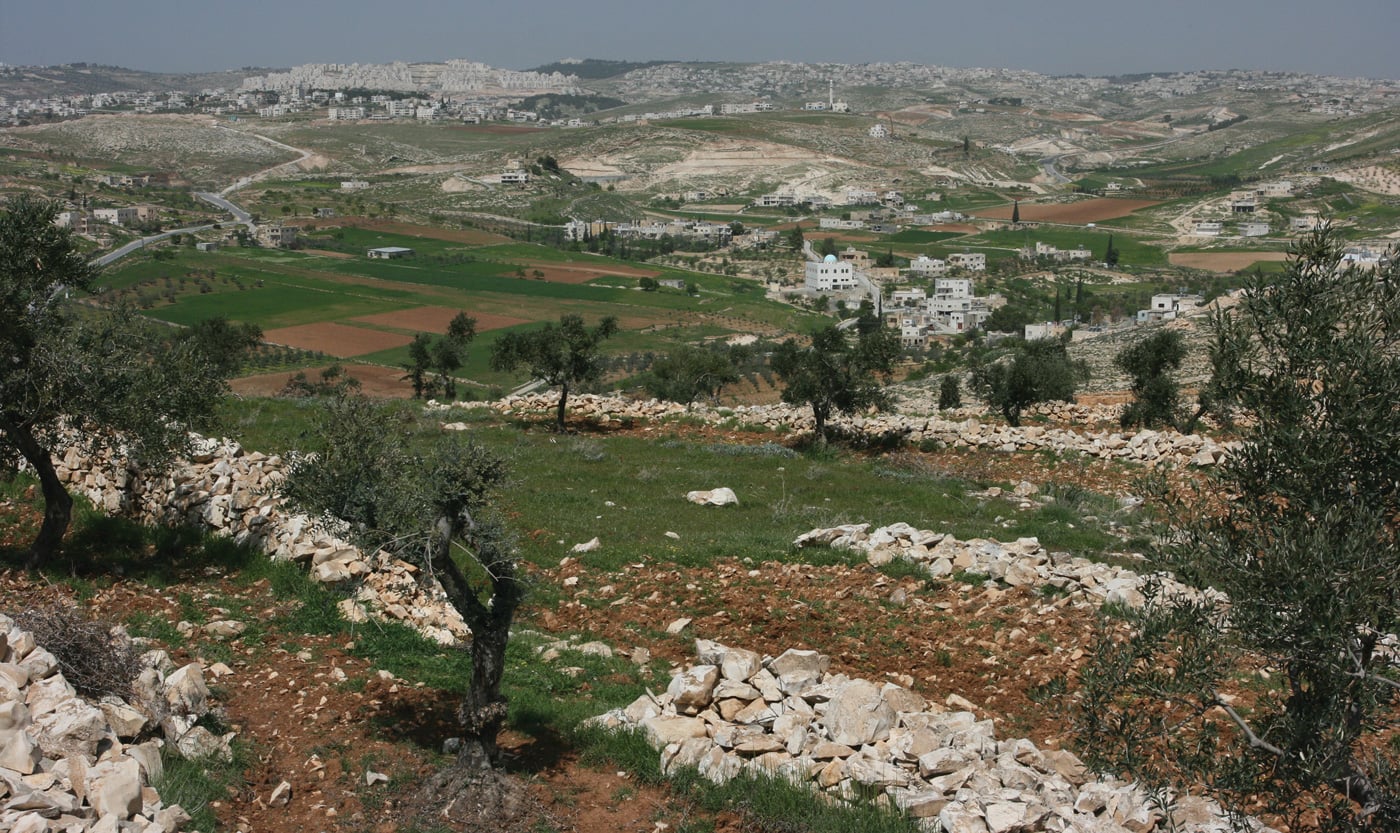
Clearly, then, the same author wrote both Luke and Acts. But Acts, unfortunately, is also anonymous. Are there any hints in Acts about the identity of the author? The chief clue is found in the “we sections” of Acts (Acts 16:10–17; 20:5–15; 21:1–18; 27:1–28:16). The careful reader notices that the author speaks of Paul and his companions as “they” (e.g., Acts 16:7–8), and then he suddenly starts using the first-person plural “we” (Acts 16:10–13, 16), probably because he is now participating in the Pauline mission. Indeed, in these sections he may be referring to a diary he kept of these events. By comparing these “we sections” with the rest of the book, the reader can begin to eliminate certain names from authorship (cf. Acts 20:4). Although other solutions are possible (e.g., that the author was Titus), it is most likely that the author of the Gospel was Paul’s traveling companion—the physician Luke.
Luke is mentioned three times in Paul’s letters. In Colossians 4:14 he is called “our dear friend Luke, the doctor.” In Philemon 24 he is mentioned as one of Paul’s fellow workers. In 2 Timothy 4:11 Paul says that “only Luke is with me.” This reference to Luke’s loyalty is especially poignant because the context of 2 Timothy 4 reveals that Paul is about to be executed by the Romans, and many of Paul’s companions abandoned him in such a perilous situation. If Philemon and Colossians were written by Paul from Rome (and this theory is still the most probable), then the references to Luke in these letters fit with Acts 27:1–28:16, where the author of Acts accompanies Paul to Rome.
W. K. Hobart argued that Lukan authorship was supported by Luke’s precise use of medical terminology, showing that the author was a physician (Col. 4:14). But H. J. Cadbury carefully tested Hobart’s thesis and demonstrated that Luke’s alleged medical terminology is often found in Greek writers who were not physicians; therefore, one should not claim that the language used in Luke-Acts clearly indicates that a physician wrote it. Cadbury’s study, however, does not preclude Lukan authorship; it simply shows that one cannot argue for Lukan authorship from medical terminology. Colossians 4:14 also implies that Luke was a Gentile and not a Jew. In Colossians 4:10–11 Paul names Aristarchus, Mark, and Jesus Justus and says that they are his only companions of the circumcision, meaning presumably that they are his only Jewish companions. Then in Colossians 4:12–14 Paul names Epaphras, Luke, and Demas and says that they send their greetings. If the three listed in Colossians 4:10–11 are the only Jews with Paul, then the obvious conclusion is that Luke was a Gentile.
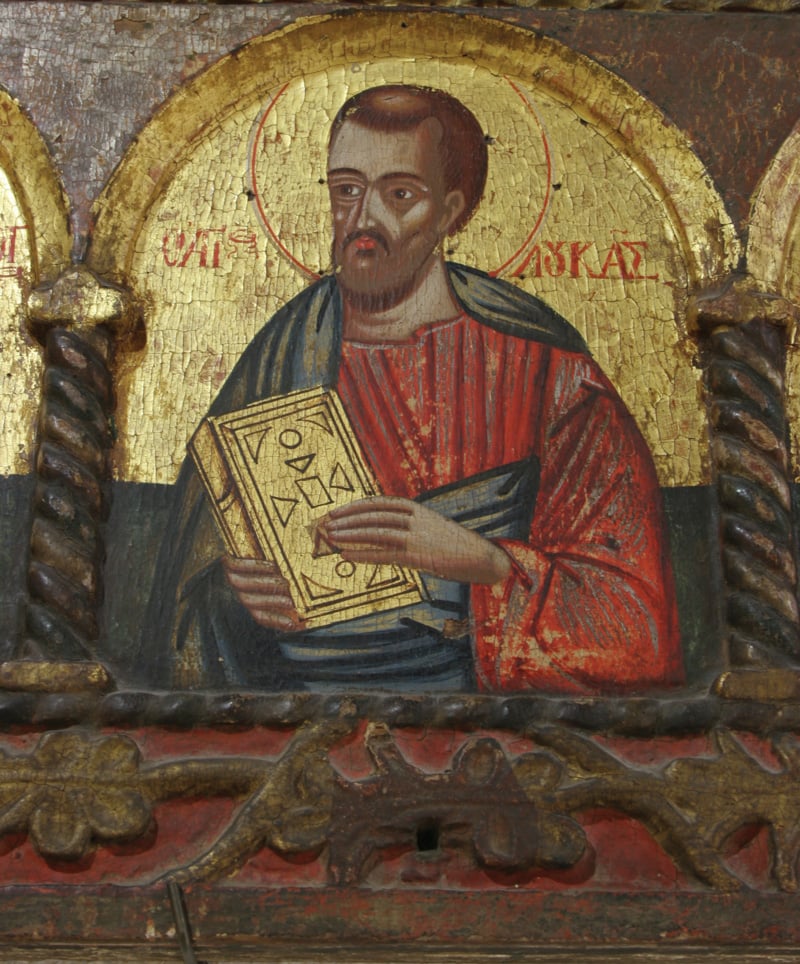
An icon of Luke from a larger piece entitled Christ and Twelve Apostles (Antalya, Turkey, nineteenth century AD)
Even though the internal evidence may point to Lukan authorship, decisive evidence is lacking. But it is significant that the early tradition of the church is unanimous in positing Lukan authorship. For example, the early title of the Gospel—“Gospel according to Luke”—is attached to our earliest manuscript of the Gospel, from the late second century AD. Irenaeus, the Muratorian Canon, and an ancient prologue to the Gospel (all written near the end of the second century AD) also assert Lukan authorship. Tertullian, writing early in the third century AD, also held to Lukan authorship. Some scholars tend to doubt the tradition of the early church on these matters, and certainly the early church fathers were not infallible. Nevertheless, the ancient tradition is a serious witness, and since the church fathers were closer to the events than we are, we should put our trust in their conclusions unless there is compelling evidence for not doing so. Furthermore, those who doubt Lukan authorship do not adequately explain why the early church would attribute the work to Luke. After all, Luke is not a notable figure in the New Testament itself. The most probable reason for the tradition of Lukan authorship is that this tradition is accurate.
Scholars often question Lukan authorship because Luke’s picture of Paul seems to contradict Paul’s self-portrait in his letters. But the difference in the portrait of Paul is probably due to two different perspectives. Inevitably, there will be differences between the way a person describes him- or herself and the way an outsider views that person. In addition, it is also claimed that Luke’s writing is subapostolic; a belief in the imminent return of Christ (Greek parousia) has been abandoned, and the church has become an institution that grants salvation. The objection regarding the second coming is too simplistic. A careful reading of the Gospel accounts shows that there are three different types of sayings about the end: some stress the imminence of the end (Mark 13:30 and parallels), others a period of delay (Matt. 25:14–30), and others uncertainty regarding the end (Mark 13:32–37 and parallels). The Gospel of Luke displays the same tension (e.g., 21:9 and 21:33) and thus is in accord with the other Gospel accounts. The notion that the church has been institutionalized is also oversimplified, for it is obvious that any new movement must have some organization. The question is whether the Lukan organization is as advanced as the church of the second century AD. Even a cursory reading of the letters of Ignatius (d. ca. 107) shows that there are major differences, for there are no regional bishops in Luke as there are in the Ignatian letters. Neither of these objections, then, is decisive.
Date and Audience
The date and destination of the Gospel of Luke are also shrouded in uncertainty. Indeed, the problem is particularly knotty because the date of Luke usually depends on the dates of Mark and Acts (most scholars still hold to Markan priority). Two basic theories are favored in scholarship today: Luke was written in either the 80s or the 60s. Those who favor a date in the 80s maintain that Luke was written after Mark, and the latter was not written until circa AD 65–70. In addition, some scholars claim that Luke was probably written after the destruction of the temple in AD 70. Others think Luke was written in the early 60s because Acts ends (28:30–31) with Paul under house arrest, and no information is given on the outcome of his trial. According to this theory, such an abrupt ending in Acts shows that Luke finished Acts before Paul’s case was resolved. In this instance Acts would be dated between AD 61 and 63. Since Luke was written before Acts, the Gospel would be placed in the early 60s or late 50s. The same scholars would argue that the Gospel of Mark was written in the 50s. Other scholars date Luke between AD 65 and 70, arguing that it was probably written before the destruction of Jerusalem in AD 70. Certainty is impossible on such difficult matters, but a date before the destruction of Jerusalem in AD 70 seems probable.
Where was Luke when he wrote the Gospel? Early traditions suggest Achaia, Boeotia, or Rome. The latter is especially attractive because of the tradition that Mark wrote his Gospel in Rome; however, no one really knows where Luke was, but the matter is not crucial in the interpretation of the Gospel.
Almost all scholars agree that Luke wrote to Gentile Christians. The dedication of the two volumes to a person who has a Greek name (Theophilus), the excellent Greek of the prologue (1:1–4), the interest in Gentiles, and the elimination of certain Jewish customs and debates (e.g., the controversy on cleanness in Mark 7:1–23), and the substitution of Greek terms for Jewish terms all suggest a Gentile audience.
Sources
That Luke used sources is immediately evident from the prologue of the Gospel (1:1–4). He indicates that many others have written accounts of the Gospel traditions and that these traditions have been handed down to the church. Luke specifically states that he “carefully investigated everything from the beginning” (1:3), showing that he thoroughly sifted through the information that was available to him. What were the actual sources Luke used? This is a matter of speculation, of course, and so dogmatism is excluded.
Most New Testament scholars still agree that Luke used the Gospel of Mark when he composed his Gospel (although this theory is contested rather strongly by a significant number of scholars). The reason for this is that a substantial portion of Mark’s Gospel, often including the exact words from Mark, is used in Luke’s Gospel. Of course, the argument as it is stated above could support Lukan priority, but for a variety of complex reasons such a view is unlikely.
Also, both Luke and Matthew may have used a common source that was either a written document or consisted of oral tradition. This material is designated “Q” (from German Quelle, “source”). Unfortunately, Q has not survived and possibly never even existed in written form. Approximately 230 verses appear in both Matthew and Luke but not in Mark’s Gospel. A common source is possible since the wording of this common tradition that Luke and Matthew share is remarkably similar and sometimes exactly the same. But if the wording is so similar, then perhaps Luke borrowed it directly from Matthew (very few scholars think Matthew borrowed from Luke). This is improbable, however, because Luke uses the same sayings that Matthew does and places them in completely different contexts. It is highly unlikely that Luke would transpose the same sayings or break up Matthew’s tightly organized Sermon on the Mount (Matthew 5–7). Thus, the idea that Luke and Matthew both used and adapted a common source or sources, each without directly depending on the other’s Gospel, is the most likely, though we cannot be sure if the source or sources were oral or written.
Last, any material in Luke’s Gospel that is not dependent on Mark or Q is usually labeled “L.” This is simply a convenient way of indicating that Luke had other sources of information. It is impossible to know how many.
We should also not rule out that Luke may have received information from Mary the mother of Jesus, the disciples of John the Baptist, Manaen (an early disciple; cf. Acts 13:1), Cleopas (Luke 24:18), and others. Many New Testament scholars would doubt that Luke depended on any of these persons. But it is quite probable that Luke would have spoken to living persons about what they had heard and seen of Jesus when he came into contact with them. Any twentieth-century researcher would have done the same, and in the ancient world such a procedure would have been prized just as highly, as the early church father Papias in the second century made clear.
Some scholars have maintained that Luke’s use of his sources shows that his writing lacks historical reliability—that he was writing to edify the church and to propound his own theology and not to transmit what really happened. First, we should note that such a position contradicts Luke’s own statement of his purpose in the prologue of the Gospel (1:1–4), where he indicates that accuracy in the work is one of his concerns. Second, it is methodologically flawed to pit edification and theology against history. All history writing is interpretive to some degree; the writer must select which themes he will emphasize. Clearly, Luke does have a distinctive theology, but it is not logically necessary to conclude that such interpretive selection and presentation by an author obviates historical reliability. The same point applies to edification; that is, what really happened could be edifying. Third, Luke’s use of the Gospel of Mark (the most common theory) also shows that he was interested in historical accuracy. For example, the sayings of Jesus shared by Luke and Mark usually have only minor differences. The modern reader needs to remember that the ancient writer was not always interested in exactly what was said. Luke would naturally be content at times to paraphrase Jesus’s words and actions. Such a paraphrase would be inaccurate only if it deceived a person about what actually happened. Luke was not recording on tape the words of Jesus, but neither was he freely inventing them; he clearly felt free to record in his own style what happened. Last, when Luke’s account differs from the other Synoptics, we need to recall that none of the accounts claims to be exhaustive. Thus, one should not demand that any Gospel writer tell the whole story. All our questions about historicity will never be answered when reading the Gospels. But humility and the inspiration of Scripture suggest that we should give the writer the benefit of the doubt.
Theological Themes
When studying Luke’s theology one must remember that he did not simply write a Gospel but that he also wrote the book of Acts. Both works must be taken into account in formulating a Lukan theology.
It is evident from the writing of both the Gospel and Acts that Luke is interested in the continuing history of the church. The prologue to the Gospel (1:1–4) clearly shows that Luke was interested in historical accuracy. More than any other Gospel writer Luke explains the relationship between the events he narrates and Roman and Palestinian history. Of course, Luke was not a disinterested historian; he wrote these books because he saw this period of history as the decisive in-breaking of God’s salvation.
It is not surprising, therefore, that Luke is usually described as a theologian of salvation history. Luke sees what is happening in the ministry of Jesus and the ministry of the early church as the fulfillment of God’s plan and purpose. This saving plan comes to realization as people experience salvation.
Luke also emphasizes that this salvation is for all people, even for the people considered to be outcasts or socially marginal. Thus, Jesus proclaims his saving message to tax collectors, sinners, the poor, women, and children. This theme continues in Acts, where the early church slowly grasps that God wants the gospel message to be proclaimed to both Samaritans and Gentiles. Jews and Gentiles are equal members in God’s new community.
The power of the Spirit and the importance of prayer are also prominent themes in Lukan theology. In the Gospel of Luke Jesus conducts his ministry in the power of the Spirit. His messianic work can be accomplished only because “the Spirit of the Lord is on me” (4:18). After Jesus’s resurrection and exaltation he becomes the dispenser of the Spirit (Acts 2:32–33) and pours the Spirit on his disciples. Then his disciples proclaim the gospel of salvation to the ends of the earth by the power of the Spirit. Prayer also plays a vital role in Jesus’s ministry. Luke emphasizes repeatedly that Jesus prayed before making important decisions or at key points in his ministry. The disciples in Acts follow the pattern of their master by continuing in prayer.
Luke also focuses on the importance of discipleship. Some of Jesus’s strongest statements on the commitment demanded of those who would follow Jesus are found in this Gospel (9:57–62; 14:25–35). Also, Luke stresses in uncompromising terms the dangers of materialism. The love of riches ousts one’s love for God, which is why Luke thinks it is a blessing to be poor, for the poor are dependent on God (6:20–26). In Acts, Luke portrays the ideal of Christian community (Acts 2:42–47; 4:32–37).
Unlike Paul, Luke does not fully explain the meaning of Christ’s death on the cross. Luke views the death of Jesus as the fulfillment of God’s plan (Luke 24:44), and he even connects the possibility of forgiveness with the death of Jesus (24:46–47). What Luke does not do, however, is attempt to explain in detail the relationship between Jesus’s death and the forgiveness of sins.
The salvation that Luke centers on is available through Jesus of Nazareth. The significance of Jesus becomes apparent when one examines the titles Luke ascribes to him. Jesus is Messiah, Lord, the Son of God, the Son of Man, Savior, servant of the Lord, king, prophet, and the Son of David.
Commentary
1. Prologue: A Reliable Account of Salvation History (1:1–4)
Luke’s prologue is distinctive among the Gospel texts because it is written in excellent classical Greek, showing that Luke is consciously writing a literary work. Many have preceded Luke in composing Gospels, relying on the oral testimony of eyewitnesses who handed down the tradition. Luke has also decided to compose a Gospel; one cannot demonstrate from the text that he has decided to do this because he thought the previous Gospels were inadequate or inferior. Indeed, verse 2 implies that Luke trusted the reliability of the previous accounts. Luke then displays his credentials for writing a Gospel. His investigation was comprehensive (“from the beginning”), accurate (“carefully”), and well organized (“orderly”). The word “orderly” does not necessarily imply that Luke is writing in strict chronological order but only that the Gospel itself is organized in a literary way. The work is dedicated to Theophilus, although a wider readership is clearly expected. Theophilus cannot be identified with certainty. Some think he may have been a Roman official, but the words “most excellent” may simply suggest that he was a member of the higher class in Roman society. The purpose of the work is related in verse 4. Luke is writing so that Theophilus will be convinced of the reliability (“certainty”) of the matters in which he has been instructed. The reference to eyewitness testimony and the careful nature of Luke’s research (1:2–3) support the claim of reliability. Luke, however, was not simply writing a historical treatise; he was writing about the events of salvation history, about the events that “have been fulfilled” (1:1) through the person of Christ. Luke was not a dispassionate historian, but neither was he an inferior historian. He writes history from an interpretive standpoint, showing that God’s saving purposes have been fulfilled in Christ.
2. Preparation for Jesus’s Ministry (1:5–4:13)
A. Two births predicted (1:5–56). In the first part of this section of the Gospel, Luke describes the prediction of the birth of John the Baptist (1:5–25). In verses 5–7 Luke sets the background before writing of Zechariah’s vision. The Herod who is mentioned is Herod the Great (cf. Matt. 2:1–19), who ruled over Palestine from 37 BC to 4 BC. Zechariah and Elizabeth were both from priestly stock, and Zechariah was from the “division of Abijah.” The priestly tribe of Levi was divided into twenty-four divisions, and the division of Abijah was the eighth of the twenty-four (1 Chron. 24:7–18). Each division served in the temple at Jerusalem two weeks every year. To be childless was considered a great reproach among the Jews (cf. 1:25; Gen. 30:23; 1 Sam. 1:5–6), but verse 6 clearly shows that their failure to have children was not due to sin.
Zechariah was chosen by lot to offer incense in the temple (1:9). The number of men in the priestly ranks was so large that no person was permitted to offer incense more than once in his lifetime. In accordance with Exodus 30:7–8, incense was offered twice a day, both in the morning and evening. The parallels with Daniel 9 suggest that the vision occurred in the evening. The Greek word used for “temple” in this context refers to the Holy Place since only the high priest could enter the Most Holy Place (cf. Heb. 9:6–7). The sudden appearance of the angel Gabriel (1:19) arouses fear in Zechariah. The content of Zechariah’s prayer (1:13) is problematic. Was Zechariah praying for a son (1:6–7) or was he praying for Israel’s redemption? Perhaps he was praying for both since John’s birth relates to both of these concerns. John’s abstinence from alcohol reminds one of the Nazirites (Num. 6:3; Judg. 13:4). The filling of the Holy Spirit (1:15) in Luke is usually related to prophetic activity, indicating that John is a prophet. Verses 16–17 reveal John’s function: to prepare the people for the Lord’s advent. He will fulfill the role of Elijah, as was predicted in Malachi 3:1 and 4:5. Zechariah is punished for his doubt—clear Old Testament precedents show that children were born to childless couples (Genesis 16–21; Judges 13; 1 Samuel 1), and Zechariah as a priest knew these stories. In addition, Zechariah’s muteness (1:21–22) functions to show the people that he has seen a vision.

The angel Gabriel visited Mary in Nazareth of Galilee (Luke 1:26), which became Jesus’s boyhood home. Nestled within a bowl formation in the Nazareth Range, Nazareth was then a very small village, but today it has grown into a large town.
The announcement of Jesus’s birth (1:26–38) has many similarities to the previous story, but the significance and superiority of Jesus’s birth are heightened because he will be born of a virgin (not just barren parents) and will sit on David’s throne (unlike John, who will prepare the way of the Lord). The emphasis on Davidic sonship is first implied in verse 27, for by adoption Jesus becomes Joseph’s son. Verses 32–33 plainly show that Jesus will be the promised Messiah from the line of David (cf. 2 Sam. 7:9–16). The text, of course, goes a step further: Jesus is not just the Son of David but also the Son of God (1:35; cf. 1:32). In Luke “Son of God” refers to Jesus’s unique relation to Yahweh.
Mary’s favored status (1:28) does not imply any intrinsic worthiness; it merely means that she has been a recipient of God’s gracious activity. Nevertheless, Mary’s obedience and faith (1:38; cf. 1:45) are clearly a model for Luke’s community.
Mary’s question in verse 34 has engendered much controversy. Since she is engaged to Joseph, why does she even ask this question? (The verbs in 1:31 are future.) Some scholars have said that Mary had made a vow of perpetual virginity, but this is contradicted by her engagement to Joseph. Others claim that Mary knew from Isaiah 7:14 that the Messiah would be born of a virgin, and she was protesting because she was already engaged. But it is unlikely that Mary understood Isaiah 7:14 to refer to a virgin birth, and Luke never uses the passage. Still others take this to be a Lukan literary device. In other words, Mary never spoke these words, but the question advances the narrative to the great announcement; however, this solution impugns Luke’s historical reliability. It is most likely that Mary understood the angel to be saying that the conception would be imminent, and Mary’s marriage was still not consummated.
Naturally, the historicity of the virgin birth has been questioned. Some scholars have said that the story was borrowed from the pagan world, where heroes were born from the union of gods and human women. These accounts, however, are different from the Lukan and Matthean accounts, for nothing in the latter texts suggests that actual intercourse took place between God and Mary. The words “come on” and “overshadow” in verse 35 do not imply sexual relations, and Luke here describes with great delicacy an incomprehensible event. Others have questioned the veracity of the accounts because of the silence of the rest of the New Testament. The rest of the New Testament, however, does not contradict the present account. (For a detailed discussion, see Machen.)
The text of 1:39–56 can easily be divided into two sections: (1) Elizabeth pronounces a blessing on Mary as the mother of the Lord (1:39–45); (2) Mary breaks forth in praise to God for his mighty works (1:46–56). The blessing of Elizabeth ties the narrative together; now the mothers of the two sons meet, and even in the womb John begins his ministry. In addition, Elizabeth’s words in verse 43 confirm the promise that was made to Mary. Mary is blessed (1:42) not because she is incomparably holy but because she is the mother of the Lord and because she believes that the divine promise will be fulfilled (1:45). So once again Mary becomes a model for the Lukan community (cf. 1:38). The content of Mary’s song is rather surprising, for only in verse 48 does Mary dwell on the personal benefits of being the mother of the Lord. The song stresses the exaltation of the humble, the humiliation of God’s enemies (especially the proud and rich), and the fulfillment of God’s promises to Abraham. Presumably the song celebrates what God will accomplish through the birth of Jesus, the Messiah. The song is typically Jewish (cf. particularly 1 Sam. 2:1–10, which contains numerous parallels). The prophecy, of course, is fulfilled in a way that surprises Mary, since Jesus suffers before he is exalted.
B. Two sons born (1:57–2:52). 1:57–80. The account of John’s birth (1:57–66) continues the parallelism between John and Jesus, which is characteristic of the Lukan infancy narrative, although Jesus’s birth is described in more detail (cf. 2:1–20). Circumcision on the eighth day (1:59) was in obedience to the Old Testament law (Lev. 12:3), indicating that John was incorporated into the covenant (Gen. 17:9–14). The controversy over the naming of the child is curious because this is the only early passage that indicates that a child was named at his circumcision. In the Old Testament a child was named at birth. Moreover, there is no clear evidence that the naming of a child after his father was common or expected, although the naming of a child after his grandfather was common. The name John means “God is gracious.”
The text implies that Zechariah was deaf as well as mute (1:62), and presumably he had communicated previously in writing to Elizabeth what the name of the child should be (1:60). The main function of the story is to show that the Lord’s hand is with John (1:66). This is communicated to the reader and the original participants in the events in two ways: (1) Elizabeth conceives and gives birth to a child long after her childbearing days are over; (2) Zechariah is suddenly given the ability to speak again after being deaf and mute for a period of time.
Structurally, Zechariah’s hymn (1:67–80) can be divided into two parts. In the first part of the hymn Zechariah praises God for the redemption he has accomplished through the house of David (1:68–75). In the second part of the hymn he focuses on the role of John (1:76–79). Like the Magnificat, this hymn is full of Old Testament allusions, and the marginal references to the Old Testament should be consulted. Luke makes an editorial comment before the opening of the hymn (1:67), explaining that Zechariah’s hymn is prophetic and Spirit-inspired. In addition, the hymn also answers the question in verse 66 about the role of John in salvation history.
Zechariah begins the hymn by praising God for his deliverance (1:68). The word “horn” (1:69) means strength, alluding to the horns of animals. This is a very common Old Testament expression (Deut. 33:17). The salvation God has accomplished is a fulfillment of the prophecies made to David (1:69–70). Clearly, Zechariah is thinking of God’s promise to David that an heir would always sit on the throne (2 Sam. 7:12–16), and thus he is thinking of Mary’s promised son. This may seem strange because John has just been born and Zechariah is praising God for Jesus. But we have already seen in Luke 1:11–17 that John’s birth is linked with the fulfillment of God’s saving purposes. The fulfillment of God’s covenant (1:72) to Abraham (1:73) is also the object of Zechariah’s praise. With the birth of John and the promised birth of Jesus, Zechariah sees the fulfillment of all the Old Testament promises. Zechariah conceives of this fulfillment in nationalistic terms; the Jews will be rescued from the onslaughts of all enemy forces so that they will be able to serve God in peace and harmony (1:71, 74–75). The remainder of Luke demonstrates that the prophecy will be fulfilled in Jesus in an unexpected way.
In verses 76–77 Zechariah turns his attention to the role of John. He will be a prophet (cf. Isa. 40:3; Mal. 3:1) and will prepare the way for the Lord. Here the “Lord” is probably not a reference to God but to Jesus. John’s ministry will be a spiritual one, for the people will learn the saving message that consists of the forgiveness of their sins (cf. Jer. 31:31–34). The last two verses (1:78–79) are particularly difficult. The salvation John proclaims is due to the tender mercy of our God, and that same mercy also explains the advent of the rising sun. The Greek word for “rising sun” may also be translated as “root” or “branch.” In either case it probably expresses a messianic title (cf. Num. 24:17; Mal. 4:2 on rising sun, and Isa. 11:1; Jer. 23:5; Zech. 3:8 and 6:12 on root or branch). The Messiah will illumine those in darkness and bring in peace.
2:1–52. Luke’s interest in history becomes evident as he dates the birth of Jesus in relationship to world history. Augustus (2:1) was officially the Roman emperor from 27 BC to AD 14, and under his reign the Roman world experienced unparalleled peace and prosperity. During the reign of Augustus censuses were conducted for the purposes of taxation. The main purpose of this incident is to show that Jesus was born in the town of David, which was Bethlehem (2:4; cf. Mic. 5:2; Matt. 2:4–6). Thus, God in his sovereignty used the decree of Augustus to accomplish his purposes (cf. Isa. 45:1–6). Verse 5 seems to indicate that Mary is now married to Joseph, although the marriage has not yet been consummated. The wrapping of Jesus in strips of cloth (2:7) was the usual way mothers took care of their children (cf. Ezek. 16:4). A second-century tradition places Jesus’s birth in a cave, but there is no compelling evidence for that here. The newborn Jesus was laid in a manger—that is, a place where domesticated animals were fed. The inn in verse 7 was probably a public place where a number of travelers would spend the night under one roof. Possibly the manger was located under the open sky or in a barn somewhere, although the text says nothing about other animals being present. Another possibility is that Jesus was born in the small home of a Jewish peasant family who kept their animals indoors with them.
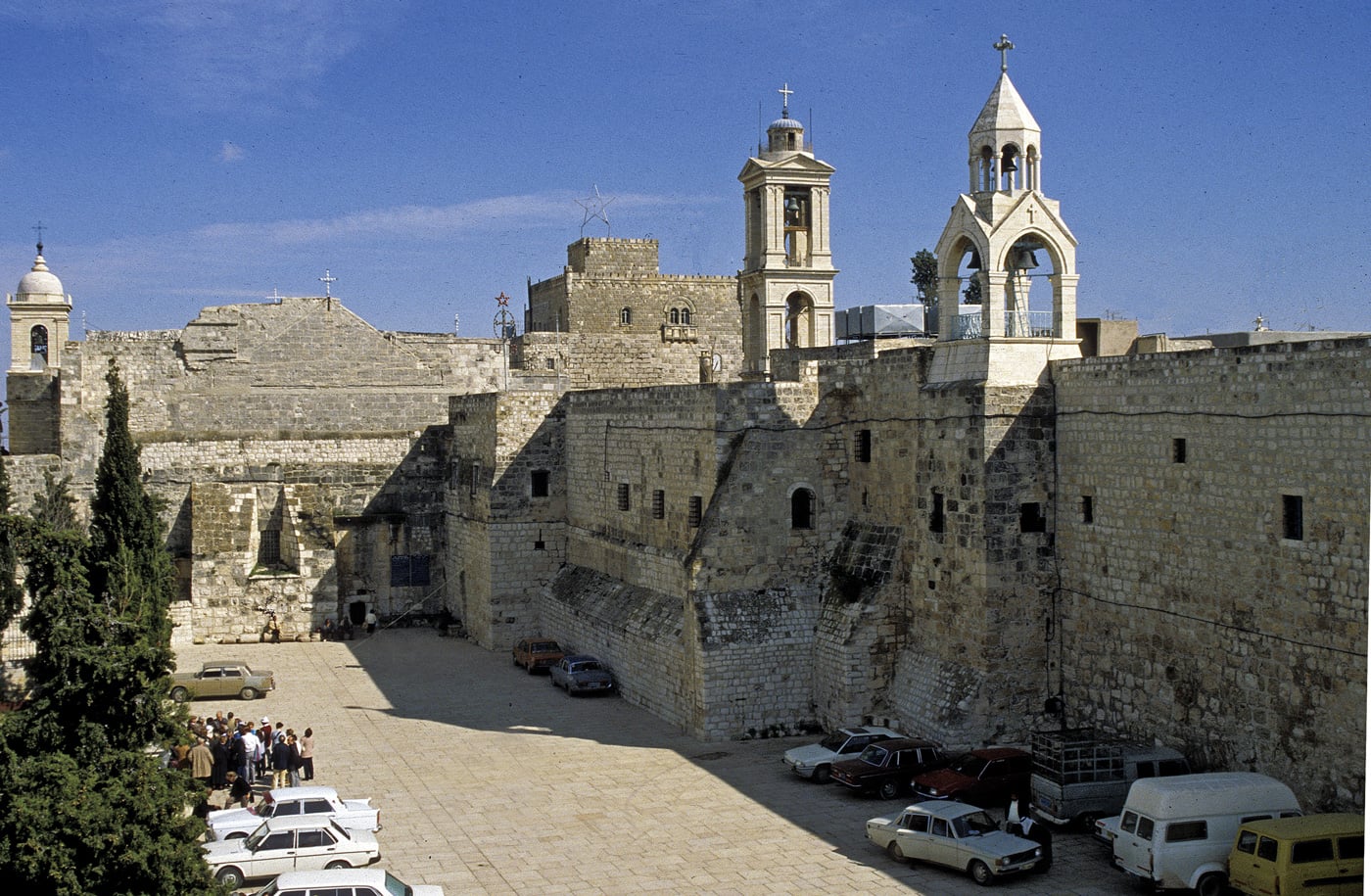
The Church of the Nativity in Bethlehem. Tradition says this church is built upon the site where Jesus was born (Luke 2:6–7).
The historical accuracy of Luke’s description of the census is plagued by various problems, the most serious being the date of Quirinius’s governorship. Quirinius began his governorship of Syria in AD 6, and this is obviously too late to accord with the date of Jesus’s birth, for Jesus was born before the death of Herod the Great in 4 BC. Scholars have suggested various solutions to the problem, but we will mention only two. (1) Quirinius conducted several military operations in the eastern part of the empire, and he may have had extraordinary authority to order a census during the governorship of Saturninus (9–6 BC). (2) Perhaps the census began during the reign of Herod the Great and was not finished until the governorship of Quirinius. No easy resolution of this problem is available, and we must be content with some uncertainty since our historical records are incomplete.
The shepherds are not selected for the visitation (2:8–20) because they are sinners but because of their lowly status. The shepherds would take turns watching the flock at night to guard against wolves and thieves. The text does not indicate the time of year, although December would be an unusual time of year to be outside at night. The shepherds are told that the good news is for all the people (2:10), and by this Luke is probably indicating the inclusion of the Gentiles. The significance of the birth is plainly revealed to the shepherds, as Jesus is called Savior (Deliverer), Christ (Messiah), and Lord (2:11). The meaning of the last line of the angels’ hymn in verse 14 has been construed in different ways. The translation of the NIV is correct: “Glory to God in the highest heaven, and on earth peace to those on whom his favor rests.” The notion that God’s peace extends to “men of good will” is a serious distortion of the doctrine of grace, and the King James Version rendering (“good will toward men”) is based on an inferior text.
The story shows the spontaneous obedience of the shepherds (2:15), the amazement of those who hear the report of the shepherds (1:17–18), and Mary’s careful reflection over the events that are occurring (1:19). The reference to Mary in verse 19 may indicate that she was a source of Luke’s information for this story.
The theme that ties together 2:21–40 is the fulfillment of the law—that is, the fulfillment of Scripture. Jesus is circumcised in accord with the Old Testament law (Lev. 12:3), Mary is purified (2:22–24; cf. Lev. 12:4–8), and both Simeon and Anna prophesy, indicating that God is fulfilling his covenant promises. In verse 39 Luke reiterates the major theme of this section by noting that “Joseph and Mary had done everything required by the Law of the Lord.” The parallelism between John the Baptist and Jesus continues, but the superiority of Jesus is again emphasized. At John’s circumcision and naming many wonder about the role the child is going to fill (Luke 1:65–66). The greater significance of Jesus is indicated by the startling prophetic revelations in the temple concerning his ministry.
Luke has compressed together several themes in verses 22–24, and they need to be distinguished. (1) The purification of Mary was stipulated by Leviticus 12:1–8. A woman was considered to be unclean after the birth of a boy for forty days, and when her purification was finished she was to offer sacrifices for cleansing. Mary and Joseph offer either a pair of doves or two young pigeons (2:24; cf. Lev. 12:8) because they cannot afford to offer a lamb. (2) The Old Testament also required that the firstborn child should be redeemed by a payment of five shekels (Exod. 13:13; Num. 18:15–16). Such a redemption reflects the Old Testament tradition that the firstborn belongs to Yahweh. Luke does not say that the payment is made, perhaps because he has combined this theme with the next one. (3) Interestingly, Luke combines the redemption of the firstborn with the presentation of Jesus to the Lord (2:22–23). Nowhere does the Old Testament require such a presentation, and the presentation of Jesus reminds the reader of Hannah’s presentation of Samuel (1 Sam. 1:22–24, 28). Perhaps Luke’s amalgamation of these three themes explains why he speaks of “their purification” (NASB, RSV) in verse 22, because according to the Old Testament law only Mary needed to be purified.
The Spirit had already revealed to Simeon that he would not die before he would see the Messiah of the Lord (2:26). “He was waiting for the consolation of Israel” (2:25), and this means that he was waiting for God to fulfill his covenant promises to Israel. The coming of the Spirit on a person in Luke (2:25) usually indicates prophetic activity, and thus it is not surprising that Simeon prophesies. Simeon is ready to die because he has seen God’s salvation (2:29–30); the word “salvation” is just another way of describing Christ and his work in this context. When Simeon speaks of “all nations” (2:31), Gentiles are included, which verse 32 makes clear (cf. Isa. 49:6). The reference to the child’s father and mother (2:33) does not contradict the virgin birth because Joseph has adopted Jesus into his family. After his positive oracle Simeon turns to a more ominous matter. Jesus will “cause the falling and rising of many in Israel” (2:34). Either two different groups are being described here—one group will rise and another will fall—or more probably Luke is referring to one group. Those who embrace the message of Jesus will fall before they rise. In other words, identification with Jesus will bring persecution. Such hostility to Jesus will reveal the thoughts of the heart (2:35); that is, it will reveal that some are opposed to Jesus. Simeon, then, adds that Mary herself will experience anguish from the rejection Jesus will encounter. Like Simeon, Anna proclaims redemption for Jerusalem (2:36–38; here “Jerusalem” refers to Israel as a whole), linking that redemption with Jesus. One should not read the saying about her never leaving the temple too literally. Perhaps she resided in one of the many rooms adjacent to the temple.
In 2:41–52 Luke discusses the account of the young boy Jesus at the temple. According to the Old Testament all Jewish males were required to go to Jerusalem for the great festival of Passover (Exod. 23:14–17; Deut. 16:16). By New Testament times women also attended. Jesus would have been expected to fulfill this requirement after he reached the age of thirteen. It is not entirely surprising that Jesus’s parents do not know that he is still in Jerusalem. It was common for pilgrims to travel in large caravans (2:44), and they could have easily concluded that Jesus was with relatives or friends. The account of Jesus’s discussion with the religious leaders (2:46–47) does not imply that he is teaching them; rather, it implies that his knowledge of the law is penetrating and thorough. Joseph and Mary find Jesus after three days (2:46): the first day they depart for home, the second day they return to Jerusalem, and on the third day they find him. Jesus’s answer (2:49) to his parents’ question strikes the modern reader as odd, but Luke is not interested in the psychological dynamics of the story. The point of Jesus’s answer is that obedience to his Father takes precedence over obedience to his parents. Thus, the center of the story is christological—Jesus is no ordinary son. Jesus’s parents are perplexed (2:50), and Luke wants the reader to focus on who Jesus is. The story ends (2:51–52) with Jesus returning home; he submits himself to his parents and grows in grace and wisdom.
C. The Baptist’s ministry: Preparation for the Lord (3:1–20). The historical introduction in 3:1 signifies the real beginning of the gospel story (cf. Acts 10:37). Luke is the only Gospel writer who clearly sets the events into the context of world history. Tiberius’s reign extended from AD 14 to 37. The reference to Tiberius’s fifteenth year (3:1) is not definitive because there were different ways of calculating chronology in the ancient world. One possible date is AD 28/29, though AD 26/27 could be correct as well. Pontius Pilate ruled as the governor of Judea (the correct technical term is prefect) from AD 26 to 36. Herod the tetrarch of Galilee is not Herod the Great but Herod Antipas, who reigned over Galilee and Perea from 4 BC to AD 39. Antipas was the son of Herod the Great and is the Herod referred to in the rest of the Gospel. Philip was also a son of Herod the Great and reigned from 4 BC to AD 34. Very little is known about Lysanias. Only one person could be high priest at a time in Israel (3:2). Annas functioned as high priest from AD 6 to 15, and Caiaphas was high priest from AD 18 to 36. Luke does not distinguish carefully between Annas and Caiaphas because the latter was the son-in-law of Annas, and hence Annas continued to exercise great power during the high priesthood of Caiaphas. The event Luke is placing into its historical context is the beginning of John the Baptist’s ministry. John’s ministry is conducted in the desert (3:2) near the Jordan River. He preaches “a baptism of repentance for the forgiveness of sins” (3:3). This was not merely ritual washing but involved a definite break with sin. Luke sees John’s ministry as a fulfillment of Isaiah 40:3–5. Just as Isaiah predicted, Israel needed a “new exodus” to enter the land of promise. Spiritually Israel needed to come out of the wilderness, pass through the Jordan, and enter the land of promise. John is the transitional prophet between the old and new eras (cf. Luke 16:16), and he is preparing all people for God’s salvation.
Verses 7–18 can be divided into three subsections: John preaches on (1) eschatology (3:7–9), (2) ethics (3:10–14), and (3) the Messiah (3:15–17). In verses 7–9 John warns that baptism without a change of lifestyle is worthless. Neither can the Jews rely on their heritage, for being a child of Abraham does not matter if one does not partake of the character of Abraham. John’s ominous reference to “the coming wrath” confirms these warnings, for the ax of judgment is ready to fall. What is the “good fruit” (3:9) one should produce before judgment falls? In verses 10–14 Luke gives us a sample of John’s ethical teaching. John does not call people to imitate his ascetic lifestyle, nor does he upset the existing social order, for he does not ask tax collectors or soldiers to leave their present jobs. Instead, he counsels those who are in these professions to be honest and content with their wages. The soldiers described here are probably not Romans but the soldiers of Herod. The common people are counseled to share their food and clothing with others (3:10). John’s preaching on imminent judgment and his powerful ethical message stimulate the people to consider whether or not he is the Messiah (3:15). John clearly shows that he is not the Messiah for the following reasons: (1) one is coming who is “more powerful” (3:16) than John; (2) John is not even worthy to untie the thongs of his sandals, a task that was usually performed by non-Jewish slaves in Palestine; (3) John’s baptism is only in water, but the coming one “will baptize . . . with the Holy Spirit and fire.” Luke is thinking of the coming of the Spirit at Pentecost (Acts 2:1–4), and the reference to fire may refer either to the refining of the righteous or to judgment on the recalcitrant (3:17). Since Luke wants to focus on Jesus, he completes the story of the Baptist’s ministry here and briefly relates the story of his imprisonment. Luke will return to the Baptist again for other reasons (cf. 7:18–35; 16:16).
D. Jesus: Endowed by the Spirit for ministry (3:21–4:13). Luke is not as interested in the actual baptism of Jesus (3:21–22) as he is in the events that accompany it. The descent of the Spirit indicates that Jesus is being anointed for his ministry (cf. Acts 10:37–38). The descent of the dove in bodily form, the opening of heaven, and the voice from God point perhaps to the inauguration of the new creation (Gen. 1:2; 8:8–12) and the reality of the Spirit’s descent. It is characteristic of Luke to mention that Jesus was praying. The words of the heavenly voice contain allusions to Psalm 2:7, Isaiah 42:1, and Genesis 22:2, indicating that Jesus is God’s Son and servant. This passage is not teaching that Jesus was adopted as God’s Son, for Luke 1:35 shows that Luke considers Jesus to be God’s Son from the beginning.
The inclusion of the genealogy of Jesus (3:23–38) here is explained by Luke’s desire to give Jesus’s ancestry before the onset of his ministry. In addition, there seems to be a link between 3:22 and 3:38, for Luke’s genealogy is distinctive in that it ends not with a human being but with God. Obviously, the genealogy is not attempting to prove that Jesus was the Son of God in a physical sense, but Luke is making a literary and theological point in placing God at the very end of the genealogy. Indeed, the very first verse of the genealogy urges the reader to ask about the identity of Jesus’s father, since Joseph is not really his father (3:23). The genealogy does not contradict the virgin birth, as verse 23 makes clear. Some scholars have expressed concern because of the differences between the genealogies of Matthew and Luke (cf. Matt. 1:1–17). For example, Matthew gives the names in forward order—from Abraham to Jesus—while Luke gives the names in reverse order—from Jesus to God. A number of problems could be listed, but the most serious are as follows: (1) Joseph’s father is Heli in Luke (3:23) and Jacob in Matthew (Matt. 1:16); (2) in Luke Jesus’s descent from David is traced through Nathan (Nathan the son of David not Nathan the prophet; cf. 2 Sam. 5:14), but in Matthew Jesus’s descent from David is traced through Solomon (Matt. 1:6); (3) Luke’s list is considerably longer between David and Jesus. One common solution has been that Luke is giving the genealogy from Mary, but this cannot be supported from the text of Luke. A more credible solution is that Matthew is giving the royal line of David (i.e., the legal heirs to the throne; Joseph belonged to this line via levirate marriage), and Luke is giving the actual family line of Joseph.
The last event before Jesus’s public ministry begins is his temptation in the wilderness (4:1–13). Two themes tie this section together: (1) Jesus by the power of the Spirit overcomes the devil by citing the Word of God; and (2) the devil is challenging Jesus’s filial obedience as God’s Son (4:3, 9). Jesus shows before his ministry begins that his trust and obedience are in his Father. Matthew and Luke have a different order in recording the temptations; the second and third temptations are reversed in Matthew.
Luke emphasizes that Jesus is full of the Spirit and led by the Spirit (4:1), implying that Jesus conquers the devil by the power of the Spirit. The devil attempts to seduce Jesus from obedience to his Father with three different temptations. In the first temptation (4:3–4) the devil tries to persuade Jesus to use his status as God’s Son to satisfy his own physical desires, instead of trusting in the Father to provide his needs. Jesus’s answer (from Deut. 8:3) implies that the satisfaction of physical desires cannot take precedence over faithful obedience. In the second temptation (4:5–7) the devil promises Jesus authority over all the kingdoms of the world if Jesus will consent to worship him. Jesus’s answer (from Deut. 6:13) is that worship and service belong to God alone, and thus it is unthinkable for him to worship the devil in order to gain earthly power and glory. Last (4:9–11), the devil brings Jesus to the pinnacle of the temple and, while arguing from Scripture (Ps. 91:11–12) that the angels will protect Jesus, suggests that he should leap. Jesus does not reject the devil’s scriptural argument (God does protect the godly), but he does refuse to perform such a whimsical act because it would involve testing God (see Deut. 6:16). Jesus is certainly referring to his Father rather than himself when he says, “Do not put the Lord your God to the test” (4:12).
3. Jesus Proclaims Salvation in Galilee by the Power of the Spirit (4:14–9:50)
A. Proclamation of good news in Galilee (4:14–5:16). Jesus’s public ministry in Luke begins at 4:14–15. Luke emphasizes that Jesus is controlled by the Spirit, for he returns from his temptation “in the power of the Spirit” (4:14). The scene is being set for Jesus’s homecoming that follows. Evidently his teaching in the synagogues was wildly admired, and thus his popularity was spreading.
In 4:16–30 Luke has probably changed the chronology of Jesus’s rejection at Nazareth and moved it up to the beginning of his Gospel because of its programmatic character (cf. Mark 6:1–6; Matt. 13:53–58). Jesus returns to his hometown of Nazareth and participates in a synagogue service. This is the oldest extant account of a synagogue service. Usually such a service included hymns, prayers, a reading from the Torah, a reading from the Prophets, and a sermon. The readings from the Torah may have been prescribed by a lectionary, but the prophetic readings were not set at this time, and so Jesus himself probably chose the passage from Isaiah. The quotation in verses 18–19 from Isaiah 61:1–2 also includes a phrase from Isaiah 58:6. Jesus draws attention to several things by using this passage from Isaiah. (1) The prophecy of Isaiah has now (“today”) been fulfilled (4:21). (2) The fulfillment is Jesus himself; he is the one whom the Spirit has anointed. The reference to Isaiah 61 and the use of the word “anointed” suggest that Jesus is referring to himself as the Messiah and servant of Yahweh. (3) Jesus’s ministry is directed to those in need—the poor, the prisoners, the blind, and the oppressed (4:18–19). In Luke these terms refer primarily to spiritual need, although a literal meaning is not excluded.
Significantly, Jesus does not continue reading Isaiah, for it also speaks of the day of God’s vengeance. The point is that Jesus’s ministry is one of good news and grace (4:18–19). Initially Jesus’s gracious words impress the crowd, but they take offense when they reflect on Jesus’s heritage; he is merely Joseph’s son (4:22). Jesus responds with the principle that “no prophet is accepted in his hometown” (4:24). He then gives two examples from the Old Testament to illustrate his point (1 Kings 17:8–16; 2 Kings 5:1–14). Both Elijah and Elisha, who were also prophets, did not aid people from Israel—they aided Gentiles. Jesus implies, of course, that the Gentiles were more open to their prophetic ministry than the Jews. This incenses the people, and they try to kill Jesus, but Jesus walks “right through the crowd” (4:30). In this account Jesus reveals his messianic mission of grace and mercy. Nevertheless, the Jews reject him, and Jesus implies that the good news will then be proclaimed to the Gentiles (cf. Acts 13:44–48; 28:23–28).
Four different events are combined here to underline the authority of Jesus (4:31–41). (1) Jesus’s teaching in Capernaum astonishes the populace because of its authority (4:31–32). (2) Jesus also manifests his authority over demons by expelling a demon from a man in the synagogue (4:33–37). Many people today discount the reality of the demonic and claim that what we have here is some form of mental illness; however, Jesus never discounted the reality of the demonic world, and oftentimes the rejection of the demonic is due to a rationalistic worldview that rejects any belief in the supernatural realm. One should not, however, rule out that, in some instances, a relationship exists between demonic possession and mental illness. (3) Jesus also reveals his authority over illness by healing Peter’s mother-in-law of a fever (4:38–39). (4) In the last scene (4:40–41) numerous people come to Jesus, and he heals them of illness and demon possession. The distinction drawn between the ill and the demonized indicates that Luke did not think that all who were sick were controlled by demons. They came to Jesus at sunset because that was when the Sabbath ended, and people could then carry the sick. These stories also function christologically. The demons recognize Jesus as “the Holy One of God” (4:34), “the Son of God,” and “the Messiah” (4:41). Jesus does not silence the demons because their words are false. Rather, the demons are trying to exercise control over Jesus by revealing his status; Jesus silences them and thereby reveals his superiority over them.
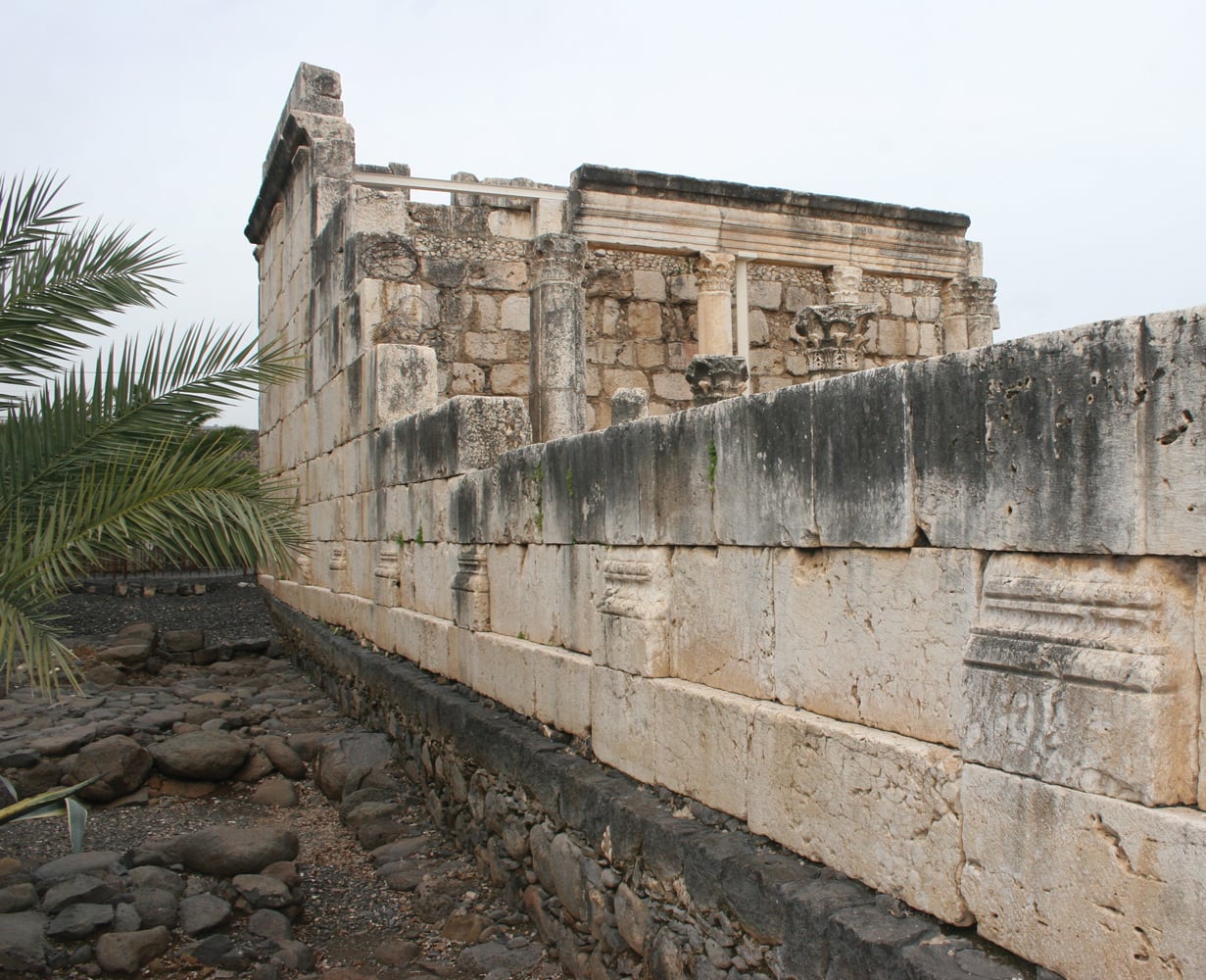
Beneath this white limestone synagogue in Capernaum that dates from the late 300s, archaeologists have located buildings from Jesus’s day (in black basalt stone). The basalt subfloor beneath the synagogue may be the original building known to Jesus and the site of his first exorcism (Luke 4:33–37).
In 4:42–44 we see that Jesus’s popularity continues to grow (cf. 4:37); however, Jesus does not take his directions from the populace but from his Father. He has been sent to “proclaim the good news of the kingdom of God” (4:43) throughout Palestine. The kingdom of God is central in Jesus’s teaching, and it is probably best defined as the saving rule of God. In this chapter God’s rule is effective in the teaching of Jesus and his miraculous works. The reference to Judea (4:44) seems strange (some manuscripts try to resolve the problem by substituting Galilee), but the word here refers to all of Palestine and includes Galilee.
The story of the disciples’ call (the focus is on Peter) is placed later in Luke (5:1–11) than in Mark (cf. Mark 1:16–20). In contrast to Mark’s account, Luke helps explain why the disciples follow Jesus, for they have already seen his miracles (Luke 4:38–39) and heard his word. “Gennesaret” (5:1) is an alternative name for Galilee. Peter’s query about letting down the nets (5:4–5) is understandable because the best fishing in deep water was done at night, and during the day they fished in shallow water. Nevertheless, Peter respects Jesus enough (cf. “Master” in 5:5) to do what he says. The tremendous quantity of the fish staggers Peter, and he is profoundly struck by his unworthiness (5:8), which reminds us of Isaiah’s own consciousness of sin when he was in God’s presence (Isa. 6:5). Luke adds that the incident has the same impact on Peter’s partners, including James and John (5:9–10). Drawing an analogy from Simon’s occupation, Jesus says that “from now on you will fish for people” (5:10). The story closes with the disciples leaving everything and following Jesus (5:11).
The story of the cleansing of the leper (5:12–16) precedes the controversy stories (5:17–6:11) because Luke shows that Jesus was obedient to the Mosaic law. In accordance with the law, he commands the man healed of leprosy to report to the priest (Lev. 14:1–32). The word “leprosy” in the Bible refers to various kinds of inflammatory skin diseases, and not necessarily to Hansen’s disease. Jesus shows his compassion by touching one who is considered unclean. Jesus does not contract uncleanness by touching the leper. Instead, his touch makes the leper clean. The account also reflects Jesus’s rising popularity, although he frequently spends time in communion with his Father (5:15–16).
B. Conflict with the Pharisees (5:17–6:11). The next five stories belong together since in each of them the Pharisees question Jesus (hence “conflict stories”), and he responds by defending the legitimacy of his behavior. The climax comes in 6:11, where Jesus’s opponents fulminate against him.
The drama of the episode is apparent from Luke’s introduction. Pharisees from every area of Palestine were present to investigate Jesus’s teaching (5:17). The Pharisees were a popular religious party that emphasized obedience to both the written and unwritten law. The teachers of the law (or scribes) could come from any branch of the Jewish religion, but in this context they are probably Pharisees as well. Letting the paralytic down through a tiled roof (5:19) does not contradict Mark 2:4, for tiled roofs existed in Palestine at this date and Mark does not say what the roof was made of. Responding to the faith of the paralytic’s helpers, Jesus penetrates to his deepest problem (the text does not say the illness is due to sin, although such a view is possible) and pronounces a verdict of forgiveness (5:20). The Pharisees conclude that such a statement is blasphemous because only God has the prerogative to forgive sin (5:21). A prophet could also forgive sin in God’s name (2 Sam. 12:13), but Jesus’s answer in verse 24 implies that on his own authority he is pronouncing forgiveness. Perceptively reading his opponents’ thoughts, Jesus responds by arguing that the visible act of healing will function as proof that he can forgive sins. The performance of the miracle stuns the onlookers, and spontaneous praise is given to God (5:25–26). In addition to forgiving sins, Jesus also claims to be the “Son of Man” (5:24). The Son of Man in Jewish thought is a heavenly figure who will pronounce judgment on the last day (Dan. 7:13–22; Luke 9:26; 12:8).
Jesus’s second controversy with the Pharisees stems from his call of Levi (5:27–32). Levi is a model of discipleship because he “left everything and followed [Jesus]” (5:27). But Levi is also a tax collector, and tax collectors were despised in Jewish society because they used the tax system to line their own pockets. The Pharisees and the scribes, who emphasized segregation from anything that would make one unclean, are surprised when Jesus goes to a banquet attended by tax collectors and sinners (5:30). In this context “sinners” refers to others who are ritually unclean. By eating with these people, Jesus himself would contract uncleanness. He defends his association with sinners by enunciating the principle that the doctor comes to aid the sick, not the healthy (5:31). In verse 32 Jesus explains the meaning of his illustration; his ministry is not for the righteous but for sinners. Here “the healthy” and “the righteous” refer to the Pharisees. The story does not teach that the Pharisees are actually righteous, only that they presume they are righteous. Jesus came to call those who were aware of their spiritual need.
Jews practiced fasting on the Day of Atonement. The Pharisees fasted twice a week, on Mondays and Thursdays, and apparently the disciples of the Baptist also fasted. Since fasting is a sign of one’s religious devotion, Jesus is questioned because his disciples eat and drink (5:33). Jesus replies that fasting is as incomprehensible for his disciples as it would be for wedding guests to fast when the bridegroom is with them (5:34). Jesus clearly identifies himself as the bridegroom, insisting that his presence is a call for festivity. Fasting will commence when the bridegroom is absent, an allusion to Jesus’s separation from his disciples at his death (5:35). Jesus does not reject fasting altogether (cf. Matt. 6:16–18; also Luke 4:2; 22:16, 18); however, the early church did not regularly practice fasting but reserved it for special occasions (see Acts 13:1–4; 14:23; cf. 9:9). Jesus then tells two parables that illustrate the incompatibility between Judaism and the new community. One cannot combine the new garment of the gospel with the old garment that focuses on religious practices. Any attempt to patch up the old garment will result in the tearing of the new one, and the new will not match with the old anyway (5:36). Jesus puts the same point another way. The new wine of the gospel cannot be poured into the old wineskins. Such an attempt would ruin both the new wine and the old wineskins. New wine continues to ferment and expand, bursting old wineskins, which are weakened by use (5:37). Jesus’s point is that his gospel cannot be combined with Pharisaic practices; it is new, fresh, and spontaneous (5:38). However, Jesus recognizes (5:39) that most people find it difficult to embrace something new; they prefer their old, comfortable ways.
In the first (6:1–5) of the Sabbath controversies, the Pharisees accuse Jesus of doing that which is not lawful “on the Sabbath” (6:2). The law permitted the plucking of grain while walking through a field (Deut. 23:25), but the Pharisees prohibited such on the Sabbath because harvesting constituted work. Jesus responds to this criticism by recalling how David and his companions ate the “bread of the Presence” (1 Sam. 21:6), even though only priests were permitted to eat this bread (Lev. 24:5–9). Jesus’s point is that David legitimately broke the technical requirements of the law when human need was present. The Pharisees may have been thinking, “But you are not David.” Accordingly Jesus argues that he is greater than David, for as “the Son of Man,” he is “Lord of the Sabbath.” So Jesus authorizes the behavior of his disciples in this situation, and thus the first Sabbath controversy ends with Jesus making a bold statement about his person and authority.
The atmosphere in the second incident (6:6–11) is tense, for the Pharisees are looking for evidence to charge Jesus with disobedience to the law. Jesus confronts the issue openly and calls the man with the shriveled hand to come forward, asking all who are present about the real purpose for the Sabbath. Jesus’s rhetorical question (6:9) and action of healing (6:10) show that doing good on the Sabbath is a positive duty. In other words, the failure to perform good deeds on the Sabbath is evil. Mark tells us that the religious leaders respond by plotting to kill Jesus (Mark 3:6), whereas Luke tells us of their fury and their uncertainty about what to do with him (6:11). In any case, the series of conflicts between Jesus and the Pharisees (Luke 5:17–6:11) ends with the latter being the implacable foes of Jesus.
C. Good news for the poor (6:12–8:3). 6:12–49. This section directly contrasts with the previous one. The religious leaders are rejecting Jesus, and he responds by choosing a faithful remnant (6:12–16) who will be responsible for communicating his message to others. The significance of the selection is indicated by verse 12: Jesus spends an entire night in prayer before choosing the Twelve. Simon Peter (6:14) heads up every list of the apostles in the New Testament. Bartholomew is sometimes equated with Nathanael (John 1:44–51). Matthew and Levi (Luke 5:27) are the same person (6:15). The Zealots (6:15) were members of a nationalistic religious party in Israel that led the revolt against Rome. Judas son of James (6:16) should be identified with Thaddaeus in Mark’s list (Mark 3:18; cf. John 14:22). The meaning of “Iscariot” is disputed. Probably it means “a man from Kerioth,” a city in southern Judea (Josh. 15:25). In any case, Judas’s name evokes the memory of his betrayal.
The description of the geographical setting (6:17–19) of the Sermon on the Plain (6:17) does not necessarily contradict Matthew (Matt. 5:1), for Jesus could have delivered the sermon on a level place in the mountains. Luke prepares the reader for the sermon by noting that a vast array of people have gathered specifically to listen to Jesus (6:18). Jesus also heals many of those who have gathered to hear him.
The Sermon on the Plain (6:17–49) is considerably shorter than Matthew’s Sermon on the Mount (cf. Matthew 5–7). The relationship between the two accounts is complex; one can probably explain some of the differences by the editorial work of the evangelists. Jesus opens the sermon by drawing radical contrasts between two kinds of people. Those who are poor, hungry, weeping, and hated are blessed. Although this happiness is a present experience (“yours is the kingdom,” 6:20), it is primarily a future blessing: “you will be satisfied . . . you will laugh” (6:21), “your reward [is] in heaven” (6:23). Jesus does not say that God automatically blesses if one is poor, hungry, and sad. It should be noted that Jesus is speaking to disciples (6:20) who fall into these categories. Verse 22 makes it plain that being hated does not in and of itself bring a reward; the person who is rewarded is the one who is hated because of his allegiance to “the Son of Man.” Clearly, then, these verses also have a spiritual dimension; Jesus is speaking to his disciples, whose longings and desires will not be fulfilled in this world. This does not mean that the literal meaning of the words should be excluded, but one should not simplistically conclude that all the poor and the hungry of the world are blessed. Jesus is not teaching the virtue of poverty as such; he is saying that the poor, hungry, sad, and persecuted are blessed if they have given their allegiance to the Son of Man. The “woes” in verses 24–26 are directed toward the rich, the well fed, the happy, and the popular. Jesus’s point is that these people derive all their satisfaction from this world. They feel no need of God, nor do they look forward to his future kingdom. This world is their heaven. Jesus pronounces a woe on such self-satisfied, prosperous, and smug people because a day is coming when fortunes will be reversed.
In the first part of the next section (6:27–36) Jesus describes the nature or position of people who are his disciples (cf. 6:20–26). In the rest of the sermon he focuses on the way disciples should live. Jesus begins with the radical message that disciples should love their enemies. The enemies in view are clearly those who persecute disciples (6:28–29). Love for enemies manifests itself in terms of actions: do good to them (6:27, 32–33, 35), bless and pray for them (6:28), and lend to them (6:34–35). Jesus gives two examples of the nature of this love; it is nonretaliatory (6:29) and generous (6:30). The cloak would be one’s outer garment, and the tunic the garment that is worn next to the skin. In verses 29–30 Jesus does not suggest the capricious and arbitrary sharing of possessions with lazy people; rather, he emphasizes the spirit by which disciples should live—a revengeful, demanding, and grasping spirit is forbidden (6:31). Last, disciples should show a higher quality of love than sinners (6:32). The love of nonbelievers for one another is based on mutuality and repayment, but the love that marks the “children of the Most High” (6:35) gives without expecting anything in return. Such unselfish love will be rewarded at the end, and disciples will be imitating their Father, who is merciful and kind to all (6:35–36).
In the next section (6:37–45) Jesus addresses the theme of judging others. In verses 37–38 he forbids censorious and condemning judgment. Those who treat others with mercy will be treated mercifully by God. (The text is not saying that God will not judge believers at all but that he will judge with mercy if one shows mercy.) The picture of forgiveness in verse 38 is of a measuring jar in which the corn is pressed down so that the jar will hold more, shaken together so that every crack is filled, and poured over the top so that it overflows. Just as God has generously given to his own, so the disciple should give an overflowing amount to others. In verses 39–45 Jesus gives three exhortations. (1) The proverb on the blind man (6:39) is explained in the next verse (6:40). Students cannot surpass their teachers but will end up being just like them. This probably means that the disciples need to be careful how they teach others, for false teaching has potentially disastrous consequences. (2) The point of the humorous illustration of the speck and the log (6:41–42) is that those with the log think they are superior to those who have a speck in their eye and fail to see their own inadequacy and blindness. As in verses 37–38, Jesus attacks those who smugly and censoriously condemn others. Not judging others does not mean that one does not evaluate and use discrimination; Jesus is speaking against a superior and self-righteous attitude, not against careful evaluation. Those who are humbly aware of their own sin can help in removing the speck from another person’s eye (6:42; cf. Gal. 6:1). (3) Verses 43–45 are a call to self-examination. Good conduct issues from a good heart, and evil conduct springs from an evil one. The behavior of a person is not an accident; it is a revelation of the innermost motives of the heart (6:45).
The sermon’s call to obedience follows in 6:46–49. Hearing Jesus’s words without obeying them is like building a house with no foundation. On the day of judgment that person will experience destruction. Those who hear and obey the words of Jesus are compared to one who builds a house on a secure foundation; the day of judgment holds no fear for the wise builder.
7:1–8:3. The events in this section of the Gospel show that even though the religious leaders reject Jesus’s ministry, the members of society who are poor and looked down on—namely Gentiles and women—are receptive.
In Matthew 8:5–13 Jesus talks personally to the centurion, whereas in Luke 7:1–10 he speaks only to intermediaries. Matthew has probably abbreviated the account. In John the story of the healing of an official’s son (John 4:46–53) is a different incident. The central point of this story is not the healing of the servant but the faith of the centurion (7:9). The centurion was probably a member of Herod Antipas’s army since the Romans were not in Galilee before AD 44. From Jesus’s statement in verse 9 it is also evident that the centurion is a Gentile; he thus becomes a symbol of Gentile belief in Jesus, a remarkable contrast to Israel’s unbelief. The humility of the centurion is also apparent. The Jewish elders (community leaders in Capernaum) believe that he “deserves” (7:4) Jesus’s help. But the centurion considers himself undeserving and unworthy (7:6–7). The centurion undoubtedly knew that a Jew would become “unclean” if he entered a Gentile’s house.
Jesus’s compassion on a widow (7:11–17) further illustrates his concern for the poor. By losing her only son (7:12), she would be deprived of her last means of support. The town of Nain was approximately six miles south of Nazareth. Not only is Jesus able to heal someone who is near death (7:14), but he also is able to resuscitate the dead by pronouncing the word, which provides the basis for his reply to John the Baptist (7:22). The resuscitation of the son of a widow undoubtedly reminded the people of Elijah (1 Kings 17:17–24; cf. also 2 Kings 4:18–37), which explains why the people immediately conclude that Jesus is “a great prophet” (Luke 7:16). Perhaps Luke expected his readers to think of the prophet of Deuteronomy 18:15–20 as well.
The next section (7:18–35) can be subdivided into three smaller units: (1) the Baptist’s doubts about Jesus (7:18–23), (2) the role of John the Baptist (7:24–30), and (3) the fickleness of the religious leaders (7:31–35). It is not surprising that John begins to have doubts while in prison (cf. Matt. 11:2–19) about whether Jesus is the “one who is to come.” (This phrase seems to be John’s way of referring to the Messiah; cf. Luke 3:16.) Moreover, the judging aspect of Jesus’s ministry is strangely lacking (cf. Luke 3:17). Jesus replies to the query of John’s disciples by pointing to the wonders and signs he has performed (7:21–22). These miracles were particularly significant because in the Old Testament they point to the arrival of the era of salvation, the coming age when God would fulfill his promises (cf. Isa. 29:18–19; 35:5–6; 61:1). Jesus is indicating to John, then, that he is fulfilling the Old Testament Scriptures, albeit in a surprising way, which is why he ends this incident by pronouncing a blessing on one who does not stumble over the nature of his messianic ministry (7:23).
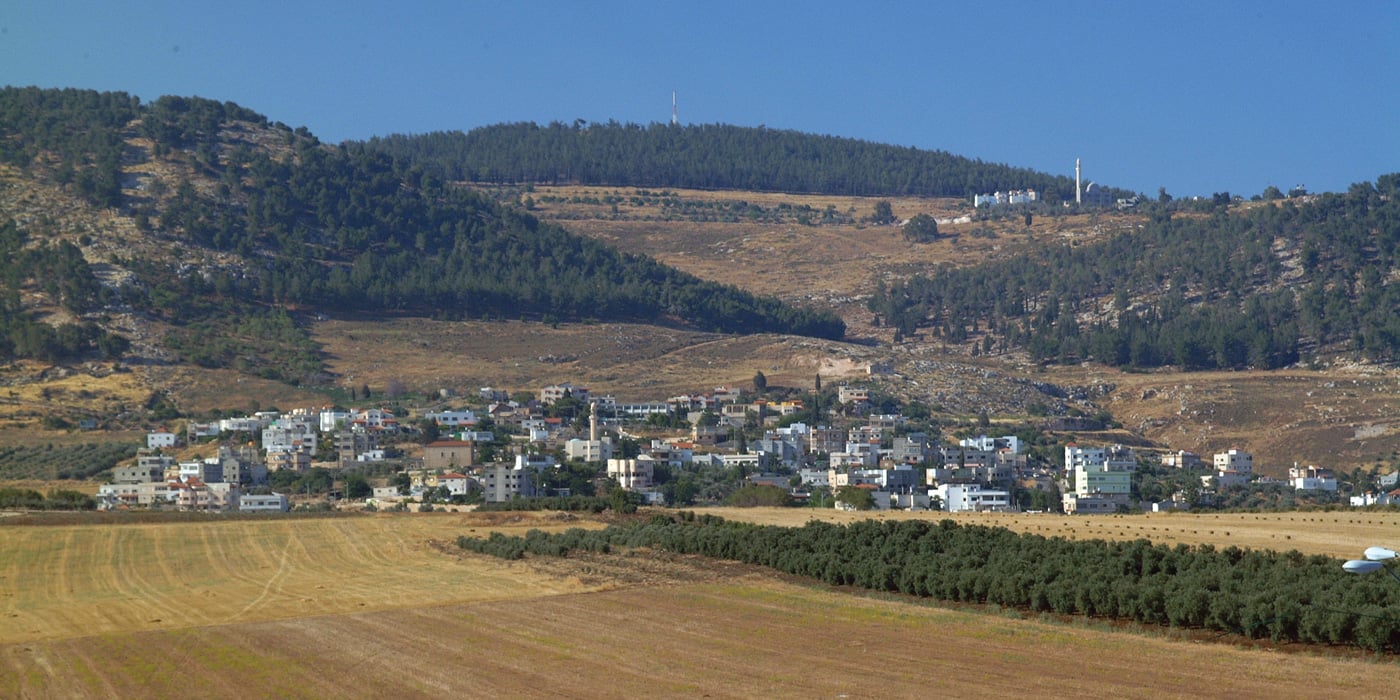
Luke 7:11–17 refers to a widow from Nain. Seen here, the modern village of Nain lies on the north side of Mount Moreh, near Nazareth. The biblical town has not been excavated, and the ancient town of Na’in was destroyed in war in 1948.
The text does not tell us how John responded (although Jesus’s commendation implies that he responded positively); instead, Jesus launches into a discussion on John’s role in salvation history. He was not fickle, nor did he dress luxuriously (7:24–25); his role was prophetic. But, Jesus adds, he was “more than a prophet” (7:26), for he had the task of preparing the way for the Messiah (cf. Mal. 3:1). John’s distinctive role made him the greatest of all the Old Testament saints (greatness being described here in terms of function, not of essence). Nevertheless, because John did not actually participate in the era of salvation, anyone who is a member of the kingdom “is greater than he” (7:28; greater again in function, not in essence). Luke adds in a parenthetical remark that “all the people” glorify God because Jesus’s words are a vindication of John’s ministry (7:29). But by rejecting John’s baptism, the Pharisees fail to see that John and Jesus are the agents of God’s saving purposes.
The Pharisees’ rejection of God’s purpose leads nicely into the topic of the fickleness of the present generation (7:31). Jesus compares the religious leaders to sulking children, for they think something demonic distinguishes the asceticism of John the Baptist, and something wild and unruly underscores Jesus’s eating and drinking, not to mention his association with the lower class. Jesus’s exaggerated description of John and himself makes the point that nothing will satisfy these people, and yet God’s wisdom (7:35)—that is, his plan—is demonstrated to be right “by all her children” (namely by those who have responded positively to the message of John and Jesus [cf. 7:29–30]).
The story of the forgiveness of a sinful woman (7:36–50) has sometimes been identified with the account in Mark 14:3–9 (and parallels), but it is clearly a different story. The link with the preceding context is the accusation leveled against Jesus in Luke 7:34. Jesus may have been invited to Simon’s home after a synagogue service. No doubt Simon respected Jesus since he gives him the honorable title “teacher” (7:40; teacher = rabbi). Uninvited guests at a banquet in the Palestinian world were not an unusual feature, although the presence of a sinner (7:39; she was probably a prostitute) may have sparked some surprise. Those enjoying the banquet reclined with their feet extended behind them, resting their heads on their left hands and eating with their right. The woman enters behind Jesus and spontaneously begins to weep (7:38) because of either repentance or joy. Perhaps the two were commingled. When she sees that Jesus’s feet are getting wet, she looses her hair (something a respectable woman would not do), drying his feet with her hair. She proceeds to kiss his feet and anoint them with expensive perfume (7:38).
Observing the activity, Simon concludes that Jesus cannot be a prophet (7:39) because a prophet would know what kind of woman this was. Moreover, a prophet would prevent a sinner from touching him because touching a sinful person would make one ritually unclean. (Thus the story has a twofold theme, revolving around the status of the woman and the status of Jesus.) Jesus responds to Simon’s silent protest by telling him the parable of the two debtors (7:41–42). The point of the parable is plain—the one who is forgiven the larger amount will respond with more love and gratitude. A denarius was worth approximately a day’s wages. Simon’s reply (7:43) simply reflects a careful rabbinic answer. Jesus then applies the parable to the treatment that he has received from Simon and the woman (7:44–47). Jesus does not criticize Simon for being inhospitable, for these courtesies were not necessarily an expected part of ordinary hospitality. Jesus’s point is not that Simon was rude but that the woman showed “extraordinary” love. One would greet “friends” by kissing them on the head, but the woman kissed Jesus on the feet (7:46). On a special occasion one might put inexpensive oil on a guest’s head, but the woman poured expensive perfume on Jesus’s feet (7:46).
Verse 47 has been incorrectly interpreted at times to mean that the woman is forgiven because of her love for Jesus. But the point of the entire story is that her love is the result of her forgiveness. That love and gratitude flow from forgiveness is clearly the point of the parable (7:41–42), and the woman’s actions of love toward Jesus stem from her experience of a forgiveness that has already been received. In verse 48 Jesus simply confirms the forgiveness of the woman. Indeed, verse 50 clearly shows that it is faith that has saved the woman. The phrase “whoever has been forgiven little loves little” (7:47) should not be taken too woodenly. In the application of the parable it applies to Simon and has an ironic twist. The meaning is not that righteous people cannot love much because they do not need much forgiveness (an argument for sinning more so that forgiveness can be deeper; cf. Romans 6). Rather, people who assume they are righteous will never experience much love for Jesus since they are so unaware of their sinfulness.
Luke summarizes Jesus’s preaching ministry about the kingdom of God in 8:1–3, noting that he visits a number of towns. Contrary to Jewish custom Jesus had women followers, and they supported him financially (8:3). These women are carefully distinguished from the twelve apostles. There is no evidence that Mary Magdalene was the woman in the prior story. The number seven indicates the severity of Mary’s state. The Herod mentioned here is Antipas (8:3).
D. Revelation and obedience (8:4–21). One of Jesus’s distinguishing characteristics was teaching in parables, and some of the most memorable of Jesus’s parables occur in Luke. Jesus addresses the parable of the sower (Luke 8:4–15; but cf. Mark 4:1–20; Matt. 13:1–23) to the crowd that was gathering (Luke 8:4–8), but he does not explain its significance to them. The sowing of seed on all kinds of soil would not be unusual in Palestine because plowing would follow sowing. In verse 8 he challenges his hearers to penetrate to the true meaning of the parable. The disciples are perplexed about the parable and inquire about its meaning (8:9). Jesus responds with a difficult saying, explaining the rationale behind parables (8:10). God reveals the secrets of the kingdom (the plans of God that were previously hidden but have now been made known) to the disciples, but the meaning of the parables is obscure to outsiders so that even though they hear the words they will not understand their true meaning (cf. Isa. 6:9). Jesus’s hard words here cannot be applied to all the parables, for some of the parables were clearly understood even by Jesus’s opponents (cf. Luke 10:25–37). Perhaps the obscurity of the parables is operative in those who have already responded negatively to Jesus’s message. Jesus explains the meaning of the parable in verses 11–15. Some scholars have doubted whether Jesus would have allegorized the parables, but there is no a priori reason to exclude allegory. The modern reader, however, should not press the allegory beyond the limits indicated by the biblical writer. The different kinds of soils represent various ways of responding to the proclaimed word of God. Luke emphasizes that those who bring forth good fruit must persevere (8:15). The problem with those who are compared to the rocky soil is that they cannot endure persecution (8:13), and those who are compared to the thorny soil are squelched by the delights and worries of life (8:14). Thus the parable seems to have a twofold lesson: (1) those who hear the proclaimed word need to persevere in obedience, and (2) those who proclaim the word must realize that not everyone will respond positively. Why is this a “secret of the kingdom” (8:10)? Perhaps because the Jews never conceived of the kingdom message as having such limited success; they expected it to come in apocalyptic power and to rout their enemies.
In 8:16–18 we have three different sayings of Jesus that are combined. The main point is revealed in verse 18: “Consider carefully how you listen.” In other words, this paragraph resembles the preceding one; Jesus stresses the need for faithful obedience to the preached word. The significance of putting one’s lamp on the stand (8:16) is probably that the hearers must bear fruit in their listening, for a day will come when what they hear will not be secret any longer; it will shine for all to see. The last part of verse 18 supports our interpretation of verse 10 above. Receptive and obedient listening will lead to increased understanding, but rejection of the truth will lead to increased incomprehension of the word of God.
The next paragraph (8:19–21) fits nicely with the emphasis on obedience to the word of God that was stressed in the preceding parables. The arrival of Jesus’s mother and brothers becomes an object lesson for the crowd; the true mother and brothers of Jesus are those who listen to and obey the word of God. Luke does not imply any criticism of Jesus’s family members here. The brothers of Jesus are most likely the natural children of Mary and Joseph. Joseph’s absence is probably due to his death.
E. The revelation of Jesus’s identity (8:22–9:50). 8:22–56. Next Luke relates three miraculous works of Jesus, and the reader sees that Jesus has power over nature, demons, disease, and death. Hills and gorges surround the Sea of Galilee, and sudden windstorms would sweep down onto the lake. Fearing imminent death by drowning, the disciples arouse Jesus and implore his aid. At Jesus’s command the storm ceases, and calm returns. Immediately Jesus communicates the lesson for the disciples: “Where is your faith?” (8:25). Their confidence should have been in Jesus and his saving power. Then the disciples pose a question: who is this one who has such astounding power over nature? Slowly the disciples begin to reflect on the identity of Jesus. The story ends this way because Luke wants the reader to contemplate the same question.

The east side of the Sea of Galilee, seen here, was populated by many Gentiles in the first century AD. This region was the site of Jesus’s expulsion of swine into the Sea of Galilee (Luke 8:26–39).
Jesus travels to the other side of the lake, which was largely Gentile territory. The precise location of the encounter with the Gerasene demoniac (8:26–39) is no longer certain, and the textual tradition reflects this uncertainty. Luke’s description of the demonized man shows the severity of his condition (8:27–29). Jesus discovers that the man’s malady is due to many demons (8:30). The demons beg Jesus not to send them into “the Abyss”; the abyss would be the realm of the underworld where some demons were confined (Rev. 9:1–11). The sending of the demons into the pigs seems strange, and many have questioned the wisdom of such an activity. Some have rightly pointed out that pigs were unclean animals for the Jews, but this is not a satisfactory explanation for Jesus’s activity since he was in Gentile territory. Perhaps the point of the story is that one man’s deliverance is worth the destruction of many pigs. The neighboring townspeople arrive and are seized with fear, requesting Jesus to leave their region (8:37). The theme of Jesus’s rejection continues. But Jesus bids the man who was delivered to proclaim his word in that region, showing that his healing is designed to lead to mission.
The next two stories are deliberately interwoven; Luke begins with the request of Jairus for his dying daughter, inserts the story of the bleeding woman, and then returns to the story of Jairus (8:40–56). The ruler of a synagogue (8:41) arranged synagogue services. The accomplishment of Jairus’s request is delayed by the throng that surrounds Jesus and is then interrupted by the woman who “touched the edge of his cloak” (probably his tassel; cf. Num. 15:38–39). This woman has been hemorrhaging for twelve years, and such bleeding would make her ritually unclean (Lev. 15:25–30). Luke may tone down Mark’s remark on how her many doctors have only made her condition worse (Mark 5:26), perhaps because of his profession. Jesus is aware that healing power has gone forth from him, and he explains that her deliverance is not due to superstition but to saving faith (8:46–48). While Jesus is healing the woman, the daughter of Jairus dies. The friends of Jairus think any further activity is futile (8:49), and they ridicule Jesus’s naïveté in saying the girl is merely sleeping (8:53). But Jesus’s words to Jairus are, “Don’t be afraid; just believe, and she will be healed” (8:50). Thus, we see that the resuscitation of Jairus’s daughter fits with the prior story; in both instances Jesus responds to faith. Jesus manifests his power over disease and death. His power over demons and nature also (8:22–39) causes the reader to reflect on Jesus’s identity.
9:1–50. In the next episode (9:1–9) Jesus sends out the disciples to communicate the message of the kingdom of God (9:1). The kingdom message includes both the proclamation of good news and apostolic power over disease and demons (9:1–2). Jesus forbids the Twelve from bringing extensive provisions for the journey; he wants them to rely on God for sustenance. The disciples are to be content with the house that receives them (9:4), but if the people reject the message, the disciples are to shake the dust of the town off their feet, which symbolizes that the town is unclean and that they are severing fellowship with it. The preaching of Jesus and his followers comes to the attention of Herod Antipas (9:7). The key question Luke wants the reader to ask is, “Who is this Jesus?” By recording the current speculation on the identity of Jesus (Is he John the Baptist, Elijah, or one of the prophets?), and by placing the question on the lips of an important person like Herod, Luke brings the question of Jesus’s identity to the center of attention.
The apostles return from their mission, withdrawing with Jesus to the area around Bethsaida for some rest; however, the multitudes learn of Jesus’s destination and follow him. The feeding of the five thousand (9:10–17) is probably an object lesson for the disciples. They do not have the resources to feed the multitudes, but by depending on God they will have more than enough to satisfy the crowds. The story also continues to raise the question, who is this? Peter answers that query in the next section (9:18–20). The account is suggestive, however, of Jesus’s messiahship. He is the new Moses who gives manna from heaven (Exod. 16:1–36; Num. 11:1–35; cf. 2 Kings 4:42–44). The story may also evoke images of the messianic feast of the last days (Isa. 25:6–8). There is no compelling reason to doubt the historicity of the episode.
The preceding narratives have raised the question, who is this? Now Peter gives the decisive answer: you are the Messiah (9:18–20). The disciples see more clearly than those who identify Jesus with Elijah, John the Baptist, or one of the prophets. Of the Synoptic writers only Luke tells us that Jesus was praying (9:18).
Peter understands that Jesus is the Messiah, but the disciples also need to grasp what kind of messiah he will be (9:21–27). He does not fit the popular conception of a messiah who will triumph over Israel’s enemies by using military power. He will suffer and die before he is vindicated by the resurrection (9:22). Jesus uses the title Son of Man. According to Daniel 7:9–22 the Son of Man is a heavenly figure who will participate in the judgment on the last day; however, Jesus pours new content into the title by claiming that the Son of Man must also suffer. Thus, Jesus links the Son of Man and the Suffering Servant (Isa. 52:13–53:12). Jesus’s destiny is closely associated with the responsibility of his disciples. His disciples must be prepared to suffer and to lose their lives in this world for Jesus’s sake. They will show that they are ashamed of Jesus and his words if they do not participate in his sufferings. If, however, the disciples share in Jesus’s rejection, they will end up saving their very selves. The last verse (9:27) is difficult. It may mean that the disciples experience the kingdom in the events of the resurrection and Pentecost, or that the transfiguration itself is a manifestation of the kingdom.
The episode of the transfiguration (9:28–36) is closely connected with the preceding one (“about eight days after,” 9:28; Mark 9:2 has “after six days”; the point is that it was about one week later). As Jesus prays, his face and clothes become gloriously radiant. Luke characteristically mentions that Jesus prays before an important event. Moses and Elijah appear and discuss with Jesus his “departure” (Greek exodos, from which the English word “exodus” is derived; see NIV note to 9:31) in Jerusalem. According to Jewish tradition Moses and Elijah were expected to return before the advent of the kingdom. The reference to Jesus’s “exodus” shows that his passion is primarily in view (cf. 9:22), although the resurrection may also be implied. The story also focuses on who Jesus is. Peter suggests building three booths for the great men who are present. But Peter misses the significance of the event. The point is that Jesus is superior to Moses and Elijah. The story ends with Jesus alone, and Elijah and Moses are gone. In addition, the voice from the cloud (the cloud represents God’s presence) says to listen to Jesus, stressing again that Jesus is God’s final and definitive revelation. The scene is similar to Jesus’s baptism (3:21–22), for Jesus is again called God’s chosen Son. The purpose of the story is to confirm Jesus’s sonship and glory. The disciples think that Jesus’s passion rules out his glory, but actually the passion is the route to glory.
The juxtaposition of 9:37–43a with the transfiguration is striking because after his glorious manifestation Jesus encounters the unbelief and frailty of human beings (9:41). The father of a demonized boy is close to despair because no one can help his son. Luke’s description emphasizes the severity of the boy’s condition. The goal of the story, then, is to show that only Jesus can help him, and the crowd responds by remarking on God’s greatness as manifested through Jesus.
People are marveling about Jesus’s works (see the preceding exorcism), but Jesus says to the disciples that they should be focusing on his future suffering rather than his miracles (9:43b–50). Luke notes that the disciples cannot comprehend what Jesus is saying (9:45). Perhaps the next two stories provide the reason for their incomprehension. The disciples cannot understand Jesus’s suffering because they are consumed by rivalry and competition (9:46–48); however, Jesus says that true greatness comes when disciples forget about being great. Children were considered to be insignificant in ancient society. Nevertheless, a great person treats children with respect and consideration; such actions show that the person is not using acts of kindness merely to get ahead and also show that this person has received the Father. John also recounts how the disciples try to prevent a man from expelling demons in Jesus’s name since he does not become one of Jesus’s disciples (9:49–50). Jesus replies that whoever is not against him is on his side. This last saying seems to contradict 11:23, but the sayings are proverbial and not contradictory since they are in completely different contexts.
4. Galilee to Jerusalem: Discipleship (9:51–19:27)
A clear break occurs in the text here, indicating a major division in the Gospel. Luke may depart from using Mark as a source, for he does not recount a story from Mark until 18:15. Luke uses the motif of a travel narrative, but the reader should understand it primarily as a literary technique. As a travel narrative it gives very few details about where the events are taking place. Jesus is en route to Jerusalem so that he can fulfill the things that have been written about him. On the way he teaches his followers about discipleship.
A. The journey begins (9:51–13:21). 9:51–10:42. The first account in this section (9:51–56) reminds us that the passion of Jesus lies ahead. The resolution of Jesus to go to Jerusalem is related to his suffering and death, and the hostility of the Samaritans foreshadows what he will experience in Jerusalem. (The Samaritans and Jews were enemies with a long history of hatred.) The phrase “taken up to heaven” (9:51) clearly refers to Jesus’s ascension, but it probably also refers to all that will happen in Jerusalem, including Jesus’s death, resurrection, and ascension. The refusal of the Samaritans to welcome Jesus provokes James and John to ask Jesus if he wants them to send fire on the Samaritans (like Elijah did in the Old Testament; 2 Kings 1:10, 12). Jesus rebukes his disciples, which shows them that nonretaliation is a better way and gives them a pattern to follow when they encounter opposition. The words of Jesus in verses 55–56 are not in the earliest manuscripts.
Jesus’s encounter with three would-be followers indicates the stringency of discipleship (9:57–62). The first man is enthusiastic and pledges to follow Jesus anywhere (9:57). But Jesus responds by underlining the cost of following him (9:58). Even animals have a place to sleep, but Jesus experiences homelessness and rejection, as the preceding episode with the Samaritans shows. Jesus invites the second man to follow him (9:59). This man responds with a reasonable request. He wants to go home and bury his father first. In Judaism burial of dead relatives was a duty, and it was even considered more important than studying the law. Even priests were permitted to bury their relatives (Lev. 21:1–3); therefore, Jesus’s answer is startling. He overturns social conventions, insisting that the kingdom of God has priority over family loyalties. When Jesus says to let the dead bury their own dead, he means leave the task of burying the “physically dead” to those who are “spiritually dead.” Last, a man promises to follow Jesus after saying farewell to his family (9:61). Again, this is a reasonable request; Elijah let Elisha say farewell to his family before the latter followed the former (1 Kings 19:19–21). Nevertheless, Jesus’s call is more radical. No one can plow effectively if he or she looks back, for the furrow will be crooked and the wooden plow tip might break. So too, no one can follow Jesus without making him the absolute and exclusive center of life.
Luke alone tells us that besides sending out the Twelve (Luke 9:1–6) Jesus also sends out the seventy (-two; 10:1–24). (The textual evidence is divided so that it is impossible to say whether Jesus sent out seventy or seventy-two.) The disciples are like innocent lambs being sent out into a world full of hostility; yet workers are needed for the harvest (10:2–3). The instructions that are given to the seventy (-two) are very similar to the instructions that Jesus gave to the Twelve in Luke 9:1–6. The urgency of the task is underlined. There is no time for the long greetings characteristic of oriental culture (10:4). Financial support should come from the town in which the disciples reside, but they should be content with the food and shelter they receive from their hosts, instead of looking for a house that provides for them in a more luxurious way (10:4, 7–8). The greeting “peace to this house” (10:5) is not just a way of saying hello; it refers to the peace of salvation that Jesus is bringing. “Someone who promotes peace” is one who is willing to receive the saving message (10:6). The disciples are to proclaim the presence of the kingdom, and the sign of its presence is their healing ministry (10:9). Those who reject the message of the kingdom are to be warned of their solemn fate (10:10–12).
The warning of judgment reminds Jesus of the rejection he experienced in Galilee. Even though they saw his miracles, they refused to submit themselves to the kingdom message; therefore, they will certainly be judged. Jesus is not saying that Tyre and Sidon will not be judged, only that the judgment of the Galilean cities will be more severe because they have more evidence. Verse 16 shows that those who reject the message of the seventy (-two) are just as culpable as those who rejected Jesus, for those who reject Jesus’s messengers reject Jesus and the Father.
The disciples return (10:17–20) with joy because they did not anticipate being able to expel demons (cf. 9:10). When Jesus says that he saw Satan fall from heaven (10:18), he is not speaking of Satan’s prehistoric fall, nor is he referring to a vision he had during the disciples’ ministry, nor is he predicting Satan’s future fall. He is merely describing in symbolic terms the impact of the disciples’ ministry. The kingdom of God is making inroads on Satan’s domain. The disciples were sharing in Jesus’s authority over all forms of evil and destruction. “Snakes and scorpions” (10:19) does not refer to demonic powers but symbolizes all kinds of evil (cf. Deut. 8:15); however, Jesus cautions that the disciples are not to become enamored of the sensational. The crucial thing is not the expulsion of demons and power over evil but the assurance of having one’s name written in God’s book.
The joy of the disciples after returning from their mission stimulates Jesus to express his praise to the Father (10:21–24). The Father has not revealed the gospel of the kingdom (“these things,” 10:21) to the wise and learned, probably because they were impressed with their own wisdom. But to the humble and childlike he has opened up the secrets of the kingdom. Jesus emphasizes that this is in accord with God’s sovereign plan and gracious will (10:21). In verse 22 we have one of the most important verses in the Synoptic Gospels on the mutual relationship between the Father and the Son. Some scholars have questioned the authenticity of the verse, but the Jewish character of the saying shows its authenticity. When Jesus states that the Father has handed “all things” over to him, he means that the Father has given the Son authority to reveal the knowledge of the Father and Son to others. Then Jesus indicates that the Father and Son possess a mutual and exclusive knowledge of each other. The centrality and uniqueness of the Son is affirmed because no one can know the Father apart from the Son’s permission. Jesus’s words show that the knowledge of God is a gift bestowed from above, and thus it follows that the disciples are privileged to see the revelation of the Father in the Son. Many Old Testament persons wanted to see this capstone of God’s self-revelation, but it was not part of God’s gracious purpose (10:24).
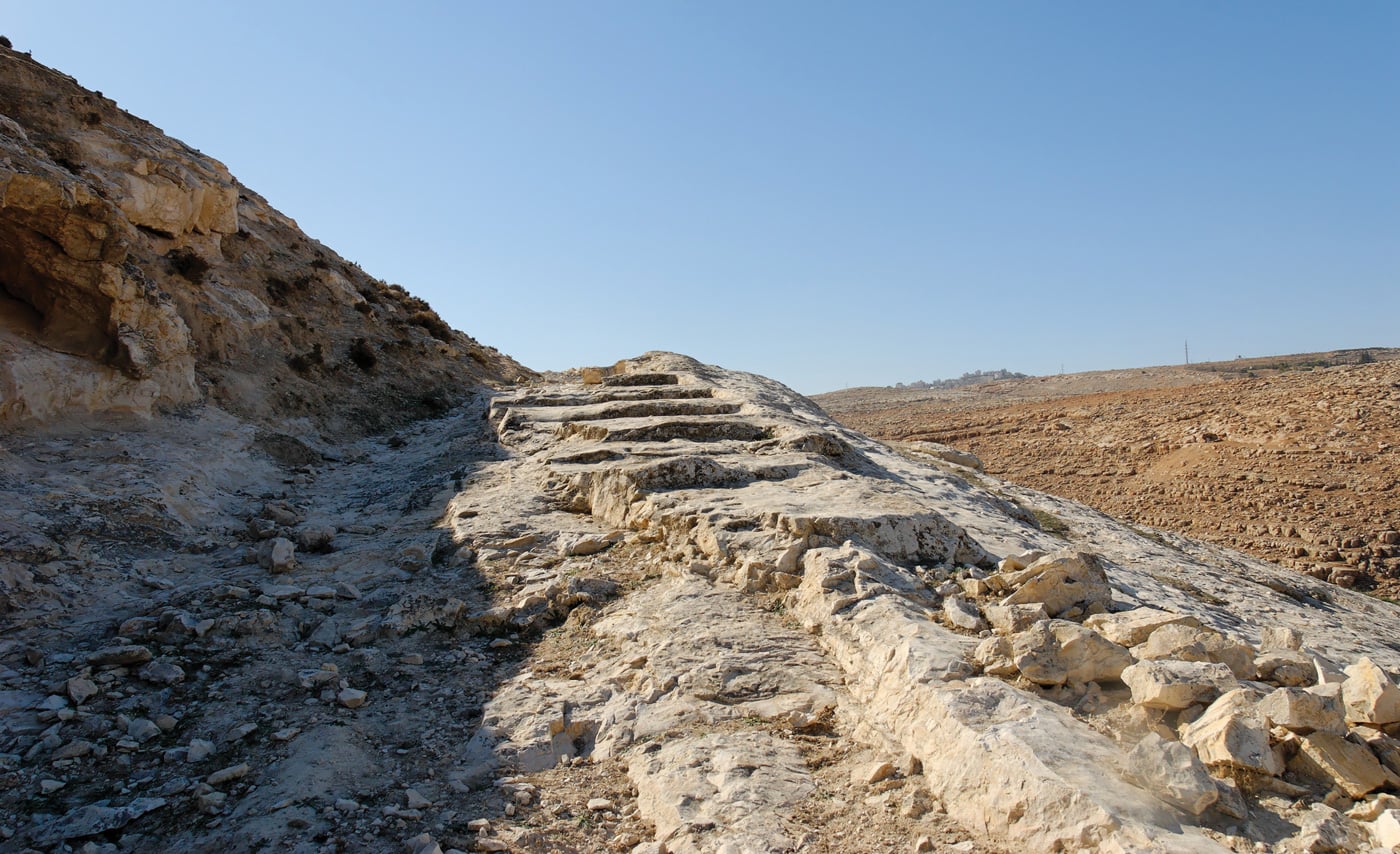
Remains of the ancient Roman road between Jerusalem and Jericho—the setting for the parable of the good Samaritan (Luke 10:25–37)—can still be seen in the desert of Judea. This road was used frequently by Galileans, such as Jesus, traveling to Jerusalem.
In the telling of the parable of the good Samaritan (10:25–37) the lawyer wants to involve Jesus in a theological argument over what is necessary for eternal life (10:25). Instead of answering the question, Jesus directly asks the lawyer for his point of view. The lawyer responds by citing Deuteronomy 6:5 and Leviticus 19:18; eternal life is inherited when one loves God with the totality of one’s being and one’s neighbor as oneself. Jesus agrees with this response (cf. Mark 12:28–33) but forces the discussion into the practical realm by saying, “Do this and you will live” (10:28). Some have thought that Jesus is speaking only hypothetically here because this answer would contradict salvation by faith. This is incorrect, for true faith always manifests itself in works (cf. James 2:14–26). The lawyer’s attempt at self-justification (10:29) probably stems from his realization that he is not fulfilling the twofold commandment, and his question leads into Jesus’s parable. The road from Jerusalem to Jericho was 17 miles long, and a traveler would descend 3,300 feet. Jericho lies 770 feet below sea level. Lonely roads were a prime place for robbers to strike (10:30). Both a priest and a Levite pass by when they see the wounded man (10:31–32). The priest would probably be returning from his time of service in the Jerusalem temple. Levites aided priests in the temple by carrying out minor duties related to the temple and its cult. The priest and Levite may have avoided the man because they thought he was dead, and they did not want to become ritually unclean. More probably, they were fearful of the robbers attacking them also. Jesus surprises his listeners by saying that a Samaritan helps the wounded man, for Samaritans were implacable enemies of the Jews (cf. Luke 9:51–56; John 4:9). It is interesting that Jesus does not say in the parable that Jews ought to love all people, even Samaritans. Instead, he does a more shocking thing. He uses the “unclean” Samaritan as an example of what neighborly love is. The Samaritan demonstrates his love in a practical way (10:34–35). In the ancient world, oil and wine were commonly used to soften wounds and as an antiseptic. Jesus exposes the real issue in this parable (10:36). Who is my neighbor? is not the question, but rather, am I a neighbor? The lawyer asked a calculating question (10:29) designed to exclude some from love’s grasp. Jesus’s story shows that love does not have any calculable limits. It may be significant that the lawyer does not say “the Samaritan” (10:37).
The next story (10:38–42) may have occurred at some other time, and Luke may have inserted it here for topical reasons. Luke probably omits the name of the village (Bethany; John 11:1, 18; 12:1) because it was near Jerusalem, and Jesus does not arrive in Jerusalem for some time. Martha complains to Jesus about Mary’s failure to help with the meal preparations. In fact, Martha seems to be blaming Jesus (“Lord, don’t you care,” 10:40) since Mary is not helping because she is listening to Jesus teach. The point of the story is not that a life of contemplation is better than a life of service. Rather, Jesus gently chides Martha because her preparations are too elaborate; she is distracted “by all the preparations” (10:40; literally “much service”), and she is “worried and upset about many things” (10:41). Jesus says that “few things are needed—or indeed only one,” and this stands for the better part that Mary has chosen, namely listening to the word of God. The implication is that Martha, if she would keep the preparations simple, could also listen to Jesus. The story is significant because Jesus, in contrast to most Jewish teachers of the day, encourages learning among women. Sitting at a teacher’s feet (10:39) is the usual posture of a student, indicating that Mary is one of his pupils.
11:1–54. Next Jesus offers teaching on prayer (11:1–13). Prayer is an important part of Luke’s Gospel, and Jesus’s example of prayer and John’s instructions on prayer stimulate the disciples to ask for help in praying (11:1). The Lukan form of the Lord’s Prayer is shorter than the Matthean form. The differences between the two accounts may be due to editorial modification of the prayer by the authors of the different Gospels, but it is also likely that Jesus taught the prayer on more than one occasion. The word “Father” comes from the Aramaic Abba, which emphasizes the intimate relationship between the believer and God. Two requests follow that center on God’s purposes. “Hallowed be your name” means that disciples are to pray that God’s name (i.e., his person and character) is honored, exalted, and revered. “Your kingdom come” is a request that God bring his rule to fruition, which he will do in the days of messianic blessing and joy. The last three petitions in the prayer focus on human needs. First, the request for daily bread certainly refers to physical bread, although many commentators also see a reference to “spiritual” bread. The word “daily” is difficult. It could refer to (1) necessary bread, (2) daily bread (so NIV), or (3) bread for tomorrow. Second, the prayer contains a plea for forgiveness since believers manifest God’s forgiveness to others. Third, believers should pray that God will shield them from temptation that would lead them into sin. Then, in a story about a person requesting provisions from a friend at midnight, Jesus tells a parable about prayer (11:5–8). The arrival of a friend at night would not be unusual in the Middle East because it would be too hot to travel by day. Moreover, no host would fail to offer food to a guest. The “friend” inside is reluctant to get up because he would wake up all his children, probably because he lived in a one-room house. Nevertheless, the persistence of the friend outside persuades the other to get up and supply his needs. Some have argued that the friend inside responds not because of the other’s persistence but because of his fear of being embarrassed, for the next day everyone would learn of his lack of hospitality (the Greek word for “persistence” can be translated “shamelessness”). However, such an interpretation fails because in verses 9–10 the lesson of persistence is drawn from the parable. That does not mean that one needs to be persistent because God is reluctant to give. The point of the parable is not that God, like the person in the house, must be persuaded to give. Just the opposite. One needs to be persistent because God longs to give good gifts to his children, and he is sure to answer (see 11:11–13). Clearly God is much more generous than any human father. A water snake in Palestine could be mistaken for a fish, and a scorpion could roll up to resemble an egg (11:11–12).
Many people conclude that Jesus’s miracles demonstrate that he is from God (cf. 7:16), but an alternate explanation soon arises (11:14–26). Perhaps his ability to exorcise demons stems from his alignment with Beelzebul. A more convincing sign is requested to prove his authenticity (11:15–16); however, Jesus shows that the accusation of demonic collusion is senseless. If Jesus expels demons with satanic power, then Satan is contributing to his own demise (11:17–18). If Jesus’s adversaries claim that he exorcises demons with satanic power, then it logically follows that exorcisms performed by their colleagues are accomplished by Satan as well (11:19). Instead, the exorcism of demons is a sign of God’s power, an indication of the presence of the kingdom (11:20). Indeed, Jesus’s exorcisms show that he has defeated the strong man (Satan), and that is why Jesus can plunder Satan’s possessions (i.e., free those who are captive to Satan [11:21–22]). Opposition to Jesus on this issue, then, is an indication that one has joined the adversary (11:23). In verses 24–26 Jesus warns of the danger of a demon evacuating a person when nothing positive takes its place. Such a person opens him- or herself up to demonic possession that is even worse than the former state. It is not enough to expel demons if there is no acceptance of Jesus’s kingdom message. An exorcist may make matters worse if he expels demons but does not fill the gap by taking sides with Jesus (cf. 11:23).
If we relate the next incident (11:27–28) to the preceding episode, Jesus is saying that his critics should focus on obedience instead of doubting his mighty works. A woman in the crowd, feeling rather sentimental, uses a Jewish expression that means, “How happy is the mother of such a son” (11:27). Jesus does not reject such an affirmation, but he points to something more fundamental. True happiness comes from hearing and obeying God’s word (11:28).
The narrative here picks up from verse 16 the demand for a sign (11:29–32). Evidently people wanted a sign that was more convincing and definitive than exorcisms; however, Jesus says that the demand for a sign is wicked, for obedience to God’s word is the real issue. The only sign that will be given to the people is the sign of Jonah. Some relate this to the preaching of Jonah, but the primary reference is probably to Jonah’s deliverance from the whale, and thus we have an allusion to Jesus’s resurrection (cf. Matt. 12:40). Both the Queen of Sheba, who came to test the wisdom of Solomon (1 Kings 10:1–10), and the men of Nineveh, who responded to the preaching of Jonah, will pronounce a sentence of guilty on the Jews of Jesus’s day. After all, Jesus is greater than Solomon and Jonah, and his contemporaries should perceive this about Jesus by observing his ministry.
The paragraph in 11:33–36 is difficult to interpret. In this context the light that shines for all to see is Jesus and his message about the kingdom (11:33). Also, the eye functions as a lamp because it is the organ by which light enters the body; however, if one’s eyes are unhealthy, then light cannot enter (11:34). The point is that those who are in darkness have refused to be illumined by Jesus. They may think they are illuminated by light, but actually they are in darkness because they have rejected the path of obedience (11:35). Only those who have responded obediently to Jesus’s message will be fully illumined (11:36).
In 11:37–54 Jesus wages a full-scale attack on the practices of Pharisees and their scribes. A Pharisee is surprised that Jesus does not ritually wash himself before eating (11:38). The Old Testament did not require this ritual washing, but the Pharisees practiced it because of the defilement one would contract from Gentiles and unclean people. The Pharisees overly concerned themselves with outward matters of cleanliness, failing to see the importance of cleansing from inward sin, especially greed (11:39–40). By giving alms from the heart to the poor, the Pharisees would be moving in the right direction. By cleansing the inside they would be cleansing the outside as well. Jesus then exposes the faults of the Pharisees in three woes. (1) They focus on the minutiae of religion, such as tithing every plant in one’s garden, but forget about what is really important, namely justice and love of God (11:42). Tithing should not be eliminated, but it should be placed in its proper perspective, for the Pharisees tithed even more than the Old Testament required. (2) The Pharisees are enamored of the glowing reputation they gain from being religious (11:43). (3) Indeed, they resemble “unmarked graves.” Walking over an unmarked grave would defile a person in Jewish culture. The point is that even though the wickedness of the Pharisees is not apparent or observable, it is defiling and contaminating (11:44). An objection from a scribe leads to three woes being pronounced against them also (11:45). (1) The lawyers with their many regulations make the practice of religion so burdensome and tiring, yet they are not willing to help those they burden (11:46). (2) In an ironic statement (11:47–48) Jesus says that by building the tombs of the prophets, the lawyers show their sympathy with those who killed them. They wanted to keep them in the grave! The lawyers’ sympathy with those who killed the prophets of old is clear because they will kill the prophets and apostles who are now God’s spokesmen (11:49–51). (3) Last, the interpretation of Scripture practiced by the lawyers blocks ordinary people from receiving knowledge about God and prevents them from entering the kingdom (11:52). After such a blistering attack it is not surprising that the Pharisees begin to plot against Jesus (11:53–54).
12:1–59. The next verses (12:1–3) follow naturally from the preceding discourse, in which Jesus has criticized Pharisaic religion. Here he warns his disciples to be on guard against “the yeast of the Pharisees, which is hypocrisy” (12:1). Such hypocrisy cannot be hidden forever; at the end it will be revealed for all to see (12:2–3). Verses 2–3 also blend in with the following exhortation (12:4–12) to the disciples. The disciples should not deny Jesus, because ultimately such a denial will be broadcast for all to see.
The disciples are encouraged to persevere under persecution (12:4–12) for the following reasons: (1) Those who buckle under persecution are afraid because of the pain and deprivation of physical death. Such fear needs to be conquered because bodily pain is all that their adversaries can inflict (12:4). (2) God, though, should be feared because he can cast a person into hell. A healthy fear of punishment will encourage the disciples to endure persecution (12:5). (3) From a proper fear of destruction the text moves to a fear that is to be avoided. Under persecution one may fear that God has forgotten him or her. But this is not the case. God even remembers sparrows, which are sold for less than a cent (12:6). In fact, every hair on a person’s head is “numbered” by God (12:7). God remembers and cares for the person who is suffering persecution; God has not forgotten, and no suffering can touch a person without first passing through God’s hands. (4) Verses 8–9 bring out what is implicit in verse 5. What should people fear when being persecuted? They should fear denying Christ, for such denial will mean that such a person is “disowned” by God. The person who confesses Christ publicly, however, will be rewarded. (5) Verse 10 is a qualification of verses 8–9. What really constitutes a denial of the Son? Apparently, forgiveness is possible if one “speaks a word against the Son of Man,” but blasphemy “against the Holy Spirit will not be forgiven.” What is the sin that will not bring forgiveness? Probably a persistent and stubborn refusal to submit to the gospel. It is not an occasional denial of Christ (as Peter did) but the hardness of heart that refuses to repent and turns completely against the witness of the Spirit. (6) Last, Jesus promises that when disciples are persecuted, the Spirit will give them wisdom to defend themselves (12:11–12).
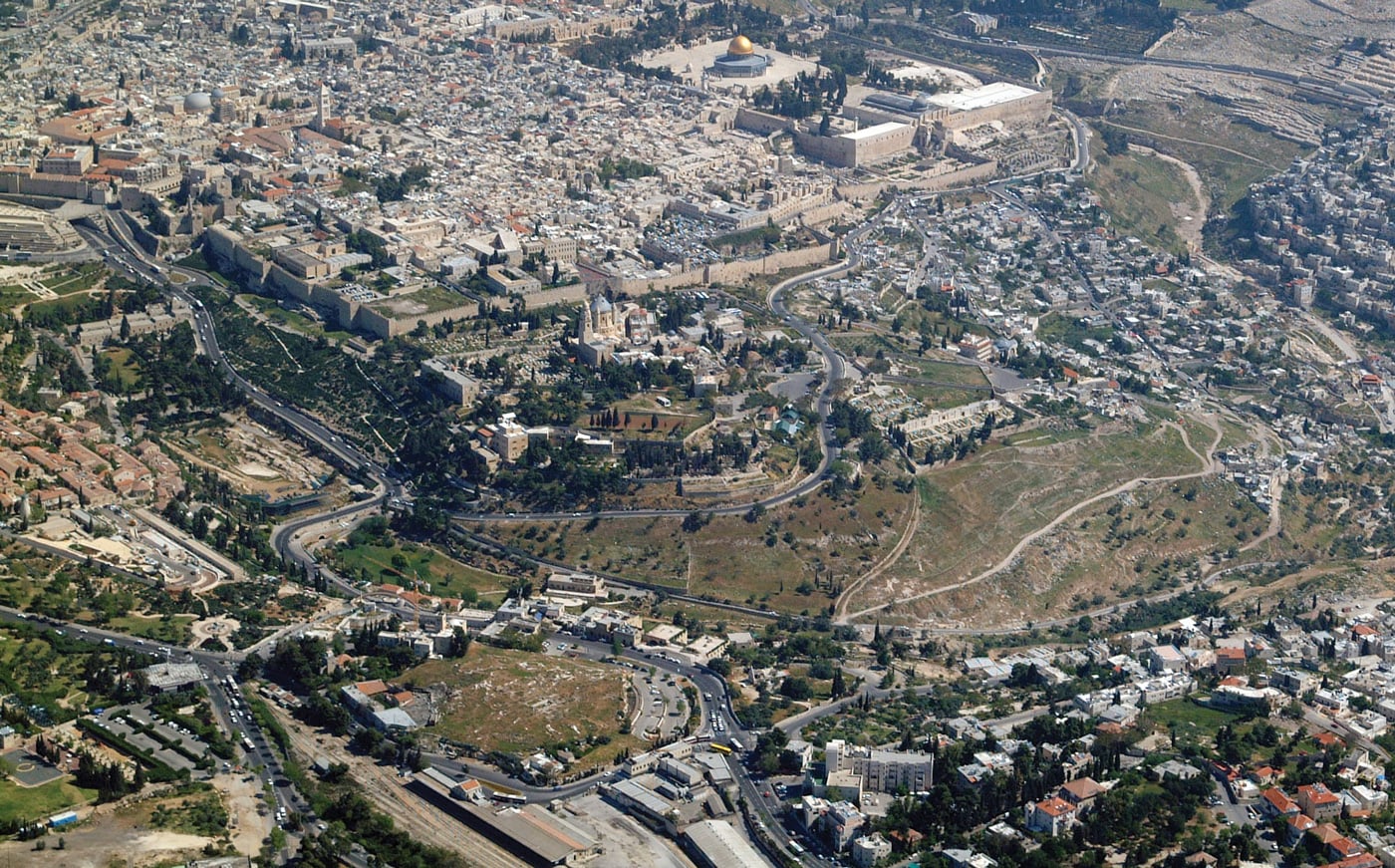
In Luke 12:5 Jesus refers to “hell,” or in Greek, Gehenna. This is a translation of the Hebrew for “Valley of Hinnom,” which is located on the west and south sides of Jerusalem. The expansive green area in this aerial is the southern part of the valley. Jerusalem burned its refuse here, so it was considered an unclean place and thus to be avoided.
The section on possessions (12:13–34) can be divided into three subsections: (1) warning against greed (12:13–15), (2) the parable of the rich fool (12:16–21), and (3) worry over possessions (12:22–34). In the first paragraph (12:13–15) a man wants Jesus to arbitrate in an inheritance dispute between his brother and himself. This would be typical work for a rabbi. But Jesus refuses, insisting that this is not his role. In verse 15 he warns of the root problem: greed. A greedy person thinks that the good life is found in things, but this is a distorted perspective (12:15). This discussion leads Jesus to relate the parable of the rich fool (12:16–21). The problem with the rich fool is not that he has bumper crops or that he decides to build more storage space (12:16–18). The problem is that he invests his entire life in his possessions (cf. 12:15). He draws all his security from his material goods (12:19) and fails to reckon with God. He is living as if he will never die and has forgotten the importance of spiritual riches (12:20–21). Such a shortsighted investment in temporal things is foolishness indeed. In the last section, Jesus gives his disciples the proper perspective on riches (12:22–34). Believers should avoid anxiety about food and clothing, for true life does not consist in material possessions (cf. 12:15, 21). And if God cares for ravens and adorns flowers with such beauty, then he will provide the fundamental physical needs of believers (12:24, 27–28). Jesus is not suggesting here that work is unnecessary; we need to remember that the problem being addressed here is worry, not laziness. Worry is also senseless because it does not accomplish anything (12:25–26). No one can live even a day longer by worrying. The root problem with worry is lack of faith (12:29). It is understandable that pagans are consumed with the desire for security, but believers need to remember that the Father knows what they need (12:30). If believers make the kingdom their consuming passion, then God will take care of other needs (12:31). Disciples, then, are not to fear but to trust God (12:32). They will not draw their security from possessions, and so they will be free to give their possessions to others. If their treasure (or security) is money, then that will be their consuming passion. Making money one’s treasure is the path to insecurity, however, because it is always subject to the uncertainties of life (12:33).
From the proper attitude toward money Luke now turns to the way disciples should view the interval between Jesus’s ascension and return (12:35–48). The parable of a master returning from a wedding party (12:35–38) shows that while the master is absent his servants should be ready and watching for his return, even if he comes at a time that is later than they expect. (The Jews split the night into three watches, so the second or third watch would be very late.) Girding up the loins (12:35) was necessary in Palestine because men wore long, flowing robes that needed to be tied up with a belt when one wanted to run or engage in serious work. Verse 37 envisions a reversal of roles that was unheard of in Palestine. If the servants are faithful, then the master will serve them. The parable of the alert house owner (12:39–40) demonstrates that the disciples cannot predict with certainty when the Son of Man will come; therefore, they must always be ready. Peter inquires about whether Jesus is speaking specifically to the apostles/disciples or to all people (12:41). Jesus does not answer the question directly, although he implies that he is referring only to the apostles/disciples, because they possess authority over the other servants (12:42). In this third parable, Jesus focuses on the responsibility of managers to take care of their servants (12:43–46). He warns that the delay of the master should not lead the manager to abuse the servants. Irresponsible behavior will be punished, and responsible behavior will be rewarded; however, punishment will be based on the degree of knowledge. All punishment will not be equal because those who are entrusted with more responsibility and knowledge will pay a greater penalty (12:47–48). The central thrust of this section is that the daily obedience of disciples shows their readiness for the return of Jesus; disobedience will be punished and obedience will be rewarded.
The relationship of the next paragraph (12:49–53) to the preceding one may be the thought of judgment. The fire that Jesus wants to be “kindled” (12:49) is the fire of judgment that discriminates between the unrighteous and righteous. It probably does not refer to the Holy Spirit here (but cf. Luke 3:16). The purifying fire is also related to Jesus’s imminent baptism (12:50). The baptism that Jesus must undergo is not a literal baptism; rather, it is a metaphor of some overwhelming catastrophe—clearly his death on the cross. The arrival of Jesus did bring peace on earth (Luke 2:14), but the fire of judgment also means the separation and division of families. That division stems from one’s stance toward Jesus (cf. Mic. 7:6).
Discerning the signs of the times is the subject in 12:54–59. The purifying fire of God’s judgment is imminent (12:49). Jesus warns his listeners that they need to see the urgency of the present time, because the eschatological crisis is at hand. His listeners are adept at detecting forecasts of coming weather (12:54–55), but they fail to see the forecast of the coming crisis that is implicit in Jesus’s ministry (12:56). Jesus uses an illustration to convey the same point in another way (12:57–59). If a person were going to court, knowing he could lose the case and spend some time in jail (12:59), then he would certainly try to reconcile with his adversary on the way to the courthouse. So too a person who is under the threat of judgment should reconcile with God while there is still time.
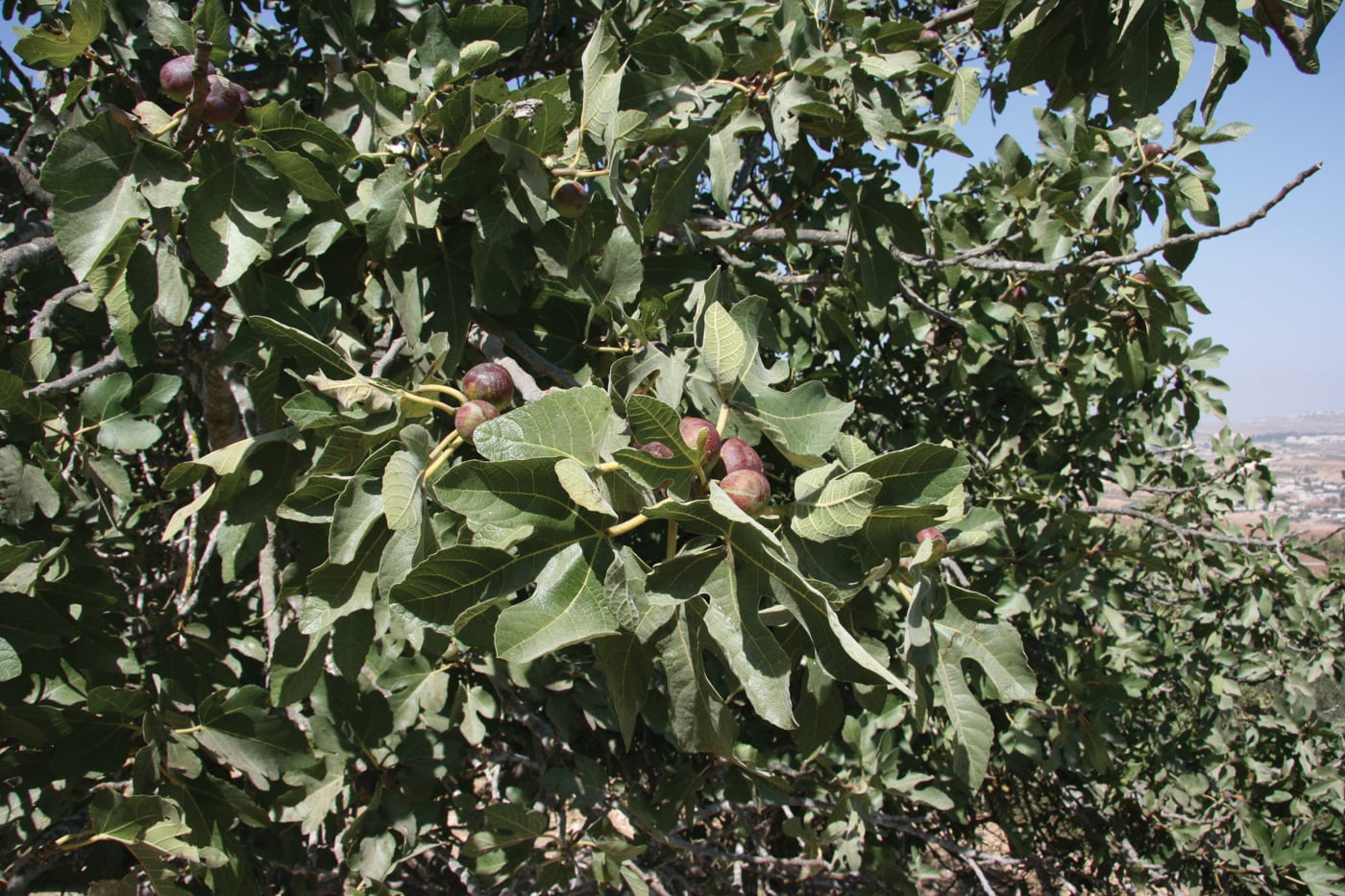
In Luke 13:6 Jesus uses a fig tree, such as this one, to represent lives that are to bear fruit.
13:1–21. In 13:1–9 the necessity of repentance before the coming judgment continues as Luke’s theme. Pilate, probably at Passover, had some Galileans slaughtered while they were preparing their sacrifices (13:1). Apparently those who told Jesus about this incident thought that the Galileans were executed because of sin (13:2). Jesus does not focus on the sin of the Galileans; instead, he uses the occasion to warn everyone that they too will perish without repentance. Jesus seizes on another example to make the same point (13:4–5). The tower of Siloam was probably part of the old wall in Jerusalem, near the juncture of the south and east walls. The accidental death of the eighteen was not due to any exceptional personal sin. (Jesus does not deny that the Galileans and those who died at Siloam were sinners; he denies that the manner of their death was due to any exceptional sin.) In the parable of the fig tree (13:6–9) the necessity of repentance before the crisis of the final judgment is underlined again. Executions and accidental deaths are not definitive signs of God’s judgment (13:1–5); but if an individual is not bearing fruit, then judgment is certain. God, however, patiently waits for fruit to appear, giving people every possible chance to produce fruit. Nevertheless, people cannot put off the day of judgment forever, idly thinking that it will never come (13:8–9).
In the next section (13:10–17) we see the saving power of Jesus at work. Still, the synagogue ruler maintains that healing on the Sabbath is wrong. God made weekdays for work, never intending that work be done on the Sabbath (13:14). Using a typical rabbinic method of arguing from the lesser to the greater, Jesus accuses those who hold this position of hypocrisy. If one cares for the physical needs of animals on the Sabbath, then it follows that one should care for the physical needs of people (13:15). Indeed, the Sabbath is a particularly appropriate day to frustrate the work of Satan (13:16). Such actions and words silenced Jesus’s opponents and delighted his supporters.
The parables of the mustard seed and the yeast (13:18–21) teach the same lesson. The rule of God has manifested itself in Jesus’s ministry. The liberation from Satan of the crippled woman is one example (cf. 13:10–17). However, the kingdom has not been ushered in with apocalyptic power. It seems small and powerless—like the proverbially small mustard seed and the yeast hidden in flour. Nevertheless, the eventual spread of the kingdom is sure. As a mustard seed grows into a tree, and as yeast spreads through dough, so too the kingdom of God will rule over all. Some have said that “yeast” here represents evil, but such an interpretation overlooks the context of the parable in Luke.
B. The journey continues (13:22–17:10). 13:22–15:32. The travel note in 13:22 (cf. Luke 17:11) suggests a major break here in the text. Luke introduces more instructions for disciples, focusing on the salvation available for the humble (13:22–15:32). But the divisions of the text are rather difficult at this point and somewhat arbitrary.
13:22–14:35. A question about the number of people who will be saved (13:23) becomes the occasion for Jesus’s instruction (13:22–30). Jesus does not answer the question directly (13:24). Instead, he focuses on the necessity to expend every effort (“strive”) to enter the door of salvation. The urgency of decision is also underlined because the day is coming when it will be too late to enter; the door will be closed (13:24–25). Those who are outside will object that they knew Jesus, that they even feasted with him and enjoyed his teaching (13:26), but such an association with Jesus is superficial; he recognizes and admits entry only to those who obeyed his message (13:27). Those who are excluded will feel remorse (“weeping”) and fierce anger (“gnashing of teeth”) because they will not be able to participate in the great eschatological banquet (cf. Isa. 25:6–8; Rev. 19:9). Indeed, the great saints of old will feast with the Gentiles in the kingdom, a warning to the Jews of Jesus’s day that the roles of Jews and Gentiles can be reversed (13:28–30).
Some Pharisees then tell Jesus to leave Galilee or Perea (Herod’s realm) because Herod wants to kill him (cf. 23:7–12). There is not enough evidence to show whether these Pharisees were friends or foes of Jesus. Jesus, however, is not impressed with Herod’s threats. He compares Herod to a cunning fox, saying that in the days ahead he will continue to carry out his ministry (13:32). Nevertheless, Jesus will be leaving Herod’s realm and will arrive in Jerusalem, not because he is afraid of Herod, but because as a prophet he must “reach [his] goal” and die in Jerusalem (13:32–33). The temporal references in verses 32–33 should not be taken literally; they are simply a way of describing a period of time before the end. (The end is “the third day.”) The reference to Jesus’s destination in Jerusalem reminds him that the city has rejected his message, as it has rejected the message of prophets in former times (13:34; it also implies that Jesus has spent some time in Jerusalem). Such a rejection fills Jesus with anguish (13:34). But Jerusalem’s rejection also spells her future judgment; her house will be left desolate (13:35). Here “house” refers to either the city as a whole or the temple. Jerusalem will not see her Messiah again until the second advent, when her faith will be renewed (13:35; cf. Rom. 11:26). Others think this last phrase means Jerusalem will not see Jesus again until he comes as her judge.
All of the episodes in chapter 14 through verse 24 take place at a banquet in a prominent Pharisee’s home (14:1). The precise nature of the Pharisee’s position is uncertain. The first episode is another controversy story on the Sabbath (14:1–6; cf. 6:1–11; 13:10–17). Hostility continues to build against Jesus because of his healings on the Sabbath, and he is being watched suspiciously on this occasion (14:1). “Dropsy” (14:2 KJV, RSV) involves swelling due to excess fluids building up in tissues and cavities. Jesus forthrightly challenges the Pharisees on the legitimacy of healing on the Sabbath; their silence indicates that they cannot refute him (14:3–4). Jesus justifies his healing by referring to the practice of rescuing one’s child or ox from a well on the Sabbath (14:5). Some manuscripts read “donkey” instead of “child,” but the latter is a superior reading. The Pharisees were apparently more humane than the Qumran community, for the latter did not even allow rescuing a beast on the Sabbath. “Let no beast be helped to give birth on the Sabbath day; and if it fall into a cistern or into a pit, let it not be lifted out on the Sabbath” (Damascus Document 11:13–14). Jesus’s actions are such that no criticism can be voiced (14:6).
Observing that people are clamoring for the places of status at the banquet, Jesus makes some remarks on humility (14:7–14) to the guests (14:8–11) and to the host (14:12–14). Luke says that Jesus tells a parable (14:7); however, the word “parable” can have various meanings, and here it refers to the “wisdom sayings” that Jesus utters. Jesus’s advice in verses 8–10 could be understood as a sly way to get ahead. People who claim the reputable places at banquets end up being publicly humiliated when they are asked to take a lower seat. So if you really want to get ahead, pretend to be insignificant and take the lowest seat. The host will notice your humility and advance you to a higher seat, indicating your intrinsic superiority. But verse 11 shows that Jesus does not have such a cunning program in mind, for such clever and false self-humiliation is still diseased with the root problem of trying to advance oneself above others. Those who try to advance themselves in a clever or a blatant way will be humbled, but God will exalt those who genuinely humble themselves before him. Jesus’s words to the host in verses 12–14 can be easily misunderstood as well. He is not saying that one should never invite friends over for dinner. The problem he is addressing is the expectation of recompense—that is, the calculating spirit that does good so that more benefits will accrue to oneself. He uses the vivid (and serious) example of inviting the handicapped, because such an invitation shows that one is not controlled by a spirit of repayment. Jesus promises a reward at the resurrection for those who live in such an unselfish manner. Rewards come to those who live for the sake of others.
The reference to “the resurrection of the righteous” (14:14) leads one guest into a reverie on the blessing of being part of the eschatological banquet (14:15). Jesus responds by telling the parable of the great banquet (14:15–24), puncturing the man’s sentimentality and bringing him back to reality. The kingdom of God is like a banquet, but the people invited make excuses so that they do not have to participate. The excuses (14:18–20) given show that these are people for whom material goods and family take priority. Their rejection at this point is extremely rude because they have already accepted the initial invitation (14:16–17). Jesus is probably referring to the religious leaders here; we need to remember that he is eating in a Pharisee’s house (14:1). The master responds in verse 21 by inviting those of the lower class (referring to tax collectors and sinners, lower-class Jews) from the town. Luke’s concern for the poor and handicapped (cf. 14:13) continues. Even after those from the lower class are brought to the banquet, there is still room for more, so the master sends his servant to the countryside so that his “house will be full” (14:23). This seems to be a clear reference to the Gentile mission. The phrase “compel them to come in” does not imply that some will enter the kingdom against their will. In Palestine people politely refused an invitation until they were persuaded to accept (cf. Gen. 19:3). The point of the parable is that people may talk sentimentally about the blessings of the kingdom (14:15), but in reality many do not want to accept the invitation. Those who refuse the invitation will never enter the kingdom (14:24).
The scene changes. Jesus is no longer in the Pharisee’s house; now a large crowd is following him (14:25). Jesus challenges the crowd to think carefully about the radical commitment that he demands (14:25–35). Jesus invites all to follow him (cf. 14:15–24). Yet following him is not easy but requires ruthless self-denial. The call to hate one’s family members is startling (14:26). Obviously, Jesus is not speaking of “psychological hatred” (cf. 6:27–28). The use of hyperbolic language indicates that no one can take precedence over Jesus. One must renounce “even their own life” and be willing to follow Jesus in the way of death (14:26–27). Those who are not willing to follow Jesus in such a radical way cannot be his disciples. Two illustrations are given to show the need for counting the cost before embarking on the road to discipleship. Someone building a tower (14:28–30) would surely calculate the cost of the project before starting. A half-finished building would be the object of ridicule. So too no king would plan to wage war against an enemy without considering beforehand the possibilities of victory (14:31–32). The application from the two illustrations is drawn in verse 33. Before one embarks on the road to discipleship, one needs to recognize from the beginning that Jesus demands total and complete commitment. Only those who have such a radical commitment can be Jesus’s disciples. The illustration of the salt makes a similar point (14:34–35). A disciple who is not salty is one who ceases to be radically committed. Such disciples are good for nothing.
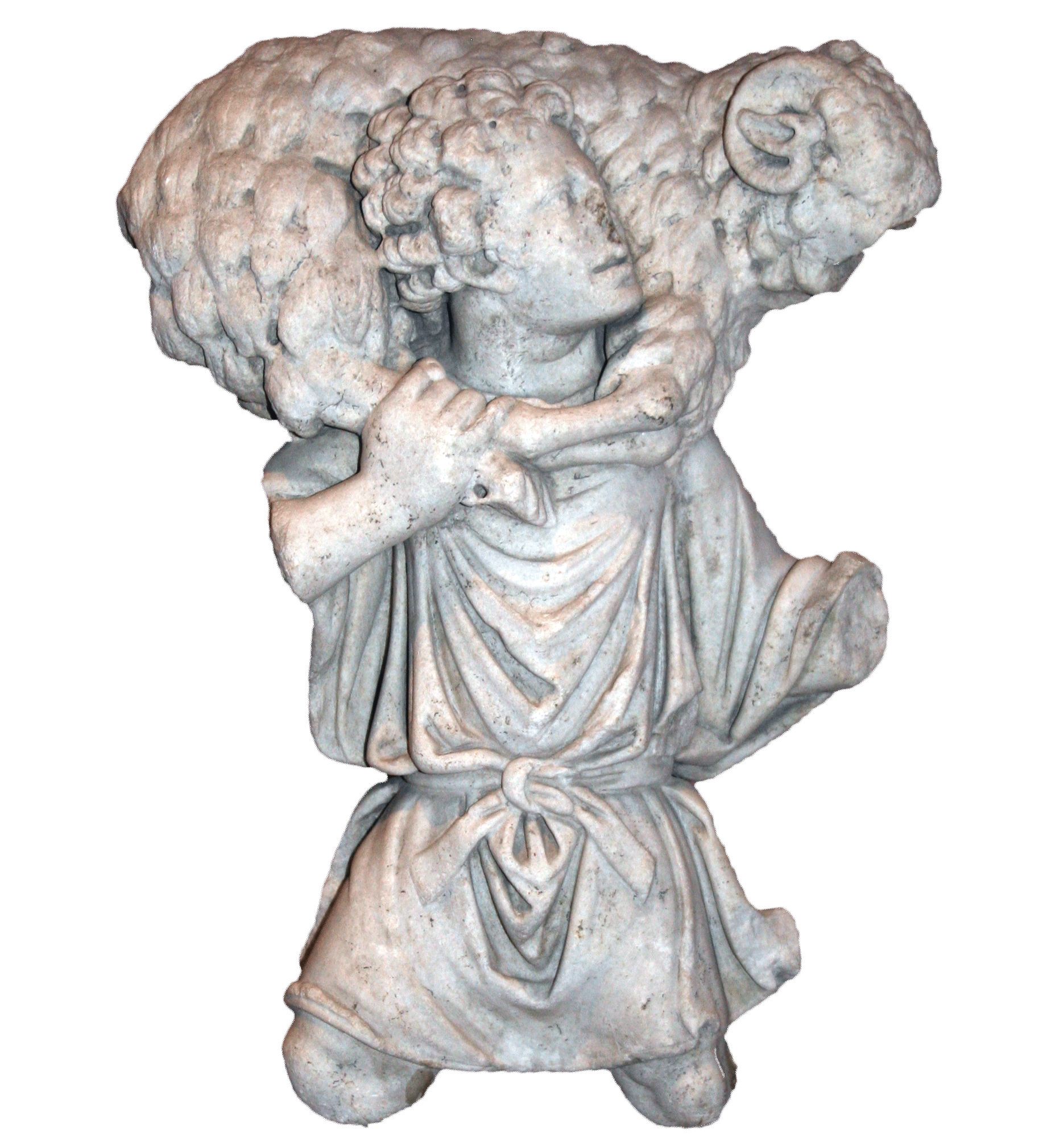
The parable of the lost sheep (Luke 15:3–7) led to early Christian art portraying Jesus as the shepherd joyfully carrying the found sheep on his shoulders. This statuette of the Good Shepherd is from the fourth century AD.
15:1–32. The setting for all of the “lost” parables in chapter 15 is the Pharisaic complaint that Jesus associates and eats with tax collectors and sinners (15:1–2). By eating with defiled people, Jesus himself would contract uncleanness. Thus these parables all emerge from a controversial setting and need to be interpreted as parables in which Jesus defends his ministry to the “lost.” Three different parables with the same basic theme are included here, the last one being the most detailed.
Jesus’s association with sinners is justified because God is like a shepherd who searches diligently for any lost sheep (15:3–7). The retrieval of the lost sheep brings joy to God (“heaven” [15:7] is another way of referring to God; cf. Matt. 18:14). Verse 7 adds a point not contained in the parable (cf. 15:4–6)—namely, that God’s joy comes from the repentance of the lost. The statement about the “ninety-nine righteous persons who do not need to repent” may be an ironic poke at the Pharisees; Jesus is not saying that some do not need repentance, only that some do not know they need repentance (cf. the lost son in 15:11–32). Parables do not represent stories from real life. Hence, the reader is not supposed to worry about whether the ninety-nine other sheep were abandoned in the wilderness (15:4). Such a question reveals that we have forgotten Jesus is telling a parable!
The parable of the lost coin (15:8–10) makes the same point as the previous parable. A shepherd with one hundred sheep is fairly well off, but a woman who loses one coin and searches for it is probably poor. It is often said that the lost coin was part of her dowry, yet there is no evidence in the text for this. If a woman searches carefully for one lost coin and exults over finding it, then it stands to reason that God will search diligently for those who are lost, rejoicing greatly over their repentance (15:7). A lamp would be needed during the day in a peasant’s house that had no windows (15:8).
Many themes are intertwined in the parable of the lost son (15:11–32), and one could easily label it a parable of the father’s love, but the theme of being “lost” is consistent with the two previous parables. Without doubt this is one of the most compelling and memorable stories ever told. It was not uncommon for a father to divide the estate before his death. Immediately the younger son cashes in his assets (he would receive one-third of the property since he was the younger son). He goes abroad and lives wildly, ending up bankrupt. When a famine strikes, he desperately needs work and is hired to feed pigs, a shocking job for any Jew since pigs were unclean animals. Nevertheless, his degradation is not yet complete. He is so hungry that he longs to eat the food these unclean animals are eating. Such debasement stimulates him to reconsider and change his life. The depth of his repentance is profound, for he no longer feels worthy to be called his father’s son; however, the father’s love is spontaneous. Before hearing of any confession of guilt, he runs to embrace his son while the latter is still far away. The son confesses his inadequacy, but the father does not even let him finish the soliloquy he has prepared (“make me like one of your hired servants” [see 15:19]). Instead, he treats him like an honored guest, adorning him with the best robe, putting a ring on his finger, and giving him sandals. (Slaves did not wear sandals.) Indeed, he starts a celebration by having the fattened calf prepared (15:23). Meat was not often eaten in Palestinian culture, so this surely indicates a festive occasion. The occasion of the celebration is the return to life of the lost son.
The story could easily end here, but the older son (who is often forgotten in popular renditions of the story) now returns home. The older son is hurt by the special treatment that the younger son has received and refuses to participate in the party. Displaying his love, the father entreats him to come in. But the older son is scandalized by what he considers to be favoritism for his younger brother. A young goat (15:29) would not be near the value of a fattened calf. Indeed, he cannot even acknowledge that the younger son is his brother; instead he says “this son of yours” (15:30). The father, however, continues to plead with his older son, noting that the entire remaining inheritance now belongs to him and reminding him of the closeness of their relationship (“You are always with me,” 15:31). The father says that the celebration was a necessity because of the return to life of the lost younger son (15:32). Notice that the father reminds the older brother of his relationship to his kin by saying, “this brother of yours” (15:32). The parable ends up in the air. Will the older son enter the party?
Jesus is defending his association with tax collectors and sinners. The festive eating with them is a necessity, for it symbolizes God’s joy over their repentance. And his acceptance of them indicates his forgiving grace. Like the older son, the Pharisees are invited to enter the party as well. This clearly indicates Jesus’s heart toward the Pharisees, which is often conceived of in negative terms. The parable, then, is a beautiful description of the forgiving love of God, his grace, and the joys of repentance. We must not demand that the parable teach the whole of Christian theology, and hence we must not conclude from it that the atonement is unnecessary, for one cannot expect a parable’s teaching to be exhaustive.
16:1–17:10. The focus on the salvation available for the humble ends at 15:32, marking a shift in the text. But the textual divisions in this unit remain a bit arbitrary.
16:1–13. The parable of the dishonest steward is one of the most difficult to interpret in Luke. Where does the parable end? Does it end with verse 7, 8a, 8b, or 9? Is the master in verse 8 Jesus or the master of the steward in the parable? Why does the master praise the dishonest manager (16:8)? And what is the message of the parable for the church? Before we begin to answer these questions, a few preliminary matters need attention. The manager is not merely an ordinary household servant, but an estate manager, the agent of his master. He probably handled all the economic affairs of the master. He is charged with dishonesty (16:1), and the charge must be true because no self-defense is attempted (16:3). The master fires the manager and asks for a final accounting sheet so that his successor can conduct business (16:2). The manager realizes his predicament. He is a white-collar worker, and so he cannot handle manual labor. Also, it would be a blow to his pride to beg. By lowering the bills of the debtors, he will win their friendship, ensuring a future place for himself (16:4–7).
We cannot interpret this parable any further until we answer some of the previous questions. First, it is probable that the parable ends at 8a. Second, the “master” referred to in verse 8 is not Jesus but the master of the steward. Identifying the master as Jesus is problematic because then the parable ends suddenly and unexpectedly without any indication of how the master responded to the manager’s dishonesty. The comment in verse 8b is probably from Jesus because it seems clear that a religious application is now being drawn from the story. Thus the parable ends in the middle of verse 8, closing with a comment from the manager’s master. Third, almost all scholars agree that the master is not praising the dishonesty of the manager. Praise for dishonesty is inexplicable. Some scholars argue that the master is praising the manager because when the manager reduces the debts he is only eliminating the interest from the debts. According to the Old Testament the taking of interest was forbidden, but in this case the manager exacts interest so that he can line his own pockets. On this interpretation the master does not praise the manager for his dishonesty; instead, he commends the manager for renouncing the illegal practice of charging interest. This interpretation is attractive because it removes the problem of the master commending his steward for dishonesty, but it is not the most obvious meaning of the text. There is no indication in the text at all that the manager has decided not to charge interest. And the interest in verse 6 is improbably high—100 percent! Moreover, the master in verse 8 praises his dishonest employee, showing no indication that he has just done something that is righteous. If the above analysis is correct, why does the master praise his manager? Not because of the employee’s illegal and immoral behavior (although he does act immorally) but because he does something that is clever and prudent.
The lesson that Jesus draws from the parable, then, involves both comparison and contrast—use money wisely and prudently as the steward did, but do not use it dishonestly as he did (cf. 16:10–12). When Jesus refers to “unrighteous mammon” (so KJV; rightly translated in the NIV as “worldly wealth” [16:9, 11]), he is not saying that money is intrinsically evil, only that it is easily abused and used for evil. The lessons Jesus draws from this parable are as follows: (1) Use your money for kingdom purposes so that in the end your use of wealth will indicate that you are worthy of entering into heaven (16:9). This is not salvation by works, but salvation with works. (2) If one is faithful in handling a small amount of money, one will be faithful with large amounts (16:10). (3) One who cannot be trusted with money cannot be trusted with spiritual riches (16:11). (4) One who cannot handle his or her own affairs will not be called on to manage the affairs of another (16:12). In verse 13 Jesus penetrates to the root; no one can give exclusive service to both God and money.
16:14–31. Clearly the reproof of the greedy Pharisees (16:14–15) continues to focus on money, but it takes the discussion in a new direction. Apparently the Pharisees were ridiculing Jesus because they imagined some compatibility between serving God and serving money. Jesus replies that their attempt at self-defense is hollow because God penetrates to the true state of their hearts. An attempt to appear pious before people without being pious before God is detestable to God.
It is hard to see how the statements on the law (16:16–18) in this paragraph relate to the preceding paragraph. In verse 16 discontinuity is drawn between the period of the law and the period of the kingdom. “The Law and the Prophets” refers here to the Old Testament Scriptures. Whether John the Baptist is to be included in the former or the latter is disputed. The main point of the text is that with Jesus the proclamation of the kingdom has arrived. What Luke means by “everyone is forcing their way into it” is problematic. It could mean (1) everyone is urgently invited to enter into the kingdom, or (2) everyone is trying hard to enter into the kingdom, or (3) everyone uses violence against the kingdom. The first view has the most to commend it, for the latter two have difficulty explaining the inclusion of the word “everyone.” Verse 16 emphasizes the discontinuity between the law and the kingdom, but verse 17 qualifies that statement. Actually, the preaching of the kingdom does not invalidate a single part of the Old Testament law. The “stroke” here refers to the marks that distinguish Hebrew letters from one another. It is not referring to ornamental crowns found in some manuscripts of the Torah, for the latter are not found in first-century manuscripts. Obviously Jesus is not saying that the entire Old Testament law is still literally in force; this is a hyperbolic way of saying that the Old Testament law as Jesus has interpreted it is permanently valid. Verse 18 illustrates the principle of verse 17. The Old Testament nowhere forbids divorce altogether, but Jesus interprets the Old Testament in such a way that divorce is forbidden.
At this point the chapter returns to the theme of the proper use of riches (16:19–31). Verses 19–26 teach that there will be a reversal of fortunes after death. The rich man lives in great luxury during his life, but he is apparently unconcerned about the plight of the poor. Lazarus is abandoned at his gate, diseased and hungry. Dogs, which were considered to be unclean and a nuisance, lick the sores on his body. He is even denied the pleasure of eating the leftovers from the rich man’s table; however, when the two men die, their roles are reversed. Lazarus goes to Abraham’s bosom (16:22), perhaps another way of describing the messianic banquet. This expression occurs only here in the Bible. The rich man goes to Hades (16:23). Hades is the Greek translation of the Hebrew word sheol and usually indicates the realm of the dead. Here it clearly refers to a place of torment. Possibly this parable teaches that sheol is divided into two realms, one of blessing and one of punishment. But the parable should not be pressed too hard for such information since this is not the main point of the story. As Lazarus desired the crumbs from the rich man’s table, now the rich man wants just a drop of water from Lazarus (16:24). But he is denied. A chasm exists between Lazarus and the rich man, and now the rich man is reaping what he sowed. There is a clear message to Christian disciples here; they need to use their money prudently and generously in order to enter eternal dwellings (cf. 16:9). In verses 27–31 the parable takes a different tack. The rich man realizes that it is too late for him, so he entreats Abraham to send Lazarus to warn his brothers of their imminent doom (16:27–28). (One should not use this detail of a parable to probe the self-consciousness of those who are being punished.) Abraham dismisses the suggestion because the brothers already have “Moses and the Prophets” (16:29). This also suggests that the message of Jesus does not invalidate Old Testament revelation (cf. 16:17). The rich man, however, protests that the Scriptures are not enough. They need the definitive proof that a resurrection would provide (16:30). Abraham retorts that this is incorrect. Those who do not put credence in the Scriptures will not be persuaded by a resurrection. Certainly Jesus’s resurrection was in Luke’s mind when he wrote this. The point of the last part of the parable is clear. No miracle can convince anyone of the credibility of the kingdom message. The Scriptures are sufficient for salvation, and those who reject their message will rationalize miraculous phenomena as well.
17:1–10. Four sets of sayings are combined here that have no obvious relationship to one another except that each one is about discipleship. (1) Jesus warns the disciples about the danger of causing others to stumble in their faith (17:1–3a). It would be better if a person were dead than that he would lead another into sin. (2) From the subject of leading others into sin, Jesus moves to the topic of forgiving those who fall into sin (17:3b–4). No matter how many times a person sins, if that person repents after being confronted, then he or she should be forgiven. The number seven here should not be taken literally; it symbolizes limitless forgiveness. (3) Perhaps the extent of forgiveness that is required of disciples leads them to say, “Increase our faith” (17:5); however, Jesus says that the problem is not the quantity of their faith but the reality of it. A small amount of faith can accomplish great things (17:6). (4) Last, obedient disciples cannot claim any reward or regard themselves as doing anything particularly notable (17:7–10). In the secular world a master expects the servant to serve the master before taking care of his or her own needs. The central point of the parable is not that God is ungrateful for the obedience of disciples because he expects such service anyway (17:9). Rather, the point is that disciples cannot boast before God about their service.
C. The last leg of the journey (17:11–19:27). 17:11–37. Another travel note in 17:11 indicates a break in the narrative. The setting is Jesus traveling “along the border between Samaria and Galilee.” The major thrust of the cleansing of the ten lepers (17:11–19) is that only one returns and praises God. Moreover, this one person is a foreigner—a Samaritan. By focusing on a Samaritan, Luke is stressing the universality of the gospel message. Verse 19 implies that the Samaritan has received more than just physical healing.
The connection of the paragraph on the coming of the kingdom (17:20–37) with the previous paragraph is not obvious. Some have suggested that both the nine lepers and the Pharisees fail to see the presence of the kingdom in Jesus. The Pharisees want to know when the kingdom will arrive (17:20). Jesus replies that the coming of the kingdom cannot be calculated by observing signs. And in one sense the kingdom is present now—it is within you (17:21). This last comment does not mean that the kingdom was internally present in the Pharisees; rather, it means that the kingdom has arrived in the person and ministry of Jesus. Jesus’s words to the Pharisees on the arrival of the kingdom lead into a discourse for the disciples on the coming of the Son of Man (17:22–37). Jesus begins by emphasizing that his followers will long to see the days of his future messianic reign (17:22), but such anticipation should not blind their critical faculties (17:23). They should not be misled by those who claim to know where he is, for his coming will be as sudden and obvious as lightning that flashes in the sky (17:24). Furthermore, before any of this can happen, the Son of Man must suffer death (17:25). Jesus compares the day of his coming to the days of Noah and Lot (17:26–30). Life was progressing in an ordinary way when the flood and the destruction of Sodom and Gomorrah occurred. There was no warning that an apocalyptic judgment was evident. All indications were that life was going on as usual. So too the coming of the Son of Man will be without warning. No apocalyptic signs will clearly herald his appearance.
The instructions in verses 31–33 must be metaphorical rather than literal. Verse 33 supplies a hint as to the meaning of the metaphor. Jesus is saying that one should not become attached to material possessions so that one is not ready for his arrival. The one who tries to preserve his or her life in this world will lose it in the next. Disciples must stay faithful to their master while waiting. Verses 34–35 show that the Son of Man will come suddenly and unexpectedly. People will be involved in the ordinary activities of sleeping and eating. However, there will be a separation among people who work closely together. “One will be taken” could mean one is taken for judgment or taken away from judgment. The latter is probable, for God took away Noah and Lot so that they would escape the judgment. Those who are left will face the full fury of the judgment. The disciples’ question in verse 37 is strange. It probably indicates that they have not understood Jesus’s discourse, for Jesus has already said (17:23) that this kind of question is irrelevant. Jesus answers that his coming will be as obvious and as unmistakable as the arrival of vultures over a corpse. No one will doubt what is happening.
18:1–43. The previous section focused on the unexpected coming of the Son of Man. The parable of the unjust judge (18:1–8) underlines the necessity of persistent prayer and faith until the Son of Man comes. Luke begins by giving the reader an editorial comment on the meaning of the parable (18:1). The difficulties of life may tempt one to give up on prayer, but one should continue in prayer until the end. The parable proper follows (18:2–5). The unscrupulous judge cares nothing about justice for the widow. Widows were helpless and weak members of society, having virtually no recourse to overcome oppression and exploitation. Even though the widow is at a disadvantage, she uses her strongest weapon: persistence. She “kept coming” (18:3), so that the judge reconsiders his habitual refusals (18:4). He is tired of her “bothering” him (18:5) and is afraid she will wear him out (see NASB, RSV). The last phrase in 18:5 literally means “give a black eye to” (NIV “come and attack me”). But the judge is not worried about a physical assault, nor is he worried about his reputation (he does not care what people think [18:2, 4]); he is tired of the bother. What is the meaning of the parable? Jesus asks his listeners to consider its meaning (18:6). Obviously it is not saying that God is like the unjust judge and that one has to pester him so that he will answer our requests even though he does not want to help us. Instead, it draws a contrast between God and the judge. Unlike the judge, God will quickly grant justice to those who call to him for it (18:7–8); however, there is a point of tension in the parable. If justice is received so quickly, why would anyone give up in prayer (18:1)? And why would anyone lose faith before the Son of Man comes (18:8)? Perhaps the vindication will not seem quick for people on earth but will be agonizingly slow—so slow that they may give up on prayer, concluding that God is not just, that he does not punish the wicked and vindicate those who long for justice. The parable promises that God will answer, despite how long it may seem to take. Human beings may be asking, “Can God be trusted to vindicate the elect?” But the parable ends on a different note. No one can question God’s faithfulness; the only question is whether human beings will be faithful to the end (18:8).
Again, it is hard to detect the relationship between the parable of the Pharisee and tax collector (18:9–14) and the preceding parable. Perhaps this parable illustrates the kind of faith (cf. 18:8) that God desires. Luke again begins the parable by making an editorial comment (18:9). This parable is addressed to the self-confident and self-righteous—those who look down on others with contemptuous disdain. On the one hand, the Pharisee, confident of his moral superiority, approaches the temple to pray. He praises God that he is not like other sinners and then lauds his own religious devotion. By fasting twice a week and tithing, he would be going beyond the requirement of the Old Testament law. On the other hand, the tax collector (see Luke 5:27–32) is deeply conscious of his own unworthiness. He stands far away, fearing even to raise his eyes. All he can ask for is mercy since he knows he is undeserving of God’s forgiveness. Jesus concludes by saying that the tax collector, rather than the Pharisee, was justified in God’s eyes. Here Luke is indicating that the Pauline doctrine of justification by faith apart from works has its roots in the teaching of Jesus. Verse 14b also teaches Christian humility. The beauty and power of this parable are inescapable. Modern-day readers identify with the tax collector, but in the process we have unconsciously uttered the prayer, “Thank God I am not like that Pharisee,” showing that the heart of the Pharisee lives in all of us.
The disciples reprove those who bring children to Jesus, perhaps because they considered it to be a waste of time; however, Jesus compares the inhabitants of the kingdom to children (18:15–17), probably referring to the openness, spontaneity, and freshness of children. Indeed, all those who enter the kingdom need to become like children in exercising childlike humility. Like the prior parable, this paragraph emphasizes that it is the humble who will be exalted.
A rich ruler inquires about the pathway to eternal life (18:18–30). Jesus immediately questions the ruler about calling him good, stressing that only God is good. Jesus is not admitting sinfulness here, nor is he leading the ruler to the realization of his divinity. He is initially directing attention away from himself to God, reminding the ruler that all goodness comes from him. The five commandments cited focus on those that deal with social relationships (18:20). Jesus implies that eternal life comes from obedience to the law. There is no reason to doubt the truthfulness of the ruler’s assertion of obedience to the law; Jesus does not accuse him of blatant hypocrisy. Instead, he probes deeper. The ruler has placed one thing above God, namely, his riches. If he really desires eternal life, he must sell all and follow Jesus. Obedience to the law does not merely consist in the ability to refrain from certain sins; it means that one has placed God above everything else in one’s life. God is not supreme if one is not willing to follow Jesus in discipleship. Jesus has also removed any sense of respectability the ruler could derive from his obedience (cf. 18:11–12). The ruler’s wealth prevents him from following Jesus, and Jesus responds by stressing how difficult it is for the rich to enter heaven. The picture of a camel going through the eye of a needle does not refer to a gate called by that name (no such gate has ever been found!), nor is the textual reading “rope” better than “camel” (18:25). Jesus draws a vivid and humorous picture of that which is impossible. The hearers are perplexed about Jesus’s statement. If rich people cannot be saved (for they were highly respected), then who could be saved (18:26)? Jesus replies that humanly it is impossible for anyone to be saved, showing that his picture in verse 25 is supposed to convey an impossibility. Salvation is possible only with God. In verses 28–30 Jesus does not criticize Peter for asking about future rewards; instead, he promises that they will be significant for those who have left everything to follow him. The leaving of a wife (18:29) should probably be understood as a renunciation of the privilege of marriage for the sake of the kingdom.
The third passion prediction (18:31–34) comes on the heels of the promise of rewards. There will be rewards, but the path to rewards is suffering. This passion prediction is distinctive because it stresses the fulfillment of Scripture, the role of the Gentiles, and the incomprehension of the disciples. We should not fail to see that the prediction of the resurrection is contained here as well.
The healing of the blind man (18:35–43) occurs while Jesus is leaving Jericho (cf. Mark 10:46–52). Jericho was near to the city of Jesus’s destination, namely, Jerusalem. Despite being discouraged by the crowd, the blind man hails Jesus as the Son of David, referring to his messianic status as he begs him for help. The implication is that the blind man is one of his disciples since he puts his faith in Jesus and follows him on the road to the cross (Jerusalem). Is the blind man’s recovery of sight contrasted with the failure of the Twelve to see (cf. 18:34)?
19:1–27. The episode with Zacchaeus (19:1–10) is notable because it contains many of the main themes of Luke’s Gospel. A chief tax collector (19:2) was probably the head of a group of tax collectors. The grumbling starts again when Jesus decides to lodge at another tax collector’s house (cf. Luke 5:27–32); however, Zacchaeus vindicates Jesus’s decision by demonstrating the reality of his repentance. Half of what he owns he will give to the poor, and he will make fourfold restitution to those who have been cheated (19:8). The present tense of the verbs “give” and “pay back” should be understood as futuristic presents. Some scholars claim that Zacchaeus is not repenting of sin here but is defending himself. He has always (present tense) given half of his goods to the poor and repaid those who have been cheated. Such a view is incorrect, for it does not explain the word “today” in verse 9. Zacchaeus reforms his life the day he meets Jesus. Observing what has happened, Jesus says that “salvation has come to this house” (19:9). Salvation is a major Lukan theme, perhaps the central one in the book. We also see Luke’s concern for the poor in this story; however, we should not fail to observe that here we have a rich man who is saved (cf. 18:18–30). The salvation of the rich is possible with God, for “the Son of Man came to seek and to save the lost” (19:10), both the rich and the poor, the clean and the unclean, the despised and the respectable.
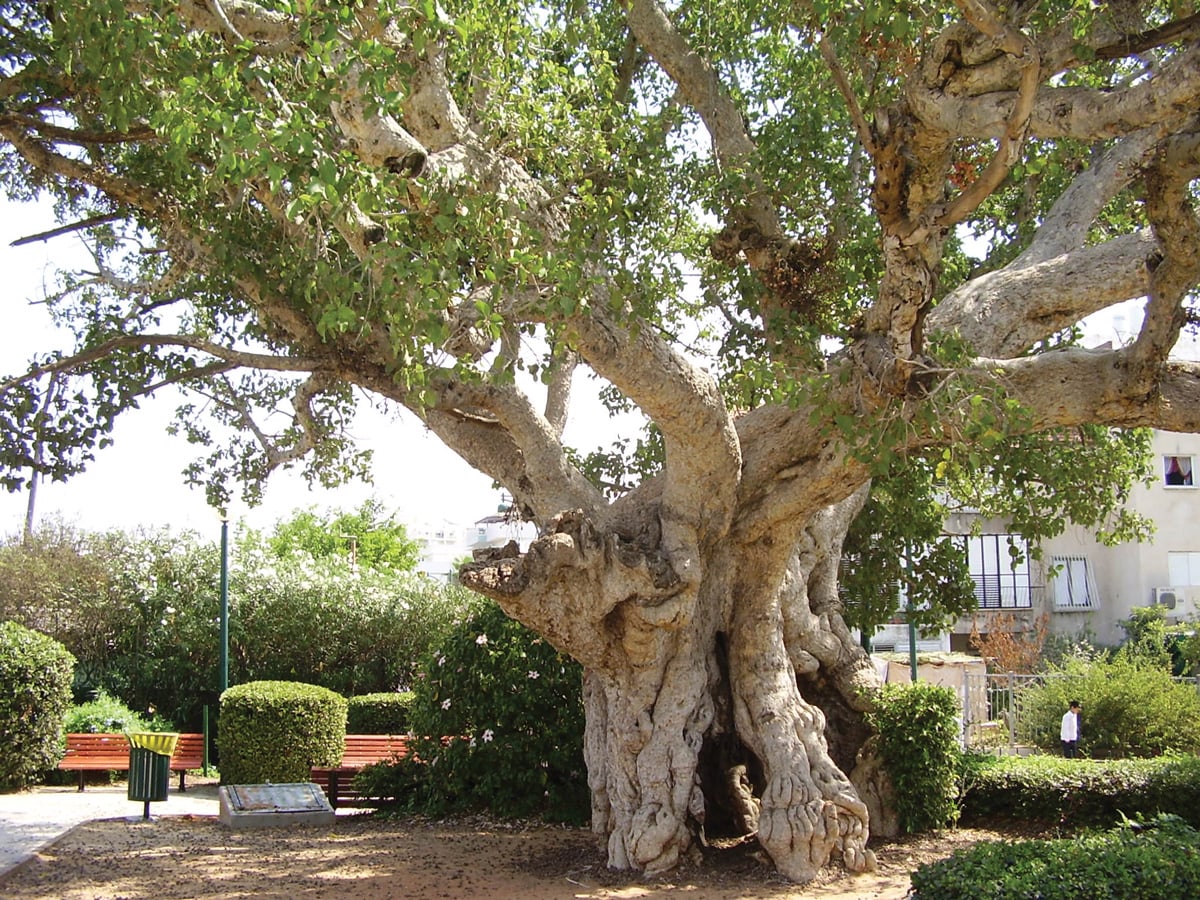
A sycamore tree—such as this one in Ramat-gan, Israel—is a type of fig tree that, full grown, can reach a height of sixty feet. The low, thick branches would have made it easy for Zacchaeus to climb (Luke 19:4).
The parable of the ten pounds (19:11–27) is similar to the parable of talents in Matthew 25:14–30, but there is no agreement on the literary relationship between the two parables. In Luke the context of the parable is the expectation that the consummation of the kingdom is imminent (19:11). Luke has already taught that the kingdom is present in Jesus’s ministry (Luke 11:20), but even though Jesus has inaugurated the kingdom, he has not completed it. Since he is “near Jerusalem,” some think the completion of God’s kingdom purposes is at hand. The parable implies an interval of time before the kingdom is consummated. The nobleman goes on a distant journey (19:12). Typically Jesus is not interested in speculating on the date of the kingdom’s consummation; he focuses on the need for responsible work by his servants. In the parable, each of the ten servants is given one mina, which probably equaled about three months’ wages. Each servant is expected to make a profit in the master’s absence. The message to the disciples is that they are expected to bear fruit in the interval of time between Jesus’s ascension and return. When the nobleman returns, he settles accounts. Seven of the ten servants fall out of the picture, and the master reckons with only three. The first two invest the money responsibly and are rewarded lavishly by the master (19:15–19). The point is that God graciously rewards his servants with far more than they deserve. The focus, however, is on the third servant (19:20–24). He does not invest his money and accuses the master of being cruel and exploitative. Perhaps he feared that if he made a profit the master would take it, and if he lost the money the master would demand repayment. The master retorts that the standard of judgment will be the servant’s own words. If he as the master is so harsh and exploitative, then obviously he will harshly judge someone who did nothing. The point of the parable is not that God is harsh and cruel but that he will judge those who waste the resources he has given to them. The bystanders object to the transfer of the third servant’s mina to the first servant, but the transfer intentionally teaches God’s sovereign graciousness. The rewards are based not on merit but on grace. Another theme is woven into the parable. The citizens of the country do not want the nobleman to assume rule over them (19:14). When he gains the kingship, he executes those who resisted his rule (19:27). This clearly refers to the Jews who have rejected Jesus as their king. Their rejection of Jesus will ultimately lead to judgment. This theme is appropriate in Luke’s Gospel because the final rejection of Jesus is on the horizon.
5. Arrival at Destiny: Death and Resurrection in Jerusalem (19:28–24:53)
A. Entrance into Jerusalem (19:28–48). The long journey to Jerusalem is over (cf. Luke 9:51). Jesus finally arrives in Jerusalem (19:28–40), and the culmination of his lifework is at hand. Verse 28 depicts Jesus traveling ahead of the disciples, which underlines his determination to go to Jerusalem. Perhaps the acquisition of the colt (19:29–34) was a matter that Jesus arranged beforehand. Jesus climbs on the colt, and his entry into Jerusalem is acclaimed in messianic terms. The riding of the colt symbolizes the humility of his entrance. The Pharisees object to the enthusiastic words of the crowd, but Jesus replies that if they are silent the stones will take up the shout.
The sight of Jerusalem moves Jesus to tears (19:41–44), not because of his own fate but because of the fate of the city. They have not recognized that in his person they have been visited by God, that the prospect of peace with God is being offered. Now it is too late. Judgment will come, and the city will be destroyed because they will have rejected God’s messenger.
Luke’s description of the cleansing of the temple (19:45–48) is brief and to the point. Obviously Jesus thinks that the commercial activity going on in the temple is obscuring its function as a house of prayer. The cleansing would have occurred in the Court of Gentiles, not in the inner precincts. A cleansing of the temple was expected in the last times (Mal. 3:1), and Jesus’s action may have also symbolized the future judgment of Jerusalem and destruction of the temple. The cleansed temple does not become the location of Jesus’s teaching, and it probably solidified the opposition to Jesus, convincing the leaders that it was time to do away with Jesus. Nevertheless, the popularity of Jesus frustrates the immediate desire of the leadership.
B. Controversy between Jesus and leaders heightens (20:1–21:4). The conflict between Jesus and the religious leaders intensifies, and the debates in this chapter reflect the heightening tensions. An official group of religious leaders, probably commissioned by the Sanhedrin, approaches Jesus and asks about the source of his authority (20:1–8). “These things” (20:2) seems to refer to the teaching of Jesus, but it certainly includes the bold action of cleansing the temple. Jesus does not answer the question directly; instead, he poses a question about the legitimacy of the Baptist’s ministry (20:3–4). This is not an attempt to escape from the controversy, nor is it a debating trick. It was the Baptist who proclaimed the coming of Jesus and baptized him. Before Jesus discusses his own status, he needs to know what their estimation is of the message of his forerunner. After all, the answer to their question is in John’s preaching: Jesus derives his authority from God. The authorities, however, claim ignorance (20:5–7), fearing a rebuke from Jesus on the one hand and a violent reaction from the crowd on the other. Jesus responds by not giving a direct answer to their question (20:8), although the answer is really implied. Jesus leaves his listeners to draw their own conclusion.
Absentee landlords who rented out their land to tenant farmers were common in Palestine. In the parable of the wicked tenant farmers (20:9–19) the obvious allegorical features are sometimes held to be a creation of the early church, but there is no reason why Jesus could not have used an allegory. The end of the parable (20:19) tells us that the parable is directed against the religious leaders. They have been given the responsibility to tend the vineyard (symbolizing Israel; cf. Isa. 5:1–7). When the owner of the vineyard desires to collect some of the fruit, he sends messengers (representing the prophets). In each case the messengers are wounded and ousted. The repetition of the same pattern three times is for rhetorical purposes, building the narrative to a climax. The owner of the vineyard is perplexed. The sending of his son will probably command the tenants’ respect. Of course, the son here is Jesus, and instead of rejecting him the religious leaders put him to death, thinking they will inherit the vineyard. Commentators debate whether the thinking of the tenants on inheriting the vineyard is reasonable (20:14–15). Possibly some tenants did revolt against owners and try to take possession of the property in Jesus’s day. But the parable is not necessarily attempting to reflect the culture and practices of that time. Here the action is irrational, for the owner of the vineyard will come and execute the tenant farmers and give the vineyard to others. The kingdom of God will be taken from the religious leaders and be given to the Gentiles. The people’s response—“God forbid!” (20:16)—is an expression of horror. It was unthinkable that the kingdom would be removed from Israel (though Jesus is not teaching that Israel has no future role in God’s salvation plan). Jesus, however, solemnly assures them that this is precisely what the Scriptures foretold (Ps. 118:22). The builders (the religious leaders) have rejected the stone (Jesus), which “has become the cornerstone” (20:17). This is not a decorative stone but a stone placed at the corner of the building to bear the stress and weight of the two walls. Thus, it is the crucial stone in the building. Verse 18 expresses two thoughts: (1) those who stumble (probably in unbelief) over that stone will themselves be broken; (2) if the stone falls in judgment on anyone, that person will be pulverized. This parable of judgment only provokes the leaders’ desire to do away with Jesus, but his popularity with the people holds firm (20:19).
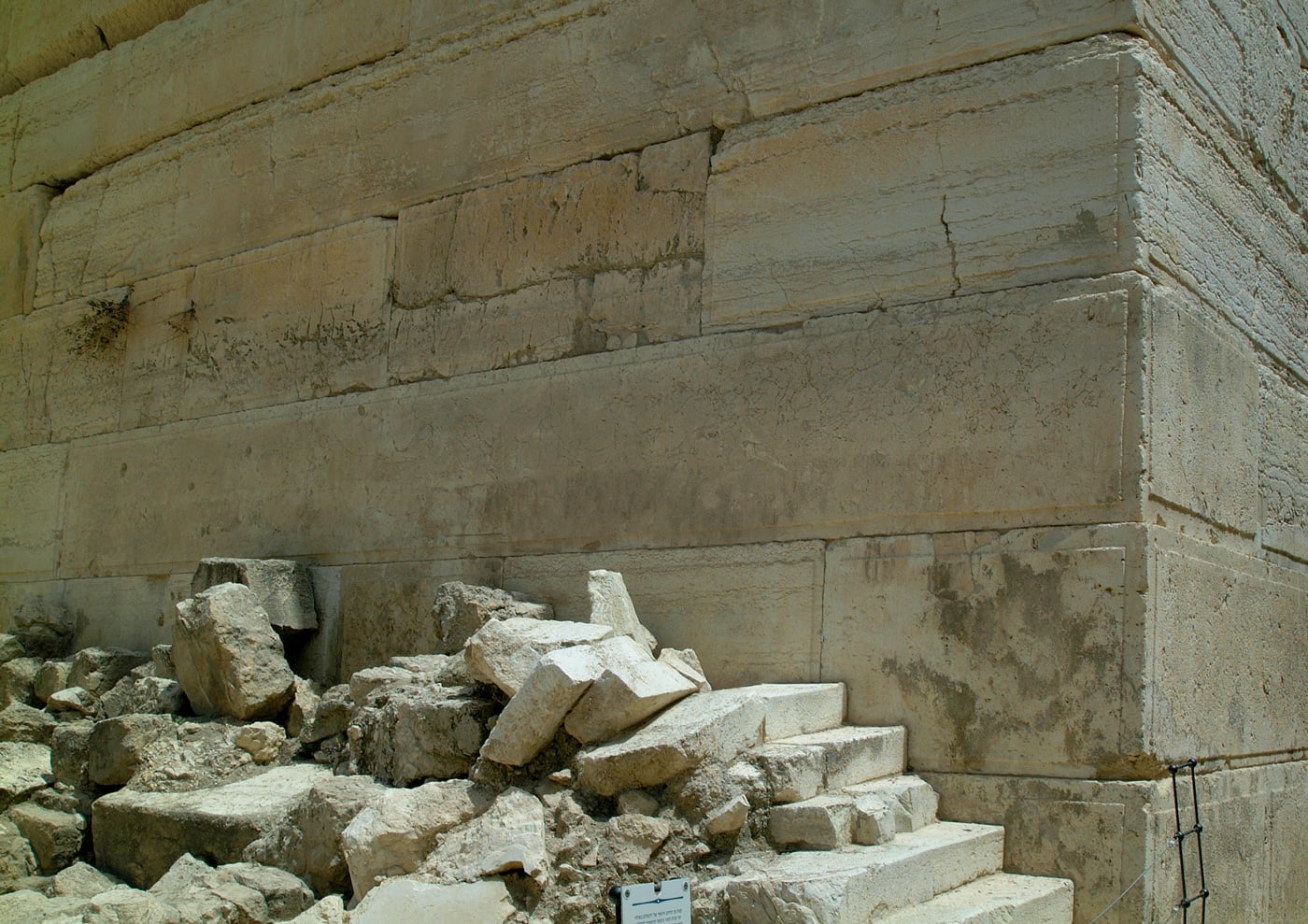
Luke 20:17 refers to Jesus as a cornerstone. These Herodian cornerstones holding up the southeast corner of the temple mount average over seven feet long and three feet wide, and they weigh approximately eighty tons.
The previous parable increased the opposition to Jesus, but since the religious leaders cannot yet arrest him, they try to entrap him. Their praise for Jesus’s integrity is lavish but insincere and hypocritical. Paying taxes to Caesar (20:20–26) was a volatile issue in first-century Palestine. Some Jews thought that the payment of such a tax necessarily involved compromise of their religion. Moreover, the image of the emperor on the coin was thought to be a violation of the second commandment. The questioners were probably hoping either that Jesus would disavow paying taxes and incur trouble with Pilate or that he would advocate complete submission to the Roman government and alienate Jewish patriots. By calling for a denarius (20:24), Jesus shows that even pious Jews possessed coins with Caesar’s image, clearly showing their submission to his jurisdiction. The first part of Jesus’s answer (20:25) acknowledges the legitimacy of submission to Roman power insofar as that power is acting lawfully. But that is not the whole story. One is to give to God what belongs to him, and obviously his jurisdiction is total. Thus Jesus is not setting up two separate realms, for the authority of God takes precedence over the state (cf. Acts 5:29). However, one should obey the earthly ruler as one who is delegated by God to enforce justice (cf. Rom. 13:1–7). Jesus’s answer was so impressive that it silenced his adversaries.
Jesus has given a deft answer to a controversial political question. Now Jesus is faced with a question about the resurrection from the Sadducees (20:27–40). The Sadducees were an aristocratic group who were the most powerful political faction in Palestine. They rejected both the oral tradition of the law, to which the Pharisees adhered, and belief in the resurrection and angels (cf. Acts 23:8). They relied only on the Old Testament Scriptures for their theology, focusing especially on the Torah. In this episode they try to show that the doctrine of the resurrection is ridiculous. Referring to the custom of levirate marriage (a man marries his deceased brother’s wife who is childless to raise up children for his brother), they imply that a future resurrection is out of the question. If a wife had seven such husbands, to which husband would she be married in the resurrection? Jesus’s answer has two parts. (1) The Sadducees fail to see the discontinuity between this age and the age to come. Marriage and procreation are a vital part of earthly life to preserve the human race, but in the coming kingdom there will be no institution of marriage. People will be like angels. This does not necessarily mean that sexual differences will be obliterated, nor does it mean that human beings and angels will be exactly alike. It means that human beings will be like angels in at least one way—neither group will marry. (2) What Jesus has said weakens the Sadducean objection. But now he moves to the Scriptures to demonstrate his case. If Exodus 3:6 says that God is the God of Abraham, Isaac, and Jacob, then the patriarchs must continue to live. Some have said that this example does not prove the resurrection but only the immortality of the soul. Others have tried to argue that Jesus is speaking here only of a future resurrection, but this is not supported by verse 38. Jesus’s argument seems to be this: if the patriarchs belong to God, then they are guaranteed a future resurrection. God is only the God of the living, not the nonexistent. Jesus’s answer impresses some teachers, probably Pharisees who disagreed with the Sadducees (20:39). His prowess in answering questions again silences his opponents.
Now Jesus shows his superior understanding by posing a question that the religious leaders cannot answer (20:41–44). Quoting a messianic psalm (Ps. 110:1), he asks how the Messiah can be both the Son of David and the Lord of David. Jesus is not denying that the Messiah was to be David’s son. Instead, he is implying that there is a mysterious way in which the Messiah is both David’s son and Lord. A resolution of the paradox is not given here, although the reader of Luke’s Gospel knows that Jesus is both the Son of David and the Son of God (cf. 1:32, 35).
Jesus has just criticized the theology of the religious leaders, and now he upbraids the religious practice of the scribes (20:45–47). They perform their religious duties for show and to garner respect, but at the same time they defraud widows of their money. Severe judgment will fall on such pretentious religiosity. We should not conclude that all scribes were hypocrites; Jesus merely focuses on the danger of religiosity (cf. Luke 11:37–52).
The widow’s sacrificial gift (21:1–4) is a remarkable contrast to the pretentious religion of the scribes—who exploit widows (20:45–47)! On the one hand, others are giving substantial gifts to the temple, but the text suggests that the gifts are insignificant because they put no strain on the givers’ budgets. On the other hand, the widow’s gift is notable because of the extreme sacrifice it entails, even though the amount of money is negligible.
C. Apocalyptic discourse (21:5–38). The temple that elicited the admiration of his disciples was beautiful indeed. Herod the Great began to refurbish it in 20/19 BC, and the work was not completed until AD 63 or later. Jesus, however, predicts that the temple will be completely demolished (21:5–6). The Romans fulfilled this prophecy in AD 70. Some scholars have maintained that this saying was attributed to Jesus after the event occurred, but such a view reflects a bias against predictive prophecy.
Jesus now warns his disciples against eschatological enthusiasm and braces them for future persecution (21:7–19). The question of the disciples in verse 7 clearly refers to the date of the fall of Jerusalem, but it also seems to involve the date of the end of this age. The fall of Jerusalem becomes a type for the destruction that will occur in the end times. (Luke has distinguished more clearly than Matthew [Matthew 24] and Mark [Mark 13] the events that will take place in Jerusalem from the events of the end.) Jesus’s answer indicates that the question in verse 7 relates to the last times. He warns his disciples not to be deceived because many will claim to be the Messiah or declare that the end has come. The arrival of the end cannot be calculated from wars, insurrections, famines, earthquakes, and disease (21:9–11). These events will occur before the end, and they may even signal the imminence of the end, but no certain calculation can be drawn from them. The disciples ought not to think the end will deliver them from suffering, because persecution will precede the end (21:12). They will be prosecuted by civil and religious authorities. But their defense will produce an opportunity to testify about the gospel, and they will receive the necessary words with which to defend themselves. The persecution may be bitter, perhaps even involving betrayal by family members and death. They must steel themselves to face implacable hostility (21:17). To say “not a hair of your head will perish” (21:18) seems to contradict verse 16, where Jesus asserts that some will be put to death. The saying in verse 18 means that one will be spiritually preserved from any harm, since physical death does not damage one’s essential self. All of this is encouragement to stand firm and persevere, because such perseverance is necessary for salvation (21:19). Again, this is not salvation by works. Such perseverance gives evidence of the genuineness of one’s salvation.
In the next section Jesus specifically answers the question about the destruction of Jerusalem (21:20–24). One will know that Jerusalem’s time of destruction has arrived when foreign armies surround it. This encirclement is a signal, not of the need for heroism, but the need to flee. God’s avenging wrath will be poured out on the city, bringing distress to the entire populace. “The times of the Gentiles” (21:24) refers not to the Gentile mission but to Gentile authority over Jerusalem. Josephus’s Jewish War contains a graphic commentary on the Roman conquest of Jerusalem in AD 70.
From the destruction of Jerusalem Luke moves to the coming of the Son of Man (21:25–28). Luke does not specify the temporal relationship between these events, but the former clearly functions as a correspondence or type of the latter. The emphasis on signs in this paragraph is in tension with Luke’s claim elsewhere that no signs will precede the end (cf. 17:20–25). This is probably Luke’s paradoxical way of saying that the end is not calculable, and yet certain signs precede it. The signs picture in dramatic terms the breakup of the natural world order, and the resulting terror and fear that seize the human race. The Son of Man will return during these troubled times. The message for believers is, when the world begins to convulse, take hope! Your redemption is imminent.
The parable of the fig tree (21:29–33) is easy to comprehend. Just as the appearance of leaves on a tree shows that summer is near, so too the signs previously described indicate that the coming of the Son of Man is near. The assertion that “this generation will certainly not pass away” (21:32) is difficult. It could refer to (1) the generation in which Jesus was living, (2) the Jewish race, (3) the human race, or (4) the end-time generation. It probably refers both to (1) and (4), for Jesus’s generation experienced the razing of Jerusalem, and Jerusalem’s destruction becomes a type of the end. In typical Jewish fashion Jesus combines in this discourse information about the destruction of Jerusalem and the end of the world.
The arrival of the Son of Man and the destruction of Jerusalem have a practical message for disciples. They should constantly be vigilant (21:34–36), not forgetting in the interval their purpose for living. The end will come suddenly, and the entire earth will be affected. When Jesus says pray to escape what will happen (21:36), he does not mean that people should pray that they will not be on earth. Rather, he means they should pray that they will not face the terrible judgment of God. By following the path of obedience, they will receive a favorable verdict from God and stand before the Son of Man with joy.
The verses on Jesus’s ministry in Jerusalem (21:37–38) are not part of the apocalyptic discourse. Jesus continues his teaching ministry up until the end, and his popularity with the people continues.
D. Passover events (22:1–38). The Feast of Unleavened Bread was held during the fifteenth to the twenty-first of Nisan (March-April), and the Passover on the fourteenth and fifteenth days of the same month. Because the two feasts were so close together, Luke does not differentiate clearly between them. Members of the Sanhedrin (“chief priests and the teachers of the law”) want to arrest Jesus, but they are afraid of a popular uprising among the people, for Jesus is greatly admired (cf. 19:28–40; 21:38). Judas Iscariot’s decision to betray Jesus (22:1–6) is the crucial break that the religious leaders need. He discusses the matter and makes plans with the chief priests and the temple police. The only explanation Luke gives for Judas’s disloyalty is the work of Satan (cf. John 13:2, 27), and perhaps the desire for money (22:5). No crowd could be present when the transaction was carried out because the arrest of Jesus could have fomented a revolt among the people (22:6).
The next paragraph concerns the Passover preparations (22:7–13). All the Synoptic Gospels agree that Jesus ate a Passover meal with his disciples. The lambs would have been slain in the afternoon on the fourteenth day of Nisan, and the meal would be celebrated that evening (22:7). The evening would start a new day according to the Jewish reckoning. John seems to date the meal before the Passover (John 13:1; 18:28; 19:14), which would place Jesus’s death on the fourteenth of Nisan, the day the lambs were sacrificed. The problem of the difference between John and the Synoptics is complex and cannot be treated adequately here. Some have argued that the Synoptic writers used the sectarian calendar from the Essenes, which would explain the variance in dating. It has also been suggested that the meal in the Synoptics is not actually the Passover but a Passover type of meal. The best solution is that the Gospel of John uses the terminology of “Passover” for the Feast of Unleavened Bread, which immediately followed the Passover, since the two feasts occurred at the same time. The account here suggests that Jesus secretly prearranged the location of the meal, probably so that Judas could not betray him before the celebration of the feast. “A man carrying a jar of water” (21:10) would be notable, for this was usually done by a woman.
A Passover meal (22:14–23) usually had the following order: (1) preliminary events—a blessing was said, then the first cup of wine and a dish of herbs were served; (2) the Passover liturgy was recited, the second cup was drunk, and a part of the Hallel (Psalms 113–18) was sung; (3) the meal was celebrated, a blessing was pronounced over the unleavened bread, the lamb was eaten with the unleavened bread and bitter herbs, and the third cup was drunk after the meal; (4) the rest of the Hallel psalms were sung. (There is disagreement over whether there was a fourth cup.)
Jesus expresses his intense desire to partake of the Passover with the disciples (22:15). Some scholars have said that Jesus abstained from the meal, but the most natural meaning of verse 15 is that Jesus did eat the Passover with the disciples. This Passover meal, however, is the last one Jesus will eat with his disciples. But the meal also takes on eschatological significance. Jesus will celebrate the Passover with the disciples again during the messianic banquet (22:16, 18). The first cup (22:17) is either the first or second cup of the Passover service. The Passover in the Old Testament represents the liberation of Israel from Egypt, but Jesus now begins to reinterpret the Passover. The bread he breaks symbolizes his broken body; that is, it represents his sacrificial death, which is vicarious in nature (22:19). The cup in verse 20 would be the third cup, after the main meal. This cup represents the new covenant (Jer. 31:31–32), and the wine represents his blood that establishes the new agreement and is poured out in a sacrificial way for others. Some manuscripts omit Luke 22:19b–20, but these verses should be included as part of the original text due to the strength of the manuscript evidence. Jesus continues his words, predicting that one of those eating with him will betray him (22:21). The fact that one of Jesus’s closest associates, who even shared the Passover with him, would act with treachery is intended to evoke horror from the reader. Nevertheless, this betrayal accords with the divine plan.

The cup that Jesus drank from during his last supper (Luke 22:17, 20) may have resembled these first-century-AD stone drinking vessels from Masada.
The predicted betrayal causes the disciples to question who might be responsible (22:23). But the conversation quickly turns to which disciple is the greatest (22:24–30), for if one could be in the lowest position of a traitor, then presumably there must be some kind of rank. Jesus confronts the competitive spirit of his disciples, contrasting the secular meaning of greatness with his own perspective. Gentiles use power to dominate others and to acquire a reputation for themselves. The new community, however, should not be characterized by a quest for power or greatness, for true greatness consists in serving. Jesus uses his position not to demand service but to give service and aid to others. Nevertheless, the disciples will be rewarded for their service and endurance with Jesus in his trials (22:28). They will share with Jesus in the messianic banquet and the kingdom, having a responsibility to judge Israel.
In 22:31–34 Jesus foretells Peter’s denial and restoration. Even though the disciples will eventually inherit the kingdom, their faith will be tested. In verse 31 “you” is plural, referring to all the disciples, and the sifting will involve the separation of the wheat from the chaff; that is, Satan wants to test the disciples so that they fall from the faith. Jesus directs the rest of his words to Peter. The test of fidelity will be severe, and despite his protestations to the contrary, Simon will even deny Jesus (22:33–34). Nevertheless, Jesus’s prayer for Peter will be efficacious. His faith will not permanently fail, and after his restoration he is to fortify the faith of the other disciples.
In this perplexing paragraph regarding the two swords (22:35–38), the nature of the testing that the disciples and Jesus will face is now explained more fully. On their previous mission the disciples lacked nothing, presumably because others met their needs. But now the time of opposition has set in. Jesus’s words on acquiring a sword (22:36) should not be interpreted literally; they are a sign of the conflict and opposition the disciples will face. Indeed, Jesus himself will be considered a criminal (cf. 23:32–33), fulfilling Isaiah 53:12. The disciples mistakenly interpret Jesus’s words on swords literally. Jesus rebukes their incomprehension (cf. 22:49–51) by saying, “That’s enough” (22:38).
E. Arrest and trial (22:39–23:25). After the meal ends, Jesus and the disciples go to the Garden of Gethsemane at the foot of the Mount of Olives (22:39). The theme of testing continues from the preceding paragraphs. The account begins and ends with Jesus exhorting his disciples to pray that they will not enter into temptation (22:39–46). Jesus functions as the model. He naturally feels revulsion about his destiny, entreating his Father to take the cup away from him, for the cup represents God’s wrath that will be poured out on him. But through prayer he overcomes the test, remaining faithful and fixed on his Father’s will. The disciples function as a foil. They do not pray but sink into sleep at the hour of testing. Verses 43–44 are textually uncertain; although they may not be original, they may contain ancient and probably authentic tradition.
The text now moves to Jesus’s betrayal and arrest (22:47–53). Judas betrays Jesus with a mark of friendship and affection, revealing the low point of his degradation (22:47–48). Still misunderstanding Jesus’s words about swords (22:36–38), the disciples think that now is the time to put them to use. One disciple (Peter, according to John 18:10) severs the right ear of the high priest’s servant. Jesus, however, rebukes his disciples for resorting to violence (22:51; cf. 22:38) and compassionately heals the servant’s ear, demonstrating that even during his suffering his work is one of healing and restoration. Jesus then addresses his captors with irony. Do they think he is leading a violent revolution? Is that why they have equipped themselves with such weapons? And why do they not arrest him in public? Clearly their actions show that they are aligned with the powers of darkness.
Jesus is brought to the high priest’s house. Mark tells us that Jesus was examined that night (cf. Mark 14:53–65), but Luke omits the nighttime meeting and tells us only about the examination the next morning. Peter’s testing now becomes a reality (22:54–62). Just as Jesus predicted, Peter denies him three times, displaying a lack of courage even before a servant girl. The process of restoration begins with a poignant look from Jesus. Peter’s remorse naturally must precede any restoration, when he must turn and strengthen his brothers (22:32).
Those guarding Jesus (nothing is said about Roman soldiers) ridicule him (22:63–65). This is part of the humiliation that Jesus predicted he would undergo.
Jesus’s trial begins with an interrogation before the Sanhedrin (22:66–71). This council, which functioned as the official court of the Jews, meets to examine Jesus. They immediately address him with their central concern (22:67): does he claim to be the Christ? Jesus, however, refuses to answer the question, maintaining that it would be useless to give an answer to such an audience, presumably because they understand the messiah in a way different from Jesus. Nevertheless, Jesus proceeds to conflate Daniel 7:13 and Psalm 110:1, claiming that as the Son of Man he will sit (probably as judge) at God’s right hand (22:69). Jesus’s answer provokes the Sanhedrin to ask whether he considers himself to be the Son of God (22:70a). Son of God should not be equated with Messiah (cf. Luke 1:32–35) but goes beyond it, suggesting an intimate and unparalleled relationship with God. Jesus’s answer is again rather mysterious and guarded: “You say that I am” (22:70b). The answer is a kind of guarded affirmation, suggesting that Jesus would rather explain the same reality a different way. Nevertheless, the council concludes that the evidence is substantial enough to convict him (22:71).
The repudiation of Jesus by the religious leaders becomes official as they now accuse him before the Roman prefect Pontius Pilate (23:1–7). Pilate’s normal residence was the city of Caesarea (cf. Acts 23:23), but he came to Jerusalem for Passover. The charges against Jesus are political (23:2), and the only one that arouses Pilate’s interest is the idea that Jesus might be “the king of the Jews” (23:3). Jesus replies to Pilate’s question with another ambiguous answer; the Greek literally says, “you say,” which affirms that such is the charge raised against Jesus. The major point Luke wants to make is that Pilate is convinced of Jesus’s innocence (23:4). When Pilate learns that Jesus hails from Galilee, he sends him to Herod Antipas, who had jurisdiction over that region. The reason Pilate sent Jesus to Herod may have been to satisfy the latter’s curiosity, or he may have wanted to learn more about the case from someone who was familiar with the Jews, or perhaps he wanted to get rid of the case.
Now Jesus appears before Herod (23:8–12), who is thrilled about seeing Jesus, apparently expecting some kind of miracle show or at least an interesting theological discussion. But Jesus continues to show that he is in command of the situation by refusing to speak with Herod. Herod becomes disgusted with Jesus, joining his soldiers in ridiculing and mocking him. Why did Herod and Pilate become friends on this day (23:12)? Perhaps because they experienced a kinship in their reaction to Jesus. Both of them lacked the courage to set free a man who was clearly innocent; like Pilate, Herod sees no evidence of wrongdoing. Thereby Herod becomes the second witness of Jesus’s innocence (cf. Deut. 19:15).
Luke continues to emphasize the innocence of Jesus. After Jesus returns from meeting with Herod, Pilate sums up the situation and sentences Jesus (23:13–25). Neither Pilate nor Herod has found Jesus guilty of any crime (23:15), but a flogging will be administered, probably to warn him not to run afoul of the authorities again (23:16). The crowd, however, pressures Pilate to release Barabbas—a murderer and a terrorist—rather than Jesus. Indeed, they now specify that crucifixion should be the means of Jesus’s death (23:21). Pilate continues to protest that Jesus is innocent, but his good intentions collapse under pressure from the crowd. His cowardice and feebleness lead him to submit to the crowd’s will. Thus, an innocent person is put up for execution while a guilty murderer is released.
F. Crucifixion and burial (23:26–56a). By custom the victim carried his own cross, so probably Simon was pressed into service because Jesus was breaking down under the weight of the cross. Some women who are present begin to weep for Jesus. Jesus warns that their tears should be reserved for their own fate. The judgment on Jerusalem will be so horrible that the unhappy state of barrenness will be preferred (cf. Luke 1:25). People will call to the mountains and hills to shield them from the impending judgment. Verse 31 probably is saying that if the judgment is severe on the innocent Jesus, then it will be incredibly harsh for guilty Jerusalem.
The prophecy (Isa. 53:12) that Jesus would be “numbered with the transgressors” (22:37) finds its fulfillment here as Jesus is crucified between two criminals (23:32–43). Jesus’s words of forgiveness (23:34) are textually uncertain, although internal evidence suggests they should be included. Even though Jesus is treated as a criminal and is subjected to the humiliation of being stripped (23:34), he responds with forgiveness. The misunderstanding of Jesus’s messiahship is revealed by the threefold mocking (23:34–39). The religious leaders, Roman soldiers, and one of the criminals ridicule Jesus, asserting that if he were really the Messiah and the king of the Jews he would extricate himself from death. They fail to see that Jesus is accomplishing salvation by his death. The other criminal (23:40–43), however, recognizes that Jesus is innocent, imploring him to remember him when he begins his reign. Jesus’s answer goes beyond the man’s request, for “today” the man will be with Jesus in the bliss of paradise.
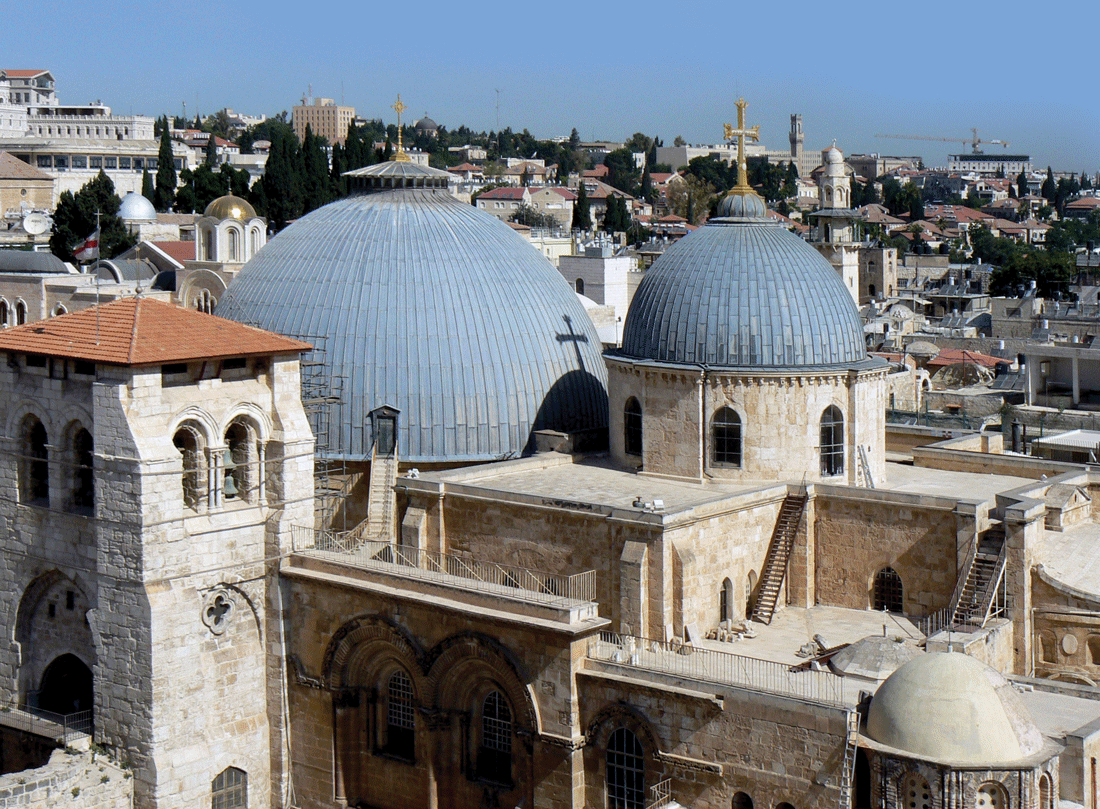
The Church of the Holy Sepulchre. According to ancient Christian tradition, this church is built around the place where Jesus was buried (Luke 23:53).
In 23:44–49 Jesus expires, prompting the centurion to proclaim his innocence. The darkness that covers the land from “about noon . . . until three in the afternoon” could not have been caused by an eclipse, for during Passover there was a full moon. Some have speculated that the darkness was due to a sirocco stirring up the dust, but there is no clear scientific explanation for the phenomenon. The darkness suggests an ominous future for Jerusalem, while the splitting of the veil between the Most Holy Place and the Holy Place suggests that free access to God has been accomplished. Placing his confidence in his Father until the end, Jesus serenely commits himself to his Father’s care. The centurion underlines the Lukan theme that Jesus is innocent, while the onlookers display their regret for what happened by beating their breasts. The regret here should probably not be understood as repentance. Other followers of Jesus observe what happens from a distance.
Joseph, a member of the Sanhedrin, did not agree with the verdict against Jesus, and was obviously an admirer of Jesus. He sees to it that Jesus receives an honorable burial (23:50–56a), and that he is not thrown into a common grave with criminals. Instead, he is placed in a new tomb, which has never been used. The day of Preparation before the Sabbath would be Friday. The women do not have time to anoint Jesus in the proper manner before the Sabbath, so they note where the tomb is and prepare the spices before the Sabbath begins, waiting for the Sabbath to end before returning to the tomb.
G. Resurrection: Scripture fulfilled (23:56b–24:53). On Sunday, “the first day of the week,” an unspecified number of women return to the tomb to anoint Jesus’s body (23:56b–24:12). Luke does not tell us that they worried about removing the stone (cf. Mark 16:3), yet when they arrive, the stone has been rolled away and Jesus’s body is no longer in the tomb. Instead, they see two angels dressed in dazzling apparel, who announce to them that Jesus has risen from the dead. Luke calls the angels “men” (24:5), not because he did not know they were angels (see 24:23), but because angels in the Bible always appear as men (cf. also Acts 10:3, 30). Mark refers to only one angel (Mark 16:5). This does not contradict Luke’s account unless one assumes that Mark’s narrative is an exhaustive account, for nowhere does Mark say there was only one angel. The angels remind the women that Jesus’s death and resurrection were predicted by Jesus himself, stressing that these events were in accord with the divine plan. Women, then, receive the news of the resurrection first, even though they were not considered in Jewish society to be credible witnesses. Notice that Luke says nothing about an appearance of Jesus here; the tomb is empty and angels claim he is risen. The women report the news to the apostles, yet the apostles view these tales as “nonsense.” Peter, however, is stimulated to investigate further. He sees the linen that was used to wrap Jesus’s body lying on the ground, and leaves the scene mystified (24:12; cf. John 20:3–9). There are many difficult problems in harmonizing the different resurrection accounts, but such a harmonization is not impossible (see Wenham).
The first resurrection appearance recorded in Luke’s Gospel is found here in 24:13–35. Two people are traveling to Emmaus from Jerusalem. The distance of sixty stadia is about seven miles. As they travel, they are discussing the events of the previous day, and Jesus catches up with them as they journey. They cannot recognize Jesus, not because he looks different, but because in God’s sovereignty they are prevented from identifying him. When Jesus inquires about the topic of their conversation, Cleopas (cf. John 19:25, which may refer to the same person; the identity of Cleopas’s partner is unknown, but perhaps it was his wife) responds by identifying Jesus as a prophet through whom God has worked in a mighty way. Nevertheless, he has been executed by the religious leaders, indicating that he could not have been the Messiah (24:21). To make matters worse, some women are saying that this Jesus is alive. They are right that the tomb is empty, but such a report could not be believed because no one has seen Jesus. The “unknown” Jesus counters the belief of these two by pointing to the Scriptures. The Old Testament Scriptures clearly teach that the Messiah must suffer before he enters into glory. For the texts that Jesus used, one should probably refer to the speeches in the book of Acts (Acts 2:14–39; 3:12–26; 13:16–41). The two persuade Jesus to spend the evening with them, and in a scene that recalls the Last Supper, they recognize him as he breaks bread and gives thanks. These two people, however, were probably not present at the Last Supper, and thus they may simply be recalling being with Jesus on other occasions when he gave thanks. Jesus immediately vanishes, and they decide to return to Jerusalem and tell the others the good news. But when they arrive the Eleven speak first, informing them that the Lord has arisen and has “appeared to Simon” (24:34). Then the two companions relate the story of their encounter with Jesus (24:35).
During this animated exchange about Jesus’s resurrection, Jesus himself appears to the disciples (24:36–43), pronouncing the message of peace (cf. Luke 2:14). The disciples are taken aback, thinking that they are seeing a spirit. Some scholars have argued that this is improbable since they were just discussing the reality of the resurrection, but such a response is psychologically probable when an unexpected visitor suddenly appears in a room. Jesus counters their doubts with hard evidence. Do they think he is only a spirit, a hallucination, a mirage, or a vision? He encourages them to observe closely his hands and feet (24:39–40), presumably because of the nail prints in them (cf. John 20:24–28). Technically speaking, the nails were put through the wrists, but a reference to the hands would include the wrists as well. If observation of Jesus’s body is not enough, then they should touch him as well, for no spirit has flesh and bones. Last, Jesus proves the reality of his resurrection by eating fish before his disciples, for no spirit could do that. It is important to realize that Jesus’s body was not simply resuscitated. A resuscitated body is simply a return of the old body to physical life, but such a body must die again (cf. the resurrection of Lazarus in John 11). Jesus’s body was a resurrected body, a glorious body that had embarked on a new level of existence. It was still a physical body, but a transformed and empowered physical body.
The end of Luke’s Gospel does not clearly indicate that a forty-day interval separates Jesus’s resurrection and ascension; instead, the end of Luke seems to put the resurrection and ascension on the same day. A reading of Acts 1:1–11 shows that Luke compresses the account in his Gospel, probably intending to give a summary of what Jesus taught in the forty-day interval. Again, Acts 1:1–11 provides a parallel but supplemental account. Here (24:44–49) Jesus emphasizes that the Old Testament Scriptures needed to find their fulfillment in his ministry. The threefold division that Jesus refers to in verse 44 is the division of the Hebrew canon into the Torah, Prophets, and Writings. Indeed, the Scriptures even predict (cf. Isa. 2:1–4; 49:6) that the message of forgiveness will be proclaimed to all nations “beginning at Jerusalem” (24:47). Here we have a foretaste of the message of Acts. Jesus’s disciples will be the agents of this message since they are witnesses of the saving events (24:48). Nevertheless, they must abide in Jerusalem until they are empowered from above, a clear reference to the Holy Spirit (cf. Acts 1:8). Jesus, who is the bearer of the Spirit in Luke, will become the dispenser of the Spirit to his disciples.
The ascension (24:50–53) occurs in Bethany (24:50). This does not contradict Acts 1:12, which assigns the location to the Mount of Olives, because Bethany was located at the foot of that mountain. At the time of his departure Jesus gives his disciples a priestly blessing (cf. Num. 6:24–26). The ascension is described in spatial terms (24:51), which has sometimes been a stumbling block to those who are part of the scientific age. But what other way would Jesus use to communicate to his disciples that he would no longer be appearing to them? Clearly, one does not have to argue that heaven is “up there” to see that the act was an effective way of demonstrating that the resurrection appearances were at an end. Acts also informs us that Jesus must be exalted before the Spirit can descend (Acts 2:33). The exaltation of Jesus leads the disciples (for the first time in Luke!) to worship Jesus. They now recognize that he is truly the Son of God (cf. 1:35). Verse 53 should not be interpreted woodenly; the disciples were not in the temple every minute. The main point of the verse is the last phrase; they were “praising God” for the salvation that Jesus had accomplished. This is a fitting response for the believer today as well.
Select Bibliography
Bock, Darrell L. Luke. 2 vols. Baker Exegetical Commentary on the New Testament. Grand Rapids: Baker Academic, 1994–96.
Fitzmyer, Joseph A. The Gospel according to Luke. 2 vols. Garden City, NY: Doubleday, 1981–85.
Machen, J. Gresham. The Virgin Birth of Christ. Grand Rapids: Eerdmans, 1958.
Marshall, I. Howard. The Gospel of Luke: A Commentary on the Greek Text. Grand Rapids: Eerdmans, 1978.
Stein, Robert H. Luke. New American Commentary. Nashville: Broadman & Holman, 1990.
Wenham, John. Easter Enigma: Are the Resurrection Accounts in Conflict? Grand Rapids: Zondervan, 1984.