Micah
1. First Round of Judgment and Salvation (1:1–5:15)
A. God’s Judgment of Apostasy and Social Sin in Samaria and Judah (1:1–3:12)
B. God’s Word of Hope to Israel (4:1–5:15)
2. Second Round of Judgment and Salvation (6:1–7:20)
A. God’s Dispute with Israel (6:1–8)
B. God’s Reproach for Israel’s Social Sins (6:9–16)
C. The Prophet Laments Israel’s Condition (7:1–7)
D. Psalms of Hope and Praise (7:8–20)
Introduction
Micah the Prophet
The first verse of the book of Micah names Micah of Moresheth as the one who received and communicated the vision concerning the future judgment and salvation of Samaria and Jerusalem. The name Micah is common in the Old Testament (a longer form of the name is Micaiah) and means, “Who is like Yahweh?”
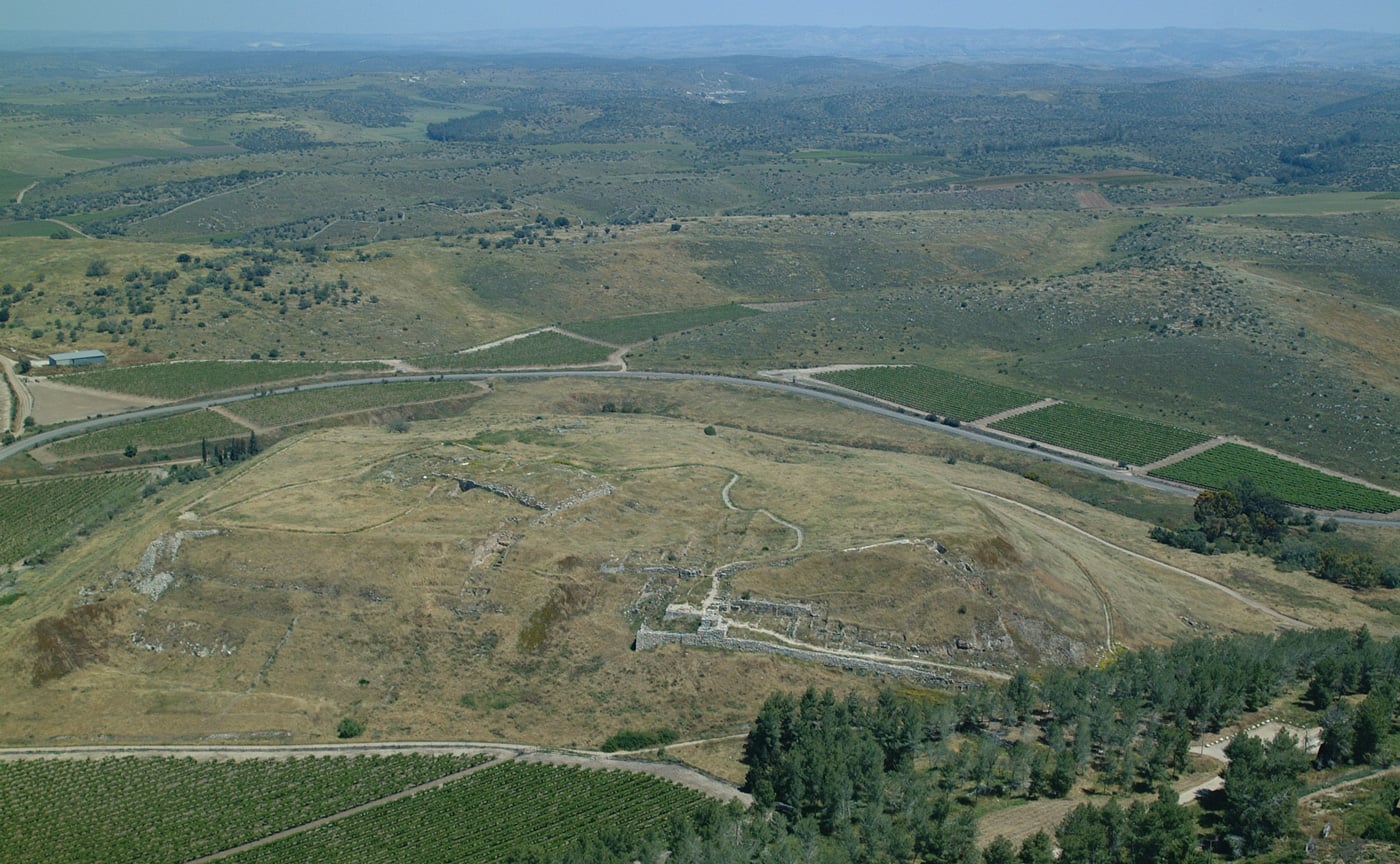
Moresheth was a village approximately twenty-five miles southwest of Jerusalem. The village was located on the edge of the rolling hills of the Shephelah, near the coastal plain. Bruce Waltke speculates that “Micah’s identification as a Moreshite implies that he was an outsider to the capitals” (Waltke, 3). Scholars are not certain why Micah’s parentage is not mentioned, but it may be because his family was not prominent. He is identified by means of his hometown because his ministry took place at a different city (probably Jerusalem).
Micah is mentioned in only one other place in the Old Testament (Jer. 26:17–19). When Jehoiakim comes to the throne in Judah, the priests and the false prophets try to put Jeremiah to death. Some elders intercede for him and cite the ministry of Micah as a justification for Jeremiah’s prophecy of judgment.
Authorship and Date
In the past, critical scholars have argued that the genuine oracles of Micah are restricted to the first three chapters. If one grants the possibility of predictive prophecy, however, there are no persuasive reasons for denying Micah the authorship of any part of the book.
The first verse, once again, is our source of information on the date of Micah’s ministry. Three kings of Judah are listed to provide the period of time during which Micah preached threat and hope among the people: Jotham (750–732 BC), Ahaz (732–716), and Hezekiah (715–686). Since Micah’s work may have begun toward the end of Jotham’s reign and ended at the beginning of Hezekiah’s, we cannot be certain about the actual length of his ministry.
The reference to the coming judgment of Samaria (1:6) indicates that Micah’s preaching began well before 722 BC, the year in which Samaria fell to the forces of Assyria. Another oracle that may be fairly certainly dated is the lament in 1:8–16. The cities mentioned in this section coincide with the probable route of Sennacherib’s army as he approached Jerusalem in 701 BC. Of course, the reference in Jeremiah 26:17–19 cites Micah 3:12 as an oracle delivered during the reign of Hezekiah.
Historical Context
A brief overview of the history of Israel and Judah that relates to the prophecy of Micah notes that the period before his ministry was a time of political and economic prosperity but spiritual dullness (particularly the reigns of Jeroboam II of Israel [786–746 BC] and Uzziah of Judah [783–742 BC]). Soon, God’s judgment would lead to the downfall of Samaria at the hands of the Assyrian army under the leadership of Shalmaneser V (722 BC). The southern kingdom, Judah, was not absorbed into the Assyrian Empire but was forced to pay tribute. During the reign of Sargon II, Judah did not rebel, but upon this strong king’s death and the accession of his son Sennacherib, Hezekiah, the king of Judah, joined a coalition led by a Babylonian rebel, Marduk-Baladan (2 Kings 18–19). In reaction Sennacherib threatened the independence of Jerusalem (701 BC), but through the ministry of Isaiah and Micah, Hezekiah repented of his sins and God spared the city. Nevertheless, it was not long after Hezekiah’s death that the rulers of Judah turned against the Lord. Manasseh, his son, for instance, brought much grief to Judah. Micah’s prophecy predicts the destruction of Judah at the hands of the Babylonians, which took place in 586 BC, and even further ahead to the restoration from captivity (539 BC).
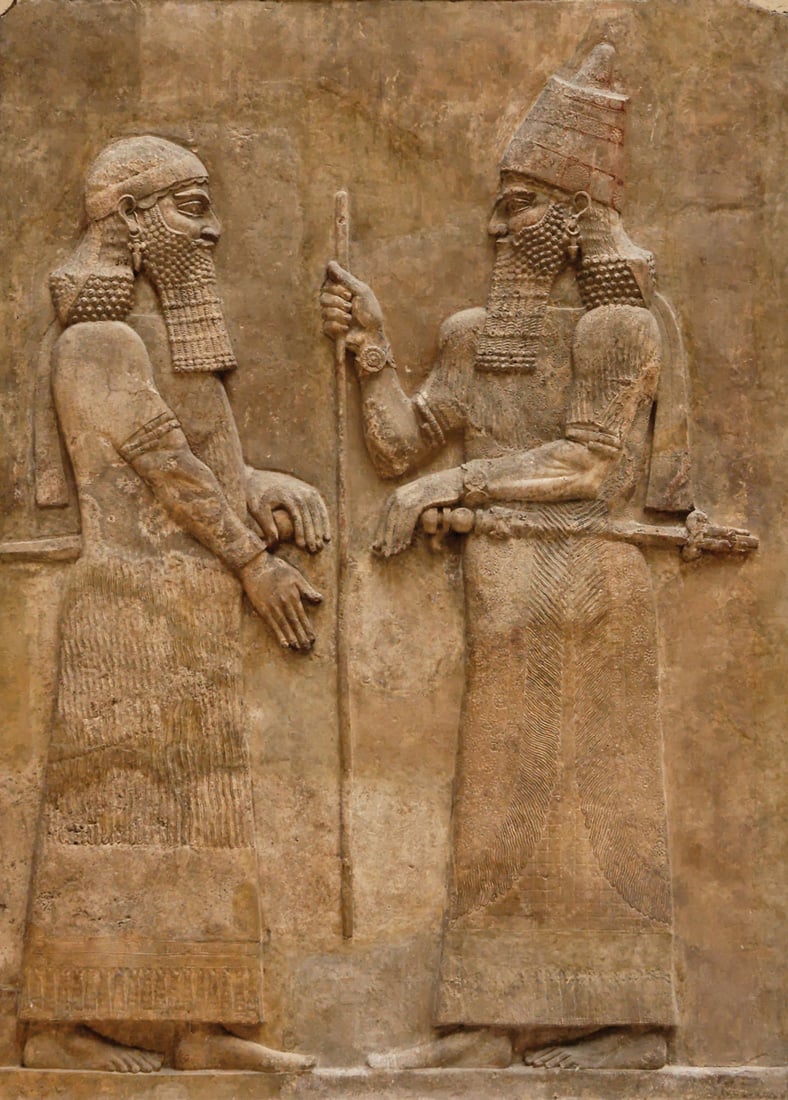
The Assyrian king Sargon II faces a dignitary in this relief from Sargon’s palace at Khorsabad (716–713 BC). Micah prophesied during the reign of King Hezekiah of Judah, who rebelled against Sargon’s son, Sennacherib.
Structure
Much debate surrounds the structure of the book of Micah. Opinions vary radically. Some argue that the book has no overall structure and is simply a loose collection of prophetic oracles. Others identify extremely complex and sophisticated structures. A few points are certain:
- Micah did not speak these oracles at one time. The book is best taken as an anthology of his prophetic messages over the years of his ministry.
- Chronology is not the key to the structure of the book, though early in the book Micah does predict the capture of Samaria and Sennacherib’s invasion, while at the conclusion of this book, he looks ahead to the Babylonian captivity and the restoration.
- The prophecy is roughly structured on the basis of alternating messages of threat and hope. God through his prophet disputes with his people in two rounds. The first is found in chapters 1–5. There is a harsh message of judgment (1:2–3:19—2:12–13 may be an exception) but also a note of salvation (4:1–5:15—5:10–15 may be an exception). The second round (6:1–7:20) also begins with judgment (6:1–7:7) but concludes on a profound note of hope (7:8–20).
Theological Themes
The theology of Micah is largely concerned with divine judgment against sin. Yahweh commissioned Micah to bring this message of judgment against his people. Israel and Judah both departed from the way of the Lord and angered him by their sin. The sin is cultic (1:5–7) as well as social (2:1–2). Israel’s civil (3:1–3) and religious leaders (2:6–11 [prophets]; 3:11 [priests]) have rejected the ways of God. They have a false security in the Lord.
The Lord, accordingly, presses his case against his people who have broken covenant with him. He reveals himself as a warrior against his people (1:3–4). The Lord desires that his people love him and act justly. He calls his people back to himself.
While judgment against sin is the dominant note of the book, hope is not lacking. As early as 2:12–13, Yahweh speaks in comforting tones of salvation after judgment. The final picture of God (7:18–20) shows him to be unprecedented in grace and true to his covenant promise to Abraham. The promises to David are not dead but will be fulfilled in the future (5:1–2).
Indeed, the authors of the New Testament believed that Micah’s message was fulfilled in the coming of Jesus Christ. For example, the Gospel of Matthew cites Micah 5:2 in reference to Jesus’s birth in Bethlehem (Matt. 2:5). Micah here looks forward to a future Davidic ruler, and Jesus Christ, a descendant of David, was appropriately born in Bethlehem.
Commentary
1. First Round of Judgment and Salvation (1:1–5:15)
A. God’s judgment of apostasy and social sin in Samaria and Judah (1:1–3:12). 1:1–16. As with most other prophetic books, the book of Micah begins with an introductory verse (1:1) that gives the prophet’s name, the time period in which he ministers, and the object of the message that God gives him.
Micah begins with an invocation, a call to listen to the Lord. The call goes out to the whole earth and all who are in it, but the message is specifically directed toward Samaria, the capital of the northern kingdom, and briefly toward Jerusalem, the capital of the southern kingdom. Micah announces that the Lord has a case against Israel. He will witness against Israel by exposing her evil deeds (1:2–7). The concept of the witness is connected to the covenant (Deut. 30:18; 31:19, 26; Josh. 24:27). After all, the witness was present at the time Israel agreed to obey the law and now comes forward to challenge the nation’s integrity (see further commentary on 6:1–8).
The naming of the sin of Israel is preceded by the dramatic appearance of the Lord. He comes as a fearful judge, a mighty warrior (cf. the picture of God in the first part of the book of Nahum). God comes from his dwelling place, the temple, which is the earthly symbol of his true, heavenly dwelling place. He leaves it in order to destroy the high places. The high places were sites of false worship the Israelites built for the worship of other gods.
When God appears as judge or warrior, nature reacts violently (cf. Nah. 1:4–5; Zech. 14:3–11). The mountains, a well-known symbol of stability, will melt like wax before fire or water rushing down a slope (1:4).
Verse 5 points the finger at the guilty parties. They are none other than Samaria and Jerusalem, the capital cities of the northern and southern kingdoms respectively. Omri and his son Ahab (1 Kings 16:24), a pair known for their sympathy with the Baal cult in the north, built Samaria. Jerusalem, the city chosen by God for his earthly dwelling place, has time and time again been perverted with the worship of false gods. Even the temple itself has been polluted by the presence of pagan idols.
The accusation is followed immediately by God’s judgment. Samaria will be devastated and turned into an empty field—a field with scattered rubble, which will be so empty that it will be used for agricultural purposes. Verse 7 directs God’s judgment against the wicked religion that flourishes in Samaria. Deuteronomy 23:17–18 specifically prohibits both the practice (known among Israel’s neighbors) of religious prostitution and the use of prostitutes’ wages for gifts to the temple. For breaking this law and others, Samaria will be destroyed.
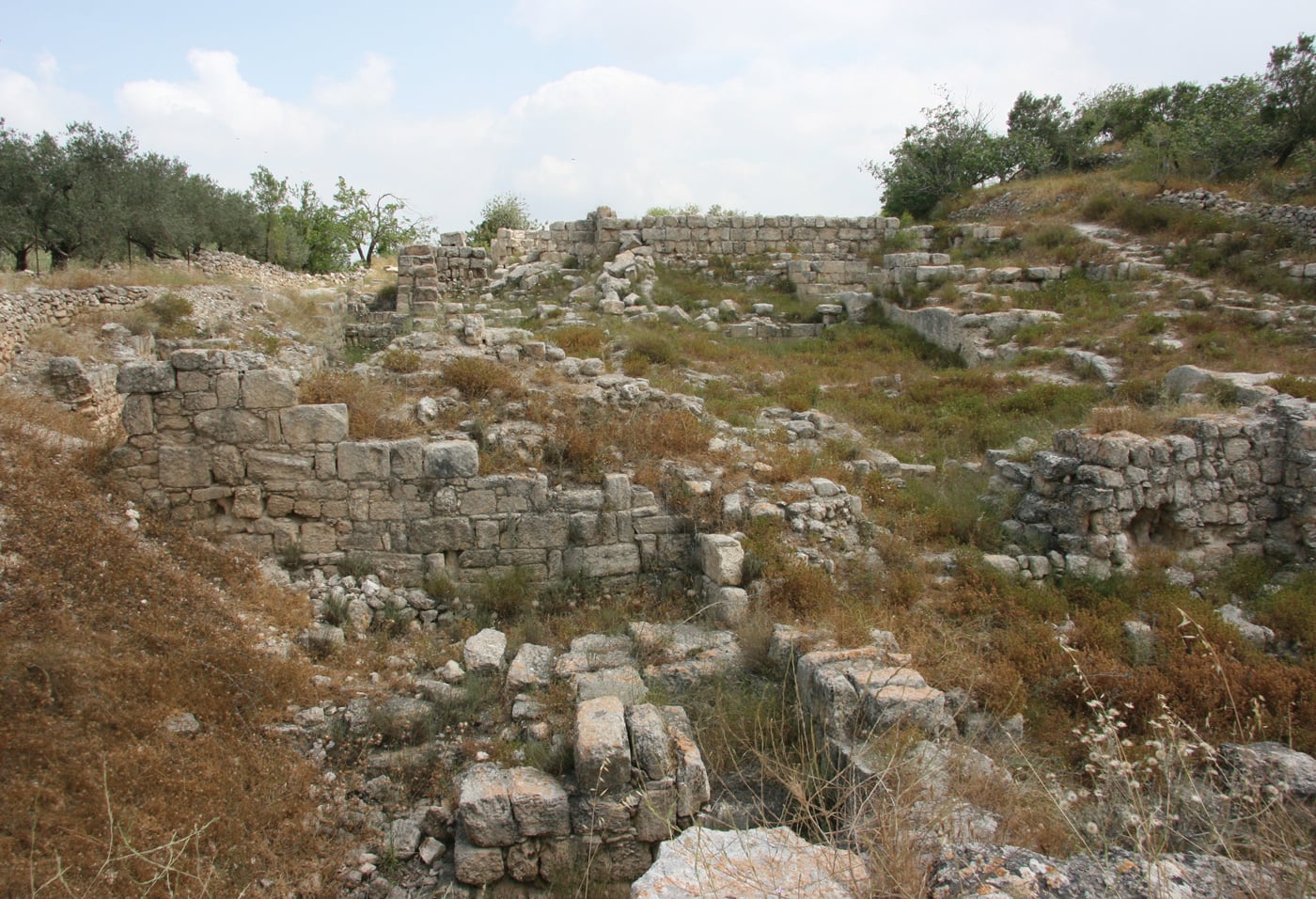
Remains of the ancient city of Samaria
The second half of chapter 1 (1:8–16) gives the reaction to God’s announcement of judgment. The first to react is the prophet himself, who is plunged into noisy mourning. His mourning will sound like the howl of a jackal and the moan of an owl, animals of the wilderness often mentioned in judgment oracles against cities (Isa. 13:21; 34:13; Jer. 50:39). His reaction reminds us of the later reaction of the author of Lamentations to the destruction of Jerusalem. Micah’s mourning is not triggered by a concern for personal safety but rather by the destruction coming to God’s people and the land he has given them. The prophet is distressed particularly by the danger that comes so near to Jerusalem. While it is difficult to precisely date these separate oracles of Micah, this oracle fits well with the various invasions of Samaria and Judah in the last quarter of the eighth century BC. It specifically predicts the incursion of Sennacherib in 701 BC. At this time, Sennacherib harassed many of the towns of Judah but was stopped just short of taking Jerusalem.
The bulk of this section, however, predicts the reaction of a number of cities (1:10–15). These cities were likely the ones subdued by Sennacherib as he made his way down the coast of Palestine toward Jerusalem. They are located in the southern foothills (Shephelah) as one moves from the coast toward Jerusalem. The prophet employs wordplay between the names of the cities and their reactions in order to make his point.
The wordplay begins with a vengeance in verse 10. The wordplay in this instance is found in the similar sounds within each Hebrew clause. Although Micah tells Gath to “weep not at all,” he urges those on the Israelite side of the Shephelah to express their mourning: “In Beth Ophrah [literally “house of dust”] roll in the dust.”
The next four towns Micah mentions have either unknown or uncertain identifications. Nevertheless, the wordplays continue. The inhabitants of Shaphir (1:11), a name connected with a Hebrew word for “pleasant” or “beauty,” will be naked and full of shame because of the coming judgment. The citizens of Zaanan (1:11), a city whose name probably comes from the Hebrew verb “to go out,” will not come out, presumably due to fear of the invaders. The significance of the name Beth Ezel (1:11) is not obvious to the modern interpreter. Maroth (1:12) is a name related to the Hebrew word for “bitter.” They waited for something sweet, but the bitter truth was the presence of the enemy at the very gate of the capital.
Lachish (1:13) is a well-known city in the Shephelah; it is singled out by the fact that a whole verse is given to it and by the content of that verse. The wordplay is based on the similarity in sound between the name Lachish and the Hebrew for “to the team of horses” (larekesh). The significance of Lachish in this oracle may be seen in the accusation that they began the sin that infected Jerusalem. Nothing in the text indicates clearly what that sin was. Many have guessed from the reference to chariots that the sin was an overreliance on military armaments.
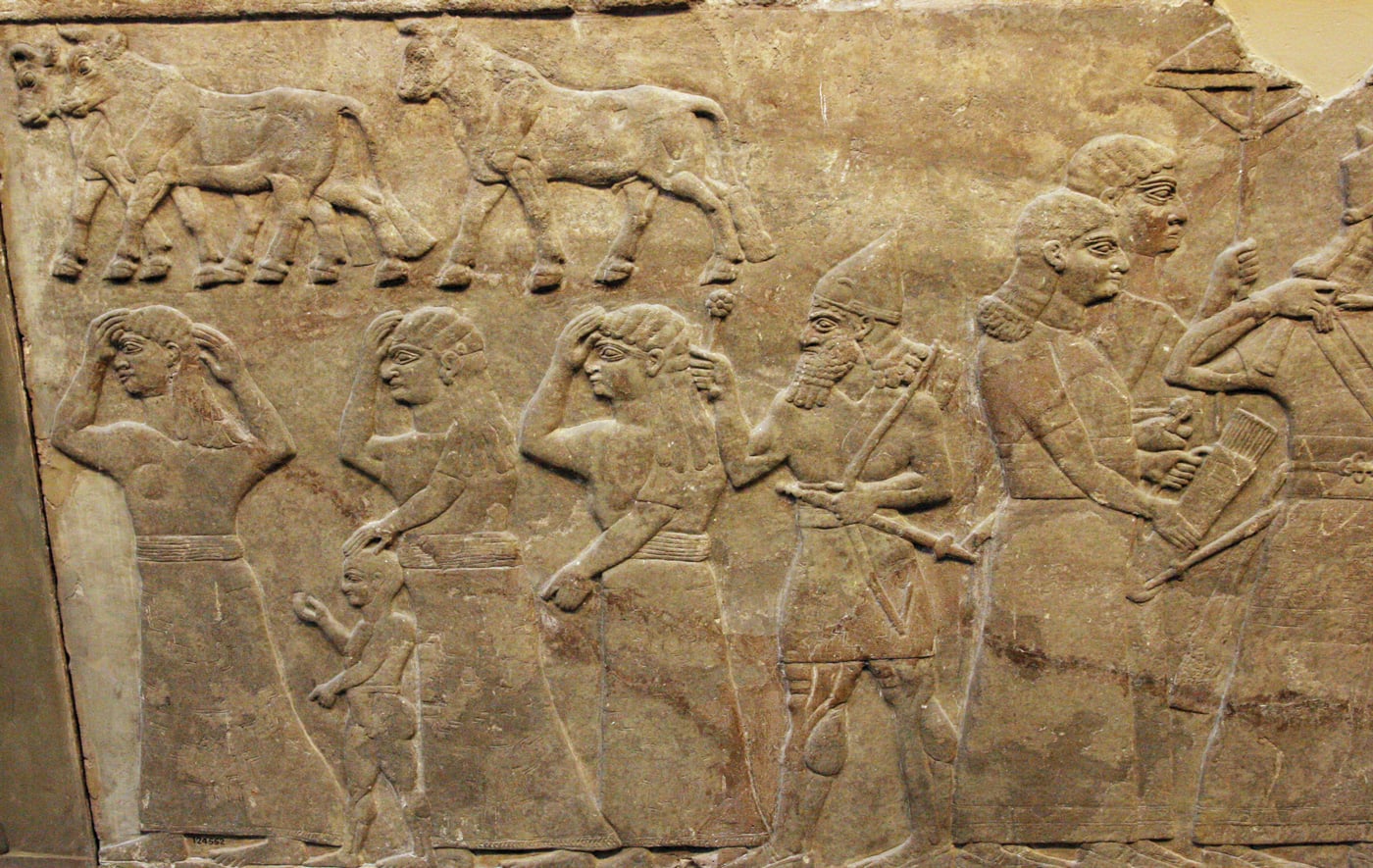
This Assyrian relief from Nimrud shows women mourning as they are led away into exile (865–860 BC).
The next three city names also involve wordplay. Moresheth Gath (1:14), Micah’s hometown, located near Lachish, has a name similar to the Hebrew word for “betrothed.” The parting gifts are specifically those gifts given by a father to his daughter as she leaves his home to go to that of her husband. Micah alludes to the deportation that will follow the defeat of his hometown. The town known as Akzib (1:14), related to the Hebrew word for “lie,” will be a deception. Akzib was a city devoted to the production of materials that would bring in money for the support of the nation. It let Judah down in the moment of need. Mareshah (1:15) sounds like the word for “conqueror.” The ironic twist is that a conqueror will come against the town named “conqueror.” The last city named is Adullam (1:15), the location of the cave in which David sought refuge as he fled from Saul (2 Sam. 23:13).
The last verse in the chapter addresses all the inhabitants and tells them to cut off their hair (an ancient mourning rite), for God is about to separate them from their children through exile.
2:1–13. The second chapter begins with a woe oracle (2:1–5). The roots of the woe oracle genre are found in funeral laments, expressing sorrow over the loss of the deceased. The prophets, however, adapt the form to their own purposes. No sympathy may be heard in Micah’s voice; rather, threat of sure judgment. The use of the woe threat signifies that the object of the oracle is as good as dead.
The object of the oracle is described in general terms in verse 1 and then more specifically in verse 2. They are those who stay up at night contemplating how to work evil and then rise early to perform their wicked deeds. Their specific evil that Micah pinpoints is the amassing of real estate at the expense of other people. The land-grabbers both covet (breaking the tenth commandment) and seize (breaking the eighth commandment) land belonging to others. This sin is particularly grievous since the land was given to the Israelites by the Lord, so that each family might possess some. Thus, certain laws were in effect to protect the ownership of the land by the original recipients (Leviticus 25). The story of Naboth and Ahab (1 Kings 21) provides a good historical example of this type of sin.
As happens so frequently in the Prophets, the Lord chooses an appropriate punishment for these greedy and selfish men. It is tit for tat. The evil men plan iniquity; the Lord plans disaster against them. They desire status and riches at the expense of others; the result will be that men will ridicule them. Indeed, their own land will be taken away and given to others, even traitors. The reference in verse 5 may be an allusion to the future exile.
The false prophets come to the aid of the land-grabbers and confront Micah (2:6–11). This section is a dispute between the false prophets representing the interests of the wicked land-grabbers on the one hand and God and Micah on the other.
The false prophets attack Micah’s message of doom, his message that God will punish their sin. They forbid Micah to prophesy. They do not believe judgment is coming their way. The attitude of confidence the false prophets express is similar to that found in Jeremiah 7, where the people trust in the temple as the sign of God’s presence in Jerusalem. According to the false prophets, God will not do the things Micah is insisting on. Indeed, the special word for “prophesy” in verse 6 may have a negative connotation (“rant” or “dribble”).
Micah exposes the deeds of social injustice current during his time period. The false prophets and their clients rob the shirts off the backs of defenseless travelers. They treat God’s people like their enemy. They rob women and children of their possessions and God’s blessing. Women and children were the weak in Israelite society and accordingly are the object of God’s special protection.
Once again Micah alludes to exile, this time in verse 10. God will eject the wicked from the land because through their wickedness they have made the land unclean.
The section ends on a strongly sarcastic note. The false prophets are prophets who bring only good news. Micah is no doubt extremely unpopular because of the generally negative tone of his prophecy. These people would rather hear a prophet who prophesies plenty of wine and beer.
Suddenly the prophet speaks in positive tones (2:12–13). This abrupt transition has caused many to question the plain meaning or originality of this short oracle. However, we know so little about the prophecy’s structure or history of development that it is safest to accept the text as it is.
Micah glimpses that beyond the punishment of the exile God will once again bring his people together. The two opening phrases—“I will surely gather” and “I will surely bring together”—emphasize the certainty of the future promise.
The image used is the familiar one of the people of God as the sheep and the Lord as the Shepherd. The Good Shepherd will gather the remnant into its pasture. He will once again, as at the time of the exodus, lead his people out of captivity.
3:1–12. The words “then I said” remind us that Micah is being used of God to bring his judgment against the people (3:1–4). This also indicates that what follows in chapter 3 is a continuation of what came before; indeed, we find the same hard-hitting judgment brought against powerful oppressors that we saw in the earlier chapters.
Once again (cf. 1:2) Micah calls for attention, this time the attention of the leaders and rulers of Israel. These men are accused of gross sin and dereliction of duty. They are the ones who should know justice (perhaps judges are specifically in mind), but they do not. They have rejected the admonition Amos (5:14) gave earlier, so that they hate good and love evil.
The image Micah then evokes in his hearers’ minds is that of a cannibal who rends the flesh of his victim, cooks it, and then has a meal. In other words, the leaders, who should be serving and protecting the people whom God has entrusted to their care, are exploiting them. They use them to their own advantage and to the people’s disadvantage.
The time, however, will come when these wicked leaders will turn to the Lord. They will cry out to the Lord (the language reminds one of a similar phrase that occurs frequently in the book of Judges). The Lord, however, will not respond to these individuals because their sin is too great.
The subject of God’s judgment as spoken through the prophet Micah now switches to the prophets (3:5–8). In a word, they prophesy falsely and thus turn the people away from the Lord. Why do they do this? The Lord accuses them of loving payment more than him or his people. A positive oracle may be gained from these false prophets if the pay is high enough. On the other hand, if no payment is offered, they prepare (literally “sanctify”) war.
Their judgment is appropriate (introduced by “therefore”). They sinned with the gift of prophecy, so that gift will now be removed from them. There will be no visions and no divination, only darkness. No answers will be forthcoming from God.
A strong contrast exists between these false prophets and Micah. The Lord has given Micah his Spirit. He has empowered him with his message, and his message is one of judgment.
The third judgment oracle of the chapter (3:9–12) once again (cf. 3:1) opens with a call to the leaders and rulers to heed the word of the Lord. They are again characterized as those who are enemies of justice and right. The additional description identifies them as leaders in Jerusalem, who bring progress to that city through oppression and violence.
Verse 11 highlights and compares the sin of the leaders, priests, and prophets. Their common sin is that they perform their duty not in God’s power and for God’s glory but rather for their own glory, specifically for money. Their confidence in the Lord is hollow. They trust in God’s choice of Jerusalem as his place of special dwelling (that is, in the temple). If God’s house is in Jerusalem, how can it be destroyed?
God himself will destroy this proud city. The destruction will be so complete that nothing will be left. Even the temple, which was the pinnacle of the hope that God’s presence in Jerusalem would spare it from destruction, will be utterly destroyed and abandoned, so that weeds will overgrow it.
In Jeremiah 26:18–19 we get a unique glimpse of the initial reaction to Micah’s oracle. The word of judgment came to Hezekiah, and it reduced him to repentance, so that the “Lord relented.” Jeremiah makes the same argument in chapter 26 (see also Jeremiah 7), that the leaders presume the Lord’s presence in the city. However, Jehoiakim, the reigning king, does not respond in the same positive way as Hezekiah.
B. God’s word of hope to Israel (4:1–5:15). 4:1–13. Another abrupt transition from threat to promise takes place between the end of the third chapter and the beginning of the fourth. An oracle of severe judgment (3:9–12) is followed by a contrastingly glorious picture of salvation.
Micah looks beyond the immediate future of Zion’s punishment (as described in the preceding oracles) to the more distant future, in which Zion will be exalted (4:1–5). Isaiah (2:2) and Micah both speak of the day when Zion will be raised above all other mountains in preeminence. Zion’s greatness has nothing to do with its present physical features (it is a relatively small mountain) but everything to do with God’s choice of it as his place of earthly dwelling. When Zion is so exalted, it will be like a magnet for the nations. There will be a constant flow of people going to Jerusalem in order to learn God’s law.
As the nations learn God’s law and apply it to their lives, the world will be transformed. Warfare will be a thing of the past; nations will engage in constructive activities. Individuals will live out their lives in security and with satisfaction, reminiscent of the high point of security reached during the reign of Solomon (1 Kings 4:25).
The hope is real. It will be fulfilled; God has spoken it. Indeed, the prophecy began to be fulfilled with the building of the second temple. Nevertheless, complete fulfillment awaits the ushering in of the kingdom of God in its fullness (Revelation 21–22). Accordingly, the people of God must make their stand for the Lord in the present. Thus, Micah speaks for the people of God and reaffirms their commitment to trust and obey the Lord, even though the nations follow their own false gods.
The opening phrase “in that day” marks the beginning of a second oracle of hope (4:6–8), reminding the reader once again that Micah is focusing on the future. God will intervene and restore his people whom he has punished. They are weak (lame, exiled, grief stricken) because of God’s punishment, but God brings strength out of weakness. The Lord will again establish his kingdom from Jerusalem. Further, the glories Jerusalem once knew in the days of David and Solomon will be known again.
With the next oracle (4:9–10), Micah seems to take a giant step backward. He refers to the future Babylonian exile. This oracle is connected to the preceding one by its reference to Zion and to the next two because each of them begins (in the Hebrew) with the word “now.”
Micah begins the oracle with a satirical question—Why do you cry aloud?—addressed to the people. They are crying because they are under attack; they are in pain because the Babylonian army is pressing them and forcing them out of Jerusalem. They will be exiled to Babylon. Micah, however, does not stop there, but goes on to reveal that God will deliver them out of Babylon. Verse 9 also implies that they will lose the king. In Israel the king not only was the focus of the government but also was considered the Lord’s anointed.
Many have trouble believing that Micah could speak of the Babylonian exile, which was more than one hundred years after his death, and the restoration, which was even later. God, however, reveals himself in the Bible as sovereign over history and as one who chooses to reveal his will to his prophets.
Once again Micah reverts to the time of distress (4:11–13). Jerusalem is pressed by many nations. Verse 11 may be profitably compared with Psalm 2:2 and Zechariah 14:2, both of which picture the nations gathering to wage war against God’s people. God is behind the enemy’s action even though they are unaware of it. Verse 12 makes this clear; the prophet reveals that God is in control of the situation and gathers the enemy against his people only so he may devastate the enemy. They are gathered like sheaves on the threshing floor. They will soon feel the hooves of the ox as Israel threshes them with particularly dangerous metallic hooves. Jerusalem will, in brief, wage holy war against their enemies and accordingly devote the spoils to God, who will provide the victory.
5:1–15. The next oracle (5:1–6) is similar to the previous two in that in Hebrew it also begins with the word “now.” Further, like the others, this oracle begins by describing a time of distress for Israel from which she will be delivered. This third oracle, however, reverses priorities and concentrates on the positive note of deliverance.
The first line of the oracle is extremely difficult. Some versions translate it as, “Marshal your troops, O city of troops,” but it is best to read it, along with many commentators, as, “Now gash yourself, daughter of marauder!” The act of cutting oneself was a well-known expression of mourning in the nations surrounding Israel. Israel, however, was forbidden to engage in this practice (Deut. 14:1); thus the command has a sarcastic tone.
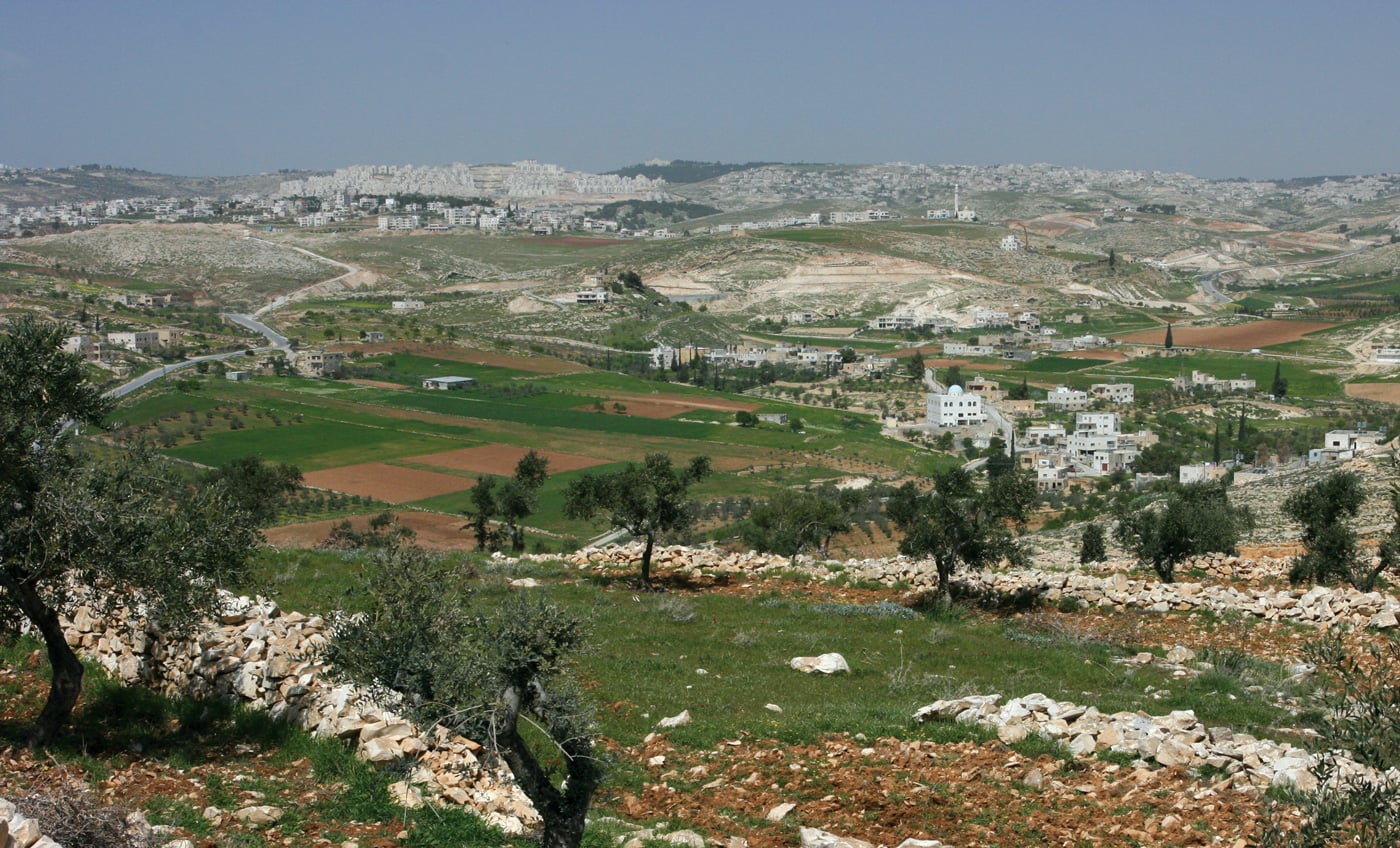
Area around the modern city of Bethlehem
The reason for mourning is clearly given. The Israelites are under siege, and the ruler has been publicly humiliated (slapped with a rod).
At this point, however, the mood of the oracle changes. Israel moves from the low point of humiliation to the high point of deliverance. That the deliverance will come from Bethlehem Ephrathah is a surprise. God uses the small and the weak of the world to accomplish his mighty purposes. Indeed, the choice of Bethlehem has further significance, in that David came from this small village (1 Samuel 16). The connection with David is explicit in the passage when Micah refers to the ancient pedigree of the coming ruler. That pedigree is Davidic, and the roots of the fulfillment predicted in verse 2 may be found in the Davidic covenant (2 Samuel 7).
However, a delay is anticipated in the fulfillment of this great hope. This is expressed in the metaphor of verse 3: the one in labor (a symbol of the distress of the siege) must give birth first (the distress must first end). At that point the promised deliverer from Bethlehem will come and establish a kingdom of peace. He will shepherd his people. Kings were frequently titled “shepherd” in the ancient Near East. This metaphor points to the king, the one who guides and protects his people. The king predicted in these verses will excel at his job. In fact, he will be their peace.
The connection of the next two verses to this oracle is not certain. It may be a separate oracle. However, it does continue the theme of the security of Israel in the face of her enemies. In these two verses an Assyrian invasion is anticipated and calmly considered. The defense will be sufficient (“seven, even eight” signifies that there will be more than enough). Assyria here may stand for any potential enemy of Israel.
Of course, readers of the New Testament are aware that these verses find their fulfillment in the coming of Jesus Christ, who comes out of Bethlehem (Matt. 2:6). He is the one “whose origins are from of old, from ancient times” (Mic. 5:2). He is the son of David (Rom. 1:3), our peace (Eph. 2:14).
At this time Israel is being mocked by surrounding nations. In the future, Israel will dominate them (5:7–9). God is the one who will reverse the situation.
Micah expresses this thought through two metaphors. The second one is clear (5:8). The remnant of Israel will be like a lion among the nations. The lion symbolized powerful and ruthless nations who were capable of devastating others. The first metaphor (5:7) is less clear. Often in the Old Testament, dew and showers signify blessing. Indeed, some scholars (e.g., Waltke, 317–18) take the image in a positive direction; Israel will be like dew bringing refreshment to the nations. However, this interpretation does not fit well with the parallel lion image. It is better to understand dew as a curse. In any case, verse 9 makes it clear that the hope in this oracle focuses on future military victory over present enemies.
The last oracle of the second section (5:10–15) begins with the formula “in that day,” which again indicates that the prophet is looking into the future. God pronounces a series of purifying actions that he will bring against Israel. While it is true that the oracle never mentions Israel by name but rather addresses the object of the speech as “you,” it is clear from the context that Israel is meant.
God informs Israel that he is going to remove the sources of wickedness and temptation from her midst. Specifically, he is going to abolish those objects that lead Israel to trust things other than him.
First, God will destroy the confidence Israel places in her military might. He will do this by removing horses, chariots, and fortified cities from the land. God has promised to protect obedient Israel from hostile attack and has proved through his numerous saving actions (the exodus is the most dramatic) that he can do so. Nevertheless, Israel constantly doubts his ability. She prefers to trust in military technology.
Second, God will destroy those objects by which Israel tries to manipulate the divine. These include magic and idolatry. Sorcery is a method for forcing God or gods to perform an act or reveal a message. Idolatry elevates a part of creation to the level of the Creator (Rom. 1:22–23). The Asherah pole (5:14) is a symbol of life and fertility associated with the worship of the goddess Asherah. These objects were prohibited, and their removal was demanded in the law of Moses (Exod. 34:13; Deut. 7:5; 12:3; 16:21).
The last verse shifts attention to the nations and presupposes that Israel has been purified. At the end time, God’s judging action will turn against the nations. This is a note of hope concerning Israel’s future.
2. Second Round of Judgment and Salvation (6:1–7:20)
A. God’s dispute with Israel (6:1–8). God’s dispute with Israel takes the form of a legal proceeding. It is as if God, calling on creation to serve as witness to his complaint against his people, has taken Israel to court. The background of this section is found in the covenant God established with his people. The covenant was like a treaty between God as king and Israel as his people. Before witnesses, the people responded to God’s gracious acts of deliverance by receiving God’s law and promising to obey it (Exodus 19–24). Now that the people have broken the law repeatedly, God calls on the witnesses of the covenant to attest to the people’s wickedness.
Israel is called to account for her actions toward God. She has turned against him. Why? Not only has he done nothing against Israel; he has also done marvelous acts of salvation on her behalf. Specifically, God reminds the people of the exodus, Balaam’s divinely inspired blessing when he was paid to curse Israel (Numbers 22–24), and his bringing Israel into the promised land by a miraculous crossing of the Jordan.
This leads to God’s instruction to Israel concerning what response he desires from them. How will the Israelites make their relationship with God right again? Micah contrasts external religious acts (sacrifices) with inward religious attitudes (justice, mercy, humility). These verses have been distorted to say that Micah and the prophets in general detested the priestly sacrificial system. Most scholars now admit that Micah was not attacking the sacrificial system itself but the conviction that external religious acts without inward piety can establish a right relationship with God.
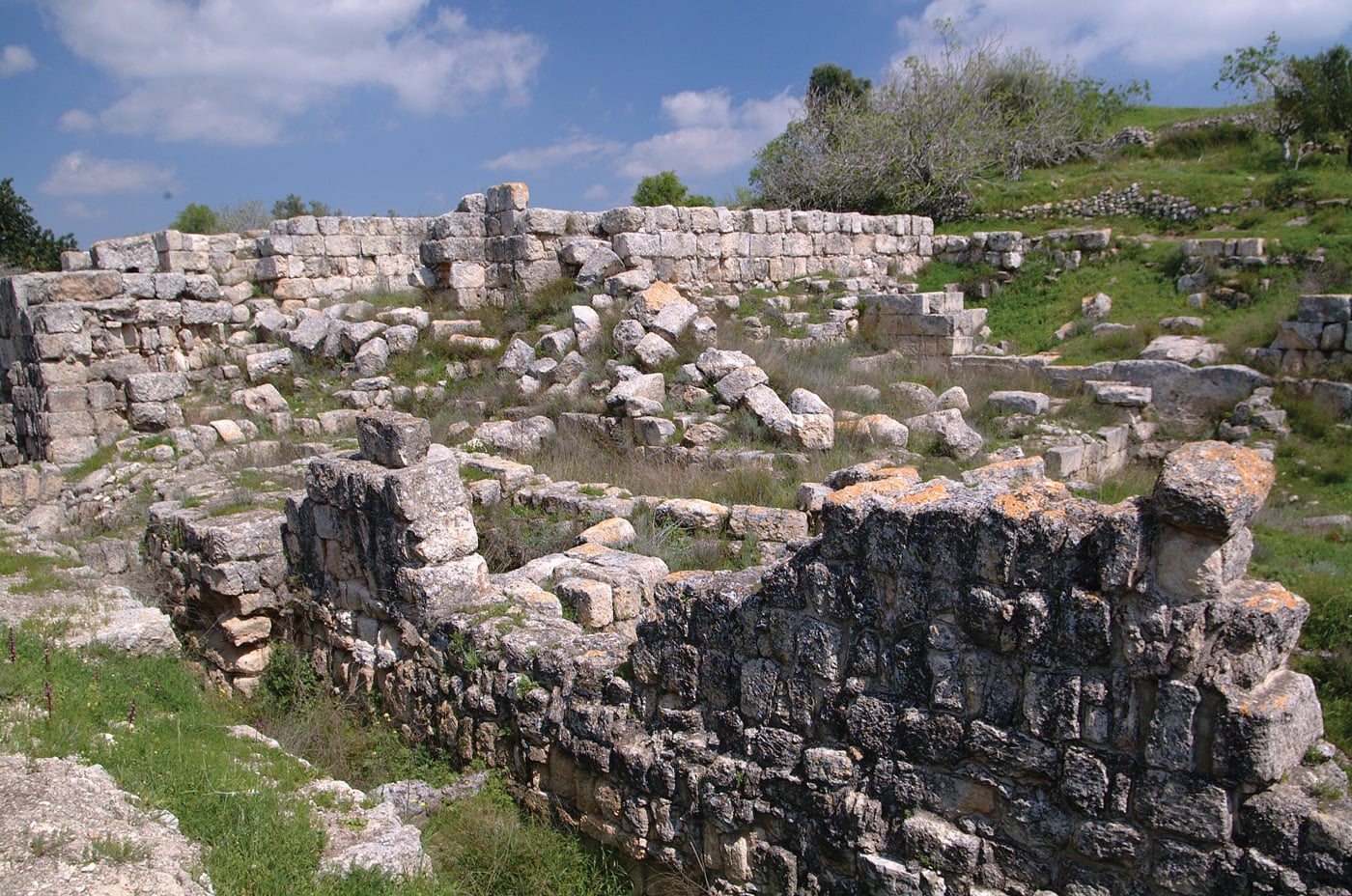
Remains of Ahab’s palace in Samaria. Micah prophecies the downfall of those who follow “all the practices of Ahab’s house” (6:16).
B. God’s reproach for Israel’s social sins (6:9–16). God once again pronounces judgment on his people. Micah calls the people’s attention to the Lord (“Listen!” [6:9]). He adds a parenthetical comment directed to God that sounds familiar to those who know the book of Proverbs: to fear God’s name is wisdom (Prov. 1:7; 9:10). As the people will soon learn, the opposite holds true as well; to treat God wrongly or indifferently is foolish and extremely dangerous.
God then addresses the people of the city (most likely Jerusalem) and forcefully informs them that he is well aware of their sins, specifically social oppression. They cheat and lie in order to prosper in business. They grow rich at the expense of others.
God will not permit this state of affairs to continue, so he will punish them. The punishment, once again, focuses on the nature of their sin. They cheated (by fraudulent business practices; compare Prov. 11:1; 16:11; 20:23; see also Lev. 19:35, 36; Deut. 25:13–16; Ezek. 45:10) in order to get rich and live a comfortable life. The Lord tells them, however, that they will be anything but comfortable. The Lord had blessed Israel with much material prosperity while they were faithful to him. At the time of the conquest, God told them that they would have cities, houses, vineyards, and olive groves that they did not build or plant (Deut. 6:10–12). Now that they are disobedient, however, God tells them that no matter how much work they do, they will have no material prosperity.
The last verse of this section summarizes both the reason for punishment and the nature of that punishment. Israel has sinned by following Omri and Ahab. These kings were known for their importation of the worship of Baal into the northern kingdom. Furthermore, Ahab was renowned for his own evil business practices. Since they go in the way of Ahab rather than in the way of justice, mercy, and humility, they will be destroyed.
C. The prophet laments Israel’s condition (7:1–7). Micah continues with a lament. He mourns the spiritual condition of his people. This section may be profitably compared with the many laments found in the book of Psalms. Two general types of laments are encountered in the Scriptures, individual and corporate. Though the latter are occasionally written in the first-person singular, the lament found in Micah 7 is best taken as an example of an individual lament, that is, as the prophet Micah’s mournful cry.
Micah paints a dark picture of contemporary society. No one is left who desires to follow God. The only thing the people do well is evil. Micah is exceedingly distressed and likens his own reaction to that of a man who craves grapes and figs but arrives too late in the field to get any. In short, he is bitterly disappointed and frustrated. Even the most promising of his contemporaries are quite bad.
The sins of the people have caught up with them. Society has turned against itself; the situation has degenerated into chaos. Even the closest human relationships (wife, child, parents) are unreliable.
Micah realizes that hope is not to be found in human relationships. Hope may be found only in God, and Micah is confident in his God.
D. Psalms of hope and praise (7:8–20). The prophecy of Micah concludes with four sections (7:8–10, 11–15, 16–17, 18–20) united by their psalmlike style and their forward look to the time of restoration.
Micah continues to speak in the first-person singular, but now he stands for the whole nation. He envisions the time when Israel will be downtrodden and taunted by her enemies. He warns these nations not to rejoice too much, since God will deliver his people from their distress. The prophet proclaims that, though now the people of God are laid low, the Lord will bring salvation in the future.
This transformation of the Lord’s attitude toward his people will come about due to the people’s acknowledgment of their sin. When God reverses the fortunes of his people, he will lift them up and the taunting nations will become the object of judgment.
The prophet then addresses the people of Israel directly and informs them that the day of restoration will come. That future day will be a day in which the wall (probably of Jerusalem) will be restored. Such an allusion anticipates the future work of Nehemiah. People will then flock to Zion from such far-flung and normally hostile locations as Assyria and Egypt. The context does not make it clear whether the reference is to the return of exiled Israelites to the land or the conversion of foreign peoples. In any case, Israel’s blessing once again coincides with the downfall of the rest of the world.
Micah addresses his next words to the Lord and presents the needs of the people before him. He asks God to once again shepherd the people. The shepherd metaphor emphasizes God’s guidance and care of his people (see Psalm 23). The Lord will once again restore his love to his people and deliver them as in the days of old. For a third time the nations are mentioned as the objects of God’s future punishment.
The prophecy concludes with a hymn that meditates on God’s forgiveness and faithfulness to his people. The opening question, “Who is a God like you?” is a wordplay on the name Micah (in Hebrew Micah means “Who is like Yahweh?”). Micah is stirred to speak of God’s incomparable forgiveness. He removes Israel’s sin and throws it away. He does this because he is faithful to the covenant relationship, which he established with Abraham.
Select Bibliography
Allen, Leslie C. The Books of Joel, Obadiah, Jonah, and Micah. New International Commentary on the Old Testament. Grand Rapids: Eerdmans, 1976.
Andersen, Francis I., and David Noel Freedman. Micah. Anchor Bible. Garden City, NY: Doubleday, 2000.
Hill, Andrew. “Micah.” In Cornerstone Biblical Commentary. Edited by Philip W. Comfort. Vol. 10. Wheaton: Tyndale, 2008.
Mays, James Luther. Micah. Philadelphia: Westminster, 1976.
Smith, Gary V. Hosea, Amos, Micah. NIV Application Commentary. Grand Rapids: Zondervan, 2001.
Smith, Ralph L. Micah–Malachi. Word Biblical Commentary. Waco: Word, 1984.
Waltke, Bruce K. A Commentary on Micah. Grand Rapids: Eerdmans, 2006.