Nahum
1. The Zeal and Power of God (1:1–2:2)
A. The Principle Underlying Divine Judgment (1:1–6)
B. Destruction and Deliverance Contrasted (1:7–2:2)
2. The Siege and Destruction of Nineveh (2:3–13)
3. The Cause and Certainty of Nineveh’s Downfall (3:1–19)
Introduction
Nahum the Prophet
The opening verse of the book of Nahum identifies the author as Nahum the Elkoshite. Apart from this, nothing certain is known of him. Suggestions as to his birthplace are largely conjectural and include Elkosi in Galilee, Al Qosh in Iraq, Capernaum (“Village of Nahum”), and Elcesei, a Judean village.
Structure
The three chapters can be divided into two parts. Chapter 1 describes the majesty and righteousness of God in his dealings with mankind, his kindness toward those who trust him, and his wrath toward those who reject him. Though Judah and Nineveh are clearly in view, the language is universally applicable. Chapters 2 and 3 describe the destruction of Nineveh and give the reasons for this.
Date
The book can be dated somewhere between 663 and 612 BC. According to 3:8 it was written after the destruction of Thebes (No Amon [NKJV; cf. NASB]), which was destroyed in 663 by Ashurbanipal. The other limit is 612, the year of the fall of Nineveh. There is no objective evidence that the book is not what it claims to be: an oracle announcing the coming destruction of Nineveh.
Theological Themes
Nahum forms a natural sequel to the book of Jonah in that it reveals the alternative to the grace of God. In the book of Jonah, Nineveh experiences the forgiving grace of God about 150 years before the cataclysmic destruction depicted so graphically by Nahum. In his resentment toward God’s pardoning of Nineveh, Jonah (4:2) quotes Exodus 34:6, one of the basic texts of the Old Testament and one frequently quoted or alluded to by Old Testament writers. It is a grand pronouncement by the Lord himself that he is a gracious and merciful and forgiving God. It is for this very reason that Jonah initially refuses to preach to Nineveh, because he understands very well that this pronouncement, seen in its context, is an assurance of forgiveness to all who would repent of their sins, and he has no desire to see Nineveh spared. The sparing of the Ninevites is an outstanding example of the extent of God’s forgiving love.
Nahum, writing possibly 100 to 125 years after Jonah, at the high point of the power and arrogance of Nineveh, vividly sets forth the calamitous downfall of a later, unrepentant generation. Nahum 1:3 quotes a portion of Exodus 34:6 (“slow to anger”) and of Exodus 34:7 (“will not leave the guilty unpunished”). The point is clearly and unmistakably made that, though God is slow to anger, punishment is certain and sure for unrepentant sinners.
In a very real sense, then, Jonah and Nahum vividly illustrate the “kindness and sternness of God” (Rom. 11:22). He extends his grace freely to repentant sinners, but judgment is certain and final for those who continue in sin and rebellion.
Another prominent theme is that of comfort. The very name of the prophet indicates this (Nahum means “comfort”). This theme is carried out in two ways:
1. In a number of specific statements (1:7, 12–13, 15; 2:2) Nahum declares that God is a refuge for those who trust him, that he will remove the yoke and shackles of bondage from Judah, that Judah will again rejoice in true peace and security, and that her splendor will be restored. These statements are gems that shine brightly in the midst of the graphic portrayal of Nineveh’s sin and downfall.
2. The fact that God judges Nineveh with such finality and so irrevocably cannot but be an unspeakably great relief for those who for years have lived under the dread domination of the cruel and vindictive Assyrians. It is no great wonder that Jonah resents the sparing of Nineveh. Yet, though Jonah is not able to see the whole picture, Nahum shows us how carefully and accurately God keeps his books and how surely and with what finality he closes the account in his own time and way. Nineveh lies a desolate and unmourned ruin with no future, while Judah will prosper again.
The downfall of Assyria is a demonstration of the principle that God’s enemies, no matter how powerful, will in God’s own time fall. This principle is clearly stated in chapter 1, and the fact that God passes sentence on an unnamed enemy (though Nineveh is certainly in view) makes it easy to see Nineveh as an example of what will happen to all evil kingdoms. It would seem that chapter 1 is deliberately general for this very reason. While God is indeed slow to anger, he is not lacking in either power or resolve (1:2–3), and he will surely bring judgment on the sinner. Chapters 2 and 3, then, graphically portray the carrying out of God’s judgment. That Assyria should fall was an incredible thought in Nahum’s time, yet God carried out his promise to the letter.
Commentary
1. The Zeal and Power of God (1:1–2:2)
A. The principle underlying divine judgment (1:1–6). The prophecy of Nahum is described as an oracle or “burden” (1:1 ASV, KJV). This word is regularly used of statements of a threatening nature. The fact that this prophecy is also designated as a vision points out that it is an official message from God, not spite on Nahum’s part.
Though God has seemingly been overlooking Assyria’s sins against him and Israel, this is not due to either weakness or lack of zeal on God’s part (1:2–3a). The Hebrew word for “jealous” also means “zealous.” God does not treat sin lightly; zeal is an essential part of his character. Not only is he holy, but he zealously carries out the requirements of this holiness. His zeal will neither allow his people to sin with impunity nor allow Gentiles to sin against his people or his purpose with impunity. Unrepentant Nineveh will be punished, and Israel will be saved. As an avenging God, he deals with injustice. Vengeance in the Old Testament is a juridical term involving the righting of wrongs that have been done. Earlier, Nineveh experienced God’s grace because they had repented. Now they will experience his vengeance. The outpouring of God’s wrath has been delayed, not because he does not care or because he was helpless to act, but because he is patient and slow to anger. The fact that Nineveh is not specifically mentioned in chapter 1, yet seems clearly to be in view, indicates that she serves as an example of the way God deals with his enemies in general. He will not leave the guilty unpunished. This is quoted from Exodus 34:7 and forms the necessary counterpoint to God’s grace as described in Exodus 34:6. The nation or individual who rejects God’s forgiving grace will of necessity experience the outpouring of his wrath. God will have the last word. A Jonah may be impatient with God for sparing a Nineveh for a time, but God’s people may rest confidently in his determination and power to deal with sinners in his own time and way.
The awesome and irresistible power of God is displayed in nature (1:3b–6). If the most powerful forces of nature are at God’s disposal to be used as his instrument of judgment, and if no area of creation is immune to the fierceness of God’s wrath, how will any person or kingdom be able to withstand God’s judgment? It must be carefully noted here, however, that judgment is not the only purpose of the manifestations of God in nature. Similar language is frequently employed to describe God’s historical acts of redemptive activity, in which judgment on the enemy may be involved, or simply the removal of obstacles to that redemption (cf. Ps. 18:7–19; 106:9; Isa. 50:2). The same is true of future events, both near and eschatological. All of nature is at God’s command. He uses the whirlwind and the storm to accomplish his purpose of judgment. He dries up the sea and makes rivers run dry if need be to remove them as obstacles to the deliverance of his people. Bashan, Carmel, and Lebanon were all noted for their fertility, the mighty oaks of Bashan and the beautiful cedars of Lebanon being proverbial expressions thereof. But when God chooses to pour out his wrath, even the most fertile and productive lands wither and fade. Even the solidity and the mass of the mountains and hills cannot stand before the power of God when he chooses to act. How much less can humans, who are themselves subject to the forces of nature and who build their kingdoms on shaky ground, hope to withstand the searing blast of the judgment of God! The fact that mountains in the ancient Near Eastern world symbolized kingdoms allows the thought to move very naturally from quaking mountains to tottering kingdoms (1:5–14).
B. Destruction and deliverance contrasted (1:7–2:2). The Lord is good (1:7–8). This all-encompassing statement is one of the most frequently reiterated declarations about the character of God in the Old Testament. It stands in stark contrast to the fate awaiting God’s enemies. To his own, God is goodness personified. Every need is met in him. He is the source of every blessing and benefit, from forgiveness for sin to abundant grace for daily needs, no matter how great the difficulty, to ultimate victory. In this context the goodness of God is specifically seen in terms of his being a refuge in times of trouble. God is the ultimate stronghold, the place of safety. When he sets out to judge, there is no place of safety or refuge for the sinner, but for those who trust in him there is peace and security. (Psalm 46 is especially appropriate in this context.) To trust in anything or anyone else can only bring bitter disappointment and loss. The NIV’s “he cares for” (literally “knows” in Ps. 1:6) attempts to express that special concern God has for his own. For God’s enemy there is only the prospect of sudden and overwhelming defeat described in terms of an overwhelming flood.
Though according to historical sources there was physical flooding of Nineveh at the time of its downfall, the force of the expression is to describe an overwhelming, crushing defeat as a huge wall of water wipes away all that lies before it. As if that sweeping defeat were not enough, God is said to pursue his foes into darkness. There is no possible escape. There is no place of refuge, no possibility of being overlooked. In the case of Nineveh, a few managed to escape when the city fell. They fled to Harran, but they were pursued there and were defeated in 609 BC, leaving no trace of the once mighty empire.
The downfall of Nineveh is a pointer to the future, serving as an example of the destruction that awaits the enemies of God and his people. This is indicated by the statement in 2:2 that Judah and Israel will have their splendor restored. This did not happen at the fall of Nineveh, but will happen in the day of the Lord after the enemies of God have been judged (cf. Zeph. 1:14–18; 3:8–20). The principle of Nahum 1:8 has been true throughout the ages; in Nahum’s time it was relative to the destruction of Nineveh as the principal threat to Judah, and in the end times it will be applied to the final enemies of God.
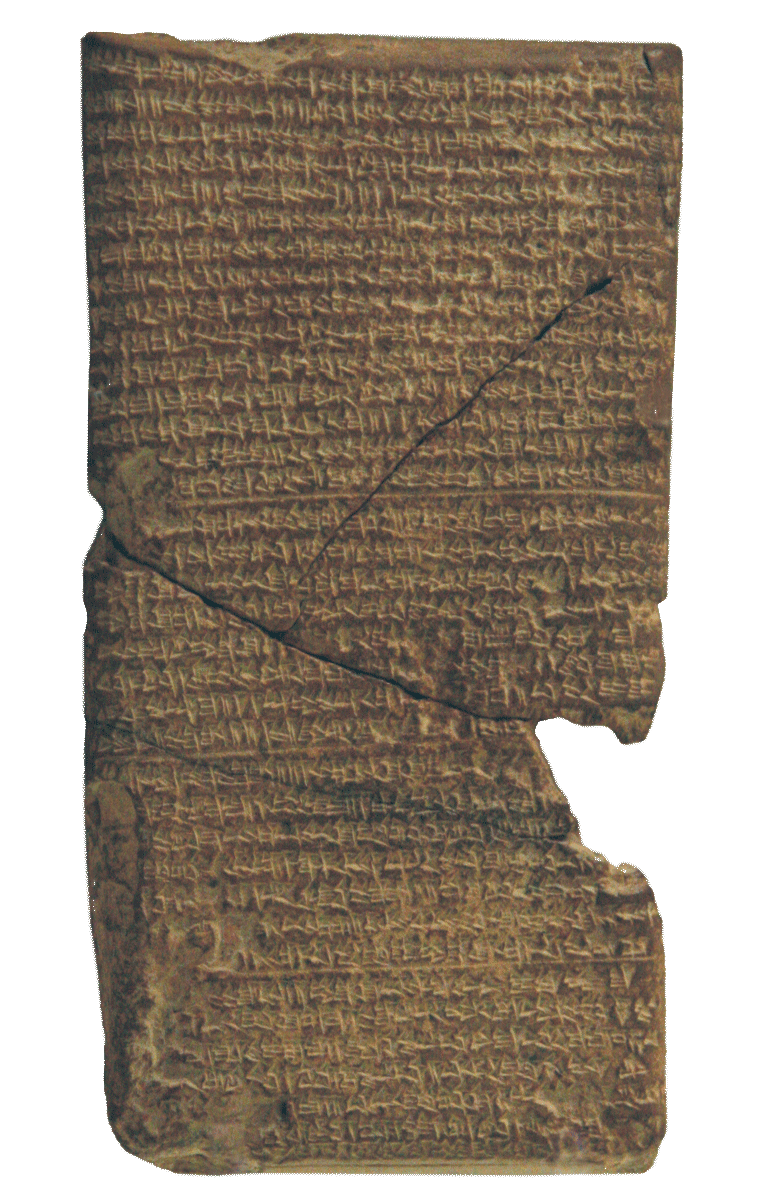
The destruction of Nineveh in 612 BC is recorded in this Babylonian cuneiform tablet chronicling the years 615–609 BC.
The futility of opposing God is here vividly set forth (1:9–2:2; cf. Isa. 8:9–10). However grand and well-conceived the plans of Nineveh and other world powers might be, they are doomed to utter failure. As with the “little horn” in Daniel 7, there may be initial success, but the outcome is sure. The opponents of God will be so thoroughly routed that they and the trouble they bring to the saints of God will not be able to rise again. Verse 10 is a notoriously difficult verse, but it is clear that it also describes the futility of opposing God. His foes will be as ineffective as one who is caught in a thornbush, as futile as one who staggers in his drunkenness. Finally, they will be consumed as though they were overly dry stubble.
Though Nineveh is not specifically mentioned in verse 11, she is clearly in view. The one plotting evil may be Sennacherib (2 Kings 18–19), or this may be a collective reference to the evil kings of Nineveh. In any case, Nineveh is seen as a center of evil and rebellion against God and as such stands in the line of world powers energized by Satan, culminating in the reign of the antichrist.
Verses 12–13 are addressed to Judah in the form of assurance that Nineveh’s yoke will be removed. These verses look beyond the temporary relief brought about by Nineveh’s downfall to the final eschatological deliverance of the Messiah. Verse 14 addresses Nineveh and announces its utter destruction. It is a historical fact that after the fall of Nineveh, no trace was left of the power and influence of the mighty kingdom. It was as though Nineveh had never existed. Though Nineveh’s kings assumed that their kingdom would stand indefinitely because of the protection of their idols, God buries Nineveh with the words, “You are vile” (1:14).
Verse 15, addressed to Judah, declares the delight with which God’s messenger will be received when he comes with the joyful news that God has redeemed his people. The enemy has fallen, and God alone reigns. The victory celebration gives the glory to God, who alone is worthy of praise.
Nahum 2:1–2 marks a transition and is the third in the series of contrasts in God’s dealings with Nineveh and Judah. Verse 1 begins the description of the fall of Nineveh that is taken up again in verse 3 and then developed in the rest of the book. Verse 2 concludes the promises of the benefits that Israel will enjoy as a result of the defeat of her enemies. The result of the attack on Nineveh will be a scattering to the winds of her inhabitants (cf. Nah. 3:18). The words “Guard the fortress” (2:1) are likely words of irony uttered by God in order to emphasize the futility of any kind of defense, no matter how strong. Both the destruction of Nineveh and the restoration of Israel (2:2) are sure.
One can understand the reference to Israel only as referring to all twelve tribes. In Nahum’s time this seemed very unlikely; the northern kingdom had already been scattered throughout the Assyrian Empire for more than sixty years. But now it is Nineveh’s turn to be scattered and Israel’s turn to be exalted.
If the question is raised as to the fulfillment of this prophecy, it may be suggested that this is an example of what is sometimes called “telescoping,” in which the ultimate fulfillment is anticipated by one or more anticipatory fulfillments. The fall of Nineveh brought relief to Judah from the Assyrian threat (partial fulfillment), yet within seven years Judah fell under Babylonian domination and within twenty-six years Jerusalem was destroyed along with the temple. Then, about eighty years later, when Babylon had been defeated, Judah was restored to the land (but still under foreign domination). Yet the ultimate fulfillment is still to come, involving all Israel, not just Judah, and seeing the full establishment of glory in Israel, both material and spiritual. “Jacob” and “Israel” no doubt refer to the contrast between a self-seeking, conniving Jacob, a homeless wanderer desperate for God’s help when he came to Peniel (Genesis 32), and Israel, the man that God intended Jacob should become, one who would receive God’s blessing, not by self-effort, but by trusting God and on God’s terms. So will the nation experience the fullness of God’s promise.
2. The Siege and Destruction of Nineveh (2:3–13)
Nineveh has lived and prospered by the sword. It is now about to die by the sword. Nineveh is to be on the receiving end of the violence she has so freely meted out over the years (2:3–6). The assault on Nineveh is relentless, swift, fierce, and irresistible. Verse 3 describes the dread-inspiring appearance of the invader. The soldiers’ shields are red, either stained with the blood of the battle or dyed red. This, along with the scarlet dress of warriors, when taken with Ezekiel 23:14, seems to indicate that red was a characteristic color of Babylonian armies at the time. The Medes, according to Xenophon, had a similar custom.
Verse 5 depicts the speed and the fury of the assault. There is no stopping the onrushing chariots. “The streets” and “the squares” (2:4) refer to the area outside the strongly fortified central city. The outer defenses have already been breached, and the assault on the inner city is now imminent. The subject of verse 5 is difficult to identify with certainty. Some see this as a reference to the commander in Nineveh in his last desperate measures to shore up the defenses of the city. “Yet they stumble on their way” is taken, by this view, as pointing to the ineffectual efforts of the defenders to prepare for the final onslaught. An alternative, and probably more satisfactory, view is to see this as referring to the actions of the attackers. Nahum 3:3 explains the stumbling: the corpses of the defenders are so numerous that the attackers stumble over them in their rapid forward progress as they dash to the city wall. The protective shield, or mantelet (2:5), is a shield put up for the protection of the attackers. The river gates are sluice gates used to control the flow of the Tebiltu and Khosr rivers to and through Nineveh. Apparently the gates were first shut to cut off drinking water; then when the reservoirs were full, they were opened so that the onrushing waters undermined part of the wall and even the palace, making it easier for the attackers to rout the defenders. Ancient tradition is in general accord with this. In light of this verse, 1:8 might well be a double entendre.
The city is emptied both of its inhabitants, by capture and by flight, and of its material wealth (2:7–10). God decrees that Nineveh will be plundered and destroyed. Verse 7 describes the captivity and grief of the inhabitants, verse 8 the precipitous flight of the defenders. The human suffering described here is an echo of the terrible suffering formerly inflicted on others by the conquering Assyrian armies. Nineveh has been a pool or reservoir, collecting people and wealth. Now the flow is reversed, and there is no stopping the rushing outflow. The pungency of expression and the terseness of this passage graphically capture the drastic, unexpected, and rapid turn of events. That the supply of plunder is endless is echoed in the description of the sack of Nineveh in the Babylonian Chronicle: the spoil that was taken was a quantity beyond counting (2:9).
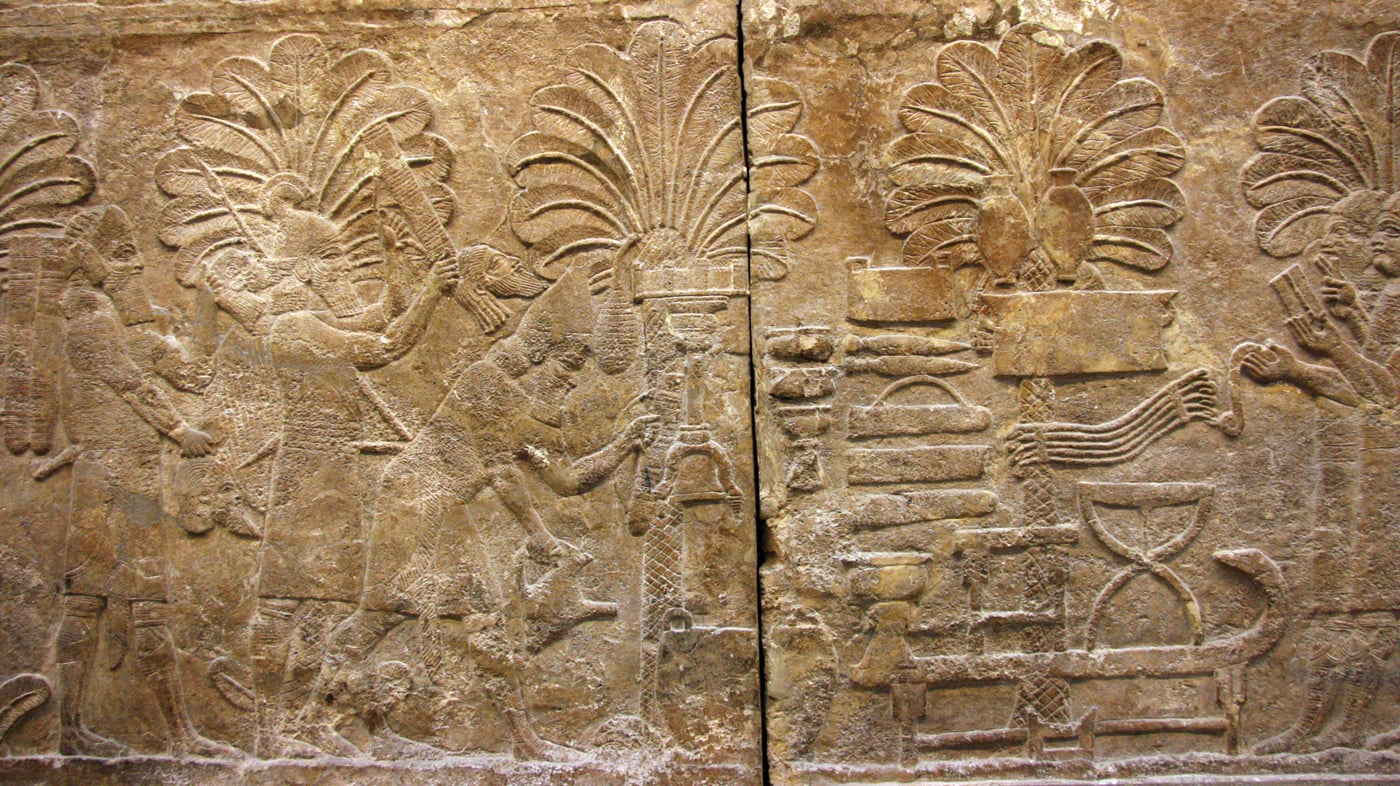
This Assyrian relief from the palace of Sennacherib in Nineveh shows scribes recording the spoils of war being collected by Assyrian soldiers (640–620 BC). As Nahum prophesies, now it is Nineveh’s turn to be plundered.
Nineveh, similar to a lion’s den, has been a place of security for its people as well as a repository filled with the plunder of conquered nations (2:11–13). Assyria has victimized other nations as a lion preying on helpless animals. Now Nineveh is itself to be destroyed and robbed of people and wealth. At the climax of this section comes the awful and unalterable declaration of the Lord of Hosts: “I am against you.” This expression is found twenty-eight times in the Old Testament and is used when God is set to act against a people that has steadfastly refused to submit to him. No matter how powerful or numerous or wise the nation, no matter what precautions are taken, these words spell certain doom. But for those who trust God and seek refuge in him, the words of 1:7 apply: “The Lord is good, a refuge in times of trouble. He cares for those who trust in him.” The voices of messengers, with their haughty and arrogant demands of submission and tribute, with their taunts and reproaches against God (cf. 2 Kings 18:28–35; 39:1–13), will never again be heard. God has the last word.
3. The Cause and Certainty of Nineveh’s Downfall (3:1–19)
Nahum 3:1–7, with its terse, powerful phrases, depicts Nineveh in a typical battle, overwhelming yet another hapless victim. The woe is here a divine denunciation and pronouncement of judgment (3:1–4). Verse 1 masterfully depicts both the character of Nineveh and the source of its prosperity and greatness. It was built on bloodshed and deceit and can maintain itself and continue to grow only by ruthlessly devouring other cities and kingdoms. Its appetite for blood and plunder is insatiable. Nineveh was a great and powerful city, proud of its achievements. But now God gives his assessment.
The graphic, staccato phrases of verses 1–3 evoke the image of a ruthless, grinding military machine. Nineveh’s means of empire building by the brutal subjugation and plundering of other cities is likened to the rapaciousness and greed of a harlot. Cruel, yet seductive, Assyria enslaved other nations, gaining permanent advantage for herself by offering temporary benefits to others. Many understand verses 2–3 as another description of the downfall of Nineveh in the form of an aside, yet it seems best to understand this passage as referring primarily to Nineveh’s past conquests. The repetition of the words “I am against you” from 2:13 is important. Not only does it emphasize the implacability of God’s purpose to destroy Nineveh, but it serves a structural purpose as well: in 2:13 the words relate to Nineveh as a predatory lion (2:11–13); in 3:5, they relate to the never-ending demands of the harlot Nineveh for more spoils of war. Secondarily, this passage serves the purpose of noting that Nineveh is now going to receive the same treatment she administered to others (cf. 2:3–10).
The further result of God’s judgment (3:5–7) is that Nineveh will be exposed to public disgrace, just as in the case of the judicial exposure of the nakedness of a harlot (Ezek. 16:37–42; Hos. 2:3; Mic. 1:11). Nineveh is no longer the proud queen of harlots (see a similar description of eschatological Babylon in Rev. 17:3–6), holding the lives and destinies of nations in her capricious hands. Now she has been made a public object of scorn and contempt. There will be no sorrow at Nineveh’s passing, only rejoicing.
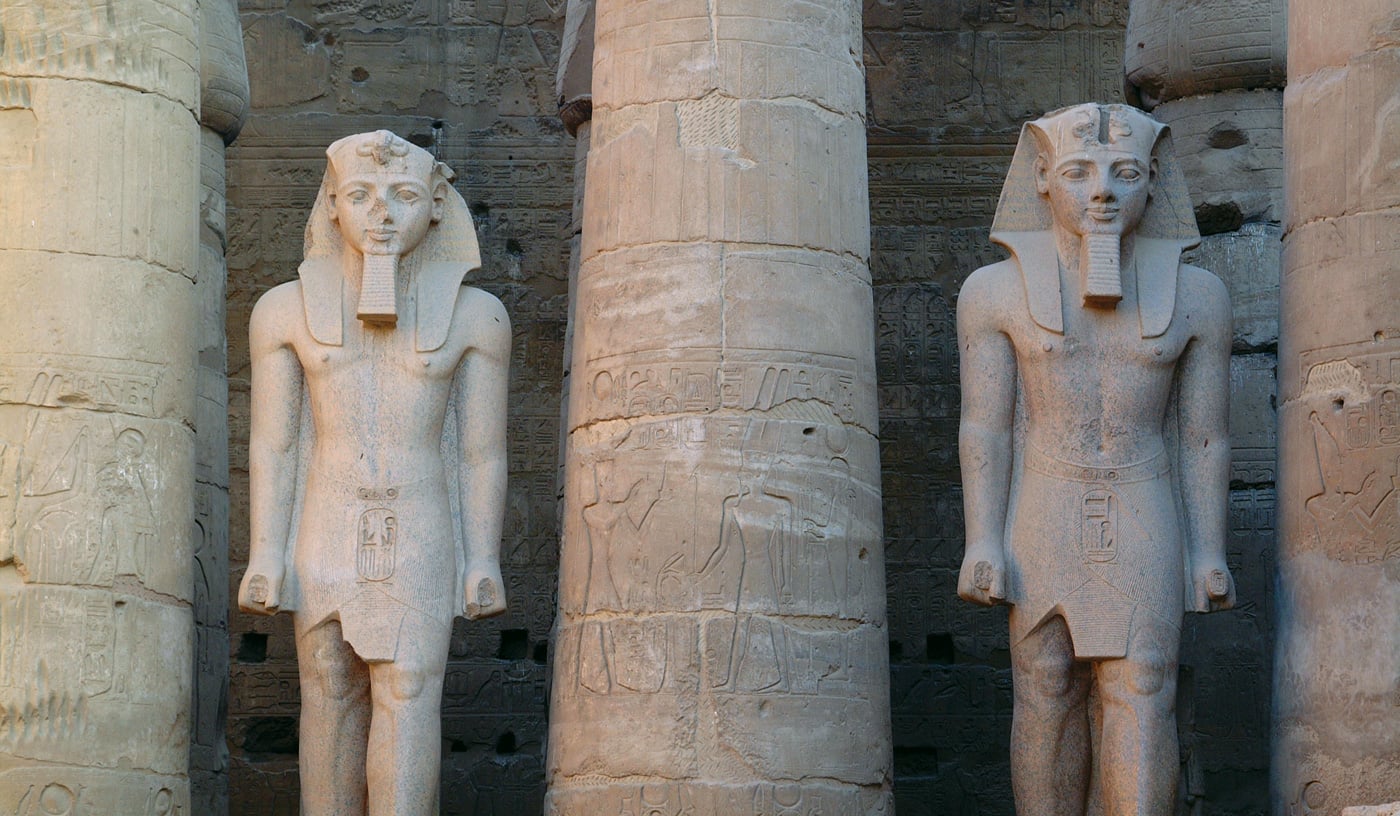
The remainder of the chapter is given over to the certainty of Nineveh’s destruction. Thebes (Hebrew no amon, “City of the God Amon”), situated about 140 miles north of modern Aswan, was one of the greatest cities of the ancient world. It was often called simply “The City,” and some of its remains can be seen in the impressive temple ruins of Luxor and Karnak and the funeral monuments of the kings on the other side of the Nile. The rhetorical question “Are you better than Thebes?” (3:8) has to do with strategic location rather than moral superiority. Ashurbanipal defeated Thebes in 663 and dealt with it in typically cruel Assyrian fashion, pillaging it and razing it to the ground, killing numerous inhabitants and enslaving others. This defeat of Thebes came about despite its favorable location, numerous allies, and strong defenses. Just as the seemingly impossible happened to Thebes, so it will be with Nineveh (3:8–11). It may be that the words “You too will become drunk” (3:11) refer to the drunken condition of many of the defenders of Nineveh, as described by some ancient Greek historians. But the expression is more likely used figuratively, as is often the case in Scripture. As such it describes Nineveh’s helplessness in the face of the attackers in terms of the reeling, tottering, and ineffectiveness associated with drunkenness. She will seek refuge, but there will be no place to go, no help.
Nineveh will be a choice object of plunder, easy to take, ripe for the plucking (3:12–17). There may be a subtle allusion as well to the fact that the time has come for Nineveh to be judged. Fruit or grain being ripe for the harvest is frequently used metaphorically in Scripture as pertaining to readiness for judgment (e.g., Jer. 51:33; Joel 3:13). The weakness of Nineveh is depicted in terms of its defenders and fortifications. The formerly fierce and indomitable soldiers are all women. This reflects the standard Near Eastern expression of the loss of stalwart manliness due to loss of morale (cf. Isa. 19:16; Jer. 50:37; 51:30). Because of the collapse of the defenders’ courage, the gates of the land are wide open. The outer defenses, including fortified cities guarding the way to Nineveh, will fall before the enemy, leaving Nineveh isolated and without protection. An ample water supply was important in preparation for a protracted siege. Though Sennacherib had made extensive provisions to ensure abundant water, special precautions were necessary to counteract the enemy’s cutting off of the water supply to the city. Since stones were scarce in Mesopotamia, clay bricks were used for fortifications. During siege conditions extensive repairs would be necessary to fix breaches in the walls. The ravages of fire and sword are compared to the terrible impact of a plague of grasshoppers (or locusts) on a field. Assyria had a long history of the establishment of trading stations. But they are represented here as being not only as numerous as locusts but as harmful to the land, plundering then leaving without making any truly helpful contribution. The guards and officials of Nineveh are also compared to locusts: numerous for a short time, but then suddenly gone.
Nineveh fell in 612 BC. Though Ashur-uballit II and his followers established a new capital at Harran, Assyria was already dead, the last remnant of the kingdom disappearing in 609, when Babylon forced the last holdouts to flee Harran.
Nahum closes with an epitaph for the king of Assyria (3:18–19). “Shepherd” is a common Old Testament and ancient Near Eastern designation for rulers. With the demise of rulers and nobles, Nineveh’s people will be scattered on the mountains without a trace throughout the nations, without a hope of any healing, without a chance of recovering. Its passing will go unmourned. On the contrary, there will be great rejoicing by those who have felt the lash of Nineveh’s endless cruelty.
The destruction of Nineveh was a major milestone in human history. With all the power and influence that Assyria wielded in its own time, nothing remained after its fall but a bad memory. Therefore, it serves well as an example of the lack of a future for the kingdoms of this world. By contrast, though God’s people have been scattered, there is indeed a bright future as God raises up a Shepherd and gathers them to himself.
Select Bibliography
Baker, David. Nahum, Habakkuk, Zephaniah. Tyndale Old Testament Commentaries. Downers Grove, IL: InterVarsity, 1988.
Barker, Kenneth L., and Waylon Bailey. Nahum, Habakkuk, Zephaniah. New American Commentary. Nashville: Broadman & Holman, 1998.
Bennett, T. Miles. The Books of Nahum and Zephaniah. Grand Rapids: Baker, 1969.
Bruckner, James K. Jonah, Nahum, Habakkuk, Zephaniah. NIV Application Commentary. Grand Rapids: Zondervan, 2004.
Keil, C. F. The Twelve Minor Prophets. 2 vols. Biblical Commentary on the Old Testament. Grand Rapids: Eerdmans, 1949.
Kohlenberger, John R., III. Jonah–Nahum. Chicago: Moody, 1984.
Laetsch, Theodore. The Minor Prophets. St. Louis: Concordia, 1956.
Longman, Tremper, III. “Nahum.” In The Minor Prophets: An Exegetical and Expository Commentary. Edited by Thomas Edward McComiskey. Grand Rapids: Baker Academic, 1992.
Maier, Walter Arthur. The Book of Nahum. Grand Rapids: Baker Books, 1959.
Orelli, C. von. The Twelve Minor Prophets. Reprint. Minneapolis: Klock & Klock, 1977.
Patterson, Richard D. Nahum, Habakkuk, Zephaniah. Chicago: Moody, 1991.
Smith, J. M. P., et al. Micah, Zephaniah, Nahum, Obadiah and Joel. International Critical Commentary. Edinburgh: T. & T. Clark, 1911.
Smith, Ralph L. Micah–Malachi. Word Biblical Commentary. Waco: Word, 1984.