Philippians
1. Paul’s Apostolic Salutation and Prayer (1:1–11)
A. Address and Salutation (1:1–2)
B. Paul’s Thanksgiving and Confidence (1:3–8)
C. Paul’s Apostolic Prayer (1:9–11)
2. Paul’s Ambition and Joy Is the Gospel of Christ (1:12–26)
A. The Condition and Mission of the Gospel (1:12–18a)
B. Paul’s Own Condition (1:18b–26)
3. The Great Example of Christ and Life Lived according to the Truth of the Gospel (1:27–2:18)
A. An Exhortation to a Life Worthy of the Gospel (1:27–30)
B. A Call to Corporate Life in Christ (2:1–4)
C. The Supreme Example of Christ (2:5–11)
D. A Call to Christlike Obedience (2:12–18)
4. Judge Those Who Work among You by the Truth of the Gospel (2:19–30)
5. Paul’s Life as an Example of the Truth of the Gospel (3:1–21)
A. Beware of Those Who Oppose the Truth of the Gospel (3:1–3)
B. Paul’s Life Illustrates the Truth of the Gospel (3:4–14)
C. Follow the Example of Paul as He Follows the Example of Christ (3:15–21)
6. Encouragements, Appreciations, and Greetings (4:1–23)
A. Encouragements to Steadfastness and Unity (4:1–3)
B. Encouragements to Prayer and Noble-Mindedness (4:4–9)
C. Appreciation of the Philippians’ Gift (4:10–20)
D. Greetings and Benediction (4:21–23)
Introduction
Toward the end of his life, Paul wrote the Letter to the Philippians to the first congregation he had established in Europe. In it Paul reveals his passion for the gospel and his love for his fellow believers in Christ. In Philippians 4:15, Paul writes about the special relation that he shares with the Philippian church. This is a church close to Paul’s heart, one with which he shares true partnership in the gospel of Christ. When the Philippian church heard about Paul’s imprisonment in Rome, they responded by sending Epaphroditus with a generous gift. Paul apparently wrote the Letter to the Philippians in response to this gift and the news of the church he received from Epaphroditus. This is one of Paul’s letters that was not occasioned by problems in a church but by gratitude and deep friendship with a congregation.
Date, Authorship, and Place of Origin
The traditional view is that Paul wrote the Letter to the Philippians from prison in Rome around the year AD 60. There is little reason to challenge this tradition, although several alternative locations have been suggested for the origin of the letter and for the city of Paul’s imprisonment, suggestions that will be discussed below.
Few scholars have questioned Paul’s authorship of Philippians. The letter opens with the greeting from “Paul and Timothy,” but it is clearly Paul alone who has actually written the letter. Timothy might have been Paul’s secretary or companion, but he is not a coauthor. His name appears again only in 2:19, whereas the first-person singular pronouns “I,” “me,” and “my” appear over fifty times. Both the biographical section and the theology are consistent with what we know of Paul’s theology elsewhere in the New Testament, and from the earliest church fathers on, Paul has been considered the author of Philippians.
The date of Philippians is dependent on the decision about the letter’s place of origin. It is clearly written from prison, so the question becomes, During which of Paul’s imprisonments did he write the Letter to the Philippians? Although several locations have been suggested, only two deserve serious consideration, since Acts records only two places where Paul was imprisoned: Caesarea (58–59) and Rome (60–62).
The text of Philippians offers several clues about where and why Paul was imprisoned: it appears that Paul was in prison facing a trial that could end in death or acquittal (1:19–24; 2:23–24), that he planned to visit Philippi upon his acquittal, that there were members of the “praetorian guard” (1:13 NASB, RSV; NIV: “palace guard”) and “Caesar’s household” (4:22) where he was being held, that Timothy was with Paul, that trips were being made between Philippi and the place where Paul was being held, and that extensive evangelistic efforts were being carried out in the city where Paul was being held.
Acts 23–24 records Paul’s two-year imprisonment in Herod’s praetorium in Caesarea, so the praetorian guard of Philippians 1:13 could refer to Herod’s soldiers. But in the first century a reference to the praetorian guard more often referred to the emperor’s elite troops stationed in Rome. Although anyone in imperial service can be called a member of Caesar’s household, it would be far more likely that this term would be used of the emperor’s household in Rome. There is also little evidence in Acts of life-threatening circumstances or imminent release while Paul was held in Caesarea. In Acts 23:11, Paul is told that he “must also testify in Rome,” and Paul himself seems to know his rights as a Roman citizen when he appeals to Caesar. So it is doubtful that his life would be in danger in a Roman court until he reached Rome.
The traditional view that Paul wrote Philippians from Rome in the early 60s fits all the data found in Acts 28 and Philippians. Acts ends with Paul preaching the gospel in Rome as he awaits his trial, the very picture Paul presents of himself at the beginning of Philippians. A location in Rome is the simplest explanation of references to the praetorian guard and Caesar’s household. This is a case where the traditional view is still the best.

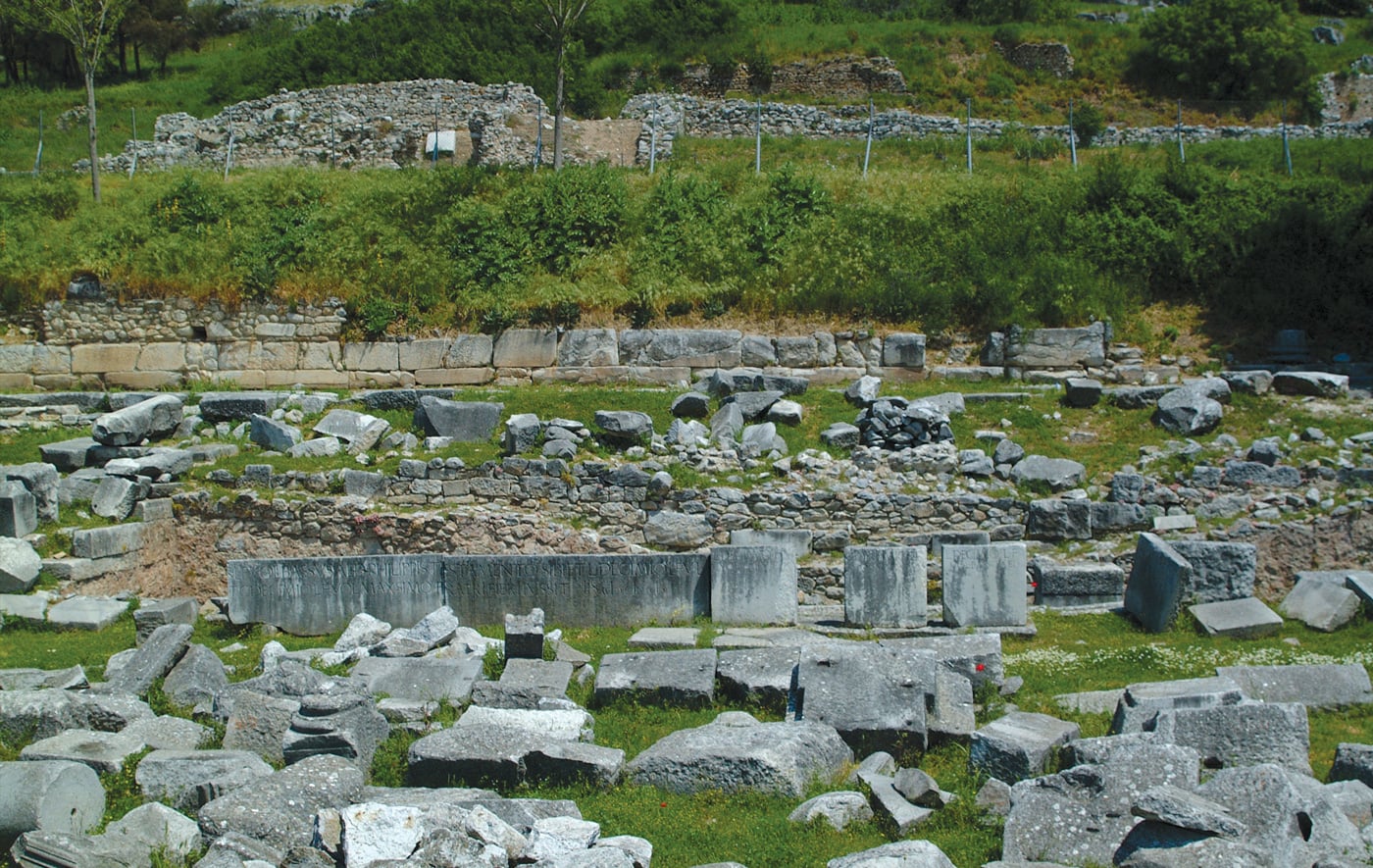
The Krenides River and the remains of the Roman road that led across it. This is a possible location for Lydia’s baptism and the beginning of the church at Philippi (Acts 16:11–15).
Philippi: The City and the Church
Acts 16:12 calls Philippi “the leading city of that district of Macedonia.” Situated at the eastern end of a large and fertile plain on the road that connected Europe to Asia Minor, it had a strategic position that ensured its importance as a Greek city and a Roman colony. It was named after Philip of Macedon, Alexander the Great’s father, in 356 BC and came under Roman control in 168 BC. In 42 BC Octavian, later Augustus Caesar, won two great military victories near Philippi and honored Philippi by refounding it as a Roman military colony. This gave every resident Roman citizenship and populated the town and surrounding areas with discharged military veterans, thereby ensuring the allegiance of this strategically located town to the emperor of Rome. By the time Paul came to the city in 49, Philippi was the political center of the area and both Greek and Latin were spoken in the city. Despite the tremendous advantages in the Roman world of being a citizen of Philippi, Paul does not hesitate to remind the Philippians that as Christians they are now citizens of a heavenly kingdom. Their Lord is not Caesar but Jesus Christ, their Savior, who has everything, even the Roman Empire, under his control.
While on his second missionary journey, Paul received a vision of a man of Macedonia who begged him, “Come over to Macedonia and help us” (Acts 16:9). So Paul journeyed to Macedonia, and the church at Philippi was founded as the first Christian community in Europe. The well-known story of the founding of the church is told in Acts 16:11–40. Paul found a devout worshiper of God named Lydia, a seller of purple goods, who with her household formed the nucleus of the church at Philippi. “Given the prominent place of women in Macedonian life in general, it is not surprising that the core group of first converts were women, nor that the location of its first house church was in the home of a woman merchant” (Fee, 27). Although Acts does not indicate how long Paul actually stayed in Philippi, it was long enough for him to establish a close relationship with this church. Paul and Silas left Philippi after Paul was imprisoned for casting a spirit of divination out of a slave girl but not before the entire household of his Roman jailer had converted to Christianity. We know first from 1 Corinthians 16:5 and 2 Corinthians 1:16 and second from 2 Corinthians 2:13 and 2 Corinthians 7:5 that he visited Philippi at least two more times, and in 2 Corinthians 8:1–5 he wrote them a glowing commendation for generous giving.
Literary Unity
The Greek manuscript evidence clearly indicates that Philippians originally circulated as the complete letter we have today. Some scholars have, however, questioned the unity of the letter on other grounds, mainly the use of the word “finally” in the beginning of Philippians 3:1 (KJV, RSV; NIV: “further”) and the change of tone and subject matter that follows. Such scholars suggest that our Philippians is really two letters combined. Since the same word for “finally” is used in Philippians 4:8, some have even suggested that the end of Philippians 4 is a third letter of thanks.
But these objections to the unity of Philippians can be answered readily. The Greek expression to loipon, often translated as “finally,” is actually a phrase that indicates more follows and can be used as a transition between sections. It might be better translated “in addition” or “still” in order to avoid giving the impression of a break in Paul’s thought. Given the complete lack of manuscript evidence for more than one letter and the strong thematic unity of the letter, there is little reason to question the original unity of the Epistle to the Philippians.
Theological Themes
Two terms are so characteristic of this letter that they clearly summarize its major theological themes: koinōnia, which can be translated “fellowship” or “participation,” and euangelion, the word for “gospel.” From beginning to end, Philippians is a letter about what it means to fully participate in the gospel of Jesus Christ. However, Paul says very little about the content of the gospel or the saving work of Christ in this letter. Instead, Christ himself is presented as the embodiment of the gospel and the model of the Christian life for the Philippians. According to the “Christ hymn” of Philippians 2:6–11, Christ emptied himself by becoming a servant, and as a result, he was glorified by God. The pattern of emptying oneself and then being glorified is referred to as “kenosis theology” (from the Greek word kenōsis, meaning “an emptying”) and is considered important for understanding Christ’s incarnation.
Other leaders in the Christian community also model this dynamic of the gospel for the Philippians. Timothy and Epaphroditus do not look out for their own interests; they are willing to pour out their own lives for the work of the gospel. Paul is willing to share in Christ’s sufferings, that he might also know the power of his resurrection (Phil. 3:10). This imitation of Christ in his humiliation and exaltation is important not just for leaders in the Christian community. Christ’s servanthood is the model for every Christian, and Paul urges the Philippians to have the same mind in this matter as Christ Jesus. For as they participate in the dynamic of humiliation and exaltation that characterizes the gospel, they participate in Christ’s sufferings and resurrection. This participation produces true joy and peace even in suffering, one of the great themes of the Epistle to the Philippians. Like Paul, the Philippians do not need to fear persecution or death for the sake of Christ and the gospel, for “to live is Christ and to die is gain” (Phil. 1:21). Christlike humility is also the key to true Christian community and brings unity for the sake of the gospel. The great enduring message of Philippians is that the Christian life is a life lived in conformity to the image of Christ as he is presented in the gospel.
Commentary
1. Paul’s Apostolic Salutation and Prayer (1:1–11)
The opening verses of Paul’s letters often introduce the major themes of the epistle that follows, and Philippians is no exception. Although Paul follows the letter-writing conventions of his time, he is not limited by them and uses them to further his purposes in writing. So in the opening sentences of the Letter to the Philippians, Paul presents the great theme of the Philippians’ partnership with him in the gospel that will characterize the entire epistle. He also introduces the idea of humble service for the sake of the gospel, which is one aspect of true partnership in the gospel.
A. Address and salutation (1:1–2). Paul begins the letter with a standard epistolary greeting: he introduces himself as the writer, names the recipients of the letter, and then adds a short personal note. But even in this standard introduction Paul manages to introduce a strong sense of Christian purpose and a warm and joyous tone with his blessing: “Grace and peace to you from God our Father and the Lord Jesus Christ” (1:2).
In this introduction, Paul lists Timothy along with himself, not as a coauthor but as a companion (see Phil. 2:19–23). Timothy was probably with Paul in Rome at the time this letter was written. By mentioning Timothy’s name with his own, Paul both gives honor to Timothy and shows the Philippians how important they are to him and the church in Rome. Not only does Paul himself love the Philippians, but he is also closely associated with others who care for them (see Phil. 2:20). Paul also mentions Timothy and himself because he intends to use both as examples of true gospel workers later in the letter. Unlike in most of his other letters to churches, Paul does not refer to himself as an apostle but as a “servant.” Here Paul presents himself and Timothy as those who are “servants of Christ,” who became a servant for the sake of the church (see Phil. 2:6–11). There is no indication in this letter that there is a dispute over whether Paul is an apostle or whether or not he has authority to instruct and rebuke the Philippian church. His relationship with this church and his authority are assumed. By calling himself and Timothy “servants,” Paul is also calling the Philippians to be servants and is setting the stage for his call for humility in the Philippian church. This is a call for unity that is rooted in service to Christ and will later be demonstrated by the examples of Christ, Paul, Timothy, and Epaphroditus (2:6–3:21).
Paul then proceeds to address the congregation, calling them “saints [NIV “holy people”] in Christ Jesus” (1:1). Calling them “saints” also marks them as God’s people. The use of “in Christ Jesus” reminds them that it was not through their own strength and holiness that they became God’s people but because of what God has done in Christ. Paul then addresses two groups of people within the Philippian church: the overseers and deacons. Neither of these terms is uniquely Christian; Paul borrowed them from the Greco-Roman world and redefined them. The term “overseers” is often translated as “bishops.” These “overseers” were not bishops in the sense that we know them today. There were multiple “bishops” in each church who functioned as leaders within the church. The word “deacon” was often used in the Greco-Roman world to refer to those responsible for distributing food and goods. Paul uses the term here to refer to those within the Philippian congregation who are responsible for managing and distributing food and goods to the poor and needy. It is likely that Paul is thanking these people because they helped organize the aid sent to him with Epaphroditus (see Phil. 2:25).
Paul concludes his greeting by wishing the Philippians “grace” and “peace” (1:2). He first wishes them “grace,” which is the unmerited favor of God, and then “peace,” which is the result of God’s grace at work in the lives of the believers. Paul’s blessing is a reminder that “grace” and “peace” come not from him but from God the Father through Jesus Christ.
B. Paul’s thanksgiving and confidence (1:3–8). Paul moves from his customary greeting to a time of thanksgiving and prayer. He not only thanks God when thinking of the Philippians but prays for them with joy in spite of his position in prison. Paul claims that the reason for his joyful prayer and thanks to God is that the church at Philippi has partnered with Paul in the work of the gospel (1:5). This “partnering” is best understood in terms of their fellowship with Paul in his proclamation of the gospel. The Philippians have joined Paul in the mission of the gospel with their words, their hearts, and their deeds. Thus, Paul is thankful for their love and for their financial support in his imprisonment. This fellowship that Paul shares with the Philippians has been long and fruitful. In fact, Paul states that they were in fellowship from “the first day.”
While Paul is still in chains and standing trial, he is confident about the future of the Philippian congregation. He is confident not only because of their desire to proclaim the gospel but also because neither the church worldwide nor the church in Philippi is dependent solely on Paul. They are part of God’s church, and Paul is confident that God, who is faithful, will continue to work in the hearts of the Philippians and transform them, regardless of whether or not Paul is present. Since God “began a good work” (1:6), Paul trusts in God’s faithfulness to continue the work. This attitude is a clear expression of Paul’s humility in the face of his situation. He does not puff himself up as important and irreplaceable in the mission of the gospel. He is first and foremost confident in God’s plan and in God’s power, not in his own importance in God’s plan. God’s work in the Philippian church will continue until it is completed on the day Christ returns (1:6); because God is in control, he has a plan, and he is always faithful.
Paul goes on to open his heart to the Philippians, telling them how much he cares and how he holds them deeply within his heart (1:7). Not only does he feel this way, but his affection for them is understandable because they are sharing in God’s grace with him. This verse is a reference to the gifts of aid the church at Philippi sent to Paul. Paul is imprisoned in Rome, yet the Philippians are sharing in his suffering through their prayers, love, and financial aid. By sharing in Paul’s suffering, they also share in the grace Paul is receiving from God as a result of that suffering. Here Paul begins to offer himself as an example to the Philippians, an example that he will fully delineate in 3:1–21. Paul’s life and word proclaim the gospel, even from behind bars, as he continues “defending and confirming the gospel” (1:7). Paul is fighting for the sake of the gospel when he is on trial; but regardless of what he is doing, the Philippians have been there for him, and he holds them in his heart no matter the physical distance between them. Paul ends with an oath testifying to his compassion and desire to be present with the congregation (1:8).
C. Paul’s apostolic prayer (1:9–11). After telling of his love for the Philippians and of his thankfulness for their generosity, Paul proceeds to pray for them. Although such prayers are standard features of first-century letters, Paul uses this prayer to advance his pastoral concerns for the Philippians. He begins his prayer for the Philippians with a supplication for the congregation to grow in love and discernment and then states the purpose of this love: a life of holiness. He first prays that the Philippians abound in love and the truth of the gospel (1:9). Love and discernment go together for Paul. He calls the Philippians to love in such a way that their love is founded on truth and understanding. Paul desires for the Philippians to have this love and discernment so that they may live a life of holiness and obedience to God, so that they may “be pure and blameless for the day of Christ” (1:10). This life of holiness is itself a proclamation of the truth of the gospel, and Paul calls the Philippians to live up to that calling. In the final part of his prayer, Paul tells us the characteristics of this holy life. It is first and foremost filled with the “fruit of righteousness” (1:11). This fruit is the outworking of love, which finds its ultimate source in communion with Jesus Christ. He is the source of the fruit that will show itself in the Philippians’ lives if they abound in love. More than that, Christ is the supreme example to follow on their path to holy living. One hallmark of a holy life is that it gives glory and praise to God (1:11). Praise and glorification of God is the goal of right discernment and correct conduct.
2. Paul’s Ambition and Joy Is the Gospel of Christ (1:12–26)
In this section, Paul addresses the anxiety of the Philippians on his behalf. He knows that they care for him, as evidenced by their aid and the message sent through Epaphroditus (2:25). Paul also knows that his imprisonment is distressing to them and that they consider it a detriment to the advancement of the gospel. Paul desires to dispel their worries and correct their wrong thinking about what constitutes the true proclamation of the gospel.
A. The condition and mission of the gospel (1:12–18a). First and foremost, Paul wants to help the Philippians understand that his condition will not hurt the mission of the gospel, but benefit it (1:12). While it may seem that his physical condition and the possibility of his execution would be the most pressing concern, Paul focuses first on what is most important to him: the gospel of Jesus Christ. The good news of the life, death, and resurrection of Jesus Christ and its proclamation was the central fixture upon which Paul hung all his hopes and to which he had devoted his life. It might appear that, as a prisoner in Rome, Paul was not in a situation where he could carry out his life’s mission and would therefore be in deep despair. However, Paul tells the Philippians that the opposite has proved true in two ways. First, people are beginning to understand the reason for Paul’s imprisonment, and therefore, the gospel is being “preached” because of his imprisonment. The way Paul phrases his condition, “in chains for Christ,” denotes something beyond the legal reason for his imprisonment. Paul is in chains not merely because of Christ, but for Christ (1:13). Those around Paul see that he sits in prison as a service to Christ. As a result they are curious about the gospel for which Paul suffers so willingly. Second, Paul’s suffering for Christ has inspired many in the church in Rome to preach God’s Word with boldness and fearlessness (1:14). Paul is an inspiration and an example for them. His suffering has turned out to have the exact opposite result of what one would expect. Instead of his imprisonment inciting fear in Christians and eliciting disgust from his guards, the church has been inspired to further preaching, and the guards have been exposed to the truth of the gospel in Paul’s life.
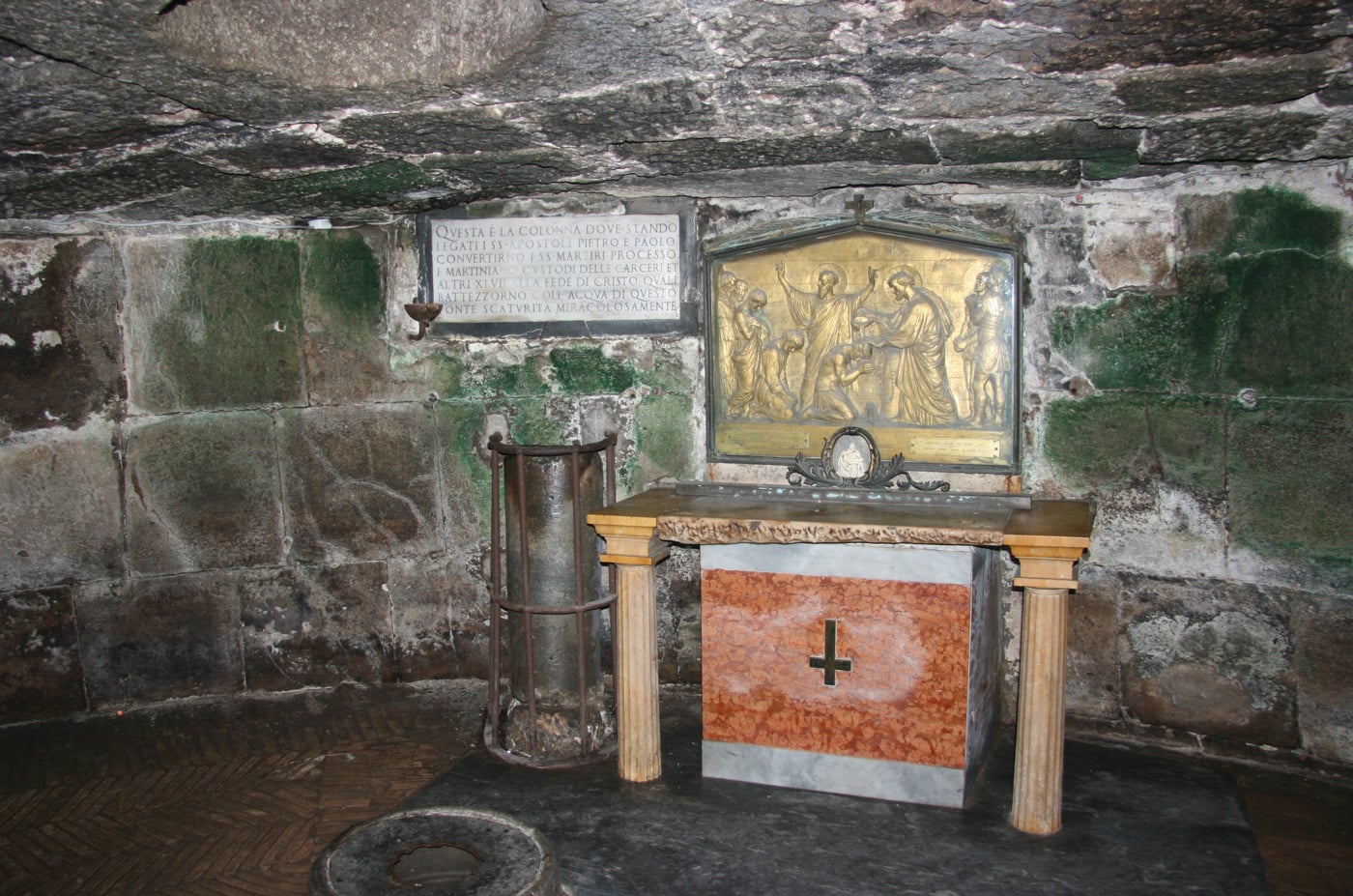
This underground prison cell in the Mamertine Prison (dating back to the seventh century BC) is the traditional location where both Peter and Paul were imprisoned in Rome. Above this now stands the Church of San Giuseppe dei Falegnami, and the cell has been converted into a chapel honoring the two apostles.
Next, while still discussing the mission of the gospel, Paul anticipates an objection. He claims that his witness is inspiring the Roman church to preach the gospel, yet what about those in the church who dislike him? He recognizes that people in the Roman community might be preaching the gospel for less than noble reasons (1:15), reasons that he thinks are incompatible with true Christian humility as he will identify it in 2:4. But here Paul does not worry about people’s motives; he simply rejoices in the proclamation of the gospel. Those who proclaim the gospel “out of envy and rivalry” (1:15) are still preaching the gospel, and that is really all that matters to Paul (1:18). This statement is the center of this entire section and reflects Paul’s position on his imprisonment. It does not matter whether Paul is liked or not, whether he is suffering or not; it matters only that God’s work is being done and that the cause of the gospel is moving forward. Earlier in the epistle, Paul talks about seeing God’s work being done in the lives of the Philippians, and he rejoices (1:3–6). Paul recognizes that the success of the gospel and God’s work is not dependent on him. In this humility, Paul recognizes that, whether he is with the Philippians or not, God is faithful and will continue to work. Whether Paul is in prison or free, God is faithful, and the message of the gospel will continue to spread.
B. Paul’s own condition (1:18b–26). After affirming the triumphant condition of the gospel, Paul moves to discuss his own condition. Although the Philippians are concerned about Paul, he rejoices because he is not without help. He is supported by the prayers of the Philippians and the help of the Holy Spirit. Thus, Paul is confident that his condition will turn out not only for the benefit of the gospel but also for his own benefit (1:19). He claims that, through the help he has received, he will be delivered. In 1:20, Paul details how he was helped and the nature of his deliverance. Ultimately, Paul’s goal for his life is to continually exalt Christ in his body (1:20). He desires the courage to glorify God no matter the circumstances. Just as Paul has recognized his role as an example for the Philippians, he reminds them that his life is the result of following the supreme example of Jesus Christ.
Paul goes on to add the short and powerful statement, “whether by life or by death.” These words split the path that Paul’s deliverance might take. As a prisoner who is about to stand trial, Paul could be delivered by being released from prison. In that outcome, he would praise God and preach the gospel, thus glorifying Christ. Yet, it is also possible that he could be executed for the cause of Christ. If executed, Paul is confident that his martyrdom would glorify God, because of his faithful witness to the gospel. While these two paths seem polar opposites, they actually lead to the same end of glorifying God, just as the different reasons that people preach the gospel both lead to its advance. It is in this context that 1:21 can be understood. While Paul is alive, all that he strives for and the strength by which he lives and moves is found in Christ. While he lives he will continue to serve God and preach the gospel. Yet there is also something to be gained if Paul dies. Paul will then be with Christ, which, as Paul poignantly states, “is better by far” (1:23). There is also gain for the faithful witness to the gospel and the glorification of God if Paul is executed.
Paul knows both of the alternatives that he faces: life and death. He knows that either will bring glory to God and that dying and being with Christ will be better for him. Paul is stuck between these two alternatives but privileges his pastoral responsibility and love for the Philippians over his personal desires and his love for himself (1:24). It is clear that Paul prefers not martyrdom but service to the church. In this he is following the example of Christ, who became a servant (2:7). Like Christ, he would choose martyrdom only if service to the gospel and the church demanded it, not because it would be better for him. Because they know Paul’s attitude of humble service to them in the gospel, the Philippians do not need to worry that Paul will rush headlong into martyrdom and abandon them. Paul is confident he will be there to see them grow in Christ and to rejoice with them (1:25–26).
3. The Great Example of Christ and Life Lived according to the Truth of the Gospel (1:27–2:18)
Confident of the Philippians’ partnership in the gospel, Paul now calls them to lead a life worthy of the gospel and sets the great example of Christ before them. Only by modeling their lives on Christ’s life can a Christian community hope to achieve true unity and proclaim the gospel in humility and righteousness. The great Christ hymn of Philippians 2:6–11 is one of the most famous passages of the New Testament, and more has been written about it than any other part of Philippians. But it is important to see it in its context in the epistle. The supreme example of Christ is part of Paul’s pastoral exhortation to the Philippian church, and he expects those who follow Christ to embody the same characteristics as the Lord they serve. Any theological conclusions based on this hymn need to be understood in this pastoral context. This section is primarily an exhortation to Christian unity and humility in the service of others, following the example of Christ. When the Philippians live in this way, they will become Paul’s true partners in the service of the gospel.
A. An exhortation to a life worthy of the gospel (1:27–30). Although Paul is confident that he will see the Philippians again, this confidence comes from Paul’s love for the congregation and the fact that he knows that they still need him as their pastor, not from any prophetic certainty. Thus, Paul begins his section of pastoral instruction with “Whatever happens . . .” (1:27). Paul recognizes that he is not in control of the situation but humbly acknowledges God’s sovereignty. Paul acknowledges that he may come to see them or he may only hear about them (either in prison or in death), but he nonetheless desires that they live lives worthy of the gospel of Christ (1:27). A life modeled after the gospel of Christ has both internal and external manifestations. The internal aspect of this gospel life is stated here as unity but also contains the important virtue of humility. Paul calls the Philippians to stand in one spirit and as one body (1:27). They are to stand in unity as the body of Christ, the church. This is the important internal evidence of a life worthy of the gospel. The external aspect of this life is seen in the effect that a true Christian community has on the pagan world around it. Paul is calling the Philippians to stand for the faith of the gospel (1:27). Yet this effect on the world outside the church can only take place once the church is true to its calling to unity and faith in the gospel.
In 1:27–30, Paul hints at the similarities between the situation of the Philippians and his own situation in Rome. The Philippian church is meeting opposition in Philippi and is being tried and tested. Though some in the congregation have become afraid, Paul calls them to remember that their salvation is found in God (1:29). Not only do they have the promise of salvation and the destruction of those who persecute them, but their situation is a gift from God. While most Christians are granted faith enough to believe in Christ, the Philippians have been given the honor of suffering for the sake of Christ, even going through the same situation as Paul himself. Paul calls their struggle the “same” in order to remind them of what he said in 1:7, namely that by sharing in his suffering they share in the grace that God is pouring out on him. By equating their suffering with his own, Paul reminds the Philippians of the grace of God that will strengthen them through any trial.
B. A call to corporate life in Christ (2:1–4). After calling the Philippians to an authentic Christian life and reminding them that he shares in their trials and sufferings, Paul makes a series of rhetorical remarks in order to comment on the character of the Philippians and remind them of the character of Christ. These four remarks all begin with the word “if,” but this does not mean that Paul doubts that they are true. It is better to understand the “if” as meaning “since.” Paul knows the Philippian congregation well. He knows these statements are true about this congregation, but he phrases them as “if” in order to catch their attention. With these remarks, Paul is telling the Philippians to pay attention. Paul both looks back and presses forward at this point. He constantly has his eyes on 1:27 and the call to a life worthy of the gospel. But he also presses forward and begins to set the great example of Christ before them—an example that defines and creates the gospel. Only those who truly model their lives on the life of Christ can live a life worthy of the gospel. Christ is the source of encouragement, comfort, love, fellowship with the Spirit, tenderness, and compassion.
The apostle begins his appeal by asking the Philippians to make his joy complete not only by continuing to live out those characteristics they have received from Christ but also by “being like-minded, having the same love, being one in spirit and of one mind” (2:2). While being united with Christ, being comforted by God’s love, fellowshiping with the Spirit, and having tenderness and compassion are exceedingly important in the Christian life, they all can be considered individual Christian virtues. Unity with Christ is seen through personal godly behavior. Each Christian is individually comforted by the love of God. Each Christian has an individual relationship with the Holy Spirit. Tenderness and compassion are demonstrated to others, but they can still be something one individual does for another.
However, Paul is calling the Christian community at Philippi to be a Christian community instead of merely being a collection of Christian people. It is this true community spirit and unity that is the first important virtue of the gospel life. As a community, they are to be like-minded (2:2), meaning that they hold to the same truths about who God is, what he has done, and what he calls Christians to do in this world. They must be united in and under the authority of the Word of God. God’s truth must unite their minds on that which is most important in the life of the Christian community and God’s mission in the world. As a community, the Philippians are to have the same love (2:2), meaning that they are to show the love of Christ, tenderness and compassion (2:1), both as individuals and as a community. As a community, they are to be one in spirit and purpose, meaning that there should be a definitive end to any factions and groups formed by personal interests. The cause of the church is never the cause of any one person but is the cause of Jesus Christ. While individuals could exhibit the characteristics of 2:1, no community could have the characteristics of 2:2 and remain divided.
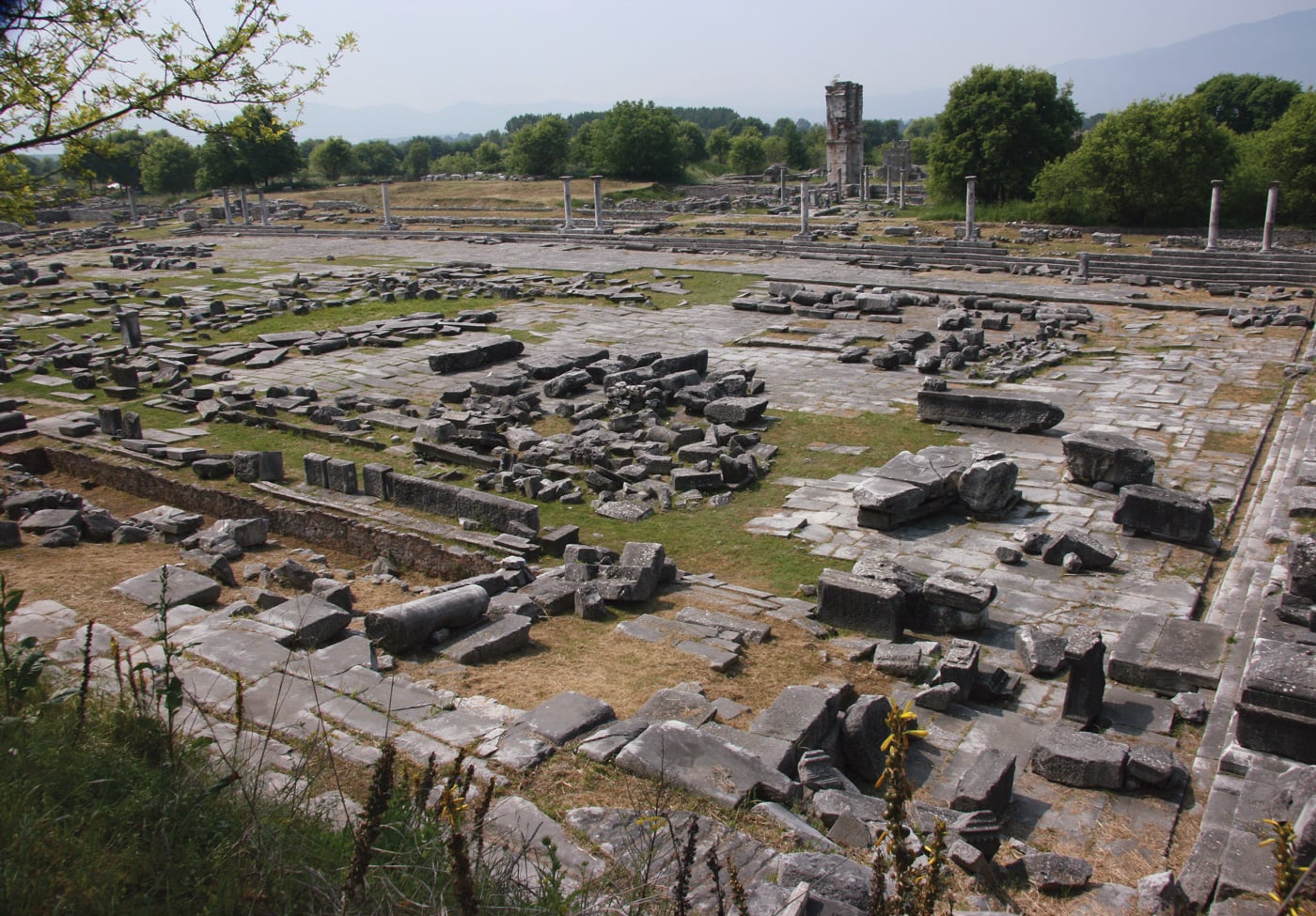
The forum at Philippi, which was rebuilt during the time of Marcus Aurelius (second century AD). Paul founded the church at Philippi on his second missionary journey (Acts 16). In Philippians 2, Paul teaches the church how to maintain their unity.
In 2:3–4, Paul moves on to the second important virtue in a life worthy of the gospel: humility. The Christian life is centered outside oneself. It is for that reason that Paul uses the same term (translated here as “selfish ambition or vain conceit”) as he used to talk about those who preached the gospel in order to frustrate him in 1:16. Paul does not want such an attitude to prevail among the Philippians. In humility, they are to live a life in which their focus is on God and others. It is not necessary for them to ignore their own lives and interests, but they, like Paul in relation to his execution, are to put the needs and interests of others above their own. It is a life of humility and unity that truly demonstrates the Christian life.
C. The supreme example of Christ (2:5–11). At this point, Paul is still attempting to help the Philippians understand the character of a life worthy of the gospel. A mere list of virtues or an explanation of concepts is not enough to truly understand what it means to follow Christ as both an individual and a community. So Paul begins a series of examples in order to illustrate the life he calls them to in 1:27. The first and primary example is Christ, which he introduces through an explicit call to follow Christ’s example in 2:5.
The section that follows, 2:6–11, is organized in a poetic pattern and is often referred to as “the Christ hymn.” Whether these lines were from an earlier Christian liturgy or were composed by Paul for this letter is difficult to tell. Paul uses these verses to display the prime example of the Christian life—Jesus Christ. The Christ hymn follows a pattern of increasing humiliation followed by increasing exaltation. Paul refers to Christ’s preincarnate state, “being in very nature God,” in 2:6. Jesus, as the Second Person of the Trinity, had the appearance of or was in the form of God before his incarnation. Yet the term “very nature” denotes more than a mere physical appearance. When Paul says that Christ was God in his very nature, he is talking about both the appearance of God (glory, power, majesty) and the true essence of God. Paul continues by saying that Christ, who was God in appearance and truth, did not consider his rights as needing to be asserted. This statement is both a truth about Christ and also a directive to the Philippians in how they are to have the attitude of Christ Jesus.
Paul is paralleling Christ with Adam. Adam was created in the image of God and chose a life of disobedience and self-exaltation (“you will be like God” [Gen. 3:5]). Jesus resisted the temptation to take what was his by right and chose instead to obey the Father and submit himself to the Father’s will. Jesus Christ, as Paul puts it, made himself nothing and took upon himself the nature of a servant, a human (2:7). This statement is not only an important claim about the incarnation but also a telling statement about human nature itself. “Made himself nothing” is often translated as “emptied himself,” which better captures the action in the verse. Christ set aside the glory that was his right in order to become human. It is an emptying in that Christ remains divine yet sets aside the glory that is due to God. The rest of 2:7 emphasizes that Christ took on human flesh completely, with all its weaknesses and restrictions. He lived not merely within a human body but as a human, dealing with all the trials and pains of life; yet he was without sin. “Servant” also refers to the very nature of humanity. Paul is telling the Philippians that not only are they to follow Christ in humility, but also they, as humans, are in essence servants to both God and others. That is who they are. Paul is, by pointing out Christ’s servant nature, calling the Philippians to a life of service in response.
Although becoming human humbled Christ from his divine status and glory, his path of humiliation did not end there. Christ, as God, could have easily been a king among the people of the earth, yet he chose to humble himself and become the least of humans. Even after he became incarnate, “he humbled himself” (2:8). Paul does not merely say at this point that Christ was crucified but points out that Christ was “obedient to death—even death on a cross” (2:8). This is the example that both Paul and the Philippians are to turn to in their lives. Paul was under persecution, as was the Philippian church. It was possible that they would be faced with death, but they should remember that their savior was obedient and was crucified. Yet the word “obedient” is used not only to remind them that they may face martyrdom but also to remind the Philippians that suffering for Christ is only to be done in obedience to God, not through self-assertion. They should not chase after martyrdom but should submit to God’s will as Christ did, allowing themselves to be humbled, even if it means to the point of death.
The hymn does not end with Christ’s death, as no true story about Christ can. Paul inserts the all-important “therefore” to show that what follows is a result of what came before. It was not a mere foregone conclusion that Christ would be exalted again to the glory he left, but because of his obedience, “God exalted him to the highest place” (2:9). After descending to the depths, Christ was brought up to the highest heights. Not only is the name Jesus above all other names, but it also has been so exalted by the Father that it will cause every knee to bow and every tongue to confess Christ’s lordship (see Isa. 45:23). These are things of which only God is worthy. When Paul says that Jesus is exalted to this level, he is saying that he was restored to his greater glory as the Son of God. Jesus’s path was traced from his preincarnate status as the Son of God to the depths of the cross and back to the exaltation given to Jesus by the Father. This path is the example that Paul sets before the Philippians. Their lives are to be ones of humility and service, true, but they are also to be lives that center on God and God’s will, not on themselves. While Adam was self-assertive and self-centered, Christ allowed God to exalt him and lived his life in service to God and others. Paul calls them to follow the path that Christ set, which, to echo Paul’s prayer in 1:11, brings glory to God the Father (2:11).
D. A call to Christlike obedience (2:12–18). After ending the hymn, Paul continues with another “therefore.” In light of the example of Christ, Paul explicitly calls the Philippians to a life of obedience following the example of Christ. In light of his current situation of imprisonment, Paul calls them to obey while he is away, as he has known them to obey when he is there (2:12). Yet this obedience is even more important because Paul is not there. When Paul is there with them in Philippi, the Philippians may have obeyed only out of respect for Paul, not out of a genuine desire to obey God in all things. Thus, when Paul is absent, their obedience is a greater indication of their true character. This obedience is to be seen in their following Paul’s instruction: “Continue to work out your salvation with fear and trembling” (2:12). This is an often misinterpreted passage. First of all, it refers to salvation in the sense of the whole community. Paul has been calling the Philippians to unity and a life lived for others, so he would not then call them to think only of working out their own individual salvation. Here he is concerned about the spiritual life and health of the community, which they are to “work at” (which is a better understanding of the phrase “work out,” just as two people “work out” their differences) until all factionalism, disunity, and selfishness are uprooted and overthrown. The phrase “with fear and trembling” is meant to emphasize that even this act of obedience is to be done in humility and reliance on God. In 2:13 the claim that God is the one who works on their will and desires crushes any interpretation of 2:12 that allows people to earn their salvation.
Paul continues his call to the Philippians to have an attitude like Christ in 2:14. Not only does Paul call the Philippians to humility and service, but he also warns them against spreading disunity in the Christian community. Paul’s call to cease complaining is connected to his prayer in 1:10–11. He wants them to be pure and blameless, living out the Christian life with inner unity and outward holiness in spite of the condition of the world around them (“warped and crooked generation” is an allusion to Deut. 32:5). The purpose of their outward holiness and Christian life of humility, unity, and obedience is to shine the light of Christ into the world (Matt. 5:14–16) as they hold to the truth of the gospel and present the gospel to the world in both word and deed. Paul calls for their Christian lives to be true for their own sakes and also so that Paul may rejoice and boast in the Philippians. Paul has worked and labored in love for this congregation, and he greatly desires at the final day to boast in all that they have become. He does not want all the love he has given to end up being for nothing.
Paul’s next sentence suggests the possibility of martyrdom. Even though his life would be sacrificed, the Philippians’ faith would be a part of that sacrifice. They have offered their love and support to Paul and have genuinely shared in his pain and suffering (see Phil. 1:7; 4:14). Even in talking about his possible death, Paul is full of joy because of their faith and the hope he has for God’s work in that community. Thus, he rejoices. And if Paul can rejoice in the face of death and remain hopeful, then the Philippians should be able to rejoice along with him (2:17–18).

The Egnatian Way, a major Roman road that ran through Philippi, was probably the route Timothy and Epaphroditus followed in their travels to and from the city (see Phil. 2:19–30).
4. Judge Those Who Work among You by the Truth of the Gospel (2:19–30)
After illuminating the supreme example of Jesus Christ for the Christian life, Paul moves on to the example of Christian leaders. Just as Christ is an example of a leader who is willing to sacrifice self for the sake of unity, true Christian leaders model this same self-sacrificing dedication to the cause of Christian unity. In this section, Paul discusses Timothy and Epaphroditus as examples and resolves to send them to the Philippians as living examples of the Christian life of self-sacrificing unity. Both Timothy and Epaphroditus put the needs of the church and the gospel ahead of their own interests and have a genuine concern for the welfare of the Philippian church.
Paul begins with Timothy, Paul’s close companion mentioned in the opening of the letter. Paul is sending Timothy to the Philippians for at least two purposes. Paul is eager to receive news about how the congregation is doing, whether they are living in a manner worthy of the gospel, and he wants to encourage them about his own situation in Rome. Timothy is Paul’s “son” in the gospel and can represent Paul in a special way to the Philippian congregation. But Timothy is also an outstanding example of a true Christlike leader who is not concerned with himself but looks to the interests of others, especially the Philippians (2:20–21). Just as Paul called the Philippians to look to others’ interests (2:4), he is going to send to them someone who exemplifies this important aspect of the Christian life. Timothy is an example for the Philippians primarily because of his humble heart. Not only has Timothy shown his heart for others, but he has proved his worth by serving closely with Paul in spreading the message of the gospel. Paul’s chief concern, and therefore his primary reason for writing the Letter to the Philippians, is the progress of the gospel in Philippi. Because of his character and adherence to the gospel, Timothy can represent Paul as his forerunner, even as Paul hopes that he himself will be able to follow soon.
Paul then moves on to the example of Epaphroditus. Epaphroditus, as the messenger the Philippians sent to Paul (2:25), most likely delivered their financial aid to the apostle. Paul also appeals to Epaphroditus as an example because of his humble heart. Epaphroditus had a heart for the Philippians to the degree that he longed for them just as Paul did (1:8). Epaphroditus’s heart was filled with love for the Philippians, and as a co-worker and fellow soldier with Paul, Epaphroditus was obedient to God in working for the gospel. Through his work with Paul and the delivery of financial aid, Epaphroditus gave what the Philippians themselves could not give (2:30). Yet his greatest act of obedience came in continuing to serve despite his illness. Paul commends him as a man worthy of honor, since he “almost died for the work of Christ” (2:30). Just as Christ was obedient unto death, so was Epaphroditus. Yet God had mercy on him for the sake of Paul and the Philippian community. It is as an honored example that Paul sends Epaphroditus back to the Philippians, most likely carrying this very epistle with him. Paul seems just as concerned that the Philippians honor Epaphroditus for what he has done on their behalf as that they honor Paul as their apostle. All those who serve the gospel and suffer for the sake of Christ prove their worth to the people of God.
5. Paul’s Life as an Example of the Truth of the Gospel (3:1–21)
The word “finally” or “further,” which begins this chapter (see “Literary Unity” in introduction), might lead Paul’s readers to expect some concluding remarks, especially since the exhortation to “rejoice in the Lord” appears to be such an apt summary of what Paul has previously written. But the whole tone of the letter changes abruptly in 3:2, and a new subject is introduced rather unexpectedly. This change of tone and subject has led several scholars to suggest that Philippians 3 is actually a fragment of an earlier letter that has been grafted into the main body of the epistle. There is, however, no manuscript evidence to support such a claim, and although the change of tone is striking, there is a basic similarity in theme between Philippians 3 and the rest of the letter. Paul still has the gospel at the center of his thinking, and the change in tone can be explained by his concern for the truth of the gospel. In 1:18, Paul rejoiced that the true gospel was being preached, even if it was being preached from false motives. But faced with the danger of those who insist on circumcision in addition to Christ, he cannot rejoice, because he must warn the Philippians about those who do not preach the true gospel. In the same way that he used others as examples of what it means to live the truth of the gospel, Paul will now use his own life to show that in Christ circumcision is no longer necessary. He can do this because those who preach the gospel should also be living examples of it.
A. Beware of those who oppose the truth of the gospel (3:1–3). The Greek expression to loipon, which is often translated “finally,” might be better translated as “in addition,” to avoid giving the impression that Paul is concluding the letter. Paul is really using this expression to draw his readers’ attention to what follows: he wants to warn them to be watchful in the face of a recurring danger. There is little in the rest of Philippians to prepare the reader for this sudden denunciation of “those evildoers.” But Paul does say that he is writing “the same things to you again” and gives several clues as to the nature of this threat.
In 3:2, Paul obliquely names those who threaten the church and almost certainly points to either Jews or Judaizing Christians. He calls his opponents “dogs,” a term Jews often used to refer to impure Gentiles, and “those evildoers.” He then uses the term “mutilators,” which comes from a word used to describe mutilation forbidden by Mosaic law, to describe these people. Paul appears to be turning the claims of his opponents against them: their circumcision is really mutilation; they are ceremonially defiled, and their righteousness is evil. All these terms are rather oblique and therefore not too useful in identifying a specific group in Philippi that Paul might see as opponents of the gospel. In fact, there is no actual sense that this danger is immediately present at Philippi, as it was in Galatia. Paul gives no indication of being concerned with doctrinal errors or irregularities of practice in the Philippian church. The purpose of Paul’s warning is a general one, issued in the face of something he sees as a constant menace to the churches he established.
Philippians 3:3 leaves little doubt that circumcision is the central issue in his debate with these opponents and that Paul’s derogatory language in Philippians 3:2 refers to those who uphold the ceremonial laws of Judaism. Here he contrasts the “mutilators of the flesh” with those who are “the circumcision,” among whom he includes himself. Those who have the right to the title of “the circumcision” are characterized by three things. The first is that they worship in a spirit given by God. The word “worship” (NIV “serve”) refers to the service rendered to God by Israel. Paul claims that true worship, as well as true circumcision, is found in Christ. This is a clear reference to the humble and obedient servanthood of Christ in 2:6–11. So it is no surprise that the second characteristic of those who are truly of “the circumcision” is that they boast only of Christ and show his humility and servanthood in their lives. In addition, those of the true circumcision “put no confidence in the flesh”; this is the negative aspect of what it means to “boast in Christ Jesus.” They trust only in Christ, not in fleshly circumcision.
B. Paul’s life illustrates the truth of the gospel (3:4–14). Paul now proceeds to offer his own life as an example of what it means to “boast in Christ Jesus” and “put no confidence in the flesh” (3:3). True participation in the gospel of Christ means that one’s life should show forth the truth of the gospel, and Paul is supremely confident that his own life shows that fleshly circumcision is something that needs to be put aside so that Christ can be fully glorified. The same pattern of giving up privilege and voluntary humiliation that characterized Christ’s life characterizes Paul’s life as he enters into an intimate relationship with Christ. This union with Christ in no way depends on circumcision or any other human accomplishment. Instead, it demands that Paul give up everything in order to “be found in him” (3:9), just as Christ gave up everything in order to be “found in appearance as a man” (2:8).
The clear statement of the contrast between “mutilation” and “circumcision” in 3:2–3 sets the stage for Paul’s autobiographical defense of the gospel. Paul has experienced the meaning of circumcision in the flesh and what it means to glory in Christ Jesus. So in Philippians 3:4–6, he can meet those who are preaching circumcision, whether they are Jews or Judaizers, on their own terms. Paul is willing to compare himself with anyone who “thinks they have reasons to put confidence in the flesh” (3:4), because he has more. Three of the reasons Paul gives are hereditary: he was born a Jew of the tribe of Benjamin; he was circumcised according to Jewish law; he was raised as a culturally pure, Hebrew-speaking Jew. These are hereditary distinctions of which many Jews could not boast. Paul’s personal convictions while a Jew also gave him reason to boast of his Jewish distinctives: his attitude toward the law was that of the strict sect of the Pharisees; he was a zealous persecutor of the church; he was faultless in his strict observance of the law. Few Jews could match Paul’s claims, and Paul’s Jewish credentials show that he is fully competent by Jewish standards to judge any issue involving Jewish law or “confidence in the flesh.” Paul’s opposition to those who wish to add circumcision to the gospel does not come from ignorance about the law.
But “knowing Christ Jesus my Lord” has brought about a complete change in Paul’s life. He describes this change in Philippians 3:7–8 and makes it clear that this change could never have been brought about by adherence to Jewish law. In fact, Paul now considers all his former advantages as a Jew, the things that he used to consider “gains,” to be a total “loss” for the sake of knowing Christ. The word translated as “what is more,” which begins 3:8, is an extremely strong expression in Greek, which indicates the complete reversal of Paul’s former values, and the perfect tense of the verb “consider” in this verse indicates the continuing effects of this reversal. Even the meaning of the words “gains” and “loss” is reversed—what were “gains” according to the Jewish law are now considered “loss for the sake of Christ.” Jews used the word translated as “garbage” to refer to the Gentile’s portion at the banqueting table of God, but Paul now uses it to refer to everything that he used to consider gain under the Jewish law. The earnest repetition of key words like “confidence,” “loss,” “gain,” and “consider” expresses the intensity of Paul’s new convictions and the total reversal that has taken place in his life. This reversal in Paul’s life has occurred because of the “surpassing worth of knowing Christ Jesus my Lord” (3:8). It is the greatness of this revelation, not a deficiency in the Jewish law or Paul’s righteousness, that makes his former life appear as “loss.” Living for the Jewish law would be having a goal other than that of knowing Christ Jesus. All Paul’s former gains are superseded by and lose their value before the single perspective that now controls his life: to know Christ, to gain him, to be found in him.
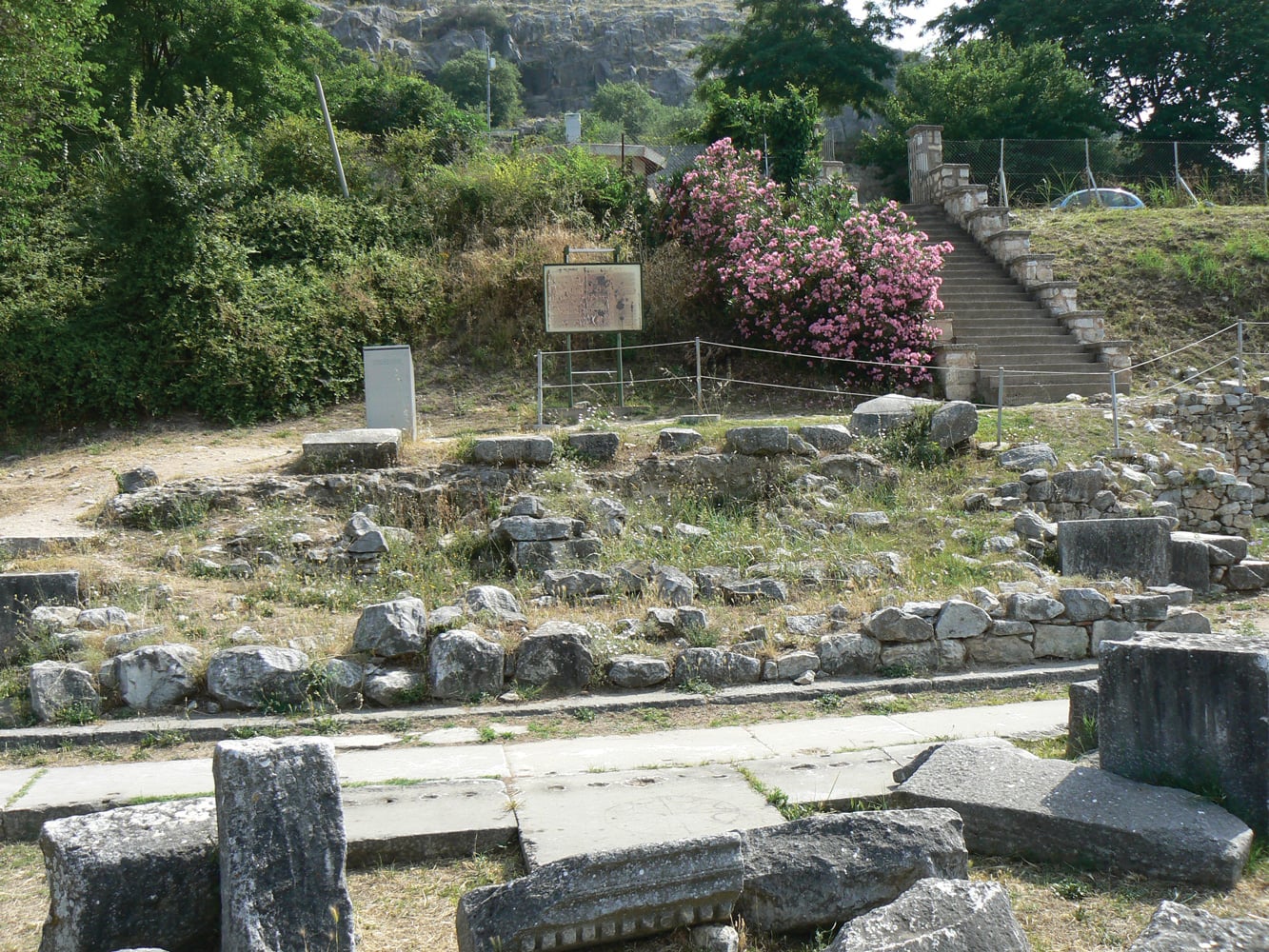
The remains of the bema (speaker’s platform) at Philippi. This platform may be where Paul and Silas stood when they were dragged before the magistrates and subsequently beaten and thrown into prison (Acts 16:19–21). In light of his many beatings and imprisonments, Paul can declare that he knows what it is to participate in the sufferings of Christ (Phil. 3:10).
In Philippians 3:9–11 Paul draws out the implications of what it means to have “knowing Christ Jesus my Lord” as the single purpose of his life. One of these implications has already been made clear: in order to gain Christ, to be found in him, and to know him, Paul has counted everything else as loss, especially his former life under the Jewish law. Here he makes it clear that being found in Christ excludes “having a righteousness of my own that comes from the law” (3:9). As a Jew, Paul had a righteousness in the law (3:6); now that he is found in Christ, he can no longer have a righteousness that comes from the law (3:9). The change in preposition (which is quite obvious in the Greek text but somewhat obscured in most translations) is highly significant. Being found in Christ means that Paul can no longer be found in the Jewish law—the two are mutually exclusive conditions. And if they are mutually exclusive for Paul, then they are mutually exclusive for all other Christians, including the Philippians. Now Paul’s righteousness, and the righteousness of all who follow Christ along with Paul, comes from God through faith in Christ. Paul reminds the Philippians that, for a Christian, accepting circumcision and embracing the Jewish law as a way of righteousness is a rejection of one’s position in Christ and “the surpassing worth of knowing Christ Jesus.”
But this new position in Christ has also brought tremendous gain to Paul’s life. His new knowledge of Christ is marked by the experience of “the power of his resurrection and participation in his sufferings.” Here Paul affirms the intimate relationship that now exists between himself and Christ as he participates in the dynamic of the gospel. There are two aspects to this relationship with Christ. The first is the vivifying power of Christ, which has made Paul’s new life in Christ possible. Inseparable from this experience of power, however, is Paul’s participation in the sufferings of Christ. This is true participation in the gospel—one enters into the experience of suffering as one knows the power of the new life in Christ. For Paul, as for all Christians, the purpose of this suffering is determined by the death and resurrection of Christ. Suffering in Christ is an extension of Christ’s death on the cross, and its purpose is that Paul might become “like him in his death” and therefore also “attaining to the resurrection from the dead.” In the light of the resurrection, all suffering in the present age is embraced by God’s purpose and points to the future significance of the resurrection. So as Paul participates in Christ’s sufferings and is conformed to Christ’s death, he always looks forward to the experience of “the resurrection from the dead.” What Paul meant in 1:21 by “to live is Christ and to die is gain” receives a fuller explication here. The death and resurrection of Christ are representative acts in which his people share; conformity to the death of Christ is the gateway to the experience of the resurrection.
In Philippians 3:12–14 Paul continues to stress the purpose toward which his whole life is oriented. One of the most striking aspects of this account of Paul’s life is that Paul sees “knowing Christ Jesus” (3:8) not only as something in which he already participates but also as a goal he continues to pursue. This double sense of purpose, Christ as both motivation and goal, is explained in these verses: Christ has grasped Paul, so Paul presses on to grasp Christ, the goal of his life. Paul is fully aware that he has not yet reached this goal, nor is he “perfect” (3:12; NIV “arrived at my goal”). The Greek word here translated “perfect” could also be translated “finished” and fits well with the metaphor Paul uses in these verses of running a race. He forgets all that lies behind. Those things he now counts as “loss,” and he looks only at the goal that lies ahead—the “prize for which God has called me heavenward in Christ Jesus” (3:14). Christ is the basis of this call as well as the prize, and the divine call in Christ provides the power Paul needs to attain the goal. Being in Christ means being shaped by Christ’s death and resurrection, so the events of the Christ hymn of Philippians 2:6–11 find their counterpart in the way Paul presents his experience in Philippians 3:4–14. As Paul empties himself of all but Christ and becomes “like him in his death,” he shows that what is in Christ is now in Paul, who has become a true embodiment of the gospel he preaches.
C. Follow the example of Paul as he follows the example of Christ (3:15–21). Christ has so claimed Paul’s life that he can offer himself to the Philippians as a model of what it means to live a life conformed to the truth of the gospel, and here he urges them to join him in allowing Christ to claim their lives. The Greek phrase touto phroneō of 2:5, translated as “your attitude should be the same,” is echoed in the touto phroneō of 3:15, translated as “all . . . should take such a view of things.” This echo is not accidental. Paul wants the Philippians to have the mind of Christ and is so certain that his message and his life exhibit the truth of the gospel that he can confidently exhort them to join in imitating him as he imitates Christ.
Paul has expounded, in the form of personal testimony, the true position of the believer in Christ, and in Philippians 3:15–16, he urges the Philippians to persevere in this situation with him. Here he contrasts “all of us . . . who are mature” with those who “think differently.” The word used for “mature” has the idea of a goal toward which one is striving; those who are mature have in mind the same goal as Paul. Yet Paul does not seem to be particularly concerned about those who might be less mature or think differently, since he is so confident of the truth he has stated that he can invoke the aid of God to illumine the minds and correct the behavior of those who do not share his convictions. So he merely urges the Philippians to “live up to what we have already attained” (3:16). Since the Philippians are already following the standard Paul has set, all they need to do is keep walking in the same way.
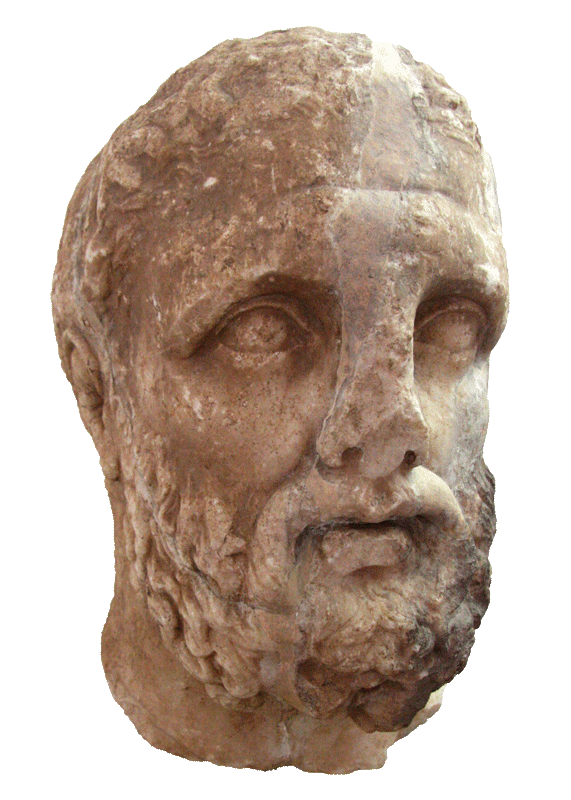
In Philippians 3:18, Paul refers to the enemies of the cross, possibly including those who worship pagan gods. At Philippi, inscriptions mentioning gods such as Liber and Hercules have been excavated, suggesting the presence of a sanctuary where they were worshiped. This head of Hercules is a Roman copy of an earlier Hellenistic original from the Imperial Roman Period.
To any who might object, Paul answers that the standard of conduct he urges is clear by the living pattern of behavior he has set forth: “Join together in following my example, brothers and sisters, and just as you have us as a model, keep your eyes on those who live as we do” (3:17). Here Paul holds up his life to the Philippians as a pattern to be imitated. But why does Paul do this and in what sense is his life to be imitated? This question really cannot be answered until the negative example of the “enemies of the cross of Christ” in 3:18–19 is considered. Those who pass by the cross have completely missed the heart of the gospel and its true meaning. Paul’s goal is “to know Christ . . . and participation in his sufferings” (3:10); “their destiny is destruction” (3:19). The other phrases Paul uses to characterize these “enemies of the cross” can be interpreted in various ways and understood as referring to several different types of opponents of the gospel. These people set their minds on earthly things; their God is their belly, and the things in which they glory are actually their shame. This description could apply to much of the pagan world or the Judaizing enemies of the cross similar to those described in Philippians 3:2. This open-ended description of “the enemies of the cross” invites a comparison between the example set by Paul and anyone whose purpose is something other than “knowing Christ Jesus” (3:8). This seems to be Paul’s intention, for he uses this description to contrast those who set their minds on earthly things with those who have the mind of Christ.
In Philippians 3:20–21, Paul reminds his readers that those who have the mind of Christ and are mature enough to join in imitating Paul as he imitates Christ have their citizenship in heaven. Their minds are not set on earthly things, for they “eagerly await a Savior” from heaven and the resurrection power that he brings. Those who embrace the crucified Christ and “becoming like him in his death” (3:10) will be made “like his glorious body” (3:21) when he brings all things under his control. This conforming of the believer to the image of Christ both in death and in glory is accomplished by the enabling power at work in him. One day the image of Christ will be revealed in all who have experienced the heavenward call of God in Christ Jesus. In light of this future glory, understanding Paul’s call to imitate him as mere exhortation to Christian living hardly does justice to the text. Paul wants the Philippians to have this goal in mind so that God’s power can be manifested in their lives as well as his. Fundamental to Paul’s thinking is the conviction that the destiny of the believer involves sharing the likeness of the Lord Jesus. The power that accomplishes this is already at work in the lives of all who seek to imitate Paul as he follows the heavenly call of God in Jesus Christ.
6. Encouragements, Appreciations, and Greetings (4:1–23)
Having reminded the Philippians of their heavenly citizenship and their glorious destiny, Paul returns to the pastoral concerns of the present. The Philippian church needs to have the mind of Christ and stand firm in the unity of the gospel as they face those who are the “enemies of the cross of Christ.” Then they can truly live in joy and contentment and experience the fullness of the grace of God in their community.
A. Encouragements to steadfastness and unity (4:1–3). Paul begins this section with another “therefore” (4:1) as he gathers all of what he has told the Philippians into a single restatement of his message: the Philippians, whom Paul loves, are to remain faithful to the Lord. Paul emphatically states that he not only loves the Philippians but also longs to be with them. Paul longs for them because they are his joy and his crown as a result of their partnership with Paul in the mission of the gospel. They are his joy because they have accepted the gospel that Paul preaches, and his crown because they, like a laurel crown in an athletic event, are the result of his calling as an apostle and his many labors in the gospel. In calling them his “crown,” Paul may even be implying that they are part of “the prize for which God has called me heavenward in Christ Jesus” (3:14). Their faith brings both joy and honor to Paul, and out of his deep love for them, he calls them to stand firm in their faith in God.
Paul then addresses two women, Euodia and Syntyche. He identifies these women as more than mere members of the Philippian community; he calls them “co-workers” who have labored beside him in the mission of the gospel. Paul uses the same term for his professional colleagues such as Timothy and Silas. But it is certain that these women, along with Clement, have a leadership role in the Philippian community and should be demonstrating the unity of the gospel, not living in strife and dissension. Here Paul continues his theme of using Christian leaders to demonstrate the truth of the gospel as he exhorts Euodia and Syntyche to “be of the same mind” (4:2; this echoes Paul’s exhortation in Phil. 2:2, where the same Greek phrase is translated as “being like-minded”). This disagreement was most likely a personal quarrel over a matter of leadership, not the message of the gospel; otherwise Paul would have weighed in and given his opinion on the issue. Paul suggests that they resolve their disagreement through agreeing “in the Lord” (4:2) because it is the Lord’s interests and opinion that are ultimately important, not those of either woman. The love with which Paul treats them suggests their closeness to the apostle, as Paul reminds them that they are sisters in the Lord and that through their bond of faith they can truly resolve this and all disagreements.
In addition, Paul invokes the help of a “loyal companion” (4:3; NIV “true companion”) to aid the sisters in the resolution of their issue. The identity of this individual is uncertain, but Paul assuredly uses the term “companion” in order to remind this person of his or her relationship to Paul, the gospel of Christ, and the community of faith. In this reminder, Paul empowers this person to resolve the dispute along with the help of Clement and other leaders who labor in the gospel. Paul claims that because of their service to the cause of the gospel, both these women and those who help them in their strife have their names written in the book of life, where the names of the faithful are written (see Exod. 32:32; Ps. 69:28; Luke 10:20). While their actions may go unnoticed in this world, Paul reminds the Philippians that God is paying attention and is pleased.
B. Encouragements to prayer and noble-mindedness (4:4–9). While external conflicts and anxieties may be present in the community, the Philippians are still called to rejoice because they belong to the Lord and he is watching over them (4:4). This joy is not empty but rests on the assurance of God’s goodness and grace. It is their faith “in the Lord” (see 4:4) that allows them to rejoice in their trials. Paul calls them to this joy with authority because he himself is faced with troubles (Phil. 1:30) yet rejoices whether he is in prison or free. The Philippians are further called to let their “gentleness” be expressed to all people (4:5). This outward expression of grace is a natural result of their inward state of joy. Being “gentle” means that they must respond to their trials with love and peace, not retaliation. Paul then reminds them that “the Lord is near” and will rescue them from all their troubles. This reference to the coming Savior echoes Philippians 3:20 and reminds the Philippians again to live as citizens of heaven.
Knowing their current adversity, Paul calls the Philippians to prayer as a response to their condition. They do not need to be anxious, because God is with them even now. They have a present promise as well as a future hope. They are to trust in God and his provision instead of worrying about how they will provide for themselves. They are called to entrust God with all their concerns through prayer by presenting specific requests before God. These requests are not to be made with a self-serving attitude but with an attitude of thanksgiving, remembering what God has done and believing that he will continue to save them in the future. As a result of these faithful petitions, they will receive the peace that comes from God so that they may remain faithful and joyful regardless of their circumstances. This peace is one of the kingdom blessings of the Old Testament, which is made available now to those who are the citizens of heaven. In heaven God already reigns and his foes are already defeated, as the end of the Christ hymn in 2:9–11 reminds believers. Those who are citizens of heaven and live in Christ are given “the peace of God, which transcends all understanding.” God will guard both the hearts and minds of the Philippians from the attacks they face and the effects of their long trial because they remain “in Christ Jesus” (4:6–7).
Paul concludes this section with a list of ethical terms that connect with the “peace of God” in 4:7. If the peace they receive from God is to continue working itself out in rejoicing and action in the community, as Paul hopes, then the Philippians need to set their minds on heavenly things and not “on earthly things” (3:19–20). They must “think” about these heavenly virtues, or better yet, allow these virtues to shape the way they view and move through the world even now. Paul calls them not only to ponder these concepts but to put them into action. Instead of giving an exhaustive list of virtues, Paul just gives the Philippians examples of what it would mean to set their minds on heavenly things, concluding that they must be “excellent or praiseworthy” (4:8). While this list could be understood as virtues that were common to moral philosophy in Paul’s time, the apostle states that the virtues they must follow are not to be found in the world but in Paul’s example and teaching and the teaching and example of Christ. If these virtues are put into practice, not only will the peace of God be with the Philippians, but the God of peace will be with them as well.
C. Appreciation of the Philippians’ gift (4:10–20). As he approaches the conclusion of the letter, Paul reveals his personal reasons for sending this letter to the Philippians. The Philippian congregation sent financial aid to Paul through Epaphroditus, and Paul wishes to thank them for their generous gift. Paul rejoices not only for the gift that he has received but also for the love and care that this gift allows the Philippians to show. Paul does not admit to having any need but only rejoices in their ability to care for him. Paul states that he is content no matter the circumstances, which is a reference to his situation in prison. Paul is not affected by outward circumstances, because they are not the focus of his life. He concentrates on what is truly important: the preaching of the gospel, the imitation of Christ, and what it means to live as a citizen of heaven. As long as the gospel is being advanced and Christ is exalted, Paul is content with life in prison, martyrdom, or freedom, a theme he first introduced in 1:15–20. Plenty and poverty do not affect Paul’s ability to rejoice because God’s strength gives him contentment. It is Paul’s deep personal “knowing Christ Jesus” and being “found in him” (Phil. 3:8–9) that makes this contentment possible. He wants to remind the Philippians that he lives not by his own ability to provide for himself or even because of their generosity but because of God’s grace and goodness in Christ Jesus. Indeed, for Paul, “to live is Christ and to die is gain” (1:21) in every aspect of his life. This is the secret of his contentment and the model he offers the Philippians for dealing with any situation in which they might find themselves. Those who know Christ and his strength can indeed do everything through Christ.
Paul’s contentment is not meant to discourage the Philippians. Their giving is still a good thing. In fact, he reminds them of all they have done for him and the great degree to which he appreciates it. From the beginning of his ministry to them, the Philippians have constantly supported Paul, even when others refused and persecuted him. Here there is no indication that Paul accepted financial support from the Philippians when he was actually at Philippi. Their support came after he had departed and went on to establish other churches. Paul mentions Thessalonica here, but he also mentions the support of the Philippians in 2 Corinthians 8:1–5, where they are characterized as extremely generous givers. In this sense they became his partners and co-workers in the mission of the gospel, and Paul says that they have given aid “more than once” (4:16). Their gift provides for Paul’s physical needs, and because he can see how God is working in the community, it gives him great spiritual joy as well.
Paul continues to use commercial language as he claims that what the Philippians gave has now been “credited to [their] account” (4:17). While Paul has given them much, he says that the Philippians have paid him back—or possibly overpaid him. He uses the terminology of “credit” and “account” not to imply that the Philippians gave for selfish reasons but to show that their gift to him is like an investment that continues to accrue interest even as it furthers the mission of the gospel. The fact that their gift is leading to the progress of the gospel’s mission far outweighs any monetary sum.
Paul also sees this gift as a sacrifice on the part of the Philippian congregation and one that is pleasing to God. He uses the image of “fragrant offering” to remind the Philippians of the offerings made by priests in the Old Testament to cover sins and show devotion to God. Because of their generosity, Paul claims that his God will provide for their needs. This is not Paul’s God in the sense that Paul worshiped a different God from the Philippians. The use of the personal pronoun shows Paul’s closeness to God and his dependence on God for the provision of both his physical and spiritual needs. Paul claims that this same God will fulfill all the Philippians’ needs because God lacks nothing and indeed is overflowing in “the riches of his glory” (4:19). Paul ends this section with a benediction. He reminds the congregation that, in all their gifts and in all Paul’s contentment, ultimate glory is given to God.
D. Greetings and benediction (4:21–23). Paul concludes his letter the same way he opened it—by greeting God’s people and commending them to God’s grace. In his benediction he shows the same concerns and pastoral sensibilities that he has maintained throughout the letter. He greets “all God’s people,” emphasizing the entire Philippian community, not mere individuals. This statement emphasizes the theme of unity that has been addressed throughout the letter. Paul then reminds them that while they are a community of believers who are praying and caring for him, Paul himself is within a community of believers who share that same love. So Paul sends greetings from the Christian community in Rome and particularly the imperial members and servants of “Caesar’s household” (4:22) who have come to faith in Christ through interaction with Paul. These Christians are further evidence of the success of the gospel, which has occurred because of Paul’s imprisonment. He is bringing people to Christ by virtue of his proximity to the very center of power in the Roman Empire—not only in the city of Rome but also in the very household of Caesar. Exactly who from the household of Caesar has come to Christ cannot be assumed from Paul’s reference. It would probably not include members of the imperial family but might well have included the praetorian guard mentioned in Philippians 1:13 and those from far higher classes than imperial slaves, as well as household servants. But it does seem to indicate that Paul is encouraging Christians in the imperial colony of Philippi by reminding them that they have allies in the heart of the imperial household in Rome. Last, Paul wishes that the grace of Christ be with the Philippians’ spirit. Even in his final greeting, Paul calls the Philippians to focus on Christ and rely on his grace to unify and strengthen them.
Select Bibliography
Barth, Karl. The Epistle to the Philippians. Translated by James W. Leitch. London: SCM, 1962.
Craddock, Fred B. Philippians. Interpretation. Atlanta: John Knox, 1985.
Fee, Gordon D. Paul’s Letter to the Philippians. New International Commentary on the New Testament. Grand Rapids: Eerdmans, 1995.
Martin, Ralph P. The Epistle of Paul to the Philippians. Tyndale New Testament Commentaries. Grand Rapids: Eerdmans, 1959.
Motyer, J. A. The Message of Philippians: Jesus Our Joy. The Bible Speaks Today. Downers Grove, IL: InterVarsity, 1991.
Osiek, Carolyn. Philippians, Philemon. Abingdon New Testament Commentaries. Nashville: Abingdon, 2000.
Silva, Moisés. Philippians. Baker Exegetical Commentary on the New Testament. Grand Rapids: Baker Academic, 2005.
Thurston, Bonnie B. Philippians. Sacra Pagina 10. Collegeville, MN: Liturgical Press, 2005.
Witherington, Ben, III. Friendship and Finances in Philippi: The Letter of Paul to the Philippians. Valley Forge, PA: Trinity Press International, 1994.