Zephaniah
1. Oracles of Judgment (1:1–2:3)
C. The Day of the Lord (1:7–18)
D. The Call to Repentance (2:1–3)
2. Oracles of Judgment against the Nations (2:4–15)
3. Oracles of Judgment against Jerusalem and the Nations (3:1–8)
4. Promises to Gentiles and Jews (3:9–20)
Introduction
Zephaniah the Prophet
The name Zephaniah (literally “Yah has hidden”) means “the Lord has protected.” In the opening verse, his genealogy is traced back four generations to Hezekiah, the great reforming king of Judah. He was the son of Cushi and a contemporary of Josiah, the greatest reforming king (641–609 BC). He probably made his home in Jerusalem, as he shows familiarity with the city’s religious and social life (1:4–13; 3:3–4) and physical appearance (1:10–13). His ministry may be dated to Josiah’s early rule because Jerusalem is still full of idolatrous practices (1:4–6) and Nineveh is not yet destroyed (2:13). Because Josiah’s reforms took place in 621 BC, it is reasonable to assume that Zephaniah’s ministry may have been a factor in the great revival that spread over Judah and extended to Samaria (2 Kings 22:3–23:25; 2 Chron. 34:3–35:19).
Zephaniah was born during the long rule of Manasseh (686–643 BC), the most wicked king in Judah’s history. Manasseh had led Judah into an era of bloodshed, idolatry, and internationalism (2 Kings 21:1–18; 2 Chron. 33:1–20). The effects of his long reign were still felt in Jerusalem’s religious and social life. The major political forces were Assyria and Babylonia.
Zephaniah lived through the transition of power from Manasseh to Josiah, who expressed a growing interest in Yahweh. Zephaniah seized the opportunity of calling on the aristocracy to join with Josiah in purging Jerusalem of idolatry, foreign customs, and political intrigues. Yahweh’s anger had been aroused, and the day of judgment was sure to come. But the future of God’s people was conditioned on her present response to God’s word. Therefore, he encouraged the godly to pursue righteousness.
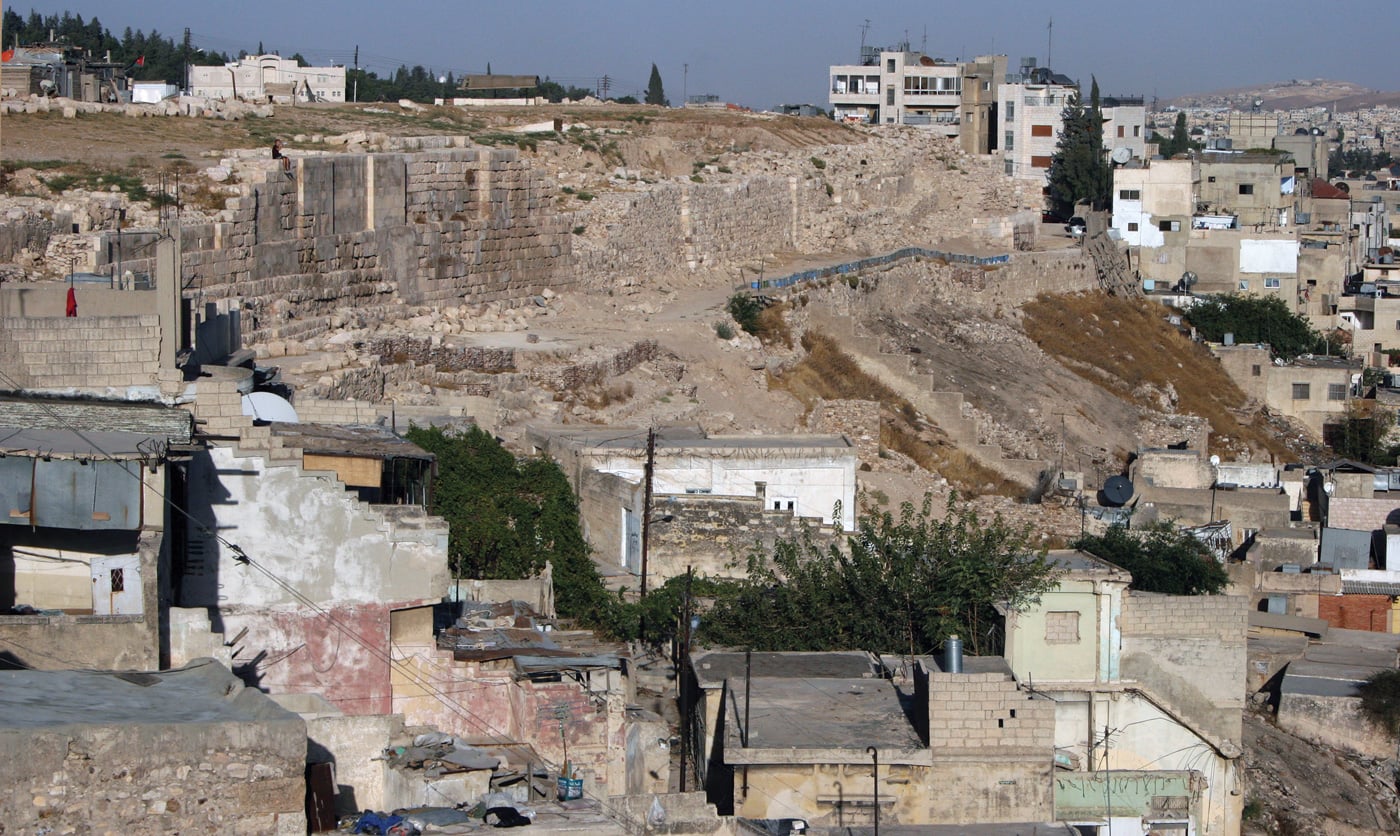
Literary Features
The book is composed of three judgment oracles (1:2–6; 1:7–2:3; 3:6–8), one woe oracle of judgment (3:1–5), four oracles against foreign nations (2:4–15), a promise of salvation (3:9–13), and one oracle of salvation (3:14–20).
Zephaniah’s language is strikingly similar to that of Amos and Hosea. His literary style has much in common with the styles of earlier prophets: a play on the names of cities (2:4–6; cf. Mic. 1:10–15), assonance (2:9), the description of the day of the Lord (1:14–16; cf. Amos 5:18), and descriptions of the judgment. His outstanding contributions are the development of the day of the Lord (1:14–16) and the description of the leaders of Jerusalem (3:3–4).
Theological Themes
Zephaniah’s message flows out of his view of God and the historical situation at hand. His view of God’s attributes is simple but majestic. God is sovereign over his creation (1:2–3), jealous of his kingship (1:18), and righteous (3:5), and he is the king who loves and rejoices over those who humble themselves (3:14–17).
The time of God’s judgment on Judah, the surrounding nations, and the world is near. Now is the time to seek the Lord, before it is too late (2:2–3). The prophet calls for a response from God’s people. The abiding significance of Zephaniah lies in his view of the day of the Lord. He telescopes the events that will take place from the fall of Nineveh to God’s judgment of the earth. Since judgment is still impending, Zephaniah calls on all humankind, Jew and Gentile alike, to prepare for God’s judgment.
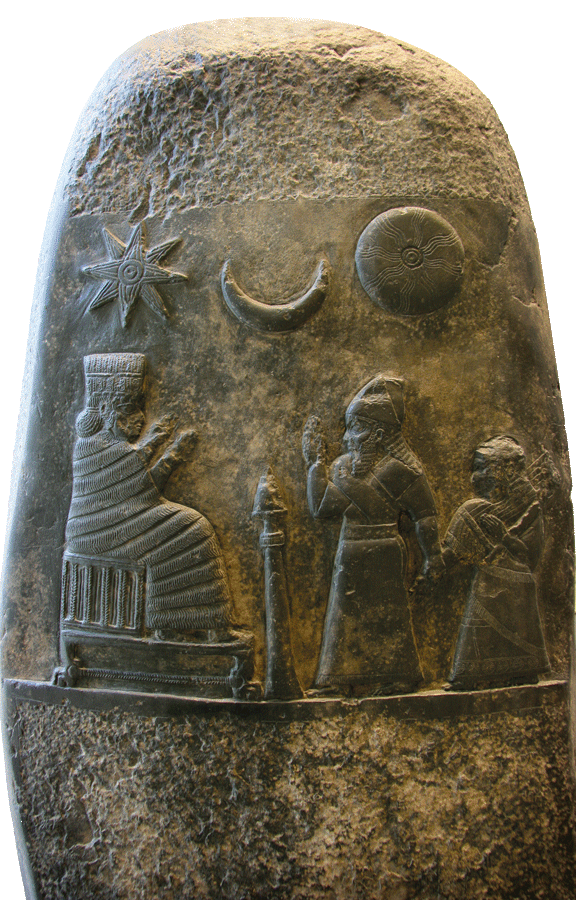
Zephaniah 1:5 condemns false worship, including “worship [of] the starry host.” This boundary marker of King Meli-Shipak shows three astral deities whom God’s people were not to worship: Ishtar (star), Sin (crescent moon), and Shamash (sun) (second–first millennium BC).
Commentary
1. Oracles of Judgment (1:1–2:3)
A. Universal judgment (1:1–3). Zephaniah’s first oracle proclaims God’s judgment on the earth, including nature and all humankind. His message is universal, as it extends beyond a primary focus on Judah to include all nations. The devastation coming on the earth will be on a much larger scale than that of God’s judgment by flood in the days of Noah (Genesis 6–8). The catastrophic language dramatically illustrates God’s great anger with the earth on account of the wicked.
B. Judah’s idolatry (1:4–6). Yahweh’s judgment extends first to his own people (Judah) and to Jerusalem, which he has chosen for his dwelling place. Yahweh’s hand is stretched out with the intent to cut off all forms of paganism. The reason for Yahweh’s anger is the lack of responsiveness by his own people. Idolatry is a flagrant breach of the covenant. For Zephaniah, idolatry is any expression that involves other deities, priests of non-Aaronic descent, illegitimate public and private forms of worship, double-mindedness, or apathy toward Yahweh. In Zephaniah’s day idolatry was practiced even in the temple (“this place,” 1:4).
God’s judgment is on the foreign cults that had flourished during the days of Manasseh. Baalism remained even after Hezekiah’s reforms (2 Chron. 33:3). The prediction that Baalism together with all other forms of idolatry would be destroyed was to some extent fulfilled during the reforms of Josiah (2 Kings 22:3–23:25; 2 Chron. 33:1–20) and more fully in the period of the exile, when the land was purged of all forms of idolatry. Molek (1:5) was an Ammonite deity to whom children were sacrificed (1 Kings 11:5, 33; 2 Kings 23:10, 13; Jer. 32:35). In addition to these deities new gods had been added to the Judean pantheon, the astral deities introduced by the Assyrians, who encouraged the worship of the sun, moon, and stars (2 Kings 23:11; Jer. 19:13; 32:29; Ezek. 8:16). False worship was combined with the ministry of non-Aaronic priests (“pagan priests”) and faithless priests of Aaronic descent (“idolatrous priests,” 1:4 NIV 1984; NKJV).
Yahweh demands absolute loyalty from his people, and he is angry because they have devoted themselves to other deities and are hypocritical and apathetic. Zephaniah condemns all who do not seek the Lord.
C. The day of the Lord (1:7–18). Three oracles of judgment on Jerusalem’s political and commercial centers of power set forth the effect of the day of Yahweh’s judgment on the political and economic leaders of Judah: the aristocracy, the traders, and the wealthy. Yahweh himself will see to it that the abuses of power and social callousness will get their rewards.
In the first oracle (1:7–9), the prophet compares the day of Yahweh to a sacrificial feast. There are three parties: the host (Yahweh), the invited guests (enemies of Judah), and the sacrifice (Judah).
People must be prepared for the day of the Lord. Zephaniah’s admonition of silence (1:7) is a prophetic call for people to recognize the difference between the Creator and his creatures. Humanity cannot justify itself before God, the master of the universe. The designation “Sovereign Lord” (NIV; literally “Lord Lord” or “Lord Yahweh”) emphasizes the control of God. He who dwells in his holy place calls on humanity to be silent. The Judge of the universe has prepared a day of judgment.
Moreover, the people must be prepared because the day of Yahweh is “near.” From the prophet’s perspective, the judgment of God hovers over humanity and may come at any time. The day of the Lord is compared to a sacrificial banquet, to which the Lord has summoned the enemies of Judah as guests and has consecrated them as his instruments of judgment. The sacrificial language is a prophetic metaphor of the day of Yahweh. The guests have been consecrated to participate as priests in the sacrifice. The sacrifice consists of the leaders of Judah: the princes, the royal household, and the courtiers. The aristocracy of Judah has adopted a pagan way of life and idolatrous practices, symbolized by their being clothed in “foreign clothes” (1:8). The courtiers are those who “avoid stepping on the threshold” (1:9). Several interpretations of this phrase have been proposed: (1) they had accepted pagan superstitions (cf. 1 Sam. 5:1–5), (2) they were willing to please their masters (RSV, “who leaps over the threshold”), or (3) they served idols. The charge against them is not that they “fill the temple of their gods” (NIV) but that they fill their master’s house with wealth obtained by illegitimate means.
In the second oracle (1:10–11), the traders and financiers, whether Judean or foreign, are warned about the impending judgment and its effects on the financial center of Judah. Through the Fish Gate, situated by the north wall, the wall most vulnerable to attack, one had access to the business center of Jerusalem. The new prosperity brought about the extension of the city beyond the old walls to include the New Quarter. But instead of traders, enemy forces will come, and the merchants with all of their merchandise will be no more. Instead of the sound of barter, a cry together with sounds of destruction will rise up from Jerusalem’s market district. Jerusalem’s center of trade, industry, and business will come to a violent end. Zephaniah exhorts people to prepare themselves by wailing in expectation of the judgment to come (cf. Isa. 13:6; Jer. 4:8; Joel 1:5; Amos 8:3).
In the third oracle (1:12–13), Yahweh’s judgment is expressed against the wealthy, who are callous seekers of their own pleasures. Yahweh will carefully investigate and bring to judgment all of the wealthy. His searching is like that of a man tracking down an escapee with a searchlight. The wealthy are compared to wine left on its dregs. The figure is borrowed from the wine industry, where wine was transferred from vessel to vessel to remove the dregs and yeast. Wine left on its dregs became undrinkable. Zephaniah’s metaphor may also contain some irony (cf. NEB, “who sit in stupor over the dregs of their wine”). The wealthy are so oblivious to the impending judgment that they think that God is powerless. They believe they hold the future in their hands and that God stands idly by. Yahweh’s judgment reverses the fortunes of the wealthy. They have enriched themselves by having no regard for Yahweh, his covenant, his commandments, or their fellow citizens. Their aim is to build and to plant, but their goals will be frustrated by Yahweh’s judgments.
Zephaniah’s classic and moving poetic description of the day of Yahweh (1:14–18) is not original with him (Amos 5:18–20). Israel had expected that day to be victorious, marked by victory over enemies, with national glory reminiscent of the era of David and Solomon. God’s judgment was thought to be limited to Israel’s enemies and could not conceivably affect his covenant people. Amos had to dispel that illusion. He characterized the day as a time of judgment marked by adversities, anguish, and despair, a judgment from which no one could escape. Zephaniah further develops the poetic imagery into an apocalyptic vision of the dreaded day when Yahweh comes to war against his own people.
The first strophe (1:14–16) emphasizes the speed with which Yahweh moves against his people. The terrible day of Yahweh is “near—near and coming quickly.”
The appearance of Yahweh will resemble his theophany at Mount Sinai, when he made his covenant with Israel (Exod. 19:16; 20:21; Deut. 4:11). On the day of Yahweh, however, there will be no revelation of his glory; no fire representative of his presence will appear. The day of the Lord instead will be a period of darkness, judgment, and alienation. Amos explained the day of darkness as a series of catastrophes from which there would be no escape (5:19), a time marked by sheer helplessness. Zephaniah intensifies Amos’s explanation by heaping up words portraying an admixture of cause (war), emotion (the cry of despair), and results (ruin). The intent of the prophet is to so affect his hearers that they will respond with dread and repent.
The prophet shifts his description from the day of Yahweh to the effects of the Lord’s judgment (1:17–18). Yahweh comes as a warrior against his own people to bring distress on them, to make them feel helpless, even to bring utter destruction. The reason for the severity of his judgment is that the people have sinned against his holiness. When his holiness has been desecrated, he responds with jealous anger. The jealousy of God is that attribute which defines Yahweh as the source of all, the only one worthy of humanity’s loyalty, worship, and obedience. He is jealous of his rights as the king of the universe. The jealousy of God is therefore not an expression of suspicion but rather of precaution, so as not to permit his creatures to disregard his honor or to assume glory for themselves with little regard for him. The divine reaction of anger is an expression of his jealousy. His divine majesty has been wounded and demands retribution.
The prophet began his oracles with an oracle of judgment on the world, including humanity (1:2–3). He concludes by returning to the same motif, threatening judgment upon “all who live in the earth” (1:18). In view of the nature of the anger of Yahweh, his judgment extends to all the earth; it does not differentiate between covenant people and Gentiles; it is inescapable.
D. The call to repentance (2:1–3). The shameful nation of Judah is called to prepare themselves to be like chaff for the judgment of God, which will consume them like fire or blow them away like the wind.
Judah must do something before the terrible day of the Lord comes, for it will not be a day of peace and prosperity but an expression of the Lord’s wrath. The repetition of the warning gives ground to the exhortation to seek Yahweh. The godless have been accused of not seeking Yahweh (1:6), and the judgment will not pass them by. For the godly, however, the day of Yahweh is a day that should not be feared. God holds out an encouragement not for the people as a whole but for the godly remnant, the “humble of the land” (literally “the poor of the earth”). The humble are not poor with regard to material possessions but are those who depend on God and walk in reliance on him. The pious remnant must continue to seek righteousness and humility. Election is not guaranteed by birth or by the sign of the covenant (circumcision). It is made evident by the fruits belonging to the life of faith.
2. Oracles of Judgment against the Nations (2:4–15)
On the international scene, Judah’s political future was far from secure. Judah was surrounded by enemies: Philistia to the west, Assyria to the north, and Moab, Ammon, and Edom to the east. Zephaniah expresses the sentiment of the population of Judah in his oracles of judgment against the nations. Yet he has a grander purpose in view. He speaks of the establishment of God’s kingdom, which the remnant of Judah and the nations will share together. Zephaniah’s particular reference to the nations, therefore, is symbolic of all kingdoms that oppose the rule of God, whose purpose is to establish out of the remnant of Judah and the nations a people who will submit themselves to him and worship him wherever they may be found (2:11). Since the coming of our Lord Jesus Christ, the salvation of which the prophet speaks has become more real to all who believe on his name, whether Jew or Gentile (1 Pet. 1:10–12). Zephaniah predicts that the future of the kingdom of God is dependent on the way in which Yahweh deals with his enemies. Therefore, the salvation message is present in Zephaniah, but not with the same clarity as we find it in the New Testament. The way to read these oracles of judgment is to first focus on their historical context, then trace the fulfillment of the oracles as they apply to the ancient nations and to any foe of the kingdom of God.
A. Philistia (2:4–7). Philistia, situated to the west of Judah, receives first mention because of its long-standing hostility. No reason for the judgment of Philistia is given, because every Judean understood why Philistia should fall. Zephaniah shows no feeling of hostility or joy in the description of the fall of the Philistines. He moves from a description of the fall of four Philistine cities to a proclamation of woe on Philistia emphasizing how the Lord will bring blessing out of curse when the land of the Philistines is finally occupied by the remnant of his people. They will be the recipients of an era of peace and prosperity.
The judgment oracle against Philistia begins with a specific mention of four of the five major Philistine cities: Gaza, Ashkelon, Ashdod, and Ekron. Gath is not included because it had already been destroyed (see 2 Chron. 26:6).
The literary imagery is filled with pastoral associations. Zephaniah emphasizes the poetic effect and carefully chooses his words to heighten the emotive impact. This is also the case in the ordering of the cities: Gaza and Ekron both begin with the same Hebrew consonant (ayin) and form an envelope around Ashkelon and Ashdod, which both begin with an aleph. The judgment on the cities is singularly brief.
Philistia will be subjected to two judgments: desolation of the land and removal of her population by death or exile. The term “Kerethite” (2:5) is a reference to the Cretan origin of the Philistines and may also be an example of prophetic irony, since in Hebrew the word for “Kerethite” is related to the verb “to cut off.” God’s judgment lies on Philistia. The war-loving Kerethites will be cut off so that Canaan, the land of promise, will have no reminders of Judah’s long-standing enemy.
Philistia will become a place for shepherds with their flocks. After the cities have been leveled and the orchards destroyed, weeds and thistles will take over. The cultivated and inhabited land will become a place for grazing and trampling of animals.
The remnant of Judah will inhabit the coastland of the Philistines. War will be over. The incessant rivalry between Judah and Philistia, necessitated by the limited territories and adjoining boundaries, will be past. These verses picture the devastation of Philistia and an era of peace and prosperity when God’s people will live in the land without fear.
God’s promise ultimately pertains to the era of restoration, which includes the finding of pasture and lying down (2:7). The verb “lie down” denotes the rest, provision, and protection Yahweh the great shepherd gives to his people. The language of remnant, shepherding, and lying down is further developed in 3:12–13. God’s people will be able to enjoy the inheritance promised to them by Yahweh himself. The promise belongs to “the remnant” (2:7), a term designating the faithful among the covenant people who seek Yahweh. The promise of the peaceful possession of this earth belongs to the godly. The Lord will “care” for them by bestowing his divine favor on them. The remnant receives the assurance that Yahweh has planned for the restoration of his own.
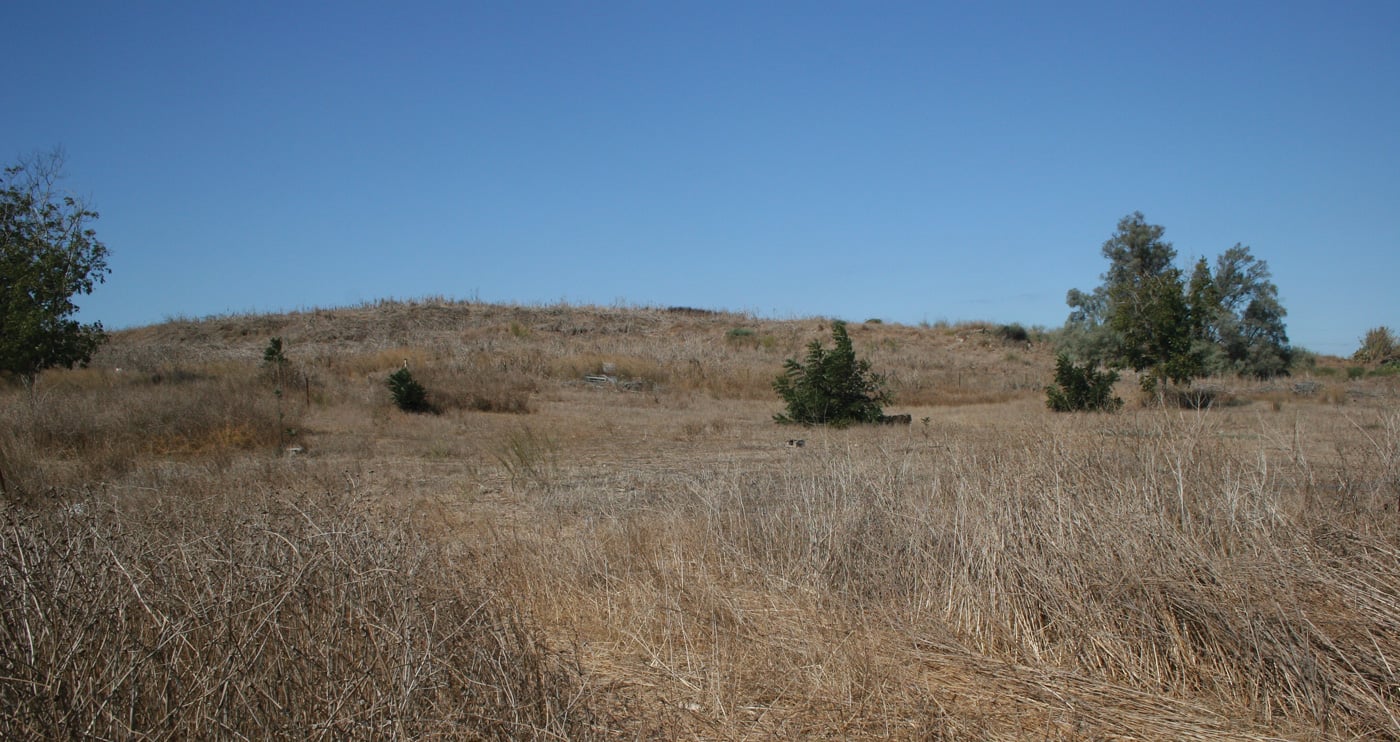
Ashdod is listed among the Philistine cities that will be devastated (Zeph. 2:4). Today the area of ancient Ashdod, shown here, is covered with weeds and thistles.
B. Moab and Ammon (2:8–11). Though the Israelites were related to the Moabites and Ammonites through Lot, a nephew of Abraham, their relations had always been bitter (cf. Num. 22:2–24:25; Deut. 23:3–6; Judg. 3:12–30; 1 Samuel 11; 2 Sam. 8:2; 10:1–19). The policy of Moab and Ammon was to ridicule Judah by scoffing at her precarious situation. When Judah needed political and military support against the Assyrians, Moab and Ammon did not come to her rescue but were intent on protecting their own delicate situation. Their concern for self-preservation and their offensive relations with Judah are the subject of the prophetic oracle of judgment. Yahweh has “heard the insults of Moab and the taunts of the Ammonites” (2:8). Even when God’s people fall short of what he expects, he remains loyal to his covenant. The taunting, laughing, reviling, threats, and insults directed against his children affect Yahweh as a Father. The oracle against Moab and Ammon assures the remnant of God’s care. The oracle becomes a source of hope and comfort to all of God’s people.
Yahweh rises on behalf of his own. He is the Lord of Hosts. As the king of the universe, he commands innumerable hosts and will protect the future of his people. He is still the God of Israel, as he has promised to the patriarchs to be the God of their children. He assures the pious community that he will be with them, regardless of how the nations may rise up against them or boast over their own advantages. The assurance is guaranteed by an oath, “as surely as I live.” Yahweh swears by himself that he will come to the aid of his people.
The judgment on the nations is poetically portrayed as a repetition of God’s judgment on Sodom and Gomorrah, a favorite metaphor in the prophets (Isa. 1:9–10; 3:9; 13:19; Jer. 23:14; 49:18; 50:40; Amos 4:11). It is not unlikely that the prophet plays on the sound of the words “Moab” and “Sodom,” “Ammon” and “Amorrah” (Hebrew “Gomorrah”). He further explains the nature of the reversal of the fortunes of these nations. They are likened to a plot of weeds and salt pits.
The future lies with the remnant. They are further identified as “my people.” How this language must have spoken to the hearts of the godly community in exile! God’s rule will be established, and the righteous will inherit the earth. The Jews, upon their return from exile, did not receive the complete fulfillment of this prophetic word, but the people of God in any age can look forward to the time when God’s judgment will come to the kingdoms of this world, which will be overturned like Sodom and Gomorrah. Then the righteous will truly inherit the earth. The verb “inherit” signifies taking possession of the land (Exod. 23:30) as legal heirs. The enemies of God are not considered heirs of the world. In verse 10 the prophet explains why the fortunes of the nations will be reversed. They were filled with pride and insults. In their pride they mocked and taunted the people of the Lord. Because they have reviled the covenant people, they are subject to the curse: “Whoever curses you I will curse” (Gen. 12:3).
When the Lord acts on behalf of his own, he will appear as “awesome” or terrifying to the nations. Taunting will cease and their gloating words will not be heard anymore because of the presence of Yahweh, the God of Israel. The nations along with their national deities and idols will disappear from the earth. In place of paganism and idolatry the prophet looks forward to the universal worship of the Lord.
To some extent, this was fulfilled in the Judaism of the Diaspora, when Gentiles worshiped the Lord as God-fearers or proselytes in their local synagogues. Yet Zephaniah goes beyond the expectation of the central and universal worship of Yahweh. He anticipates Jesus’s teaching that acceptable worship may take place wherever God’s people assemble and worship him in spirit and truth (John 4:23).
C. Cush (2:12). Ethiopia (Cush) ruled Egypt as the twenty-fifth dynasty from 712 to 663 BC. Here the prophet may be making a sarcastic reference to Egypt by calling it “Cush” even though it was no longer ruled by the Ethiopians. Still, it is not clear from the context whether he has Ethiopia or Egypt in mind.
D. Assyria (2:13–15). Relations between Assyria and Judah went back more than one hundred years prior to the time of Zephaniah. Isaiah had predicted the victory of Assyria over the eastern Mediterranean region. By Zephaniah’s time, the Aramean and Israelite kingdoms had been subjugated, and their populations exiled. Sennacherib had invaded Judah (701 BC), and Hezekiah had been forced to pay tribute. Hezekiah’s son Manasseh spent time in Babylon as a part of a reform program to ensure his loyalties to Assyria (2 Chron. 33:11). Josiah had to decide where his loyalties lay. He could avoid political problems by pleasing Assyria, which had been the dominant power for over a century. Due to the length of Assyria’s rule, the extent of its military power, and its proximity to Jerusalem, Assyrian influence on Israel’s politics, culture, and religion was pervasive. It was difficult for Zephaniah’s contemporaries to realize how close Assyria was to its demise.
Zephaniah strongly condemns Assyria’s religious influence on Jerusalem as well as its tyrannical power. Yahweh proclaims to the people of Judah that they should neither rely on the superpowers (Ethiopia [= Egypt?] and Assyria) nor be worried by the coalition of the small nations (Philistia, Moab, and Ammon). All kingdoms, whether great or small, will fall.
The oracle against Assyria is in the form of a message of doom. The great Assyrian power will come to nothing. It will be like a “desolate” place, a “desert.” Assyria’s power will be dried up like a brook without water.
The presence of animals (2:14) indicates that life is possible in Assyria; its climate is not altered. Flocks, herds, and wild animals will inhabit Assyria’s ruins.
The fall of Nineveh is sarcastically portrayed by a hyperbolic description of its greatness (2:15). By exaggerating the greatness of Nineveh, the prophet heightens the effect of its fall. Nineveh represents the Assyrian Empire. The treasures and plunder from conquered nations came to Nineveh and enriched the empire. Because Nineveh had been the capital of the Assyrian Empire for more than one hundred years, its citizens imagined the empire was secure. Zephaniah speaks of the city in its fancied security. Nineveh represented a totalitarian regime. The king, called the “shepherd” of his people, embodied the divine destiny of the empire. The unique position of the Assyrian king and the Assyrians’ pride in their way of life were idolatrous from God’s perspective. The prophet sarcastically personifies Nineveh by proclaiming its divine status. For Judah, the statement “I am the one! And there is none besides me” (2:15a) was a confession of the unique and exclusive claim of Yahweh (cf. Isa. 43:10; 44:6; 45:5, 18, 21–22; 46:9). The mood of the oracle changes rapidly. Sarcasm changes into lament (2:15b). The end of Assyria will be celebrated by all who pass the ruins of the city. The scoffing and the shaking of the fist are expressions of hatred mixed with joy. The hatred for Nineveh will be turned to joy because she will have received her just rewards.
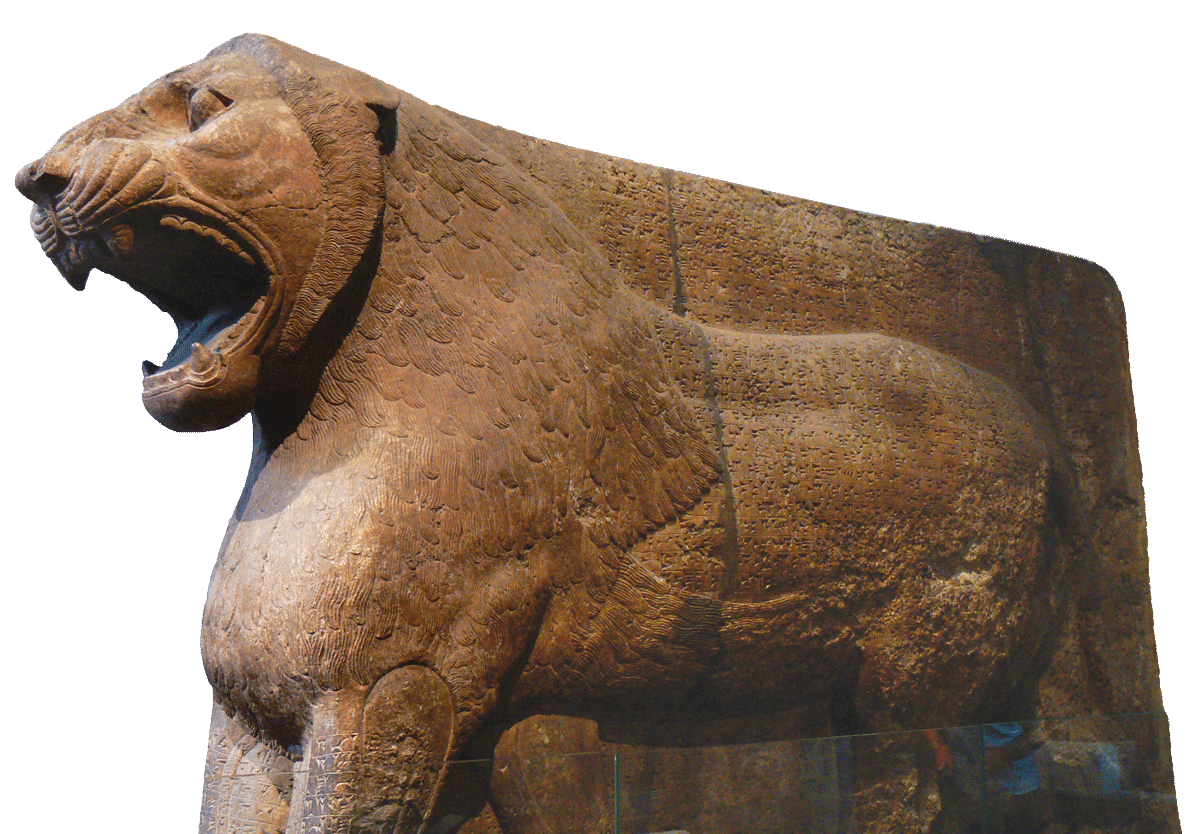
Zephaniah 3:3 describes Jerusalem’s corrupt officials as “roaring lions.” The roaring lion seen here guarded the temple of Ishtar built by Ashurnasirpal II (Nimrud, 883–859 BC).
3. Oracles of Judgment against Jerusalem and the Nations (3:1–8)
Though no direct reference is made to Jerusalem, it is clear that Zephaniah focuses on the capital city of Judah in chapter 3. As an insider familiar with the corrupt and tyrannical regimes of Manasseh and Amon, Zephaniah charges Jerusalem with faithlessness. The oracle is a woe oracle of judgment. Jerusalem will fare no better than the surrounding nations. The charges are essentially three: Jerusalem is corrupt; it has forsaken Yahweh; its leaders are hopelessly evil.
Zephaniah paints a portrait of an incredibly evil city. Jerusalem is a “bloody” city where gangsters rule. Because of bloodshed, the city has become “defiled,” suggesting ritual uncleanness (Ezra 2:62; Neh. 7:64; Mal. 1:7, 12).
At her very core, Jerusalem is a covenant-breaking city. Whatever one may say about her, she is not what she is supposed to be. Jerusalem is, moreover, a foolish city. She digs her own grave because she is unresponsive to the call of wisdom.
Zephaniah charges the leaders—the officials, rulers, prophets, and priests—with ruling like gangsters. The political, social, and religious climate of Jerusalem is corrupt. Their ferocious appetite for self-enrichment makes the officials behave like tyrants. They are like “roaring lions” (cf. Amos 3:8). The officials thwart justice by shedding innocent blood. Human life has been reduced to a material resource for the self-satisfaction of the city’s leaders. The judges pervert justice in their pursuit of personal happiness. They are compared to “evening wolves.” The prophets are unreliable, wanton impostors. They are “unprincipled” and “treacherous” (2:4). The combination of these terms heightens the impact. The priests, though consecrated, are not able to apply God’s law to their society. They profane whatever is holy. The word “sanctuary” might also be translated “sacred” or “holy things.” Zephaniah does not specify whether the offensive behavior of the priests pertains only to the sanctuary or extends to all that is sacred. Profanation, nonetheless, is a disregard of God’s commands.
In an indirect way Zephaniah warns Josiah not to trust the officials and religious leaders of Jerusalem. If he is to break away from the perverse pattern set by his father and grandfather, he has to be willing to forgo the counsel of those in power and return to Yahweh. Yahweh’s nature is radically different from that of the wicked leaders of Jerusalem. He is righteous, just, and faithful. Since he is unique in these qualities, he alone is qualified to judge his people. The generation of the exile, while fully aware of Yahweh’s anger and judgment, can comfort themselves knowing that Yahweh has been faithful in his judgment and will continue to be faithful. Yahweh’s intent is to remove all wickedness from within his people (3:11) so that he may fully dwell in the midst of his people once more (3:15, 17).
The prophet affirms that God does no wrong. Wrong is the exact opposite of faithfulness and signifies perversity, wickedness, or lewdness. Instead, Yahweh dispenses justice. Morning by morning and day by day his justice and righteousness are evident. Yahweh the great king is here pictured dispensing justice without fail. In contrast to this righteous and just judge are the wicked, who have no sense of shame. They will not even come to be tried by the Lord until it is too late. In the end his judgment overtakes them.
These foolish people have not seen how Yahweh has shown his righteous judgment in the past by cutting off entire nations, reducing them to wastelands. The story of the Old Testament is the story of redemption in which Yahweh interacts with humankind and judges peoples and nations in his own time. The prophet has predicted the fall of Philistia, Moab, Ammon, and Assyria. Now he calls on his people to look at the record of the past and to learn from it.
With an apocalyptic tinge, Zephaniah portrays the judgment as lying just beyond the horizon. Yahweh will soon gather the nations together and witness against them. Because Judah is scarcely different from the nations, she too will attend the awesome judgment of the day of Yahweh. Yahweh acts as accuser, witness, and judge of the nations. On the day of the Lord the future of the kingdoms of the world will be determined. Before the fullness of the era of restoration, the judgment of the Lord must purify the nations.
4. Promises to Gentiles and Jews (3:9–20)
Yahweh’s anger and love go together. On the day of Yahweh’s anger, he will “purify the lips” of the peoples (3:9–11). This image is an expression of restoration. Zephaniah portrays the restoration as an era in which all languages are pure. The division of languages and cultural and religious differences will be over. The tower of Babel will no more be a symbol of human autonomy, because the nations will serve one God. Scattered peoples will come to worship the Lord together and to present him offerings appropriate to the salvation they have experienced.
The day will be a day of grace for the nations. When God has removed autonomy, haughtiness, and wickedness, only the people of God will be left. The prophet anticipates the time when all wrongdoing and all causes for shame will be removed.
Grace is also shown to the remnant of Judah (3:12–13). The remnant motif was first introduced in the call to repentance (2:1–3). A glorious future belongs to those who demonstrate humility, trust in the Lord, and faithfulness. The “meek and humble” (3:12) are not only those who survived the Babylonian holocaust but all those who have opened their eyes to the reality of humanity’s collision course with God. God thus assures the godly of every age that he looks for those who do not depend on themselves, that is, the poor in spirit. Those who are truly humble rely on the Lord. True humility is an expression of the fear of the Lord. The wicked do not respond to the call of wisdom (3:2, 7). In contrast, the righteous begin with trust in the Lord and commit all their ways to him.
The practical working out of godly wisdom is the expression of faithfulness to the Lord. Faithfulness is not only an attitude but a way of life. The essence of Old Testament piety is found here (cf. Ps. 15:2–5; 24:3–6; Mic. 6:8). The requirement is no different since the coming of Christ.
Zephaniah celebrates the joy of redemption (3:14–15). The imperatives “sing,” “shout aloud,” “be glad,” and “rejoice” urgently convey the assurance that past troubles are over and that the new era of redemption has begun. The people must exult in the Lord their Redeemer. First, they are to rejoice in the great power of their king, who is able to put their enemies under his feet. Second, they must also rejoice in Yahweh’s kingship. Yahweh alone has the authority to judge the nations, Judah, and Jerusalem. Third, they must rejoice because Yahweh their king is in their midst. The prophet telescopes the whole progression of God’s kingdom by focusing on the eschatological state in which all adversity, enemies, and evil will be removed. Yahweh alone will be king and will reside with his people. This picture of the future is the ground of the hope of God’s people throughout the ages, because it assures the saints of Yahweh’s sovereignty over the earth and of his loving purposes for his children.
The “Daughter Zion” (3:14) is a reference to either the inhabitants of Jerusalem (cf. Mic. 4:10, 13; Zech. 9:9) or the covenant people in general (cf. Isa. 52:2; 62:11; Zech. 2:10). The song of the redeemed is not a quiet musing but a loud and jubilant shouting.
The same Lord who removes pride and wickedness (3:11) will also remove the punishment of the people. The Lord will also deal with the enemies as the source of the troubles. He reveals himself as Yahweh, king over Israel, who voluntarily comes to live in the midst of his people. He is the Immanuel, the God who is with us. With his presence, there is no need to be afraid anymore.
The song of the redeemed is rephrased as a proclamation (3:16–17). Yahweh quietly rejoices over his people and the success of his plans. The ultimate assurance of the redeemed lies in Yahweh’s quiet rejoicing because his plans will work out. He knows the end from the beginning.
The exhortation not to let “hands hang limp” (3:16) is a caution to the people not to become incapacitated by fear (see Neh. 6:9; Isa. 13:7; Jer. 6:24; 50:43; Ezek. 21:7). They need not fear, because Yahweh, the mighty warrior, will be with them. He has planned to save his people. The act of deliverance presupposes need. Those who will receive his salvation are the humble and needy. He will rejoice over his own people and quiet them with his love (3:17).
The glorious king will preserve a people for himself (3:18–20). He will search out and bring together the lost and scattered. The main thrust of the section lies in the future of the redeemed. Zephaniah, by means of repetition, brings out the certainty of restoration and the glory of the people of God.
The return from exile marks in a unique way another beginning in the unfolding history of redemption. The major moments in that history include creation, dispersion, promise, a holy people, a royal nation. The restoration from exile will be a second exodus, when the promises given long ago are at last renewed.
Select Bibliography
Baker, David W. Nahum, Habakkuk, Zephaniah. Tyndale Old Testament Commentaries. Downers Grove, IL: InterVarsity, 1988.
Barker, Kenneth L., and Waylon Bailey. Micah, Nahum, Habakkuk, Zephaniah. New American Commentary. Nashville: Broadman & Holman, 1999.
Bruckner, James K. Jonah, Nahum, Habakkuk, Zephaniah. NIV Application Commentary. Grand Rapids: Zondervan, 2004.
Miller, Steven R. Nahum–Malachi. Holman Old Testament Commentary. Nashville: Broadman & Holman, 2004.
Motyer, J. Alec. “Zephaniah.” In The Minor Prophets: An Exegetical and Expository Commentary. Edited by Thomas Edward McComiskey. Grand Rapids: Baker Academic, 1992.
Robertson, O. Palmer. The Books of Nahum, Habakkuk, and Zephaniah. New International Commentary on the Old Testament. Grand Rapids: Eerdmans, 1990.
Smith, Ralph L. Micah–Malachi. Word Biblical Commentary. Waco: Word, 1984.