Study Notes
1:1 word of the LORD. See Hos 1:1 and note. Joel. Means “The LORD is God”; cf. Elijah’s name, which means “(My) God is the LORD.”
1:2 elders. Either the older men of the community or the recognized officials (see v. 14; 2:16,28; see also note on Ex 3:16).
1:4 locust swarm . . . great locusts . . . young locusts . . . other locusts. Either (1) various species of locusts or (2) locusts in various stages of their life cycle. See 2:25; Ex 10:4 and note.
 1:5 drunkards. Although Joel calls for repentance, drunkenness is the only specific sin mentioned in the book (see notes on Pr 20:1; Eze 23:42). It suggests a self-indulgent lifestyle (cf. Isa 28:7–8; Am 4:1) pursued by those who value material things more than spiritual ones. weep. Various segments of the community (drunkards, here; general population, v. 8; farmers, v. 11; priests, v. 13) are called upon to mourn. The destruction of the vines by the locusts leaves the drunkards without a source of wine.
 1:6 The locusts are compared here to a nation. Elsewhere the locusts are called the Lord’s “army” (2:11,25). The reverse comparison—that of armies to locusts in regard to numbers—is as old as Ugaritic literature (fifteenth century bc; see chart) and is common in the OT (see Jdg 6:5 and note; Jer 46:23; 51:14,27; Na 3:15). Some interpreters see the locusts as a metaphor for human armies. without number. A phrase used to describe the locusts in the plague in Egypt (see Ps 105:34; see also Ex 10:4–6,12–15). teeth. Joel’s comparison of the locusts’ teeth to lions’ teeth is reflected in Rev 9:8.
1:7 my. The personal pronouns here and elsewhere in Joel (vv. 6,13–14; 2:1,13–14,17–18,23,26–27; 3:2–5,17) offer a hint of hope, since they indicate that the people belong to the Lord (cf. Jos 22:19).
1:8 virgin. The community is addressed. In Israel, when a woman was pledged to be married to a man, he was called her husband and she his wife, though she was still a virgin (see Dt 22:23–24; cf. note on Mt 1:18). This verse refers to such a husband who died before the marriage was consummated. sackcloth. See v. 13; Ge 37:34; Rev 11:3 and notes.
1:9 offerings. See v. 13; 2:14. The locusts have left nothing that can be offered as sacrifice. The grain offering (Lev 2:1–2) and the drink offering, which was a libation of wine (Lev 23:13), were part of the daily offering (Ex 29:40; Nu 28:5–8).
1:10 dried up. The destruction caused by the locusts may have been intensified by drought. grain . . . new wine . . . olive oil. An important OT triad, related to the agriculture of that day (2:19).
1:13 my God . . . your God. See note on v. 7. grain offerings and drink offerings. See note on v. 9.
1:14 fast . . . assembly. See 2:15. Fasting, required on the Day of Atonement (see note and NIV text note on Lev 16:29) and also practiced in times of calamity (Jdg 20:26; 2Sa 12:16; Est 4:3, 16; Jer 14:12; Jnh 3:4–5; Zec 7:3), was a sign of penitence and humility. The Bible calls for outward actions that reflect corresponding inward beliefs or attitudes (Mt 6:1–8, 16–18; 23:1–36). elders. See notes on v. 2; Ex 3:16; 2Sa 3:17.
1:15 day of the LORD. See article; see also notes on Isa 2:11, 17,20; 10:20,27; Am 5:18. This phrase occurs five times in Joel and is its dominant theme (here; 2:1,11,31; 3:14). Six other prophets also use it: Isaiah (13:6,9), Ezekiel (13:5; 30:3), Amos (5:18,20), Obadiah (15), Zephaniah (1:7,14) and Malachi (4:5); and an equivalent expression occurs in Zec 14:1. The term often refers to the decisive intervention of God in history, such as through the invasion of locusts in Joel or at the battle of Carchemish, 605 bc (Jer 46:2,10). It can also refer to Christ’s coming to consummate history (see Mal 4:5; 1Co 5:5; 2Co 1:14; 1Th 5:2 and note; 2Pe 3:10). When the term is not used for divine judgments in the midst of history, it refers to the final day of the Lord, which generally has two aspects: (1) God’s triumph over and punishment of his enemies and (2) his granting of rest (security) and blessing to his people. destruction . . . Almighty. See Isa 13:6 and note.

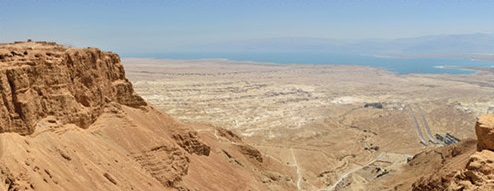
The “day of the LORD” is a phrase (sometimes abbreviated as “that day”) used across the OT prophetic writings and is especially thematic in Joel and Isaiah (e.g., Joel 1:15; 2:1,11,31; Isa 2:11, 17,20; 10:20,27). It points to a final time in human history when God will show himself the victor, vindicating his claims to be the Lord over all the earth. As the consummation of human history, reference to the day of the Lord is often accompanied by the use of cosmic language; e.g., the sun darkening and the moon turning to blood (e.g., Zep 1:14–16). That final day will be characterized by judgment and/or blessing, with God triumphing over his enemies and granting blessing to his people.
Yet the prophets often use the “day of the LORD” to refer to decisive moments of God’s intervention within history and not just at its end. This decisive action could be focused on judgment, such as through an invasion of locusts (Joel 1:15) or at the battle of Carchemish, 605 bc (see Jer 46:2,10). Or it could be a day of blessing and restoration (e.g., Isa 10:20,27). This in-the-midst-of-history “day of the LORD” might also be described with cosmic language, as in Joel 2:30–31, where cosmic imagery is used to signal God’s restoration of his people through the pouring out of his Spirit (2:28–29,32). (For other examples of cosmic imagery used in this way, see Isa 13:9–10, 13; 34:4; Mt 24:29; Rev 6:12–13; 8:8–9; 9:1–19; 14:14–20; 16:4,8–9.) Sometimes both a historical event and the final day horizon are in view in a single passage.
New Testament writers apply this concept of the “day of the LORD” to Christ’s return when he will consummate history, frequently adapting the language to “the day of Christ Jesus” or the like (e.g., 1Co 1:8; 3:12–15; 5:5; 2Co 1:14; Php 1:6, 10; 2:16; 1Th 5:2 and note; 2Pe 3:10).
Go to the Articles Index.
1:18 Cf. the description of a drought in Jer 14:5–6. moan. The Hebrew for this word is used for the groaning of Israel in Egypt (Ex 2:23) and of others in distress (Pr 29:2; Isa 24:7; La 1:4, 8,11,21; Eze 9:4; 21:12). mill about. The Hebrew for this verb is used to describe Israel’s confused movements in the wilderness (Ex 14:3). even . . . sheep. Sheep are the last to suffer, because they can even grub the grass roots out of the soil.
1:19–20 fire. Although the destruction caused by the locusts is elsewhere compared to that of a fire (2:3), here the prophet may be describing the effects of a drought. In both cases he evokes the fire of God’s judgment (see, e.g., Jer 4:4; 15:14; 17:27 and note; Eze 5:4; 15:6–7 and note on 15:7; 20:47; 21:32; Hos 8:14; Am 1:4 and note).
2:1 trumpet. See v. 15. Made of a ram’s horn, it was used to signal approaching danger (see Jer 4:5; Eze 33:3 and notes). Its sound brought trembling (from fear) to the people (Am 3:6). Zion. See v. 15; 3:17,21. Here it refers to Jerusalem as the capital of the nation. day of the LORD. See article; Isa 2:11, 17,20 and notes.
2:2 day of darkness. Darkness is a common prophetic figure used of the day of the Lord (see Am 5:18 and note; Zep 1:15) and is generally a metaphor for distress and suffering (see Isa 50:3; 59:9; Jer 2:6; 13:16; La 3:6; Eze 34:12 and notes). dawn. Usually suggests relief from sorrow or gloom, the end of darkness (cf. Isa 8:20; 58:8). Here, however, it is used as bitter irony, describing the locust infestation that fans out across the land like the light of dawn, which first lights up the eastern horizon and then spreads across the whole countryside.
2:3–11 The staccato character of the poetry in this section is appropriate for the imagery of war (Na 3:1–3).
2:3 Before them. Joel creates a special impact by using this phrase three times (twice in v. 3 and once in v. 10), “behind them” twice (v. 3) and “at the sight of them” once (v. 6). fire. See note on 1:19–20. Eden. The garden before the fall (see Ge 2:8,15).
2:4 horses. Whereas the book of Job compares the horse to a locust (Job 39:19–20), Joel does the opposite.
2:5 leap over the mountaintops. Mountains, though barriers to ordinary horses and chariots, are no deterrent to locusts.
2:6 At the sight of them. Parallels “before them” (vv. 3,10). in anguish. Because of the famine that the locusts will cause.
2:9 climb into the houses. As in the Egyptian plague of locusts (Ex 10:6). Latticed windows with no glass would not stop them. See photo.
2:10 earth shakes. See Ps 68:8; 77:18; Isa 24:18–20; Jer 4:24; Am 8:8; Na 1:5. heavens tremble. See 2Sa 22:8; Isa 13:13; Hag 2:6, 21; Heb 12:26–28. darkened. Joel links God’s judgment through the locusts to the cosmic phenomena of the day of the Lord.
2:11 Just as Isaiah saw the Assyrians (see Isa 10:5 and note) and Jeremiah the Babylonians (Jer 25:9; 43:10) as the Lord’s weapons, so Joel sees the locusts as the Lord’s army (cf. Jos 5:14; Ps 68:17; Hab 3:8–9)—the army of the Lord that will come against his enemies in the day of the Lord (see 3:9–11 and note). This passage parallels Zep 1:14 (cf. v. 31; 3:14; Mal 4:1,5). thunders. See 3:16 and note. great . . . dreadful. Two ideas often associated in the OT, though sometimes the Hebrew word underlying “dreadful” means “awesome” (Dt 7:21; 10:21; Ps 106:21–22). The terms are frequently used to describe the day of the Lord (v. 31; Mal 4:5). Who can endure it? See Na 1:6 and note; Mal 3:2; Rev 6:17. There is no escape except in turning to God.
2:12–17 The first half of the book ends with a call to repentance (“return,” vv. 12–13; see Hos 14:1 and note) and prayer (v. 17), balancing the call to mourning and prayer with which the section begins (1:2–14).
2:13 Rend your heart. Instead of tearing their garments to show sorrow and repentance, God desires his people to evidence heartfelt repentance (see Ps 51:17 and note). gracious . . . abounding in love. Recalls the great self-characterization of God in Ex 34:6–7, which runs like a golden thread through the OT (see note on Ex 34:6–7; see also Dt 4:31; Mic 7:18).
2:14 grain offerings and drink offerings. See note on 1:9.
2:15 trumpet. Not an alarm as in v. 1, but a call to religious assembly (see Lev 23:24; 25:9; Nu 10:10; Jos 6:4–5; 2Ch 15:14; Ps 98:6 and note). fast . . . assembly. See note on 1:14.
2:16 As with the call to mourning in ch. 1, no segment of the community was exempt. assembly. The Hebrew word here refers to the religious community (Nu 16:3; 2Ch 30:2, 4,23–25; Mic 2:5). elders. See note on 1:2. Let the bridegroom . . . bride. Even newlyweds are not exempted from this important assembly, as they might be thought to be (Dt 24:5).
2:17 your inheritance. Israel is God’s special possession (see Ex 34:9; Jer 3:19 and note). Judah is to plead, not their innocence, but that God’s honor is at stake before the world (see Ex 32:12; see also Nu 14:13; Jos 7:9 and notes). byword. See notes on 1Ki 9:7; Eze 14:8. Where is their God? A rhetorical question with sarcastic intent (see Ps 3:2; 10:11; 115:2 and notes).
2:18 Joel begins a new section by turning from the destruction caused by the locusts to the blessings God gave (or will give; see NIV text note on vv. 18,19) to a repentant people. jealous. See note on Ex 20:5. The Lord responded (or will respond) to the prayer of v. 17 and roused (or will rouse) himself to defend his honor and have pity on his people.
2:19 grain, new wine and olive oil. See note on 1:10.
2:20 northern horde. Since enemies in ancient times did not invade from the sea or across the desert, Canaan’s geographic location made it vulnerable only from the south (Egypt) and from the north (Assyria and Babylonia). The hordes of locusts are pictured here as a vast army of Israel’s most feared enemies. stench. Because the locusts are now dead.
2:21–23 As there was a multiple call to grief (1:5,8,11,13), so there is a multiple call to joy: The land (v. 21), the wild animals (v. 22) and the people (v. 23) are called on to rejoice in the Lord’s bounty.
2:22 The wild animals now find green, open pastures (cf. 1:19–20). The same land, with its trees that the locusts and drought had devastated (1:7,12,19), is now productive.
2:23 autumn and spring rains. See notes on Dt 11:14; Jas 5:7. because he is faithful. Or “for [your] vindication,” indicating God’s saving actions toward Israel.
2:24 threshing floors. See note on Ru 1:22. vats. See note on Hag 2:16; see also photo.
2:26 wonders. God performed wonders for the people when they were in Egypt (see Ex 3:20 and note; 7:3), and now he will work wonders in restoring the devastated land.
2:27 Israel. Probably refers to all God’s people, with no distinction between the northern and southern kingdoms, as also in 3:2,16. I am the LORD your God. This clause recalls the covenant at Sinai (see Ex 20:2 and note). your God . . . my people. Covenant terminology (see note on Zec 8:8). there is no other. See note on Dt 4:35.
2:28–32 Quoted by Peter on the day of Pentecost to signal the arrival of God’s promised salvation (Ac 2:16–21), but with a few variations from both the Hebrew text and the Septuagint (the pre-Christian Greek translation of the OT).
2:28 afterward. In the Messianic period, beyond the restoration just spoken of. pour out my Spirit. See v. 29; Isa 32:15; 44:3; Eze 39:29 and note; Zec 12:10—13:1. all people. All will participate without regard to gender, age or rank; and then Moses’ wish (see Nu 11:29 and note) will be realized (cf. Gal 3:28). Peter extends the “all” of this verse and the “everyone” of v. 32 to the Gentiles (“all who are far off,” Ac 2:39; see also note on Ac 2:17), who will not be excluded from the Spirit’s outpouring or deliverance (see Ac 10:44–48; cf. Ro 11:11–24). prophesy . . . dream dreams . . . see visions. See Nu 12:6.
2:30–31 Such cosmic events are often associated with the day of the Lord (see article), when God returns for restoration and judgment (3:15–16; Isa 13:9–10, 13; 34:4; Mt 24:29; Rev 6:12–13; 8:8–9; 9:1–19; 14:14–20; 16:4, 8–9).
2:30 blood . . . fire . . . smoke. Possibly from war. Fire and smoke can also be signs of God’s presence (see Ge 15:17 and note).
2:31 darkness. See v. 2 and note. blood. The moon will become blood-red. great and dreadful day of the LORD. See v. 11; 1:15 and notes.
2:32 calls on the name of the LORD. Worships God and prays to him (Ge 4:26; 12:8; Ps 116:4). saved. Delivered from the wrath of God’s judgment (Mt 24:13). as the LORD has said. Perhaps Joel is recalling the Lord’s covenant with David (2Sa 7; Ps 132:11–18). survivors. The remnant of God’s people (see Zec 13:8–9 and notes; 14:2).
3:1 In those days. At the time of Israel’s final redemption (see v. 18 and note). restore the fortunes of. Or “bring back from captivity” (see vv. 6–7; see also note on Jer 29:14 and NIV text note there).
3:2 Valley of Jehoshaphat. See v. 12. Called the “valley of decision” in v. 14, it seems to be a symbolic name for a valley near Jerusalem that is here depicted as the place of God’s ultimate judgment on the nations gathered against Jerusalem (see NIV text note; cf. Zec 6:1 and note). Perhaps the reference is to the valley where King Jehoshaphat had witnessed one of the Lord’s historic victories over the nations (2Ch 20:20–26). my inheritance. See note on 2:17. Eight times in three verses (vv. 2–3,5) God uses “my,” emphasizing his covenant relationship with Israel. Israel. See note on 2:27.
3:3 cast lots for my people. For the practice of casting lots, see Jnh 1:7 and note. This happened to Judah at the time of the captivity (586 bc) and is mentioned in Ob 11. The Israelites were treated by their enemies as mere chattel, to be traded off for the pleasures of prostitution and wine.
3:4–8 A parenthetical interlude. In vv. 1–3,9–16 God announces judgment against the nations hostile to Israel, but here he addresses the nations directly.
3:4 me. The Lord. Tyre . . . Sidon . . . Philistia. Tyre and Philistia had sold Israelites as slaves (see Am 1:6,9 and notes), and Philistia had often plundered Israel (see Jdg 13:1; 1Sa 5:1; 2Ch 21:16–17; Eze 25:15–17 and note on 25:15). God punished these nations by allowing Sidon to be destroyed on various occasions: by Esarhaddon (seventh century bc), by Artaxerxes III (fourth century bc), and by allowing Tyre to be captured by the Greeks (under Alexander the Great) in 332. return on your own heads what you have done. See note on v. 7.
3:6 The Greeks were trading with the Phoenicians as early as 800 bc.
3:7 return on your own heads what you have done. Punishment in kind, measure for measure (see note on Pr 26:27).
3:8 Sabeans. See Job 1:15 and note; from Sheba, whose queen visited Solomon (see 1Ki 10:1–13 and note on 10:1). far away. It was located in the southern part of the Arabian peninsula (present-day Yemen).
3:9–21 In vv. 9–11 Joel is the speaker; in vv. 12–13 God speaks; in vv. 14–16, Joel; and in vv. 17–21, God. When Joel speaks, he does so as the spokesperson of the Lord, who has commissioned him to be his prophet.
3:9–11 Joel commands that the nations be told to prepare for battle, for the Lord would come against them with his invincible heavenly army and bring them into judgment (cf. Eze 38–39; Rev 19).
3:10 The first part of this verse is the reverse of Isa 2:4 (see note there) and Mic 4:3, where the peaceful effect of God’s reign is portrayed. Here God’s enemies are summoned to their last great confrontation with him. plowshares. See note on Isa 2:4. Let the weakling say, “I am strong!” See Jer 9:23–24; 1Co 1:26–31; 2Co 12:9–10; Php 4:13 and notes.
3:11 assemble there. In the Valley of Jehoshaphat for judgment (see vv. 2,12,14 and notes on vv. 2,14).
3:13 As a result of the Lord’s great army of locusts that had marched against Judah (see 2:3–11 and note on 2:11), there had been no harvest (2:3). But that harvest was to be restored (2:19,22,24,26). In the final great day of the Lord, there will also be a harvest—the harvest of God’s judgment on the nations. Rev 14:14–20 draws heavily on this picture of judgment (see notes on Rev 14:15,18–20). vats. See 2:24 and note.
3:14 valley of decision. The Valley of Jehoshaphat (judgment) of vv. 2,12. “Jehoshaphat” refers to God’s role as Judge (see note on v. 2). Here “decision” (from a different Hebrew word) refers to the heavenly Judge’s decision or judicial decree. The valley is now viewed as the place where that decree will be executed. day of the LORD. See 1:15 and note.
3:15–16 See 2:10, 30–31 and notes.
3:16 roar. Like a lion, God will destroy the nations who have mistreated his people. The first two lines occur also in Am 1:2 (see note there; see also Jer 25:30). from Zion. See note on Am 1:2. thunder. As God at the head of his army had thundered against Jerusalem (2:11), so he will then thunder against Jerusalem’s enemies, and he will do so from his royal city, from which he rules his inheritance (v. 17; Am 1:2). the earth and the heavens will tremble. See 2:10 and note. Israel. See note on 2:27.
3:17–21 God blesses his people in a dual way: negatively, by destroying their enemies; and positively, by giving them good things.
3:17 dwell in Zion. The Lord himself will dwell with them (v. 21). The same picture is found in 2:27; Ps 46:4 (cf. Rev 21:3). The final, blessed state of the now unholy and vulnerable city will be God’s abiding presence in it (see v. 21 and note; Rev 21). Then it will be holy and impregnable (see Zec 14:21 and note). Zion. See 2:1 and note.
3:18 In that day. The same as “in those days” of v. 1. The Edenic lushness pictured in this verse is in great contrast to the drought in 1:10 (Am 9:13). mountains . . . hills. See Ps 104:13–15; Hag 1:11 and notes. A fountain will flow out of the LORD’s house. Flowing from God’s presence, streams of blessing will refresh his people and make their place endlessly fruitful (see Ps 36:8; 46:4 and notes; 87:7; Eze 47:1–12; Rev 22:1–2; see also photo). acacias. See Ex 25:5 and note. Since acacias flourish in dry soil, the picture is that of a well-watered desert.
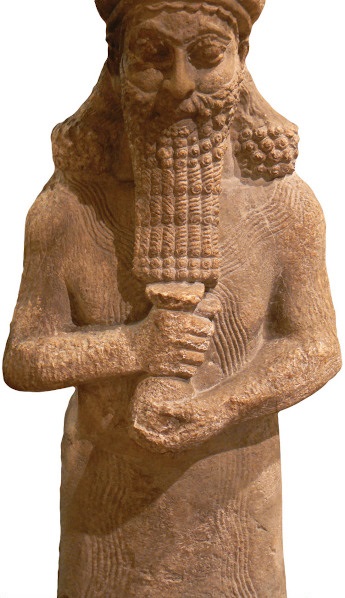
Statue of a deity holding a vase with water flowing out (Iraq, 721–705 bc). In the ancient Near East, this type of statue was common and represented the life-giving quality of fresh water. Joel 3:18 describes the Lord’s house as flowing with water.
Kim Walton, courtesy of the Oriental Institute Museum
Return to the main text.
3:19 Egypt . . . Edom. As old enemies of Israel, they here represent all the nations hostile to God’s people (see notes on Eze 35:1–15; Zec 10:10). desolate . . . desert waste. Figures for the removal of all life-sustaining blessings, thus setting in sharp focus the contrasting destinies of God’s people and the enemies of God’s kingdom. This picture of desolation also recalls the earlier description of Judah’s current condition (2:3).
3:20 will be inhabited forever. When God’s judgment and redemption are consummated, his kingdom will endure and flourish eternally.
3:21 This book of judgment ends on a promising and encouraging note: “The LORD dwells in Zion,” and therefore all will be right with those who trust in God and live with him. The book of Ezekiel has a similar ending (see note on Eze 48:35).