51:2 See v. 7. cleanse me. Make me clean in your sight (Lev 11:32).
51:3–6 Confession of sin (cf. Pr 28:13; 1Jn 1:9).
51:3 before me. On my mind.
 51:4 Against you . . . only. David acknowledges that his sin was preeminently against God (see 2Sa 12:13; cf. Ge 20:6; 39:9; Lk 15:18). He had violated specific covenant stipulations (Ex 20:13–14,17). when you judge. As the Lord did through Nathan the prophet (2Sa 12:7–12). For a NT application, see Ro 3:4.
51:5 He cannot plead that this sin was a rare aberration in his life; it sprang from what he is and has been from birth (see 58:3; Ge 8:21; 1Ki 8:46 and note; cf. Jn 9:34; Eph 2:3). The apparently similar statements in Job 14:4; 15:14; 25:4–6 rise from a different motivation.
51:6 The great contrast: He has acted absolutely contrary to what God desires and to what God has been teaching him. But it is just this “desire” of God and this teaching of God that are his hope—what he pleads for in vv. 7,10. faithfulness. Moral integrity. womb. See 139:13–16 and notes. wisdom. Those who give themselves over to sin are fools; those who have God’s law in their hearts are wise (37:30–31).
51:7–9 Renewed prayer for pardon (see note on vv. 1–2).
51:7 hyssop. Often used to refer to cleansing from ritual impurity (see Ex 12:22 and note; Lev 14:4,6; see also photo). be clean. See v. 2. whiter than snow. Like a filthy garment, he needs washing (see note on v. 2); but if God washes him, he will be exceedingly pure (Isa 1:18; Da 7:9; Rev 7:14; 19:14).


Hyssop plant. “Cleanse me with hyssop, and I will be clean; wash me, and I will be whiter than snow” (Ps 51:7).
Lehava Magha/Pikiwiki Israel, CC BY 2.5
Return to the main text.
51:8 Let me hear joy. Let me be surrounded by joy (see 32:7 and note; see also 35:27), or let me hear a prophetic message of forgiveness that will result in joy—from the assurance of sins forgiven (2Sa 12:13). bones. See note on 6:2.
51:9 Hide your face. From the sin that is “always before me” (v. 3). blot out. See note on v. 1.
51:10–12 Prayer for a pure heart, a steadfast spirit of faithfulness and a willing spirit of service. These can be his only if God does not reject him and take his Holy Spirit from him. If granted, the joy of God’s salvation will return to gladden his troubled soul.
51:10 Create. As something new, which cannot emerge from what now is (v. 5) and which only God can fashion (see Ge 1:1 and note; Isa 65:17; Jer 31:22). heart. See note on 4:7.
51:11 The two requests are essentially one (139:7; Eze 39:29). David’s prayer recalls the rejection of Saul (1Sa 16:1, 14; 2Sa 7:15) and pleads for God not to take away his Spirit, by which he had equipped and qualified him for his royal office (1Sa 16:13; cf. 2Sa 23:1–2). Holy Spirit. The phrase is found elsewhere in the OT only in Isa 63:10–11. By his Spirit, God effected his purposes in creation (104:30; Ge 1:2; Job 33:4) and redemption (Isa 32:15; 44:3; 63:11,14; Hag 2:5), equipped his servants for their appointed tasks (Ex 31:3; Nu 11:29; Jdg 3:10; 1Sa 10:6; 16:13; Isa 11:2; 42:1), inspired his prophets (Nu 24:2–3; 2Sa 23:2; Ne 9:30; Isa 59:21; 61:1; Eze 11:5; Mic 3:8; Zec 7:12) and directed their ministries (1Ki 18:12; 2Ki 2:16; Isa 48:16; Eze 2:2; 3:14). And it is by his Spirit that God gives his people a “new heart and . . . a new spirit” to live by his will (see Eze 36:26–27; see also Jer 24:7; 32:39; Eze 11:19; 18:31).
51:13–17 The vow to praise God (see note on 7:17).
51:13 His praise for God’s forgiveness and purification will be accompanied by instruction for “transgressors” and “sinners,” whose waywardness he himself had been guilty of (v. 3). He commits himself to go from praise of God to instruction of others, as did the author of Ps 34 (see also note on 32:8–10). your ways. See 25:4 and note.
51:14 If God will only forgive, praise will follow. righteousness. See note on 4:1.
51:15 Open my lips. By granting the forgiveness and cleansing I seek.
51:17 broken spirit; a broken and contrite heart. What pleases God more than sacrifices is a humble heart that looks to him when troubles crush and penitently pleads for mercy when sin has been committed (see 50:7–15 and notes; see also 34:17–18).
51:18–19 Prayer for Zion (see note on 3:8). Sin can have wide-ranging consequences.
51:19 sacrifices of the righteous. Such as are pleasing to God; here, sacrifices accompanied by praise for God’s mercies (see 50:14–15 and notes).
Ps 52 Fearless confidence in God when under attack by an arrogant and evil enemy. David stands in the presence of God and from the high tower of that refuge hurls his denunciation (much like the prophetic denunciation in Isa 22:15–19) into the face of his attacker. Though not a wisdom psalm, it has much in common with Ps 49 (see introduction to Ps 49–53; see also introduction to Ps 49). The extended depiction of David’s enemy forms a sharp contrast with the spirit of Ps 51. See also David’s denunciation of Goliath (1Sa 17:45–47).
52 title For the director of music. See note on Ps 4 title. maskil. Also describes the next three psalms (Ps 53–55; see note on Ps 32 title). When. See note on Ps 3 title. For the event referred to, see 1Sa 22:9–10.
52:1–4 The enemy castigated.
52:1 Why . . . ? By what right? See 50:16; Isa 3:15. boast. By act as well as by word (75:4–5). mighty hero. In his own estimation (Isa 22:17).
52:2 your tongue. See v. 4; see also note on 5:9.
52:3 Your whole moral sense is perverted. love. Prefer. For Selah, see NIV text note and note on 3:2.
52:4 tongue. See note on v. 2.
52:5–7 The enemy’s end announced (implicitly a prayer): God will slay you, and the righteous will mock you.
52:5 Note the triple imagery: “bring you down,” “snatch you up,” “uproot you.” The arrogant enemy will meet the same end as the rich fools of Ps 49. from your tent. See Job 18:14. uproot you. Contrast v. 8.
52:6 righteous. See note on 1:5. fear. Learn from your downfall (see 40:3 and note).
52:8–9 David’s security is God.
52:8 like an olive tree. Which lives for hundreds of years. flourishing. See 1:3. It will not be uprooted (v. 5). in the house of God. Olive trees were not planted in the temple courts, but David had access to God’s temple as his refuge (see 15:1; 23:6; 27:4; 61:4 and note), where he was kept safe (see 27:5 and note). unfailing love. See article.
52:9 A vow to praise God (see note on 7:17). faithful people. See note on 4:3. name. See note on 5:11.
Ps 53 A testimony concerning the folly of the wicked, a somewhat revised version of Ps 14; see introduction there. (The main difference between the two psalms is that here the word “God” is used instead of “the LORD”; see also note on v. 5.) The original psalm may have been revised in the light of an event such as is narrated in 2Ch 20. Here it also serves as a further commentary on the kind of arrogant fool denounced in Ps 49; 52 (see introduction to Ps 49–53).
53 title For the director of music. See note on Ps 4 title. mahalath. Possibly the name of a tune (see note on Ps 9 title). The Hebrew appears to be the word for “suffering” or “sickness” (see Ps 88 title and NIV text note there). Perhaps the Hebrew phrase indicates here that the psalm is to be used in a time of affliction, when the godless mock (see Ps 102; see also note on 5:9). maskil. See note on Ps 32 title.
53:5 Differs considerably from 14:5–6, though the basic thought remains the same: God overwhelms the godless who attack his people. Here the verbs are in the past tense (perhaps to express the certainty of their downfall). where there was nothing to dread. They fell victim to fear when, humanly speaking, they were not even threatened. God’s curse fell on them rather than on Israel (see Lev 26:36–37; see also Jdg 7:21; 2Ki 3:22–23; 7:6–7; Pr 28:1). scattered the bones. Over the battlefield of their defeat, their bodies left unburied like something loathsome and a source of shame (see Isa 14:18–20; Jer 8:2 and note). God despised them. As they had despised him.
Ps 54–60 A cluster of seven laments framed by an individual lament (Ps 54) and a community lament (Ps 60; see introduction to Ps 42–45). The psalm that introduces this cluster (Ps 54) is a lament that is paradigmatic in its structure (see introduction to this psalm below). The psalm that concludes it echoes the key complaint of Ps 44, namely, that God has “rejected” his people and no longer goes out “with our armies” (44:9; 60:10). At the center is Ps 57, a prayer of 14 Hebrew lines—structurally a double seven—with a refrain that appeals to God to “be exalted” (vv. 5,11) above all creation through his saving acts. For the links between Ps 55 and 59, see introductions to those psalms; for the contrast between Ps 56 and 58, see introductions to those psalms.
Ps 54 A lament in response to enemies who want to have David killed. The psalm is short, like those of Ps 3; 4; 13; yet it is one of the most typical laments of the Psalter, containing the main speech functions found in these laments (see Introduction: Psalm Types). Completely symmetrical, the psalm is framed by David’s cry for vindication (v. 1) and his statement of assurance that he will look in triumph on his foes (v. 7). A confession of confidence (v. 4) centers the psalm (see 42:8 and note on 6:6). The opening stanza has two verses, like the conclusion (and both refer to “your name”), while vv. 3,5 each form a separate element in the psalm. On the seven-verse structure, see introduction to Ps 29.
54 title For the director of music. See note on Ps 4 title. With stringed instruments. See note on Ps 4 title. maskil. See note on Ps 32 title. When. For the event referred to, see 1Sa 23:19; see also note on Ps 3 title.
54:1–2 Prayer for God to judge his case (Ps 17).
54:1 name. See v. 6; see also note on 5:11.
54:3 A complaint against his enemies. without regard for God. Like those of Ps 53. For Selah, see NIV text note and note on 3:2.
54:4 A confession of confidence at the center of the prayer (see 42:8 and note).
54:5 The call for redress (see note on 5:10).
54:6 The vow to praise God (see note on 7:17). name. See v. 1 and note.
54:7 Assurance of being heard (see note on 3:8).
Ps 55 A lament to God when threatened by a powerful conspiracy in Jerusalem under the leadership of a former friend. (Ps 59 is also a lament for God’s help against powerful foes who “prowl about” [55:10; 59:6,14] the city to achieve their evil ends and whose primary weapon is the mouth; see introduction to Ps 54–60.) The situation described is like that of Absalom’s conspiracy against the king (25:15–17): The city is in turmoil; danger is everywhere; there is uncertainty as to who can be trusted; rumors, false reports and slander are circulating freely. Under such circumstances David longs for a secure refuge (vv. 6–8). That being out of the question, he casts his cares on the Lord, whom he knows he can trust. In its structure, the psalm is framed by a plea for help (v. 1) and a simple confession of faith: “I trust in you” (v. 23); at the center (v. 15) stands the heart of the lament. On either side of the center, 12 Hebrew lines link it with the introduction and conclusion, and each of these dozen lines is divided into a similar stanza pattern: five lines, three lines, four lines.
55 title For the director of music. See note on Ps 4 title. With stringed instruments. See note on Ps 4 title. maskil. See note on Ps 32 title.
55:1–3 Initial appeal for God to hear.
55:4–8 His heart’s anguish.
55:4–5 Danger is everywhere (31:13), a danger so great that it is as if death itself were stalking him (18:4–5; 116:3).
55:4 heart. See note on 4:7. terrors of death. See 1Sa 5:11; 15:32; 28:5; Job 18:14.
55:6–8 He longs to escape to a secure place, away from treacherous and conniving people (see similarly Jer 9:2–6).
55:7 For Selah, see NIV text note and note on 3:2.
55:9–11 Prayer for God to foil the plots of his enemies.
55:9 confuse . . . confound their words. Paralyze the conspirators with conflicting designs, as at Babel (Ge 11:5–9; see 2Sa 17:1–14). the city. See v. 11; Jerusalem.
55:10 malice and abuse. Like watchmen on the walls (see 127:1; 130:6; SS 5:7).
55:11 threats and lies. Like watchmen who patrol the city streets (SS 3:3).
55:12–14 The insults and plots of an enemy can be endured—but those of a treacherous friend are unbearable.
55:13 my companion, my close friend. See v. 20; see also 41:9 and note.
55:14 at the house of God. Their ties of friendship had been a bond hallowed by common commitment to the Lord and sealed by its public display in the presence of God and the worshipers at the temple.
55:15 The centered (see note on 6:6) prayer for redress (see article). Let death take my enemies. The conspirators were seeking his death. alive to the realm of the dead. May they go to the grave before life has run its normal course (v. 23; Nu 16:29–33; Pr 1:12; Isa 5:14).
55:16–19 Assurance of being heard (see note on 3:8).
55:17 Evening, morning and noon I cry out. Cf. Da 6:10.
55:18 rescues. See Isa 50:2; Jer 31:11 and note.
55:19 He who is the eternal King will deal with those who never change in their ways and show “no fear of God” (see 36:1 and note; see also Ps 14; 53).
55:20–21 Further sorrowful (or angry) reflection over the treachery of his former friend.
55:21 See 28:3; Pr 5:3–4; see also note on 5:9. heart. See note on 4:7.
55:22–23 Once more, assurance of being heard.
55:22 A testimony to all who are assembled at the temple. 1Pe 5:7 echoes this assurance. righteous. See note on 1:5.
55:23 pit of decay. The grave (see note on 30:1). not live out half their days. See note on v. 15.
Ps 56 A plea to God for help when the psalmist is attacked by enemies and his very life is threatened. It is marked by consoling trust in the face of unsettling fear. Structurally, the psalm falls into two balanced halves of seven Hebrew lines each, as does Ps 57 (see introduction to that psalm). The structure of each half is the same (two lines, two lines, three lines) with a refrain at the center of each (on the use of refrains, see introduction to Ps 42–43). The whole is framed by an urgent appeal to God (vv. 1–2) and a word of confident assurance (vv. 12–13). This confidence in God’s defense and deliverance stands in sharp contrast to the failure of wicked earthly rulers referred to in Ps 58.
56 title For the director of music. See note on Ps 4 title. To the tune of. See note on Ps 9 title. miktam. See note on Ps 16 title. When. See note on Ps 3 title. For the event referred to, see 1Sa 21:10–15; see also Ps 34 title and note. had seized. Or “were about to seize.”
56:1–2 Initial appeal for God’s help.
56:2 their pride. Confident in their position of strength, David’s enemies take no account of his God (see notes on 3:2; 5:9; 10:11).
56:3–4 See vv. 10–11; confession of trust in the face of fear.
56:4 word. God’s reassuring promise that he will be the God of his people and will come to their aid when they appeal to him (see 50:15; 91:15; see also 119:74,81; 130:5). mortals. Human feebleness compared with God’s power (see note on 10:18).
56:5–7 Accusation and call for redress (see note on 5:9–10).
56:5 twist my words. See notes on 3:2; 5:9; 10:11.
56:7 See note on 5:10. anger. See note on 2:5.
56:8–9 Appeal for God to take special note of the psalmist’s troubles.
56:8 Record . . . list . . . on your scroll. Record my troubles in your heavenly royal records as matters calling for your action (see note on 51:1).
56:9 If God takes such note of his tears that he records them in his book, he will surely respond to David’s call for help.
56:10–11 Renewed confession of trust in the face of fear (vv. 3–4).
56:12–13 Assurance of being heard (see note on 3:8).
56:12 I am under vows. Speaking as if his prayer has already been heard, David acknowledges that now he must keep the vows he made to God when he was in trouble (see 66:14 and note on 7:17).
56:13 stumbling. See note on 35:15. before God. See note on 11:7. light of life. The full blessedness of life (see note on 36:9).
Ps 57 A lament when threatened by fierce enemies (it has many links with Ps 56). The psalm appears to reflect the imagery of the night of danger followed by the morning of salvation (v. 8: “I will awaken the dawn”). For other instances of these associations, see 30:5; 46:5; 59:6,14,16; 63:1,6; 90:14. Verses 7–11 are used again in 108:1–5. Structurally, the psalm is made up of two balanced halves, each having seven Hebrew lines and each composed of three couplets and a refrain. For the placement of this psalm in the arrangement of Book II of the Psalter, see introduction to Ps 42–45; see also introduction to Ps 54–60.
57 title See note on Ps 56 title. Do Not Destroy. See Ps 58; 59; 75 titles. When. For the event referred to, see 1Sa 24:1–3; see also Ps 142 title.
57:1–5 The prayer.
57:1 Initial cry for God’s merciful help. shadow of your wings. See note on 17:8.
57:2–3 Confidence of being heard.
57:2 Most High. See note on Ge 14:19. who vindicates me. See 138:8. Or the Hebrew can be translated “who makes an end of troubles for me” (cf. 7:9).
57:3 He sends. God sends his love and faithfulness (here personified) as his messengers from heaven to save his servant (see note on 43:3). his love and his faithfulness. See note on 26:3. love. See article.
57:4 The threatening situation. I am forced to dwell. Like a sheep among lions. ravenous beasts. The psalmists often compare their enemies to ferocious beasts (see note on 7:2). tongues. See note on 5:9.
57:5 A prayer for God to show his exalted power and glory throughout his creation by coming to his servant’s rescue, repeated in v. 11 (see 7:6–7; 21:13; 46:10; 59:5,8; 113:4–9; cf. Ex 14:4; Isa 26:15; 44:23; 59:19; see also note on Ps 46:10).
57:6–11 Praise for God’s saving help—confidently anticipating the desired deliverance. For such a sudden transition from prayer to assurance, see note on 3:8.
57:6 The threat and its outcome: The enemies suffer the calamity they plotted. net . . . pit. They hunted him as if he were a wild beast, but the “lions” (v. 4) themselves were caught (see 7:15; 9:15; Pr 26:27 and notes).
57:7 All cause for fear has been removed. heart. See note on 4:7. is steadfast. Feels secure (112:7).
 57:8 Awake . . . Awake. Greet with joy the dawn of the day of deliverance (Isa 51:9, 17; 52:1). soul. Or “glory” (see note on 7:5). harp and lyre. Instruments (here personified) to accompany the praise of the Lord at his temple in celebration of deliverance (see 71:22; 81:2 and note on Ps 4 title). awaken the dawn. With joyful cries proclaiming God’s saving act. (Dawn, too, is here personified—the Canaanites even deified it.)
57:9–10 The vow to praise God (see notes on 7:17; 9:1).
57:10 love. See article and note on 6:4. reaching to the heavens . . . to the skies. See note on 36:5.
57:11 The refrain (see v. 5), but now as praise (18:46; 30:1; 34:3; 35:27; 40:16; 70:4; 92:8; 97:9; 99:2; 113:4; 148:13).
Ps 58 A communal lament asking God, the supreme Judge, to set right human affairs, judging those rulers who corrupt justice and championing the cause of the righteous. (The psalm was applied by the early church to Jesus’ trial before the Sanhedrin; see Mt 26:57–68 and parallels.) Concern for the just use of judicial power is pervasive throughout the OT. This was the primary agency in the administrative structures of the ancient Near East for the protection of the innocent (usually the poor and powerless) against the assaults of unscrupulous people (usually the rich and powerful). Israelite society was troubled with the corruption of this judicial power from the days of Samuel to the end of the monarchy (1Sa 8:3; Isa 1:23; 5:23; 10:1–2; Eze 22:6,12; Am 5:7, 10–13; Mic 3:1–3, 9–11; 7:2). Even in David’s time all was not well (2Sa 15:1–4). For the central concern of this psalm, see Ps 82. In the arrangement of the Psalter, Ps 58 stands in counterpoint to Ps 56 (see introduction to that psalm).
Structurally, the psalm is framed by a rhetorical address to the wicked judges (vv. 1–2) and by a reassuring word about “the righteous” (vv. 9–11). The frame emphasizes the fact that those who do not judge uprightly (v. 1) will be judged by God (v. 11). Between the framing verses, two three-verse stanzas flesh out the theme: Verses 3–5 elaborate on the ways of the wicked rulers, and vv. 6–8 call for their disablement and removal.
58 title For the director of music. See note on Ps 4 title. To the tune of. See note on Ps 9 title. Do Not Destroy. See Ps 57; 59; 75 titles. miktam. See note on Ps 16 title.
58:1–5 Accusation against the wicked judges.
58:1–2 Direct challenge to the wicked rulers: Their mouths, hearts and hands are united in the pursuit of injustice.
58:1 rulers. Or “gods” (see Ps 82:1 and note; see also introduction to Ps 82), a title applied to those whose administrative positions called upon them to act as earthly representatives of God’s heavenly court (see NIV text notes on Ex 21:6; 22:8–9; see also Dt 1:17; 2Ch 19:6 and note on Ps 45:6). speak justly. Make fair judicial pronouncements.
58:2 heart. See note on 4:7. mete out violence. Issue decisions that result in cruel injustice.
58:3–5 The depth and stubbornness of the rulers’ wickedness.
 58:3 from birth . . . from the womb. Their corrupt ways are not sporadic; they act in accordance with their nature (51:5). Here reference is to “the wicked”; the author does not make a general statement about all people, as is the case in Ge 6:5; 8:21; Job 14:4; 15:14–16; 25:4–6. the wicked. Most probably a characterization of the rulers. For a description of the wicked in general, see Ps 10.
58:4 venom. What issues from their mouths is as cruel and deadly as the venom of snakes (140:3; Mt 23:33; Jas 3:8). stopped its ears. They are incorrigible; nothing—neither appeals nor threats—will move them.
58:6–8 Appeal for God to defang the wicked rulers and purge the land of such perverse judges. The author uses imagery drawn from conventional curses of the ancient Near East (see notes on 5:10; Ge 12:3).
58:6 Let the weapons of their mouths (57:4) be broken. lions. See note on 7:2.
58:7 water that flows away. And is absorbed by the ground. arrows. Malicious pronouncements (57:4—but the Hebrew of the whole clause is obscure).
58:8 slug. That appears to dry up to nothing as it moves over a stone in the hot sun.
58:9–11 Assurance that God will surely judge them (see note on 3:8).
58:9 See NIV text note. The verse may be speaking picturesquely of the speed of God’s judgment—speed probably signifying here the inescapable certainty of his judgment (see note on 37:10; see also Lk 18:7–8). thorns. Twigs from wild thornbushes were used as fuel for quick heat (118:12; Ecc 7:6). swept away. As by a storm—God’s storm (Job 27:21).
58:10 righteous. Here a judicial term for those who are in the right but who have been wronged (see note on 1:5). when they are avenged. When the wrongs committed against them are redressed. dip their feet in the blood. Vivid imagery borrowed from the literary conventions of the ancient Near East (68:23). Its origin is the exaggerated language of triumphant reports of victory on the battlefield.
58:11 The climax: When God has judged the unjust rulers (see v. 1 and note), all people will see that right ultimately triumphs under God’s just rule (see note on 46:10; see also Ps 93; 96–99). No more will people despair, like those in Mal 3:15.
Ps 59 A lament to God when endangered by enemy attacks (for links with Ps 55, see introduction to that psalm; see also introduction to Ps 54–60). If originally composed by David under the circumstances noted in the superscription, it must have been revised for use by one of David’s royal sons when Jerusalem was under siege by a hostile force made up of troops from many nations—as when Hezekiah was besieged by the Assyrians (2Ki 18:19). (Some, however, ascribe it to Nehemiah; see Ne 4.) The enemy weapon most prominent is the tongue, attacking with slander and curses (see note on 5:9). In this psalm, too, the imagery of the night of danger (vv. 6,14), followed by the morning of deliverance (v. 16), is evoked (see introduction to Ps 57).
Regarding the structure, each of the two closely balanced halves of the psalm (vv. 1–10a,10b–17) concludes with an almost identical refrain (vv. 9–10a,17), preceded by a stanza that begins with a like characterization of the enemies (vv. 6,14). The first half of the psalm is predominantly prayer, the second half predominantly assurance of deliverance. The whole is framed by a cry for God to be the psalmist’s “fortress” (v. 1) and a joyful confession that God is indeed his “fortress” (vv. 16–17).
59 title See note on Ps 56 title. Do Not Destroy. See Ps 57; 58; 75 titles. When. For the event referred to, see 1Sa 19:11.
59:1–2 The cry for deliverance.
59:1 be my fortress. Or “raise me to a high, secure place.”
59:2 evildoers . . . those who are after my blood. Common characterizations of those who attack the psalmists out of malice.
59:3–5 By slander (v. 10) and lies (v. 12) the enemies seek to justify their attacks, but the psalmist protests his innocence and pleads with God to judge those who wrong him (58:11).
59:3 lie in wait. See 10:8–9 and note on 7:2.
59:5 LORD God Almighty. See note on 1Sa 1:3. rouse yourself. See note on 7:6. punish . . . show no mercy. See note on 5:10. traitors. Whether Israelites had joined in the attack is not clear; the Hebrew indicates only that the enemies were treacherous. For Selah, see NIV text note and note on 3:2.
59:6–8 Confidence: Surely God mocks such a pack of “dogs” (22:16–17).
59:6 about the city. The enemies besiege the city like dogs at night on the prowl for food (vv. 14–15).
59:7 words from their lips are sharp as swords. Their “curses and lies” (v. 12). For the imagery, see 57:4; see also note on 5:9. they think. See note on 3:2.
59:9 watch. Hebrew shamar (see note on v. 17). This verb is used similarly in 31:6; Jnh 2:8 (“cling to”); the basic idea appears to be to “look to expectantly” for help. The psalmist watches as one who longingly waits for the morning (of salvation); see 130:6.
59:10–13 The prayer renewed. Confident that the Lord will hear his prayer (v. 10) and will punish the nations (v. 5), the psalmist prays that God will not sweep them away suddenly but will prolong their punishment so that Israel (“my people,” v. 11) will not forget God’s acts of salvation, as they had done so often before (78:11; 106:13). Nevertheless, the psalmist asks God not to allow the enemies to escape the full consequences of their malice (vv. 12–13).
59:10 rely. See article and note on 6:4. slander. See note on 5:9.
59:11 shield. See note on 3:3. uproot them. Like vagabonds, with no place to settle (Ge 4:12; 2Sa 15:20; La 4:15) and having to hunt for food (like dogs, v. 15; see 109:10; Am 4:8).
59:12 See note on v. 7. caught in their pride. Let the pride with which they treacherously attack the Lord’s servant and his people be the trap that catches them. curses and lies. See 10:7; Ge 12:3 and notes.
59:13 Then it will be known. When God has thus dealt with Israel’s enemies, all the world will acknowledge that the Judge of all the earth (58:11) is the God of Israel. Jacob. See note on 14:7.
59:14–16 Assurance of being heard (see note on 3:8). Just as God mocks the defiant pack of “dogs” (vv. 6–8), so the psalmist will sing for joy at God’s triumph over them.
59:16 strength . . . love . . . fortress. See the refrain (vv. 9–10a,17). morning. See introduction.
59:17 The vow to praise God (see note on 7:17). sing. Hebrew zamar (see note on v. 9). The play on words in the refrain marks an advance from looking to God for help in the night of danger to singing in the morning of salvation (cf. 57:8 and note; cf. also 30:5).
Ps 60 A national lament requesting God’s help after suffering a severe blow by a foreign nation, presumably Edom (v. 9). The prayer leader may have been the king (the “me” in v. 9), as in 2Ch 20. The lament that God has “rejected” (vv. 1,10) his people and no longer goes out “with our armies” (v. 10) links the psalm with Ps 44 (see 44:9; see also introduction to Ps 54–60). Verses 5–12 appear again in 108:6–13. As for its structure, the psalm transitions from lament to confidence.
60 title See note on Ps 56 title. The Lily of the Covenant. See Ps 80 title and note on Ps 45 title. For teaching. Only here in the psalm titles. For other songs that Israel was to learn, see Dt 31:19, 21; 2Sa 1:18. That it was intended for a variety of uses, especially to convey confidence in times of national threat, is illustrated by its use in Ps 108. When. For the events referred to, see 2Sa 8; 1Ch 18 (perhaps also 2Sa 10). If the tradition that assigns the prayer to these events is correct, it must be supposed that our knowledge of the events is incomplete, since these accounts do not mention Edom. The Israelite war against Edom at this time of great northern battles may have been occasioned by an Edomite attack undertaken to try to capitalize on Israel’s preoccupation elsewhere, an attack in which Edom succeeded in overrunning the garrisons that guarded Judah’s southern borders.
60:1–3 Lament over God’s rejection of his people (44:9–16; 89:38–45) and prayer for restoration.
60:1 rejected us. At least momentarily (30:5). Defeat by the enemy is interpreted as a sign of God’s anger (though no reason for that anger is noted, and the bond between Israel and God is not broken). burst upon. Like a flood (2Sa 5:20).
60:2 shaken the land. As by a devastating earthquake—such as was occasionally experienced in ancient Canaan.
60:3 wine that makes us stagger. A lament that God has made them drink from the cup of his wrath rather than from his cup of blessing and salvation (see note on 16:5).
60:4–8 A plea for help, grounded in reasons for confidence. The petition (v. 5) is followed by a reassuring message from the Lord (vv. 6–8)—perhaps recalling an already ancient word from the time of the conquest. In any event, the Lord is depicted as Israel’s triumphant Warrior-King (Ex 15:3,13–18).
60:4 those who fear you. Your people, in distinction from the nations (see 61:5; see also note on Ge 20:11). banner. Possibly the reassuring word from God recited in vv. 6–8 (Ex 17:15). bow. The enemy armed with bows. For Selah, see NIV text note and note on 3:2.
60:5 those you love. The Hebrew for this expression is here a word of special endearment, as in 127:2; 2Sa 12:25; Jer 11:15.
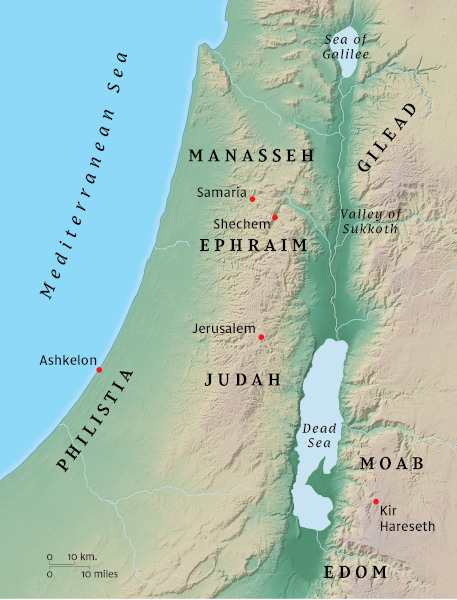
60:6 parcel out . . . measure off. Divide his conquered territory among his servant people who were with him in the battles. Shechem . . . Sukkoth. Representative of the territory west and east of the Jordan taken over by the Lord and Israel (Ge 33:17–18; 1Ki 12:25). See map.
60:7 Israel is the Lord’s kingdom—the land conquered and his people established within it. Gilead . . . Manasseh. Half of Manasseh was established in Gilead, east of the Jordan, and half of it west of the Jordan, just north of Ephraim (Jos 13:29–31; 17:5–11). This once again showed that the Lord’s kingdom included territory both east and west of the Jordan. Ephraim . . . Judah. The two leading tribes of Israel, the one representative of the Rachel tribes (Ephraim) in the north, the other of the Leah tribes (Judah) in the south; see Ge 48:13–20; 49:8–12; Nu 2:3,18; Jos 15–16. Together they represented all Israel (Isa 11:13; Zec 9:13). helmet. As a powerful and aggressive tribe (Dt 33:17; Jdg 7:24—8:3; 12:1), Ephraim figuratively represents the Lord’s helmet. scepter. Called such because from Judah would come (Ge 49:10)—and had now come (1Sa 16:1–13)—the Lord’s chosen earthly regent over his people (2Sa 7).
60:8 Moab . . . Edom . . . Philistia. Perpetual enemies on Israel’s eastern, southern and western borders, respectively (see Ex 15:14–15; see also Ex 13:17; Nu 20:14–21; 22–24). is my washbasin. Is reduced to a household vessel in which the Lord washes his feet (Ge 18:4). The metaphor is perhaps suggested by the fact that Moab lay along the east shore of the Dead Sea. toss my sandal. Perhaps refers to the conventional symbolic act by which one claimed possession of land (cf. Ru 4:7 and note).
60:9–12 The closing stanza, expressing confidence of victory (see note on 3:8).
60:9 me . . . me. Possibly referring to the king (see introduction), though the praying community may be referring to itself collectively (see note on Ps 30 title). lead me. As God went before his people into battle in the wilderness (Ex 13:21) and during the conquest (Ex 23:27–28; 33:2; Dt 9:3; 31:8).
60:11 human help. See 108:12–13; 121:1–2; Isa 30:1–5. help. Or “salvation” (see v. 5, “save”).
60:12 gain the victory. Or “do mighty things.” With God’s help Israel will triumph over Edom (see Nu 24:18, “grow strong”). trample down. Like a victorious warrior (Isa 14:19, 25; Jer 12:10; Zec 10:5).
Ps 61–64 A series of four psalms linked together by the common theme of strong reliance on God for deliverance in the face of great—perhaps mortal—danger. Two make explicit reference to the king (Ps 61; 63), and the other two (62; 64) may also represent a royal voice, though this is disputed.
Ps 61 A lament with a prayer for restoration to God’s presence. The circumstances appear to be similar to those referred to in Ps 42–43. Here, however, a king is involved (v. 6), and if the author was David, he may have composed this psalm at the time of his flight from Absalom (2Sa 17:21–29). For another possibility, see note on v. 2. Structurally, the lament is framed by a cry to God (v. 1) and a vow to praise him (v. 8). The body of the psalm is composed of three couplets: vv. 2–3,4–5,6–7.
61 title See note on Ps 4 title.
61:1 Initial plea for God to hear.
61:2–3 The prayer.
61:2 ends of the earth. So it seemed (42:6). Possibly the phrase here refers to the brink of the netherworld, i.e., the grave (63:9); the psalmist feels himself near death. heart. See note on 4:7. lead me. See 23:2. rock. Secure place (27:5; 40:2). higher than I. The place of security that he seeks is beyond his reach; only God can bring him to it. Since God is often confessed by the psalmists to be their “rock of refuge” (31:2; see also 18:2; 62:2,6–7; 71:3; 94:22), it may be that God himself is that higher “rock” (the secure refuge) that the psalmist pleads for (v. 3). Or it may be the secure refuge of God’s sanctuary (see v. 4; see also 27:5).
61:3 The reason he appeals to God: God has never failed him as a refuge. foe. If this is a prayer when faced with death, death is the present foe (see 68:20; 141:8; Job 33:22; Isa 25:8; 28:15; Jer 9:21; Hos 13:14; see also 1Co 15:26). See note on 49:14.
61:4–5 Longing for the security of God’s sanctuary (see 27:5 and note).
61:4 dwell in. See note on 15:1. tent. Likely the tabernacle as representative of God’s presence (2Sa 6:17; 7:2; 1Ki 1:39; 2:28–30). shelter of your wings. See note on 17:8. For Selah, see NIV text note and note on 3:2.
61:5 my vows. The vows that accompanied his prayers (see 50:14; 66:14; see also note on 7:17). heritage. A place with God’s people in the promised land, together with all that the Lord had promised to give and to be to his people (16:6; 37:18; 135:12; 136:21–22). those who fear. See 60:4 and note. your name. See note on 5:11.
61:6–7 Prayer for the king’s long life. The king himself may have made this prayer—such transitions to the third person are known from the literature of the ancient Near East—or it may be the prayer of the people, perhaps voiced by a priest or Levite. Later Jewish interpretations applied these verses to the Messiah. They are fulfilled in Christ, David’s greatest Son.
61:6 May the king live forever (see note on 45:6).
61:7 enthroned in God’s presence. See note on 41:12. love and faithfulness. Personified as God’s agents (see notes on 23:6; 43:3; see also note on 26:3).
61:8 The vow to praise God (see note on 7:17).
Ps 62 The psalmist commits himself to God when threatened by the assaults of conspirators who wish to “topple me from my lofty place” (v. 4). The author may have been a king. If it was David, the circumstances could well have been the efforts of the family of Saul to topple him. Verse 3 suggests a time of weakness and may indicate advanced age. Implicitly the psalm is an appeal to God to uphold him. No psalm surpasses it in its expression of simple trust in God (see Ps 31 and introduction to Ps 61). The psalm is composed of three parts (vv. 3–4,5–8,9–10), framed by a confession of tranquil resting in God (vv. 1–2) and the reason for such trust (vv. 11–12). The middle stanza constitutes a thematic hinge: Its first two verses (vv. 5–6) echo the opening couplet, while the last two verses (vv. 7–8) anticipate the closing couplet. The other two stanzas (vv. 3–4,9–10) speak of those who threaten.
62 title See note on Ps 39 title.
62:1–2 Profession of complete trust in God for protection.
62:1 my soul. See note on 6:3.
62:2,6 shaken. See note on 10:6.
62:3–4 The threatening activities of the enemies.
62:3 Question to the assailants: Will you never give up? leaning wall . . . tottering fence. Metaphors for the psalmist’s fragile condition: either (1) a confession that he has no strength in himself, (2) an acknowledgment that he is in a weakened condition or, perhaps, (3) a reflection on how his enemies perceive him, as a “pushover.”
62:4 lofty place. Possibly the throne. lies. See note on 10:7. bless. For example, “Long live the king” (1Sa 10:24; 2Sa 16:16; see also 1Ki 1:25, 34,39). curse. Invoke harm on the psalmist (see note on Ge 12:3). For Selah, see NIV text note and note on 3:2.
62:5–8 Trust in God: an exhortation to himself (v. 5) and to the people (v. 8).
62:5 find rest. The psalmist speaks a word of self-encouragement to find in God what he already has (rest, v. 1; see also 27:13–14; 42:5,11; 43:5).
62:8 Exhortation to God’s people (31:23–24). pour out your hearts. In earnest prayer (La 2:19).
62:9–10 Humans, as a threat, are nothing (see note on 10:18).
62:9 lowborn . . . highborn. Persons of every condition. breath . . . lie. People appear to be much more than they really are (see 37:2,20; 39:5 and notes), especially the rich and powerful.
62:10 A warning to those (including those conspiring against him) who trust in their own devices to get what they want (by fair means or foul) rather than trusting in God to sustain them—a virtual summary of Ps 49. heart. See note on 4:7.
62:11–12 The climax: recollection of God’s reassuring word to his people. Power . . . unfailing love. He is able to do all that he has promised and is committed to his people’s salvation and blessedness.
62:11 One thing . . . two things. See note on Am 1:3.
62:12 unfailing love. See article. reward . . . according to. See notes on Jer 17:10; 32:19.
Ps 63 A confession of longing for God and for the security his presence offers when deadly enemies threaten. This lament is vividly described by the metaphor of thirst (v. 1) and hunger (v. 5; see 42:1–2). Like Ps 62 this psalm is an implicit prayer. It is linked to that psalm also by the advancement from hearing (62:11) to seeing (v. 2; see 48:8 and note). The imagery of the night of danger (v. 6) and the morning of salvation (see note on v. 1) once more occurs (see introduction to Ps 57). In the early church this psalm was prescribed for daily public prayers. In its structure, the initial expression of lament and longing (v. 1) gives way at the end to the expectation of joy (v. 11)—the literary frame of the psalm. Verse 6 provides the key thematic link connecting vv. 1 and 11. It stands at the center between two precisely balanced stanzas (vv. 2–5,7–10), each having four verses and each made up of 27 Hebrew words. The psalmist’s night meditations (v. 6) nurture his longing for God (v. 1; cf. 143:5–6) and reinforce his expectations (v. 11).
63 title See note on Ps 3 title. When. If this tradition is correct, the reference is probably to 2Sa 15:23–28; 16:2,14; 17:16,29 since the psalmist is referred to as king (v. 11).
63:1 Intense longing for God in a time of need. I thirst for you. See 42:2 and note. dry and parched land. A metaphor (143:6; Isa 32:2) for his situation of need, in which he does not taste “the richest of foods” (v. 5) supplied by the “river whose streams make glad the city of God” (46:4; see note there).
63:2–5 Comforting reflection on what he had seen in the sanctuary; it awakens joyful expectations.
63:2 See 27:4; 48:8 and notes.
63:4 name. See note on 5:11. lift up my hands. While lifting the hands to God usually signifies prayer, it also—though rarely in biblical reference—accompanied praise (134:2).
63:5 richest of foods. For a similar idea, see Isa 25:6.
63:6 A centering line (see introduction to this psalm): night reflections, remembering what he had seen “in the sanctuary” (v. 2). On my bed. At night as he expectantly awaits the dawning of the morning of deliverance. watches of the night. See note on Jdg 7:19; see also 119:148; La 2:19.
63:7–10 The great contrast between “my” prospects (vv. 7–8) and theirs (vv. 9–10). Each of these four verses has some kind of thematic link with the corresponding verse in the four-verse stanza with which it is balanced (see introduction to this psalm).
63:7 shadow of your wings. See note on 17:8. God’s saving help brings the psalmist back to the sanctuary (v. 2) with songs of praise.
63:8 He has experienced God’s “love,” which is “better than life” (v. 3).
63:9 His enemies will get what they deserve; in wanting to kill him they forfeit their own lives (see Ge 9:5; Ex 21:23; Dt 19:21; see also note on Ps 5:10). The final end of the enemies stands in sharp contrast with the psalmist’s prospects, as anticipated in vv. 7–8—but also as voiced in v. 4: “I will praise,” but “they will go down” to the place of silence (v. 11). depths of the earth. See note on 30:1; here, the netherworld or grave (see also note on 61:2).
63:10 food for jackals. Like bodies of enemies left unburied on the battlefield to add to their disgrace (see note on 53:5). Note the vivid portrayal of the contrast between the two prospects: “I will be fully satisfied as with the richest of foods” (v. 5); “they will . . . become food for jackals.”
63:11 The closing frame (see introduction to this psalm), in which the speaker is finally identified as the king. all who swear by God. Those who revere and trust God (Dt 6:13). mouths of liars. Those who live by falsehood (see 5:6; 58:3; 101:7 and note on 5:9).
Ps 64 A lament to God when threatened by a conspiracy (see introduction to Ps 61–64). The circumstances may be similar to those reflected in Ps 62 (see introduction to that psalm), but here there is no allusion to the king’s weakened condition, and it is not clear whether the conspirators come from within or outside Israel (see note on v. 2). As so often in the laments of the Psalter, the enemy’s tongue is his main weapon (see note on 5:9). Two carefully balanced stanzas spell out David’s prayer and the adversaries’ threat (vv. 2–4) and God’s anticipated counteraction and its effect on all who hear about it (vv. 7–9). The point-counterpoint relationship of these two stanzas is highlighted by the use of key words that occur in corresponding positions in the Hebrew poetic lines—in reverse order: “doers” (v. 2), “tongues” (v. 3), “shoot . . . suddenly” (v. 4), “shoot . . . suddenly” (v. 7), “tongues” (v. 8), “works” (v. 9: in Hebrew the same word as “doers” in v. 2). At the center, vv. 5–6 describe the disdainful confidence of the conspirators.
64 title See note on Ps 4 title.
64:1 Initial appeal for God to hear and protect from an enemy.
64:2–4 The prayer and the lament.
64:3 tongues. See note on 5:9. swords . . . deadly arrows. See 59:7 and note.
64:4 without fear. They feel themselves secure from exposure and retaliation (see Ps 10 and notes on 10:6,11), but see vv. 7–8.
64:5–6 The enemies’ contemptuous self-confidence.
64:5 hiding their snares. See note on 9:15.
64:6 heart. See note on 4:7. cunning. Or “deep” (Pr 18:4; 20:5).
64:7–9 Confidence in God’s righteous judgment—he will do to the adversaries what they had intended to do to David (vv. 3–4)—and its effect on those who hear about it. For the links between this stanza and vv. 2–4, see introduction to this psalm.
64:7 shoot . . . arrows. See note on Ge 9:13.
64:8 shake their heads. In scorn (44:14).
64:9 All people will fear, proclaim and ponder how God’s “works” undo and judge the doings of the “evildoers” (v. 2; see note on 46:10; see also 40:3; 58:11; 65:8).
64:10 Concluding statement that the righteous will rejoice in the Lord and praise him. righteous. See note on 1:5, here corresponding to “the innocent” (v. 4).
Ps 65–68 Four thanksgiving psalms dominated by the theme of praise and linked by the shared recognition that God’s “awesome” deeds evoke the wonder of “all the ends of the earth” and move (or should move) “all the earth” to join Israel in singing the praise of their God (see note on 46:10). In these four psalms, the occasions—and reasons—for this universal praise include (1) God’s mighty acts in maintaining the creation order and making it fruitful so that humans are richly blessed, and (2) God’s saving acts in behalf of his people. These are significantly brought together here by alternating the focus; Ps 65 and 67 speak of the former, and Ps 66 and 68 speak of the latter. Thus in this short series all of God’s benevolent acts are brought into purview, and the whole human race is encompassed in the community of praise.
Ps 65 A thanksgiving psalm praising God’s goodness to his people. In answer to their prayers (1) he pardons their sins so that they continue to enjoy the “good things” that accompany their fellowship with him at his temple (vv. 1–4); (2) as the One who established the secure order of the creation, he also orders the affairs of the world so that international turbulence is put to rest and Israel is secure in their land (vv. 5–8); and (3) he turns the promised land into a veritable Garden of Eden (vv. 9–13). In all this he is hailed as “the hope” of all humankind. His wondrous deeds fill them with “awe” and move them to “songs of joy.”
65 title See notes on Ps 4; 30 titles.
65:1–2 Introductory commitment to praise.
65:1 awaits. See NIV text note. our vows. Those made in conjunction with their prayers in time of need (see 66:14 and note on 7:17).
65:2 all people. Perhaps referring to all God’s people, as in Joel 2:, though most interpreters believe (in light of vv. 5,8) that the reference is more universal, as in 64:9; 66:1,4,8; 67:3–5 and elsewhere. will come. To praise God as the (only) God who hears and graciously answers prayers.
65:3–4 The crucial act of divine mercy that opens the way for the benefits spelled out in the two remaining stanzas.
65:3 forgave our transgressions. Accepted the atonement sacrifices you appointed and so forgave our sins (see NIV text note; see also 32:1–2; 78:38; 79:9 and notes on Lev 16:20–22; 17:11; Heb 2:17; 9:5,7).
65:4 Blessed. See note on 1:1. those you choose and bring near. Everyone belonging to Israel as God’s chosen people (see, e.g., 33:12; Dt 4:37) and whom God accepts at his temple. live in your courts. See note on 15:1; see also 23:6. good things of your house. All the blessings that flow from God’s presence (see 36:8 and note).
65:5–8 God, who continues to uphold the creation order, defeats the nations and makes Israel secure in answer to their prayers.
65:5 awesome . . . deeds. Acts of God such as were associated with his deliverance of Israel from Egypt and the conquest of Canaan, acts of power that made Israel’s enemies cringe (see 66:3; see also 106:22; 145:6; Dt 10:21; 2Sa 7:23; Isa 64:3). righteous deeds. Saving acts by which God kept his covenanted promises to Israel (see note on 4:1). hope of all. Even if the nations of the world did not yet fully realize it.
65:6–7 The God of creation, who by his power brought order to the world out of the earlier chaos (Ge 1), similarly in the redemption of his people establishes a peaceful order among nations (Isa 2:4; 11:6–9; Mic 4:3–4) so that Israel may be at rest in the promised land (Ps 33; 46). God’s mighty acts in redemption are often compared by OT poets with his mighty acts in creation (74:12–17; 89:9–18; Isa 27:1; 40:6–14,21–31; 51:9–11), since his power as Creator guaranteed his power as Redeemer. formed the mountains . . . stilled . . . the seas. Gave order to the whole creation (95:4–5).
65:7 turmoil of the nations. God’s stilling the turbulence of the nations—which often threatened Israel—is compared to his taming the turbulence of the primeval waters of chaos (see notes on 32:6; 33:7).
65:8 All peoples will (ultimately) see God’s saving acts in behalf of his people and will be moved to awe (see note on 46:10). And all creation will rejoice (v. 13). wonders. Or “signs,” referring to God’s great saving acts, such as those he performed when he delivered Israel out of Egypt (Dt 4:34; see Ps 78:43; 105:27; 135:9). As “signs” they indicated that God was at work (see Jn 2:11 and note).
65:9–13 God blesses the promised land with all good things in answer to Israel’s prayers.
65:9 streams of God. See note on 36:8.
65:10 you soften it with showers. Yahweh, not Baal (see Jer 14:22 and note).
65:11 bounty. See 68:10; see also 31:19 and note.
65:13 they shout for joy and sing. In the exuberant language of the psalmists, all creation—even its inanimate elements—joins the human chorus to celebrate the goodness of God in creation, blessing and redemption (see 89:12; 96:11–13; 98:8–9; 103:22; 145:10; 148:3–4,7–10; see also Job 38:7; Isa 44:23; 49:13; 55:12).
Ps 66 A psalm of thanksgiving for God’s answer to prayer—probably delivering the psalmist from an enemy threat. He has set his personal experience of God’s saving help as one of God’s people in the larger context of God’s help of Israel in the exodus. The thanks is offered at the temple in fulfillment of a vow (vv. 13–14; see note on 7:17). Such praise was often climaxed by a call for others to take up the praise (see note on 9:1). Here the psalmist exuberantly begins with that call and, as often elsewhere (e.g., 67:3–5; 68:32; 98:4; 99:1–3; 100:1; 117:1), addresses it even to the far corners of the earth. This psalm is the second in a series of four (see introduction to Ps 65–68). It is framed by a call to praise God (vv. 1–2) and a declaration of the present occasion for praise (vv. 19–20). The Hebrew involves a play on words in that the Hebrew words for “praise” (v. 2) and “prayer” (vv. 19–20) sound very much alike. The opening stanza (vv. 1–4) is followed by two thematic sequences having the same structure: a three-verse stanza (vv. 5–7,13–15) followed by a five-verse stanza (vv. 8–12,16–20). The first line of the first stanza of the first sequence (v. 5) begins with “Come and see”; the first line of the second stanza of the second sequence (v. 16) begins with “Come and hear.”
66 title See notes on Ps 4; 30 titles.
66:1–4 Calling all the earth to joyful praise.
66:1 all the earth. See note on 65:2.
66:3 awesome. See v. 5; see also note on 65:5. cringe. See 18:44; cf. Jos 5:1; 2Ch 20:29.
66:4 See note on 46:10. For Selah, see NIV text note and note on 3:2.
66:5–7 Recollection of God’s deliverance of Israel at the Red Sea as a sign of his power to rule over the nations. The psalmist portrays his deliverance (see introduction above) both as similar to this Red Sea rescue in its manifestation of God’s saving power (see 65:5–7 for a comparison of God’s mighty saving acts with his mighty acts of creation) and as a continuation of God’s same saving purposes.
66:5 Come and see. See introduction to this psalm. God’s saving acts of old can still be “seen” at his temple, where they are continually celebrated (see 46:8; 48:8–9 and notes). for mankind. Specifically for his people.
66:6 waters. Possibly the Jordan, but more likely a parallel reference to the Red Sea.
66:7 rebellious. Nations that are in revolt against God’s rule (68:6).
66:8–12 Praise of God’s deliverance of his people.
66:8 peoples. Here probably the grateful throng of worshipers (2Ch 20:27–28).
66:9 from slipping. See note on 38:16.
66:10 tested . . . refined. From one point of view, times of distress constitute a testing of God’s people as to their trust in and loyalty to God. The metaphor is borrowed from the technology of refining precious metals, which included heating the metals in a crucible to see if all impurities had been removed (see 12:6 and note; 17:3; 1Pe 1:7).
66:11–12 You . . . You. God’s rule is all-pervasive; even when enemies maliciously oppress his people, God is not a mere passive observer but has his own holy purposes in it (Isa 45:7; Am 3:6). prison . . . burdens . . . ride over. Probably recalling the Egyptian oppression from which the exodus brought relief.
66:12 fire and water. Conventional metaphors for severe trials (Isa 43:2). to a place of abundance. God’s people were brought out of a situation of distress into a situation of overflowing blessings (23:5): the promised land.
66:13–15 Announcement of fulfillment of vows: addressed to God (see note on 7:17; see also 50:14; 116:17–19).
66:13 I. The king. will . . . fulfill my vows. See Ecc 5:1–7 and notes.
66:16–20 Proclamation of what God has done for the psalmist—in praise of God and addressed to the worshiping congregation (cf. 34:1–7).
66:16 Come and hear. See introduction. fear God. See notes on 15:4; Ge 20:11; Pr 1:7; Lk 12:5.
66:20 Praise be to God. See v. 8. love. See article.
Ps 67 Communal thanksgiving for God’s blessing. Its content, form and brevity suggest that it served as a liturgical prayer of the people at the conclusion of worship, perhaps just prior to (or immediately after) the priestly benediction (see note on v. 1). God’s blessing of his people (as well as his saving acts in their behalf) will catch the attention of the nations and move them to praise him (65:2). This psalm is the third in a series of four having special thematic links with Ps 65 (see introduction to Ps 65–68). It has a completely symmetrical structure: Two verses at the beginning contain the prayer, while the two verses of the concluding stanza speak of the effects of God’s anticipated answer. In the intervening stanza, framed by a refrain (vv. 3,5), the people seek to motivate God’s answer by referring to the worldwide praise that his mercies to his people will awaken.
67 title See notes on Ps 4; 30 titles.
67:1–2 The prayer.
67:1 The heart of the prayer, echoing the priestly benediction (see Nu 6:24–26 and notes). make his face shine. See notes on 4:6; 13:1. For Selah, see NIV text note and note on 3:2.
67:2 May God’s favors to his people be so obvious that all the world takes notice (see note on 46:10).
67:3–5 The motivation. Elaborating on v. 2, the people speak of the worldwide praise that will resound to God when he graciously blesses his people. Their wish is twofold: (1) that God’s blessings may be so abundant that the people will be moved to praise him, and (2) that the nations may indeed add their praise to that of Israel—an appropriate expression at this climax of the liturgy of worship.
67:4 May the nations rejoice in the Lord when they see how benevolent the rule of God is (65:7–8; 98:4–6; 100:1).
67:6–7 The effects of God’s blessing his people.
67:6 The promised land will yield its abundance (65:9–13).
67:7 all the . . . earth. See 65:8 and note. fear him. See note on 66:16.
Ps 68 A hymn celebrating the triumphal march of Israel’s God from Mount Sinai to Mount Zion. Interwoven in it is a prayer that this mighty display of God’s power will be continued until all God’s people are rescued and secure and all kingdoms of the earth bring tribute to and sing the praises of the God of Israel. The voice heard here is that of the worshiping community, and the psalm may originally have accompanied a liturgical procession of the people up to the temple in Jerusalem (see introductions to Ps 24; 47; 118; 132). The first half of the psalm (vv. 1–18 have 19 Hebrew poetic lines) contains many clear references to God’s triumphal march from Mount Sinai (in the days of Moses) to Mount Zion (in the days of David). The second half of the psalm (vv. 19–35 also have 19 Hebrew poetic lines) is framed by the cry “Praise be to the Lord/God” and looks forward with expectations of God’s continuing triumphs until the redemption of his people is complete and his kingly rule is universally acknowledged with songs of thanksgiving. The early church, taking its cue from Eph 4:8–13, understood this psalm to foreshadow the resurrection, ascension and present rule of Christ and the final triumph of his church over the hostile world. Ps 68 is the last in a series of four (see introduction to Ps 65–68).
The psalm is composed of nine stanzas, with a concluding doxology. The first stanza (vv. 1–3) suggests the beginning of a liturgical procession, and the last (vv. 32–35) its conclusion, with God enthroned in his sanctuary. The seventh (vv. 24–27) speaks expressly of a procession coming into view and entering the sanctuary. In light of these clear references, the third stanza (vv. 7–10) suggests a stage in the procession recalling the wilderness journey from Sinai to the promised land, while the fifth (vv. 15–18) marks that stage in which the Lord ascends Mount Zion. On the other hand, the second stanza (vv. 4–6) reflects on the benevolence of God’s rule; the fourth (vv. 11–14) recalls his victories over the kings of Canaan; the sixth (vv. 19–23) speaks reassuringly of God’s future victories; and the eighth (vv. 28–31) contains prayers that God may muster his power to subdue the enemy as he had done before.
68 title See notes on Ps 4; 30 titles.
68:1–3 The start of the procession, liturgically recalling the beginning of God’s march with his people in army formation from Sinai (Nu 10:33–35).
68:1 enemies be scattered. See note on v. 30.
68:3 righteous. Israel as the committed people of God in distinction from those opposed to the coming of God’s kingdom (the “wicked” of v. 2); see 1:5 and note.
68:4–6 A call to praise God for the benevolence of his rule.
68:4 name. See note on 5:11. who rides on the clouds. An epithet of Baal found in Canaanite literature is used to make the point that the Lord (Yahweh, not Baal) is the exalted One who truly makes the storm cloud his chariot (v. 33; 18:9; 104:3; Dt 33:26; Isa 19:1; Mt 26:64).
68:5–6 God is the defender of the powerless (see 9:12 and note; 10:14; 146:7–9; 147:6; Dt 10:18).
68:6 sets the lonely in families. Brings them into the community of faith (see Ex 1:21; Ru 4:14–17; 1Sa 2:5). leads out the prisoners. As he led Israel out of Egypt (see 69:33; 107:10,14). rebellious. See notes on v. 18; 66:7. sun-scorched land. A place utterly barren, lacking even soil for vegetation (Eze 26:4,14).
68:7–10 Recollection of God’s march through the wilderness from Sinai into the promised land (Jdg 5:4–5; Hab 3:3–6).
68:7 For Selah, see NIV text note and note on 3:2.
68:8 earth shook. A reference to the quaking of Mount Sinai (Ex 19:18). heavens poured down rain. Here and in Jdg 5:4 rain is closely associated with the quaking of the earth as a manifestation of the majesty of God. Verse 9 suggests rain that refreshed the people on their journey.
68:9 your . . . inheritance. The people of Israel (Dt 9:29).
68:10 it. Probably refers to the promised land. bounty. See 31:19 and note. provided. From the produce of Canaan (Jos 5:11–12). poor. Israel as a people dependent on God.
68:11–14 Recollection of God’s victories over the kings of Canaan.
68:11 announces the word. God declares beforehand that he will be victorious over the Canaanite kings (Ex 23:22–23, 27–28,31; Dt 7:10–24; 11:23–25; Jos 1:2–6). women who proclaim it. It seems that women were primarily responsible for singing Israel’s songs of victory (see 40:9 and note; Ex 15:1–21; Jdg 5; 1Sa 18:6–7).
68:13 sleep among the sheep pens. Rest in camp (see Jdg 5:16; see also NIV text note). wings of my dove are sheathed. Israel, God’s “dove” (see 74:19 and note; cf. Hos 7:11), is enriched with the silver and gold of plunder from the kings of Canaan even though they still remain in camp. This poetic hyperbole (a figure of speech that uses exaggeration for emphasis) celebrates the fact that God had defeated the kings even before Israel met them in battle (see Jos 2:8–11; 5:1; 6:16; see also 2Sa 5:24; 2Ki 7:5–7; 19:35; 2Ch 20:22–30).
68:14 Almighty. See NIV text note; see also note on Ge 17:1. like snow fallen on Mount Zalmon. A mountain near Shechem bore this name (Jdg 9:46–48), but some identify the mountain referred to here as Jebel Druze, a dark volcanic mountain east of Bashan. Its name appears to mean “the dark one”—in distinction from the Lebanon (“the white one”) range, composed of limestone—and the figure may involve the contrast of white snow scattered on “Dark Mountain.” The reference may then be to abandoned weapons littering the field from which the kings have fled headlong (2Ki 7:15).
68:15–18 Celebration of God’s ascent to Mount Zion.
68:15–16 The mountains surrounding Bashan, including the towering Mount Hermon, are portrayed as being jealous because God has chosen Mount Zion as the seat of his rule, making it the “highest” of mountains (see 48:2 and note).
68:17 chariots of God. God’s great heavenly host, here likened to a vast chariot force (2Ki 6:17; Hab 3:8,15). In the time of the Roman Empire Jesus referred to God’s host in terms of “legions” (Mt 26:53).
68:18 ascended on high. Went up to your place of enthronement on Mount Zion (see 47:5–6 and note; see also 7:7). took many captives . . . received gifts. Like a victorious king after triumphs on the field of battle. rebellious. Those who had opposed the kingdom of God (see v. 6 and note on 66:7) are compelled to submit to him and bring tribute. that you . . . might dwell there. Grammatically completes the clause, “When you ascended on high.” Paul applies this verse (as translated in the Septuagint, the pre-Christian Greek translation of the OT) to the ascended Christ (see Eph 4:8–13 and notes on 4:8–9,11), thereby implying that Christ’s ascension was a continuation of, and a fulfillment of, God’s establishment of his kingdom in his royal city, Jerusalem (see introduction to this psalm).
68:19–23 Joyous confession of hope that God’s victorious campaigns will continue until the salvation of his people is complete.
68:19 bears our burdens. Releases us from bearing the burdens that enslavement to our enemies would impose on us (81:6; Isa 9:4; 10:27). But some associate this line with such passages as 55:22; Isa 46:4.
68:20 escape from death. At the hand of our enemies—implicitly, perhaps, also from death itself as the last great enemy (see notes on 6:5; 11:7; 16:9–11; 17:15; 49:14–15).
68:21 As God assures the life of his people (v. 20), so he will crush those who oppose him. crush the heads. See Nu 24:17; Jer 48:45–46 and note.
68:22 them. The enemies who fled at the victorious onward march of God and his host (vv. 12,17). Bashan . . . depths of the sea. The former (see also v. 15) was the high plateau east of the Jordan, the latter the Mediterranean Sea—none of the enemies will escape (Am 9:1–4).
68:24–27 The liturgical procession approaches the temple (Ps 24; 47).
68:25 young women playing the timbrels. See note on Jer 31:4.
68:27 All Israel is represented, from little Benjamin to powerful Judah, and tribes from the north as well as the south. Benjamin, leading. Perhaps reflecting the fact that from the tribe of Benjamin came the first king (Saul), who began the royal victories over Israel’s enemies (1Sa 11:11; 14:20–23).
68:28–31 Prayer for God to continue his conquest of the threatening powers.
68:29 Because of your temple. Because God’s earthly royal house has been established in Jerusalem in which his power and presence are evident. bring you gifts. Acknowledge you by bringing tribute, as subjected kings brought tribute to their conquerors (2Sa 8:2, 6,10; 2Ki 3:4).
68:30 Rebuke. See note on 76:6. beast among the reeds. The pharaoh (Eze 29:3). herd of bulls among the calves. Powerful princes supporting the pharaoh, and the lesser princes of other nations. Egypt is singled out here as representative of the hostile nations—because of Israel’s past experiences with that world power. It may also be that at the time the psalm was composed Egypt was the one great empire on Israel’s immediate horizons. Scatter the nations. See v. 1; so that Israel may have peace (46:9; 48:4–7; 65:7; 76:3).
68:32–35 Climax of the liturgical procession: a call for all kingdoms to hail with praise the God of Israel as the God who reigns in heaven and has established his earthly throne in the temple in Jerusalem (Ps 47).
68:33 See v. 4 and note. thunders with mighty voice. See note on 29:3–9.
68:35 awesome. See 45:4 and note. gives power and strength to his people. The Lord of all has made Israel his people (his “kingdom”; see Ex 19:5–6), and his rule among them makes them participants in his victorious power (see 29:10–11; cf. Eph 1:17–23).
Ps 69–72 Book II of the Psalter closes with a cluster of three laments and an attached royal psalm—in perfect balance with its beginning (see note on Ps 42–45). These three lament psalms were originally all pleas of a king in Israel for deliverance from enemies (apparently internal) determined to do away with him. They all contain certain key words that are found elsewhere in Book II only in Ps 42–44 and in the seven psalms (54–60) placed at the center of the Book. Another link between Ps 69–71 and 42–44 is the placement of a short psalm at the center of each triad. These placements have the appearance of deliberate editorial design. In the former cluster Ps 43 has been artificially separated from 42 (see introduction to Ps 42–43), while in the latter cluster Ps 70 repeats (with some revision) Ps 40:13–17 and was probably intended to serve as an introduction to Ps 71. The attached prayer for the king (Ps 72) stands in similar relationship to Ps 69–71 as Ps 45 stands to Ps 42–44 and brings Book II to its conclusion. In Ps 65–68 all peoples on earth are drawn into the community of those praising God (see note on Ps 65–68). Here in Ps 69 all creation is called to join that chorus (v. 34), and Ps 72 envisions that all peoples and kings will submit to the son of David (vv. 8–11) and be blessed through his reign (v. 17).
Ps 69 A lament psalm that appeals to God to have mercy and to save from a host of enemies: the prayer of a godly king when under vicious attack by a widespread conspiracy at a time when God had wounded him (v. 26) for some sin in his life (v. 5). If, as tradition claims, David authored the original psalm (see title), the occasion is unknown. In its present form the psalm suggests a later son of David who ruled over the southern kingdom of Judah (v. 35). That king may have been Hezekiah (2Ki 18–20; 2Ch 29–32). This psalm begins a series of three laments asking for deliverance when threatened by enemies (see introduction to Ps 69–72). Structurally, the psalm is composed of two halves of 22 Hebrew lines each. The first half (vv. 1–15) ends with petitions that echo the descriptions of distress at the beginning. It should also be noted that in Hebrew v. 5 stands at the center of vv. 1–12 and v. 29 stands at the center of vv. 22–36. The centering of these two verses accounts for why they both stand thematically somewhat apart from their immediate contexts (for this literary device, see note on 6:6; for the thematic relationship of these two verses, see notes below). The authors of the NT viewed this cry of a godly sufferer as foreshadowing the sufferings of Christ; no other psalm, except Ps 22, is quoted more frequently in the NT.
69 title For the director of music. See note on Ps 4 title. To the tune of. See note on Ps 9 title. Lilies. See note on Ps 45 title.
69:1–4 Description of the dire distress that evokes the psalmist’s complaint.
69:1–2 waters . . . miry depths . . . deep waters . . . floods. Conventional imagery for great distress (see notes on 30:1; 32:6)—here the results of God’s wounding (v. 26), but especially of the attacks of the enemies (vv. 14–15,29).
69:3 throat is parched. See 22:15. eyes fail. See 6:7 and note.
69:4 without reason . . . without cause. Those whom he has not wronged are pitted against him (see 35:19 and note). outnumber the hairs of my head. See note on 40:12. I am forced. An illustrative way of saying that his enemies are spreading false accusations about him (see 5:9 and note).
69:5 A confession of personal guilt—the reason why God has wounded him (v. 26) and why he is “afflicted and in pain” (v. 29). folly. See NIV text note on 14:1.
69:6–12 Prayer that God’s discipline of his godly servant may not bring disgrace on all those who trustingly look to the Lord. The author acknowledges that God’s wounding of him has been occasioned by some sin in his life (but he has not sinned against those who have become his enemies). Because of his present suffering, his enemies mock his deep commitment to the Lord (22:6–8; 42:3; 79:10; 115:2; Job 2:9). Implicitly he prays that God will restore him again and vindicate his trust in him.
69:8 Even those nearest him dissociate themselves from him (see 31:11–12 and note).
69:9 zeal for your house. The psalmist’s concern for God’s honor also characterized Jesus (Jn 2:17). insults of those who insult you. Those who mock God also mock his servant who trusts in him (74:18,22–23; 2Ki 18:31–35), as Christ also experienced (Ro 15:3).
69:10–11 weep and fast . . . put on sackcloth. As tokens of humbling himself before the Lord in repentance as he prays for God to have mercy and restore him (see 35:13 and note; see also Ge 37:34; 2Sa 12:16–17; Joel 1:13–14; 2:15–17; Jnh 3:5).
69:12 Those who sit at the gate . . . drunkards. Everyone, from the elders of the city to the town drunks.
69:13–15 Though they mock, I pray to you.
69:13 time of your favor. When God is near to save (see 32:6 and note; see also Isa 49:8; 61:2; 2Co 6:2). great love. See article.
69:14–15 mire . . . deep waters . . . floodwaters . . . depths. See note on vv. 1–2. The psalmists’ petitions commonly echo their earlier descriptions of the distress that occasions the prayer. Here the return to the beginning marks the end of the first half of the psalmist’s appeal to God.
69:15 swallow me. See note on 49:14. pit. See note on 30:1.
69:16–18 An appeal for God to hear—such as commonly begins the prayers brought together in the Psalter.
69:17 hide your face. See note on 13:1.
69:19–21 In my trouble they heaped on scorn instead of bringing comfort (see 35:11–16; see also 142:4; Job 13:4; 16:2; 21:34).
69:21 gall in my food . . . vinegar for my thirst. Vivid metaphors for the bitter scorn they made him eat and drink when his whole being craved the nourishment and refreshment of comfort. The authors of the Gospels, especially Matthew, suggest that the suffering expressed in this verse foreshadowed Christ’s suffering on the cross (Mt 27:34, 48; Mk 15:23,36; Lk 23:36; Jn 19:29).
69:22–28 Prayer for God to redress the wrongs committed (see note on 5:10).
69:22–23 For Paul’s application of these verses to the Jews who rejected the Christ, see Ro 11:9–10.
69:22 They had set his table with “gall” and “vinegar” (v. 21). table set before them. Reference may be to the meal accompanying the sealing of a covenant (see note on 23:5). In that case, this verse alludes to a pact uniting the enemies and calls on God to turn it against them. become a snare . . . a trap. Note the unusual use of this imagery (see note on 9:15).
69:23 They mocked him for his “wound” (v. 26); now may they experience the same failing of the eyes (see v. 3 and note on 6:7) and bending of the back (from weakness and pain; see 38:5–8).
69:24 wrath . . . anger. See note on 2:5. overtake them. Like a flash flood.
69:25 They sought to remove him from his place; may they be removed. Cf. Peter’s application of this judgment to Judas (Ac 1:20).
69:26 The great wrong committed by his enemies against him and to which reference has repeatedly been made.
69:27 They have falsely charged him with crimes (v. 4); may their real crimes all be charged against them.
69:28 They had plotted his death; may death be their destiny. book of life. God’s royal list of the righteous, whom he blesses with life (1:3; 7:9; 11:7; 34:12; 37:17,29; 55:22; 75:10; 92:12–14; 140:13). For other references to God’s books see notes on 9:5; 51:1. In the NT the “book of life” refers to God’s list of those destined for eternal life (see Php 4:3; Rev 3:5 and note; 13:8; 17:8; 20:12,15; 21:27; cf. Lk 10:20; Heb 12:23 and notes).
69:29 A summary renewal of the prayer just prior to the vow to praise God (see note on v. 5). pain. An echo of v. 26. your salvation. Cf. vv. 13,27. protect me. See note on Ps 59:1.
69:30–33 A vow to praise God (see note on 7:17) out of assurance that the prayer will be heard (see note on 3:8).
69:30 God’s name. See v. 36 and note on 5:11.
69:32 poor. See note on 34:6. see and be glad. See 22:26 and note. hearts. See note on 4:7. live. Overflow with the joy of life, because the Lord does hear the prayers of his people in need—contrary to the mocking of scoffers.
69:34–36 A call for all creation to take up the praise of the Lord (see note on 9:1), a call that confidently anticipates that God will restore Judah and assure his people’s inheritance in the promised land.
69:34 See 148:1–13; Isa 49:13.
69:35–36 people . . . children. God’s people and their children through the generations, specifically “those who love his name.”
Ps 70 A lament when threatened by enemies—a somewhat revised duplicate of 40:13–17 (see notes there). This is the second in a series of three such laments; its language has many links with that of Ps 71. For this psalm’s placement in the Psalter, see introduction to Ps 69–72; for its special relationship to Ps 71, see introduction to that psalm. The psalm is framed by pleas for God to “come quickly” with his help (vv. 1,5). The rest of the psalm focuses on the effects of God’s saving help: (1) upon those “who want to take my life” (vv. 2–3) and (2) for those “who seek you” (v. 4).
70 title See note on Ps 4 title. A petition. See note on Ps 38 title.
70:4 God’s deliverance of his servant will give joy to all who trust in the Lord, because they see in it the assurance of their own salvation. The LORD is great! Because his saving help is sure and effective (contrast v. 3).
70:5 The language of this verse forms a frame with v. 1: “God,” “LORD,” “come quickly,” “(my) help (me).” poor and needy. See notes on 35:10; Ex 22:21–27.
Ps 71 A lament in old age when enemies threaten because they see that the king’s strength is waning (see note on 5:9). The psalm bears no title, but it may well be that Ps 70 was viewed by the editors of the Psalms as the introduction to Ps 71 (compare vv. 1,12–13 with 70:1–2,5), in which case the psalm is ascribed to David (in his old age; see vv. 9,18). This suggestion gains support from the fact that Ps 72 is identified as written by or for King Solomon (see introduction to that psalm). This is the third in a series of three laments (see introduction to Ps 69–72); its dominant theme is hope (v. 14). Formally symmetrical, the psalm is composed of six stanzas, having a five-four-five, five-four-five line pattern (in Hebrew): vv. 1–4 (five lines), vv. 5–8 (four lines), vv. 9–13 (five lines), vv. 15–18 (five lines), vv. 19–21 (four lines), vv. 22–24 (five lines). Thus each half is made up of 14 lines. At the center (v. 14; see note on 6:6) stands a confident confession of hope. The whole is framed by an appeal for help (vv. 1–4) and a vow to praise God in anticipation of deliverance (vv. 22–24). The second and fifth stanzas are linked by references to the troubles the king has experienced; stanzas three and four are linked by references to old age.
71:1–4 The initial appeal for God’s help. Verses 1–3 differ only a little from 31:1–3a.
71:2 your righteousness. See vv. 15–16,19,24; see also note on 4:1.
71:3 give the command to save. In Hebrew a noteworthy verbal link with 44:4 (“who decrees victories”). The Hebrew phraseology occurs only in these two places in the OT.
71:5–8 A confession that the Lord has always been his hope (vv. 14,19–21).
71:7 sign to many. The troubles of his life (v. 20) have been viewed by others as holding some special significance—especially since the Lord has been his “strong refuge” through them all.
71:8 My mouth is filled with your praise . . . your splendor. Because of the Lord’s faithful care, the psalmist has been moved to fulfill in his life the high purpose of God in saving and blessing his people (Jer 13:11; 33:9).
71:9–13 A prayer for God’s continuing help in the waning years of the psalmist’s life.
71:10 enemies speak against me. See notes on 3:2; 5:9.
71:12 Do not be far from me. Cf. 22:11,19; 35:22; 38:21. come quickly . . . to help me. Cf. 22:19; 38:22; 40:13; 70:1; cf. also 70:5; 141:1.
71:13 A plea for redress (see note on 5:10). Key words in this closing verse of the first half of the psalm are echoed in the last verse of the second half. Similar language is found in 35:4,26; 40:14–15; 70:2–3; 83:17; 109:28–29.
71:14 A centered confession of unfaltering hope—providing a striking link with Ps 42–43 (see 42:8 and note; see also note on 6:6).
71:15–18 A vow to praise God, accompanying the renewal of his prayer (v. 18); see note on 7:17.
71:15 tell . . . righteous deeds . . . saving acts. Here one of the “righteous deeds” the psalmist vows to “tell” is God’s act of deliverance in answer to the psalmist’s prayer (see notes on vv. 16–17; 4:1).
71:16–17 mighty acts . . . righteous deeds . . . marvelous deeds. God’s “mighty (marvelous) acts” in behalf of his people are expressions of his righteousness; see also his “righteous acts” (v. 24).
71:16 come. To the place where God’s people assemble for worship.
71:19–21 A confession that the Lord is still his hope, in the face of all his troubles (vv. 5–8,14).
71:19 reaches to the heavens. Is as expansive as all space above the earth (see also 36:5 and note). Who is like you, God? See Mic 7:18 and note.
71:20 you have made me see troubles. The “troubles” referred to are not specified. That God is somehow involved the psalmist does not question; he shares the mature and robust faith that all things are in the hands of the one sovereign God (see Dt 6:4 and note), the God to whom he turns in prayer (cf. 1Sa 16:11–12; Isa 45:5–7; Am 3:6). restore my life again. He who gave him life (v. 6) will renew his life. depths of the earth. The realm of the dead, of which the grave is the portal (see note on 30:1).
71:22–24 A vow to praise in confident anticipation of God’s saving help (see notes on 3:8; 7:17).
71:22 harp . . . lyre. See note on 57:8. Holy One of Israel. See 78:41; 89:18; see also 2Ki 19:22 and note.
71:24 righteous acts. God’s saving acts in behalf of his people according to his covenant promises (see 88:12; Jdg 5:11; 1Sa 12:7 and note; Da 9:16; Mic 6:5; Rev 15:4).
Ps 72 A prayer for the king, a son of David who rules on David’s throne as God’s earthly regent over his people. It may have been used at the time of the king’s coronation (as were Ps 2; 110). These verses express the desire of the nation that the king’s reign will, as a consequence of God’s endowment of his servant, be characterized by justice and righteousness, the supreme virtues of kingship. The prayer reflects the ideal concept of the king and the glorious effects of his reign. See Jeremiah’s indictment of some of the last Davidic kings (e.g., Jer 22:2–3, 13,15) and the prophetic announcement of the Messiah’s righteous rule (Isa 9:7; 11:4–5; Jer 23:5–6; 33:15–16; Zec 9:9). Later Jewish tradition saw in this psalm a description of the Messiah, as did the early church. The last three verses do not belong to the prayer (see notes there). For this psalm’s function within Book II of the Psalter, see introduction to Ps 69–72.
72 title Of Solomon. Either by him or for him—of course, both may be true. This psalm was probably also used by Israel (Judah) as a prayer for later Davidic kings.
72:1 The basic prayer. justice . . . righteousness. May the king be endowed with the gift for and the love of justice and righteousness so that his reign reflects the rule of God himself. Solomon asked for the necessary wisdom so he could govern God’s people justly (see 1Ki 3:9,11–12; see also Pr 16:12). righteousness. See note on 4:1.
72:2–7 A prayer for the quality of his reign: May it be righteous, prosperous and enduring.
72:3 Righteousness in the realm will be like fertilizing rain on the land, for then the Lord will bless his people with abundance (vv. 6–7; 5:12; 65:9–13; 133:3; Lev 25:19; Dt 28:8).
72:5 endure as long as the sun. See 21:4 and note.
72:6 See v. 3 and note; see also v. 7.
72:7 righteous. See note on 1:5. flourish. Because the king supports and protects them and uses all his royal power to suppress the wicked (Ps 101).
72:8–14 The extent of his domain (vv. 8–11) as the result of his righteous rule (vv. 12–14).
72:8 May his kingdom and authority extend to all the world (see vv. 9–11; cf. 110:2 and note). Ideally and potentially, as God’s earthly regent, he possesses royal authority that extends on earth as far as God’s—an expectation that is fulfilled in Christ. See Zec 9:10 and note.
72:9 May the tribes of the Arabian Desert to the east yield to him. lick the dust. See Mic 7:17 and note.
72:10 May the kings whose lands border the Mediterranean Sea to the west acknowledge him as lord, as well as those who rule in south Arabia and along the eastern African coast. Tarshish. A distant Mediterranean seaport, perhaps as far west as modern Spain. Sheba. See notes on Ge 10:28; 1Ki 10:1; Joel 3:8. Seba. Elsewhere in the OT associated with Cush (Ge 10:7; Isa 43:3); it may refer to a region in modern Sudan, south of Egypt.
72:15–17 Concluding summation: May the king enjoy a long, prosperous, world-renowned reign—one that blesses all the nations.
72:17 all nations. The language recalls the promise to Abraham (Ge 12:3; 22:18) and suggests that it will be fulfilled through the royal son of David—ultimately the Messiah.
72:18–19 A doxology at the conclusion of Book II of the Psalter (see 41:13 and note). It is the people’s response, their “Amen,” to the contents of Book II (see note on Ps 4 title).
72:19 filled with his glory. See note on 85:9.
72:20 An editorial notation. prayers of David. See titles of Ps 86; 142.
Ps 73–78 Book III consists of three groupings of psalms, having an overall symmetrical pattern (six psalms [73–78], five psalms [79–83], six psalms [84–89]) and at its center (Ps 81) an urgent exhortation to fundamental covenant loyalty to the Lord (see introduction to Ps 79–83, introduction to Ps 84–89 and introduction to Ps 81). The first group is framed by psalms of instruction. Ps 73 is a word of godly wisdom based on an individual’s life experience, while Ps 78 is a psalm of instruction based on Israel’s communal experience in its historical pilgrimage with God. Within this frame, Ps 74 (a communal lament) is linked with Ps 77 (an individual lament) by the common experience of seeming to be rejected by God (74:1; 77:7) and by an extended evocation of God’s saving act in Israel’s exodus from Egypt (74:13–15; 77:16–19). At the center, two thanksgiving psalms (75; 76) express joyful assurance that Israel’s God (his “Name is near,” 75:1; “in Israel his name is great,” 76:1) calls the arrogant wicked to account and rescues their victims; he cuts off “the horns of all the wicked” (75:10) and breaks “the spirit of rulers” (76:12).
Ps 73 A word of godly wisdom concerning the destinies of the righteous and the wicked (see introduction to Ps 73–78). Placed at the beginning of Book III, this psalm voices the faith (confessed [v. 1], tested [vv. 2–26] and reaffirmed [vv. 27–28]) that undergirds the following collection. It serves in Book III as Ps 1–2 serve in Book I (see introduction to Ps 1–2). Here the psalmist addresses one of the most disturbing problems of the OT people of God: How is it that the wicked so often prosper while the godly suffer so much? Thematically the psalm has many links with Ps 49 (see introduction to that psalm; see also Ps 37). Its date may be as late as the postexilic era. Thematic development divides the psalm’s structure into two halves of 14 verses each. Apart from the opening profession of faith (v. 1), the first half is framed by two couplets (vv. 2–3,13–14) that focus on the psalmist’s condition—which is sharply contrasted with the perceived condition of the wicked (vv. 4–12). The psalm as a whole is framed by the equally sharp contrast between v. 1 and v. 27.
73 title The psalm is ascribed to Asaph, leader of one of David’s three Levitical choirs (the other two leaders were Heman and Jeduthun/Ethan; these three represented the families and descendants of the three sons of Levi; see notes on Ps 39; 42; 50 titles; see also 1Ch 25:1–2, 6–9; 2Ch 29:30). It begins a collection of 11 Asaphite psalms (Ps 73–83), to which Ps 50 at one time probably belonged. In view of the fact that the collection clearly contains prayers from a later date (e.g., Ps 74; 79; 83), references to Asaph in these titles must sometimes include descendants of Asaph who functioned in his place (see note on Ps 50 title). The Asaphite psalms are dominated by the theme of God’s rule over his people and the nations. Apart from an introductory word of instruction (Ps 73), the collection is bracketed by prayers for God to rescue his people from foreign oppression (Ps 74; 83). The rest of the collection (Ps 75–82) appears to reflect thematic pairing: (1) The God who brings down the wicked and exalts the righteous (Ps 75) is the God and Savior of Israel (Ps 76). (2) God’s saving acts in behalf of his people are remembered (Ps 77–78). (3) God is petitioned for help against the devastating attacks of Israel’s enemies (Ps 79–80). (4) God is portrayed as presiding in judgment over his people (Ps 81) and over the world powers (Ps 82). This pairing, however, as is true of the whole Asaph collection, has been subsumed under another ordering principle (see introduction to Ps 73–78).
73 73:1 God is good to Israel. The goodness of God to his people is a recurring theme in Scripture (1Ch 16:34; Ps 13:6; 106:1; 107:1; 118:1,29; 136:1; cf. also Ro 8:28; Eph 1:9; Php 2:13; 1Ti 4:4; 1Pe 2:3; 2Pe 1:3). pure in heart. See v. 13; see also note on 24:4. heart. See note on 4:7.
73:2–14 An almost fatal trial of faith: In the midst of many troubles a godly Israelite lets his eyes become fixed on the prosperity of the wicked.
73:2 feet had almost slipped. From the path of truth and godliness (see 37:31 and note).
73:4–12 A description of the prosperous state of the wicked and the haughty self-reliance such prosperity engenders. It is the exaggerated picture that envious and troubled eyes perceived (see the description of the wicked in 10:2–11; cf. Job’s anguished portrayal of the prosperity of the wicked in Job 21).
73:6 pride is their necklace. Contrast Pr 1:9; 3:3,22. clothe themselves with. See note on 109:29.
73:11 They say. Their speech (v. 11) and actions (v. 12) show that they live “far from” God (v. 27). God . . . Most High. That is, God Most High (see 57:2; see also note on 3:7). Most High. See note on Ge 14:19.
73:13–14 The thoughts that plagued the psalmist when he compared the state of the wicked with his own troubled lot.
73:13 heart pure. See note on v. 1.
73:14 punishments. As children are disciplined by their parents to keep them in the right way (Pr 3:12; 23:13–14).
73:15–28 The renewal of faith: In the temple, where God’s ways are celebrated and taught, the psalmist sees the destiny God has appointed for the wicked (v. 17).
73:15 If I had spoken out like that. If the psalmist had given public expression to his thoughts as embodying true insight. your children. Those characterized by a humble reliance on and commitment to God.
73:17 till I entered the sanctuary of God. The crucial turning point (see note on vv. 15–28). Communion with God solves many problems.
73:18–20 Though the wicked seem to prosper, God has made their position precarious; without warning they are swept away. The psalmist does not reflect on their state after death but leaves it as his final word that the wicked fall utterly and inevitably from their state of proud prosperity (see Ps 49; cf. the final state of the godly in v. 24).
73:20 When God arouses himself as from sleep (see note on 7:6) and deals with the wicked, they vanish like the shadowy characters of a dream.
73:22 a brute beast. As morally unaware as a beast (Job 18:3).
73:23–26 Although the psalmist had (almost) fallen to the level of beastly ignorance, God has not, will not, let him go—ever!
73:24 God’s counsel has overcome the psalmist’s folly and will guide him through all the pitfalls of life (16:7; 32:8; 107:11). take me into glory. At the end of the believer’s pilgrimage on earth (see 49:15 and note).
73:25 Though he has envied the prosperity of the wicked, he now confesses that nothing in heaven or earth is more desirable than God.
73:26 My flesh . . . heart. My whole being (see 84:2). strength. Or “rock” (cf. 18:2 and note; 19:14). portion. Since the psalmist was a Levite, the Lord was his portion in the promised land in that he lived by the people’s tithes dedicated to the Lord (Nu 18:21–24; Dt 10:9; 18:1–2). But here he confesses more—what every godly Israelite could confess: The Lord himself is the sustainer and preserver of the life of those who put their trust in him (see note on 16:5–6).
73:27–28 See 34:21–22; 37:18–20; Pr 24:16.
73:27 all who are unfaithful. Or “all who commit (spiritual) prostitution/adultery” (see note on Ex 34:15). Although this expression elsewhere refers to blatant idolatry (as, e.g., in Dt 31:16; Jer 2:20; Hos 2:5 [see note there]) or to political alliance with any world power rather than relying on the Lord for security (as, e.g., in Eze 16:26–29), here it refers to the reliance of the wicked on their predatory economic and political practices, the “violence” with which they accumulated their wealth at the expense of others (vv. 6–11). See Isa 1:21 and note.
73:28 I will tell of all your deeds. A concluding vow to praise God for all his mercies to him (see note on 7:17).
Ps 74 A lament asking God to come to the aid of his people and defend his cause in the face of the mocking of the enemies—the Lord’s relation to his people is like that of a king to his nation. The psalm dates from the time of the exile, when Israel had been destroyed as a nation, the promised land devastated and the temple reduced to ruins (Ps 79; La 2). Its relationship to the ministries of Jeremiah and Ezekiel is uncertain (see note on v. 9). Thematically the psalm divides into two halves of 11 verses each, with v. 12 (the center line; see note there) highlighting the primary thematic element that unifies the prayer. Verses 1–11 are framed by the “whys” of the people’s complaint (vv. 1,11); the whole psalm is framed by pleas for God to “remember” (vv. 2,22). Note also that the “theys” of vv. 4–8 have their counterpoint in the “yous” of vv. 13–17 (highlighted in the Hebrew by seven emphatic pronouns)—the mighty acts of God are appealed to against the destructive and haughty deeds of the enemies. For the placement of this psalm in the Psalter and its relationship to the psalms around it, see introduction to Ps 73–78.
74 title maskil. See note on Ps 32 title. Asaph. See note on Ps 73 title.
74:1–2 Initial complaint and appeal.
74:1 why . . . ? Why . . . ? Cf. “How long . . . ?” (v. 10) and “Why . . . ?” (v. 11). See note on 6:3. forever. So it seemed, since no relief was in sight. anger. See note on 2:5. sheep . . . pasture. Metaphors related to the basic figure of a king as the shepherd of his realm (see notes on 23:1; 95:7; see also 79:13; 100:3).
74:2 purchased. Or “acquired” or “created” (see Ex 15:16 and note). your inheritance. See Dt 9:29. redeemed. Here, as often, a synonym for “delivered.” Mount Zion. See note on 9:11. This verse recalls the victory song of Ex 15 (see especially vv. 13–17, and compare the center verse of this psalm, v. 12, with the last verse of the song, Ex 15:18) and thus sets the stage for the other exodus recollections that follow. The Babylonian destruction of Zion seems to be the undoing of God’s great victory over Egypt when he redeemed his people.
74:3–8 The Babylonians’ high-handed destruction of the Lord’s temple.
74:3 Turn your steps toward. Hurry to restore.
74:4 standards. Probably troop standards (Nu 1:52; Isa 31:9; Jer 4:21). See photo. as signs. Signifying their triumph.
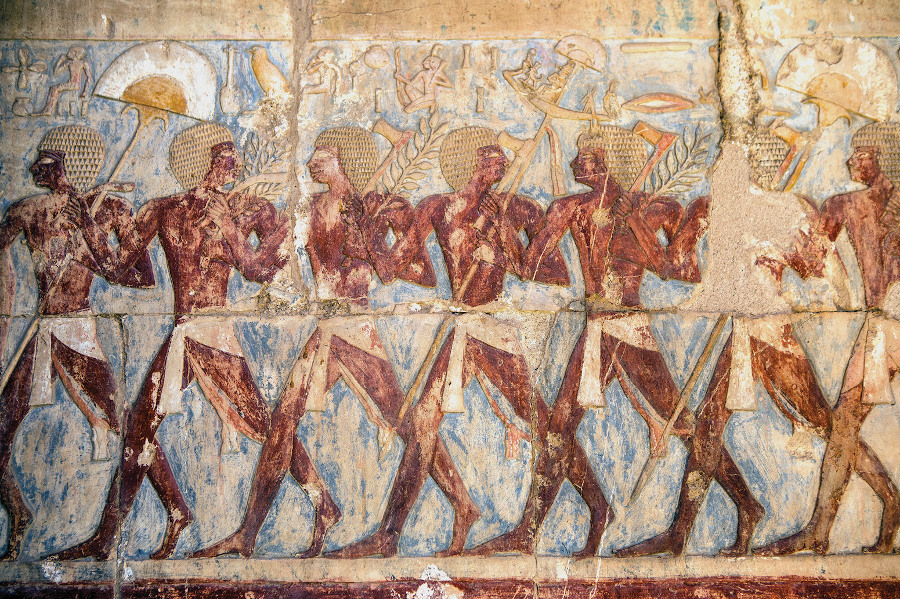
Standards held and raised by Egyptian soldiers on the wall of the temple of Hatshepsut, Egypt. Ps 74:4 says “they set up their standards as signs.”
© 2018 by Zondervan
Return to the main text.
74:6 carved paneling. See 1Ki 6:15.
74:7 your Name. See note on 5:11. The NIV capitalizes “Name” when it stands for God’s presence at the sanctuary (Dt 12:5).
74:8 They said. See note on 10:11. every place where God was worshiped. Or “all the meeting places of God” (v. 4). At the time of the Babylonian attacks there may have been a number of (illegitimate) places in Judah where people went to worship God (see notes on 1Ki 3:2; 2Ki 18:4).
74:9–11 The complaint and prayer renewed (vv. 1–2).
74:9 no signs. As there were at the time of the exodus (vv. 13–15; 78:43).
74:10 mock you . . . revile your name. See v. 18; see also v. 22; 2Ki 18:32–35; Isa 37:6,23.
74:12 The center verse (center line in the Hebrew text; see note on 6:6). The whole psalm presupposes the truth confessed here: God is Israel’s King, their hope and Savior; Israel is God’s people (kingdom). This accounts for both the complaint and the prayer, and why the destruction of Israel brings with it the mocking of God. my. Communal use of the singular pronoun (see note on Ps 30 title). from long ago. From the days of the exodus (Ex 3:7; 19:5–6).
74:13–17 The Lord is the mighty God of salvation and creation (see 65:6–7 and note).
74:13–14 Recollection of God’s mighty acts when he delivered his people from Egypt. The imagery is borrowed from ancient Near Eastern creation myths, in which the primeval chaotic waters were depicted as a many-headed monster that the creator-god overcame, after which he established the world order (see note on 32:6). The poet here interweaves creation and salvation themes to celebrate the fact that the God of Israel has shown by his saving acts (his opening of the Red Sea for his people and his destruction of the Egyptians) that he is able to overcome all hostile powers to redeem his people and establish his new order in the world. For poetic use of this imagery (1) to celebrate God’s creation works, see 89:10; Job 9:13; 26:12–13; (2) to celebrate the deliverance from Egypt, see Isa 51:9; (3) to announce a future deliverance of Israel, see Isa 27:1. Echoes of the same imagery are present in the judgment announced against Egypt in Eze 29:3–5; 32:2–6.
74:15 Recollection of God’s water miracles at the Red Sea, in the wilderness and at the Jordan.
74:16–17 God is the One who established the orders of creation; he (alone) is able to effect redemption and establish his kingdom in the world against all creaturely opposition.
74:18–23 A prayer for God to defend his cause and restore his people.
74:18 See vv. 2,10. foolish people. The foes of v. 10 (“foe” is collective) are here called “foolish” for their contempt of God (see v. 22; see also NIV text note on 14:1).
74:19 your dove. Israel—probably a figure of endearment (see SS 2:14; 5:2; 6:9; see also Ps 68:13 and note). wild beasts. See note on 7:2.
74:20 your covenant. God’s covenant to be the God of Israel, the one who makes his people secure and richly blessed in the promised land (see Ex 19:5–6; 23:27–31; 34:10–11; Lev 26:11–12, 42,44–45; Dt 28:1–14; see also Ps 105:8–11; 106:45; 111:5,9; Isa 54:10; Jer 14:21; Eze 16:60).
74:21 poor and needy. See notes on 34:6; 35:10. praise your name. May they have cause to do so.
74:22 Rise up. See note on 3:7.
74:23 clamor . . . uproar. See 64:2.
Ps 75 A hymn expressing confidence in God when arrogant worldly powers threaten Israel’s security. The psalm may date from the time of the Assyrian menace (see 2Ki 18:13—19:37). See also Ps 11; 76. Thematic parallels to the song of Hannah (1Sa 2:1–10) are numerous. The worshiping congregation speaks (v. 1), perhaps led in its praise by one of the descendants of Asaph (v. 9). The psalm is framed by praise (vv. 1,9–10). Two stanzas of four (Hebrew) lines each form the body of the psalm, and each stanza is composed of two couplets. The first stanza contains a reassuring word from heaven; the second contains a triumphant response from earth. For this psalm’s relationship to those around it, especially to Ps 76, see introduction to Ps 73–78.
75 title For the director of music. See note on Ps 4 title. To the tune of. See note on Ps 9 title. Do Not Destroy. See Ps 57; 58; 59 titles. Asaph. See note on Ps 73 title. song. See note on Ps 30 title.
75:1 The congregation begins with praise (7:17; 28:7; 30:12; 35:18). Name. See notes on 5:11; 74:7. wonderful deeds. See note on 9:1.
75:2–5 A reassuring word from above: God will not fail to call the arrogant to account. It is not clear whether a new word from the Lord is heard or whether these verses recall (and perhaps summarize) earlier prophetic words (such as those of Isaiah in 2Ki 19:21–34; see notes there).
75:2 God will not fail to judge (see Ps 96; 98 and notes on 96:13; 98:9)—but in his own time.
75:3 When, because of the upsurge of evil powers, the whole moral order of the world seems to have crumbled, God still guarantees its stability (see note on 11:3). pillars. A figure for that which stabilizes the world order (see note on 24:2). For Selah, see NIV text note and note on 3:2.
75:4 arrogant . . . wicked. To the psalmists the wicked are both arrogant (see especially Ps 10 and note on 10:2–11; 73:4–12 and note; 94:4; see also note on 31:23) and foolish (see introduction to Ps 14 and note on 14:1; 74:18,22 and note on 74:18; 92:6; 94:8 and note on 94:8–11). lift up your horns. A figure here for defiant opposition, based on the action of attacking bulls. “Horn” (see also v. 10) is a common biblical metaphor for vigor or strength (see NIV text notes here and on 18:2).
75:6–8 Triumphant echo from earth: perhaps spoken by the Levitical song leader in elaboration of the comforting word from God.
75:8 cup. See note on 16:5. mixed with spices. The spices used increased the intoxicating effect (see Pr 9:2,5 and note on 9:2; 23:29–30 and note on 23:30; SS 8:2; Isa 65:11). drink it down. Because God pours it out, they have no choice.
75:9 Concluding vow to praise God forever (see note on 7:17) for his righteous judgments. me. Probably the Levitical song leader speaking representatively for the people, but the pronoun may be a communal use of the singular, as in 74:12 (see note on Ps 30 title). Jacob. A synonym for Israel (see Ge 32:28 and note).
75:10 righteous. See notes on 1:5; Ge 7:1; Dt 6:25; 2Sa 22:21,25. lifted up. See v. 7; see also note on v. 4.
Ps 76 A hymn celebrating the Lord’s invincible power in defense of Jerusalem, his royal city. The psalm is thematically related to Ps 46; 48; 87 (see introduction to Ps 46). The ancient tradition may well be correct that the psalm was composed after the Lord’s destruction of Sennacherib’s army when it threatened Jerusalem (2Ki 19:35). Structurally, the opening (vv. 1–3) and closing (vv. 11–12) stanzas contain the main theme. Between them, two four-line (in Hebrew) stanzas of praise addressed to God (vv. 4–6,7–10) celebrate his awesome act of judgment. For this psalm’s relationship to those around it, especially to Ps 75, see introduction to Ps 73–78.
76 title For the director of music. See note on Ps 4 title. With stringed instruments. See note on Ps 4 title. Asaph. See note on Ps 73 title. song. See note on Ps 30 title.
76:1–3 God’s crushing defeat of the enemy in defense of Zion.
76:1 is renowned. Now especially—as a result of his marvelous act. Israel. Probably refers to the whole of God’s covenant people. As a result of the Assyrian invasions, many displaced Israelites from the northern kingdom now resided in Judah (see introduction to Ps 80 and note on Ne 3:8).
76:2 tent . . . dwelling place. Since the two Hebrew words for these nouns frequently refer to a lion’s den, covert or lair (10:9; 104:22; Job 38:40; Jer 25:38; Am 3:4), it may be that the psalmist is here depicting Israel’s God as a lion overpowering its prey. In that case, an alternative rendering of v. 4 should be considered. Salem. Jerusalem, as the parallelism makes clear (see note on Ge 14:18). Zion. See note on 9:11.
76:3 For Selah, see NIV text note and note on 3:2.
76:4–10 Praise of the awesome majesty of God, whose mighty judgment evokes fearful reverence (see introduction).
76:5–6 Perhaps echoes also God’s victory over the Egyptians at the Red Sea (Ex 14:28, 30; 15:4–5,10).
76:6 rebuke. This word, when predicated of God, usually refers to either (1) the thunder of his fierce majesty, by which he wields his sovereign control over cosmic entities (18:15; 104:7; 106:9; Job 26:11; Isa 50:2; Na 1:4) or repulses his enemies (as here; see also 9:5; 68:30; Isa 17:13); or (2) the thunder of his wrath (80:16; Isa 51:20; 54:9; 66:15; Mal 2:3). God of Jacob. A link with Ps 75 (see 75:9 and note).
76:7 you alone . . . you. This first line of the second four-line stanza echoes the emphatic “you” with which the first four-line stanza begins (v. 4).